
Quick answer: The shortest nonstop Atlanta to Africa flights run to North and West Africa, while Southern Africa takes roughly 14 to 15 hours nonstop on Delta. East African safari destinations such as Kenya and Tanzania generally require a connection. For a safari, plan at least 7 to 10 days, and ideally 10 to 14 days if your budget allows.
How Long Is the Flight From Atlanta to Africa?
There is no single Atlanta to Africa flight time because Africa contains 54 countries and spans a huge geographic area.
The destination makes a major difference. A nonstop Atlanta to Johannesburg flight takes roughly 15 hours, the longest single-sector route Delta operates anywhere in its network. Cape Town runs close behind at about 14.5 hours, and Addis Ababa is around 14 hours on Ethiopian Airlines. A flight to Marrakech is considerably shorter. Once you add a connection for East Africa, the total journey can easily become 18 to 30 hours or more.
Approximate nonstop flight times from Atlanta
| Route | Approx. nonstop flight time |
|---|---|
| Atlanta to Marrakech | About 7 to 8 hours |
| Atlanta to Lagos | About 11 to 12 hours |
| Atlanta to Addis Ababa | About 14 hours |
| Atlanta to Cape Town | About 14.5 hours |
| Atlanta to Johannesburg | About 15 hours |
So if someone asks “how long is the flight from Atlanta to Africa,” the most accurate answer is: anywhere from roughly 7 hours to 15 hours nonstop, depending on the destination, with East African safari destinations generally requiring an additional connection.
Which Airlines Fly From Atlanta to Africa?
Atlanta is Delta’s largest hub, so Delta is the most important carrier to check first for Atlanta to Africa flights.
Delta Air Lines
Delta operates daily nonstop service from Atlanta to Johannesburg, three weekly nonstop flights to Cape Town, daily service to Lagos, and a nonstop route to Marrakech, its first return to North Africa in 14 years. Delta also runs a seasonal Atlanta to Accra service starting December 1 to meet winter holiday demand. Atlanta’s Africa network is especially useful for travelers who want to avoid a European or Middle Eastern connection entirely.
Ethiopian Airlines
Ethiopian Airlines’ Atlanta to Addis Ababa service is a genuinely important route for East African safari travelers, since Addis Ababa is one of the continent’s largest aviation hubs, with onward connections across Kenya, Tanzania, Uganda, Rwanda, and dozens of other African cities.
This route has been volatile recently, and it’s worth knowing before you book around it. Ethiopian Airlines paused Atlanta service in February 2026, then resumed it on May 21, 2026. If you’re planning a 2027 trip around this connection, confirm current schedules directly with Ethiopian Airlines rather than assuming the route runs on a fixed, permanent timetable, since it has changed more than once in the past two years.
Other airlines to consider
Depending on your destination, useful one-stop itineraries are also available through Qatar Airways, Emirates, Turkish Airlines, Air France, KLM, British Airways, Lufthansa, United Airlines, Royal Air Maroc, Kenya Airways, and South African Airways.
The best airline is not always the one with the lowest fare. A slightly more expensive ticket with a shorter connection and better arrival time can make a long Africa trip much easier.
What Is the Main Flight Hub for Atlanta to Africa?
Several connecting airports matter most once you’re past Atlanta itself.
- Addis Ababa, Ethiopia. Addis Ababa Bole International Airport (ADD) is the most useful hub for reaching East Africa and much of the continent south of the Sahara, via Ethiopian Airlines’ extensive network, when the Atlanta route is running.
- Doha, Qatar. Hamad International Airport (DOH), via Qatar Airways, works well for East Africa, Southern Africa, and Indian Ocean destinations, though you’re flying east first before continuing south or southwest.
- Istanbul, Turkey. Turkish Airlines’ Istanbul hub covers several African destinations and can sometimes offer competitive fares.
- Paris and Amsterdam. Air France through Paris and KLM through Amsterdam are convenient options for travelers who prefer a European connection.
- London and Dubai. British Airways connects through London to multiple African cities, and Emirates offers another major option through Dubai for Southern and East Africa.
Direct or One-Stop: Which Is Better?
If a nonstop flight is available at a reasonable price, it’s usually the easiest choice: no connection to manage, less risk of a missed transfer, fewer opportunities for checked luggage problems.
A one-stop flight can still save real money, and it’s often the only option for East African destinations. For example, Atlanta to Doha to Johannesburg, or Atlanta to Addis Ababa to Nairobi, both take longer than a nonstop but may be the only practical way to reach your final destination.
For a long safari, prioritize in this order: total journey time, connection length, arrival time, baggage allowance, airline reliability, then ticket price. Don’t choose a 30-hour itinerary to save $100 unless that saving genuinely matters to your budget.
Atlanta to Africa Flight Cost
Your destination, travel dates, airline, cabin, number of stops, and how far ahead you book all move the fare.
As a broad planning range, economy round-trip fares often fall somewhere around:
- $1,000 to $1,300: a good deal for some destinations and dates
- $1,300 to $1,700: the common planning range
- $1,700 to $2,000+: possible during peak dates or on more expensive routes
- $2,500+: possible for premium dates, complex itineraries, or higher cabin classes
These figures are not fixed 2027 prices. Prices typically rise around Christmas and New Year, summer school holidays, Easter, peak safari season, and major festivals. Your safari itself will usually cost far more than the flight, so treat airfare as one line item in a much bigger budget, not the number that determines whether the trip is affordable.
How Far in Advance Should You Book?
Don’t wait until the last few weeks unless you’re extremely flexible on dates and destination.
- 3 to 6 months ahead: a good general window for most travelers.
- 6 to 9 months ahead: worth targeting if you’re traveling during peak safari season, Christmas and New Year, school holidays, a popular migration window, a honeymoon date, or a specific luxury camp with limited availability.
- 9 to 12 months ahead: makes sense when your trip depends on a fully booked lodge, a particular safari camp, or a specific flight schedule that sells out early.
The order matters more than the exact month: build your safari itinerary and confirm lodge availability first, then book the flight around it. The cheapest flight is irrelevant if it doesn’t line up with the only dates your lodge has open.
When Is the Best Time to Visit Africa?
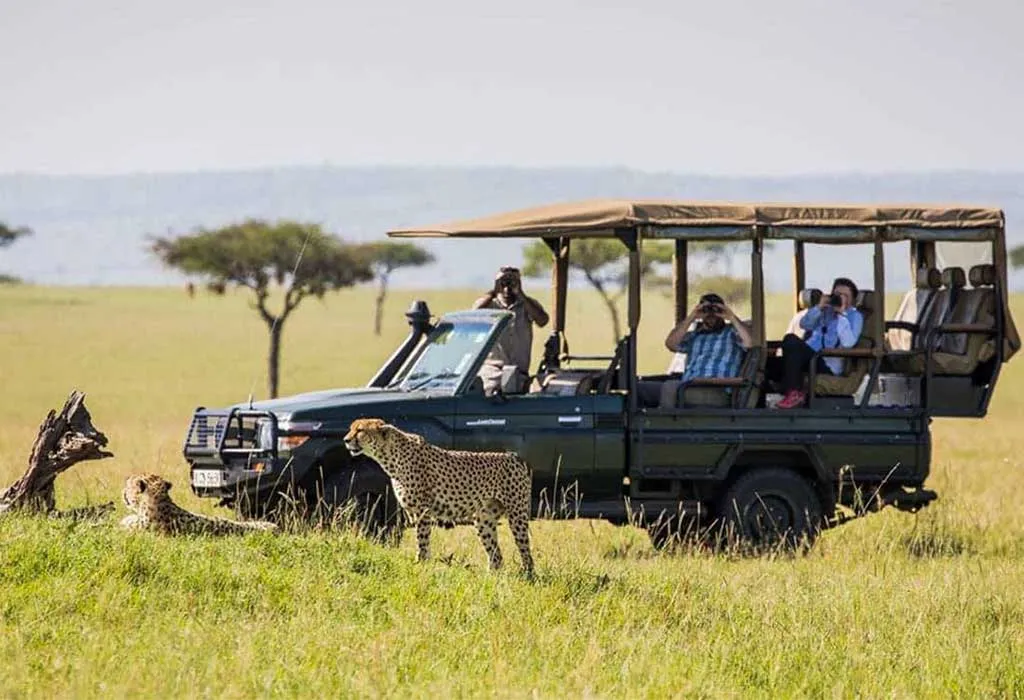
There is no single best time to visit Africa. The continent is too large for one answer, so choose the season based on your destination and the experience you want.
- Kenya and Tanzania. Dry seasons are popular for classic safari viewing, since thinner vegetation concentrates wildlife around water. The Great Migration moves continuously, so there’s no single date when the whole event happens in one place, timing depends on which stage of the migration you want to see.
- South Africa. The dry winter months, roughly May to September, are strong for wildlife viewing in many popular safari regions.
- Botswana. The dry season suits traditional game viewing, while the Okavango Delta’s seasonal flood creates a completely different, water-based experience.
- Uganda and Rwanda. Gorilla trekking runs year-round, though weather affects trail conditions.
- Morocco. Spring and autumn are the most comfortable seasons for exploring cities and desert landscapes.
Best African Destinations to Visit From Atlanta
For a first trip, these destinations stand out most clearly.
| Destination | Best For |
|---|---|
| Tanzania | Serengeti, Great Migration, Ngorongoro Crater, Big Five, Kilimanjaro, Zanzibar beaches |
| Kenya | Maasai Mara, Great Migration, big cats, Amboseli’s elephant herds, family safaris |
| South Africa | Kruger, private reserves, Cape Town, the Winelands, combining wildlife with a city and coast |
| Botswana | Okavango Delta, elephants, wild dogs, water-based safaris, low-volume luxury |
| Uganda | Gorilla trekking, chimpanzees, Murchison Falls, forest wildlife |
| Rwanda | Gorilla trekking, Volcanoes National Park, a shorter, more luxury-focused wildlife trip |
| Namibia | Desert landscapes, Etosha, desert-adapted wildlife, self-drive photography trips |
| Zimbabwe | Victoria Falls, Hwange, walking safaris, elephants |
How Many Days Do You Need in Africa?
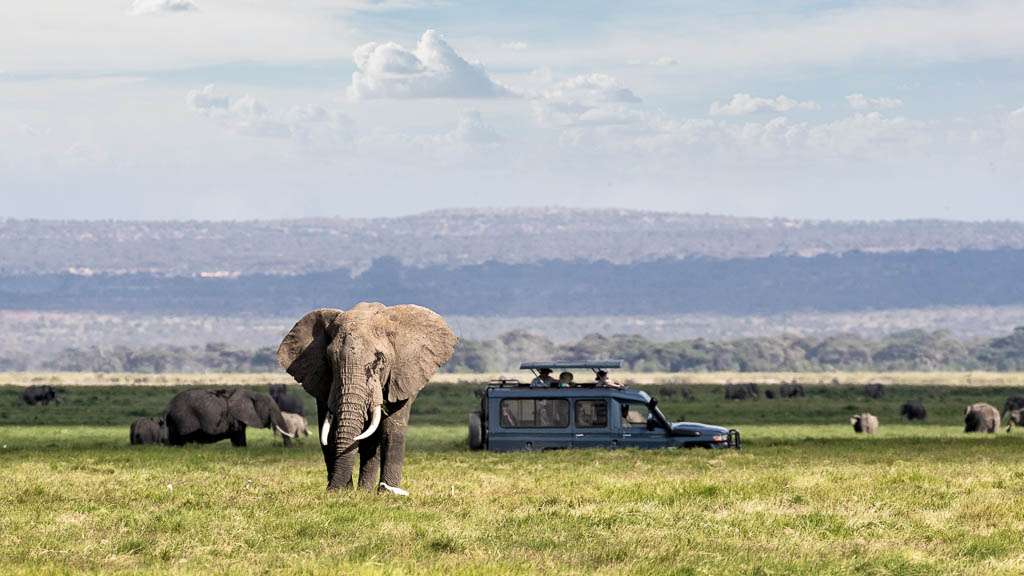
This depends on whether you’re visiting one country or several.
7 days is a workable minimum for a focused safari: 1 travel day out, 4 days on safari, 1 travel day back, with little room to spare.
10 days works much better for a first safari, giving you room to combine two safari areas without rushing between them.
14 days is the preferred length for a major first Africa trip, since it leaves enough time to combine wildlife with a second destination, a beach extension, a city, or the Winelands. See the sample Tanzania and South Africa itineraries below for what that actually looks like day by day.
21 days gives you enough time to combine two countries without making every single day a travel day.
What to Do in Africa Beyond Safari
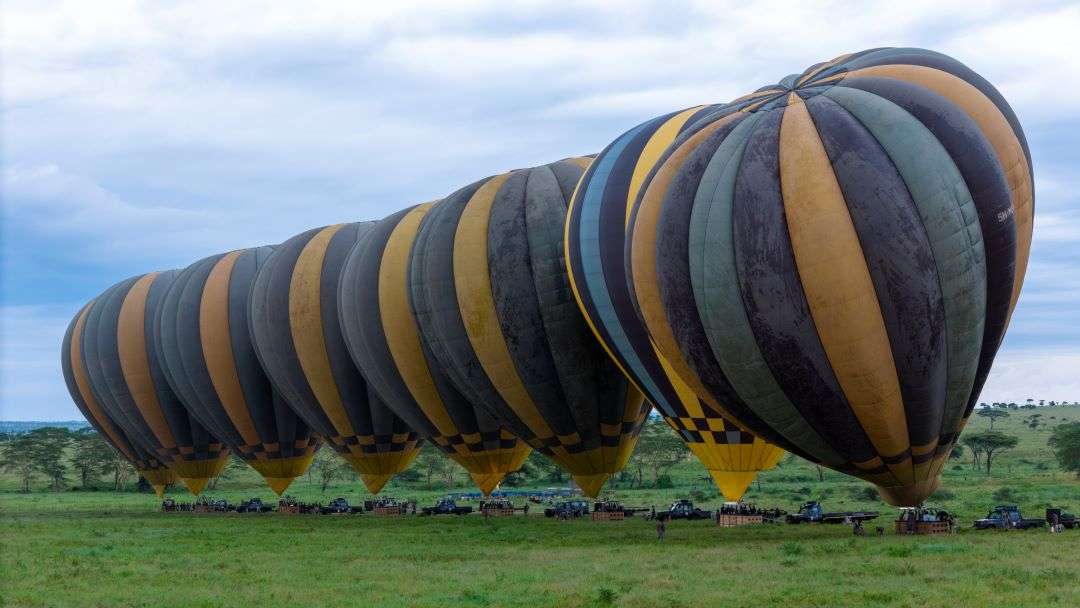
Each of the destinations above rewards adding something beyond game drives.
- Tanzania: a hot-air balloon safari over the Serengeti, Maasai cultural visits, and Zanzibar’s beaches.
- Kenya: Nairobi National Park, the Giraffe Centre, and an extension to Lamu or the Kenyan coast.
- South Africa: Table Mountain, Robben Island, the Cape Peninsula, and the Garden Route.
- Botswana: mokoro excursions through the Delta, walking safaris, and a Victoria Falls extension from Chobe.
- Rwanda: golden monkey trekking and Kigali’s city sights alongside the gorilla trek.
- Uganda: chimpanzee trekking in Kibale and boat safaris on the Victoria Nile at Murchison Falls.
Travel Insurance for an Africa Trip
Travel insurance is worth considering for a major Africa trip, particularly once you’re spending thousands of dollars on flights, safari lodges, and internal flights. A good policy covers trip cancellation, trip interruption, medical emergencies, emergency evacuation, delayed flights, lost baggage, missed connections, and certain adventure activities.
For safari trips specifically, medical evacuation coverage deserves particular attention. You may be staying several hours from the nearest major hospital, and standard U.S. health insurance typically doesn’t include the kind of evacuation coverage a remote safari camp requires.
Safari insurance pricing varies considerably; comprehensive policies can run anywhere from a few hundred dollars to significantly more on an expensive trip, and specialist safari insurance is often priced as a percentage of total trip cost. Don’t choose a policy on price alone. Check the medical coverage limit, the evacuation limit, pre-existing condition rules, which safari and adventure activities are covered, cancellation and interruption terms, baggage limits, and whether your exact destination and itinerary are actually covered.
Vaccines for Travel From Atlanta to Africa
There is no single vaccine list for the whole continent. Requirements depend on the countries you visit, where you travel within those countries, and sometimes where you transit. Speak with a travel health professional and check current CDC guidance for every country on your itinerary before you go.
Commonly discussed vaccines include routine vaccines, hepatitis A, hepatitis B, typhoid, yellow fever, rabies, and polio in specific circumstances.
Yellow fever deserves particular attention, since some African countries require or recommend vaccination, and entry requirements can depend on your recent travel history, including long transits through a yellow fever risk country. Don’t assume that flying from the United States exempts you from checking yellow fever requirements.
Malaria and Medicines for Africa
Malaria is present across much of sub-Saharan Africa, but risk isn’t uniform, some areas of South Africa carry transmission risk while others don’t, for example. Safari travelers are also often outdoors at dawn, dusk, and night, exactly when mosquito exposure matters most.
Depending on your destination, a doctor may recommend prescription malaria medication such as atovaquone-proguanil, doxycycline, mefloquine, or tafenoquine. The right choice depends on your destination, medical history, and other factors a qualified healthcare professional needs to assess, not a travel blog.
Pack practical protection too: insect repellent, long sleeves and trousers, closed shoes, a mosquito net where appropriate, any prescribed medication, and basic first-aid supplies.
What Should You Pack for Africa?

Your packing list depends heavily on the destination, but for a safari, plan around: lightweight shirts, long-sleeve shirts, lightweight trousers, comfortable walking shoes, a lightweight jacket, a fleece for cool mornings, a hat, sunglasses, sunscreen, insect repellent, a camera, binoculars, a reusable water bottle, prescription medicines, a basic first-aid kit, and your travel documents and insurance details.
Neutral colors, khaki, olive, tan, and brown, are the practical choice for safari wear.
Example 10-Day Atlanta to Africa Safari Budget
A rough planning budget for one traveler on a 10-day trip:
| Expense | Approximate Range |
|---|---|
| Round-trip international flight | $1,100 to $2,000+ |
| Safari and accommodation | $2,500 to $6,000+ |
| Internal flights and transfers | $300 to $1,000 |
| Insurance | $100 to $500+ |
| Vaccines and medicines | Varies |
| Tips and activities | $200 to $600 |
| Total | Roughly $4,200 to $10,000+ |
Luxury travel can easily exceed this. The biggest variable is almost always the safari itself, not the international airfare.
Atlanta to Africa Layover Tips
Avoid extremely short connections. Give yourself enough time to change terminals and absorb an unexpected delay.
Avoid unnecessarily long connections too. A 20-hour airport wait can save money but adds real exhaustion to an already long journey.
Consider an overnight connection. Arriving at a hub in the evening and continuing the next morning is sometimes easier than a 15-hour same-day layover.
Check transit requirements before you fly. A connection doesn’t automatically mean visa-free entry if you leave the airport, and transit rules vary by passport, airport, and length of stay.
Sample 14-Day Tanzania Itinerary From Atlanta
Days 1 to 2: Fly from Atlanta toward Kilimanjaro International Airport, typically with one connection.
Days 3 to 4: Tarangire National Park, elephants, giraffes, and zebras.
Days 5 to 6: Ngorongoro Crater and the surrounding highlands.
Days 7 to 10: The Serengeti, spending several days here rather than rushing through it.
Days 11 to 12: Extra Serengeti time or a move toward the Zanzibar coast.
Days 13 to 14: Zanzibar, then the return journey to Atlanta.
This is one example. Adjust it around migration timing, budget, and which wildlife matters most to you.
Sample 14-Day South Africa Itinerary From Atlanta
Days 1 to 2: Atlanta to Johannesburg.
Days 3 to 6: Kruger or Greater Kruger safari.
Days 7 to 9: Fly to Cape Town.
Days 10 to 12: Table Mountain and the Cape Peninsula.
Days 13 to 14: The Winelands or extra Cape Town time before flying home.
This itinerary suits travelers who want wildlife plus a broader vacation, rather than spending the entire trip inside a safari reserve.
Plan Your Africa Trip From Atlanta With TourWithPipi

Getting the flight right is only the first part. The bigger question is where you should actually go once you land.
Explore our Kenya safaris or Tanzania safaris for itineraries built around the Great Migration, the Big Five, and the parks that fit your dates. We can build your complete trip around your budget and interests, safari destinations, accommodation, domestic flights, transfers, activities, and extensions, whether that’s the Great Migration in Tanzania, gorilla trekking in Rwanda or Uganda, or a South Africa safari combined with Cape Town.
Contact the team on WhatsApp with your travel dates, number of travelers, and the animals or destinations you want to see.
Frequently Asked Questions
How long is the flight from Atlanta to Africa?
It depends on the destination. Nonstop flights range from roughly 7 to 15 hours. Atlanta to Johannesburg runs about 15 hours, Atlanta to Cape Town about 14.5 hours, and Atlanta to Addis Ababa about 14 hours.
Are there direct flights from Atlanta to Africa?
Yes. Delta operates nonstop service from Atlanta to Johannesburg, Cape Town, Lagos, Marrakech, and seasonally Accra. Ethiopian Airlines operates nonstop between Atlanta and Addis Ababa, though that route was suspended in February 2026 and resumed on May 21, 2026, so it’s worth confirming current schedules before booking around it.
What airlines fly from Atlanta to Africa?
Delta Air Lines and Ethiopian Airlines run the key nonstop services. Qatar Airways, Emirates, Turkish Airlines, Air France, KLM, and British Airways all offer useful one-stop options depending on your destination.
How much does a flight from Atlanta to Africa cost?
A reasonable planning range for economy round trip is roughly $1,000 to $2,000+, depending on destination, dates, and airline.
How far in advance should I book an Africa trip from Atlanta?
Start planning 6 to 12 months ahead for a major safari. Flights can often be booked 3 to 6 months out, but peak dates and popular lodges need more lead time, sometimes 9 to 12 months.
What is the best African country to visit from Atlanta?
Tanzania, Kenya, and South Africa are the strongest first-safari choices. Tanzania suits the Serengeti and Great Migration, Kenya the Maasai Mara, and South Africa is easiest to combine with Cape Town and other attractions.
Can I fly nonstop from Atlanta to Tanzania or Kenya?
No. Neither Tanzania nor Kenya has nonstop service from Atlanta. Most travelers connect through Addis Ababa, Europe, or the Middle East.
Do I need travel insurance for Africa?
It’s strongly worth having, particularly for an expensive safari. Look for medical coverage, emergency evacuation, and trip cancellation and interruption protection specifically, not just a generic policy.
What vaccines do I need for Africa?
There’s no universal list. Requirements depend on your specific itinerary. Yellow fever, hepatitis A and B, typhoid, and routine vaccines may all be relevant, and malaria prevention may be recommended depending on where you’re going.
How many days should I spend in Africa?
Seven days works for a focused safari, but 10 to 14 days is much better for a first trip, and gives you room to combine safari with a city, beach, or second country.
Blog Summary
- Delta flies nonstop from Atlanta to Johannesburg (about 15 hours), Cape Town (about 14.5 hours), Lagos, and Marrakech, with seasonal service to Accra.
- Ethiopian Airlines’ Atlanta to Addis Ababa route was suspended in February 2026 and resumed May 21, 2026, so confirm current schedules before building a 2027 trip around it.
- Neither Kenya nor Tanzania has nonstop service from Atlanta; plan on one connection, usually through Addis Ababa, Europe, or the Middle East.
- Book flights 3 to 6 months out for most trips, and 9 to 12 months ahead for peak safari season or a specific high-demand lodge.
- Plan your safari itinerary and lodge dates first, then book flights around them, not the other way around.
- 10 to 14 days is the sweet spot for a first Africa trip from Atlanta, long enough to combine safari with a second destination without rushing.
Contact the team on WhatsApp to start planning a Kenya or Tanzania safari built around your Atlanta departure dates.


