
Africa is often talked about as if it were one place, but the continent is anything but simple.
It covers more than 30 million square kilometres, stretches across very different climates and landscapes, and is home to more than a billion people, thousands of languages, ancient cities, rainforests, deserts, mountains, beaches and some of the world’s best-known wildlife.
If you are looking for 10 Africa facts, these are worth knowing. Some are about geography and wildlife, while others reveal just how important Africa has been to human history and how quickly the continent is changing today.
Here are 10 facts about Africa that give you a better picture of the continent beyond the usual safari facts.
1. Africa Is Home to About 1.55 Billion People

One of the most important facts about the African continent is its enormous and rapidly growing population.
The United Nations’ latest regional data puts Africa’s population at approximately 1.55 billion people in 2025. That makes Africa the world’s second-most-populous continent after Asia.
But population is not evenly distributed. Nigeria is Africa’s most populous country, while countries such as Namibia, Botswana and several island nations have much smaller populations.
Africa is also exceptionally young: more than 60% of the continent’s population is under the age of 25, one of the highest shares of any region on Earth. That age structure is one of the biggest forces shaping the continent’s future, from education and employment to technology, cities and travel.
Why this is interesting: Africa’s population is not just large. Its age profile makes it one of the world’s most important demographic regions for the decades ahead.
2. Africa Has 54 Countries, but the African Union Has 55 Member States
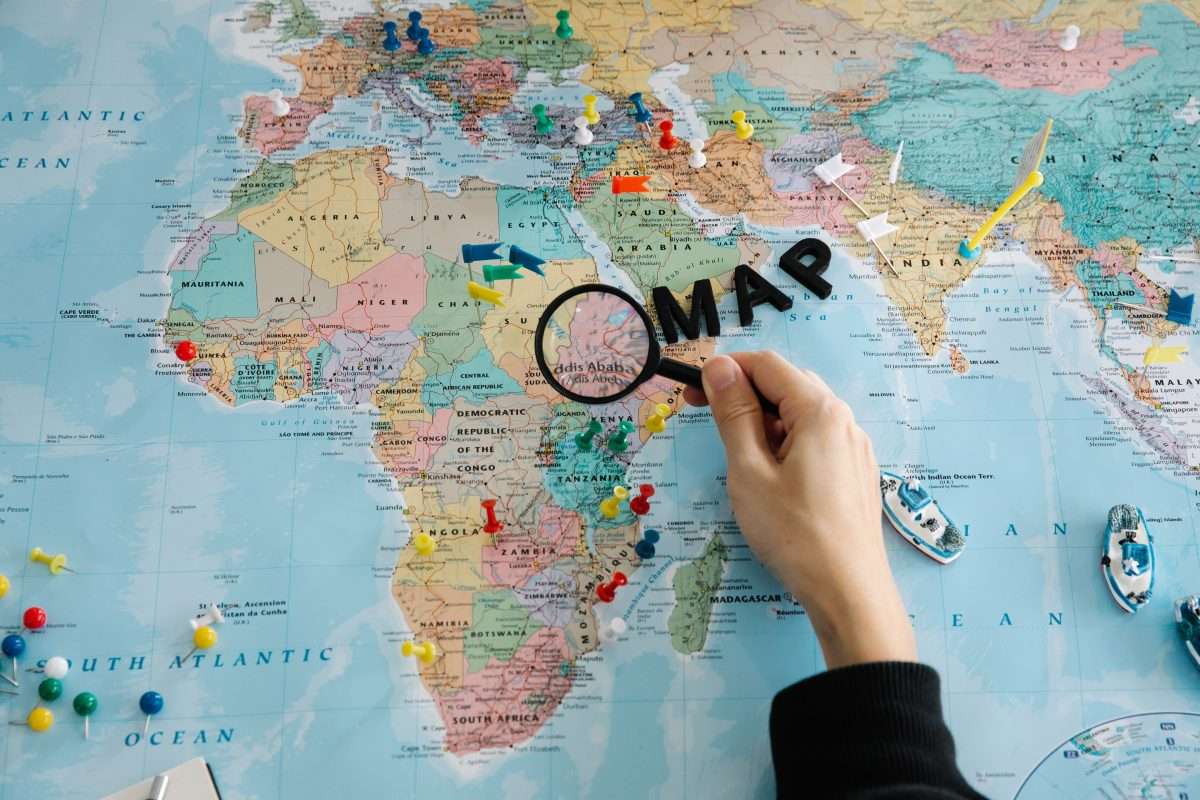
A common question is: how many countries are in Africa?
The usual answer is 54 internationally recognised sovereign countries.
However, there is an important distinction. The African Union has 55 member states. Its membership includes the Sahrawi Arab Democratic Republic, which is not universally recognised as a sovereign state.
This is why you may sometimes see both 54 and 55 when researching African countries. The 54-country figure is generally used when counting internationally recognised sovereign states, while 55 refers to African Union membership.
Africa is also commonly divided into five broad regions: North Africa, West Africa, Central Africa, East Africa, and Southern Africa. Each region has its own geography, cultures, languages and travel experiences.
Interesting Africa fact: Saying simply that “Africa is a country” is one of the most basic geographical mistakes you can make. Africa is a continent containing dozens of countries and enormous regional diversity.
3. Africa Is the Second-Largest Continent by Land Area
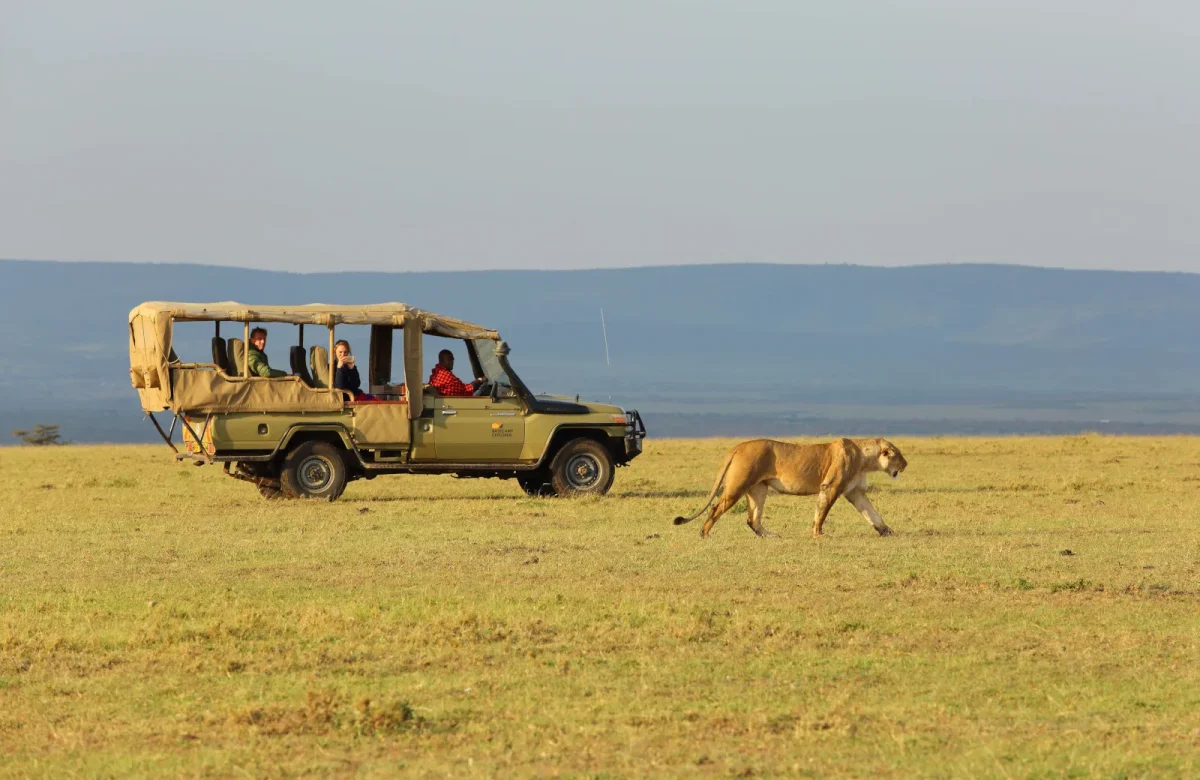
Africa covers roughly 30 million square kilometres, making it the world’s second-largest continent by land area after Asia. Commonly used geographical measurements put the area at around 30.3 million square kilometres, though the exact figure shifts slightly depending on how coastlines and water areas are counted.
That size helps explain why Africa has such different environments. You can travel from Mediterranean landscapes in North Africa to the Sahara, tropical forests around the Congo Basin, East African savannas, southern deserts and Indian Ocean islands.
Africa includes the Sahara Desert, the Congo Basin rainforest, the Ethiopian Highlands, the East African Rift, Mount Kilimanjaro, the Namib Desert, the Okavango Delta, and tropical islands such as Madagascar and the Seychelles.
So when people ask what the weather is like in Africa, there is no single answer. The continent is simply too large and geographically varied.
4. Africa Is One of the Most Linguistically Diverse Places on Earth
One of the most interesting facts about Africa is its extraordinary language diversity.
UNESCO estimates that Africa is home to roughly 1,500 to 3,000 languages, depending on how languages and language varieties are classified, describing the continent as home to about one-third of the world’s languages.
These include major languages such as Arabic, Swahili, Hausa, Yoruba, Amharic, Somali, Zulu, Xhosa, Igbo, Wolof, Fulfulde, Afrikaans, English, French, and Portuguese, and these represent only a small part of Africa’s linguistic landscape.
In many African countries, people use more than one language in everyday life. A person may speak a local language at home, a national language in public life and another language for education or business. That multilingualism is one of the reasons Africa’s cultural landscape is so varied, though it also creates real challenges for education and technology, since language technology still remains unavailable for many African languages.
5. Africa Is Where Homo Sapiens Evolved
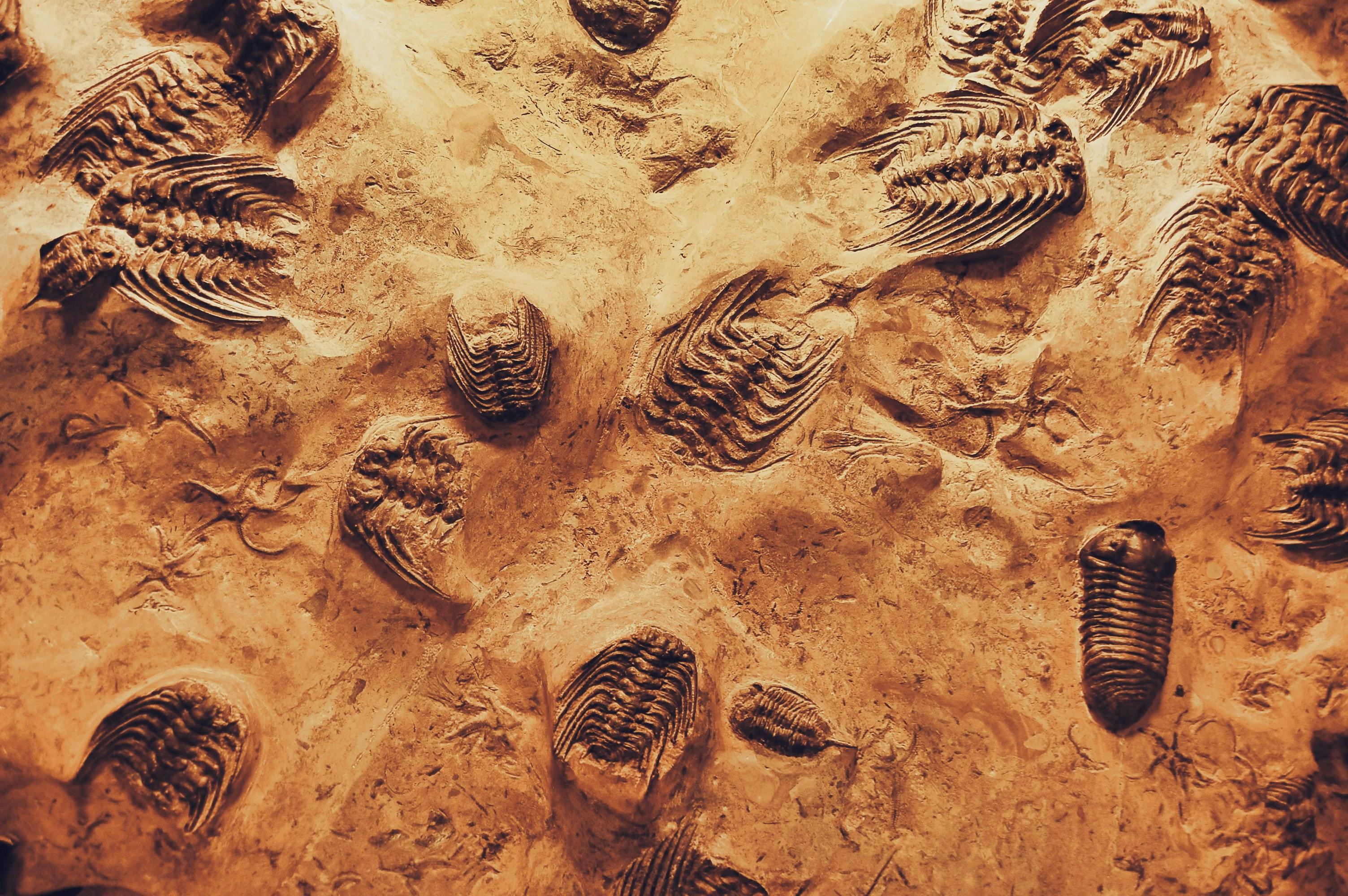
Africa is often called the cradle of humankind, and there is strong scientific evidence behind the continent’s central role in human evolution.
Our species, Homo sapiens, evolved in Africa at least around 300,000 years ago. The oldest widely recognised fossils of our species include remains from Jebel Irhoud in Morocco dating to about 300,000 years ago.
But the modern scientific picture is more complicated than the old idea that humans simply appeared in one exact location. Genetic and fossil evidence increasingly points to multiple interconnected African populations contributing to the evolution of modern humans, rather than one isolated origin point.
The story goes much further back than Homo sapiens, too. In January 2026, a University of Chicago-led team published a genuinely striking find in the journal Nature: a 2.6-million-year-old Paranthropus jawbone discovered in Ethiopia’s Afar region, 1,000 kilometres north of where this ancient human relative had ever been found before. The fossil shows that Paranthropus, once thought to be a narrow dietary specialist confined to southern and eastern Africa, was actually far more widespread and adaptable than scientists had assumed.
One of the amazing facts about Africa: The story of human evolution is not located in one African country. Evidence comes from different parts of the continent, and new fossil finds are still actively reshaping that story today.
6. The Sahara Is the World’s Largest Hot Desert

The Sahara is one of the most recognisable geographical features in Africa. It stretches across much of North Africa and covers roughly 9 million square kilometres, making it the world’s largest hot desert.
But there is an important detail behind the common statement that it is the “largest desert in the world.” It is not. Antarctica and the Arctic are also classified as deserts because they receive very little precipitation, they’re cold deserts, and Antarctica is actually the largest desert on Earth by area.
So the more accurate statement is: the Sahara is the world’s largest hot desert.
It stretches across several countries, including Algeria, Chad, Egypt, Libya, Mali, Mauritania, Morocco, Niger, Sudan and Tunisia, as well as the Western Sahara region. And the Sahara has not always looked the way it does today. During periods known as the African Humid Period, parts of what is now desert were much wetter, with lakes, grasslands and wildlife, which is exactly why archaeological and geological research in the Sahara remains so important.
7. Mount Kilimanjaro Is Africa’s Highest Mountain
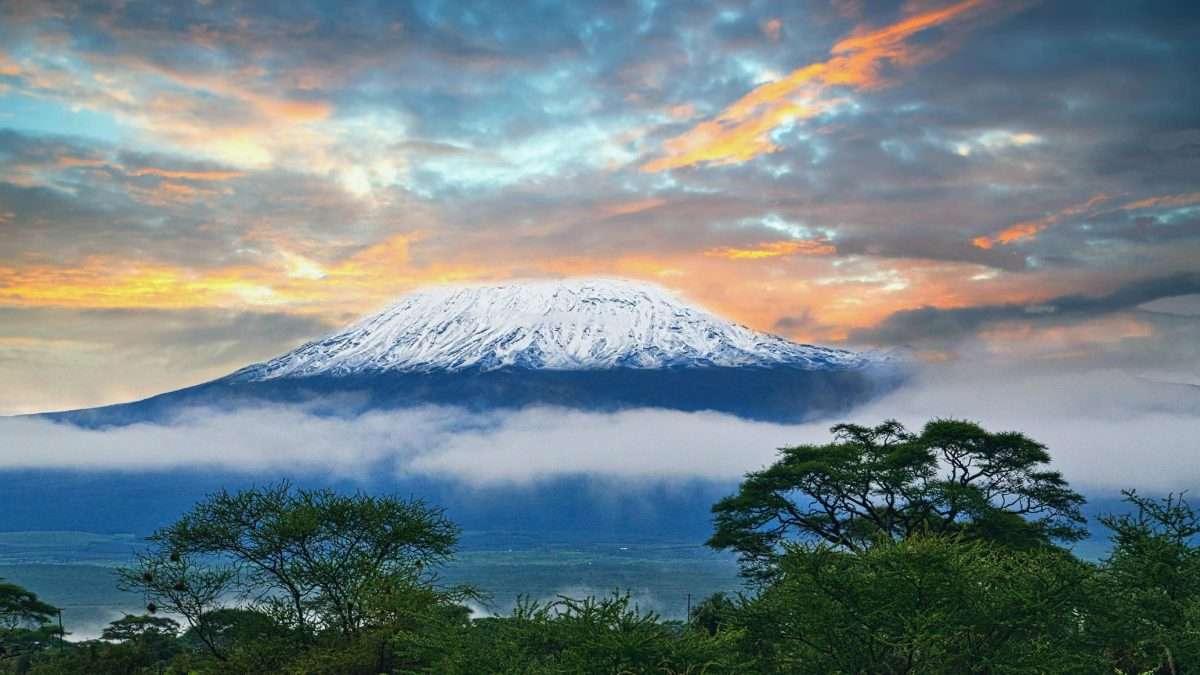
Mount Kilimanjaro rises to approximately 5,895 metres (19,341 feet) above sea level, making it the highest mountain in Africa. It’s located in northern Tanzania near the Kenyan border.
Kilimanjaro is unusual because it’s a massive free-standing volcanic mountain rather than part of a major mountain range. It has three volcanic cones: Kibo, Mawenzi, and Shira. Kibo is the highest of the three and contains Uhuru Peak, the highest point on the mountain.
The mountain’s elevation creates several distinct ecological zones as climbers move upward, from cultivated land and forest through moorland and alpine environments toward the high volcanic summit. That makes a Kilimanjaro climb feel like traveling through several landscapes during one expedition.
Travel fact: Kilimanjaro can be combined with a Tanzania safari, making it possible to experience both mountain trekking and wildlife in the same trip.
8. Africa Has the World’s Largest Tropical Lake by Surface Area
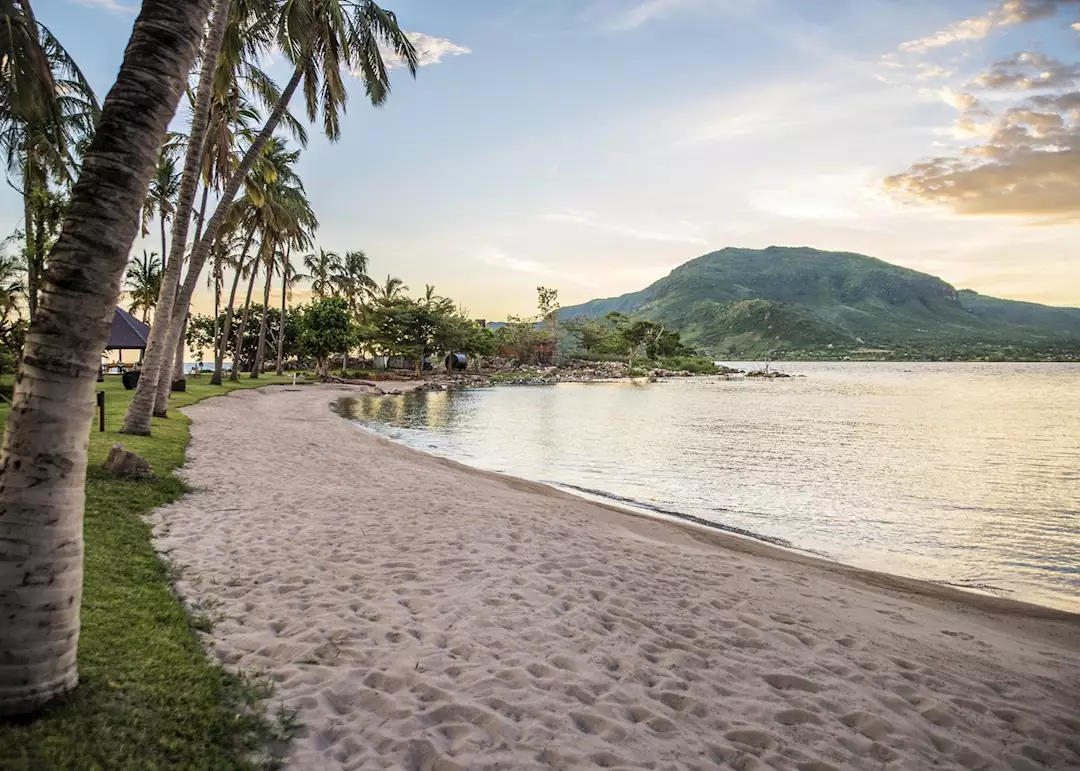
Lake Victoria is shared by Tanzania, Uganda and Kenya and is Africa’s largest lake by surface area.
With an area of approximately 68,800 square kilometres, roughly the size of Ireland, it’s also the world’s largest tropical lake by surface area and the world’s second-largest freshwater lake overall, behind only Lake Superior in North America.
Lake Victoria is also closely connected with the Nile River system, since it’s the primary reservoir feeding the White Nile. The lake supports fisheries, transport, agriculture and millions of people living around its basin.
Its sheer size can be surprising when you first see it. From many points along the shoreline, it looks more like a sea than a conventional inland lake, which is another example of why Africa’s geography is more varied than the typical desert-and-safari image often associated with the continent.
9. Africa Has Some of the World’s Most Important Wildlife Migrations
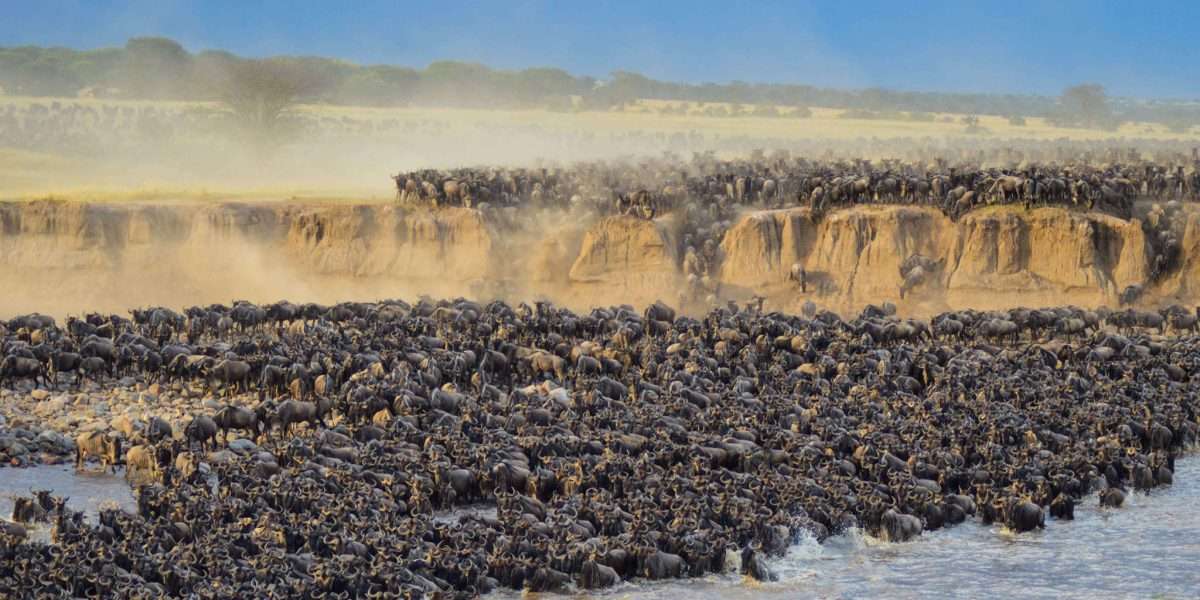
Africa’s wildlife migrations are among the largest seasonal movements of land animals anywhere on Earth.
The best-known example is the Great Migration of the Serengeti-Mara ecosystem, involving roughly 1.5 million wildebeest along with large numbers of zebra and other grazing animals. The animals move between Tanzania’s Serengeti and Kenya’s Maasai Mara ecosystem in response to rainfall, fresh grazing and water availability.
It’s important to understand that the Great Migration is not a single event that happens on one fixed date. The herds are moving throughout the year, which means the best place to see them depends on the month and the particular stage of the migration.
Africa has other major wildlife movements too, including elephant, zebra, and other seasonal migrations across different ecosystems. This is one reason wildlife trips in Africa can be very different depending on when you travel.
Fun fact about Africa: A safari is not simply about finding individual animals. In some ecosystems, you can witness entire populations moving across huge landscapes because of seasonal changes.
10. Africa’s World Heritage Sites Just Hit a Historic Milestone
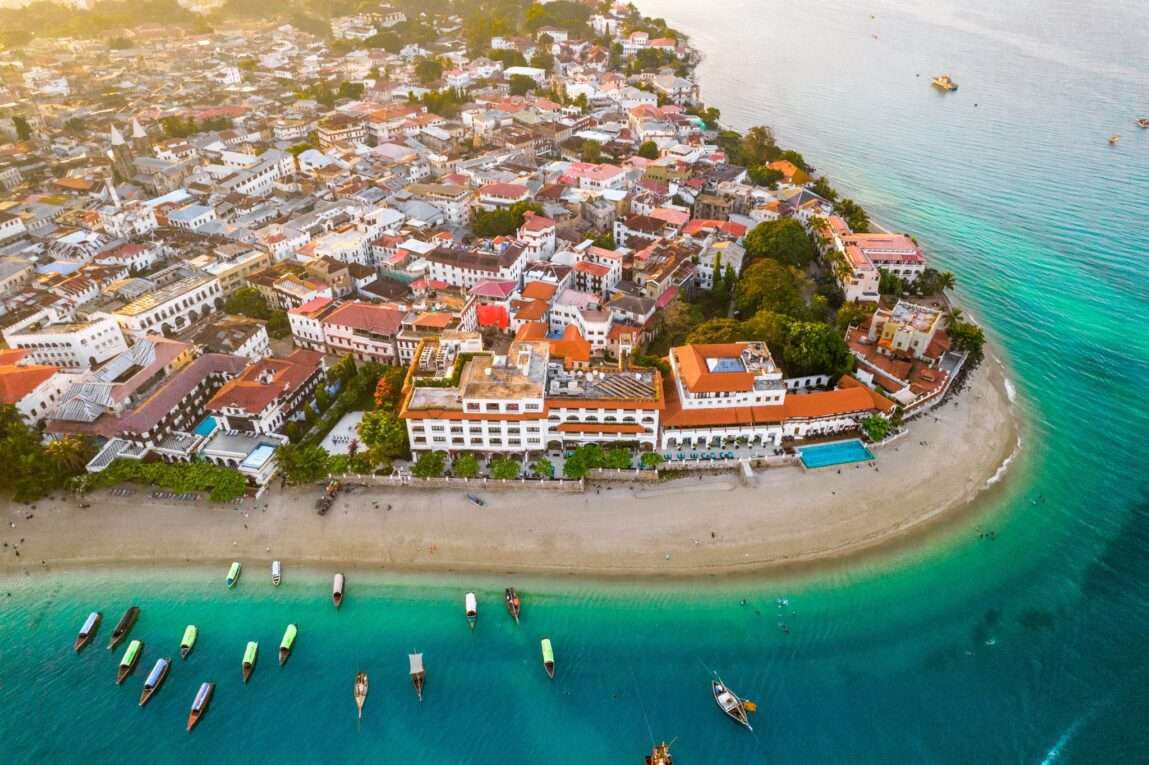
Africa’s importance is not limited to wildlife and natural landscapes. The continent also has a huge cultural and historical heritage, and 2026 brought a genuinely significant milestone for how that heritage gets recognized.
UNESCO’s World Heritage Committee held its 48th session in Busan, South Korea, in late July 2026, and it marked the first-ever World Heritage inscriptions for three African nations: Comoros, São Tomé and Príncipe, and South Sudan. That brought Africa’s total past the roughly 112 sites it held going into the session, continuing a deliberate push, underway since 2018, to raise African representation on the list from just 93 sites to well over 100 today.
These sites include places connected with ancient civilisations, historic cities, archaeological sites, religious heritage, traditional settlements, natural landscapes, national parks, and cultural landscapes. Examples include the ancient city of Timbuktu in Mali, the historic centre of Cairo in Egypt, the rock-hewn churches of Lalibela in Ethiopia, Robben Island in South Africa, and the natural landscapes of the Serengeti.
UNESCO’s own reporting is candid that African heritage remains underrepresented on the global list relative to the continent’s size and history, and that conservation needs across these sites remain significant.
So one of the most useful things to remember about Africa is that its attractions are not limited to safaris, and its cultural recognition on the world stage is still actively growing.
Bonus Africa Facts You Should Know
The 10 facts above cover the main points, but Africa has a few more interesting details worth knowing.
Madagascar is an island country with exceptional endemic wildlife. Separated from mainland Africa by the Mozambique Channel, it’s famous for species found nowhere else, including dozens of lemur species. Its long geographic isolation has produced one of the world’s most distinctive island ecosystems.
Africa contains both rainforest and desert. The continent holds major tropical rainforest ecosystems in the Congo Basin alongside enormous desert regions in the north and southwest, so it can’t accurately be described as either a “desert continent” or simply a “safari continent.”
Africa has major cultural and historical centres. Cities such as Cairo, Marrakech, Timbuktu, Addis Ababa, Lagos, Dakar, Johannesburg, and Cape Town have very different histories and identities. Africa’s urban story is as diverse as its natural landscapes.
Why Are These Facts About Africa Important?
The most interesting thing about Africa may be that no single fact can describe it.
It’s a continent of more than 1.5 billion people, dozens of countries, thousands of languages, enormous ecosystems and a human history stretching back hundreds of thousands of years. It has deserts and rainforests, mountains and coral islands, ancient cities and rapidly growing modern cities. It’s also home to some of the world’s most important wildlife landscapes.
That diversity is exactly why travelling through Africa can feel very different from visiting a single type of destination. A Tanzania safari, a Morocco city break, a gorilla trek in Rwanda, a Cape Town holiday or a beach trip in Zanzibar can all be described as an African holiday, yet the experiences have very little in common.
Experience Africa for Yourself With TourwithPipi

Reading interesting facts about Africa is one thing. Seeing the continent yourself is another.
You can follow the Great Migration across the Serengeti, look for elephants in Kenya, trek to mountain gorillas in Uganda or Rwanda, climb Kilimanjaro, or explore the landscapes of Tanzania. Explore our Kenya safaris or Tanzania safaris for itineraries built around what interests you most.
Contact the team on WhatsApp and tell us where you want to go, when you want to travel and what you want to experience.
Frequently Asked Questions
How many countries are in Africa?
Africa is generally counted as having 54 internationally recognised sovereign countries. The African Union has 55 member states because its membership includes the Sahrawi Arab Democratic Republic.
What is Africa famous for?
Africa is famous for its wildlife, safaris, diverse cultures, ancient civilisations, deserts, rainforests, mountains, beaches and rich archaeological history.
How many people live in Africa?
The UN’s 2025 regional data puts Africa’s population at about 1.55 billion people.
How many languages are spoken in Africa?
UNESCO estimates roughly 1,500 to 3,000 languages are spoken across Africa, depending on how languages and varieties are classified.
Why is Africa called the cradle of humankind?
Because fossil, archaeological and genetic evidence shows that our species and earlier human relatives evolved in Africa. Homo sapiens evolved in Africa at least around 300,000 years ago, and new fossil discoveries, like a 2.6-million-year-old Paranthropus jawbone found in Ethiopia and published in January 2026, are still actively expanding that story.
What is the largest desert in Africa?
The Sahara is Africa’s largest desert and the world’s largest hot desert. Antarctica is technically the world’s largest desert overall, since deserts are defined by low precipitation, not temperature.
What is the highest mountain in Africa?
Mount Kilimanjaro in Tanzania, reaching approximately 5,895 metres above sea level.
What is Africa’s largest lake?
Lake Victoria, at approximately 68,800 square kilometres, Africa’s largest lake by surface area and the world’s largest tropical lake.
What wildlife is Africa famous for?
Africa is particularly known for lions, elephants, leopards, cheetahs, rhinos, buffalo, giraffes, zebras, wildebeest, gorillas, chimpanzees and many other mammals and birds.
How many UNESCO World Heritage Sites does Africa have?
Just over 112 as of mid-2026, a number that grew further after UNESCO’s July 2026 session in Busan, which marked the first-ever World Heritage inscriptions for Comoros, São Tomé and Príncipe, and South Sudan.
Blog Summary
- Africa’s population reached approximately 1.55 billion in 2025, with more than 60% of the continent under age 25.
- Africa has 54 internationally recognised countries, though the African Union counts 55 member states.
- UNESCO estimates 1,500 to 3,000 languages are spoken across the continent, about a third of the world’s total.
- Homo sapiens evolved in Africa at least 300,000 years ago, and a January 2026 discovery of a 2.6-million-year-old Paranthropus jawbone in Ethiopia is still reshaping that story.
- The Sahara is the world’s largest hot desert at roughly 9 million square kilometres, and Lake Victoria is Africa’s largest lake at about 68,800 square kilometres.
- Africa’s UNESCO World Heritage Site count passed a milestone in July 2026, with Comoros, São Tomé and Príncipe, and South Sudan receiving their first-ever inscriptions.
Contact the team on WhatsApp to start planning a Kenya or Tanzania safari and see some of these facts for yourself.


