
A white giraffe is real, but it is not albino. The animal’s pale coat comes from a rare condition called leucism, and right now there is only one known white giraffe alive, a solitary male living under armed protection in Kenya’s Ishaqbini Hirola Community Conservancy.
He once had a mother and a younger sibling. Poachers killed them both in 2020. Conservationists fitted him with a GPS tracker soon after, and he has spent the years since roaming his home range alone, watched over by rangers who check his location every hour.
This guide explains what actually causes a giraffe to turn white, clears up the albino confusion, and brings his story up to date for 2026.
What Causes a Giraffe to Be White? Leucism vs Albinism
People searching for an “albino giraffe” are almost always picturing this animal, but the label is wrong. True albinism removes pigment everywhere, skin, hair, and eyes, which is why albino animals typically have pink or red eyes. This white giraffe’s eyes are dark and completely normal.
What he actually has is leucism, a genetic condition that reduces pigment in skin and hair while leaving the eyes and other soft tissue untouched. Think of it as a dimmer switch on color rather than an off switch. Some leucistic giraffes still carry faint reticulated patterning that’s visible up close or in bright light, a ghost of the pattern a normally colored giraffe would show clearly.
Leucism shows up across the animal kingdom, in birds, reptiles, and other mammals, but it is exceptionally rare in giraffes specifically. That rarity is exactly why this one giraffe has made international headlines more than once.
Is There a Black and White Giraffe?
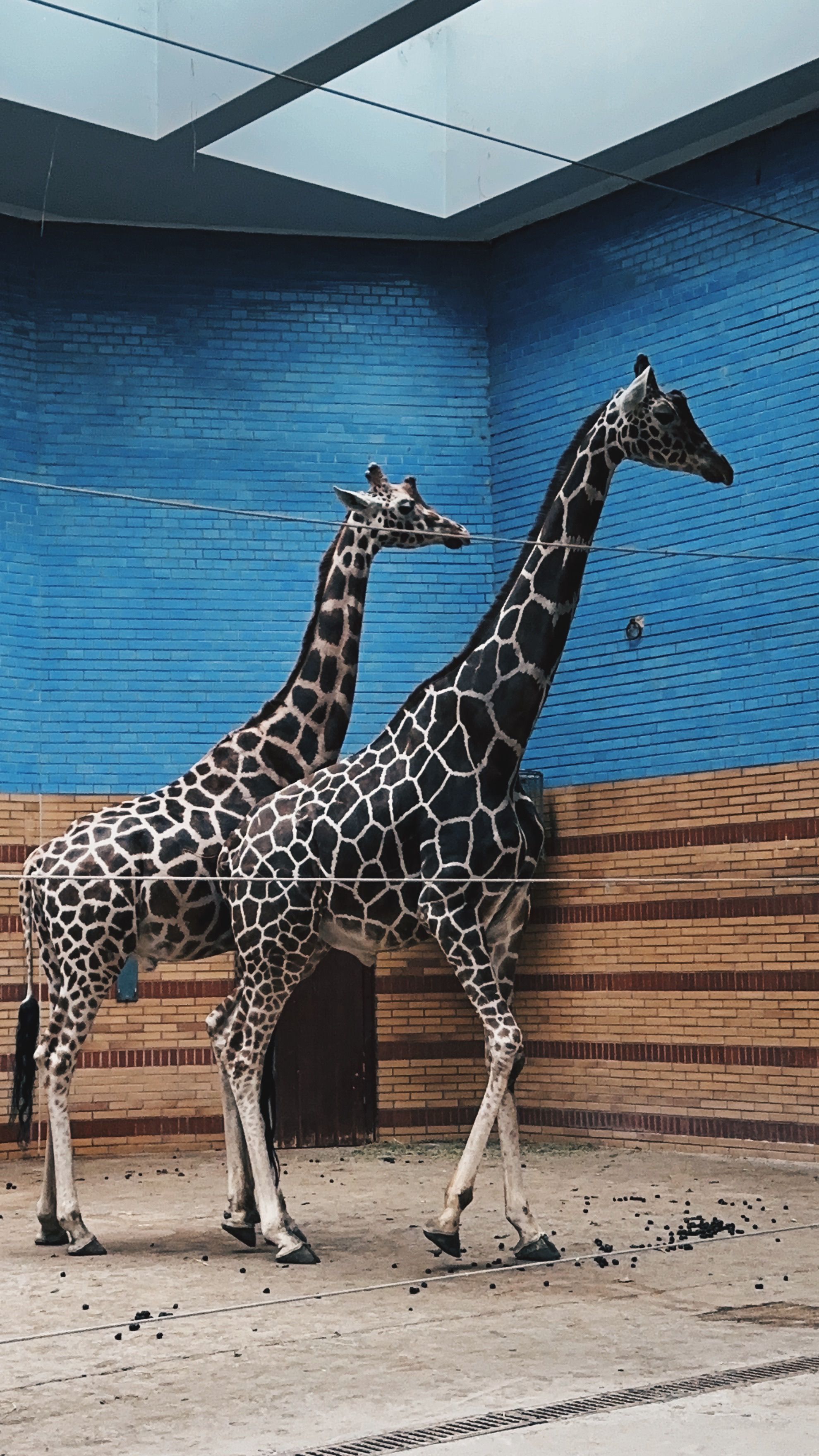
Not in the way the phrase usually implies. People searching “black and white giraffe” are often picturing something closer to a piebald animal, one with large, blotchy patches of white mixed into an otherwise normal coat, rather than a giraffe that’s uniformly pale.
Piebald and leucistic are related but different things. Piebald coloring comes from patchy pigment loss, producing a mixed, mottled look. Leucism reduces pigment more broadly across the coat. The famous Kenyan giraffe is leucistic, not piebald, so his coloring reads as pale all over with faint markings still visible in places, rather than bold black-and-white patches.
The Story of Kenya’s White Giraffe
A Family, First Spotted in 2017
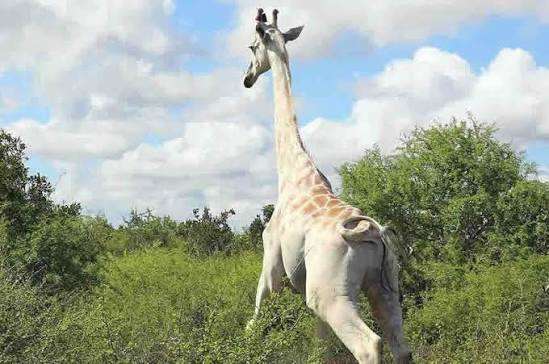
The story began in the Ishaqbini Hirola Community Conservancy in Garissa County, northeastern Kenya, where rangers and local villagers first documented a leucistic female giraffe and her calf. A third, adult male giraffe was often seen traveling with them. It was a genuine rarity: reticulated giraffes, the species found in this part of Kenya, had never been photographed with this coloring before.
The sightings drew global attention. Camera crews, wildlife photographers, and conservation groups all wanted a look at what quickly became known as the world’s only white giraffe family.
Poachers Killed the Mother and Calf in 2020
In March 2020, rangers found the remains of the mother and her calf, killed by poachers. The bodies had gone undiscovered for months. Mohammed Ahmednoor, the conservancy’s manager at the time, called it a devastating loss, not just for the local community but for a species already under serious pressure across the region.
The male survived. He was the only one of the three left.
A GPS Tracker, and Round-the-Clock Protection
Later that year, conservationists fitted the surviving male with a solar-powered GPS tracker attached to one of his ossicones, the horn-like knobs on a giraffe’s head. The device reports his location to rangers every hour, letting them respond quickly if he wanders toward an area where poachers have been active before.
He has stayed under close watch ever since. Reports through late 2025 confirm he remains alive, still roaming his home range, still tracked hourly, with rangers treating his protection as an ongoing, indefinite commitment rather than a short-term response to the 2020 killings.
A Possible New Sighting in 2026
Reports surfaced in early 2026 describing a fresh white giraffe sighting in the Ishaqbini area, reviving hope that leucism might be appearing again in the local population. As of this writing, that report hasn’t been independently confirmed with the same rigor as the original 2017 documentation, so it’s worth treating as a hopeful lead rather than a confirmed fact. If it holds up, it would mean the trait hasn’t disappeared from this giraffe population entirely.
Where Do White Giraffes Live?
Every confirmed sighting of a leucistic giraffe has come from just two places on Earth.
Kenya: the Ishaqbini Hirola Community Conservancy in Garissa County is home to the surviving male, and it’s where every documented white giraffe sighting in Kenya has occurred.
Tanzania: a leucistic Masai giraffe calf named Omo was first spotted in Tarangire National Park in January 2016, roughly two months before the first Kenyan sighting. Omo was last confirmed alive and thriving as a young giraffe in the years following her discovery, though no reliable recent sighting has been reported since, so her current status is genuinely unknown rather than confirmed either way.
Giraffes Just Became Four Species, Not One
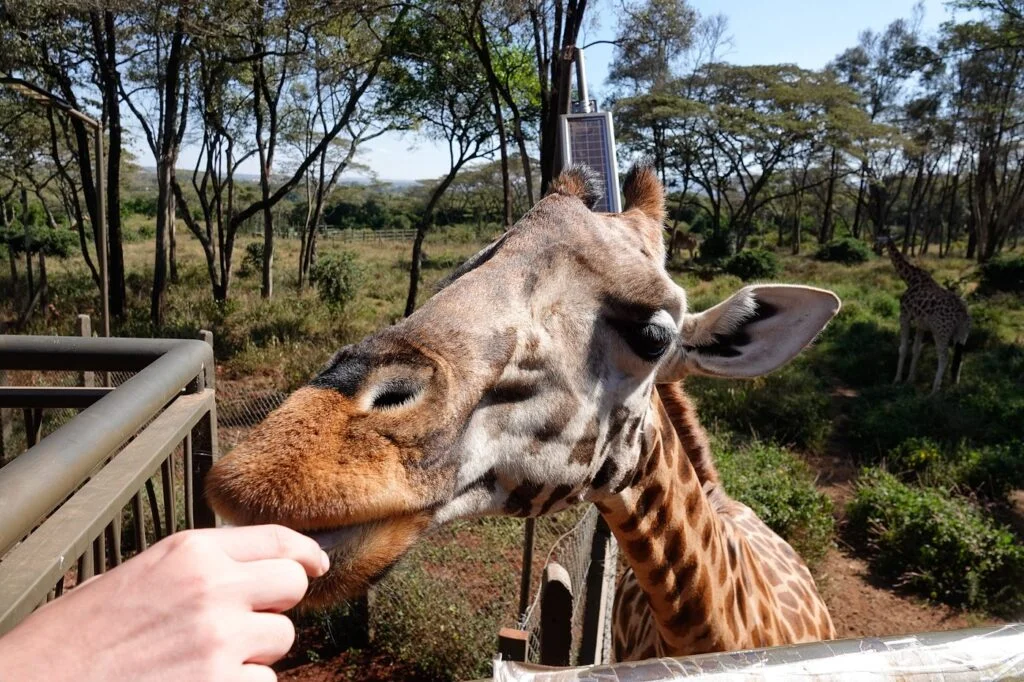
For most of the last century, every giraffe on the continent was classified as a single species. In August 2025, the IUCN formally adopted a new taxonomy, splitting giraffes into four distinct species: the Northern giraffe, the Reticulated giraffe, the Masai giraffe, and the Southern giraffe, each with its own separate conservation status.
This matters directly to the white giraffe’s story. He belongs to the reticulated giraffe, now recognized as its own species and listed as Endangered, with a current population estimated between roughly 15,780 and 20,901 individuals, down from around 36,000 in the 1980s. That’s a decline of more than half in under 40 years. Under the old single-species system, this steep regional decline was partly masked by healthier numbers elsewhere on the continent. The new classification makes the reticulated giraffe’s situation impossible to hide behind an average.
Are White Giraffes Endangered?
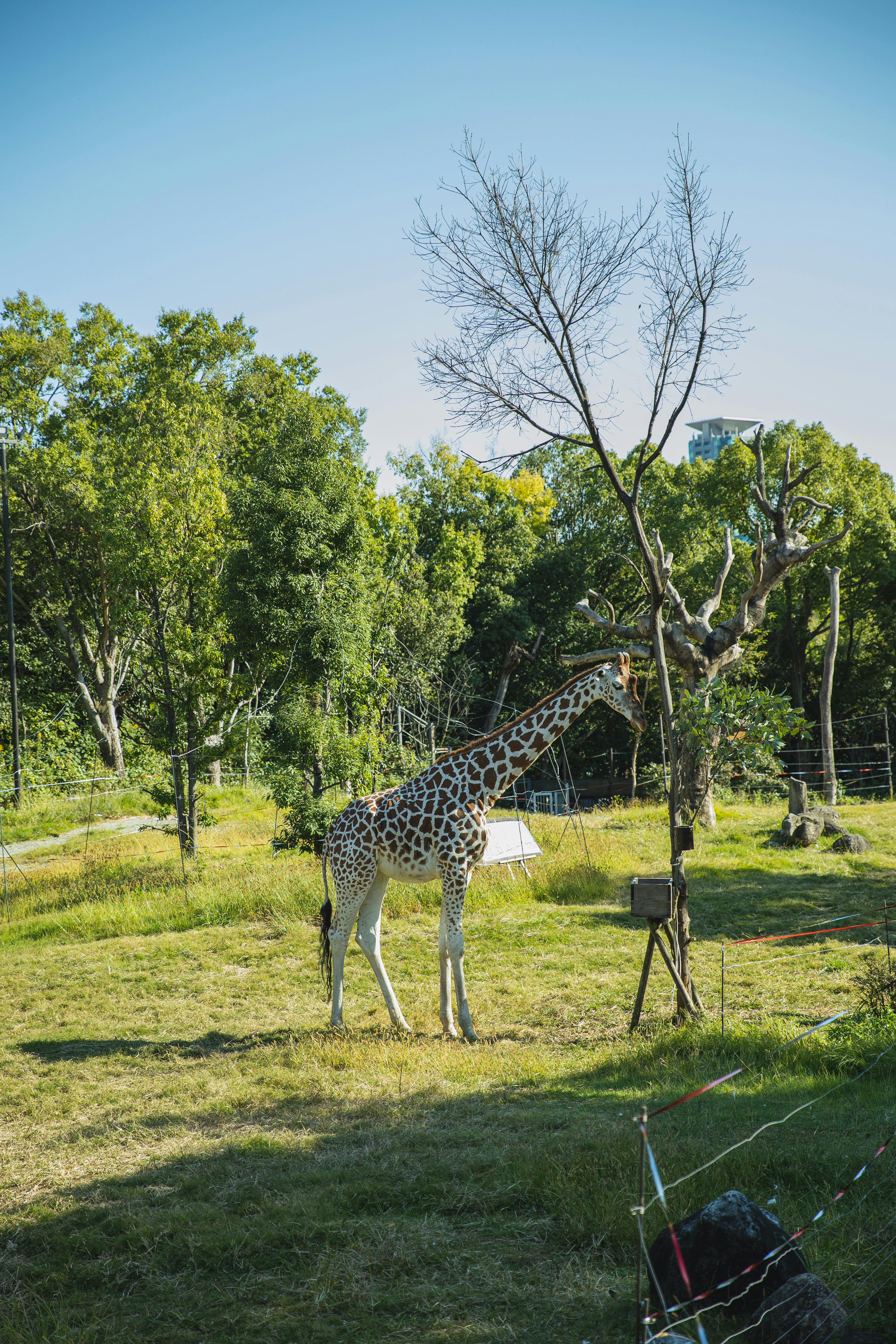
Every white giraffe carries the same endangered status as the rest of its species, and in this case, that status is serious. Reticulated giraffes are classified as Endangered, and Masai giraffes, Omo’s species, have fallen from an estimated 71,000 individuals three decades ago to under half that number today.
Being leucistic doesn’t add a separate threat category, but it does add a very specific danger: visibility. A pale giraffe stands out sharply against the landscape, which makes him easier for predators to spot and, far more dangerously, easier for poachers to target. That’s precisely why the surviving Kenyan male has round-the-clock GPS monitoring that a normally colored giraffe simply doesn’t get.
Can You See a White Giraffe on Safari?
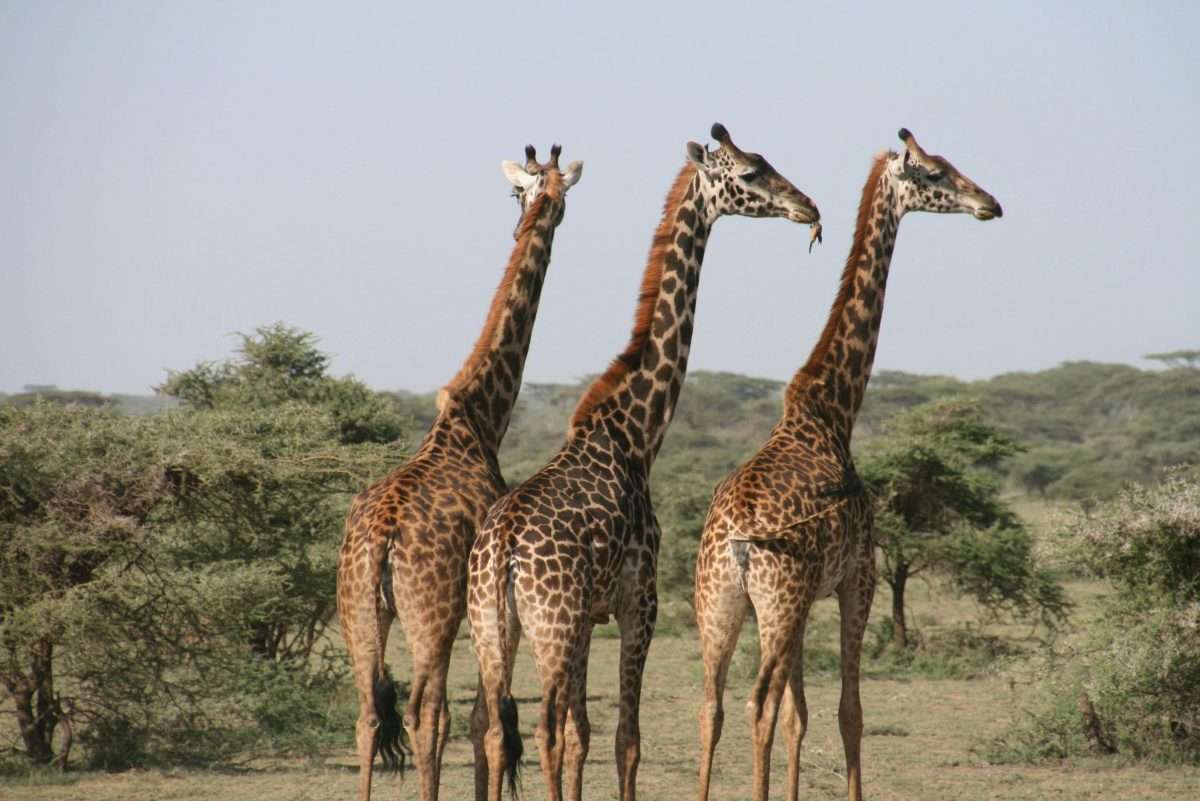
Realistically, no. The one confirmed white giraffe alive today lives inside a protected community conservancy with restricted access, specifically to keep him safe, not to showcase him to visitors. His location isn’t shared publicly, for his own protection.
What you can reliably see on a Kenya or Tanzania safari are the region’s normally colored giraffes, and there are several distinct kinds worth knowing before you go. The reticulated giraffe, with its sharp, tile-like pattern, is common across northern Kenya, including the Samburu and Laikipia region. The Masai giraffe, with a more jagged, oak-leaf-shaped pattern, is the giraffe you’ll see across the Serengeti and Masai Mara ecosystem.
Plan a Safari to See Kenya and Tanzania’s Giraffes
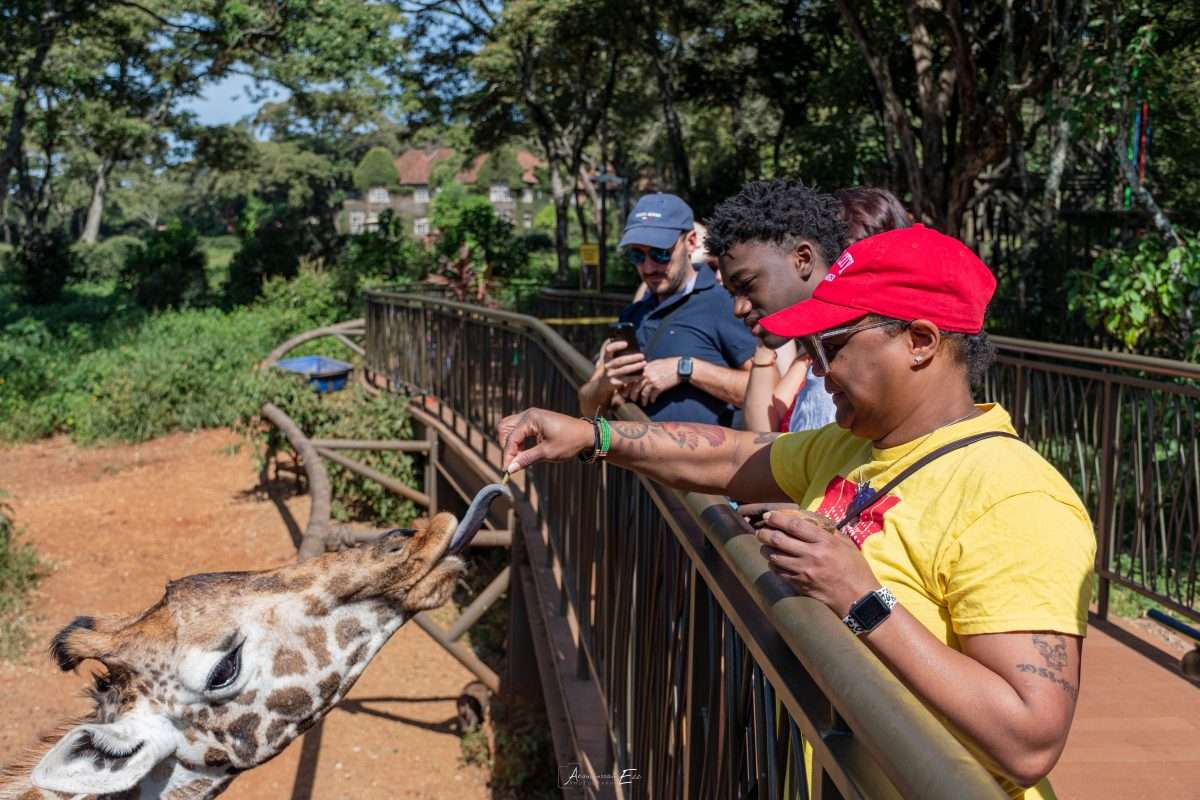
You won’t see the white giraffe, but you will see real, wild giraffes on almost every game drive. Explore our Kenya safaris for reticulated giraffe country around Samburu, or our Tanzania safaris for Masai giraffe sightings across the Serengeti.
Contact the team on WhatsApp to start planning.
Frequently Asked Questions
Is the white giraffe albino?
No. The condition is leucism, not albinism. A true albino animal lacks pigment everywhere, including the eyes, which typically appear pink or red. This giraffe has completely normal, dark eyes, with pigment loss limited mainly to his skin and coat.
Are there any white giraffes left?
Yes, one confirmed individual: a male living in Kenya’s Ishaqbini Hirola Community Conservancy, protected by a GPS tracker and monitored hourly by rangers. His mother and younger sibling, also leucistic, were killed by poachers in 2020.
What is the difference between a white giraffe and a black and white giraffe?
A white giraffe, in the documented Kenyan case, has leucism, an overall pale coat with faint patterning still visible in places. A “black and white” giraffe more closely describes piebald coloring, patchy, blotchy areas of pigment loss mixed with normal color, which is a related but distinct condition. No confirmed piebald giraffe sighting matches the famous Kenyan case.
Where do white giraffes live?
Every confirmed sighting has come from two places: Kenya’s Ishaqbini Hirola Community Conservancy in Garissa County, and Tanzania’s Tarangire National Park, where a leucistic Masai giraffe named Omo was documented in 2016.
Why are white giraffes more at risk than normally colored ones?
Their pale coloring makes them far easier to spot, both for predators and for poachers specifically seeking out a rare, high-value target. That’s why the surviving Kenyan male has continuous GPS monitoring that other giraffes in the same conservancy don’t receive.
Can I visit or see the white giraffe in Kenya?
No, not directly. He lives under protected, restricted access specifically to keep his location shielded from potential poachers. Conservationists don’t publish his whereabouts, even to visitors.
How many giraffe species are there now?
Four, as of the IUCN’s August 2025 reclassification: the Northern giraffe, Reticulated giraffe, Masai giraffe, and Southern giraffe, each now assessed and listed separately rather than treated as one global population.
Blog Summary
- A white giraffe is not albino. The correct condition is leucism, which reduces skin and coat pigment while leaving the eyes normal and dark.
- Only one confirmed white giraffe is known to be alive today, a male in Kenya’s Ishaqbini Hirola Community Conservancy.
- His mother and younger sibling, also leucistic, were killed by poachers in 2020. He has worn a GPS tracker since, monitored hourly by rangers.
- A “black and white giraffe” more accurately describes piebald coloring, a different and even rarer condition than the leucism seen in the documented Kenyan case.
- In August 2025, the IUCN reclassified giraffes into four separate species. The reticulated giraffe, the white giraffe’s species, is now listed as Endangered in its own right.
- You can’t reliably see a white giraffe on safari, since his location is kept private for his safety, but reticulated and Masai giraffes are common, reliable sightings across Kenya and Tanzania.
Contact the team on WhatsApp to plan a Kenya or Tanzania safari built around real giraffe sightings, from the reticulated giraffes of Samburu to the Masai giraffes of the Serengeti and Masai Mara.


