
Quick Answer:
Many people assume hippos are excellent swimmers, but the truth is surprising. A hippopotamus cannot swim like dolphins, seals, or otters. Instead, hippos move by walking, galloping, or bouncing along the bottom of rivers and lakes, using their powerful legs to push themselves forward. They can travel underwater at speeds of up to 8 km/h (5 mph) and hold their breath for around five minutes, making them perfectly adapted to an aquatic lifestyle despite not being true swimmers.
Can a Hippopotamus Swim?
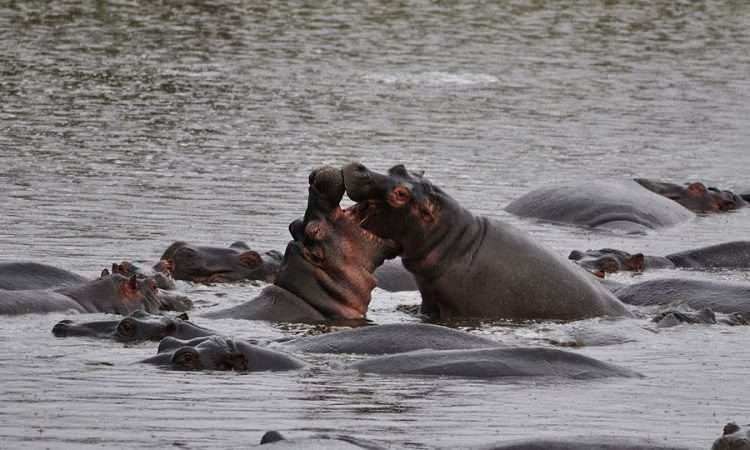
The simple answer is no.
Although they spend most of their lives in rivers, lakes, and wetlands, hippopotamuses cannot swim in the traditional sense.
Unlike whales, dolphins, seals, or otters, hippos do not float through the water using fins, flippers, or tail propulsion. Instead, they remain almost completely submerged and travel by walking or galloping across the riverbed.
In reality, they are continuously pushing off the bottom with their legs rather than floating through open water.
This unique behaviour makes hippos one of the few large mammals that live in water without actually being true swimmers.
Why Can’t Hippos Swim?
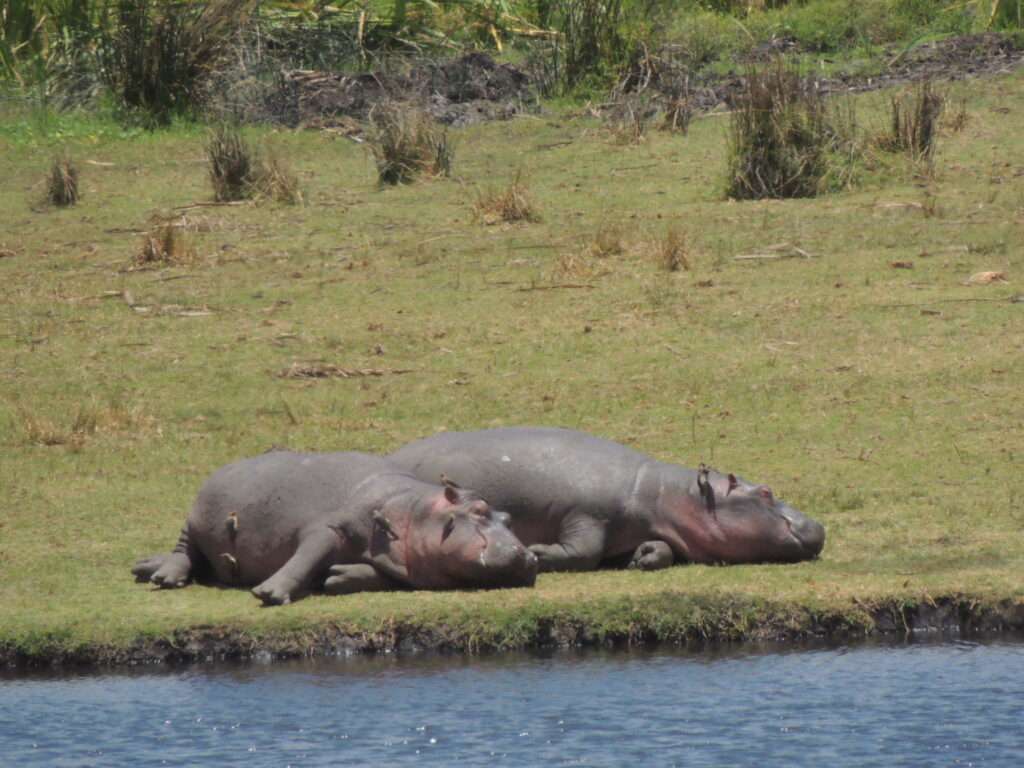
The main reason hippos cannot swim is their body structure.
Their bones are extremely dense, making them too heavy to float naturally. They also have short, powerful legs built for supporting their weight rather than paddling through water. Unlike aquatic mammals, hippos have no flippers, webbed feet, or strong tail to generate propulsion.
These adaptations cause them to sink, allowing them to move efficiently along the bottom instead of floating on the surface.
How Do Hippos Move Through Water?
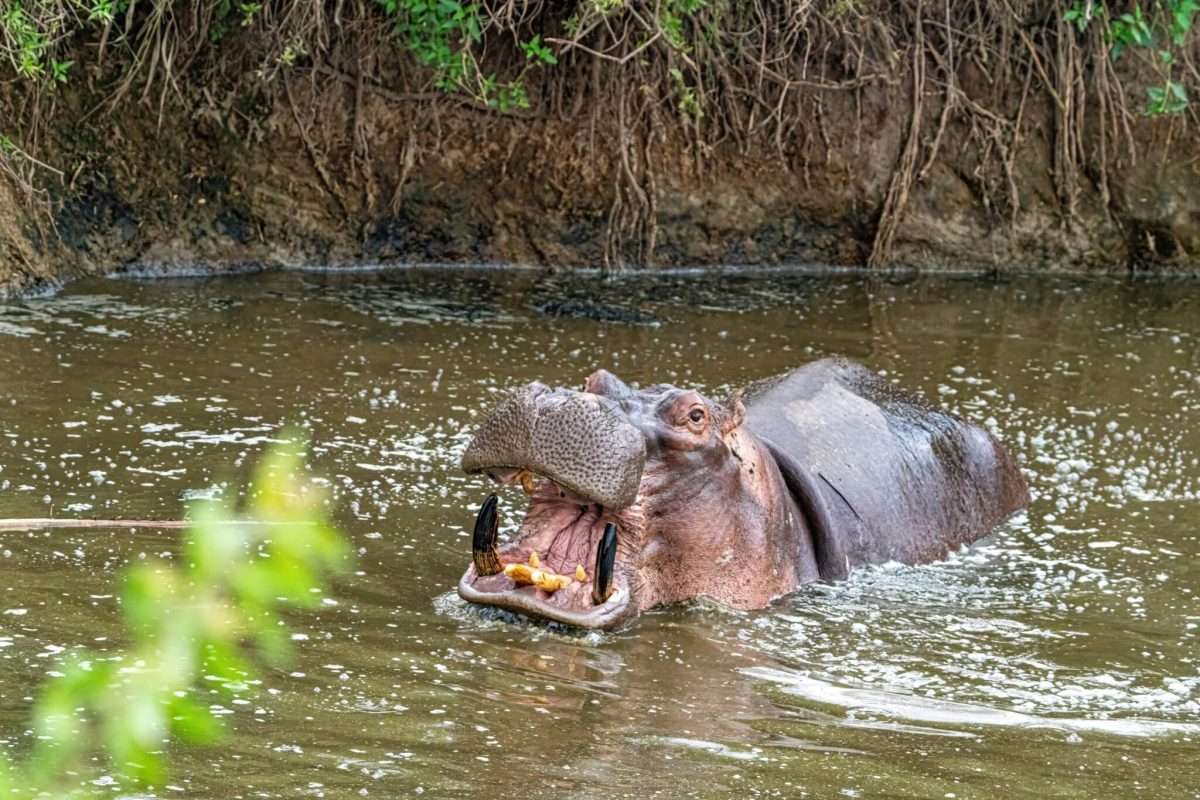
Although they cannot swim, hippos are perfectly adapted for life in water.
They move by pushing off the riverbed with their powerful legs, creating a slow underwater gallop. In deeper water, they briefly leap from the bottom before touching down again, giving the appearance of swimming.
Hippos surface every 3 to 5 minutes to breathe and can remain underwater for around five minutes. Even while sleeping, they automatically rise to the surface, inhale, and submerge again without fully waking.
How Fast Can a Hippo Swim?
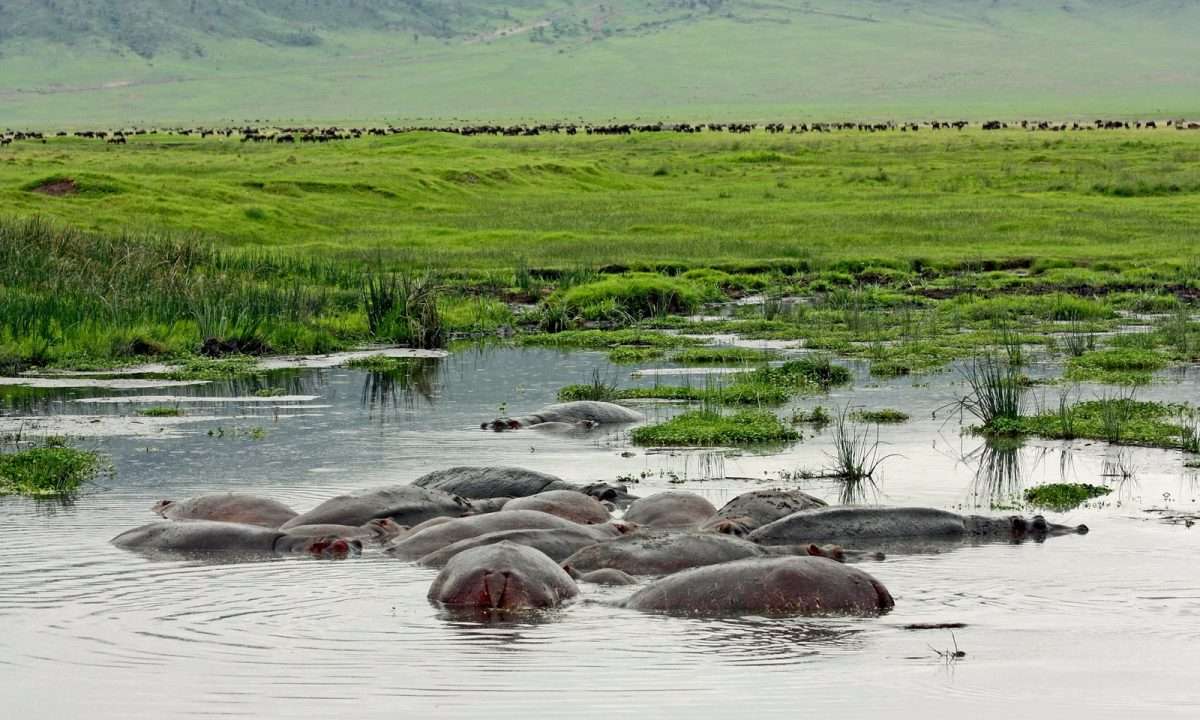
Since hippos do not actually swim, their underwater speed comes from walking and bounding along the bottom.
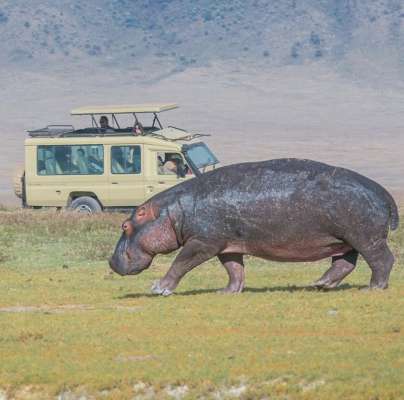
They can travel through water at speeds of up to 8 km/h (5 mph). On land, however, they are much faster and can reach 30 to 35 km/h (19 to 22 mph) over short distances.
This makes hippos significantly faster on land than they are in water, despite spending most of their lives in aquatic environments.
Aquatic Adaptations That Help Hippos Live in Water
Although hippopotamuses cannot swim, they have several adaptations that make them perfectly suited for an aquatic lifestyle.
Their eyes, ears, and nostrils are positioned on top of the head, allowing them to stay almost completely submerged while still seeing, hearing, and breathing.
Hippos also produce a reddish oily secretion, often called “blood sweat.” It is not blood but a natural sunscreen and antibacterial substance that protects their thick skin from the African sun and infections.
A transparent membrane covers their eyes underwater, improving visibility while protecting them from debris. They can also close their ears and nostrils when submerged to prevent water from entering.
How Do Hippos Behave in Water?
Hippos spend most of their day submerged for up to 16 hours to stay cool and protect their skin, gathering in social groups of 10 to 30 individuals where they rest, interact, and defend territories before leaving the water at night to feed; water also supports mating and calving, while dominant males aggressively guard their river or lake territories from rivals.
Hippos vs Other Aquatic Mammals
Hippos are often mistaken for strong swimmers, but they move through water very differently from other aquatic animals.
| Animal | How They Move in Water |
|---|---|
| Hippo | Walks and gallops along the riverbed |
| Dolphin | Swims using its tail flukes |
| Whale | Propels itself with powerful tail movements |
| Seal | Swims using flippers |
| Crocodile | Swims using a muscular tail |
Interestingly, although hippos cannot swim, genetic research shows they are more closely related to whales and dolphins than to any other living land mammal.
Can Hippos Drown?
Yes. Like all mammals, hippos must breathe air and can drown if they cannot reach the surface.
This is uncommon because hippos naturally surface every 3 to 5 minutes. Even while sleeping underwater, they automatically rise to breathe before sinking back down without waking.
Drowning usually occurs only in unusual situations, such as when an injured or trapped hippo cannot surface.
Ready to See Hippos in the Wild?
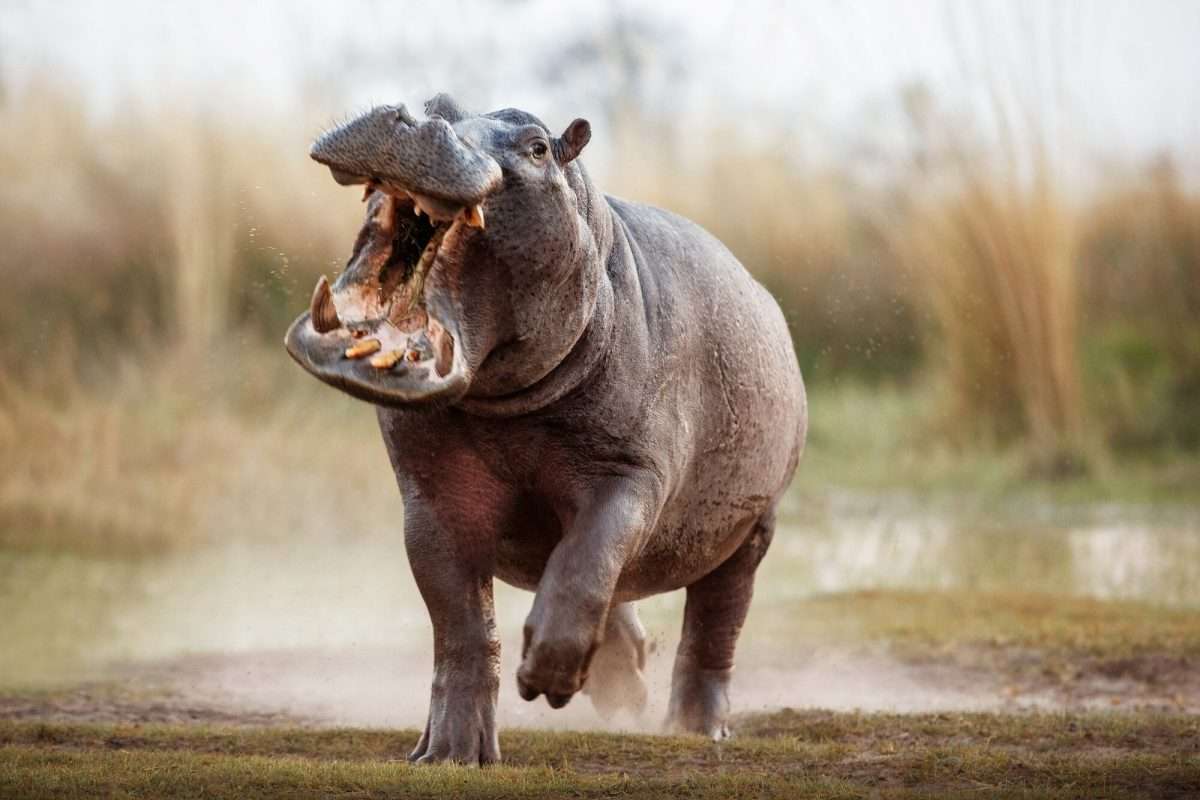
Watching hippos in their natural habitat is completely different from seeing them in documentaries. On a safari in Kenya or Tanzania, you can observe pods resting in rivers during the day, hear their powerful grunts echo across the water, and watch them emerge at sunset to begin their nightly grazing.
At TourwithPipi, our tailor-made luxury safaris take you to some of Africa’s best hippo viewing destinations, including the Maasai Mara, Serengeti, Ngorongoro Crater, and the Mara River. With experienced guides, you’ll learn about hippo behavior, territorial displays, underwater movements, and the vital role these remarkable animals play in Africa’s freshwater ecosystems, all while enjoying safe and responsible wildlife encounters.
Frequently Asked Questions
Can a hippopotamus swim?
No. A hippopotamus cannot swim like seals or dolphins. Instead, it walks and gallops along the bottom of rivers and lakes.
How fast can a hippo swim?
Hippos move through water at approximately 8 km/h (5 mph) by pushing themselves along the riverbed rather than swimming.
Can hippos float?
Not naturally. Their dense bones make them sink, allowing them to move efficiently underwater instead of floating.
How long can a hippo stay underwater?
Hippos usually remain underwater for 3 to 5 minutes before surfacing for air, although they can occasionally stay submerged slightly longer.
Why do hippos spend so much time in water?
Water helps regulate their body temperature, protects their sensitive skin from the sun, provides a place to rest, socialize, mate, and defend territory during the day.


