
No, you cannot. The simple answer is that climbing Kilimanjaro without a licensed guide is against the law. This rule is strictly enforced by the Kilimanjaro National Park Authority to protect both climbers and the mountain.
Why is a Guide Required on Kilimanjaro?
This mandatory guide rule, established in 1991, exists for critical reasons that go far beyond mere regulation. With around 30,000 people attempting the climb each year, structured management is essential for safety and conservation.
Here is why you must have a guide:
For Your Absolute Safety: A guide is your lifeline. They are trained to recognize and respond to altitude sickness, navigate changing weather, and handle emergencies. Trying to climb Kilimanjaro without this expertise is extremely dangerous.
To Follow Park Regulations: The park mandates that all climbers stay on formal trails and sleep at designated campsites. Your guide ensures compliance, protecting the fragile ecosystem from damage.
For Navigation and Logistics: The trails can be unclear, especially in poor weather. Your guide knows every turn. They also manage all permits, campsite bookings, and interactions with park officials, which are impossible for an independent climber to arrange alone.
To Preserve the Mountain: The “Leave No Trace” principle is enforced. Guides ensure all waste is properly managed, helping to keep Kilimanjaro pristine for future generations.
In short, a guide is not a luxury; they are a necessary partner for a legal, safe, and responsible climb. This rule ensures that every adventurer has the expert support needed to tackle the mountain’s challenges respectfully and successfully.
What Other Support Crew Will You Have Besides the Guide?
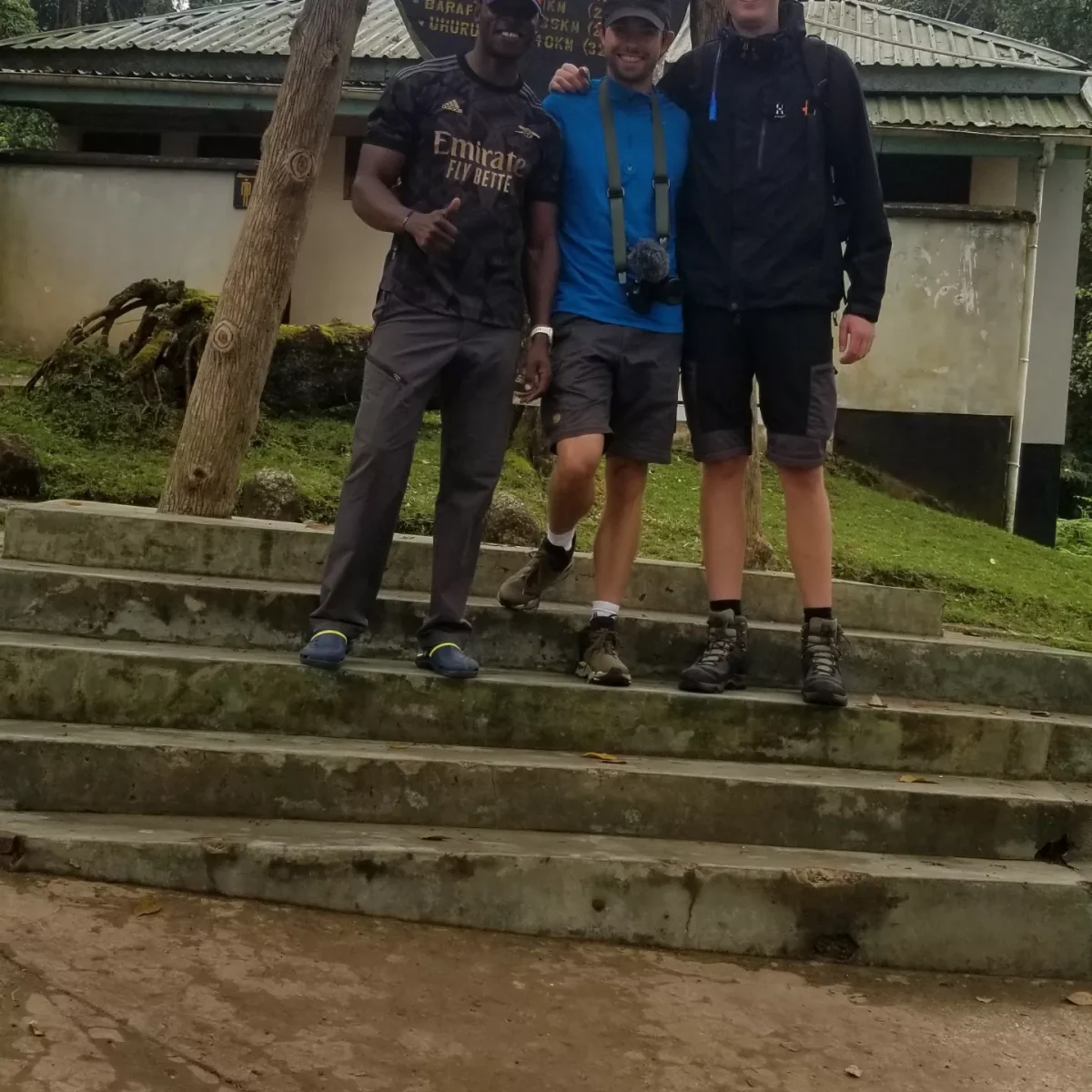
Your guide leads the way, but a successful Kilimanjaro climb relies on an entire team working behind the scenes. This dedicated crew is what makes your summit attempt possible.
The Essential Role of the Porters
Porters are the backbone of your expedition. Their hard work allows you to focus on the climb itself.
What They Carry: Porters transport all the heavy equipment you do not see. This includes your main luggage, the kitchen tent, dining tent, sleeping tents, food supplies, cooking gear, and even portable toilets. They carry up to 20kg each, expertly navigating the trails.
How They Support You: Porters trek ahead of your group. By the time you arrive at camp each day, your tents are set up, water is boiling, and the dining area is ready. This logistical miracle removes an immense physical burden, conserving your energy for the ascent.
The Complete Support Staff Ratio
A reputable operator provides a full support team. The standard ratio is about three to four support staff for every one climber. For a group of four trekkers, you will typically have a team of 12-16 people, including guides, assistant guides, cooks, and porters.
This ratio is not a luxury; it is a necessity. It ensures safety, proper service, and that all park rules for group sizes and equipment transport are met. A climb without this full support would require you to carry all your own gear, making the high-altitude trek nearly impossible and far more dangerous.

What is the Role of Your Kilimanjaro Guide?
Your guide is much more than a trail leader. They are your mountain expert, medic, decision-maker, and primary source of safety from start to summit.
1. Leader and Pace Setter: Your guide sets the critical “pole pole” (slowly slowly) pace, which is your best defense against altitude sickness. They manage daily itineraries and rest stops for optimal acclimatization.
2. Safety Manager and Medic: This is their most vital role. Guides are trained in wilderness first aid and altitude sickness recognition. They conduct daily health checks, monitor your condition closely, and make the crucial—sometimes difficult—call to descend if your health is at risk.
3. Expert Navigator and Rule Enforcer: Guides know every official trail and campsite. They ensure the group follows all park regulations, checks in at every camp, and stays on the designated route, which is mandatory for safety and conservation.
4. Your Teacher and Motivator: A great guide enriches your journey with knowledge about the mountain’s geology, ecology, and history. They provide encouragement, manage team morale, and are your steady source of support when the climb gets tough.
In essence, your guide transforms a difficult high-altitude hike into an achievable adventure. They shoulder the responsibility so you can focus on the personal challenge and breathtaking experience of climbing Kilimanjaro.
Why Choose TourwithPipi for Your Kilimanjaro Climb?
Choosing the right team is the most important decision you’ll make for your Kilimanjaro adventure. At TourwithPipi, we don’t just guide climbs; we build partnerships with our clients and deliver experiences rooted in safety, expertise, and deep local knowledge. Here’s what makes us the right choice for your journey to the roof of Africa.
1. Unmatched Safety Through Expert Guidance
Your safety is our non-negotiable priority. Every TourwithPipi lead guide is a certified Wilderness First Responder with advanced training in high-altitude medicine. We maintain one of the best staff-to-climber ratios on the mountain (at least 4:1), ensuring you receive personalized attention and constant health monitoring. We carry emergency oxygen and comprehensive medical kits on every climb and have verified evacuation protocols in place.
2. Summit Success Built on Smart Acclimatization
We don’t cut corners. We exclusively operate longer, scenic routes like the 8-Day Lemosho and 9-Day Northern Circuit, which are scientifically proven to provide the best acclimatization. This strategic approach is why our climbers consistently achieve outstanding summit success rates. We believe in giving your body the time it needs to adapt safely.
3. A Fully Supported, Worry-Free Experience
From your airport arrival to your summit certificate, we handle every detail. Your climb includes:
All park fees, permits, and transfers.
High-quality, specialized gear (4-season tents, sleeping mats, private toilet tents).
Nutritious meals prepared by our camp chefs and unlimited purified water.
Pre-climb accommodation and a thorough briefing.
4. Ethical Climbing and Local Commitment
We are proud partners of the Kilimanjaro Porters Assistance Project (KPAP). We ensure our entire crew—the guides, cooks, and porters who make your climb possible—receive fair wages, proper equipment, and dignified treatment. We climb responsibly, adhering to strict “Leave No Trace” principles to protect the mountain we call home.
5. Your Personal Journey, Our Shared Goal
Whether you join a group or choose a private solo climb, we are dedicated to your personal achievement. Our team provides the encouragement, knowledge, and unwavering support to help you conquer your challenge, creating not just a climb, but a transformative life experience.
Conclusion
Climbing Kilimanjaro is a profound physical and mental journey. Success depends on three pillars: your preparation, the route you choose, and the team that guides you.
You now understand that preparing your body with a dedicated training plan is essential. You know that selecting a longer route for proper acclimatization is the wisest path to the summit. Most importantly, you see that partnering with a reputable, ethical operator is not an option—it is the foundation of a safe and rewarding climb.
At TourwithPipi, we provide that essential foundation. We combine mandatory safety with proven success, genuine care for our team and environment, and a commitment to your personal triumph.
Ready to take the next step?
Let’s turn your summit dream into a planned adventure. Contact us today to discuss your 2026 climb, ask your questions, and start your journey with a team you can trust.

