
The Kilimanjaro Machame Route is one of the most popular ways to reach the summit of Africa’s highest peak. It offers a balanced mix of challenge, scenery, and acclimatization, which makes it suitable for first-time climbers as well as returning trekkers. If you are planning to start climbing Kilimanjaro Machame Route in 2026, this updated guide helps you understand what to expect and why many travelers choose this trail.
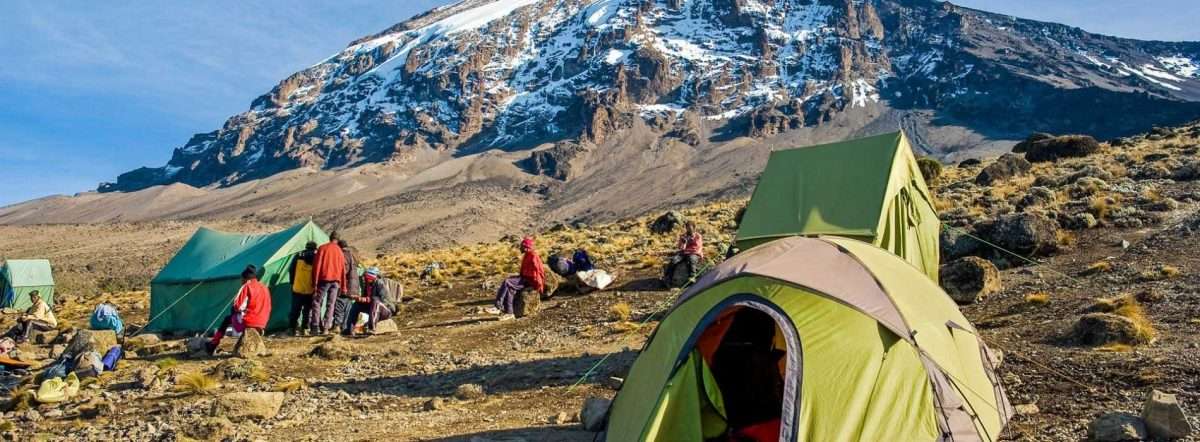
The Mount Kilimanjaro Machame Route is a seven-day itinerary with strong acclimatization support built in. You hike through rainforest, volcanic rock formations, and alpine desert before reaching the arctic summit zone. The terrain changes every day, and the views are some of the best on any Kilimanjaro trail. Many climbers select this route because it provides the ideal balance between trek duration and altitude adaptation.
TourwithPipi offers the 7-Day Kilimanjaro Machame Route climb at $2,199, which includes certified guides, full camping equipment, acclimatization support, meals, hotel nights, and transfers. If you want an itinerary that maximizes time on the trail and increases your success rate, this route remains one of the most reliable choices.
Why the Kilimanjaro’s Machame Route Is So Popular for Climbing
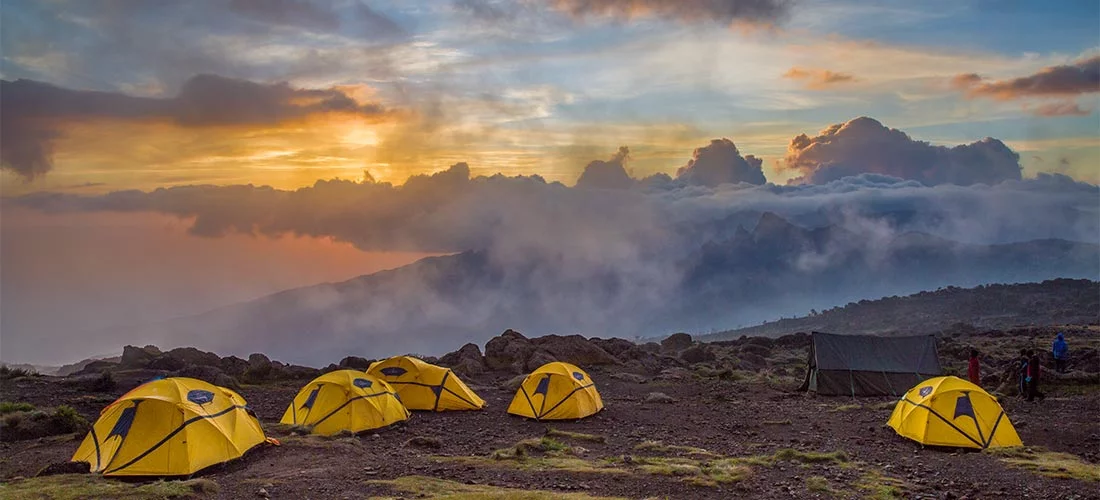
More than one-third of Kilimanjaro climbers now use the Machame Route. It is also known as the Whiskey Route because it requires more effort than the gentler Marangu Route. Although it is labeled as moderately difficult, most healthy hikers with proper preparation successfully complete it.
Scenic variety: You pass through rainforest, moorland, alpine desert, and glacier-covered summit zones.
Better acclimatization: The Machame route follows the “climb high, sleep low” approach, reducing altitude-related risks.
High summit success rate:The seven-day itinerary provides enough time for your body to adjust.
A mix of challenge and comfort:The trail includes iconic sections like the Lava Tower crossing and Barranco Wall, which look intimidating but are manageable with support from experienced guides.
Tent-based trekking experience: Unlike Marangu, the Machame Route to climb Kilimanjaro uses tents and full expedition support, providing flexibility and cleaner camp setups.
Key Machame Route Facts for 2026 Climbers
Total Distance: Approximately 62 km
Duration: 7 days recommended
Summit Altitude: 5,895 m at Uhuru Peak
Difficulty Level: Moderate to challenging
Best Season: January to mid-March and June to October
Route Type: Point-to-point ascent with descent via Mweka Route
Temperatures can vary widely, from warm rainforest conditions at the start to below-freezing temperatures at the summit. Proper layering, hydration, and pacing help you maintain comfort and performance throughout the trek.
Climbing Kilimanjaro Machame Route: Detailed 7-Day Itinerary
This 7-day Kilimanjaro Machame Route itinerary is designed to support strong acclimatization, steady pacing, and a high summit success rate. If you are planning to climb Mount Kilimanjaro via the Machame Route in 2026, this structure gives you a realistic day-by-day breakdown of terrain, elevation, and expectations.
Day 1: Arrival in Moshi
Your journey begins when you arrive at Kilimanjaro International Airport (JRO). A TourwithPipi representative will meet you and drive you to your lodge in Moshi. The property sits near coffee farms with views of Mount Kilimanjaro on clear days.
Later in the evening, you will meet your head guide for a full safety briefing, equipment check, and acclimatization review. You can use the evening to rest, explore Moshi, or enjoy the lodge amenities before the climb begins.
Day 2: Machame Gate (1,800m) to Machame Camp (3,000m)
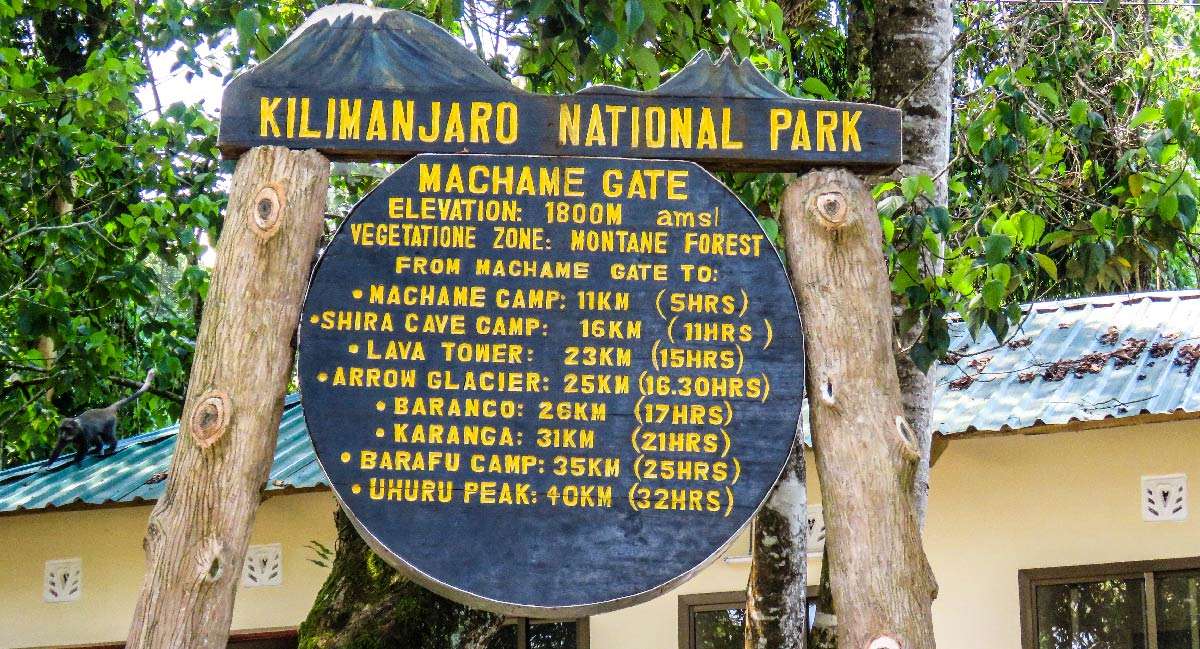
After breakfast, your team will transfer you to Machame Gate, where registration and weighing procedures take place. The first day of trekking leads through dense rainforest with colobus monkeys, tropical birds, and moss-covered trees.
As the elevation increases, the forest thins and the landscape shifts to heath terrain. When you reach Machame Camp, your tent will already be set up and dinner will be served.
Distance: ~11 km
Trekking Time: 5–7 hours
Day 3: Machame Camp to Shira Camp (3,840m)
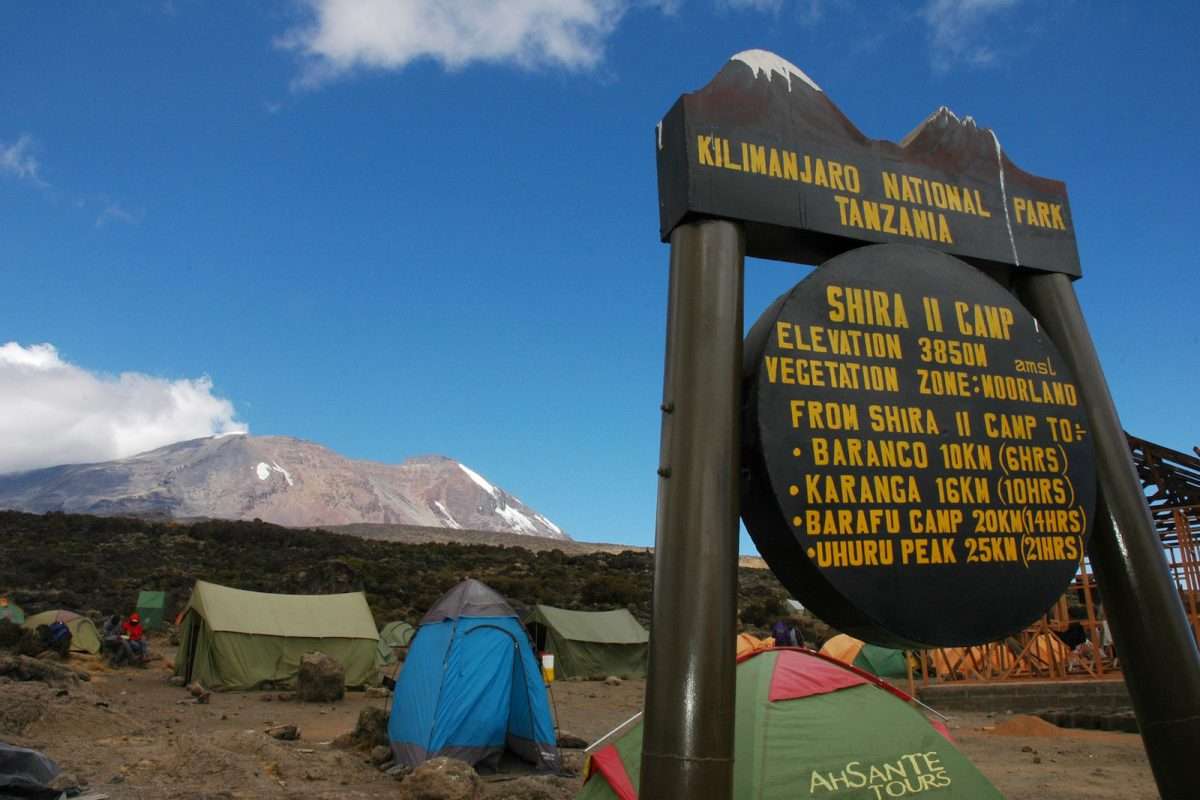
Today you leave the forest zone and enter a rocky plateau with sweeping views of the Shira Ridge and Mount Meru. The trail leads to the vast Shira Plateau, one of Kilimanjaro’s most iconic high-altitude landscapes.
Shira Camp offers stunning sunset views, where the glaciers shift from blue to orange tones as temperatures drop.
Distance: ~5 km
Trekking Time: 4–6 hours
Day 5: Barranco Camp to Karanga Camp (4,035m)
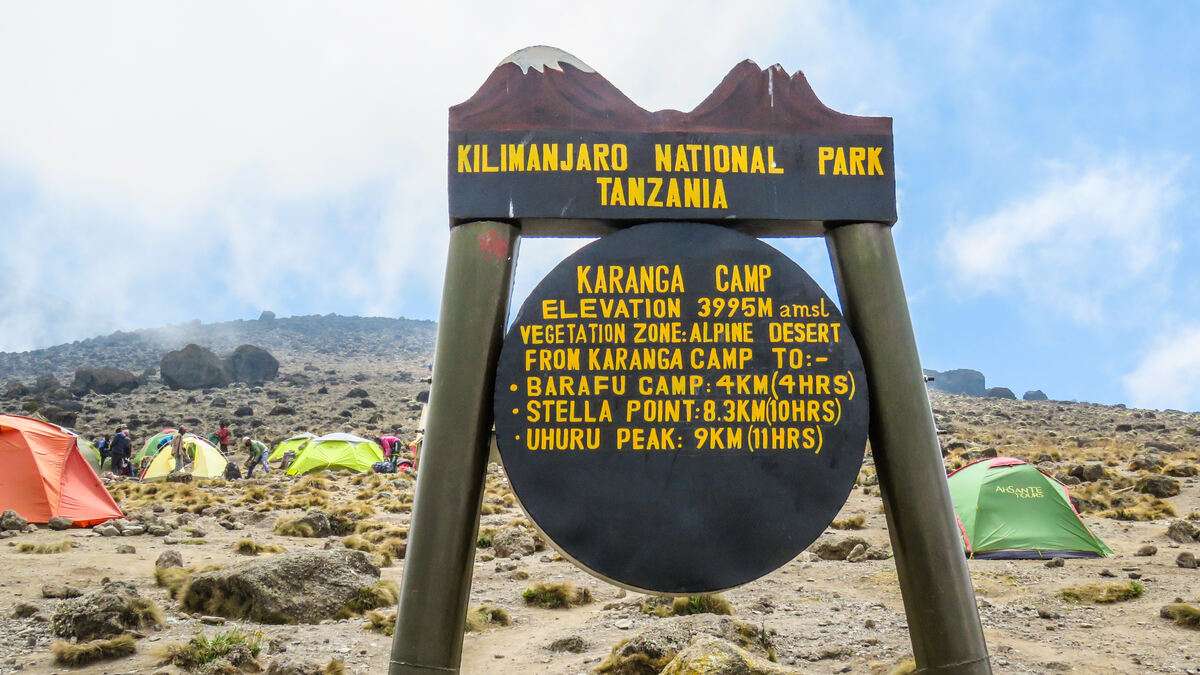
The day starts with the Barranco Wall climb. It looks dramatic but is manageable with three-point scrambling and slow pacing.
After reaching the top, the trail moves through alpine valleys before arriving at Karanga Camp, where you rest and hydrate. This shorter day is intentional and improves summit night readiness.
Distance: ~5 km
Trekking Time: 4–5 hours
Day 6: Karanga Camp to Barafu Camp (4,640m)
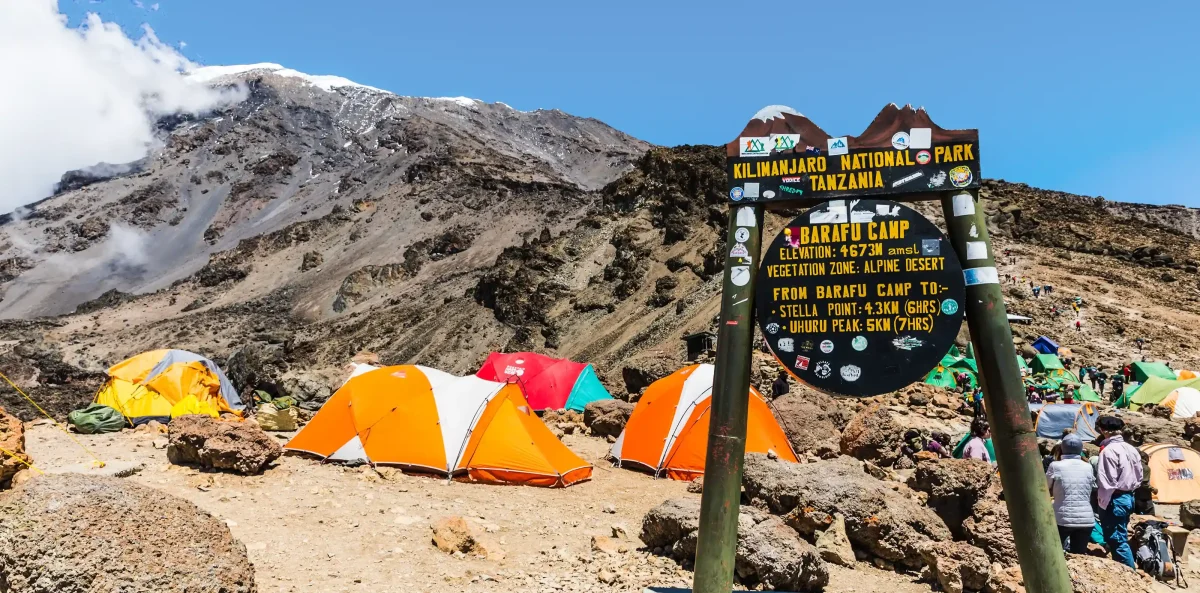
You hike gradually upward through rocky high-alpine terrain until reaching Barafu Camp, the official staging point for the summit push.
After dinner and a briefing, you rest early. At midnight, your summit attempt begins.
Distance: ~4 km
Trekking Time: 3–4 hours
Day 7: Barafu to Uhuru Peak (5,895m) to Mweka Camp (3,100m)
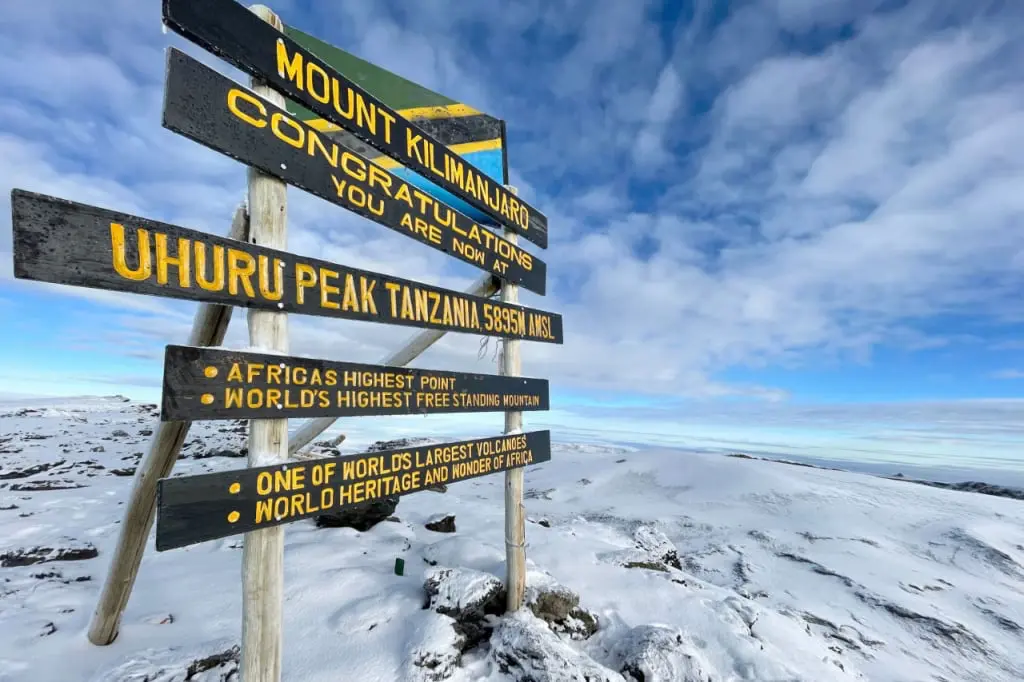
Summit day is the longest and most rewarding part of the Machame Route. With headlamps and guided pacing, you ascend toward Stella Point (5,739m). From there, the final ridge leads to Uhuru Peak, the highest point in Africa.
After photos and celebration, you descend to Barafu and continue to Mweka Camp for your final overnight.
Distance: ~17 km
Trekking Time: 10–14 hours
What’s Included in Your Kilimanjaro Machame Route Package
When you book the Climbing Kilimanjaro Machame Route package, you receive a complete, well-organized experience from landing in Tanzania to your final summit certificate. We include the essential services needed for a safe, supported, and successful climb. This ensures your focus stays on the journey and not logistics.
Your Kilimanjaro Machame Route package includes:
Meet and greet at arrival with airport transfers both ways
Two nights accommodation in Moshi at a 4-star lodge, breakfast included
Transport to and from the mountain gate
Full climbing support, including guides, porters, and a cook. The average staff-to-climber ratio is 4 to 1 for safety and efficiency
Drinking water and all mountain meals, prepared fresh daily
Medical safety support, including a full first aid kit and emergency oxygen
All park, rescue, entry, and climbing fees, already covered
Emergency evacuation readiness if required
Summit certificate after successfully reaching Uhuru Peak
High quality tents, mess tents, and foam sleeping mattresses, suitable for Mount Kilimanjaro’s altitude and weather conditions
What is not included
Some items are not part of the base price and should be budgeted separately:
Personal expenses and tipping for guides and porters
Meals not specified in your lodge stay
Any upgrades or itinerary changes
Travel insurance covering up to 6,000m altitude and we can offer this to you at additional cost
International flights and Tanzanian visa fees
Personal trekking gear and clothing
Book Your Machame Route at $2,199
What to Expect on the Machame Route
Machame route climbers should expect changing weather, varied terrain, and a gradual shift from warm rainforest conditions to freezing summit temperatures. The route requires determination, but with the right pacing, guidance, and preparation, it remains accessible for both experienced hikers and motivated first-time climbers.
How Difficult Is the Machame Route?
The mount Kilimanjaro Machame Route is categorized as moderately difficult. The trail includes steep ascents, rocky paths, and the Barranco Wall, which requires attention and steady footing. The highest challenge is altitude, not terrain. With proper preparation and steady pacing, many first-time high-altitude hikers complete this route successfully.
Factors that affect difficulty:
Elevation gain each day
Cold temperatures near summit
Wind exposure at high altitudes
Hours of hiking on summit night (10–14 hours average)
Despite the effort required, the Machame Route remains popular because it balances scenic views, acclimatization, and achievable summit chances.
Typical success rate for a 7-day itinerary: 70–80%.
How Much Does It Cost to Climb the Machame Route?
Most regulated Kilimanjaro Tour operators charge between $2,000 and $6,000 depending on support level, group size, and safety standards. A longer itinerary and premium equipment increase the cost, but also improve comfort and safety.
FAQs About the Kilimanjaro Machame Route
What is the distance of the Machame Route and how many days does it take?
The Kilimanjaro Machame Route covers about 62 km or 37 miles from the park gate to the summit and down to Mweka Gate. While the shortest climbing schedule is 6 days, most climbers choose 7 days because the pace allows better altitude adjustment and increases your summit success rate. With arrival and departure days included, most travelers spend 9–10 days total in Tanzania.
What is the summit success rate for the Machame Route?
Thanks to its strong acclimatization profile, the climbing Kilimanjaro Machame Route offers one of the highest success rates on the mountain. The general average is around 73% for 6-day itineraries and 85% for 7-day itineraries. At TourwithPipi, our guided groups average 95% success, supported by certified guides, altitude monitoring, and a slow, controlled pace.
What does the scenery look like on the Machame Route?
The Mount Kilimanjaro Machame Route is known for dramatic landscapes and five distinct climate zones. You’ll trek through rainforest, moorland, alpine desert, and finally the icy summit zone. Major highlights include the Shira Plateau, Barranco Wall, Lava Tower, and Stella Point. Every day offers new terrain and unforgettable views.
When is the best time to trek the Machame Route?
The best time to climb Kilimanjaro via the Machame Route is during the dry seasons: January to mid-March and June to October. July through September is the most stable weather window. While Kilimanjaro is climbable year-round, April and May are the long rains and are less favorable.
What should I pack for the Machame Route?
Plan for layered clothing because temperatures shift from humid rainforest to freezing summit winds. You’ll need waterproof boots, thermal layers, gloves, a warm down jacket, trekking poles, and a headlamp. We share a complete gear list after booking, and rental options are available in Moshi.
How do I get to Tanzania for the Machame Route?
Most climbers fly into Kilimanjaro International Airport (JRO). From there, it’s a short transfer to Moshi or Arusha where your pre-climb briefing takes place.
What are the accommodations like?
Before and after the climb, you’ll stay in a modern lodge or hotel. On the mountain, you sleep in high-quality expedition tents set up by your crew. On the Kilimanjaro Machame Route, there are no huts, only camping.
Do I need a visa for Tanzania?
Yes. Most travelers can apply for a Tanzania e-Visa online or obtain a visa on arrival depending on nationality. We provide guidance after booking.
How is altitude sickness managed?
Your guide monitors oxygen saturation daily and adjusts pace to match conditions. The route naturally follows a climb high, sleep low rhythm, which supports acclimatization. Emergency oxygen and evacuation systems are included on all expeditions.
What currency should I bring?
You can use USD for tipping, hotels, and souvenirs. ATMs are available in Moshi and Arusha. Cash is helpful because mountain areas do not accept cards.
How should I train for Kilimanjaro?
Training should start 8–12 weeks before travel. Focus on cardio, stair climbing, weighted backpack walks, and endurance hikes. The goal is slow, steady fitness rather than speed.
Do I need travel insurance?
Yes. All climbers must have insurance that covers high-altitude trekking up to 6,000 meters and emergency evacuation.


