
There are few places on Earth that stop you completely in your tracks. Victoria Falls is one of them. These are some of the most interesting facts about Victoria Falls that will change how you see this extraordinary place, whether you are planning to visit or simply want to understand why it belongs on every Africa bucket list.
Quick Answer — What Are the Key Facts About Victoria Falls?
Victoria Falls is the world’s largest sheet of falling water, 1,708 meters wide and 108 meters tall. It sits on the border of Zambia and Zimbabwe on the Zambezi River. Its local name is Mosi-oa-Tunya, meaning The Smoke That Thunders. It is one of the Seven Natural Wonders of the World and a UNESCO World Heritage Site. Over 500 million liters of water cascade over the falls every single minute at peak flow.
Fact 1: Victoria Falls Is the Largest Waterfall in the World
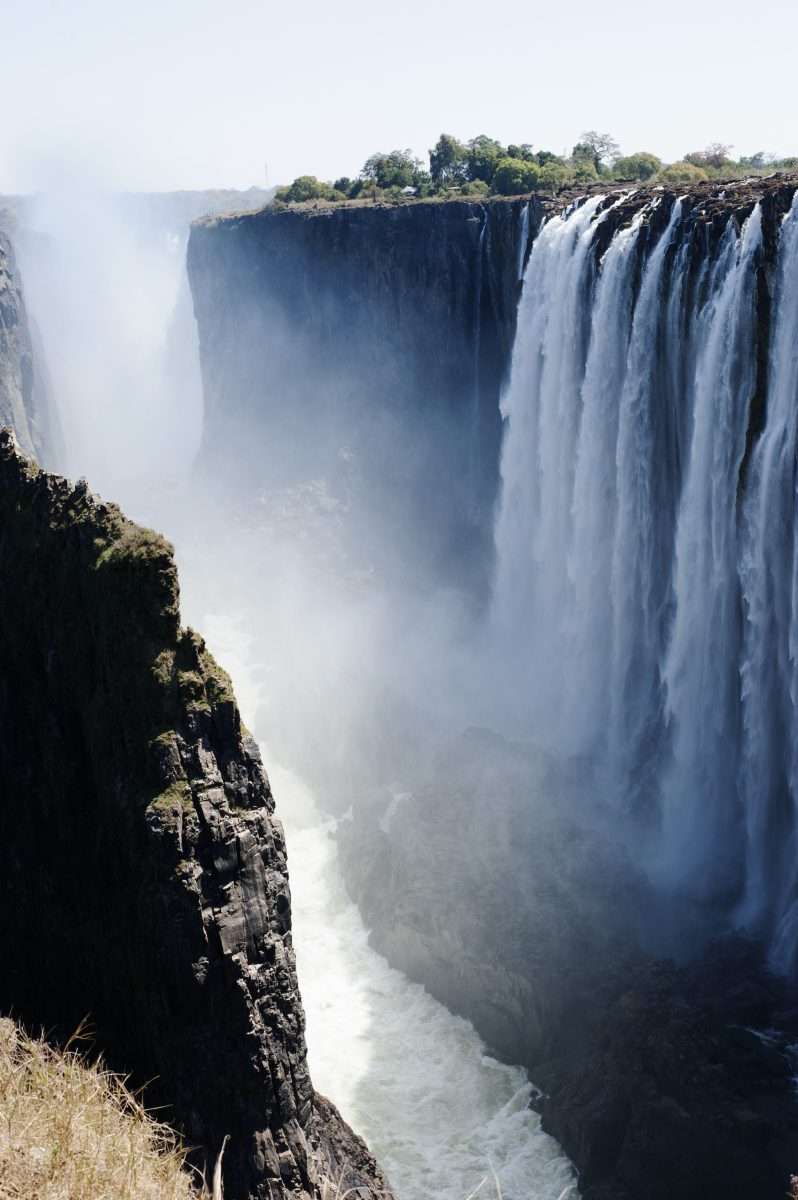
This needs a little explanation because it depends how you define largest.
Victoria Falls is not the highest waterfall in the world. Angel Falls in Venezuela holds that title at 979 meters. It is not the widest either. Khone Falls in Laos takes that record.
But Victoria Falls is the largest single curtain of falling water on the planet. When you combine its width of 1,708 meters with its height of 108 meters you get a sheet of water with no equal anywhere on Earth. It is one and a half times wider than Niagara Falls in North America and twice as high.
This is why it earns the title of world’s largest waterfall. Not by one single measurement, but by the sheer volume and scale of water falling across an unbroken face of rock.
Fact 2: Its Real Name Means The Smoke That Thunders
Long before David Livingstone arrived, the local Kololo people had their own name for the falls. They called it Mosi-oa-Tunya. In the Kololo language this means The Smoke That Thunders.
It is a perfect description. The spray from the falls rises so high and so thickly that from a distance it looks like smoke rising from a fire. The sound of the water hitting the gorge below produces a deep continuous thunder that can be heard from kilometres away.
Today both names are used. Zimbabwe calls the town on its side Victoria Falls. Zambia calls its side Livingstone, named after the explorer. The national park on the Zambian side is officially called Mosi-Oa-Tunya National Park, reclaiming the original name.
Fact 3: David Livingstone Was the First European to See Them in 1855
On 16 November 1855, Scottish explorer and missionary David Livingstone became the first European to see Victoria Falls. He arrived by dugout canoe along the Zambezi River and stood on a small island at the very edge of the falls to witness them for himself.
That island is now called Livingstone Island and it sits on the Zambian side. Today it is one of the most special places to visit at Victoria Falls. Guided tours take small groups to the island, and during the low water season it is where you access Devil’s Pool for a swim at the edge of the falls.
Livingstone named the falls after Queen Victoria, the British monarch at the time. He later wrote that they were so beautiful that angels in their flight must have gazed upon them. The local communities had such respect for Livingstone that unlike many colonial place names that have since been changed across Africa, Victoria Falls has remained unchanged.
Fact 4 — Victoria Falls Sits on the Border of Two Countries
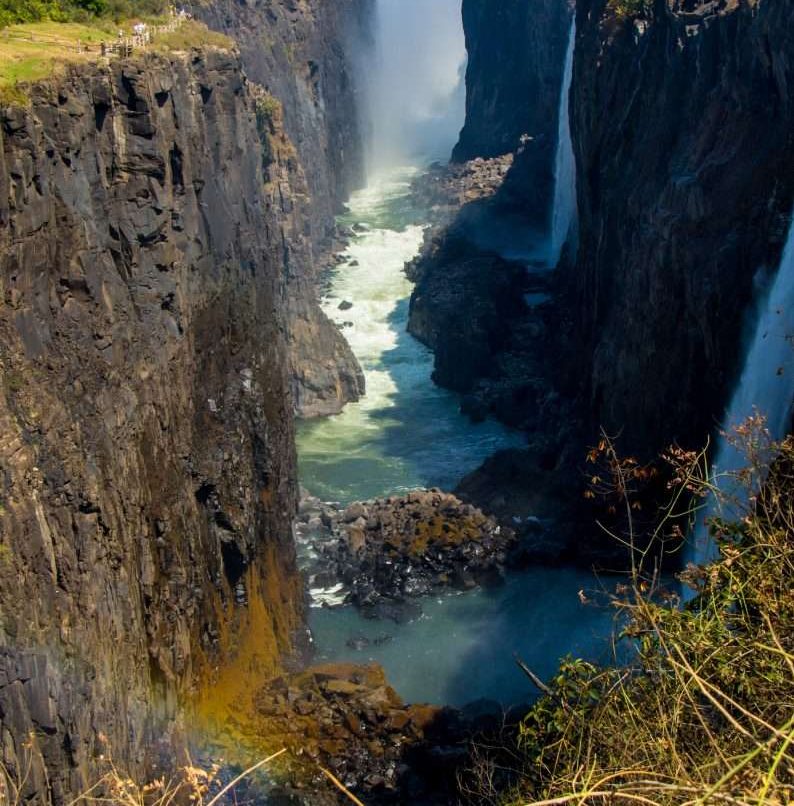
One of the most interesting facts about Victoria Falls for travelers is that the falls sit exactly on the border between Zambia and Zimbabwe. The Zambezi River forms the natural border between the two countries and the falls stretch across the full width of the river.
This means you can view the falls from two different countries. Zimbabwe offers the best face-on views of the full width of the falls, with approximately 75 percent of the falls visible from the Zimbabwean side. Zambia offers closer views of some sections and is where you access Livingstone Island and Devil’s Pool.
Many visitors choose to cross between both countries during their visit. A day trip from Zimbabwe into Zambia or vice versa is straightforward with the appropriate visa arrangements. Seeing the falls from both sides gives you a completely different perspective on their scale.
Fact 5 — Over 500 Million Litres of Water Fall Every Minute
At peak flow the volume of water at Victoria Falls is almost impossible to imagine. Over 500 million litres, or roughly 9,000 cubic metres per second, cascade over the falls every minute during the flood season from February to May.
To put that into perspective that is the equivalent of 200 Olympic-sized swimming pools of water every single minute. The roar produced by this volume of water is audible from more than 40 kilometres away and the spray rises over 400 metres into the air.
During the low water season from September to December this flow drops significantly. The falls still flow but sections of the rock face become exposed. This reduction in flow is what makes activities like Devil’s Pool and views from Livingstone Island possible during these months.
Fact 6 — The Falls Are Part of the Zambezi River
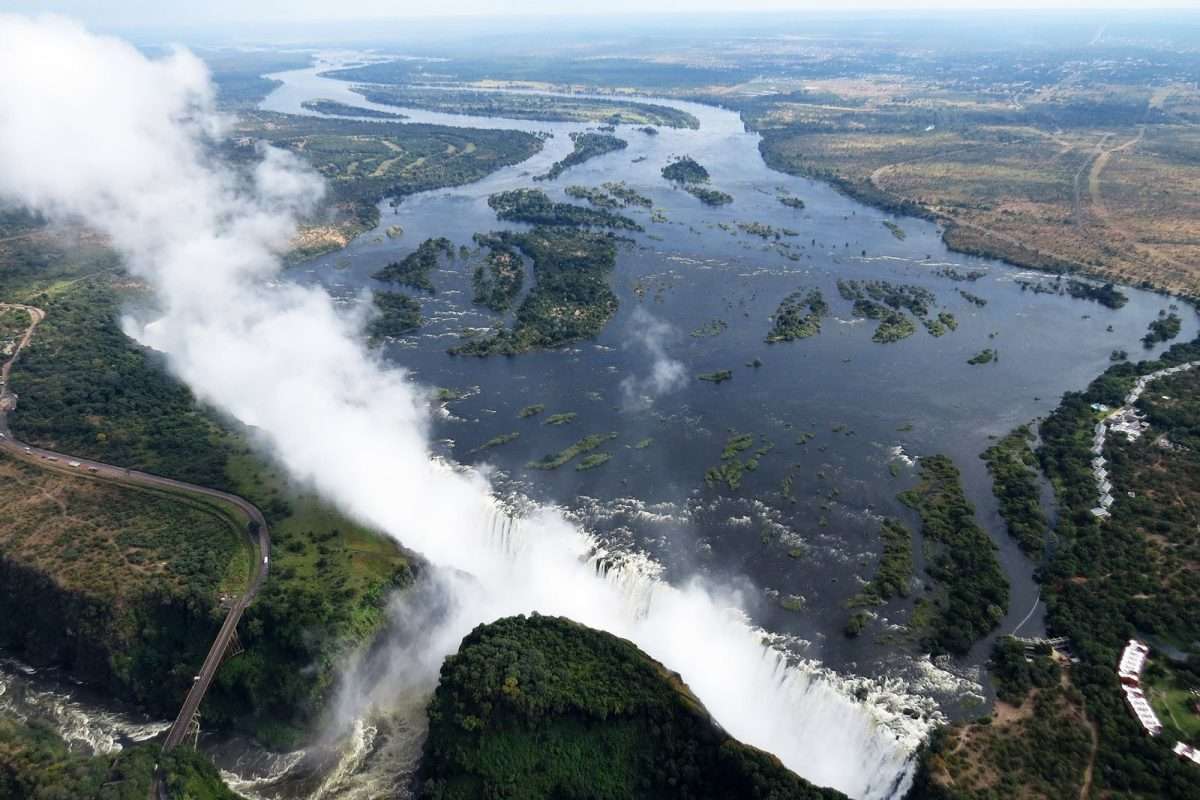
Victoria Falls does not exist in isolation. It is part of the Zambezi River, the fourth longest river in Africa at approximately 2,700 kilometres. The Zambezi begins in Zambia, passes through Angola, Namibia, Botswana, and Zimbabwe before reaching the Indian Ocean in Mozambique.
Victoria Falls sits almost exactly halfway along the river’s journey. Above the falls the Zambezi is broad and relatively shallow, flowing across a flat basalt plateau. At the falls the entire river drops suddenly into a narrow gorge carved through the basalt rock. Below the falls the river continues through a series of dramatic zigzagging gorges before eventually widening and calming.
The Zambezi below the falls is famous for some of the best white water rafting in the world, with grade 5 rapids through the gorges directly below the falls.
Fact 7 — Victoria Falls Creates a Moonbow
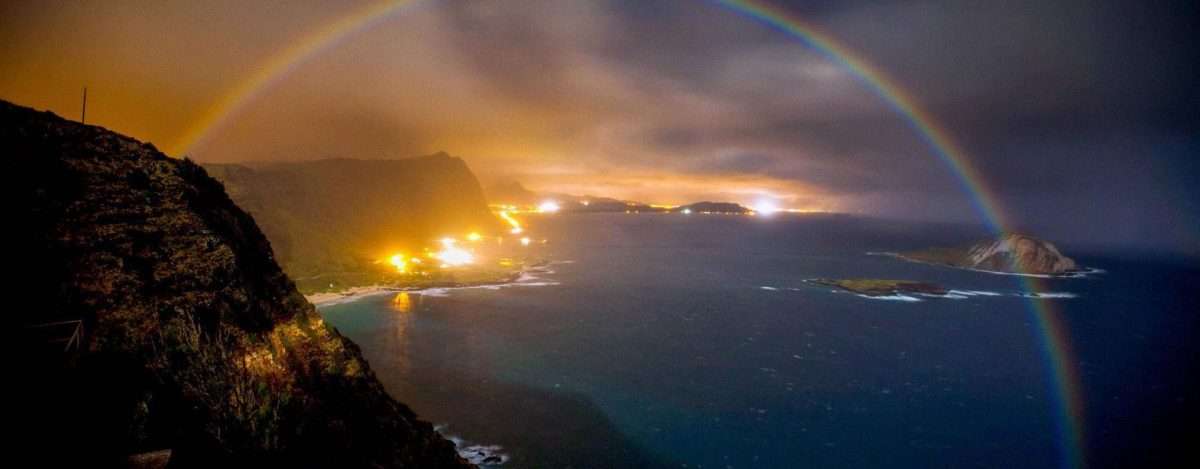
A moonbow is a rainbow created by moonlight rather than sunlight. It is an extremely rare phenomenon and Victoria Falls is one of only two places on Earth where it occurs regularly. The other is Cumberland Falls in Kentucky, USA.
On nights around the full moon, the light from the moon hits the spray rising from the falls and creates a visible arc of color in the mist. During the day the spray creates regular rainbows that are almost always visible. But the moonbow, a pale luminous arc appearing in the dark mist against the night sky, is something genuinely rare and unforgettable.
The moonbow is best seen from the Zimbabwean side of the falls on clear full moon nights. The spectacle can last from sunset through to sunrise if conditions are right. It is considered one of Africa’s most distinctive natural phenomena and one of the most compelling reasons to time your visit around the full moon.
Fact 8 — You Can Swim at the Edge of the Falls in Devil’s Pool
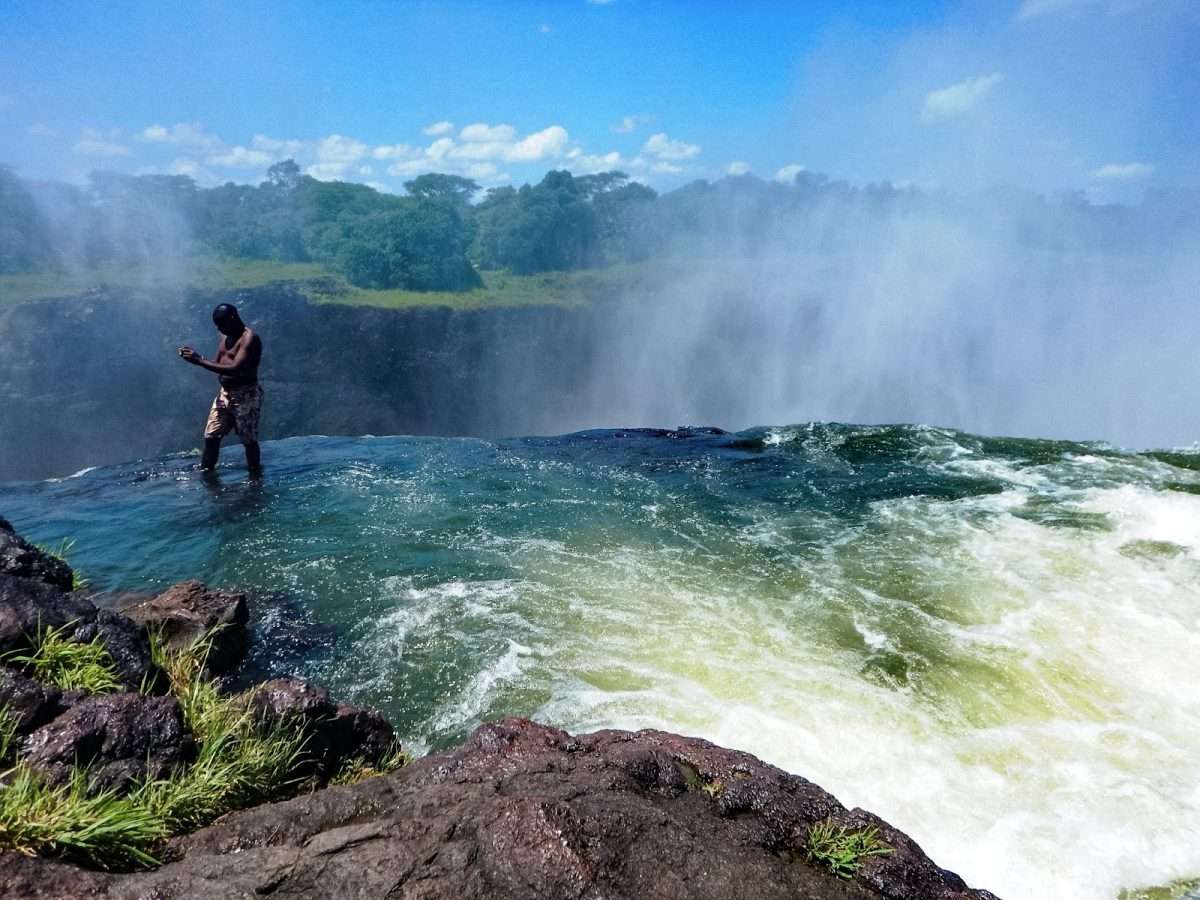
This is one of the most extraordinary and adrenaline-charged experiences anywhere in Africa.
Devil’s Pool is a natural rock pool that forms at the very lip of Victoria Falls on Livingstone Island during the low water season from September to December. A natural rock wall beneath the surface creates a barrier that holds swimmers in the pool while the water beyond drops 108 metres into the gorge below.
Guided tours take swimmers across the Zambezi to Livingstone Island and into Devil’s Pool where you can lie on the rock edge with your body suspended over the falls and look directly down into the gorge. The experience is only possible when water levels are low enough for the natural rock barrier to function safely.
Devil’s Pool is accessible from the Zambian side only, from the Royal Livingstone Hotel. Guides accompany all swimmers and the experience is managed carefully, but the sensation of sitting at the edge of the world’s largest waterfall with nothing but a natural rock shelf between you and a 108-metre drop is one that people describe as the most intense experience of their lives.
Fact 9 — It Rains Every Day in the Victoria Falls Rainforest
On the Zimbabwean side of the falls lies the Victoria Falls Rainforest, and it has a remarkable claim. It is the only place on Earth where it rains every single day of the year regardless of the season.
This happens because the spray produced by the falls rises hundreds of metres into the air and falls back down as rain on the forest below. Even during Zimbabwe’s driest months the spray keeps the rainforest continuously wet. The forest is dense with lush vegetation and home to plant and animal life found almost nowhere else in the immediate region, because the microclimate created by the spray is completely different from the surrounding dry savannah.
Walking through the rainforest while the spray soaks through your clothes and a double rainbow arches across the gorge above is one of the signature sensory experiences of any Victoria Falls visit.
Fact 10 — Victoria Falls Is One of the Seven Natural Wonders of the World
Victoria Falls joins a very small group of natural places considered so remarkable that they stand apart from everything else on Earth. The Seven Natural Wonders of the World are Victoria Falls, the Aurora Borealis, the Harbour of Rio de Janeiro, the Grand Canyon, the Great Barrier Reef, Mount Everest, and Parícutin volcano in Mexico.
It is also a dual UNESCO World Heritage Site, with the Mosi-Oa-Tunya National Park on the Zambian side and the Victoria Falls National Park on the Zimbabwean side both carrying UNESCO designation. The listing recognizes the falls’ outstanding natural value to humanity.
Fact 11 — The Falls Have Five Separate Sections
The full width of Victoria Falls is divided into five distinct sections or curtains, each with its own name based on the islands that break the lip of the falls.
The five sections from west to east are the Devil’s Cataract, the Main Falls, the Rainbow Falls, the Horseshoe Falls, and the Eastern Cataract. The Main Falls on the Zimbabwean side carry the largest volume of water. Rainbow Falls is the highest point, reaching 108 metres. The Eastern Cataract on the Zambian side is where Devil’s Pool and Livingstone Island are located.
Each section of the falls has a different character depending on water levels and viewing angle, which is why seeing the falls from both the Zambian and Zimbabwean sides gives such different perspectives.
Fact 12 — The Gorge Is Made of Ancient Basalt Rock
The gorge that the Zambezi drops into at Victoria Falls is carved through solid basalt rock, a volcanic rock formed from ancient lava flows that covered this part of Africa approximately 150 to 180 million years ago.
The zigzagging pattern of the gorges below the falls is created by the way the Zambezi has exploited natural fault lines in the basalt over hundreds of thousands of years. The current gorge is not the first one. Scientists can identify at least eight previous gorges where the falls once sat before moving progressively upstream to their current position.
The cliffs on both sides of the gorge at the falls rise to approximately the same height as the falls themselves, creating a dramatic enclosed chasm that amplifies the sound of the water into the continuous thunder that gave the falls their original name.
Fact 13 — The Spray Is Visible From 50 Kilometers Away
At peak flow the spray column from Victoria Falls rises over 400 metres above the gorge and is visible from up to 50 kilometres away on a clear day. This is how communities living across the surrounding savannah knew of the falls long before any written records or European exploration of the region.
The spray cloud is what creates the permanent rainbow that is visible from the falls almost every day of the year. In the early morning light the rainbow arches directly across the gorge in front of the Main Falls on the Zimbabwean side and is one of the most photographed natural sights in Africa.
Fact 14 — Wildlife Lives Around Victoria Falls
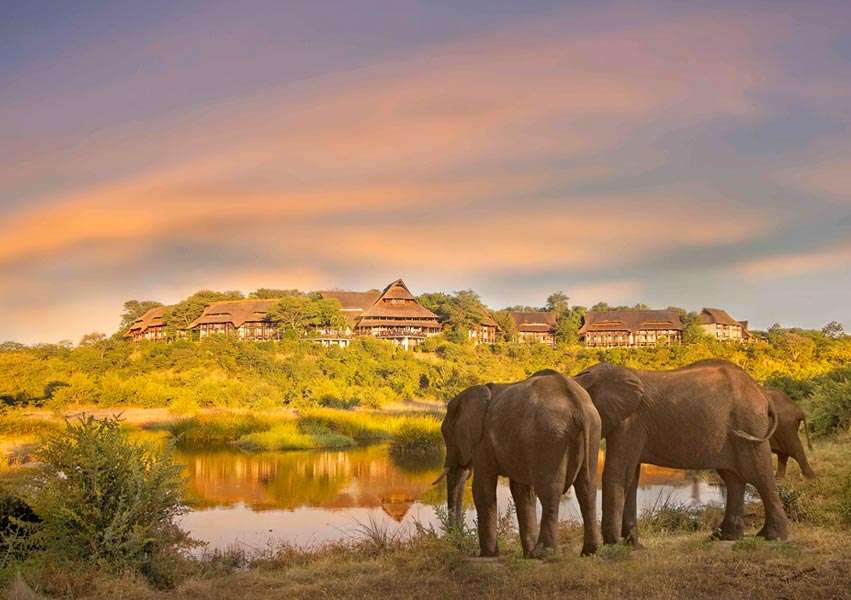
Victoria Falls is not just a waterfall. The surrounding area is rich with wildlife and the two national parks that protect the falls also protect a significant animal population.
Big Five wildlife including lion, elephant, buffalo, leopard, and rhino are present in the Mosi-Oa-Tunya National Park on the Zambian side. Hippos and crocodiles are extremely common in the Zambezi River above and below the falls. Warthogs, zebras, giraffes, and various antelope species are seen regularly on game drives in both parks.
Birdlife around the falls is exceptional. The Taita falcon nests in the gorge walls. African fish eagles patrol the river. Trumpeter hornbills and other forest species live in the rainforest. Over 400 bird species have been recorded in the Victoria Falls area.
The Zambezi River below the falls is home to enormous Nile crocodiles, hippo pods, and large populations of freshwater fish that make it a world-class fishing destination for tiger fish.
Fact 15 — Victoria Falls Bridge Was Built in 1905
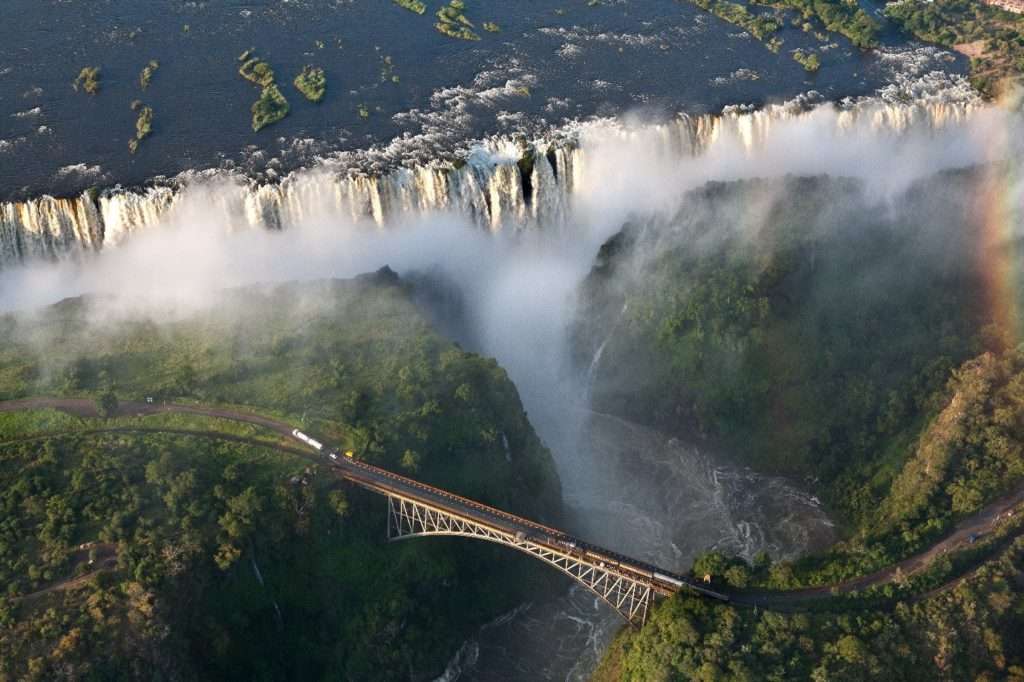
The Victoria Falls Bridge spans the gorge directly below the falls and connects Zimbabwe and Zambia by road and rail. It was completed in 1905 at the instruction of Cecil Rhodes, who wanted a railway line from Cape Town to Cairo to pass close enough to the falls that passengers would feel the spray.
The bridge stands 128 meters above the Zambezi at its highest point and is 198 meters long. Today it is famous as a bungee jumping location, with a 111-metre bungee jump from the center of the bridge that is one of the most dramatic in the world. Visitors also do a bridge walk along the outside of the bridge’s arches and a bridge slide zipline across the gorge.
Fact 16 — You Can Helicopter Over the Falls
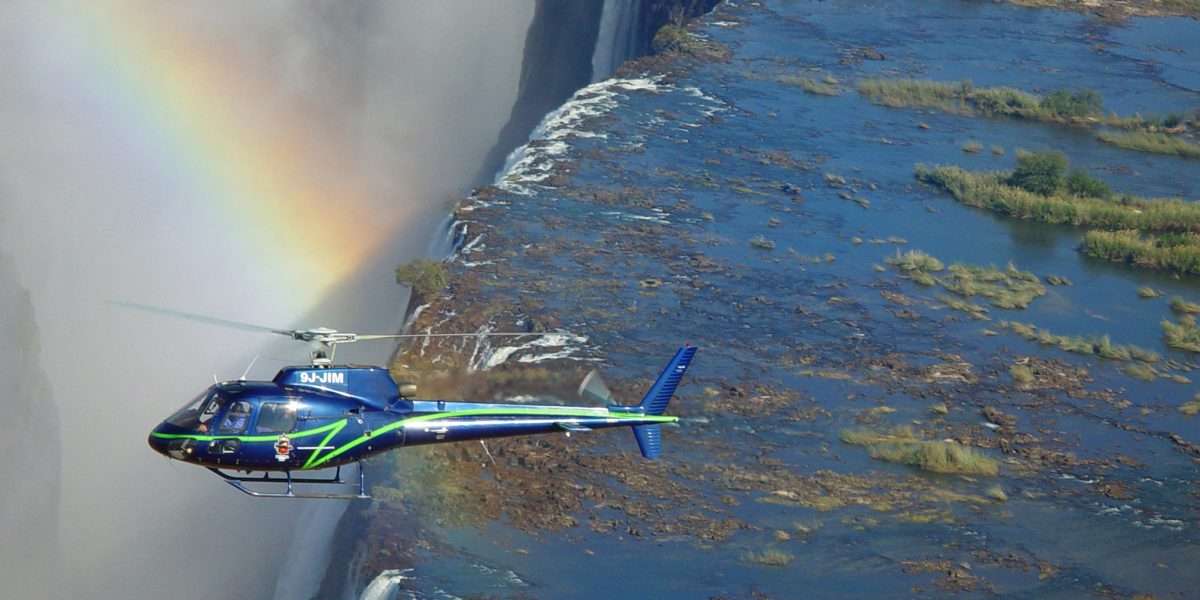
One of the best ways to fully appreciate the scale of Victoria Falls is from the air. Helicopter flights, known locally as the Flight of Angels after David Livingstone’s description of the falls, take off from both the Zimbabwean and Zambian sides and fly over the full width of the falls and the gorge system below.
From the air the scale becomes truly apparent. The 1,708-metre width of the falls, the zigzagging gorges stretching downstream, the Zambezi spreading broadly above, and the spray column rising from the gorge all come together in a perspective that no viewpoint on the ground can match.
The 13-minute flight covers the full width of the falls and the first two gorges. Longer flights extending over the upper Zambezi and surrounding national park are also available.
Fact 17 — Victoria Falls Has a Bungee Jump of 111 Meters
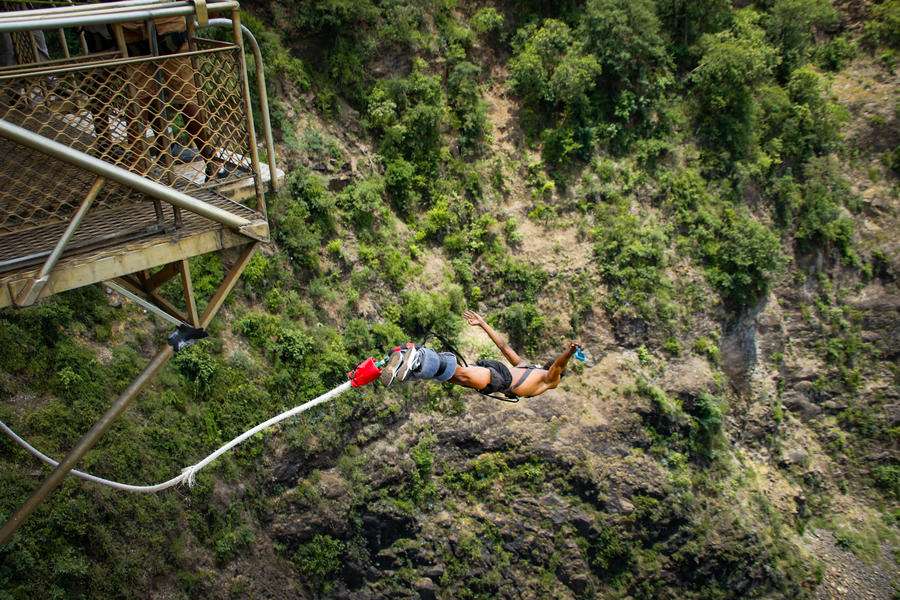
The Victoria Falls Bridge bungee jump is one of the most famous bungee sites in the world. The jump drops 111 metres from the centre of the bridge toward the Zambezi River below. At the lowest point of the jump you hang suspended above the river with the spray and roar of the falls filling the gorge around you.
First operated in 1992, the Victoria Falls bungee has been running for over three decades. Other adrenaline activities in the gorge include the gorge swing, a freefall pendulum swing across the gorge, the bridge slide zipline, and abseiling down the gorge walls.
Fact 18 — White Water Rafting at Victoria Falls Is Among the Best in the World
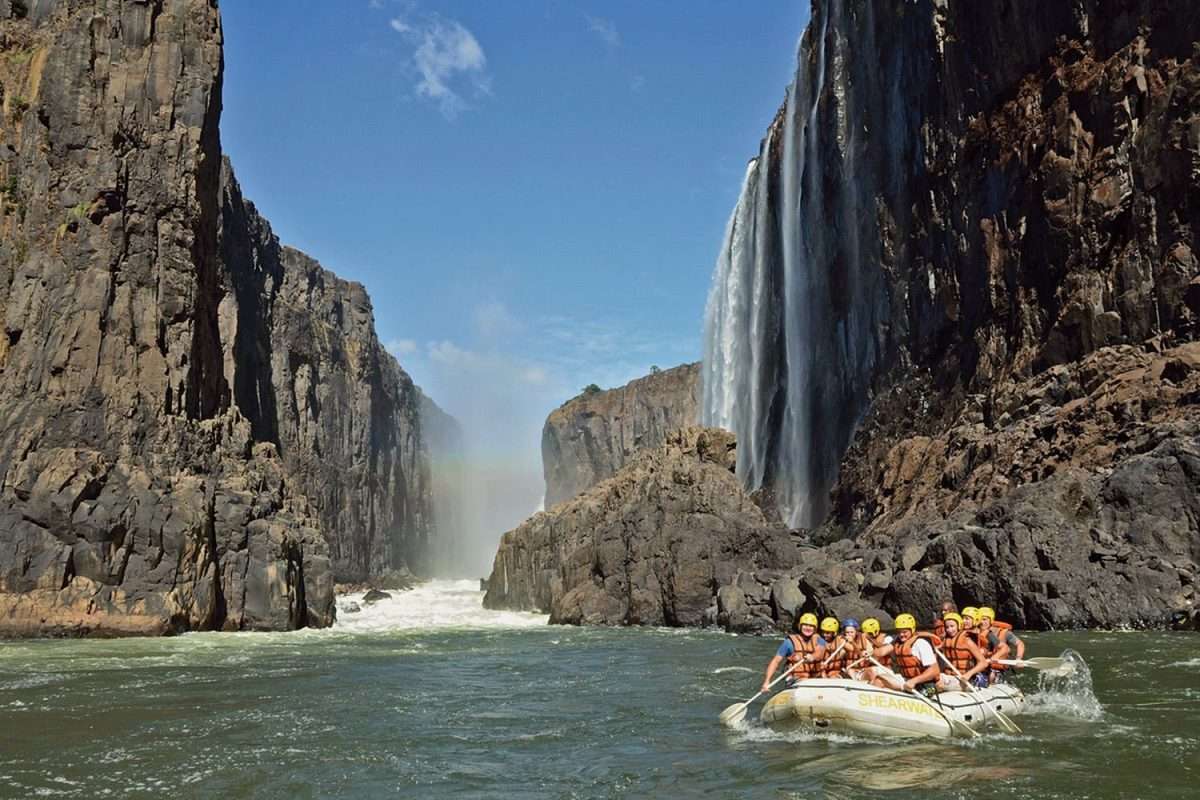
The Zambezi River below Victoria Falls produces some of the best white water rafting in the world. The series of rapids through the gorges immediately below the falls are classified up to grade 5, the highest commercial rafting grade.
The rafting route runs through approximately 25 named rapids over a half-day or full-day journey through the basalt gorges. Highlights include the famous Stairway to Heaven, the Gnashing Jaws of Death, and Oblivion, names that give a clear indication of the character of the water.
The best rafting conditions are during the low water season from August to December when water levels drop and the rapids are most defined and challenging. During the high water season the biggest rapids are submerged or washed out by the volume of water.
Fact 19 — The Sundowner Cruise on the Zambezi Is One of Africa’s Best Experiences
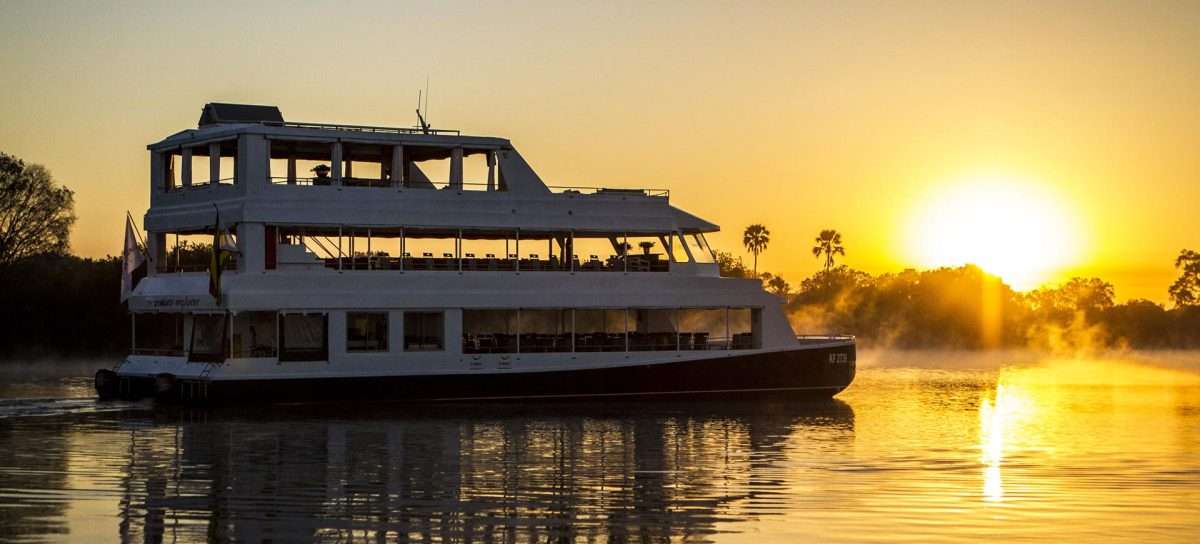
Above Victoria Falls the Zambezi is broad, calm, and filled with wildlife. The Zambezi sundowner cruise is one of the most enjoyable experiences in the Victoria Falls area and a complete contrast to the adrenaline activities in the gorge below.
Traditional wooden boats or luxury cruisers travel upstream from the town on the Zimbabwean side in the late afternoon. Elephants drink from the riverbanks. Hippos surface and submerge around the boat. Crocodiles bask on sandbanks. Fish eagles call from the trees above. The sun drops over the Zambian side of the river in shades of orange and red as you drift back toward the falls.
The sundowner cruise is the best way to experience the calmer side of the Zambezi and the riverside wildlife while enjoying a drink in the golden evening light.
Fact 20 — Victoria Falls Is Threatened by Climate Change
One of the most sobering facts about Victoria Falls is that the falls face a genuine long-term threat from climate change. Research from 2019 published in the journal Current Biology warned that the falls could experience more frequent drought conditions in coming decades as temperatures rise and rainfall patterns across southern Africa become less predictable.
In 2019 the falls experienced one of the most severe low-water periods in recorded history. Sections of the falls that are normally running strongly were completely dry. Images of the exposed rock face attracted global attention and sparked wider discussion about the impact of climate change on natural wonders.
Conservation of the Zambezi River catchment area and the surrounding ecosystems is directly linked to the long-term health of the falls. Both Zambia and Zimbabwe have active conservation programs and the UNESCO World Heritage designation provides a framework for protecting the area.


