
A gorilla is a large, ground-dwelling great ape that lives in stable family troops led by one dominant silverback and eats almost entirely plants. A chimpanzee is a smaller, tree-dwelling great ape that lives in looser, shifting communities, uses tools, and occasionally eats meat. Both belong to the same great ape family as humans, but their size, social structure, diet, and behavior differ enough that confusing the two on a trek would be an easy mistake to make from a photo alone.
I get asked constantly which trek people should book, gorilla vs chimps or the other way around, and the honest answer starts with understanding what actually separates the two species. This guide breaks down every real difference in a chimpanzee versus gorilla comparison, backed by current population data and conservation status, so you know exactly what you’re looking at and which trek actually fits what you want out of it.
Gorilla vs Chimpanzee: Quick Comparison
| Gorilla | Chimpanzee | |
|---|---|---|
| Genus | Gorilla | Pan |
| Average weight (male) | 140 to 190 kg | 40 to 60 kg |
| Height | Up to 1.7 m standing | 1 to 1.7 m standing |
| Diet | Almost entirely plants | Omnivorous, mostly plants with occasional meat |
| Habitat | Mostly ground-dwelling | Spends significant time in trees |
| Social group | Stable family troop led by one silverback | Looser, shifting multi-male community |
| DNA shared with humans | About 98.3% | About 98.7 to 98.8% |
| Tool use | Rare, but documented | Frequent and taught to younger generations |
| IUCN status | Endangered to Critically Endangered, by subspecies | Endangered to Critically Endangered, by subspecies |
| Approximate wild population | Roughly 316,000 across all gorilla species combined | Roughly 170,000 to 300,000 |
| Where to trek them | Uganda, Rwanda, DRC (mountain gorillas); Central Africa (lowland gorillas) | Tanzania, Uganda, and across equatorial Africa |
Classification: Not the Same Genus at All
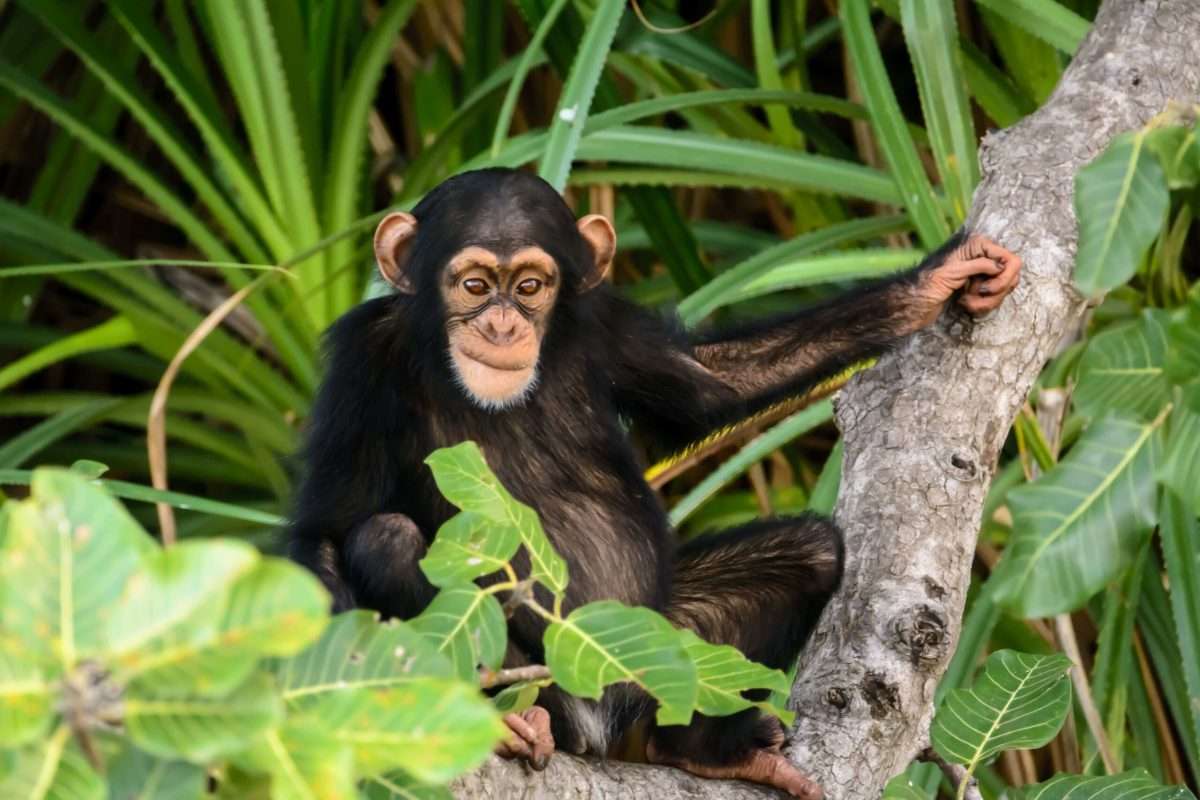
Gorillas and chimpanzees are both great apes in the Hominidae family, alongside humans, bonobos, and orangutans, but they split onto separate evolutionary branches millions of years ago and now sit in entirely different genera.
Gorilla Species and Subspecies
| Species | Subspecies | Where Found |
|---|---|---|
| Western gorilla | Western lowland gorilla | Cameroon, Republic of Congo, Gabon |
| Western gorilla | Cross River gorilla | Nigeria, Cameroon border region |
| Eastern gorilla | Mountain gorilla | Uganda, Rwanda, DRC (Virunga Massif and Bwindi) |
| Eastern gorilla | Eastern lowland gorilla (Grauer’s gorilla) | Democratic Republic of Congo |
Chimpanzee Species and Subspecies
| Subspecies | Where Found |
|---|---|
| Central chimpanzee | Gabon, Cameroon, Republic of Congo |
| Eastern chimpanzee | Tanzania, Uganda, Rwanda, DRC |
| Western chimpanzee | Guinea, Côte d’Ivoire, Senegal |
| Nigeria-Cameroon chimpanzee | Nigeria, Cameroon border region |
Chimpanzees belong to genus Pan, the same genus as the bonobo, while gorillas sit alone in genus Gorilla. That taxonomic split matters because it’s part of why chimps, genetically, sit slightly closer to humans than gorillas do.
Physical Differences Between Gorillas and Chimpanzees
Size and Body Build
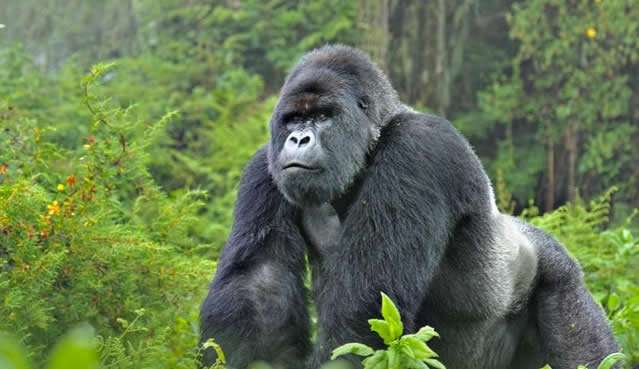
Gorillas are enormous. A mature male chimpanzee weighs a fraction of a silverback’s size.
A mature male gorilla, called a silverback once he develops the characteristic silver hair across his back, weighs between 140 and 190 kg, with a broad chest and thick, powerful forearms built for life on the ground. Female gorillas are noticeably smaller, generally around 100 kg. A male chimpanzee, by comparison, typically weighs just 40 to 60 kg in the wild, with females weighing even less. Despite the size gap, chimps carry noticeably longer, more prominent ears than a gorilla’s small, close-set ones.
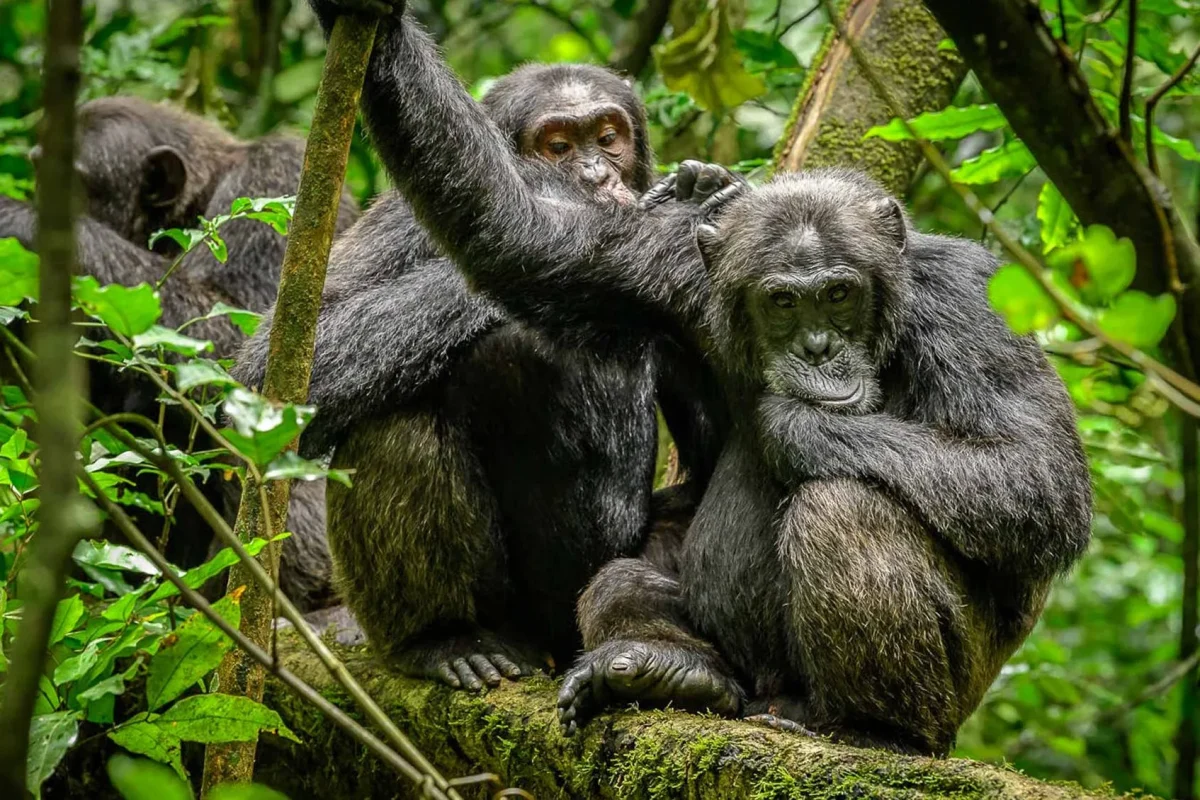
What chimps lack in mass they make up for in raw strength relative to size, with muscle density estimated to make a chimp roughly three times stronger than a human of equal weight. Their longer limbs, built for swinging through trees, give chimps a fluidity gorillas simply don’t have.
Male vs Female: Size Differences
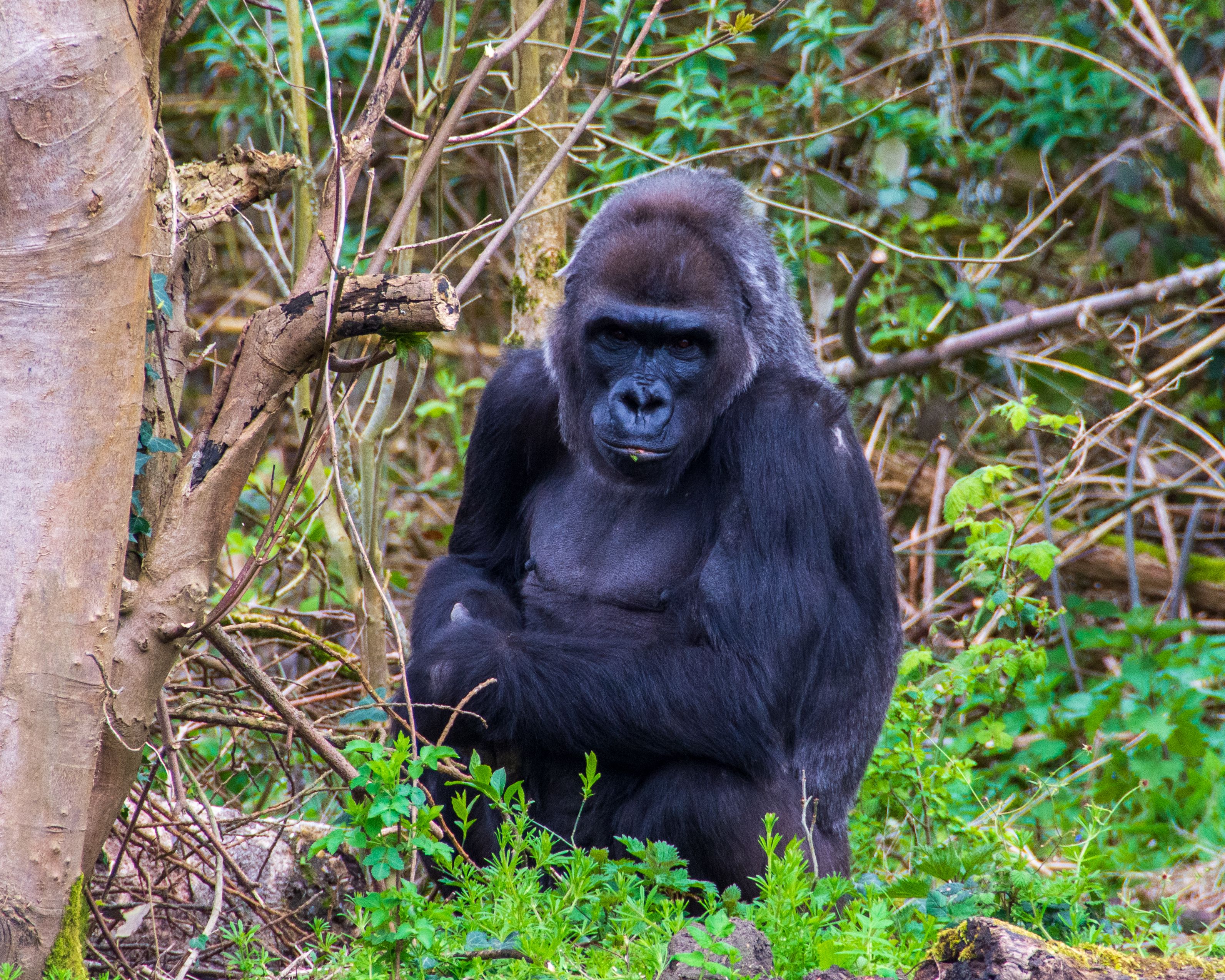
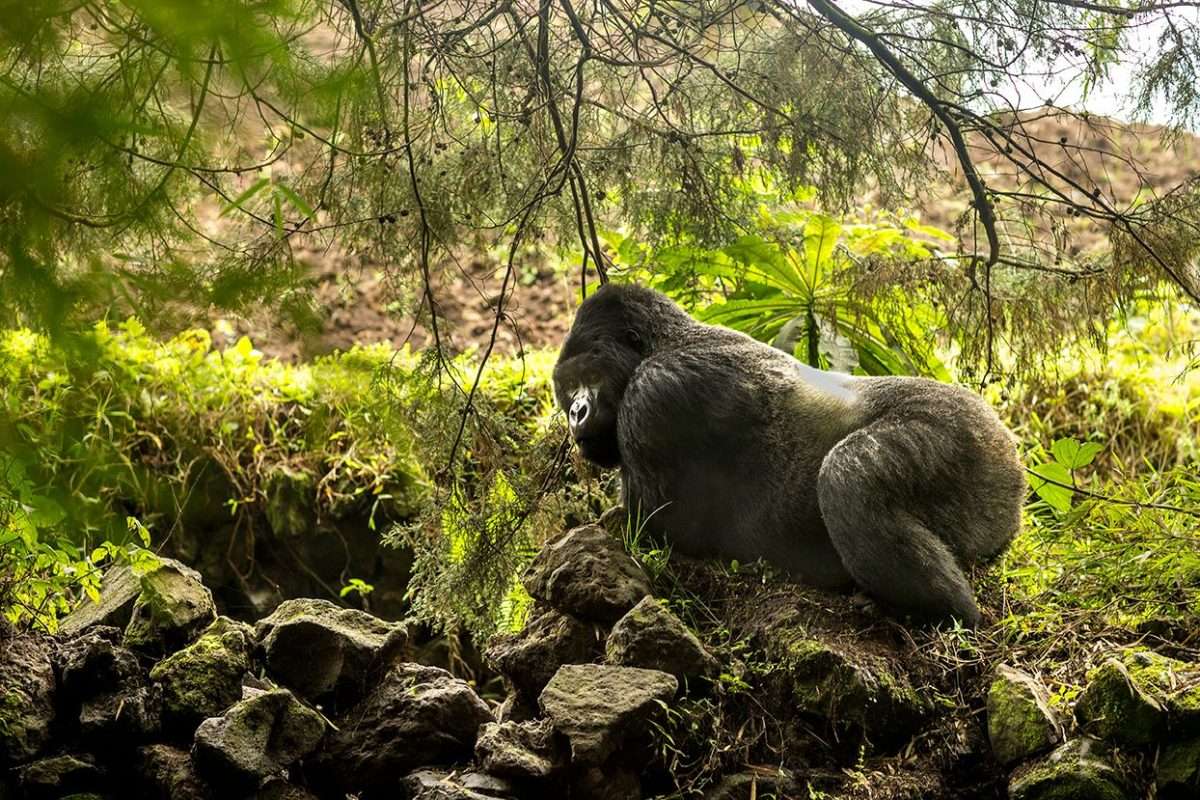
The gap between males and females is far more dramatic in gorillas than in chimpanzees. A male silverback can weigh nearly double a female gorilla, and he carries visibly broader shoulders, a bigger skull, and of course the silver saddle of hair that gives him his name. That size gap is a big part of why one gorilla can physically dominate and protect an entire troop on his own.
Chimpanzees show far less of a size difference between the sexes. A male chimp is still generally larger and stronger than a female, but nowhere near the two-to-one gap a silverback holds over a female gorilla.
Movement
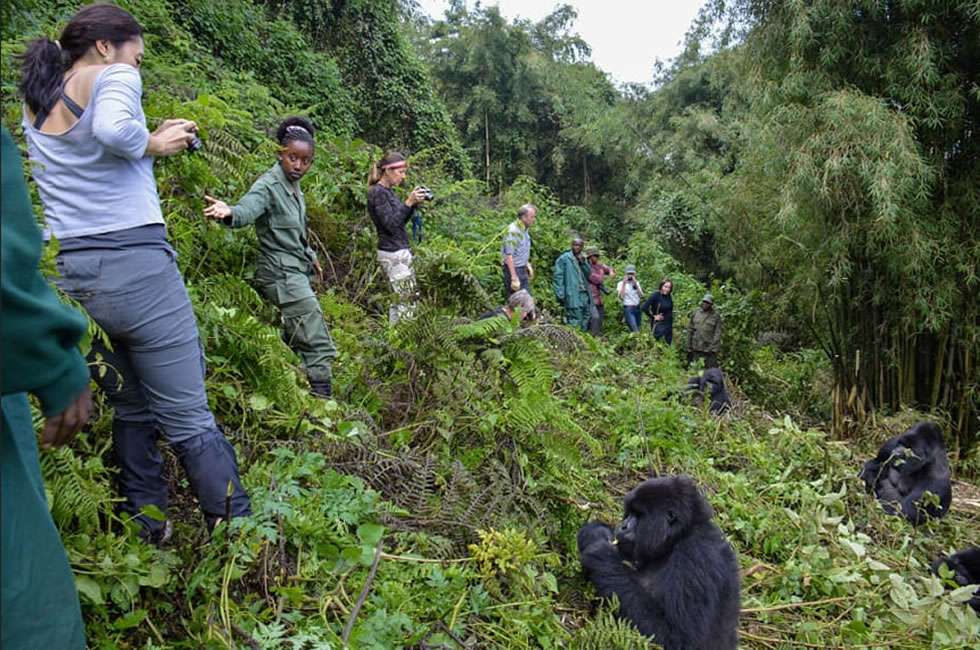
Gorillas are slow, grounded, and deliberate. Chimpanzees are quicker, more agile, and considerably more excitable in a social dispute.
Gorillas move slowly and deliberately, spending most of adult life on the ground and only climbing to rest or reach fruit. Chimpanzees move constantly between the canopy and the forest floor, swinging tree to tree with an agility that makes them considerably harder to photograph well on a trek than a ground-based gorilla family. That same quickness carries into their temperament: a chimp squabble can escalate to loud screaming and physical aggression far faster than anything you’d typically see in a calm, silverback-led gorilla troop.
Facial Expression and Presence
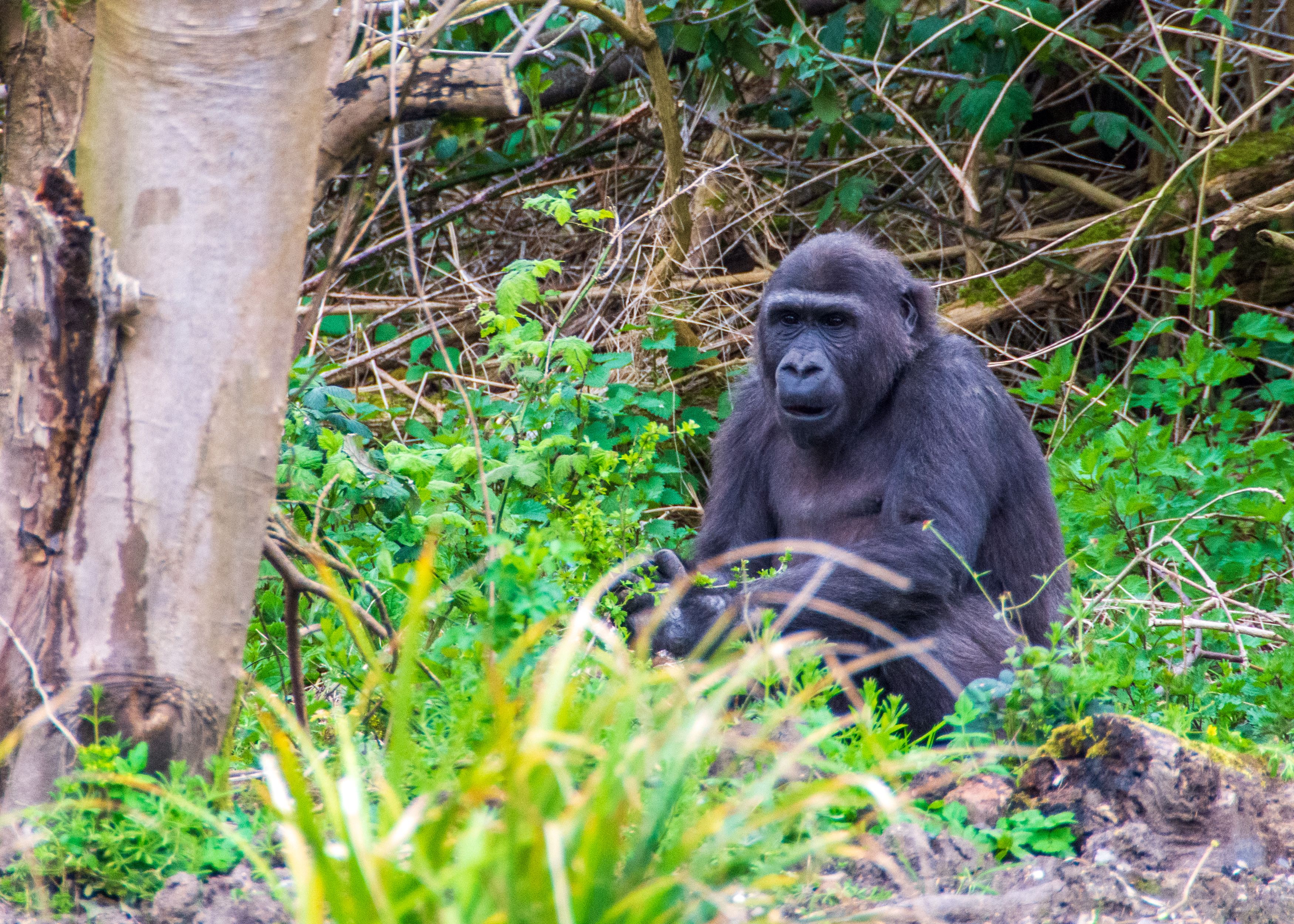
A gorilla’s expression stays calm and steady. A chimpanzee’s face is constantly on the move.
A gorilla’s face tends to hold a steady, calm expression, with deep-set eyes and strong, direct eye contact that can feel intense up close. A chimpanzee’s face is far more animated, shifting constantly between expressions, with mobile ears, eyebrows, and lips that reflect an almost constant state of social alertness.
Diet: Herbivore vs Omnivore

Gorillas are almost entirely herbivorous, spending most of their day working through leaves, stems, shoots, and fruit. Meat isn’t part of a wild gorilla’s diet in any meaningful way.
Chimpanzees are technically omnivores. Most of their diet is still plant-based, but chimps have been documented hunting smaller monkeys cooperatively, and in rare, well-documented cases, engaging in cannibalism within their own communities. This is one of the more genuinely surprising differences between the two species for people expecting both apes to behave similarly.
Social Structure and Family Life
Gorilla Troops
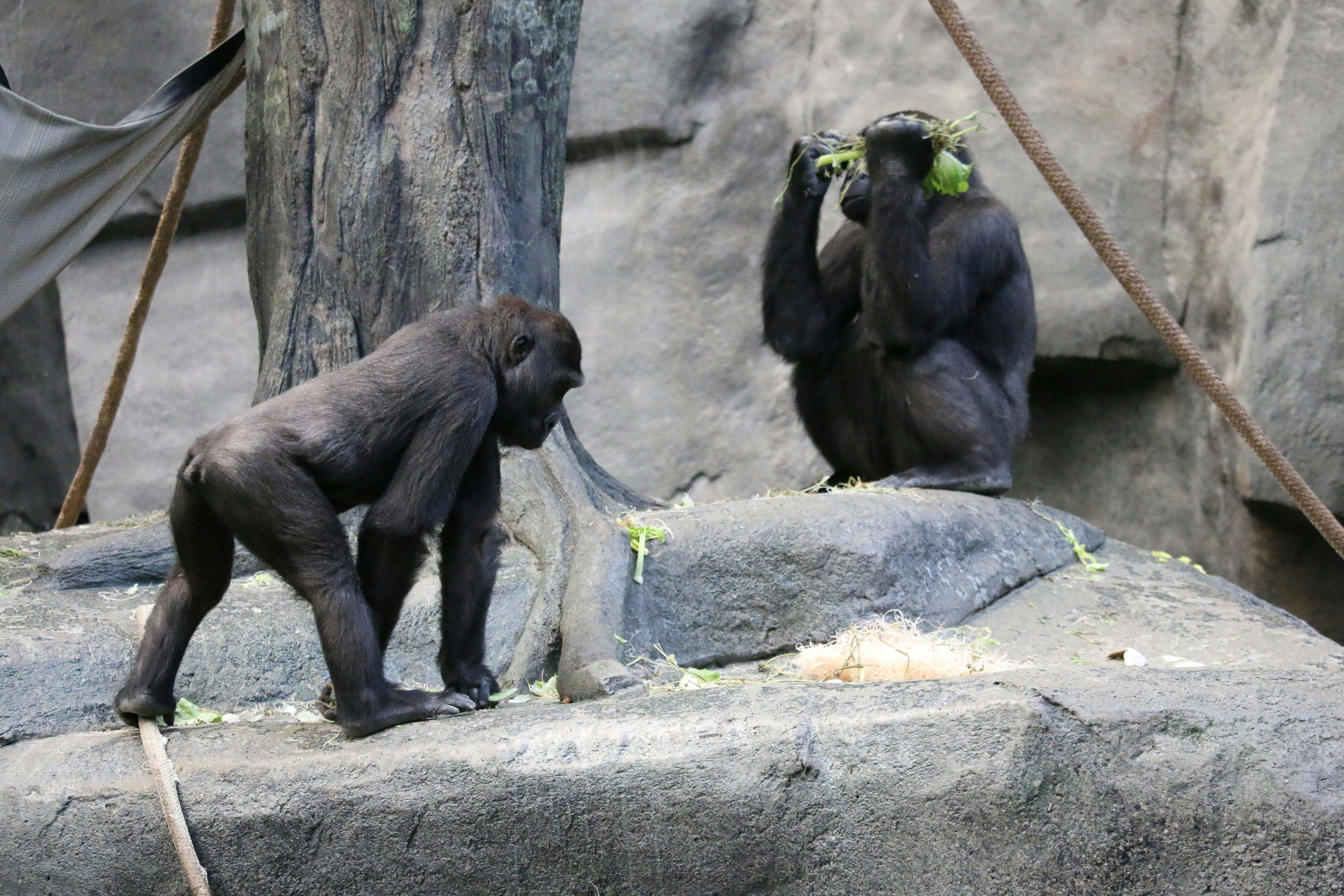
A gorilla family is built entirely around one dominant silverback. He decides when the group moves, feeds, and rests, and he defends the troop against outside males. Younger males, called blackbacks, stay with the family until maturity, then usually leave to start their own group. It’s a stable, hierarchical structure that rarely fractures under normal conditions.
Chimpanzee Communities
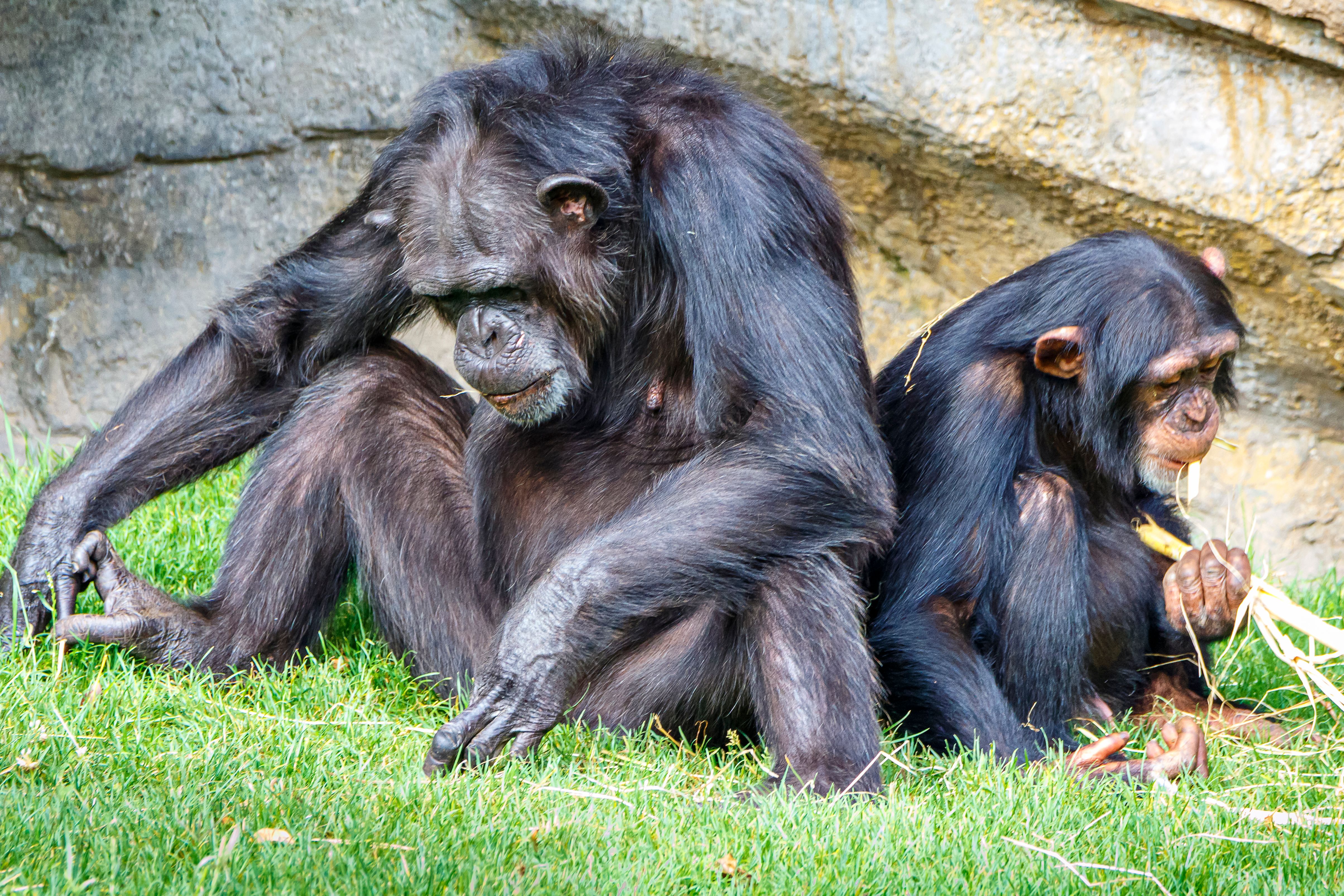
Chimpanzee groups work almost the opposite way. Communities regularly split into smaller subgroups to forage, then reunite days later, and the dominant male holds his position through shifting alliances and political maneuvering rather than sheer physical dominance alone. Females aren’t locked into loyalty to one male, and a chimp’s time at the top of the hierarchy tends to be considerably shorter and more contested than a silverback’s.
Intelligence, Tool Use, and Communication
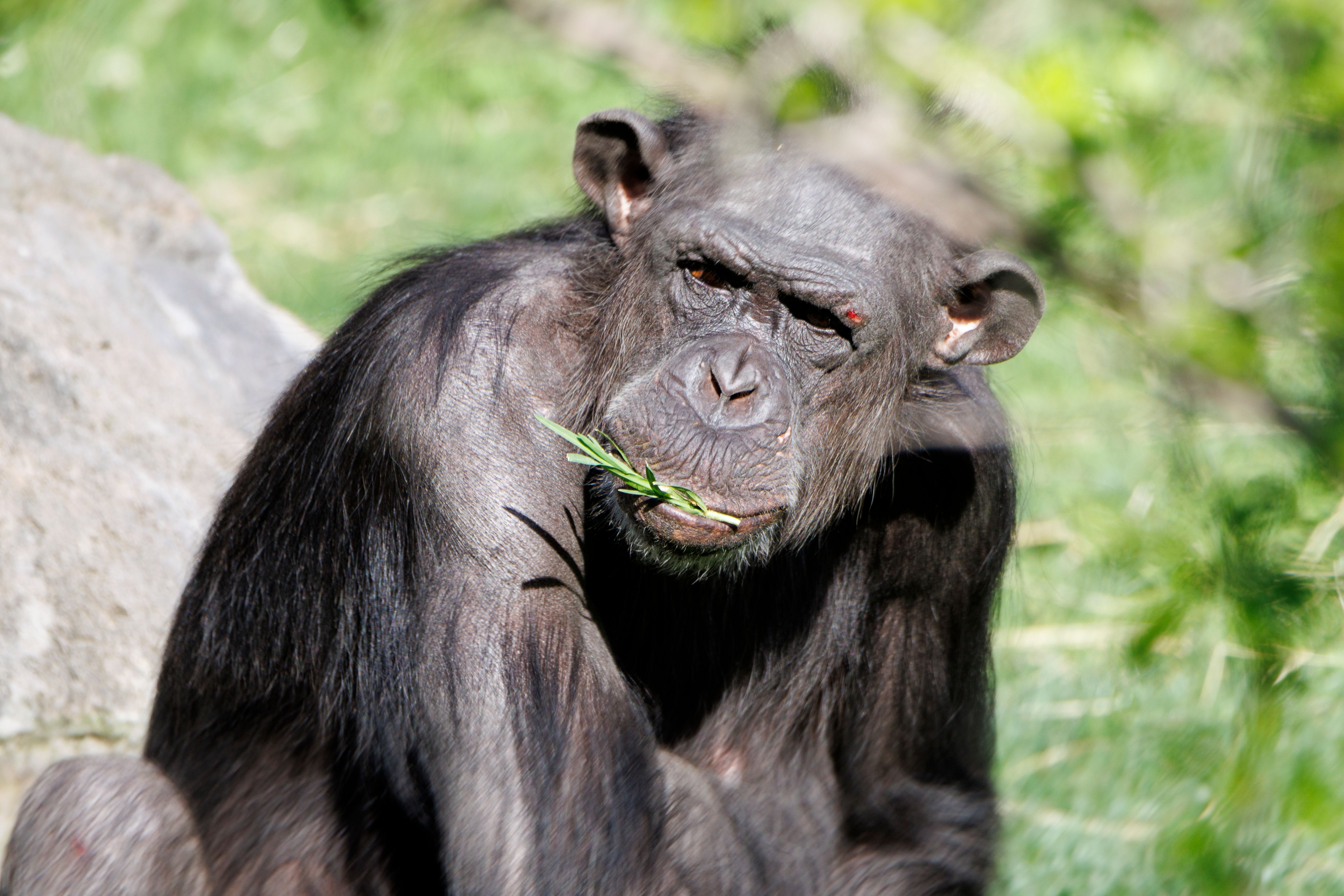
Chimpanzees are generally considered the more conventionally intelligent of the two species, largely because of documented tool use. Wild chimps fashion twigs to fish termites out of mounds, use stones to crack open nuts, and even make sponges from chewed leaves to soak up water from tree hollows, skills that get taught to younger chimps and passed down within a community.
Gorilla tool use is documented but far rarer, likely because gorillas generally live in areas with more consistently available food and simply don’t need to problem-solve for it the way chimps do. That said, western lowland gorillas have been observed using sticks to gauge water depth before crossing swamps, a genuinely sophisticated planning behavior.
Communication style differs too. Gorillas rely heavily on body language and low vocalizations, including the well-known chest beat, which is more often a display or a sign of excitement than a threat. Chimpanzees layer in far more vocal and facial communication, including loud screams during conflict that can summon allies from elsewhere in the group.
Emotion, Memory, and Learning
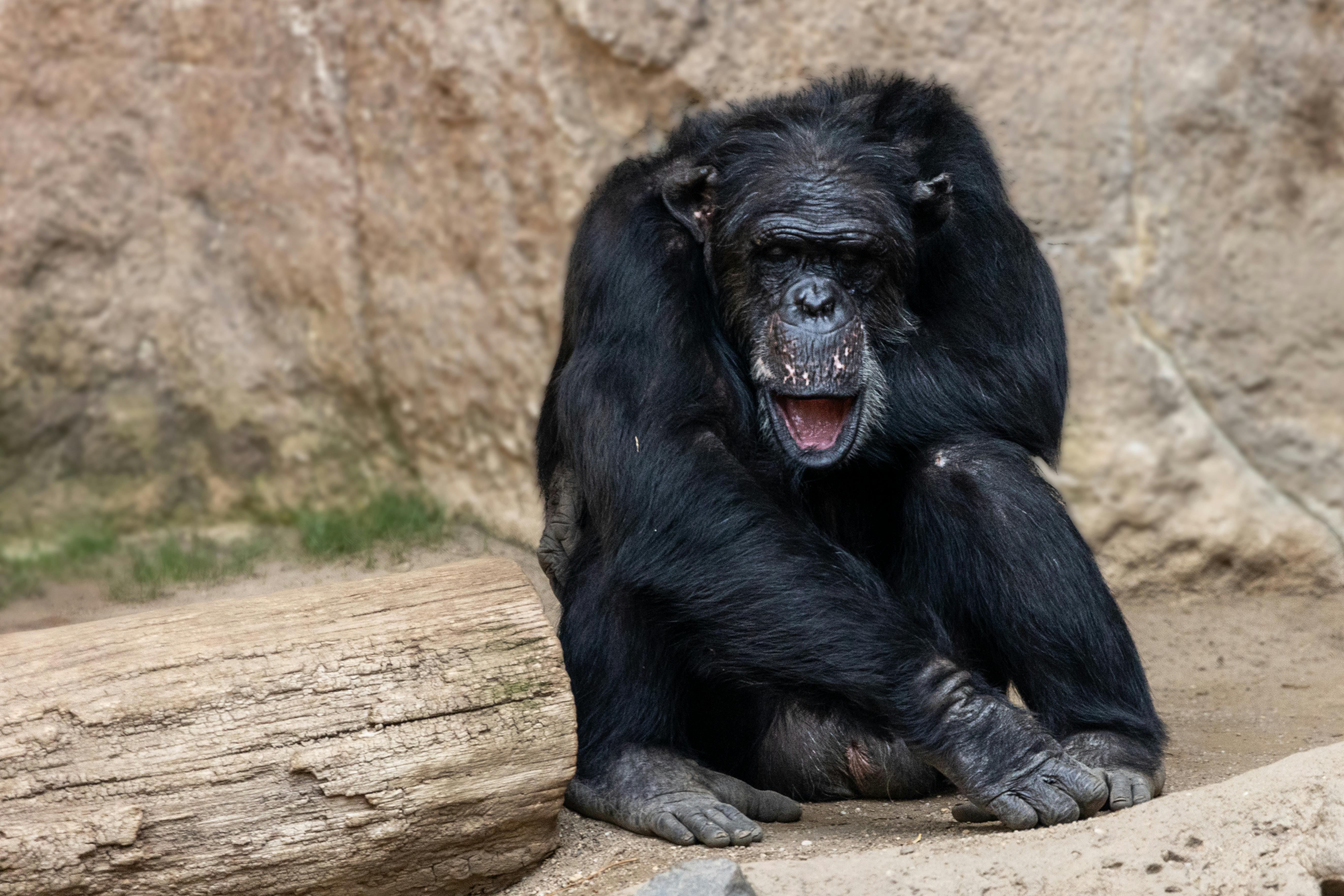
Both species show real emotional depth, not just instinctive reaction. Gorillas have been observed staying close to injured family members, comforting distressed infants, and returning to the spot where a family member died, behavior that reads as genuine grief rather than confusion.
Chimpanzees show a comparable emotional range, and in controlled studies, their problem-solving and memory have been measured at a level comparable to a young human child. Both species remember individual faces, reliable feeding spots, and their position within the group’s social hierarchy for years, which is part of what makes their social politics, especially among chimps, so genuinely complex to observe.
Aging in Gorillas and Chimpanzees
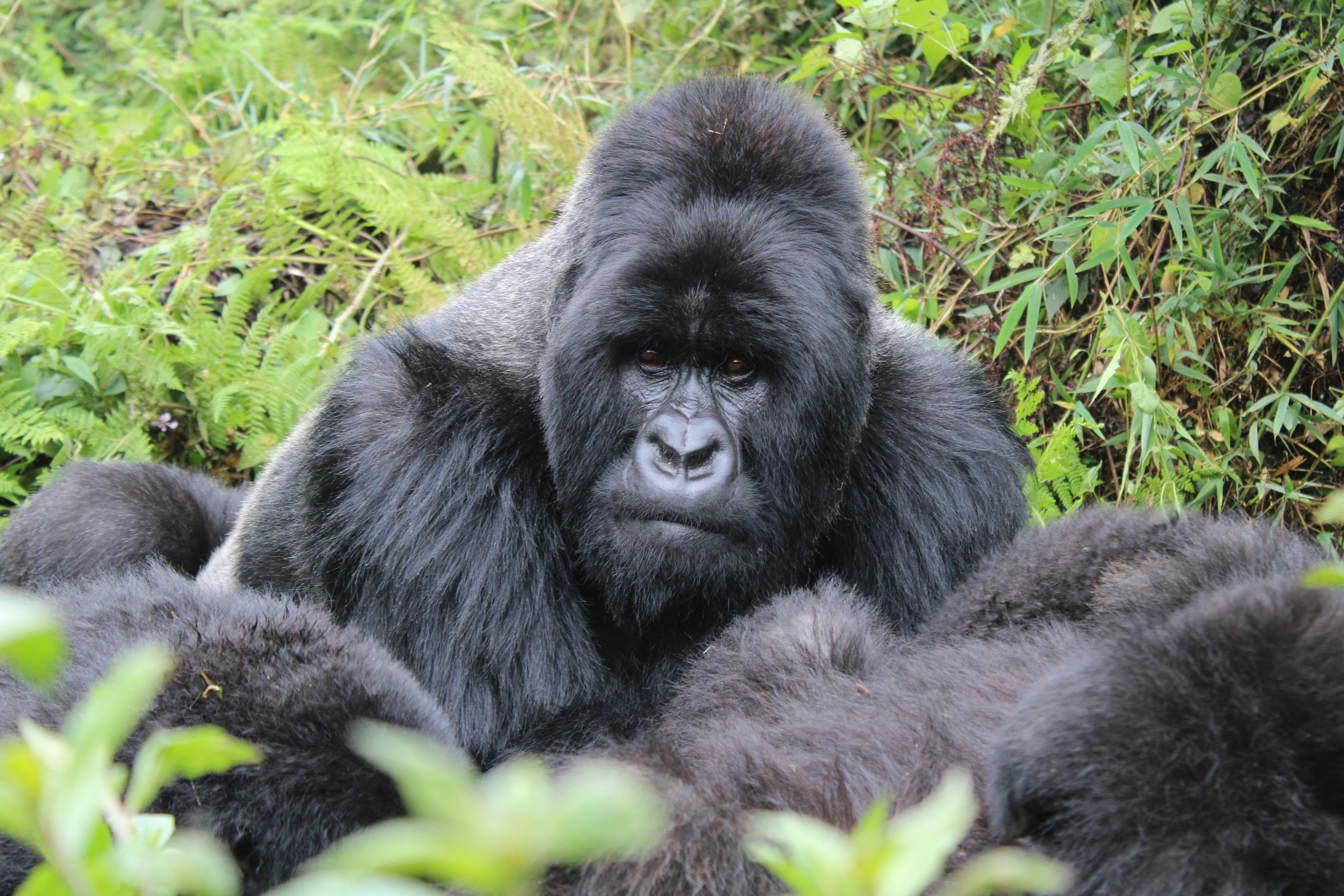
A gorilla shows its age physically well before it shows in behavior. Joint stiffness sets in, grey hair spreads across the face and arms, and an aging silverback becomes visibly slower and rests more often, all of which makes him a genuine target for a takeover challenge from a younger outside male.
A chimpanzee ages differently, with the face growing patchier and darker over time rather than greying the way a gorilla’s does. An aging male chimp doesn’t necessarily lose his position outright, since chimp politics run on alliances as much as physical strength, and an older male can often hold onto influence by aligning with younger, stronger males rather than competing with them directly.
What to Expect on a Trek: Encounter Rules and Etiquette

Both gorilla and chimpanzee trekking follow strict rules, set by park authorities rather than individual guides, and they exist specifically to protect the animals from human disease as much as to protect visitors.
- A maximum of one hour is permitted with the primate family once you locate them, for both gorillas and chimpanzees
- Visitors must stay at least 7 meters from gorillas and a similar distance from chimpanzees at all times
- A minimum age of 15 applies to gorilla trekking permits in both Uganda and Rwanda
- Anyone showing symptoms of a cold, flu, or other communicable illness is asked not to trek, since great apes can contract human respiratory infections with serious consequences
- Face masks are required at the viewing distance in most gorilla trekking programs, specifically to reduce disease transmission risk
- Groups are capped, generally 8 visitors per gorilla family and a similar limit per chimp community, to keep the encounter from overwhelming the animals
The actual hike to reach the animals varies enormously by day. Gorilla families tend to stay in a smaller home range and move less erratically, so trek times often run 1 to 4 hours. Chimpanzees range further and move faster through the canopy, which can occasionally stretch a chimp trek beyond that.
Where to See Gorillas and Chimpanzees in the Wild
| Species | Best Countries | Best Parks |
|---|---|---|
| Mountain gorilla | Uganda, Rwanda, DRC | Bwindi Impenetrable Forest, Volcanoes National Park, Virunga National Park |
| Western lowland gorilla | Gabon, Republic of Congo, Cameroon | Various remote lowland forest reserves |
| Eastern chimpanzee | Tanzania, Uganda | Gombe Stream, Mahale Mountains, Kibale National Park |
| Western chimpanzee | Guinea, Côte d’Ivoire | Various West African reserves |
For most travelers building an African safari itinerary, the realistic choice comes down to mountain gorilla trekking in Uganda or Rwanda, or chimpanzee trekking in Tanzania’s Gombe Stream or Mahale Mountains, or Uganda’s Kibale National Park.
Conservation Status: The Latest Numbers
Both species remain under real pressure, though the specific trend lines differ.
| Gorilla | Chimpanzee | |
|---|---|---|
| IUCN status | Critically Endangered (most subspecies); mountain gorilla downgraded to Endangered in 2018 | Endangered; western chimpanzee Critically Endangered |
| Estimated wild population | Roughly 316,000 total across all gorilla species, though mountain gorillas number only around 1,063 to 1,100 | Roughly 170,000 to 300,000 |
| Population trend | Mountain gorillas are the only great ape subspecies currently increasing; lowland gorillas are declining | Declining across most subspecies |
| Main threats | Habitat loss, poaching for bushmeat, disease transmission from humans | Habitat loss, poaching, illegal pet trade, disease |
The wild population figure above hides a wide gap between individual gorilla subspecies, which matters more than the combined total suggests.
| Gorilla Subspecies | Estimated Population | IUCN Status |
|---|---|---|
| Western lowland gorilla | 95,000 to 316,000 | Critically Endangered |
| Eastern lowland gorilla (Grauer’s gorilla) | 3,800 to 6,800 | Critically Endangered |
| Mountain gorilla | 1,063 to 1,100 | Endangered |
| Cross River gorilla | 250 to 300 | Critically Endangered |
The Cross River gorilla is genuinely the rarest great ape subspecies on Earth, rarer even than the mountain gorilla, though it receives far less tourism attention since it isn’t set up for trekking the way Uganda and Rwanda’s mountain gorillas are. The Eastern lowland gorilla tells the more worrying story: it’s declined by more than half since the 1990s, when its population still numbered close to 17,000.
The mountain gorilla is genuinely a rare conservation success story. From an estimated low of around 254 individuals in the 1980s, sustained anti-poaching patrols and tourism revenue have pushed the population past 1,000 for the first time on record, which is a large part of why trekking permits are priced the way they are: that revenue directly funds the patrols keeping the population climbing.
Gorilla Trekking vs Chimpanzee Trekking: Which Should You Choose?
| Gorilla Trekking | Chimpanzee Trekking | |
|---|---|---|
| Permit cost | $700 in Rwanda, around $800 in Uganda | $150 to $250 |
| Group size limit | Usually 8 guests per gorilla family | Usually 6 to 8 guests per chimp community |
| Physical difficulty | Moderate to strenuous, depending on the family’s location that day | Moderate, though chimps move faster and further |
| Time with the animals | One hour once located | One hour once located |
| Where to book it | Uganda, Rwanda | Tanzania, Uganda |
| Best for | A genuine bucket-list, once-in-a-lifetime encounter | A more affordable primate encounter, still genuinely special |
Gorilla families tend to stay lower to the ground and move less erratically, which usually means an easier trek and a longer, calmer viewing window once you find them. Chimpanzees move fast through the canopy, so the trek itself can run longer and the viewing experience is more about following movement than sitting with a stationary family group.
If a chimp trek in Tanzania’s Gombe Stream or Mahale Mountains fits your interests, that’s something I can build directly into your Tanzania itinerary. Gorilla trekking in Uganda or Rwanda isn’t a region TourwithPipi operates in directly, but it’s one of the most common add-ons I help guests arrange alongside a Kenya or Tanzania safari.
Common Questions About Gorillas vs Chimpanzees
What is the main difference between a gorilla and a chimpanzee?
Size and diet are the two clearest differences in any gorilla vs chimpanzees comparison. Gorillas are considerably larger, spend most of their time on the ground, and eat almost entirely plants. Chimpanzees are smaller, spend significant time in trees, use tools, and occasionally eat meat.
Which is more dangerous, a gorilla or a chimpanzee?
Chimpanzees are generally considered more unpredictable and capable of sudden aggression, including documented attacks on humans and even cannibalism within their own communities. Gorillas are physically far stronger but tend to be calmer and less prone to sudden violent outbursts, provided their space is respected.
Which is genetically closer to humans, a gorilla or a chimpanzee?
Chimpanzees are genetically closer to humans, sharing roughly 98.7 to 98.8% of our DNA, compared to about 98.3% for gorillas.
Can gorillas and chimpanzees live in the same forest?
In some parts of Central Africa, western lowland gorilla and chimpanzee ranges do overlap, though the two species generally avoid direct competition by favoring slightly different diets and forest layers.
Is gorilla trekking or chimpanzee trekking easier to book?
Chimpanzee trekking is generally easier to book on shorter notice and costs significantly less per permit. Gorilla trekking permits, especially in Rwanda, sell out months ahead during peak season and cost several times more.
In a chimpanzee vs gorilla comparison, which lives longer?
Both can live 35 to 50 years in the wild, with some individuals in protected populations living longer under close monitoring. Neither species has a dramatically longer natural lifespan than the other.
Blog Summary
- Gorillas are larger, ground-dwelling, and almost entirely herbivorous; chimpanzees are smaller, spend significant time in trees, and occasionally eat meat.
- Gorillas live in stable family troops led by one silverback, while chimpanzee communities are looser and regularly split and regroup.
- Chimpanzees are genetically closer to humans, at roughly 98.7 to 98.8% shared DNA, compared to about 98.3% for gorillas.
- Chimpanzees use tools far more frequently than gorillas and teach those skills to younger generations.
- The mountain gorilla population has climbed past 1,000 for the first time on record, making it the only great ape subspecies currently increasing.
- Chimpanzee trekking, available in Tanzania and Uganda, costs significantly less than gorilla trekking in Uganda or Rwanda.
- Both species remain endangered overall, with habitat loss, poaching, and disease the shared main threats.
- Both gorillas and chimpanzees show genuine emotional depth, including grief-like behavior and long-term memory of faces and social hierarchy.
- Trekking rules exist mainly to prevent disease transmission between humans and great apes, including mask requirements, a 7-meter distance rule, and a one-hour viewing limit.
- Male-female size differences are far more dramatic in gorillas than in chimpanzees, which is part of why one silverback can dominate a whole troop alone.
- The Cross River gorilla, at just 250 to 300 individuals, is the rarest great ape subspecies on Earth, even rarer than the mountain gorilla.
Ready to Add a Primate Trek to Your Trip?
If chimpanzee trekking in Tanzania sounds like the right fit, I can build it directly into your safari itinerary. If a mountain gorilla trek in Uganda or Rwanda is the priority, message me on WhatsApp and I’ll help you plan it as an add-on to your Kenya or Tanzania trip.


