
Quick answer: Yes, giraffes sleep, but far less than most mammals and mostly standing up. Adult giraffes in the wild average around 30 minutes of actual sleep across a full day, taken in short bursts of just a few minutes at a time. They do lie down regularly at night, more often than scientists once believed, curling their neck back to rest their head on their own rump for brief periods of deep REM sleep.
Do Giraffes Sleep Lying Down or Standing Up?
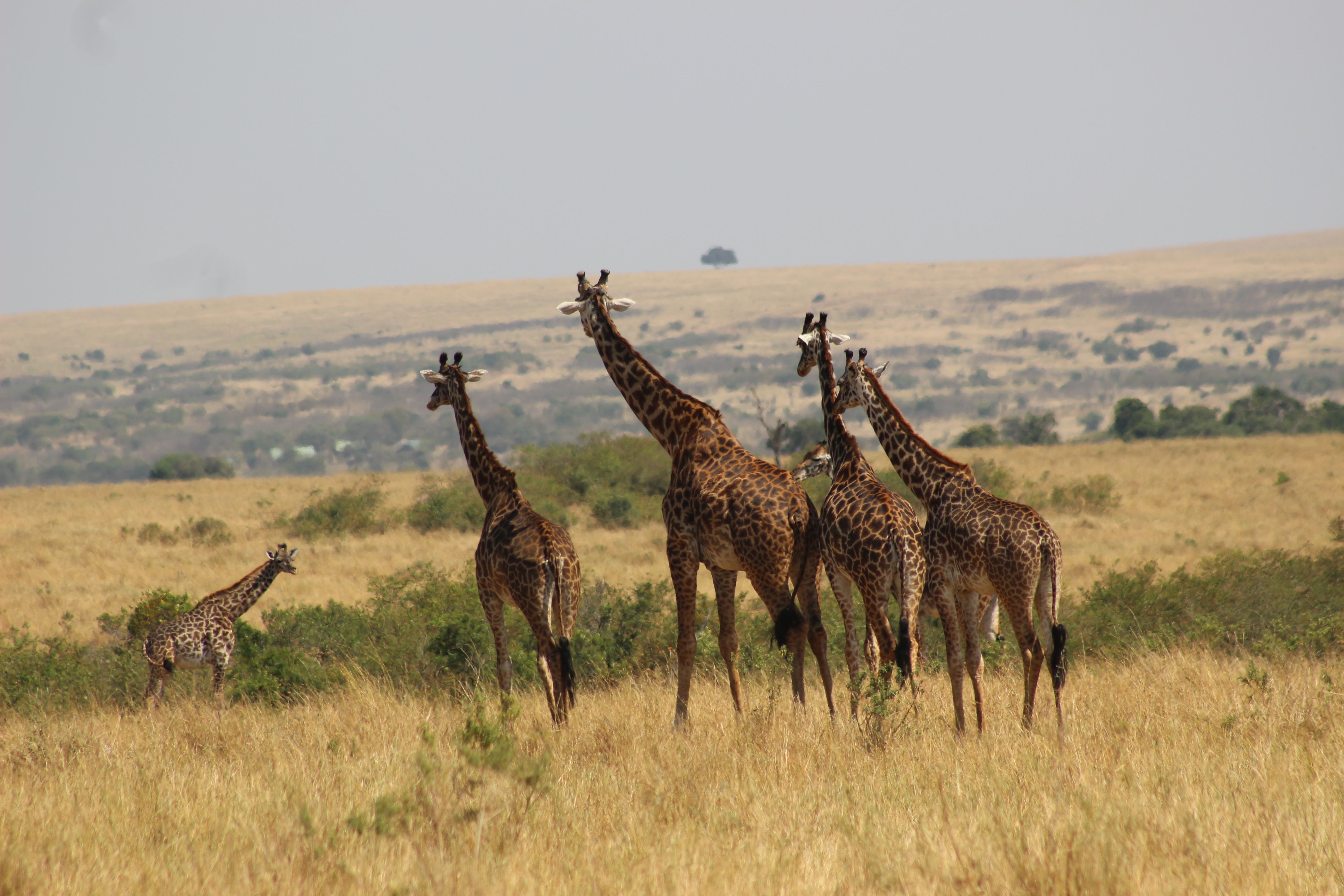
Both, and which one depends on how deep the sleep actually is.
Standing Sleep and Cat-Napping
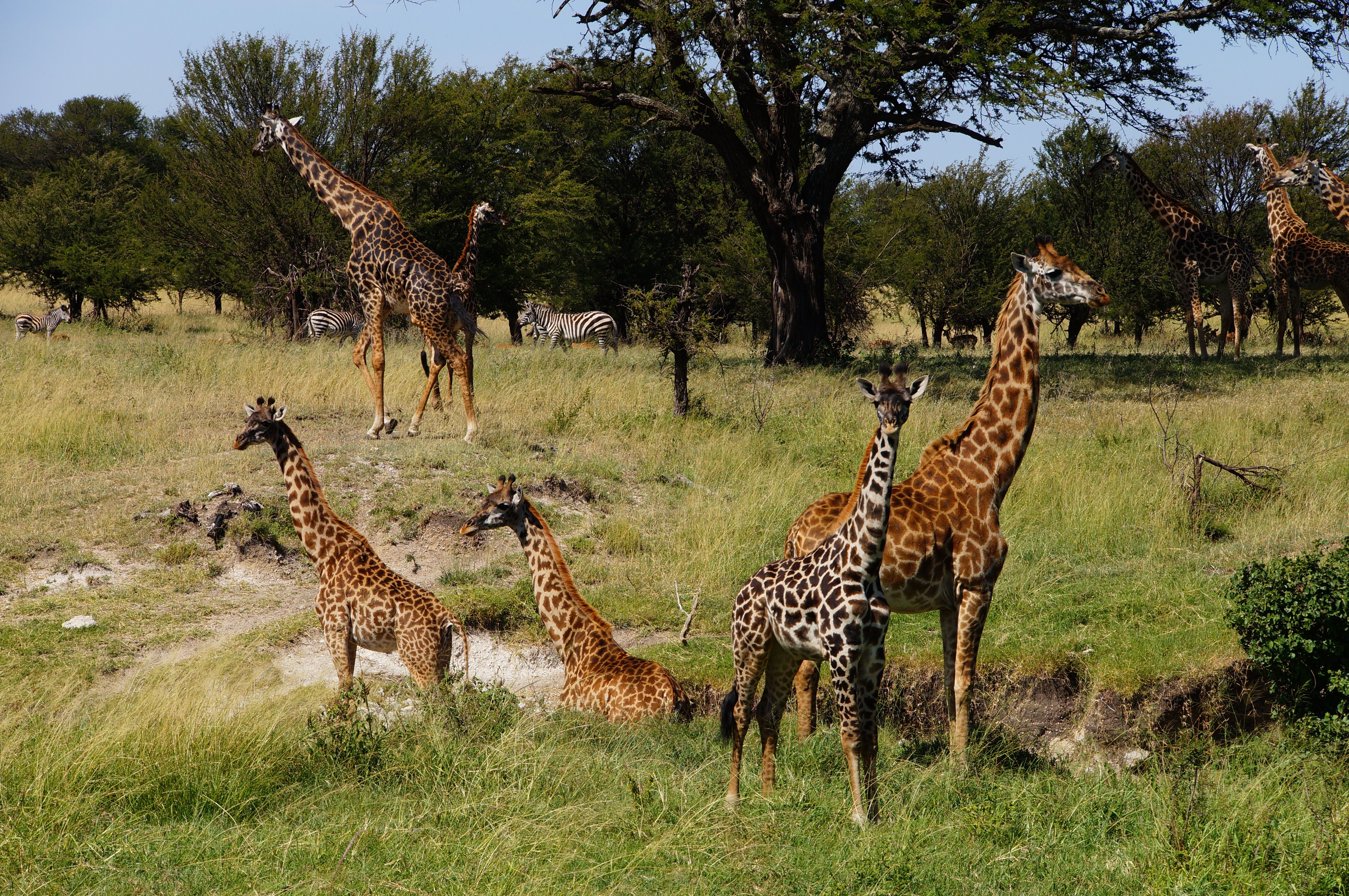
Most giraffe rest happens standing up, in short, light dozes. The eyes may stay half open, the ears keep twitching, and the animal stays ready to bolt at the first sign of trouble. Giraffes will sometimes lean against a tree for extra support while dozing this way. This is not deep sleep, it is closer to a constant, cautious cat-nap spread across the day and night.
Lying Down for Deep REM Sleep
For real REM sleep, the deepest kind, a giraffe folds its legs beneath its body and curls its long neck backward until its head rests on its own rump. It looks almost impossible, the whole animal knotted into a loop. Long-term night monitoring by the Giraffe Conservation Foundation in Namibia has actually revised the old assumption here. Giraffes lie down and enter this position far more regularly, essentially nightly, than researchers used to think. The catch is that each bout is brief, often starting only about 15 minutes after settling and lasting just a couple of minutes before the giraffe wakes again.
How Much Do Giraffes Sleep?
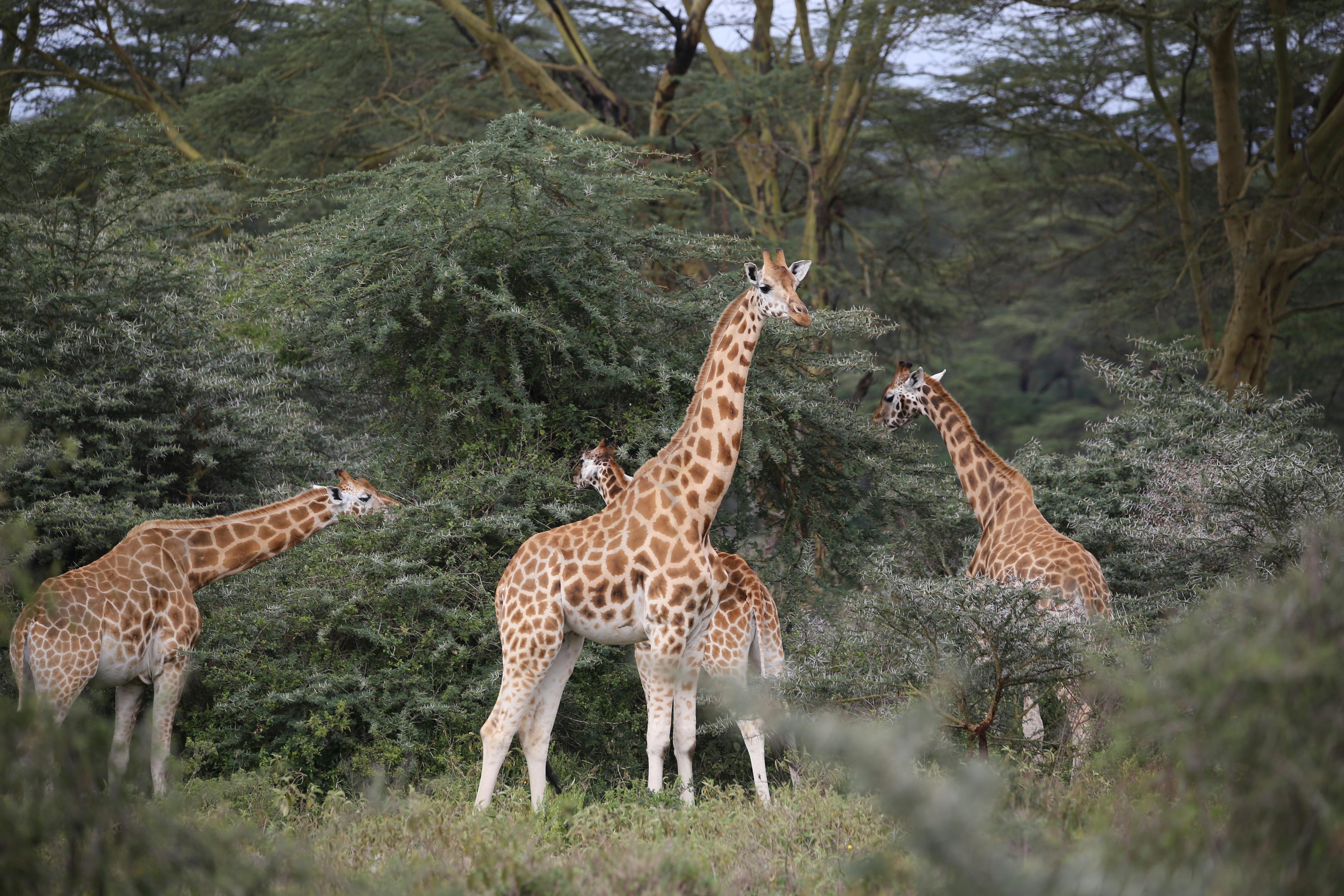
- Adult giraffes in the wild average roughly 30 minutes of true sleep across a full 24 hour day, one of the shortest sleep requirements of any mammal on Earth
- That sleep comes in many short bursts rather than one long stretch, rarely more than five minutes at a time
- Giraffes can extend their rest longer than usual when conditions feel genuinely safe, a quiet area with no predators nearby and a herd on watch
- For comparison, lions, Africa’s apex land predator, rest up to 20 hours a day, which makes the giraffe’s 30 minutes even more striking
- Giraffes in zoos and other protected human care settings sleep far more, up to 6 hours a day on average, since the threat of predators is removed and lying down becomes safe
- Calves sleep noticeably more than adults, which is typical of most young mammals
Where Does a Giraffe Sleep?

Giraffes do not have a den or a nest. They rest wherever the herd happens to be at the time, usually open plains or areas near scattered trees, chosen with real care.
- Giraffes pick resting spots near other herd members rather than alone
- Within a group, sleep is staggered, some animals lie down or doze while others stay standing and alert
- Deep sleep rarely overlaps within the group, one animal tends to wake as another settles in, an informal rotation that runs every night
- This social spacing is itself a safety strategy, since a group with some members always alert is far harder for a predator to approach unnoticed
Why Do Giraffes Sleep So Little in the Wild?
The short answer is vulnerability. Lying down strips away almost every advantage a giraffe has.
- A giraffe standing at full height and full alertness can see danger from a long distance and run up to 35 miles an hour if it needs to
- Once folded onto the ground with its neck curled back, a giraffe cannot see well, cannot react quickly, and takes real time to stand back up
- Giraffes have no thick hide, horns built for real defense, or sharp teeth to fight off a predator while they are down
- Standing back up itself is a slow, awkward process, which makes a lying giraffe an easy target if a predator is nearby
Every part of a giraffe’s sleep pattern is built around minimizing that window of total vulnerability.
Wild vs Zoo Giraffe Sleep: Quick Comparison
| Factor | Wild Giraffe | Zoo Giraffe |
|---|---|---|
| Average sleep per day | About 30 minutes | Up to 6 hours |
| Typical position | Mostly standing, brief lying bouts | Lying down far more often |
| REM sleep length | A couple of minutes at a time | Longer, more sustained cycles |
| Main driver | Predator risk | No predator risk |
Giraffes in Zoos vs the Wild: A Very Different Sleep Pattern

Remove predators from the equation entirely and giraffe sleep behavior changes dramatically. In zoos and other managed care settings, giraffes lie down far more often and sleep noticeably longer, averaging up to 6 hours a day compared to roughly 30 minutes in the wild. Safe from predators, they can also enter deeper, longer REM cycles, the same curled, head-on-rump position, but sustained instead of interrupted every few minutes.
Do Baby Giraffes Sleep More Than Adults?
Yes. Giraffe calves sleep more than fully grown adults, similar to most young mammals, though even calves show the same basic lying-down, head-on-rump resting posture from an early age.
Ready to See Giraffes for Yourself?
If you want a safari itinerary built around strong giraffe sightings and other iconic wildlife, message me directly on WhatsApp.
A few trips with strong giraffe and wildlife sightings:
- 5-Day Masai Mara Safari
- 6-Day Mara Discovery: Big Five Safari
- 8-Day Kenya Explorer Safari
- 8-Day Extraordinary Kenya Safari
Frequently Asked Questions
Do giraffes sleep?
Yes. Giraffes sleep both standing up in light, brief dozes and occasionally lying down with their neck curled back for deeper REM sleep, though total sleep time is very short compared to most mammals.
How much do giraffes sleep?
Wild adult giraffes average around 30 minutes of true sleep across a full day, taken in short bursts rather than one long stretch. Giraffes in zoos sleep considerably more, up to 6 hours a day, since predator risk is removed.
How does a giraffe sleep lying down?
A giraffe folds its legs beneath its body and curls its long neck backward until its head rests on its own rump. This position is used for deep REM sleep and typically lasts only a couple of minutes at a time in the wild.
Where does a giraffe sleep?
Giraffes rest wherever the herd happens to be, usually open plains or areas near scattered trees, choosing spots near other herd members rather than alone for added safety.
Why do giraffes sleep so little?
Lying down leaves a giraffe unable to see well, react quickly, or stand up fast if a predator approaches. With no thick hide or strong natural defenses, minimizing time spent vulnerable on the ground is a survival strategy.
Do baby giraffes sleep more than adult giraffes?
Yes, giraffe calves sleep more than adults, which is typical of most young mammals, though they use the same lying-down, head-on-rump resting position from an early age.
Blog Summary About How Giraffes Sleep
- Wild adult giraffes average about 30 minutes of true sleep across a full day, compared to lions at up to 20 hours.
- Most giraffe rest happens standing up in short, light dozes, sometimes leaning against a tree.
- Deep REM sleep requires lying down with the neck curled back, head resting on the rump.
- Each REM bout in the wild typically lasts only a couple of minutes.
- Giraffes lie down more regularly at night than scientists once believed.
- Herd members stagger their sleep so some are always standing alert.
- Zoo giraffes sleep far more, up to 6 hours a day, without predator risk.
- There are four giraffe species, and three are considered highly threatened.
- Vulnerability while lying down is the main reason wild giraffe sleep is so brief.
- Most current knowledge of wild giraffe behavior comes from research in just the last 25 years.


