
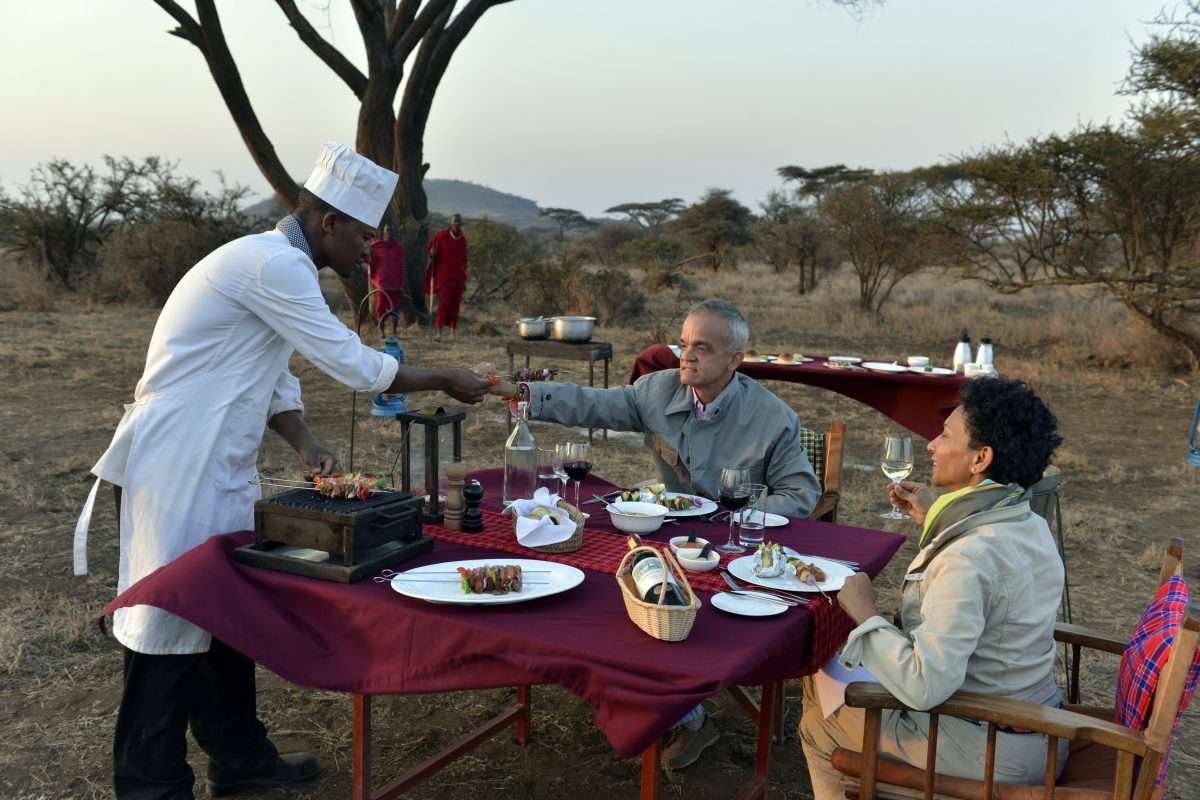
Imagine stepping off the plane in Tanzania and being greeted with a warm smile and the word “Karibu!” which means “Welcome.” The air feels different, the smiles feel genuine, and suddenly you realize that this trip is going to be more than just seeing wildlife it’s about connection.
When you say a simple word like “Habari” or “Jambo” to your guide, lodge staff, or a local vendor, their face lights up with joy. You’ve bridged a gap without even realizing it. That’s the magic of Swahili, or as locals call it, Kiswahili. It’s not just a language, it’s a beautiful part of Tanzanian identity, hospitality, and community.
We believe that learning a few words in Swahili changes the way you experience your safari in Africa. It transforms simple moments like greeting your driver in the morning or thanking your host at the lodge into memories filled with genuine connection.
How Do You Say Hello in Swahili?
The most common ways to say hello in the Swahili language are “Habari” and “Jambo.”
-
Habari literally means “What’s the news?” It’s often used as a polite and friendly hello.
-
The reply is “Nzuri” which means “I’m good” or “All is well.”
-
-
Jambo is a cheerful, casual greeting that you can use with anyone. It’s friendly, simple, and easy to remember.
-
Hujambo means “How are you?” and the reply is “Sijambo” which means “I am fine.”
-
Shikamoo is a respectful greeting used by younger people when greeting elders, and the reply is “Marahaba.”
Swahili words are pronounced exactly as they’re written. The stress usually falls on the second-to-last syllable, which makes it easy for English speakers to learn.
For example, when your lodge staff greets you in the morning, smile and reply with “Habari za asubuhi”, which means Good morning. It’s a warm way to begin your day in the wild.
Time-Based and Social Greetings in Swahili
Swahili has lovely ways to greet people at different times of the day. Once you learn these, you’ll find yourself using them naturally throughout your trip.
Morning, afternoon, and evening greetings:
-
Habari za asubuhi – Good morning
-
Habari za mchana – Good afternoon
-
Habari za jioni – Good evening
-
Lala salama – Good night
Friendly or casual greetings:
-
Mambo? – What’s up?
-
Poa – Cool
-
Safi – Fine
- Ok – Sawa
-
Vipi? – How are things?
Formal greetings are perfect when you’re talking to elders or in hotels and lodges. Casual greetings are great for your guides, drivers, or new friends you meet along the way.
These simple words will bring smiles everywhere you go, from your first morning game drive to your last evening by the campfire.
How to Say Hi in Swahili in Different Safari Situations
Your safari journey takes you through many experiences — from early morning drives to cultural village visits. Here’s how to greet people in Swahili depending on where you are and who you’re with.
When greeting your safari guide or driver:
Your guide is your companion throughout the trip, so a warm hello always feels good.
-
Habari, rafiki yangu – Hello, my friend.
-
Asante kwa safari nzuri – Thank you for the wonderful journey.
When arriving at your lodge or hotel:
Staff members in Tanzanian lodges often greet you with Karibu! which means Welcome!
You can respond with:
-
Habari, niko vizuri – Hello, I’m good.
-
Karibu tena – Welcome again (often used by staff).
When meeting locals or visiting a Maasai village:
Showing respect is important when interacting with local communities.
-
Shikamoo – A greeting of respect used for elders.
-
Asante sana – Thank you very much (useful after a dance or cultural sharing).
When leaving or saying goodbye:
-
Kwaheri – Goodbye.
-
Tuonane tena – See you again.
Every time you say these words, you’re not just using a phrase, you’re showing gratitude, kindness, and openness to learn. That’s the spirit of travel that TourwithPipi celebrates.
More Essential Swahili Words for Travelers and Safari Lovers
When you travel through Tanzania or other parts of East Africa, you’ll quickly realize that Swahili is woven into daily life. From giving directions to asking questions or naming wildlife, these simple words make every part of your journey easier and more enjoyable.
Directions and Useful Travel Words
| English | Swahili |
|---|---|
| Left | Kushoto |
| Right | Kulia |
| Straight ahead | Mbele |
| Behind | Nyuma |
| Up | Juu |
| Down | Chini |
| Near | Karibu na |
| Far | Mbali |
| Stop | Simama |
| Slow down | Pole pole |
| Quickly / Fast | Haraka |
| Let’s go | Twende |
| Wait | Subiri |
| Hotel | Hoteli |
| Restaurant | Mgahawa |
| Car | Gari |
| Bus | Basi |
| Road | Barabara |
| Market | Soko |
| Airport | Uwanja wa ndege |
| Hospital | Hospitali |
| Police | Polisi |
| Where is…? | …iko wapi? |
| How much? | Ni kiasi gani? |
| I don’t understand | Sielewi |
| I understand | Naelewa |
| Please help me | Tafadhali nisaidie |
| I am lost | Nimepotea |
These words are especially useful when exploring local towns or driving between safari parks. For instance, if you need to find a restroom at a stopover, you can ask, “Cho ni wapi?” (Where is the toilet?).
Food, Dining, and Market Phrases
| English | Swahili |
|---|---|
| Breakfast | Chakula cha asubuhi |
| Lunch | Chakula cha mchana |
| Dinner | Chakula cha jioni |
| Table | Meza |
| Chair | Kiti |
| Menu | Orodha ya chakula |
| Waiter / Waitress | Mhudumu |
| Bill / Check | Bili |
| Meat | Nyama |
| Fish | Samaki |
| Chicken | Kuku |
| Rice | Wali |
| Bread | Mkate |
| Vegetables | Mboga |
| Fruits | Matunda |
| Salt | Chumvi |
| Sugar | Sukari |
| Tea | Chai |
| Coffee | Kahawa |
| Water | Maji |
| Juice | Juisi |
| Ice | Barafu |
| Delicious | Kitamu |
| I’m hungry | Nina njaa |
| I’m thirsty | Nina kiu |
| I’m full | Nimeshiba |
| No spice | Bila viungo |
You’ll hear these words often at lodges or camps. For example, your host might say, “Chakula kiko tayari” (Food is ready), and it always sounds like the start of something wonderful.
Wildlife and Nature Terms for Safari Travelers
Safari in Swahili means “journey,” and that word alone captures the spirit of exploration. Here are more words you’ll hear from your guide or spot on safari signs:
| English | Swahili |
|---|---|
| Antelope | Swala |
| Hippo | Kiboko |
| Crocodile | Mamba |
| Zebra | Punda milia |
| Hyena | Fisi |
| Cheetah | Duma |
| Monkey | Tumbili |
| Baboon | Nyani |
| Warthog | Ngiri |
| Wild dog | Mbwa mwitu |
| Bird | Ndege |
| Ostrich | Mbuni |
| Snake | Nyoka |
| Butterfly | Kipepeo |
| Tree | Mti |
| Grass | Nyasi |
| Mountain | Mlima |
| River | Mto |
| Lake | Ziwa |
| Sun | Jua |
| Moon | Mwezi |
| Star | Nyota |
When your guide points out animals and says “Angalia, twiga!” (Look, a giraffe!), you’ll start recognizing these names naturally. It makes your game drives more interactive and exciting.
Useful Expressions for Everyday Safari Life
| English | Swahili |
|---|---|
| Excuse me | Samahani |
| Sorry | Pole |
| Good luck | Bahati njema |
| No problem | Hakuna shida |
| Welcome again | Karibu tena |
| See you later | Tutaonana baadaye |
| Beautiful | Nzuri sana |
| Wonderful | Ajabu |
| Amazing | Kushangaza |
| Relax | Pumzika |
| Be careful | Kuwa makini |
| I like it | Napenda |
| I love Tanzania | Napenda Tanzania |
| Very good | Vizuri sana |
| I am happy | Nina furaha |
| Let’s take a picture | Tuchukue picha |
These expressions bring joy and friendliness to every interaction. Saying “Asante sana” to your chef or “Nzuri sana” to your guide after spotting a lion makes moments feel heartfelt and real.
Our Safari Guides Are Fluent in English
While all our TourWithPipi safari guides speak fluent English and most people in the tourism industry do as well, still it is well worth learning a few words before your trip adds a personal touch to your experience.
Final Words
Congratulations, you now have more Kiswahili vocabulary in your pocket, and you should now know exactly how to say hello in Swahili! These simple words will make your safari more personal and filled with connection. Whether it’s greeting your guide, thanking your host, or chatting with locals, every Swahili word brings a smile. Ready to start planning your dream trip to Tanzania? Get in touch with TourWithPipi, your Tanzania Safari Specialists, and begin brushing up on your Swahili as you prepare for the adventure of a lifetime!


