
Your Kilimanjaro summit night preparation starts the moment you arrive at Barafu Camp. This final high camp is your launchpad, and your actions here set the stage for success. Your first task is to immediately organize your daypack for the climb ahead. You will be woken around 11 pm to begin the trek, so having everything ready is essential for maximizing your rest. After an early dinner, you will go to your tent. While sleep can be hard to find at this altitude because of the excitement and thinner air, focusing on calm rest is crucial.
Barafu Camp: Final Acclimatization and Briefing
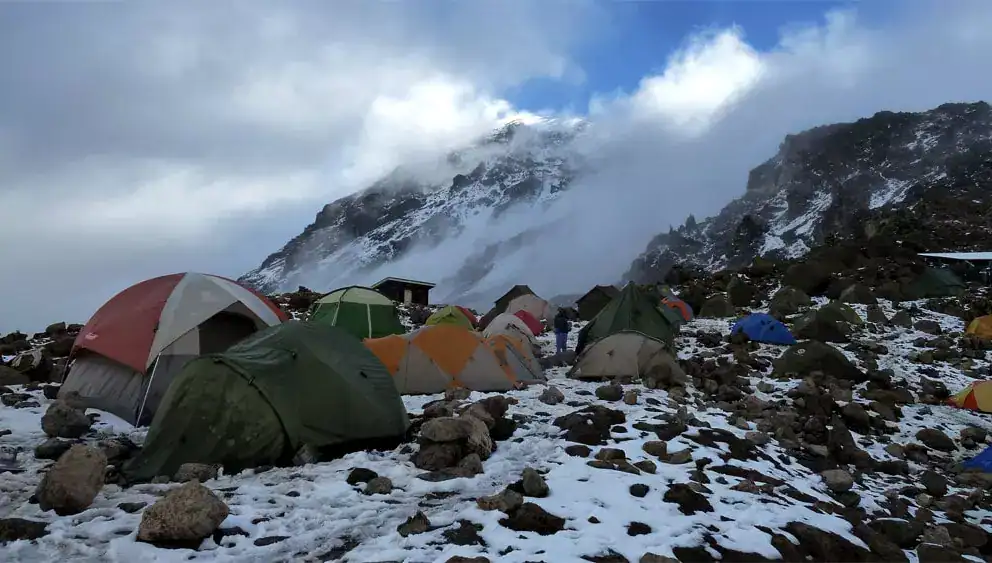
Elevation: You climb from 3,995 meters to 4,673 meters, which is 13,100 feet to 15,331 feet.
Distance: You hike approximately 4 kilometers or 2.5 miles.
Hiking Time: This leg takes about 3 to 4 hours.
Habitat: You are in the Alpine Desert zone.
The trek to Barafu Camp takes you into a stark and rocky landscape where all vegetation has vanished. The air is noticeably thin, and your guide will enforce a slow and steady pace to preserve your energy. Upon arrival, you will settle into camp early. Your guide will then hold a critical summit briefing. They will review the exact strategy, the slow “pole pole” pace you must keep, what extreme cold to expect, and all safety protocols. This is your time to hydrate thoroughly, eat a hearty early dinner, and mentally prepare as you take in the sweeping views of Mawenzi Peak, knowing the summit of Kibo is your next goal.
The Evening Routine: Dinner and Final Prep
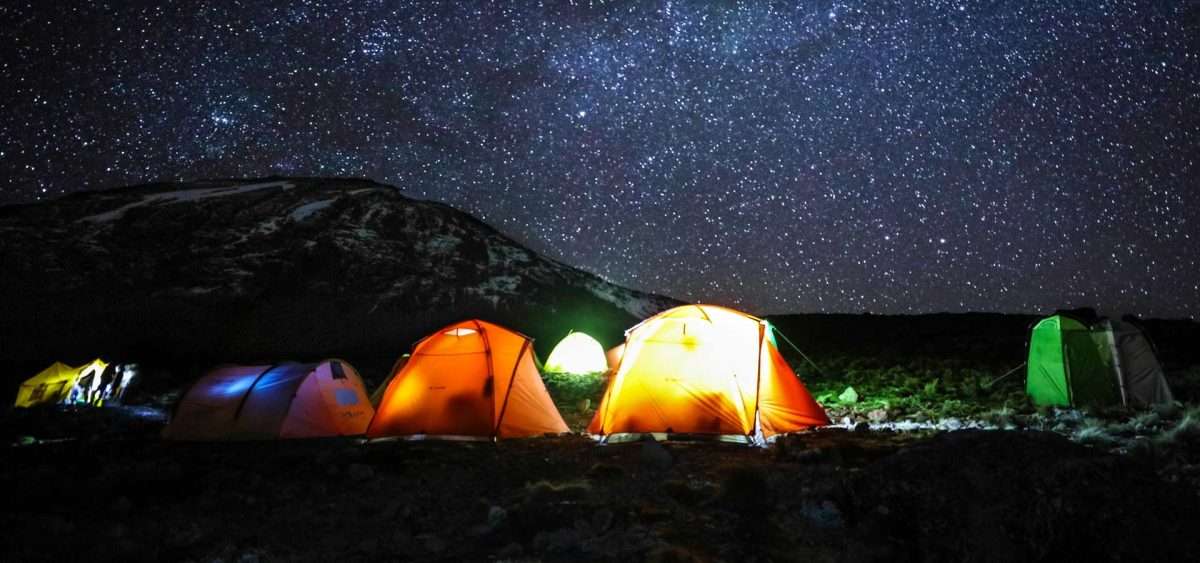
Dinner at Barafu Camp is served early, usually by 5:30 or 6:00 pm. The meal is designed to be hearty and energizing, featuring high carbohydrate foods like pasta, rice, or potatoes to fuel your body for the long night ahead. After dinner, you have one last chance to ask your guide any final questions.
You must then prepare your daypack with absolute care. Your guide will check that you have these essentials:
Your headlamp with fresh batteries
At least three liters of water
High energy snacks that are easy to eat, like chocolate, energy bars, or nuts
Your camera
Extra gloves and a warm hat
Once your pack is ready, you try to rest in your tent until the wake up call.
Summit Night: The Final Push to Uhuru Peak
Route: You climb from Barafu Camp to Uhuru Peak.
Elevation Gain: You ascend from 4,673 meters to 5,895 meters, which is 15,331 feet to 19,341 feet.
Distance: The ascent is approximately 5 kilometers or 3 miles.
Hiking Time: The climb up takes 6 to 8 hours.
Habitat: You are in the Arctic Zone.
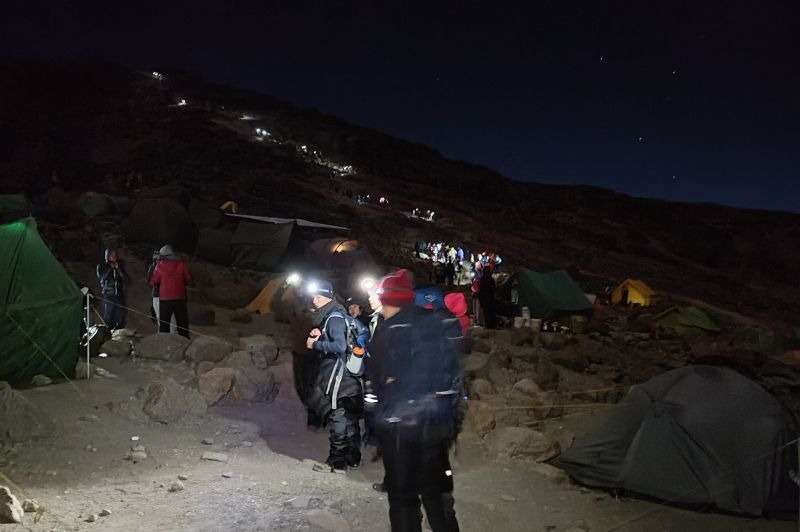
Your Kilimanjaro summit night begins in the deep cold and darkness. Around 11 pm, your guide will wake you. You will be offered a hot drink like tea or coffee in the mess tent, along with some light biscuits or cookies. Dressed in all your layers including your down jacket, thermal gear, gloves, and beanie, you will start the climb around midnight. Your path will be lit only by headlamps, creating a silent line of lights winding up the mountain.
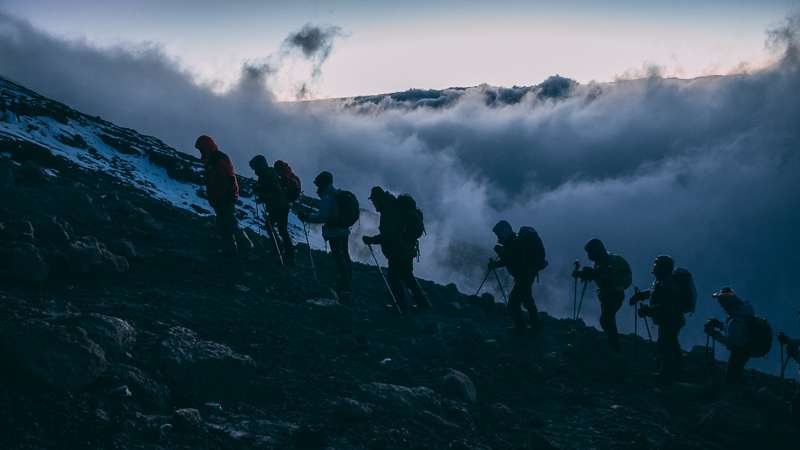
The climb is a profound test of endurance. You will move slowly, taking one deliberate step at a time up the steep volcanic scree. The pace is intentionally slow to conserve energy and manage the altitude. Your guide will stop for short breaks, but you must keep moving to stay warm. After several hours, you will reach Stella Point on the crater rim at dawn. From here, a final and triumphant hour long trek along the crater rim brings you to the Uhuru Peak sign.
Standing at the summit as the sun rises over Africa is a moment of pure achievement. At 5,895 meters, you are on the highest walkable point on the continent. After celebrating and taking photos, you begin the long descent back to Barafu Camp for a short rest and lunch. You then continue down to the thicker air and warmer temperatures of Mweka Camp for your final night on the mountain. The exhaustion is real, but it is completely eclipsed by an overwhelming sense of accomplishment.
How to Prepare for Your Summit Ascent: A Practical Guide
Success on summit night is about smart strategy, not just strength. Here are the key actions you can take to prepare your body and mind for the final push.
Get Your Temperature Right
Conserving energy is everything. A major way to do this is by ensuring your body is always at the right temperature, so it doesn’t waste energy trying to cool down or heat up.
As you start walking, you need to feel slightly cool. Right before you begin, remove your heavy down jacket or insulated over jacket. You will warm up quickly with movement. The critical rule is this: the moment you stop for a break, immediately put that warm jacket back on. This simple habit prevents massive heat loss and keeps your energy focused on climbing.
Eat and Drink Plenty
You must feed your climb. Summit day involves 13 to 15 hours of continuous trekking, and you could burn around 4,000 calories. We provide meals, but you need personal high energy snacks that you actually like and can eat easily. Pack a selection for your summit night Kilimanjaro: candy bars, nuts, dried fruit, cookies, crackers, energy gels, and hard sweets to keep your mouth moist. Eat small amounts consistently during every short break to maintain a steady fuel supply.
Use Stops Effectively
On summit night, we take “maintenance stops,” not leisurely rest stops. You must use this limited time with maximum efficiency. Plan your actions in advance: adjust your layers, take a sip of water, eat a snack, and use the toilet if needed. Most importantly, put on your warm layer before you stop moving to prevent a sudden chill. This disciplined approach keeps you safe and on schedule.
Go Slowly, But Keep Moving
Your guide will set a deliberate “pole pole” pace. Trust it completely. Moving too fast increases your risk of altitude sickness and burnout. Moving too slowly, however, can make the already long night impossibly drawn out. The goal is a consistent, relentless plod. Focus on putting one foot in front of the other.
The Final Stretch to Uhuru Peak
This steady pace will bring you to the crater rim at daybreak. You will witness the sun rising over Mawenzi Peak with spectacular 360 degree views. Looking down into the crater, you will see the famous glacial ice fields, the iconic “snows of Kilimanjaro.”
From the crater rim at Stella Point, it is another triumphant 1 to 2 hour hike along the crater’s edge to Uhuru Peak. This is the Roof of Africa, the summit of the highest free standing mountain in the world, at 19,341 feet above sea level. This is the moment your entire Kilimanjaro summit night effort has been building towards.
How Many Hours and Kilometers to Summit Kilimanjaro from Barafu Camp?
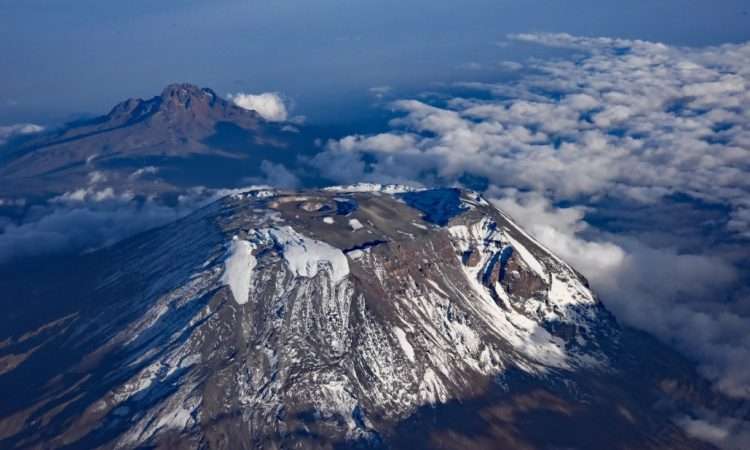
Understanding the timeline for summit night Kilimanjaro is key to mental preparation. The climb from Barafu Camp to the peak is a massive undertaking in both distance and time, followed by an equally long descent.
The Ascent: Barafu Camp to Uhuru Peak
Distance: Approximately 5 kilometers (about 3.1 miles)
Elevation Gain: 4,673 meters to 5,895 meters (15,331 ft to 19,341 ft)
Hiking Time: 6 to 8 hours
Habitat: Arctic Zone
Your Kilimanjaro summit night begins around midnight from Barafu Camp. The 5-kilometer climb is not long in distance, but the extreme altitude and steep, loose scree make it a long and grueling effort. You will hike in darkness for 5 to 7 hours, reaching Stella Point on the crater rim at dawn. From Stella Point, you have about one final hour along the crater rim to reach Uhuru Peak, the true summit. In total, expect to spend between 6 and 8 hours climbing upwards before you stand on the Roof of Africa.
The Full Summit Day Descent: To Mweka Camp
The summit is only the halfway point of your day. After celebrating at Uhuru Peak, you must descend all the way back to Barafu Camp, which takes about 2 to 3 hours. Here, you will have a short rest and lunch to recover.
You then pack your gear and continue descending for another 3 to 4 hours to Mweka Camp (at 3,100 meters / 10,170 feet). This makes Day 7 a monumental effort of roughly 12 to 15 total hours of trekking from the moment you leave Barafu Camp until you arrive at Mweka Camp for your final night on the mountain.
Day 8: The Final Descent to Mweka Gate
Distance: Approximately 10 kilometers (6.2 miles)
Hiking Time: 3 to 4 hours
Habitat: Rainforest
After breakfast, you make your final descent through lush, green rainforest to Mweka Gate. This 3 to 4 hour walk is a beautiful and reflective journey. At the gate, you will sign out of the park and receive your official Kilimanjaro summit certificate—a tangible reward for your achievement. From there, your transport will take you back to your hotel in Moshi, marking the triumphant conclusion of your climb.
In summary: Your summit night Kilimanjaro involves a 6-8 hour ascent and a full day totaling 12-15 hours of effort to reach the summit and descend to Mweka Camp, followed by a final 3-4 hour hike out the next day.
How Cold is the Summit of Kilimanjaro at Uhuru Peak?
The temperature drops steadily as you climb through Mount Kilimanjaro’s five distinct climate zones. At the summit, Uhuru Peak, you will face the most extreme cold of your entire journey. Nighttime temperatures at the Mount Kilimanjaro summit can range from 20°F down to a bitter -20°F (-7°C to -29°C). This intense cold is made even more challenging by the mountain’s ability to create its own unpredictable weather, including strong winds that create a severe wind chill.
This is why your Kilimanjaro summit night preparation with TourwithPipi is so critical. We ensure you have a detailed gear list and check that you are equipped with a heavy-duty down jacket, insulated layers, and proper protection for your head and hands to safely handle these conditions.
The Descent from Uhuru Peak
Reaching the summit is a huge achievement, but your day is only half complete. After celebrating and taking photos at the Uhuru Peak sign, you begin the long descent back to Barafu Camp.
This downhill section can be tough on your knees and legs. If you have knee concerns, this is the time to use a brace. Our guides will remind you to use your trekking poles for balance and stability, and to take it slowly on the loose gravel. You will immediately notice the welcome relief of thicker, more oxygen-rich air as you lose elevation.
We stop for a well-earned rest and lunch at Barafu Camp before packing up and continuing our descent for several more hours to Mweka Camp. Tired, exhilarated, and filled with a deep sense of accomplishment, you will enjoy a well-deserved and sound night’s sleep.
The following morning, you will have a final 3 to 4 hour trek, mostly downhill through beautiful rainforest, back to the Mweka Gate. There, you will receive your official summit certificate before our transport returns you to your comfortable post-climb hotel accommodation in Moshi, where you can truly rest and reflect on your incredible journey to the top of Africa with TourwithPipi.
Is a Kilimanjaro Summit Night Climb Worth It?
For many of our climbers, the Kilimanjaro summit night is the most powerful and memorable part of the entire journey. The value is not just in reaching Uhuru Peak, but in how you experience the ascent. A night climb, when done correctly, masterfully balances safety, acclimatization, and the raw beauty of the mountain.
Climbing at night offers unique advantages. The cold temperatures firm up the loose volcanic scree, making the steep terrain more stable underfoot. The trails are quieter, with fewer climbers, allowing for a more focused and personal experience. But the true reward comes at dawn. After hours of steady climbing in the darkness, reaching Stella Point on the crater rim as the sun rises over Africa is an emotional and visual spectacle that simply cannot be matched during a daytime ascent. It’s a profound moment of connection to the mountain.
This incredible experience is built on a foundation of smart preparation. Choosing a longer route with TourwithPipi for proper acclimatization, packing the right gear for the extreme cold, and trusting your guide’s steady pace are what make this challenging ascent not only possible but deeply rewarding. A successful summit night Kilimanjaro rewards you twice: first with the golden sunrise from the crater rim, and then with the ultimate achievement of standing on Uhuru Peak, followed by a clear and manageable descent.
Ready to experience the unforgettable challenge and beauty of a Kilimanjaro night climb for yourself? Book your guided trek with TourwithPipi and let us prepare you for a safe, successful, and truly transformative summit adventure.
Check Our Kilimanjaro Hiking Packages


