
Kenya Rift Valley Lakes: The Alkaline Chain
The Kenya Rift Valley lakes form one of the most ecologically significant lake chains in the world. Eight lakes sit within this ancient geological trench, none of which drain to the sea. High evaporation rates and mineral-rich inflows from hot springs and seasonal rivers have made most of these lakes saline or alkaline. Only two contain fresh drinking water.
The shallow, poorly drained waters of these Kenya Rift Valley lakes support thriving ecosystems built around blue-green algae. The algae feed insect larvae and small crustaceans. The crustaceans feed lesser flamingos and fish. The fish feed greater flamingos, fish eagles, and larger predators. It is one of Africa’s most self-contained food chains and it runs through every alkaline lake in the chain.
Three of these lakes, Nakuru, Bogoria, and Elementaita, form the Kenya Lake System in the Great Rift Valley, a UNESCO World Heritage Site recognized for outstanding natural beauty and exceptional biodiversity. All three are also designated Ramsar Wetlands of International Importance.
Lake Victoria
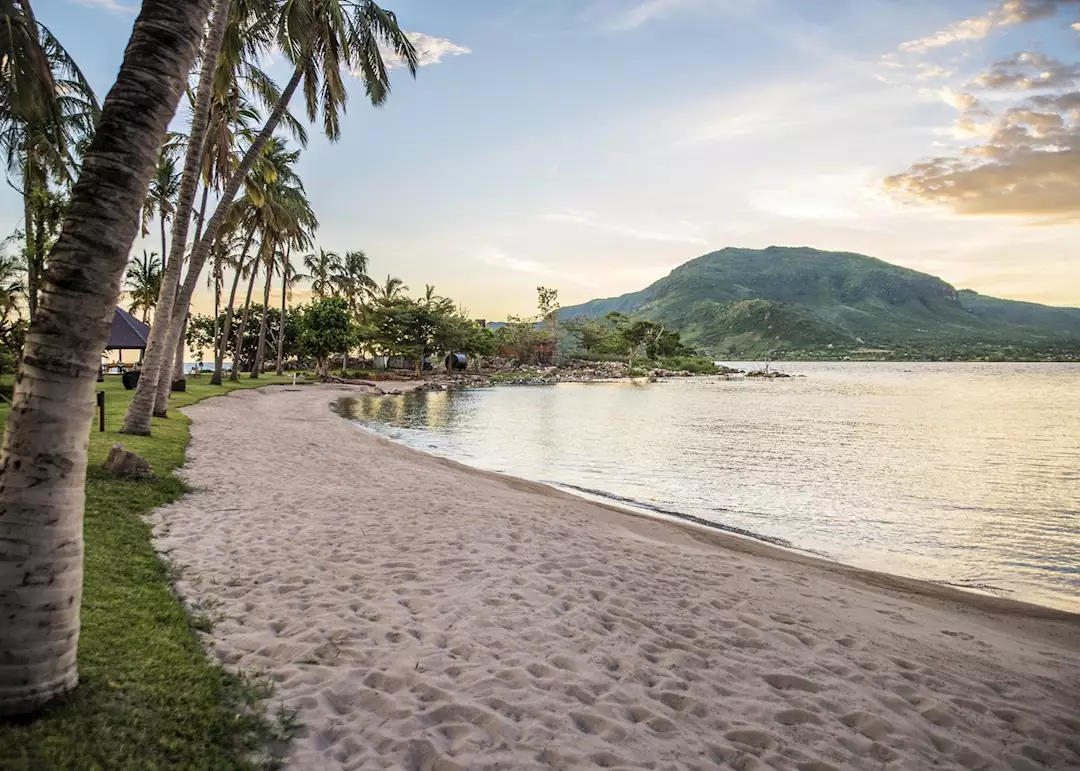
Lake Victoria is Africa’s largest lake and the world’s second-largest freshwater lake by surface area, spanning Kenya, Uganda, and Tanzania across 68,800 km². Kenya holds approximately 6% of that surface area, with its shoreline taking in major towns including Kisumu, Homa Bay, and Mbita along the western edge of the country.
Lake Victoria is the source of the White Nile and one of the most economically important water bodies in East Africa. It supports a major fishing industry built around Nile perch and tilapia, sustaining millions of livelihoods across three countries. The lake also supports transport, trade, and irrigation across the region.
The lake faces serious environmental pressure. Invasive water hyacinth has spread across large areas of the surface. Pollution from urban runoff and agricultural chemicals has degraded water quality in several areas. Scientists estimate that indigenous fish species in Lake Victoria have declined by around 80% in the last 50 years, largely due to the introduction of Nile perch as an invasive species. Conservation efforts are ongoing but the challenges remain significant.
Lake Turkana
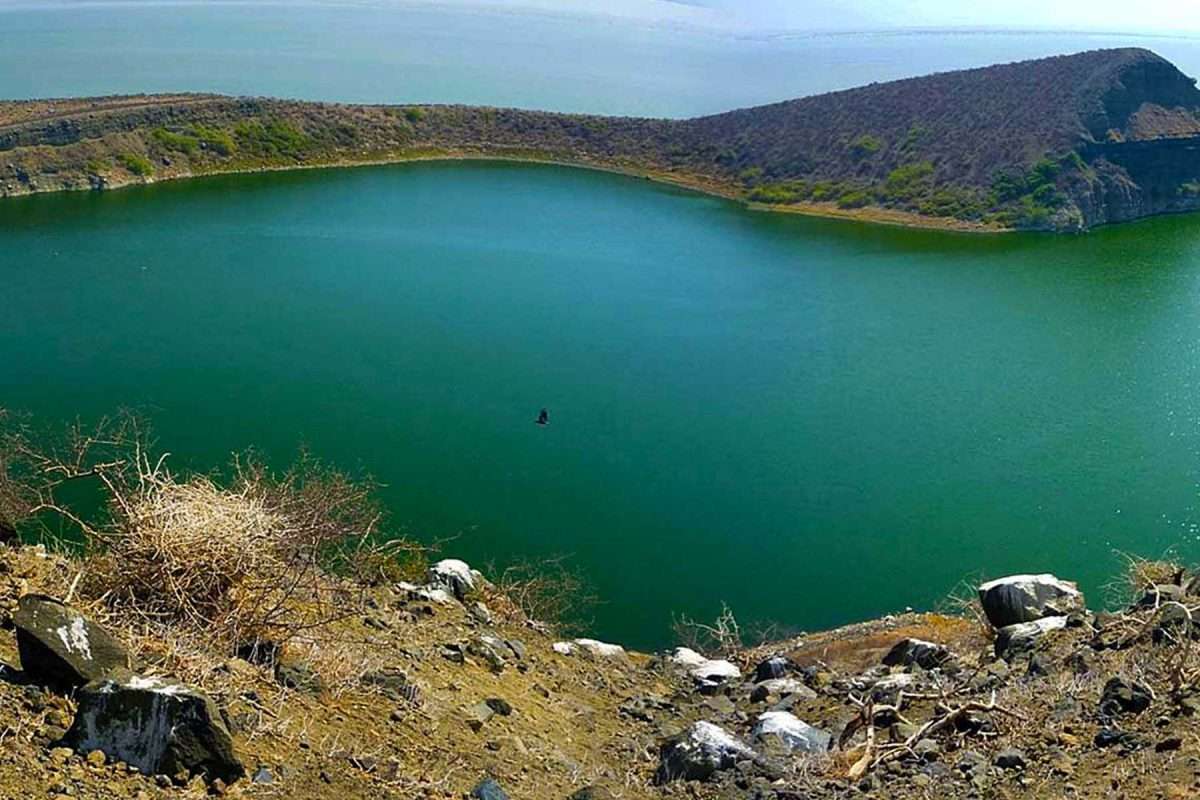
Lake Turkana is the world’s largest permanent desert lake and the world’s largest alkaline lake. Covering approximately 6,405 km² and stretching into Ethiopia, it sits in the arid north of Kenya across Marsabit and Turkana Counties. Its striking turquoise-green color, caused by the algae and minerals suspended in its water, earned it the name the “Jade Sea.”
The lake is fed primarily by the Omo River flowing south from Ethiopia and has no natural outlet. This makes it slightly saline and gives it its distinctive color and chemistry. Maximum depth reaches around 109 meters, making it the deepest lake in Kenya.
Central Island and South Island, both volcanic formations rising from the lake, are national parks and UNESCO World Heritage Sites. Central Island is one of the most important Nile crocodile nesting sites in the world. The lake also supports hippos, endemic fish species, and pastoralist communities including the Turkana people who have lived along its shores for centuries.
Lake Turkana faces serious threats from the Gibe III hydroelectric dam constructed on the Omo River in Ethiopia, which has significantly reduced inflows and affected fish stocks and water levels downstream in Kenya. This is separate from the rising water levels seen in Kenya’s other Rift Valley lakes, since Turkana’s inflow depends heavily on the Omo River rather than local rainfall alone.
Lake Nakuru
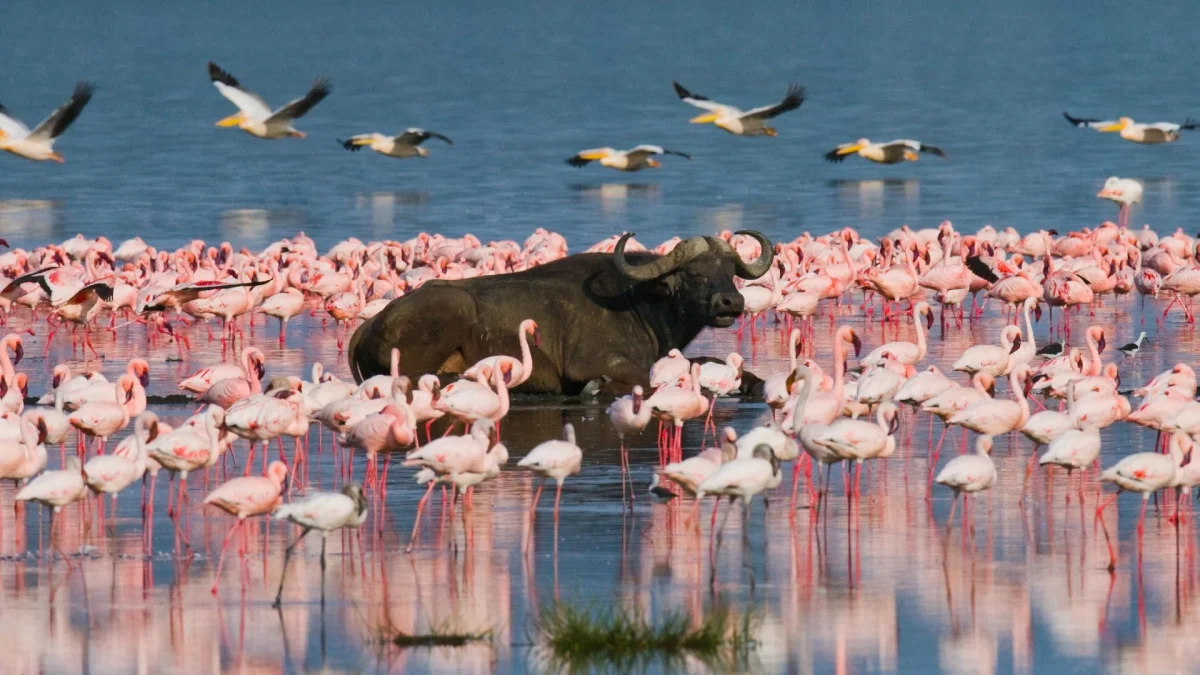
Lake Nakuru sits at an elevation of 1,745 metres within Lake Nakuru National Park in the Great Rift Valley. It is one of the most visited lakes in Kenya and one of the most photographically stunning. The lake covers roughly 40 km², though this fluctuates significantly with rainfall patterns and inflow from seasonal rivers including the Njoro and Makalia, and has expanded well beyond this figure during recent high-water years.
The lake is world-famous for its flamingos. Lesser flamingos feed on the cyanobacteria that thrive in the alkaline water, and when conditions are right, the lake’s surface turns a deep shade of pink from the density of birds gathered along the shoreline. Over 450 bird species have been recorded here in total.
Lake Nakuru National Park surrounding the lake is also one of Kenya’s most important rhino sanctuaries, home to both white and black rhinos alongside lions, leopards, Rothschild giraffes, zebras, and buffalo. The Out of Africa viewpoint, a short steep hike above the lake, offers one of the most photographed panoramic views in Kenya and was made famous by the 1985 film of the same name.
Lake Nakuru is a designated Ramsar Wetland and part of the UNESCO World Heritage Kenya Lake System. It is roughly a 3.5-hour drive from Nairobi and works well as a standalone day trip or as the first stop on a longer Kenya safari itinerary.
Lake Naivasha
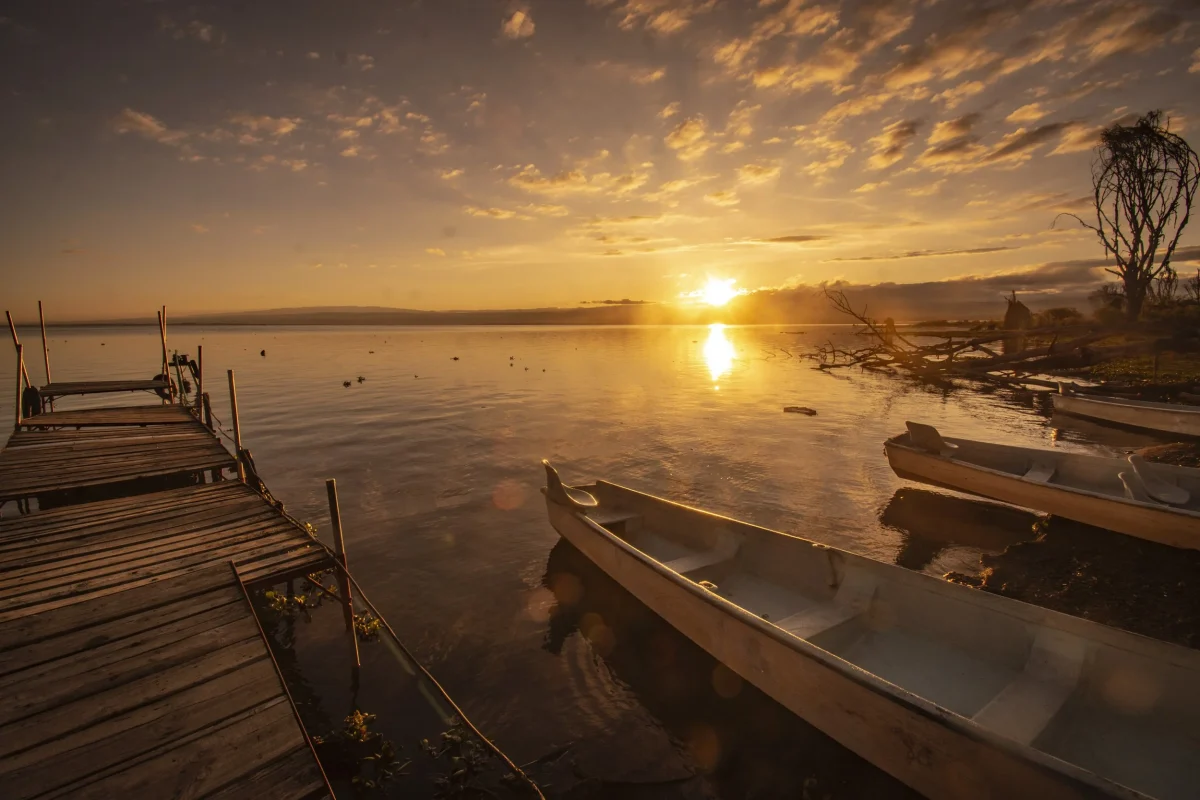
Lake Naivasha is one of only two freshwater lakes in Kenya’s Great Rift Valley chain. Located in Nakuru County at an elevation of 1,884 metres, it is the highest lake in the Rift Valley and covers approximately 140 km² at its historical baseline, though rising water levels have expanded its surface by roughly 20% over the past decade.
The name Naivasha comes from the Maasai word Naiposha, meaning “rough water,” a reference to the sudden violent storms that can sweep across the lake with little warning. Despite this, the lake is calm and navigable the vast majority of the time and boat safaris on Lake Naivasha are one of the most popular activities in the region.
The lake supports around 1,500 hippos, over 400 bird species, tilapia, black bass, and a range of wildlife along its papyrus-lined shores including giraffes, zebras, waterbucks, and impalas. Crescent Island, a wildlife sanctuary that can only be reached by boat, allows walking safaris among giraffes and zebras in a unique lakeside setting.
Lake Naivasha is also the center of Kenya’s floriculture industry. The fertile volcanic soils and reliable water supply have made its shores home to extensive commercial flower farms producing roses and other cut flowers for export to Europe, though rising water levels have flooded parts of this farmland in recent years. Hell’s Gate National Park, famous for its dramatic gorge walls and as the landscape inspiration for Disney’s The Lion King, sits directly adjacent to the lake.
The 98-kilometre drive from Nairobi takes around 2.5 hours, making Naivasha one of the most accessible lakes in Kenya for a day trip or weekend break.
Lake Baringo
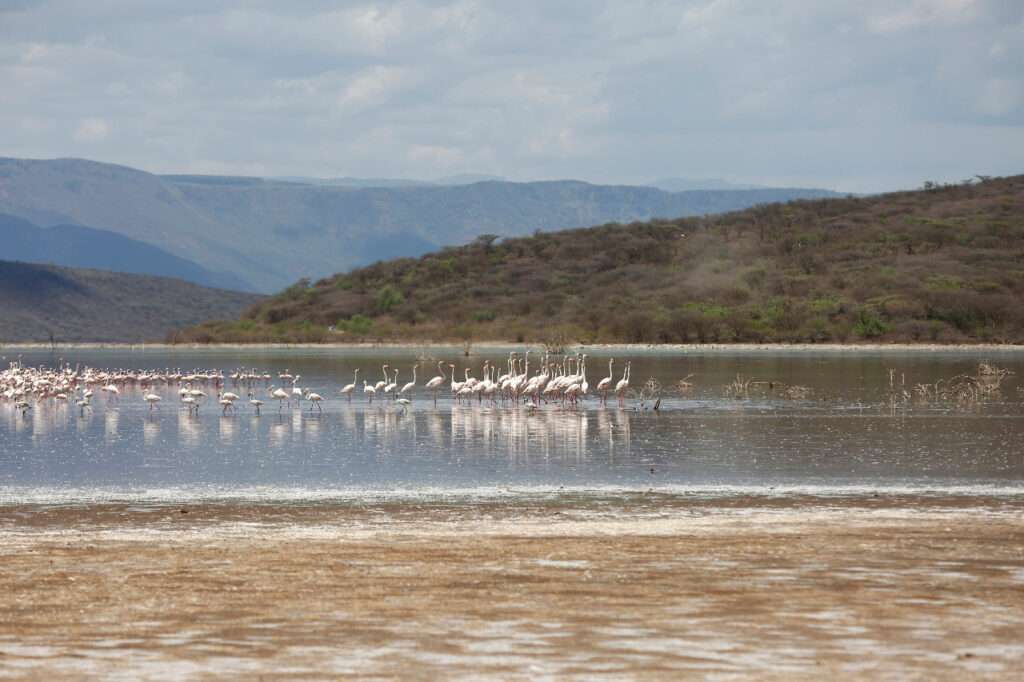
Lake Baringo is a freshwater lake in Kenya’s Rift Valley covering around 130 km², surrounded by dramatic volcanic escarpments and rugged hills that give it a more remote, expedition-like quality than the lakes further south. It sits in Baringo County and is one of only two major freshwater lakes in the Rift Valley chain.
The lake supports over 450 bird species, making it one of Kenya’s premier birdwatching destinations. Goliath herons, African fish eagles, and various kingfisher species are regular sightings. Hippos and Nile crocodiles are present throughout the lake. Several fish species including tilapia and catfish support a local fishing economy.
Ol Kokwe Island, a volcanic island within the lake, hosts hot springs, traditional Pokot communities, and lodge accommodation. Boat excursions from the shore visit the island and allow close-up hippo and crocodile sightings from the water. Lake Baringo is frequently combined with Lake Bogoria as a two-day trip from Nairobi, with Bogoria roughly an hour’s drive to the south.
Lake Bogoria
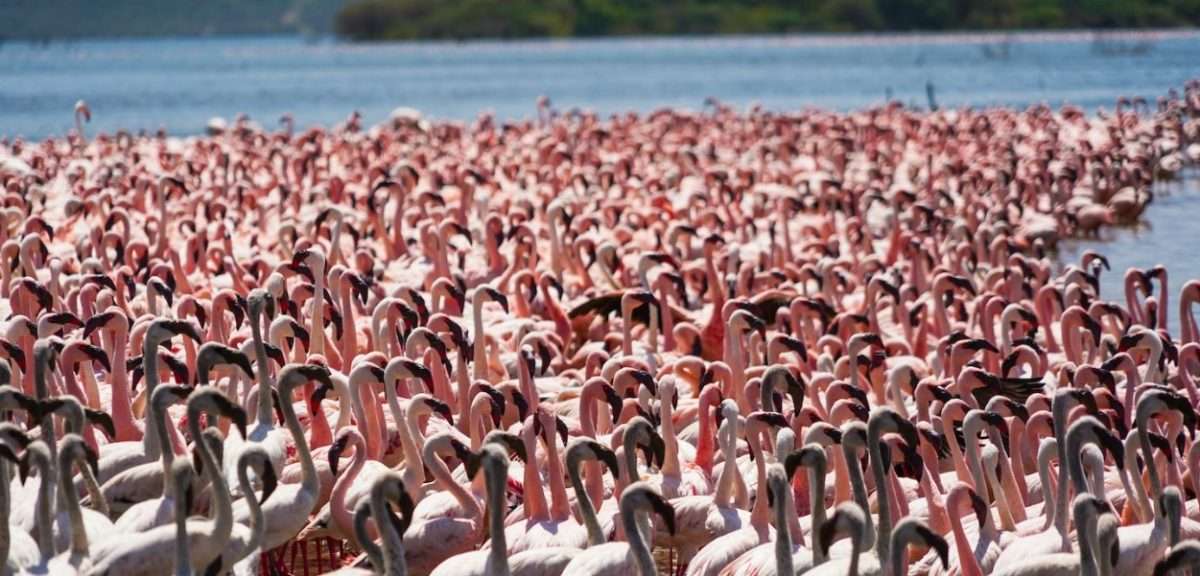
Lake Bogoria is a shallow, narrow alkaline lake in Baringo County, sitting within the Lake Bogoria National Reserve. Covering about 34 km², it holds the remarkable distinction of being home to more geysers than any other site in Africa: over 200 hot springs and 17 active geysers line the shoreline, their steam columns visible from a distance across the flat valley floor.
The lake is a designated Ramsar Wetland and forms part of the UNESCO Kenya Lake System World Heritage Site. Its warm, mineral-rich, highly alkaline water is ideal for cyanobacteria growth, which in turn attracts enormous concentrations of lesser flamingos. Over two million flamingos have been recorded on its shores at peak times. Flamingos are present year-round at Bogoria in significant numbers.
The combination of flamingo-pink water, steaming geysers, volcanic landscape, and almost complete absence of crowds makes Lake Bogoria one of the most atmospheric and undervisited lakes in Kenya. It sits around 250 kilometres from Nairobi, a four to five hour drive, and is best combined with Lake Baringo for a two to three day northern Rift Valley loop.
Lake Elementaita
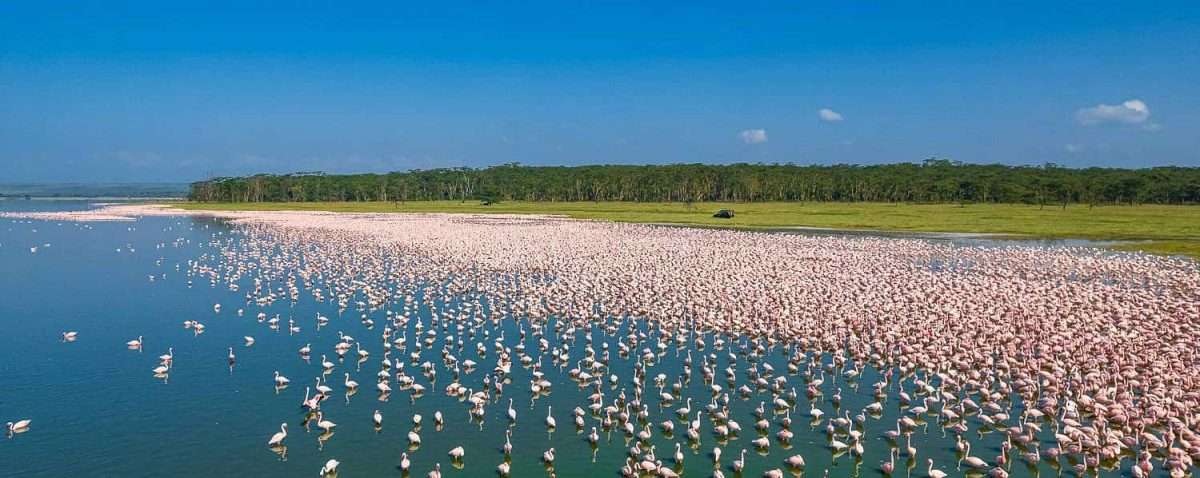
Lake Elementaita is a shallow, saline lake of about 18 km² sitting between Lake Naivasha and Lake Nakuru in the Great Rift Valley. It lies within the Soysambu Conservancy and carries dual UNESCO World Heritage Site and Ramsar Wetland designations.
The lake is fed by hot springs and seasonal streams with no outlet, creating the high salinity that supports its remarkable birdlife. Over 400 species have been recorded here. Elementaita is particularly significant as a breeding site for the great white pelican, one of Africa’s largest water birds. Flamingos gather along the shoreline and the surrounding conservancy holds zebras, giraffes, and buffaloes.
The Kariandusi prehistoric site near the lake adds archaeological depth to the area. Stone tools and fossils dating back over a million years have been found here, placing the region within the broader context of early human evolution along the Rift Valley.
Lake Magadi
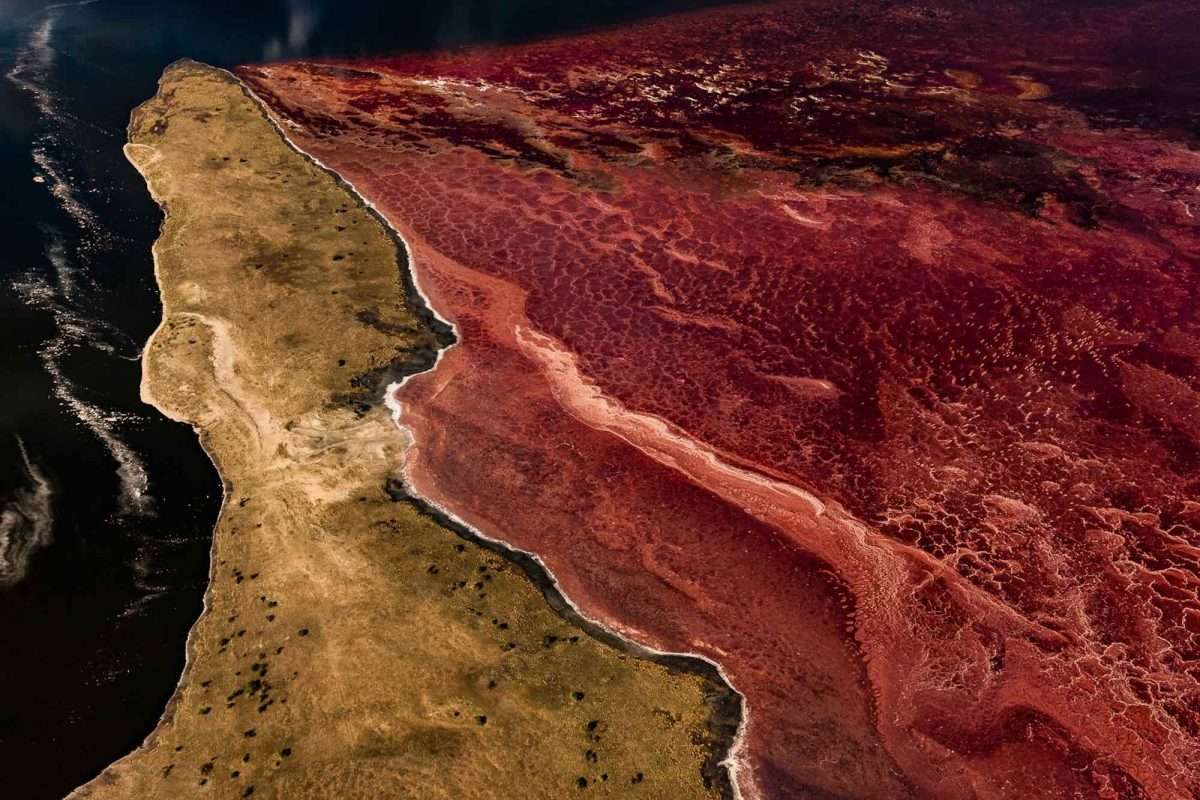
Lake Magadi is the southernmost lake in Kenya’s Rift Valley chain and one of the most unusual landscapes in East Africa. Located approximately 120 kilometres southwest of Nairobi in Kajiado County, it sits in one of the hottest and driest parts of Kenya with daytime temperatures frequently exceeding 40°C.
The lake’s surface is largely covered by a thick white crust of trona, also known as sodium carbonate or soda ash, which has been commercially mined since 1911. The Magadi Soda Company currently extracts around 350,000 tonnes of soda ash annually from the lake for export and industrial use, making Lake Magadi one of Kenya’s significant mineral resources.
Beneath the soda crust lies highly alkaline water reaching temperatures of up to 80°C in some areas near geothermal vents. Despite these extreme conditions, flamingos feed on the algae and cyanobacteria along the margins. The lake’s alien, otherworldly landscape has also made it a filming location for productions requiring a surreal, non-terrestrial visual quality.
Lake Chala
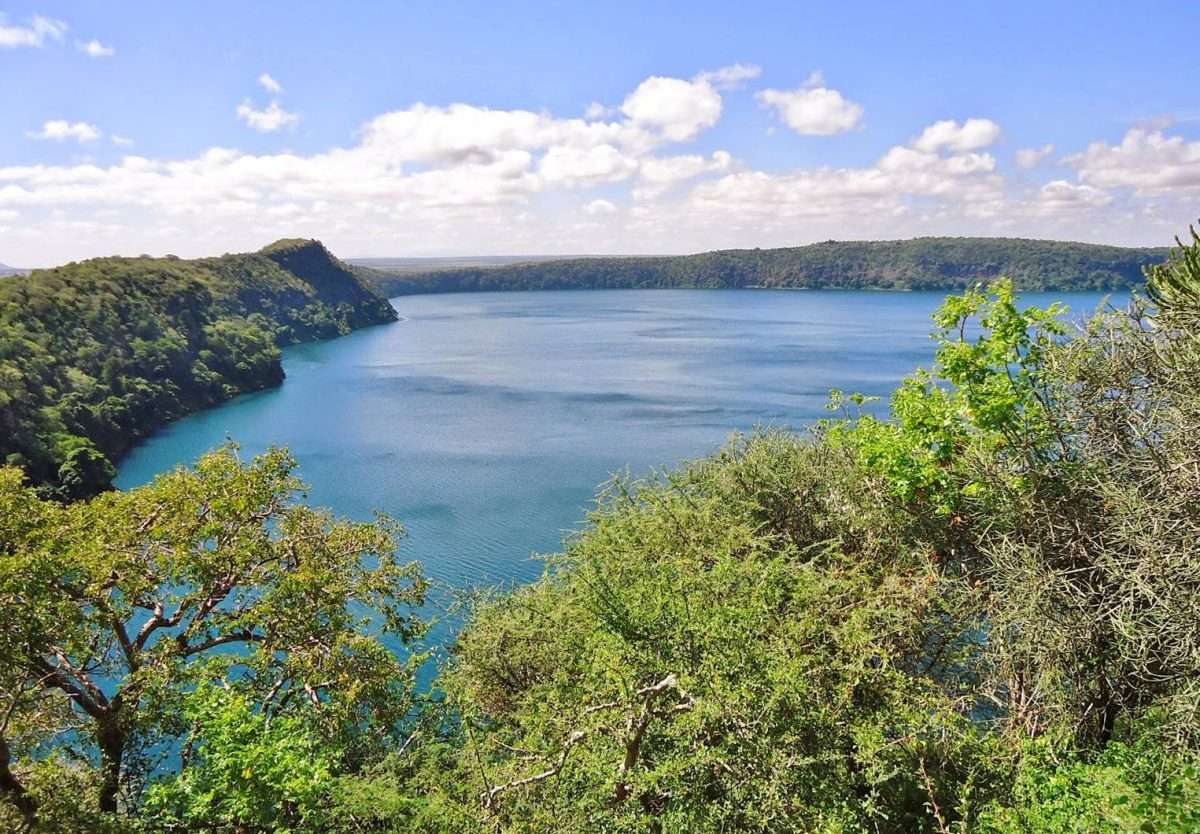
Lake Chala is a stunning crater lake straddling the Kenya-Tanzania border, sitting just east of Mount Kilimanjaro and 8 kilometres north of Taveta. Covering approximately 4.2 km² and plunging to roughly 95 to 98 metres depth, it is one of Africa’s deepest crater lakes.
The lake’s deep blue water sits inside a dramatic volcanic crater rim with steep walls dropping directly to the shoreline. It is home to the critically endangered Lake Chala tilapia, an endemic species found nowhere else in the world and currently threatened by invasive tilapia species introduced into the lake.
Lake Ol Bolossat
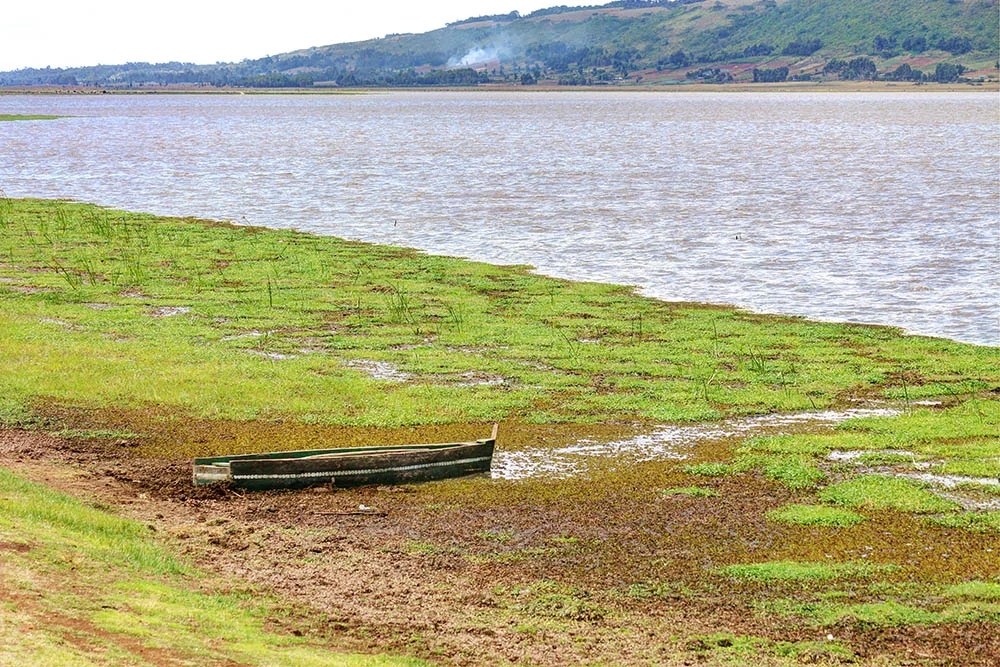
Lake Ol Bolossat holds the distinction of being Kenya’s highest altitude lake, sitting at 2,340 metres above sea level in Nyandarua County between the Aberdare Range and Dundori Ridge. It is the only natural freshwater lake in central Kenya and spans approximately 43 km².
The lake forms the headwaters of the Ewaso Ng’iro River, which supplies water to communities and wildlife across five counties. Despite its ecological importance, the lake has shrunk dramatically from around 10,000 hectares historically to approximately 3,000 hectares today due to deforestation, agricultural encroachment, and water abstraction. Over 300 bird species have been recorded here, including breeding Grey Crowned Cranes and African Jacana.
Lake Kanyaboli
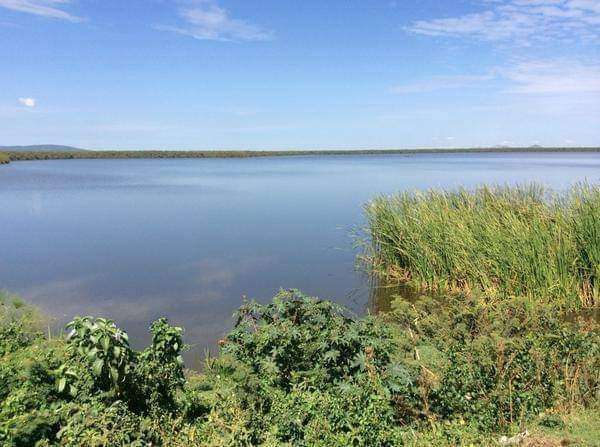
Lake Kanyaboli is Kenya’s largest ox-bow lake and Africa’s second-largest, sitting within Yala Swamp in Siaya County. Covering about 1,500 hectares with an average depth of around 3 metres, it receives floodwaters from the Yala and Nzoia Rivers.
Dense papyrus and sedge vegetation along its margins filter incoming river water, improving clarity and creating habitat for rare species including sitatunga antelopes and papyrus-dependent birds found nowhere else in western Kenya.
Lake Sonachi
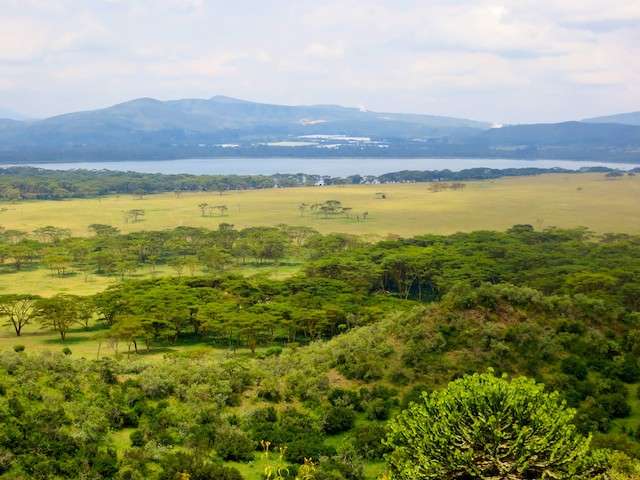
Lake Sonachi, also known as Crater Lake, is a small scenic alkaline lake formed in a volcanic crater near Lake Naivasha in Nakuru County. Despite its alkaline chemistry, the lake supports flamingos and a range of bird species drawn by its high algae content. It sits within the Crater Lake Game Sanctuary, which is home to giraffes, zebras, and antelope in forested surroundings that feel entirely different from the more open Rift Valley lakes nearby.
Lake Oloiden
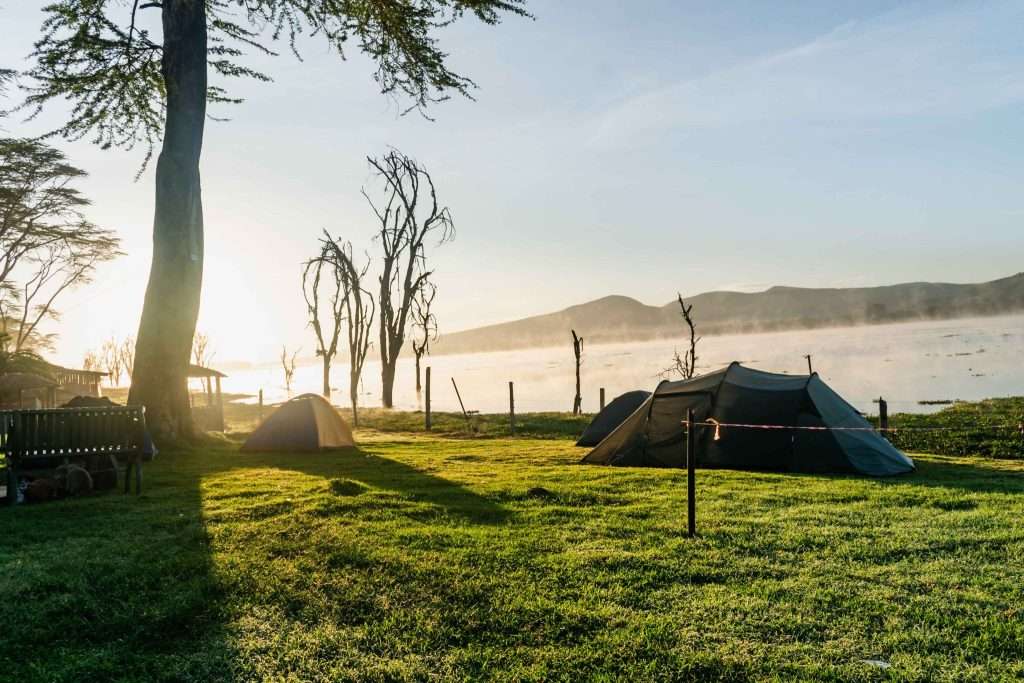
Lake Oloiden sits adjacent to the southwestern edge of Lake Naivasha in Nakuru County. The name means “salty” in the Maasai language, reflecting its saline and alkaline character. The two lakes were historically connected but now sit separated by a papyrus swamp barrier as water levels fluctuate seasonally.
The lake attracts flamingos, pelicans, cormorants, herons, and numerous waterfowl species. The surrounding grasslands support hippos, giraffes, buffaloes, zebras, and warthogs, making it a productive wildlife area that is often overlooked by visitors who pass through on their way to the more famous Lake Nakuru.
Lake Logipi
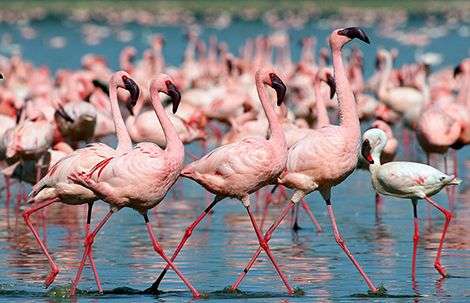
Lake Logipi sits in the remote northern Rift Valley at the southern end of the Suguta Valley in Turkana County, a few kilometres north of Lake Turkana. It is fed by saline hot springs and seasonal flash floods from the Suguta River. The lake’s vivid colors, ranging from deep pink to green depending on algae concentration, and its complete isolation from any tourist infrastructure make it one of the most visually striking and least-visited lakes in Kenya. Thousands of flamingos gather here during the dry season when reduced water levels concentrate the minerals and algae they feed on.
Lake Amboseli
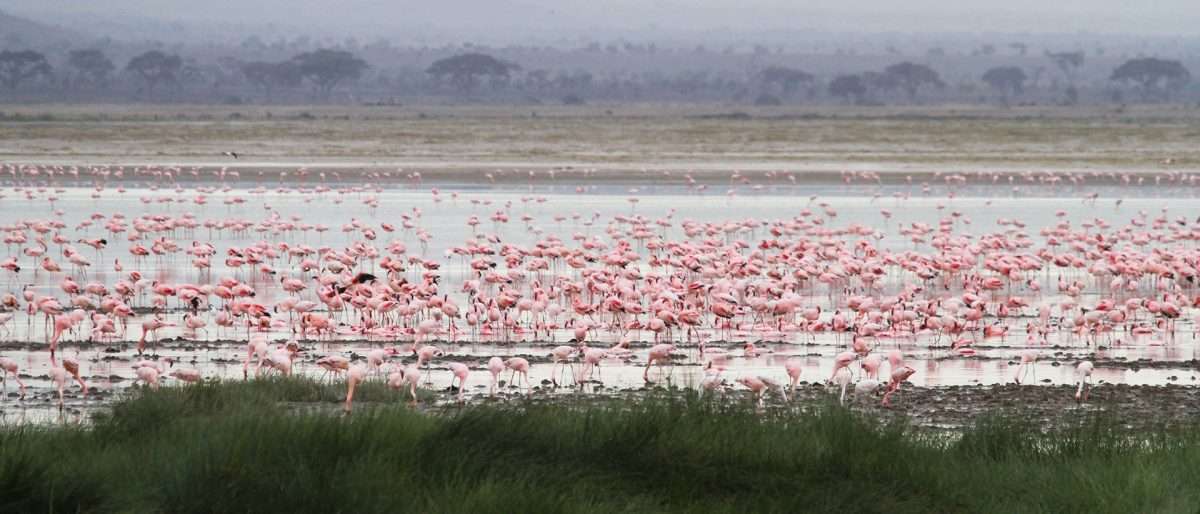
Lake Amboseli is a seasonal, shallow lake within Amboseli National Park in southern Kenya, near the Tanzania border and the base of Mount Kilimanjaro. It fills during the rainy season and dries to a flat, dusty salt pan during dry months. When filled, it attracts flamingos, pelicans, and waterbirds in significant numbers. The surrounding park is better known for its elephant herds and the Kilimanjaro backdrop, but the lake itself adds a seasonal dimension to the ecosystem that shapes which species are present and when.
Lake Kamnarok
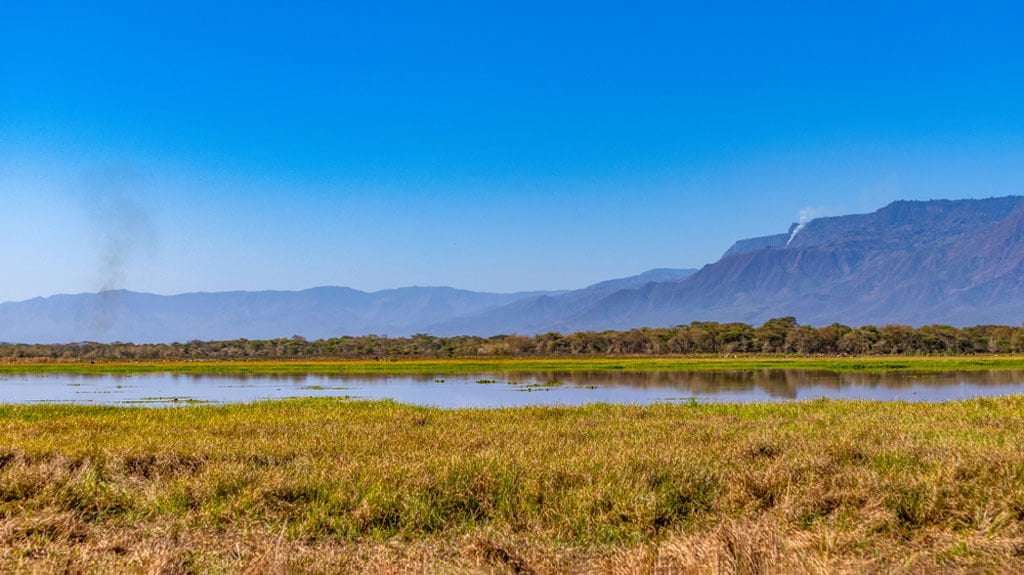
Lake Kamnarok is a seasonal freshwater ox-bow lake at the base of the Kerio Valley in Baringo and Elgeyo Marakwet Counties, formed in 1961 when the Kerio River changed course. Covering about 1 km², it shrinks or dries completely during Kenya’s dry season. It was once a crucial wildlife waterhole supporting up to 500 elephants in the 1980s and held Africa’s second-largest crocodile population at its peak. Human encroachment, agricultural expansion, overgrazing, and climate shifts have severely reduced the lake’s size and the wildlife it supports.
Lake Jipe
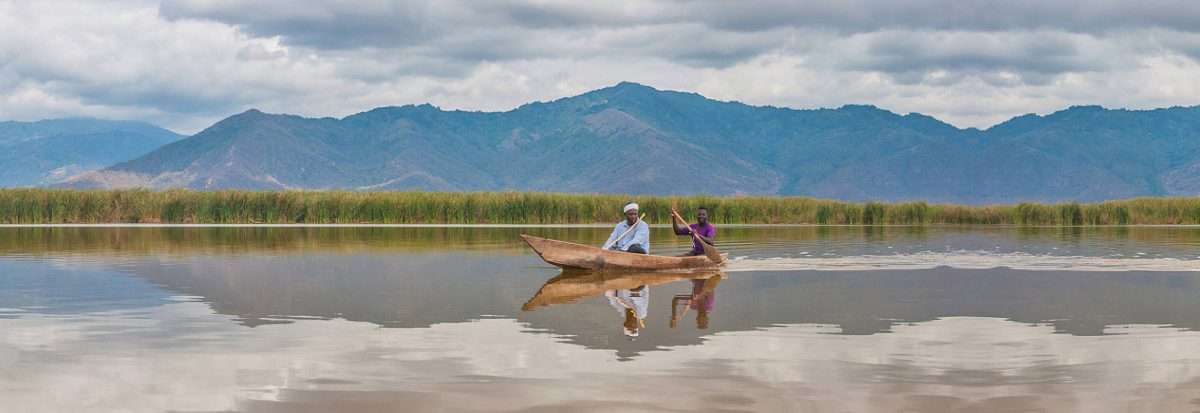
Lake Jipe is a small freshwater lake straddling the Kenya-Tanzania border in Taita Taveta County, nestled near the base of Mount Kilimanjaro within Tsavo West National Park. Covering approximately 30 km², it is fed by the Lumi River and underground springs. The lake supports hippos, crocodiles, endemic fish species, and a range of waterbirds within the broader Tsavo West ecosystem.
Lake Solai
Lake Solai is a small, shallow alkaline lake in Nakuru County approximately 30 kilometres north of Nakuru town. It is seasonal, with water levels fluctuating significantly with rainfall patterns. In recent years, rising water levels have caused the lake to expand dramatically, one study recorded a 123% increase in lake area, displacing nearby communities and damaging property. The surrounding area supports local agriculture and livestock grazing.
Kenya’s Major Bodies of Water Beyond Its Lakes
Lakes are only part of the picture. Kenya’s other major bodies of water include:
- Tana River: Kenya’s longest river, flowing from the Aberdare Range to the Indian Ocean, and the country’s most important source of hydroelectric power.
- Athi-Galana-Sabaki River: flows through Tsavo East National Park before reaching the coast near Malindi.
- Ewaso Ng’iro River: flows north from the central highlands into the semi-arid Samburu and Buffalo Springs ecosystems, sustaining wildlife in an otherwise dry region.
- The Indian Ocean coastline: roughly 536 km of coast, home to Kenya’s beach destinations including Diani, Watamu, and Malindi, alongside coral reefs and marine parks.
Together with its lakes, these make up Kenya’s full water system, spanning glacial-fed rivers, Rift Valley lakes, and a tropical coastline.
How Kenya’s Lakes Compare to Africa’s Major Lakes
Kenya’s lakes are part of a much larger system. Lake Victoria, shared with Uganda and Tanzania, is Africa’s largest lake overall and the world’s second-largest freshwater lake, though Kenya holds only about 6% of its surface. Lake Tanganyika, shared among Tanzania, DR Congo, Burundi, and Zambia, is Africa’s deepest lake and the world’s second-deepest. Lake Malawi and Lake Chad round out the continent’s other major lakes, though Chad has shrunk by over 90% since the 1960s due to climate change and rising irrigation demand.
Within this continental picture, Kenya’s contribution is less about size and more about density and diversity. Nowhere else in Africa packs this many distinct lake ecosystems, freshwater, alkaline, and saline, into one country.
Why Are Kenya’s Rift Valley Lakes Rising?
Several of Kenya’s Rift Valley lakes have expanded dramatically since around 2010, and the trend hasn’t reversed. Lake Naivasha’s surface has grown by roughly 20%, with satellite altimetry showing a 7-meter rise in water level between 2010 and 2026. Lakes Nakuru, Bogoria, Baringo, Elementaita, and Turkana have all recorded similar rises over the same period.
The flooding has real consequences. Lake Nakuru National Park’s main entrance was submerged in 2022. Farmland, schools, and homes around Lake Baringo and Lake Naivasha have been swallowed by rising water, and reporting through January 2026 puts the number of people displaced across the Rift Valley in the tens of thousands. Scientists point to a mix of heavier regional rainfall, catchment deforestation, and possibly tectonic shifts, though the exact cause is still debated.
For travelers, the practical takeaway is that lake sizes, shorelines, and even some access roads shown in older maps or guides may no longer match current conditions. Always confirm current park access with your safari operator before a visit to the northern Rift Valley lakes.
5 Key Takeaways
- Kenya is home to over 60 lakes and holds 9.5% of Africa’s total lake surface, with eight lakes sitting in a chain through the Great Rift Valley.
- The Kenya Lake System, comprising Lake Nakuru, Lake Bogoria, and Lake Elementaita, is a UNESCO World Heritage Site and one of Africa’s most important flamingo habitats.
- Lake Turkana at 6,405 km² is Kenya’s largest lake and the world’s largest permanent desert lake, threatened by upstream dam projects on the Omo River in Ethiopia.
- Only two of Kenya’s Rift Valley lakes contain fresh drinking water: Lake Naivasha and Lake Baringo.
- Several of Kenya’s Rift Valley lakes have risen sharply since 2010 and continue to expand, so always confirm current park access before visiting.
Frequently Asked Questions About Lakes in Kenya
How many lakes does Kenya have?
Kenya is home to approximately 64 lakes, with around 12 being widely recognized for ecological, economic, and tourism importance. Most are located in the Great Rift Valley.
What is the largest lake in Kenya?
Lake Turkana is Kenya’s largest lake at approximately 6,405 km². It is also the world’s largest permanent desert lake and largest alkaline lake.
Which Kenya Rift Valley lakes are UNESCO World Heritage Sites?
Lakes Nakuru, Bogoria, and Elementaita together form the Kenya Lake System in the Great Rift Valley, designated a UNESCO World Heritage Site. All three are also Ramsar Wetlands of International Importance.
Which lakes in Kenya are freshwater?
The main freshwater lakes in Kenya’s Rift Valley are Lake Naivasha and Lake Baringo. Lake Victoria, shared with Uganda and Tanzania, is also freshwater. Lake Chala, Lake Ol Bolossat, Lake Kanyaboli, and Lake Jipe are additional freshwater lakes outside the main Rift Valley chain.
Why are Kenya’s Rift Valley lakes so salty?
Kenya’s Rift Valley lakes have no natural outlets. Water exits only through evaporation, leaving behind concentrated minerals and salts that have built up over thousands of years. Only two of the eight Rift Valley lakes contain fresh water.
Why are Kenya’s lakes rising, and is it safe to visit them?
Several Rift Valley lakes have expanded significantly since 2010 due to heavier regional rainfall and catchment changes, flooding some roads, farmland, and facilities. It’s still safe to visit with a knowledgeable operator, but always confirm current access conditions before planning a trip to Naivasha, Nakuru, Baringo, or Bogoria.
Which lake in Kenya has the most flamingos?
Lake Bogoria regularly hosts the highest concentrations of lesser flamingos, with over two million recorded at peak times. Lake Nakuru and Lake Elementaita also attract large flamingo populations seasonally.
What is the deepest lake in Kenya?
Lake Turkana is Kenya’s deepest lake, reaching a maximum depth of approximately 109 metres.
Can I visit Kenya’s lakes on safari?
Yes. Lake Nakuru is inside a national park with full Big Five game drives. Lake Naivasha offers boat safaris and walking safaris on Crescent Island. Lake Bogoria and Baringo are accessible on a northern Rift Valley safari extension. Lake Amboseli is a seasonal feature of Amboseli National Park.
What is the “Jade Sea” in Kenya?
Lake Turkana is known as the Jade Sea because of its striking turquoise-green color, caused by algae and suspended minerals in its alkaline water. It is the world’s largest desert lake, located in the arid north of Kenya.
What makes Lake Naivasha different from other Rift Valley lakes?
Lake Naivasha is one of only two freshwater lakes in the Kenya Rift Valley chain, along with Lake Baringo. Its low salinity comes from underground seepage and river inflows from the Malewa River. It supports hippos, over 400 bird species, and Kenya’s floriculture industry along its shores.
How does Kenya’s largest lake compare to other major lakes in Africa?
Lake Victoria, shared with Uganda and Tanzania, is Africa’s largest lake overall, well beyond Kenya’s own Lake Turkana. Kenya holds only about 6% of Victoria’s surface. Lake Tanganyika is Africa’s deepest lake, and Lake Chad, once one of Africa’s largest, has shrunk by over 90% since the 1960s.
Contact the team on WhatsApp to build a Kenya safari itinerary around Lake Nakuru, Naivasha, or a northern Rift Valley extension to Bogoria and Baringo.


