
Quick Answer:
A lion bite force ranges from 650 to 1,000 PSI (pounds per square inch). An adult male typically produces close to 1,000 PSI, making its bite around 4 to 6 times stronger than a human’s. While the jaw strength of a lion is slightly lower than a tiger’s or jaguar’s, lions rely on precision, powerful neck muscles, long canine teeth, and cooperative hunting to bring down prey much larger than themselves.
How Strong Is a Lion’s Bite?
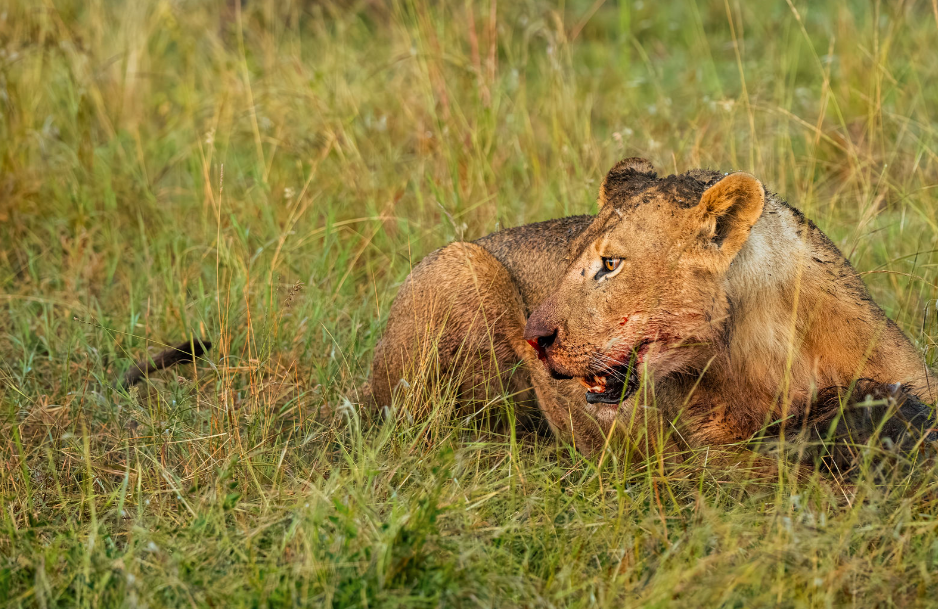
The lion bite force is powerful enough to crush bone, tear through thick hides, and suffocate prey weighing several hundred kilograms.
Scientific estimates place the bite force of a lion between 650 and 1,000 PSI, depending on the lion’s age, sex, body size, and measuring method.
The commonly quoted 650 PSI measurement came from tests performed on a sub-adult lion around two to three years old. More recent anatomical modelling and field research indicate that a fully mature adult male can generate a lion biting force approaching 1,000 PSI.
Although lions do not possess the strongest bite among big cats, their hunting success depends on much more than raw jaw pressure. Their combination of strength, teamwork, precise throat bites, and endurance makes them one of Africa’s most effective apex predators.
Lion Bite Force in PSI
| Measurement | Lion Bite Force |
|---|---|
| Sub-adult lion | ~650 PSI |
| Adult male lion | Up to ~1,000 PSI |
| Adult female lion | Slightly lower than adult males |
| Average human | ~150–162 PSI |
A mature lion’s jaw strength is approximately 4 to 6 times stronger than a human bite. This immense force allows lions to grip struggling prey securely while maintaining pressure until the animal suffocates.
Unlike crocodiles that rely purely on crushing power, lions use controlled force combined with specialized teeth and exceptionally strong neck muscles.
What Makes a Lion’s Jaw So Powerful?
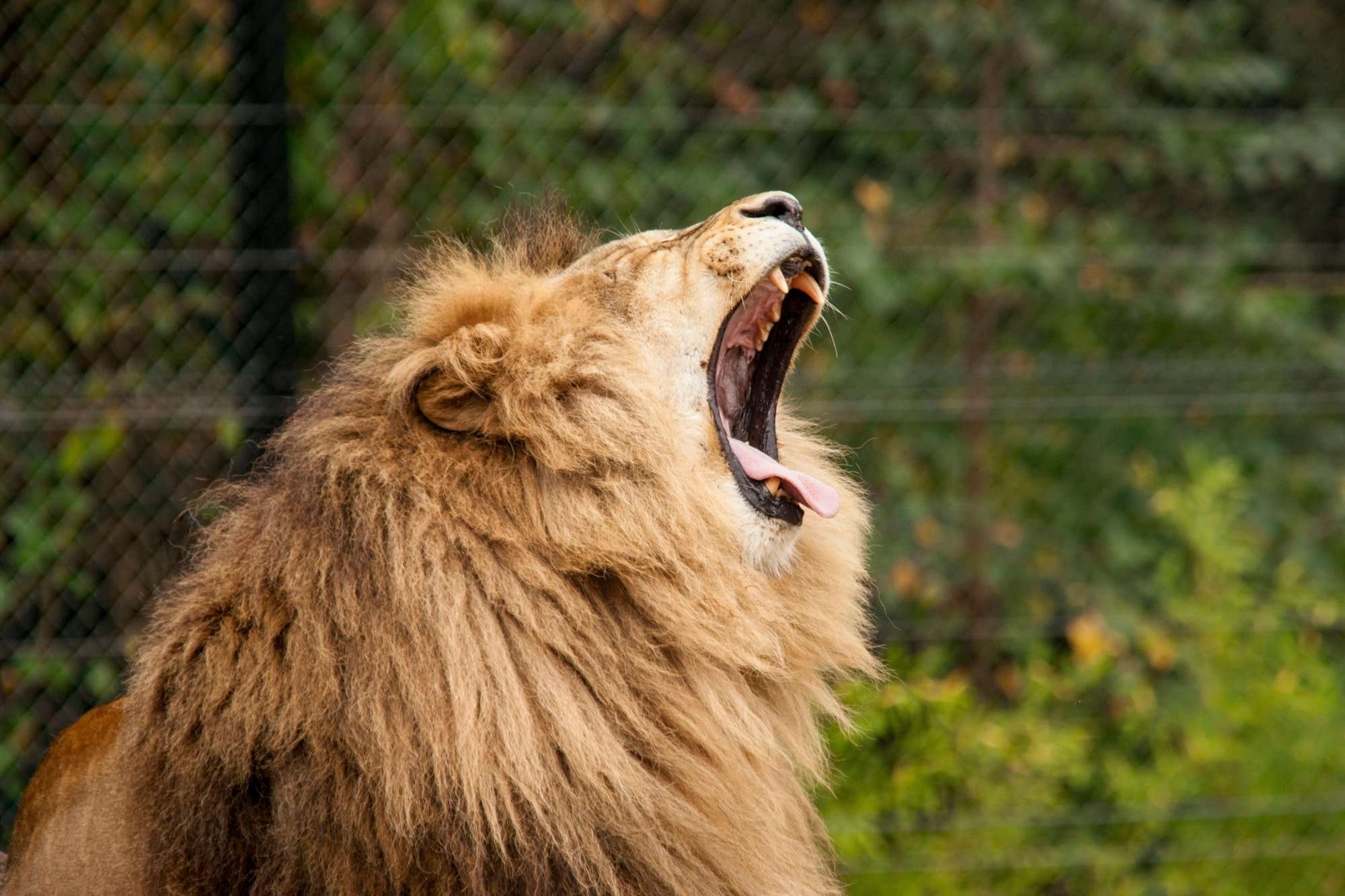
The impressive jaw strength of a lion comes from millions of years of evolution as a predator specializing in large herbivores.
Several anatomical adaptations contribute to its powerful bite.
First, lions possess an extremely broad skull that provides large attachment areas for powerful jaw muscles.
The temporalis and masseter muscles generate tremendous closing force, allowing the jaws to clamp tightly around prey.
Their thick neck muscles also play an important role by helping maintain prolonged pressure during suffocation while resisting violent struggles from animals such as buffalo, zebra, and wildebeest.
Unlike predators that rely solely on bite force, lions combine jaw strength with body weight, forelimb power, and teamwork, creating one of nature’s most efficient hunting systems.
Lion Teeth and Jaw Anatomy
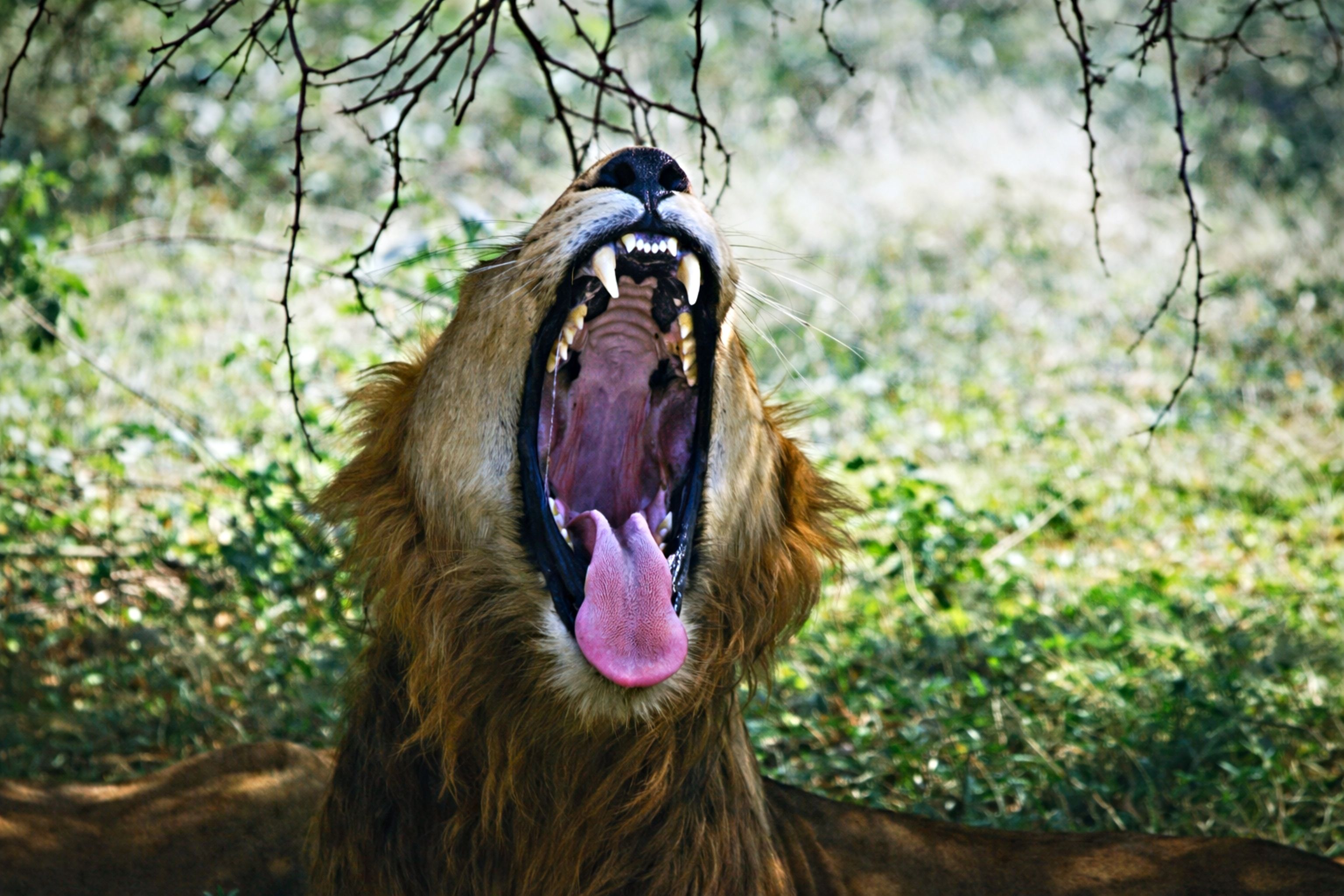
A lion has 30 permanent teeth, each serving a specific purpose during hunting and feeding.
The long canine teeth, which can reach nearly 4 inches (10 cm) in length, puncture deeply into prey and provide a secure grip around the throat or muzzle.
Behind the canines are the carnassial teeth, specially modified molars that function like sharp scissors. These slice through muscle, tendons, cartilage, and connective tissue with remarkable efficiency.
Small incisors at the front of the mouth help scrape meat from bones after the larger muscles have been consumed.
Together, these teeth allow the lion bite to grip, slice, tear, and process even the toughest parts of large prey.
Can a Lion Bite Crush Bones?
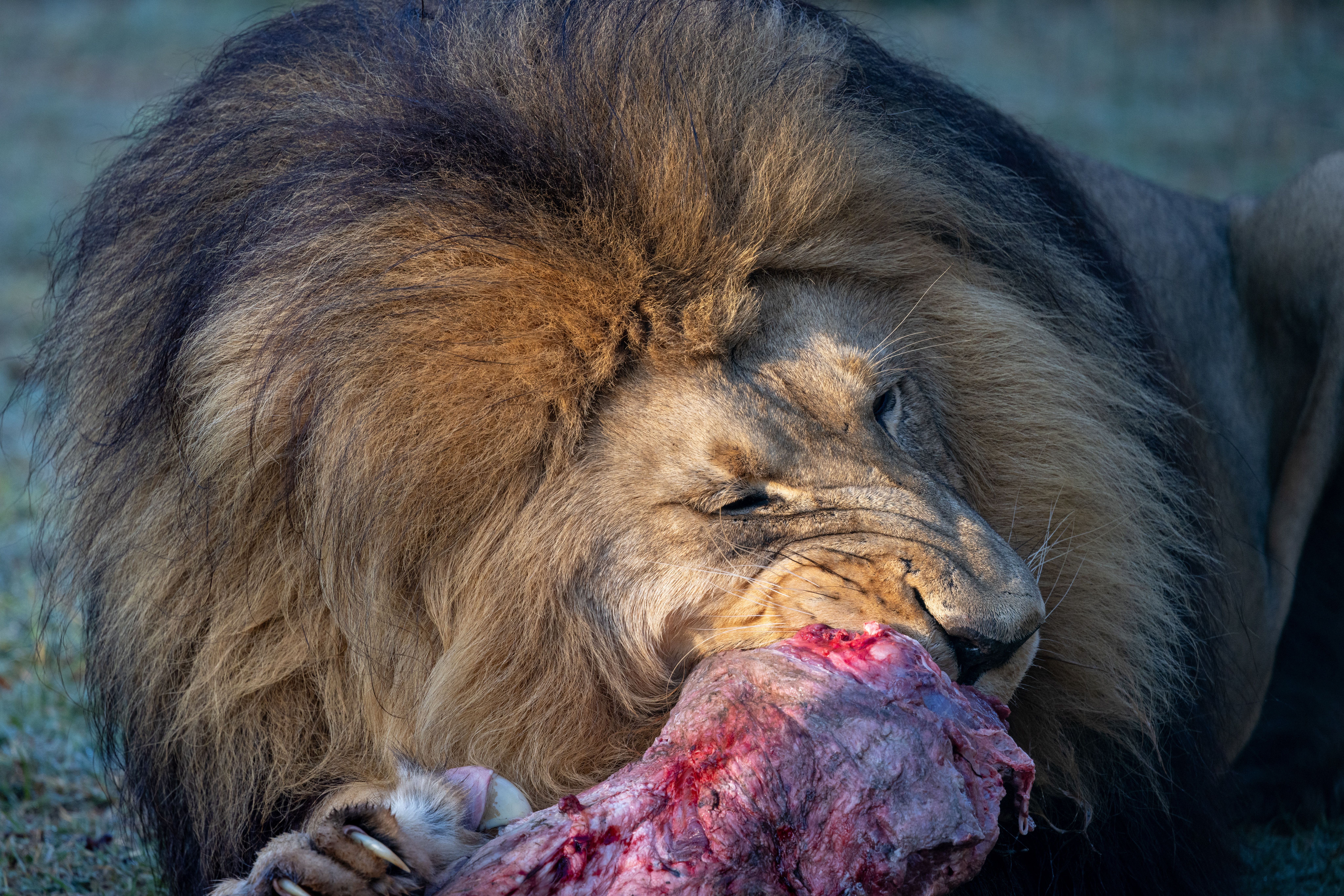
Yes. A mature lion bite is powerful enough to crack smaller bones and crush thinner sections of larger bones while feeding.
Although lions are not as specialized as hyenas for bone crushing, they frequently bite through ribs, vertebrae, and limb bones to reach nutrient-rich bone marrow. Their carnassial teeth slice through muscle and connective tissue, while the tremendous lion jaw strength helps fracture bones when necessary.
Large, dense bones such as an adult elephant’s leg bones are generally left behind or consumed gradually by multiple pride members.
What Animals Can a Lion Bite Through?
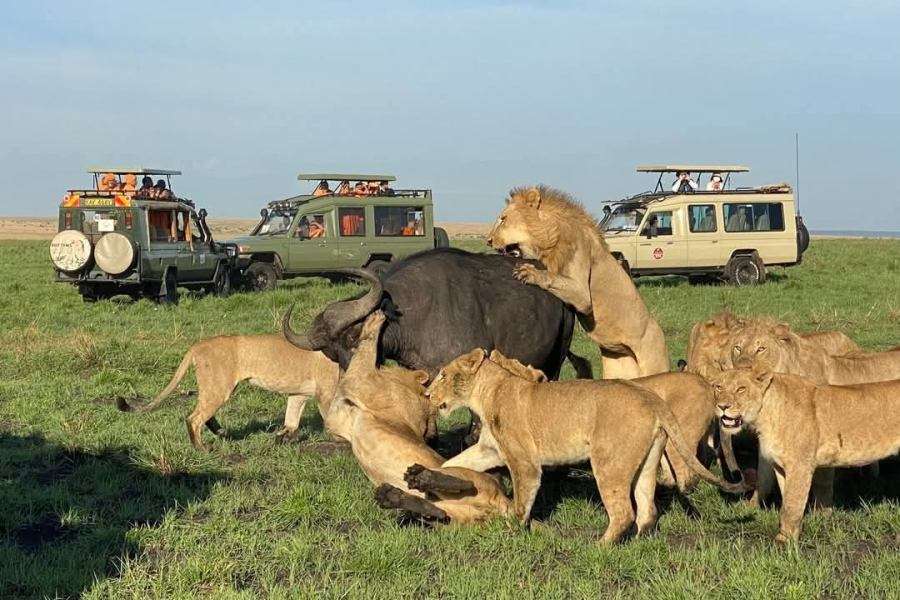
The bite force of a lion allows it to hunt some of Africa’s largest mammals.
Common prey includes zebras, wildebeests, buffaloes, giraffes, warthogs, antelopes, and young elephants. In some regions, lions also attack juvenile hippos when the opportunity arises.
One remarkable ability of the lion’s jaw strength is penetrating exceptionally thick hides. For example, a hippopotamus has skin that can measure nearly 2 inches (5 cm) thick, yet lions can still grip vulnerable areas around the face, throat, and limbs during coordinated attacks.
Rather than overpowering prey with bite force alone, lions combine jaw pressure with body weight, forelimb strength, and teamwork to subdue animals many times heavier than themselves.
Lion Bite Force vs Other Animals
Although the lion bite force is extremely powerful, several predators produce even greater jaw pressure.
| Animal | Bite Force (Approx. PSI) |
|---|---|
| Great White Shark | 4,000 PSI |
| Nile Crocodile | 3,000 PSI |
| Hippopotamus | 1,800 PSI |
| Jaguar | 1,500 PSI |
| Spotted Hyena | 1,100 PSI |
| Tiger | 1,050 PSI |
| Adult Lion | 650–1,000 PSI |
| Human | 150–162 PSI |
These comparisons show that lions bite force is not the highest in the animal kingdom.
However, bite force alone does not determine hunting success. Jaguars rely on an exceptionally powerful skull-crushing bite, while crocodiles depend on overwhelming jaw pressure. Lions, by contrast, succeed through cooperative hunting, strategic ambushes, and prolonged suffocation rather than simply crushing prey.
Factors That Affect Lion Bite Strength
Not every lion produces the same lion biting force.
Several biological factors influence jaw strength.
- Age plays a significant role. Young lions still developing their skull and jaw muscles generate lower bite forces than fully mature adults.
- Sex also matters. Adult males generally produce stronger bites because they possess larger skulls, greater muscle mass, and heavier bodies than females.
- Diet influences jaw development as well. Wild lions regularly consume cartilage, tendons, and bones, strengthening their jaw muscles over time. Lions living in captivity often receive softer prepared diets, which may result in slightly reduced jaw muscle development.
Overall body condition, health, and genetics also contribute to differences in the jaw strength of a lion.
Experience Africa’s Apex Predators with TourwithPipi
Contact to book your Lion Safari in Africa
Watching a lion bring down prey in the wild is one of Africa’s most unforgettable wildlife experiences. Seeing the precision of a pride’s coordinated hunt and witnessing the incredible lion bite force firsthand offers a new appreciation for why lions remain one of the continent’s most successful apex predators.
At TourwithPipi, our luxury safaris in Kenya and Tanzania are designed to maximize authentic wildlife encounters with experienced guides who understand lion behaviour, hunting strategies, pride dynamics, and conservation. Whether you’re exploring the Maasai Mara or the Serengeti, every game drive offers the opportunity to observe these remarkable big cats in their natural habitat.
Frequently Asked Questions
What is the bite force of a lion?
The average lion bite force ranges between 650 and 1,000 PSI, with healthy adult males capable of producing close to 1,000 PSI.
How strong is a lion’s jaw?
The jaw strength of a lion is powerful enough to crush smaller bones, tear through thick hide, and maintain a suffocating grip on large prey weighing several hundred kilograms.
Can a lion bite break human bones?
Yes. A lion’s bite is easily powerful enough to fracture human bones. Combined with its massive body weight, muscular forelimbs, and sharp canine teeth, a lion is capable of causing catastrophic injuries within seconds.
Which big cat has the strongest bite force?
Among the big cats, the jaguar has the strongest recorded bite force at approximately 1,500 PSI, followed by the tiger at around 1,050 PSI. Lions rank slightly lower but remain among the world’s most powerful terrestrial predators.
How many teeth does a lion have?
Adult lions have 30 permanent teeth, including long canine teeth for gripping prey, carnassial teeth for slicing meat, and incisors for scraping flesh from bones.
Why don’t lions need the strongest bite force?
Lions hunt differently from solitary cats.
Instead of relying solely on crushing power, they use coordinated teamwork, stealth, body weight, powerful forelimbs, and prolonged throat bites to suffocate prey. This hunting strategy allows them to kill large animals efficiently without having the highest measured lion biting force.


