
What Happens in This Video?
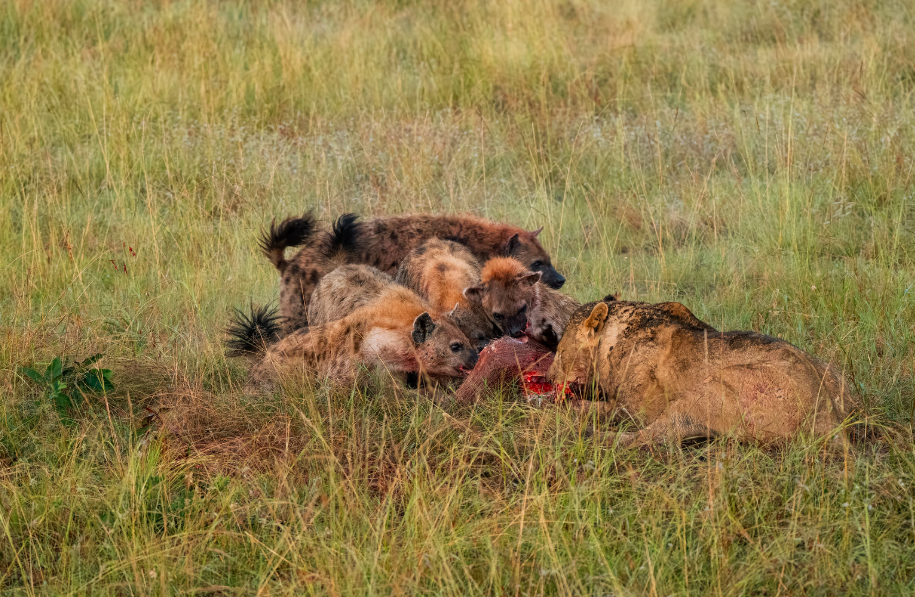
During the video you can observe several fascinating behaviours.
1. The Lion Guards Its Kill
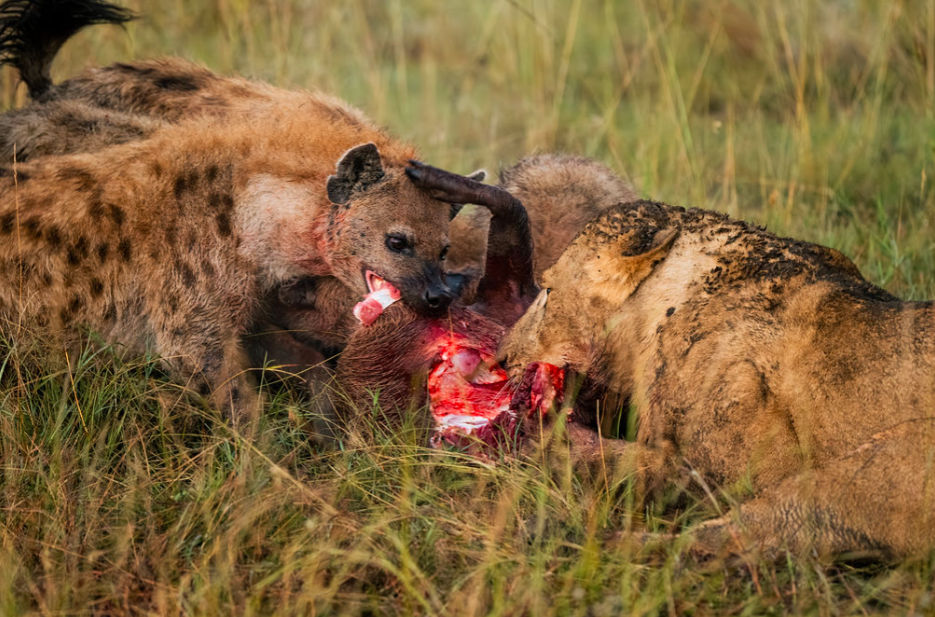
After successfully hunting its prey, the lion begins feeding while remaining highly alert.
Instead of eating continuously, it frequently lifts its head to watch the surrounding area for approaching scavengers.
2. Hyenas Begin Surrounding the Kill
Within minutes, several spotted hyenas cautiously approach.
Rather than rushing in immediately, they maintain a safe distance and constantly assess the lion’s behaviour.
Hyenas are intelligent predators and scavengers that often use their numbers to pressure lions into abandoning a carcass.
3. The Lion Defends the Prey
One of the most dramatic moments occurs when the lion grips the prey firmly in its jaws, stands over the carcass, and delivers several loud warning roars.
These displays communicate one clear message:
Stay away.
The roaring is accompanied by defensive body language that discourages the hyenas from moving closer.
4. The Hyenas Wait Patiently
Instead of attacking immediately, the hyenas remain remarkably patient.
They circle the carcass while watching every movement the lion makes.
This behaviour reduces the risk of injury because a single bite from an adult lion can seriously wound or kill a hyena.
5. Eventually Both Species Feed
As the lion becomes less defensive after eating its fill, the hyenas gradually move closer.
Eventually, both species feed from the same carcass.
Although this appears peaceful, the situation remains tense, with each animal constantly watching the others.
This remarkable interaction demonstrates the balance between dominance, patience, and opportunity that defines life on the African savanna.
How Lions Hunt Their Prey
Although this video begins after the hunt has already taken place, it captures the final and most competitive stage of a lion’s hunting success-feeding and defending the kill.
Lions are powerful predators, but contrary to popular belief, they are not successful every time they hunt.
On average, only 20–30% of hunting attempts succeed, meaning every successful kill is valuable and worth defending.
A Typical Lion Hunt
| Hunting Stage | What Happens |
|---|---|
| Locate prey | Lions quietly observe herds from a distance. |
| Stalk | They use tall grass, shrubs, and terrain for cover while moving within 20–30 meters of the prey. |
| Ambush | A short burst of speed is used to surprise the animal. |
| Takedown | The prey is knocked off balance before being suffocated with a throat or muzzle bite. |
| Feeding | Lions quickly begin eating while remaining alert for scavengers and rival predators. |
Because hunts require enormous amounts of energy, lions cannot afford to lose their meal once it has been captured.
Why Does the Lion Keep Looking Around While Eating?
One of the most noticeable behaviors in this video is that the lion repeatedly stops eating and scans the surrounding area.
This is completely normal.
Even after a successful hunt, lions remain under pressure from:
- Spotted hyenas.
- Other lions.
- Leopards.
- Vultures.
- Jackals.
Every pause allows the lion to assess nearby threats before continuing to feed.
Unlike humans, lions never assume a meal is completely secure.
Why Does the Lion Hold the Prey in Its Mouth?
In several moments, the lion grips the carcass tightly with its jaws instead of immediately eating.
This behavior serves several important purposes.
The lion is:
- Maintaining control of the carcass.
- Preventing hyenas from dragging pieces away.
- Displaying ownership of the kill.
- Preparing to reposition the carcass if necessary.
Holding the prey firmly is often accompanied by direct eye contact with approaching scavengers, making it a powerful visual warning.
Why Does the Lion Roar at the Hyenas?
One of the highlights of this lion hunting video is when the lion stands over its prey and releases several deep roars toward the surrounding hyenas.
This isn’t random behavior.
The roar communicates several messages simultaneously.
It tells nearby hyenas:
- The carcass is still under the lion’s control.
- Approaching could result in injury.
- The lion is prepared to defend its meal.
Roaring also alerts other lions that a kill has been made and helps reinforce territorial dominance.
Combined with an upright posture, direct staring, and holding the prey, the lion’s roar becomes one of the most effective intimidation displays in the African wilderness.
Why Do Lions and Hyenas Sometimes Eat Together?
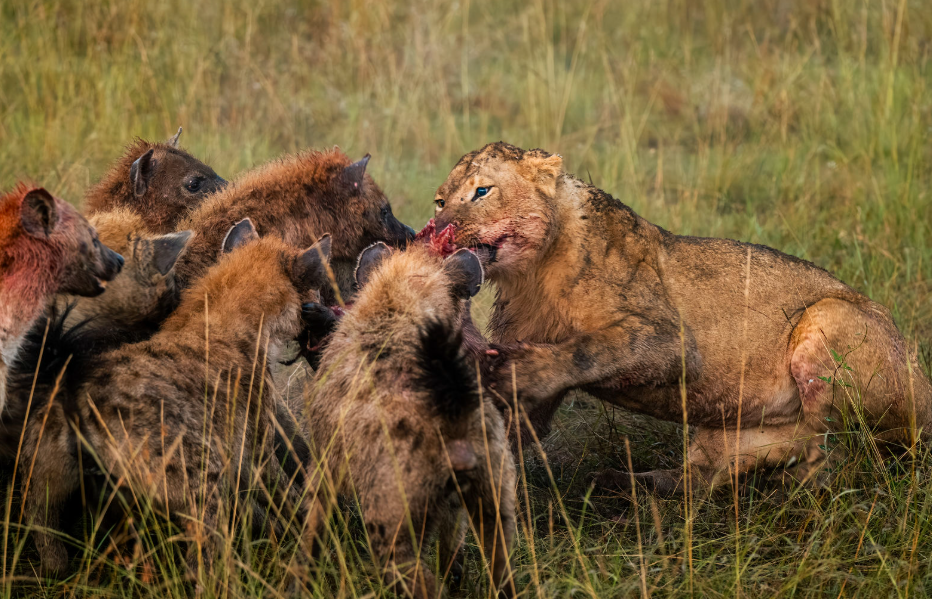
One of the most fascinating moments in this footage is that, after defending the carcass, the lion eventually allows the hyenas to feed as well.
While it may appear cooperative, this isn’t sharing.
Instead, it reflects the reality of competition in the wild.
By the time the lion has eaten the most nutritious parts of the carcass, the cost of constantly fighting every scavenger may outweigh the benefit of defending the remaining meat.
Hyenas then move in to consume whatever remains, including bones and tougher tissues that lions often leave behind.
This interaction highlights the important ecological role both species play.
Lions are apex predators responsible for making the kill, while hyenas are both skilled hunters and efficient scavengers that help ensure very little of the carcass goes to waste.
Together, they demonstrate one of Africa’s most remarkable examples of how predators compete, coexist, and contribute to the balance of the savanna ecosystem.
Experience Lions in the Wild with TourwithPipi
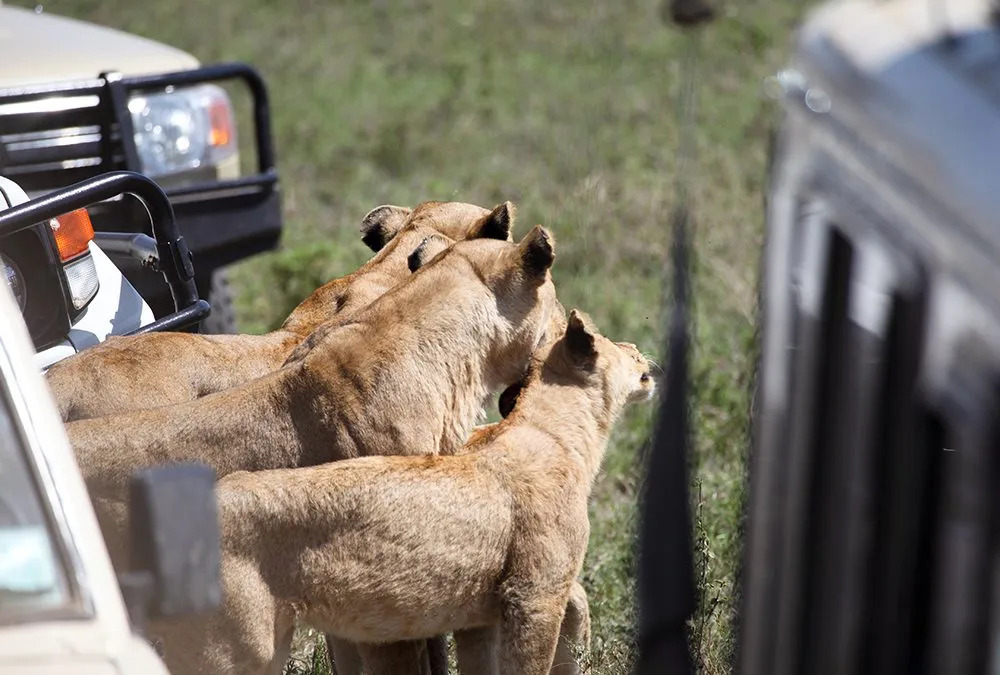
Watching a lion hunting prey on television is exciting, but witnessing it in person is unforgettable. From the powerful roar of a dominant male defending its kill to the tense standoff with spotted hyenas, every safari offers moments that no documentary can truly replicate.
At TourwithPipi, we design private luxury safaris across Kenya and Tanzania that place you in the heart of Africa’s most spectacular wildlife destinations. Explore the Maasai Mara during the Great Migration, track the Big Five with expert local guides, stay in handpicked luxury safari lodges, and experience authentic wildlife encounters while supporting responsible tourism and conservation.
Whether you’re dreaming of photographing lions, witnessing predator action, or enjoying your first African safari, our team will create a personalized itinerary tailored to your travel style.
Ready to experience Africa’s incredible wildlife for yourself? Contact TourwithPipi today and start planning your unforgettable luxury safari.


