
The Giraffe Centre in Nairobi is one of the most rewarding stops you can make on a Kenya safari, and it takes less than an hour. You stand on an elevated wooden platform at eye level with some of the world’s rarest giraffes, feed them pellets from your hand, and leave knowing your entry ticket directly funds one of Africa’s most important conservation breeding programs. It is unusual, it is genuinely moving, and it works perfectly as a Nairobi arrival or departure activity before or after your safari begins.
What Is the Nairobi Giraffe Centre?
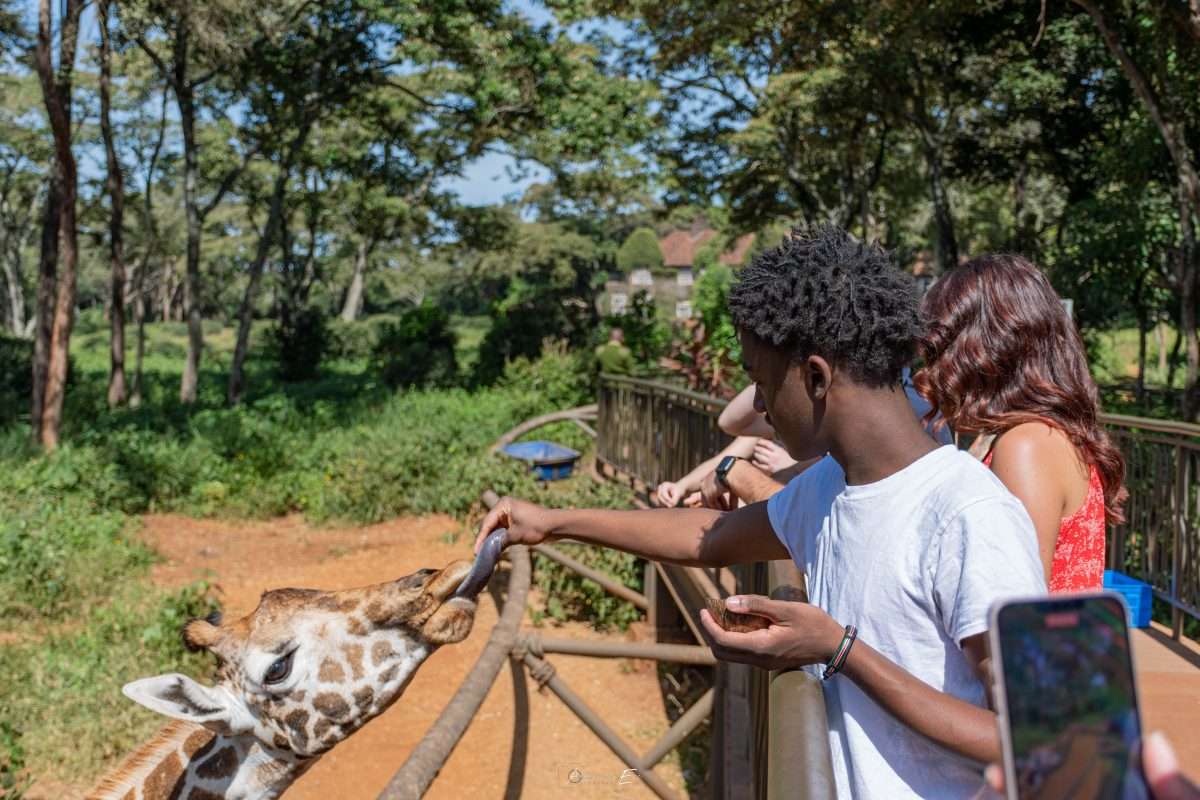
The Giraffe Centre Nairobi is a conservation facility run by the African Fund for Endangered Wildlife (AFEW Kenya). It was founded in 1979 by Jock Leslie-Melville and his wife Betty after they discovered that the Rothschild’s giraffe, a rare subspecies identified by the distinctive white markings that reach up its legs like socks, had dropped to fewer than 130 individuals in the wild due to rapid habitat loss across Kenya and Uganda.
Their response was to establish a captive breeding program in Nairobi’s Lang’ata suburb, breed Rothschild’s giraffes in a protected environment, and reintroduce breeding pairs into secure national parks across Kenya. It worked. The global population of Rothschild’s giraffes has rebounded significantly since the program began, and the centre remains one of the most successful conservation initiatives of its kind in East Africa.
The 38-acre property sits inside a forested sanctuary. The feeding platform is the headline activity, but the nature trail, conservation lectures, and the story behind the whole operation make it worth more than just a photo stop.
Giraffe Centre Nairobi Tickets and Entry Fees
All payments at the Giraffe Centre are cashless. M-Pesa, Visa, and Mastercard are accepted. Cash is not.
| Visitor Category | Entry Fee |
|---|---|
| Non-Resident Adults | KES 1,500 (approx. USD 15) |
| Non-Resident Children (Ages 3 to 12) | KES 750 (approx. USD 7.50) |
| Resident Adults | KES 400 |
| Resident Children (Ages 3 to 12) | KES 200 |
| Children Under 3 Years | Free |
Every entry ticket includes a bowl of giraffe feeding pellets. The 38-acre nature trail across the road is included in the ticket price at no additional cost.
Opening Hours and Best Time to Visit The Giraffe Centre
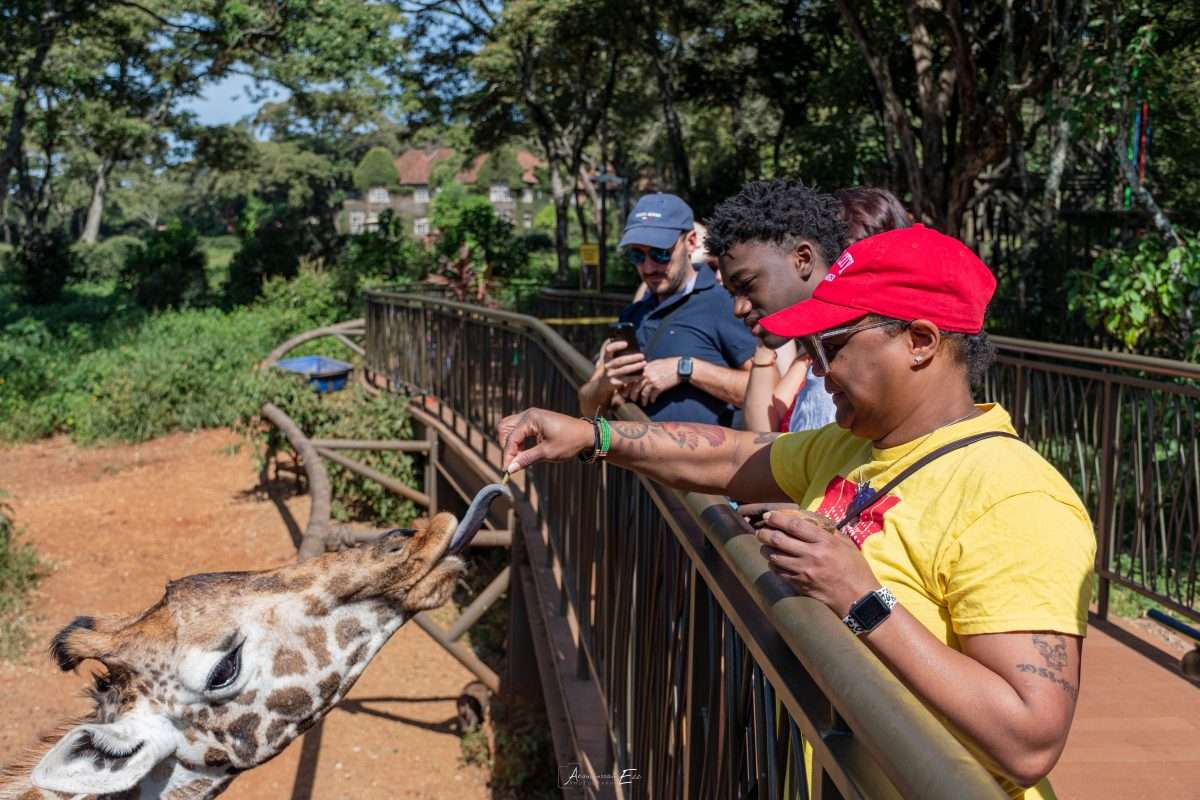
The Giraffe Centre is open daily from 9:00 AM to 5:00 PM, including weekends and public holidays. Last entry is typically 4:30 PM.
Arriving between 9:00 AM and 11:00 AM is the best strategy. The giraffes are hungriest and most active in the morning, which means more interaction at the feeding platform and closer encounters. Afternoons bring larger crowds, particularly tour groups, and the giraffes tend to move further from the platform as the day progresses and their appetite settles.
A typical visit takes 30 to 45 minutes at the feeding platform. Add another 30 to 45 minutes if you walk the nature trail across the road.
Getting to the Giraffe Centre Nairobi
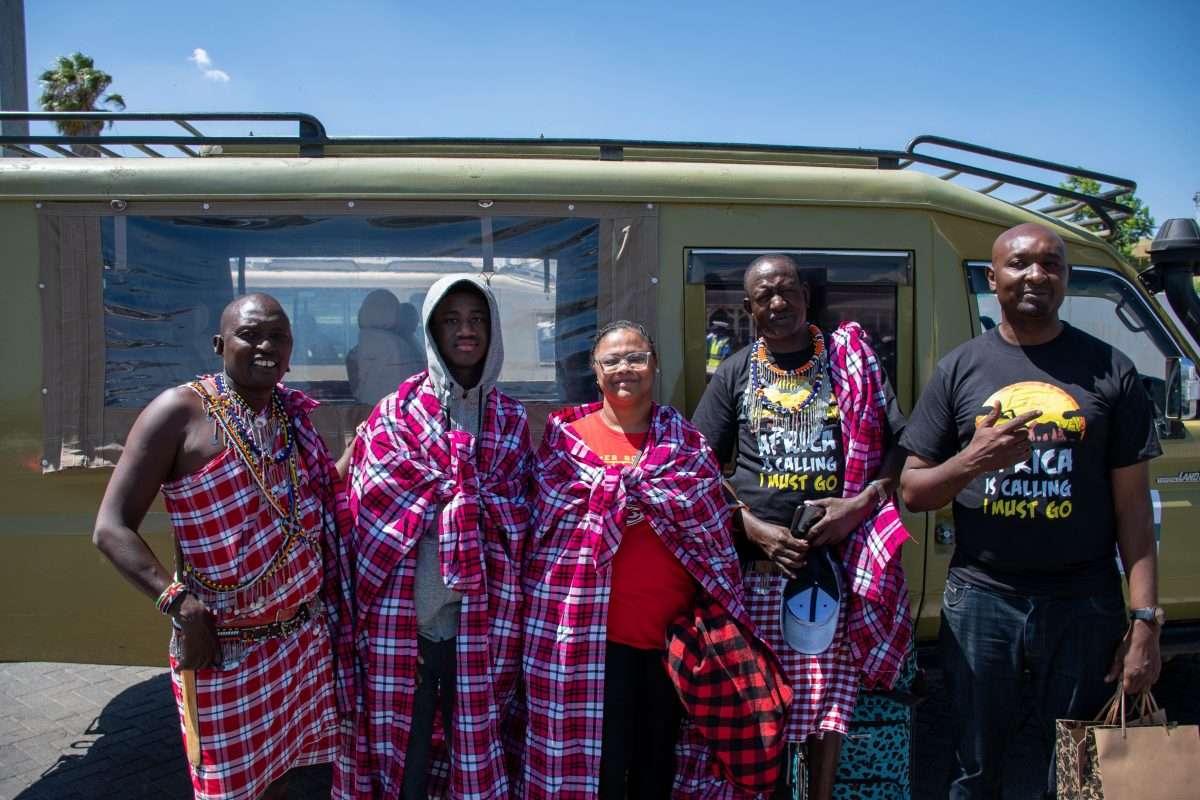
Address: Nyumbi Road, off Duma Road, Lang’ata, Nairobi.
The centre sits in the Lang’ata suburb of Nairobi, roughly 15 to 20 kilometers from the city centre. In normal traffic the drive takes around 40 minutes. Nairobi traffic can extend this significantly during morning and evening peak hours, so factor this in if you are connecting to a flight.
Uber and Bolt both operate reliably to and from the center. Most drivers know it by name. Alternatively, TourwithPipi can arrange a private transfer as part of your Nairobi arrival or departure day, combining the Giraffe Centre with other nearby attractions such as the David Sheldrick Wildlife Trust elephant orphanage or Karen Blixen Museum.
What to Do at the Nairobi Giraffe Centre
The Feeding Platform
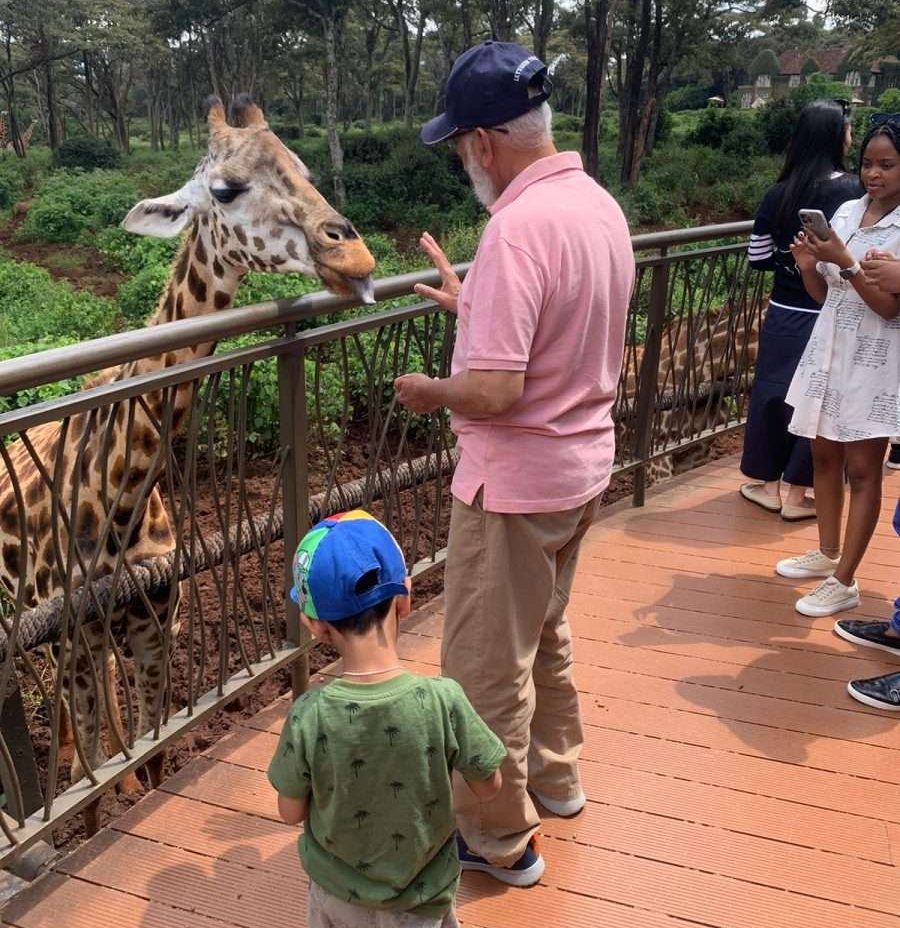
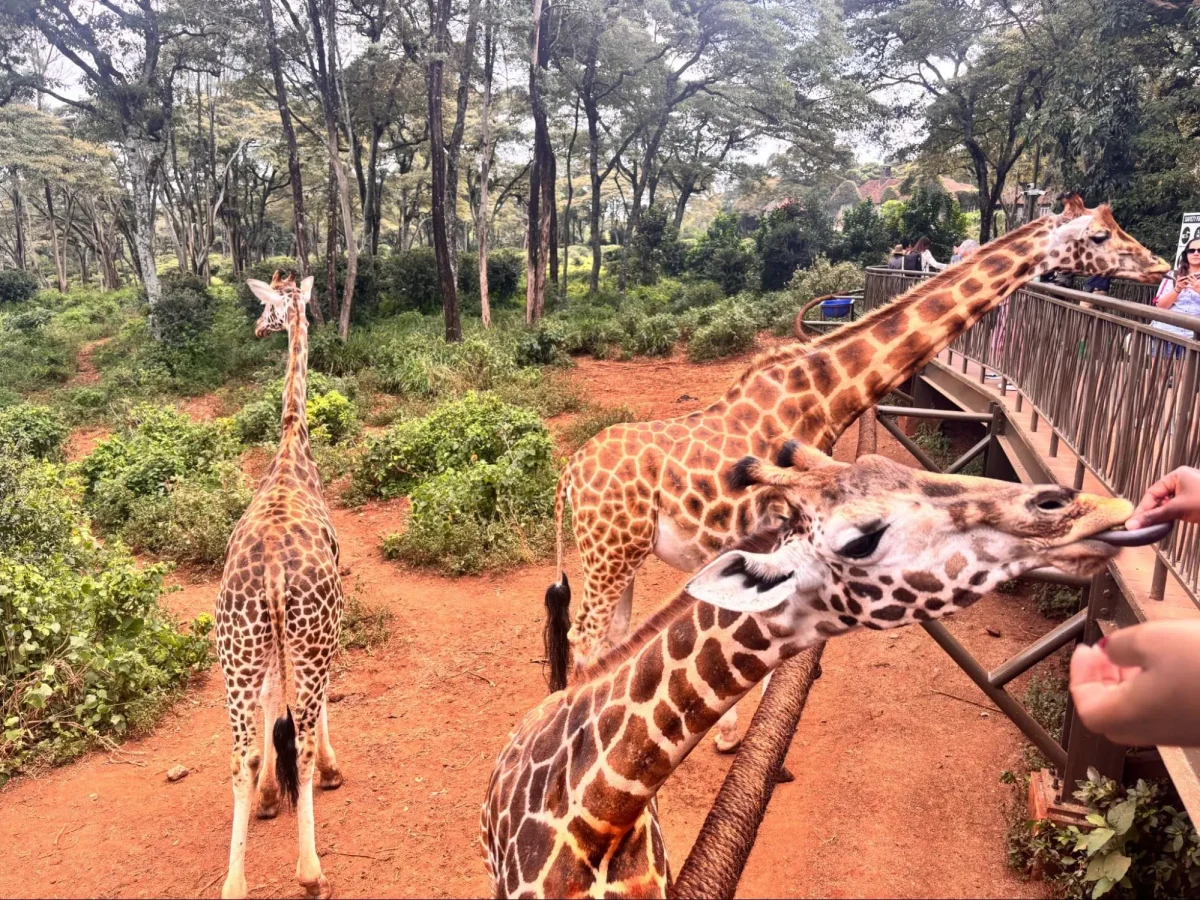
This is the main event. An elevated wooden deck brings you to eye level with the Rothschild’s giraffes, which are tall enough that their heads comfortably reach the platform railing. You hold a pellet between your thumb and index finger, slide it onto the giraffe’s tongue, and experience a close-up interaction with one of Africa’s most remarkable animals.
The giraffes have names and distinct personalities. Some are bold and push forward immediately. Others are more tentative and approach slowly. The tongues are long, dark purple, and entirely unforgettable once you have felt one. The whole thing is completely safe when you follow the feeding rules, and the staff are present throughout to guide first-time visitors.
Do not hold pellets flat on an open palm. A giraffe’s tongue is strong and moves fast and it can accidentally scrape your hand. The technique is simple: pellet pinched between two fingers, offered directly. Staff explain this clearly before you step onto the platform.
Conservation Lectures
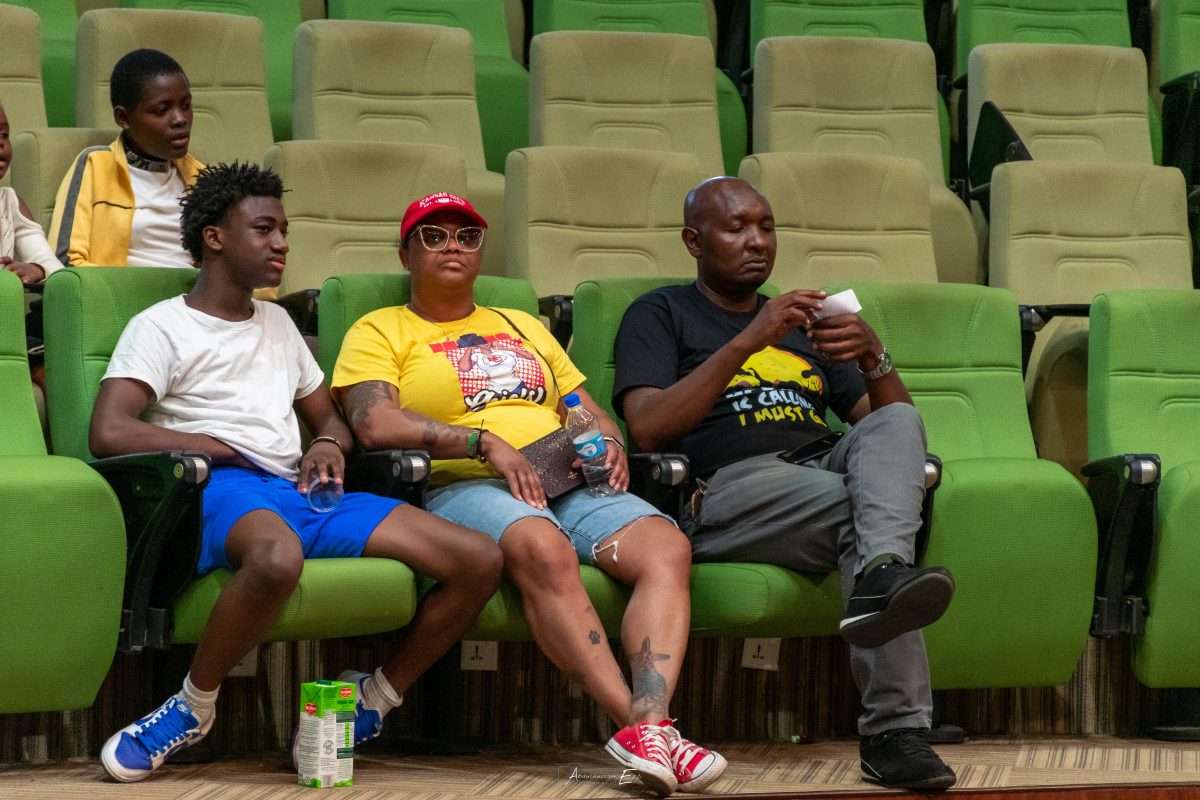
Hourly presentations run in the outdoor auditorium beside the feeding area. Staff cover the centre’s history, Rothschild’s giraffe biology, the broader conservation picture in Kenya, and what the African Fund for Endangered Wildlife has achieved since 1979. These lectures are more engaging than they sound and genuinely add context to what you are seeing. Children respond particularly well to them.
The Nature Trail
A 1.5-kilometre forested trail runs across the road from the main facility through a peaceful, tree-covered sanctuary. Dik-dik antelope move through the undergrowth. Bird species fill the canopy. The trail takes around 30 to 40 minutes at a comfortable pace and provides a complete change of atmosphere from the busier feeding platform area. It is included in your entry ticket and worth doing if you have the time.
Daisy Zoovenir Shop and Tea House
The on-site shop stocks Kenyan woodwork, textiles, books, and wildlife-themed gifts. Every purchase directly funds the giraffe conservation trust, which makes it one of the more meaningful places to buy a souvenir in Nairobi. The small cafe nearby serves drinks and light snacks if you need a break between activities.
Rules and Code of Conduct of Giraffe Center in Kenya
The Giraffe Centre has a clear code of conduct designed to keep both visitors and animals safe. Follow it and the experience is entirely seamless.
Feeding technique: Hold the pellet firmly between your thumb and index finger. Offer it directly onto the giraffe’s tongue. Never place pellets on an open flat palm.
No teasing: Once a giraffe approaches you, do not pull the food away or hide it. Frustrated giraffes may headbutt, and given their size and strength, that is a situation nobody wants.
Hygiene: Wash or sanitize your hands thoroughly before stepping onto the feeding platform and again immediately after feeding. Sanitizing stations are positioned at the platform entrance and exit.
No drones or flash photography: Drones are not permitted anywhere on the property. Flash photography is prohibited near the animals as it startles them and disrupts their behavior.
Stay on the platform: Do not attempt to climb down from the platform toward the giraffes. The interaction works because it is on their terms and at the right height.
Children: Children are welcome and the experience is genuinely excellent for families. Younger children will need to be lifted to platform height to feed comfortably. Staff help with this routinely.
The Rothschild’s Giraffe: Why It Matters
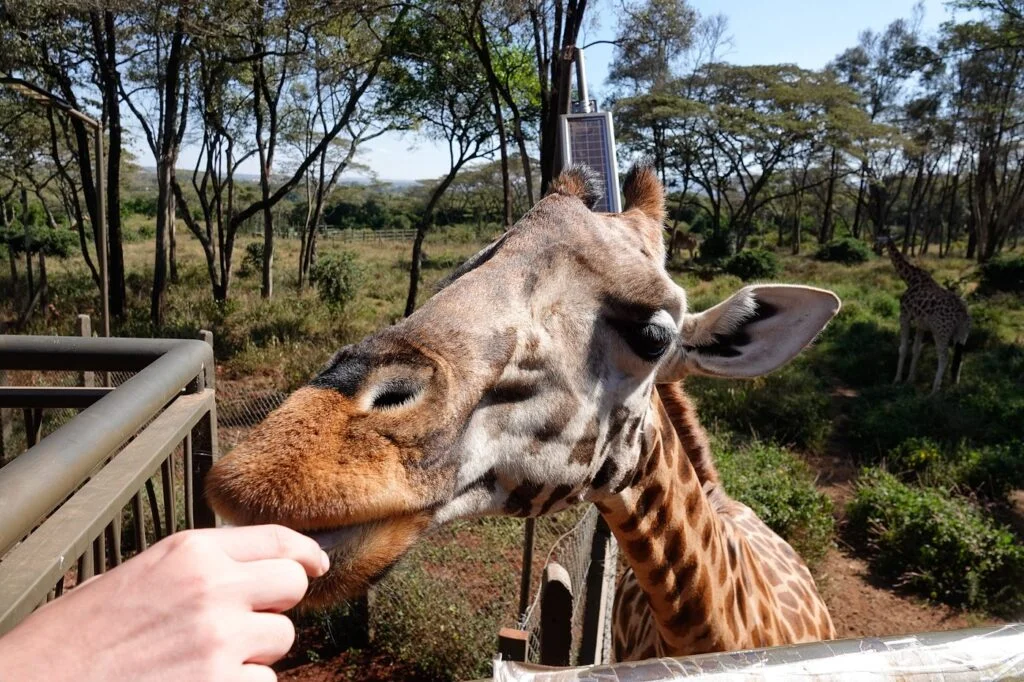
The Rothschild’s giraffe is one of the most endangered giraffe subspecies in the world. It is identified by several features that distinguish it from the more common Masai giraffe: the white lower legs with no spots below the knee, giving the appearance of white socks, five ossicones (the horn-like protrusions on a giraffe’s head) compared to the two or three found on other subspecies, and a paler, more cream-toned coat pattern.
When the centre was founded in 1979, fewer than 130 Rothschild’s giraffes remained in the wild. Habitat destruction across their range in Uganda and western Kenya had pushed the subspecies to the edge of viability. The breeding and reintroduction program at the Nairobi Giraffe Centre, combined with conservation work at Lake Nakuru National Park and Ruma National Park in Kenya, has helped stabilize and grow the population meaningfully since then.
Seeing a Rothschild’s giraffe this close, understanding its story, and knowing that your entry fee contributes directly to its survival gives the visit a weight that a standard zoo encounter simply does not carry.
Practical Tips for Visiting the Giraffe Centre Nairobi
Bring your camera with a decent zoom lens even though you will be close enough for phone photography at the platform. The nature trail has bird and dik-dik sightings that reward a longer lens. Wear comfortable shoes if you plan to walk the trail. The ground is unpaved and can be muddy after rain.
Book your entry in advance during peak season from July to October, as group bookings from safari operators can fill the morning session quickly. The center’s website accepts online bookings. Carry your payment card since cash is not accepted at any point during the visit.
If you are visiting Nairobi in transit between safari parks, the Giraffe Centre, David Sheldrick Elephant Orphanage, and the Karen Blixen Museum can all be visited in a single well-planned day. TourwithPipi arranges full Nairobi day itineraries for guests transiting between safari destinations.
Nairobi Giraffe Center Blog Summary
- The Nairobi Giraffe Centre is open daily from 9:00 AM to 5:00 PM. Non-resident adult tickets cost KES 1,500 and include a bowl of feeding pellets and access to the 38-acre nature trail.
- The centre was founded in 1979 to save the Rothschild’s giraffe subspecies, which had dropped to fewer than 130 individuals in the wild. The breeding and reintroduction program has significantly grown the population since then.
- Arrive between 9:00 AM and 11:00 AM for the best feeding interaction and fewest crowds.
- Cash is not accepted. Bring M-Pesa, Visa, or Mastercard.
- The Giraffe Centre pairs well with the David Sheldrick Elephant Orphanage and fits naturally into a Nairobi arrival or departure day on a Kenya safari itinerary.
Frequently Asked Questions About the Nairobi Giraffe Centre
1. What are the opening hours of the Nairobi Giraffe Centre?
The Giraffe Centre is open daily from 9:00 AM to 5:00 PM, including weekends and public holidays.
2. How much does it cost to visit the Giraffe Centre Nairobi?
Non-resident adults pay KES 1,500 (approximately USD 15). Non-resident children aged 3 to 12 pay KES 750. Children under 3 enter free. Resident rates are KES 400 for adults and KES 200 for children.
3. Can you pay cash at the Nairobi Giraffe Centre?
No. Cash is not accepted. Payments must be made via M-Pesa, Visa, or Mastercard.
4. How long does a visit to the Giraffe Centre take?
A typical visit to the feeding platform takes 30 to 45 minutes. Add another 30 to 40 minutes if you walk the 1.5-kilometre nature trail across the road.
5. What is the best time to visit the Nairobi Giraffe Centre?
Arrive between 9:00 AM and 11:00 AM. The giraffes are most active and hungriest in the morning, and the crowds are significantly smaller than in the afternoon.
6. What type of giraffe is at the Nairobi Giraffe Centre?
The centre breeds and cares for Rothschild’s giraffes, one of the most endangered giraffe subspecies in the world. They are identified by their white lower legs with no spots below the knee and five ossicones on their head.
7. Is the Nairobi Giraffe Centre suitable for children?
Yes. It is one of the best family activities in Nairobi. Children of all ages can visit and younger children can be lifted to feeding height on the platform. Staff are present throughout to assist and guide families.
8. Where is the Nairobi Giraffe Centre located?
The centre is on Nyumbi Road, off Duma Road, in the Lang’ata suburb of Nairobi. It is approximately 15 to 20 kilometres from the city centre, around a 40-minute drive depending on traffic.
9. Can I combine the Giraffe Centre with other Nairobi attractions?
Yes. The David Sheldrick Wildlife Trust elephant orphanage and Karen Blixen Museum are both nearby in the Lang’ata area. TourwithPipi arranges combined Nairobi day itineraries covering all three for guests transiting between safari parks.
10. Does the Giraffe Centre entry fee support conservation?
Yes. Every ticket directly funds the African Fund for Endangered Wildlife (AFEW Kenya), which runs the breeding program and funds reintroduction of Rothschild’s giraffes into secure national parks across Kenya.


