
A Ngorongoro safari in Tanzania puts you inside the world’s largest intact volcanic caldera, a 260 km² wildlife arena that holds approximately 25,000 large animals in permanent residence. Unlike any other safari destination in Africa, wildlife here cannot freely disperse across vast plains. The crater walls create a natural enclosure that concentrates lions, black rhinos, elephants, buffalo, zebra, flamingos, and hippos into a single extraordinary space. The result is the highest wildlife density of any park in Africa and one of the most reliable Big Five safari experiences on the continent.
This guide covers everything you need to plan a Ngorongoro Crater safari in 2026. You will find how the crater formed, what wildlife to expect, the best time to visit, how the Ngorongoro compares with the Serengeti, what lodges are available, how much a safari costs, and the exact Tanzania itineraries TourwithPipi offers that include the Ngorongoro Conservation Area.
Written by Khadija Tayabali, Kenya-born physician and Virtuoso-certified African safari advisor experienced in designing private safaris across East and Southern Africa.
Quick Ngorongoro Crater Facts
- The Ngorongoro Crater is the world’s largest intact volcanic caldera, formed approximately 3 million years ago when a giant volcano collapsed inward
- The crater floor covers 260 km² at an altitude of 1,800 metres above sea level
- The crater rim sits at 2,300 metres, with walls rising 600 metres above the floor
- Approximately 25,000 large animals live permanently within the crater including all Big Five species
- One of the most reliable black rhino sighting locations in Tanzania, with an estimated 20 to 30 individual rhinos
- UNESCO World Heritage Site, designated in 1979 and inscribed as a mixed natural and cultural site
- The Ngorongoro Conservation Area covers 8,292 km² and surrounds the crater itself
- High season runs from June to October; year-round wildlife viewing is excellent
- Entrance fees are approximately $70 per adult per day for international visitors
How Did the Ngorongoro Crater Form?
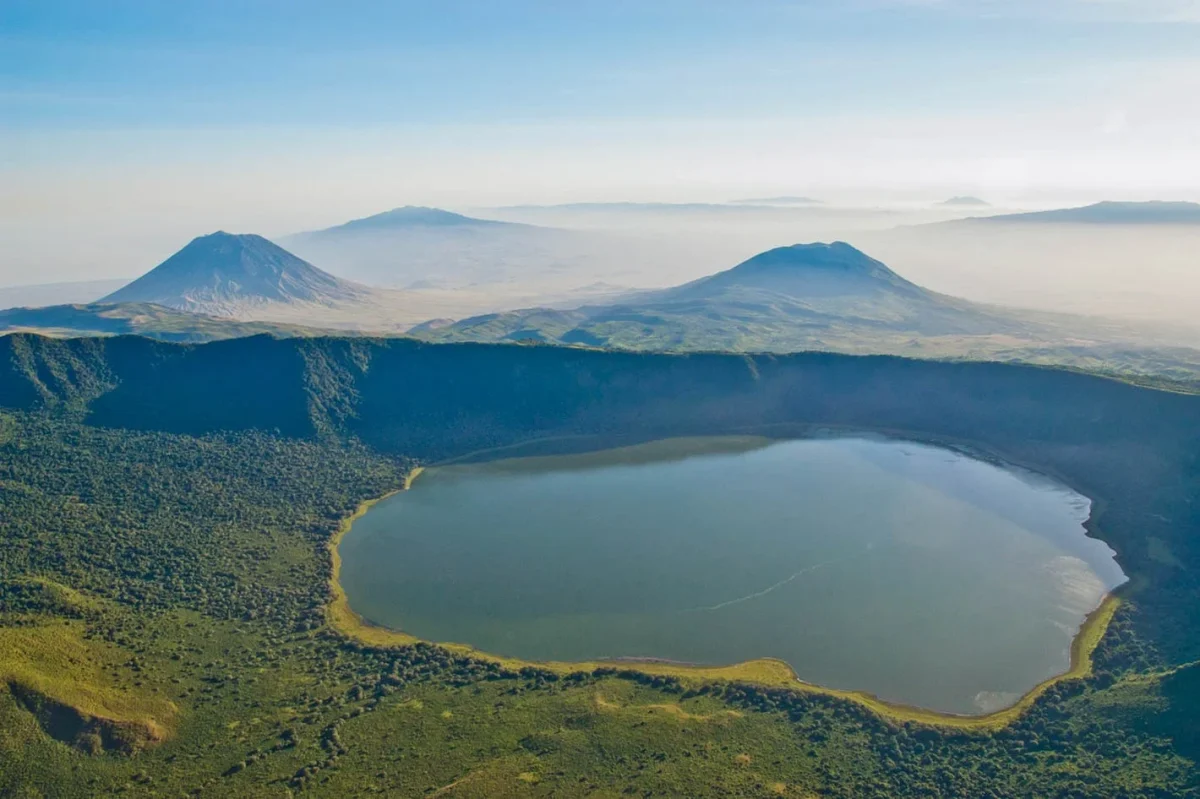
Around 3 million years ago, a giant volcano standing at an estimated height of 4,500 to 5,000 meters erupted and then collapsed inward on itself, rather than outward in an explosion. The cone fell into the magma chamber below, creating the caldera structure we see today. Over millions of years, rainfall filled the crater floor, volcanic soils created extraordinarily fertile grasslands, and wildlife moved in to form one of the most diverse ecosystems in East Africa.
The geology of the caldera means the crater floor remains permanently fertile. Minerals from the volcanic soil support lush grass that has sustained large herds of grazing animals year-round for thousands of years. The predators followed the prey, and the enclosed space meant that both predators and prey remained in unusually high concentrations. The Ngorongoro Crater is not a national park in the traditional sense. It is part of the larger Ngorongoro Conservation Area, a multi-use area where the Maasai continue to graze their cattle alongside the wildlife, as they have for generations.
Where Is the Ngorongoro Crater?
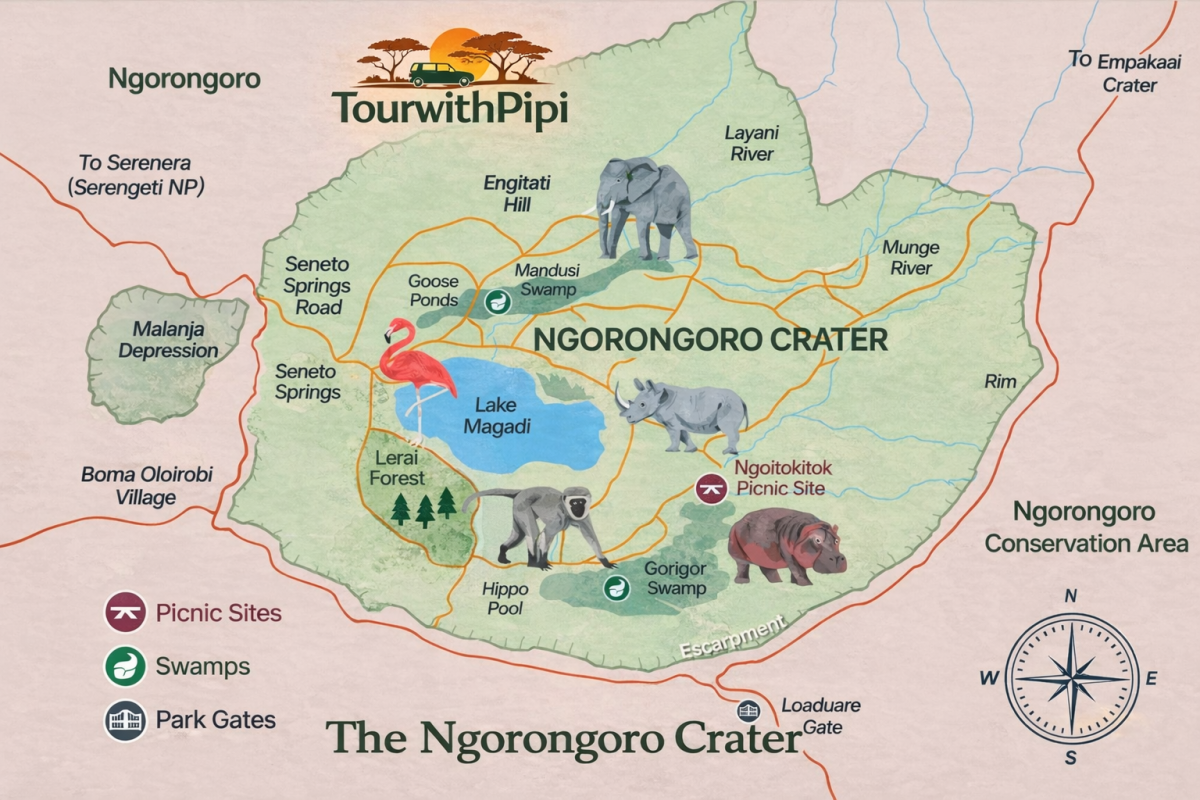
The Ngorongoro Conservation Area sits in north-western Tanzania, approximately 180 km west of Arusha and 50 km west of Lake Manyara National Park. The crater itself lies in the eastern portion of the conservation area, with the Serengeti National Park to the west and Tarangire National Park to the south-east.
The area is accessible by road from Arusha, a three to four hour drive, or by domestic charter flight into Lake Manyara Airstrip followed by a vehicle transfer to the crater rim. For most Tanzania Northern Circuit safaris, the Ngorongoro Crater sits naturally between Lake Manyara and the Serengeti on the standard westward route.
TIP: International flights into Kilimanjaro International Airport often arrive late in the evening. We strongly recommend an overnight in Arusha before driving to the Ngorongoro Crater the following morning. Starting the rim drive when fresh makes a significant difference to how much you absorb from the experience.
Ngorongoro Crater Wildlife: What You Will See
The Ngorongoro Crater is genuinely the best single location in Tanzania for Big Five sightings in a compact area. Because animals cannot leave the crater walls permanently, the population density is extraordinary compared to any open savannah park. Here is what to expect on a Ngorongoro safari.
Lions
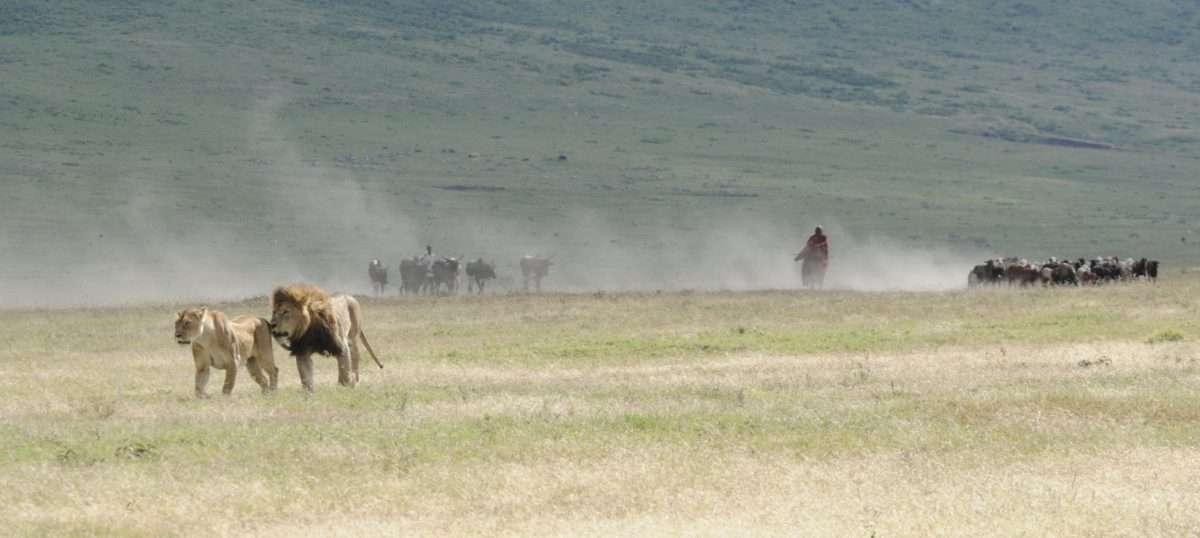
The crater supports multiple resident lion prides that have been studied for decades. Because the prey is always present and the terrain gives good visibility, lions here are highly active and frequently observed both resting and hunting. The Ngorongoro crater lions are among the most-studied wild lions in the world.
Black Rhino
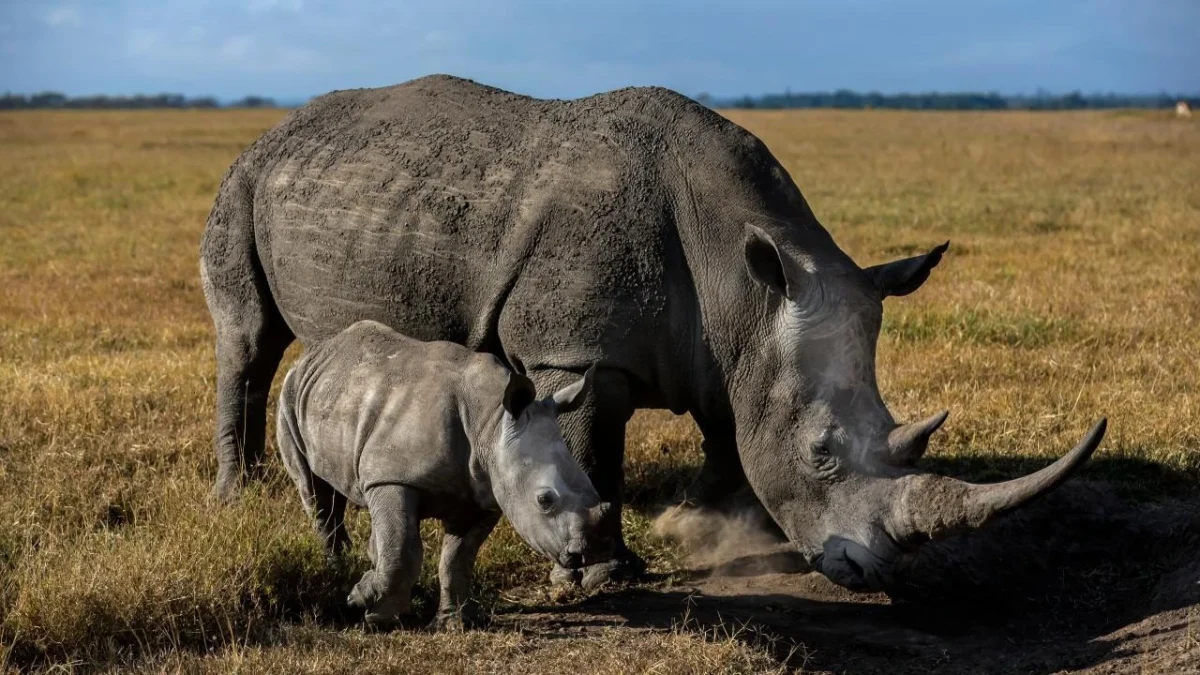
The Ngorongoro Crater is one of the best places in Tanzania to see the critically endangered black rhino. An estimated 20 to 30 individuals live permanently on the crater floor, making sightings more probable here than almost anywhere else in East Africa. Black rhinos are generally more active in the early morning and late afternoon, so timing your game drive matters.
Elephants
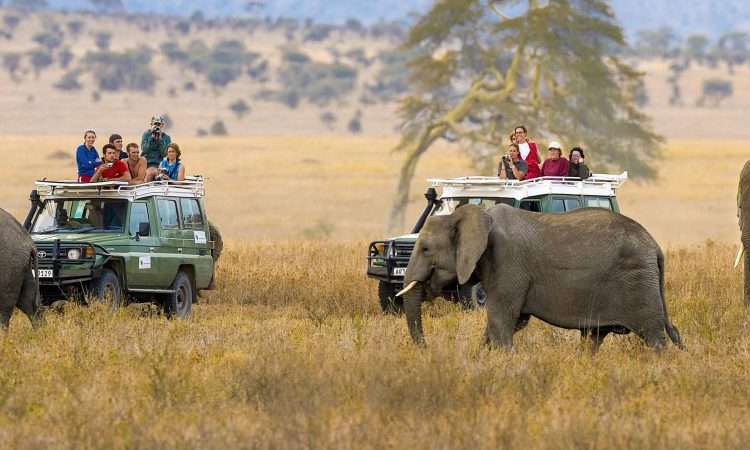
The crater is home to some of the largest-tusked elephants remaining in Africa. The resident population tends to be older bulls that have retreated to the crater’s protected environment. Sightings of massive-tusked males are not uncommon and are among the most photographed wildlife encounters in the entire Tanzania Northern Circuit.
Leopard
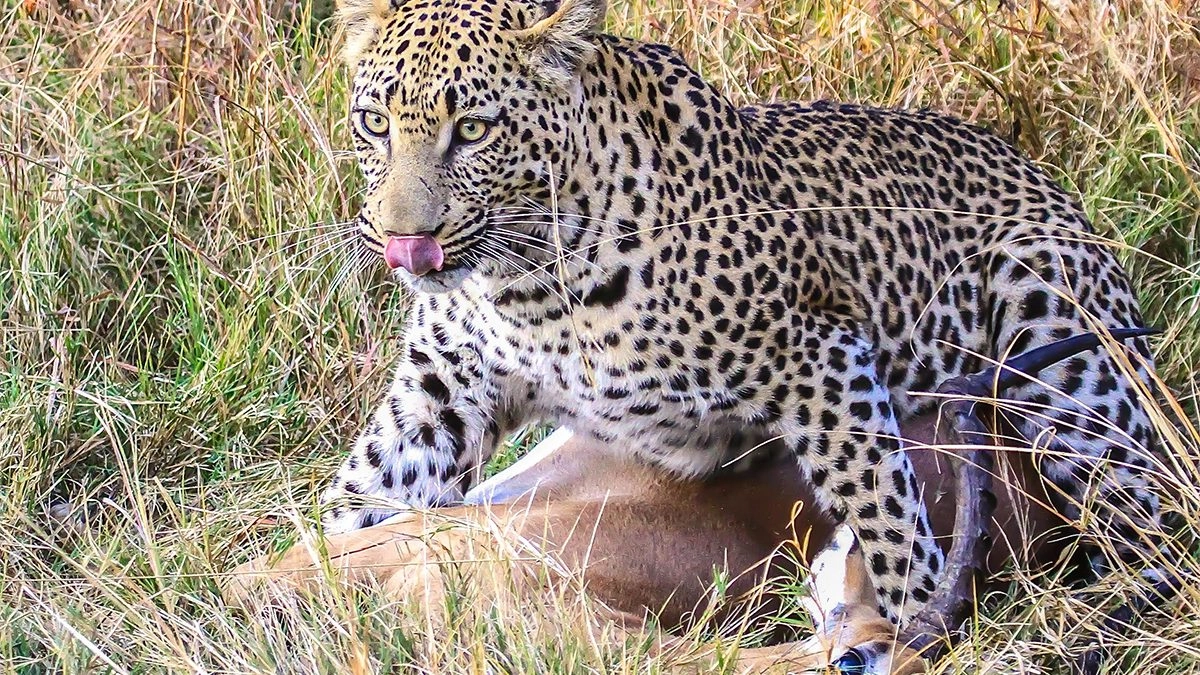
Leopards are present but less frequently seen than lions due to their secretive nature and preference for the forested crater walls. Early morning drives increase your chances significantly. When leopards are spotted on the Ngorongoro Crater floor, it is often in the Lerai Forest along the southern wall.
Buffalo
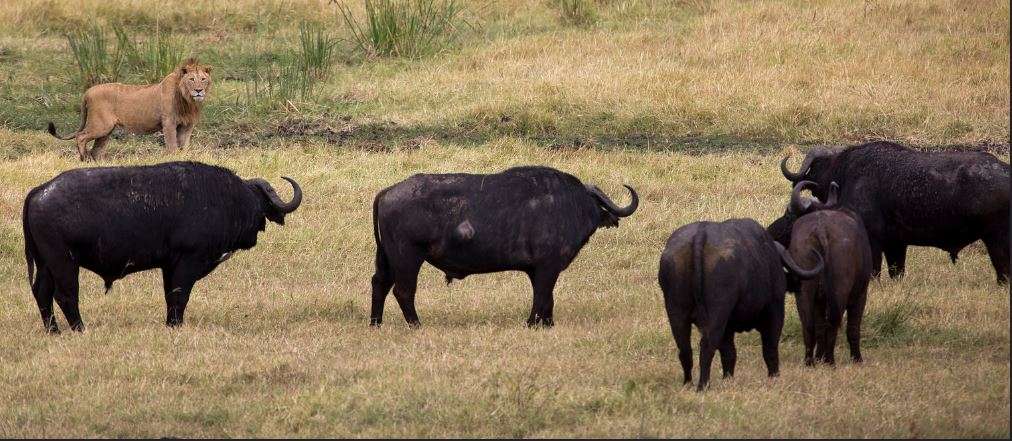 Large herds of buffalo move across the crater floor year-round. Herds of several hundred animals are common and provide some of the most dramatic herd sightings in the crater.
Hippos
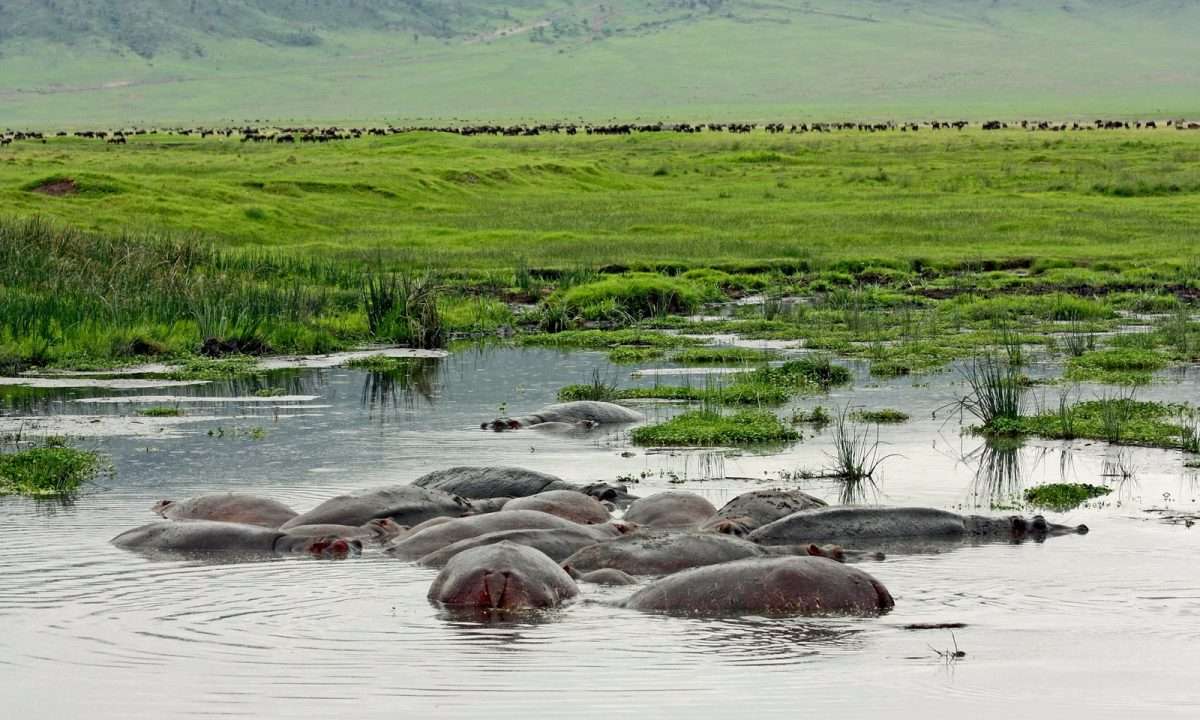
The Gorigor Swamp and several permanent water pools on the crater floor support a healthy hippo population. Hippos are typically visible wallowing in the open water during the day and easier to observe here than in most river-based habitats where vegetation obscures the view.
Flamingos
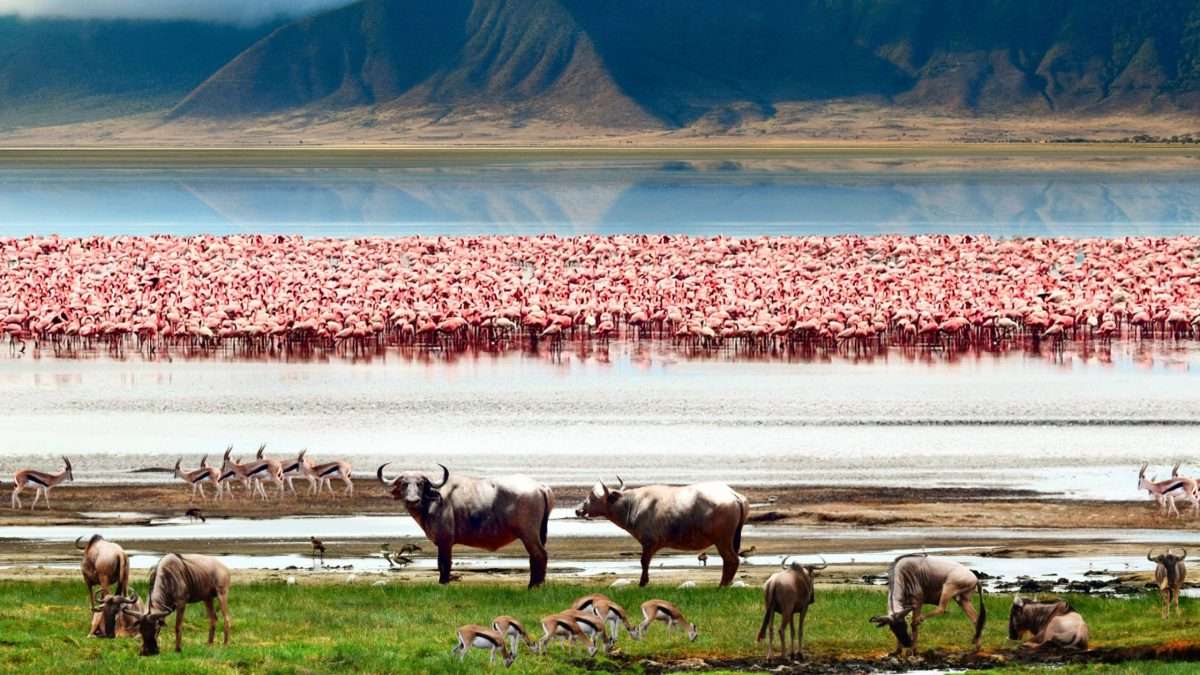
Lake Magadi, the shallow alkaline lake at the centre of the crater floor, attracts flamingos in significant numbers. The concentration varies seasonally, with higher water levels from November through May supporting larger flocks that can reach into the thousands. Seeing the pink fringe of flamingos across the white alkaline lakeshore against the crater walls is one of the most distinctive images of a Ngorongoro safari.
Additional Wildlife
The crater also supports cheetah, hyena, jackal, serval cat, bat-eared fox, zebra, wildebeest, Thompson’s and Grant’s gazelle, waterbuck, and approximately 400 recorded bird species including grey crowned cranes, ostriches, and raptors. Wildlife here is essentially permanent and guaranteed.
Activities on a Ngorongoro Crater Safari
Game Drives Inside the Crater
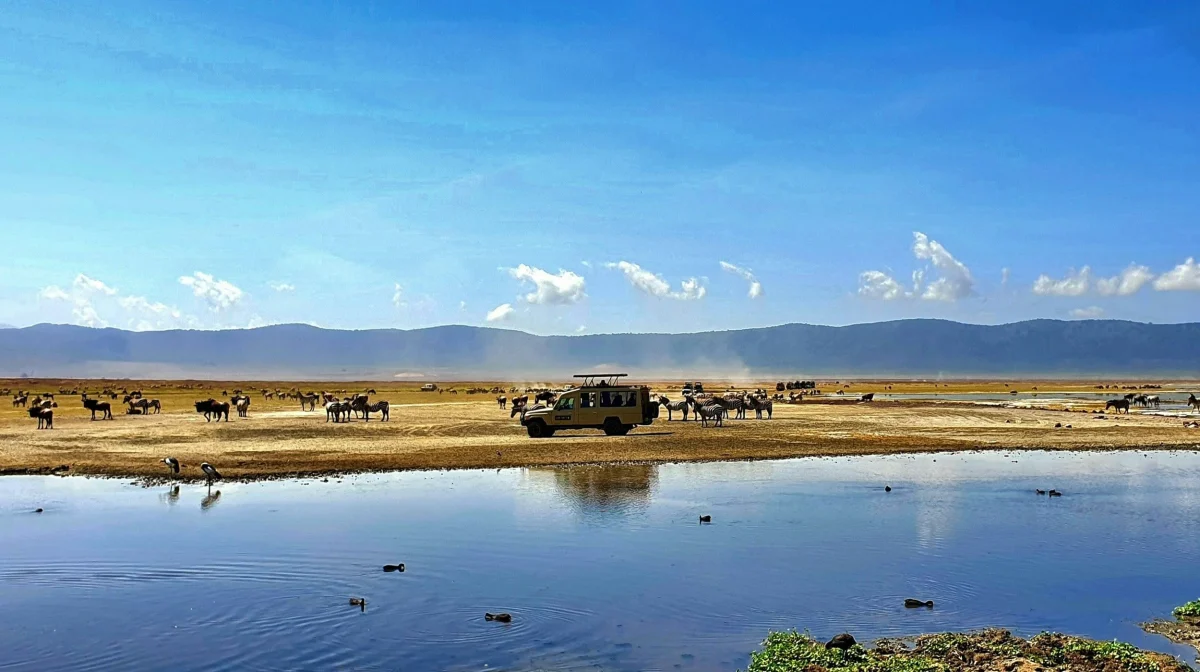
Game drives are the primary activity inside the Ngorongoro Crater itself. All vehicles must be closed-sided with a roof hatch for game viewing, and getting out of the vehicle is strictly restricted to designated picnic sites. Morning drives starting at dawn are the most productive for predator activity. Afternoon drives are excellent for the golden light on the crater walls.
Most TourwithPipi itineraries allocate one full day inside the crater, descending at first light and returning to the rim by mid-afternoon. For groups who want maximum wildlife time, a second partial day descent is possible.
Olmoti Crater Hike
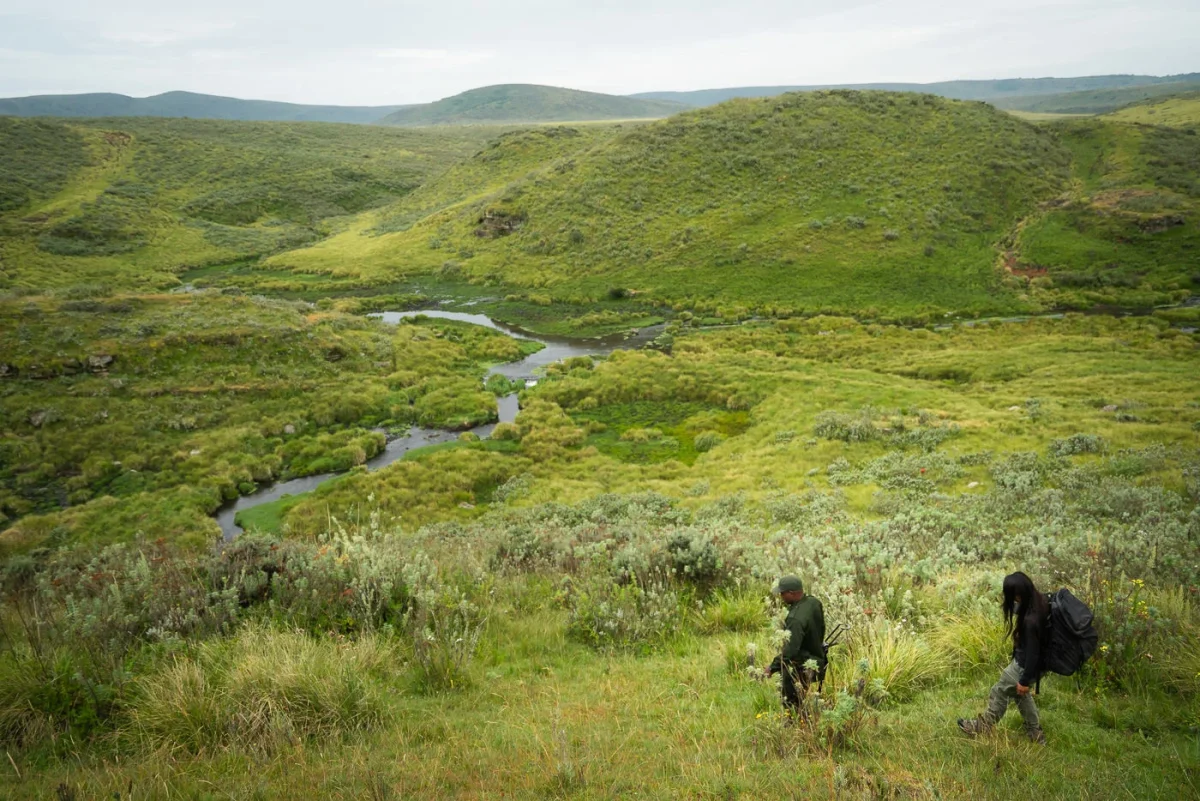
A short drive from the crater rim takes you to the base of Olmoti, a smaller extinct volcano north of Ngorongoro. A guided hike following an ancient Maasai cattle path through highland forest and open grassland leads to the summit with views down into the Olmoti Crater and across the wider Conservation Area. This hike is available through lodges outside the crater rim and adds a different physical dimension to the safari experience.
Empakaai Crater Excursion
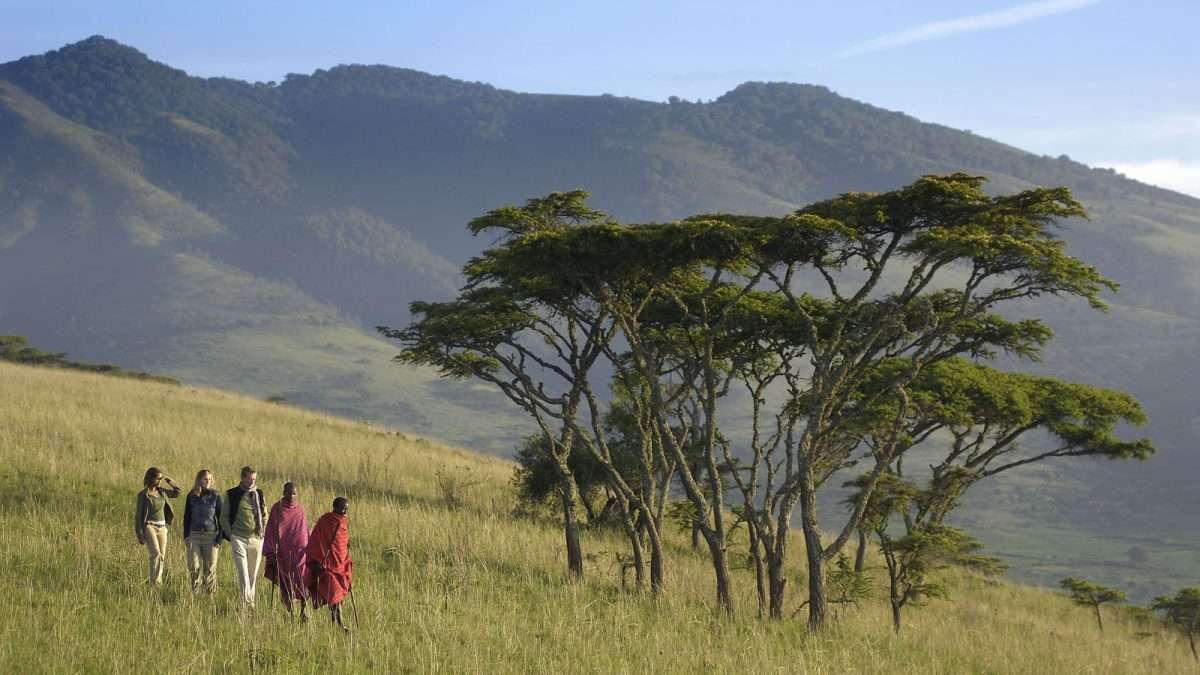
Empakaai is a dramatic soda lake crater north of Ngorongoro. A ranger-guided hike descends through forested walls to the lake floor where flamingos gather along the alkaline shoreline. The scenery here is completely different from the Ngorongoro floor, more intimate and forested, and the experience is worth including for families and travelers with more than two nights in the Conservation Area.
Maasai Cultural Village Visit
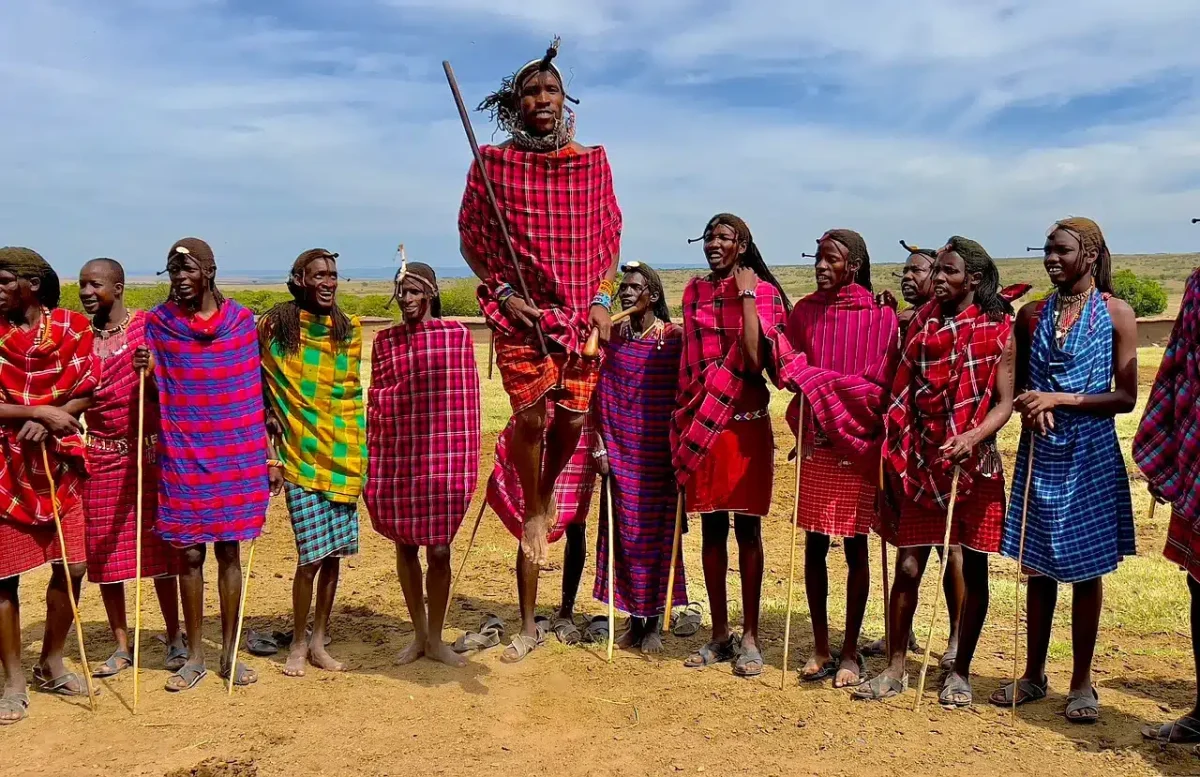
The Ngorongoro Conservation Area is one of the few protected areas in Africa where the indigenous people continue to live alongside wildlife. The Maasai have coexisted with the crater’s animals for centuries. A well-organized village visit gives you direct insight into cattle culture, beadwork, traditional medicine, homestead construction, and the warrior traditions that have shaped life in this landscape for generations.
TourwithPipi includes a Maasai village visit on several Tanzania itineraries as a meaningful cultural component of the circuit rather than a tourist checkbox.
Olduvai Gorge
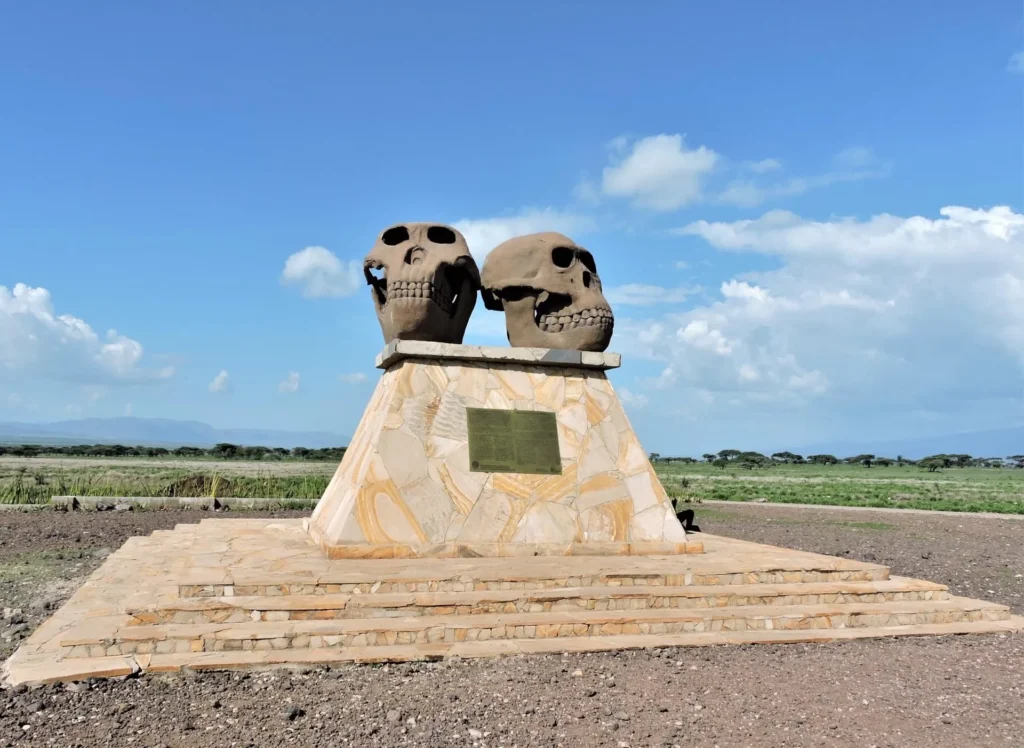
Olduvai Gorge, a 48-kilometre long ravine in the Ngorongoro Conservation Area, is considered one of the most significant prehistoric sites in the world. Palaeontologists Louis and Mary Leakey discovered some of the oldest known human ancestor fossils here, including Homo habilis, dating back 1.75 million years. A visit to the gorge and its small but genuinely interesting museum adds historical and anthropological depth to any Tanzania safari that passes through the area.
TourwithPipi includes an Olduvai Gorge stop on the drive between the Ngorongoro Crater and the Ndutu Plains or Serengeti on several itineraries.
When to Go: Best Time for a Ngorongoro Crater Safari
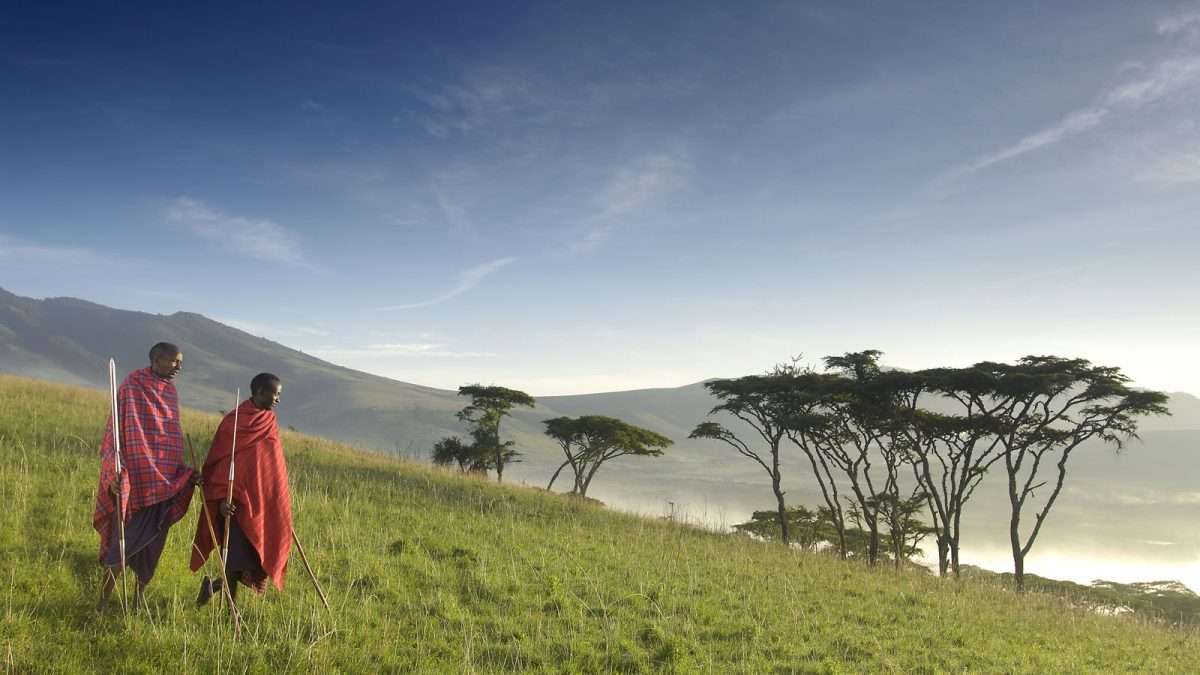
Because the wildlife is resident and does not migrate, the Ngorongoro Crater delivers excellent game viewing every month of the year. The main considerations are crowd levels, weather, and specific wildlife events.
- For avoiding crowds: January and May are widely regarded as the best months to visit the crater with fewer vehicles on the floor. The game viewing remains excellent in both months. January combines well with the calving season on the nearby Ndutu Plains.
- For flamingos: November through May brings higher water levels to Lake Magadi and correspondingly larger flamingo concentrations. If the flamingo fringe across the crater lake is a priority, plan your visit in this window.
- For general wildlife: July and August offer the best dry season conditions for clear photography and concentrated wildlife, but these months see the highest vehicle density on the crater floor.
Ngorongoro safari Tour Booking TIP: Arriving at the crater descent gate as early as possible is the single most effective way to reduce crowd impact. Lodges on the crater rim allow you to be at the gate when it opens before other visitors who have driven in from Karatu or further away. We book rim lodges for all TourwithPipi clients specifically for this advantage.
Where to Stay: Ngorongoro Safari Lodges
The choice of accommodation on a Ngorongoro safari divides into two options: lodges on the crater rim with direct views down into the caldera, and lodges in the nearby Karatu highlands or further from the rim without crater views.
Rim Lodges: The View Advantage
Staying on the rim gives you two significant advantages. You can reach the gate when it opens at dawn before other visitors, and you have the unmatched experience of watching the crater far below you from your own veranda or room. The trade-off is that most rim lodges are larger and more hotel-like than the smaller highland properties.
Ngorongoro Serena Safari Lodge:
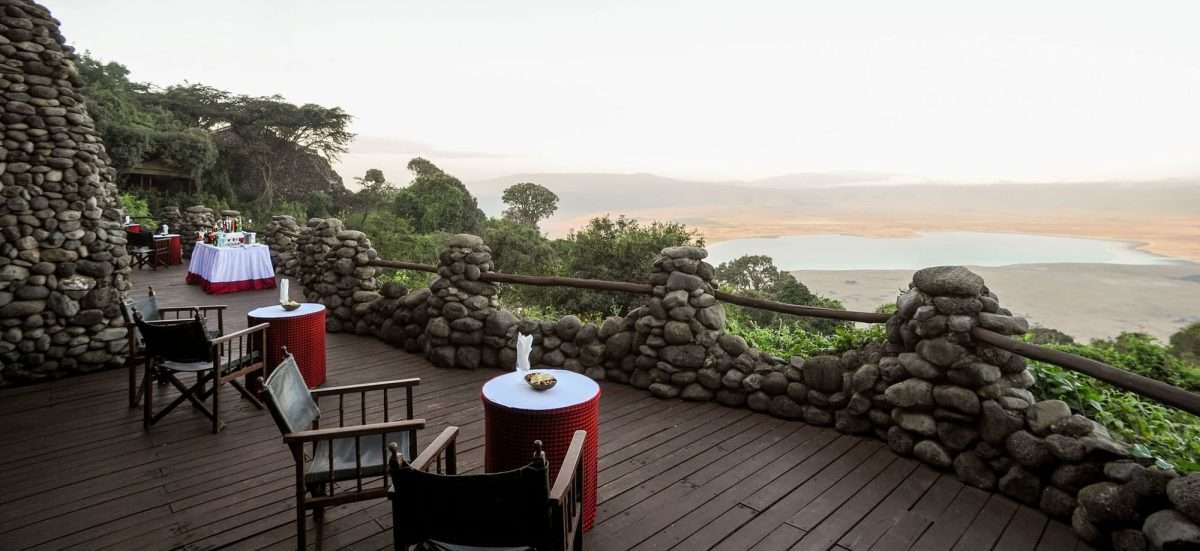
Built directly into the jagged western rim of the crater, cloaked in river stone and indigenous vines. 74 rooms and one suite, each with a private rock-enclosed balcony and uninterrupted views of the volcanic caldera 600 metres below. Central heating, a stone fireplace, a rim-flow pool, and a spa. Interiors draw inspiration from the cave paintings of Olduvai Gorge. This is TourwithPipi’s preferred rim lodge for its location and quality. Used on our 10 Days Great Migration Safari itinerary.
Ngorongoro Crater Lodge:

At approximately $3,000 per person per night this is among the most expensive lodges in Tanzania and is designed for ultra-luxury travelers. The architecture is theatrical and distinctive, with Maasai cultural elements woven into an opulent interior design. For honeymoons and special occasion trips at the very top of the market, it stands alone.
Lemala Ngorongoro Camp:
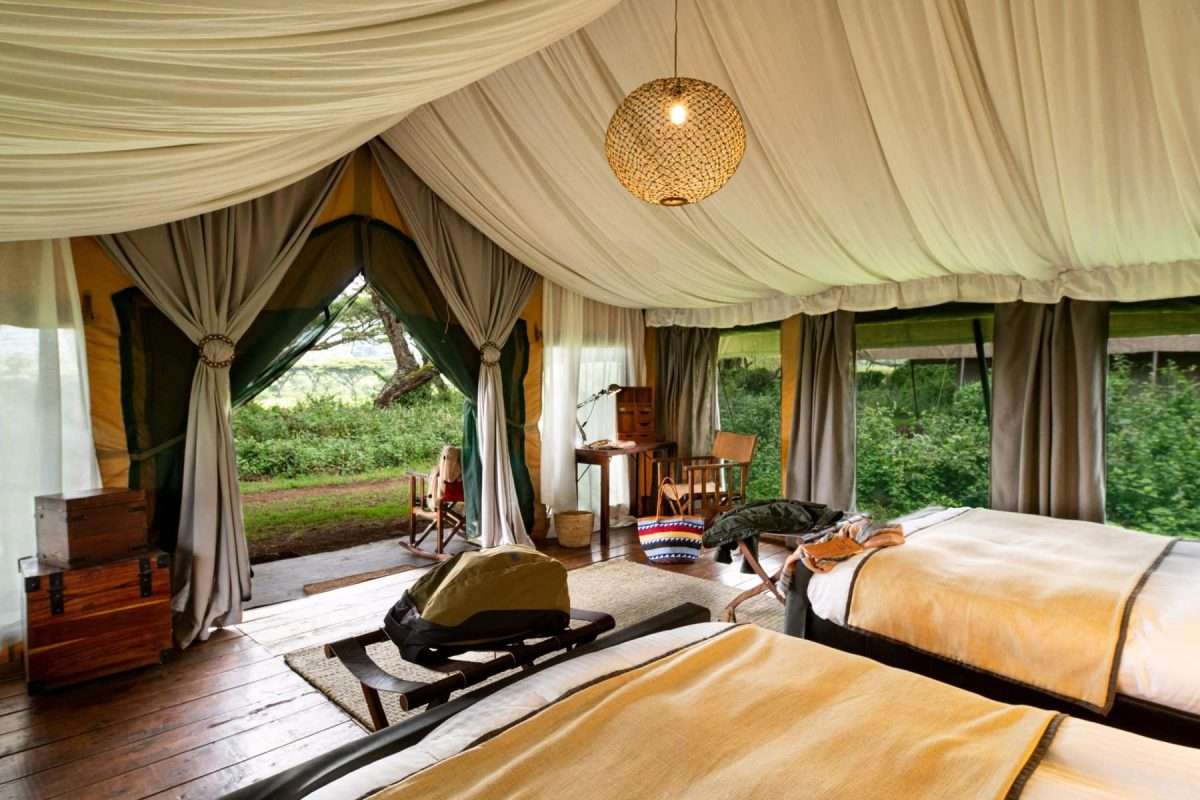
A more intimate tented camp option on the rim offering a genuine bush feel with crater views. Smaller capacity and a more personal atmosphere than the larger hotel-style rim properties.
Highland Lodges: Intimacy Over Views
Lodges in the Karatu highlands and surrounding area offer a quieter, more characterful experience at generally lower rates than rim properties. The best of these include Kitela Lodge, Gibbs Farm, and Plantation Lodge, all set on working farms or coffee plantations with considerable charm. The trade-off is a longer transfer to the crater gate each morning.
Kitela Lodge, Ngorongoro Highlands:

A warm farmhouse-character lodge with stone fireplaces, spacious rooms, and terraced gardens overlooking the highlands. Used on TourwithPipi’s 8-Day Calving Season Safari. Staying here the night before your crater descent means you can reach the gate in the first vehicles of the morning before the light changes.
Ngorongoro Safari Cost: What to Budget in 2026
Ngorongoro safari pricing is driven by lodge choice, season, group size, and whether you are combining it with the Serengeti and other parks as part of a circuit.
| Accommodation Level | Per Person Per Night | Notes |
|---|---|---|
| Budget rim lodge | $200 to $400 | Large, older properties, less personalised service |
| Mid-range rim or highland lodge | $400 to $700 | Good quality, private vehicle, full board |
| Luxury rim lodge | $700 to $1,500 | Prime rim position, expert guiding, intimate camps |
| Ultra-luxury (Crater Lodge) | $2,500 to $3,500+ | World-class design, maximum exclusivity |
In addition to lodge costs, Ngorongoro Conservation Area entrance fees are approximately $70 per adult per day. A 2-night Ngorongoro stay adds approximately $140 per adult in conservation fees on top of accommodation.
Most travelers visit the Ngorongoro Crater as part of a Tanzania Northern Circuit package rather than as a standalone destination. Combining it with the Serengeti, Tarangire, and Lake Manyara on a 7 to 10 day circuit gives the most balanced and cost-effective Tanzania safari experience. TourwithPipi’s Tanzania itineraries range from $3,299 per person to $5,749 per person for four people, all inclusive of accommodation, guide, vehicle, and all park fees.
Ngorongoro and Serengeti Safari: Why Most Travelers Combine Both
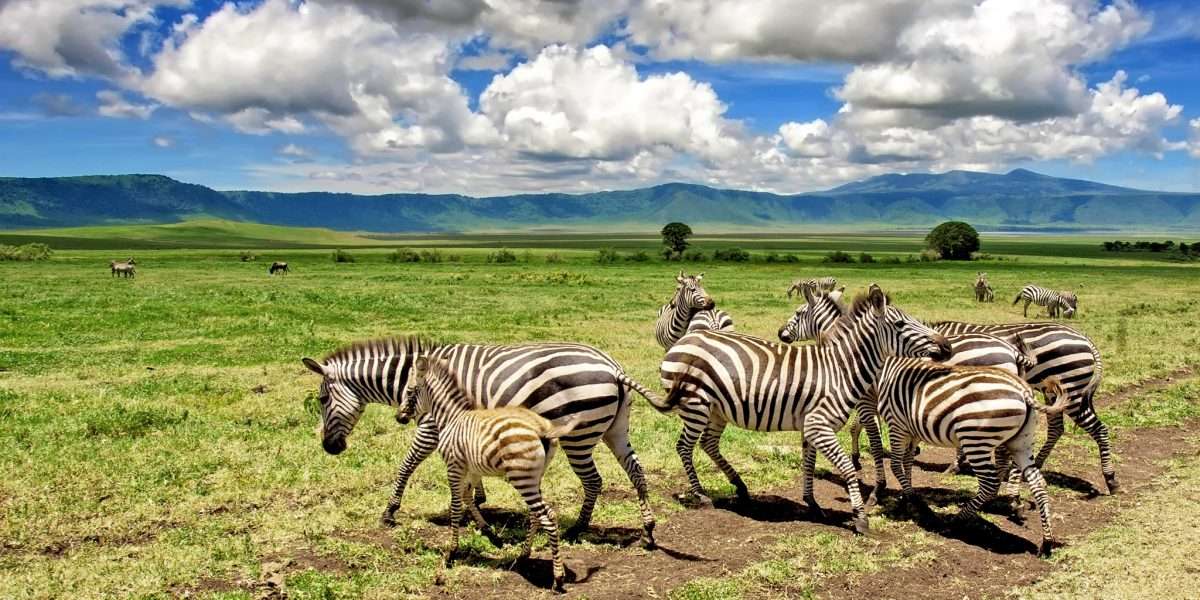
The Ngorongoro Crater and the Serengeti National Park are the two most iconic destinations on Tanzania’s Northern Circuit and they are typically visited together for good reason. The two destinations are adjacent and complementary. The Ngorongoro offers density and reliability. The Serengeti offers scale and the Migration.
On a 7 to 10 day Tanzania circuit, most well-designed itineraries allocate one full day inside the Ngorongoro Crater and three to seven nights across different Serengeti zones depending on the season. The standard routing drives west from Arusha through Lake Manyara and the Karatu highlands, across the Ngorongoro Conservation Area into the Serengeti, returning east the same way. A charter flight out of the Serengeti to Arusha is an efficient way to close the circuit without backtracking by road.
| Factor | Ngorongoro Crater | Serengeti National Park |
|---|---|---|
| Area | 260 km² crater floor | 14,763 km² |
| Wildlife | Permanent residents, highest density in Africa | Seasonal migration herds plus permanent residents |
| Big Five reliability | Very high, including black rhino | High, rhino rare outside conservation areas |
| Best feature | Enclosed caldera, guaranteed sightings | Scale, Great Migration, diverse predators |
| Recommended stay | 1 to 2 nights | 3 to 7 nights |
| Off-road driving | Not permitted | Limited in national park, permitted in private areas |
| Night drives | Not permitted in crater | Not in national park, permitted in private areas |
| Crowds | Can be busy at peak | Spread across a much larger area |
Ngorongoro Crater Safari TIP: Two nights in the Ngorongoro area is generally the right amount. One full crater day plus travel time on arrival and departure. Spending more than two nights here tends to become repetitive relative to the cost. Move to the Serengeti for the rest of your Tanzania time.
How TourwithPipi Includes the Ngorongoro Crater in Tanzania Safaris
Every TourwithPipi Tanzania itinerary that includes the Ngorongoro Crater is fully private. Your family or group travels in a dedicated 4×4 Land Cruiser with your own expert guide throughout. Lodge bookings are personally vetted by our Kenya-based team. Park fees, accommodation, meals, and all transfers are included in the package price. There are no shared vehicles, no group departure schedules, and no fixed pace other than your own.
7 Days Northern Tanzania Luxury Safari
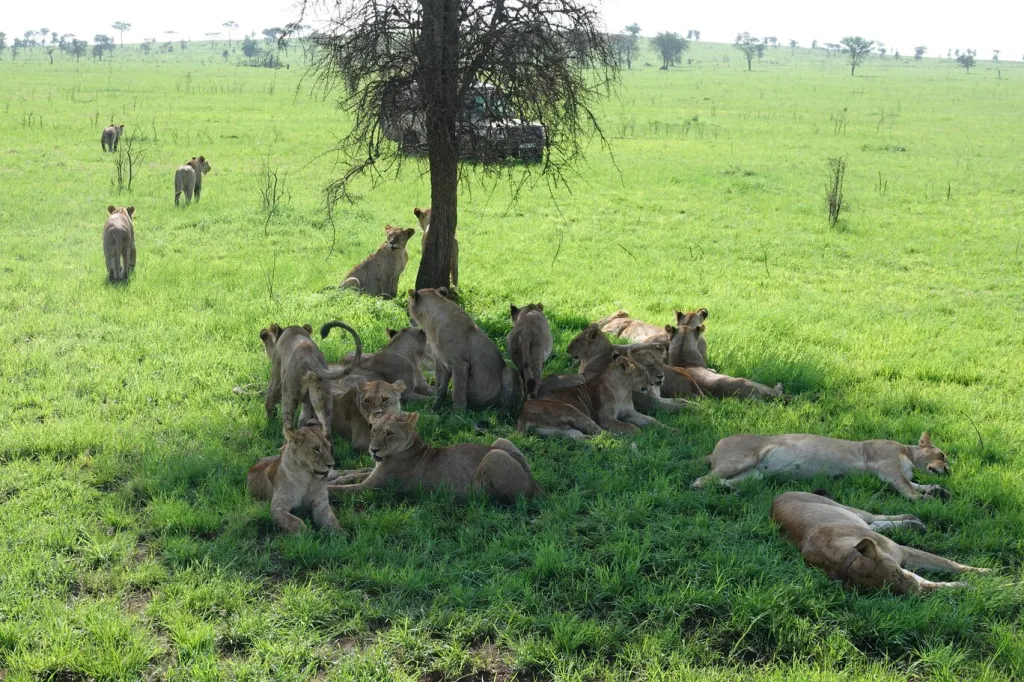
What it covers: Lake Manyara National Park, Serengeti National Park, Ngorongoro Crater, Tarangire National Park. A complete Northern Circuit covering all four of Tanzania’s most iconic wildlife destinations.
Ngorongoro element: One full day inside the Ngorongoro Crater with a descent at first light and rim-view accommodation overnight.
Lodges: Ngorongoro Oldeani Mountain Lodge, Kubu Kubu Tented Lodge (Serengeti), Conserve Safari Lodge (Tarangire)
Best for: First-time Tanzania visitors who want to see the complete Northern Circuit with the Ngorongoro Crater as a highlight.
| Group Size | Per Person | Total |
|---|---|---|
| 2 People | $3,749 | $7,498 |
| 4 People | $3,299 | $13,196 |
| 6 People | $2,979 | $17,874 |
View full 7-day itinerary and book
8-Day Tanzania Calving Season Safari
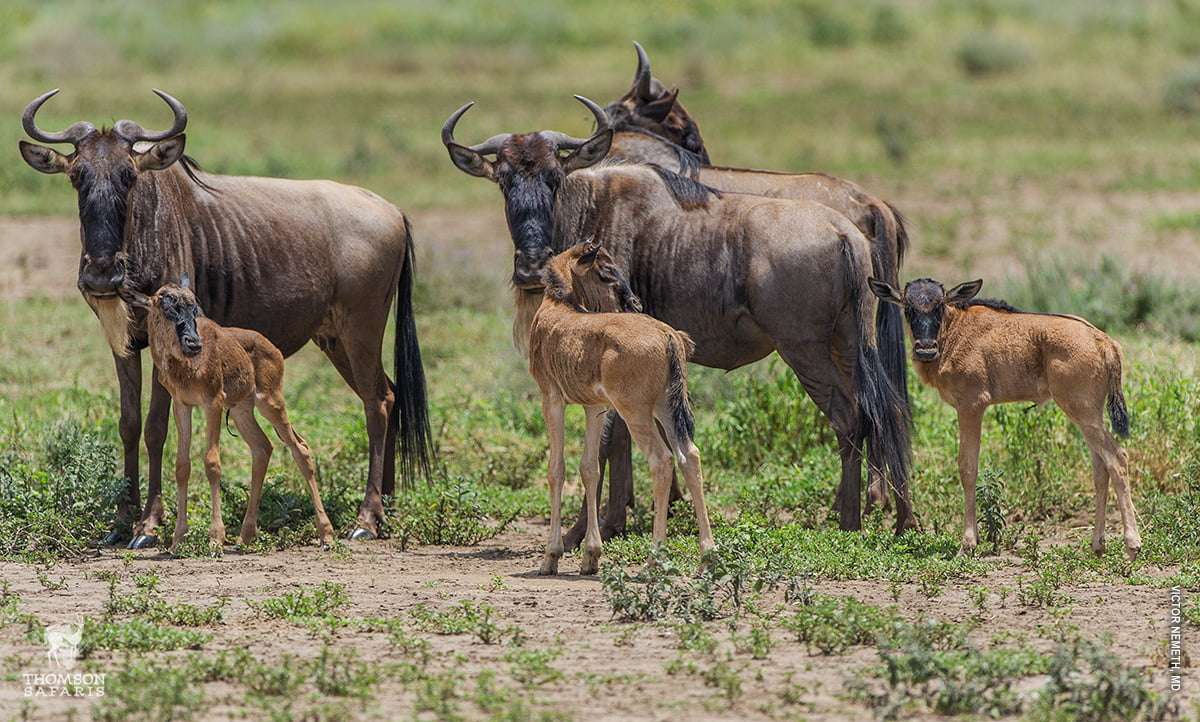
What it covers: Ngorongoro Crater, Central Serengeti, Ndutu Calving Plains, Tarangire National Park. Designed for January through March travel.
Ngorongoro element: A full Ngorongoro Crater game drive descending from the highland lodge at dawn for Big Five sightings before moving west toward the calving grounds at Ndutu.
Lodges: Kahawa House (Arusha), Kitela Lodge (Ngorongoro Highlands), Kubu Kubu Tented Lodge (Central Serengeti), Ndutu Under Canvas, Elephant Springs Luxury Lodge (Tarangire)
Best for: Travelers visiting in January to March who want the Ngorongoro Crater combined with the extraordinary calving season on the Ndutu Plains.
| Group Size | Per Person | Total |
|---|---|---|
| 2 People | $5,429 | $10,858 |
| 4 People | $4,679 | $18,716 |
| 6 People | $4,449 | $26,694 |
View full 8-day itinerary and book
10 Days Great Migration Safari in Tanzania

What it covers: Tarangire National Park, Ngorongoro Highlands, Ngorongoro Crater, Central Serengeti, Northern Serengeti with two full days at the Mara River.
Ngorongoro element: One full day inside the Ngorongoro Crater following arrival at the rim from Tarangire, including a Maasai village stop and an Olduvai Gorge visit en route to the Central Serengeti.
Lodges: Arusha Serena Hotel, Nyikani Camp Tarangire, Serena Hotel Ngorongoro, Nyikani Camp Central Serengeti, Nyikani Migration Camp Kogatende
Best for: Peak season travelers from July through October who want both the Ngorongoro Crater and the Mara River crossings in a single 10-day Tanzania circuit.
| Group Size | Per Person | Total |
|---|---|---|
| 2 People | $6,549 | $13,098 |
| 4 People | $5,749 | $22,996 |
| 6 People | $5,479 | $32,874 |
View full 10-day itinerary and book
TourwithPipi Tanzania Package Comparison Including Ngorongoro
Other Destinations to Combine with a Ngorongoro Safari
Tarangire National Park
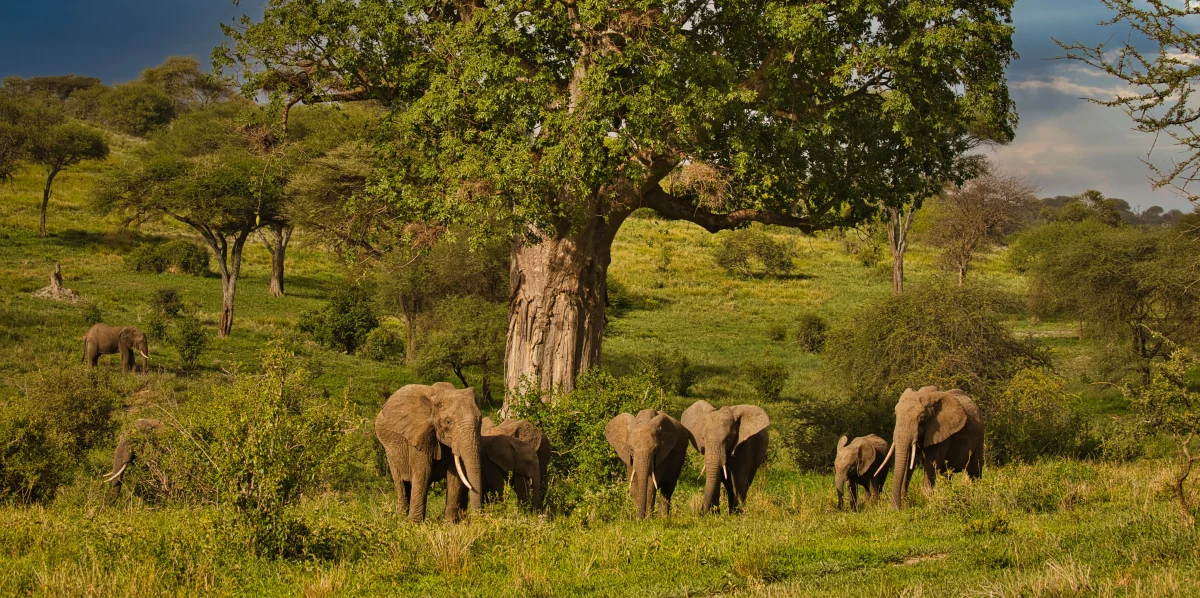
Tarangire sits approximately 2 hours south-east of the Ngorongoro Conservation Area by road and covers 2,850 km² of baobab-dotted savannah. It holds over 5,000 elephants, making it one of the highest elephant-density parks in northern Tanzania. Tarangire is a natural opening or closing destination for any Northern Circuit itinerary that includes the Ngorongoro Crater and Serengeti, and TourwithPipi includes it on all three Tanzania packages.
Lake Manyara National Park
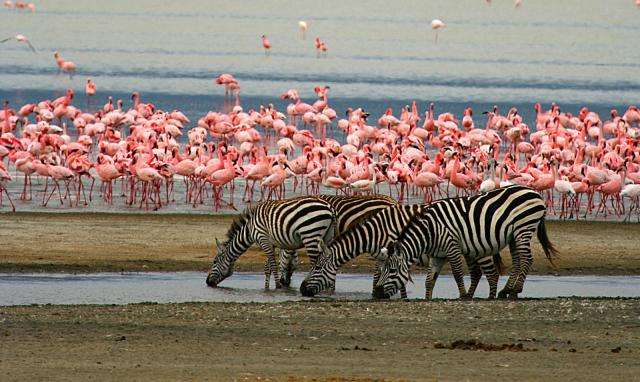
Lake Manyara is a compact but highly rewarding park between Arusha and the Ngorongoro Conservation Area. It covers 325 km² including the lake itself and is famous for tree-climbing lions, large baboon troops, hippos, and extraordinary birdlife along the waterline. It makes a natural half-day or full-day stop on the drive into the Ngorongoro region from Arusha.
Zanzibar Beach Extension
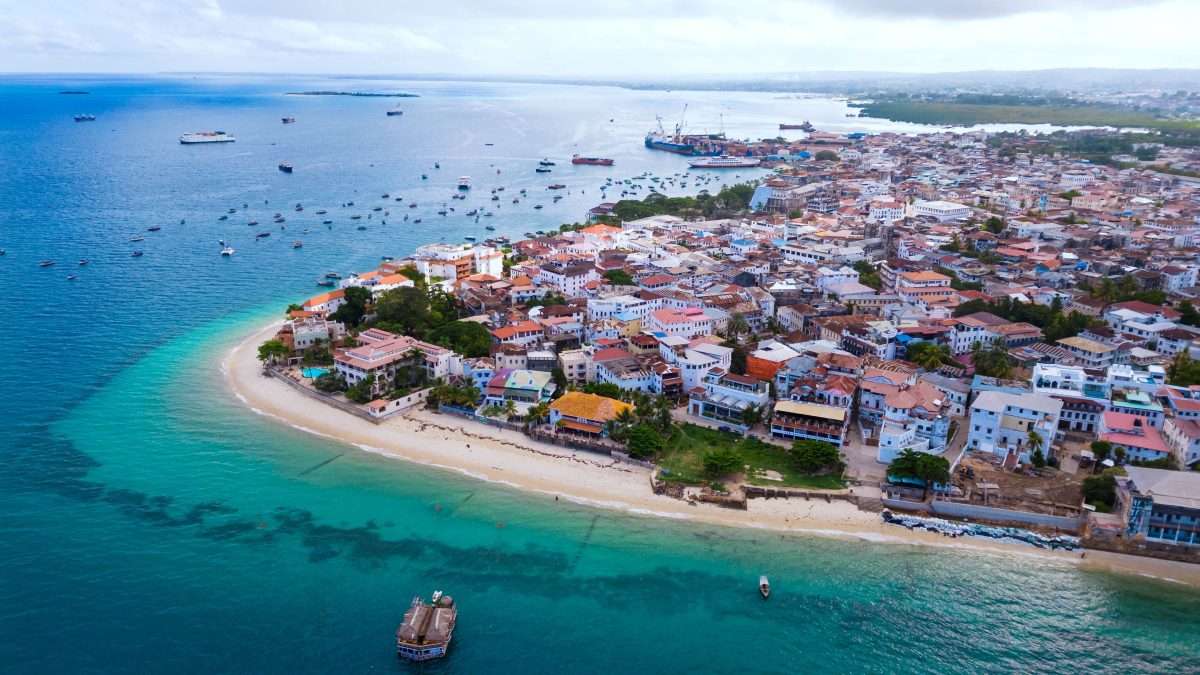
Many travelers completing a Tanzania Northern Circuit that includes the Ngorongoro Crater and Serengeti end their trip with three to five nights on Zanzibar Island. The contrast between the volcanic highlands and crater floor of the Ngorongoro and the white-sand beaches of the Indian Ocean is exactly right. A domestic flight from Arusha to Zanzibar takes approximately 60 to 90 minutes.
Practical Tips for Your Ngorongoro Safari
- Arrive early at the gate: The crater descent gates open at dawn. Being there when they open means you descend before most other vehicles and have the first hour of game viewing in significantly quieter conditions. Rim lodge guests have a meaningful advantage here.
- Dress in layers: The crater rim sits at 2,300 metres and is genuinely cold in the early morning, especially during June through September. Temperatures on the crater floor warm up by mid-morning but the dawn descent requires a serious warm layer. Pack a fleece or down jacket regardless of your travel month.
- Spend at least one full day inside the crater: A half-day descent is not enough. The crater is 260 km² and an unhurried full day gives your guide time to find multiple species without rushing between sightings. One full day is the minimum; two days allows for a morning focus on predators and an afternoon focus on the lake and hippo pools.
- Combine with the Serengeti: The Ngorongoro Crater and Serengeti National Park are adjacent. Visiting both on a single 7 to 10 day Tanzania circuit is the standard approach and gives you the density of the crater paired with the scale and migration of the Serengeti.
- Closed-sided vehicles are required: Unlike the Serengeti and Masai Mara where open-sided vehicles are common in private areas, the Ngorongoro Crater requires vehicles with closed sides. This is a national regulation. TourwithPipi’s Land Cruisers are equipped with pop-up roofs and adequate window space for photography.
- Do not underestimate altitude: The crater rim sits at 2,300 metres. Some travelers feel mild altitude effects including headaches and fatigue, especially if arriving from sea level. Staying hydrated and avoiding alcohol on the first night helps. If combining with Kilimanjaro or any highland trekking, consult a physician beforehand.
Frequently Asked Questions About Ngorongoro Crater Safari
What is the best time to visit the Ngorongoro Crater?
The Ngorongoro Crater is excellent year-round because the wildlife is permanent. For the quietest experience with fewer vehicles on the crater floor, visit in January or May. July and August offer peak dry season conditions with the clearest skies for photography but also the most visitors. Flamingos are most numerous from November through May when Lake Magadi water levels are higher.
How much does a Ngorongoro safari cost in 2026?
Lodge accommodation ranges from $200 to $3,500 per person per night depending on the property. Conservation area entrance fees add approximately $70 per adult per day. As part of a Tanzania Northern Circuit, TourwithPipi’s all-inclusive private packages for four people start from $13,196 for a 7-day circuit and go up to $22,996 for a 10-day Great Migration itinerary that includes the crater.
How long should you spend at the Ngorongoro Crater?
One full day inside the crater is the minimum for a meaningful experience. Two nights in the area allows for a dawn descent with time to return to specific areas without rushing. Spending more than two nights here is rarely necessary as the crater’s 260 km² is manageable in a day. Most travelers allocate one to two nights as part of a longer Tanzania circuit.
Can you see the Big Five in the Ngorongoro Crater?
Yes. The Ngorongoro Crater is one of the most reliable Big Five destinations in Tanzania. Lions, elephants, leopards, buffalo, and black rhinos are all present in permanent residence. Black rhino sightings are significantly more probable here than in the open Serengeti, with approximately 20 to 30 individual rhinos on the crater floor.
What is the difference between the Ngorongoro Crater and the Serengeti?
The Ngorongoro Crater is a compact 260 km² enclosed caldera with permanently resident wildlife at very high density. The Serengeti covers 14,763 km² of open savannah with seasonal migration herds and large predator populations. The Ngorongoro offers guaranteed sightings including black rhino. The Serengeti offers scale, the Great Migration, and more diverse habitats. Most Tanzania safari circuits include both.
Do you need a closed-sided vehicle for the Ngorongoro Crater?
Yes. A national regulation requires all vehicles inside the Ngorongoro Crater to be closed-sided. Open-sided safari vehicles are not permitted. TourwithPipi’s 4×4 Land Cruisers are all closed-sided with pop-up roofs and large windows for photography and wildlife viewing.
Is the Ngorongoro Crater safe to visit?
Yes. The Ngorongoro Conservation Area is a safe and well-managed destination visited by thousands of international travelers every year. Wildlife drives are conducted from inside vehicles with professional guides. The crater regulations are strictly enforced. Medical evacuation insurance is recommended as with any remote safari destination in Tanzania.
What is Olduvai Gorge and should I visit?
Olduvai Gorge is a 48-kilometre ravine in the Ngorongoro Conservation Area where Louis and Mary Leakey discovered some of the oldest known human ancestor fossils, including Homo habilis, dating back 1.75 million years. The on-site museum is genuinely interesting and the stop takes approximately one hour. TourwithPipi includes Olduvai on the drive between the crater and the Serengeti on several Tanzania itineraries.
Can I do a walking safari in the Ngorongoro Crater?
Walking inside the crater itself is not permitted except at designated picnic sites. However, guided walking safaris are available in the wider Ngorongoro Conservation Area, including hikes to the Olmoti and Empakaai craters. Some lodges in the highland and Karatu area also offer walking activities on their property.
What should I wear for a Ngorongoro Crater safari?
The crater rim sits at 2,300 metres and early morning descents are cold, especially from June through September. Bring a warm fleece or down jacket, neutral-colored safari clothes in khaki or olive tones, comfortable walking shoes, sunscreen, and a wide-brimmed hat. Temperatures warm up on the crater floor by mid-morning but the descent hour requires serious layering.
Ngorongoro Safari Summary
- The Ngorongoro Crater is the world’s largest intact volcanic caldera, formed approximately 3 million years ago. It covers 260 km² at 1,800 metres altitude and holds approximately 25,000 large animals in permanent residence, giving it the highest wildlife density of any park in Africa.
- The Ngorongoro Crater is the best single location in Tanzania for Black Five sightings. Black rhinos, large-tusked elephants, lion prides, buffalo herds, hippos, and leopards are all present year-round.
- There is no bad time to visit the Ngorongoro Crater because the wildlife does not migrate. However January and May are the quietest months for crowds while July through October is peak season. Flamingo numbers are highest from November through May.
- Activities inside the crater are limited to game drives in closed-sided vehicles. The wider Conservation Area offers guided hikes to Olmoti and Empakaai craters, Maasai village visits, and Olduvai Gorge.
- Rim lodges give you the earliest gate access and the unmatched experience of watching the crater from your veranda. The Ngorongoro Serena Safari Lodge is TourwithPipi’s preferred rim property for its position and quality.
- Two nights in the Ngorongoro area is the recommended stay. One full crater day plus travel on arrival and departure. More than two nights tends to become repetitive relative to the cost compared to the wider Serengeti.
- A Ngorongoro and Serengeti safari combined on a 7 to 10 day Tanzania circuit is the standard and most rewarding approach. The Ngorongoro offers density and certainty while the Serengeti offers scale and the Great Migration.
- Ngorongoro safari prices range from $400 to $3,500 per person per night for accommodation depending on lodge category. Conservation area fees add approximately $70 per adult per day. TourwithPipi’s all-inclusive Tanzania packages for four people range from $13,196 to $22,996.
- TourwithPipi offers three private Tanzania packages that include the Ngorongoro Crater: the 7-day Northern Circuit at $3,299 per person, the 8-Day Calving Season Safari at $4,679 per person, and the 10 Days Great Migration Safari at $5,749 per person for groups of four.
- Every TourwithPipi Ngorongoro safari is 100% private with a dedicated 4×4 Land Cruiser, expert guide, full board, all conservation fees, and airport transfers. Backed by Virtuoso certification and 5.0 stars on TripAdvisor and Google.


