
The Tana River: Kenya’s Biggest River
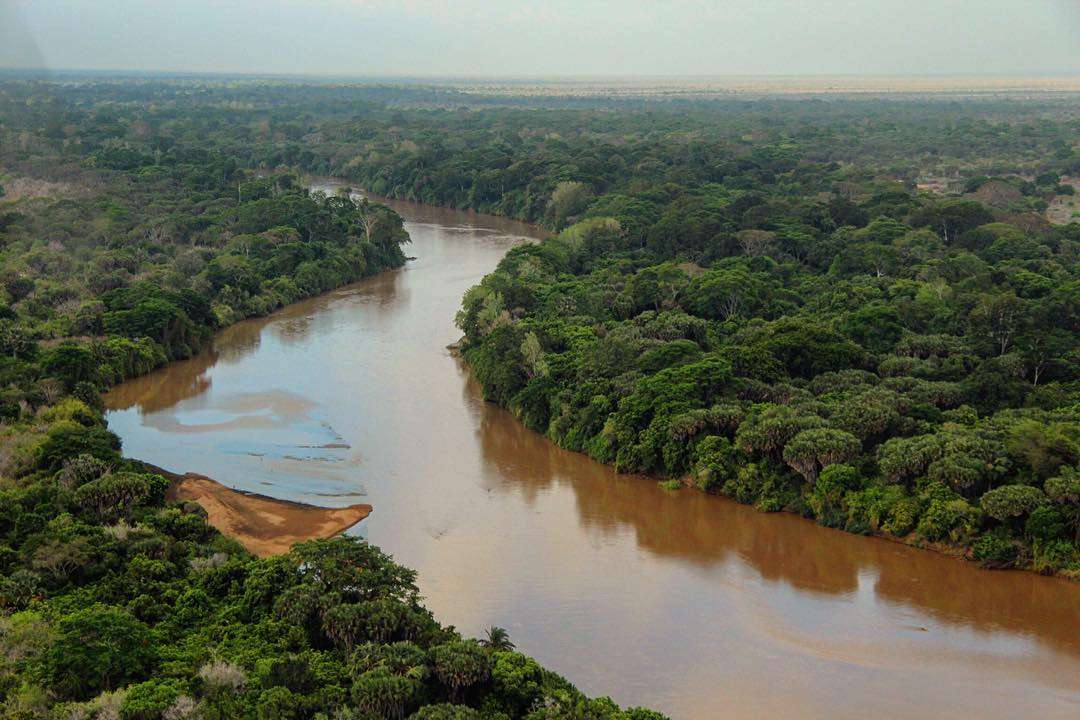
The Tana River begins high on the Aberdare Range and the snow-fed slopes of Mount Kenya, then winds roughly 1,000 kilometers southeast through Nyeri, Embu, Garissa, and Tana River County before reaching the Indian Ocean near Kipini.
Its economic role is hard to overstate. The Kindaruma, Masinga, and Gitaru dams along its course generate a significant share of Kenya’s hydroelectric power, and the Bura and Hola irrigation schemes depend entirely on its water. The river also feeds the Tana River Primate Reserve, one of the only places on Earth to see the endangered Tana River red colobus and Tana River mangabey.
For safari travelers, the Tana’s most rewarding stretch runs through Meru National Park and neighboring Kora National Park, where the George Adamson Bridge crosses the river at the parks’ shared border. The bridge is named for the British conservationist George Adamson, who, along with his wife Joy, raised Elsa the lioness in Meru National Park, a story that later became the book and film Born Free. The river also draws serious whitewater rafting interest closer to Nairobi, with a commercially run section plus additional kayaking stretches.
Major tributaries feeding the Tana include the Sagana, Ragati, Kathita, Thika, and Chania rivers, several of which carry their own hydropower and irrigation significance before joining the main river.
Athi-Galana-Sabaki River: Kenya’s Second-Longest
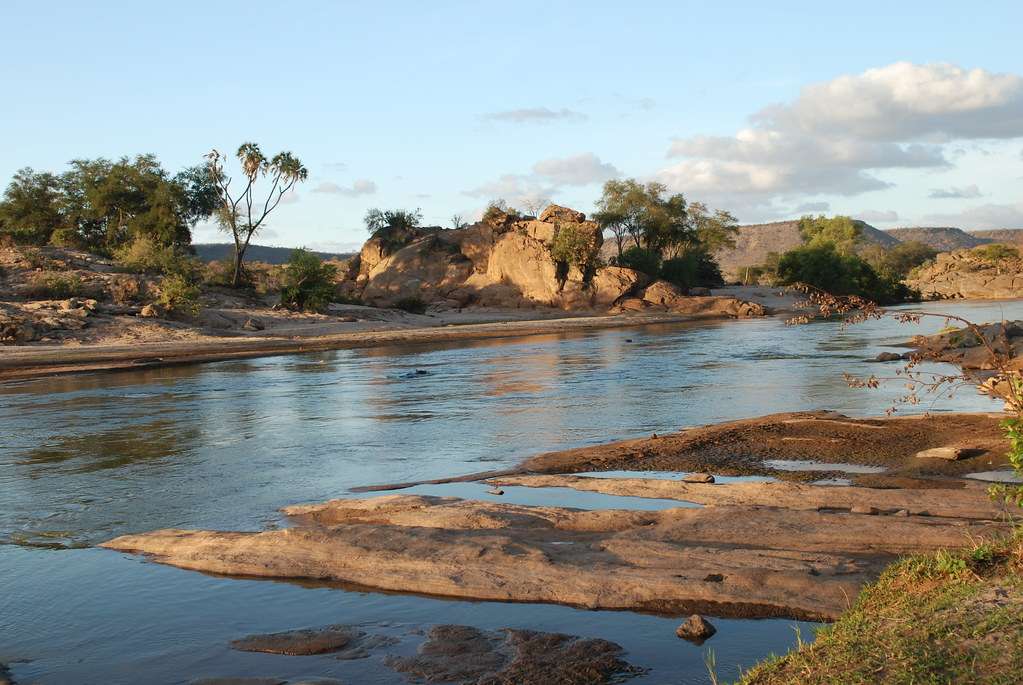
The Athi-Galana-Sabaki is really one river with three names, changing identity as it crosses the country. It rises as the Athi River in the Gatamaiyu Forest near Nairobi, flows southeast through Machakos, Makueni, and Kajiado, then becomes the Galana River after merging with the Tsavo River inside Tsavo East National Park. Near the coast, it takes its third name, the Sabaki River, before reaching the Indian Ocean close to Malindi.
At around 390 kilometers, it’s Kenya’s second-longest river system, and its stretch through Tsavo East is where most travelers actually encounter it, spotting hippos, crocodiles, and a wide range of birdlife along its banks. Local folklore ties the river to a legendary warrior named Galana, said to have died in a duel whose spilled blood carved the river’s course down the mountain, a story still told along its length today.
Ewaso Ng’iro (Ewaso Nyiro) River: Lifeline of the North
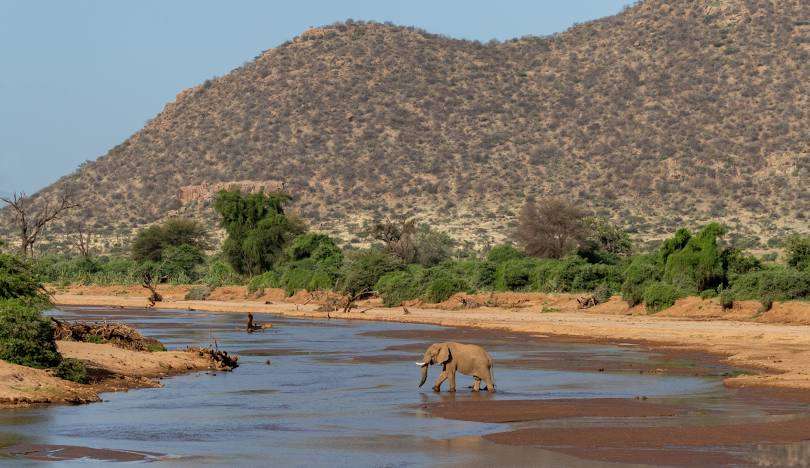
Ewaso Ng’iro and Ewaso Nyiro are the same river, just spelled differently. In the Samburu and Maa languages, “ewaso” means river or water, and “ng’iro” or “nyiro” means brown, so the name translates simply to “brown river.”
Two separate rivers share this name, and mixing them up is easy to do. The Ewaso Ng’iro North rises on Mount Kenya and the Aberdares, flows through Laikipia, Isiolo, Samburu, and Wajir, and drains into the Lorian Swamp in Kenya’s arid northeast. The Ewaso Ng’iro South starts in the Mau Escarpment and flows the opposite direction, into Lake Natron across the border in Tanzania.
The northern river is the one most safari travelers encounter, since it’s the water source anchoring Samburu, Buffalo Springs, and Shaba National Reserves. Its banks draw the “Samburu Special Five,” species found here and rarely elsewhere on a standard Kenya safari: the reticulated giraffe, Grevy’s zebra, gerenuk, Beisa oryx, and Somali ostrich.
Mara River: Kenya’s Most Famous River

At only about 395 kilometers, the Mara River is short by Kenya’s standards, but no river in the country carries more global recognition. It rises in the Mau Forest in Narok County, flows southwest through the Masai Mara National Reserve, crosses into Tanzania’s Serengeti, then loops back toward Lake Victoria.
Its fame comes almost entirely from one event: the Great Migration river crossings, when wildebeest and zebra herds plunge through crocodile-filled water, typically from July through October. Beyond the spectacle, the river is a year-round lifeline for wildlife and the pastoralist communities along its banks, though it faces real pressure from deforestation and erosion upstream.
Turkwel and Kerio Rivers: Kenya’s Northern Frontier
Both rivers drain into Lake Turkana and define the character of Kenya’s arid north.
The Turkwel River flows from the Cherangani Hills near Mount Elgon through West Pokot and Turkana counties, cutting through rugged canyons before reaching Lake Turkana. The Turkwel Gorge Dam along its course is a major hydroelectric project, and the river supports elephants, giraffes, lions, and hippos along an otherwise dry landscape.
The Kerio River runs about 350 kilometers from the Tugen Hills, forming a natural boundary between the Elgeyo Escarpment and the Tugen Hills as it flows north toward Lake Turkana. Its valley, the Kerio Valley, has become a growing ecotourism destination in its own right, known for its scenery and biodiversity.
Nzoia, Yala, and Sondu-Miriu: Western Kenya’s Lake Victoria Rivers
Several rivers in western Kenya feed Lake Victoria and anchor the region’s farming and fishing communities.
The Nzoia River, at about 257 kilometers, drains the Cherangani Hills through Kenya’s sugar belt before reaching Lake Victoria near Port Victoria. The Yala River runs about 219 kilometers from the Nandi Escarpment through the Yala Swamp, an important wetland for birdlife, before also reaching the lake. The Sondu-Miriu River, roughly 185 kilometers from the Mau Forest Complex, is best known for the Sondu-Miriu Hydropower Project, a meaningful contributor to Kenya’s national electricity grid.
Gura River: Africa’s Fastest River
The Gura River is short, only about 70 kilometers, but it holds a genuinely remarkable title: it’s widely reported as the fastest-flowing river in Africa, earning it the nickname “the Usain Bolt of rivers.”
The speed comes from elevation, not size. Gura drops roughly 1,100 meters over just 30 kilometers as it descends from the Aberdare Range, passing over Gura Falls and Karuru Falls, among Kenya’s tallest waterfalls, before joining the Sagana River, a major Tana River tributary, near Karatina. It’s a popular spot for riverine treks and remains one of Kenya’s most scenic, least-known natural landmarks.
Nairobi River: The Capital’s River, Now Being Restored
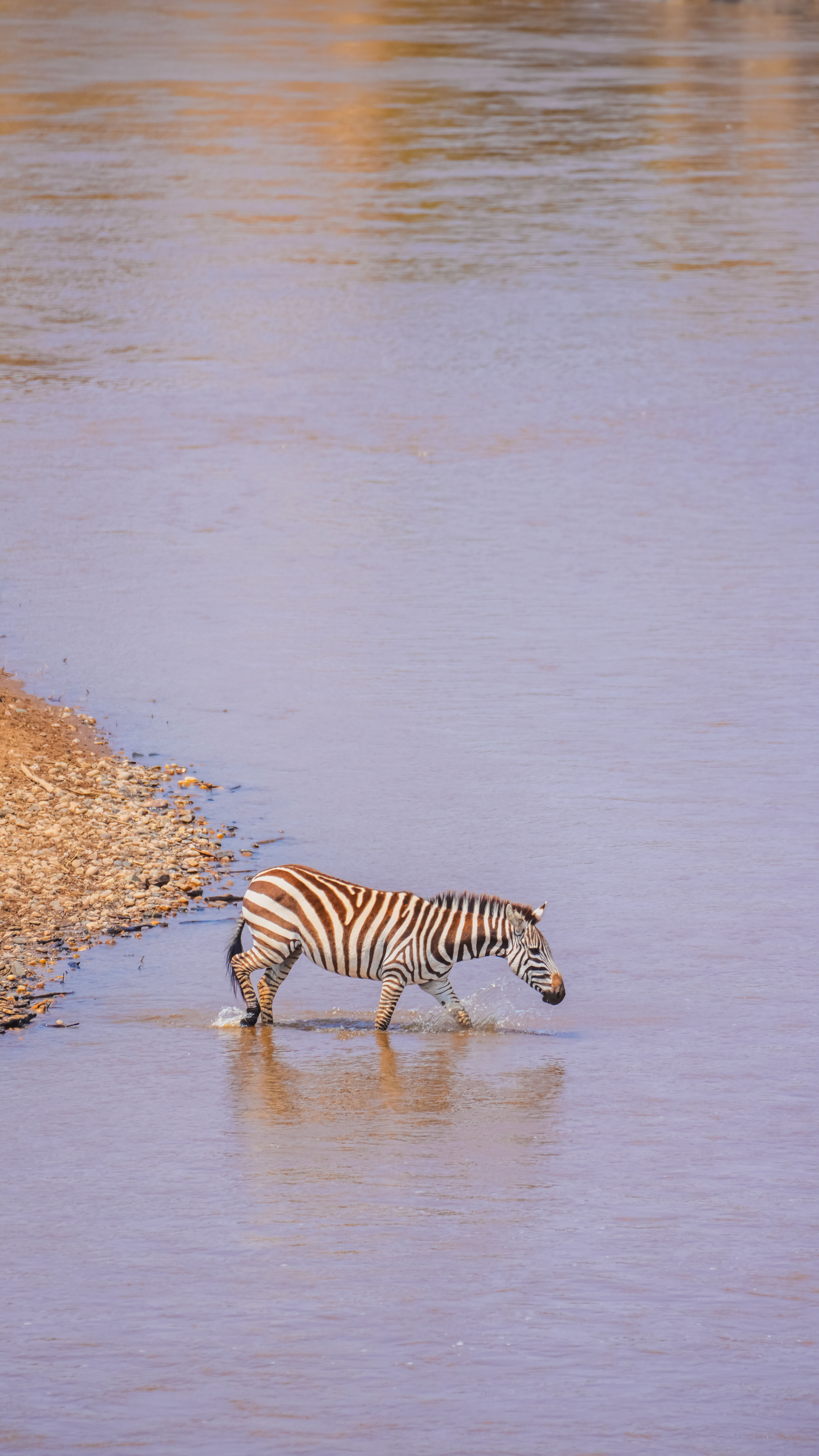
The Nairobi River is smaller and far less scenic than Kenya’s other major rivers, but it’s arguably the most consequential to daily life, running directly through the capital and its roughly 5 million residents. It rises from the Ondiri Swamp near Kikuyu and flows through Nairobi and Kiambu before joining the Athi River system.
Decades of untreated sewage, industrial waste, and solid waste dumping left the river heavily polluted, but that’s actively changing. The Nairobi Rivers Basin Regeneration Programme, a presidential initiative launched in 2024 and gazetted under the Nairobi Rivers Commission, is now underway with a budget in the tens of billions of Kenyan shillings. The program targets roughly 175 kilometers of river corridor, covering the Nairobi, Ngong, and Mathare Rivers through to the Thwake Dam in Makueni County, with sewer line construction, dredging, and riverbank rehabilitation ongoing through 2026 and a targeted completion date of January 2027.
Thika River: Home of Fourteen Falls
The Thika River is a major Tana River tributary, rising from the Aberdare Range and flowing through Kiambu County, where it also supplies water to Nairobi via the Thika Dam. Its best-known feature is Fourteen Falls, near Thika town, where the river drops over a wide cliff face split into 14 distinct cascades, giving the falls their name. It’s one of the more accessible natural landmarks near Nairobi and a popular stop for visitors combining a city itinerary with a short scenic detour.
Kenya’s Rivers for Whitewater Rafting and Kayaking
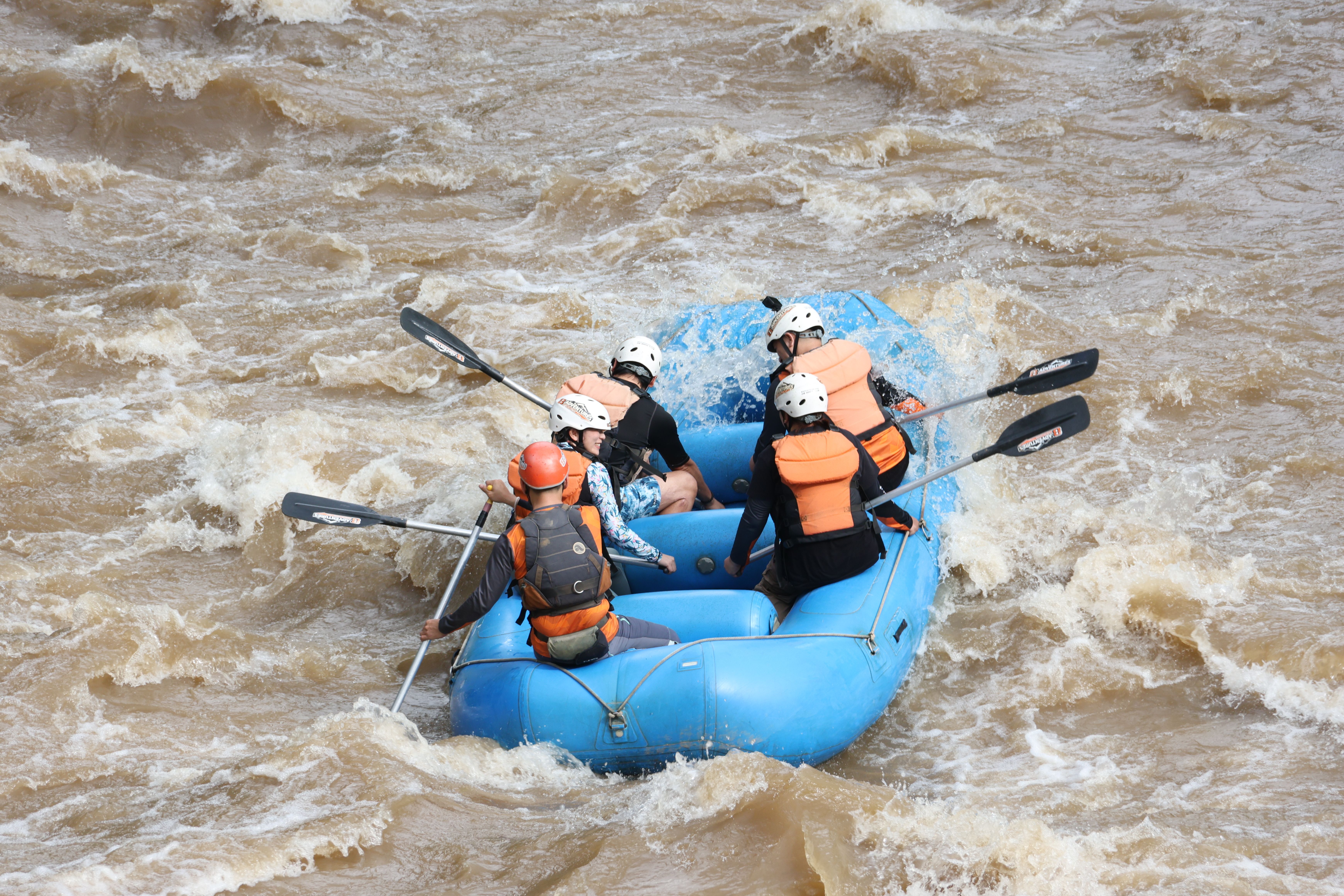
Kenya’s whitewater scene is small but genuinely excellent, and largely overlooked outside a dedicated paddling community. A handful of rivers anchor it, mostly running class 2 to 5 rapids depending on the season and section.
- Tana River: the most accessible option near Nairobi, with a commercially operated rafting section plus additional kayaking stretches for more experienced paddlers.
- Mathioya River (North and South): close to the Tana, offering around 150 kilometers of combined runnable whitewater with notably consistent water levels year-round.
- Thiba River: near Mount Kenya, a roughly 40-kilometer run that mixes beginner-friendly sections with more serious drops.
- Sondu River: a major river draining Lake Victoria, home to what’s considered one of Kenya’s biggest rapids, with several distinct sections to run.
- Yala River: flows through Kakamega Forest, sometimes described as a smaller, browner version of the White Nile in character.
- Nandi River: draining the Nandi Hills, known for its braided channels and near-endless line options for paddlers.
How Many Rivers Are There in Kenya?
The honest answer depends on what counts as a river. Kenya has well over 50 major perennial rivers, the permanent, year-round rivers most guides and maps focus on, but the true number climbs past 100 once seasonal streams and smaller tributaries are included. There’s no single official count, since the difference between a “river” and a “stream” isn’t always drawn the same way from one source to the next, which is why you’ll see different totals cited across different guides.
Does Kenya Have the Nile River?
No, the Nile itself doesn’t pass through Kenya, but the country still feeds it indirectly. Several western Kenyan rivers, including the Nzoia, Yala, and Mara, drain into Lake Victoria, which is the primary source of the White Nile. So while you won’t find the Nile on a map of Kenya, water that starts in Kenya’s highlands does eventually become part of it.
Plan a River-Based Safari in Kenya
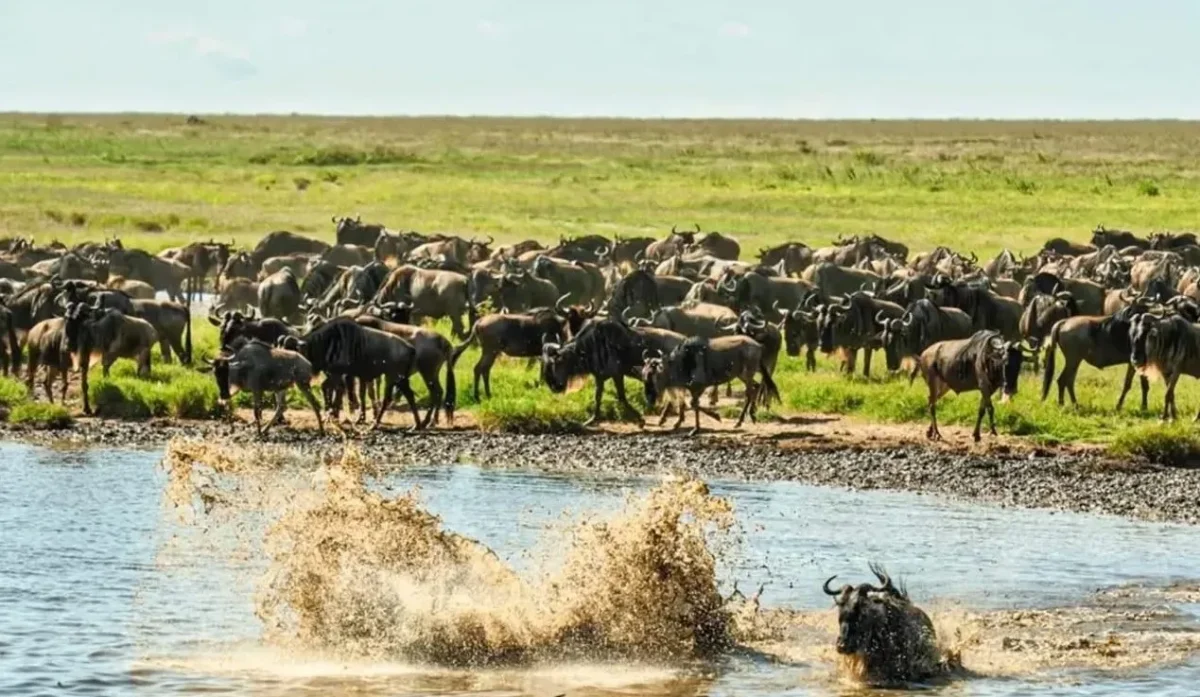
Kenya’s rivers aren’t just scenery, they’re where some of the best wildlife viewing happens, from Mara River crossings during the Great Migration to riverside game drives along the Ewaso Ng’iro in Samburu. Explore our Kenya safaris for itineraries built around the Mara, Samburu, and Meru’s river country.


