
There are 3 living species of elephant, African savanna, African forest, and Asian. Once you count the Asian elephant’s 3 recognized subspecies and 2 further pygmy elephant types, that adds up to 7 distinct kinds of elephant found in the wild today.
All of them belong to the family Elephantidae, the last surviving family of a much larger order that once included mammoths and mastodons. Every living elephant on Earth today falls into just two genera within that family: Loxodonta, the African elephants, and Elephas, the Asian elephant and its subspecies.
How Many Species of Elephants Are There?
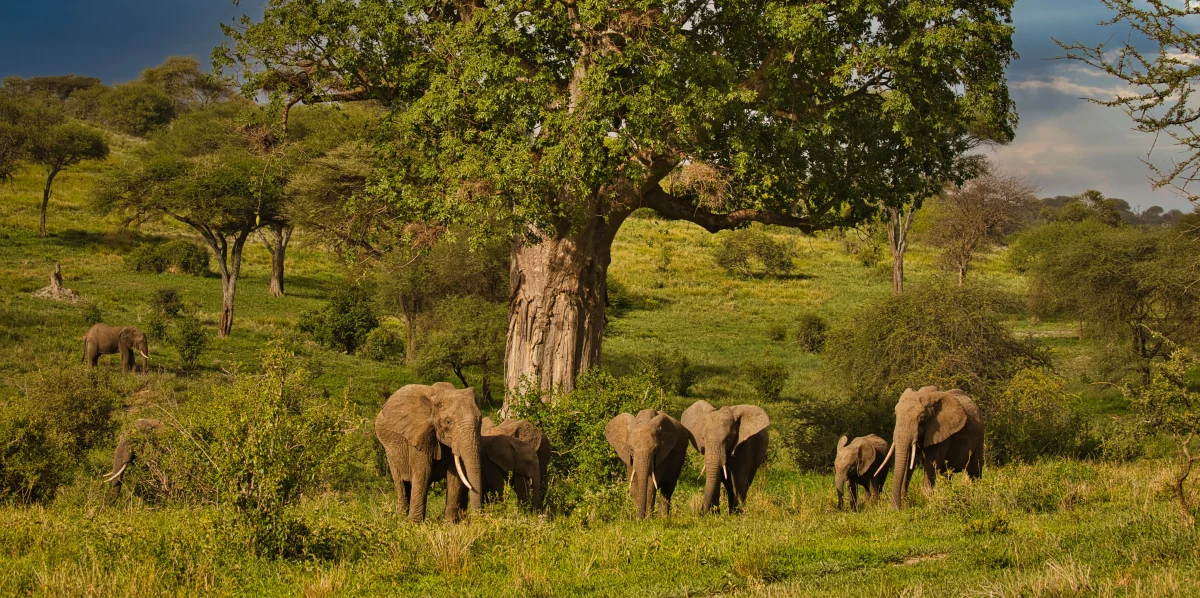
Three. Biologists currently recognize the African savanna elephant (Loxodonta africana), the African forest elephant (Loxodonta cyclotis), and the Asian elephant (Elephas maximus) as separate species. The two African species were only confirmed as genetically distinct in the early 2000s, and a full genetic comparison found them as different from each other as the Asian elephant is from the woolly mammoth, despite looking broadly similar from a distance.
The Asian elephant is further split into 3 subspecies: the Indian elephant, the Sri Lankan elephant, and the Sumatran elephant. Add the African pygmy elephant and the Borneo pygmy elephant, both considered local forms rather than official subspecies, and you get the 7 total types of elephants people usually mean when they ask how many kinds exist.
Elephant Types at a Glance
African Elephants: Two Distinct Species
African Savanna Elephant
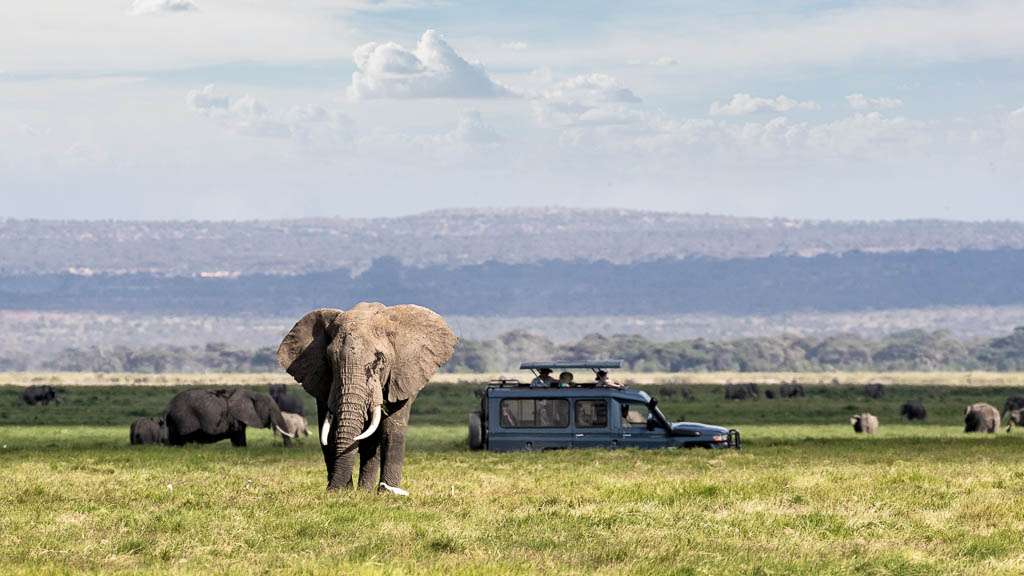
The African savanna elephant, also called the African bush elephant, is the largest living land animal on Earth. Adult bulls reach up to 3.96 meters (13 feet) at the shoulder and can weigh over 10 tons. It’s one of Africa’s Big Five, and the elephant most people picture when they think of an African safari.
Savanna elephants range across 37 African countries, in habitats from open grassland to woodland, wetland, and even farmland at the edges of protected areas. They live in matriarch-led family groups of related females and calves, while adult bulls typically live alone or in loose bachelor groups.
Kenya and Tanzania hold some of the strongest savanna elephant populations anywhere on the continent. In Kenya, Amboseli National Park is famous for elephants photographed against Mount Kilimanjaro’s backdrop. In Tanzania, Tarangire National Park holds some of East Africa’s largest dry-season elephant concentrations, with herds gathering along the Tarangire River when water elsewhere runs low.
African Forest Elephant
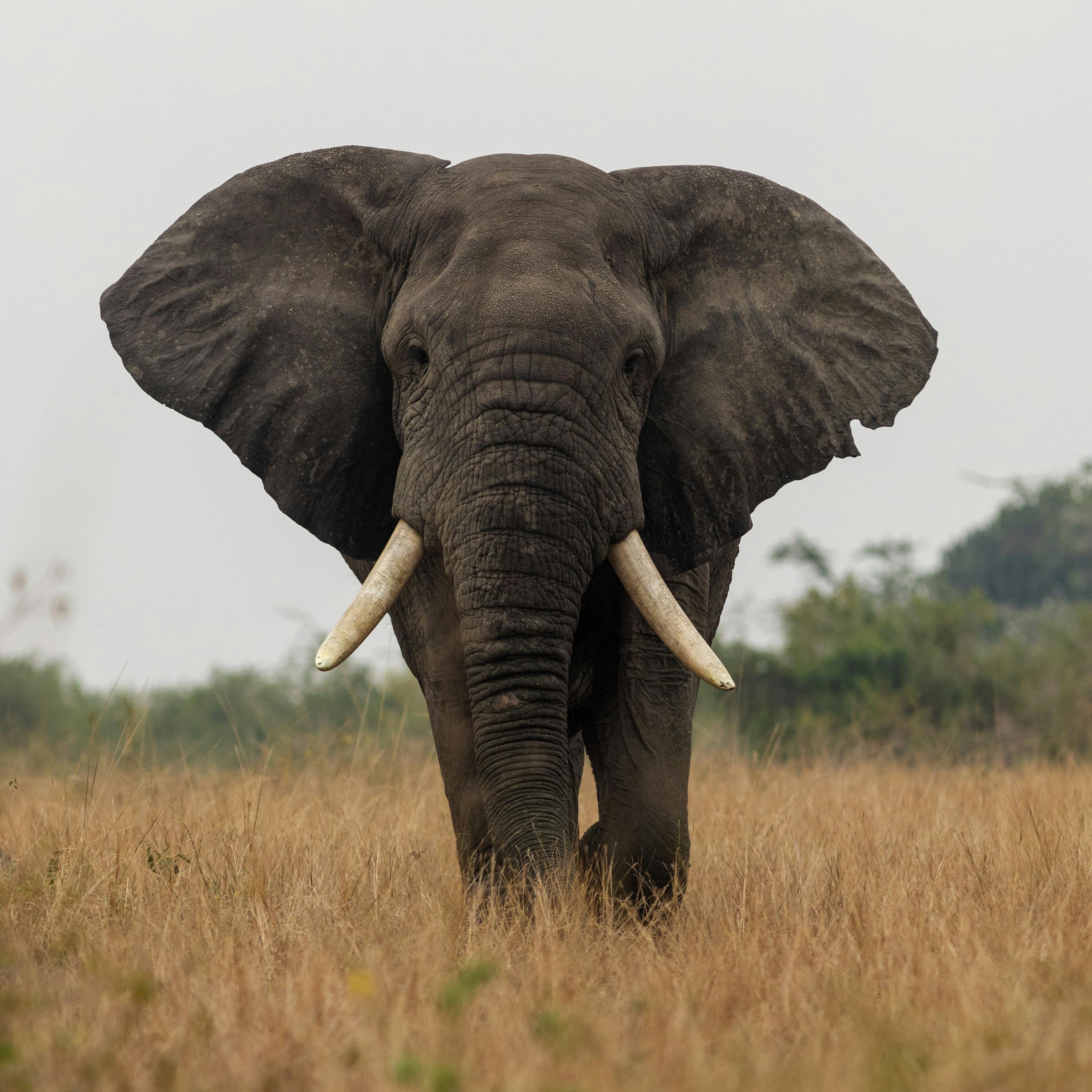
The African forest elephant is smaller, darker, and far more elusive than its savanna cousin, standing up to 2.4 meters (7 ft 10 in) at the shoulder. It lives in the dense rainforests of Central and West Africa, and its tusks are straighter and point downward rather than curving outward.
This is the species with the most current, and most encouraging, population data of any elephant type. A November 2025 IUCN status report, the first to assess forest elephants using DNA-based survey methods, put the population at 135,690 individuals, with the true range likely between about 99,000 and 172,000. That’s a meaningful upward revision from the roughly 100,000 estimated in 2016, though IUCN has been clear the increase reflects better counting methods rather than an actual population rebound. The species remains Critically Endangered, and two-thirds of the global population lives in Gabon, with another 20 percent in the Republic of Congo.
Mayumba National Park in Gabon is one of the best places to see forest elephants in the wild, and one of the most unusual. The park sits where the rainforest meets the Atlantic Ocean, and it’s one of the few places on Earth where elephants can be seen foraging directly on the beach.
African Pygmy Elephant
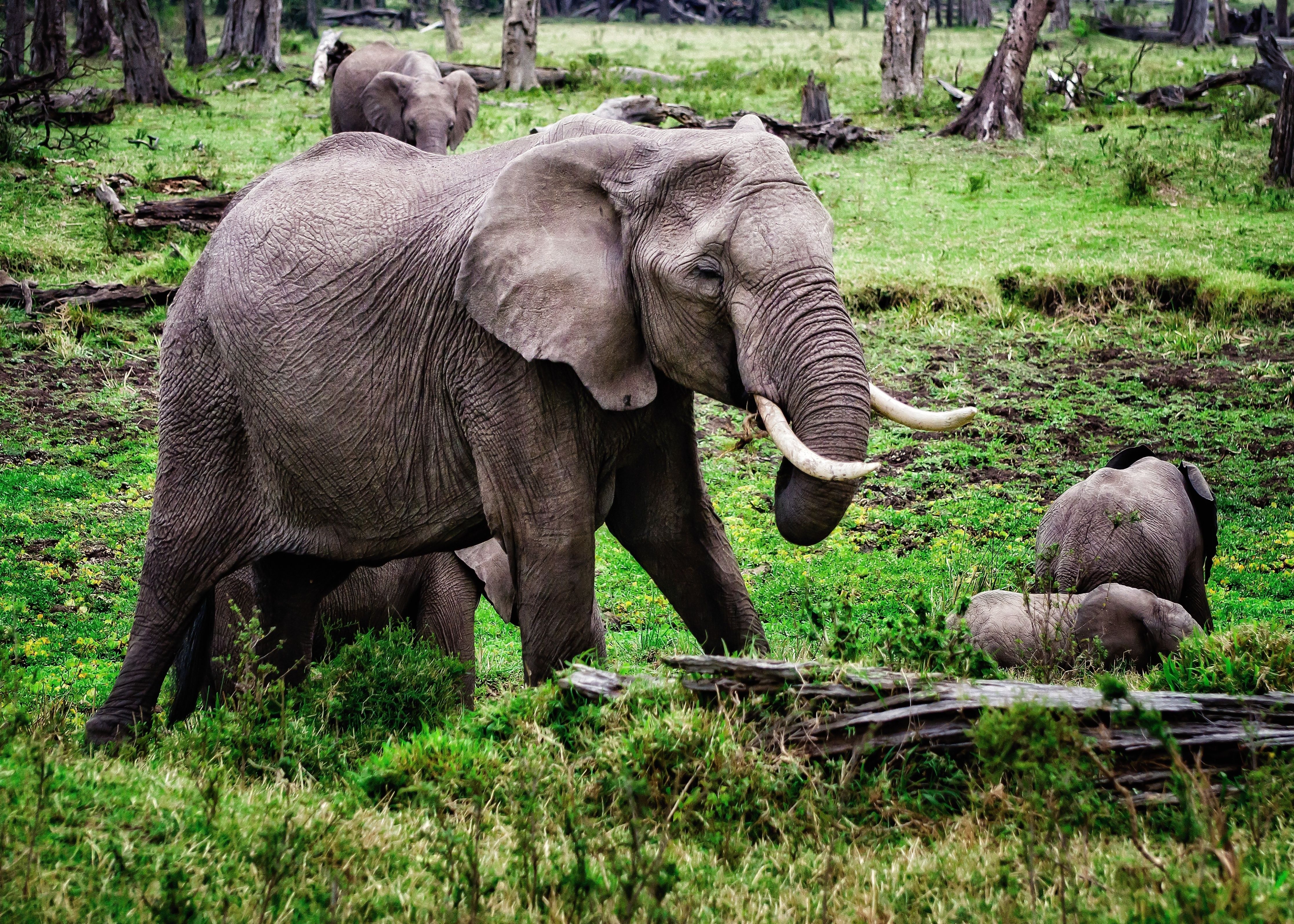
The African pygmy elephant isn’t recognized as its own species or subspecies, but it’s a genuinely distinct and poorly understood local form. It shares the swampy rainforests of Central Africa with forest elephants and appears to be more water-loving, based on the limited sightings recorded.
Genetic testing in 2003 settled a long-running debate: DNA extracted from museum specimens labeled as the separate species Loxodonta pumilio matched African forest elephant DNA, confirming the pygmy elephant as a smaller form of the same species rather than its own lineage. Researchers believe its reduced size traces back to climate variation over the last 2.6 million years, rather than a distinct evolutionary path.
There’s no established safari circuit built specifically around African pygmy elephant sightings. They share the same swampy Central African rainforest range as forest elephants, mainly in Gabon and the Republic of Congo, but confirmed sightings remain rare enough that most of what’s known comes from a handful of historical records rather than regular tourism.
Asian Elephants and Their Subspecies
The Asian elephant is smaller than either African species but is still the largest land mammal in Asia. It’s easy to tell apart from African elephants by its smaller, rounded ears and the two bulges on its forehead. Scientists recognize 3 living subspecies.
Indian Elephant
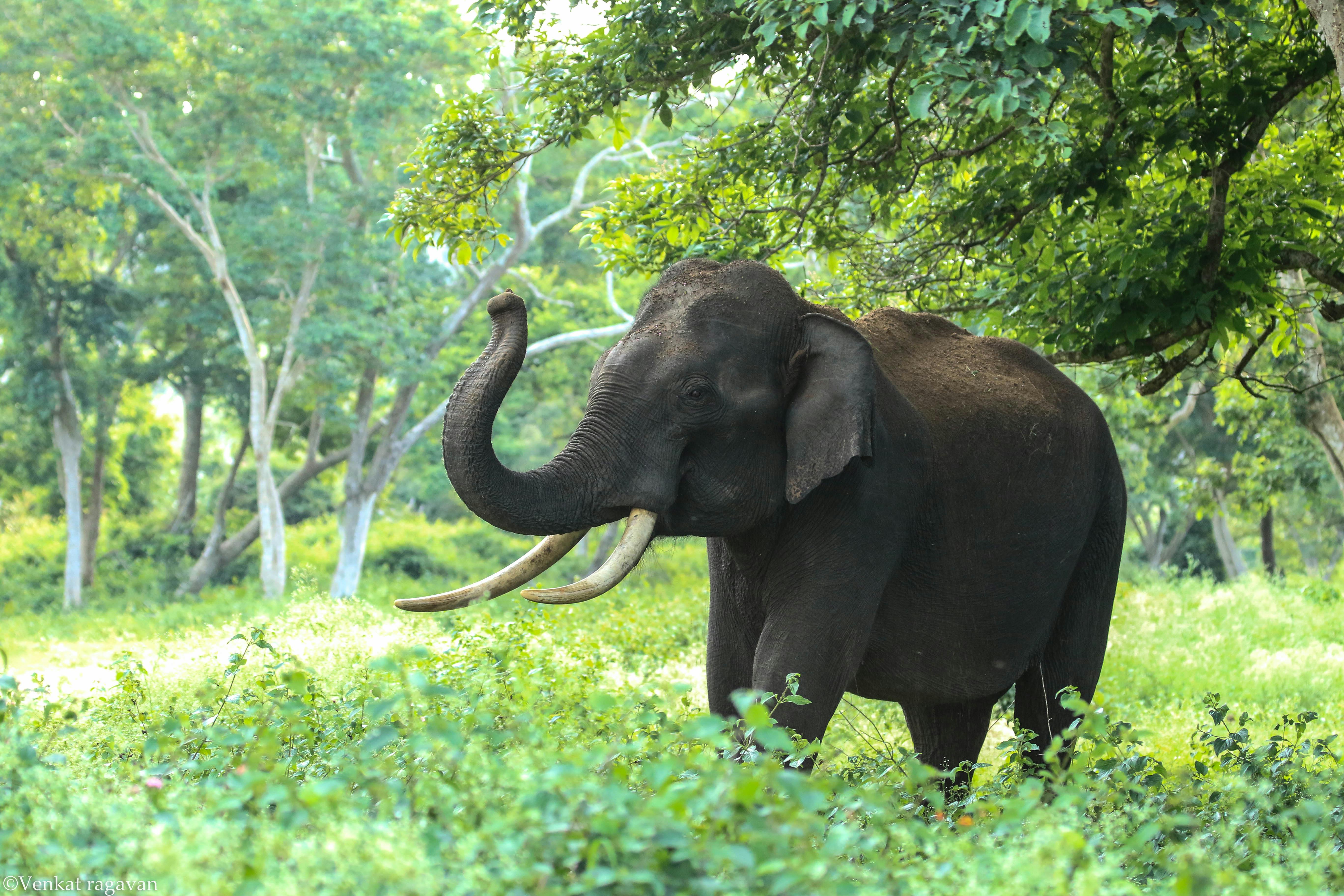
Despite the name, the Indian elephant ranges well beyond India, into Thailand, Myanmar, Bhutan, the Malay Peninsula, Laos, China, Vietnam, and Cambodia. India itself holds the largest population of any elephant subspecies in the world, estimated at 28,000 to 31,000 individuals.
Thailand’s Khao Yai National Park is one of the most reliable places to see Indian elephants outside India, since the park’s roads double as elephant routes. In India, Bandipur, Nagarhole, Corbett, Periyar, and Kaziranga National Parks are consistently strong for sightings.
Sri Lankan Elephant
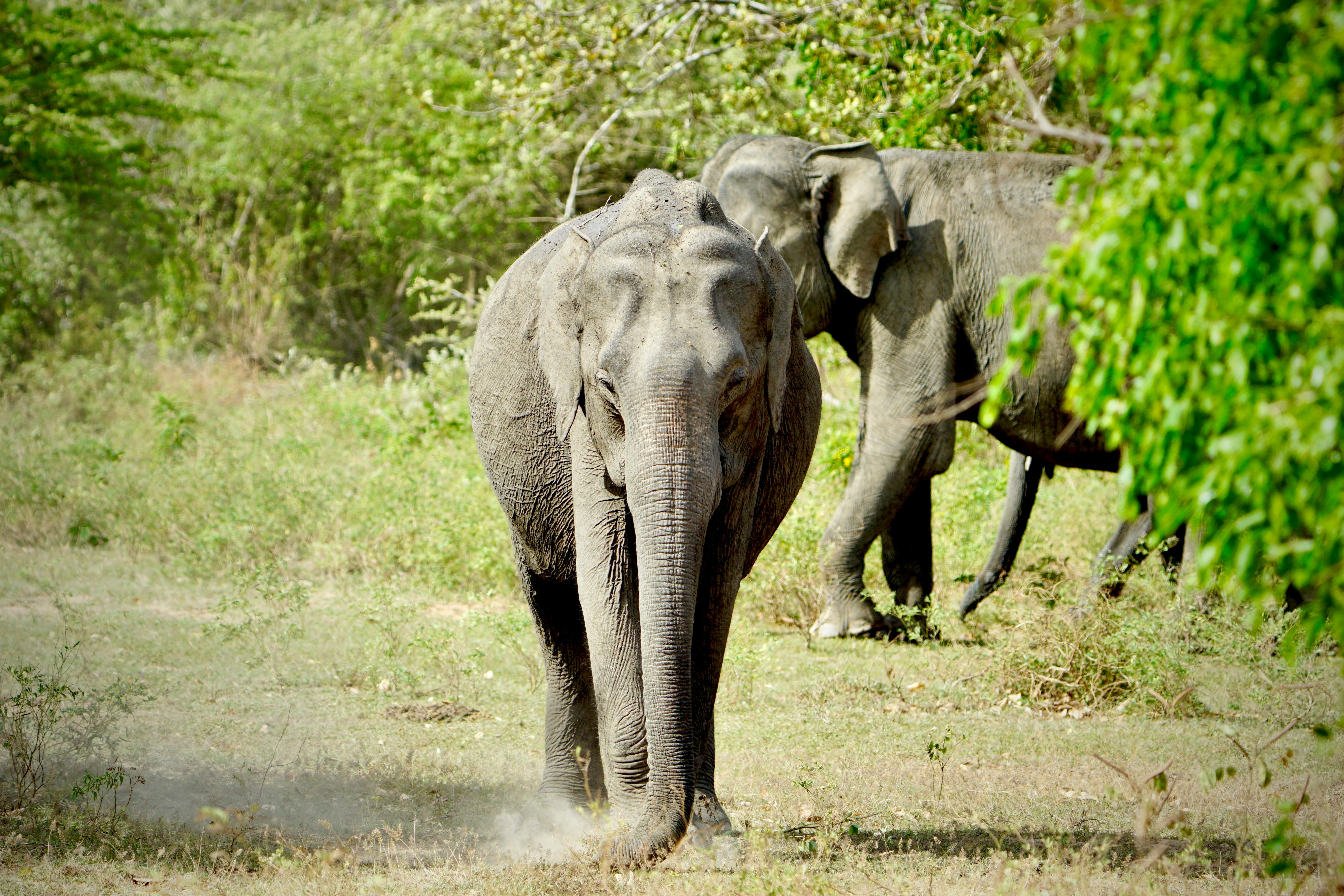
The Sri Lankan elephant is the largest and darkest of the three Asian subspecies, reaching up to 3.5 meters (11.5 feet) tall, and it’s found only on the island of Sri Lanka. Around 7,500 remain in the wild today, and because Sri Lanka’s total land area is relatively small, the island has the highest density of wild Asian elephants anywhere in the world.
The standout wildlife event here is “the Gathering,” an annual dry-season congregation at Minneriya and Kaudulla National Parks, where up to 300 elephants converge on two permanent water reservoirs between August and October as other water sources dry up. It’s the highest concentration of elephants recorded anywhere on Earth.
Sumatran Elephant
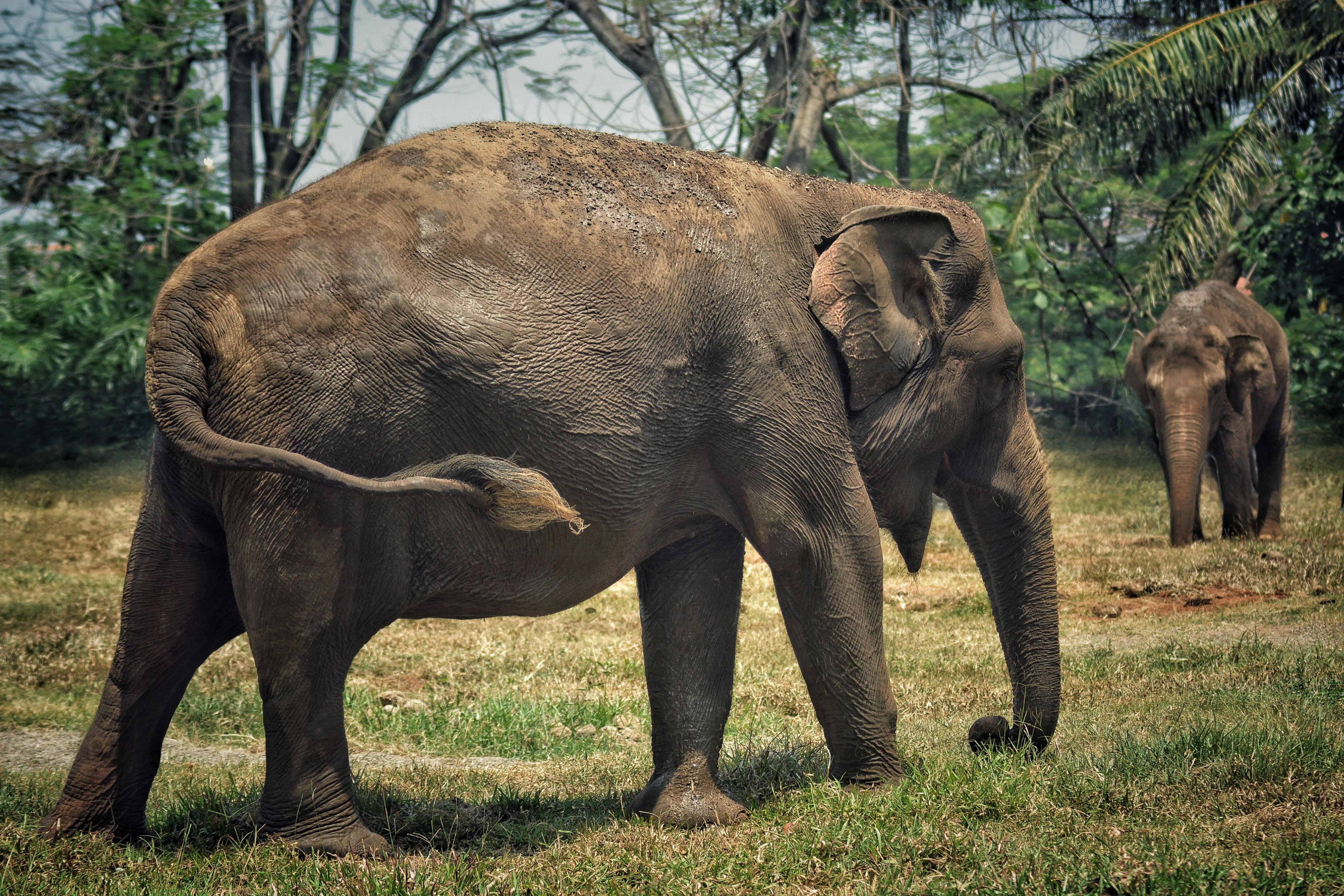
The Sumatran elephant is the smallest of the three Asian subspecies and the most severely threatened, with its population down by at least 80 percent over the past 75 years. It’s endemic to the island of Sumatra in Indonesia, and sightings are considerably harder to come by than for the other Asian subspecies. Way Kambas, Gunung Leuser, and Bukit Barisan Selatan National Parks offer the best chances.
Borneo Pygmy Elephant
The Borneo pygmy elephant is taxonomically classified as Asian elephant, but at up to 2.9 meters (9.5 feet) at the shoulder, it runs about 25 percent smaller than mainland Asian elephants. It’s found only in the northeastern part of Borneo.
Its origins were long assumed to trace back to elephants introduced by the Sultan of Sulu in the 18th century, but DNA analysis later showed Borneo elephants are genetically distinct enough to suggest a much older colonization, likely during a period of low sea levels roughly 11,700 to 2.58 million years ago, after which they became isolated as sea levels rose. Sabah, Malaysia’s state on Borneo, retains enough forest cover that sightings are possible in Danum Valley, Deramakot Forest Reserve, and along the Kinabatangan River.
African Elephant vs Asian Elephant: What’s the Difference?
Beyond the two African species being distinct from each other, African and Asian elephants as a group differ in several visible ways:
| Feature | African Elephants | Asian Elephants |
|---|---|---|
| Weight | 4,000 to 7,500 kg | 3,000 to 6,000 kg |
| Back shape | Highest point at the shoulders | Concave, with highest point at the arch of the back |
| Head shape | Flat on top | Two hemispherical bulges on the forehead |
| Ears | Larger relative to body size | Smaller relative to body size |
| Tusks | Both males and females typically grow tusks | Only some males grow tusks |
| Trunk tip | Two finger-like projections | One finger-like projection |
| Toenails | 4 on front feet, 3 on back | 5 on front feet, 4 on back |
What Are Baby, Male, and Female Elephants Called?
Elephant naming follows the same terms across every species and subspecies. A male is a bull, a female is a cow, and a baby is a calf. A group of elephants is called a herd, usually made up of related cows and their calves, led by the oldest and most experienced female, the matriarch. Bulls generally leave the herd at adolescence and live alone or in small bachelor groups afterward.
Why Don’t Pygmy Elephants Have a Conservation Status?
Because official conservation status is assigned to recognized species and subspecies, what scientists call evolutionarily significant units, and the African pygmy elephant and Borneo pygmy elephant don’t currently qualify as either. That doesn’t reflect how threatened they are. It reflects how conservation categorization works. Both pygmy forms face the same core threats as their parent species: habitat loss, poaching, and shrinking, fragmented ranges, without a formal status that would otherwise draw more targeted conservation funding and attention.
See Different Types of Elephant On A Safari With TourwithPipi
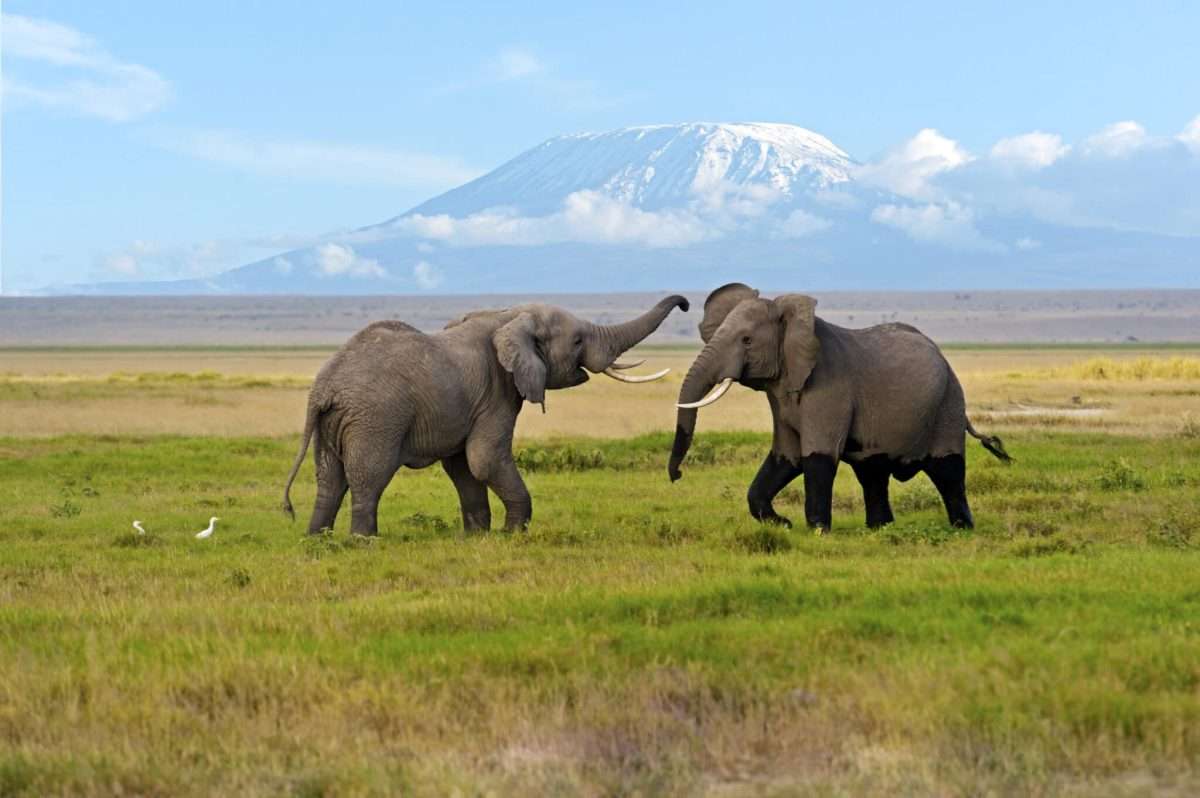
Ready to see elephants in the wild? Explore our Kenya safaris or Tanzania safaris, both built around strong elephant sightings in Amboseli, Tarangire, and the Serengeti. We also arrange Botswana and Chobe National Park itineraries on request for travelers who want to add the Chobe Riverfront’s elephant herds to their trip.
Contact the team on WhatsApp to start planning a safari built around elephant sightings in Kenya, Tanzania, or Botswana.
Frequently Asked Questions
How many species of elephants are there?
Three: the African savanna elephant, the African forest elephant, and the Asian elephant. The two African species were confirmed as genetically distinct from each other in the early 2000s.
How many types of elephants are there in total?
Seven, once subspecies and recognized local forms are included: the African savanna elephant, African forest elephant, African pygmy elephant, and the Asian elephant’s three subspecies, Indian, Sri Lankan, and Sumatran, plus the Borneo pygmy elephant.
What is the biggest type of elephant?
The African savanna elephant is the largest, with adult bulls reaching up to 3.96 meters (13 feet) at the shoulder and weighing more than 10 tons, making it the largest land animal on Earth.
What is the smallest type of elephant?
The African pygmy elephant is generally considered the smallest, at around 1.8 meters (6 feet) at the shoulder, though it isn’t recognized as a separate species. Among officially recognized subspecies, the Sumatran elephant is the smallest.
What family do elephants belong to?
All living elephants belong to the family Elephantidae, within the genera Loxodonta (African elephants) and Elephas (Asian elephants). Elephantidae is the only surviving family from a much larger group that once included mammoths.
What are elephant breeds called?
Elephants aren’t domesticated animals, so they don’t have breeds in the way dogs or cattle do. The correct terms are species and subspecies, and there are three species and three further subspecies recognized today.
What is a group of elephants called, and what are individual elephants named?
A group of elephants is called a herd. Within a herd, an adult male is a bull, an adult female is a cow, and a baby is a calf, terms that apply across every elephant species and subspecies.
Which elephant species is the most endangered?
The African forest elephant and the Sumatran elephant are both listed as Critically Endangered, the highest threat category before extinction in the wild. The Sumatran elephant’s population has fallen by at least 80 percent in 75 years.
Where can you see elephants on safari?
Kenya and Tanzania are among the best destinations for African savanna elephants, with strong sightings in Amboseli, Tarangire, the Serengeti, and the Masai Mara. Botswana’s Chobe National Park, along the Chobe Riverfront, is also known for exceptional elephant concentrations.
Blog Summary
- There are 3 living elephant species: African savanna, African forest, and Asian, plus 3 Asian subspecies and 2 recognized pygmy forms, for 7 types in total.
- The African savanna elephant is the largest land animal on Earth, while the Sumatran and African pygmy elephants are the smallest.
- A November 2025 IUCN report put the African forest elephant population at 135,690, a figure driven by better DNA-based survey methods rather than a real population increase.
- Pygmy elephants aren’t recognized as separate species or subspecies, so they don’t carry an official conservation status, despite facing the same threats as their parent species.
- Elephant terminology is consistent across all types: bull, cow, calf, and herd.
- Kenya and Tanzania are top destinations for seeing African savanna elephants in the wild, and Botswana’s Chobe National Park is a strong option for travelers who want to add it to their itinerary.


