
A trip to Victoria Falls is one of those experiences that lives up to the hype, and then some. But before you book, there is a real question to answer: Zambia or Zimbabwe for Victoria Falls? Both countries border the same waterfall, and both give you a genuinely different experience of it. If you’ve searched where is Victoria Falls Zambia, or you’re weighing the Victoria Falls Zambia side against the Victoria waterfalls Zimbabwe side, this guide covers exactly where Victoria Falls is, how big it actually is, when to go, how to get there, and a full side-by-side comparison of Victoria Falls Zimbabwe vs Zambia so you can decide which side, or both, fits your trip.
Key Takeaways: Practical Logistics for Choosing Your Side
- Getting there differs by side. Livingstone Airport serves Zambia and Victoria Falls Airport serves Zimbabwe, so book your flight into whichever side you’re actually staying on to avoid extra border transfers.
- A single KAZA visa covers both countries. At $50, it removes the need to choose just one side, since it allows unlimited crossings for 30 days.
- Accommodation style differs, not just price. Zimbabwe’s lodges cluster within walking distance of the falls; Zambia’s spread out further along the river for more privacy.
- Both sides pair naturally with a safari. Hwange in Zimbabwe or South Luangwa in Zambia both combine easily with a Victoria Falls trip, and Chobe in Botswana works as a day trip from either side.
Where Are the Victoria Falls in Africa?
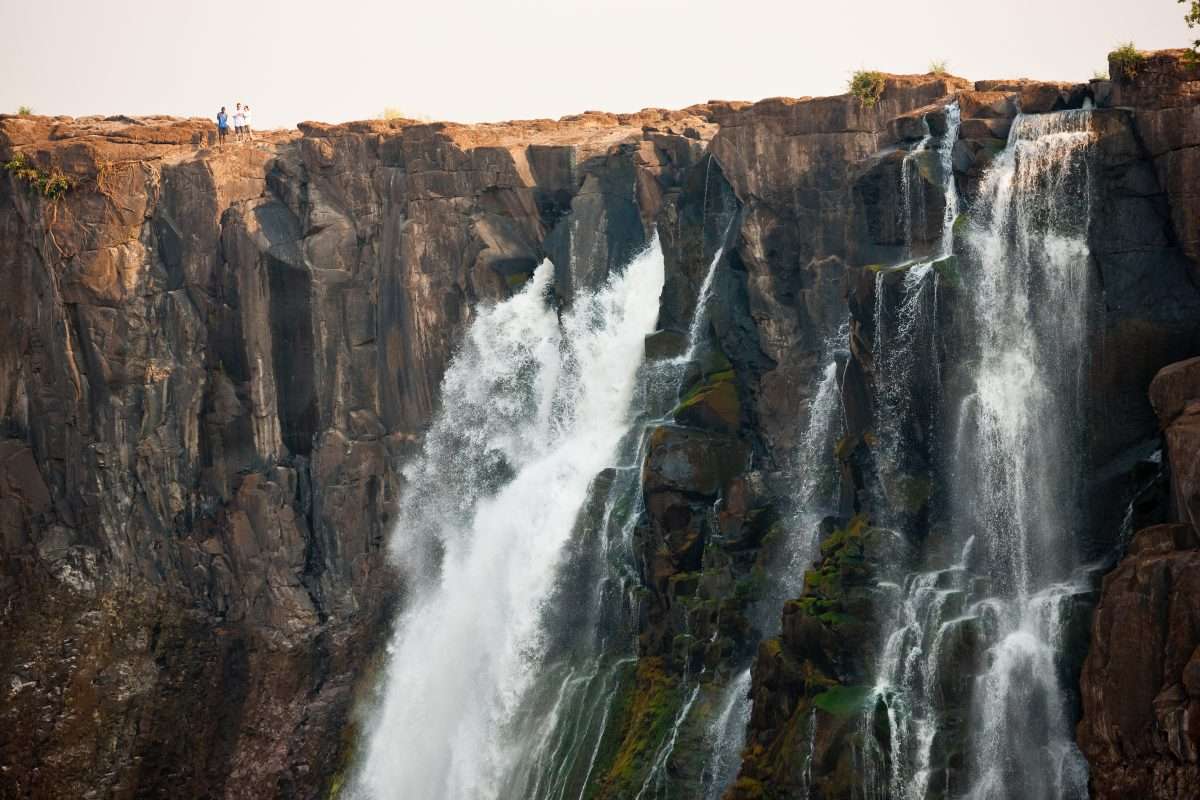
Victoria Falls sits on the Zambezi River, which forms the border between Zambia and Zimbabwe in Southern Africa. The river drops 108 meters (354 feet) over a basalt rock ledge into a churning gorge below, and the roar is sometimes audible from 40 kilometers (25 miles) away. Locally, the falls are known as Mosi-oa-Tunya, “the smoke that thunders,” a name used by the Tonga people who lived along the Zambezi Valley for centuries before any European ever saw the falls.
Where Is Victoria Falls in Zambia?
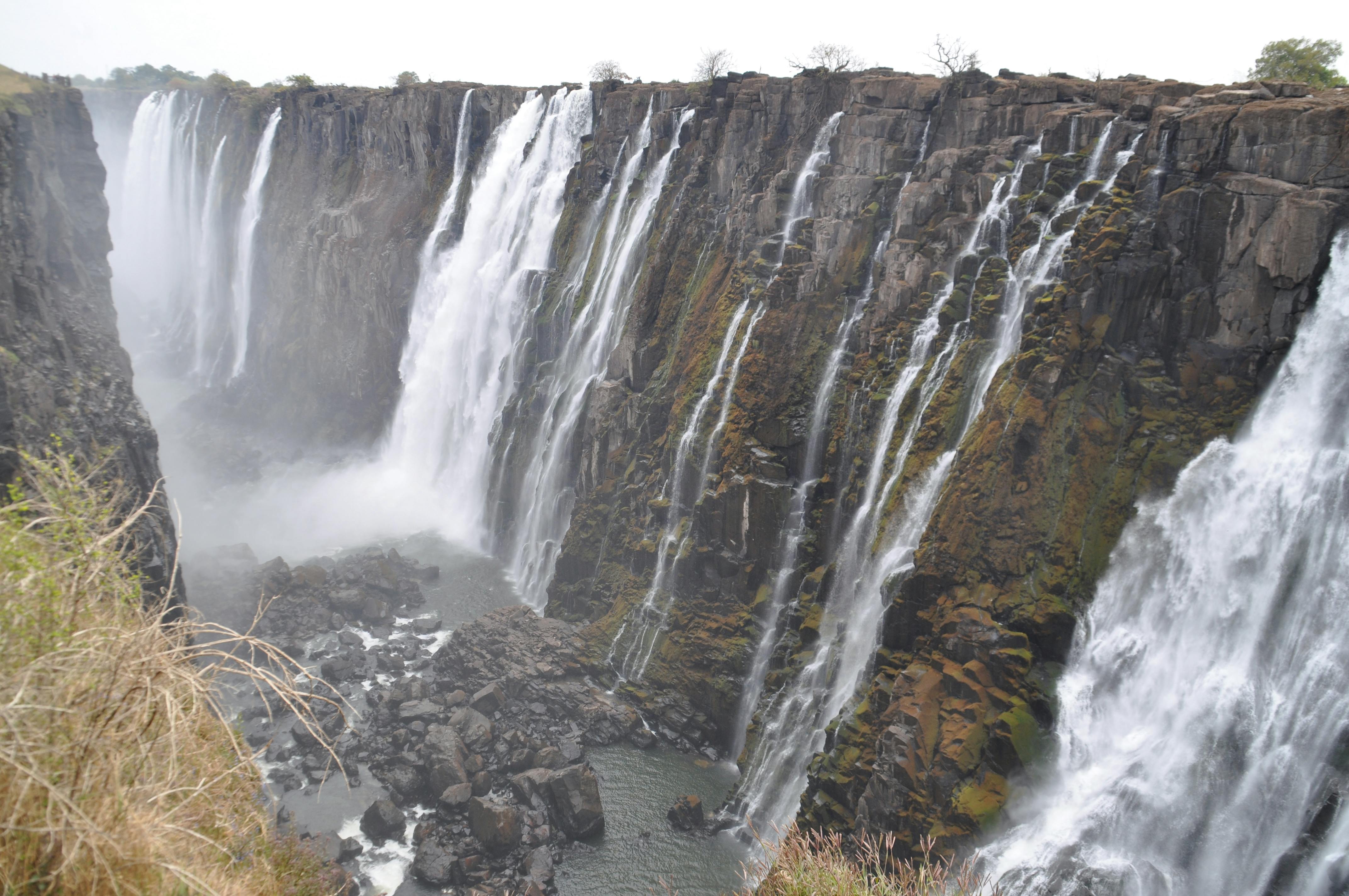
On the Zambian side, Victoria Falls is reached through the town of Livingstone, named after the explorer himself, roughly 10 kilometers from the falls entrance. The park here is called Mosi-oa-Tunya National Park, and it sits right up against the Zambia-Zimbabwe border. Beyond the falls themselves, the park also offers genuine game viewing, including white rhino, on foot with a ranger, a rare chance to walk among rhino that most safari parks don’t allow. Livingstone is a larger, more spread-out town than its Zimbabwean counterpart, with a population several times bigger, and it functions more as a regional business hub than a purpose-built tourist village. It also holds a museum covering the region’s history, worth an hour or two if you want context before or after seeing the falls.
Where Is Victoria Falls in Zimbabwe?
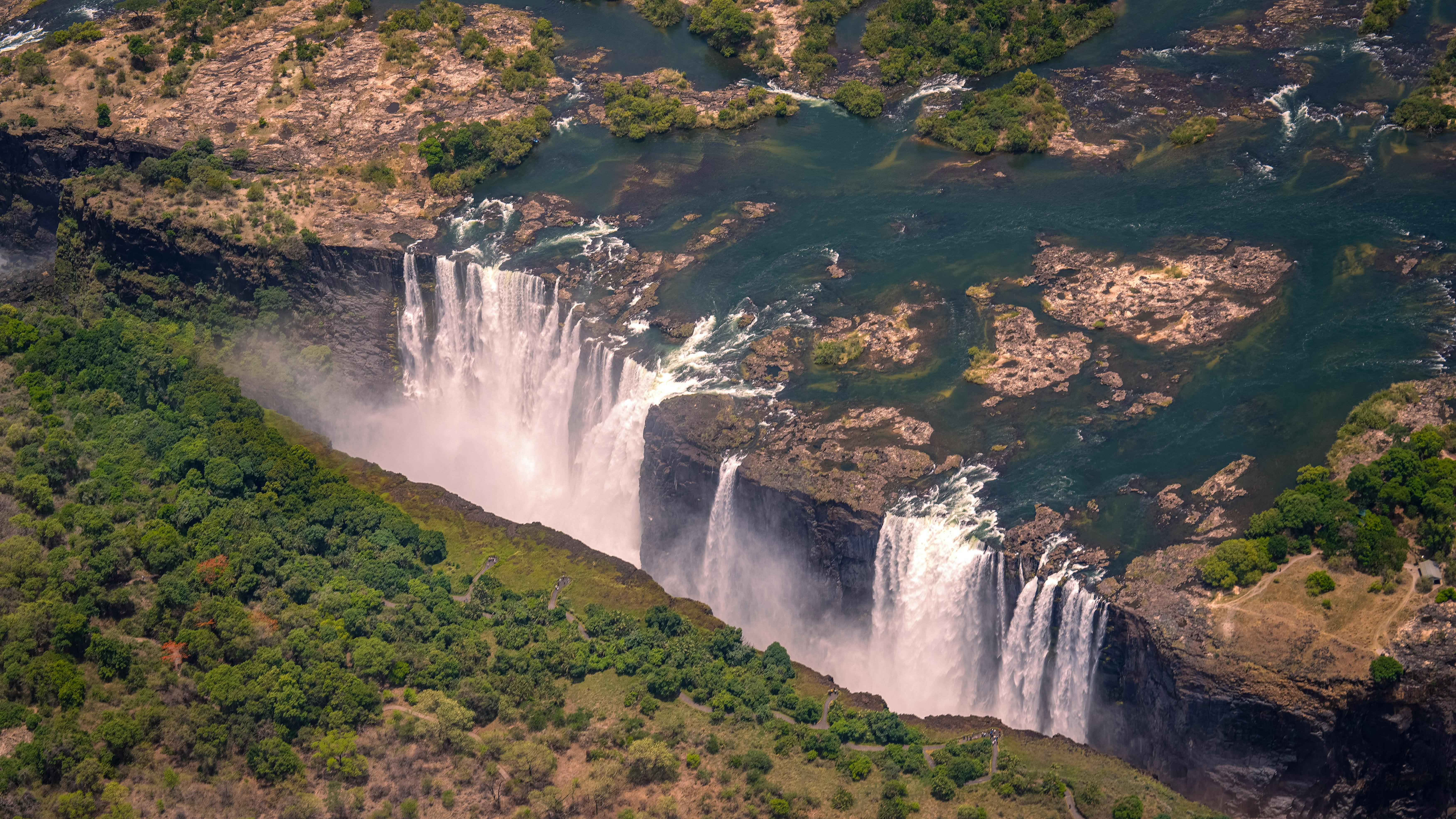
On the Zimbabwean side, the falls are reached through Victoria Falls Town, a small, walkable settlement less than a kilometer from the park entrance. Victoria Falls National Park covers this side, and its viewpoints, footpaths, and rainforest walkways are considered more developed and better signposted than the Zambian side. The town itself is compact, tourist-focused, and easy to explore entirely on foot, with cafes, curio shops, and tour operators clustered within about a square kilometer.
How Big Is Victoria Falls?
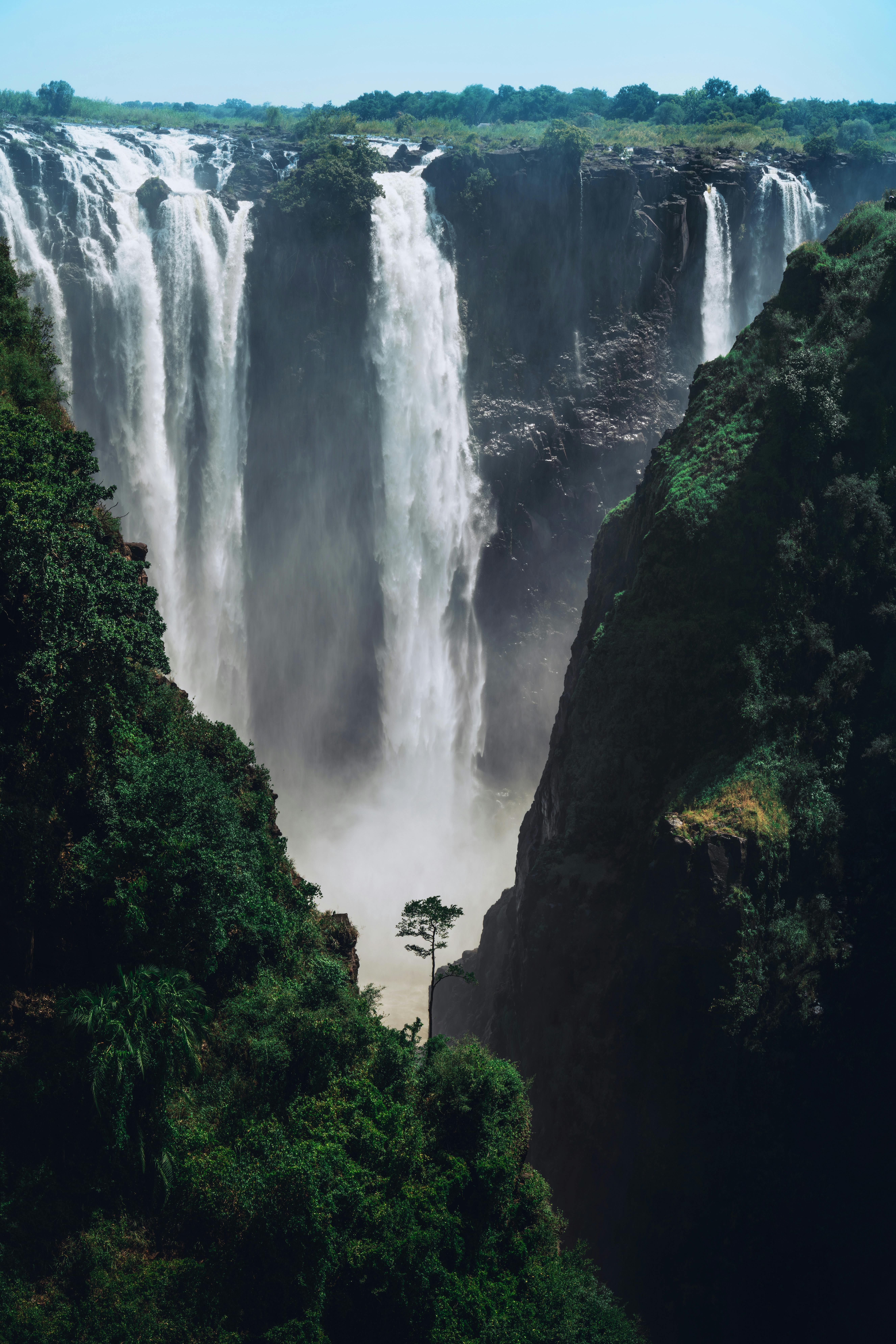
Victoria Falls is the largest single sheet of falling water on Earth, though it isn’t the tallest or the widest waterfall individually. Angel Falls in Venezuela is taller, and other falls exceed it in width alone, but no other waterfall combines height and width into a single unbroken sheet the way Victoria Falls does.
| Measurement | Victoria Falls |
|---|---|
| Height | 108 meters (354 feet) |
| Width | 1,708 meters (5,604 feet) |
| Comparison to Niagara Falls | About 1.5 times wider and twice as tall |
| Comparison to Angel Falls | Shorter, but significantly wider |
| Status | Largest sheet of falling water in the world; UNESCO World Heritage Site; one of the Seven Natural Wonders of the World |
During high-water season, more than 481,000 cubic meters of water pour over the edge every single minute. That’s roughly the equivalent of 12,000 Olympic swimming pools every hour.
Victoria Falls Zimbabwe vs Zambia: Side-by-Side Comparison
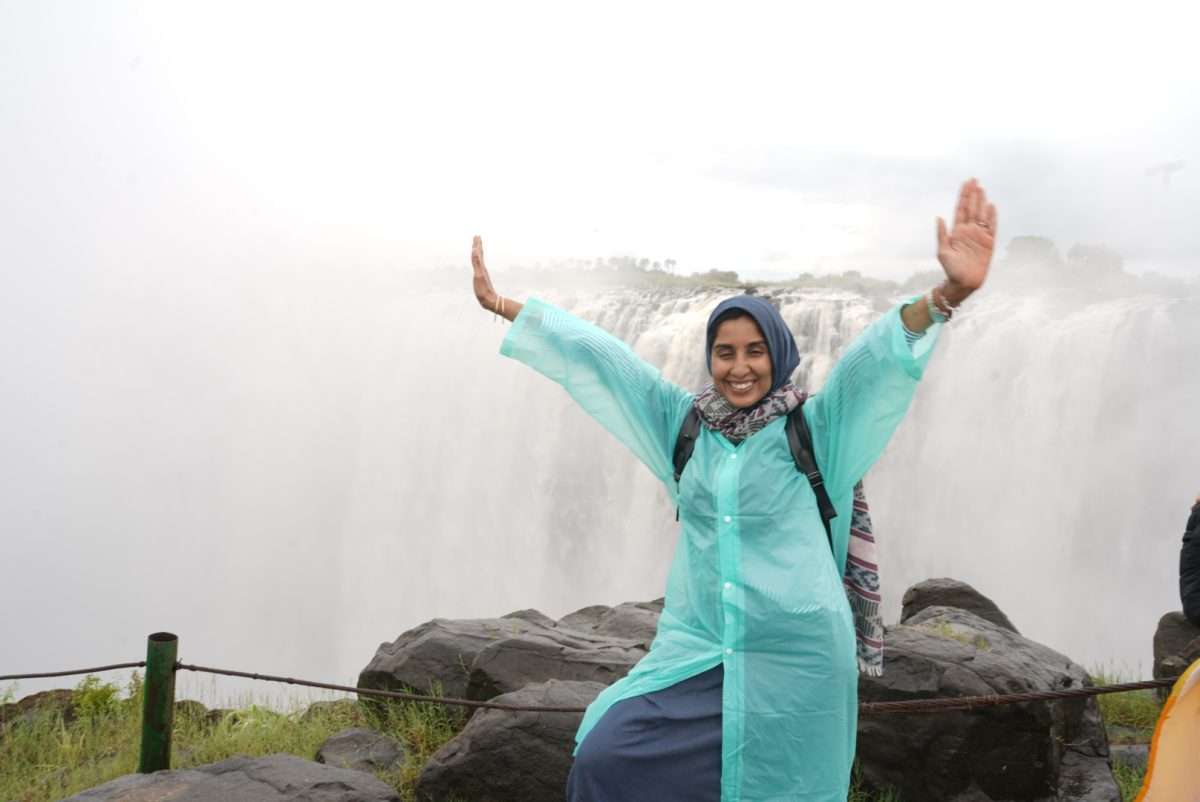
This Victoria Falls Zambia vs Zimbabwe breakdown covers the factors that actually matter for planning your trip, not just trivia.
| Factor | Zimbabwe Side | Zambia Side |
|---|---|---|
| Percentage of falls visible | About 75% | About 25% |
| Number of viewpoints | Around 16, spread through a rainforest walkway | Fewer, but includes the close-up Knife-Edge Bridge |
| Water flow reliability | Flows year-round, even in the driest months | Can run very low or dry completely from around September to December |
| Nearest town | Victoria Falls Town, less than 1km from the entrance | Livingstone, about 10km from the entrance |
| Town atmosphere | Small, walkable, tourist-focused | Larger, more spread out, business-oriented |
| Park entry fee | Around $30 per person | Around $20 per person |
| Devil’s Pool access | Not available | Available, via boat to Livingstone Island |
| Cataract Pool access | Available at select lodges (July to January) | Not available |
| Microlight flights | Available | Available |
| Best months for full flow views | Year-round, best February to July | February to July, dry or empty September to December |
| Wildlife on property | Baboons and elephants near the bridge and access roads | Zebra and giraffe roam freely at some riverside hotels |
Viewing the Falls: Zimbabwe Side vs Zambia Side
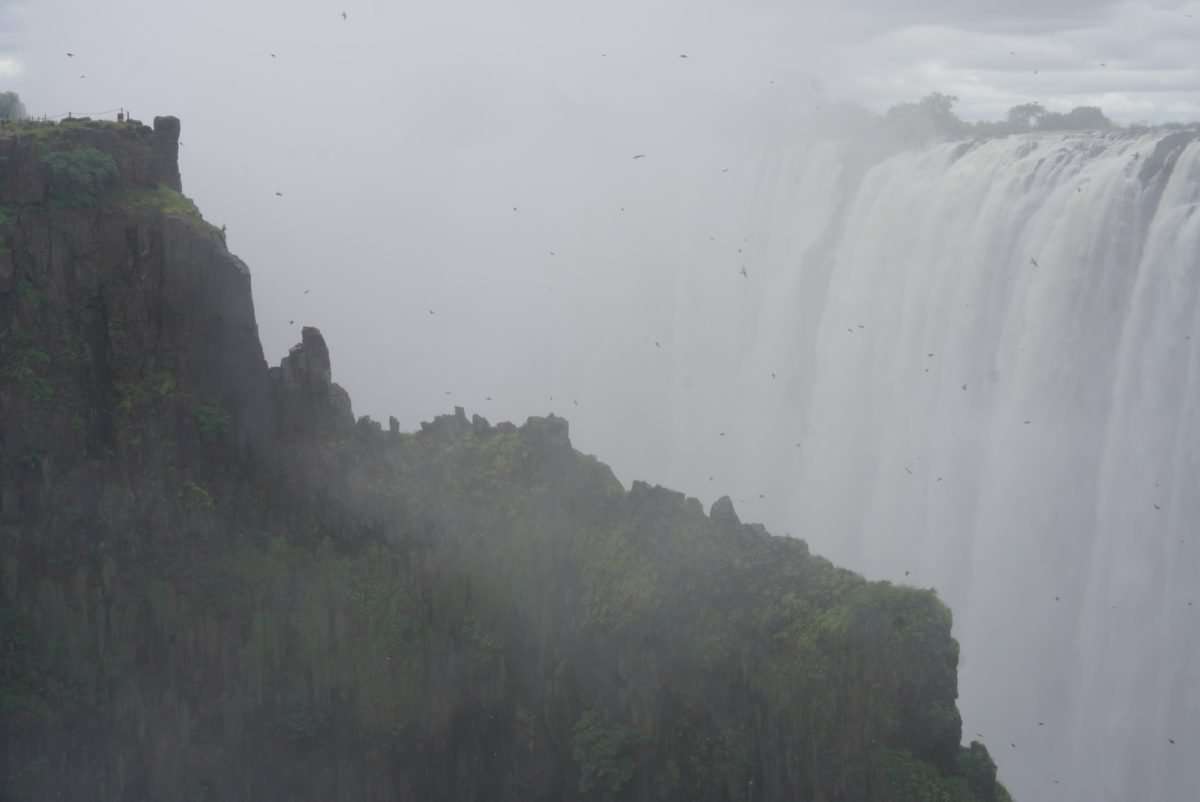
Viewing the falls from the Zimbabwean side gives you the wider picture, quite literally. Since most of the water flows over the Zambian side of the gorge but the sightlines from Zimbabwe face directly into it, you get a head-on, panoramic view of the Main Falls and Devil’s Cataract from a network of footpaths through genuine rainforest, kept permanently wet by the falls’ own spray. Danger Point, one of the park’s named viewpoints, puts you right at the edge of the gorge with nothing but a low barrier between you and a serious drop, not for anyone uneasy with heights. It rains here even when there isn’t a cloud in the sky. The Zimbabwean park is also the more built-out of the two, with a proper visitor center, a restaurant, and toilets on site, and a full visit typically takes 2 to 4 hours depending on how many viewpoints you stop at.
The Zambia side works differently. Fewer viewpoints cover a smaller stretch of the falls, but they put you closer to the edge, including the Knife-Edge Bridge, a walkway that puts you about 100 meters above the gorge with water thundering past on both sides during high-water season. From the Zambian footpaths you can also look straight down the length of the falls at sunset, a different photographic angle entirely from anything Zimbabwe offers. During low-water season, a separate footpath leads down to the Boiling Pot, a massive whirlpool at the very base of the falls where the full force of the water becomes visible from below rather than from above.
Average Temperatures by Season
| Season | Months | Average Daytime Temperature |
|---|---|---|
| Summer | November-April | 30°C / 86°F |
| Winter | July-August | 25-28°C / 77-82°F |
| Hottest month | October | Around 34°C / 93°F |
October is worth calling out specifically. It’s the hottest month of the year here and one of the very best months for safari, since animals stay close to the little remaining water, but it also means the Falls are at their lowest and the Zambian side will likely be completely dry. If you’re timing a trip around this month, decide in advance whether game viewing or waterfall views matter more to you, since you may not get both at their best simultaneously.
Lunar Rainbows: Victoria Falls’ Rarest Sight
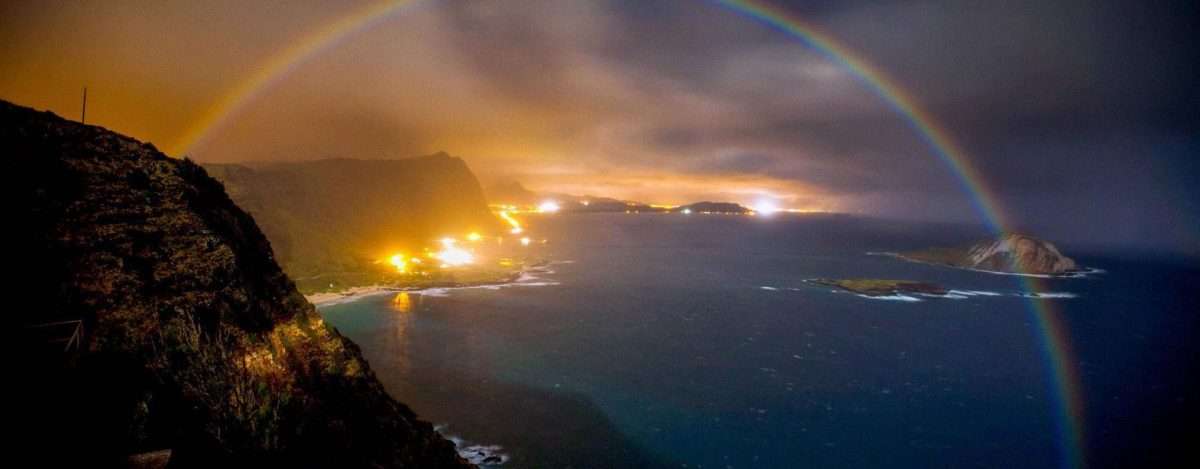
One of the more overlooked reasons to time a visit around a full moon is the chance to see a lunar rainbow, sometimes called a moonbow. This is a genuinely rare atmospheric phenomenon where the light of a full moon reflects and refracts through the mist thrown up by the falls, creating a faint, ghostly rainbow visible at night rather than during the day. Conditions have to align closely, a clear sky, a nearly full moon, and enough spray in the air, which puts high-water season, roughly February through July, as the best window for it. Niagara Falls used to produce the same effect, but light pollution around the falls there has eliminated it entirely. Victoria Falls, sitting far from major cities, remains one of the very few places on Earth where you can still reliably see one.
A few details the table above doesn’t capture: at peak high water, expect to get properly soaked at most viewpoints, with mist clouds sometimes rising as high as 400 meters above the falls on calm days, and water-based activities like Devil’s Pool and rafting typically close since the current runs too strong. At the driest point of low-water season, the Zambian side can shrink to a trickle over bare rock by late October. And if you’re weighing both wildlife and waterfall views, July and August tend to combine still-strong water flow with safari-friendly dry weather across the wider region, which is exactly why this window is also peak safari season, and the most expensive time to book. Reserve well ahead if you’re targeting these months specifically.
How to Get to Victoria Falls
Getting to Victoria Falls almost always means flying, and there are two main airports serving it, one on each side of the border.
- Livingstone Airport (LVI), also known as Harry Mwanga Nkumbula International Airport, serves the Zambian side, with regional connections from Johannesburg, Cape Town, Addis Ababa, Nairobi, and internal flights from Lusaka. Some routings also connect onward to Nelspruit in South Africa, a genuinely useful option if you’re continuing on to Kruger National Park.
- Victoria Falls Airport (VFA) serves the Zimbabwean side, with regional connections from Johannesburg, Cape Town, Addis Ababa, Nairobi, Windhoek, and Harare.
A taxi from Livingstone Airport into town takes 10 to 15 minutes and costs around $10. From Victoria Falls Airport, the transfer takes 20 to 25 minutes and runs closer to $15.
By road or rail: Regional bus companies connect both towns to other Southern African cities. Lusaka to Livingstone runs about 5 to 6 hours by bus, while Harare to Victoria Falls runs around 12 hours, and Windhoek to Livingstone can take up to 20 hours. For something slower and more scenic, a luxury rail service runs a multi-day route from Pretoria into Zimbabwe, and a more basic rail line connects Bulawayo to Victoria Falls in around 12 hours. Travelers coming from Botswana typically route through Kasane, near Chobe National Park, with a shared taxi connecting to Livingstone in just over an hour.
One important tip: fly into the airport on the side you’re actually staying on. Crossing from one airport to accommodation on the opposite side means three separate taxi legs, one to the border, one across the bridge, and one from the far border to your hotel.
A note on current conditions: severe drought in recent years, particularly on the Zambian side, has meant the falls generally run less full than they historically did, even during traditionally strong months. This doesn’t mean skip the trip, the falls are still genuinely spectacular, but it’s worth checking current water level reports with your safari planner closer to your travel dates rather than relying purely on historical seasonal averages.
Visa Requirements for Victoria Falls
A trip to Victoria Falls requires a visa for nearly all foreign nationalities, covering both Zambia and Zimbabwe. You have two main options:
- Single-entry visa: Costs vary by nationality, typically in the $30 to $50 range, and only covers one country.
- KAZA UniVisa: Costs $50, is valid for 30 days, and allows unlimited crossings between Zambia and Zimbabwe, plus a day trip into Botswana’s Chobe National Park via the Kazungula border. It’s available to travelers from around 65 countries, including the US, UK, Canada, Australia, and most EU nations, and can be arranged on arrival at Victoria Falls Airport, Livingstone Airport, Harare Airport, Lusaka Airport, or the Kazungula land border.
If you’re planning to see both sides of the falls, or add a Chobe day trip, the KAZA visa is worth getting regardless of which side you’re staying on. Bring US dollars in cash as backup, since card payment systems at border posts don’t always work reliably.
Crossing the Border on Foot
With a KAZA visa in hand, walking between the two sides is genuinely simple. Budget about 10 minutes to walk from either park entrance to the actual passport-stamping border post, then another 15 minutes or so to walk the full length of Victoria Falls Bridge itself, which doubles as a route for cargo trucks, so pedestrians use a separate marked path alongside the traffic. The bridge crossing has set hours: 6:30am to 6pm in winter, and 6am to 6pm in summer. Plan your crossing with those windows in mind, particularly if you’re timing a same-day visit to both sides around sunset.
Devil’s Pool vs. Cataract Pool
Swimming at the literal edge of Victoria Falls is one of the most talked-about experiences here, and there are actually two versions of it, on two different sides of the border.
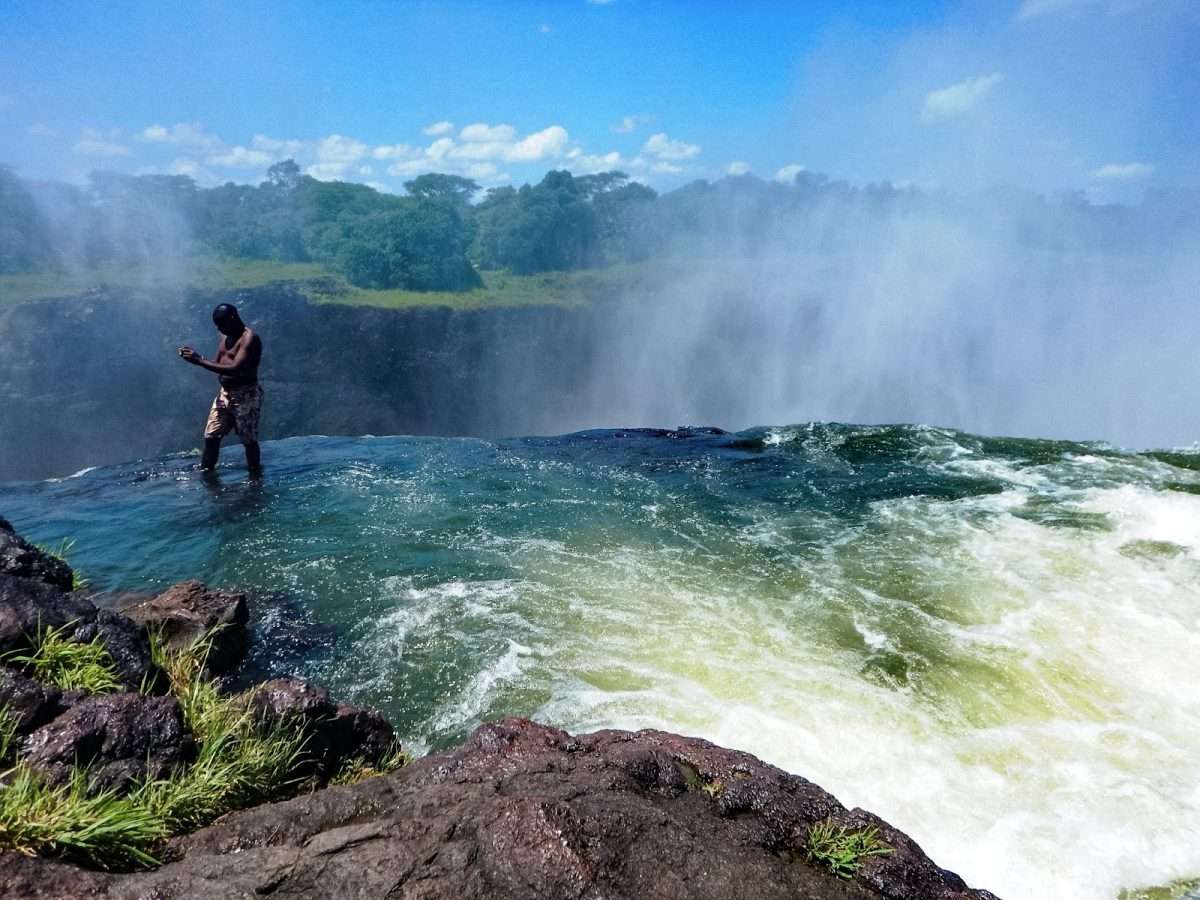
Devil’s Pool, on the Zambian side, is the famous one. It sits on Livingstone Island, reached by a short speedboat ride past resting hippos and crocodiles, and is only accessible when water levels are low enough, roughly August through December or January. Tours depart from a designated launch site along the river rather than directly from any single hotel. A natural rock barrier is genuinely the only thing between you and the edge of the falls. Three tour options are typically available, each including a meal: breakfast runs around $149 per person, lunch around $199, and afternoon high tea around $189. The breakfast tour is generally the strongest pick, since the angle of the morning sun gives you the best chance of catching a rainbow in the spray while you swim.
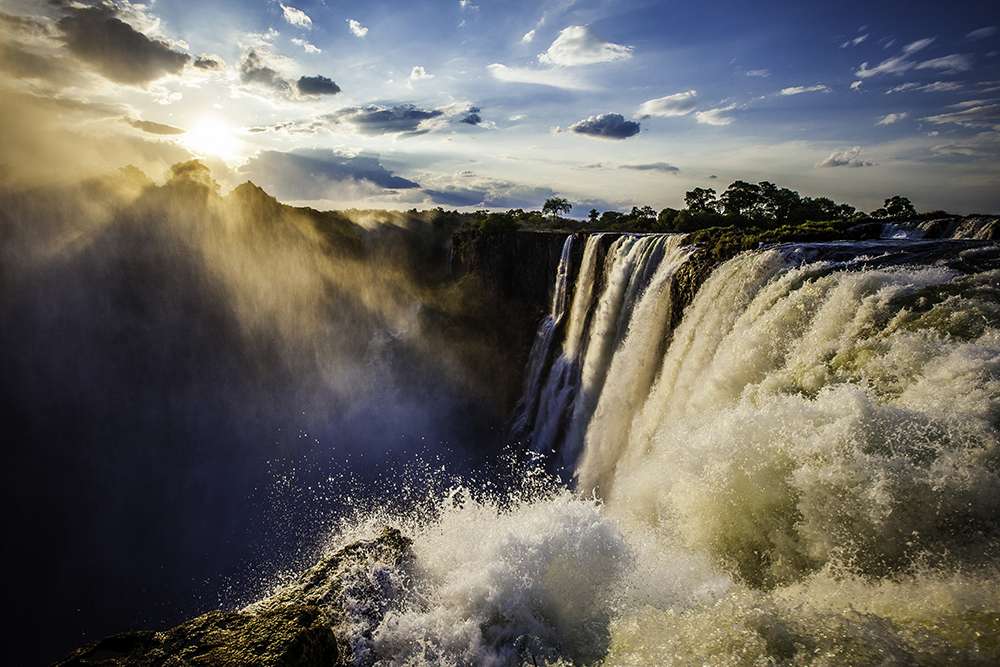
Cataract Pool, on the Zimbabwean side, is a lesser-known alternative available roughly July through January, and it’s exclusive to guests of a small number of specific riverside lodges. It offers a similar edge-of-the-falls experience with a fraction of the crowds, since access is limited to guests of those properties rather than open to anyone who books a tour.
Activities and Experiences at Victoria Falls
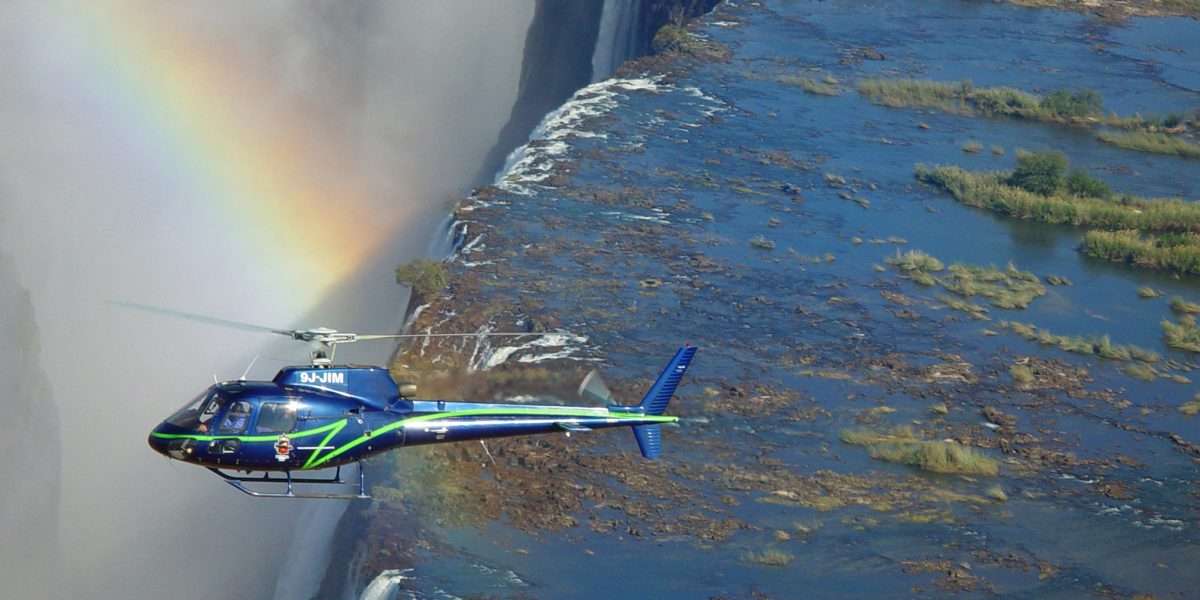
Seeing the falls themselves usually takes an afternoon. What fills the rest of your trip is the genuinely long list of activities available on both sides of the border.
Available on both sides:
- White-water rafting on the Zambezi, among the wildest commercially run rapids in the world, with some stretches rated Grade 5. Best during low-water season, roughly August to January; often closed when water levels run too high.
- Helicopter flights, known locally as the “Flight of Angels,” typically around 15 minutes and $150 per person.
- Sunset cruises on the Zambezi River, a relaxed way to see hippos, crocodiles, and birdlife from the water.
- Bungee jumping off Victoria Falls Bridge, a 111-meter drop between the two countries, priced around $160 per person.
- Day trips to Chobe National Park in Botswana, easily arranged with a KAZA visa via the Kazungula border. A typical day includes the border crossing itself, a morning game drive, lunch, and an afternoon boat cruise on the Chobe River, running around $150 per person all-in.
Zambia-side exclusives:
- Devil’s Pool and Livingstone Island tours.
- Microlight flights (also sometimes available on the Zimbabwe side, depending on operator).
Zimbabwe-side exclusives:
- Elephant sanctuary visits, where you can spend time with rehabilitated and orphaned elephants at a dedicated conservation facility.
- Cataract Pool, for guests of select riverside lodges.
- High tea at a historic hotel with colonial-era ties, once host to the British royal family in 1947.
Other notable experiences:
- The world’s longest zipline, a 425-meter run suspended 120 meters above the Zambezi.
- A gorge swing, combining a 70-meter free fall with a swinging finish 120 meters above the water.
- Dinner aboard a restored 1920s steam train that runs along part of the historic “Cape to Cairo” railway line built by Cecil Rhodes. The train stops in the middle of Victoria Falls Bridge for about 30 minutes around sunset so guests can step out and take photos, then continues on for a five-course dinner service, typically running a few evenings a week and costing around $195 per person, with bookings usually requiring two people minimum.
- A guided walk beneath the historic railway bridge connecting the two countries, suspended above Batoka Gorge.
- Shopping at the open-air markets in Victoria Falls Town for hand-carved soapstone sculptures and jewelry.
Where to Stay: Victoria Falls Zimbabwe Side vs Zambia Side
Zimbabwe Side Accommodation
Most lodges here sit within walking distance of the falls or a short drive from Victoria Falls Town, which is part of what makes this side so convenient for a shorter stay.
- Historic hotels: A handful of colonial-era properties in town lean into old-world atmosphere, complete with a traditional afternoon tea service.
- Luxury riverside lodges: Several upper-end properties sit directly on the river or overlook the gorge, generally running from around $440 to $600 per night, with some offering exclusive access to Cataract Pool.
- Conservation-focused lodges: A few properties are built directly around elephant sanctuary and rehabilitation work, appealing to travelers who want their stay tied to conservation.
- Mid-range options: Comfortable, well-located lodges generally run from around $180 to $270 per night, a solid balance of quality and value.
- Budget options: More basic lodges and guesthouses in town can run as low as $30 per night.
- Safari-combination lodges: A small number of properties outside town combine a genuine Big Five safari experience with high-end luxury, generally about 45 minutes from the falls themselves.
Zambia Side Accommodation
Zambia’s lodges tend to spread out further along the river, with more emphasis on privacy and tranquility than walkability.
- Park-adjacent hotels: A couple of properties sit inside the national park itself, offering guests unlimited free park entry and grounds where zebra and giraffe roam freely.
- Ultra-luxury riverside camps: The most exclusive properties on this side, often including a private guide and butler-style service throughout your stay, generally run upwards of $1,200 to $1,600 per night.
- Upper mid-range hotels: A step down in price but still comfortable and well-appointed, generally $380 to $410 per night.
- Mid-range tented camps: More basic, tented-style accommodation where guests occasionally hear elephants and hippos passing through camp at night, generally around $180 per night.
- Budget lodges and guesthouses: The most affordable options in and around Livingstone, ranging from roughly $40 to $100 per night.
These figures are illustrative and move with season and currency, so treat them as a rough guide to positioning rather than a live quote, and confirm current rates before booking.
Money, Safety, and Health at Victoria Falls
Dining
Livingstone has more restaurant variety than its size suggests, with waterside dining at some of the riverfront hotels, a well-regarded Italian spot in the town center, and a handful of casual cafes good for breakfast before a day of activities. Most restaurants outside your own lodge require a short taxi ride rather than a walk, so factor that into your evening plans.
Money
Zimbabwe operates primarily on US dollars, since the Zimbabwean dollar has effectively no value and isn’t accepted anywhere. Zambia uses the Zambian Kwacha alongside widely accepted US dollars, with South African rand, euros, and British pounds also commonly welcomed on both sides. ATMs are available at both airports and in both town centers, and most hotels accept cards, though it’s worth carrying some cash as backup, particularly for border crossings and small vendors.
Safety
Crime rates are generally low on both sides. Livingstone tends to feel relaxed and locally focused, while Victoria Falls Town, being more purely tourist-oriented, sees a higher concentration of street vendors and touts, particularly near the bridge. Despite Zimbabwe’s broader political and economic instability making headlines over the years, the tourism corridor around Victoria Falls itself is considered safe and well-managed, since the country depends heavily on this specific region for foreign income. Wildlife does roam freely in both areas, so stay alert for elephants on the road between Livingstone and the park, and don’t leave food out around baboons near the bridge.
Health
Victoria Falls sits in a malaria zone, so antimalarial medication is strongly recommended, arranged with your doctor before you travel. Malarone is a commonly recommended option since it tends to carry fewer side effects than some alternatives, though your own doctor’s advice should take priority over any general recommendation. Mosquito repellent and covering up in the evenings both help. Tsetse flies are also present, particularly during the rainy season and at cooler times of day, and they carry African trypanosomiasis, also known as African sleeping sickness. Insect repellent doesn’t actually prevent tsetse bites, but the flies are drawn to dark colors like navy and black, so lighter clothing is worth packing specifically for this reason. Stick to bottled water in both towns, even though tap water is treated.
Dealing with Street Vendors Respectfully
Victoria Falls Town in particular has a visible community of vendors selling wood, stone, and metal crafts, and it’s worth approaching this thoughtfully rather than defensively. A simple greeting before any price discussion goes a long way, and a flat “how much?” without any exchange first can come across as abrupt. If you have no intention of buying, it’s fine to say so politely and keep walking, most vendors will accept this quickly and move on. If you do want to negotiate, remember that a few dollars carries very different weight for a vendor than it does for a visitor on an international trip, so generosity tends to leave a better impression than aggressive haggling over small amounts.
A few more practical tips worth knowing:
- Ask for an “umbrella price” if you’re buying several items at once. The more you buy, the lower the per-item cost usually goes.
- At the open-air market, start browsing from the back of the row rather than the stalls right at the entrance. Vendors further back see less foot traffic and appreciate the visit more.
- Some vendors are happy to trade for useful items instead of cash, things like clean clothing, unused toiletries, or pens, particularly if you’re flying home soon and have extra space to fill in your luggage anyway.
- Be thoughtful about what you’re buying, specifically around wood and hardwood carvings. Deforestation is a real issue in parts of Africa, and every tree that gets felled for carving is one less patch of habitat for the wildlife the region depends on for tourism in the first place.
Combining Victoria Falls with a Safari
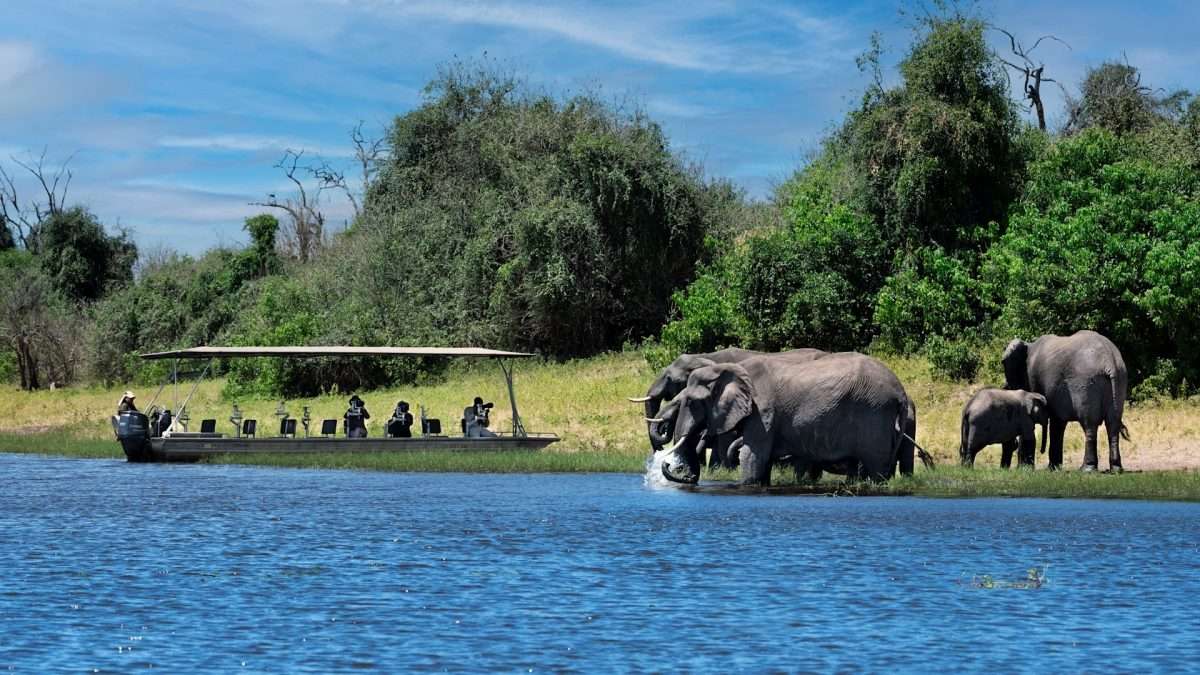
Victoria Falls sits at the crossroads of several outstanding safari regions, which makes it one of the easiest wonders in Africa to build into a longer trip rather than a standalone stop.
- Hwange and Mana Pools, both in Zimbabwe, are easily reached from the Zimbabwe side.
- Kafue and Lower Zambezi National Parks, in Zambia, connect naturally from Livingstone.
- Chobe National Park in Botswana is reachable as a day trip from either side via the Kazungula border.
- Kruger National Park in South Africa connects via a direct flight from Livingstone in some seasons, making a Victoria Falls and Kruger combination trip more straightforward than it might seem on a map.
Plan Your Trip to Victoria Falls with TourwithPipi
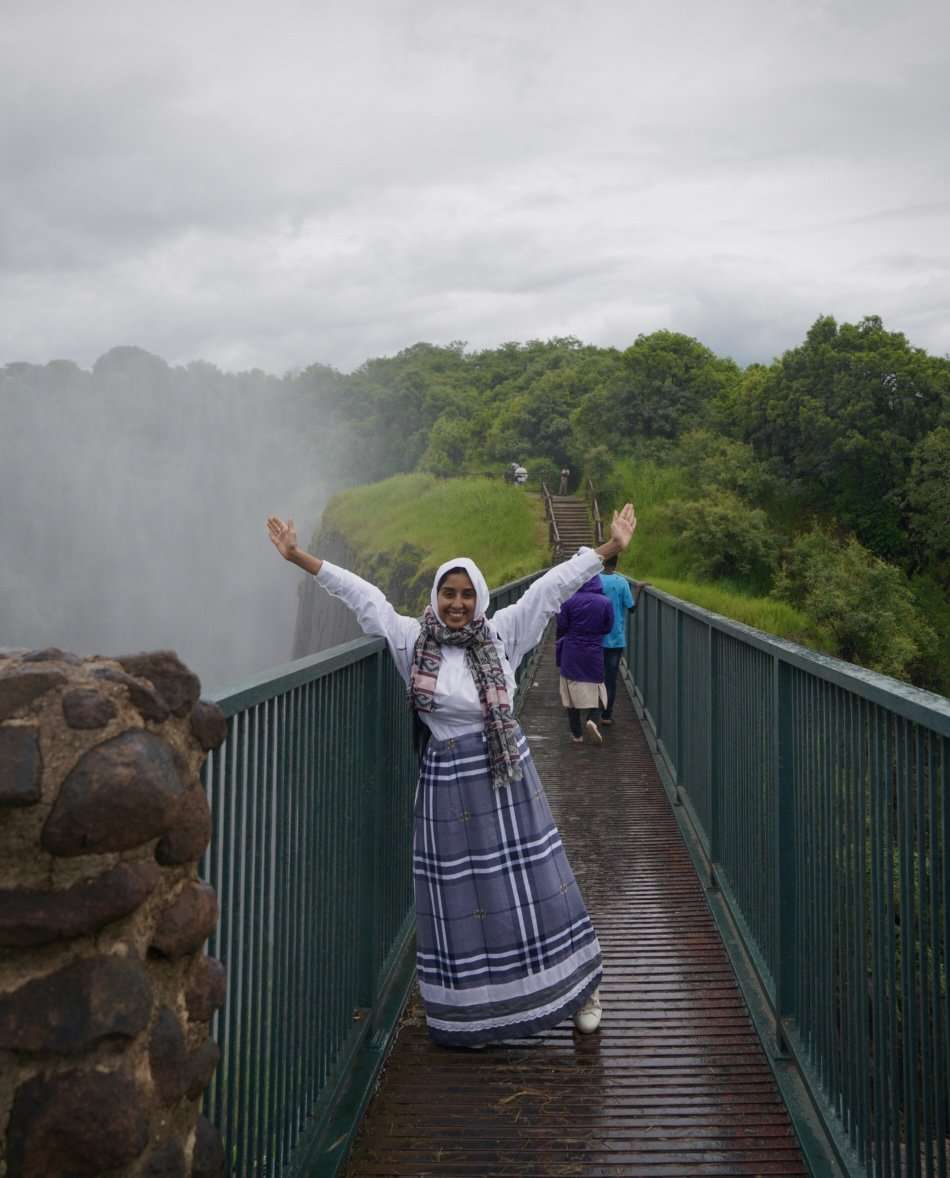
Deciding between Victoria Falls Zimbabwe or Zambia, or building a trip that covers both, comes down to your travel dates and what else you want in your itinerary. I build private Victoria Falls itineraries that combine the right side of the falls with a genuine safari extension, whether that’s Chobe, Hwange, or a broader Southern Africa route. Message me on WhatsApp with your travel dates and I’ll help you figure out which side, or both, makes sense for your trip.
Frequently Asked Questions
Where is Victoria Falls?
Victoria Falls sits on the Zambezi River on the border between Zambia and Zimbabwe in Southern Africa. It’s accessed through Victoria Falls Town on the Zimbabwean side or Livingstone on the Zambian side.
Where is Victoria Falls in Zambia specifically?
On the Zambian side, Victoria Falls is inside Mosi-oa-Tunya National Park, reached through the town of Livingstone, about 10 kilometers from the falls entrance.
Is it better to see Victoria Falls from Zimbabwe or Zambia?
For travelers still weighing Zimbabwe or Zambia Victoria Falls, it depends on timing and priorities. Zimbabwe offers about 75 percent of the total view and guaranteed water flow year-round, while Zambia offers closer vantage points and exclusive access to Devil’s Pool. Many travelers visit both sides using a KAZA visa.
How do you get to Victoria Falls?
Most travelers fly into either Victoria Falls Airport (VFA) in Zimbabwe or Livingstone Airport (LVI) in Zambia, both served by regional connections from Johannesburg, Cape Town, and other Southern African hubs. Bus and rail options also connect both towns to nearby cities, though these take considerably longer.
What is the best time of year for a trip to Victoria Falls?
July and August offer the best combination of strong water flow and dry, safari-friendly weather, making this the most popular window. February to July delivers the most dramatic high-water views, while August to January is best for activities like white-water rafting and Devil’s Pool.
Do you need a visa to visit Victoria Falls?
Yes, most nationalities need a visa for both Zambia and Zimbabwe. The KAZA UniVisa, at $50, covers both countries plus a Chobe National Park day trip and allows unlimited border crossings for 30 days, making it the most practical option for most travelers.
Quick Summary
- Victoria Falls sits on the Zambezi River, the border between Zambia and Zimbabwe, and is the largest single sheet of falling water in the world.
- About 75 percent of the falls is visible from Zimbabwe, and about 25 percent from Zambia.
- Zimbabwe guarantees water flow year-round, while Zambia’s eastern section can dry up completely from around September to December.
- High-water season runs roughly February to July, peaking around March and April, while low-water season runs roughly August to January.
- Devil’s Pool is only accessible from the Zambian side; Cataract Pool is its lesser-known Zimbabwean equivalent, available at select lodges.
- The KAZA UniVisa, at $50, covers both countries and a Chobe National Park day trip with unlimited crossings for 30 days, making it the most practical way to see both sides without choosing just one.
- Victoria Falls Airport (Zimbabwe) and Livingstone Airport (Zambia) are the two main gateways, both connected to Johannesburg, Cape Town, and other regional hubs.
- Zimbabwe’s Victoria Falls Town is compact and walkable; Zambia’s Livingstone is larger and more spread out.
- Both sides combine easily with a safari, Hwange and Mana Pools in Zimbabwe, Kafue and Lower Zambezi in Zambia, or Chobe in Botswana.
- Lunar rainbows, a rare moonbow effect visible during a full moon in high-water season, are one of the falls’ least-known but most memorable sights.
- Pricing, accommodation cost included, is genuinely disputed between sources, so compare real quotes for your dates instead of assuming either side is the cheaper choice.
Written by Khadija Tayabali, Founder and Virtuoso-affiliated safari advisor at TourwithPipi. Message me directly on WhatsApp to start planning your trip to Victoria Falls.


