
Quick answer: The traditional Maasai diet centers on milk, meat, and blood from cattle, supplemented with fat, honey, and tree bark. Milk is the daily staple, meat is eaten mainly at ceremonies rather than daily, and blood is a ceremonial food rather than a regular one. Most Maasai families today also eat maize meal, beans, rice, and tea, especially outside the more traditional pastoral communities.
The Six Traditional Foods in the Maasai Diet
Maasai food culture is traditionally built around six core foods, all connected to cattle in one way or another.
- Milk: the daily staple, drunk fresh, soured, or fermented
- Meat: reserved mostly for ceremonies and special occasions
- Fat: rendered from cattle and used to season and preserve food
- Blood: a ceremonial food, not a daily one
- Honey: collected from wild hives, used as a sweetener and in traditional mead
- Tree bark: used in cooking, particularly in soups and stews, for flavor and traditional medicinal value
Milk: The Foundation of What Maasai People Eat
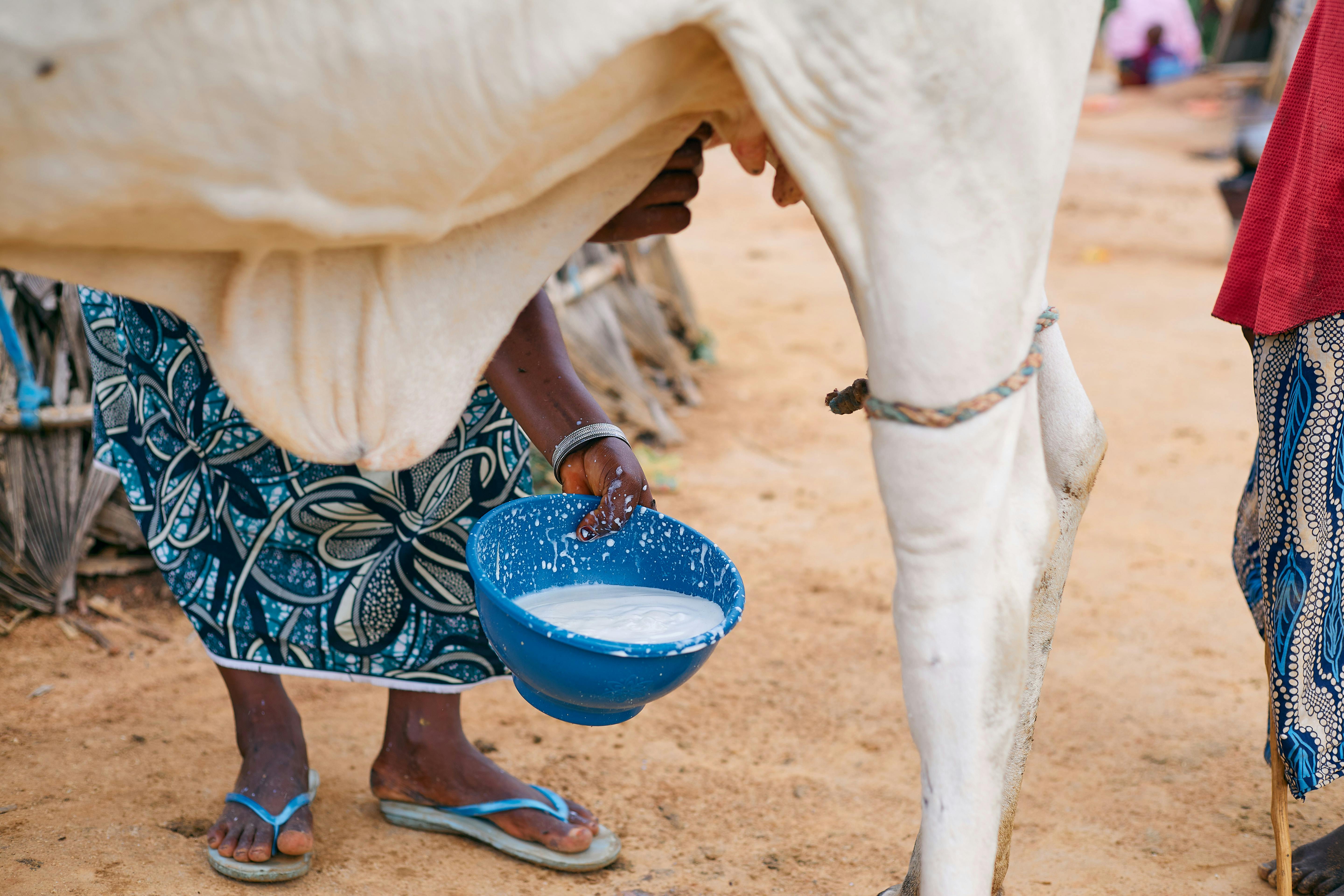
Milk is the single most important food in the Maasai diet, and it shows up in nearly every meal. Fresh milk, soured milk, and fermented milk are all consumed daily across every age group, and the Maasai keep goats alongside cattle, so goat’s milk is part of the regular diet too.
Fermented milk holds a particularly important place. It is stored in gourds coated with charcoal, which adds minerals and gives the milk mild antibacterial protection as it ferments. Once thickened and soured, it becomes a probiotic-rich food that holds up far better in the heat than fresh milk. Warriors, known as Moran, carry fermented milk in calabash gourds during long herding journeys, sometimes relying on it as their main source of nutrition for days at a time.
Blood: The Ceremonial Part of the Maasai Tribe Diet
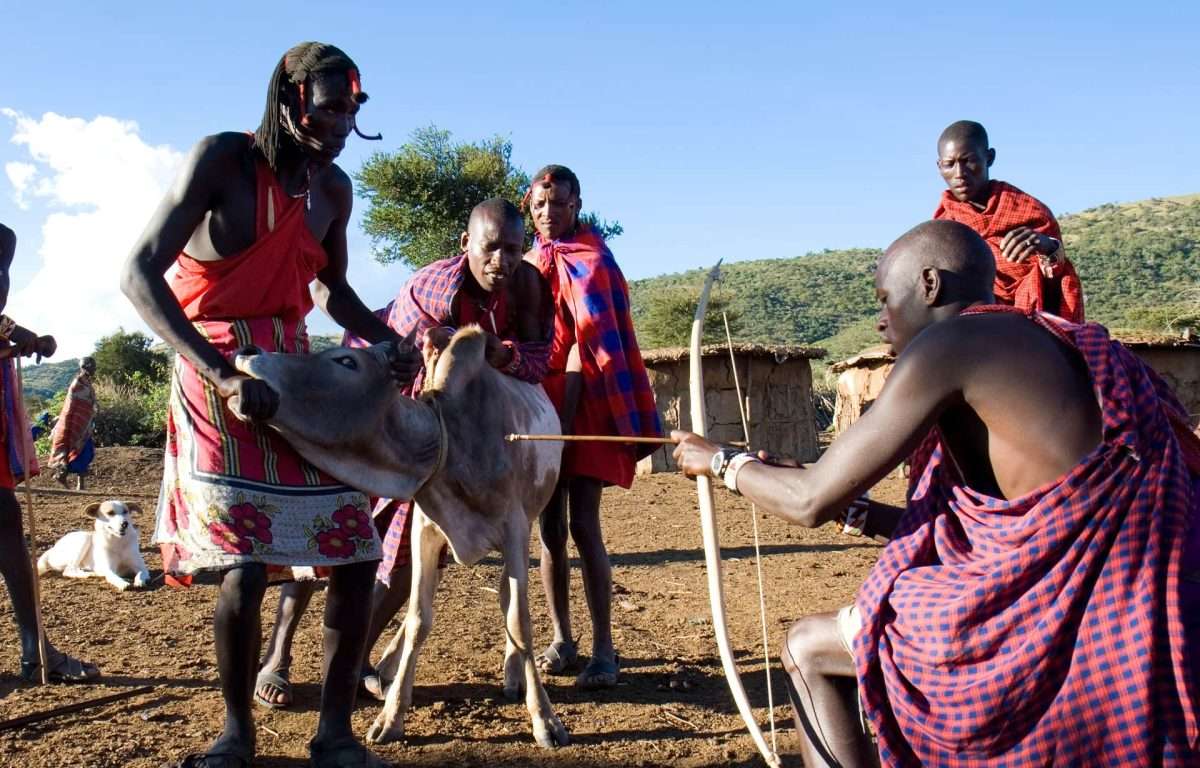
The most talked-about part of the Maasai tribe diet is the ritual drinking of cattle blood, though it is far less common in daily life than most people assume. Blood is drawn carefully from a small incision in the jugular vein of a living cow, without killing the animal, and the wound is sealed with ash afterward. Typically no more than a liter is collected at a time.
Blood is usually mixed with fresh milk and consumed at specific moments, not as a daily habit.
- Circumcision ceremonies
- The Eunoto warrior transition ceremony
- During illness, particularly for anemia or after blood loss
- For pregnant women and newborns in some communities
The nutritional reasoning holds up well. Blood is dense in iron and protein, which makes it genuinely useful as a recovery food during periods of physical stress, even if it looks unusual to an outside observer. Today, smaller herd sizes across many Maasai communities mean blood plays a smaller role in the diet than it did a generation ago.
Meat: Why the Maasai Don’t Eat Meat Every Day

This is where most assumptions about the Maasai tribe diet get corrected fast. Cattle represent wealth and social status, so they are far too valuable to slaughter casually. A Maasai family may go weeks without eating meat, living almost entirely on milk products instead.
Meat is eaten at specific times rather than daily.
- Ceremonies like circumcisions, weddings, and Eunoto
- When an animal dies naturally or must be slaughtered due to injury
- Communal feasts marking age-grade transitions
- More heavily during certain periods of the Moran warrior phase
When meat is eaten, it tends to be consumed in large quantities over several days rather than in small daily portions, a feast-or-fast pattern rather than a steady one.
Fat, Honey, and Tree Bark: The Lesser-Known Maasai Foods

Beyond the big three, a few traditional foods round out the full picture of what the Maasai eat. Rendered cattle fat is used to season and help preserve food. Honey, gathered from wild hives, is both a sweetener and the key ingredient in muratina, a fermented honey beer traditionally reserved for senior warriors and elders at specific ceremonies. Tree bark is added to soups and stews, valued for both flavor and traditional medicinal properties, and represents one of the few plant-based ingredients in an otherwise animal-centered diet.
What Do the Maasai Eat Today? Modern Additions
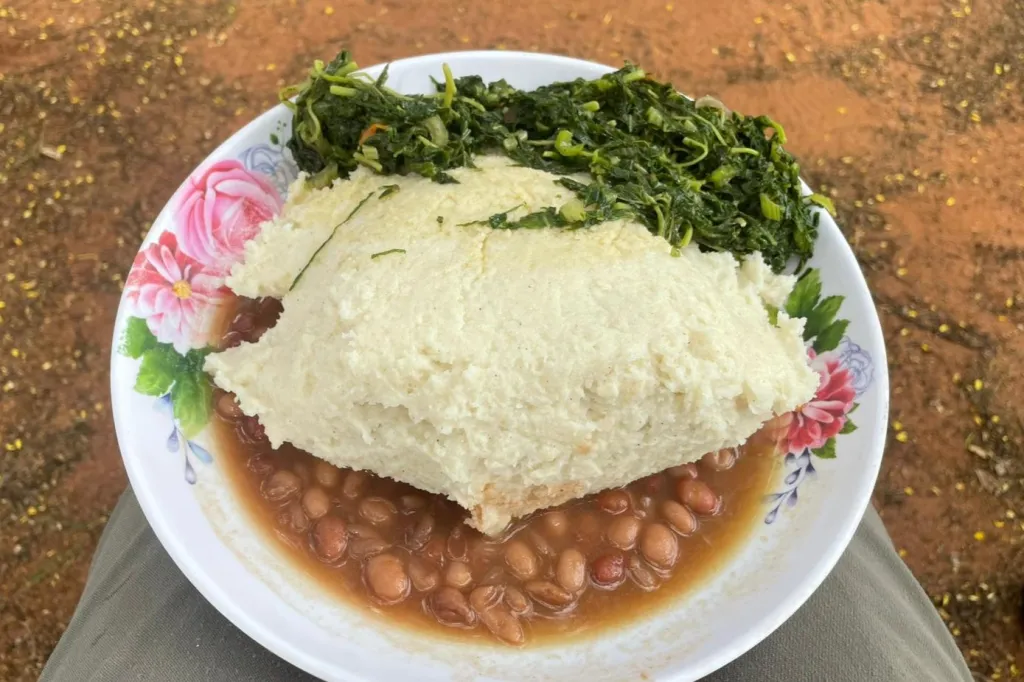
Maasai foods have shifted noticeably over the past 50 years. Contact with agricultural communities, formal schooling, and access to markets has brought several new staples into most Maasai households.
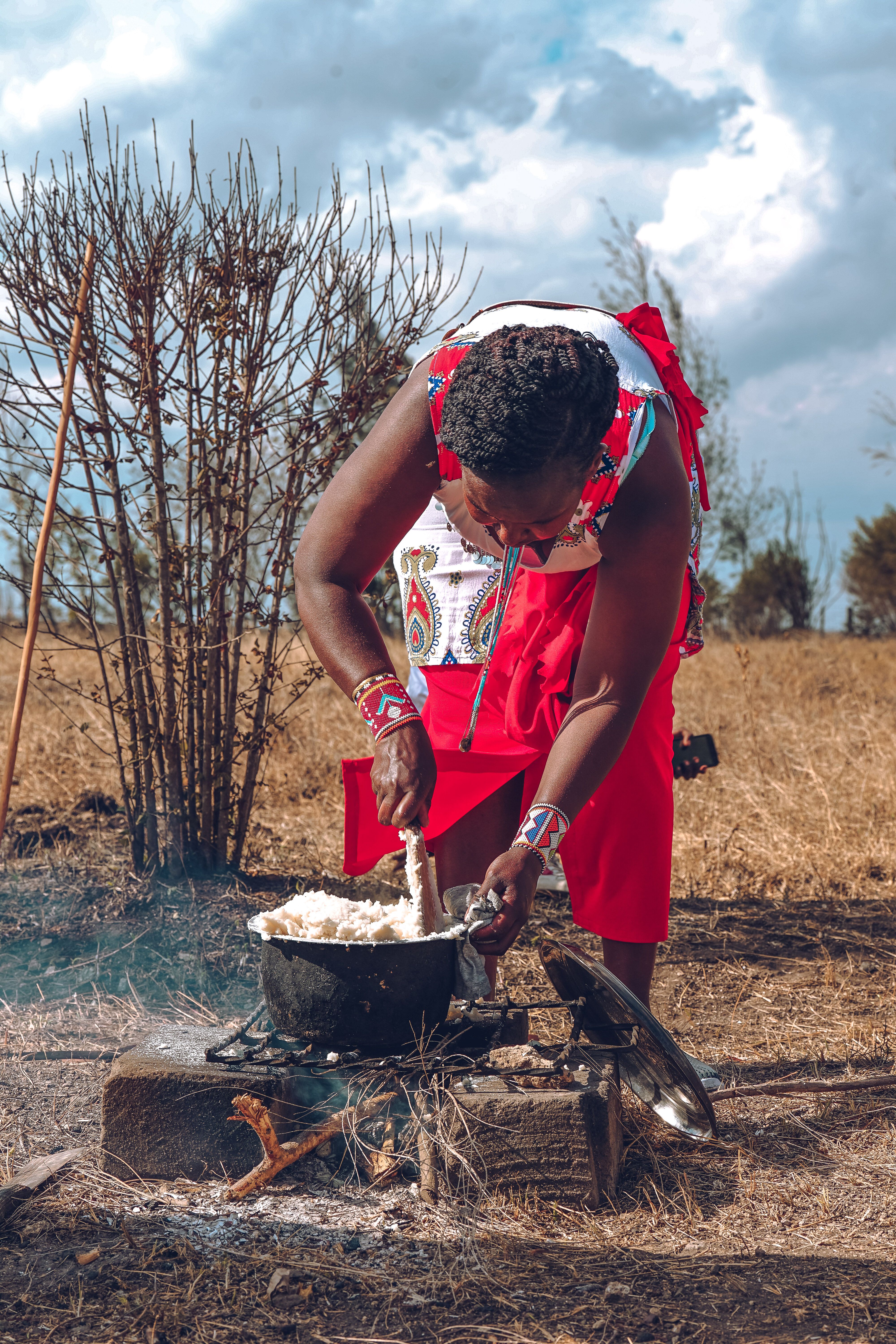
- Ugali: a stiff maize porridge, now common in most Maasai homes, often served alongside milk
- Beans and legumes: increasingly grown or purchased locally
- Rice: more available and more common in larger communities
- Chai: sweet tea with milk and sugar, now essentially universal across Kenyan communities, Maasai included
These additions have broadened the maasai people diet considerably, though they have also introduced new health pressures, particularly processed food and sugar, in communities that historically relied on a milk-based diet with limited carbohydrates.
The Maasai Warrior Diet (Moran)
Moran warriors are expected to maintain serious physical condition for years, and their traditional food pattern reflects that.
- Milk, fresh and fermented, as the primary food source
- Blood consumed at ceremonies and occasionally for strength
- Meat eaten communally when available, often in the warrior camp known as a manyata
- Ugali and other grains now part of the diet in most communities
- Muratina, the fermented honey beer, consumed by senior warriors at specific ceremonies
What the Maasai Don’t Eat: Wildlife and Conservation

One of the most important facts about Maasai food culture is what is traditionally absent from it: wildlife. The Maasai are not hunters. Cattle provide all the protein and ritual significance that other communities in the region might otherwise draw from hunting wild animals.
This has real conservation consequences. Maasai community lands overlap heavily with some of Kenya and Tanzania’s most important wildlife corridors, and because wildlife was never a food source, it has historically been left largely undisturbed. This is a genuine part of why ecosystems around the Masai Mara, Amboseli, and the Serengeti remain among the most intact wildlife habitats left on Earth.
Maasai Hospitality and Dining Etiquette

Hospitality is a serious cultural obligation in Maasai and wider Kenyan communities, and a few customs are worth knowing before you visit.
- A visitor to a homestead will typically be offered milk, and refusing it, or reacting poorly to it, is considered a real social offense
- Remove your shoes before entering a home
- Bring a small, practical gift, sugar, tea, or pastries work well, rather than something expensive
- Wash your hands before and after a meal
- The most honored guest is seated closest to the host and served first, followed by the oldest male present
- Eat and pass food with your right hand only, never your left, especially with communal dishes
- Beverages are typically not served during the meal itself, since eating and drinking at the same time is considered impolite in many Kenyan communities
- Tea or coffee is usually offered after the meal and should be accepted, even if you only take a few sips
- Wait until you are invited to leave the table before getting up
Ready to Experience This for Yourself?

If you want a Kenya itinerary that includes a genuine, respectful Maasai village visit alongside your game drives, message me directly on WhatsApp.
A few trips that include Maasai cultural experiences:
- 5-Day Masai Mara Safari
- 6-Day Mara Discovery: Big Five Safari
- 8-Day Kenya Explorer Safari
- 8-Day Extraordinary Kenya Safari
Frequently Asked Questions
What do the Maasai eat?
The traditional Maasai diet centers on milk, meat, and blood from cattle, along with fat, honey, and tree bark. Milk is the daily staple, while meat and blood are reserved mostly for ceremonies and specific occasions rather than eaten daily.
Do the Maasai eat meat every day?
No. Cattle represent wealth and status, so they are rarely slaughtered casually. A Maasai family may go weeks without meat, eating it mainly at ceremonies, feasts, or when an animal dies naturally.
Why do the Maasai drink cattle blood?
Blood is a ceremonial food, consumed at events like circumcision ceremonies, warrior transitions, or during illness and recovery. It is rich in iron and protein, which made it a practical recovery food, though smaller herd sizes today mean it plays a smaller role than in the past.
What do modern Maasai people eat?
Alongside traditional milk, meat, and blood, most Maasai households today also eat ugali, beans, rice, and chai, largely due to increased contact with agricultural communities and access to markets over the past 50 years.
Is the Maasai diet healthy?
Studies dating back to the 1930s found very low rates of disease among Maasai following a traditional diet, and a notable 1960 study found extremely low cholesterol levels despite a diet high in saturated fat. Maasai who move to cities and eat more sugar and refined grains show higher rates of heart disease by comparison.
Do the Maasai eat wild animals?
No, the Maasai are traditionally not hunters. Cattle provide the protein and ritual significance that wildlife might otherwise offer, which has helped keep wildlife populations undisturbed on Maasai lands for generations.
Blog Summary About Maasai Food and Diet
- Milk is the daily staple of the Maasai diet, eaten fresh, soured, or fermented.
- Meat is reserved mostly for ceremonies, not eaten as a daily food.
- Blood is a ceremonial food, drawn carefully from a living cow and mixed with milk.
- The six traditional Maasai foods are milk, meat, fat, blood, honey, and tree bark.
- Ugali, beans, rice, and chai have become common additions over the past 50 years.
- Warriors traditionally rely on fermented milk as a primary source of nutrition.
- A 1960 Vanderbilt University study found Maasai warriors had extremely low cholesterol despite a high-fat diet.
- Maasai who move to cities and eat more sugar show higher rates of heart disease.
- The Maasai are traditionally not hunters, which has helped protect regional wildlife populations.
- Visitors to a Maasai home are typically offered milk, and accepting it is an important sign of respect.
Written by Khadija, founder of TourwithPipi, based on years of guiding guests through Maasai villages near the Mara, where food and hospitality go hand in hand.


