
Why is the cheetah so fast? The simple answer is that every single part of its body has been shaped by millions of years of evolution to do one thing better than any other animal on Earth. Run. Fast.
A cheetah can go from 0 to 100 km per hour in approximately 3 seconds. That is faster than most sports cars off the line. It is the fastest land animal on the planet, and watching one run at full speed is one of the most breathtaking sights in all of African wildlife.
But how does a cheetah run so fast? The answer is not just one thing. It is a remarkable combination of body shape, muscle type, spine flexibility, claw design, tail function, and breathing capacity all working together in perfect coordination.
Quick Cheetah Speed Facts
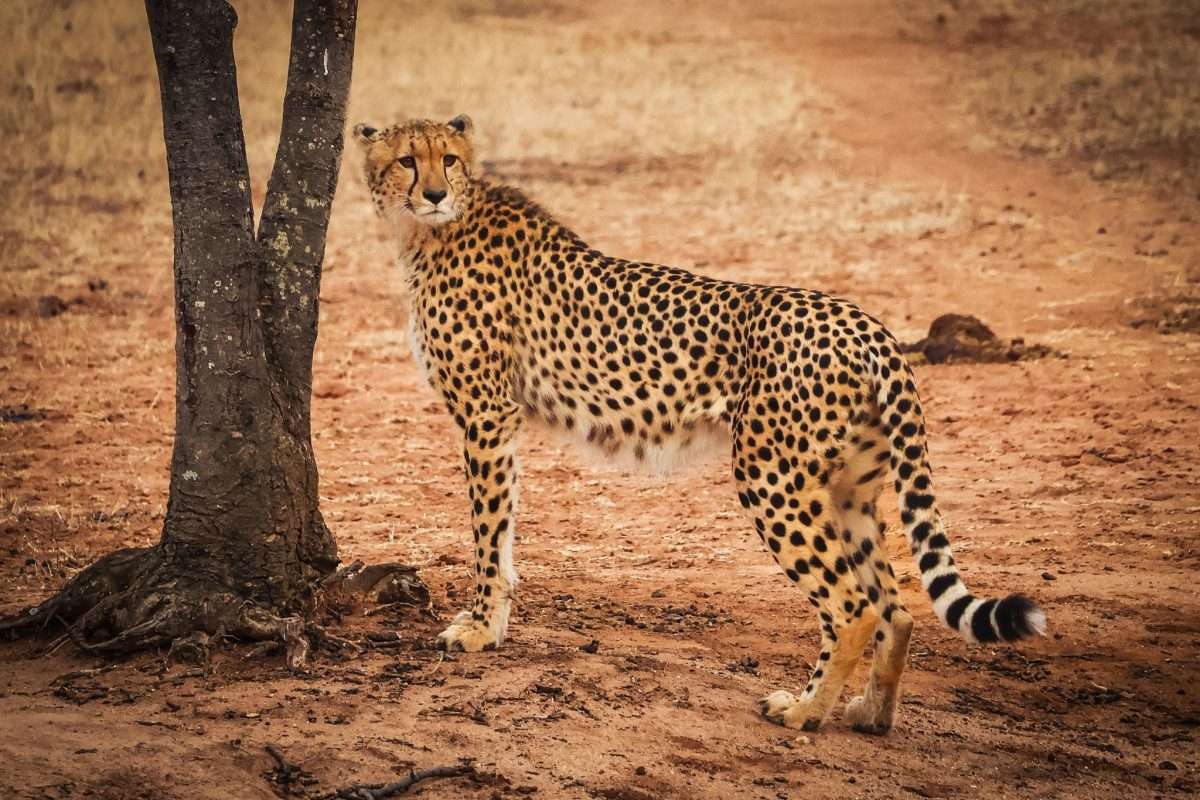
A cheetah runs at a top speed of approximately 112 km per hour (70 mph) in short bursts. It can accelerate from 0 to 100 km per hour in around 3 seconds. Each stride can cover up to 7 to 8 metres. A full sprint lasts approximately 20 to 30 seconds after which the cheetah must rest for up to 30 minutes to recover. The cheetah is the fastest land animal on Earth but it is a sprinter, not a distance runner.
How Fast Do Cheetahs Run?
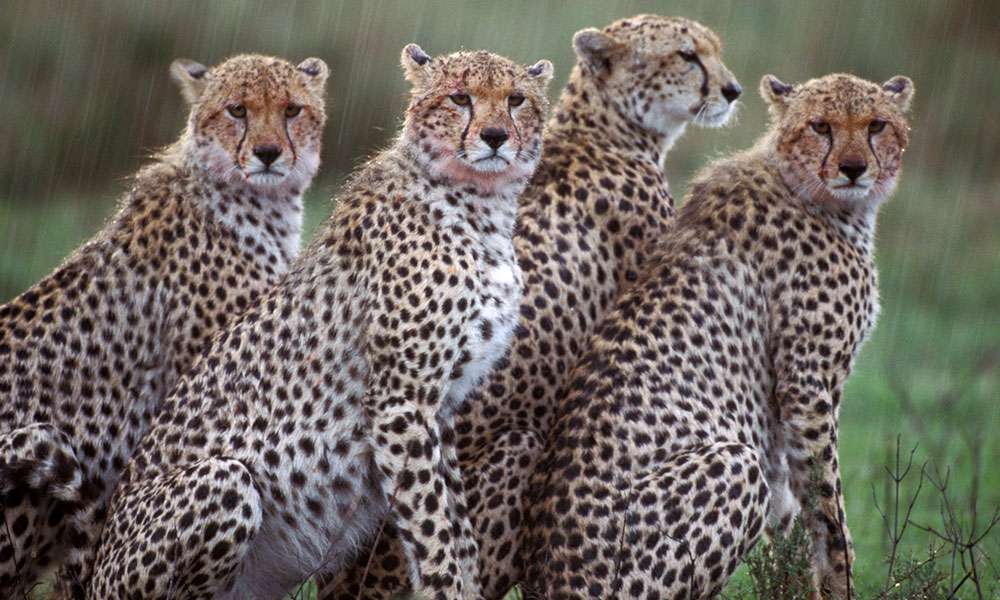
Before understanding how cheetahs run so fast, it helps to understand just how fast they actually are.
A cheetah’s top speed is approximately 112 km per hour or 70 miles per hour. The acceleration is what is truly astonishing. A cheetah reaches that speed in about 3 seconds from a standing start. This figure equals and often beats the acceleration of high-performance sports cars.
To put cheetah speed in context: Usain Bolt, the fastest human ever recorded, reached a top speed of just under 45 km per hour during his 100-metre world record run. A cheetah would cover the same distance in under 4 seconds. It would be lapping Bolt before he crossed the finish line.
However a cheetah is a sprinter, not a marathon runner. A full sprint lasts approximately 20 to 30 seconds and rarely exceeds 300 meters. After that, the cheetah’s body temperature rises dangerously high and it has to stop, rest, and recover before it can do anything else — including eat.
Cheetah Speed vs Other Animals
How fast do cheetahs run compared to the animals they hunt and the animals they compete with?
| Animal | Top Speed | Notes |
|---|---|---|
| Cheetah | 112 km per hour | Fastest land animal, short bursts only |
| Pronghorn antelope | 97 km per hour | Fastest sustained runner on Earth |
| Springbok | 88 km per hour | Can maintain speed for longer than cheetah |
| Thomson’s gazelle | 80 km per hour | Primary cheetah prey in East Africa |
| Lion | 80 km per hour | Short bursts only |
| Wildebeest | 80 km per hour | Can sustain speed longer than cheetah |
| Zebra | 65 km per hour | Strong and difficult for cheetah to subdue |
| Leopard | 60 km per hour | Slower but far stronger than cheetah |
| Usain Bolt (human) | 45 km per hour | Fastest human ever recorded |
| Elephant | 40 km per hour | Faster than most people expect |
The cheetah is faster than everything it hunts in short bursts. But Thomson’s gazelles, springbok, and wildebeest can sustain their speeds for longer. This is why timing, positioning, and the element of surprise matter as much as raw speed in a cheetah hunt.
Why Is the Cheetah So Fast? The Body Parts That Make It Possible
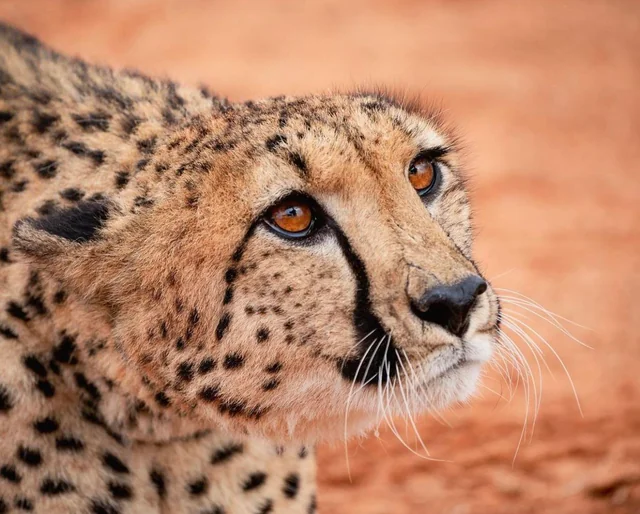
How can a cheetah run so fast when no other animal comes close? The answer is in the engineering of its body. Every physical feature works together in a system designed for one purpose.
The Spine — The Most Important Factor
The cheetah’s spine is the single most important reason why cheetahs are so fast. It is extraordinarily flexible in a way no other big cat’s spine can match.
When a cheetah runs, its spine acts like a coiled spring. In the compression phase, all four legs come together under the body and the spine flexes inward. The cheetah’s front and hind legs actually overlap beneath it. Then the spine extends like a spring releasing, launching the legs outward and forward simultaneously.
This spinal extension is what generates the cheetah’s enormous stride length. A single stride can cover 7 to 8 metres. That is the length of a small bus. At top speed a cheetah takes about 3.5 strides per second, each one covering that full distance.
During a sprint there are two moments when all four feet are off the ground simultaneously. One when the legs are tucked under the body and one when they are fully extended. This is why slow-motion footage of a cheetah running looks so different from any other animal.
The Legs and Muscle Fibers
Cheetahs have long, lean legs relative to their body size. Long legs mean longer strides. But the internal composition of the muscles matters as much as the length.
In the hind legs, over 80 percent of the muscle mass at the top of the leg consists of fast-twitch muscle fibers. These fibers contract more rapidly than normal muscle fibers. They produce explosive power for short bursts rather than the slow-twitch fibers that support endurance.
The psoas muscle, a large muscle that extends and flexes the hip, is significantly enlarged in cheetahs compared to other cats. This muscle powers each hind leg push-off and contributes directly to how much distance each stride covers.
Approximately half of a cheetah’s entire body mass is muscle. Combined with its lightweight frame of 35 to 65 kilograms, the power-to-weight ratio is extraordinary.
The Claws — Built-in Cleats
How do cheetahs run so fast around corners and at tight angles without slipping? The claws.
Unlike all other big cats, cheetah claws do not fully retract. They remain partially extended at all times like the cleats on an athlete’s running shoe. This gives the cheetah constant traction on the ground during acceleration and at high speed.
The non-retractable claws also allow the cheetah to make sharp directional changes during a chase without losing grip. When a gazelle zigs, the cheetah can zag without slipping.
Cheetahs also have a dewclaw further up the front leg, similar in position to a human thumb. During the final stages of a chase the cheetah uses this dewclaw to hook the back legs or flanks of its prey, causing it to stumble and fall. This is how a 65-kilogram cheetah brings down a running gazelle.
The Tail — Nature’s Rudder
A cheetah’s tail is long and muscular, proportionally larger than those of other big cats. It functions as a counterbalance and rudder during high-speed pursuit.
When a gazelle changes direction suddenly, the cheetah throws its tail to the opposite side to counterbalance the turn. This allows the cheetah to change direction almost instantly at full speed without losing significant momentum. Without this tail function the cheetah would overshoot its prey on almost every directional change.
The Head and Skull
A cheetah’s head is small and rounded. This shape is aerodynamic, reducing air resistance at high speed. Other big cats have larger, wider heads that provide more power for wrestling prey but create more drag.
The cheetah sacrifices jaw strength for aerodynamics. Cheetahs have smaller teeth and a weaker bite than lions or leopards. They kill by gripping the throat of their prey and suffocating it rather than crushing the skull or snapping the spine. Their lightweight skull keeps the head stable and pointed forward at top speed.
The Chest, Lungs and Heart
How are cheetahs so fast when the physical demands of sprinting at 112 km per hour would kill most animals?
The cheetah has a free-floating breastbone that allows maximum flexibility and expansion of the chest cavity during a sprint. This creates space for the lungs to expand much further than in most animals.
At top speed a cheetah breathes up to six times faster than a human. Its enlarged heart, lungs, liver, and adrenal glands work together to deliver oxygen to the muscles as fast as possible and remove waste products immediately.
But this system has a limit. The cheetah’s body temperature rises significantly during a sprint. If it does not stop running the body heat becomes dangerous. This is why every chase ends quickly, usually within 30 seconds, regardless of whether the hunt succeeds or not.
The Eyes
Cheetahs hunt entirely by sight rather than smell. Their large forward-facing eyes give them excellent binocular vision and depth perception to judge distances accurately at high speed.
The distinctive black tear marks running from the inner corners of the eyes to the mouth reduce sun glare during daytime hunting, similar to the black strips athletes wear under their eyes. This keeps the cheetah’s vision sharp when it is sprinting at full speed in bright savannah sunlight.
How Does a Cheetah Hunt?
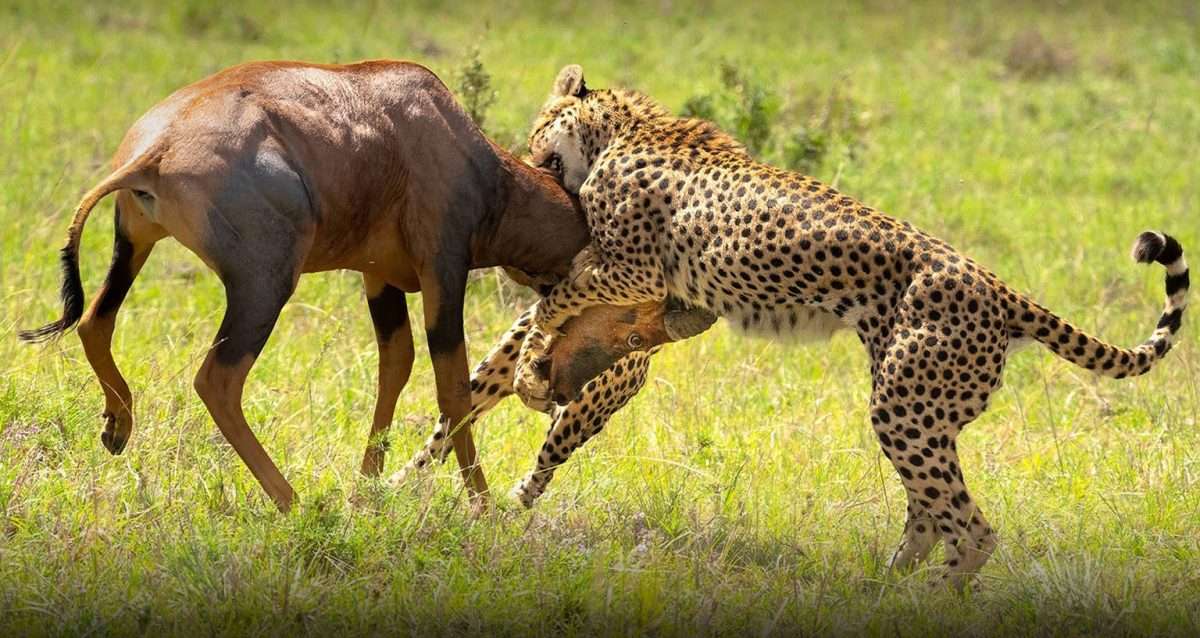
Understanding why cheetahs are so fast makes more sense in the context of how they actually use their speed.
Cheetahs are daytime hunters. They become active in the early morning and late afternoon, avoiding the heat of midday and avoiding direct competition with nocturnal predators like lions and leopards.
The hunt begins with observation. Cheetahs use elevated ground, termite mounds, or fallen trees to scan the surrounding plains for suitable prey. They look for animals that are young, old, injured, or separated from the herd. Thomson’s gazelle is the primary prey in East Africa. Impala, springbok, hares, and young wildebeest are also commonly targeted.
Once a target is identified the cheetah begins a slow, careful stalk. It uses long grass and natural contours of the land to hide its approach, moving very slowly with its body low to the ground. The cheetah aims to get within 50 to 100 metres of its prey before breaking into a sprint because the sprint cannot be sustained for long.
When the cheetah commits to the chase it accelerates rapidly. The prey animal usually sees the cheetah and begins running and changing direction. The cheetah mirrors every directional change using its tail for balance. It trips the prey with its dewclaw and then grips the throat until the animal suffocates.
After a successful kill the cheetah is exhausted. It breathes heavily, sometimes for 20 to 30 minutes, before its heart rate and body temperature return to safe levels. During this recovery period the cheetah is at its most vulnerable. Lions, hyenas, leopards, and even large groups of vultures can steal the kill during this window.
Why Can’t Cheetahs Run for Long?
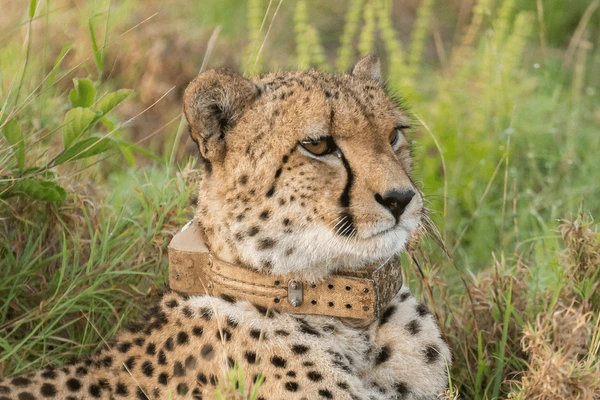
The price of being the fastest animal on Earth is limited endurance. A cheetah can only sustain top speed for 20 to 30 seconds and rarely more than 300 meters.
The reason is heat. During a sprint the cheetah’s body temperature rises rapidly. Its muscles generate enormous amounts of heat that the body cannot dissipate fast enough. If the sprint continues beyond the safe window the cheetah risks organ damage from overheating.
After a chase the cheetah pants heavily to release heat through its mouth. It can also release heat through its feet. Even the black spots on a cheetah’s coat may help with heat dispersal. The black hairs of the spots are longer than the surrounding golden fur, which scientists believe may help release heat more efficiently.
The cheetah also eats quickly because of this vulnerability. After recovering from a hunt it must consume as much as possible as fast as possible before a larger predator arrives to steal the kill. Cheetahs eat only about 40 percent of what they kill when hunting alone because they are often displaced before they finish eating.
Do Cheetahs Walk?
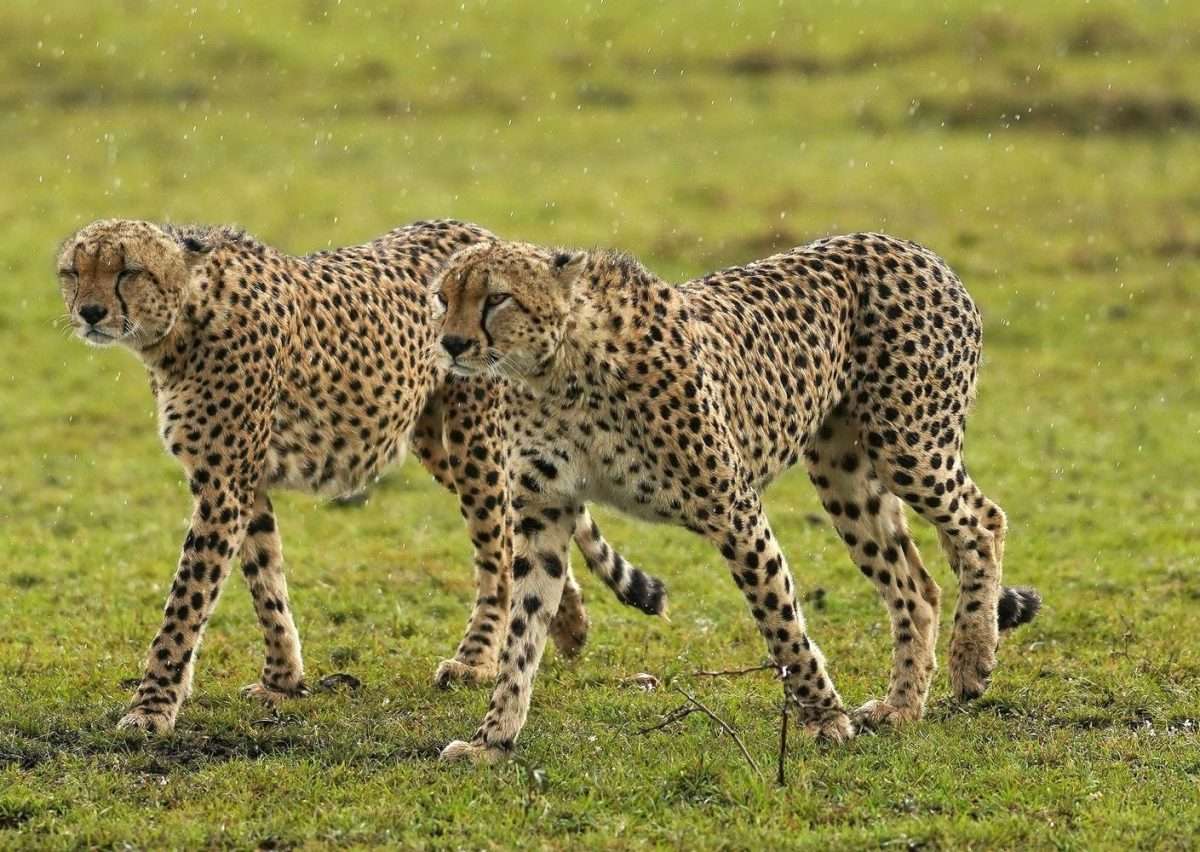
Yes. Cheetahs walk as their normal mode of travel between hunts and during the heat of the day. They are only at full sprint during an active hunt.
Cheetahs cover large distances on foot daily, patrolling territories, searching for prey, and moving between water sources. Male coalitions may patrol territories of several hundred square kilometers. A cheetah’s daily walking range is typically between 5 and 10 kilometers though this varies significantly with prey availability and territory.
When walking, cheetahs look superficially similar to other large cats. It is only when they accelerate into a run that the differences in build and stride become obvious.
Being Fast Comes at a Cost
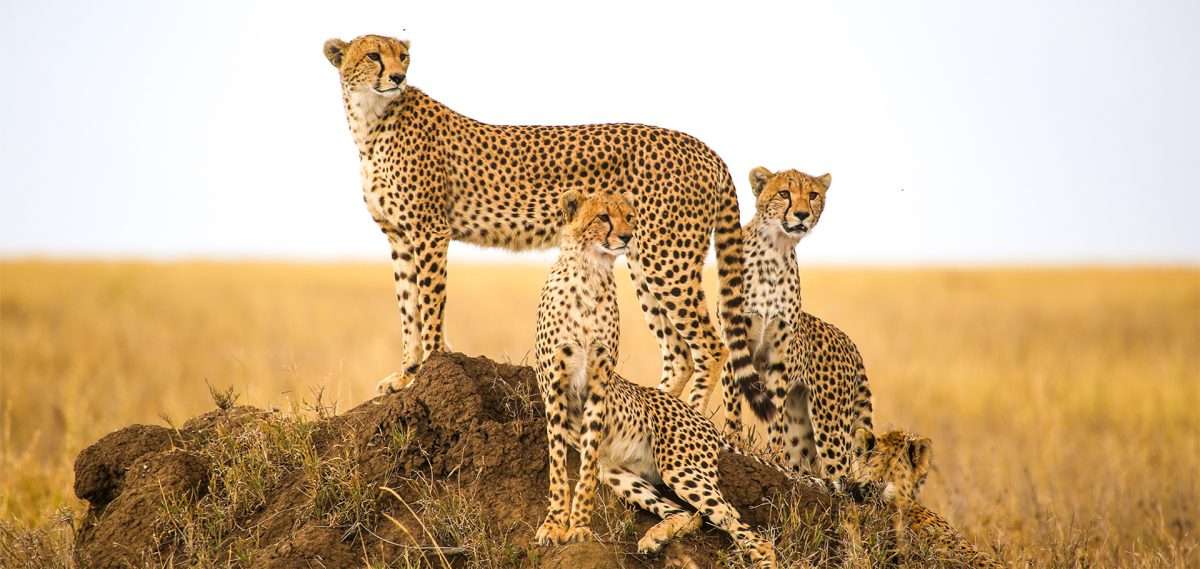
The speed that makes cheetahs unique also makes them vulnerable. They are lighter and less powerful than lions and leopards, so they cannot defend their kills and often give them up without a fight.
This weakness also affects their cubs. Female cheetahs raise them alone and must leave them to hunt, which exposes them to predators. As a result, survival rates are very low.
Male cheetahs sometimes form small groups with their brothers. These coalitions help them hunt better and protect their food more effectively.
Where to See Cheetahs Running in the Wild
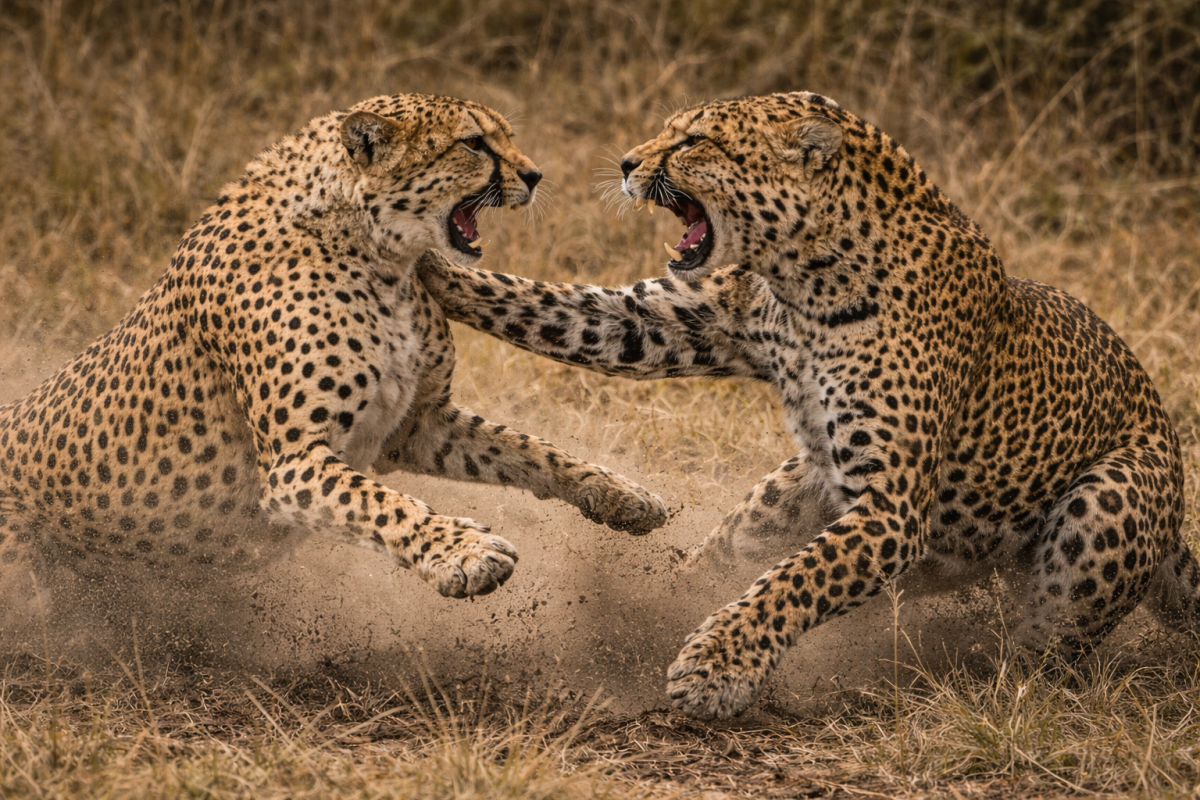
Watching a cheetah hunt at full speed is one of the greatest wildlife experiences on Earth. It is rare, unpredictable, and over in seconds — which makes it all the more memorable when it happens.
The best places across Africa to see cheetahs in the wild are the destinations with the right combination of open terrain, low grass, high cheetah population, and good prey density.
- Kenya: The Maasai Mara is one of the best places in Africa to see cheetahs. The open plains give cheetahs the room they need to run and give visitors clear sightlines to watch hunts unfold from start to finish. The annual wildebeest migration from July to October brings enormous prey concentrations that attract and keep cheetahs active throughout the season.
- Tanzania: The Serengeti National Park’s open central plains around Seronera are among the best cheetah habitat on the continent. The flat open grassland is ideal terrain and the resident cheetah population in the Serengeti is considered one of the strongest in Africa. The Ngorongoro Crater also has resident cheetahs within its enclosed ecosystem.
- Botswana: The Central Kalahari Game Reserve and the Kgalagadi Transfrontier Park on the Botswana and South Africa border are excellent for cheetah sightings in open semi-desert terrain. Cheetahs in the Kalahari hunt larger prey than their East African counterparts because of the different prey base available.
- Namibia: Namibia holds one of the largest free-ranging cheetah populations in Africa. The Etosha National Park and private farms in the Namibian central highlands are excellent locations. The Cheetah Conservation Fund is based in Namibia and runs a sanctuary and research centre that visitors can include in a Namibian itinerary.
- South Africa: Kruger National Park holds a significant cheetah population across its northern open plains. Several private game reserves in the Eastern Cape, including Kwandwe and Samara, have cheetah populations and offer dedicated cheetah tracking experiences.
| Destination | Country | Why It Is Good for Cheetahs |
|---|---|---|
| Maasai Mara | Kenya | Open plains, high prey density, resident cheetah population |
| Serengeti | Tanzania | Vast open grassland, one of Africa’s strongest cheetah populations |
| Ngorongoro Crater | Tanzania | Enclosed ecosystem with resident cheetahs year-round |
| Kgalagadi Transfrontier Park | Botswana and South Africa | Open semi-desert, excellent visibility for spotting cheetahs |
| Etosha National Park | Namibia | Large free-ranging population, open plains |
| Central Kalahari Game Reserve | Botswana | Remote, vast open terrain, large territory cheetahs |
| Kruger National Park | South Africa | Significant population in northern open sections |
See cheetahs on a private African safari with TourwithPipi →
Frequently Asked Questions — Why Is the Cheetah So Fast?
Why is the cheetah so fast?
The cheetah is so fast because of a combination of physical adaptations that all work together. A uniquely flexible spine that extends and contracts like a spring generating strides of 7 to 8 metres. Fast-twitch muscle fibers in the hind legs that produce explosive power. Non-retractable claws that grip the ground like cleats. A long muscular tail that steers at full speed. Enlarged heart, lungs, and liver that deliver oxygen rapidly. And a lightweight aerodynamic body and skull that reduce drag.
How fast do cheetahs run?
Cheetahs reach a top speed of approximately 112 km per hour or 70 miles per hour in short sprints. They accelerate from 0 to 100 km per hour in about 3 seconds. This makes them the fastest land animal on Earth. However they can only maintain this speed for 20 to 30 seconds before overheating forces them to stop.
How does a cheetah run so fast compared to other animals?
The cheetah’s spine flexion and extension creates stride lengths of 7 to 8 metres, which no other land animal matches at equivalent body size. Combined with fast-twitch muscle fibers, non-retractable claws for traction, and a tail for steering, the cheetah’s speed is built into every physical system simultaneously. Most animals prioritise either strength, endurance, or speed. The cheetah has sacrificed strength and endurance entirely for pure speed.
Why can’t cheetahs run for long?
Cheetahs generate enormous body heat during a sprint. Their temperature rises rapidly and if the sprint continues the heat becomes dangerous. After 20 to 30 seconds the cheetah must stop regardless of hunt success. It then needs up to 30 minutes to lower its body temperature and heart rate before it can eat.
Do cheetahs walk?
Yes. Cheetahs walk as their normal mode of travel between hunts and while patrolling their territories. They only sprint during active hunting. A cheetah typically walks 5 to 10 kilometres per day depending on prey availability and territory size.
What is the cheetah’s stride length?
A cheetah’s stride covers 7 to 8 metres at full speed. At top speed the cheetah takes approximately 3.5 strides per second. This enormous stride length is made possible by the unique flexibility of the cheetah’s spine which extends like a spring to push all four legs simultaneously outward.
How does a cheetah steer at high speed?
The cheetah uses its long muscular tail as a rudder. When prey changes direction the cheetah throws its tail to the opposite side to counterbalance the turn. This allows near-instant directional changes at full speed without significant loss of momentum. Without this tail function the cheetah would consistently overshoot its prey during direction changes.
Are cheetahs the fastest animal in the world?
Cheetahs are the fastest land animal in the world. However the peregrine falcon reaches speeds of over 320 km per hour in a dive, making it the fastest animal overall. In the water the black marlin and sailfish reach speeds of around 110 km per hour. Among land animals the cheetah has no equal in speed.
Why are cheetah claws different from other big cats?
Cheetah claws do not fully retract. They remain partially extended at all times like the cleats on a running shoe. This provides constant traction during sprinting and sharp turns. Other big cats have fully retractable claws that stay sharp for gripping and climbing. Cheetahs sacrifice this retractability for running grip because speed is their primary survival tool.
Where is the best place to see a cheetah run in Africa?
The best places are locations with open terrain and high cheetah populations. The Maasai Mara in Kenya and the Serengeti in Tanzania are the top destinations in East Africa. The Kgalagadi Transfrontier Park in Botswana and South Africa, Etosha in Namibia, and Kruger in South Africa are excellent for Southern Africa. All offer open grassland or semi-desert terrain where cheetahs can use their speed and where visitors can watch the full arc of a hunt.
Blog Summary About Cheetah Speed
- Cheetahs reach 112 km per hour at top speed, making them the fastest land animal on Earth.
- They accelerate from 0 to 100 km per hour in 3 seconds, faster than most performance cars.
- Each stride covers 7 to 8 metres, made possible by a uniquely flexible spine that extends and contracts like a spring.
- Approximately half of a cheetah’s body mass is muscle, with over 80 percent of the hind leg muscles being fast-twitch fibers designed for explosive power.
- Cheetah claws do not fully retract, acting like cleats to grip the ground and allow sharp turns at high speed.
- A cheetah’s tail acts as a rudder, helping it balance and change direction during high-speed chases without slowing down.
- A cheetah can only sprint for 20 to 30 seconds before its body temperature rises too high and it must stop to recover.
- After a successful hunt, a cheetah may need up to 30 minutes to lower its heart rate and body temperature before it can eat.
- Cheetahs breathe up to six times faster than humans during a sprint and have enlarged lungs, liver, heart, and adrenal glands to support this.
- Cheetah speed is a liability as well as an advantage. Being built for speed means being less muscular, less aggressive, and more likely to lose a kill to lions, leopards, or hyenas.


