
African safari animals are the whole reason people fly across the world to sit in a dusty vehicle before sunrise, and after guiding hundreds of trips across Kenya and Tanzania, I still feel the same pull every time a guide radios in a sighting. So when guests ask me what animals are in the safari, I do not hand them a generic checklist copied from a brochure. I tell them what I have actually watched with my own eyes, where to find each one, and when to go looking.
The Big Five Safari Animals, Explained by Someone Who Sees Them Weekly
The term Big Five comes from old hunting language, describing the five animals that were considered hardest and most dangerous to track on foot. Today it describes the top sightings most guests hope for, though there is so much more to see beyond these five.
Lion
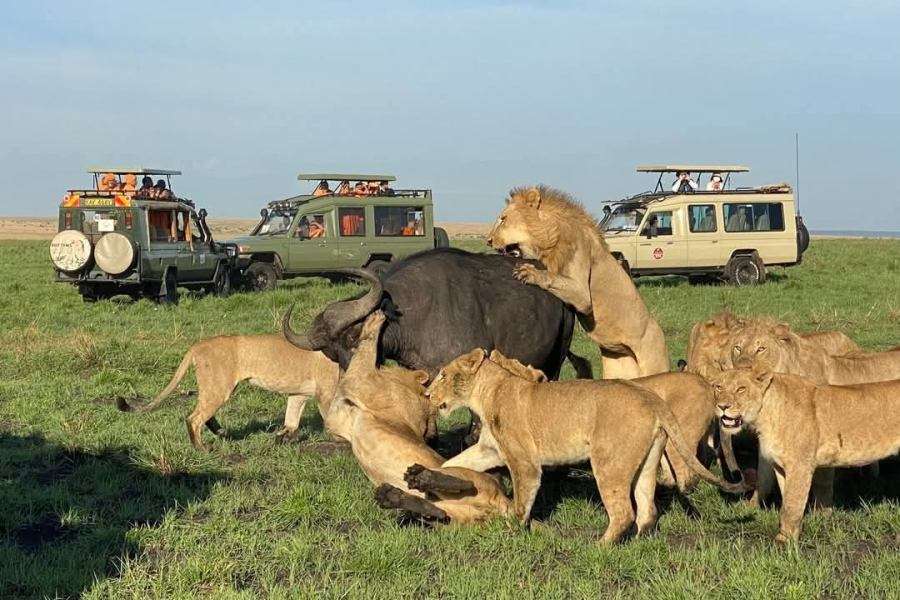
Lions are the only big cats that live in true social groups, called prides, usually made up of related females, their cubs, and one or two males. Only males grow a mane, which makes them easy to tell apart at a glance. Lionesses do most of the hunting, working together at dawn and dusk when it is cooler and prey is easier to track, so early morning and late afternoon drives give you the best odds.
Where and when: Masai Mara and Amboseli in Kenya, and the Serengeti and Ngorongoro Crater in Tanzania, all hold strong resident prides year round. Sightings are easiest at dawn and dusk when lions are actively hunting rather than resting in shade through the heat of the day.
Leopard
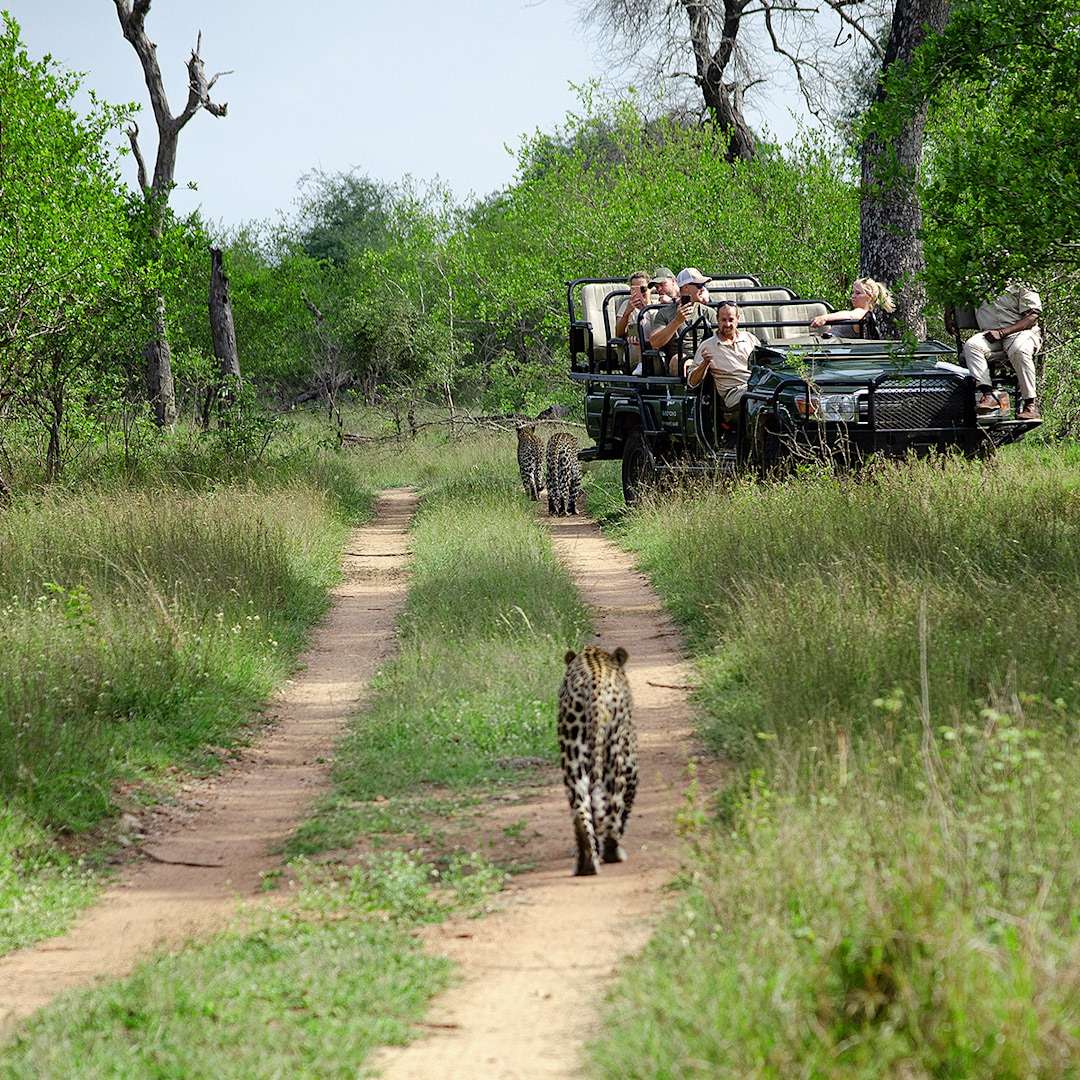
Leopards hunt alone and mostly at night, which makes them one of the harder animals on this safari animal list to spot. They are powerful climbers and often drag a kill up into a tree to keep it safe from lions and hyenas, so on a game drive, always look up as much as you look ahead.
Where and when: The Masai Mara, Serengeti, and Ngorongoro Crater all have healthy leopard populations, though sightings depend heavily on a sharp-eyed guide. Early morning and evening drives are best, since leopards rest in trees or thick brush through the hottest part of the day.
African Elephant
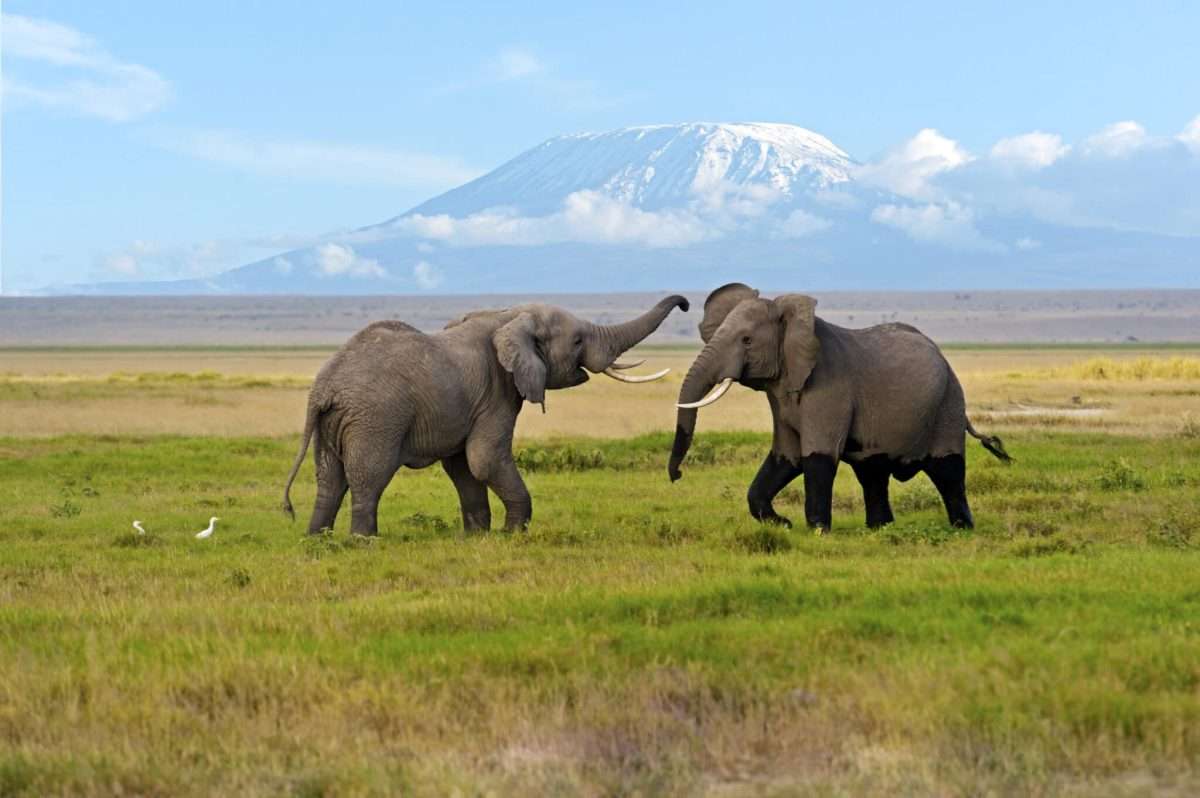
Elephants move in tight family groups led by an older female, and they communicate constantly through low rumbles that carry for miles. Watching a herd cross the road in front of your vehicle, calves tucked safely between the adults, is one of the moments that stays with almost every guest long after the trip ends.
Where and when: Amboseli in Kenya is famous for large herds set against the backdrop of Kilimanjaro, especially in the dry season from June through October when elephants gather at the park’s swamps. Tsavo and the Masai Mara are also reliable, and elephants are visible throughout the day rather than only at dawn and dusk.
Rhino
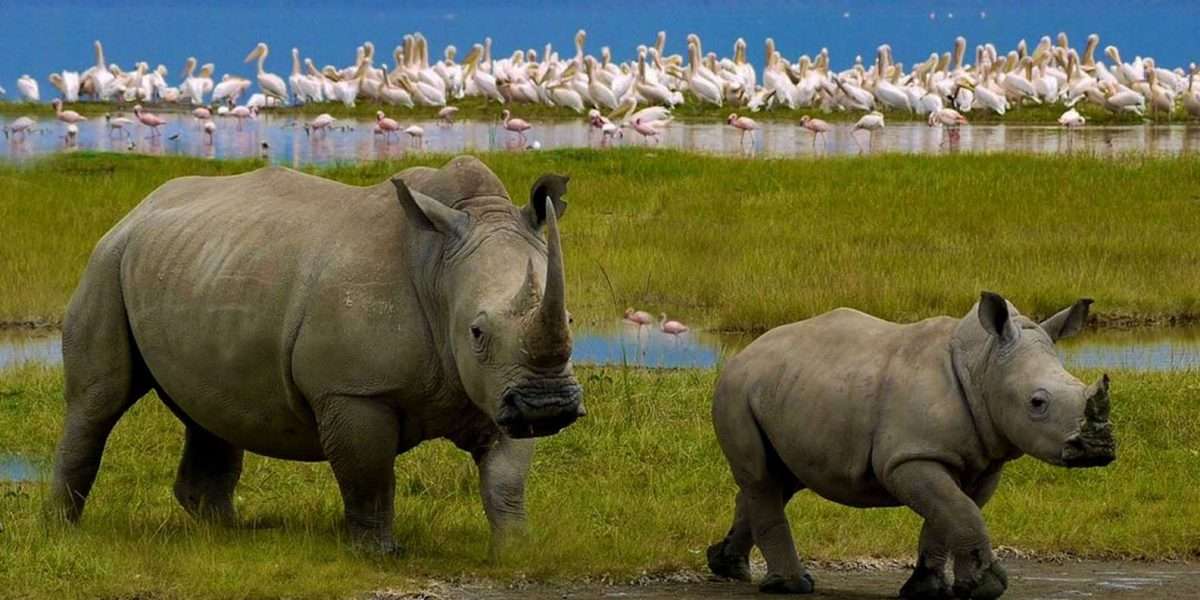
Both black and white rhino are actually the same shade of grey. The name comes from a mistranslation of an Afrikaans word for wide, describing the white rhino’s broad, square mouth. Rhino numbers have dropped sharply due to poaching, so a sighting today is genuinely rare and worth savoring.
Where and when: Ol Pejeta Conservancy and Lake Nakuru National Park in Kenya are the most reliable places to see both black and white rhino, since they are actively protected there. Ngorongoro Crater holds a small population as well. Rhino are grazers and can be seen at any time of day, though early morning tends to be calmest.
Cape Buffalo
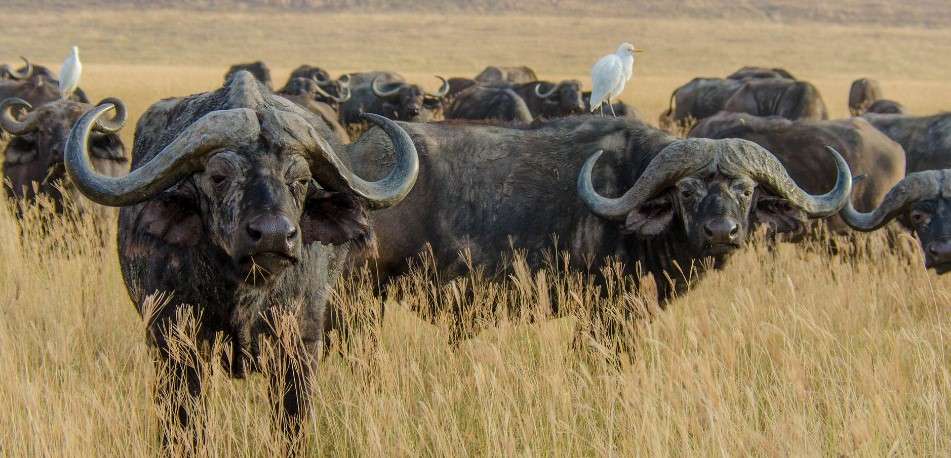
Buffalo often get overlooked next to lions and elephants, but they are considered one of the more unpredictable and dangerous safari animals, moving in large herds and defending each other fiercely if threatened. You will usually spot them near water, sometimes wallowing in a muddy pool with birds picking insects off their backs.
Where and when: Buffalo are common and easy to find nearly everywhere, including the Masai Mara, Amboseli, Serengeti, and Ngorongoro Crater. They stay close to water sources year round, so late morning near a river or waterhole is a reliable time to find a herd.
Other Big Cats and Predators You Will See on Safari
Cheetah
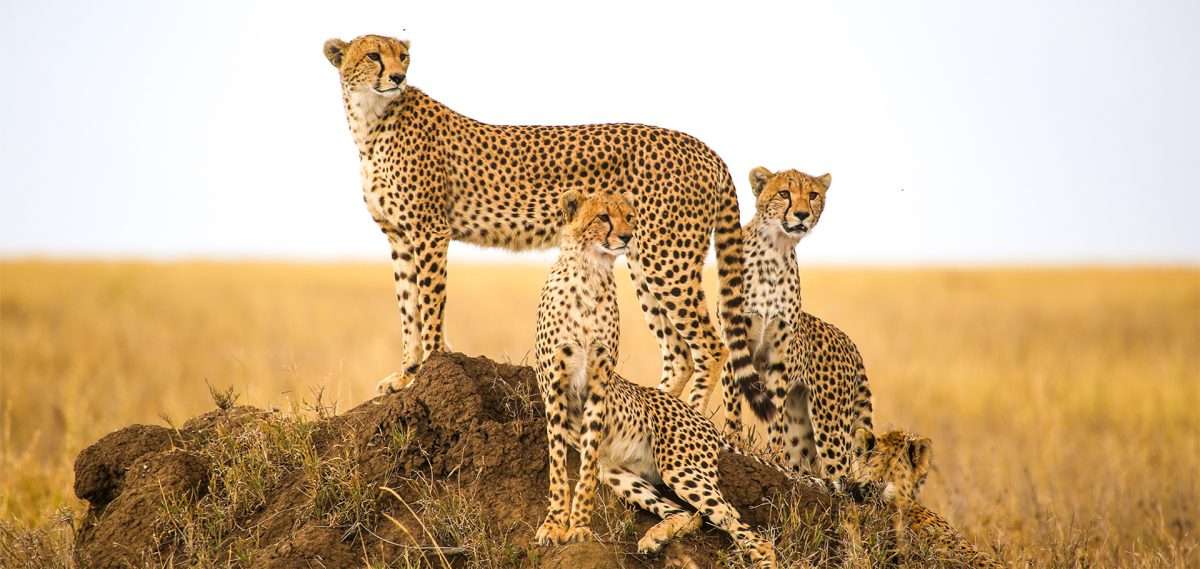
The cheetah is the fastest land animal alive, built lean and light for speed rather than power. Unlike leopards, cheetahs hunt during the day, so an early morning drive gives you the best real chance of watching a chase unfold.
Where and when: The open plains of the Masai Mara and the southern Serengeti are the top spots, since cheetahs need clear sightlines to hunt and avoid competing with lions and hyenas for cover. Look for them mid-morning, once the day has warmed slightly and prey is moving.
Hyena
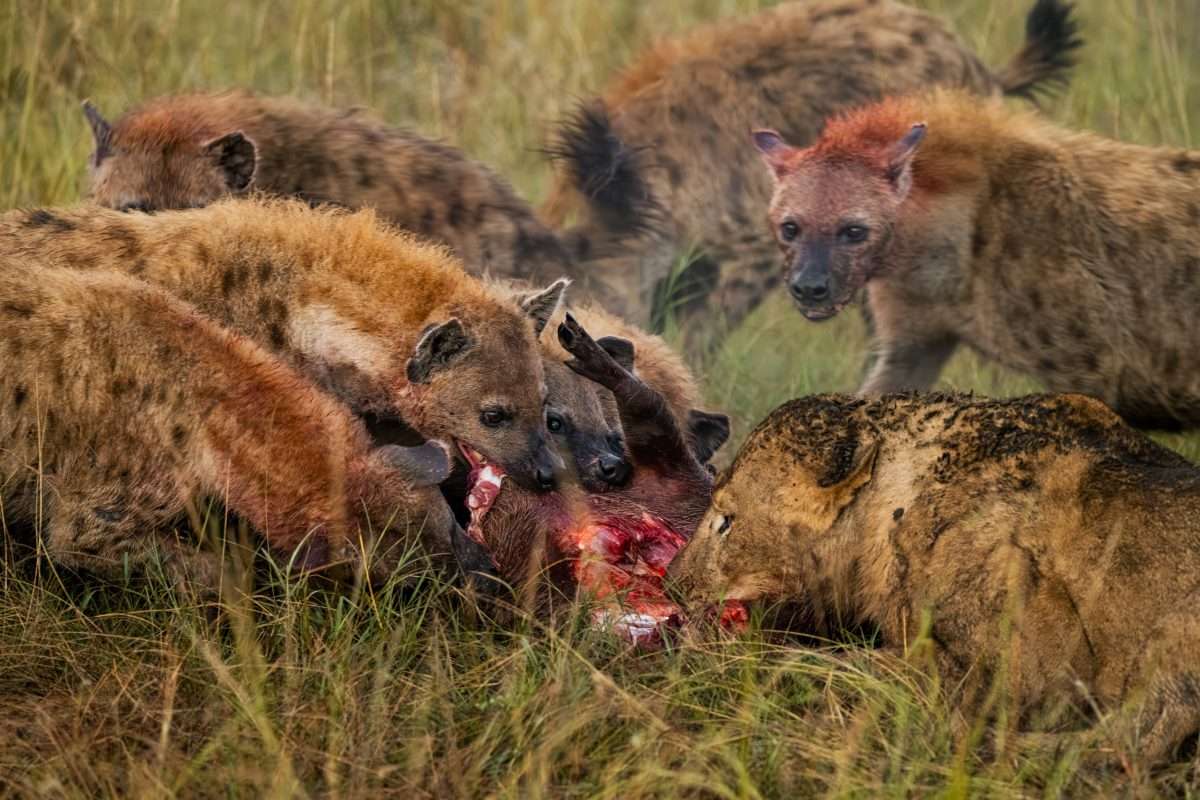
Hyenas are smarter and more capable hunters than their reputation suggests. Spotted hyenas actually kill most of what they eat rather than only scavenging, and they live in clans led by females, who are larger and more dominant than the males.
Where and when: Ngorongoro Crater has one of the highest hyena densities in Africa, and the Masai Mara and Serengeti are close behind. Dusk through early night is when they are most active, though you will often spot dens with pups during the day.
Jackal
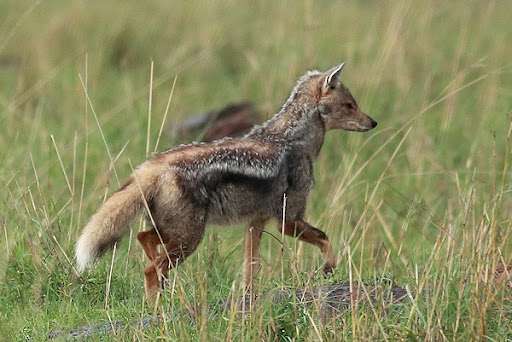
Jackals are quick, clever, and usually seen alone or in pairs rather than in packs. You will often spot one trotting near a carcass, waiting for a chance to grab scraps once the bigger predators move on.
Where and when: Jackals are widespread across the Masai Mara and Serengeti grasslands. Early morning and early evening are best, when they are actively hunting small prey rather than resting.
Serval
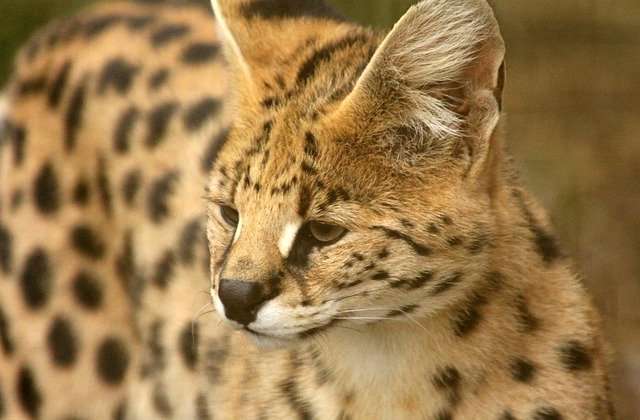
The serval is a slender wild cat with unusually long legs for its body size, which makes it an excellent jumper. Servals hunt mostly rodents and birds, using their height to spot prey moving through tall grass before pouncing.
Where and when: Servals are shy and less commonly seen, but the grasslands of the Masai Mara and the Ngorongoro Crater rim are good places to look. Early morning, right after sunrise, is your best window.
Mongoose
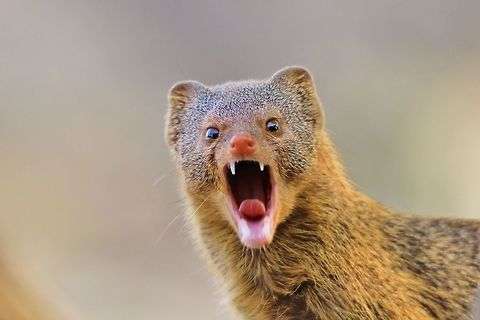
Mongooses are small, quick carnivores related to meerkats. Banded mongooses live in social groups and hunt during the day for insects, small reptiles, and rodents, often seen darting in and out of burrows near rocky outcrops.
Where and when: Common throughout the Masai Mara and Serengeti near termite mounds and rocky kopjes. They are active during the day, so any daytime game drive gives you a good chance.
Aardvark
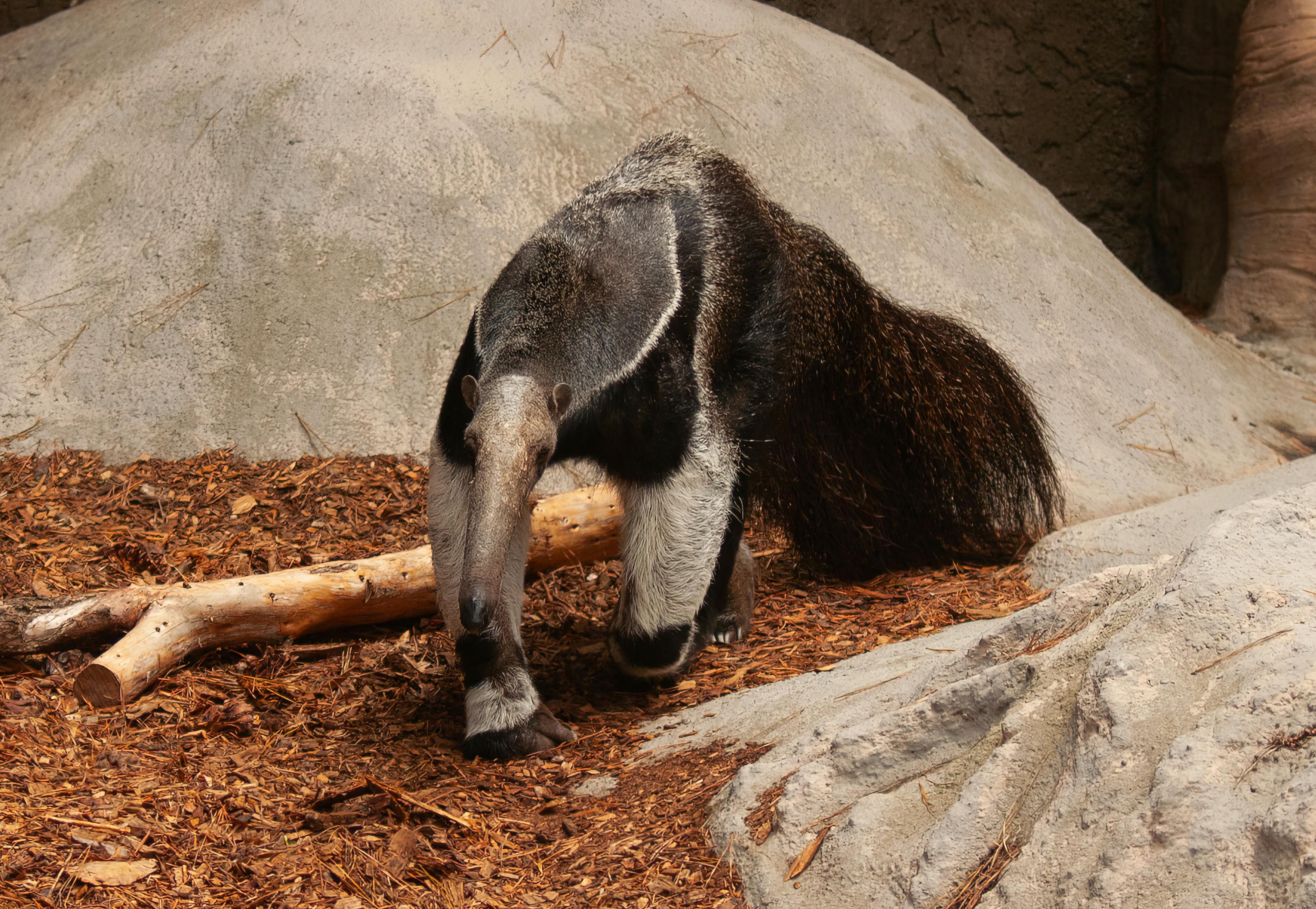
The aardvark, whose name means earth pig, is a powerful digger that can hollow out a burrow in minutes. Abandoned aardvark burrows become homes for other animals like warthogs and jackals, which makes this shy, nocturnal animal more important to the ecosystem than most guests realize.
Where and when: Aardvarks are strictly nocturnal and genuinely rare to see, since they avoid daylight entirely. A private conservancy night drive, where permitted, is really the only realistic way to spot one.
Zorilla
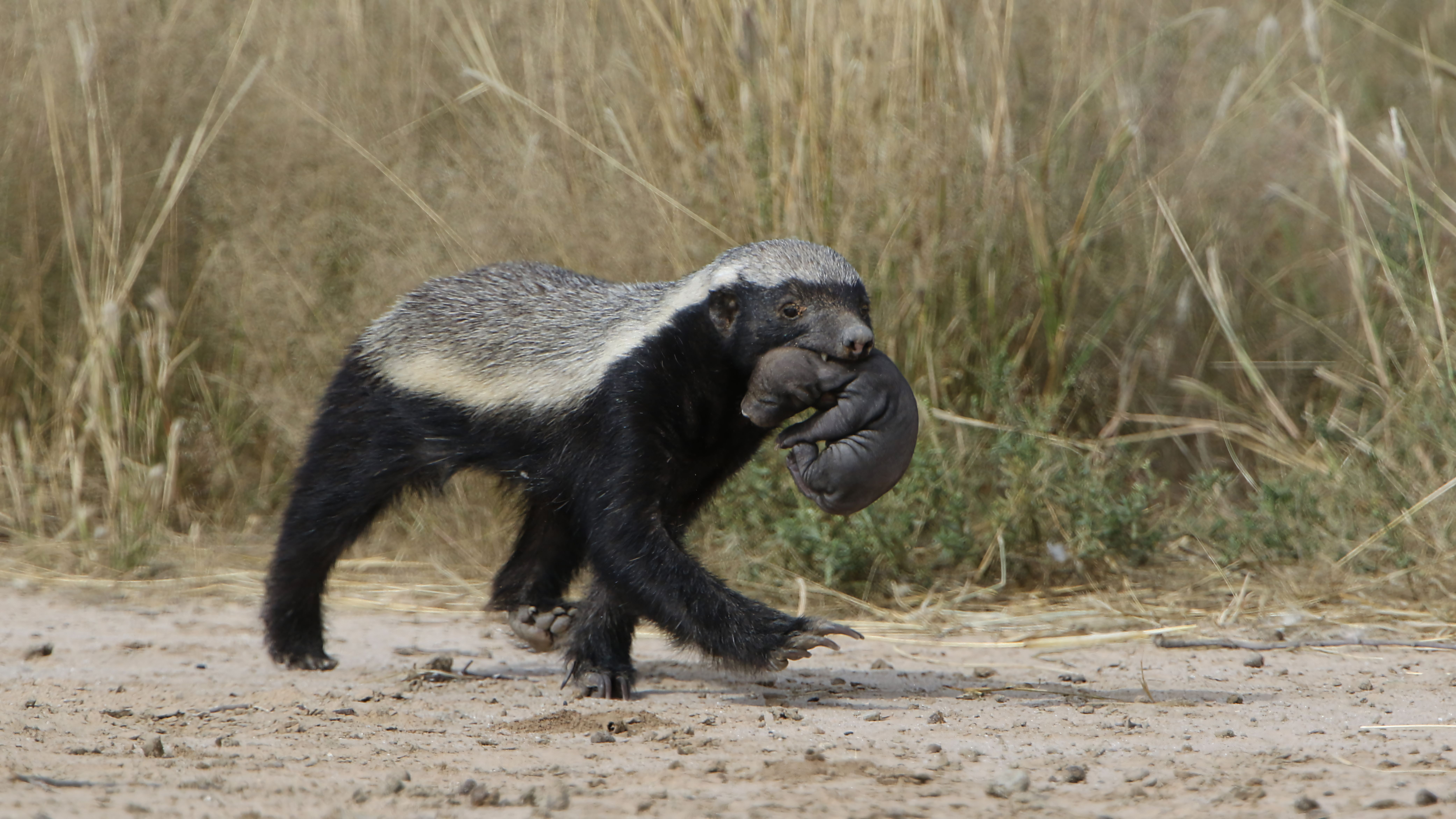
The zorilla, or striped polecat, looks a bit like a skunk but is actually part of the weasel family. It is small, mostly nocturnal, and rarely seen, which makes a sighting a genuine highlight for anyone keeping a serious safari animal list.
Where and when: Like the aardvark, the zorilla only comes out after dark, so sightings are limited to night drives in private conservancies with the right permits. Consider it a lucky bonus rather than something to plan around.
Grazing Animals and Antelope on the Safari Animal List
Zebra
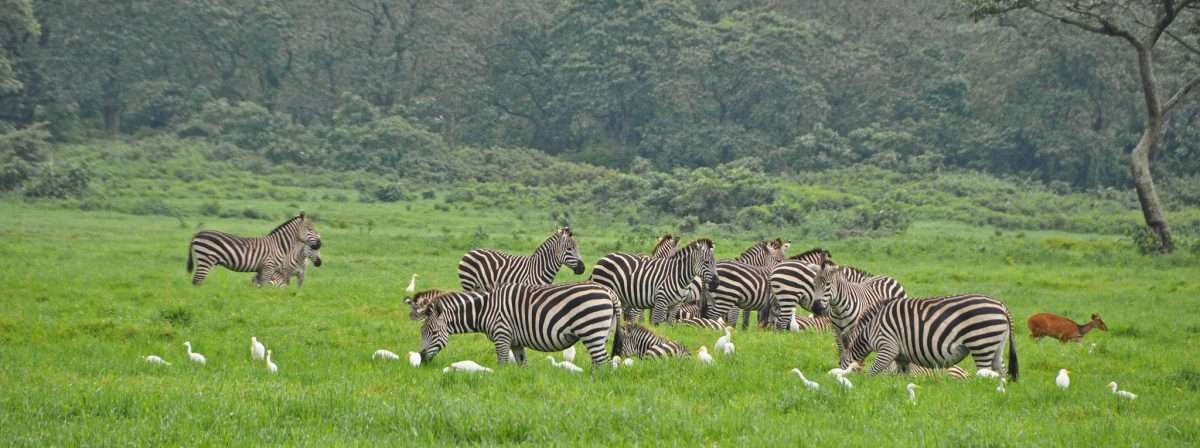
Every zebra has a completely unique stripe pattern, similar to a human fingerprint, which helps herd members recognize each other. Despite their calm appearance, a well placed kick from a zebra can seriously injure or even kill a predator.
Where and when: Zebra are common year round across the Masai Mara, Serengeti, and Amboseli, and they migrate alongside wildebeest during the Great Migration between July and October. They graze throughout the day, so sightings are easy at any hour.
Giraffe
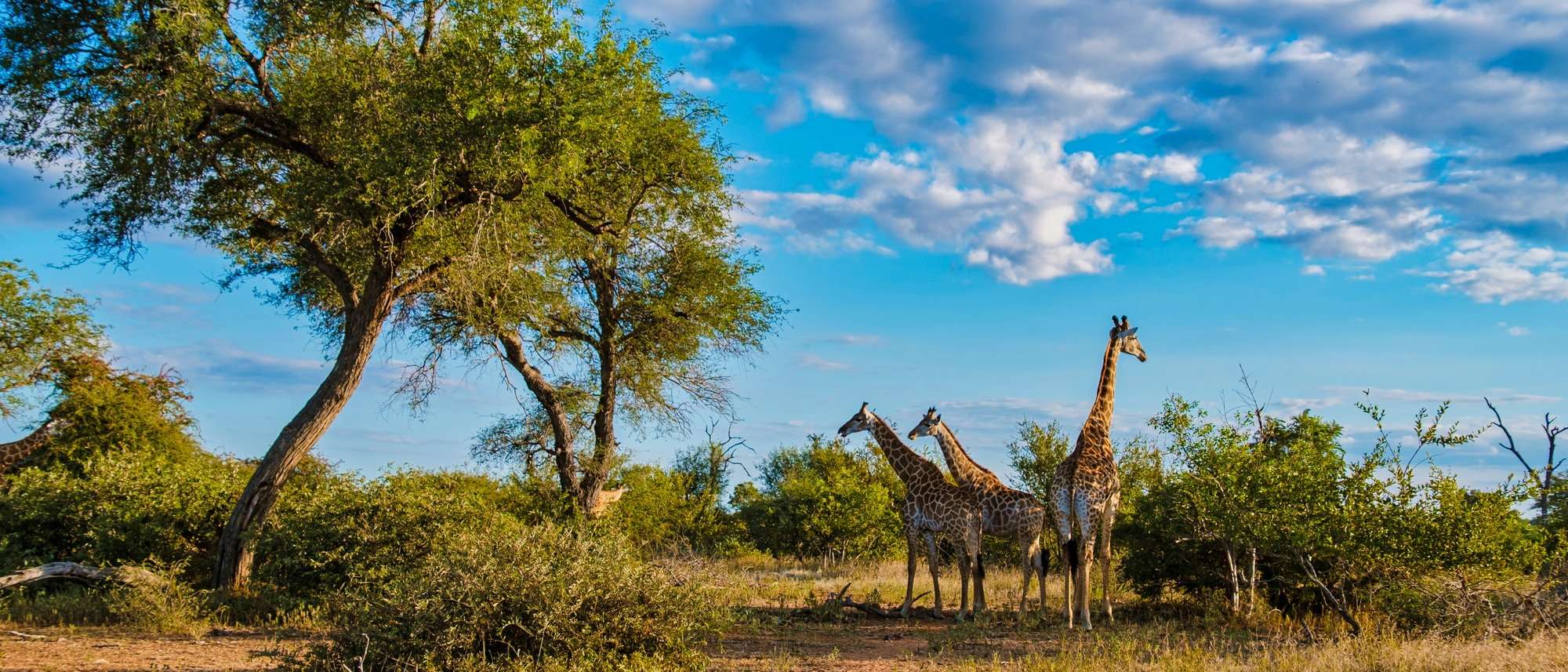
Giraffes wrap their long, dark tongues around acacia branches to pull off leaves, and each giraffe has its own unique coat pattern. Watching two males fight by swinging their necks and heads at each other, a behavior called necking, is a rare but unforgettable sighting.
Where and when: Masai giraffe are common across the Masai Mara, Amboseli, and Serengeti, browsing acacia trees at any time of day. Necking behavior is more often seen in the cooler hours of morning and late afternoon.
Wildebeest
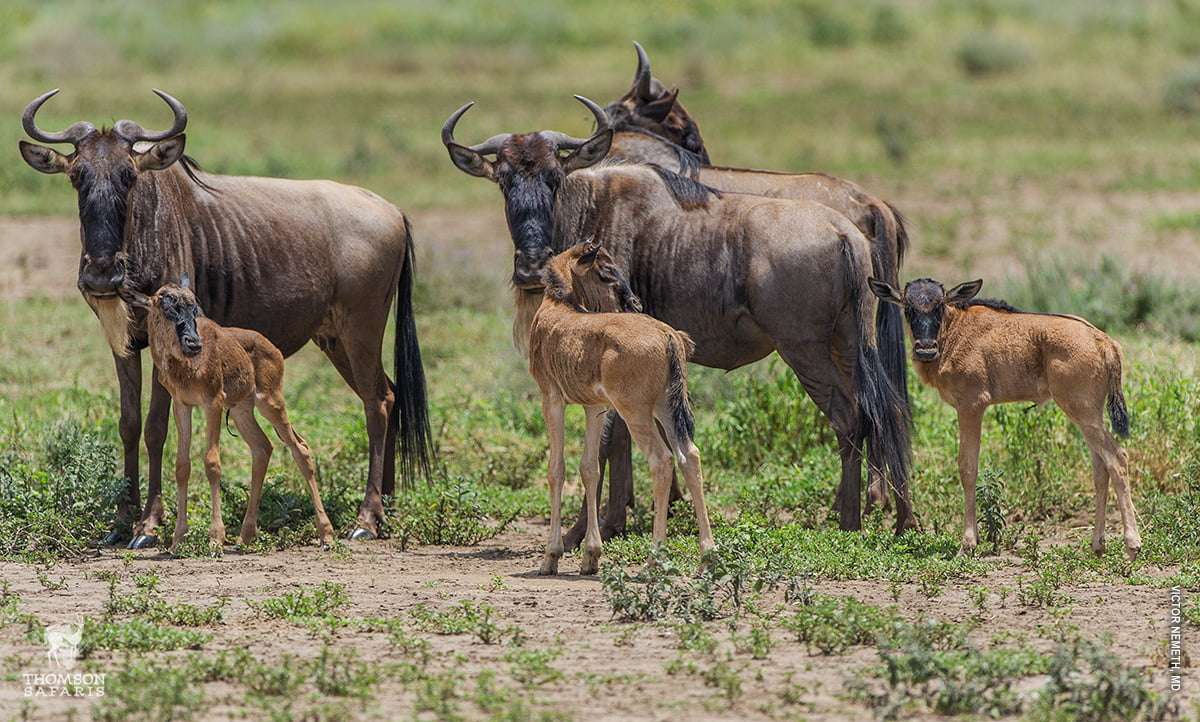
Wildebeest are technically a type of antelope, despite looking a bit like cattle. Every year, well over a million of them move in a constant loop between the Serengeti in Tanzania and the Masai Mara in Kenya, chasing fresh grazing and water, in what is known as the Great Migration.
Where and when: You can see wildebeest year round in both the Serengeti and Masai Mara, but the dramatic river crossings happen roughly between July and October, and calving season, when hundreds of thousands of calves are born within weeks, happens in the southern Serengeti between January and March.
Hippo
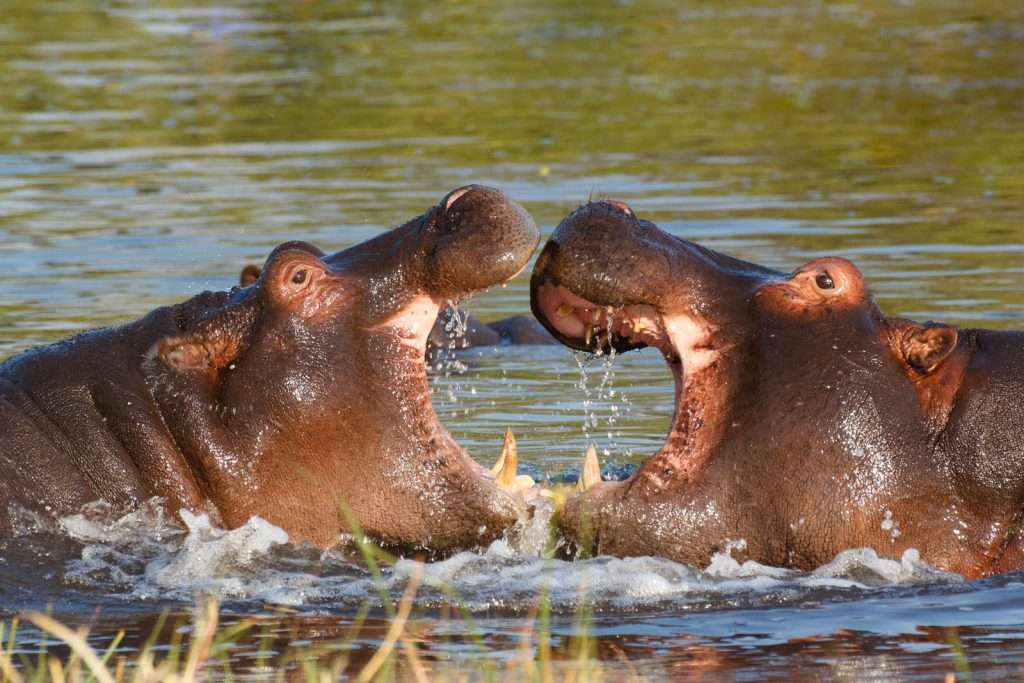
Hippos spend most of the day submerged in water and come out at night to graze on land. They cannot actually swim, they walk along the riverbed instead, holding their breath for several minutes at a time. Hippos are responsible for more human deaths in Africa each year than lions, so guides always keep a respectful distance.
Where and when: The Mara River and Lake Naivasha are the most reliable spots. Hippos are easiest to observe during the day while they rest in the water, though they are actually most active at night once they come ashore to graze.
Warthog
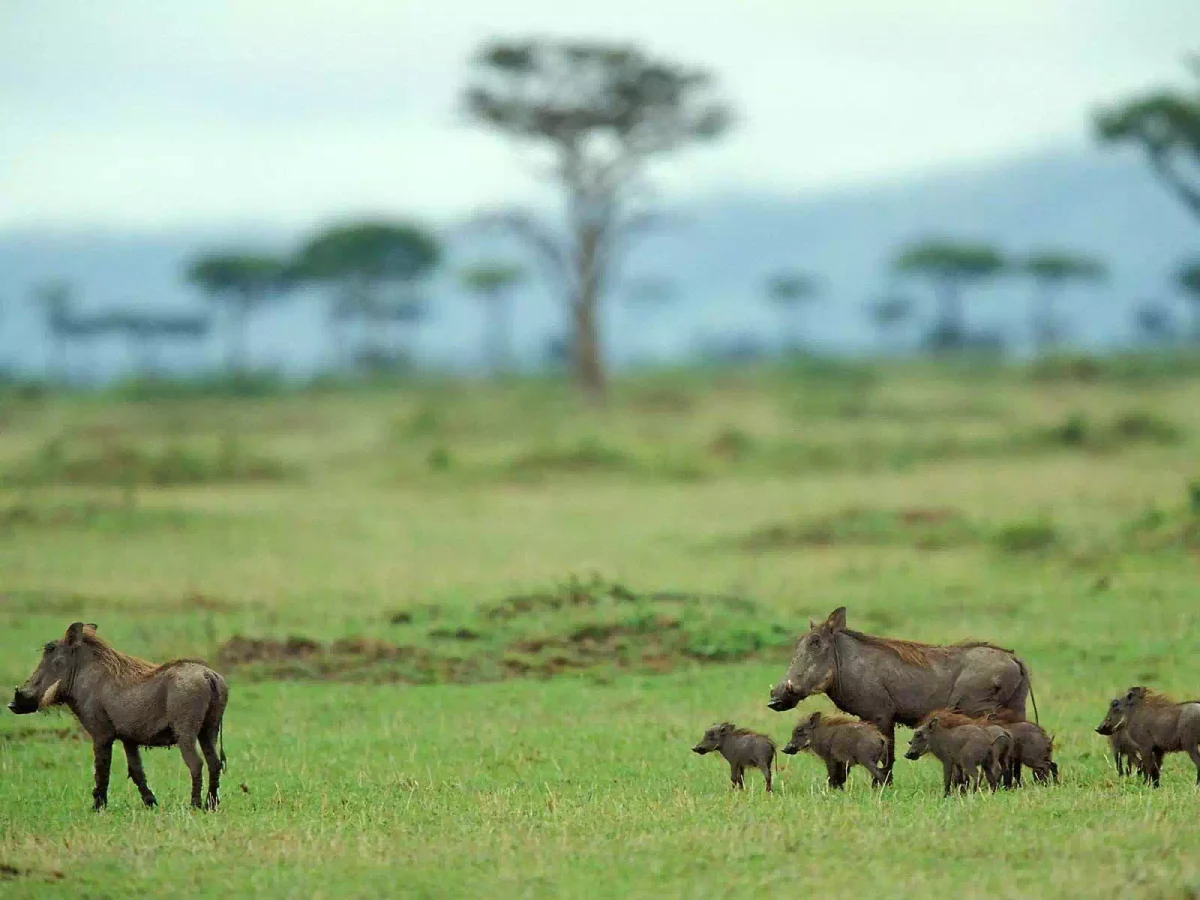
Warthogs are related to pigs and often live in abandoned aardvark burrows. Despite their tough, tusked appearance, they are herbivores and will usually run for cover at the first sign of danger, tails held straight up like an antenna.
Where and when: Warthogs are common and easy to spot throughout the Masai Mara, Amboseli, and Serengeti, grazing openly on grass during the day.
Impala
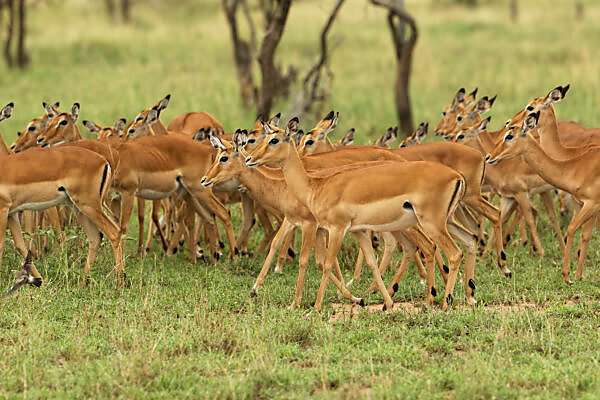
Impala are one of the most common antelope on any game drive, moving in herds of hundreds for safety. They are also remarkable jumpers, able to clear several meters in a single leap to escape a predator.
Where and when: Impala are found in nearly every park across Kenya and Tanzania and are visible throughout the day, grazing in open woodland edges near water.
Thomson’s Gazelle and Grant’s Gazelle
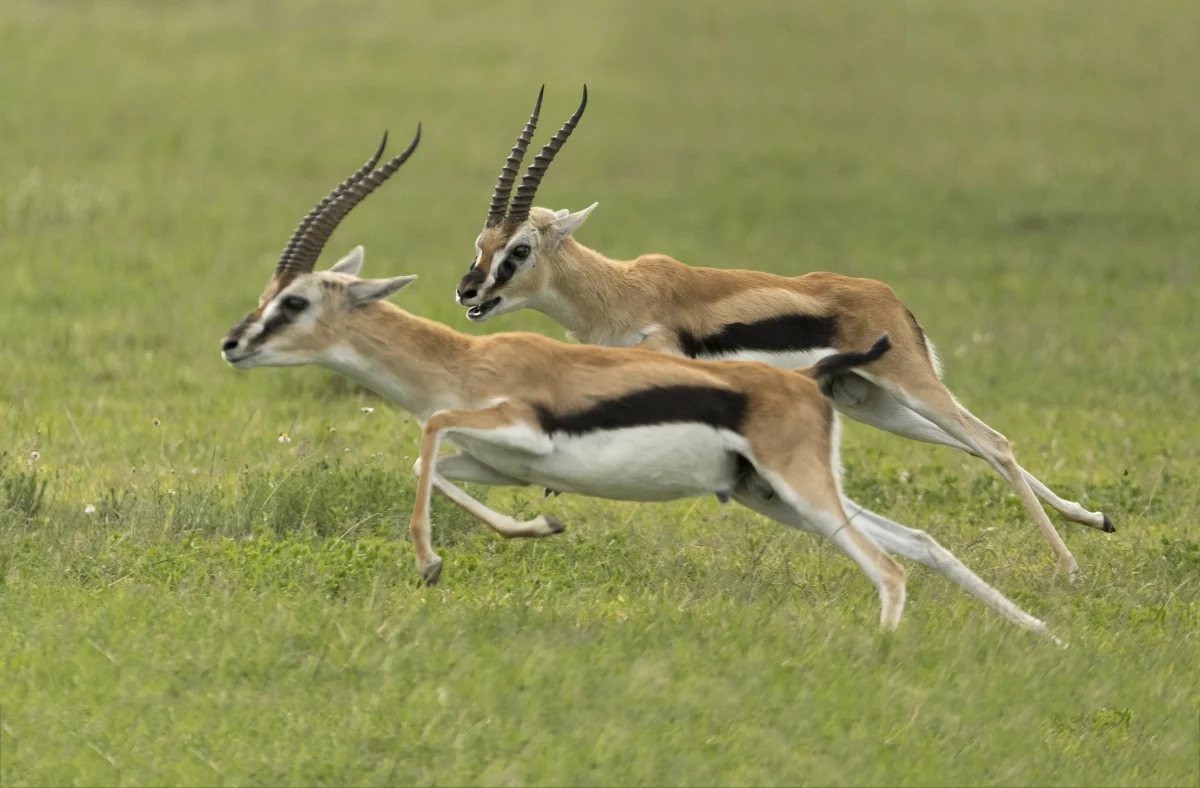
These two gazelles look alike at a glance, but Thomson’s gazelles have a distinct black stripe along their flank while Grant’s gazelles do not and tend to be slightly larger. Both graze the open grasslands of Kenya and Tanzania in large herds.
Where and when: Both species are common on the open plains of the Masai Mara and Serengeti, grazing throughout the day, with larger herds visible during the dry season when grass is shorter.
Topi

Topi are known for their odd but distinctive coloring, often described by guides as looking like they are wearing blue jeans with yellow socks. They get along well with other grazers and are often seen mixed in with wildebeest and zebra herds.
Where and when: Topi are common in the Masai Mara and Serengeti grasslands year round, often standing on old termite mounds to scan for predators during the day.
Bushbuck
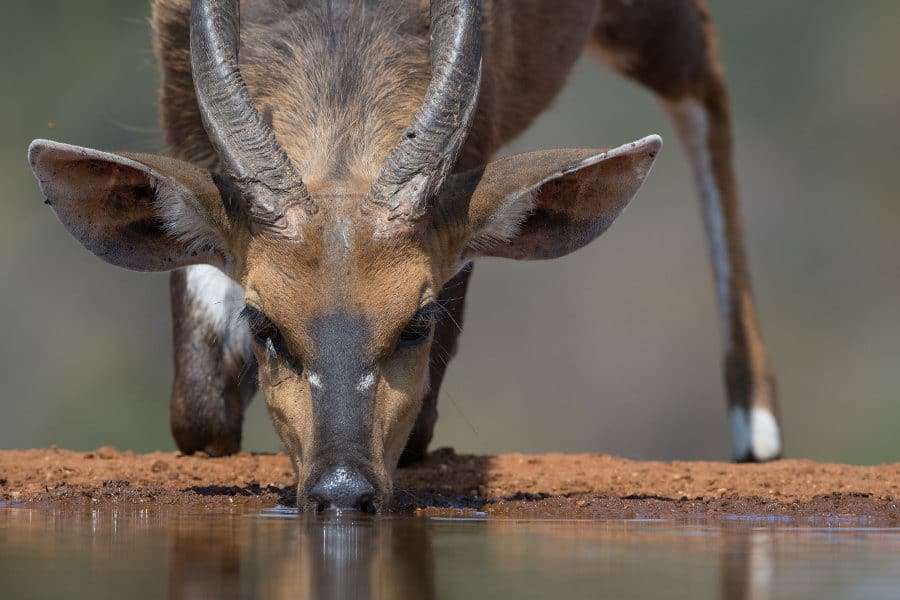
Bushbuck are shy, solitary antelope with a reddish brown coat marked by white spots and stripes. Unlike many antelope, they prefer to stay alone or in loose pairs rather than large herds.
Where and when: Look for bushbuck near forest edges and thicker bush in Arusha National Park and around the Ngorongoro Crater rim, most active at dawn and dusk when they feel safest venturing into open ground.
Hartebeest
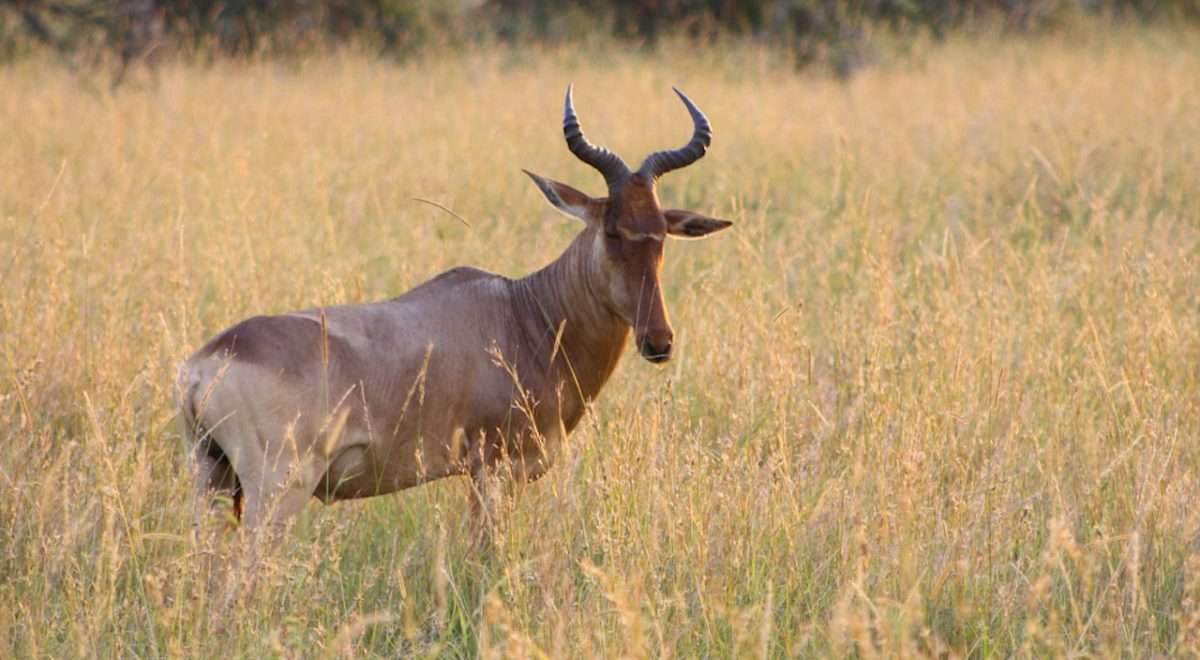
Hartebeest are among the fastest antelope in Africa, with a long face, twisted horns, and a habit of grouping into large herds of up to several hundred animals.
Where and when: Common across the Masai Mara and Serengeti open plains, grazing during the day in large, easily spotted herds.
Waterbuck
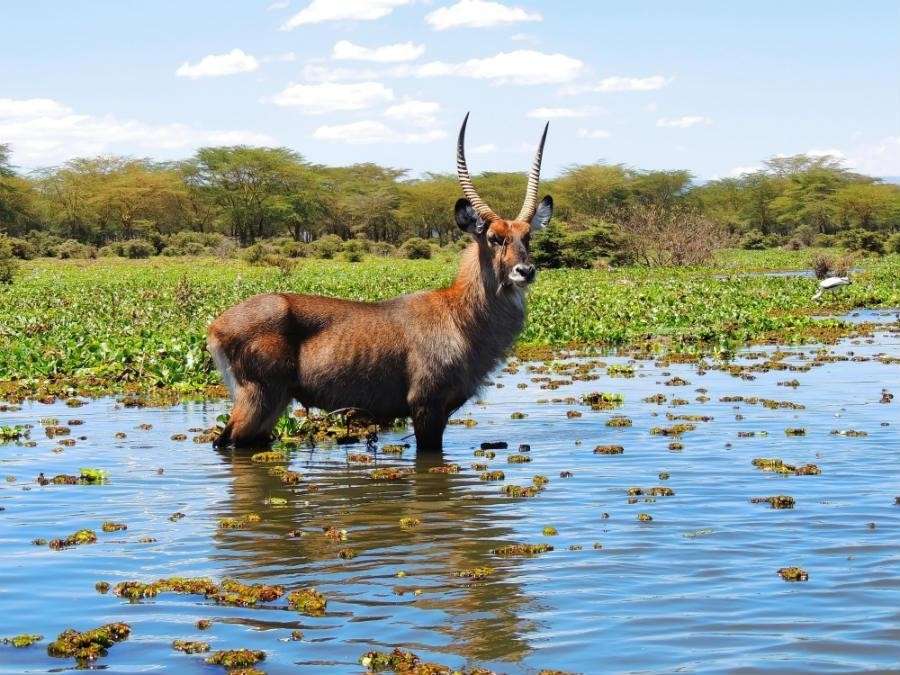
Waterbuck are recognizable by their shaggy coat and long, ringed horns, and true to their name, they often escape predators by running straight into water and partially submerging until the danger passes.
Where and when: Look for waterbuck near lakes and rivers, including around Lake Nakuru and along the Mara River, grazing close to the water’s edge during the day.
Dik-Dik
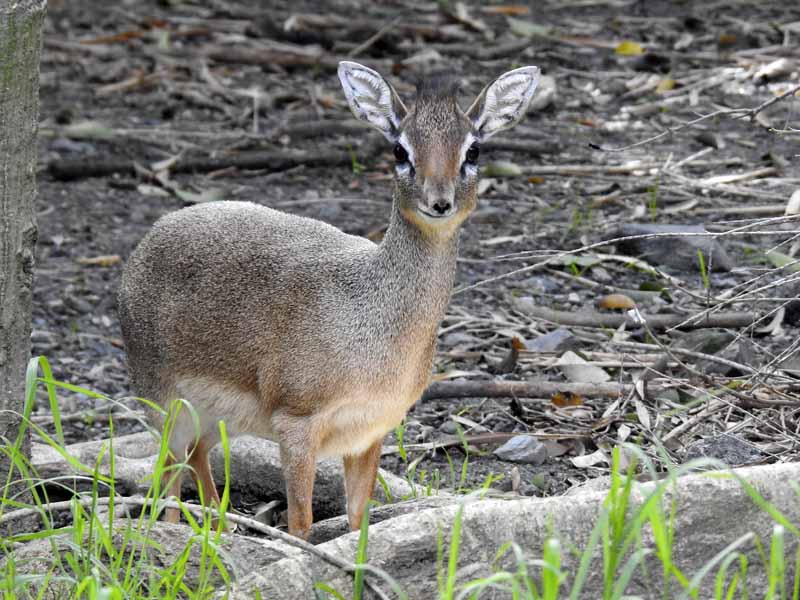
The dik-dik is a tiny antelope, barely bigger than a rabbit, named for the sharp alarm sound it makes when startled. They form monogamous pairs and mark their small territory with scent rather than fighting over ground.
Where and when: Dik-dik prefer drier, semi-arid bush found in Samburu and parts of Tsavo, and they are shy, so early morning drives with a quiet approach give you the best chance.
Eland
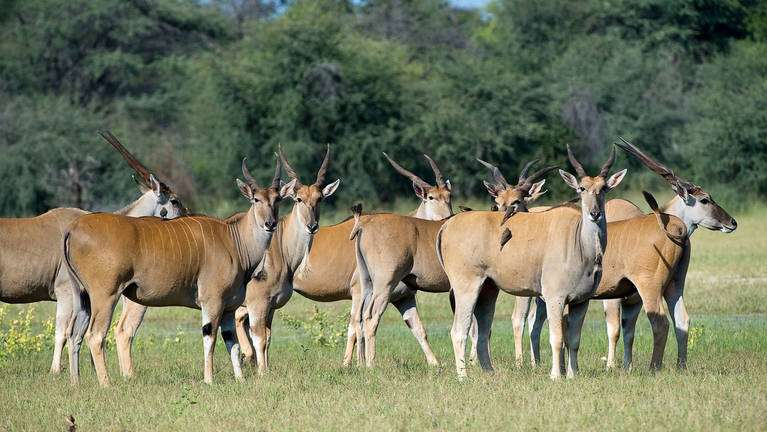
The eland is the largest antelope in the world, with some males standing nearly six feet tall at the shoulder and carrying dramatic spiral horns. Despite their size, elands are surprisingly good jumpers.
Where and when: Eland are less commonly seen than other antelope but do turn up in the Masai Mara conservancies and parts of the Serengeti, usually in small groups during the day.
Kudu
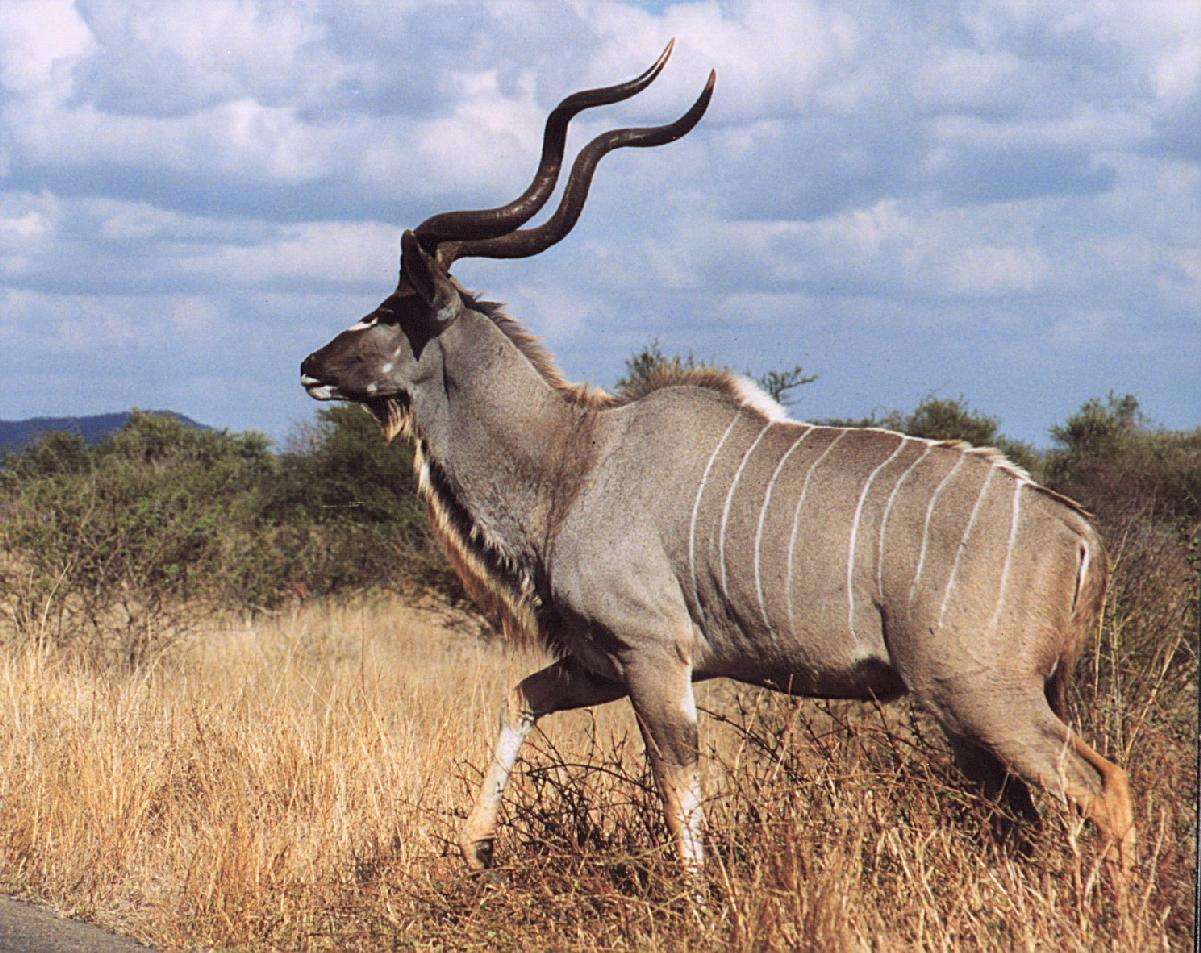
The greater kudu is one of the most striking antelope on any safari animal list, with wide spiraling horns and faint white stripes down its sides. A white v-shaped marking across its face is thought to help reflect harsh sunlight away from its eyes.
Where and when: Kudu are more common in Tanzania’s Tarangire and Ruaha National Parks than in the classic Kenya circuit, and they are shy, most often seen early morning or late afternoon near bushy cover.
Hyrax
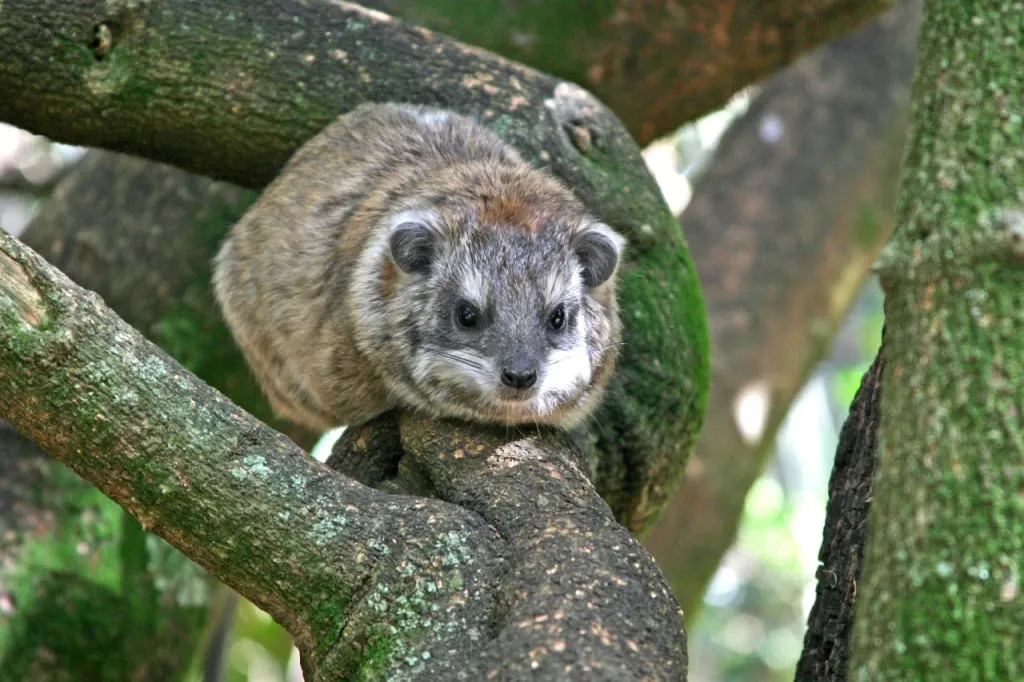
The hyrax looks like an oversized guinea pig but is actually a close relative of the elephant. It spends much of the day sunbathing on rocks, since it struggles to regulate its own body temperature.
Where and when: Hyrax are easy to spot on the rocky kopjes of the Serengeti and around the Ngorongoro Crater rim, usually sunbathing in the morning once the sun is up.
Porcupine
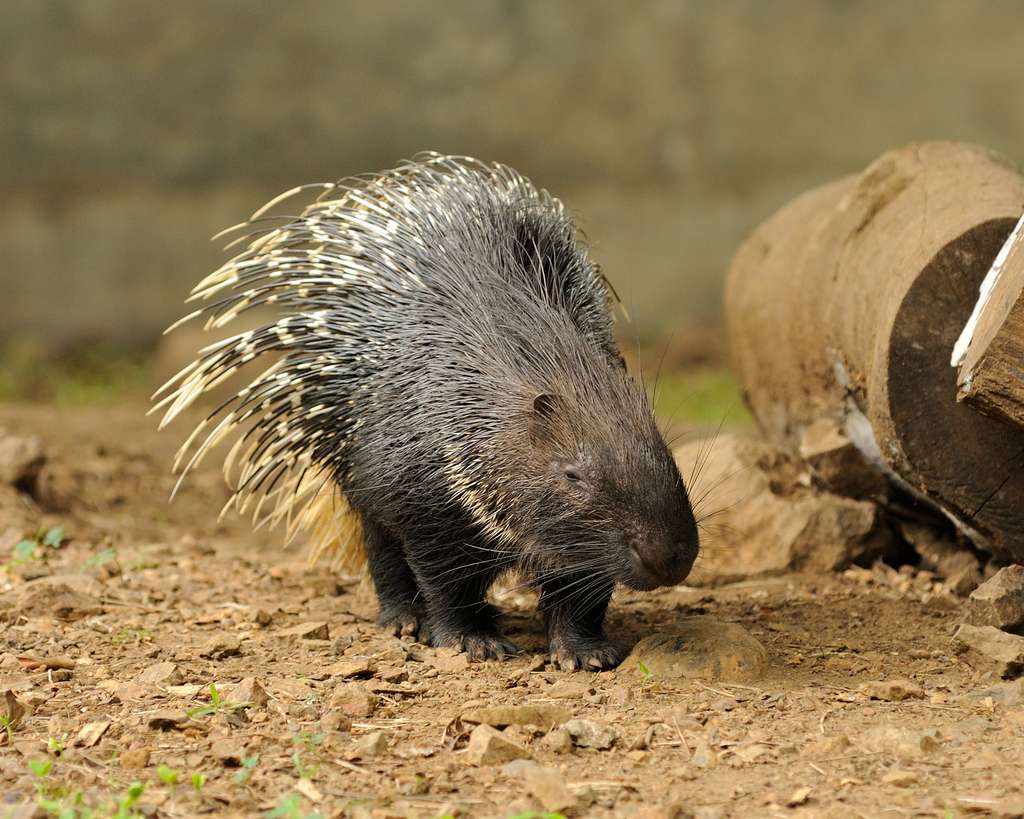
The African crested porcupine is the largest rodent found on safari, known for the sharp quills it raises and rattles as a warning before ever using them defensively.
Where and when: Porcupines are nocturnal and genuinely difficult to spot, so a sighting on a night drive in a private conservancy is more likely than during a standard daytime game drive.
Tree Squirrel and Ground Squirrel
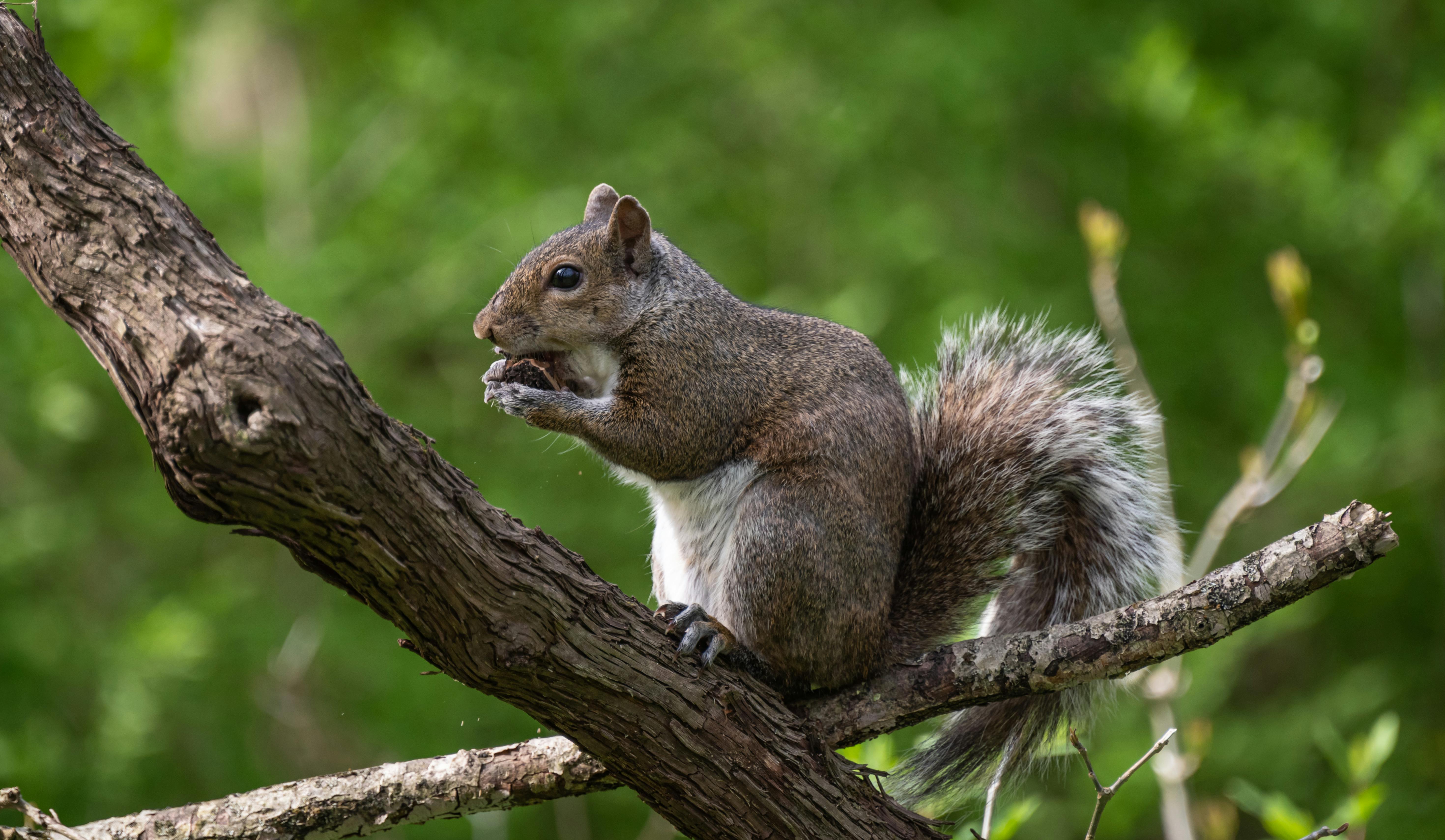
Tree squirrels are a common, easy sighting around most lodges, chattering and darting through branches. The ground squirrel, or xerus, lives in burrows instead and forages for food during the day rather than storing it.
Where and when: Both are common and easy to see around camps and lodges throughout Kenya and Tanzania at any time of day.
Primates You Can See on an African Safari
Mountain Gorilla
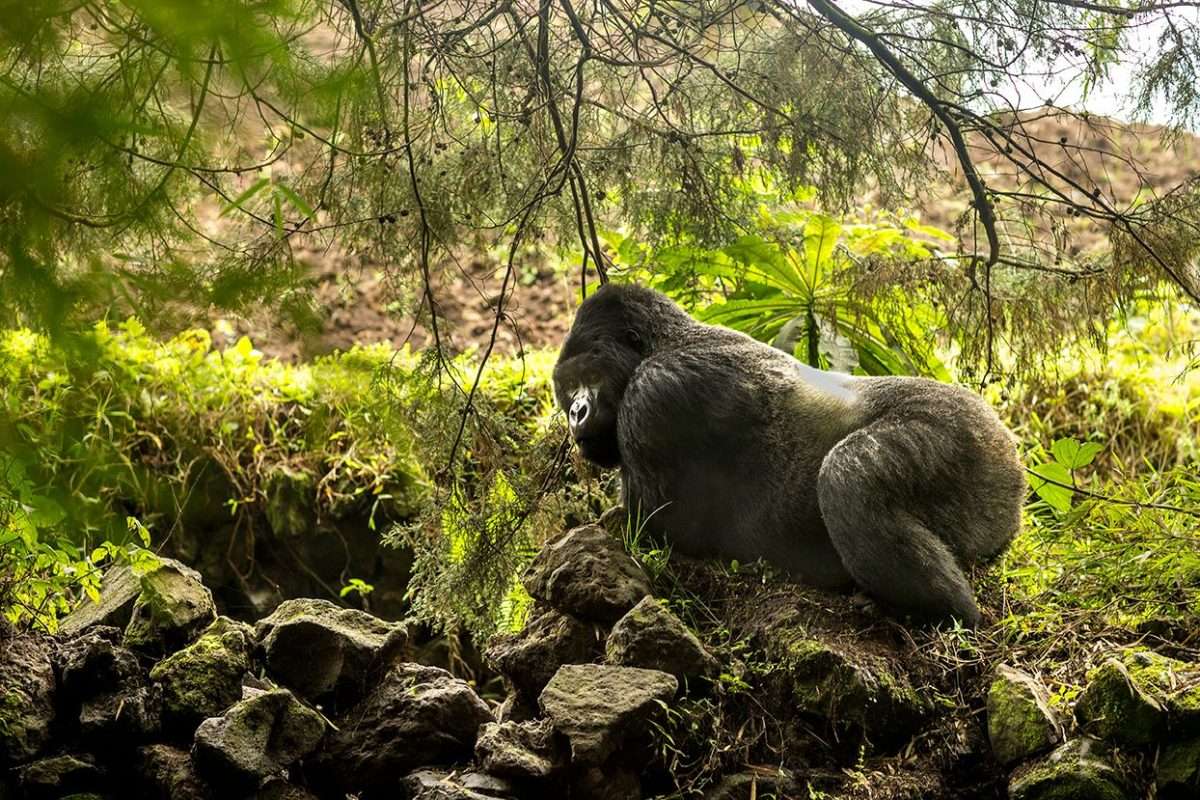
Mountain gorillas share a large percentage of their DNA with humans and only survive in the wild, never in captivity. Seeing one requires a permit and a guided trek into the forests of Rwanda or Uganda, and the encounter feels completely different from a savanna game drive, since these are family groups guides have spent years slowly habituating to human presence.
Where and when: Volcanoes National Park in Rwanda and Bwindi Impenetrable Forest in Uganda are the only realistic places to trek gorillas. Trekking happens year round, but the dry seasons, roughly June through September and December through February, make the hiking itself easier underfoot.
Chimpanzee
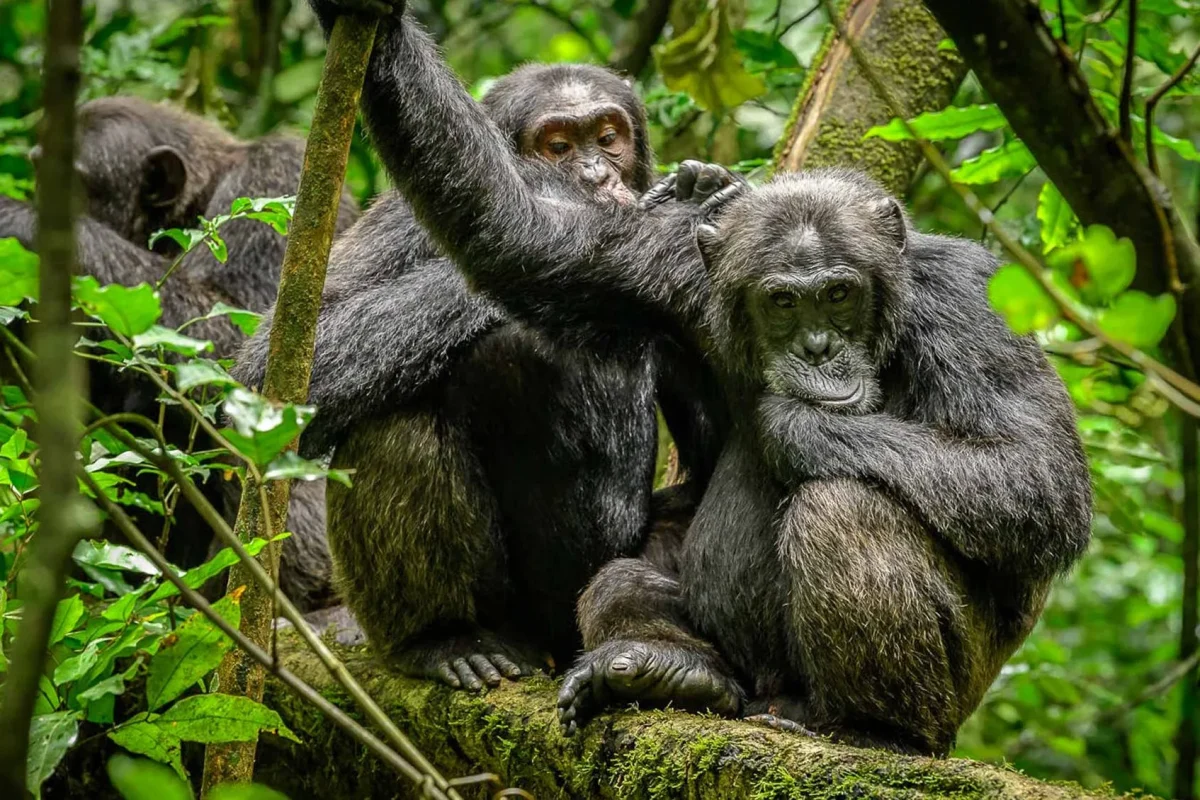
Chimpanzees are highly intelligent, capable of recognizing faces, using simple tools, and showing clear emotion. They live in large groups led by a dominant male, and tracking them through a forest canopy is a different rhythm entirely from spotting animals on the open plains.
Where and when: Kibale Forest in Uganda and Mahale or Gombe in Tanzania are the best places to track chimpanzees. Morning treks give you the best chance, since chimps tend to be most active and vocal early in the day before the heat sets in.
Baboon
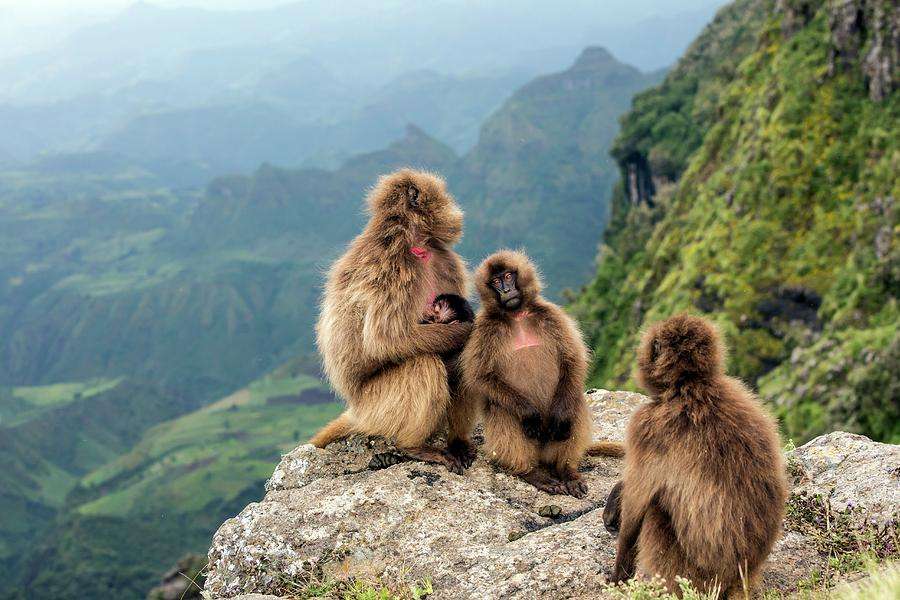
Baboons live in large troops and are comfortable around humans, which makes them easy to spot but sometimes bold around camps and vehicles. They spend more time on the ground than most monkeys, which is part of why sightings are so common.
Where and when: Baboons are common and easy to see throughout Kenya and Tanzania at any time of day, often right around lodges and picnic stops.
Vervet Monkey
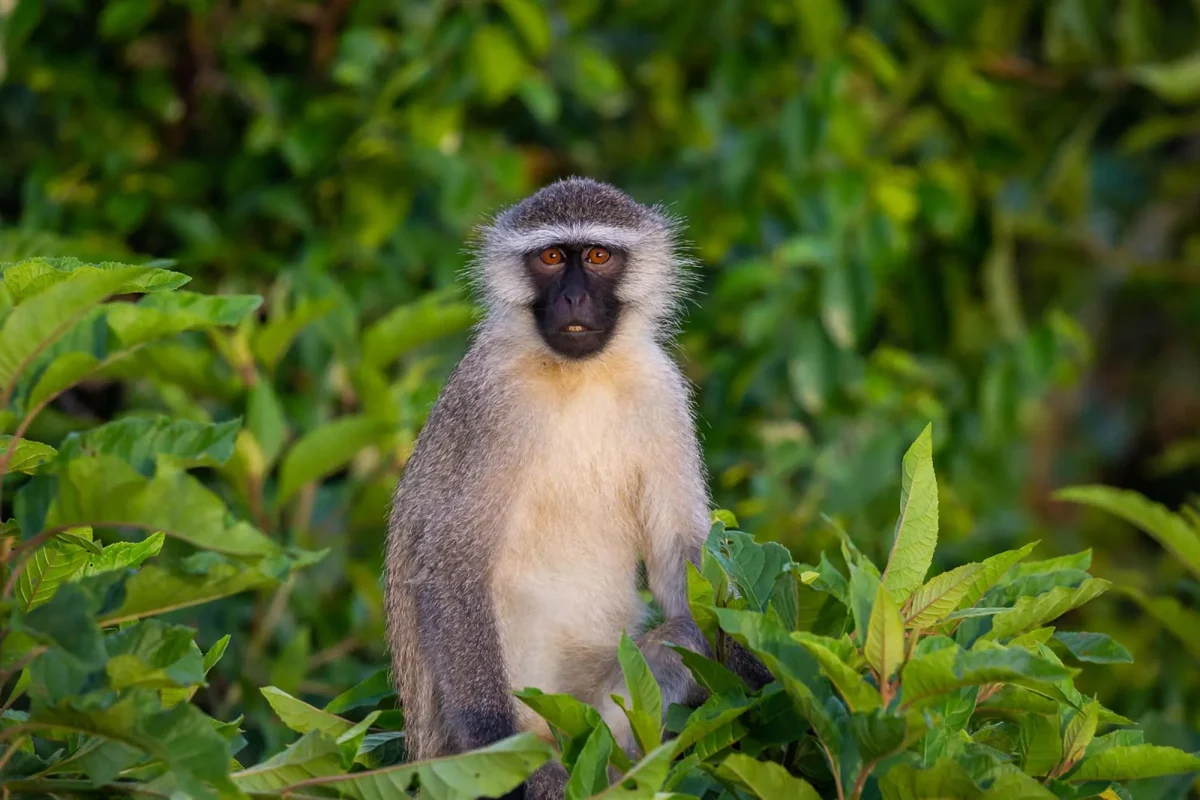
Vervet monkeys are smaller and quicker than baboons, easily recognized by their black faces and grey fur. They are highly adaptable and often seen grooming each other or foraging near lodges.
Where and when: Vervet monkeys are common near water sources and lodge grounds across Kenya and Tanzania, active and easy to spot throughout the day.
Colobus Monkey
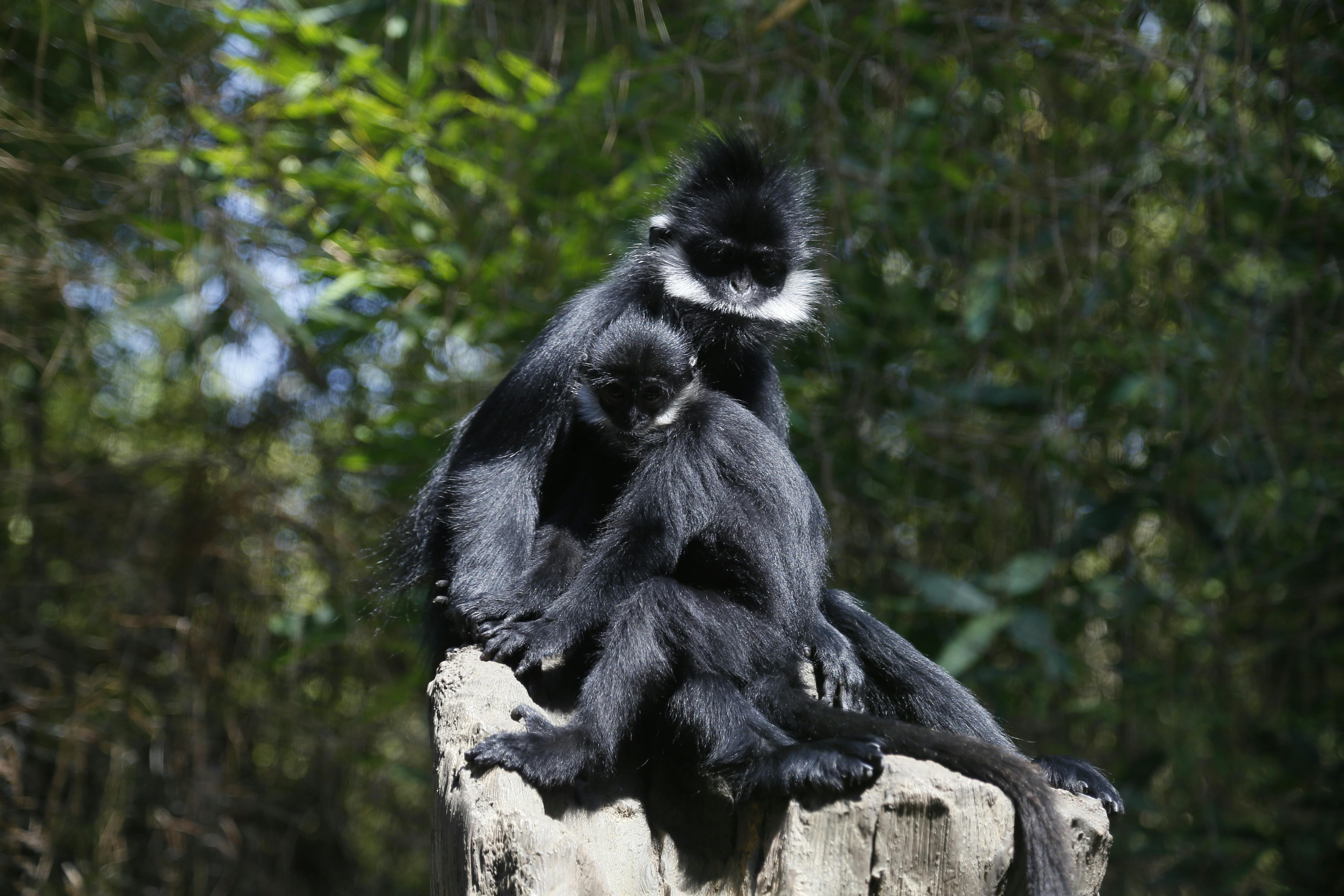
Black and white colobus monkeys spend nearly all their time in the treetops, rarely coming down to the ground. Their long, flowing white tail fur makes them one of the most photogenic primates on any safari animal list.
Where and when: Look for colobus monkeys in the forested areas of Arusha National Park and Lake Manyara, high in the canopy during the day.
Reptiles and Small Creatures in the Safari Jungle
Nile Crocodile
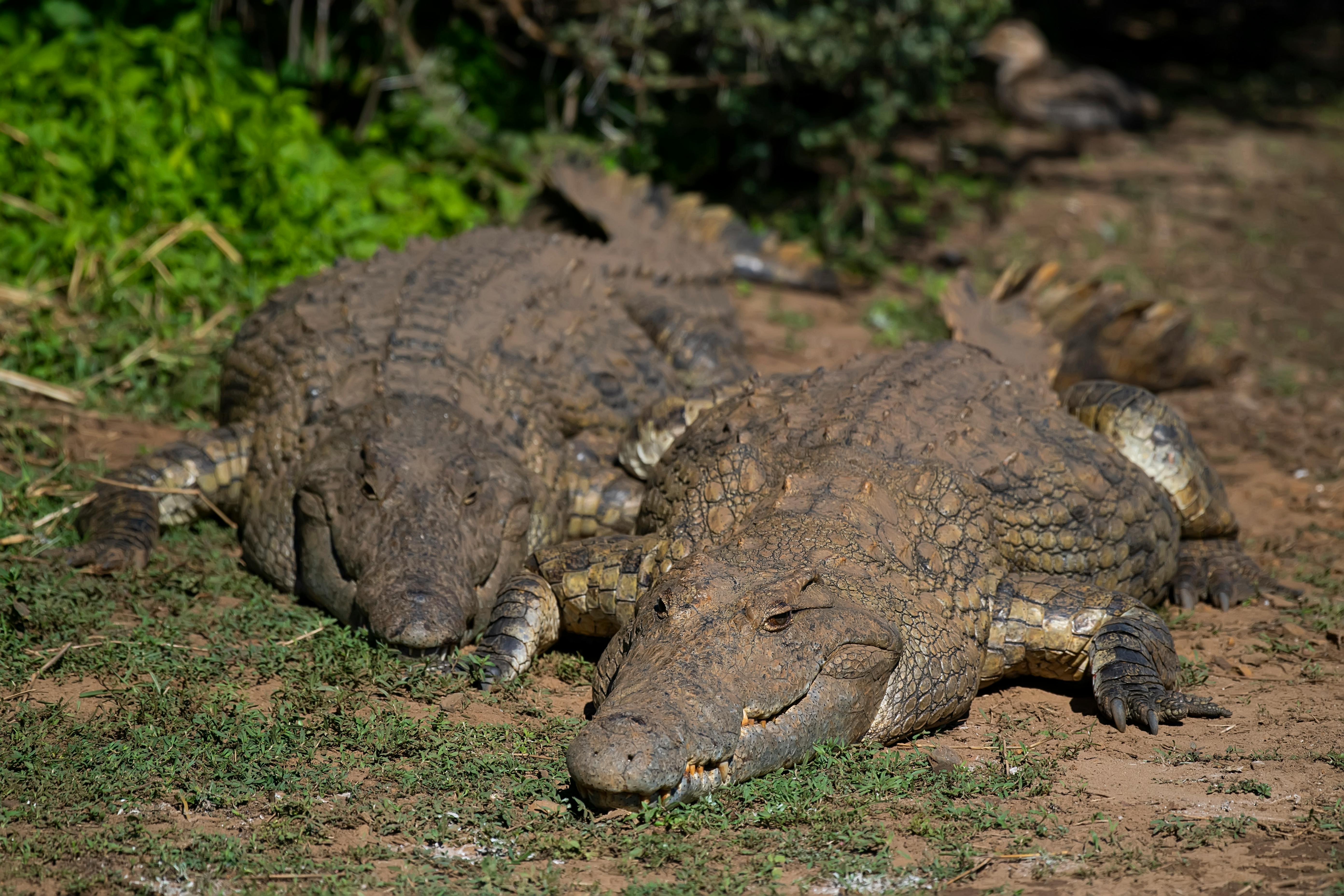
Nile crocodiles can hold their breath underwater for up to two hours and are most active near rivers and lakes. The most dramatic sightings happen during the Great Migration, when crocodiles wait in the Mara River for wildebeest and zebra attempting the crossing.
Where and when: The Mara River is the standout location, especially during migration crossings between July and October. Lake Naivasha is another reliable spot. Crocodiles bask on riverbanks during the day and hunt mostly at dusk and through the night.
Agama Lizard
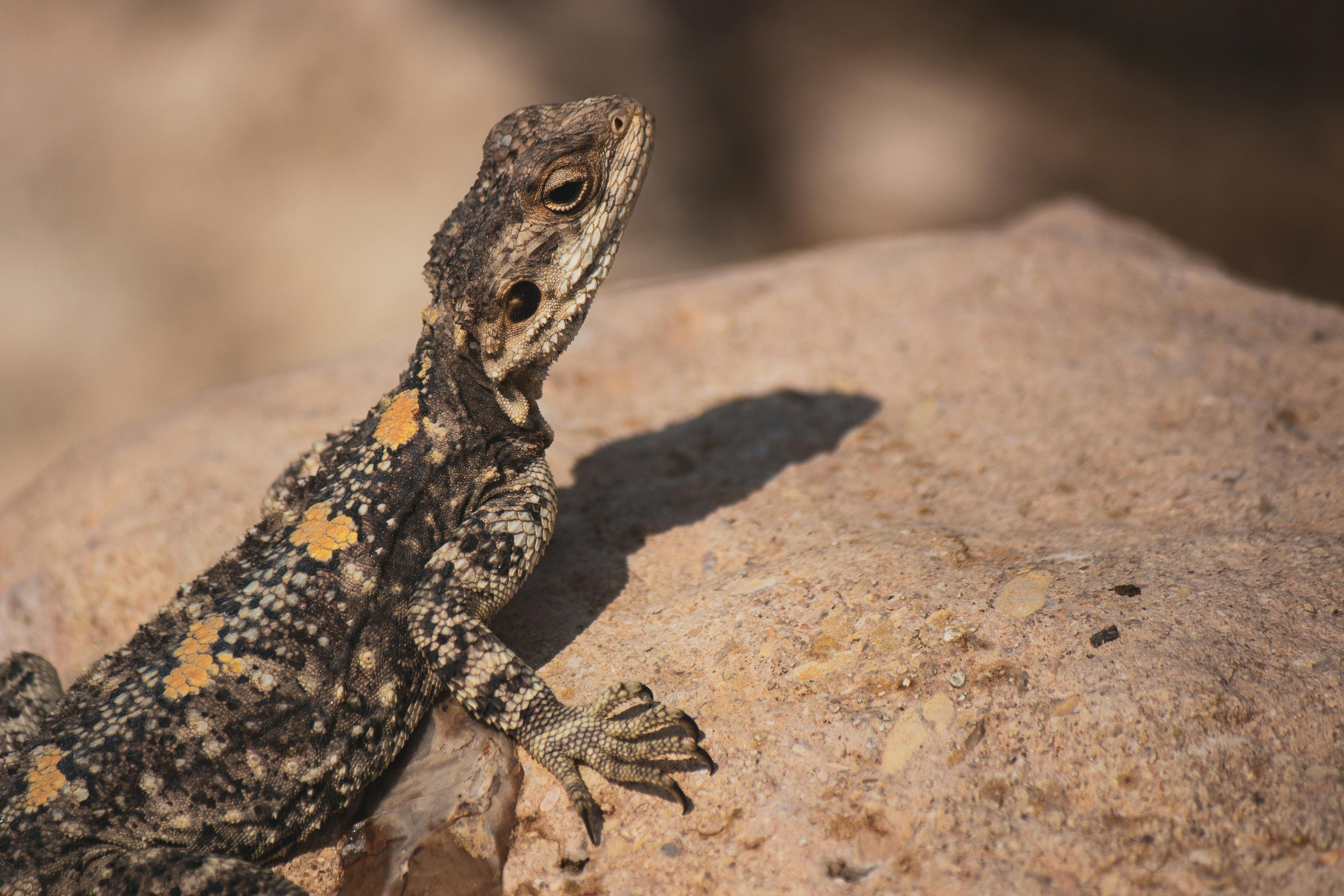
Male agama lizards develop bright, almost rainbow colored skin during mating season to attract females, though outside of that period they are usually a dull brown or grey.
Where and when: Common on rocky outcrops throughout the Masai Mara and Serengeti, easiest to spot in their bright colors during the warmer months when mating season peaks.
Monitor Lizard
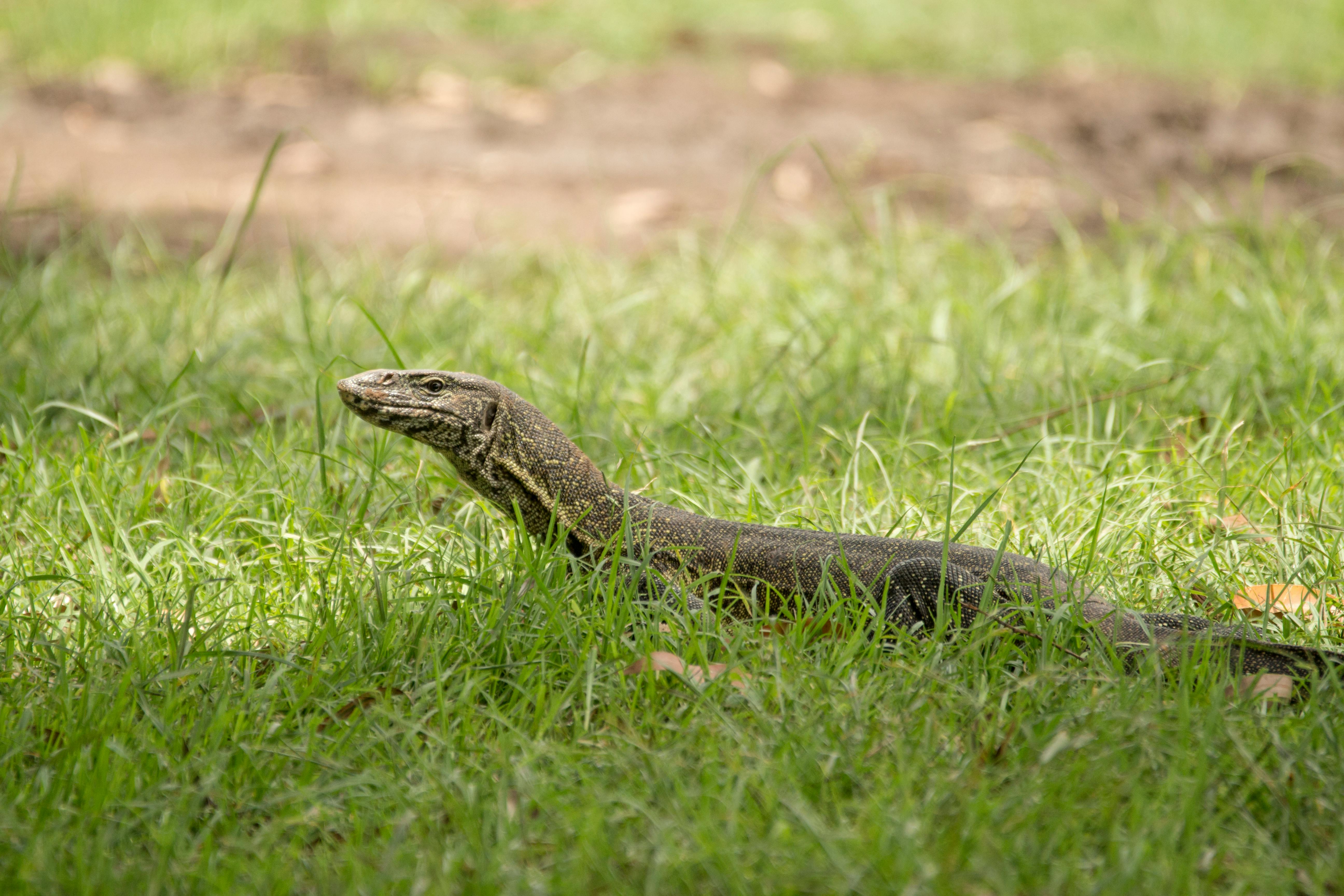
The Nile monitor is one of the largest lizards in Africa, a skilled swimmer and climber that hunts fish, birds, and small mammals, and is occasionally seen raiding crocodile nests.
Where and when: Look for monitor lizards near rivers and lakes, including Lake Naivasha and along the Mara River, basking or hunting during the day.
Skink
Skinks are small, fast lizards often seen basking on warm rocks. Several species can drop their tail to escape a predator and simply grow a new one over the following months.
Where and when: Skinks are common throughout Kenya and Tanzania on sunny rocks during the day, especially around kopjes and lodge grounds.
Chameleon
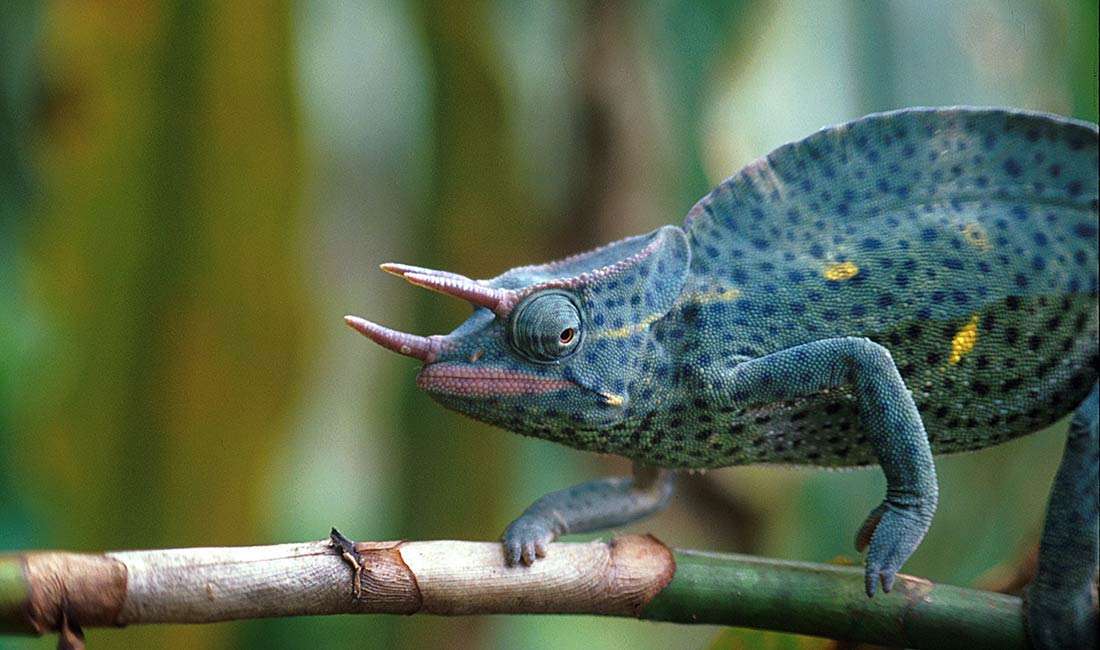
Chameleons change color mainly to communicate mood or regulate temperature, not primarily to hide from predators as many people assume. Spotting one takes a sharp-eyed guide, since they move slowly and blend easily into leaves and branches.
Where and when: Forested areas like Arusha National Park in Tanzania offer the best chance, and a guided walk during daylight, moving slowly through vegetation, is the only real way to spot one.
Scorpion
Scorpions are mostly nocturnal and tend to avoid people, so an accidental encounter is unlikely on a well-run safari. Guides typically recommend shaking out shoes before putting them on as a simple precaution in camp.
Where and when: Scorpions favor drier, arid bush and are active almost exclusively at night, so a guided night walk is really the only way to see one intentionally.
Pangolin
The pangolin is one of the rarest and most elusive animals on any safari animal list, covered in tough scales and known for rolling into a tight ball when threatened. It is the only mammal in the world with scales, and a sighting is considered a genuine stroke of luck.
Where and when: Pangolins are extremely rare and nocturnal, occasionally seen on night drives in well-protected private conservancies. Treat any sighting as an exceptional bonus rather than something to expect.
Tsetse Fly
The tsetse fly is one safari animal nobody hopes to see up close, since its bite can transmit disease to both people and livestock. It is part of the reason dark colors like black and navy are best avoided when packing, since tsetse flies are drawn to them.
Where and when: Tsetse flies are most common in wooded, bushy areas of the Serengeti and Tarangire, active during daylight hours, which is why clothing color matters so much on a game drive.
Birds Every Safari Guest Should Know
Flamingo
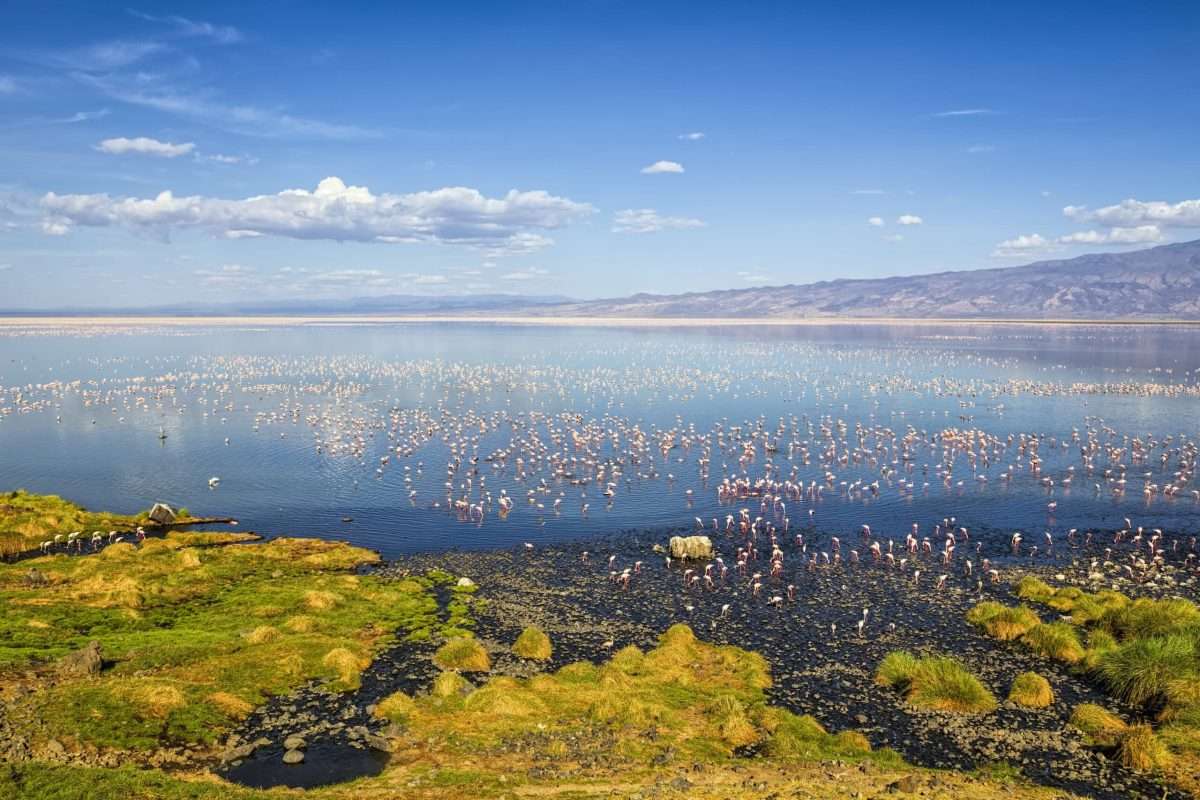
Large flocks of flamingos can turn an entire lake pink, a genuinely stunning sight best seen at Lake Nakuru in Kenya or Lake Manyara in Tanzania. Their color actually comes from the algae and small crustaceans in their diet.
Where and when: Lake Nakuru, Lake Bogoria, and Lake Manyara are the top spots, though numbers shift year to year depending on water and algae levels, so it is worth asking your operator for the latest report before you travel.
Ostrich
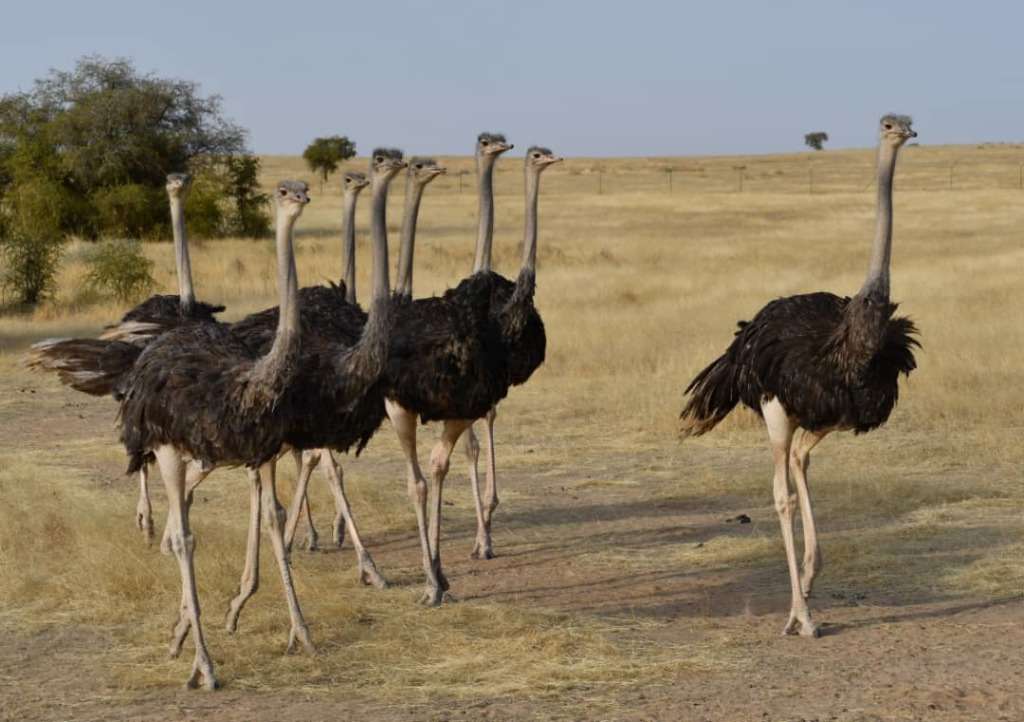
The ostrich is the world’s largest bird and cannot fly, but it can run at speeds most safari animals cannot match, using its long, powerful legs. A single kick from an ostrich can be genuinely dangerous, so guides give them plenty of space.
Where and when: Ostriches are common on the open plains of the Masai Mara, Amboseli, and Serengeti, visible throughout the day.
Marabou Stork
The marabou stork is a large, prehistoric looking bird that mainly scavenges dead animals and scraps. Despite its unusual appearance, it plays an important role cleaning up carcasses across the savanna.
Where and when: Common around the Serengeti and near towns and lodges throughout Kenya and Tanzania, visible year round during the day.
Hornbill
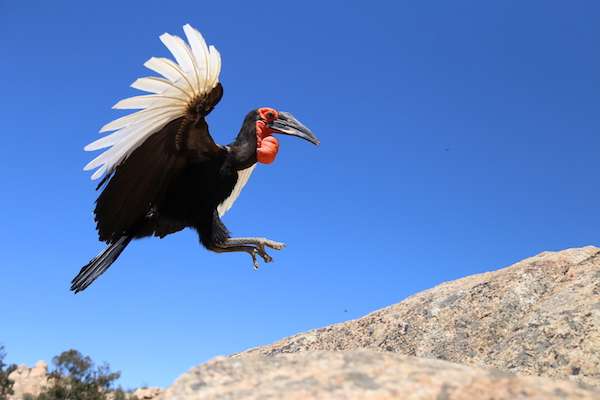
Hornbills are easy to recognize by their long, curved, colorful bill. During breeding season, the female seals herself inside a tree cavity, and the male feeds her through a narrow slot until the chicks are ready to fly.
Where and when: Hornbills are common in the woodland areas of the Masai Mara and Tarangire, active and vocal during the day.
Kori Bustard
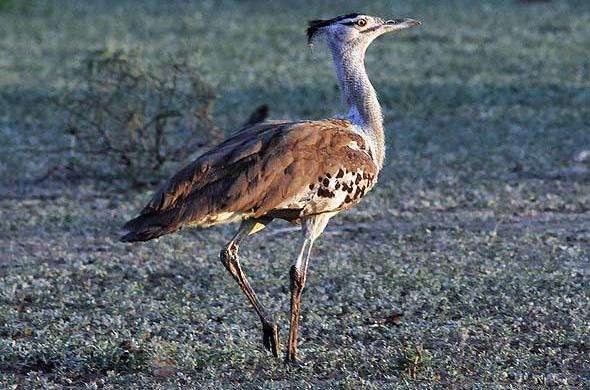
The kori bustard is the heaviest flying bird in the world, though it spends most of its time walking on the ground and only takes flight when genuinely threatened.
Where and when: Look for kori bustards on the open grasslands of the Masai Mara, Serengeti, and Ngorongoro Crater during the day, walking rather than flying.
Grey Crowned Crane
With its golden crest and bright red wattle, the grey crowned crane is one of the most striking birds on safari, known for an elaborate dancing courtship display performed year round, not just during mating season.
Where and when: Common near wetlands in the Masai Mara and throughout Uganda, where it is the national bird, visible during the day, often mixed in among grazing cattle or wildlife.
Secretary Bird
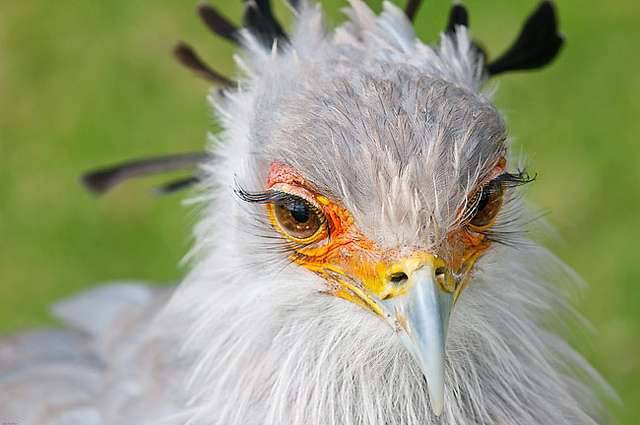
The secretary bird hunts snakes and small mammals by stamping on them with tremendous force, delivering a blow that can be several times its own body weight in a fraction of a second.
Where and when: Look for secretary birds walking the open grasslands of the Masai Mara, Serengeti, and Ngorongoro Crater during the day, since they hunt on foot rather than from the air.
Vulture
Vultures are nature’s cleanup crew, feeding on carcasses that would otherwise spread disease across the ecosystem. A vulture circling overhead does not always mean a kill has happened, sometimes it is simply riding warm air currents to conserve energy.
Where and when: Vultures are found throughout Kenya and Tanzania, most visible mid-morning once thermals form and they take to circling the sky.
Oxpecker
Oxpeckers ride on the backs of large mammals like buffalo and giraffe, feeding on ticks and other parasites. It is a useful relationship for both animals, though oxpeckers will also feed on open wounds, which makes it slightly more complicated than a purely helpful partnership.
Where and when: Wherever you find buffalo, giraffe, or rhino in the Masai Mara or Serengeti, oxpeckers are usually riding along, visible throughout the day.
Quelea
The red-billed quelea is considered the most abundant wild bird species on the planet, forming flocks that can number in the millions and moving across the sky like a dense, shifting cloud.
Where and when: Quelea flocks appear seasonally near grain growing areas and water sources across East Africa, most dramatic during the dry season when huge flocks gather to drink.
Best Times to Plan Around Specific Safari Animals
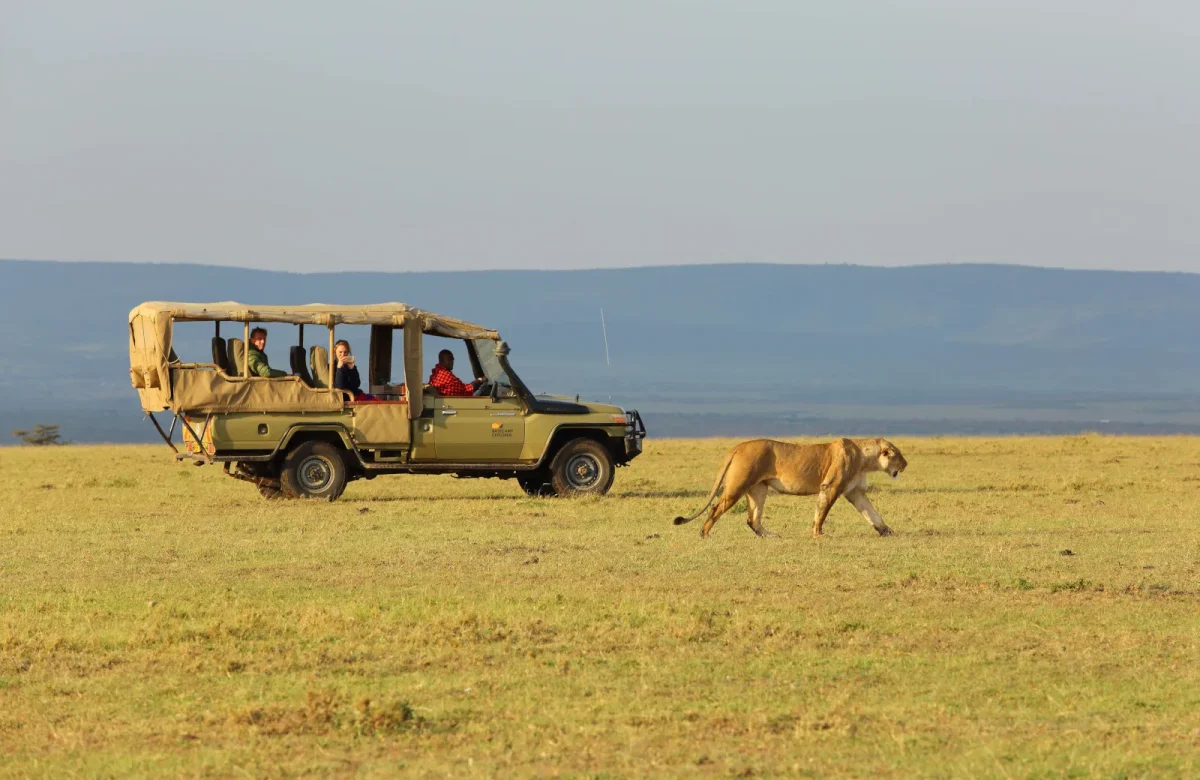
If your priority is the Great Migration river crossings, aim for July through October in the Masai Mara. If you want to see newborn wildebeest calves, the southern Serengeti between January and March is the place. For gorilla and chimpanzee trekking, the dry seasons in Rwanda and Uganda make the hiking easier, though permits are available year round. For flamingos, check current lake conditions before you travel, since numbers shift from year to year.
Ready to See These Animals for Yourself?
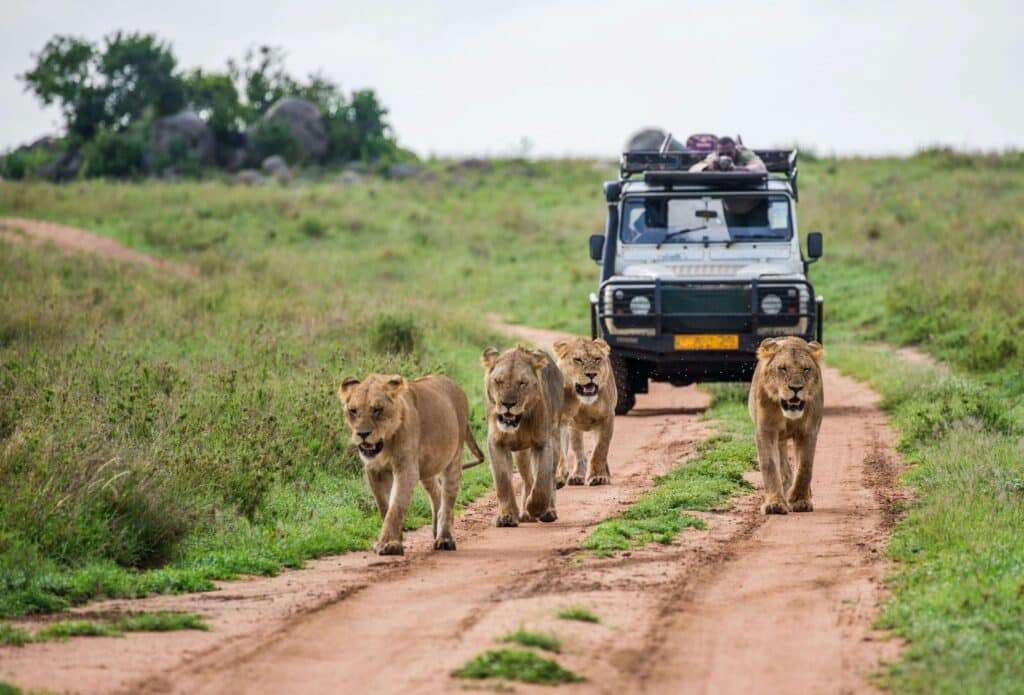
If you want help planning a trip built around specific animals or the Great Migration timing, message me directly on WhatsApp. I can tell you honestly which parks and months give you the best chance of seeing what you are hoping for.
A few trips built around strong wildlife sightings:
- 5-Day Masai Mara Safari
- 6-Day Mara Discovery: Big Five Safari
- 8-Day Kenya Explorer Safari
- 8-Day Extraordinary Kenya Safari
Frequently Asked Questions
What animals are in the safari?
The safari animal list across Kenya and Tanzania includes the Big Five, lion, leopard, elephant, rhino, and buffalo, plus cheetah, hyena, zebra, giraffe, wildebeest, hippo, dozens of antelope species, primates like gorilla and chimpanzee, and a wide range of birds and reptiles.
What is the Big Five in African safari animals?
The Big Five refers to lion, leopard, elephant, rhino, and Cape buffalo, a term that originally described the five animals considered hardest to hunt on foot. Today it describes the top sightings most first-time guests hope to see.
What animals live in the safari jungle?
Savanna parks like the Masai Mara and Serengeti hold lions, elephants, and migrating herds, while forest destinations in Rwanda and Uganda are home to mountain gorillas and chimpanzees, a genuinely different kind of safari animal encounter.
Where can I see the Great Migration?
The Great Migration moves between the Serengeti in Tanzania and the Masai Mara in Kenya throughout the year, with the most dramatic river crossings typically happening between July and October, and calving season in the southern Serengeti between January and March.
Are gorillas part of the African safari animals list?
Yes, though seeing them requires a separate permit and a trek into the forests of Rwanda or Uganda, rather than a standard game drive. It is usually added onto a Kenya or Tanzania itinerary rather than being the only stop.
What are the most dangerous safari animals?
Hippos and buffalo cause more human deaths in Africa each year than lions or leopards, despite their calmer reputation. Guides are trained to keep a respectful distance from both at all times.
How many species of safari animals can I realistically see on one trip?
On a well-planned week long safari across two or three parks, guests typically see 40 to 50 different species, including several Big Five animals, a range of antelope, and dozens of birds.
What is the best time of day to see safari animals?
Dawn and dusk are best for predators like lions, leopards, and hyenas, since they hunt during cooler hours. Grazing animals like zebra, giraffe, and antelope are visible throughout the day, and nocturnal species like aardvark, porcupine, and pangolin require a night drive.
10 Safari Animal Facts to Remember
- The Big Five are lion, leopard, elephant, rhino, and Cape buffalo.
- Lions are the only big cats that live in social groups called prides.
- Leopards hunt alone at night and often store kills up in trees.
- Zebra stripes are unique to each individual, like a fingerprint.
- The Great Migration crossings peak between July and October, with calving season from January to March.
- Hippos cannot swim, they walk along the riverbed instead.
- Mountain gorillas can only be seen in the wild, never in captivity, in Rwanda or Uganda.
- Hippos and buffalo are statistically more dangerous than lions.
- Vultures circling overhead does not always mean a kill has happened.
- A single week long trip can realistically show you 40 to 50 different species.


