
Quick Answer:
Hippos are primarily herbivores that feed mainly on short grasses. An adult hippopotamus typically eats 25 to 40 kg (55 to 88 lbs) of grass each night, grazing for 5 to 6 hours. Although grass makes up almost all of their diet, hippos occasionally eat fallen fruit, reeds, and, in rare cases, animal carcasses when food is scarce or under nutritional stress.
What Do Hippos Eat?
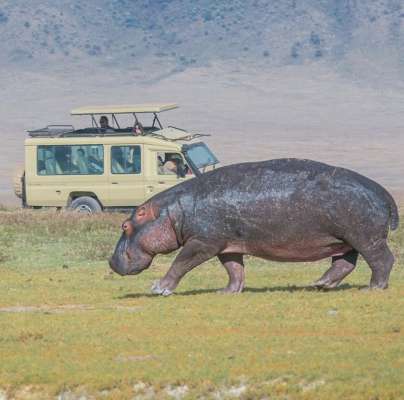
The answer is simple: grass makes up almost the entire diet of a hippopotamus.
Hippos are classified as megaherbivores, meaning they are very large plant-eating mammals. Every evening, they leave the safety of rivers and lakes to graze across nearby grasslands before returning to the water before sunrise.
Unlike elephants that browse leaves, branches, and shrubs, hippos are specialized grazers. They feed almost exclusively on short grasses growing close to the ground.
Although hippos weigh over 1,500 kg (3,300 lbs), they eat relatively little compared to other herbivores of similar size because they spend most of the day resting and conserving energy in water.
What Does a Hippopotamus Eat in the Wild?
A wild hippopotamus eats a variety of plant material, but some foods are far more important than others.
Short Grasses
Short savannah grasses are the foundation of the hippopotamus diet.
Hippos use their wide, muscular lips to crop grass close to the ground before grinding it with large back molars.
They often return to the same grazing areas night after night, creating closely cropped patches known as hippo lawns.
Fallen Fruits
Although grass is their preferred food, hippos occasionally eat naturally fallen fruits when available.
These may include seasonal wild fruits that drop from trees growing near rivers and floodplains.
Fruit provides additional sugars, moisture, and nutrients but represents only a small part of a healthy hippo diet.
Reeds and Young Shoots
Hippos sometimes feed on:
- Fresh reeds
- Tender shoots
- Soft vegetation growing near wetlands
These foods are usually eaten opportunistically rather than being actively sought out.
Aquatic Plants
One of the biggest misconceptions about hippos is that they feed underwater.
In reality, hippos eat very few aquatic plants.
Although they spend most daylight hours submerged, almost all feeding takes place on land after dark.
Do Hippos Eat Meat?
Occasionally, but very rarely.
Hippos are herbivores, yet wildlife researchers have documented unusual cases where they consumed meat.
These observations include feeding on:
- Wildebeest carcasses
- Zebra carcasses
- Kudu carcasses
- Dead hippos
- Meat stolen from crocodiles or other predators
Scientists believe this unusual behaviour may occur during prolonged droughts, food shortages, or nutritional deficiencies.
For healthy wild hippos, however, grass remains the primary and preferred food source.
Why Do Hippos Mainly Eat Grass?
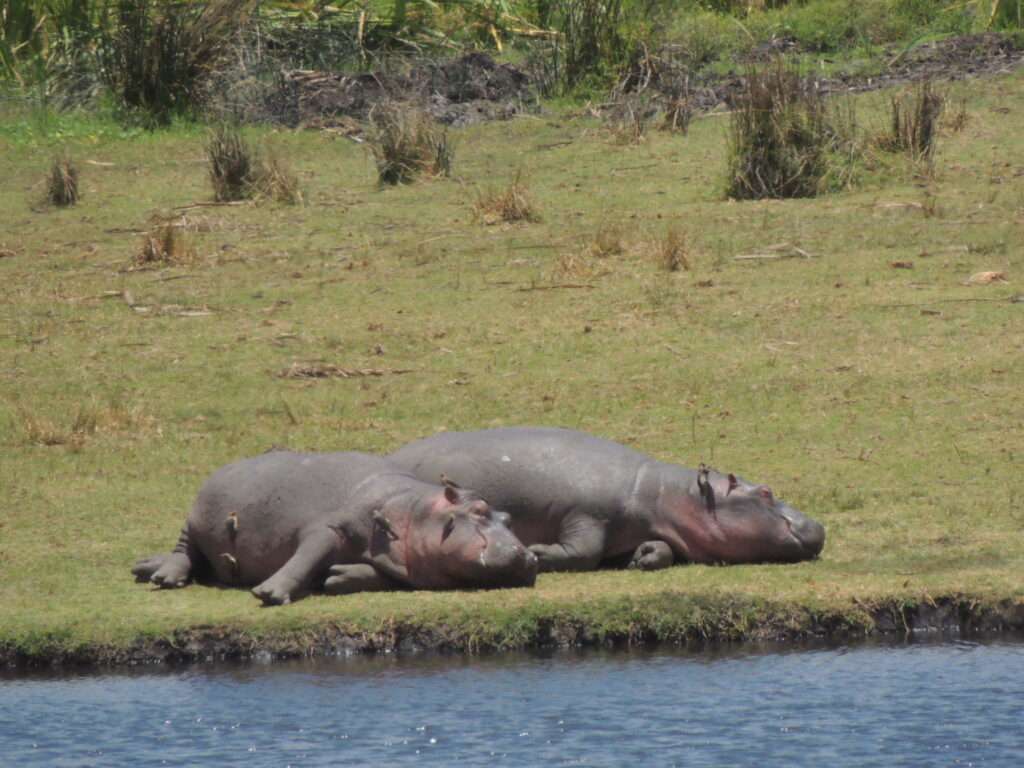
Hippos have evolved specifically to graze on grasses growing across African floodplains and savannahs.
Grass offers several advantages.
Widely Available
Grass is abundant throughout much of sub-Saharan Africa, allowing hippos to find food without travelling long distances every night.
Easy to Harvest
Instead of biting individual plants, hippos sweep their wide lips across the ground, gathering large amounts of grass with very little effort.
This feeding technique allows them to consume substantial quantities in a relatively short time.
Supports Their Lifestyle
Hippos spend up to 16 hours each day resting in water, where they avoid overheating.
Because they conserve so much energy during the day, they require less food than many other large herbivores of comparable size.
Their slow metabolism and efficient digestion allow them to thrive on a grass-based diet despite their enormous body mass.
How Do Hippos Eat?
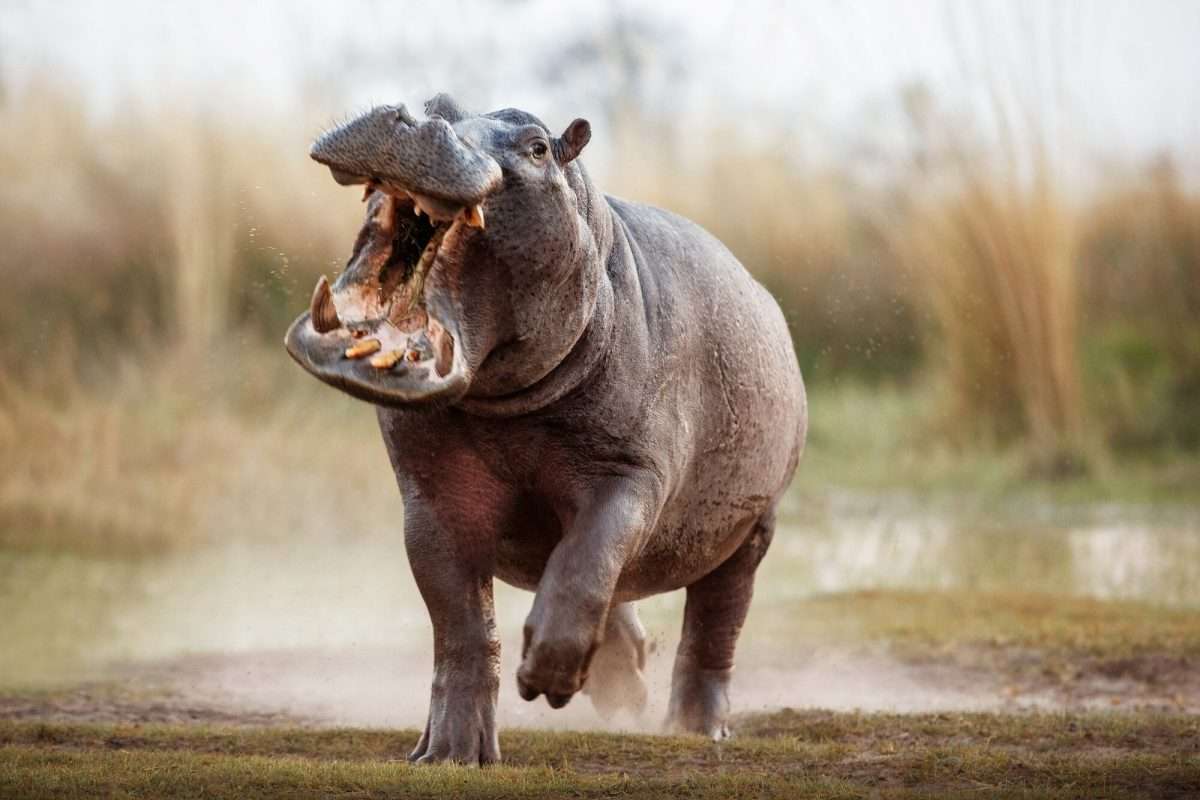
Hippos have evolved unique feeding adaptations that allow them to graze efficiently despite their enormous size.
Unlike horses or cattle, they do not use their large front teeth to cut vegetation. Instead, hippos rely on their broad, muscular lips to grip and pull grass before crushing it with powerful back molars.
Wide, Tough Lips
A hippo’s lips are thick, flexible, and incredibly strong. Adult males can have lips measuring up to 50 cm (20 inches) across, allowing them to crop large amounts of grass with each bite.
Unlike many herbivores that carefully select individual plants, hippos graze by sweeping their lips across the ground.
Powerful Molars
Once grass enters the mouth, large molars grind the tough plant fibres into smaller pieces that are easier to digest.
Interestingly, a hippo’s enormous canine teeth and incisors are not used for eating. Instead, they serve as weapons for defending territory and fighting rival hippos.
A Specialized Digestive System
Hippos have a multi-chambered stomach, but unlike cows, sheep, and other true ruminants, they do not chew cud.
Their digestive system breaks down tough grasses slowly, allowing them to absorb nutrients efficiently from a relatively simple diet.
How Much Does a Hippo Eat in a Day?
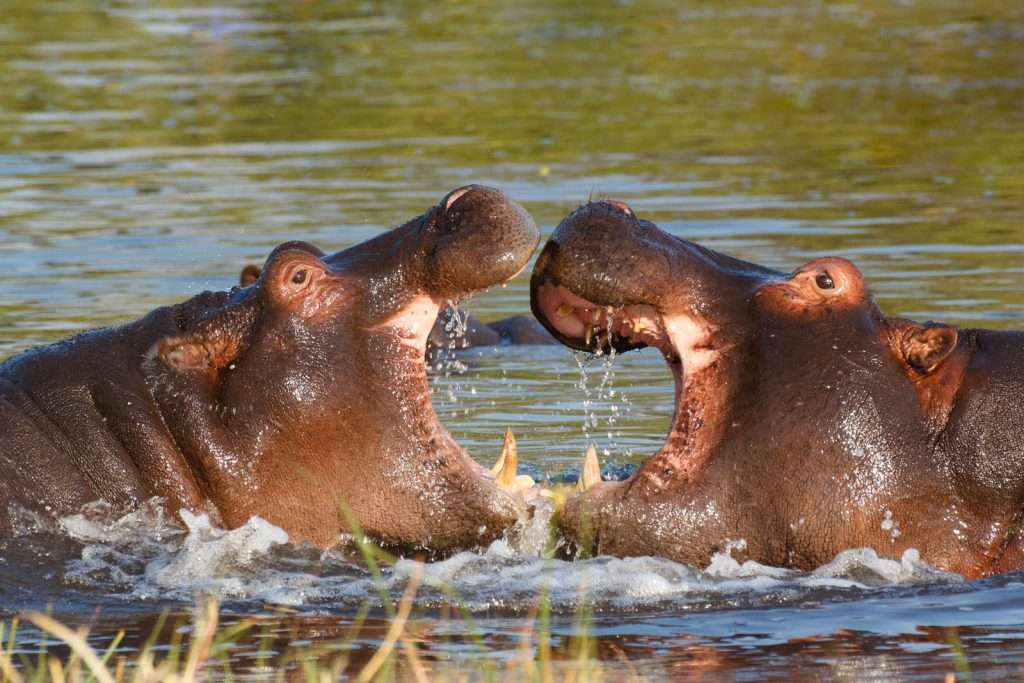
Although hippos are among the largest mammals on Earth, they eat surprisingly moderate amounts of food.
An adult hippopotamus typically consumes:
- 25–40 kg (55–88 lbs) of grass every night.
- Around 1–1.5% of its body weight each day.
- Food gathered during 5 to 6 hours of grazing.
This is considerably less than elephants, which may eat well over 150 kg (330 lbs) of vegetation daily.
The reason is simple—hippos spend most daylight hours resting in water, conserving energy instead of moving continuously.
Daily Food Intake by Age
| Hippo Age | Average Diet |
|---|---|
| Calf (0–6 months) | Mother’s milk |
| Young Hippo (6 months–2 years) | Milk plus small amounts of grass |
| Juvenile | Mostly grass with occasional shoots |
| Adult | 25–40 kg (55–88 lbs) of grasses and other vegetation |
As young hippos grow, they gradually transition from milk to grazing alongside their mothers until grass becomes their primary food source.
Do Hippos Eat Every Day?
Yes.
Wild hippos normally feed every night.
Shortly after sunset, they leave rivers, lakes, and wetlands to graze before returning to the water before sunrise.
A typical feeding routine looks like this:
| Time | Activity |
| Daytime | Resting and cooling in water |
| Evening | Leave the water to feed |
| Night | Graze for 5–6 hours |
| Early Morning | Return to the water |
Unlike predators that may go several days between meals, hippos depend on regular grazing to meet their nutritional needs.
However, during periods of drought or food shortages, they may travel farther than usual in search of suitable grazing areas.
What Do Hippos Eat in Zoos?
Zoo nutritionists carefully design diets that closely resemble what hippos would eat in the wild while ensuring they receive all essential nutrients.
A typical zoo diet includes:
| Food | Purpose |
| Alfalfa hay | Primary fibre source |
| Bermuda hay | Mimics natural grasses |
| Herbivore pellets | Added vitamins and minerals |
| Lettuce | Hydration and variety |
| Carrots | Occasional enrichment |
| Sweet potatoes | Supplemental nutrition |
| Melons and seasonal fruits | Occasional treats |
Unlike wild hippos, zoo hippos do not need to travel long distances to find food, so portions are carefully managed to prevent obesity while maintaining natural feeding behaviour.
Do Hippos Eat Humans?
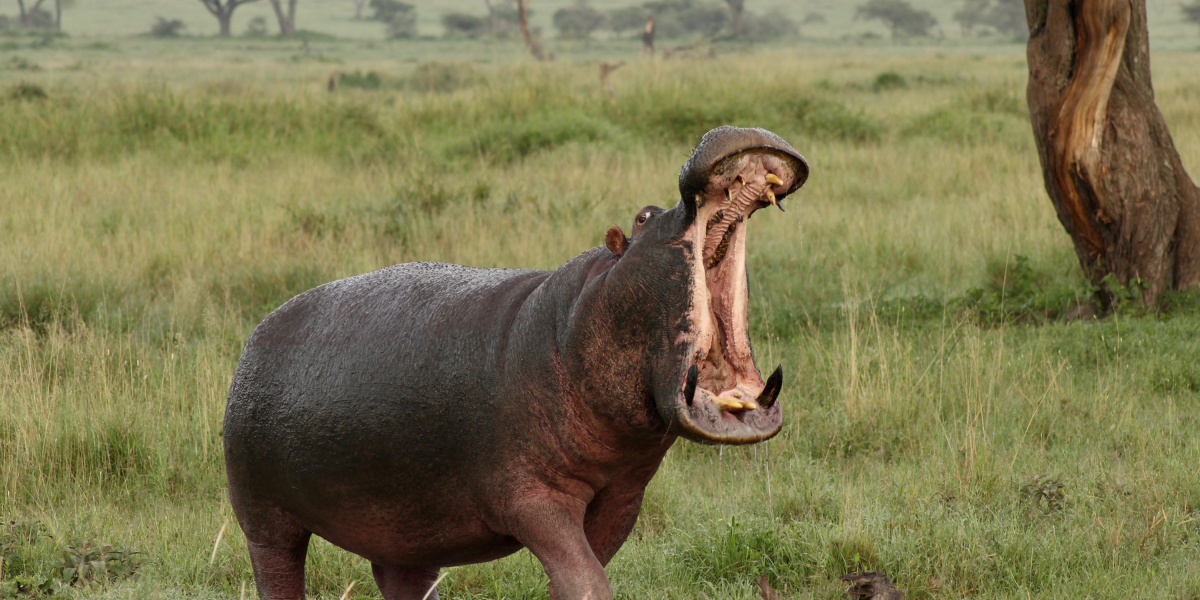
No. Hippos do not eat humans.
Although hippos are responsible for hundreds of human deaths every year across Africa, they do not hunt people for food. Most attacks happen because hippos are highly territorial and feel threatened, especially when humans get too close to the water, approach a calf, or block their path back to a river.
Hippo attacks are defensive rather than predatory.
If you encounter a hippo on safari, always:
- Keep a safe distance.
- Never stand between a hippo and the water.
- Stay inside your safari vehicle unless instructed otherwise.
- Follow your guide’s directions at all times.
What Eats Hippos?
Adult hippos have very few natural predators because of their enormous size, thick skin, and aggressive nature.
However, young calves are more vulnerable.
| Hippo Age | Common Predators |
|---|---|
| Calves | Nile crocodiles, lions, spotted hyenas |
| Juveniles | Lions (occasionally) |
| Healthy Adults | Very few natural predators |
Most adult hippos die from old age, disease, drought, or conflicts with other hippos rather than predation.
Interesting Facts About the Hippopotamus Diet
Hippos have several surprising feeding habits that many people don’t know.
Hippos Spend More Time Resting Than Eating
Despite their massive size, hippos spend most of the day resting in rivers or lakes and only leave the water after sunset to feed.
Hippos Create “Hippo Lawns”
Because they often return to the same grazing areas night after night, hippos naturally create short, closely cropped grasslands known as hippo lawns.
These grazing areas benefit many smaller herbivores by encouraging fresh grass growth.
Hippos Eat Less Than Most Large Herbivores
Although an adult hippo weighs well over a tonne, it eats only about 1–1.5% of its body weight each day, far less than elephants and many other large herbivores.
Hippos Can Travel Long Distances for Food
A hippo may walk up to 8 km (5 miles) in a single night while searching for fresh grazing.
Despite these nightly journeys, most hippos return to the same water source before sunrise.
Their Largest Teeth Are Not Used for Eating
A hippo’s impressive tusk-like canines may grow more than 50 cm (20 inches) long, but they are used almost entirely for fighting and defense.
Food is processed using the powerful molars at the back of the mouth.
Frequently Asked Questions
What does a hippo eat?
A hippo mainly eats short grasses, along with small amounts of reeds, young shoots, and fallen fruits. Grass makes up almost all of a healthy wild hippo’s diet.
What does a hippopotamus eat every day?
An adult hippopotamus typically eats 25–40 kg (55–88 lbs) of grass each night while grazing for around 5 to 6 hours.
Do hippos eat meat?
Very rarely.
Although hippos are herbivores, researchers have documented occasional cases of scavenging on animal carcasses or stealing meat from predator kills during periods of food scarcity or nutritional stress.
What is a hippo’s favorite food?
Short savannah grasses are the preferred food for common hippos and make up the vast majority of their diet.
Do hippos eat fruit?
Yes, but only occasionally.
Hippos sometimes eat naturally fallen wild fruits when they are available near grazing areas.
Do hippos eat fish?
No.
Fish are not part of a normal hippo diet. Their digestive system is adapted to process plant material rather than animal protein.
Do hippos eat grass underwater?
No.
Although hippos spend most of the day in rivers and lakes, they leave the water after sunset and feed almost entirely on land.
Do baby hippos eat grass?
Baby hippos begin life drinking their mother’s milk. As they grow, they gradually start grazing on grass before becoming completely herbivorous.
Experience Hippos in the Wild with TourwithPipi
Watching hippos emerge from the water after sunset to begin their nightly grazing is one of Africa’s most fascinating wildlife experiences.
On a luxury safari with TourwithPipi, you’ll have the opportunity to observe hippos in their natural habitat while learning about their behavior, diet, and ecological role from experienced local guides. Whether you’re exploring the Serengeti National Park, Maasai Mara National Reserve, Ngorongoro Crater, or other iconic wildlife destinations, every safari is carefully designed to deliver exceptional wildlife viewing while respecting animal welfare and conservation.
With private safari vehicles, expert guides, luxury lodges, and personalized itineraries, you’ll experience Africa’s wildlife safely and responsibly.
Key Takeaways
- Hippos mainly eat short grasses.
- Adult hippos consume 25–40 kg (55–88 lbs) of food every night.
- They graze for 5–6 hours after sunset.
- Hippos rarely eat aquatic plants despite living in water.
- Meat is not a normal part of a hippopotamus diet but has occasionally been recorded.
- Hippos use their lips—not their front teeth—to pull grass from the ground.


