
Quick Answer:
- `Yes, hippos are dangerous, aggressive, and not friendly. They are one of the most dangerous large land mammals on the planet.
- Hippo attacks kill through biting at 1,800 PSI, crushing, and drowning. Warning signs include open mouth, head shaking, and grunting. Stay in your vehicle on safari.`
- Most hippo attacks on humans happen near water, at dawn or dusk, when hippos are moving between rivers and grazing land.
- On safari, staying in your vehicle, following your guide, and keeping a safe distance is the only reliable way to avoid a hippo encounter.
Hippos kill people. Not many people know the full picture of how and why, but anyone heading on safari in Kenya, Tanzania, Uganda, or Zambia needs to understand what they are dealing with. These animals are not the slow, yawning creatures you see in a zoo. In the wild, a hippopotamus is one of the most dangerous animals in Africa, and it is one of the few animals that will charge without much warning.
What Makes a Hippo So Dangerous?
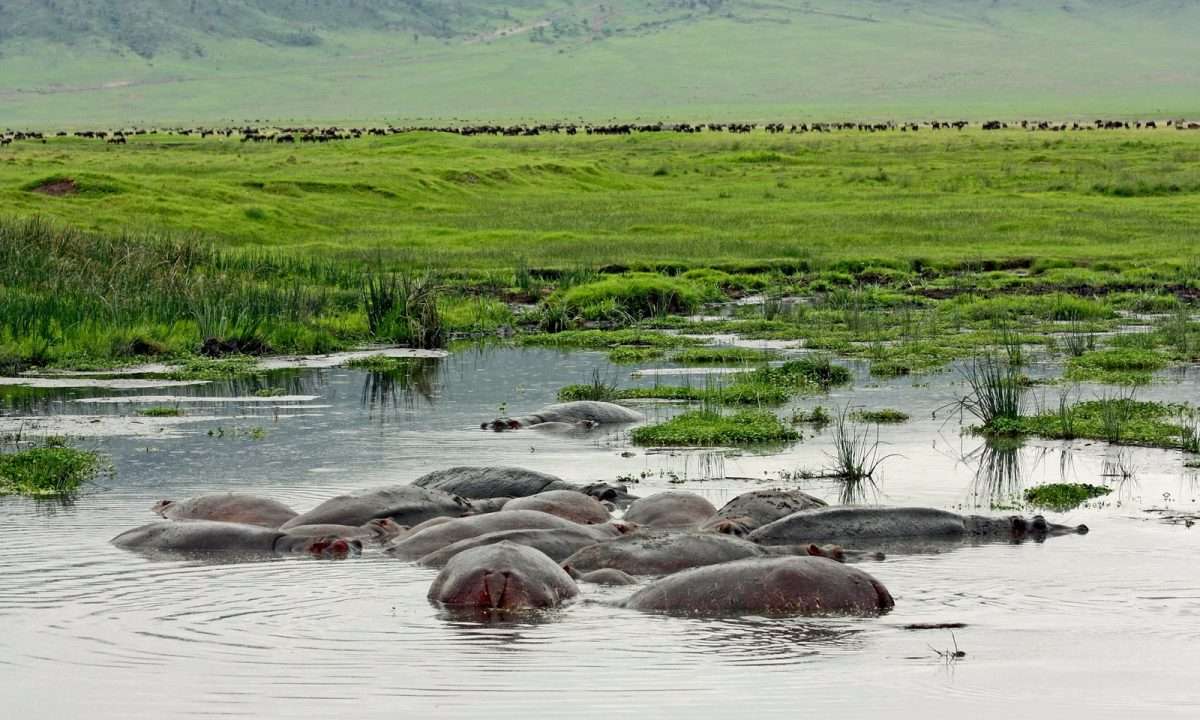
Size is the first thing. Adult male hippos weigh between 3,300 and 5,800 pounds. Females are smaller but still reach 3,000 pounds. They measure between 10 and 16 feet in length and stand about 5 feet tall at the shoulder. For comparison, that is roughly the size of a small car with teeth.
Those teeth matter. A hippo’s canines grow up to 20 inches long, and their bite force reaches 1,800 PSI. That is nearly double the bite force of a lion (650 PSI) and significantly stronger than a saltwater crocodile. Their incisors can grow up to 16 inches. A single bite can cut a small boat in half.
Speed is the other surprise. Hippos look slow. They are not. On land, a hippo can reach 35 mph over short distances. The average human sprints at around 12 to 15 mph. You will not outrun one.
| Hippo Physical Facts | Data |
|---|---|
| Weight (adult male) | 3,300 to 5,860 lbs |
| Length | 10 to 16 feet |
| Height at shoulder | 4.5 to 5.5 feet |
| Land speed | Up to 35 mph |
| Bite force | 1,800 PSI |
| Canine length | Up to 20 inches |
| Breath-holding underwater | 3 to 5 minutes |
| Daily grass intake | Up to 80 lbs per night |
Are Hippopotamus Dangerous to Humans?
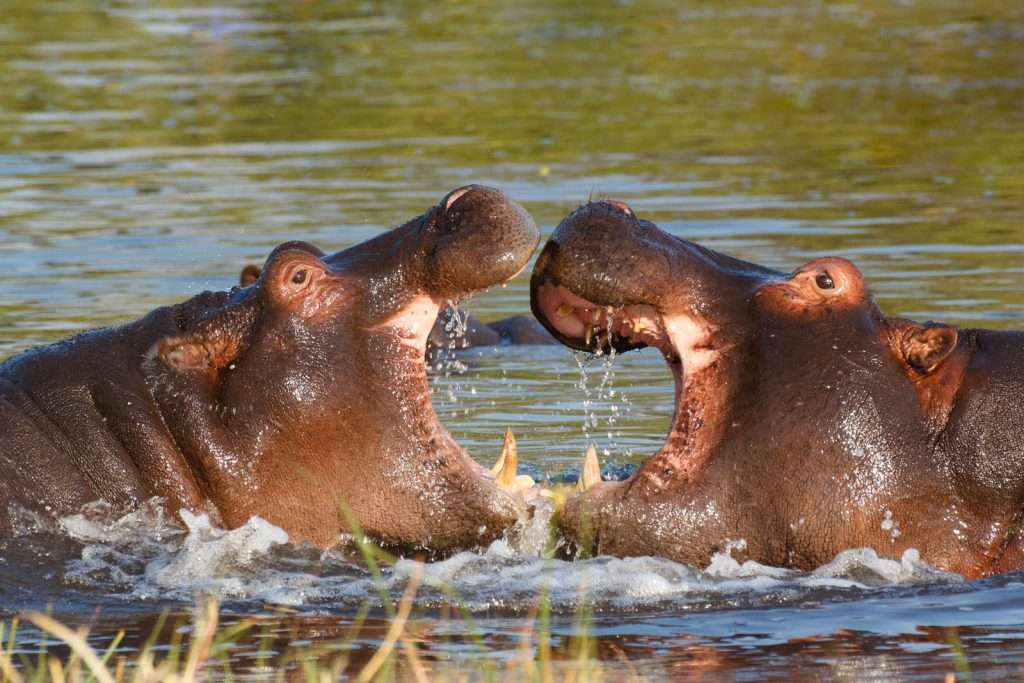
Yes, hippos are incredibly dangerous and aggressive. Despite being herbivores, they are fiercely territorial and attack without warning when threatened or when anyone blocks their path to water. They are widely considered one of the deadliest large land mammals in Africa, responsible for a significant number of human fatalities each year across sub-Saharan Africa.
A 2022 study published in Frontiers in Conservation Science by van Houdt and Traill reviewed human-hippo conflict across Africa. They found that the commonly cited figure of 500 to 3,000 deaths per year has no clear source and is likely overstated. The actual numbers, pulled from documented regional data, are lower but still serious.
A 2012 paper in the Journal of Ecology and the Natural Environment tracked human-wildlife conflict in Zambia from 2002 to 2010 and recorded 65 people killed by hippos over that period, roughly 10.8 deaths per year in Zambia alone. Zambia holds around 35% of the global hippo population (estimated at 114,300 to 130,000 individuals by the 2016 IUCN Red List Assessment), which suggests a global figure closer to 38 deaths per year from hippo attacks.
That number sounds manageable until you read this: van Houdt and Traill found that 87% of hippo attacks are fatal. They do not injure most of the people they attack. They kill them.
Why Do Hippos Attack Humans?
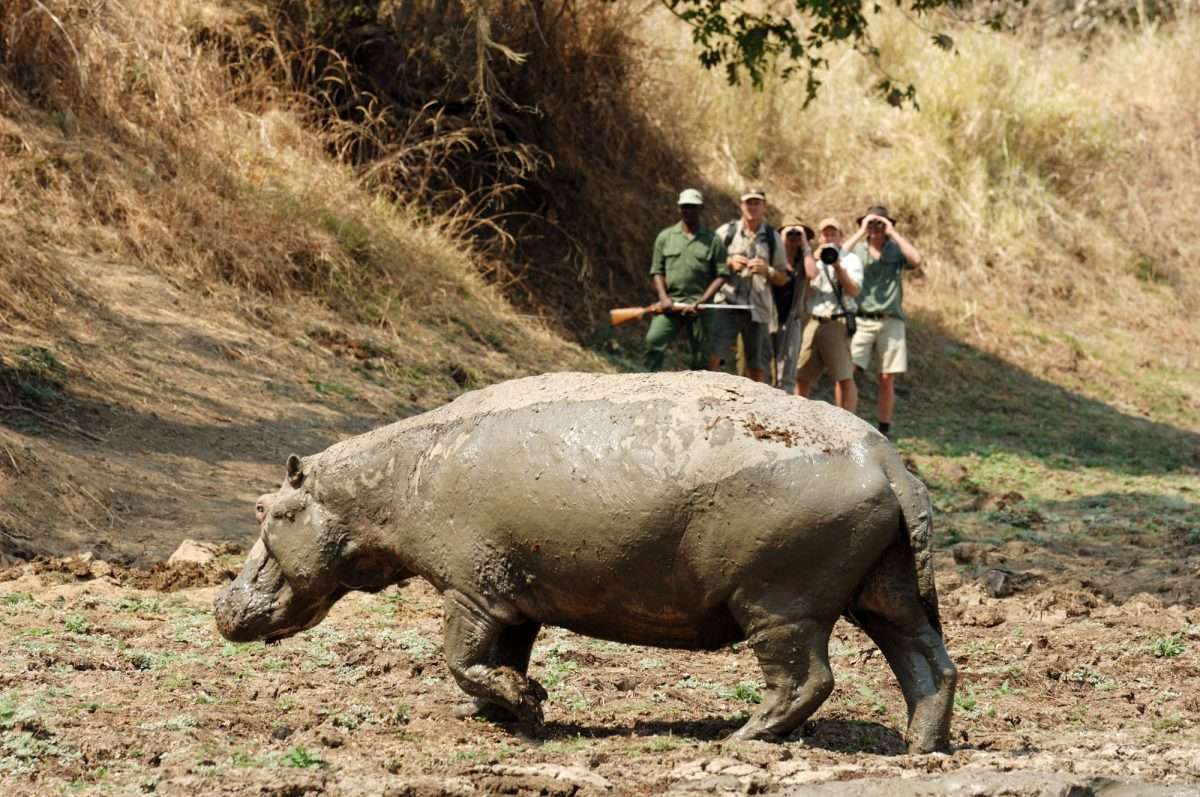
Hippos are territorial, not predatory. They do not hunt humans. They attack when they feel threatened, when someone gets between them and the water, or when a person or boat enters their stretch of river without warning.
Hippos deadly aggression is driven by:
Territory. A dominant male controls a stretch of river and will charge anything that enters it, including boats, canoes, and swimmers.
Protection of young. A female with a calf is one of the most dangerous animals you will encounter anywhere in Africa. She will charge without hesitation.
Being startled. Hippos graze at night and return to water at dawn. Surprising one on a path between the bush and the river is one of the most common causes of land attacks.
Feeling cornered. A hippo cut off from water will charge toward it, through whatever is in the way.
Hippo Attacks on Humans: How They Happen
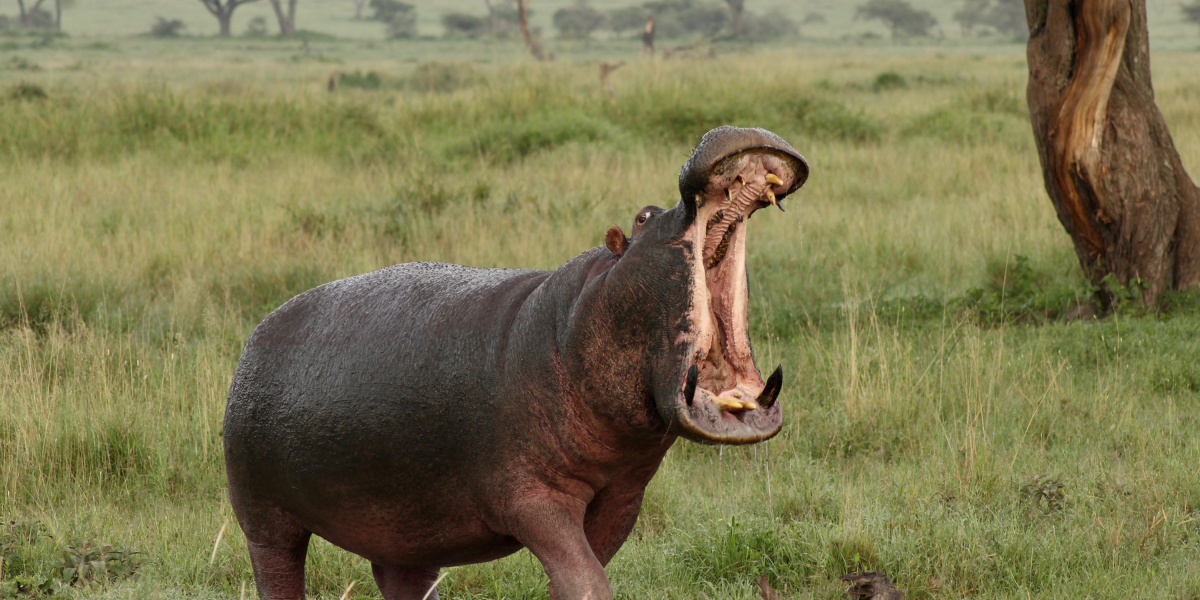
Most hippopotamus attacks happen in one of three situations:
On the water. Fishermen, boat operators, and tourists in canoes are frequently capsized by territorial hippos. The hippo charges the hull, flips the vessel, and then attacks anyone in the water. Lake Victoria, the Zambezi River, the Mara River, and Lake Tanganyika all have documented attack histories.
On land at dawn or dusk. Hippos leave the water at night to graze and return before full daylight. Anyone walking near a riverbank during these hours risks crossing a hippo’s path back to water.
Between a hippo and the river. This is the most dangerous position to be in. A hippo will charge directly toward water if it feels threatened, and it will not go around you.
How to Know a Hippo Is About to Attack You?
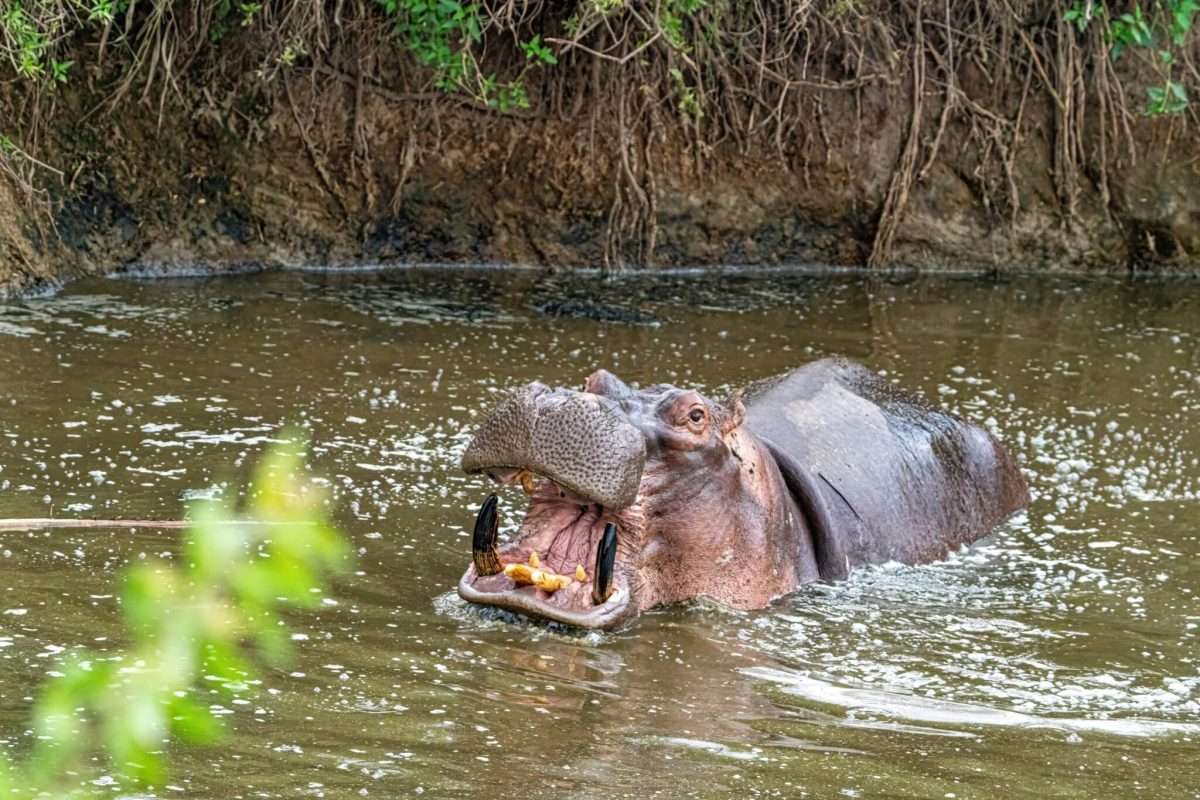
Hippos give warning signs before they charge, but the window is short. Recognizing these early is the difference between a close call and a serious injury.
Warning signs to watch for:
- Wide-open mouth (a threat display, not a yawn)
- Head thrown back or shaking side to side
- Loud grunting, snorting, or honking sounds
- Stomping or splashing aggressively in water
- Moving toward you with head low to the ground
- Ears flattening or twitching rapidly
- A visible bow wave in the water moving toward your boat
If you see any of these, do not wait to confirm. Move immediately.
How to Avoid Hippo Attacks
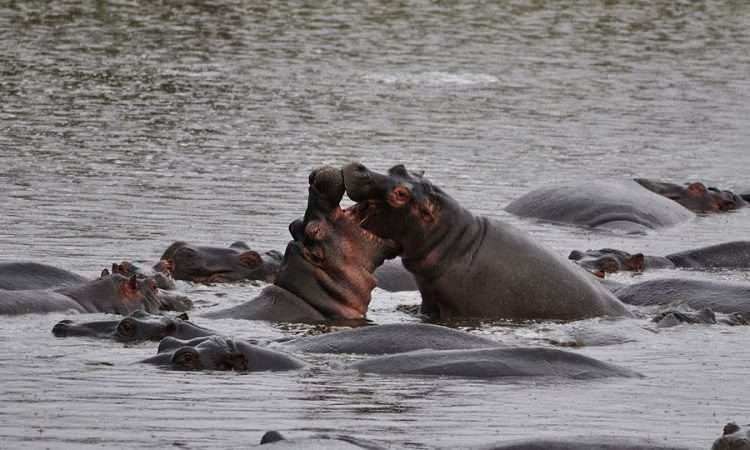
The safest approach to hippos is simple: keep your distance and follow your guide.
On land:
- Never walk along paths near rivers or lakes without a guide, especially at dawn or dusk
- Do not position yourself between a hippo and the water
- Stay close to your group at all times
- Avoid making sudden movements or loud sounds near the riverbank
- Do not approach a hippo for a photo, regardless of how calm it looks
On the water:
- Always travel with an experienced local guide who knows the river
- Keep noise to a minimum and avoid paddling into narrow channels where hippos rest
- Watch for bow waves moving toward your vessel
- If a hippo approaches your boat, slap the water with a paddle to deter it
- If your boat capsizes, move away from the hull since hippos target large shapes in their territory
What to Do If You Encounter a Hippo
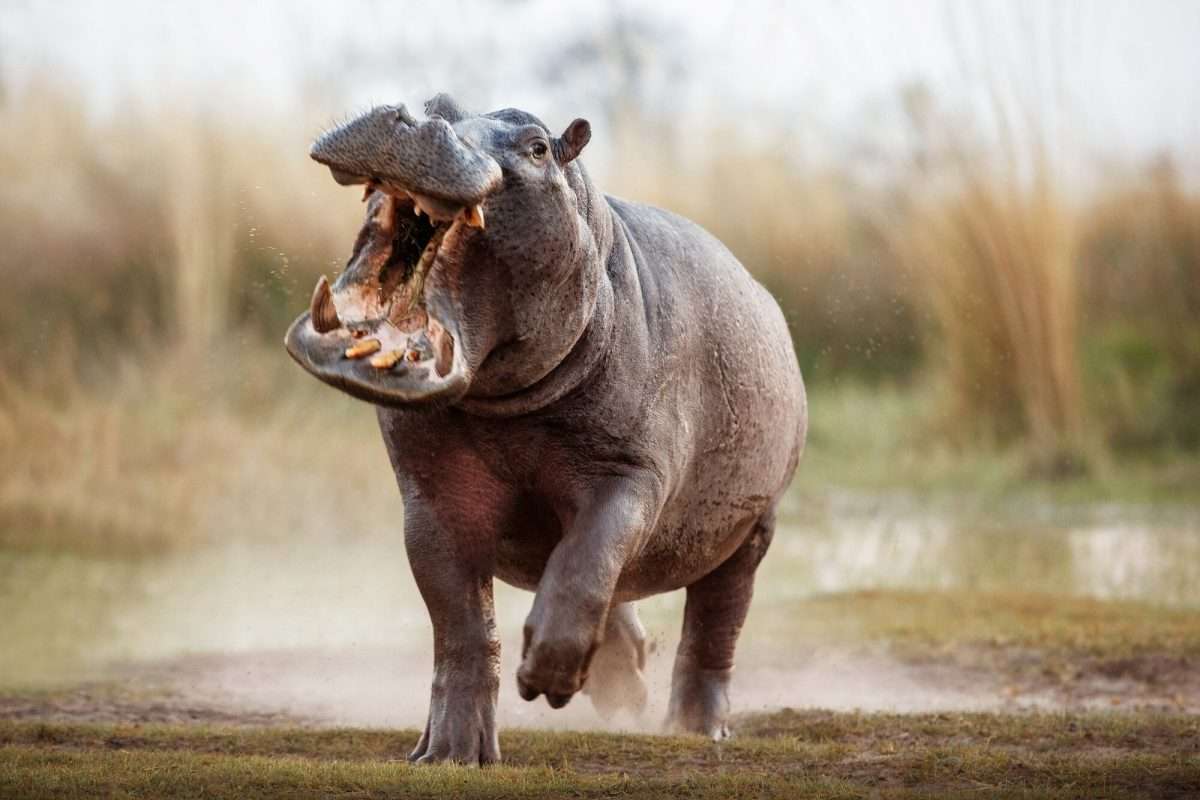
On land:
- Do not run in a straight line. Hippos run faster than you, but they tire quickly and struggle to change direction at speed.
- Move to the side, get behind a large tree, rock, or anthill, anything that breaks the line between you and the animal.
- Never position yourself between a hippo and the water. That is the one rule that overrides everything else.
- Stay quiet and move steadily. Sudden movements trigger charges.
In a boat:
- If a hippo surfaces under your boat, paddle away quickly and quietly.
- Do not slap the water repeatedly. One firm slap may deter an approaching hippo. Repeated slapping can agitate it further.
- If you are knocked into the water, move away from the boat. Hippos target large shapes in their territory, and a capsized boat is a bigger target than a person.
If attacked in water:
- Hippos are not predators. They are not trying to eat you. They are trying to remove a threat from their territory.
- Do everything possible to defend yourself. Fight back if you can reach the surface.
- Shout for help the moment you are able to.
Where to See Hippos in Africa Safely
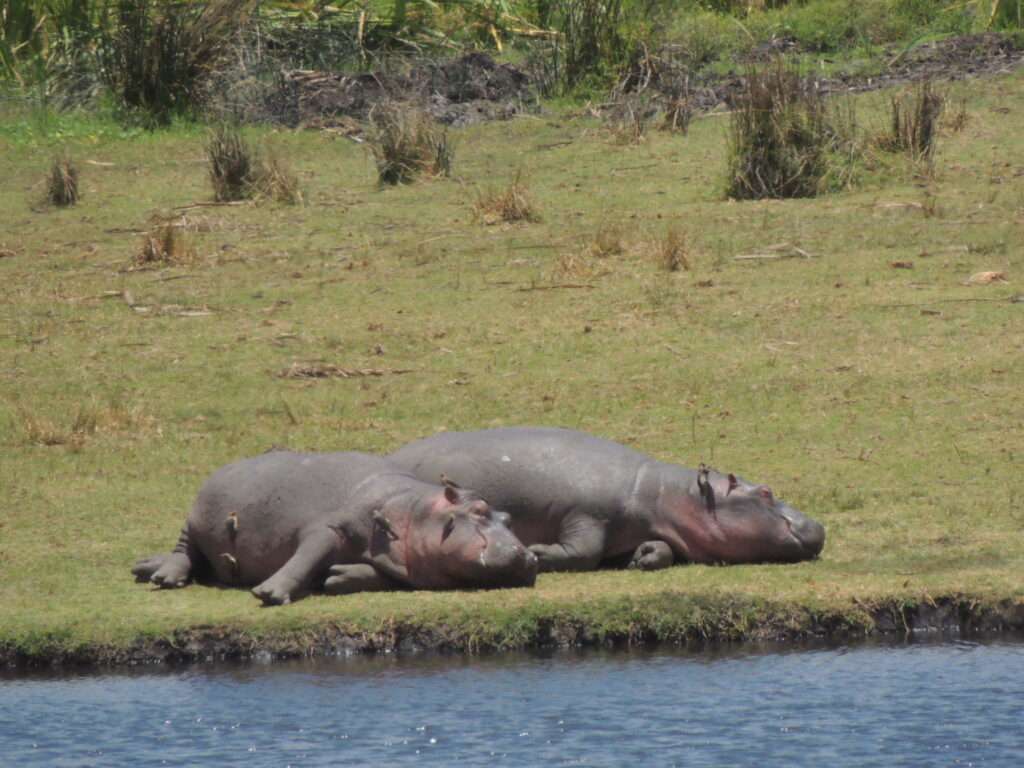
The good news is that hippos are genuinely spectacular to watch from a safe distance or a guided boat. Some of the best places to see hippos in Africa include:
Hippos are not rare. They live throughout sub-Saharan Africa and can be seen in many of Kenya and Tanzania’s top safari destinations.
| Location | Country | Best Viewing |
|---|---|---|
| Maasai Mara National Reserve | Kenya | Mara River pools, game drives |
| Queen Elizabeth National Park | Uganda | Kazinga Channel boat safaris |
| Amboseli National Park | Kenya | Amboseli swamp areas |
| Serengeti National Park | Tanzania | Seronera River system |
| South Luangwa National Park | Zambia | Luangwa River, night drives |
| Lake Manyara National Park | Tanzania | Lakeshore hippo pools |
| Chobe National Park | Botswana | Chobe River boat cruises |
On any TourwithPipi safari in Africa, your guide will position the vehicle at a safe and legal distance and advise you when it is appropriate to step out. Follow that guidance without exception.
Will Hippos Eat Humans?
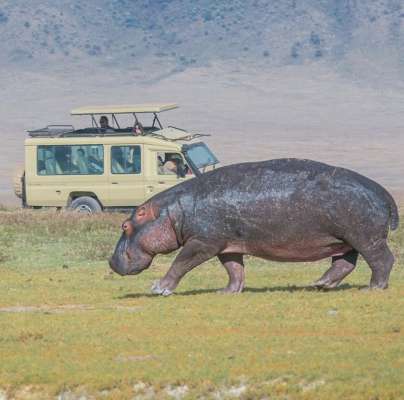
No. Hippos are herbivores. They graze on grass at night and have no interest in eating humans or any meat. However, there are rare documented cases of hippos eating carrion during anthrax outbreaks, and researchers believe this behavior contributed to the spread of anthrax among hippo populations in Zambia and Uganda. This is the exception, not the rule, and it does not change the fact that hippos attack humans out of territory defense, not predation.
Blog Summary About Hippo Danger
- Yes, hippos are incredibly dangerous, aggressive, and not friendly. Fiercely territorial herbivores, they attack without warning and are one of Africa’s deadliest large land mammals.
- Hippos weigh up to 5,860 lbs, run at 35 mph, and deliver a 1,800 PSI bite force. They are physically capable of killing a person in seconds.
- 87% of hippo attacks are fatal, according to a 2022 peer-reviewed study. Survivors frequently lose limbs.
- Most attacks happen near water, at dawn or dusk, or when someone positions themselves between a hippo and its river.
- Warning signs include a wide-open mouth, head shaking, loud grunting, and aggressive splashing. If you see these, move immediately.
- On safari, the safest way to see hippos is from a boat or vehicle with a licensed guide who knows the terrain and animal behavior.
Frequently Asked Questions About Hippos
1. How many people do hippos kill per year?
Documented data suggests hippos kill closer to 38 people per year globally, based on regional conflict studies and IUCN population estimates. The widely cited figure of 500 to 3,000 deaths per year has no verified source.
2. Are hippos more dangerous than lions?
By total deaths, elephants kill more people than hippos in Africa. But hippo attacks are fatal in 87% of cases, which is higher than most other large animals. By severity of attack outcome, hippos rank among the most dangerous.
3. How fast can a hippo run?
Hippos can run up to 35 mph on land over short distances. A healthy adult human sprints at 12 to 15 mph. You cannot outrun one.
4. What is a hippo’s bite force?
A hippo’s bite force is approximately 1,800 PSI. For comparison, a lion bites at around 650 PSI and a human at around 160 PSI.
5. Will a hippo attack a boat?
Yes. Hippos regularly charge and capsize boats, canoes, and small vessels that enter their territory on rivers and lakes. Always travel with an experienced guide on any African waterway.
6. How do you know if a hippo is about to charge?
Signs include a wide-open mouth held as a threat display, head shaking or throwing back, loud grunting or snorting, aggressive splashing, and a low-head posture moving toward you. Move away immediately if you see these.
7. Are hippos aggressive on land?
Yes, especially at dawn and dusk when they move between water and grazing areas. A hippo surprised on a path between bush and river is one of the most dangerous situations in African wildlife.
8. Where are hippos most commonly found in Africa?
Hippos live near rivers, lakes, and swamps across sub-Saharan Africa. Major populations exist in Zambia, Tanzania, Kenya, Uganda, the Democratic Republic of Congo, and Botswana.
9. Can you safely see hippos on safari?
Yes. From a vehicle or boat with a licensed guide, hippos can be observed safely at distance. They are a highlight of river safaris on the Mara River, Kazinga Channel, and Chobe River.
10. Do hippos eat humans?
No. Hippos are herbivores and do not hunt or eat humans. They attack out of territorial defense, not predation.


