
Quick Answer:
A hippopotamus can run at speeds of up to 30 km/h (19 mph) on land over short distances. Despite weighing up to 1,500 kg (3,300 lbs), hippos can easily outrun most humans. Their powerful legs, strong muscles, and unique running gait allow them to accelerate surprisingly quickly, making them one of Africa’s fastest large mammals over short distances.
How Fast Are Hippos?
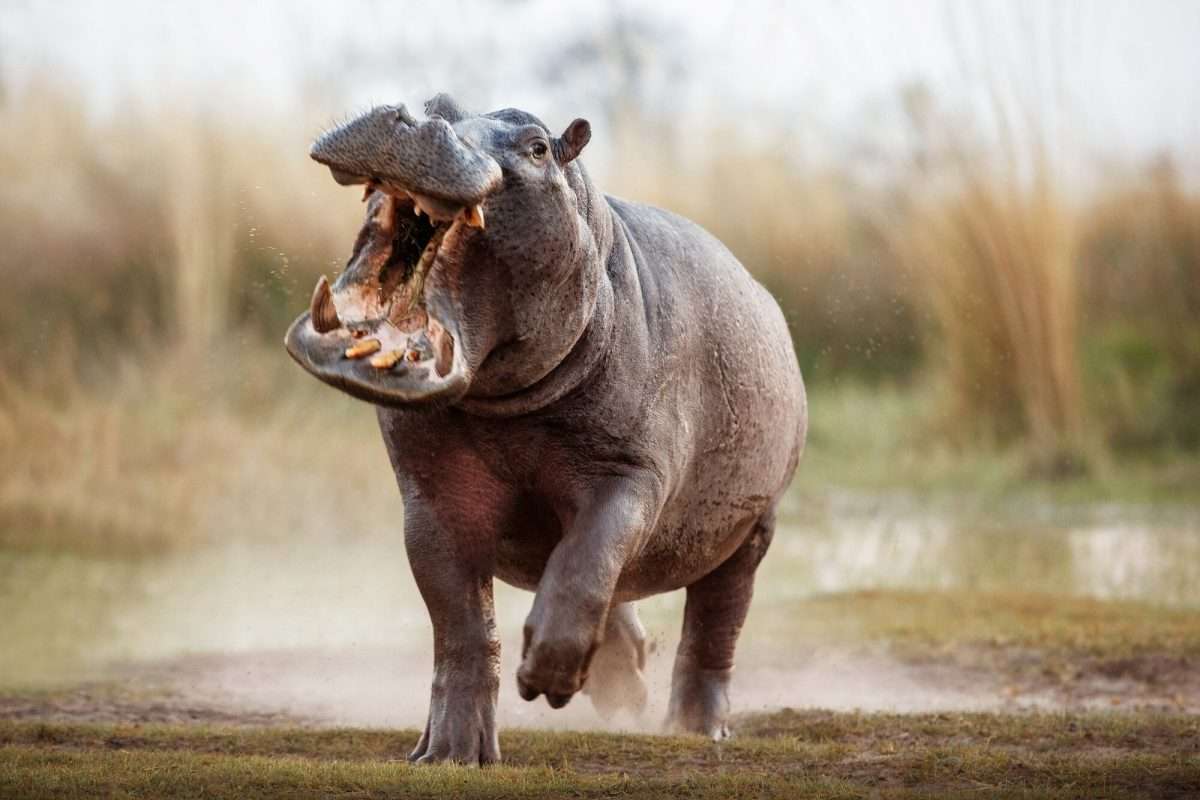
One of the biggest wildlife myths is that hippos are slow because they spend much of the day resting in rivers and lakes.
In reality, hippo speed is impressive for such a massive animal.
An adult hippopotamus can reach 30 km/h (19 mph) on land during a short sprint. While that is slower than predators such as cheetahs and lions, it is remarkably fast considering an adult male can weigh more than 1.5 tonnes.
Hippos use this speed to:
- Defend their territory.
- Chase away threats.
- Return quickly to water.
- Protect calves.
- Compete with rival hippos.
Unlike animals built for endurance, hippos rely on explosive bursts of speed rather than long-distance running.
Hippo Speed Compared to Other Animals
The table below shows how hippo speed compares with other well-known animals.
| Animal | Top Speed |
|---|---|
| Cheetah | 120 km/h (75 mph) |
| Lion | 80 km/h (50 mph) |
| Wildebeest | 80 km/h (50 mph) |
| Zebra | 65 km/h (40 mph) |
| Giraffe | 60 km/h (37 mph) |
| White Rhinoceros | 50 km/h (31 mph) |
| African Elephant | 40 km/h (25 mph) |
| Hippopotamus | 30 km/h (19 mph) |
| Average Human | 10–13 km/h (6–8 mph) |
Although hippos are slower than many African mammals, they are significantly faster than most people and can cover short distances surprisingly quickly.
Can a Hippo Outrun a Human?
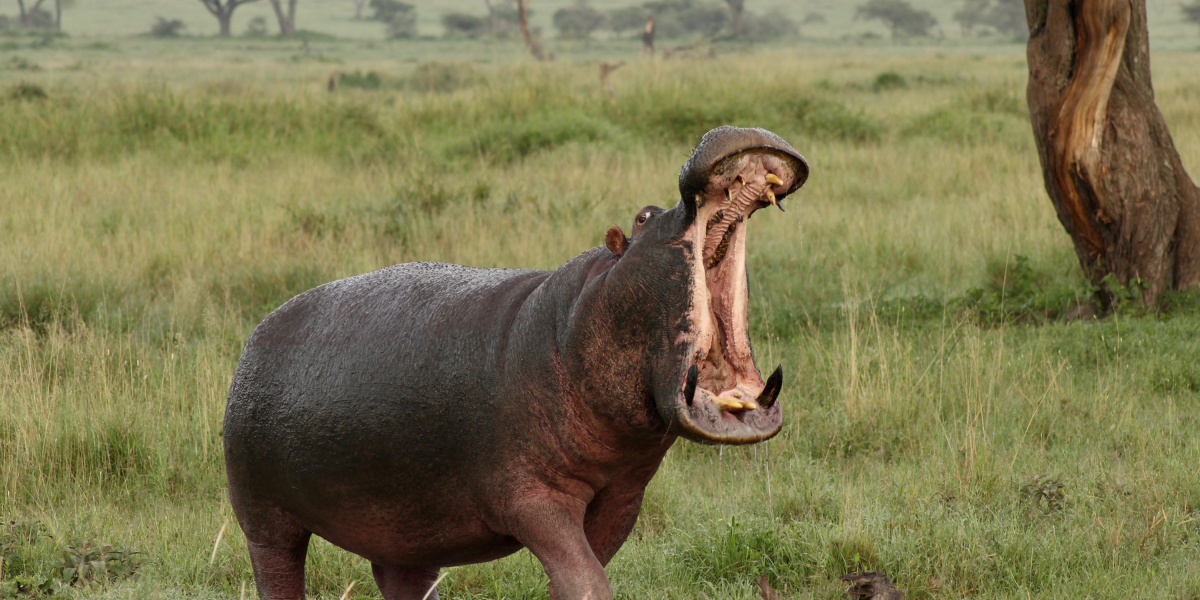
Yes.
If you’re wondering how fast does a hippopotamus run compared to a person, the answer is simple—a healthy adult hippo is much faster.
| Comparison | Hippo | Average Human |
| Top Speed | 30 km/h (19 mph) | 10–13 km/h (6–8 mph) |
| Sprint Power | Excellent | Moderate |
| Endurance | Low | Higher over long distances |
Even experienced runners would struggle to outrun a charging hippo over a short distance.
This is one reason wildlife experts always advise maintaining a safe distance from hippos, especially near rivers and lakes.
Why Are Hippos So Fast?
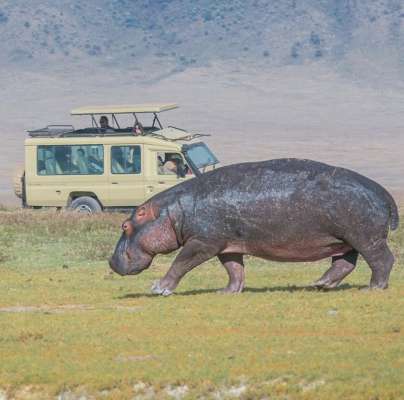
Considering their enormous size, many people are surprised by how fast hippos are.
Several physical adaptations allow them to move with unexpected speed.
Powerful Leg Muscles
Hippos have thick, muscular legs capable of supporting enormous body weight while generating powerful bursts of acceleration.
Unlike many large animals, their legs are built for strength rather than long-distance travel.
Strong Feet and Excellent Grip
Each foot has four toes with broad, tough hooves that spread their weight across soft ground.
This design improves traction on:
- Mud
- Riverbanks
- Wet grass
- Uneven terrain
It also helps prevent sinking into soft surfaces where many large animals would struggle.
A Stable Body Design
Hippos carry most of their weight low to the ground.
Their broad bodies create stability while running, allowing them to remain balanced even across rough terrain.
Although they cannot sustain high speeds for long, they accelerate surprisingly quickly over short distances.
How Do Hippos Run?
Hippos do not gallop like horses or antelope.
Instead, they move using a fast trotting gait.
For much of their run, at least two feet remain on the ground, providing excellent stability despite their enormous weight.
Interestingly, wildlife studies have shown that during full-speed sprints, all four feet briefly leave the ground for a fraction of a second.
This short airborne phase occurs during approximately 15% of their running stride, demonstrating that hippos are more agile than their appearance suggests.
Why Don’t Hippos Run for Long?
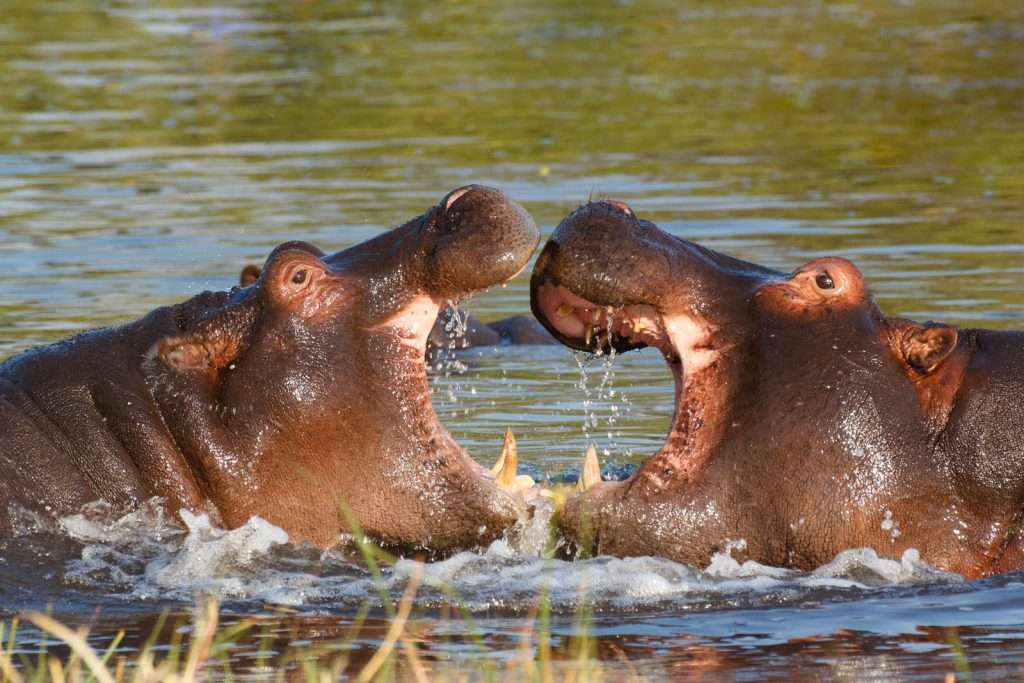
Although how fast can a hippo run is impressive, they are not endurance athletes.
Their massive bodies require enormous amounts of energy to move at top speed.
After roughly 30 seconds of sprinting, hippos begin to tire quickly and slow down.
Instead of chasing prey over long distances, hippos rely on short, explosive bursts of speed to:
- Defend territory.
- Intimidate rivals.
- Escape immediate danger.
- Reach water quickly.
This strategy perfectly suits their semi-aquatic lifestyle, where most encounters happen close to rivers, lakes, or wetlands.
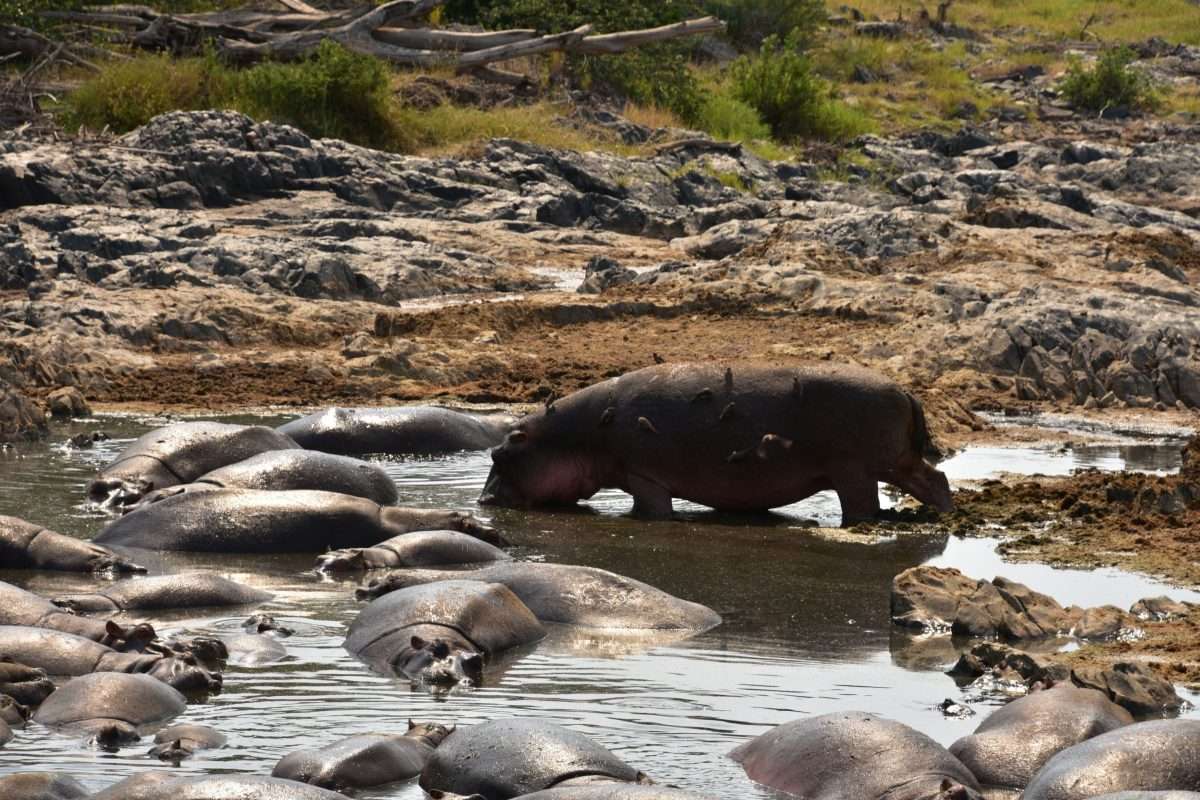
How Fast Can Hippos Move in Water?
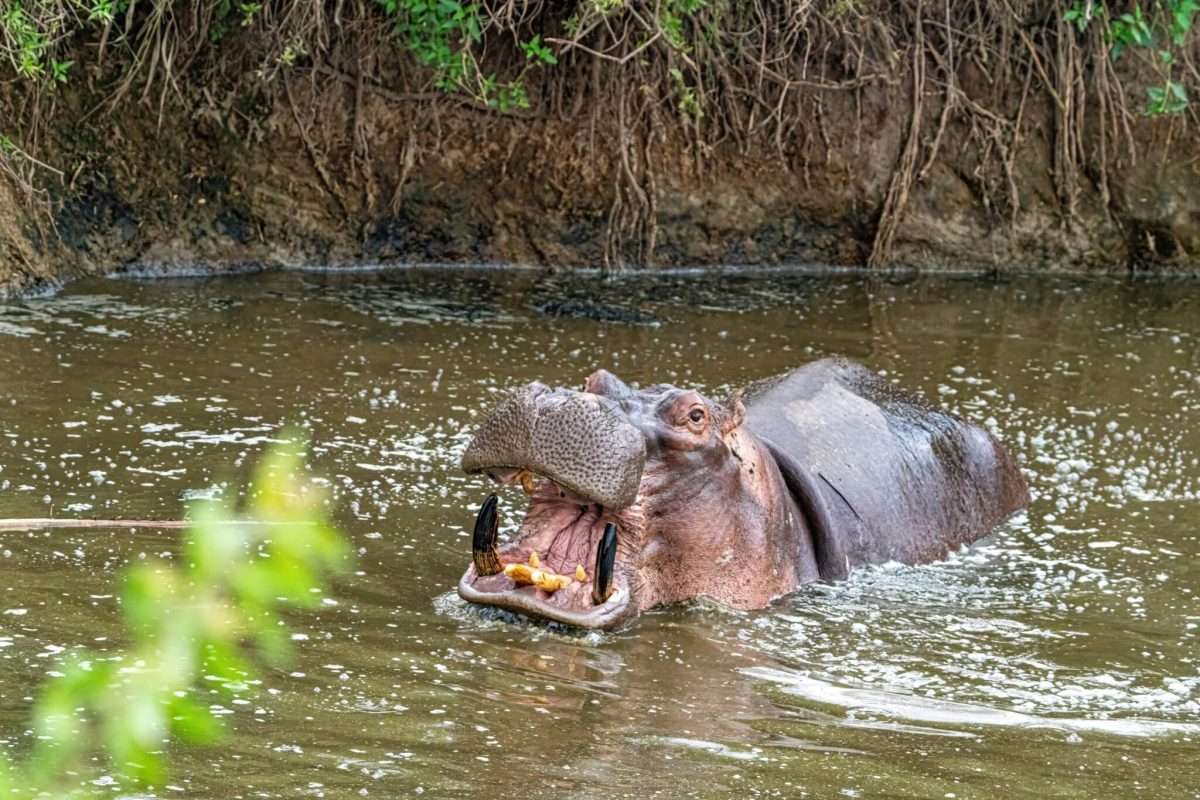
Many people assume hippos are excellent swimmers because they spend most of their lives in rivers and lakes. Surprisingly, hippos do not swim in the traditional sense.
Instead of floating and paddling like other mammals, hippos walk, trot, or push themselves along the riverbed using their powerful legs.
Their dense bones help them stay submerged while reducing buoyancy. Every few seconds, they push off the bottom, glide forward, and automatically rise to the surface to breathe before sinking again.
Hippo Speed in Water
| Movement | Top Speed |
|---|---|
| On Land | 30 km/h (19 mph) |
| In Water | Up to 8 km/h (5 mph) |
Hippos usually surface every 3 to 5 minutes to breathe. Even while sleeping underwater, they instinctively rise to the surface without fully waking up.
Unlike crocodiles, hippos are not built for chasing prey in water. Instead, their aquatic movement allows them to travel efficiently between feeding areas and defend their territory.
Why Do Hippos Run?
Hippos do not run unless they have a reason.
Because sprinting requires enormous energy, they reserve their speed for situations where it is absolutely necessary.
Defending Territory
The most common reason a hippo runs is to defend its territory.
Adult males establish territories along rivers and lakes, particularly during the dry season when water levels drop. If another hippo enters the area, the dominant male may charge at full speed to force the intruder away.
Territorial disputes often involve:
- Loud warning calls.
- Wide-open mouth displays.
- Chasing rivals.
- Violent fights using their tusks.
Protecting Calves
Female hippos are highly protective mothers.
If they believe a calf is threatened by crocodiles, lions, boats, or people, they may charge immediately without hesitation.
Many wildlife incidents involving hippos occur because visitors unknowingly move too close to a mother and her calf.
Returning to Water
Hippos spend most daylight hours cooling off in water before leaving after sunset to graze.
During these nightly feeding trips, they can travel up to 10 km (6 miles) from water.
If startled while grazing, a hippo usually runs back toward the nearest river or lake, often using the same paths it follows every night.
Are Hippos Dangerous?
Yes. Hippos are widely considered one of Africa’s most dangerous large mammals.
Although they are herbivores, they are extremely territorial and can become aggressive when they feel threatened.
Wildlife experts estimate that hippos are responsible for hundreds to several thousand human deaths each year across Africa, making them one of the continent’s deadliest animals.
Their danger comes from a combination of:
- Incredible strength.
- Fast acceleration.
- Powerful jaws.
- Unpredictable behaviour.
- Territorial aggression.
Unlike predators that usually hunt for food, hippos attack primarily to remove what they perceive as a threat.
Why Do Hippos Attack Humans?
Hippos do not view humans as prey.
Most attacks happen because a hippo believes its territory, calf, or escape route is threatened.
Common reasons include:
A Person Gets Between a Hippo and Water
This is one of the most dangerous situations.
If a hippo feels trapped between a person and the river, it will usually attempt to reach the water by charging straight ahead.
Anything in its path can be knocked aside.
Boats Get Too Close
Hippos spend much of the day almost completely submerged.
Boats that accidentally approach too closely may surprise them.
This can result in the hippo surfacing suddenly beneath or beside the boat, sometimes overturning small vessels.
For this reason, experienced safari guides always keep a respectful distance from pods of hippos.
Protecting Young
Mother hippos react aggressively to anything they believe threatens their calves.
Even if a person has no intention of approaching the calf, the mother may interpret the situation differently and charge.
Territorial Behaviour
Male hippos aggressively defend their section of river against both rival hippos and unfamiliar intruders.
During the breeding season, territorial behaviour becomes even more intense.
How Powerful Is a Hippo’s Bite?
A hippo’s mouth is one of the most impressive weapons in the animal kingdom. A hippopotamus possesses a devastating bite force ranging from 1,800 to 2,000 pounds per square inch (PSI).
They can open their jaws to around 180 degrees, exposing enormous canine teeth and tusks.
Their bite generates tremendous crushing force, capable of:
- Breaking large bones.
- Crushing thick vegetation.
- Damaging small boats.
- Defending against crocodiles and rival hippos.
Although these teeth look like fangs, they are mainly used for fighting and display rather than feeding.
What Should You Do If a Hippo Charges?
Hippo charges are rare during professionally guided safaris, but knowing how to respond is important.
Stay Calm
Panic often leads to poor decisions.
Avoid screaming or making sudden movements that may increase the animal’s aggression.
Never Run Toward Water
A charging hippo is usually trying to reach or defend water.
Moving in that direction increases your risk.
Instead, move away from rivers, lakes, and the animal’s obvious path whenever possible.
Put a Solid Obstacle Between You and the Hippo
If available, move behind:
- Large trees.
- Massive rocks.
- Buildings.
- Vehicles.
These obstacles may interrupt the hippo’s direct line of movement.
Follow Your Guide’s Instructions Immediately
Professional safari guides understand hippo behaviour and know how to respond safely.
If your guide asks you to remain still, move slowly, or return to the vehicle, follow those instructions without hesitation.
Their experience is your greatest safety advantage.
Safari Safety Tips Around Hippos
Hippos are incredible animals to observe, but they deserve respect.
Following a few simple rules greatly reduces the chance of an encounter.
- Always remain inside your safari vehicle unless instructed otherwise.
- Never approach a hippo on foot.
- Keep a safe distance from rivers and lakes where hippos rest.
- Avoid standing between a hippo and the water.
- Watch for hippo paths leading from rivers to grazing areas.
- Give mothers with calves extra space.
- Stay quiet around hippo pods.
- Always listen carefully to your safari guide.
Most safari guests observe hippos safely because professional guides understand their behaviour and maintain appropriate viewing distances.
By respecting wildlife and following expert guidance, visitors can enjoy unforgettable sightings while keeping both themselves and the animals safe.
Interesting Facts About Hippo Speed
Hippos may look slow and relaxed, but they are among Africa’s most surprisingly agile large mammals.
Hippo Speed Facts
- Hippos can reach 30 km/h (19 mph) on land.
- They can only maintain top speed for about 30 seconds before tiring.
- Hippos do not gallop like horses. They move using a fast, powerful trot.
- During a full sprint, all four feet briefly leave the ground for part of their stride.
- Hippos spend up to 16 hours a day in water but leave at night to graze.
- They can travel up to 10 km (6 miles) each night searching for grass.
- Hippos move through water by pushing off the riverbed rather than swimming.
- Their dense bones help keep them underwater with little effort.
- Adult hippos have very few natural predators because of their size and strength.
Common Myths About Hippos
Many people misunderstand how hippos move and behave.
| Myth | Reality |
| Hippos are slow. | Hippos can sprint at 30 km/h (19 mph), much faster than most humans. |
| Hippos are excellent swimmers. | Hippos do not swim. They walk, run, and push themselves along the riverbed. |
| Hippos are gentle because they eat grass. | Hippos are herbivores but highly territorial and can be extremely aggressive. |
| You can outrun a hippo. | A healthy adult hippo will usually outrun a person over short distances. |
| Hippos attack to hunt humans. | Hippos do not hunt people. Most attacks happen because they feel threatened or are protecting territory or calves. |
Understanding these facts helps explain why hippos deserve both admiration and respect during safari.
Frequently Asked Questions
How fast can a hippopotamus run?
A hippopotamus can run at up to 30 km/h (19 mph) over short distances. Although they cannot maintain this speed for long, they can easily outrun most people.
How fast does a hippo run compared to a human?
An average person runs at 10–13 km/h (6–8 mph), while a hippo can reach 30 km/h (19 mph). This makes a hippo more than twice as fast as the average human during a sprint.
How fast are hippos in water?
Hippos move through water at speeds of up to 8 km/h (5 mph) by pushing themselves along the riverbed rather than swimming.
Can a hippo outrun an Olympic sprinter?
Over a short distance, an elite sprinter may reach a higher top speed than a hippo. However, because hippos accelerate rapidly and are unpredictable, attempting to outrun one is extremely dangerous.
Why are hippos so aggressive?
Hippos are naturally territorial. Most aggressive behaviour is triggered when they believe their territory, calves, or route back to water is threatened.
Are hippos more dangerous than lions?
In terms of attacks on people in Africa, hippos are responsible for hundreds to several thousand fatalities each year, making them one of the continent’s deadliest large mammals. Their danger comes from territorial behaviour rather than predatory hunting.
What should you never do around a hippo?
Never:
- Walk between a hippo and the water.
- Approach a mother with a calf.
- Leave your safari vehicle without permission.
- Ignore your guide’s instructions.
- Attempt to photograph a hippo from close range on foot.
Maintaining a safe distance is the best way to avoid dangerous encounters.
Experience Hippos Safely on Safari with TourwithPipi
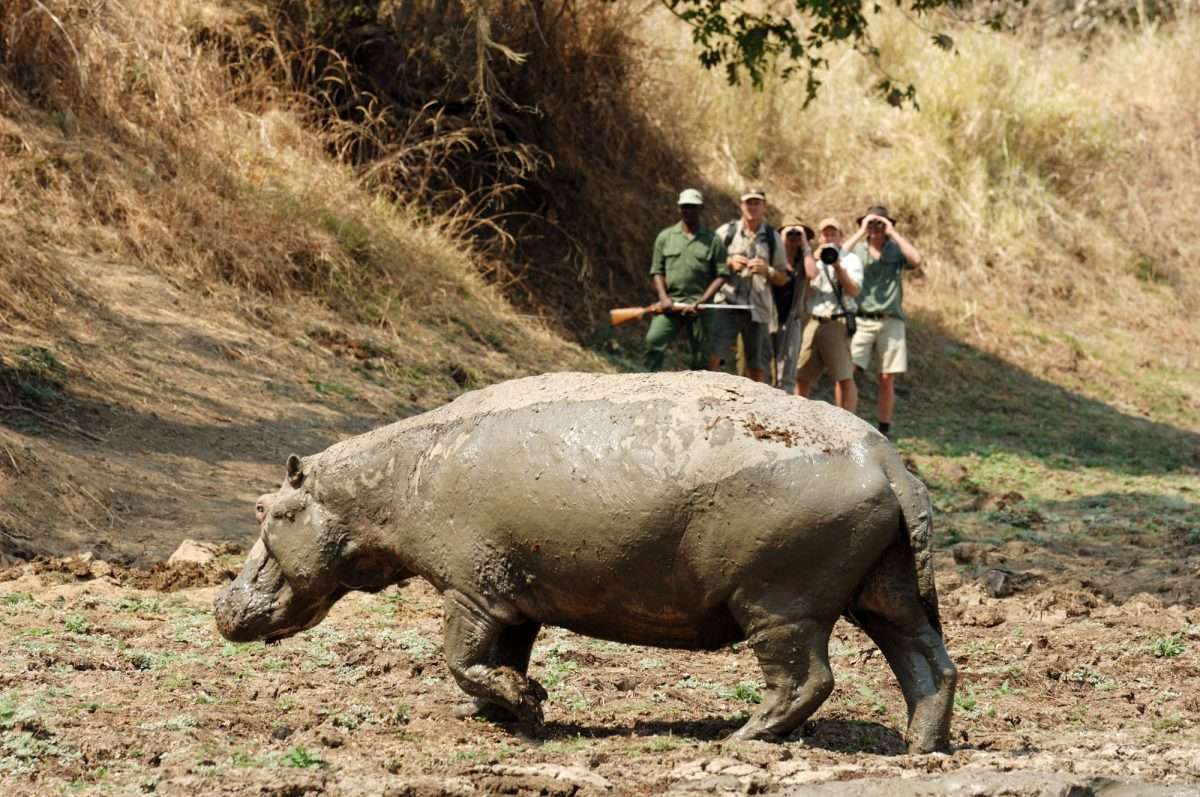
Watching hippos in the wild is one of Africa’s most memorable wildlife experiences. Seeing an enormous bull emerge from the water, hearing its deep territorial calls, or observing a pod relaxing along a riverbank offers a fascinating glimpse into one of the continent’s most misunderstood animals.
At TourwithPipi, every safari is carefully planned with experienced local guides who understand hippo behaviour and maintain safe viewing distances. Whether you’re exploring the Serengeti National Park, Maasai Mara National Reserve, Ngorongoro Crater, South Luangwa National Park, or other renowned wildlife destinations, you’ll enjoy exceptional hippo sightings while following responsible wildlife viewing practices.
Our tailor-made safaris combine expert guides, private safari vehicles, luxury lodges, and carefully designed itineraries that maximize wildlife encounters without compromising safety or conservation. Contact us Now
Key Takeaways
- How fast can a hippo run? Up to 30 km/h (19 mph).
- Hippos can outrun the average human over short distances.
- They are built for powerful sprints, not endurance running.
- Hippos cannot maintain top speed for long and usually tire after about 30 seconds.
- On land, hippos are much faster than most people expect.
- In water, hippos do not swim—they walk or run along the riverbed.


