
There are no deer in Africa. If you searched for African deer, you are most likely thinking of one of Africa’s many antelope species. Antelope look similar to deer but they are a completely different family of animals. They are found all across Africa and you will see them on any Kenya or Tanzania safari.
This guide covers everything you need to know. What the difference is between African deer and antelope. Every major antelope species you will see in the wild. Where to find them. And what makes each one special.
Are There Deer in Africa?
No. There are no wild deer native to sub-Saharan Africa. What most people call deer from Africa are actually antelope. Africa has over 90 species of antelope spread across the continent. They fill the same ecological role that deer fill in other parts of the world, but they belong to a completely different animal family.
What Is the Difference Between Deer and Antelope in Africa?
This is the question behind most searches for deer of Africa. The two animals look similar at first glance. Both have slender bodies, four legs, and horns or antlers. But the differences are significant.
Antlers vs Horns
Deer have antlers. Antlers are made of bone and they fall off and regrow every year. Only male deer have antlers in most species.
Antelope have horns. Horns are made of keratin, the same material as human fingernails. Horns are permanent. They do not fall off and regrow. In many antelope species both the male and female have horns.
Scientific Family
Deer belong to the Cervidae family. Antelope belong to the Bovidae family, which also includes goats, sheep, and cattle.
Where They Live
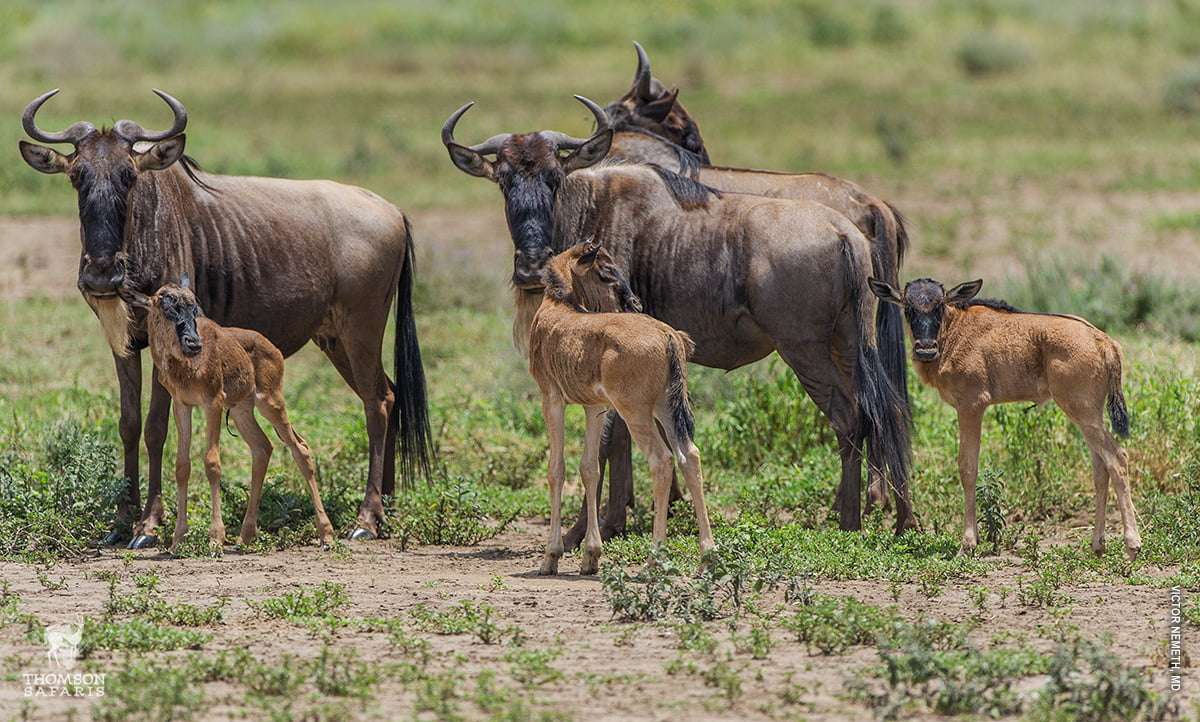
Deer are native to Europe, Asia, North America, and South America. They are not native to sub-Saharan Africa. Antelope are found in enormous numbers across Africa’s savannahs, forests, deserts, and wetlands.
| Feature | African Deer (Antelope) | True Deer |
|---|---|---|
| Correct name | Antelope | Deer |
| Horns or antlers | Permanent horns | Antlers shed annually |
| Horn material | Keratin | Bone |
| Family | Bovidae | Cervidae |
| Found in Africa | Yes, over 90 species | No native species |
| Both sexes have horns | Often yes | Rarely yes |
African Antelope Species — The Complete Guide
Here are all the major African Antelope that you will encounter across Africa and specifically on a Kenya or Tanzania safari.
Wildebeest
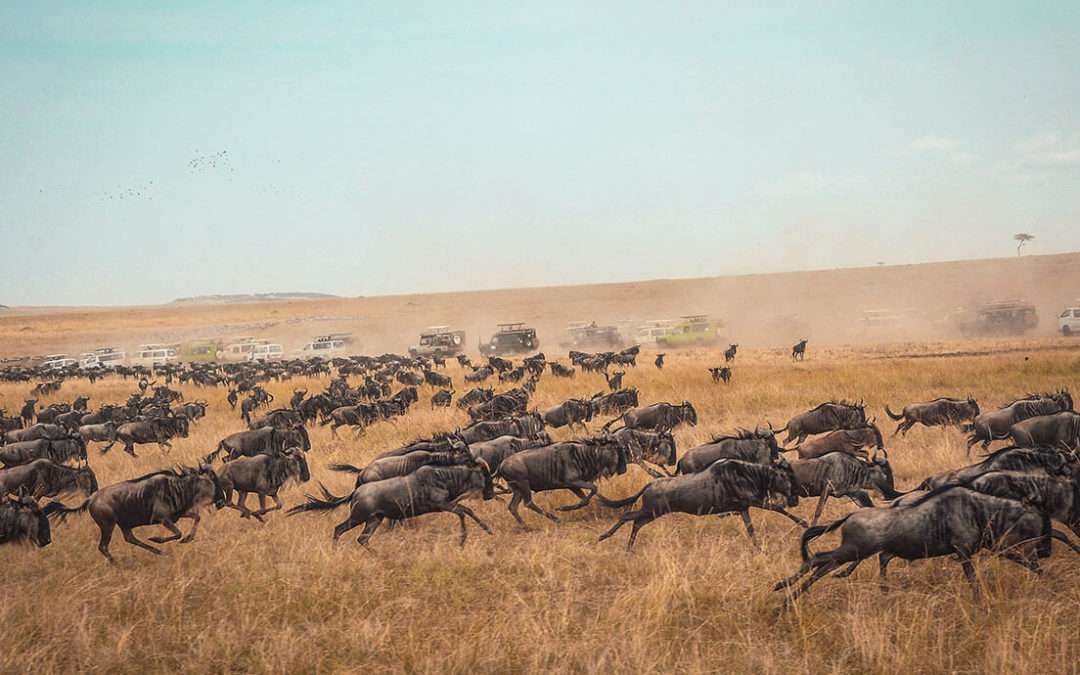
Wildebeest are one of the most famous antelope species in Africa. They look a little like a cross between a cow and a horse but they are true antelope.
They are famous for the Great Wildebeest Migration, the largest movement of animals on Earth. Over 1.5 million wildebeest move between the Serengeti in Tanzania and the Maasai Mara in Kenya each year following the rains and fresh grass. The Mara River crossings from July to October are one of the most dramatic wildlife events on the planet.
There are two species. The blue wildebeest migrates over long distances across open grasslands and woodlands. The black wildebeest stays in open grasslands and only migrates over short distances.
Both sexes have curved horns. Males are larger than females. A fully grown blue wildebeest can weigh up to 290 kilograms.
- Where to see wildebeest: Maasai Mara in Kenya and Serengeti in Tanzania. Also Ngorongoro Crater in Tanzania year-round.
- What makes them special: The Great Migration. Watching hundreds of thousands of wildebeest crossing the Mara River while crocodiles wait below is something you will never forget.
Impala
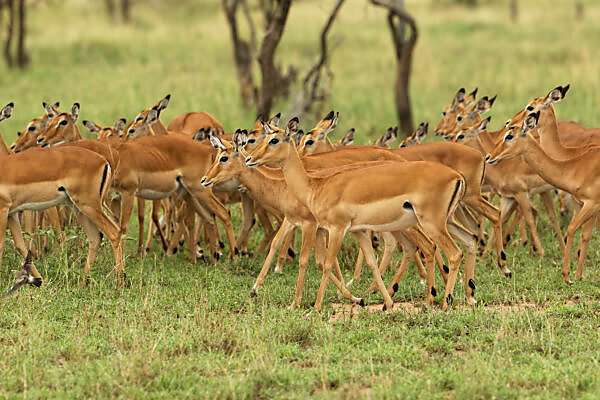
The impala is the most common antelope species in East Africa. On any game drive in the Maasai Mara or Serengeti you will see them in their hundreds.
Impalas are medium-sized and very athletic. They can leap up to 3 meters high and cover 10 meters in a single bound. This jumping ability helps them escape predators in dense bush.
Only males have horns. The horns curve elegantly upward and can reach up to 75 centimeters in length. Females live in herds with their young. Dominant males hold territories and defend harems of females during the rut.
Impalas eat both grass and leaves. This makes them adaptable across different habitats. They are found in woodlands and low grasslands near water.
- Where to see impala: Everywhere in Kenya and Tanzania. Maasai Mara, Amboseli, Tsavo, Serengeti, and Ngorongoro Crater.
- What makes them special: They are incredibly beautiful and extremely fast. Watching a herd of impala leap through the bush when a predator appears is one of the classic safari sights.
Thomson’s Gazelle
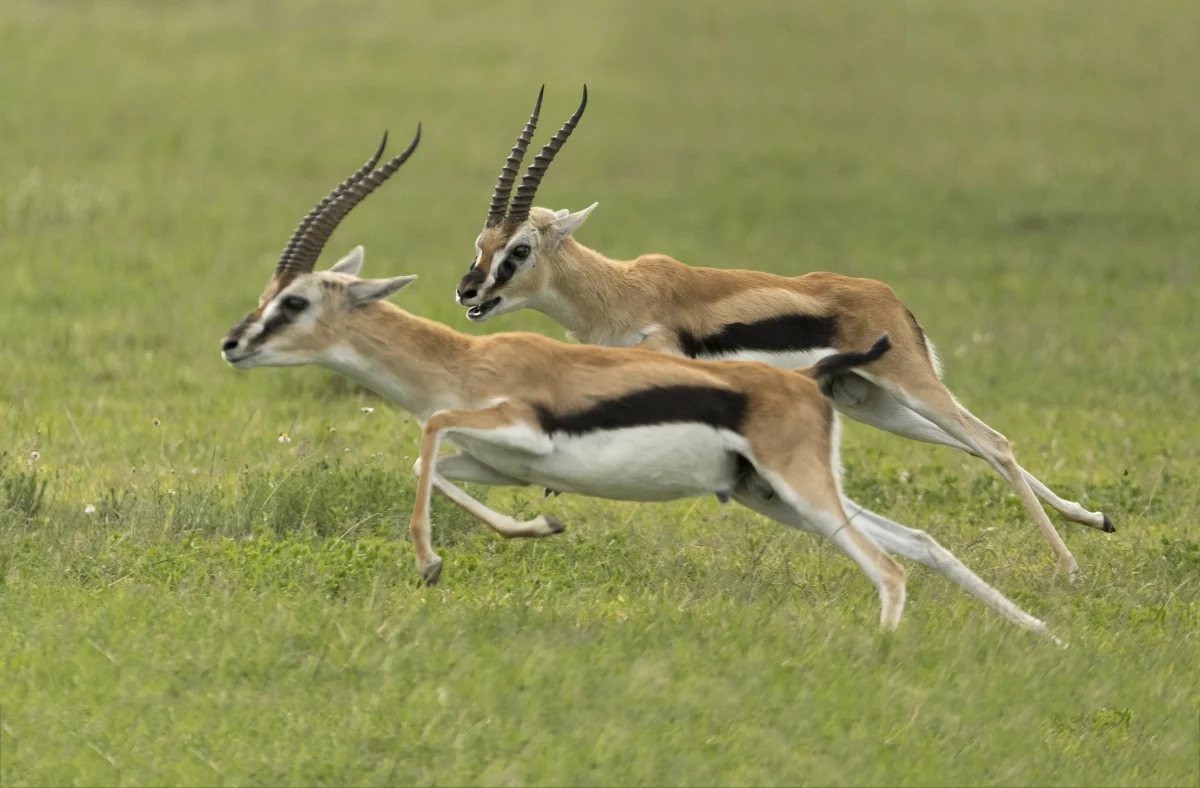
Thomson’s gazelle is one of the most recognizable African antelope species. It has a light brown upper coat, white underparts, and a distinctive dark brown stripe running along its side. It is a small and slender animal that is almost always in motion.
Thomson’s gazelles are among the fastest animals in Africa. They can run at up to 80 kilometres per hour for short bursts and sustain 65 kilometres per hour for longer. This speed is their main defence against cheetahs, which are their primary predators.
Both males and females have horns. The male’s horns are longer and more curved. Thomson’s gazelles graze on short grass and are highly selective about what they eat.
- Where to see Thomson’s gazelle: Maasai Mara, Serengeti, Amboseli, and Ngorongoro Crater. They are extremely common across Kenya and Tanzania’s open plains.
- What makes them special: Their speed and the dramatic cheetah hunts they inspire. The Maasai Mara has some of the best cheetah sightings in Africa and Thomson’s gazelle is the primary prey.
Grant’s Gazelle
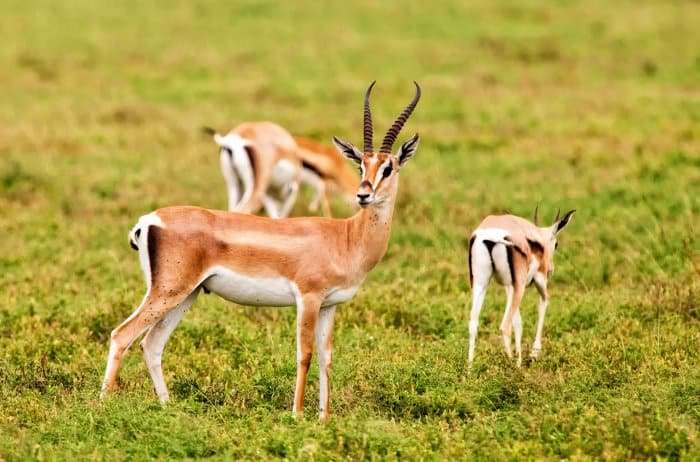
Grant’s gazelle is larger than Thomson’s gazelle and does not have the dark side stripe. It is a pale fawn color with a white rump patch that extends up onto the lower back. Both males and females have long elegant horns.
Grant’s gazelle is remarkable for its ability to survive without drinking water for very long periods. It gets the moisture it needs from the plants it eats. This allows it to stay in dry areas when other species move away.
- Where to see Grant’s gazelle: Maasai Mara, Serengeti, Amboseli, Tsavo, and Samburu in Kenya.
- What makes them special: Their independence from water and their ability to survive in very dry conditions that other antelope cannot tolerate.
Eland
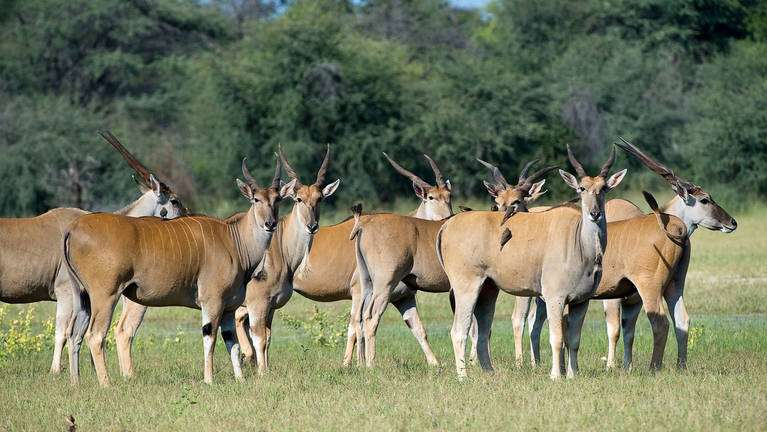
The eland is the largest antelope species in the world. A fully grown male eland can weigh up to 900 kilograms, which is almost as much as a Cape buffalo.
Despite their size, elands are impressive jumpers. They can leap a 1.5 metre fence from a standstill. They have a large shoulder hump, a short mane along the neck, and tightly spiralled horns in both sexes.
Elands are found in open grasslands, savannah plains, and mixed woodland areas. They are gentle animals and rarely aggressive. Unfortunately they are one of the most threatened antelope species due to habitat loss and poaching.
- Where to see eland: Maasai Mara, Serengeti, and Ngorongoro Crater. They are not as easy to find as impala or gazelle and a sighting is always a good one.
- What makes them special: Their size. Seeing the world’s largest antelope standing in open savannah is an impressive encounter that surprises many first-time safari visitors.
Gerenuk
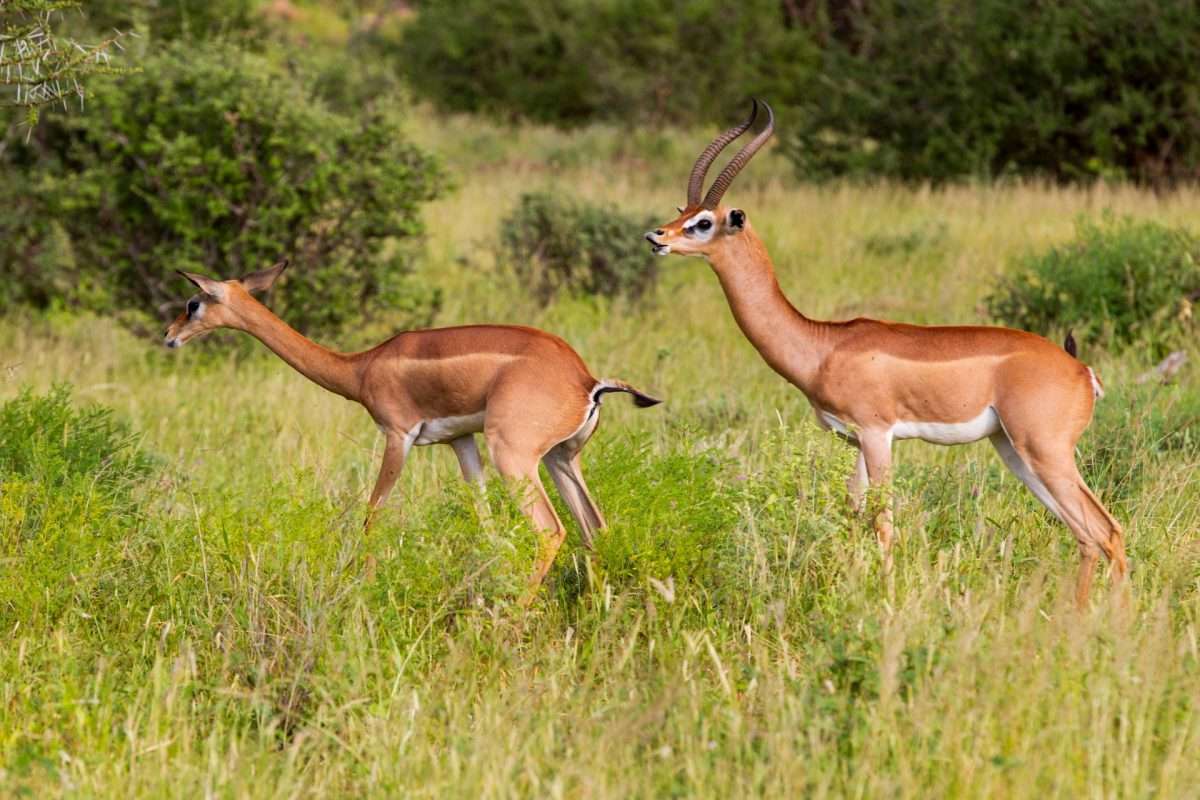
The gerenuk is one of the most unusual-looking antelope species in Africa. Its name comes from the Somali word for “giraffe-necked” and it is easy to see why. The gerenuk has an extraordinarily long neck relative to its body size.
The gerenuk feeds by standing upright on its back legs and stretching its long neck to reach leaves and shoots on branches up to 2 metres from the ground. No other antelope feeds this way. This feeding style gives it access to food that other species cannot reach.
The gerenuk is one of the Samburu Special Five, the five unique dry-country species found only in northern Kenya that you cannot see in the southern parks.
- Where to see gerenuk: Samburu National Reserve in northern Kenya. Also Buffalo Springs and Shaba National Reserves.
- What makes them special: Watching a gerenuk stand upright on its back legs to feed is one of the most extraordinary sights in African wildlife and something you will only see in northern Kenya.
Oryx / Gemsbok
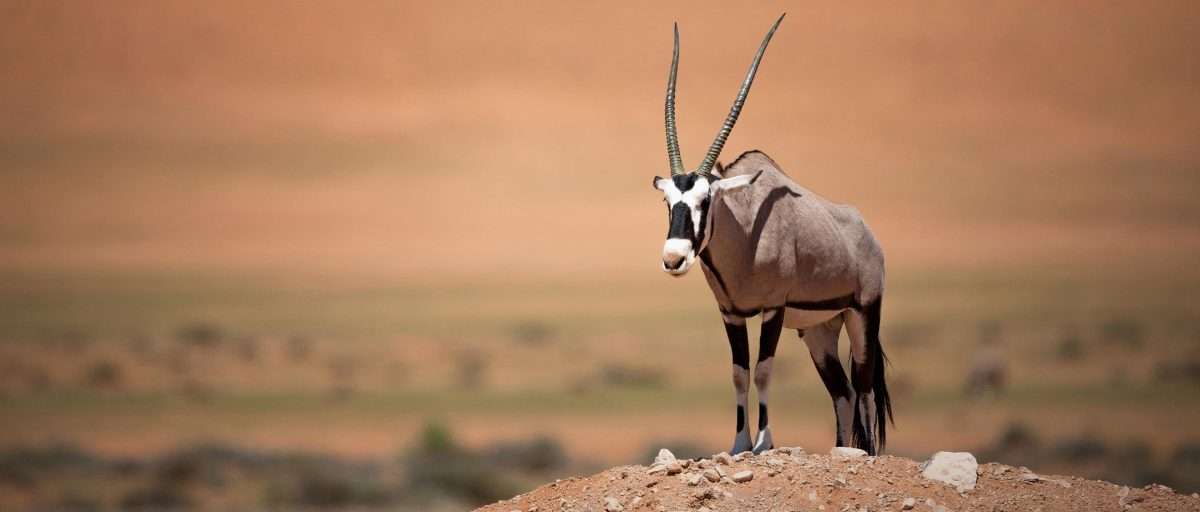
The oryx, also known as the gemsbok, is a large and striking antelope built for desert life. It has a pale grey coat with black and white markings on its face and legs and very long straight horns in both sexes.
The oryx can survive in environments that would kill most other animals. It tolerates extreme heat, can go without water for long periods, and feeds on dry vegetation. Its body temperature can rise significantly during the heat of the day, storing the heat rather than sweating water away.
Both sexes have long straight horns that can reach over 1 metre in length. These horns are used for defence and the oryx has been known to kill lions that attack it.
- Where to see oryx: Beisa oryx are found in Samburu National Reserve in northern Kenya. They are another member of the Samburu Special Five.
- What makes them special: Their ability to thrive in conditions of extreme heat and drought and their striking black and white facial markings.
Topi
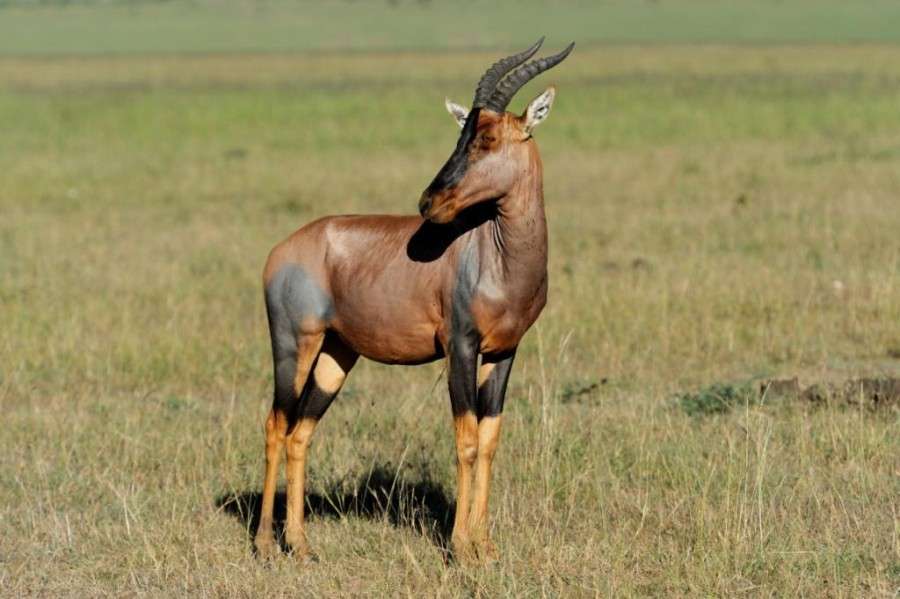
The topi is a medium to large antelope with a distinctive dark reddish-brown coat with purple patches on its shoulders and upper legs. It has a slightly elongated face and lyre-shaped horns.
Topis are fast and alert. They often stand on elevated ground like termite mounds to watch for predators and will signal danger to other animals in the area. They are highly social and live in large herds across open savannah.
- Where to see topi: Maasai Mara in Kenya and Serengeti in Tanzania. They are particularly common in the Mara Triangle.
- What makes them special: Their habit of standing on termite mounds as lookout posts makes them one of the most photogenic antelope species on the Maasai Mara plains.
Hartebeest
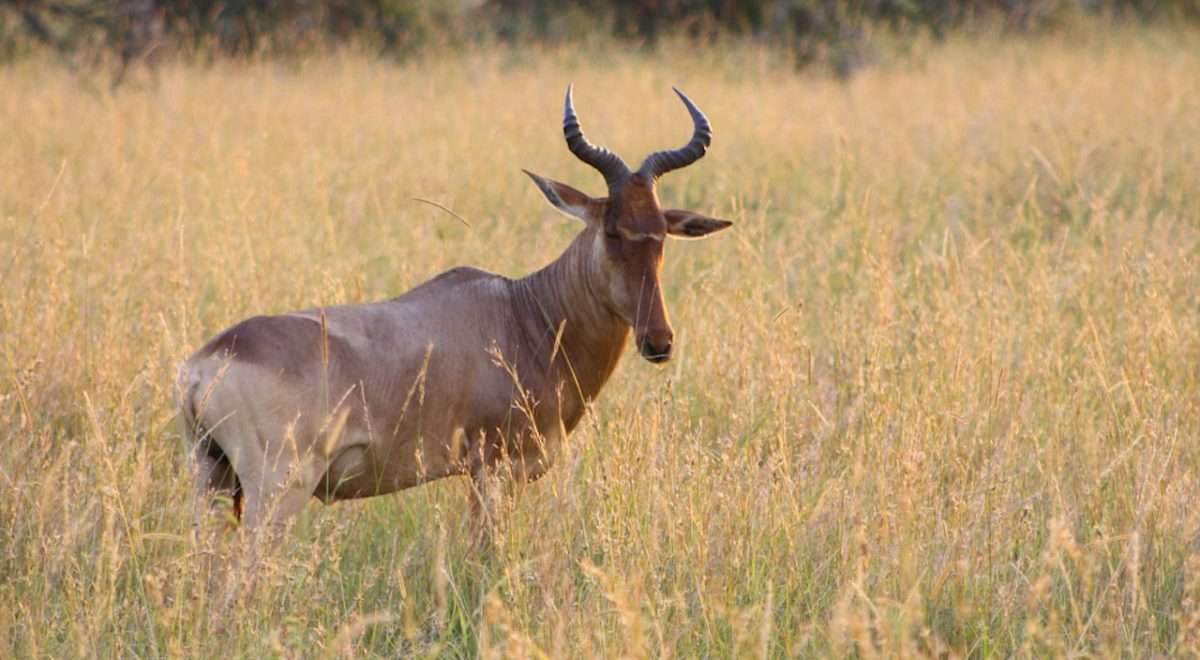
The hartebeest is a large antelope with an unusual elongated face and strangely shaped horns that curve up and then inward. It has a reddish-brown coat and a distinctive sloping back that makes it look like it is always leaning forward.
Hartebeest are fast runners despite their awkward-looking build. They can sustain speeds of up to 70 kilometres per hour. They are grazers that prefer open grasslands and are often found on the edges of the Maasai Mara and Serengeti.
The Coke’s hartebeest, also known as the kongoni, is the subspecies most commonly seen in Kenya and Tanzania.
- Where to see hartebeest: Maasai Mara, Serengeti, and Ngorongoro Crater.
- What makes them special: Their odd and distinctive appearance. Once you learn to recognise a hartebeest you will spot them immediately on any East Africa game drive.
Waterbuck
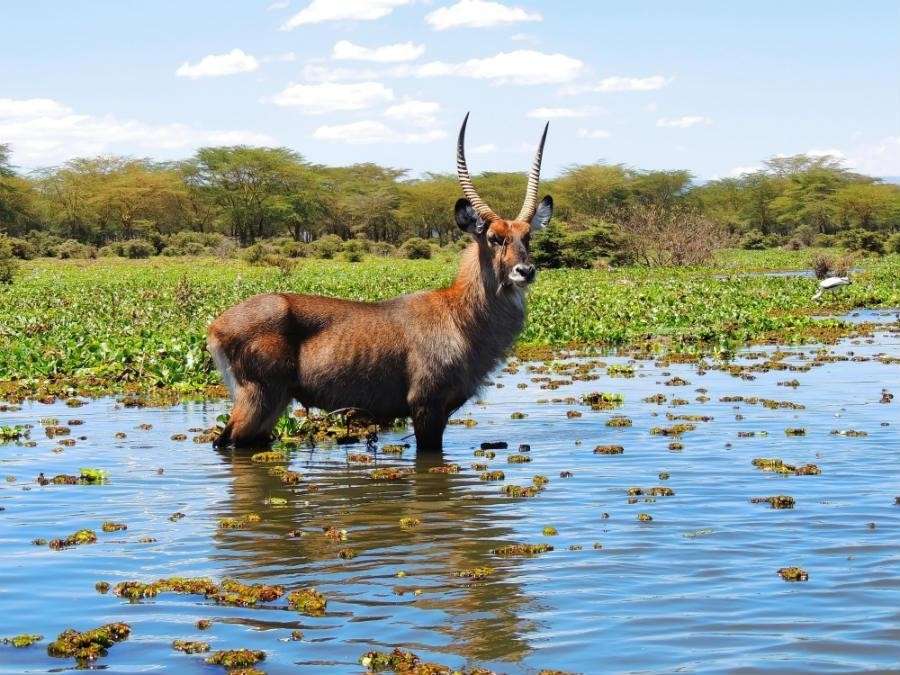
The waterbuck is a large, robust antelope most recognisable by the bold white ring on its rump. Safari guides describe it as looking like the animal sat on a freshly painted white toilet seat. Once you hear that description you cannot unsee it.
Waterbuck are large animals. A fully grown male can weigh up to 250 kilograms. Only males have horns, which curve upward and outward. The coat is shaggy and grey-brown and darkens with age.
Waterbuck are never far from water. They live in grasslands, forests, and riverine woodland areas close to rivers and lakes. When threatened by predators they run into the water, which gives them a significant advantage.
- Where to see waterbuck: Lake Nakuru, Maasai Mara, and along the Mara River in Kenya. Also common in Serengeti and along the Tarangire River in Tanzania.
- What makes them special: The unmistakable white ring on the rump and their habit of retreating into water to escape predators. They are a regular sight near any water source on the Kenya and Tanzania circuit.
Klipspringer
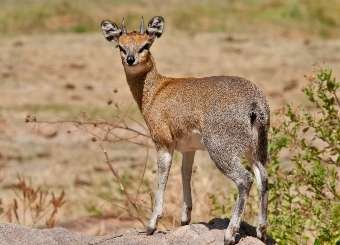
The klipspringer is a small antelope perfectly adapted for rocky terrain. Its name means “rock jumper” in Afrikaans and it lives almost exclusively on rocky outcrops, kopjes, and cliff faces.
The klipspringer walks on the very tips of its hooves, like a ballet dancer en pointe. This gives it extraordinary grip on rocky surfaces and allows it to navigate vertical rock faces with ease. It stands only about 60 centimeters at the shoulder.
Both sexes can have short straight horns. Klipspringers are monogamous and pairs stay together for life. They are rarely seen alone.
- Where to see klipspringer: Rocky kopje outcrops in the Serengeti and Maasai Mara. Also on rocky hillsides in Tsavo and Samburu.
- What makes them special: Watching a klipspringer balance on a tiny rocky point is a remarkable thing. Their tip-toe walking style is unlike any other animal.
Dik-dik
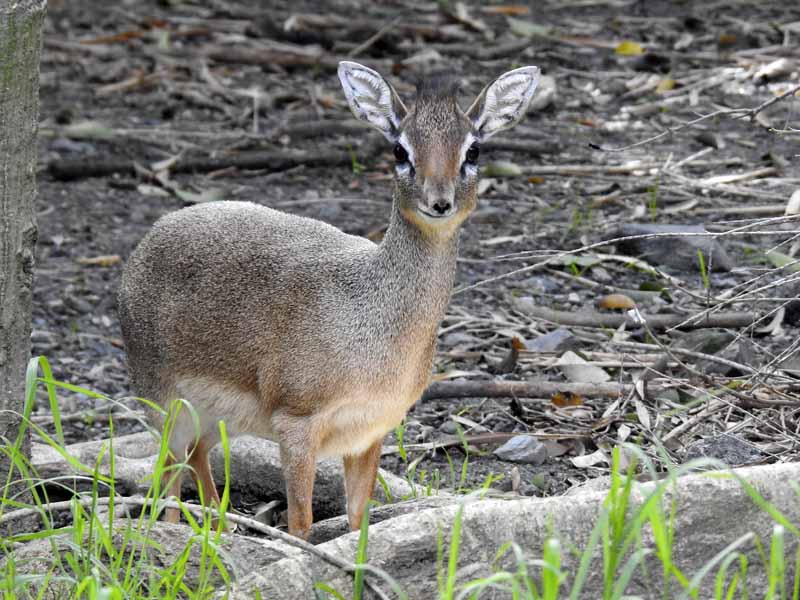
The dik-dik is one of the smallest antelope species in Africa. It stands only 35 to 45 centimeters at the shoulder and weighs between 3 and 7 kilograms. Despite its tiny size it is one of the most commonly seen antelope on any East Africa game drive.
Dik-diks are named for the sharp alarm call the female makes when threatened. They live in pairs and are strictly monogamous. A mated pair occupies the same territory for life. They are browsers that eat leaves, shoots, and berries and do not need to drink water as they get moisture from their food.
Only males have short spike-like horns, often partially hidden by a tuft of hair on the forehead.
- Where to see dik-dik: Extremely common in Tsavo, Samburu, and the Serengeti. You will see them darting across the track in front of your vehicle on almost every game drive.
- What makes them special: Their tiny size and their lifelong monogamous partnerships. Spotting a dik-dik pair hiding in the bush is one of the small daily joys of safari driving.
Sable Antelope
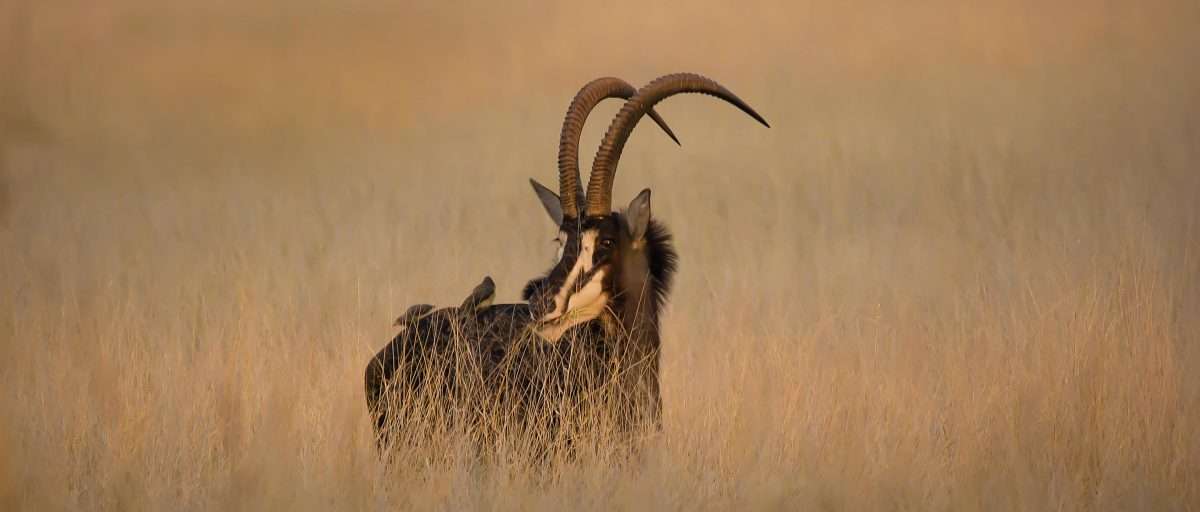
The sable is one of the most visually striking antelope in Africa. The adult male has a jet black coat with bold white markings on the face and underparts. Females and young are a rich chestnut brown. Both sexes have long curved horns that sweep backward, which can reach over 1.5 meters in length.
Sable antelopes live in mixed woodland savannah with medium to tall grass. They are found in parts of Kenya though they are more common in Southern Africa. The Shimba Hills National Reserve near Mombasa in Kenya is one of the few places you can see sable in East Africa.
Sables are known for their fighting spirit. They are aggressive when threatened and will charge lions, hyenas, and wild dogs. Their powerful curved horns make them genuinely dangerous opponents.
- Where to see sable: Shimba Hills National Reserve near Diani Beach in Kenya. Also common in Zimbabwe, Zambia, and Botswana.
- What makes them special: The adult male’s jet black coat and sweeping horns make the sable one of the most spectacular animals in Africa. A sable sighting is a highlight of any safari.
Bushbuck
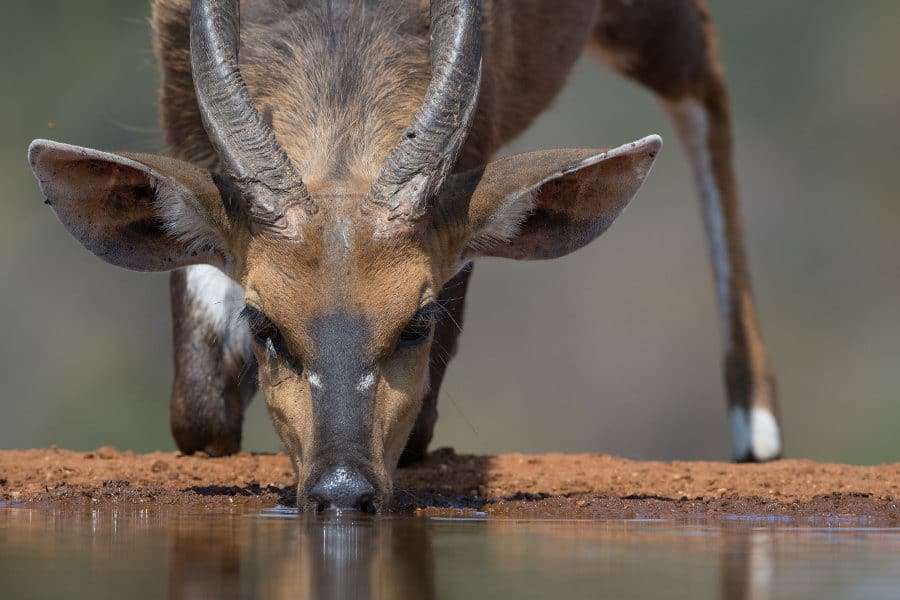
The bushbuck is a medium-sized antelope with a deep chestnut brown coat covered in small white spots and stripes. It has a shaggy appearance and a crest of white hair running along the back.
Bushbuck are forest dwellers and unlike most antelope they are solitary. You rarely see them in herds. They live in dense vegetation near rivers and streams and are most active at dawn and dusk. Only males have horns, which are short and slightly twisted.
Bushbuck are secretive animals and sightings are often brief. They disappear quickly into thick bush when disturbed.
- Where to see bushbuck: Along rivers and in forest edges in the Maasai Mara, Serengeti, and Aberdare National Park in Kenya.
- What makes them special: Their beautiful spotted and striped coat and their secretive nature make a good bushbuck sighting feel like a genuine reward.
Reedbuck
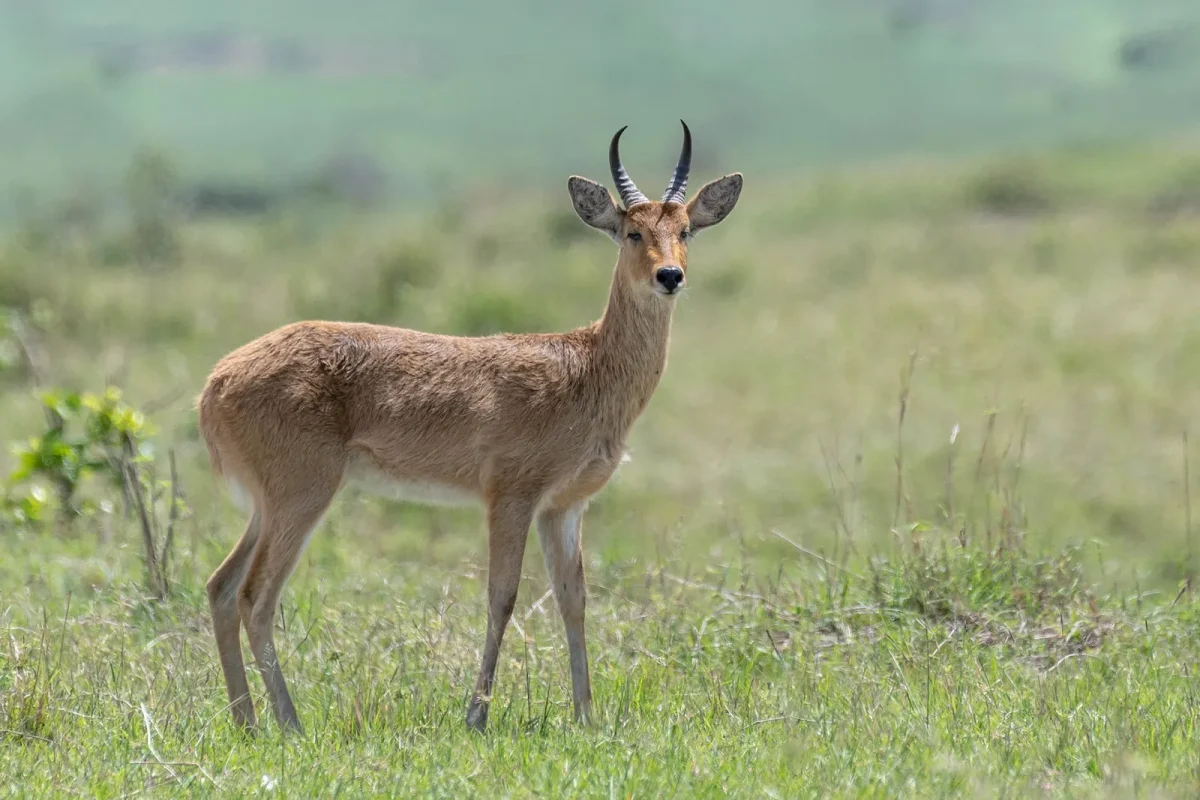
The reedbuck is a slender, medium-sized antelope with a grey-brown coat and a fluffy white tail. It lives in tall grasslands and reed beds near water, which gives it its name. Only males have short forward-curving horns.
Reedbucks are shy animals that rest in the grass during the day and graze at dawn and dusk. They usually live alone or in pairs, though small groups do form. When alarmed, reedbucks give a sharp whistling sound and bounce away through the grass with a characteristic rocking motion.
- Where to see reedbuck: Near water in the Maasai Mara and along rivers in Tanzania’s national parks.
- What makes them special: Their habitat close to water makes them a good pairing with hippo and waterbird sightings along Kenya’s rivers.
Steenbok
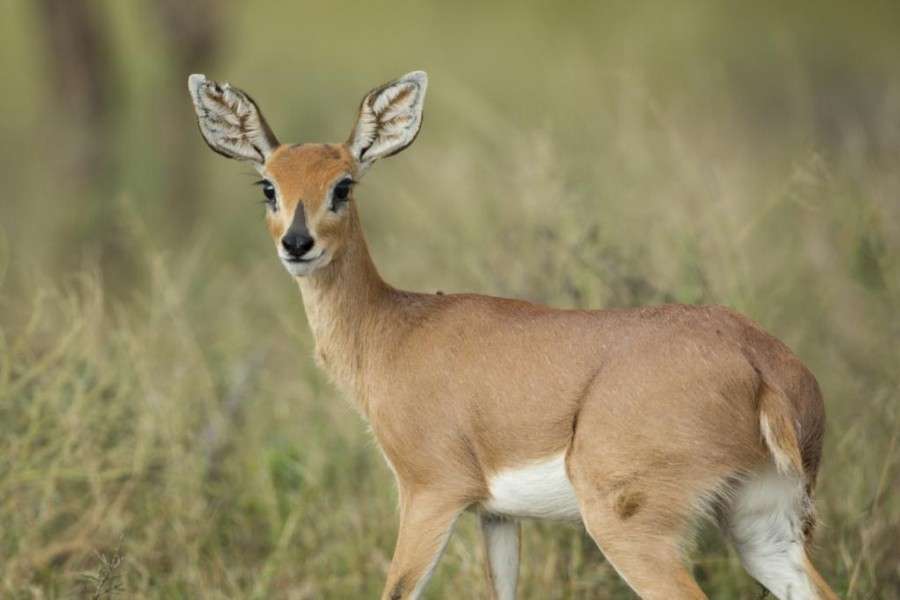
The steenbok is a small, delicate antelope with a reddish-brown coat, large rounded ears, and a distinctive Y-shaped marking on the nose. It stands only about 50 centimeters at the shoulder.
Unlike most antelope, steenboks are solitary. They do not live in herds. They mark their territory carefully and rarely stray from their home range. Only males have short straight horns.
Steenboks are highly adaptable and can survive without water by eating moisture-rich roots and tubers. They are common across open savannah areas with adequate grass and bush cover.
- Where to see steenbok: Spread across Kenya and Tanzania’s open savannah areas. Common in Tsavo and the Serengeti ecosystem.
- What makes them special: Their solitary lifestyle sets them apart from most antelope. A lone steenbok standing perfectly still in open grass hoping you will not notice is one of the more charming small encounters on safari.
Kudu
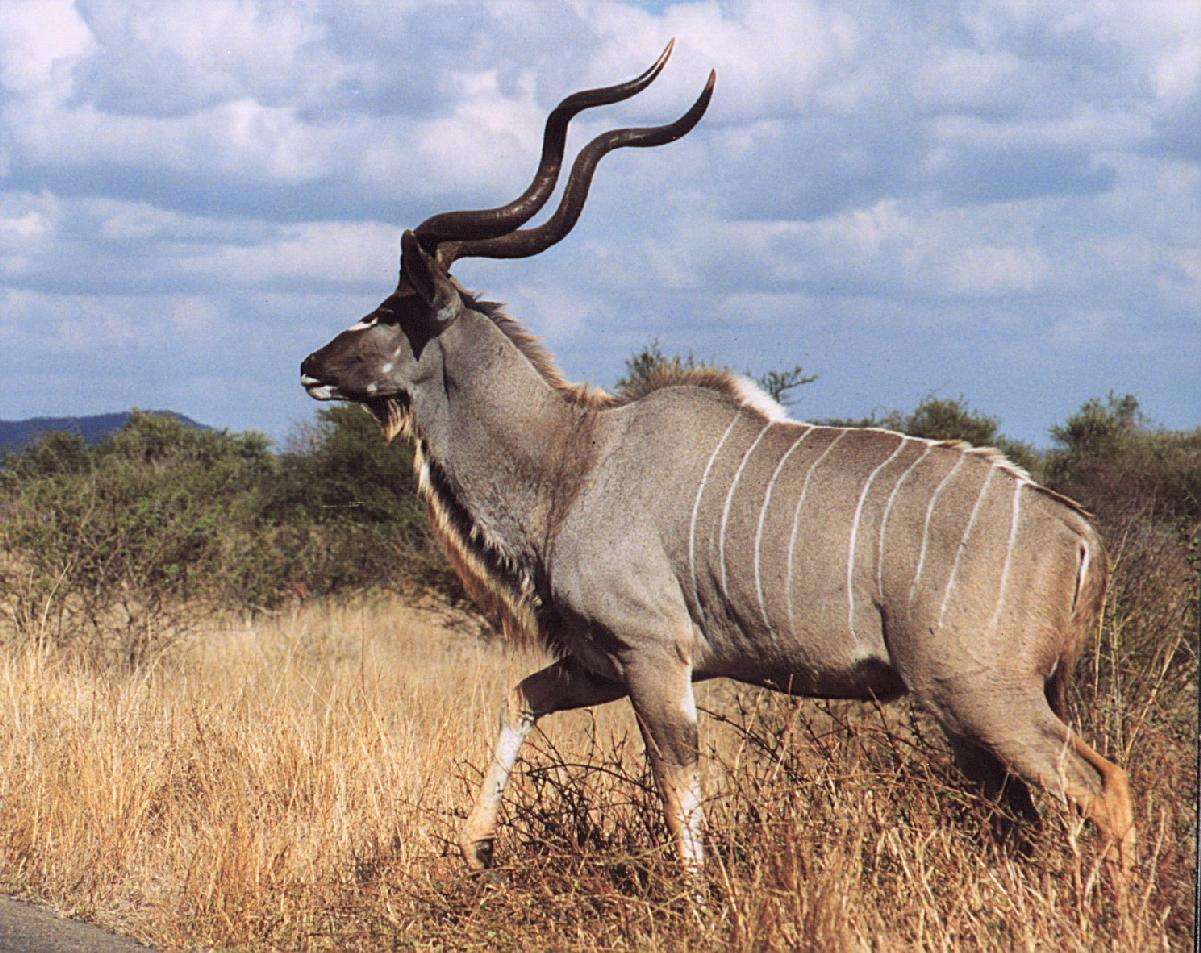
The greater kudu is a large and elegant antelope with a grey-brown coat decorated with thin white vertical stripes. The male’s corkscrew horns are among the most spectacular in the animal kingdom, spiraling up to 1.8 meters in length.
Kudu are browsers rather than grazers. They eat leaves, shoots, and fruits from trees and bushes. They prefer thick woodland and riverine forest areas rather than open plains.
Kudu are shy and secretive despite their size. They rely on their striped coat for camouflage in dappled woodland light. When they run, they raise their tails to expose a white underside as a signal to the herd.
- Where to see kudu: Tsavo West, Samburu, and forest edges in Kenya. Also common in Tanzania’s southern circuit parks including Ruaha and Nyerere.
- What makes them special: The male’s spectacular corkscrew horns are one of the most beautiful natural designs in Africa. A mature male kudu is a genuinely impressive sight.
Springbok
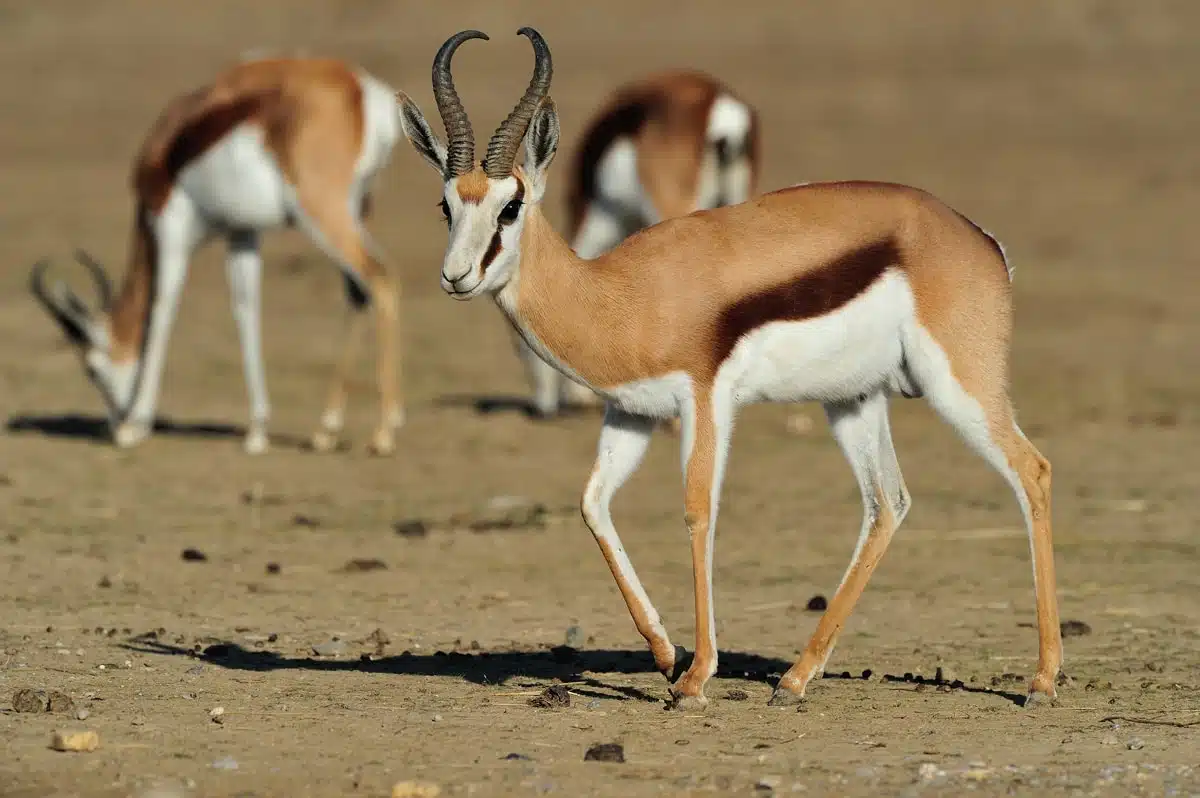
The springbok is one of Africa’s most recognisable antelope and is the national animal of South Africa. It has a light brown upper coat, white underparts, and a bold dark brown stripe running along each side of its body.
The springbok is famous for a behaviour called pronking or stotting. It leaps straight up into the air with a rounded back and all four feet off the ground, sometimes reaching 3 to 4 metres in height. Scientists believe this behaviour signals fitness to predators and may also be used as a display during excitement.
Springbok are mostly found in Southern Africa, particularly in South Africa, Namibia, and Botswana. They prefer open, dry grasslands and semi-desert areas. They are selective eaters and prefer fresh green grass after rain, but can survive long periods without water.
- Where to see springbok: Springbok are primarily a Southern Africa species. They are most common in South Africa’s Karoo, Etosha National Park in Namibia, and the Kalahari. They are not typically seen on Kenya or Tanzania safaris.
What makes them special: The pronking leap is one of the most striking movement displays of any African mammal and impossible to forget once you have seen it.
Roan Antelope
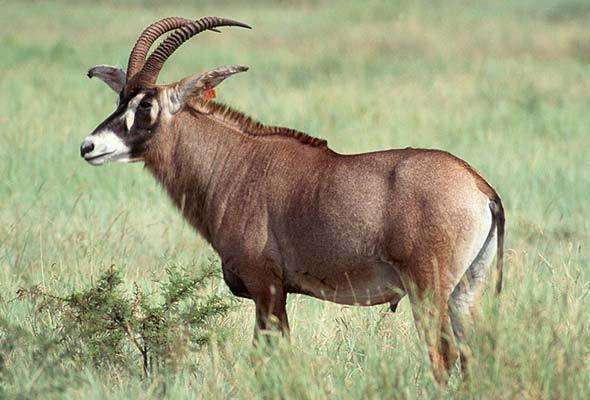
The roan antelope is the fourth largest antelope in Africa and one of the most striking. It has a reddish-brown coat, a bold black and white face pattern, and long tasseled ears. Both sexes have strongly curved backward-sweeping horns.
The roan looks more like a horse than most antelope, which makes it immediately distinctive on a game drive. It is a large and powerful animal. Only lions and wild dogs regularly challenge adult roans. Roan are aggressive defenders and will face predators rather than always running.
Roan are not common in East Africa and are more often found in Central and Southern Africa. In Kenya they are found in very small numbers. Seeing a roan antelope in the wild is considered a special sighting.
- Where to see roan antelope: If you are a fan of these antelopes you are more likely to see them in Kenya’s Tsavo National Park or in Southern Africa’s parks including Etosha in Namibia, Kafue in Zambia, and Hwange in Zimbabwe.
- What makes them special: Their impressive size, dramatic facial markings, and comparative rarity make the roan antelope one of the most prized sightings on any East or Southern Africa safari.
Fringe-Eared Oryx
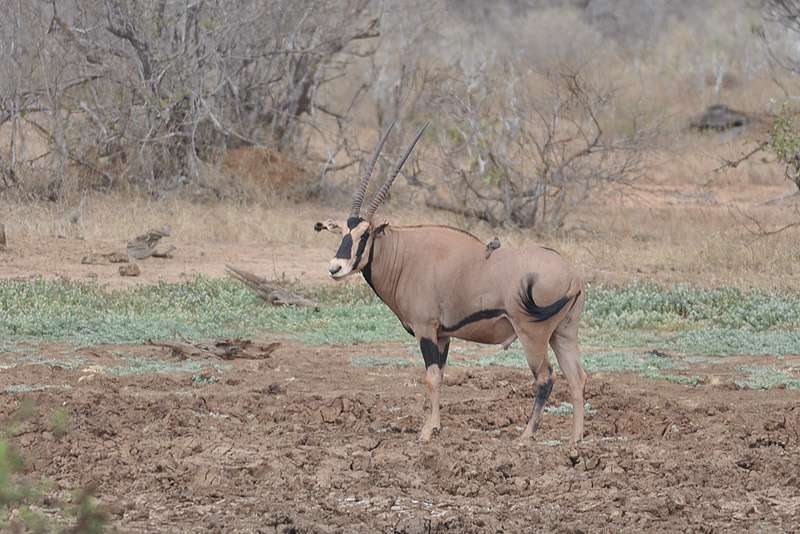
The fringe-eared oryx is a subspecies of the Beisa oryx with one distinctive difference. It has tufts of black hair growing from the tips of its ears, giving it a fringed appearance that sets it apart from the standard Beisa. Fringe-eared oryxes can only be found in northeastern Tanzania and southeastern Kenya
making them one of the most geographically restricted antelope subspecies in East Africa.
Like all oryx, the fringe-eared variety is built for dry, harsh conditions. It can survive without drinking water for extended periods by extracting moisture from the vegetation it eats. Both sexes have long, straight horns.
- Where to see fringe-eared oryx: The border zone between southeastern Kenya and northeastern Tanzania, particularly in the Tsavo ecosystem and adjacent areas.
- What makes them special: Their highly restricted range makes them a specialist sighting and a genuine tick for safari enthusiasts who have already seen the standard Beisa oryx in Samburu.
Hirola

The hirola, also called the Hunter’s hartebeest, is one of the most endangered antelope on Earth. It looks similar to a hartebeest but has distinctive white rings around its eyes, which give it its other common name, the four-eyed antelope.
It occurs in thick bush and thorn scrub in a small part of the Horn of Africa
specifically in a very limited area of southeastern Kenya near the Somali border and parts of Somalia. The total population is estimated at fewer than 500 individuals in the wild, making it critically endangered.
The hirola has declined due to habitat loss, drought, disease, and competition from livestock. Conservation programs in Kenya are working to protect the remaining population.
- Where to see hirola: The only place to see wild hirola is in the Ijara district of southeastern Kenya near the Somali border. Tsavo East National Park has a small reintroduced population. This is one of the rarest wildlife encounters in all of Africa.
- What makes them special: The hirola is one of the rarest mammals on Earth. Seeing one in the wild is an extraordinary event that very few people ever experience.
Bongo
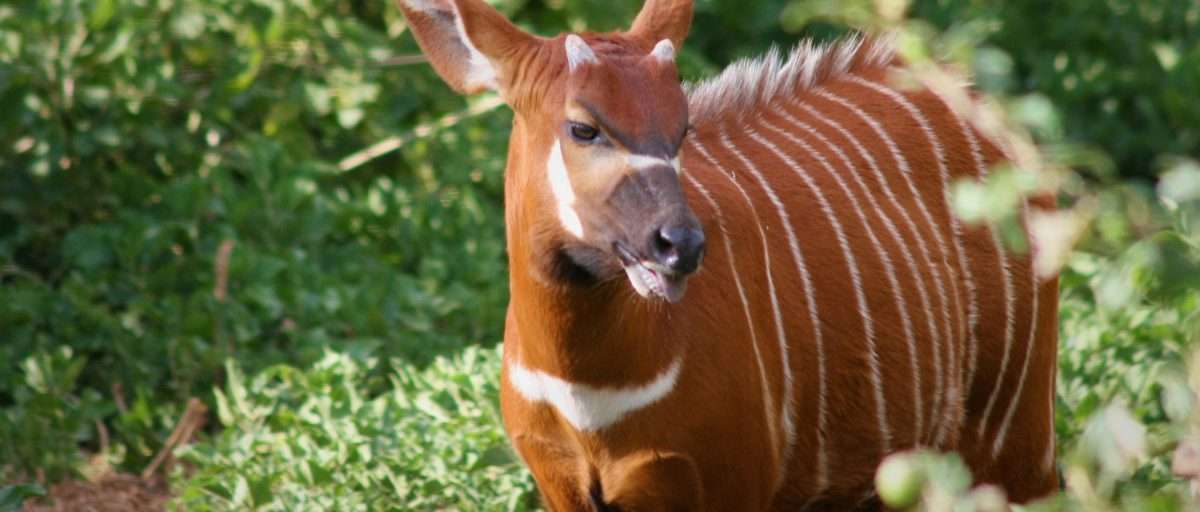
The bongo is the largest forest antelope in Africa and one of the most beautiful. It has a rich chestnut orange coat with thin white vertical stripes running down its sides. Both male and female bongo have spiraled horns, and the female’s are often longer than the male’s.
Bongo are extremely shy and secretive. They live in dense highland forest and are nocturnal, which makes them very difficult to see in the wild. Bongo are now restricted to the forests of Kenya and Central Africa and are similar to the more numerous bushbuck with a splendid coat of bright orange with white stripes.
In Kenya, the mountain bongo is found in the Aberdare Range and on the slopes of Mount Kenya. The Kenya mountain bongo is critically endangered with fewer than 100 individuals remaining in the wild. Conservation breeding programs at the Mount Kenya Wildlife Conservancy are working to reintroduce captive-bred bongo into protected highland forest areas.
- Where to see bongo: The Aberdares National Park and Mount Kenya forest in Kenya. Bongo are nocturnal and extremely rare in the wild. Your best chance of seeing a Kenya mountain bongo is at the Mount Kenya Wildlife Conservancy where semi-wild animals are kept as part of a conservation breeding program.
- What makes them special: The mountain bongo is one of the rarest antelopes in the world and seeing one in Kenya is a wildlife experience very few travelers ever have.
Nyala
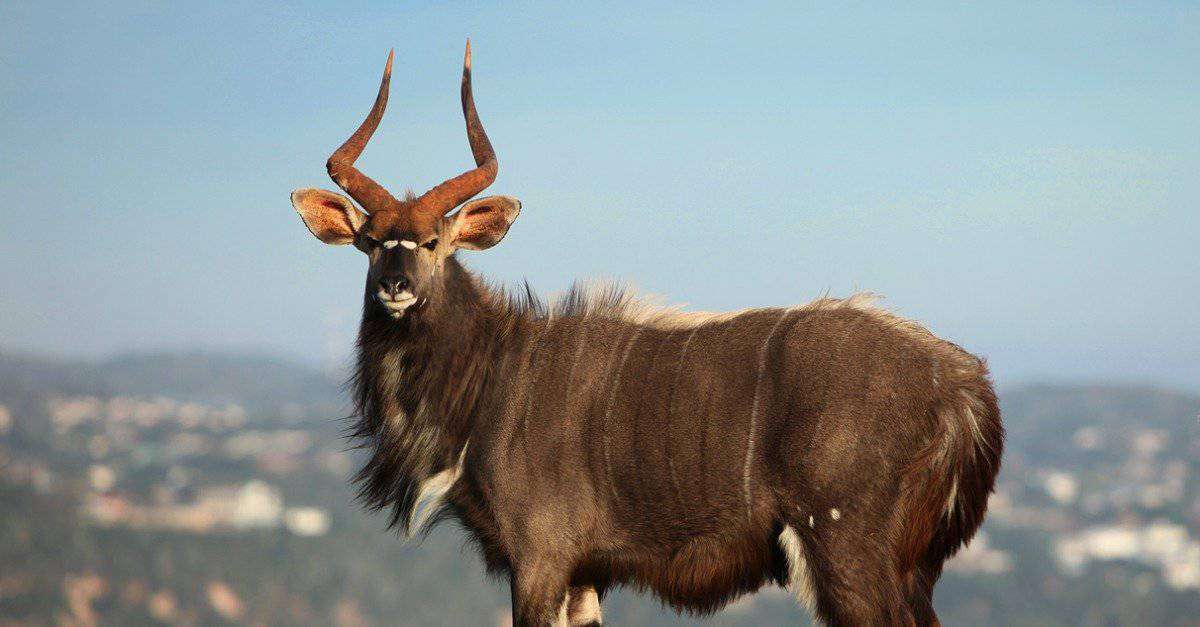
The nyala is a strikingly beautiful antelope with strong sexual dimorphism, meaning the male and female look completely different from each other. The male has a dark shaggy coat with white vertical stripes, a mane of long hair along the back, and spiralled horns. The female is a plain reddish-brown colour with white stripes and no horns.
Nyala live in dense bush and riverine woodland. They are shy and stick close to thick vegetation. The nyala is relatively similar to the more numerous bushbuck and females are often confused with the bushbuck.
Nyala are primarily a Southern Africa species found mainly in Zimbabwe, Mozambique, Zambia, Malawi, and South Africa. They are not commonly found in Kenya or Tanzania’s safari circuits but appear in some of Tanzania’s southern parks.
- Where to see nyala: Tanzania’s Nyerere National Park and Ruaha National Park in the southern circuit. More commonly seen in Zimbabwe’s Hwange and South Africa’s KwaZulu-Natal reserves.
- What makes them special: The dramatic difference in appearance between male and female nyala is one of the most striking examples of sexual dimorphism in any African antelope. A mature male nyala in full coat is one of the most beautiful animals in Africa.
Common Duiker
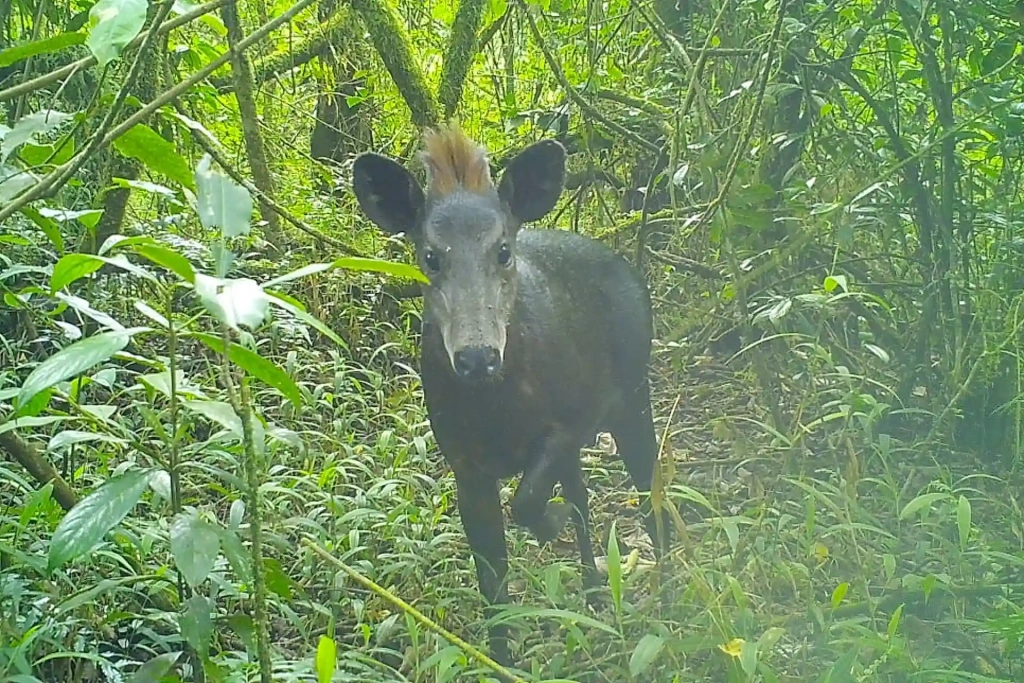
The common duiker is a small and widespread antelope found across sub-Saharan Africa. It has a greyish-brown coat, a distinctive tuft of dark hair between its horns, and a habit of diving into dense bush when alarmed, which is how it gets its name. Duiker comes from the Afrikaans word meaning “to dive.”
Common duikers are unusual among antelope because they are omnivores. They eat grass, leaves, fruit, insects, and even small birds and lizards. This dietary flexibility allows them to survive in a wide range of habitats including woodland, savannah, and even forest edges.
Only males have the short straight horns. Females are slightly larger than males.
- Where to see common duiker: Common duikers are widespread across Kenya and Tanzania and found in most woodland and savannah habitats. They are shy and often seen briefly before disappearing into dense bush.
- What makes them special: Their omnivorous diet sets them apart from almost every other African antelope. A duiker eating a small lizard is not something you expect to see on safari.
Oribi
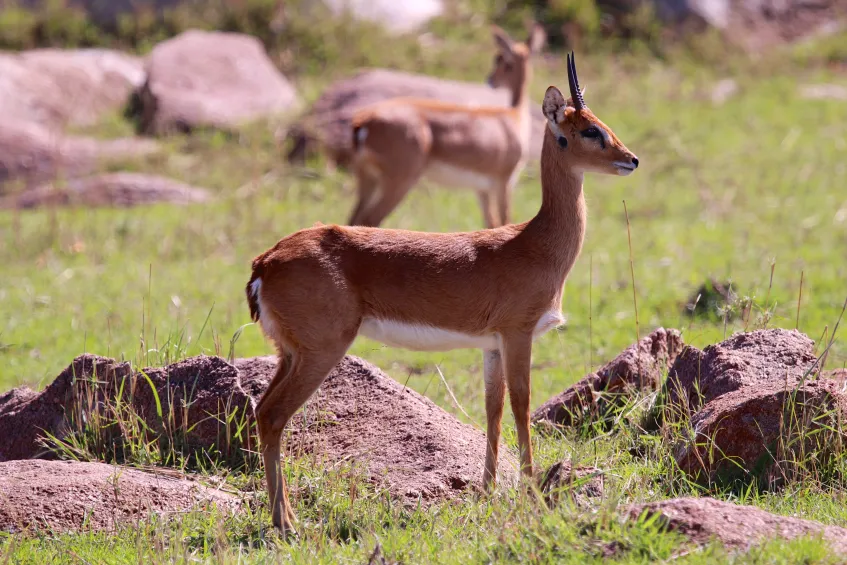
The oribi is a small, slender antelope with a sandy yellow-brown coat, white underparts, and a distinctive small black glandular patch below each ear. It has a short tail with a black tip. Only males have short straight horns.
Oribi prefer open grasslands near water and are often seen in pairs or small groups. They are fast runners and use a stotting leap similar to the springbok when alarmed. The oribi is more selective about its habitat than most small antelope and is less common than similarly-sized species.
- Where to see oribi: Open grasslands in western Kenya including the Maasai Mara and surrounding areas. Also found in parts of Tanzania. The oribi is not as commonly seen as impala or gazelle and a sighting is a good one.
- What makes them special: The black glandular patch below the ear is unique to the oribi among East African antelope and makes identification easy once you know what to look for.
Puku
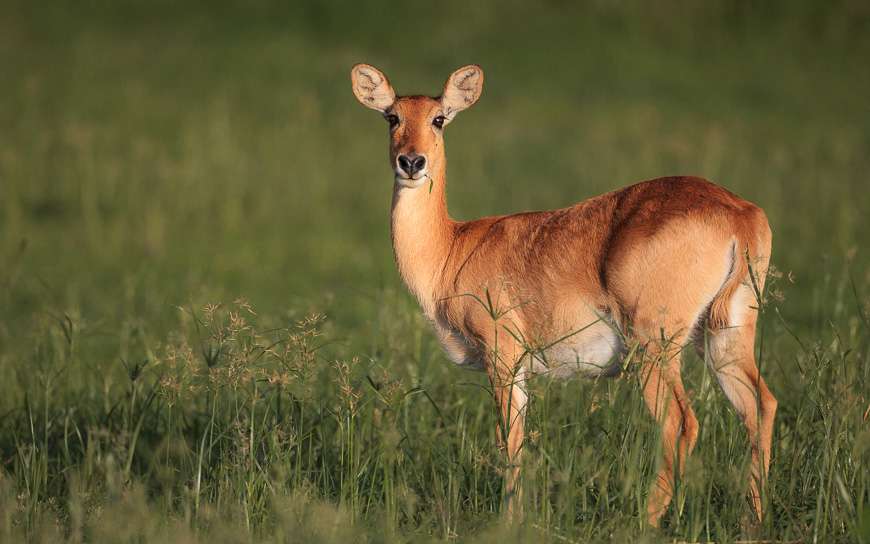
The puku is a medium-sized antelope similar in appearance to the impala but stockier and more golden-yellow in colour. Only males have horns, which are lyre-shaped and relatively short compared to an impala’s. The puku lacks the black markings on the rump that the impala has.
Puku are semi-aquatic and prefer habitats near water, particularly floodplains, riverbanks, and wetland edges. They are not found in Kenya but are present in some of Tanzania’s southern parks near the Zambian border.
- Where to see puku: Katavi National Park and the Ruaha ecosystem in western and southern Tanzania. More common in Zambia, particularly in the Kafue floodplains.
- What makes them special: Their preference for floodplain habitats makes puku sightings a natural companion to hippo, crocodile, and waterbird watching in Tanzania’s remote southern circuit.
Suni
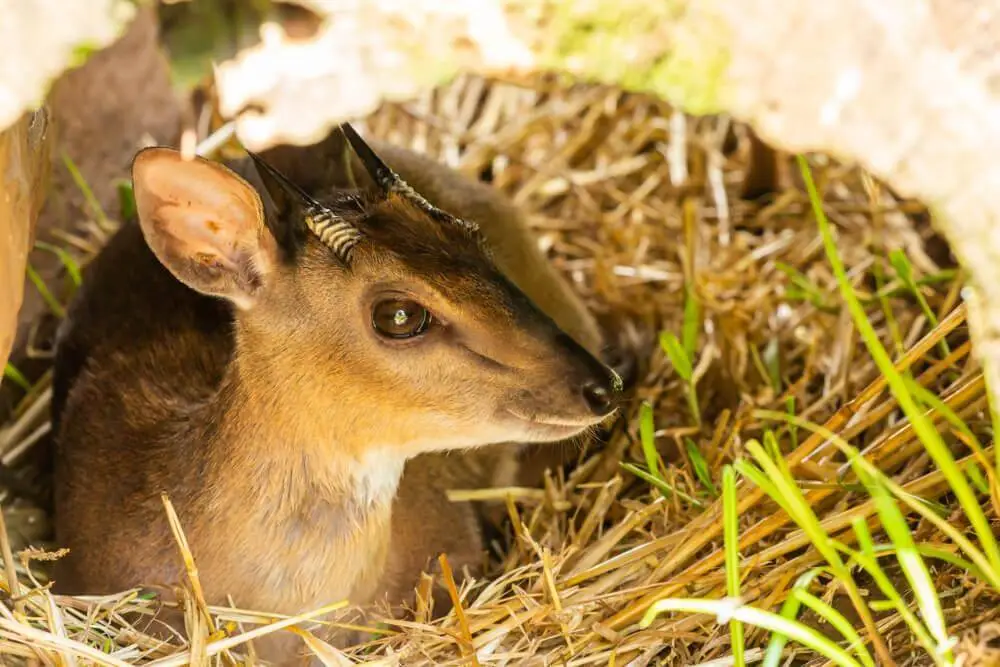
The suni is one of the smallest antelope in East Africa, standing only about 35 centimetres at the shoulder and weighing between 5 and 9 kilograms. It has a dark reddish-brown coat, large eyes, and only males have short ridged horns. The suni has a distinctive habit of freezing completely still when alarmed rather than running.
Suni live in dense coastal and riverine forest and are secretive animals that are rarely seen even in areas where they are relatively common. They are solitary or found in small family groups.
- Where to see suni: Coastal forests along the Kenya and Tanzania coast including Arabuko-Sokoke Forest Reserve near Watamu, Shimba Hills, and forest patches around Kilifi. Also found in riverine forest along Tanzania’s coast.
- What makes them special: The suni is genuinely difficult to spot because of its habit of freezing still in dense forest. Finding a suni in the coastal forest at Arabuko-Sokoke is a highlight for any serious wildlife observer visiting Kenya’s coast.
Where to See African Antelope on Safari
Kenya and Tanzania together offer the widest variety of antelope species you can see on a single safari circuit. The Maasai Mara and Serengeti ecosystem alone holds wildebeest, impala, topi, hartebeest, Thomson’s and Grant’s gazelle, eland, waterbuck, and klipspringer. Adding Samburu in northern Kenya adds gerenuk, Beisa oryx, and Grevy’s zebra. Tsavo adds kudu and dik-dik in large numbers.
A well-planned 10 to 14 day Kenya safari can realistically give you 20 or more antelope species across the different parks and ecosystems. No other region on Earth offers this variety of hoofed animals in accessible, well-managed safari destinations.
Why Are There No Deer in Africa?
This is a question a lot of people ask. You see antelope everywhere in Africa. They look similar to deer. So why did deer never make it to Africa?
The answer comes down to evolution, geography, and time.
Deer evolved in the wrong place
Deer belong to the family Cervidae. This family evolved in Asia and spread into Europe and the Americas over millions of years. They developed in cooler, more forested environments with seasonal changes in food and temperature.
Africa’s ecosystems were already full. By the time deer were spreading across other continents, Africa already had an enormous and diverse group of hoofed animals filling every available ecological space. Antelope, gazelles, and other bovids had been evolving in Africa for tens of millions of years. There was simply no room or need for deer to establish themselves.
The geography got in the way
Africa was also not easy to reach from Asia during the periods when deer were expanding their range. The Sahara Desert formed a major natural barrier. The conditions deer needed — cooler forests, seasonal vegetation — were not available across most of sub-Saharan Africa.
Deer that did spread westward across Asia mostly went into Europe and did not cross into Africa in meaningful numbers.
Antelope already did the job
Africa’s antelope family, the Bovidae, evolved directly on the continent and diversified into over 90 species. They filled every habitat from open desert to dense forest to high mountain grassland. Each niche that deer fill in Europe or North America — grazing, browsing, woodland dwelling, open plains — is already occupied in Africa by one or more antelope species.
Nature does not support redundancy. When a role is already filled by a well-adapted species, a new arrival with similar needs struggles to compete. Antelope were already perfectly suited to Africa’s conditions. Deer had no advantage over them.
One small exception
There is technically one deer native to Africa. The Barbary stag, also called the Atlas deer, lives in the dense humid forests of Algeria, Tunisia, and Morocco in North Africa. It is the only member of the deer family native to the African continent. However it is not found in sub-Saharan Africa and has no presence in the safari destinations of Kenya or Tanzania.
Fallow deer were also introduced to South Africa by British settlers in the 1860s and have established feral populations in parts of the Eastern Cape and Free State. But these are introduced animals, not native African wildlife.
African Deer vs Antelope — The Full Answer
If you came to this page searching for deer in Africa or African deer animals, here is the complete answer.
Africa does not have deer. What people are thinking of when they search for deer from Africa are almost always antelope. The confusion is understandable. Antelope and deer look similar because they both fill the same ecological role as medium-sized grazing and browsing prey animals in grassland and woodland environments.
The simplest way to tell them apart is the horns. If the animal is in Africa and has permanent horns that never fall off, it is an antelope. If the animal has branching bony antlers that it sheds annually, it is a deer. Deer shed their antlers every year. Antelope never do.
Africa has over 90 species of antelope covering everything from the tiny 3-kilogram dik-dik to the 900-kilogram eland. They fill forests, deserts, wetlands, mountains, and open savannah. Deer live on other continents. The overlap between the two is geographic, not genetic.
Summary — 10 Key Facts About African Antelope
- There are no deer in Africa. What people call African deer are actually antelope, a completely different animal family.
- Africa has over 90 species of antelope found across savannah, forest, desert, and wetland habitats.
- Antelope have permanent horns made of keratin. Deer have bony antlers that fall off and regrow every year.
- The wildebeest, the star of the Great Migration, is an antelope species.
- The gerenuk is unique in Africa because it stands on its back legs to feed from branches, like no other antelope.
- The eland is the world’s largest antelope and can weigh up to 900 kilograms.
- The dik-dik is one of the smallest antelope in Africa at just 3 to 7 kilograms. It is also strictly monogamous.
- Samburu National Reserve in northern Kenya is the best place to see five antelope species found nowhere else in the southern parks.
- The sable antelope has horns that can reach over 1.5 metres. It is one of the most spectacular animals in Africa.
- On a Kenya or Tanzania safari you can realistically see 20 or more different antelope species across multiple parks.
Conclusion
Deer in Africa do not exist. But Africa’s antelope are one of the great wildlife stories of the continent. From the million-strong wildebeest herds of the Maasai Mara to the delicate dik-dik hiding in the roadside bush, from the giraffe-necked gerenuk of Samburu to the jet-black sable of Shimba Hills, African antelope cover an extraordinary range of shapes, sizes, and habitats.
Every Kenya and Tanzania safari gives you a front-row seat to these animals in their natural home. TourwithPipi designs private guided Kenya and Tanzania safaris for travelers from the US and UK. Every itinerary is personally planned by our Kenya-born, Virtuoso-certified founder.
Plan your Kenya or Tanzania antelope safari with TourwithPipi →
Frequently Asked Questions — Deer in Africa and African Antelope
Are there deer in Africa?
No. There are no deer native to sub-Saharan Africa. What people call African deer are almost always antelope species. Africa has over 90 antelope species across a huge range of sizes and habitats. Deer are native to Europe, Asia, and the Americas. The animals look similar because they fill the same ecological role but they belong to completely different animal families.
What is the difference between deer and African antelope?
The main differences are their horns, their family classification, and where they live. Deer have antlers made of bone that fall off and regrow every year. Antelope have permanent horns made of keratin that never fall off. Deer belong to the Cervidae family. Antelope belong to the Bovidae family alongside cattle, goats, and sheep. Deer live on multiple continents but not in sub-Saharan Africa. Antelope are primarily African animals.
What African animal looks most like a deer?
The impala is probably the African antelope most often mistaken for a deer. It has a slender body, long elegant legs, and graceful proportions very similar to a European deer. Thomson’s gazelle and Grant’s gazelle also look deer-like to visitors from Europe and North America who are not familiar with African wildlife.
What is the smallest antelope in Africa?
The dik-dik is one of the smallest antelope in Africa. It weighs between 3 and 7 kilograms and stands only 35 to 45 centimeters at the shoulder. It lives in pairs and is one of the few monogamous antelope species. The royal antelope of West Africa is even smaller but is rarely seen on safari.
What is the largest antelope in Africa?
The eland is the largest antelope in the world. A fully grown male eland can weigh up to 900 kilograms. Despite their enormous size, elands can jump a 1.5 metre fence from a standstill. They have spiralled horns in both sexes and a distinctive shoulder hump.
Where can I see the most antelope species on a single safari?
Kenya and Tanzania offer the most antelope variety on a single safari circuit. The Maasai Mara and Serengeti hold wildebeest, impala, gazelle, topi, hartebeest, eland, and waterbuck. Adding Samburu in northern Kenya gives you gerenuk, Beisa oryx, and Grevy’s zebra. Tsavo adds kudu and large dik-dik populations. A 10 to 14 day Kenya and Tanzania circuit can realistically give you 20 or more species.
What is the most endangered antelope in Africa?
Several antelope species are threatened, including the eland and the sable antelope, which have declined due to habitat loss and poaching. The Hunter’s hartebeest found in Kenya is critically endangered with only a few hundred individuals remaining. The hirola, also called the four-eyed antelope, is found only in a small area of southeastern Kenya and is one of the most endangered antelope on Earth.
What do African antelope eat?
Most African antelope eat grass, leaves, shoots, and fruit. Grazers like wildebeest and impala eat mainly grass. Browsers like kudu and bushbuck prefer leaves and shoots from trees and bushes. Some species like the impala do both. The gerenuk is unusual because it stands on its back legs to reach high branches. The dik-dik eats leaves, berries, and fruit and does not need to drink water because it gets moisture from its food.
Are antelope dangerous to humans?
Most antelope are not aggressive toward humans and will run away when approached. However some larger species can be dangerous when cornered or injured. The sable antelope is known to charge lions and can injure humans with its powerful curved horns. The oryx has been known to kill attacking predators with its long straight horns. Wildebeest can be dangerous in a stampede situation. On a guided safari in a vehicle the risk from any antelope species is extremely low.
What is the fastest antelope in Africa?
Thomson’s gazelle is one of the fastest antelope in Africa and can reach speeds of up to 80 kilometres per hour in short bursts. It can also sustain 65 kilometres per hour for longer distances. This speed is essential for outrunning cheetahs, which are their primary predators. Impala are also extremely fast and can leap impressive distances to escape through dense bush.


