
Most climbers choose one of these routes: Lemosho, Machame, Northern Circuit, Rongai, Marangu, Umbwe, and Shira. Each mount kilimanjaro route has a different length, elevation profile, and success rate, and you should pick the route that matches your fitness, time, and goals. Check 2026 TourwithPipi Dates.
The best mount Kilimanjaro climbing routes for most first time climbers are Lemosho and Machame because they balance scenery and acclimatization.
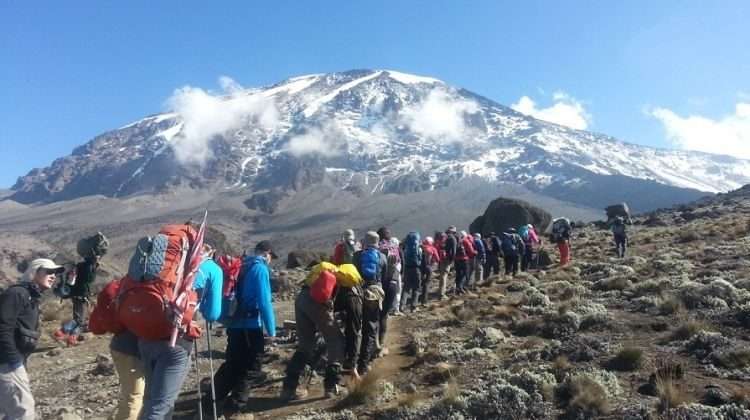
If you want the highest chance of summiting and more solitude, consider the Northern Circuit. If you prefer hut accommodation, choose Marangu. If you have limited time and strong altitude experience, Umbwe is the steep option and not recommended for most people.
How to choose a Mount Kilimanjaro route
Choosing the right climbing kilimanjaro routes starts with clear priorities. First, decide how many days you can spend on the mountain. More days improve acclimatization and raise your summit odds. Second, consider your fitness and prior altitude exposure. If you have recent high altitude experience you can consider shorter, steeper options, but if not you should choose longer itineraries. Third, decide whether you prefer camping or hut accommodation. Marangu offers huts, while most other routes use tents. Fourth, think about crowds and season. Peak months bring clearer weather but more people. Finally, factor cost and logistics since longer routes raise park fees and staff costs.
Quick checklist to match your priorities
If you want the best scenery and steady acclimatization, choose Lemosho or Machame.
If you want the highest chance of success and quiet camps, choose Northern Circuit.
If you need huts and simpler logistics, choose Marangu.
If you want a quieter northern approach in wet months, choose Rongai.
If you are short on time and very experienced with altitude, consider Umbwe with caution.
Choose a longer itinerary on Lemosho, Machame, or Northern Circuit to increase acclimatization and summit success.
Which is the Best Route to Climb Kilimanjaro?
1. Lemosho Route — 7–9 days
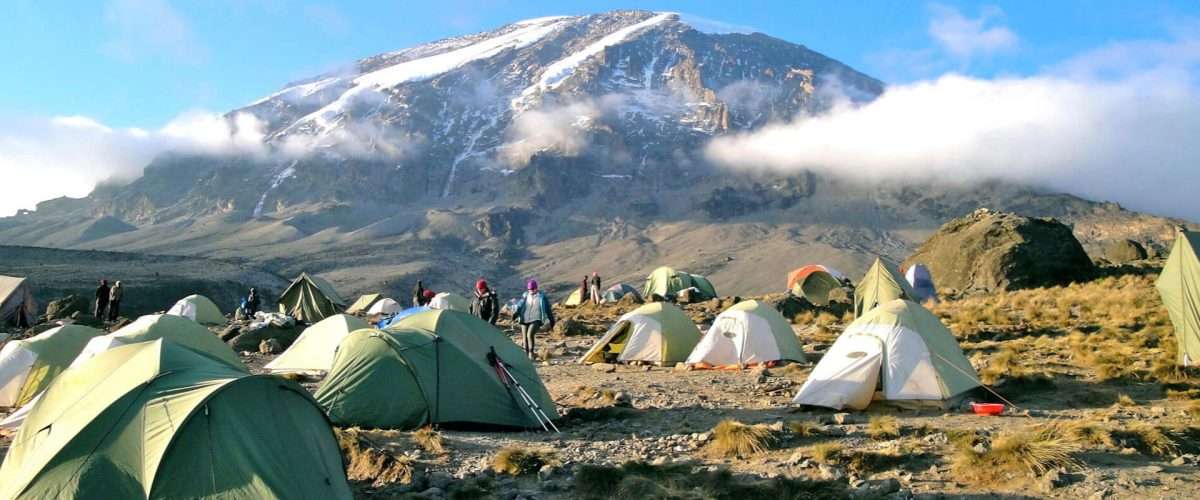
Days: 7–9 days, and we recommend 8 days for most climbers.
Start elevation: ~2,100 m at Lemosho Gate.
Summit altitude: 5,895 m at Uhuru Peak.
Distance: About 60–70 km.
Success rate: High, usually 75–90% on 8–9 day itineraries.
The Lemosho Route remains one of the most recommended mount kilimanjaro routes because it offers a remote start, steady elevation gains, and excellent acclimatization. You move from rainforest to the wide Shira Plateau and follow a natural “walk high, sleep low” profile that suits first-time high-altitude trekkers. The route joins the Machame trail at Shira 2 and continues toward Barranco, Karanga, Barafu, and the summit.
You can expect scenic ridgelines, wide plateau crossings, and quieter camps during the first two days. Campsites are well spaced, and daily trekking hours are manageable. Weather patterns favor the dry seasons from December to mid March and June to October, although shoulder months can work with proper planning.
Who it suits: first-timers, photographers, groups, and anyone who wants a strong acclimatization plan.
Best seasons: dry seasons; shoulder months are workable.
Pros: great acclimatization, varied scenery, quieter start.
Cons: slightly higher cost due to longer duration.
2. Machame Route — 6–7 days
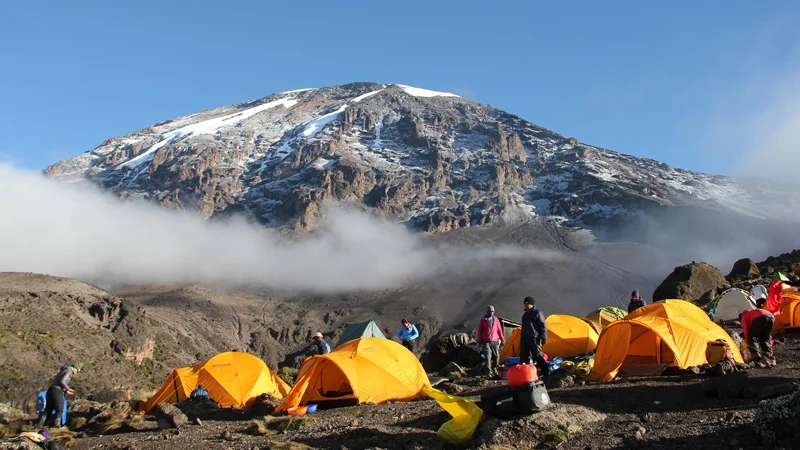
Days: 6–7 days, and we recommend 7 days.
Start elevation: ~1,640 m at Machame Gate.
Distance: ~60–65 km.
Success rate: Fairly high, around 65–85% depending on days.
Machame is one of the most popular climbing kilimanjaro routes because it combines strong acclimatization with very scenic landscapes. You trek through the rainforest, moorland, alpine desert, the Barranco Wall, and finish at Barafu before summiting. It uses the “walk high, sleep low” altitude strategy and offers more visual variety than the Marangu or Rongai routes.
You should expect more crowds in peak months, especially from June to September. The Barranco Wall is a highlight and not technical, but it requires steady footwork. Campsites are well established and spaced for manageable trekking days.
Who it suits: hikers who want scenery and balanced acclimatization.
Best seasons: June to September peak; December to March also good.
Pros: strong acclimatization, iconic viewpoints, lower cost than Lemosho.
Cons: busy during high season.
3. Northern Circuit — 9–10 days
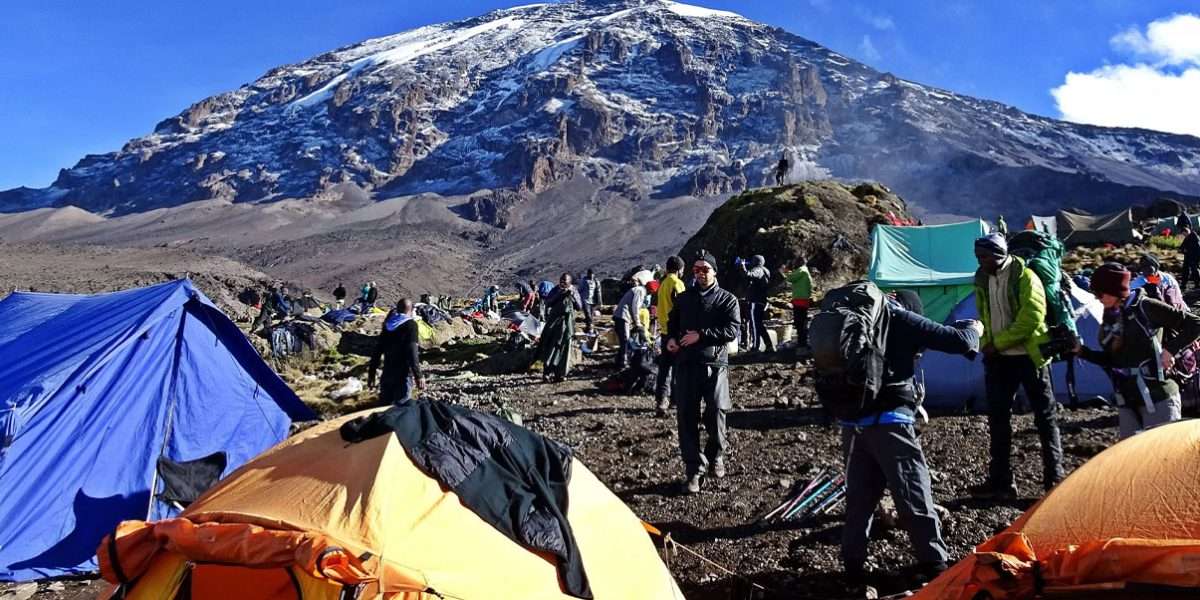
Days: 9–10 days.
Start elevation: similar to Lemosho (~2,100 m).
Distance: ~90–100 km, the longest route.
Success rate: Very high, often 85–95%.
The Northern Circuit is the most comprehensive mount kilimanjaro route and offers the best acclimatization because it circles the entire northern flank of the mountain. You move from the Lemosho starting point toward Shira, then head north instead of south, reaching high-altitude camps with steady, gradual elevation gain.
You can expect very quiet camps, panoramic views toward Kenya, diverse terrain zones, and long but steady trekking days. Because of its length, the route is more expensive and time-intensive, but the acclimatization is unmatched.
Who it suits: trekkers who prioritize summit success, solitude, and panoramic views.
Best seasons: dry seasons; quiet even during peak months.
Pros: highest success rate, least crowded, excellent scenery.
Cons: longest duration and higher cost.
4. Rongai Route — 6–7 days
Days: 6–7 days, and 7 is recommended.
Start elevation: ~1,950–2,000 m at Rongai Gate.
Distance: ~65–75 km.
Success rate: medium to good, depending on acclimatization.
Rongai approaches Kilimanjaro from the north, making it one of the driest mount kilimanjaro climbing routes. It avoids the heavier rains of the southern side and is a good alternative in November and during shoulder seasons. The ascent is steady and gentle, but acclimatization is not as strong as Lemosho or Machame due to fewer “climb high, sleep low” opportunities.
Expect quiet trails, views toward Amboseli National Park, and varied landscapes. Camps are less crowded, and the route merges with Marangu for the summit push.
Who it suits: trekkers seeking a quieter route or climbing in wet months.
Best seasons: November and shoulder seasons, plus the main dry months.
Pros: less rain, less crowded, steady ascent.
Cons: acclimatization not as strong as western routes.
5. Marangu Route — 5–6 days
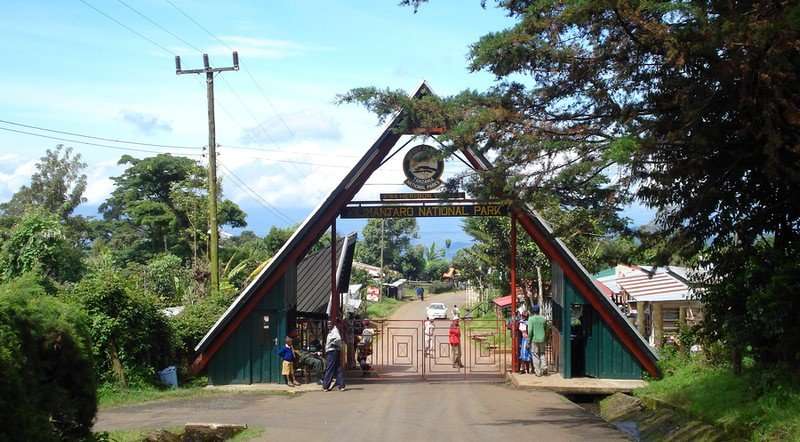
Days: 5–6 days, and 6 is strongly recommended.
Start elevation: ~1,843 m at Marangu Gate.
Distance: ~60–72 km.
Success rate: lower on 5-day itineraries; moderate with 6 days.
The Marangu Route is the only mount kilimanjaro route with hut accommodation. Climbers sleep in simple A-frame huts with bunk beds and shared dining areas. Because you do not camp, fewer porters are required, and logistics are simpler, which makes the route popular among value-focused climbers and some budget operators.
The trail begins with a gradual ascent through thick rainforest, then continues into open moorland before reaching the alpine desert zone. The final summit push follows a long, steady climb to Gilman’s Point on the crater rim, then continues to Uhuru Peak. Since this route uses the same trail for both ascent and descent, scenic variety is limited compared with Lemosho or Machame.
Acclimatization is the main challenge. The route lacks strong “walk high, sleep low” opportunities, which is why the 5-day version has one of the lowest summit success rates on the mountain. Weather is reliable in the dry seasons, but huts can become crowded in peak months.
Who it suits: you should choose Marangu if you prefer huts to tents and want the simplest logistics.
Best seasons: December to March and June to October.
Pros: huts instead of tents; straightforward trail; reduced gear requirements.
Cons: lower success rate, limited scenery, busy during high season.
6. Umbwe Route — 5–6 days
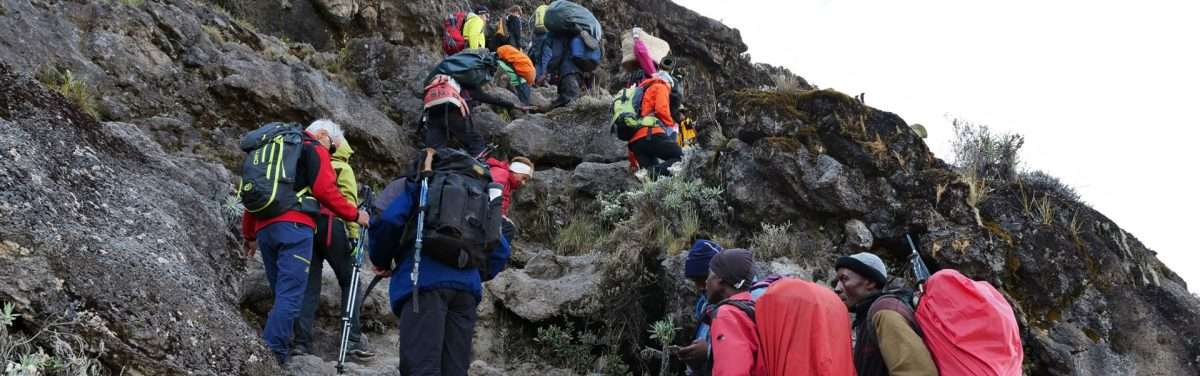
Days: 5–6 days.
Start elevation: foothills around 1,600–1,800 m.
Distance: ~50–55 km.
Success rate: low due to rapid ascent.
The Umbwe Route is the steepest and most direct mount kilimanjaro climbing route. It begins immediately with sharp vertical gains through dense forest and narrow ridgelines. The trail ascends so quickly that there is almost no acclimatization time, which is why most operators recommend it only for climbers with significant altitude experience.
The route joins the Southern Circuit near Barranco Camp and continues to Barafu before the summit attempt. Although the scenery is impressive, including dramatic ridges and deep valleys, the profile is physically demanding from the first hour of trekking.
Umbwe is also one of the quietest routes due to its difficulty. You should expect consistent steep climbing, little recovery time, and limited opportunities to adjust to altitude. Because of this, it is not recommended for first-time trekkers.
Who it suits: highly experienced hikers with strong endurance and prior altitude exposure.
Best seasons: the dry seasons only, as wet conditions make steep sections unsafe.
Pros: very quiet; direct ascent; dramatic scenery.
Cons: demanding, poor acclimatization, very low success rate.
7. Shira Route — 7–8 days
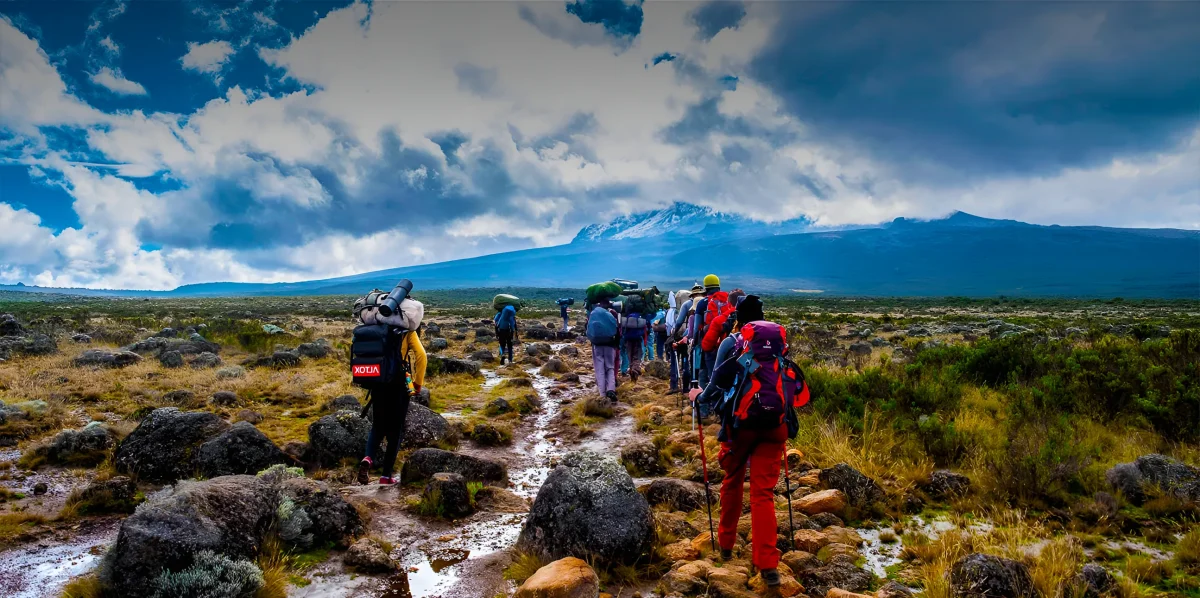
Days: 7–8 days.
Start elevation: ~3,500 m on the Shira Plateau.
Distance: ~56–65 km.
Success rate: lower unless pre-acclimatized.
The Shira Route begins on the high Shira Plateau, making it one of the few mount kilimanjaro routes that start at altitude instead of climbing gradually from the forest zone. This rapid jump to 3,500 meters on day one increases the risk of altitude sickness, which is why most operators recommend prior acclimatization or a warm-up climb such as Mount Meru.
The route shares much of its profile with Lemosho after Shira 1 Camp. You trek across the Shira Plateau, climb toward Lava Tower, and drop into Barranco — a good “walk high, sleep low” acclimatization point. The scenery is wide and open with long views across the plateau, but the early days expose you to wind, cold nights, and higher altitude stress.
Shira is used less often because Lemosho offers the same scenic value with a safer altitude profile. However, it remains an option for experienced climbers comfortable starting high.
Who it suits: climbers who arrive acclimatized or want an alternative to Lemosho.
Best seasons: dry seasons with stable conditions.
Pros: scenic plateau, fast access to mid-mountain zones.
Cons: high starting altitude, early altitude risk, less used by first-timers.
Acclimatization, Success Rates and Why Route Climb Kilimanjaro Choice Matters
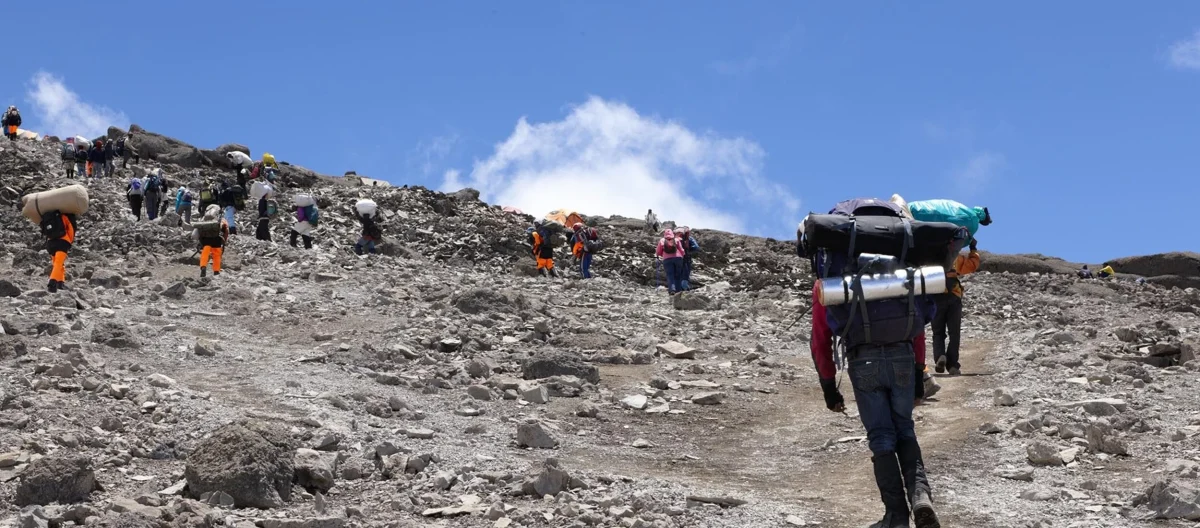
Choosing the right mount Kilimanjaro climbing route affects how well you acclimatize and how likely you are to reach the summit. Acclimatization is the process where your body adjusts to higher altitude. The most effective method is the “walk high, sleep low” strategy. You climb to a higher point during the day, then descend slightly for the night. Routes such as Lemosho, Machame and the Northern Circuit follow this pattern naturally, which is why they show consistently higher success rates.
Shorter routes like Marangu 5-day or Umbwe push you upward too quickly. This reduces your ability to adapt and significantly increases the chance of altitude sickness. Longer routes give your body more time to adjust, which is why they are recommended for most climbers.
Typical success-rate ranges by route length:
5-day routes: about 40–60 percent
6–7-day routes: about 60–80 percent
8–10-day routes: about 75–95 percent
Guide experience also matters. A well-trained team monitors your oxygen saturation, hydration, and pace daily. Many climbers also discuss using Diamox under medical guidance to support acclimatization. Pre-acclimatization climbs such as Mount Meru can further improve your chances.
Weather is another factor. Dry seasons help with steady pacing and safer terrain, while heavy rains slow you down and increase risk.
Seasons and Weather by Route to Climb Kilimanjaro — Best Months to Go
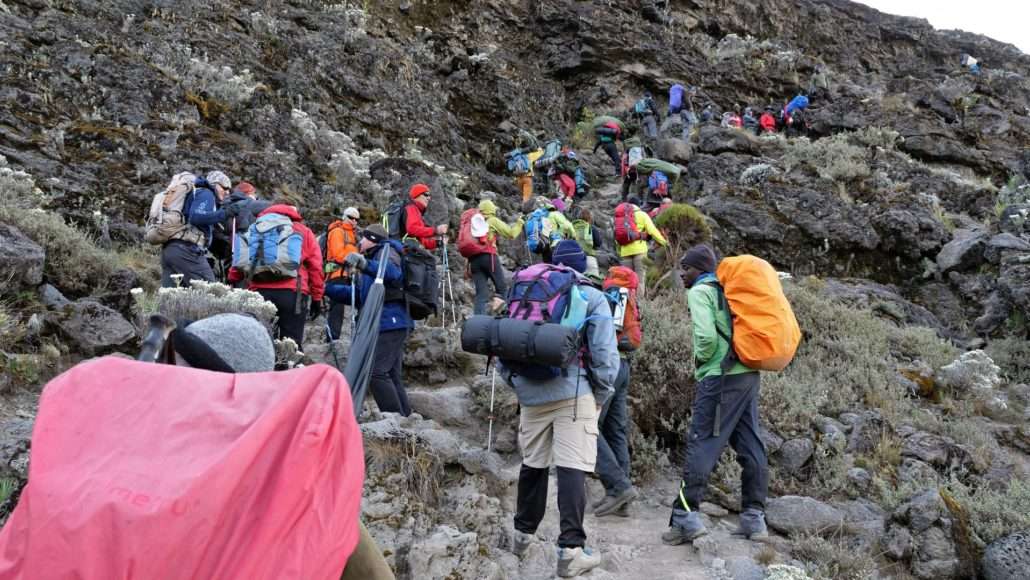
The best time to hike Kilimanjaro is during the two main dry windows: December to mid-March and June to October. These months offer more stable weather, clearer views, safer trail conditions, and better acclimatization pacing. While Kilimanjaro can be climbed year-round, each of the major Kilimanjaro routes performs differently depending on the season.
The Rongai Route works well during the short rains in November because the northern side receives less rainfall. If you want to avoid slippery forest trails, Rongai gives you a more predictable experience.
The Northern Circuit is best for climbers who want quiet trails during peak months, because this long route spreads people out and avoids the busiest southern slopes.
The Machame and Marangu Routes are busiest from June to September, especially around full moon dates. Clear mornings and colder nights are common during these months.
For photographers, the Lemosho Route during January–February or August–September provides the best light, visibility, and wide-open views.
For solitude, choose Northern Circuit or Rongai.
For avoiding rain, choose Lemosho, Machame, or Northern Circuit during dry months.
Practical Route Expectations To Climb Kilimanjaro — Daily Terrain, Camping, Hygiene and Logistics
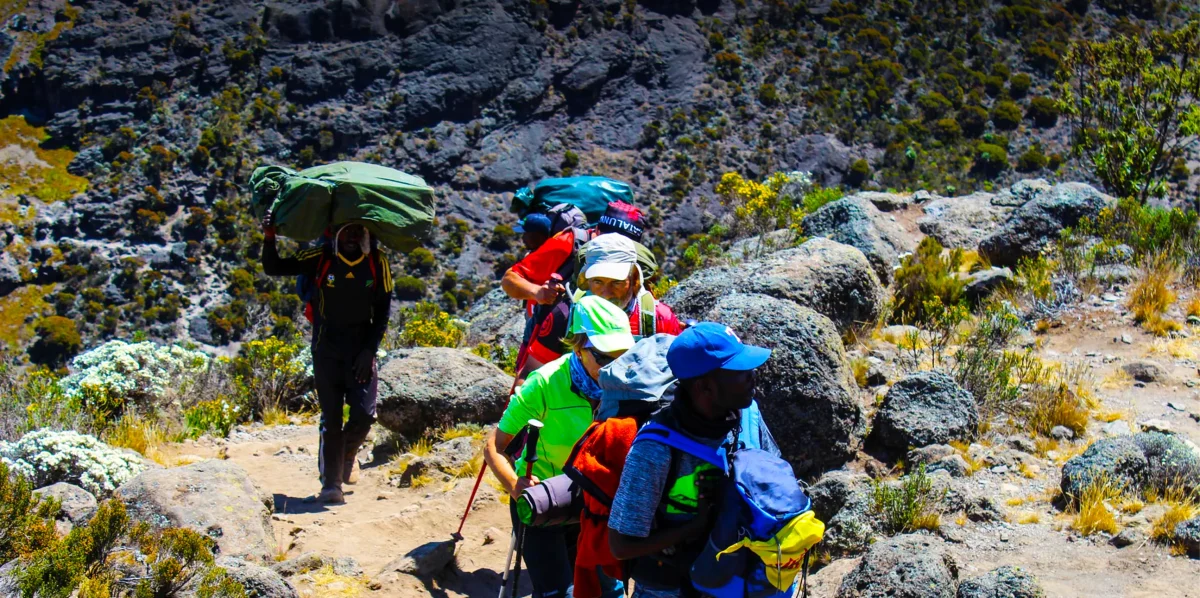
You should expect 5–8 hours of hiking per day on most mount Kilimanjaro climbing routes, moving through five distinct terrain zones: rainforest, heather and moorland, alpine desert, high alpine slopes, and the arctic summit zone. The air becomes thinner as you climb, so your guide checks oxygen levels daily. Summit night is the longest day, usually 12–14 hours of hiking, including a steep ascent and a long descent.
Camping routes such as Lemosho, Machame, Rongai, Northern Circuit, Shira, and Umbwe use mountain tents, foam mattresses, and dedicated dining tents. Toilet tents or shared campsite toilets are provided depending on the operator. Water is collected from mountain streams, boiled, and filtered. Hot meals are prepared three times a day by a dedicated mountain chef.
You carry only your daypack. Porters move your main bag, tents, food, and equipment. A typical staff ratio is three to four porters per climber, depending on the route and group size. Logistics include daily camp setup, meal preparation, waste management, and speed-controlled pacing by guides.
Most operators carry first aid kits, pulse oximeters, and emergency oxygen. Evacuation support is available through stretcher teams and, on some routes, helicopter access zones. Insurance covering trekking up to 6,000 meters is required for safe operations.
Terrain varies by route: rainforest mud on lower Machame, dusty moorland on Lemosho, dry northern slopes on Rongai, and rocky summit sections on all routes. Wildlife sightings include colobus monkeys, blue monkeys, and occasional antelope on western routes.
FAQs — Best Mount Kilimanjaro Climbing Routes
1. What is the best mount Kilimanjaro climbing route for beginners?
Most beginners choose Lemosho (8 days) or Machame (7 days) because both offer strong acclimatization and good success rates.
2. Which Kilimanjaro route has the highest success rate?
The Northern Circuit (9–10 days) offers the highest summit success, often 85–95%, due to its long acclimatization profile.
3. What is the easiest mount Kilimanjaro route?
“Easiest” refers to acclimatization, not effort. Lemosho is the most balanced. Marangu uses huts but has lower success rates.
4. Which is the most difficult Kilimanjaro route?
The Umbwe Route is the steepest, shortest, and least forgiving. It suits only experienced trekkers with strong altitude experience.
5. Are the climbing Kilimanjaro routes crowded?
Yes, Machame and Marangu are busiest in peak months. Rongai and Northern Circuit remain quieter.
6. What is the best time to hike Kilimanjaro for clear views?
The best windows are January–February and August–September, especially on Lemosho for photography.
7. Do all mount Kilimanjaro routes require camping?
All except Marangu. Marangu uses communal mountain huts.
8. Which Kilimanjaro route is best for rainy season climbs?
Rongai Route performs better during November short rains because the northern side receives less rainfall.
9. What route should I choose if I want fewer crowds?
Pick Northern Circuit for solitude or Rongai for quieter trails with steady terrain.
10. How do I choose the best mount Kilimanjaro route for 2026?
Choose based on days available, your fitness, altitude experience, preferred scenery, and season.
Final Thought — Choose the Best Mount Kilimanjaro Route for Your 2026 Summit
Choosing among the best Mount Kilimanjaro climbing routes comes down to how many days you have, how well you want to acclimatize, and the type of experience you prefer. If you want strong acclimatization and balanced difficulty, the Lemosho and Machame routes remain top recommendations. For the highest success rates and quiet trails, the Northern Circuit offers the best overall profile. If you prefer huts, Marangu is the only non-camping mount Kilimanjaro route, while Rongai suits climbers who want a drier and less crowded approach. Highly experienced trekkers with altitude exposure may consider Umbwe, but it is not suitable for first-timers.
Each Kilimanjaro climbing route offers different scenery, weather patterns, daily elevations, and acclimatization opportunities. When you match the route to your fitness, timeframe, and comfort level, you improve your summit odds, reduce altitude-related risks, and make your climb more predictable.
If you plan to climb in 2026, secure your route early, confirm the season that fits your travel dates, and finalize your gear, training, and insurance.


