
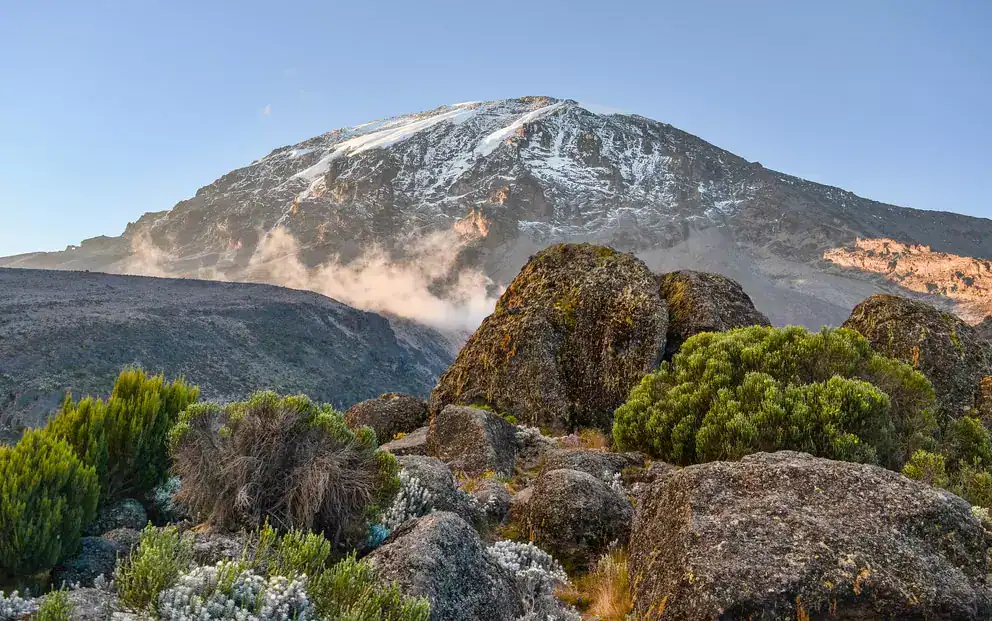
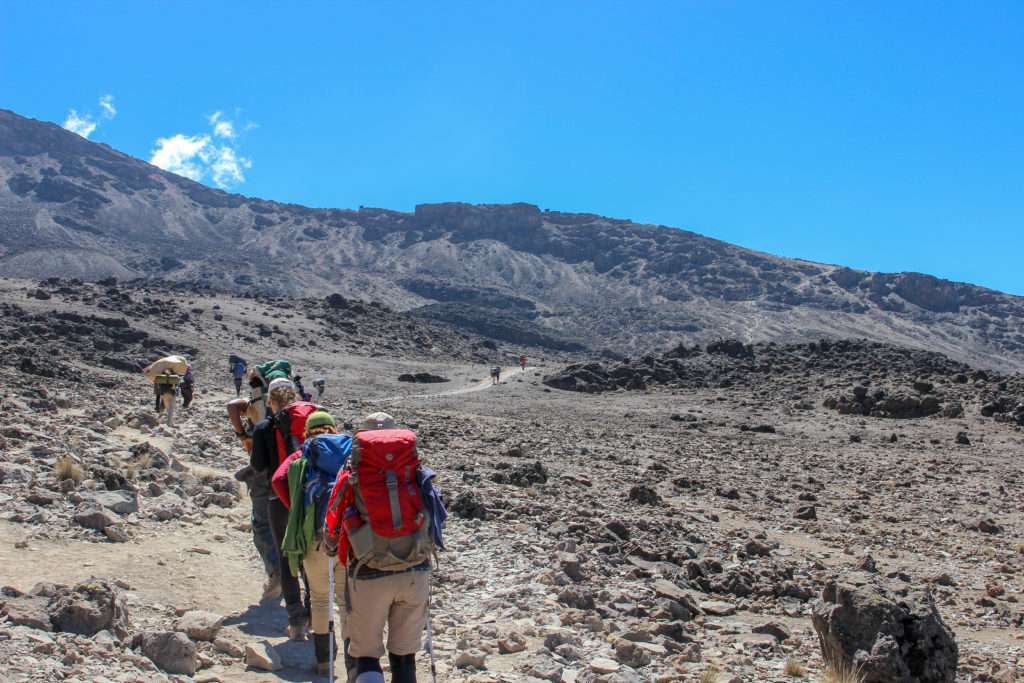
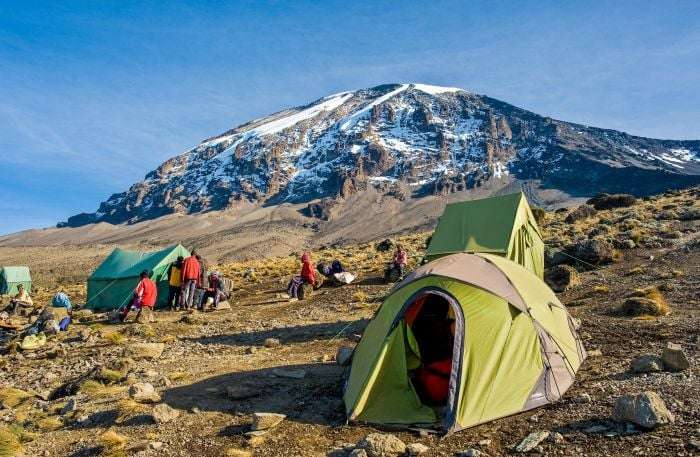
Crater Camp Views
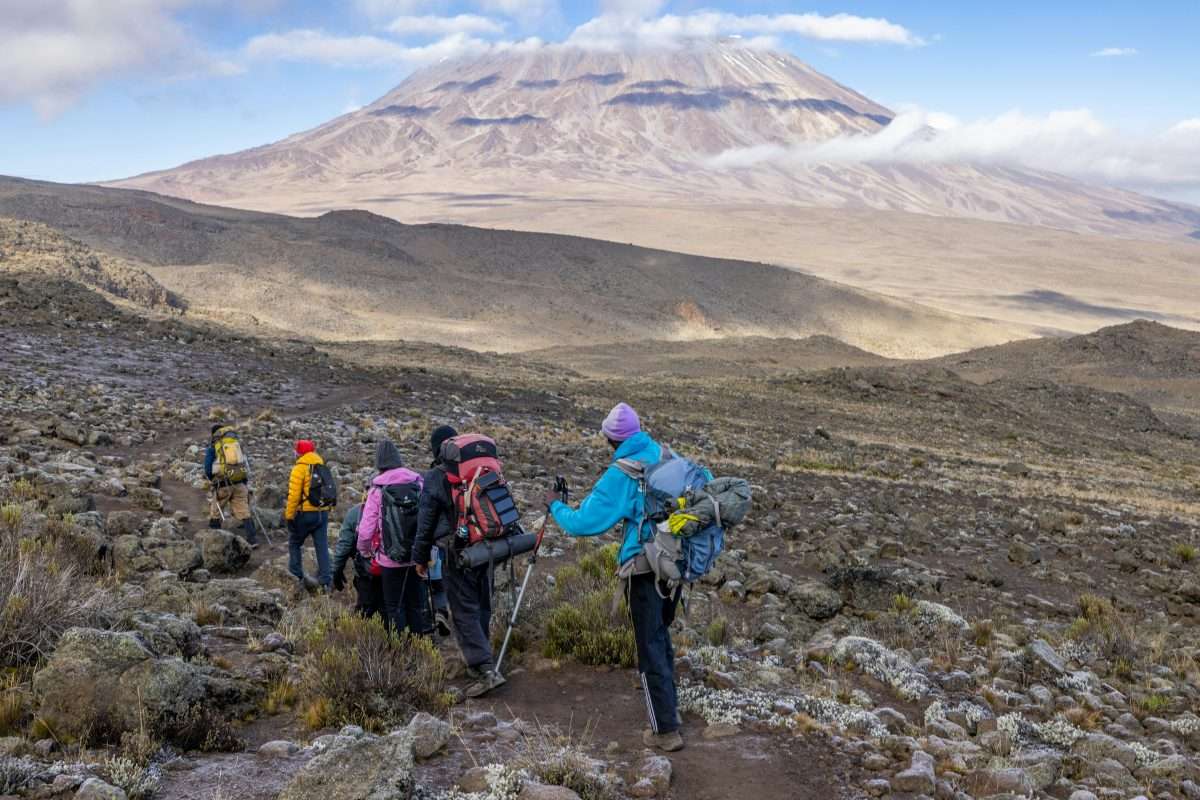
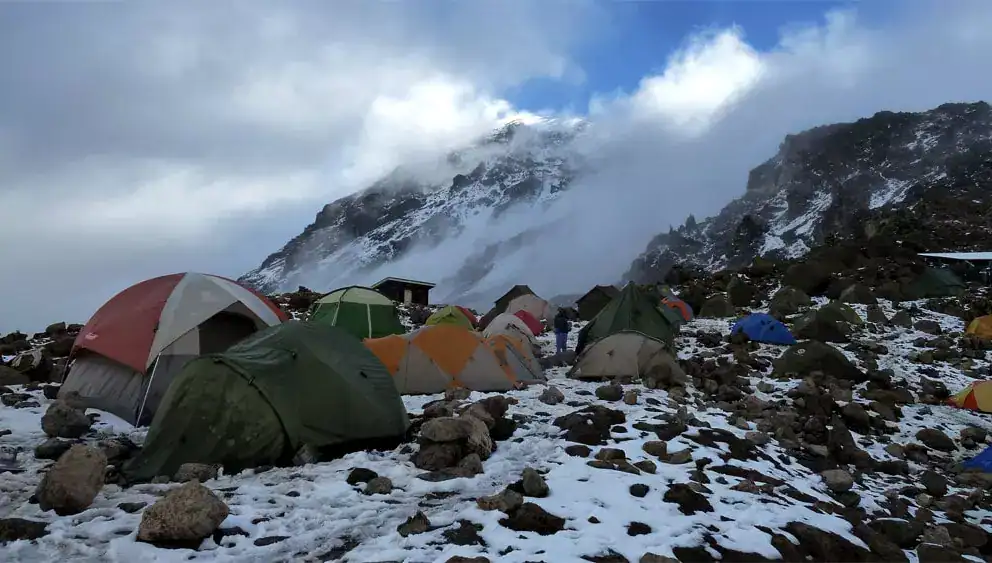
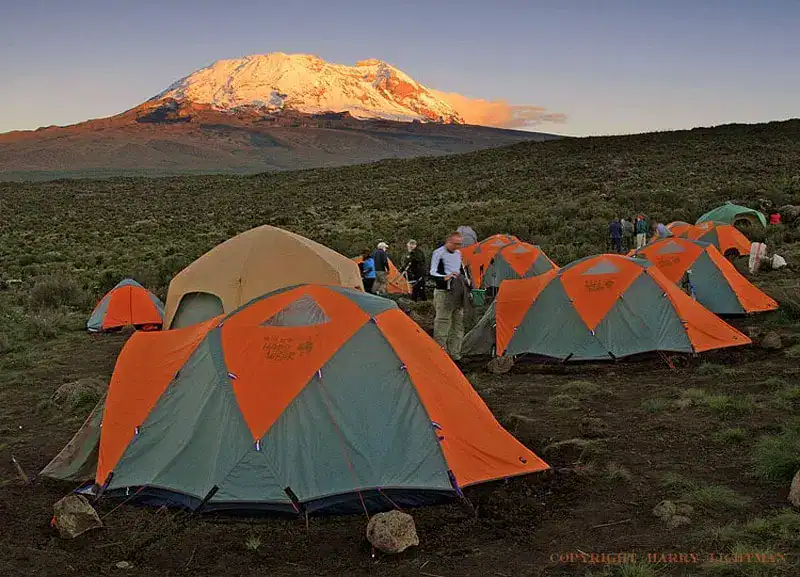
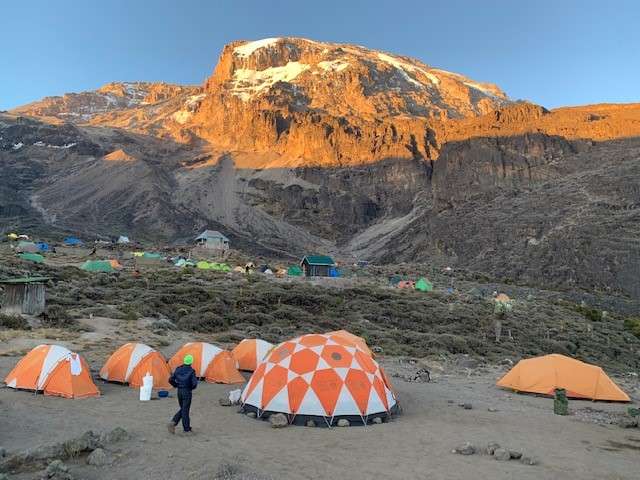
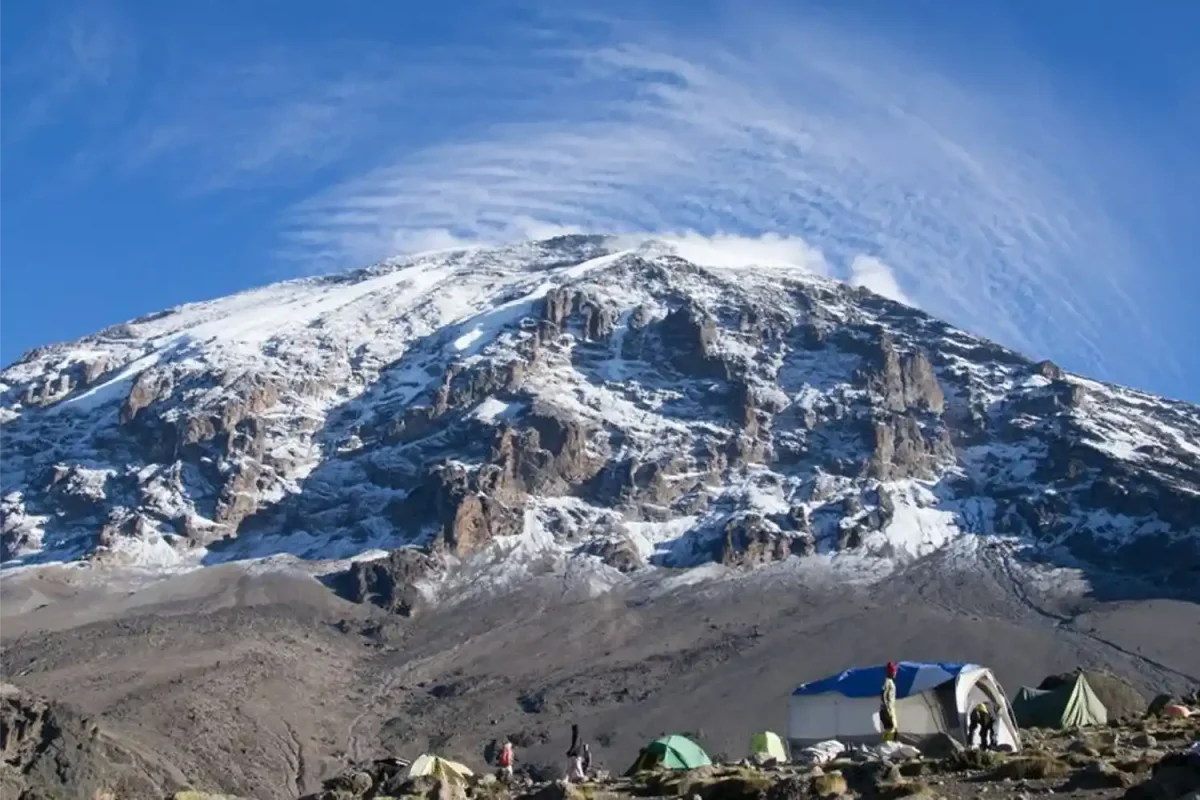
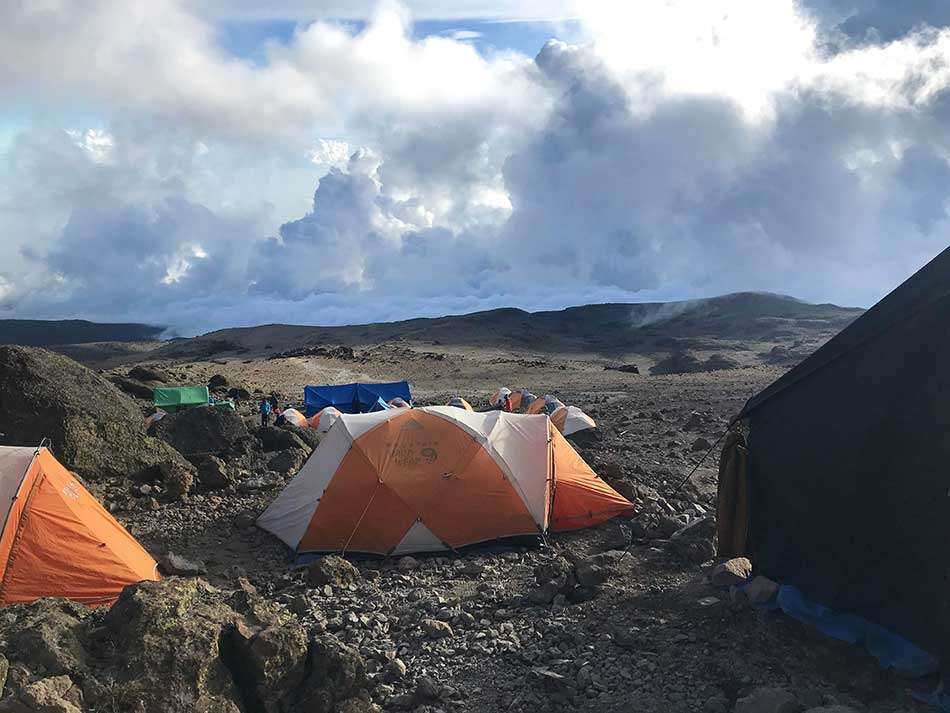
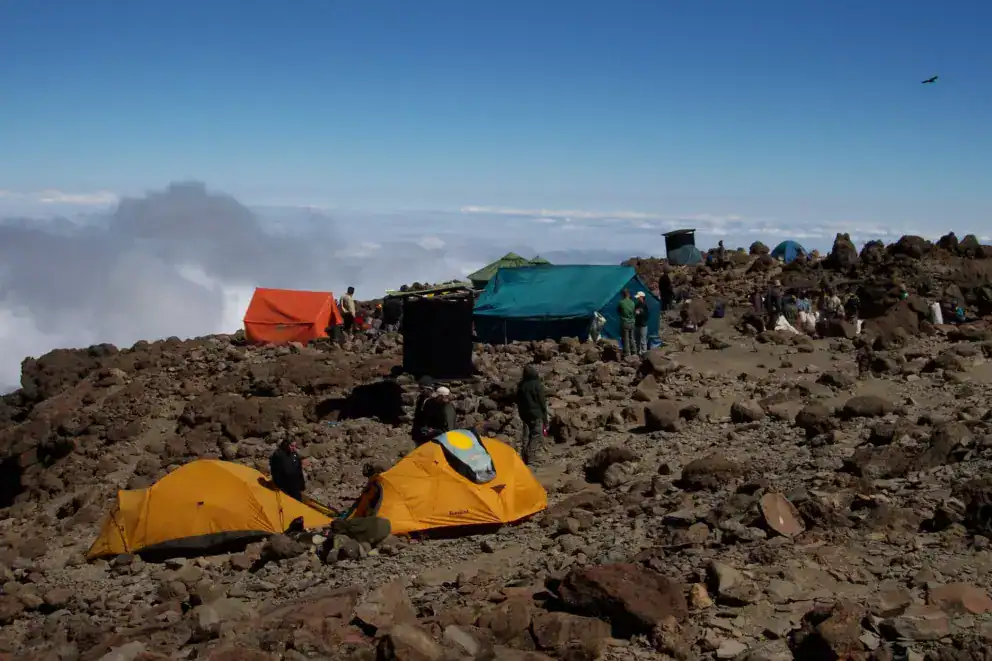
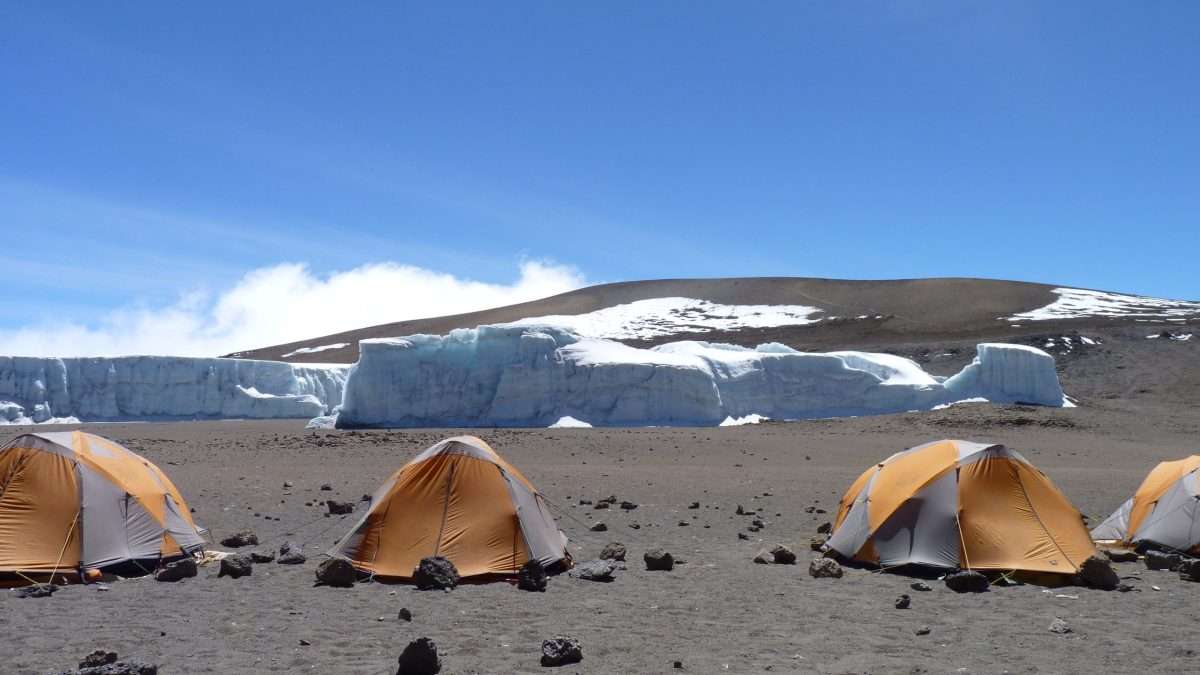
Crater Camp is one of the highest camps in the world, sitting inside the summit crater at about 5,700 meters. The Crater Camp Kilimanjaro setting feels unreal. Around you are tall ice walls and frozen glaciers, while beneath your feet is the dark volcanic crater floor.
The air is very thin and cold, often below -10°C, and everything feels still and silent. At night, the stars seem closer than anywhere else on the mountain. You rest here surrounded by ice and rock, feeling both small and proud at the same time. This camp gives you a rare chance to see Kilimanjaro’s summit from the inside, with glaciers towering above and the vast African land far below.
Simba Camp Views
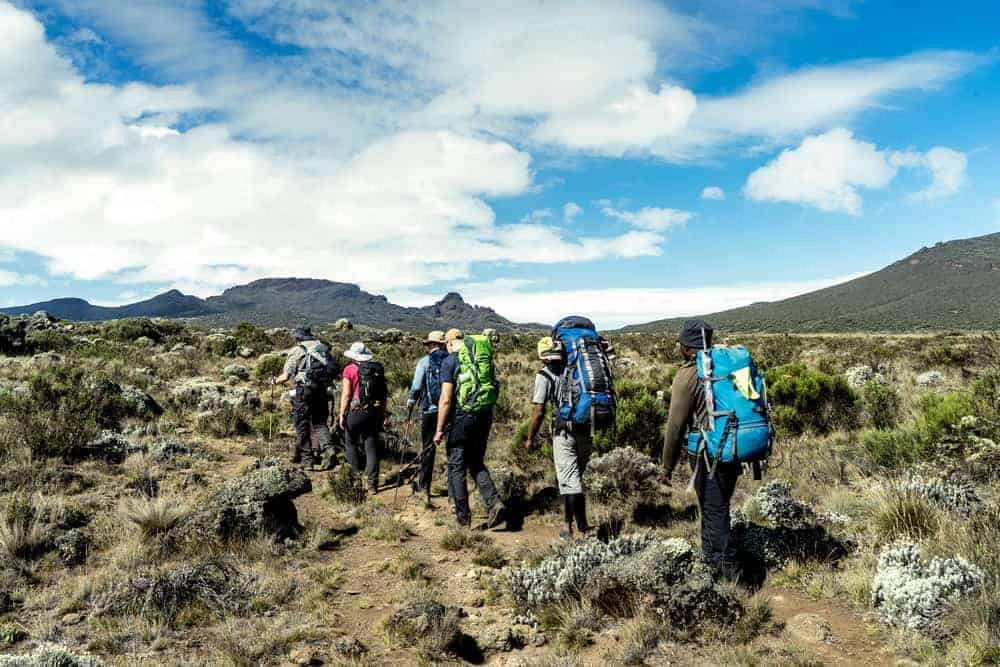
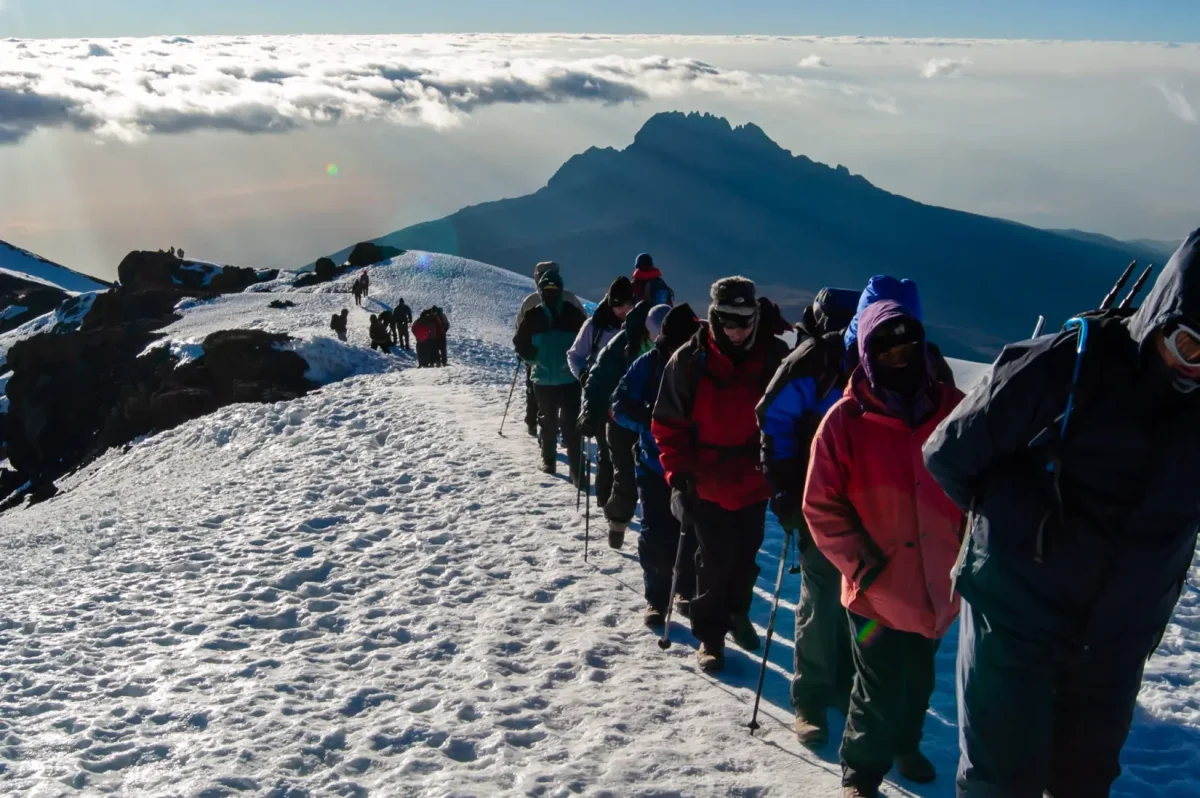
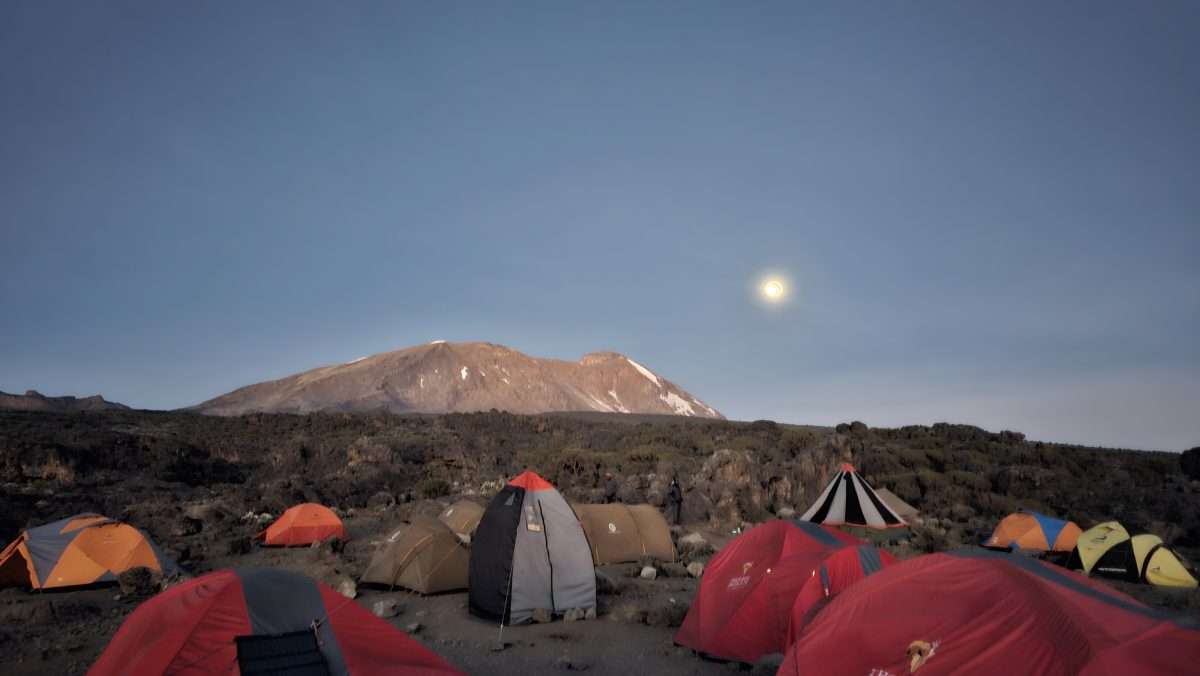
Simba Camp sits at about 2,600 meters on the quieter Rongai Route, close to the Kenyan side of the mountain. The Simba Camp Kilimanjaro views look out over wide open plains and distant hills, with Kibo Peak rising slowly above you. In the late afternoon, clouds often sit low in the valleys while the summit stays clear above them.
The air here is cool and fresh, around 10 to 15°C, and this is where your body begins its first real adjustment to altitude. You spend time walking slowly around camp, drinking water, and watching the light fade from the plains below. At night, the sky feels huge and quiet, and the stars seem brighter because there are no city lights anywhere nearby.
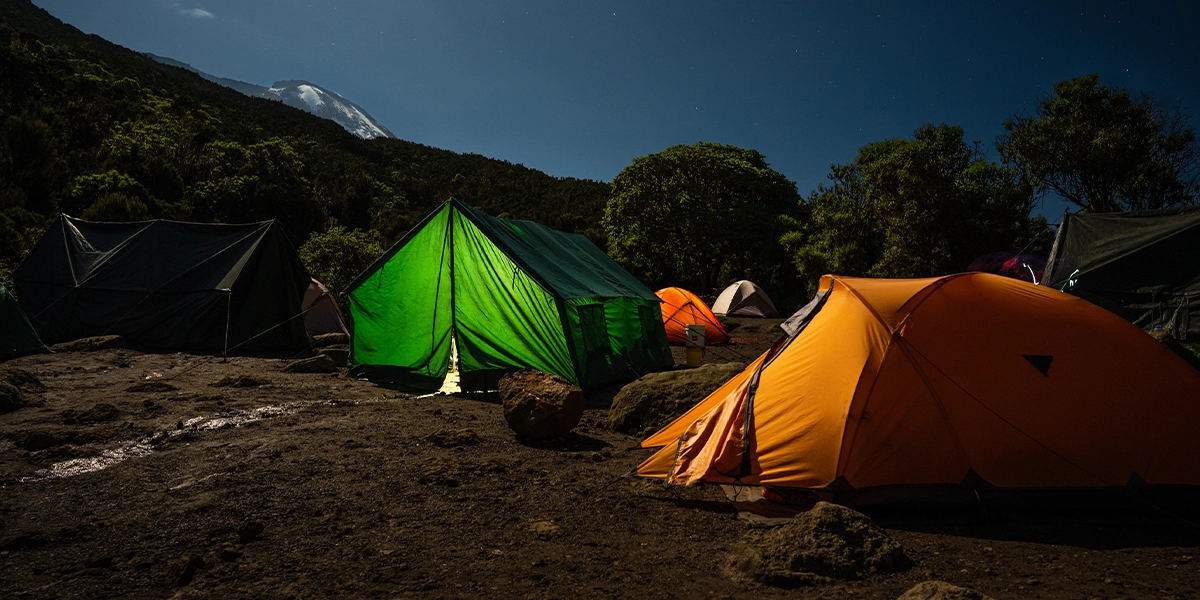
Horombo Huts Views
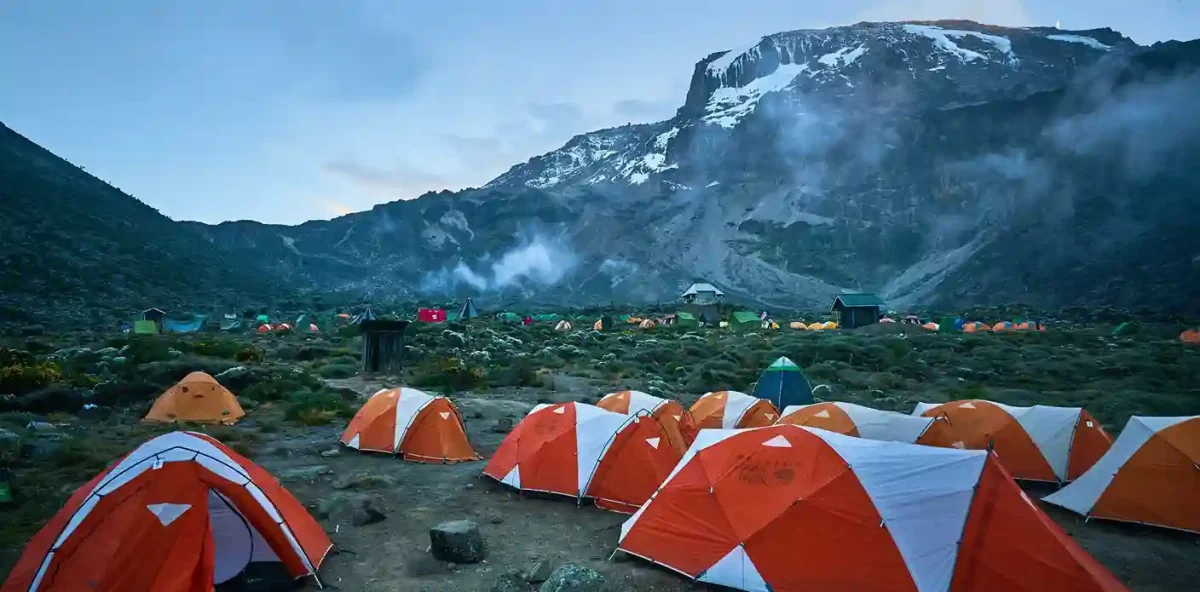
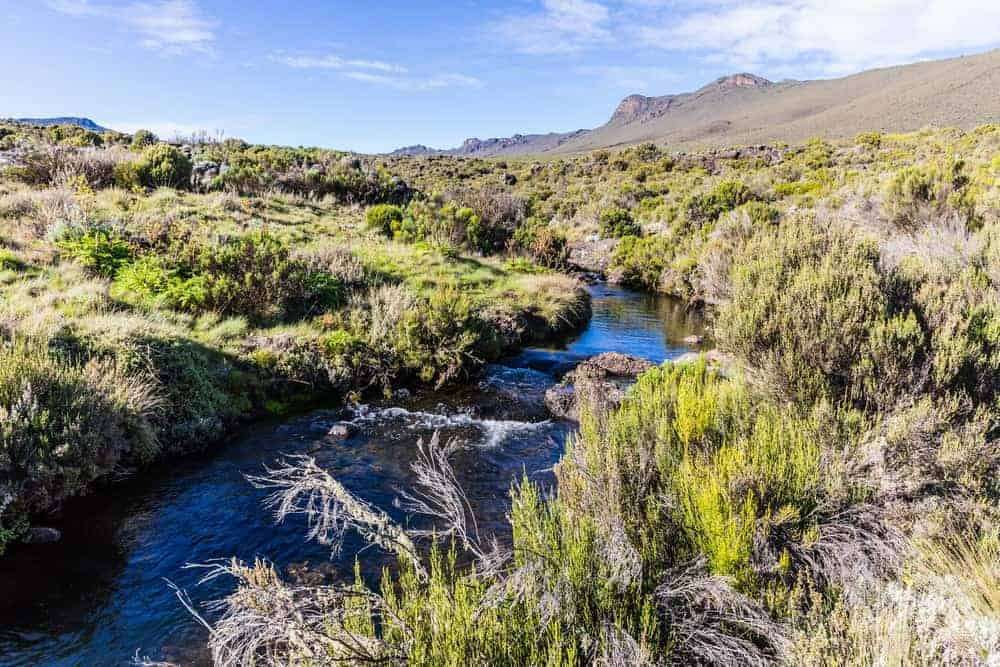
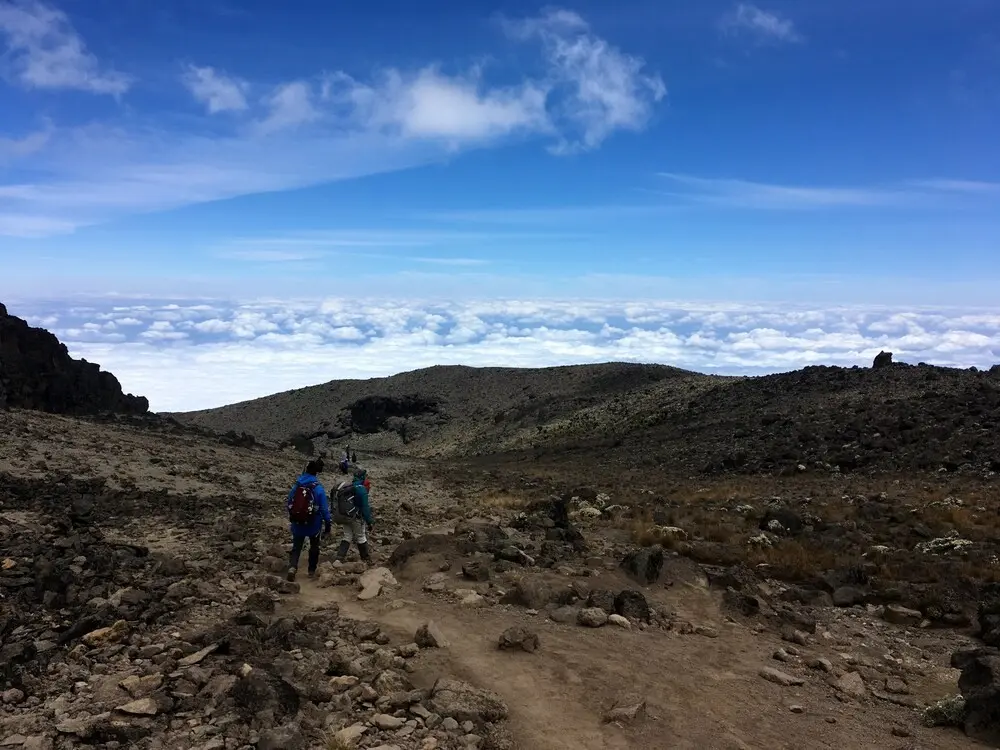
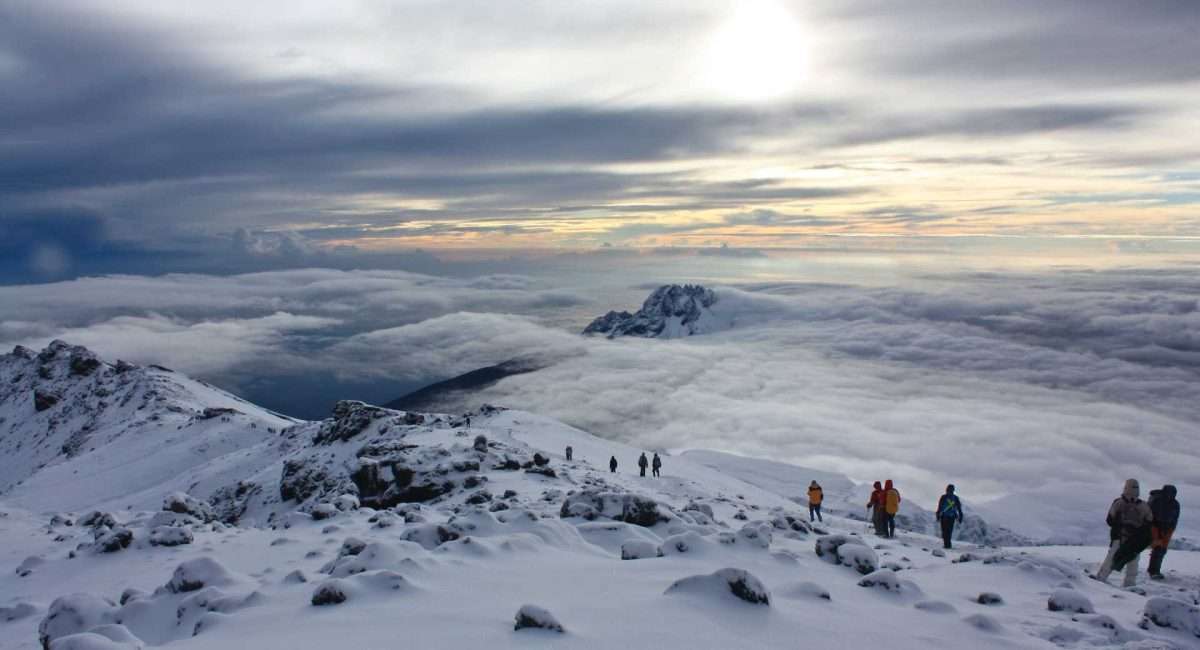
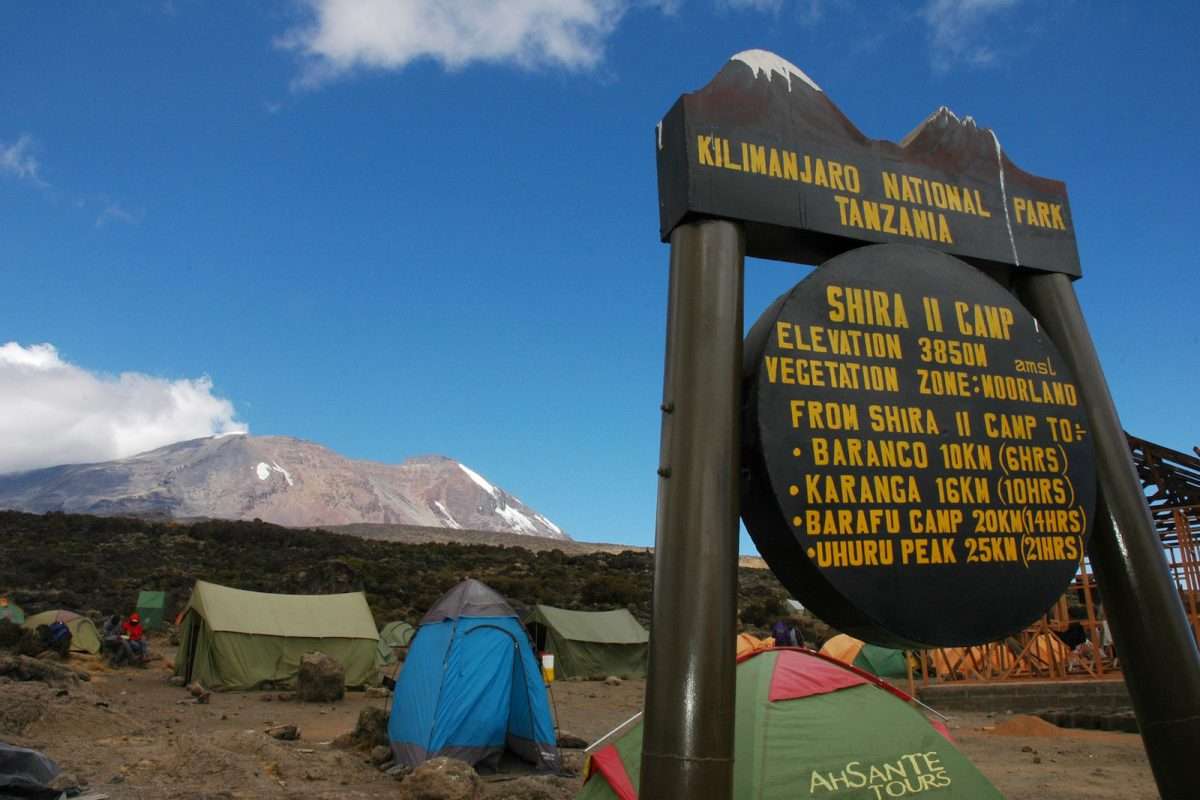
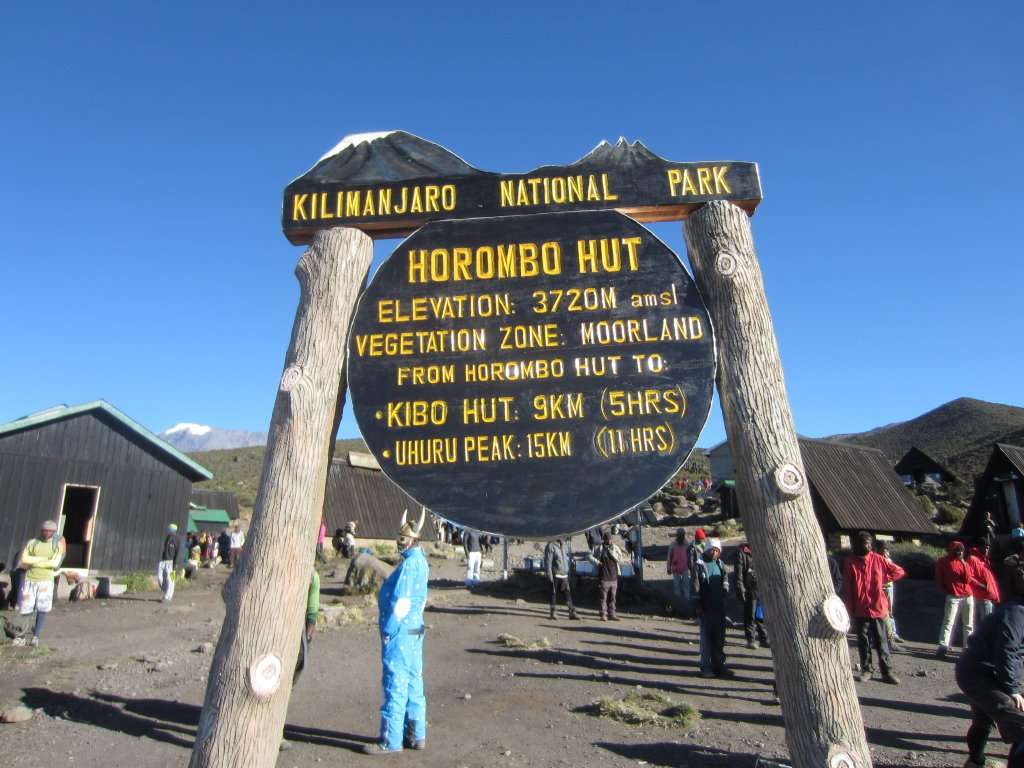
Horombo Huts sit at about 3,720 meters on the Marangu Route and are surrounded by open moorland. The Horombo Huts views are wide and clear, with Mawenzi Peak standing sharp and rocky to one side and Kibo rising slowly ahead. On clear mornings, you can see clouds sitting far below the huts like a soft white blanket.
The air is cooler here, usually around 5°C, and the wind can feel strong in the afternoon. This is a key acclimatization stop, so you spend time walking slowly, resting, and eating warm meals. In the evening, the sky turns pink and orange behind Mawenzi, and the huts glow in the last light. It feels peaceful but serious, as you can clearly see how much higher the mountain still goes.
What Can You See From Uhuru Peak
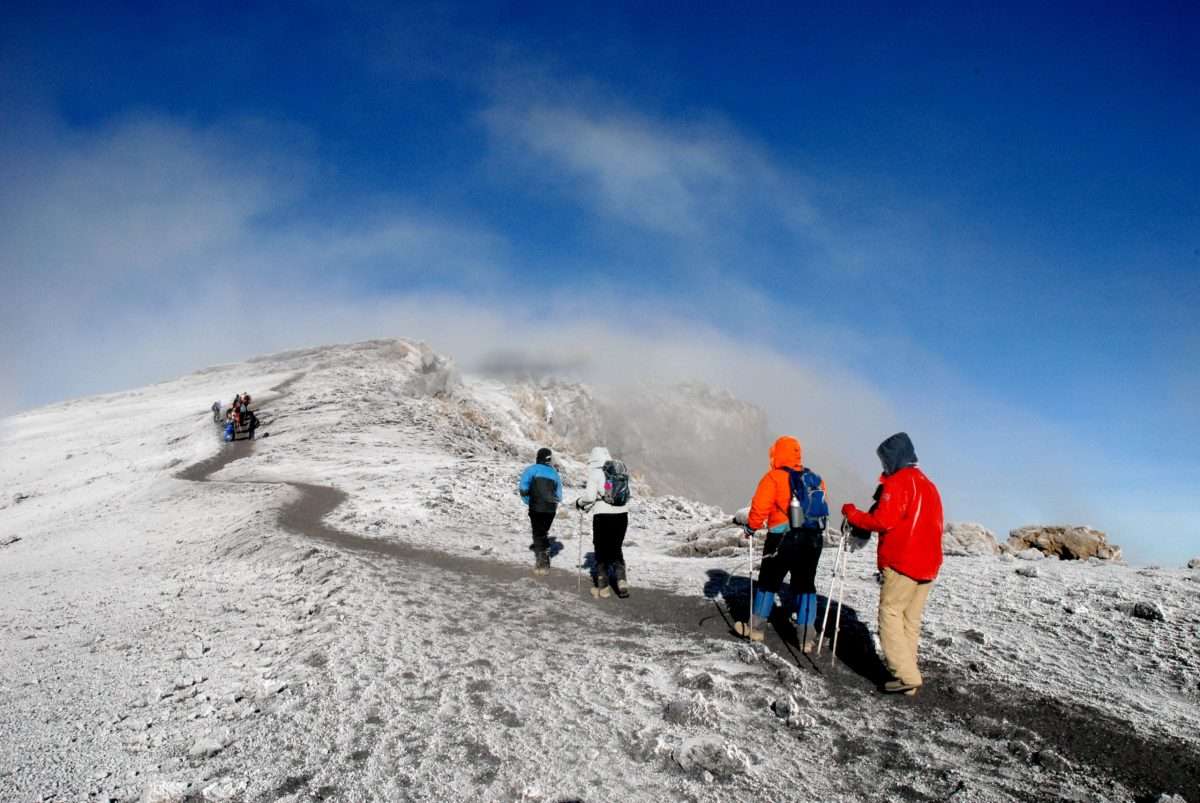
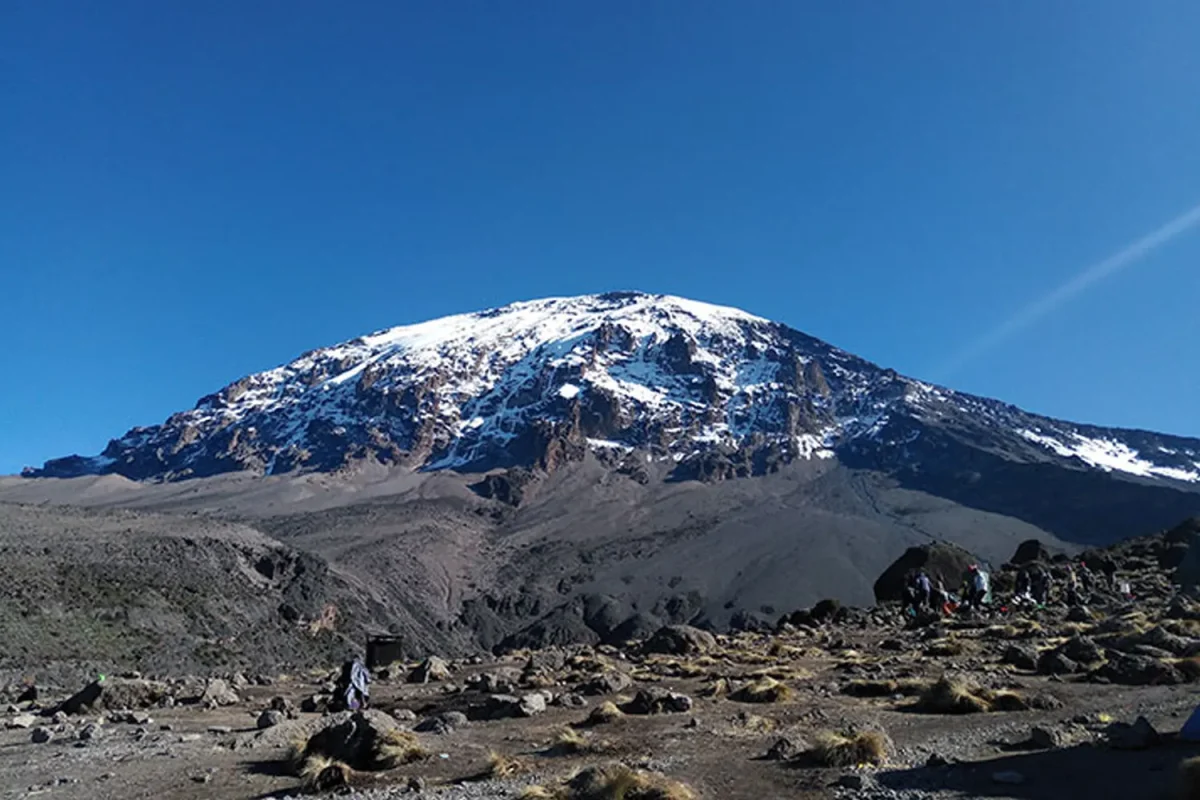
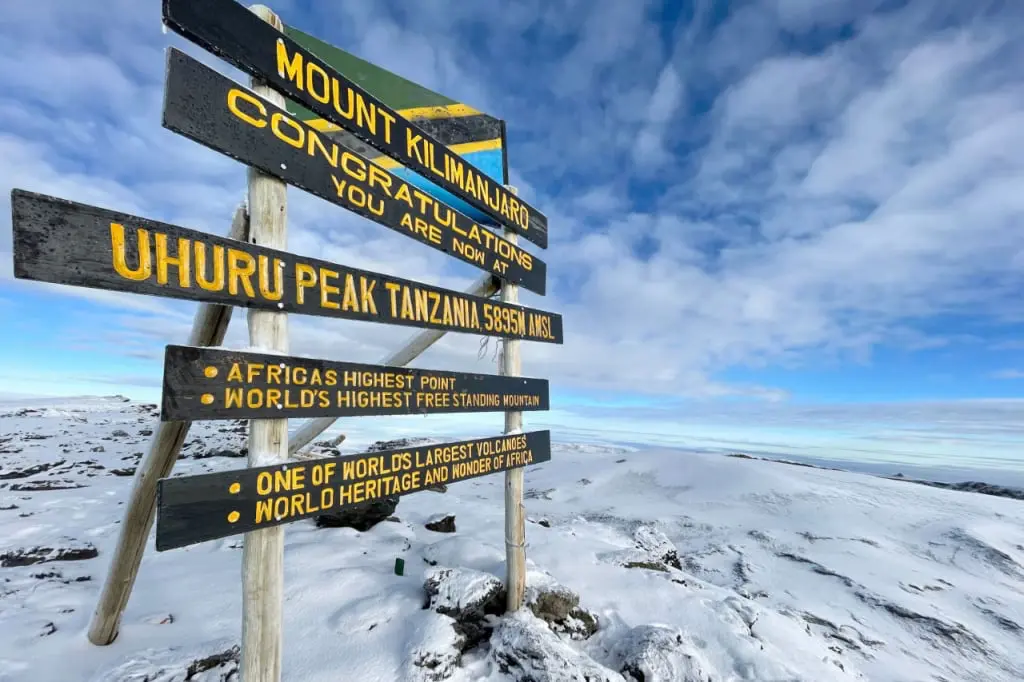
Standing on Uhuru Peak at 5,895 meters, you are on the highest point in Africa, often called the Roof of Africa. The mt Kilimanjaro summit view is wide and powerful, and on a clear day it feels like you are looking over half of East Africa.
From the top, you can see the plains of Tanzania stretching far into the distance, soft and golden under the morning light. To the north, the land rolls toward the hills of Kenya, fading slowly into the horizon. Close by, Mawenzi Peak rises sharp and dark, while the wide Shira Plateau spreads out below like a giant open table.
Around you, the glaciers glow blue and white in the early sun. You can watch clouds move far below your feet, while the sky above is deep and clear. The air is cold and thin, often below -10°C, and every breath feels slow and careful. This is the moment when effort turns into reward, and the view explains why so many people dream of climbing Kilimanjaro.
Best Time for Clear Views on Kilimanjaro
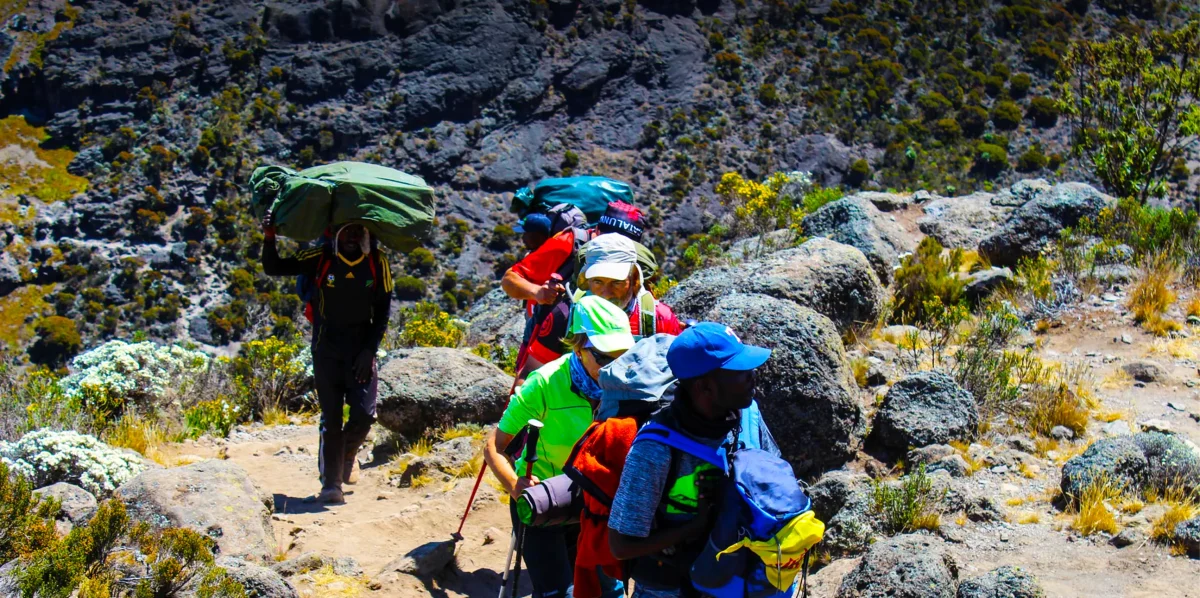
The best time for views on Kilimanjaro is during the dry seasons, when skies are clearer and clouds stay lower.
From January to March, the mountain is quieter and often has soft light with fewer crowds. You may still see snow near the summit, and mornings can be clear before clouds rise later in the day.
From June to October, the weather is colder but more stable. These months bring the most reliable clear skies on Kilimanjaro, especially early in the morning and at the summit. This is the best period if your main goal is strong visibility and sharp summit views.
In the wetter months, clouds and mist form more easily, which can hide the scenery. For the clearest views, we always plan summit attempts to reach Uhuru Peak at sunrise, when the air is calm and the sky is usually open.
Climb Kilimanjaro with TourwithPipi
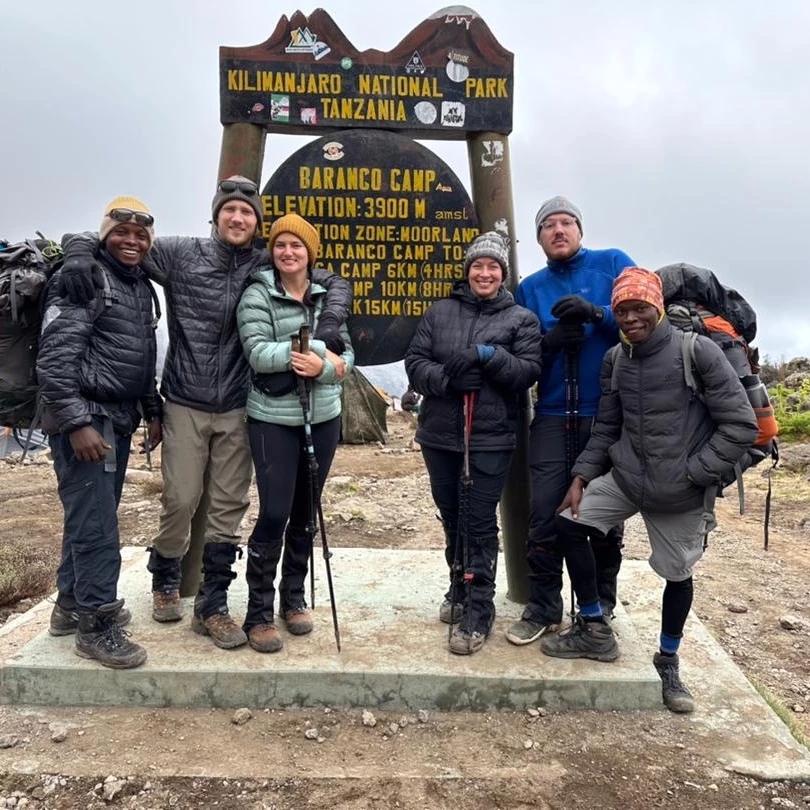
When you climb with TourwithPipi, we plan your route and timing to match the best light and the clearest skies. Our private guides, steady pace, and careful acclimatization give you the best chance to enjoy every view, from the farmland at the base to the glaciers at the summit.
Your climb is not just a hike. It is a journey through clouds, ice, and open sky, and we make sure you see Kilimanjaro at its most beautiful. Contact us now!
Best Kilimanjaro Routes for Views
Not all Kilimanjaro routes give the same scenery. Some trails stay hidden in forest, while others open into wide skies, valleys, and glaciers. If your goal is the best views on Kilimanjaro, route choice matters as much as fitness.
Lemosho Route – Widest Panoramic Views
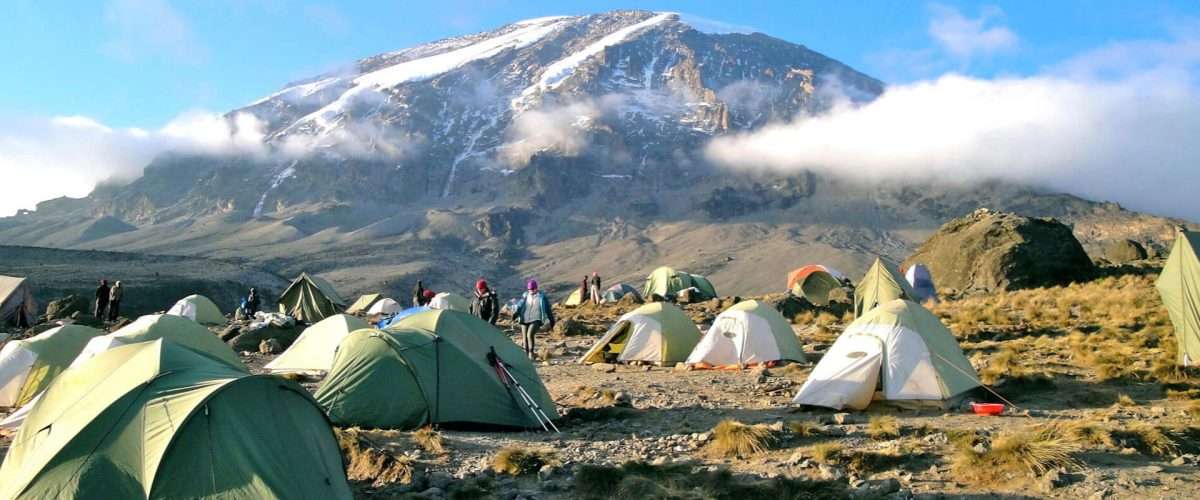
The Lemosho Route is known for having the best views on Kilimanjaro because it starts far west and crosses the mountain slowly and openly. From the first days, you walk across the Shira Plateau, where the land feels wide and quiet, and clouds often sit below your feet.
You pass the dramatic Lava Tower, where black volcanic rock stands against bright sky, and later climb the Barranco Wall, with deep valleys and glaciers above you. The mood on this route feels calm and grand. Your body has more time to adjust to altitude, and your eyes have more time to enjoy the space.
This route is best if you want long, open views and a feeling of crossing the whole mountain from one side to the other.
Machame Route – Most Dramatic Landscapes
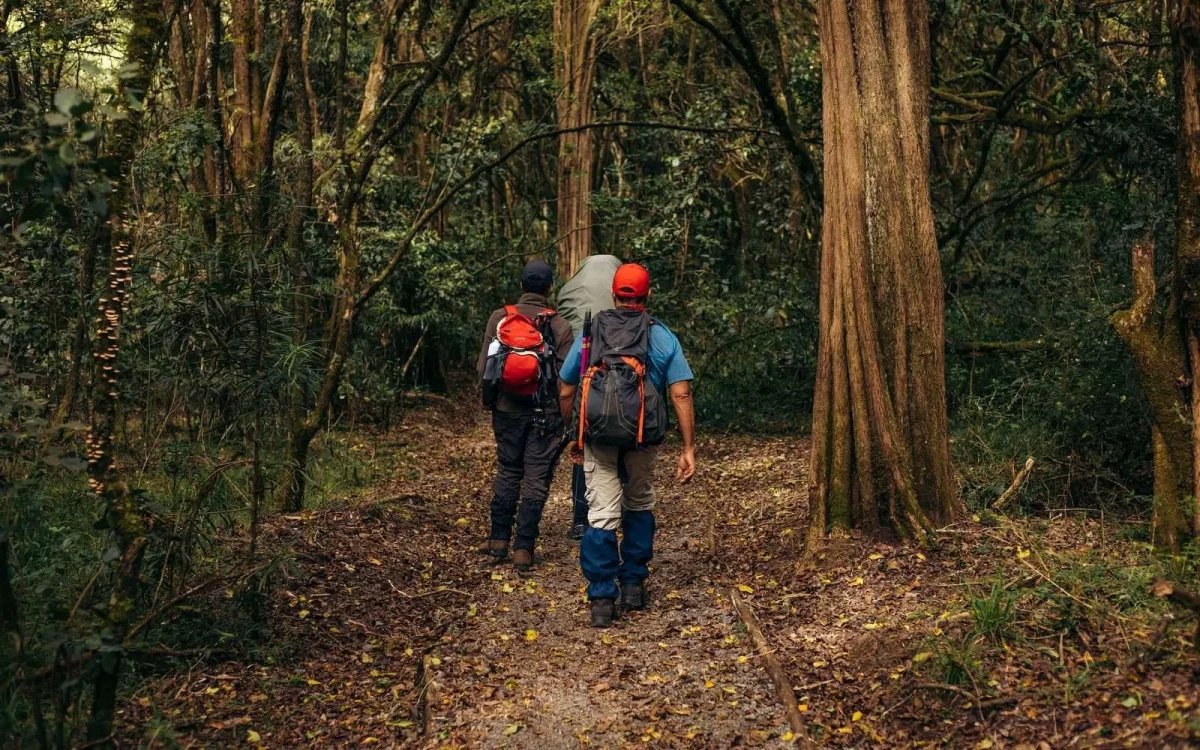
The Machame Route is the most famous scenic Kilimanjaro trail because the landscape changes fast and feels powerful. You move from thick forest into the open Barranco Valley, where waterfalls run down dark rock walls and glaciers hang high above.
You also pass Lava Tower and walk through the Karanga Valley, where clouds often flow like water between ridges. The route feels alive and bold, with sharp slopes and strong light.
Machame is best for climbers who want strong contrast in scenery and don’t mind steeper walking in exchange for dramatic views.
Rongai Route – Northern Views of Kenya
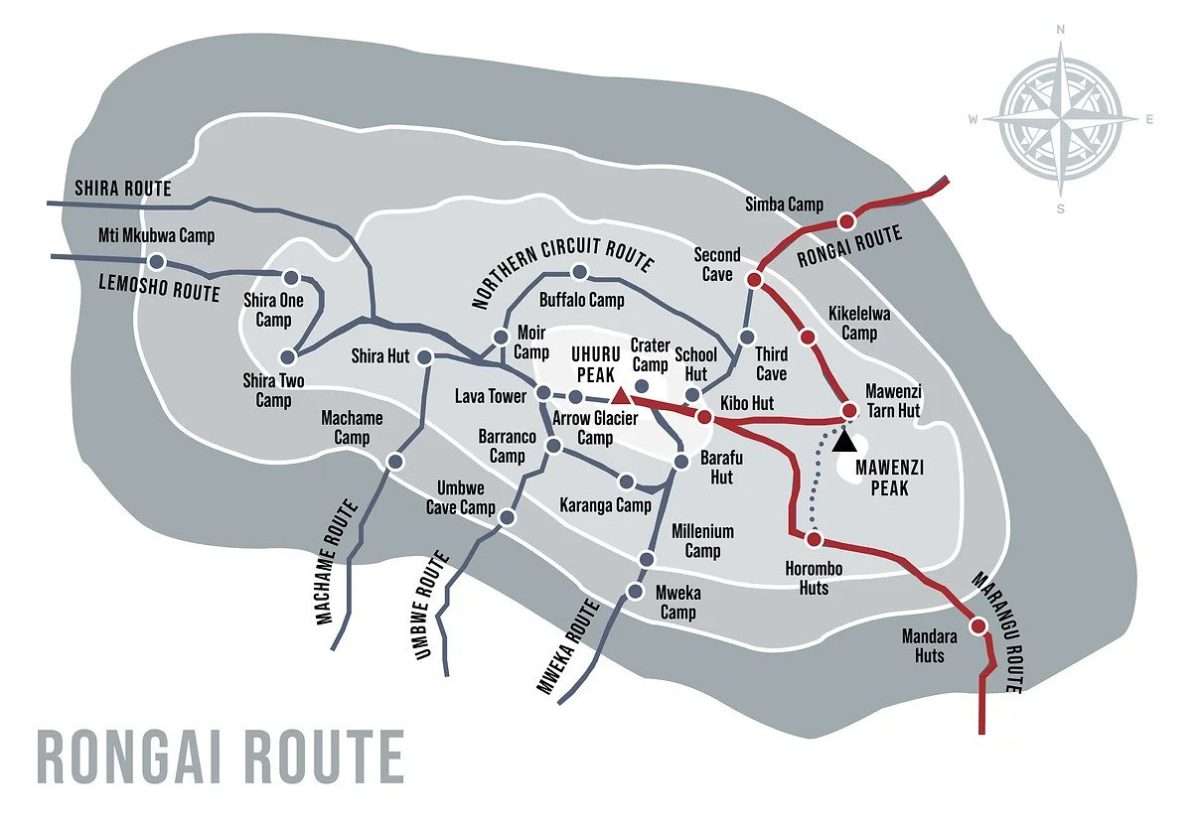
The Rongai Route climbs from the Kilimanjaro northern side, close to the Kenyan border. This side of the mountain is drier and quieter, and the scenery feels more open and raw.
From higher camps, you can look out over the Kenyan plains and see the sharp shape of Mawenzi Peak rising beside you. The air is often clearer here, and clouds stay lower than on the southern routes.
Rongai is best for travelers who want a peaceful climb and unique northern views of Kilimanjaro that most climbers never see.
Blog Summary:
Views from Kilimanjaro change by altitude, from farmland and rainforest at the base to glaciers and snow at the summit of Africa’s tallest mountain.
The best mount Kilimanjaro views appear above 3,500 meters, where clouds drop below you and wide valleys, peaks, and plateaus open up.
The most scenic camps for views are Shira Camp, Barranco Camp, Karanga Camp, Barafu Camp, and Crater Camp, each offering different landscapes and moods.
From the mt Kilimanjaro summit view at Uhuru Peak (5,895 m), you can see Tanzania’s plains, Kenya’s hills, Mawenzi Peak, Shira Plateau, and glaciers at sunrise.
The best routes for views on Kilimanjaro are Lemosho and Machame, while Rongai offers northern views of Kenya and Marangu has fewer open panoramas.
The best time for clear views on Kilimanjaro is January to March and June to October, when skies are drier and visibility is highest.
Weather and cloud cover affect visibility, with mornings usually clearer than afternoons and higher camps offering sharper horizons.
To capture the best Kilimanjaro photography, focus on sunrise at Barafu Camp and Uhuru Peak, use wide-angle lenses, and plan routes known for open scenery.


