
If you’re planning a Kilimanjaro climb, you’re likely studying gear lists, training plans, and weather charts. But one of the most practical, day-to-day questions often gets overlooked: How many miles will I actually hike each day on Kilimanjaro?
The simple answer is you’ll hike between 3 and 9 miles (5 to 15 kilometers) per day. But here’s the critical truth every climber must understand: On Kilimanjaro, altitude and effort matter far more than distance. Hiking 4 miles at 15,000 feet feels infinitely harder than a 10-mile trail run at sea level. Your daily progress is measured not in miles logged, but in smart acclimatization and conserved energy.
This guide will break down the daily mileage for every major route, explain what a typical day on the trail truly feels like, and reveal why the shortest distance, summit night, is by far the longest journey. By the end, you’ll know exactly how to prepare for the unique physical challenge of walking on the roof of Africa.
Why Distance is a Misleading Metric on Kilimanjaro
Before we look at the numbers, let’s establish a fundamental principle. Judging the difficulty of your Kilimanjaro climb by daily mileage is like judging the difficulty of a boxing match by the number of rounds. It’s not the count that matters; it’s the intensity of each round and your preparation for the final, decisive one.
Three factors make Kilimanjaro’s miles uniquely challenging:
Altitude: This is the dominant factor. As you ascend, the atmospheric pressure drops. At the summit (19,341 ft), there’s roughly 49% of the oxygen available at sea level. Your heart and lungs must work dramatically harder to supply your muscles. A gentle incline at this altitude can leave you gasping.
Elevation Gain: The trail is not flat. You are climbing a mountain. A day with 5 miles and 3,000 feet of gain is far more demanding than a day with 7 miles and 500 feet of gain. The constant uphill, especially on steep, rocky terrain, tests your leg strength and endurance relentlessly.
Consecutive Days: This is a multi-day expedition. You won’t get a full rest day. The cumulative fatigue from hiking day after day, sleeping in a tent, and battling the elements is a test of resilience that a single-day hike never presents.
Therefore, when we discuss daily distances, we must always view them through the lens of altitude and elevation gain. A shorter, steeper day at high camp can be more grueling than a longer, flatter day in the rainforest.
Daily Mileage Breakdown: Kilimanjaro Route by Route
Your chosen route is your itinerary, your acclimatization schedule, and your daily distance plan. Here is a detailed look at what you can expect to hike each day on Kilimanjaro’s main paths.
1. The Northern Circuit Route (9 Days)
Average Daily Distance: 4-8 miles (6-13 km)
Pace & Terrain: Very steady, gradual slopes. Long, scenic “acclimatization hike” days across the northern saddle.
Why the Distance Works: This is the longest and most successful route. The daily distances are consistent and manageable by design. The genius of this route is its “Eastern Traverse,” where you spend extra days hiking across the high-altitude saddle north of the peak. You cover good distance (e.g., 7 miles from Moir Hut to Buffalo Camp) but at a minimal elevation gain, which is perfect for acclimatization without exhaustion.
Best For: Climbers seeking the highest possible success rate, maximum acclimatization time, and incredible solitude.
2. The Lemosho Route (8 Days)
Average Daily Distance: 5-7 miles (8-11 km)
Pace & Terrain: Balanced, manageable days. Includes a key “climb high, sleep low” day to Lava Tower.
Why the Distance Works: Considered the best all-around route, Lemosho’s 8-day schedule is a masterpiece of pacing. A classic day is the hike from Shira Camp to Barranco Camp (approx. 6 miles). This day takes you up to Lava Tower at about 15,000 feet for lunch—a crucial high-point—before descending to sleep at Barranco Camp (13,000 ft). You cover a solid distance with significant strategic elevation change, all at a sustainable pace.
Best For: First-time climbers and those who want an optimal blend of beauty, high success rates, and excellent acclimatization.
3. The Machame Route (7 Days)
Average Daily Distance: 5-9 miles (8-15 km)
Pace & Terrain: More strenuous pace due to a shorter itinerary. Includes steep, challenging sections like the Barranco Wall.
Why the Distance Works: The popular “Whiskey Route” is more demanding. To fit the journey into 7 days, the daily distances are similar to Lemosho, but the pacing is more aggressive with less recovery time. For example, the hike from Shira Cave to Barranco Camp is also about 6 miles with the Lava Tower detour, but it’s often tackled at a brisker pace on a tighter schedule. The trail can also be more congested.
Best For: Fit climbers who are confident in their stamina and want a classic, challenging climb in a shorter timeframe.
4. The Rongai Route (6-7 Days)
Average Daily Distance: 5-8 miles (8-13 km)
Pace & Terrain: Gentle, steady ascent from the north. Less natural “climb high, sleep low” opportunity.
Why the Distance Works: As the only major route approaching from the north, Rongai has a gentler initial slope. The daily distances are fair, but the route’s layout offers fewer natural opportunities for the strategic high-point acclimatization hikes that western routes have. The 7-day option is strongly advised over the 6-day to add a vital acclimatization day.
Best For: Trekkers seeking a remote, wilderness feel or climbing during the rainy season (it’s drier on the north side).
5. The Marangu Route (5-6 Days)
Average Daily Distance: 7-9 miles (11-15 km)
Pace & Terrain: Deceptively long days with rapid elevation gain. Very poor acclimatization profile.
Why the Distance is Problematic: The “Coca-Cola Route” has the lowest success rate on the mountain. Its shorter timeline means you must cover significant ground each day with a relentless, direct ascent. There is no opportunity for “climb high, sleep low.” You simply go up. A day like the hike from Horombo Hut to Kibo Hut covers about 6 miles but gains over 3,000 feet, arriving at 15,400 feet where you’ll attempt the summit just hours later. It’s a recipe for altitude sickness.
Best For: Only for those on a very tight budget or who prioritize hut accommodations over summit success.
6. The Umbwe Route (6 Days)
Average Daily Distance: 3-6 miles (5-10 km)
Pace & Terrain: Short, very steep, and direct. A fast, challenging ascent.
Why the Distance is Misleading: Don’t let the short miles fool you. This is the most difficult route on Kilimanjaro. The trail goes almost straight up the southern face. You gain altitude rapidly with minimal switchbacks. The short distance is offset by extreme steepness and a complete lack of gradual acclimatization. It is purely a physical and altitude grind.
Best For: Experienced, well-acclimatized mountaineers only, seeking the toughest, most direct challenge.
A Micro-Look: What Does a Typical Hiking Day Feel Like?
Let’s move from charts to boots on the ground. What is it actually like to hike a 6-mile day on Kilimanjaro?
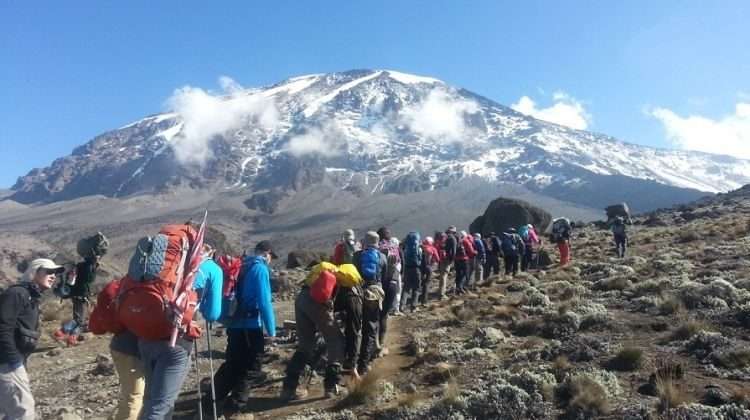
On a premium route like the 8-day Lemosho, your day starts at camp around 6:30 AM. After a warm breakfast and packing your daypack, you hit the trail by 8:00 AM. Your guide sets a slow, “pole pole” (slowly slowly) pace. This isn’t a suggestion; it’s the core strategy. You’ll walk in a single-file line, taking steady, small steps.
You’ll hike for about 90 minutes before a short break to remove a layer, drink water, and snack. The terrain changes constantly—from rocky paths to dusty trails to scrambling over small boulders. You’ll stop for a hot lunch around midday, often with stunning views. The afternoon hike is shorter, perhaps 2-3 hours, to reach the next camp by 3:00 or 4:00 PM.
Throughout, the pace is conversational. You should be able to breathe comfortably through your nose. If you’re gasping, you’re going too fast. The goal is to be a “tortoise,” not a “hare”—conserving every ounce of energy for the days ahead.
Summit Night: The Hardest Miles of Your Life
This is where all the preparation converges. Summit night is a unique beast that defies normal hiking logic.
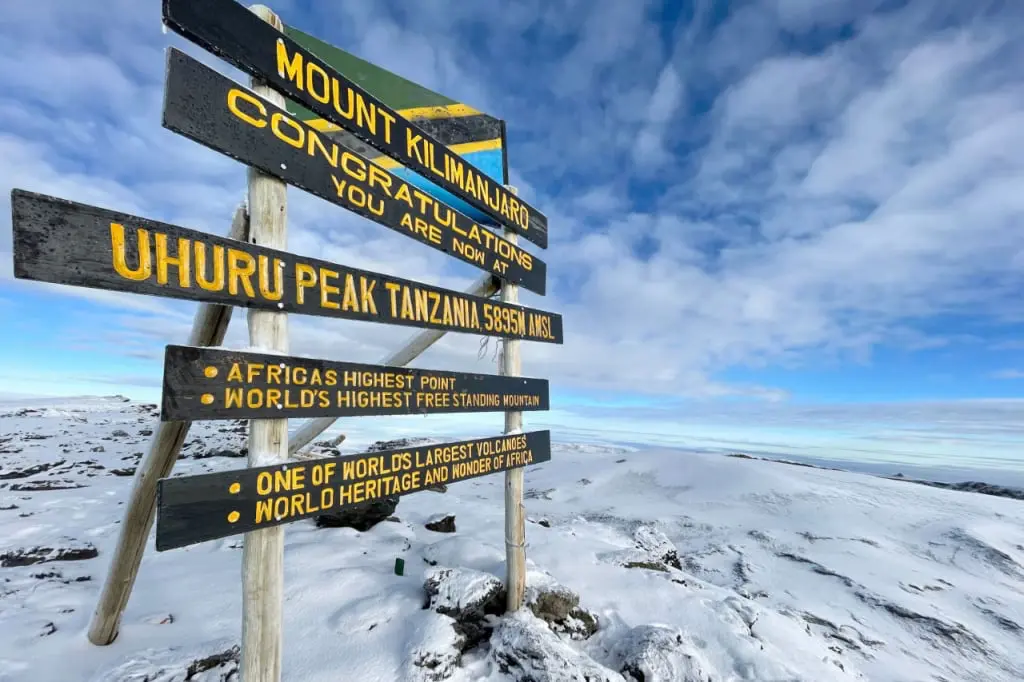
The Distance: You will hike approximately 4-7 miles (6-11 km) round trip from high camp (e.g., Barafu Camp at 15,300 ft) to Uhuru Peak (19,341 ft) and back to camp.
The Time: This “short” distance will take you 10 to 14 hours of continuous, grueling effort.
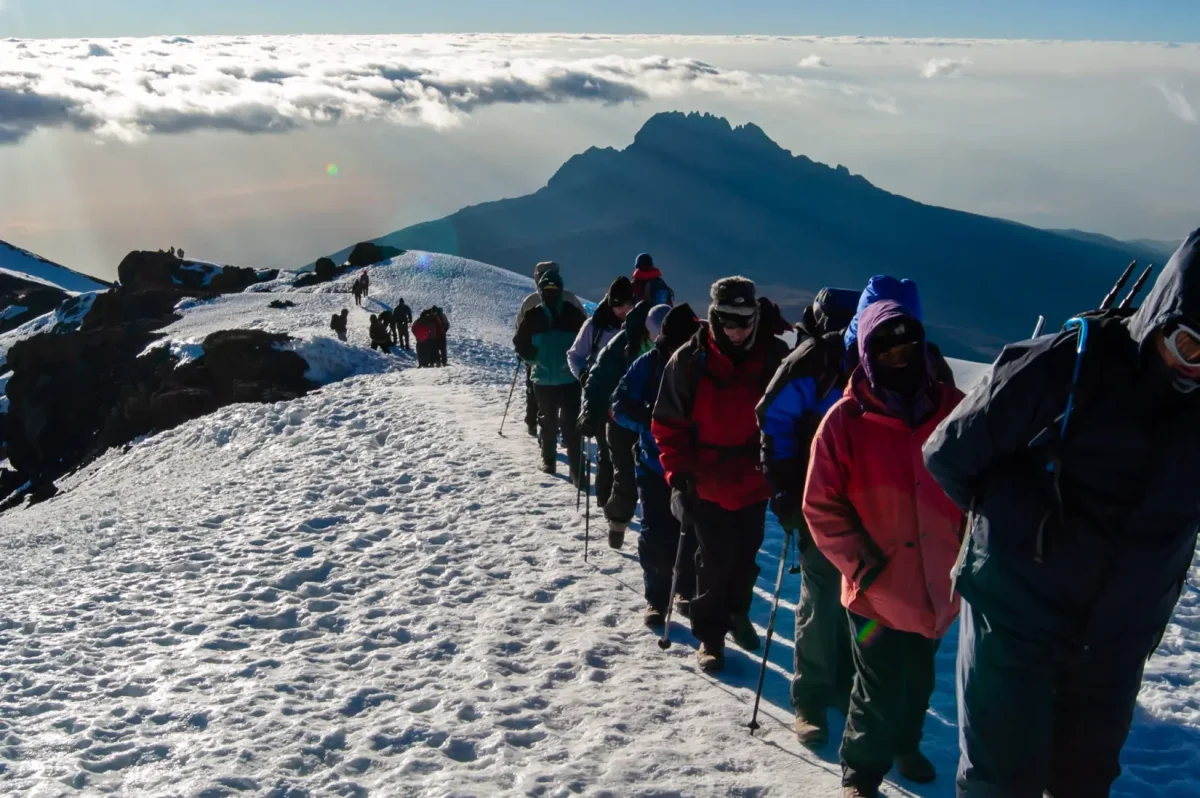
The Reality: You will wake up at 11:00 PM, layer up in all your cold-weather gear, and start hiking by midnight. You will climb over 4,000 feet (1,200+ meters) in the dark, up a steep slope of loose volcanic scree. The altitude is extreme. You will take one step, pause for a breath, then take another. The line of headlamps snakes up the mountain in slow motion. The 3-4 mile ascent to the summit typically takes 6-8 hours. After a short celebration at the top, you then face a demanding 2-3 hour descent back to camp. It is a monumental test of physical and mental endurance.
This is why the daily miles leading up to this point are so crucial. Every “climb high, sleep low” day on your route was training your body to process oxygen more efficiently for this exact challenge.
Training for Kilimanjaro’s Unique Miles
You now understand that training for Kilimanjaro isn’t about logging marathon mileage. It’s about training for specificity and endurance.
Build Leg Strength & Stability: Your quads, calves, and glutes will be your engines. Incorporate squats, lunges, and step-ups into your routine. Train on stairs or a stair climber—this mimics the mountain’s relentless uphill nature better than anything.
Focus on Cardiovascular Endurance, Not Speed: Go for long, slow sessions. A 2-hour hike with a weighted pack is worth more than a 30-minute run. Your weekend training should build to 4-6 hour sustained hikes on inclined terrain.
Train with Your Gear: Do your long practice hikes with the boots, socks, and daypack you’ll use on the mountain, loaded with 15-20 pounds. This conditions your body and reveals any fit issues beforehand.
Practice “Pole Pole”: On your training hikes, consciously slow down. Find a pace you could maintain for hours while holding a conversation. This mental discipline is as important as physical fitness.


