
Quick Answer:
Lionesses are the primary hunters in a lion pride, carrying out around 90% of all hunts. Their smaller size, speed, agility, and teamwork make them highly effective at hunting zebras, wildebeests, warthogs, and antelope. However, male lions do hunt, especially when targeting larger prey such as buffalo, giraffes, and occasionally young elephants. Both males and females play essential roles in the pride’s survival, making successful hunting a team effort rather than an individual achievement.
Do Lions or Lionesses Hunt?
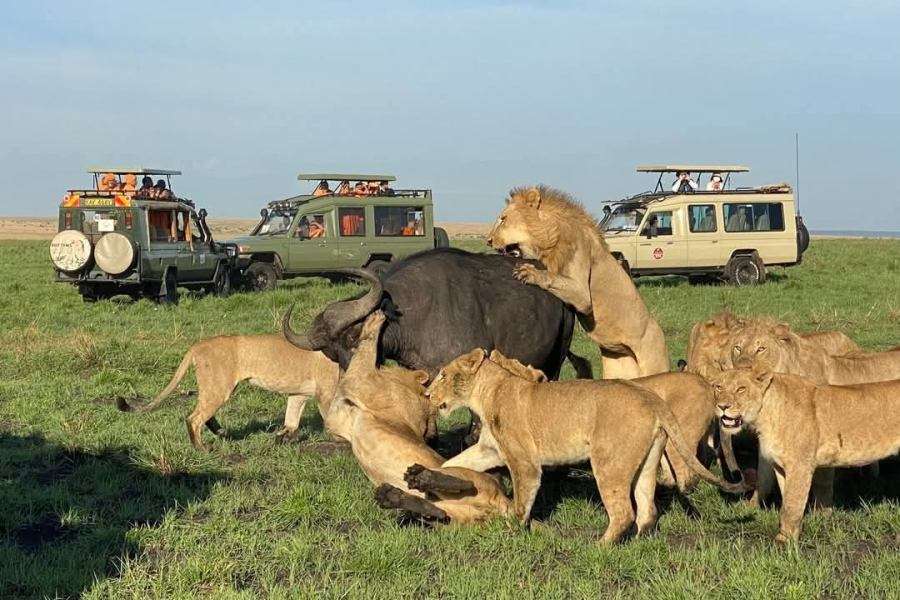
One of the most common safari questions is “Do lions or lionesses hunt?”
The simple answer is both do, but they hunt in different ways and for different reasons.
Lionesses are responsible for the vast majority of hunts because they are built for stealth, cooperation, and speed. Male lions, meanwhile, focus primarily on defending the pride and its territory, although they regularly join hunts involving dangerous or exceptionally large prey.
Rather than competing against each other, male and female lions complement one another. Each has evolved to perform specific roles that improve the pride’s chances of survival.
Lionesses Are the Primary Hunters
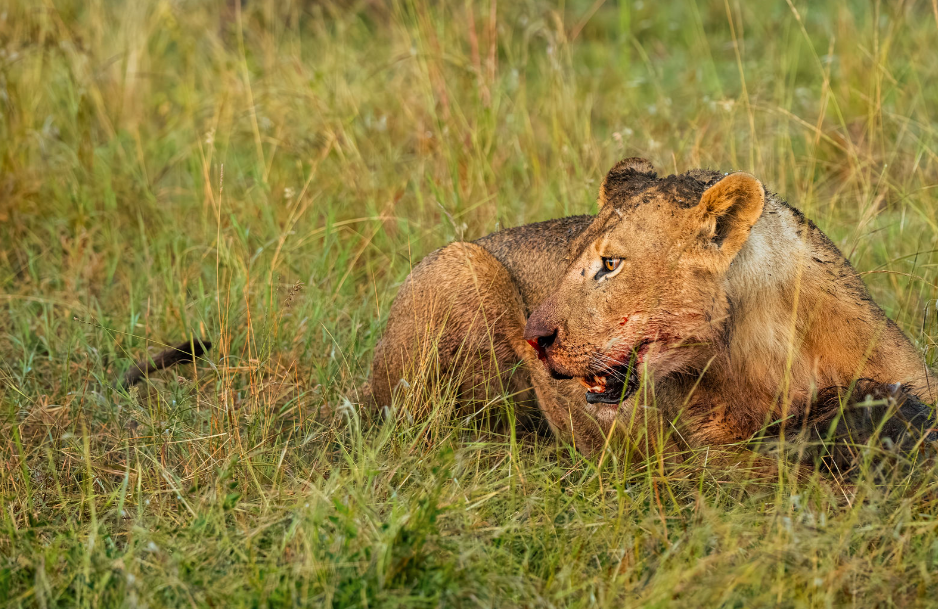
When people imagine lioness hunting, they are seeing one of Africa’s most remarkable examples of teamwork.
Female lions account for approximately 90% of all hunting carried out by a pride.
Unlike solitary cats such as leopards or tigers, lionesses cooperate closely during every stage of the hunt.
Working together allows them to target prey much larger than any individual lion could safely tackle alone.
Their preferred prey includes:
- Zebras
- Wildebeests
- Warthogs
- Antelope
- Kudu
- Buffalo
- Giraffes
- Occasionally young elephants in exceptional circumstances
Their ability to cooperate makes lionesses among the most efficient large predator teams in Africa.
Why Are Lionesses Better Hunters?
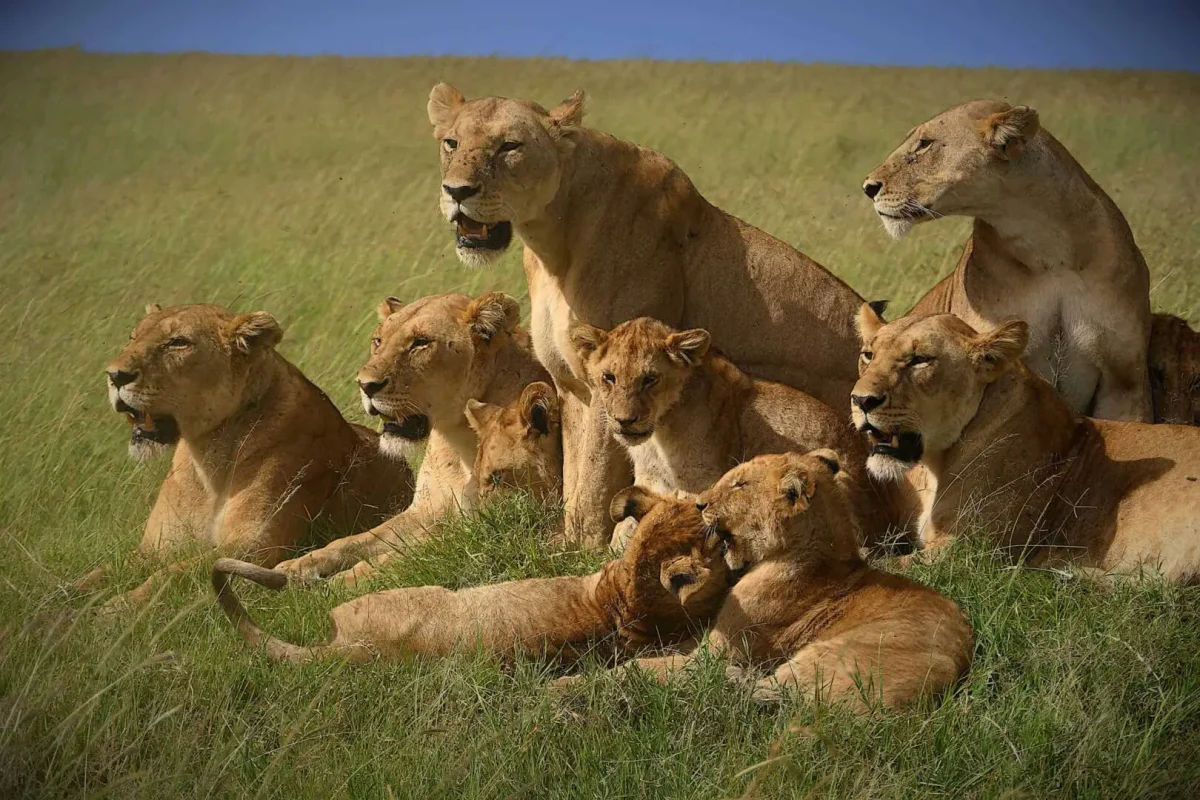
Several physical and behavioral adaptations make lionesses exceptionally effective hunters.
Smaller and More Agile
Lionesses are lighter than males, allowing them to move quietly through tall grass while remaining almost invisible to nearby prey.
Without the large mane carried by male lions, they blend naturally into the golden savanna vegetation.
This camouflage provides a significant advantage during the stalking phase.
Built for Teamwork
Perhaps the greatest strength of lioness hunts is coordination.
Rather than chasing prey individually, lionesses divide responsibilities before launching an attack.
Some pride members quietly circle the herd.
Others move into hidden ambush positions.
Once the prey enters the trap, the waiting lionesses launch the attack while the others drive fleeing animals toward them.
This coordinated strategy dramatically increases the likelihood of success compared with hunting alone.
Unlike cheetahs, lionesses cannot rely on extreme speed. Instead, patience, positioning, communication, and teamwork are the keys to every successful hunt.
How Lioness Hunting Works
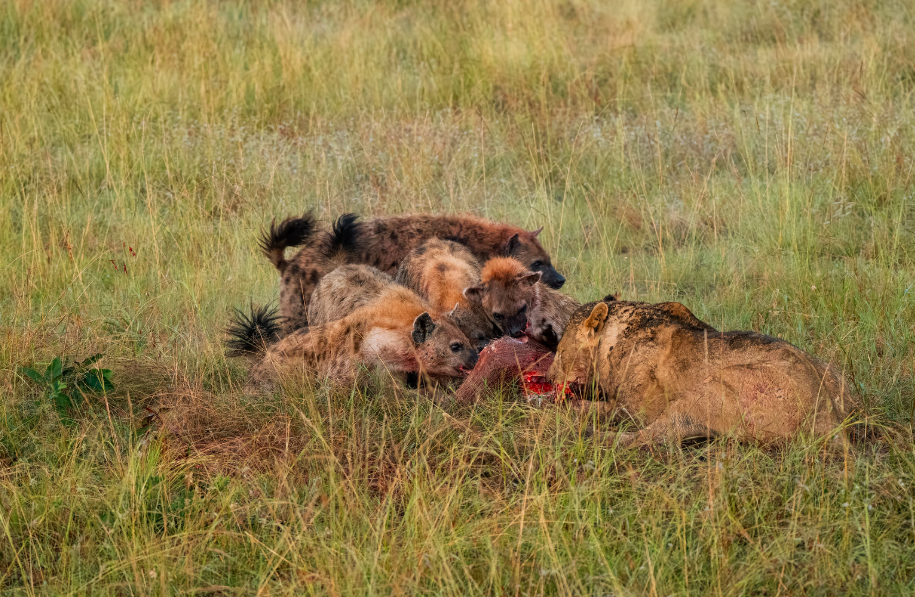
Every successful hunt follows a carefully planned sequence.
Step 1: Locate Suitable Prey
Lionesses first identify vulnerable animals within a herd.
They often target:
- Young animals.
- Older individuals.
- Injured prey.
- Animals separated from the herd.
Selecting the right target conserves valuable energy.
Step 2: Silent Stalk
The lionesses slowly approach using:
- Tall grass.
- Bushes.
- Dry riverbeds.
- Small rises in the landscape.
Whenever possible, they remain downwind so their scent is not detected.
They attempt to close the distance to approximately 30 to 100 feet (10 to 30 meters) before attacking.
Step 3: Coordinated Ambush
Rather than everyone chasing at once, several lionesses remain hidden while others deliberately pressure the prey toward the waiting hunters.
This flanking strategy prevents escape routes and increases the chance of a successful capture.
Step 4: The Kill
Once close enough, a lioness launches a short explosive sprint.
Using her body weight, she knocks the prey off balance before delivering a powerful bite to the throat or muzzle to suffocate it.
Unlike popular belief, lions do not kill instantly.
Large prey often struggles for several minutes before finally collapsing.
Does the Male Lion Hunt?
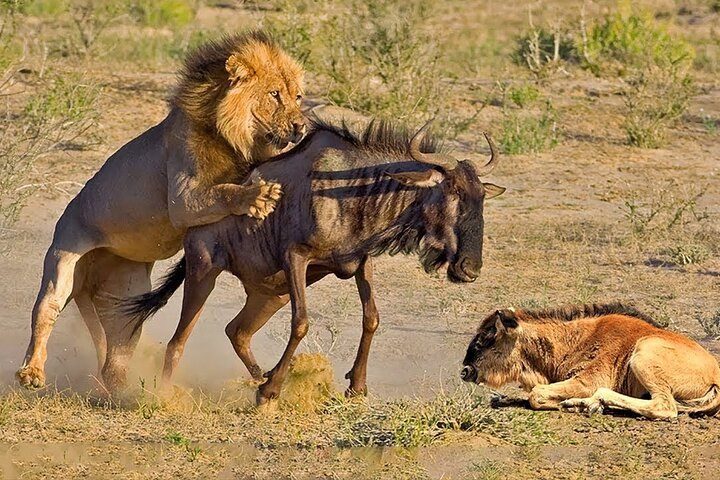
A common myth is that male lions never hunt.
This is not true.
Although lionesses perform most hunts, male lions do hunt, particularly when the prey is large, dangerous, or requires exceptional strength.
Adult males account for less than 10% of hunts within an established pride, but their contribution is extremely important in specific situations.
Male lions are especially effective when hunting:
- African buffalo
- Giraffes
- Large antelope
- Occasionally young elephants in rare situations
These animals are far heavier and more dangerous than the prey lionesses usually target.
Their greater body weight, stronger forequarters, and immense power allow males to wrestle prey that would be difficult for lionesses to subdue alone.
Why Male Lions Hunt Less Often
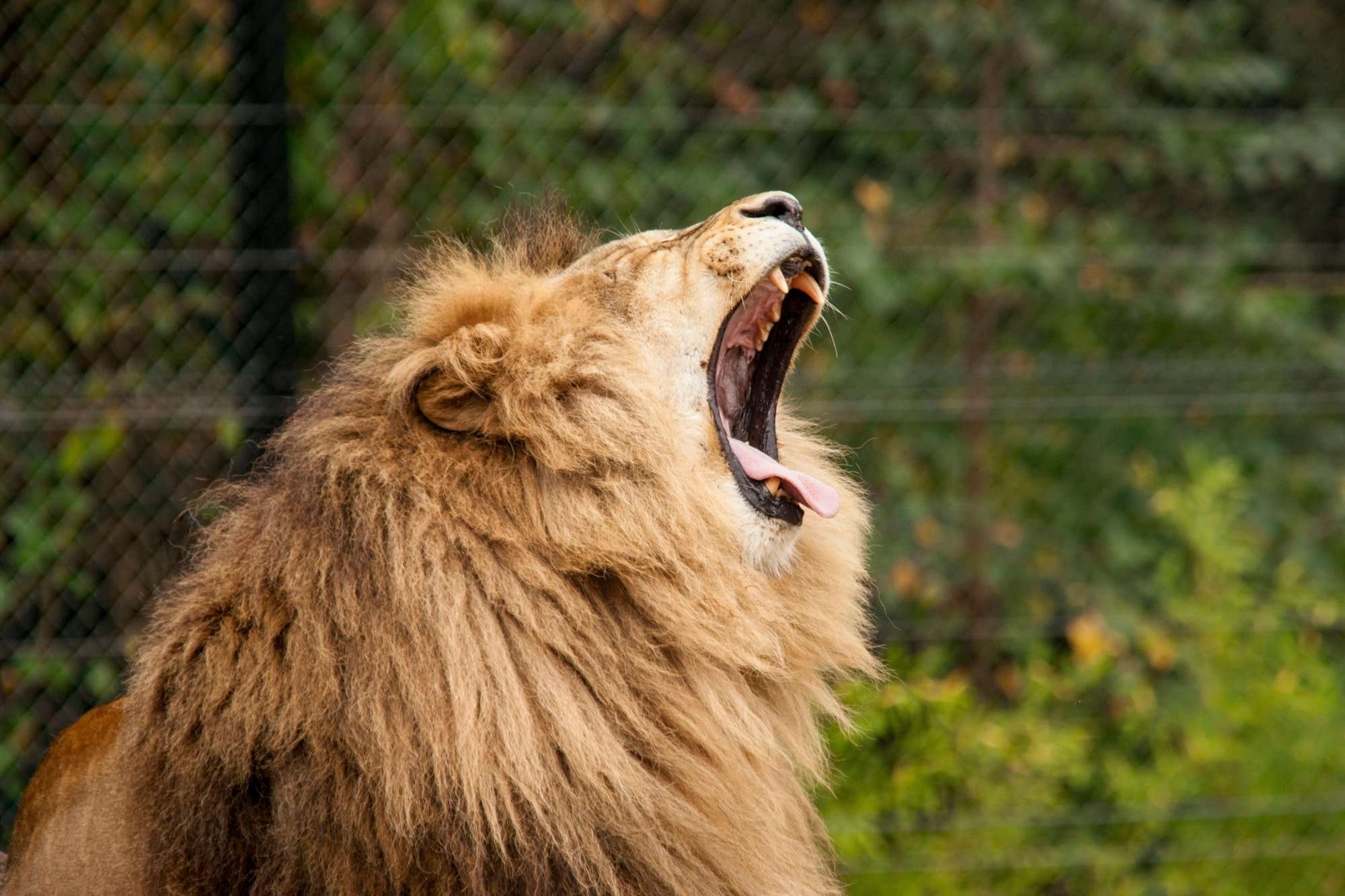
Male lions are built differently from lionesses.
Their large mane provides protection during fights but makes stealth hunting more difficult.
A dark mane is easier for prey to detect against the golden grasslands, reducing the element of surprise.
Instead, male lions invest most of their energy in responsibilities that are equally important for the pride’s survival.
These include:
- Defending territory.
- Protecting cubs.
- Fighting rival coalitions.
- Guarding females.
- Maintaining dominance.
These tasks require enormous strength and frequently result in injuries, which is one reason male lions have shorter lifespans than lionesses.
Lions vs Lioness: Who Is the Better Hunter?
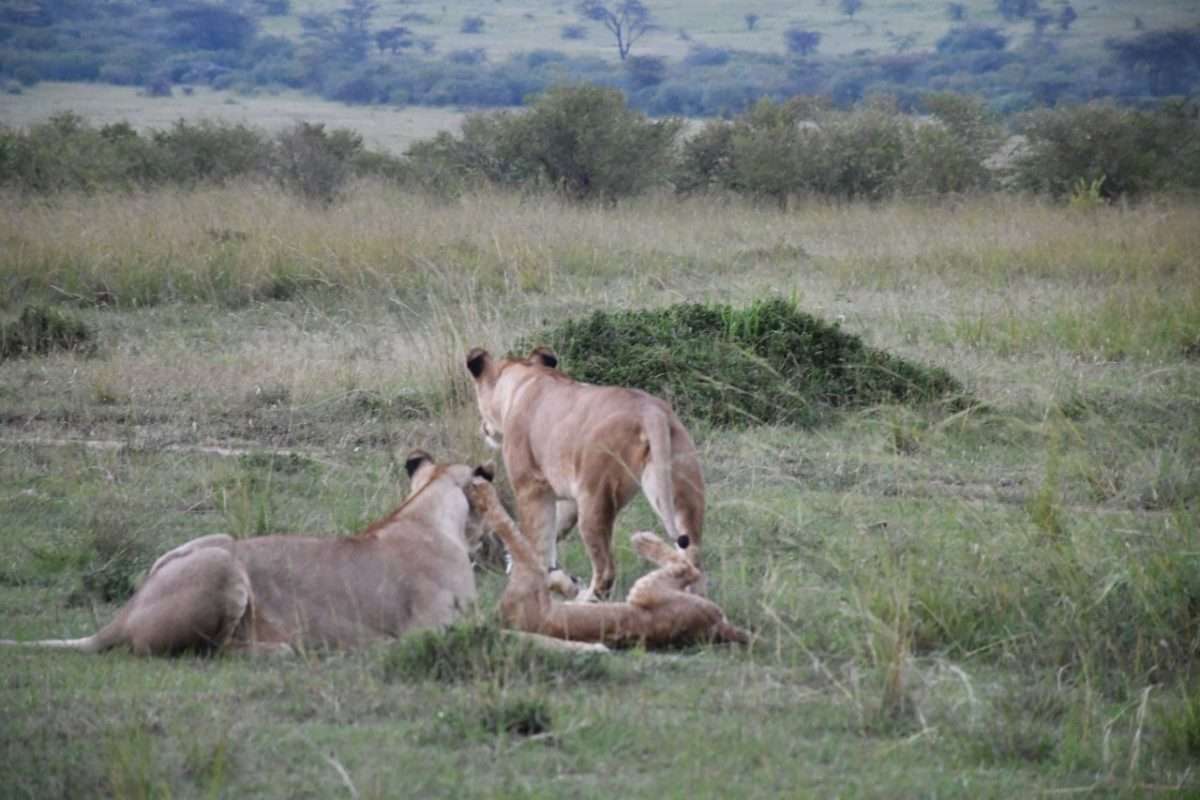
When comparing lions vs lioness, the answer depends on the type of prey being hunted.
Lionesses excel at stalking, teamwork, and coordinated ambushes.
Male lions excel at overpowering large and dangerous animals through sheer strength.
Hunting Comparison
| Feature | Lioness | Male Lion |
|---|---|---|
| Main role | Primary hunter | Territory defender and occasional hunter |
| Hunting contribution | Around 90% | Less than 10% |
| Best at hunting | Zebra, wildebeest, warthog, antelope | Buffalo, giraffe, large prey |
| Speed and agility | Higher | Lower |
| Strength | Excellent | Exceptional |
| Stealth | Excellent | Reduced by mane |
Rather than asking who is better, it is more accurate to say each is specialized for different hunting roles.
Lionesses vs Lion: Teamwork Wins
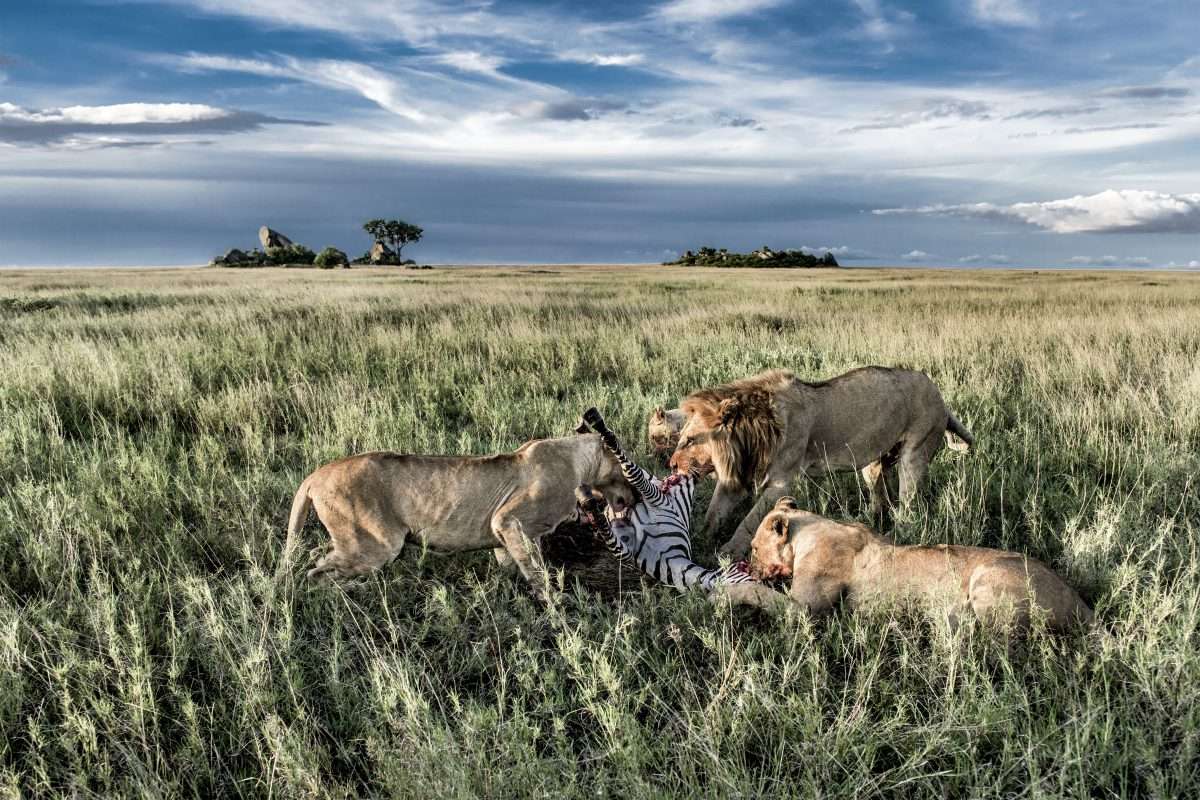
In many successful hunts, males and females work together.
One of the most fascinating hunting strategies involves both sexes performing different tasks.
For example:
The male lions may deliberately approach prey upwind.
As the prey catches the scent of the approaching males, it instinctively moves away from the perceived danger.
Waiting downwind, hidden among the grass, the lionesses remain completely concealed.
As the frightened animals flee from the males, they unknowingly run straight into the ambush prepared by the females.
This coordinated strategy demonstrates why lions are among Africa’s most successful social predators.
Every member of the pride contributes according to its strengths.
Do Male Lions Hunt Alone?
Yes.
Male lions often hunt alone during certain stages of their lives.
Young males leave their birth pride between two and three years of age.
After being expelled, they become nomadic and must survive without the support of lionesses.
During this period they:
- Hunt independently.
- Scavenge whenever possible.
- Sometimes form coalitions with brothers or unrelated males.
These coalitions increase hunting success and improve their chances of eventually taking over a pride.
Watching a coalition of males hunt together is very different from observing a pride led by lionesses, but both strategies demonstrate remarkable adaptability.
Hunting Success Rates
Despite their reputation as apex predators, lions fail far more often than they succeed.
Every hunt demands enormous amounts of energy, making efficiency essential.
Research shows:
| Hunting Situation | Average Success Rate |
| Pair or group hunts (mostly at night) | Around 30% |
| Solitary daytime hunts | Approximately 17–19% |
Several factors influence hunting success, including:
- Wind direction.
- Vegetation cover.
- Moonlight.
- Herd size.
- Terrain.
- Experience of the hunters.
If the initial ambush fails, lions rarely continue chasing prey for long distances.
Instead, they abandon the attempt and conserve energy for another opportunity, as prolonged chases are physically exhausting for such large predators.
This feast-or-famine lifestyle is one reason lions spend up to 20 hours each day resting, conserving energy between hunting attempts.
Why Lionesses Are the Heart of Every Pride
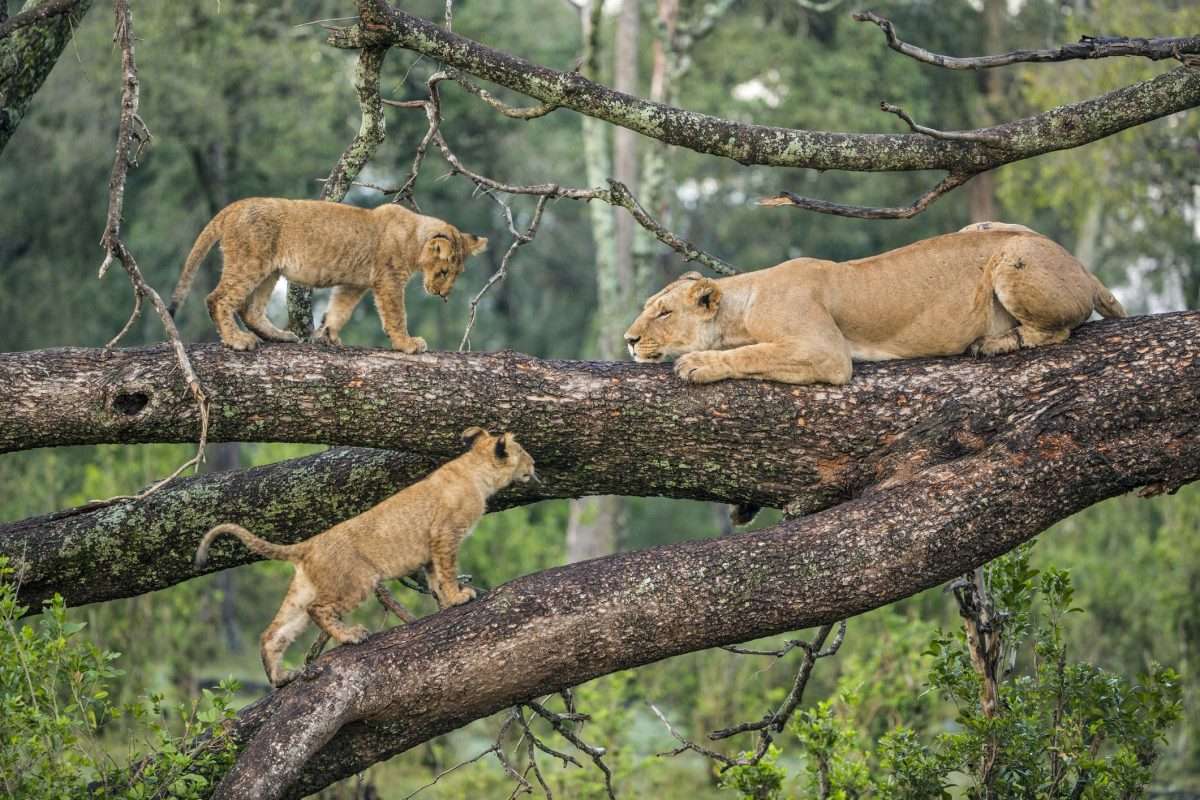
Beyond lioness hunting, female lions perform many of the responsibilities that keep a pride functioning.
They are not only hunters but also the social foundation of the family group.
Lionesses:
- Coordinate hunts.
- Raise cubs together.
- Protect young lions.
- Share nursing duties.
- Defend territory.
- Pass hunting skills to the next generation.
Unlike male lions, which may leave or lose a pride, lionesses usually remain with their birth pride throughout their lives.
Their lifelong cooperation creates exceptionally strong family bonds and allows generations of females to work together for decades.
Many wildlife biologists describe lion prides as matriarchal societies, where experienced females form the stable core around which the entire pride revolves.
So, Who Is the Better Hunter?
The answer depends on what is being hunted.
If the goal is stalking medium-sized prey through teamwork and stealth, lionesses are unquestionably the better hunters.
Their speed, camouflage, coordination, and communication make them responsible for approximately 90% of successful pride hunts.
However, when enormous prey such as buffalo or giraffes must be tackled, the immense strength of male lions becomes invaluable.
Rather than asking “lions vs lioness, who hunts better?”, it is more accurate to recognize that each has evolved for different roles.
Lionesses provide precision, planning, and teamwork.
Male lions contribute power, protection, and the ability to subdue dangerous prey.
Together, they form one of the most successful predator partnerships in the natural world.
Experience Lion Hunts in the Wild with TourwithPipi
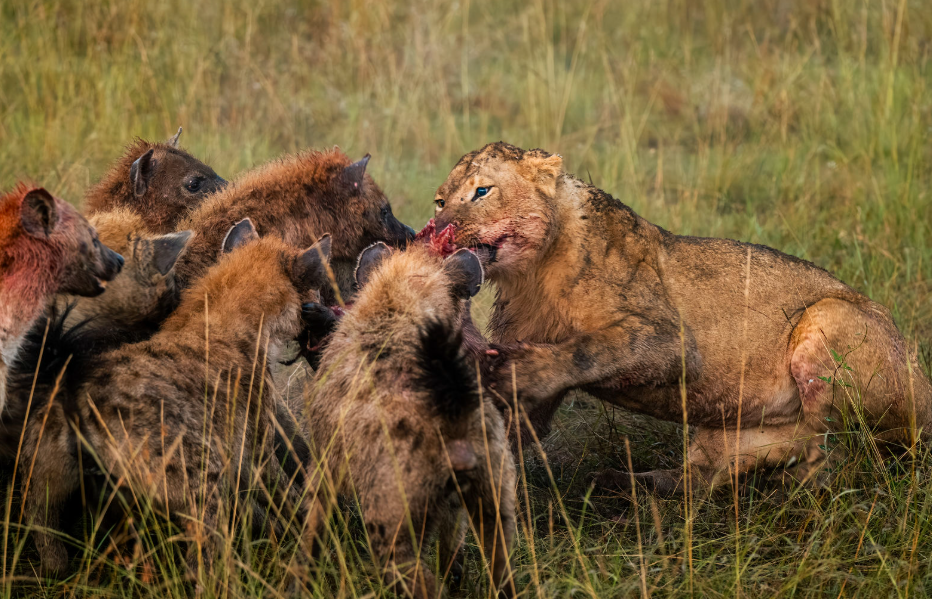
Watching lioness hunts unfold on Africa’s open plains is one of the most unforgettable experiences a safari can offer. Whether it’s a coordinated ambush of wildebeest in the Serengeti or a pride stalking zebras across the Maasai Mara, every hunt showcases the intelligence, teamwork, and survival instincts that make lions Africa’s most iconic predators.
At TourwithPipi, our luxury safaris in Kenya and Tanzania are guided by experienced local experts who understand lion behaviour, pride dynamics, and seasonal wildlife movements. From witnessing lionesses working together to seeing dominant males defend their territory, every game drive offers an authentic glimpse into the lives of these extraordinary big cats.
Frequently Asked Questions
Do lions or lionesses hunt more?
Lionesses carry out around 90% of hunting within a pride. Their agility, camouflage, and cooperative hunting techniques make them the primary providers of food.
Does the male lion hunt?
Yes. Although male lions participate in fewer hunts, they regularly hunt large prey such as buffalo and giraffes and often hunt alone or in coalitions after leaving their birth pride.
Why don’t male lions hunt as often?
Male lions spend much of their energy defending territory, protecting cubs, and fighting rival males. Their large mane also makes stealth hunting more difficult than it is for lionesses.
Can a lion hunt alone?
Yes. Solitary male lions frequently hunt after leaving their pride, while lionesses may also hunt alone when targeting smaller prey. However, cooperative hunting generally produces higher success rates.
Why do lionesses hunt together?
Working together allows lionesses to surround prey, block escape routes, and safely capture animals much larger than a single lion could handle alone.
Key Takeaways
- Lionesses complete around 90% of hunting within a pride.
- Male lions regularly hunt large and dangerous prey despite common misconceptions.
- Lionesses rely on teamwork, stealth, and coordinated ambushes.
- Male lions contribute strength when hunting buffalo, giraffes, and other large animals.
- Hunts succeed only about 30% of the time when lions hunt together.
- Solitary daytime hunts succeed only 17 to 19% of the time.
- Lions also scavenge, with up to 50% of their diet coming from carcasses taken from other predators.
- Both lionesses and male lions are vital to the survival of the pride.


