
Masai Mara vs Kruger is the question I get asked more than almost any other, and it’s usually followed by “just tell me which one is better.” I won’t do that, because the honest answer depends entirely on what you actually want out of a safari. What I can do is walk you through every real difference between a Kenya safari and a South Africa safari, wildlife, cost, seasons, culture, access, and how to combine each one, so you can make the call yourself instead of taking a stranger’s word for it.
Quick Answer: Masai Mara or Kruger?
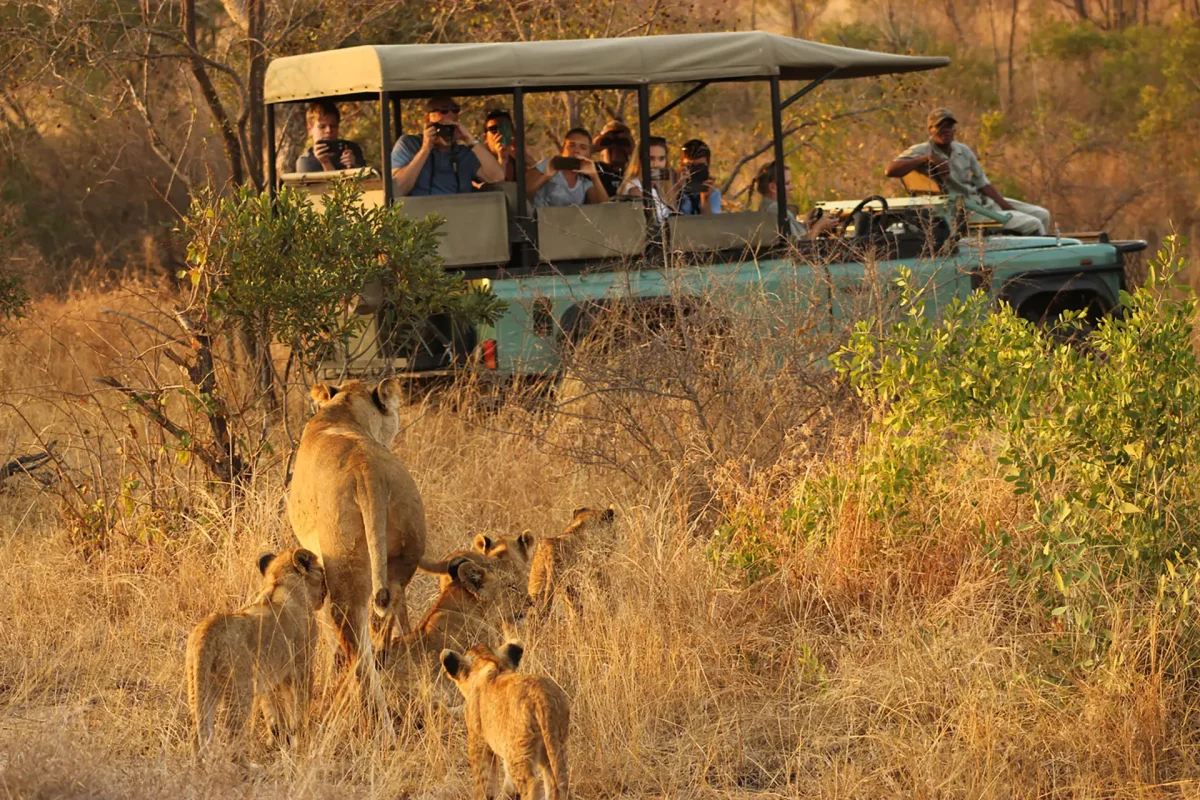
Choose the Masai Mara if big cats, open savannah scenery, and the possibility of the Great Migration matter most to you. Choose Kruger if a complete Big Five checklist, easier logistics, and a lower overall cost matter more. Kruger is generally the better-value, easier first safari, especially for families and self-drive travelers. The Masai Mara is the bigger bucket-list experience for travelers who want East Africa’s classic plains and don’t mind paying more for it. Neither is objectively “better,” and a genuinely large number of my clients end up doing both on separate trips, since they deliver such different experiences.
Kenya vs South Africa Safari: Quick Comparison Table
| Factor | Masai Mara, Kenya | Kruger, South Africa |
|---|---|---|
| Reserve size | About 1,500 km² (Masai Mara alone) | About 19,485-19,633 km² depending on source (Kruger National Park) |
| Landscape | Open savannah, few trees, wide plains | Mixed woodland, riverine bush, rocky koppies |
| Best for | Big cats, open plains, migration season | Complete Big Five, easier logistics, value |
| Self-drive possible | No, in the main reserve | Yes, on tarmac roads throughout the park |
| Park fees | $100/adult/day (Jan-Jun), $200/adult/day (Jul-Dec) | About $37/adult/day (2025/26 conservation fee) |
| Main gateway | Nairobi, then a light aircraft or road transfer | Johannesburg, then a short flight or road transfer |
| Road transfer time | 5 to 7 hours from Nairobi | 5 to 7 hours from Johannesburg |
| Fly-in transfer time | 45 to 60 minutes from Wilson Airport | Around 1 hour from Johannesburg to nearby airstrips |
| Rhino sightings | Less reliable | Among the most reliable in Africa |
| Cultural experience | Strong, Maasai villages and guides | Limited, but genuine archaeological and rock art sites |
| Typical safari cost | Generally higher, especially July to December | Generally more affordable year-round |
Where Are They? Location and Landscape
Where Is the Masai Mara?
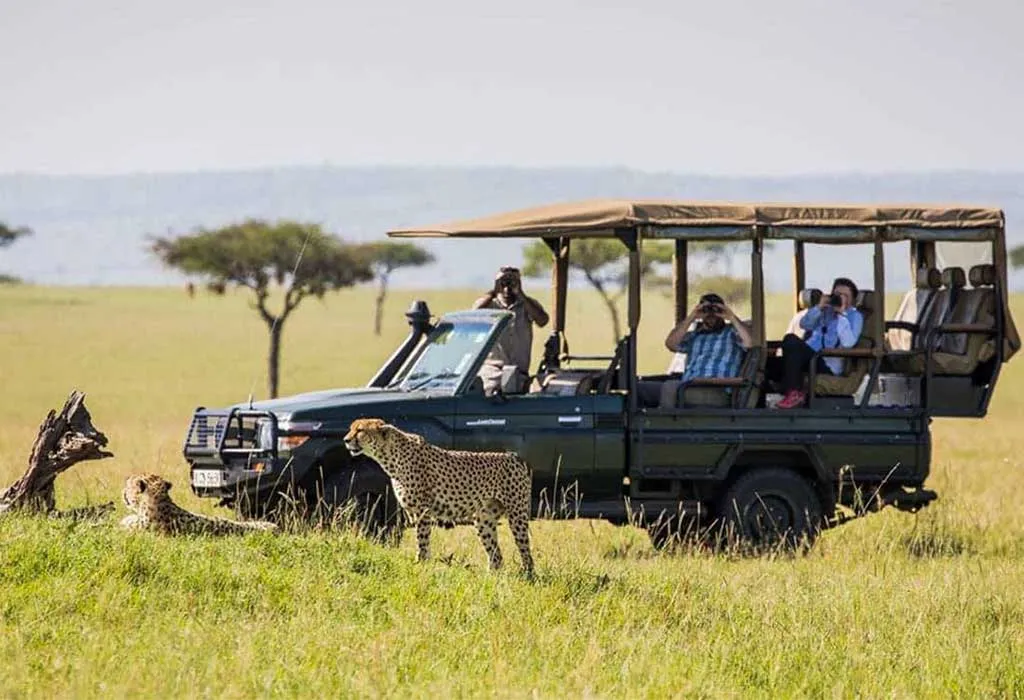
The Masai Mara National Reserve sits in southwestern Kenya, right on the border with Tanzania, and it forms one continuous, unfenced ecosystem with the Serengeti on the other side of that line. Wildlife moves freely between the two countries even though people can’t. The landscape is classic open savannah: rolling plains, scattered thorn trees, and horizon-to-horizon sky, largely treeless because elephants have knocked most of them down over the centuries. It’s the landscape most people picture when they imagine “Africa,” partly because so many films were shot here.
Where Is Kruger National Park?
Kruger sits in the northeast of South Africa, and at roughly 19,500 km², it’s one of the largest national parks on the continent, roughly the size of Wales. The landscape here is different from the Mara in almost every way: thicker vegetation, riverine forest, open woodland, and rocky koppies rather than flat, treeless plains. Leopards use the trees here to stash their kills, and small, monogamous antelope called klipspringers claim the rocky outcrops as territory. Kruger shares unfenced borders with several private reserves, which extend the ecosystem well beyond the park’s official boundary.
Wildlife and Big Five Comparison
Big Cats: Masai Mara Has the Edge
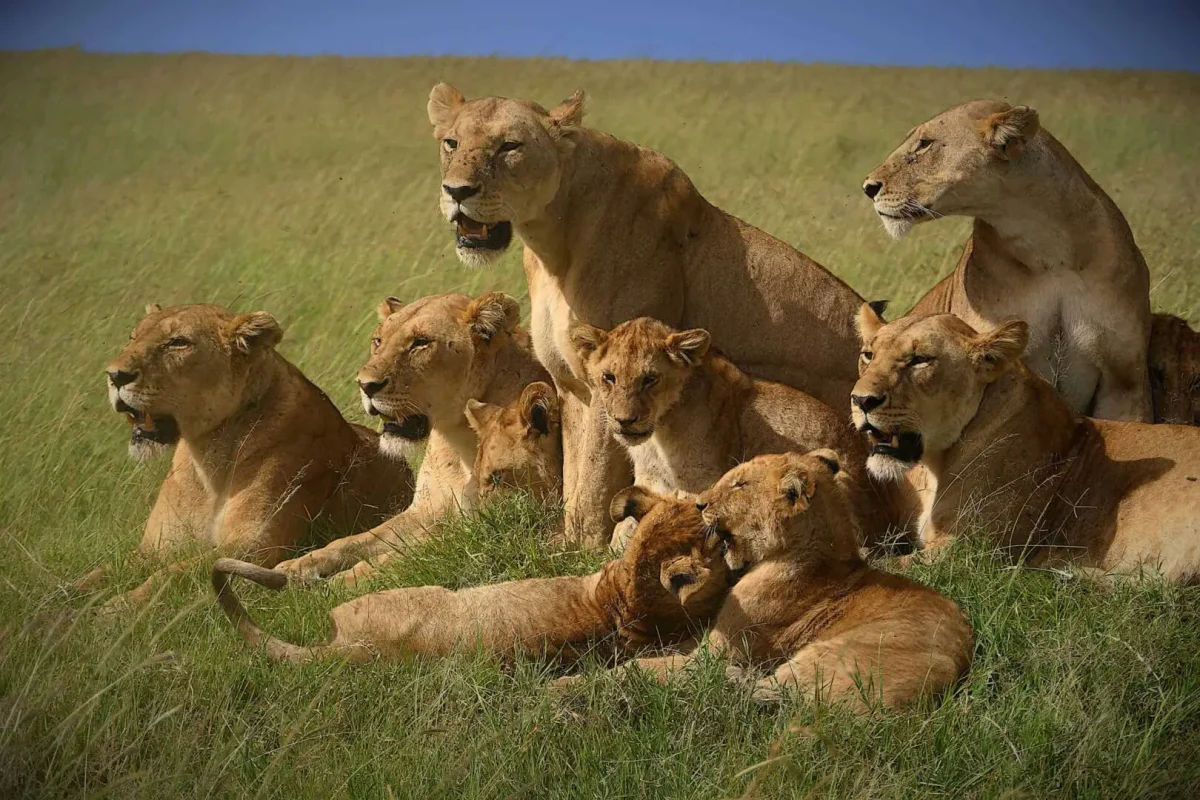
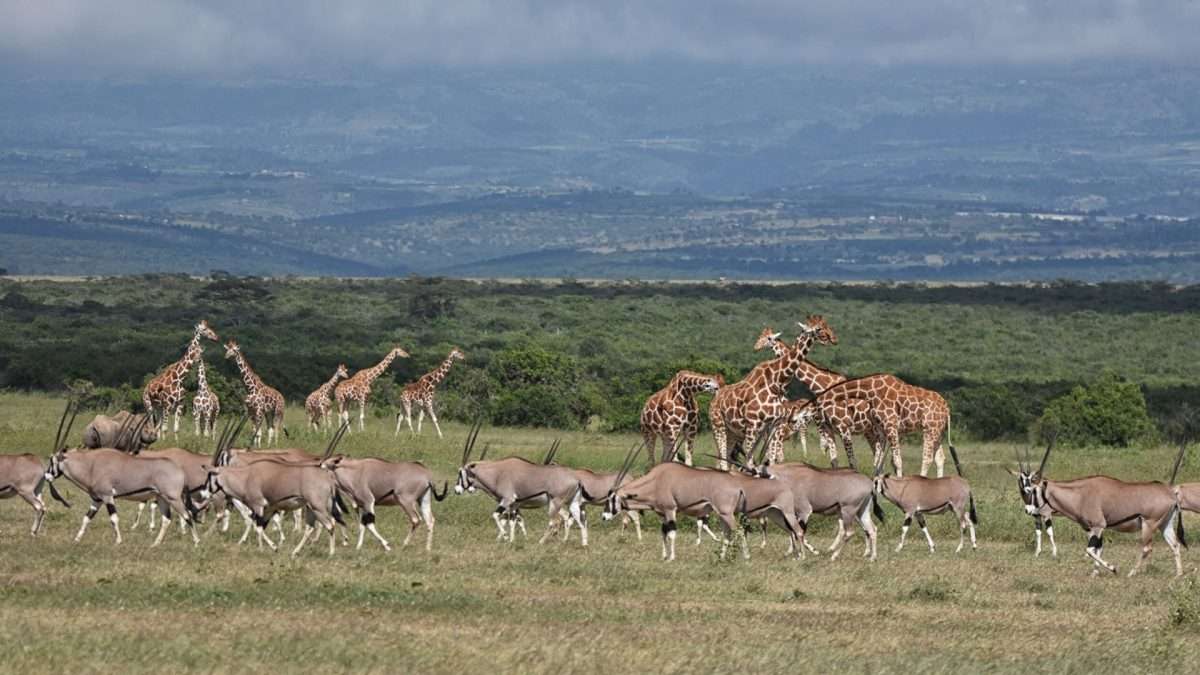
If lions, cheetahs, and leopards are the whole point of your trip, the Masai Mara is genuinely hard to beat. The open terrain makes predators easier to spot at distance, and the Mara-Serengeti ecosystem holds some of the densest big cat populations anywhere in Africa. Cheetahs in particular thrive here, since they need flat, open ground to hunt at full speed, and watching one accelerate after prey across the plains is a different experience than anything Kruger’s thicker bush usually allows.
Kruger still delivers strong lion and leopard sightings, especially in its private reserves, but it can feel more like a proper bush treasure hunt. The vegetation rewards patience rather than open visibility.
Big Five: Kruger Has the Edge
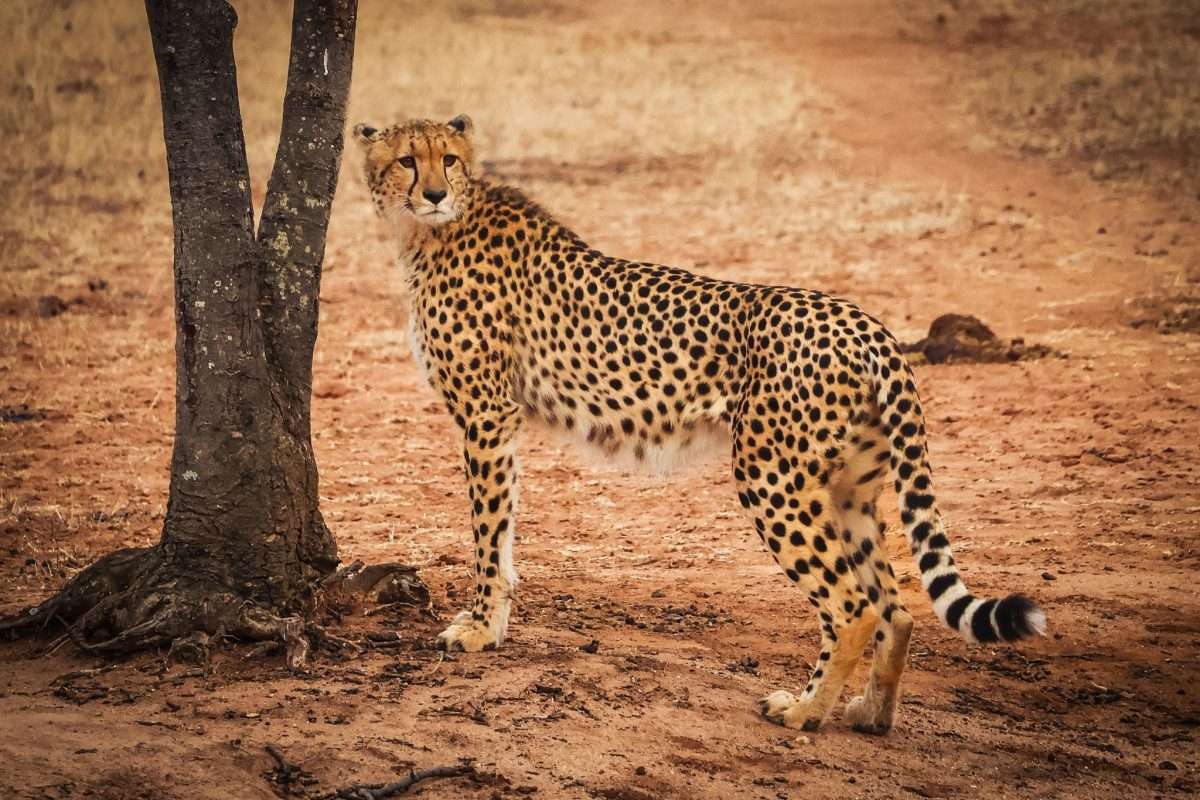
Kruger is one of the most complete Big Five destinations in Africa. Lion, leopard, elephant, buffalo, and both black and white rhino are all realistically achievable, often within a single multi-day stay, and Kruger’s rhino population in particular is far more reliable than the Mara’s. The Masai Mara delivers lion, elephant, and buffalo consistently well, and leopard with a bit more effort, but rhino sightings here are genuinely limited.
Other Wildlife Worth Knowing About
- The Masai Mara holds large numbers of wildebeest, zebra, Thomson’s gazelle, giraffe, and spotted hyena year-round, not just during migration season.
- Kruger’s ecological diversity, woodland, savannah, and river systems, supports species the Mara doesn’t have in the same numbers, including African wild dog and sable antelope.
- Both destinations rank among Africa’s best birdwatching regions, though Kruger’s varied habitat gives it a slight edge in sheer species diversity.
The Great Migration: Is It Worth Chasing?
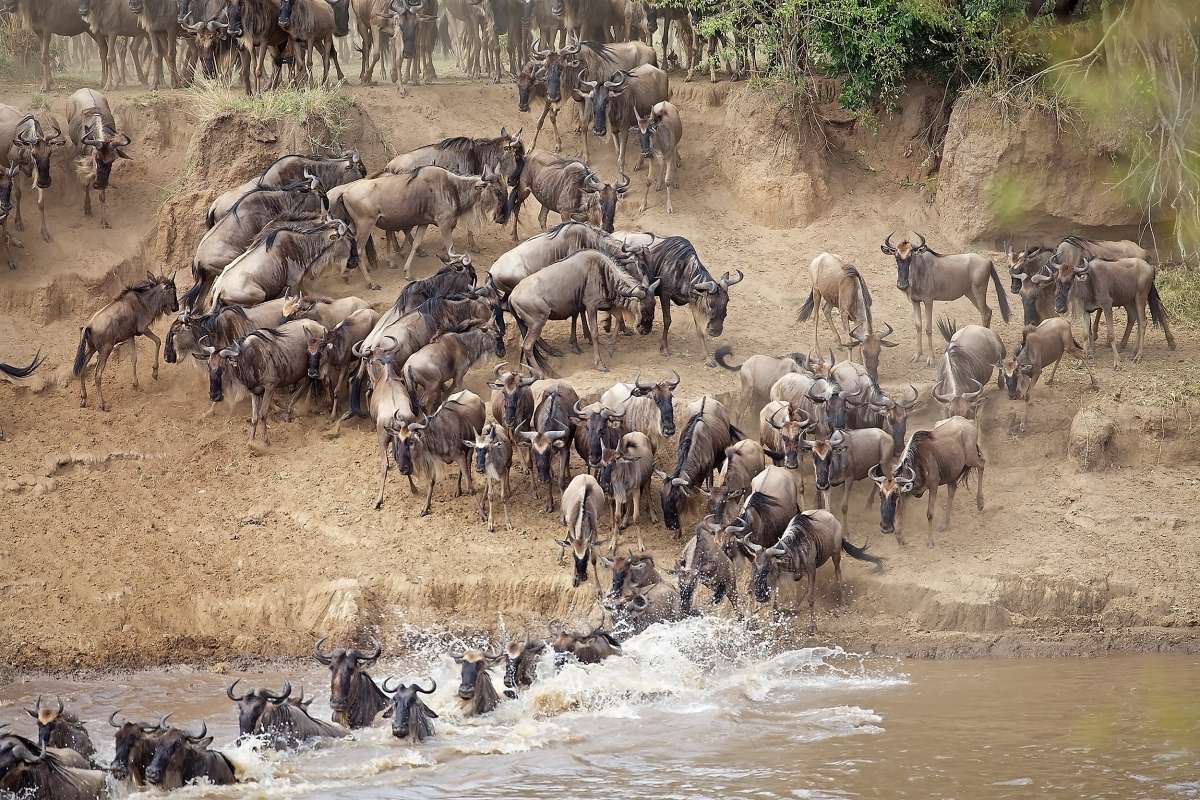
The Great Migration is the single biggest reason travelers choose Masai Mara, Kenya over Kruger, South Africa for a safari, and it deserves an honest explanation rather than a sales pitch.
Between roughly July and October, over a million wildebeest and zebra move north from Tanzania’s Serengeti into the Masai Mara, chasing fresh grazing after the rains. The herds typically start arriving in late July or August, building toward peak river-crossing activity in September, so if you’re booking around the very start of that window, August is the safer bet than early July. The river crossings, herds forcing their way across crocodile-infested water, are what most people picture when they imagine this event. But the migration is a wild phenomenon, not a scheduled one. Crossings depend on rainfall, grazing conditions, and timing that shifts year to year, and there’s no guarantee you’ll see one on any given day, even during peak season.
Kruger has no equivalent migration, since its wildlife populations are largely resident year-round rather than moving in mass seasonal herds. That’s not a weakness, it’s just a different kind of consistency. You’re not chasing an unpredictable event, you’re getting reliable, high-quality game viewing on any given day of the year.
Culture and History

This is the category where the two destinations genuinely diverge, and it’s worth real attention if a cultural dimension matters to your trip.
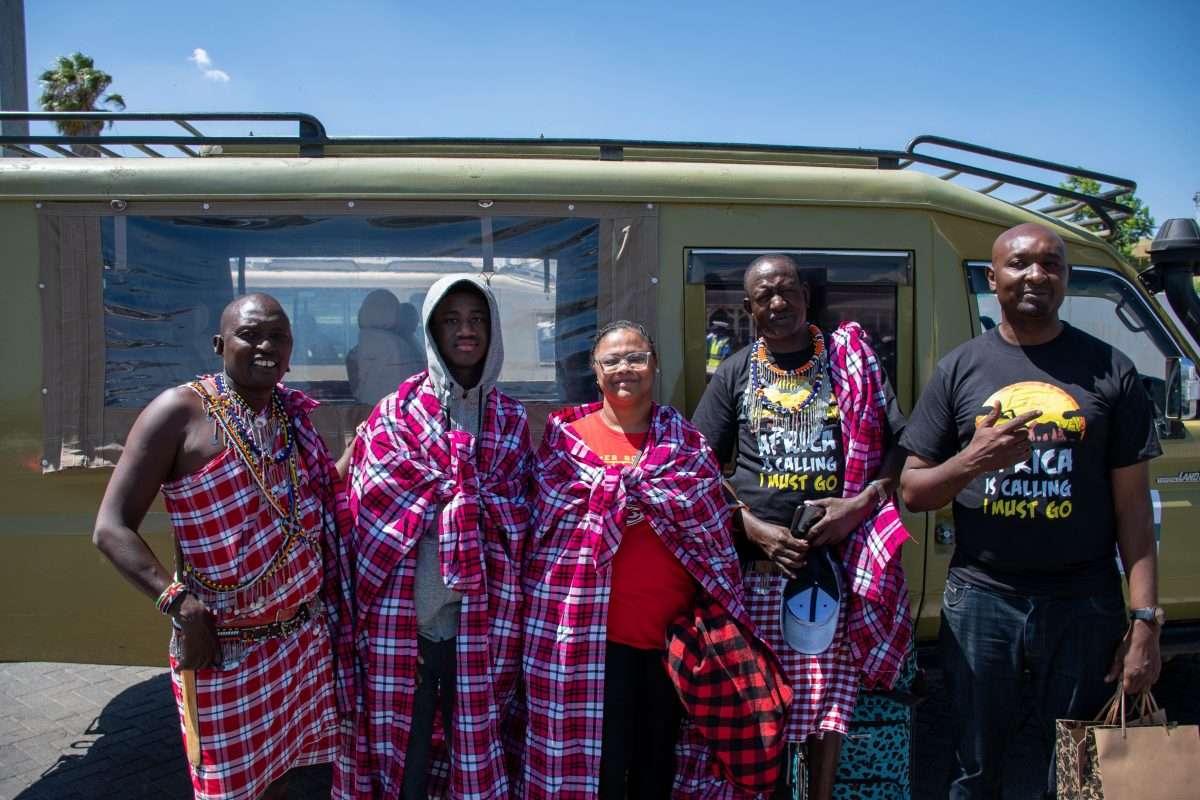
The Masai Mara takes its name from the Maasai people, semi-nomadic pastoralists who have lived across this region and neighboring Tanzania for generations. Many Maasai work directly in the safari industry as guides and hosts, and a village visit is one of the most requested additions to a Kenya safari, offering a real look at cattle-herding traditions, beadwork, and the traditional jumping dance still practiced today.
Kruger doesn’t offer the same living cultural experience, but it holds genuine historical depth of a different kind: evidence of prehistoric humans dating back roughly 500,000 years, over 300 recorded Stone Age sites dated between 100,000 and 30,000 years old, and around 130 known San rock art sites scattered throughout the park, worth exploring for travelers interested in deep human history rather than contemporary culture.
Safari Style: Guided vs. Self-Drive
Kruger: Self-Drive Is a Real Option
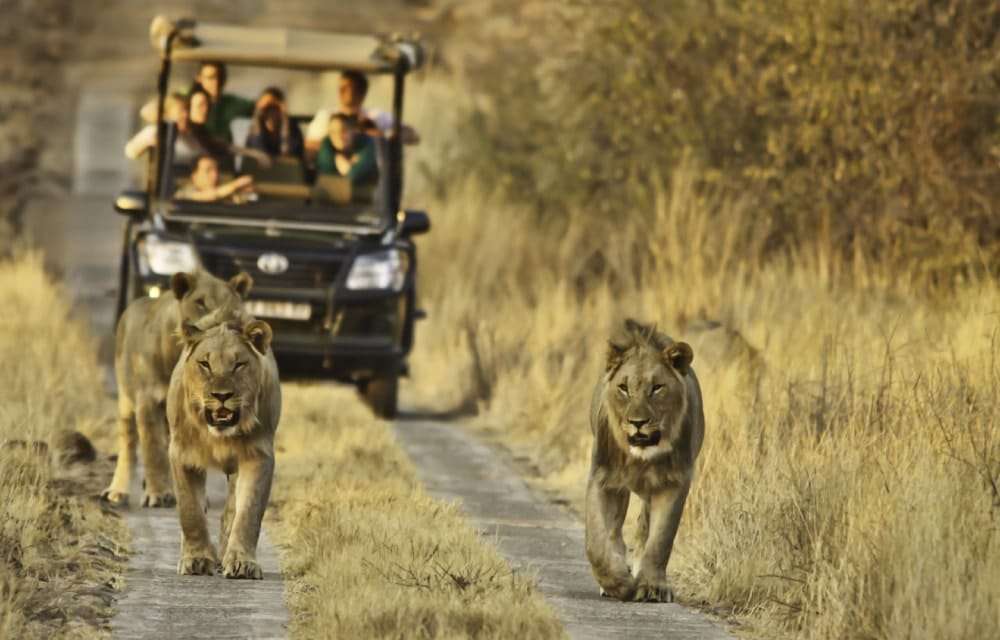
Kruger’s road network is genuinely developed, with tarmac roads, clear signage, and rest camps offering fuel, food, and supplies throughout the park. You don’t need a 4×4 or any specialized driving experience, a standard rental car works fine on the main roads. This has been possible since the park first opened to the public in 1927, when the entrance fee was the equivalent of about one British pound. It’s a completely different kind of safari experience, practical and flexible, though purists sometimes note that driving on tarmac among other cars feels less wild than the alternative.
Masai Mara: Guided 4×4 Is Standard
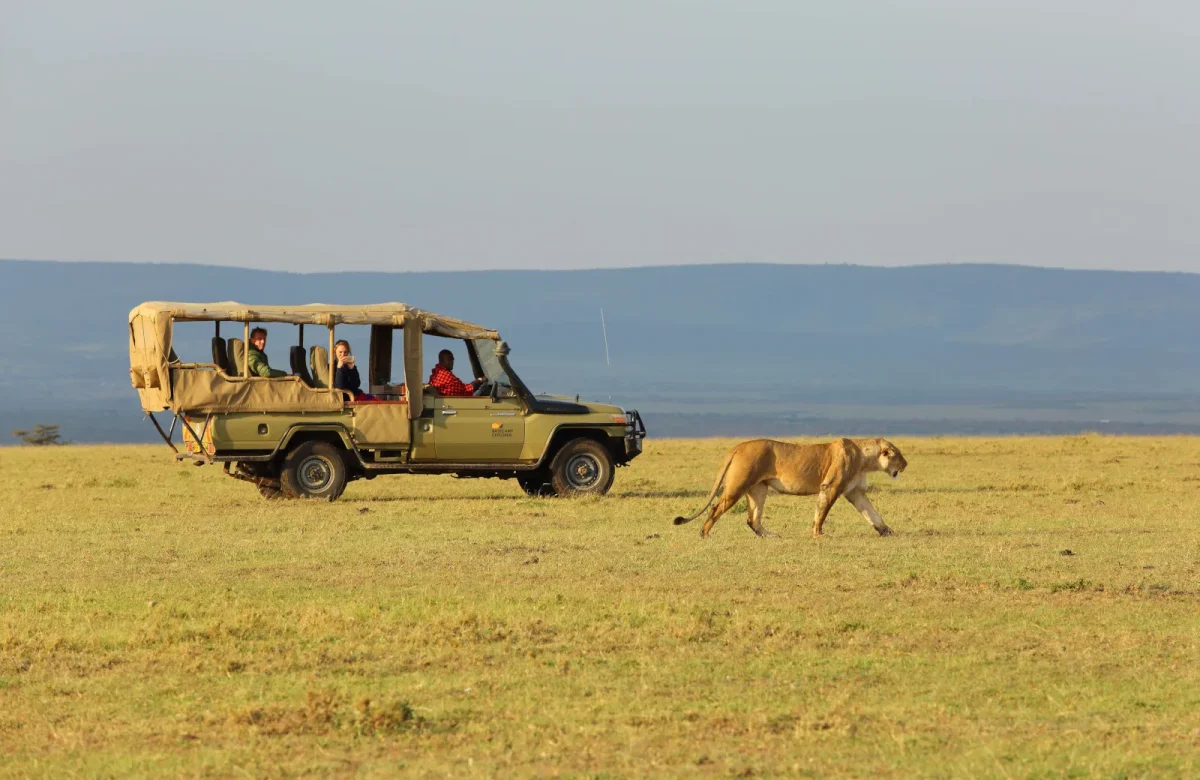
The main Masai Mara Reserve doesn’t have a developed self-drive infrastructure. Roads are dirt tracks, sometimes challenging even for an experienced 4×4 driver, and most visitors travel with a professional guide rather than attempt it independently. This isn’t really a downside, since the guiding quality across Kenya is generally excellent, and a good guide adds far more to the experience than self-driving would.
Is a Guide Worth It Either Way?
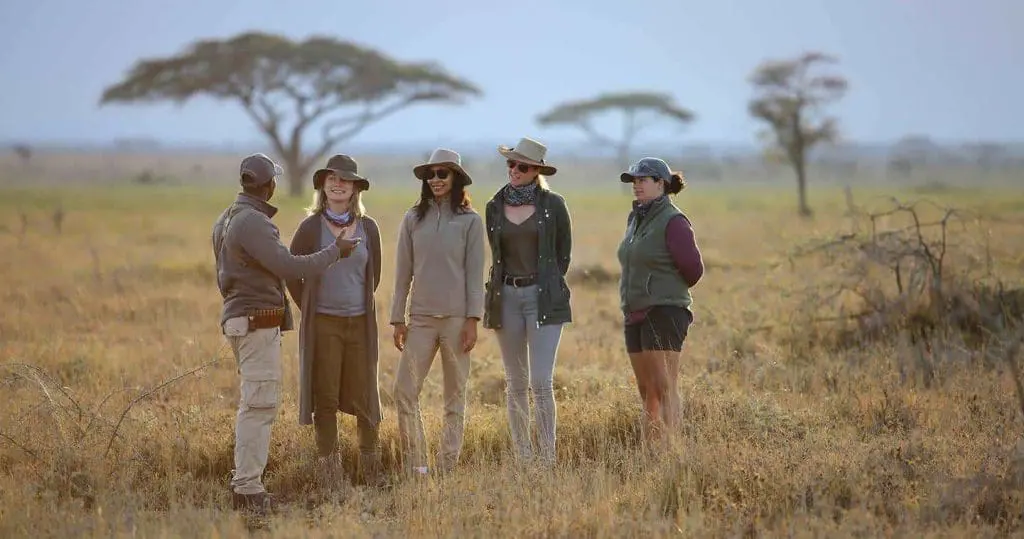
Even where self-driving is possible, a guide changes what you actually get out of a safari. It’s not just about spotting animals, it’s understanding what you’re looking at: a pride’s history, why a herd is behaving a certain way, what’s happening seasonally in the landscape. For a first or second safari especially, an experienced guide is often the difference between a good trip and a genuinely great one.
Private Guide vs. Shared Lodge Game Drives
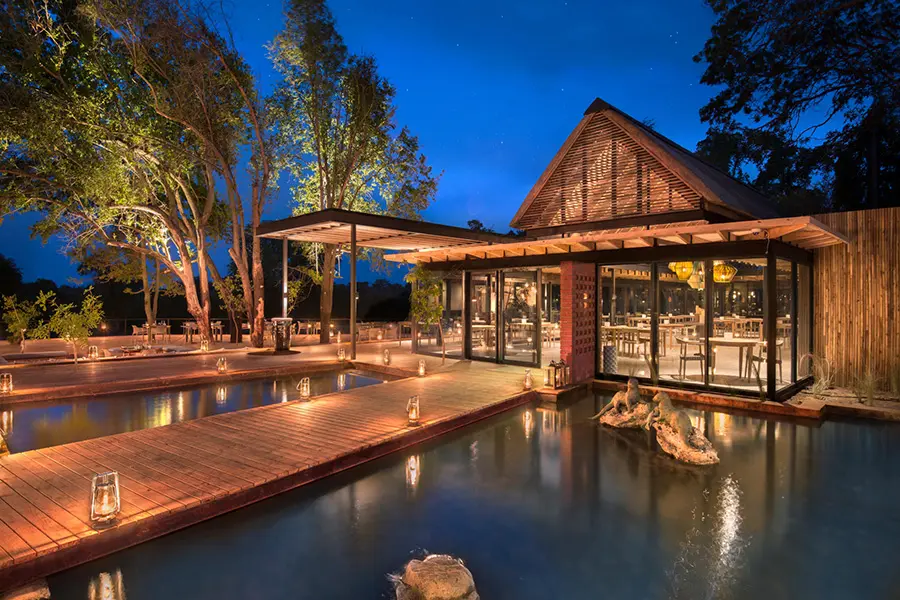
This is a real structural difference between the two that’s easy to miss when you’re just comparing wildlife and price.
On our Kenya itineraries, the same driver-guide travels with you from Nairobi for the entire trip, and the vehicle is exclusively for your group. That continuity matters more than it sounds like it would: your guide learns your interests, paces the trip around your family or group specifically, and you’re never sharing a sighting’s best angle with strangers who booked separately.
Kruger’s private lodges usually work differently by default. A transfer takes you from Johannesburg to your lodge, and from there, game drives are run by the lodge itself, typically an afternoon or evening drive on arrival, two full drives on safari days, and a morning drive before departure, often shared with other guests staying at the same property. This keeps costs down and suits solo travelers and couples well, but it’s a genuinely different rhythm from Kenya’s private, continuous guiding style. A private vehicle and guide is usually available in Kruger too, but it comes at a daily premium rather than being the default setup.
If privacy and continuity matter more to you than saving money, Kenya’s structure gives you that built in. If affordability is the priority, Kruger’s shared lodge drives are a big part of how it stays the more budget-friendly option.
Safari Activities Compared
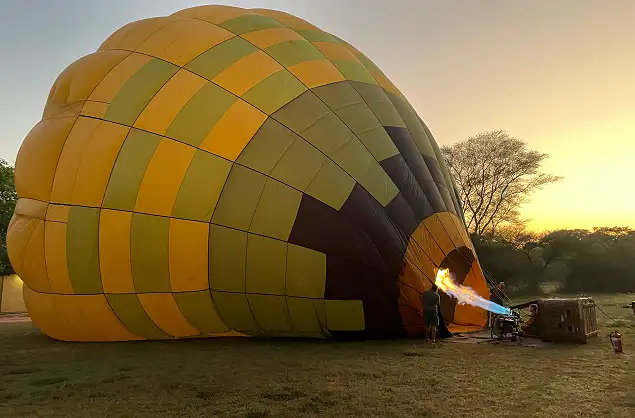
Game drives are the core activity everywhere, but what else is available differs more than people expect.
| Activity | Masai Mara | Kruger |
|---|---|---|
| Morning and afternoon game drives | Yes | Yes |
| Night game drives | Private conservancies only | Private reserves only |
| Guided walking safaris | Private conservancies only | Private reserves only |
| Hot air balloon safaris | Widely available across the reserve | Available in select private reserves |
| Cultural tours (Maasai villages) | Widely available | Not typically available |
A sunrise hot air balloon safari over the Mara, usually followed by a champagne bush breakfast, is one of Kenya’s genuine bucket-list activities and worth budgeting for separately if it appeals to you, since it’s rarely included in a standard package price.
Private Conservancies vs. Private Reserves
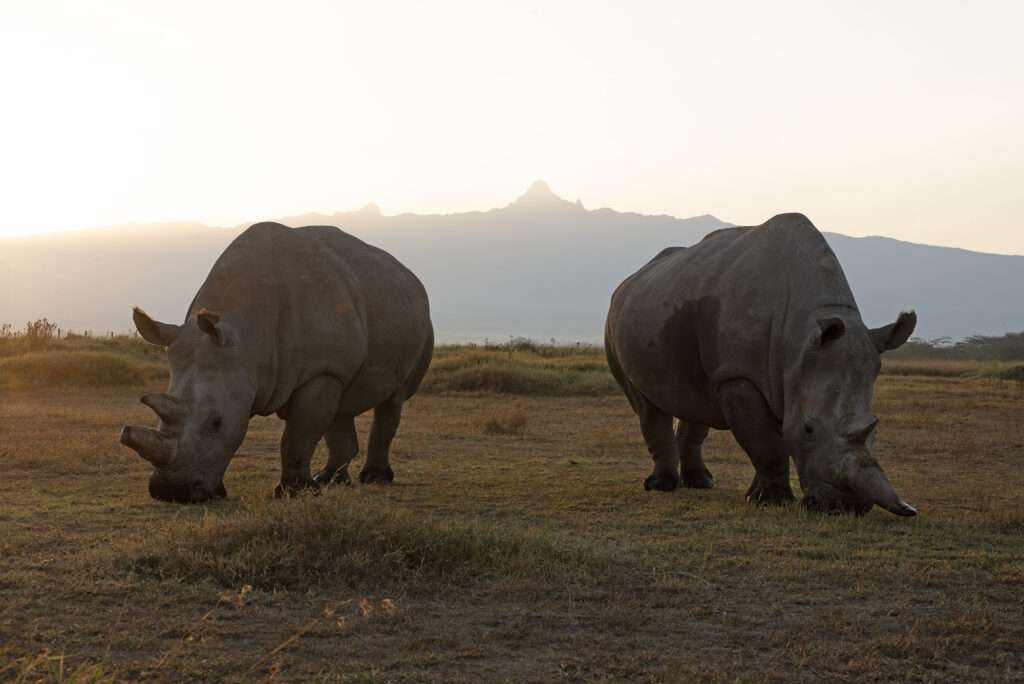
Both the Masai Mara and Kruger operate on a similar model worth understanding before you book: a public-access core area, surrounded by private land that offers a different, usually more exclusive, experience.
| Benefit | Public Park/Reserve | Private Conservancy/Reserve |
|---|---|---|
| Off-road driving | Not permitted | Often permitted, guide-dependent |
| Night drives | Rarely available | Commonly available |
| Guided walking safaris | Rarely available | Commonly available |
| Vehicles per sighting | Can be crowded | Usually limited to two or three |
| Access | Open to any paying visitor | Guests of specific camps only |
| Typical cost | Lower | Higher |
If a more intimate, exclusive safari matters to you more than saving money, staying in a private conservancy on the Mara side or a private reserve bordering Kruger is worth the extra cost on either trip.
Best Time to Visit: Masai Mara vs Kruger
| Season Type | Masai Mara | Kruger |
|---|---|---|
| Dry season | January-March, June-October | May-October |
| Wet/green season | November-December (short rains), April-May (long rains) | November-April |
| Migration/peak wildlife window | July-October (river crossings possible) | May-October (dry season concentrates game at water) |
| Best value window | January-March | May, June, September |
| Malaria risk | Present year-round, higher in wet season | Lower overall, minimal in dry season |
Both destinations reward a dry-season visit with easier game viewing, since thinner vegetation and shrinking water sources concentrate animals in predictable places. The Mara’s dry season also happens to overlap with migration season, which is exactly why July through October commands the highest prices on that side. Kruger’s dry season runs a bit differently and doesn’t carry the same migration-driven price spike, which is part of why it tends to stay the more consistently affordable option.
Cost Comparison: What Drives the Price Difference
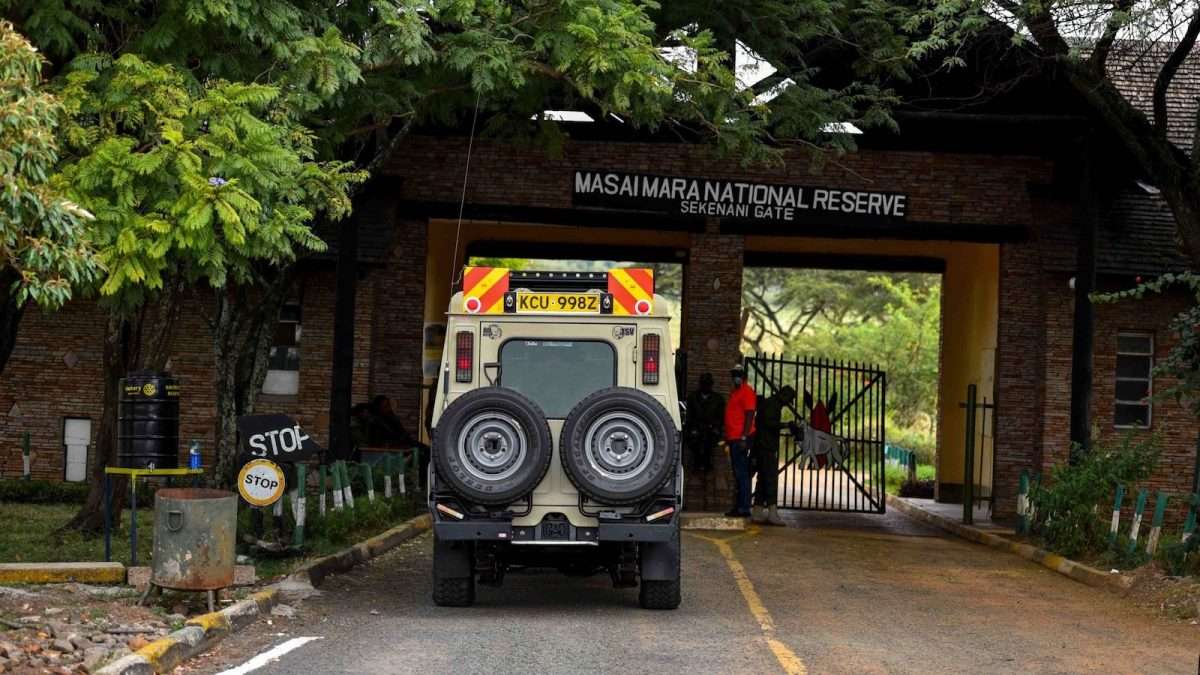
Park fees alone can meaningfully shift your total safari cost, and this is one of the clearest, most current differences between the two.
- Kruger’s conservation fee for international adults runs around $37 per person per day (2025/26 rate), a modest daily cost regardless of season.
- Masai Mara’s reserve fee runs $100 per adult per day from January to June, and jumps to $200 per adult per day from July to December, exactly the months most travelers want to visit for the migration.
That gap compounds fast. A couple spending three nights in the Mara during peak season can pay several hundred dollars more in park fees alone than the same three nights would cost in Kruger, before accounting for flights, private vehicle costs, or lodge pricing. This is the single biggest reason Kruger tends to be the more budget-friendly choice, and why the Mara’s shoulder season, January through March, is worth serious consideration if cost matters to you.
Park fees are only part of the picture, though. Total trip cost also depends heavily on accommodation tier, and this is where the gap between the two destinations narrows somewhat. Looking at real itineraries I’ve built, a week-long Kenya safari including the Mara typically starts around $4,000 to $6,000 per person at a comfortable to luxury level, while a comparable South Africa trip pairing Sabi Sand with a city extension can start closer to $3,700. Both climb well past $10,000 per person at the ultra-luxury end, so the destination itself matters less at the top of the market than the specific lodge tier you choose.
How to Get There
Getting to the Masai Mara
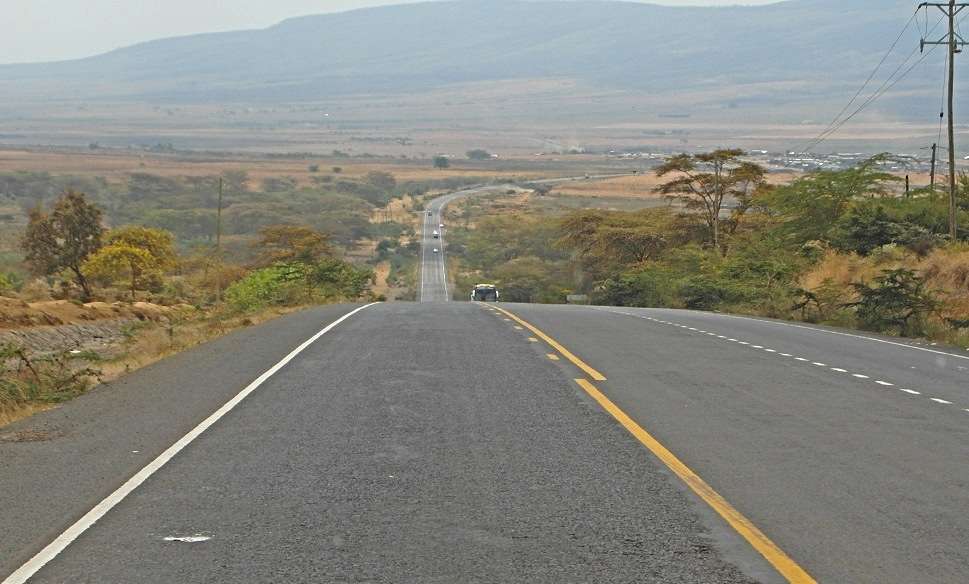
Most Kenya safaris begin in Nairobi, with international arrivals landing at Jomo Kenyatta International Airport. From there, onward flights to the Mara typically depart from Wilson Airport, Nairobi’s dedicated domestic hub, about a 30-minute drive from JKIA. Fly-in transfers to the Mara’s airstrips run 45 to 60 minutes. Driving is also possible, generally 5 to 7 hours depending on which gate and camp you’re headed to, though flying is by far the more common choice given the time saved.
Getting to Kruger
South Africa safaris typically begin in Johannesburg, one of Africa’s best-connected international hubs. From there, you can drive to Kruger, generally 5 to 7 hours depending on your entry gate, or take a short domestic flight to one of several airstrips serving the park and its surrounding private reserves. Road transfers are common on budget and mid-range itineraries and often include the scenic Panorama Route as part of the journey.
Which Safari Is Best for You?
Best for First-Time Safari Travelers
Kruger generally wins here. Lower costs, simpler logistics, and the option to self-drive make it a lower-pressure entry point into African safari travel.
Best for Big Cat Enthusiasts
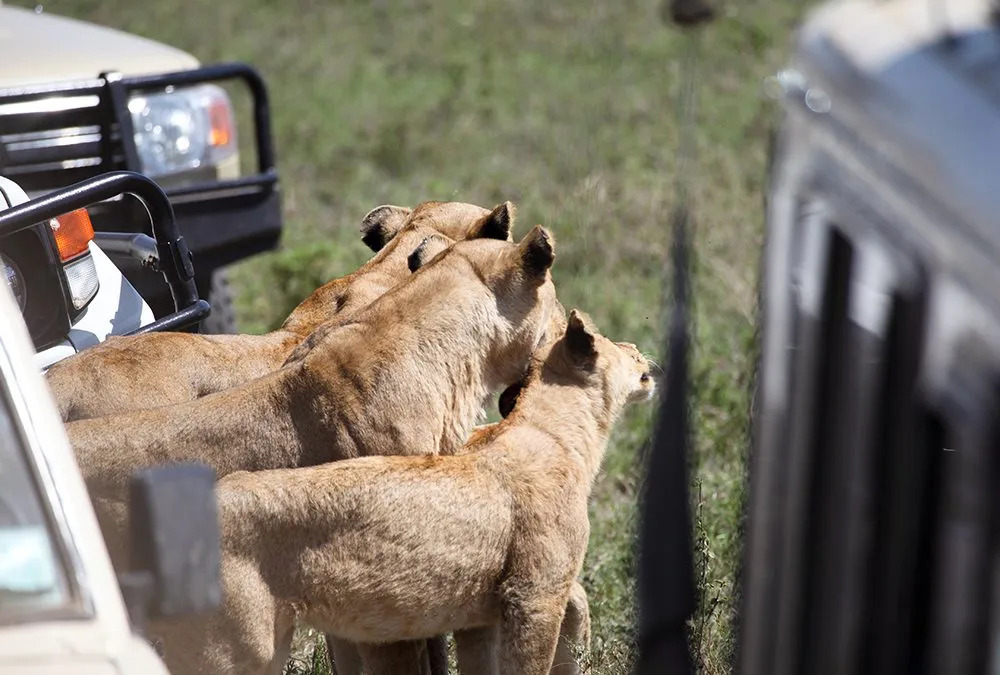
The Masai Mara wins decisively. Open terrain and high predator density make this the stronger choice if lions, cheetahs, and leopards are the priority.
Best for a Complete Big Five Checklist
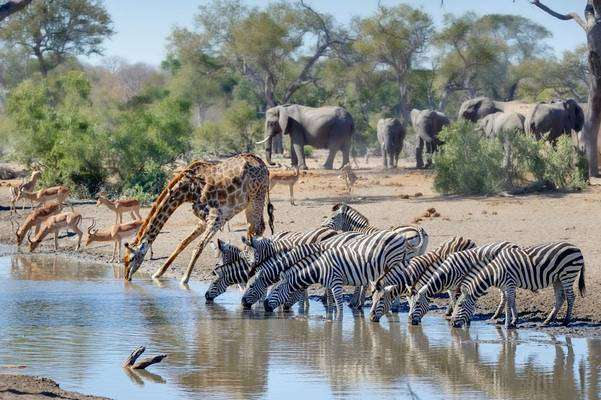
Kruger wins, mainly on the strength of its rhino sightings, which are meaningfully more reliable than the Mara’s. If a south africa vs kenya safari decision comes down to this one factor alone, Kruger is the safer bet.
Best for Families
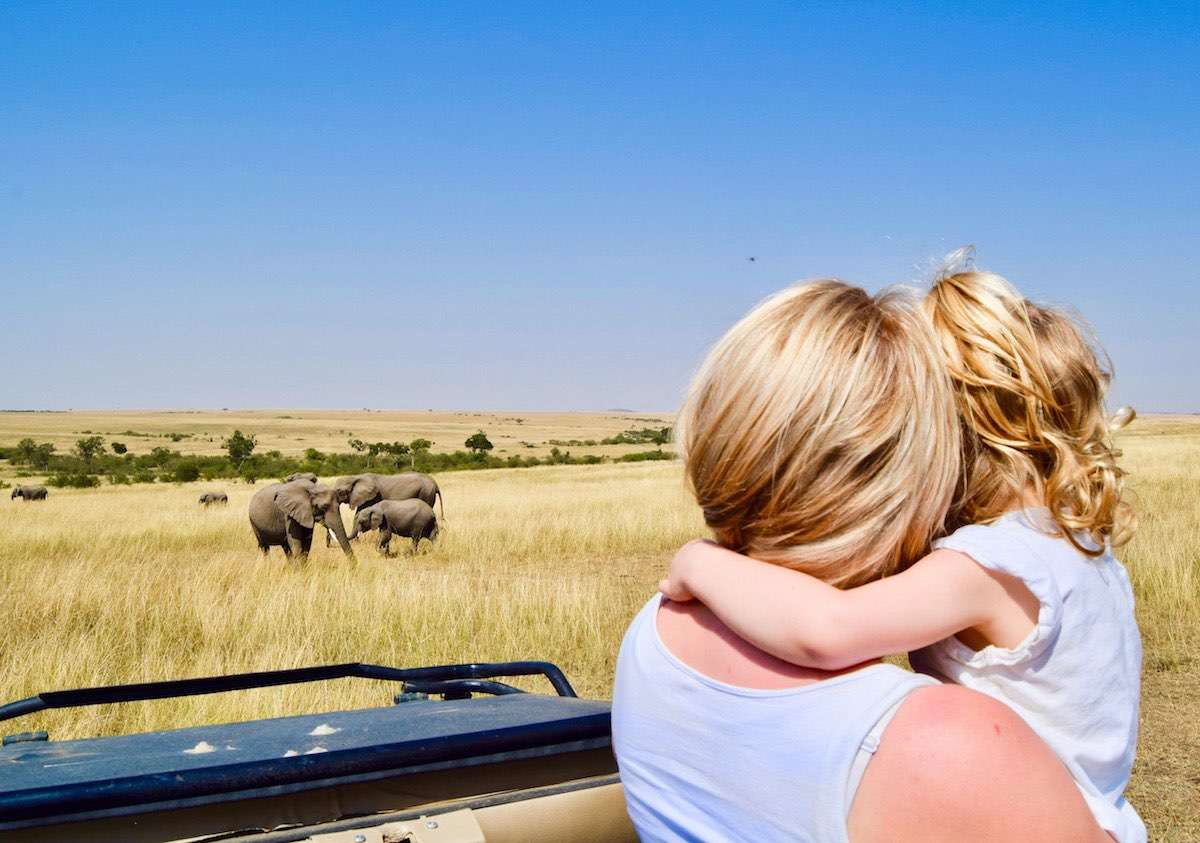
Both work well, but for different reasons. Kruger tends to be the more affordable, logistically simpler choice, with strong lodge options for younger children, and fewer age restrictions overall. Kenya’s private-guide, private-vehicle safari style can suit multi-generational families beautifully, though usually at a higher price point, and it’s worth checking age limits carefully: many Masai Mara camps and conservancies set minimum ages of around 6 to 8 years old for game drives, so Kruger is often the more realistic choice for a family traveling with very young children.
Best for Honeymoons
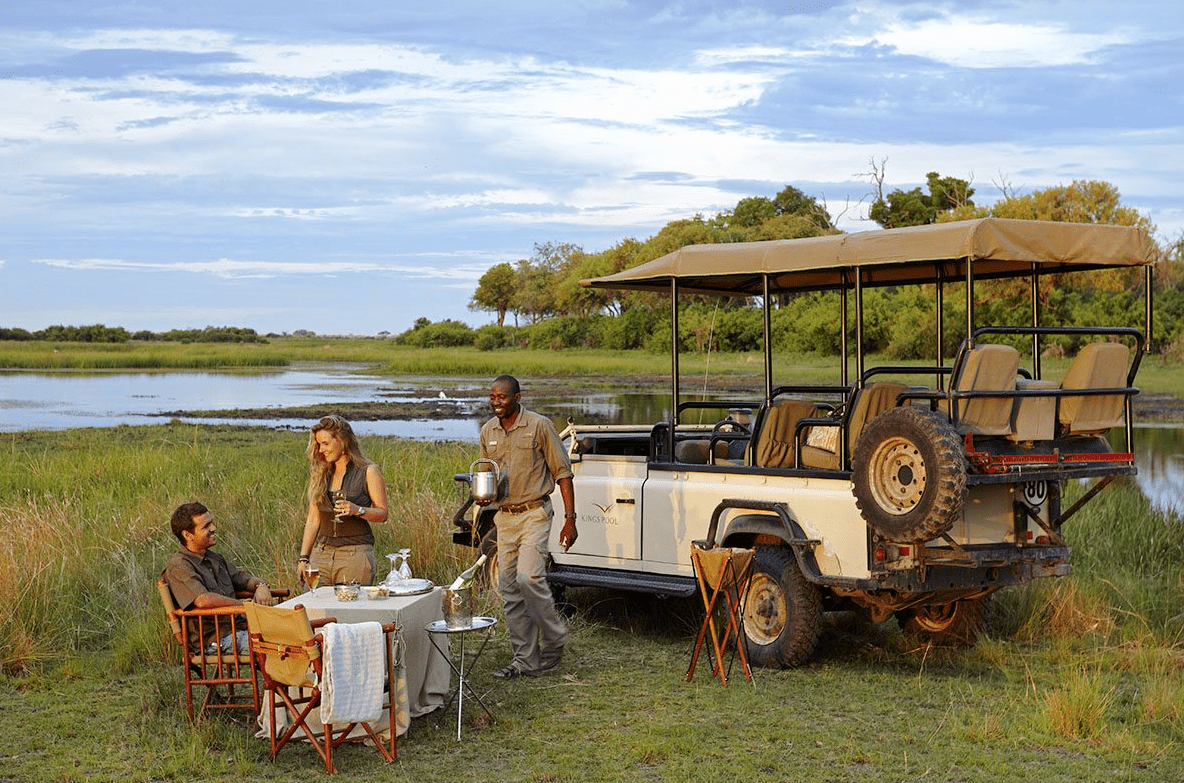
Both destinations do this exceptionally well. The Mara offers romantic, open-plains drama and private conservancy exclusivity; Kruger’s private reserves offer similarly intimate luxury with easier access to a Cape Town extension afterward.
Best for Photographers
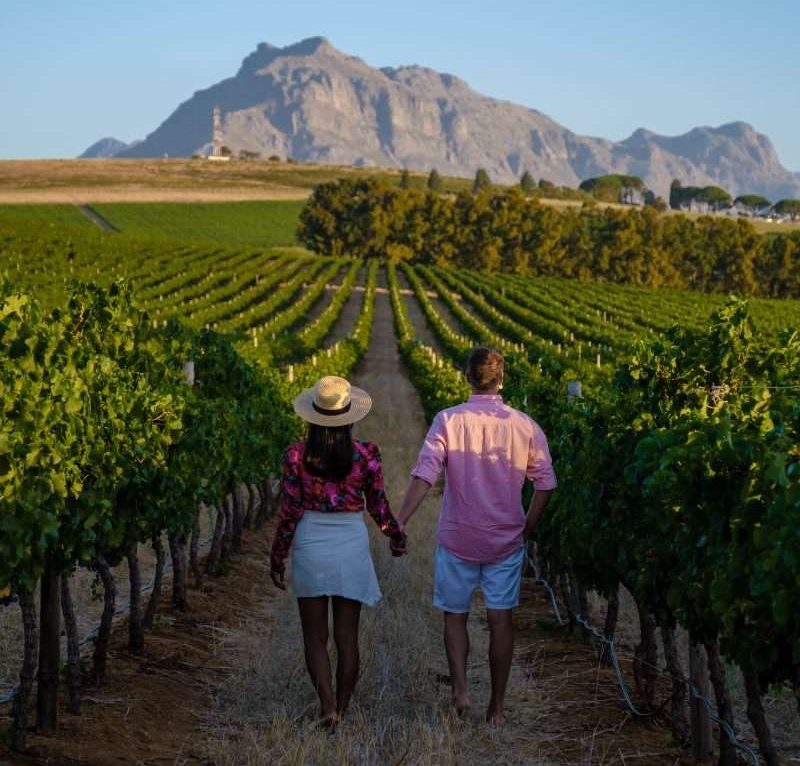
Both are excellent, and the choice comes down to style. The Mara’s open plains and big cat density suit dramatic wildlife photography; Kruger’s varied landscapes and dense birdlife suit photographers who want more visual variety across a single trip.
Combining Your Safari with More
What Pairs Well with the Masai Mara
- Amboseli, for elephant herds set against Mount Kilimanjaro
- Samburu or Laikipia, for a genuinely different arid landscape and wildlife not found in the Mara
- Lake Naivasha, for a change of pace with boat trips and cycling alongside buffalo and zebra at nearby Hell’s Gate National Park
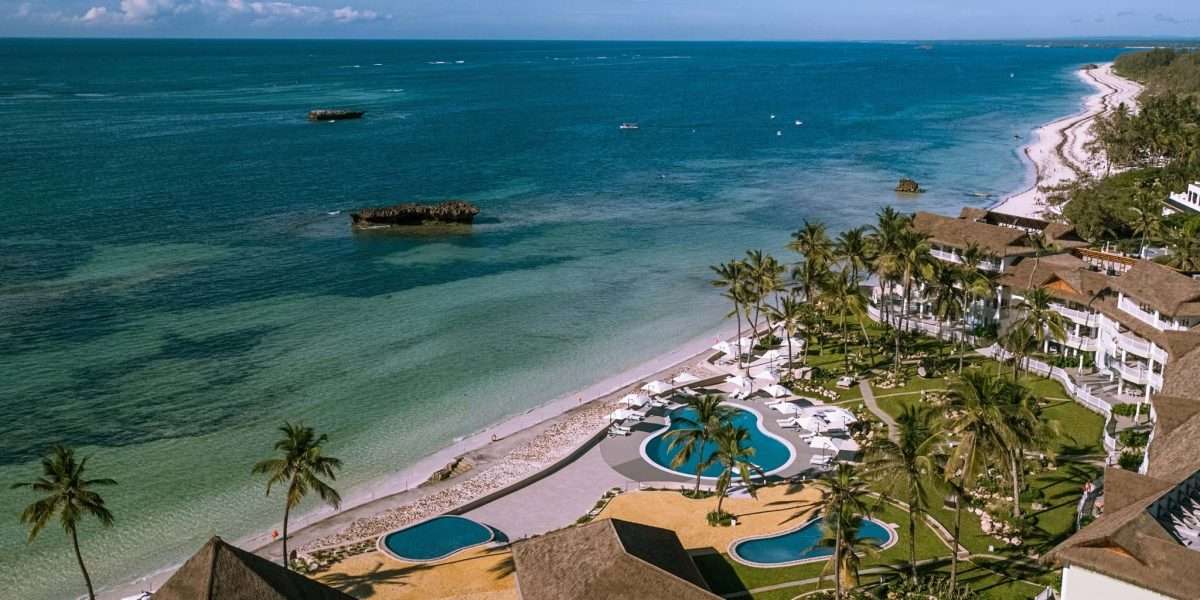
- Watamu or Diani Beach, for a straightforward safari-and-beach finish on Kenya’s Indian Ocean coast
What Pairs Well with Kruger
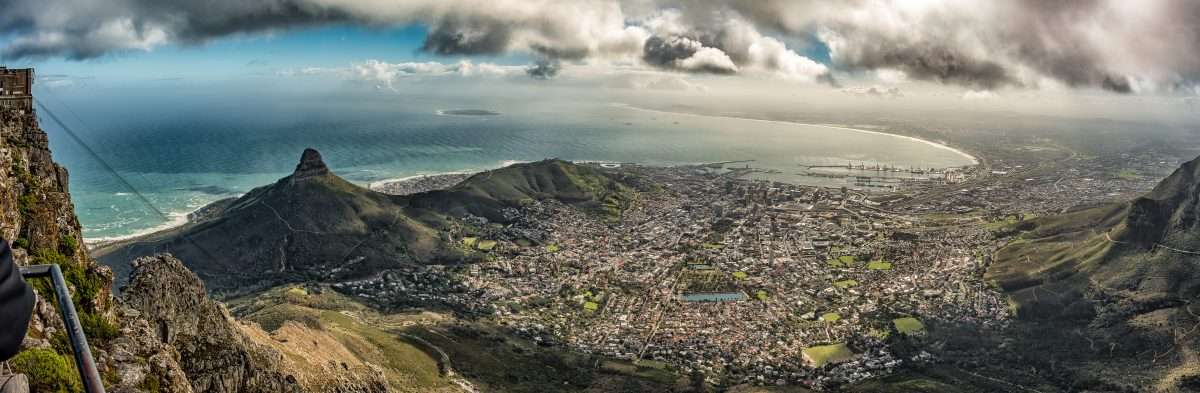
- Cape Town, for Table Mountain, the Winelands, and one of the world’s most scenic cities
- Victoria Falls, for one of the Seven Natural Wonders of the World and a genuinely different kind of adventure
- Sabi Sand and the wider Greater Kruger private reserves, for a more exclusive extension without leaving the region
TourwithPipi Trips: Kenya and South Africa Safaris
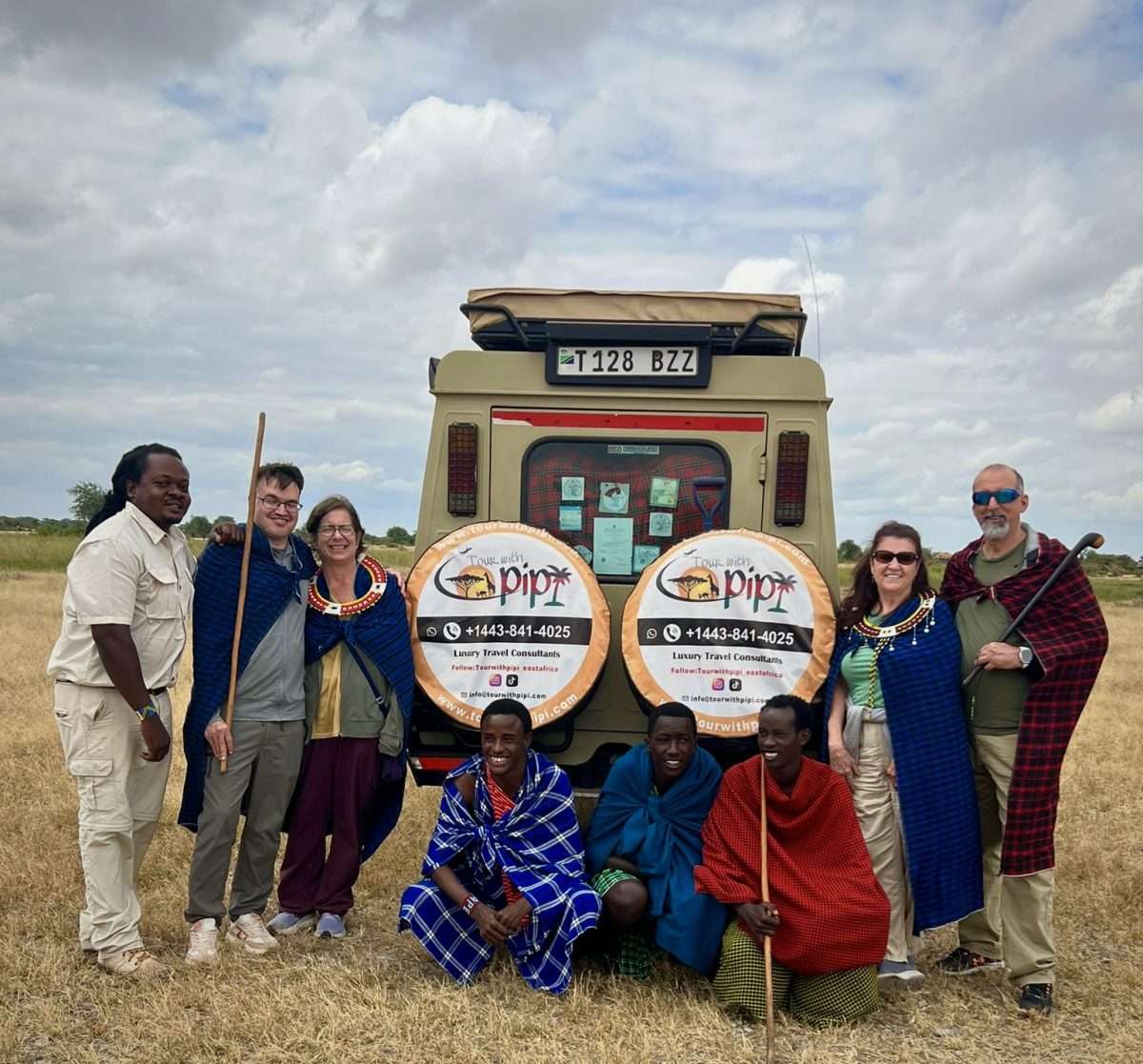
I build private itineraries across both destinations, and here are a few real options to give you a sense of what each trip actually looks like.
For a Masai Mara-focused Kenya safari:
- Must See Kenya: An 8-Day Luxury Safari Journey covers the Masai Mara alongside Amboseli, Lake Nakuru, and Lake Naivasha, staying at properties including Elewana Tortilis Camp and Olare Mara Kempinski, from $6,229 per person.
- The Big 5 Completed: An 8-Day Fly-In Safari links Ol Pejeta, the Masai Mara, and Amboseli entirely by air, from $6,199 per person.
- The Last Two & The Big Five: A 6-Day Flying Safari is a shorter version of that same route for travelers with a week or less, from $4,019 per person.
For a South Africa safari:
- Cape Town in Style: A 7-Day Coastal & City Escape opens with three nights at Arathusa Safari Lodge in the Sabi Sand Game Reserve, bordering Kruger National Park, before finishing with four nights at The Commodore Hotel on Cape Town’s V&A Waterfront, from $3,709 per person.
More options for both destinations are on my Luxury Kenya Safaris hub page. If you’re set on a Kruger-specific itinerary beyond Sabi Sand, message me directly and I’ll build one around your dates.
Kenya vs South Africa Safari: My Honest Take
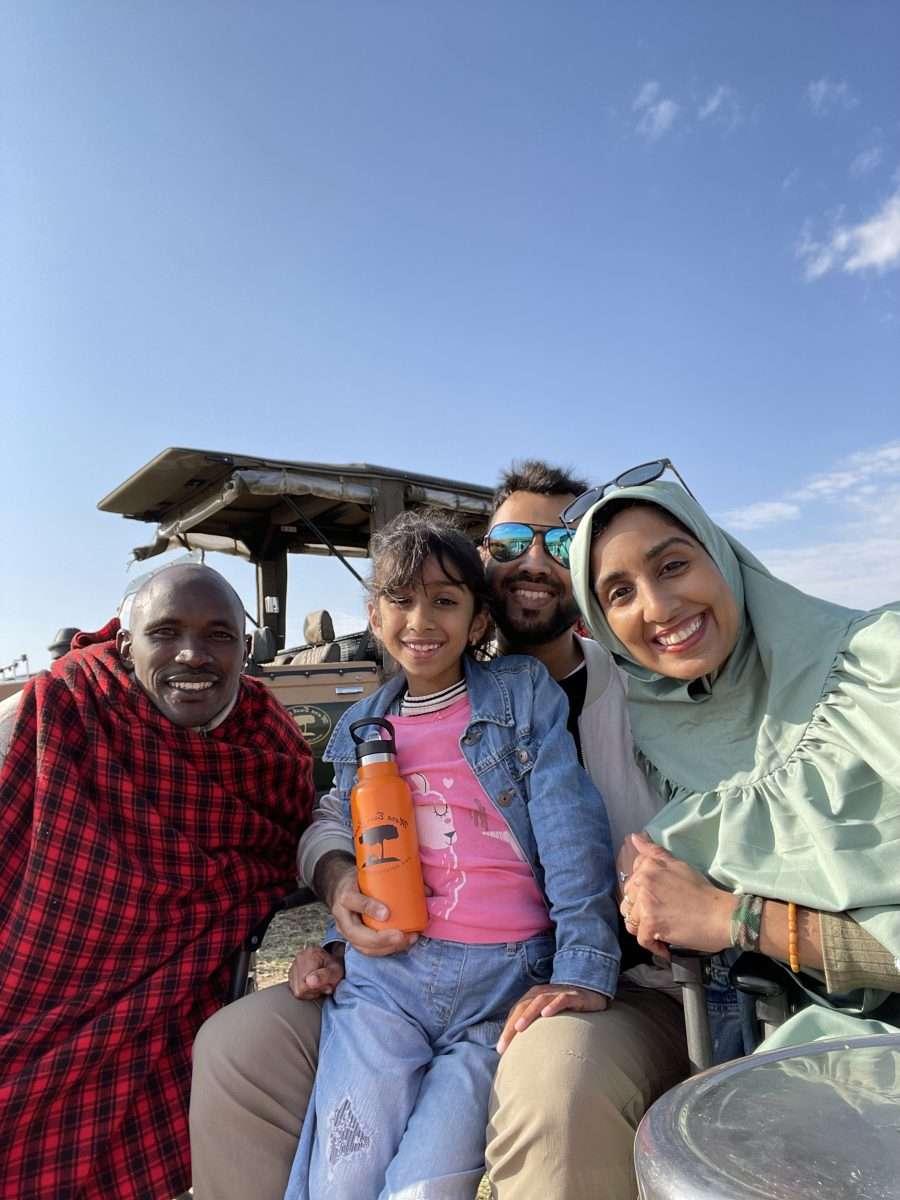
If you’re still torn on kenya vs south africa safari after all of this, here’s the version I’d actually tell a friend. Choose Kruger if this is your first safari, your budget matters, or you want the flexibility to self-drive and combine easily with Cape Town. Choose the Masai Mara if the Great Migration or big cat density is the thing you’ll regret not seeing, and you’re comfortable paying more, especially in peak season, for that specific experience. If you can genuinely do both across two trips, do both. They’re different enough that neither one makes the other redundant.
Plan Your Kenya or South Africa Safari with TourwithPipi
Deciding between safari Kenya vs South Africa doesn’t have to be a guess. Message me on WhatsApp with your travel dates, budget, and what you most want to see, migration drama, guaranteed rhino, a self-drive option, or a Cape Town extension, and I’ll help you land on the trip that actually fits.
Frequently Asked Questions
Is Masai Mara better than Kruger?
Neither is objectively better. The Masai Mara offers stronger big cat density and the possibility of the Great Migration, while Kruger offers a more complete Big Five experience, lower costs, and the option to self-drive. The right choice depends on your priorities and budget.
Is a Kenya safari more expensive than a South Africa safari?
Generally yes, especially from July to December. Masai Mara reserve fees alone run $100 to $200 per adult per day depending on season, compared to roughly $37 per day in Kruger, and that gap compounds with private vehicle and flight costs.
Can you self-drive in the Masai Mara or Kruger?
Self-driving is well-established in Kruger, which has tarmac roads and doesn’t require a 4×4. The main Masai Mara Reserve does not have developed self-drive infrastructure, and most visitors use a guided 4×4 safari instead.
Which is better for seeing the Big Five?
Kruger is generally the stronger choice for a complete Big Five sighting, mainly due to significantly more reliable rhino populations. The Masai Mara delivers lion, elephant, and buffalo well, but rhino sightings are limited.
When is the best time to see the Great Migration in the Masai Mara?
Roughly July through October, when the herds cross from Tanzania’s Serengeti into the Masai Mara in search of fresh grazing. River crossings are dramatic but never guaranteed on any specific day.
Is Kruger or Masai Mara better for a first safari?
Kruger is generally the easier, lower-cost first safari, thanks to simpler logistics and the option to self-drive. The Masai Mara suits travelers who specifically want the Great Migration or the strongest possible big cat sightings, even as a first trip.
Quick Summary
- The Masai Mara is about 1,500 km² of open savannah in Kenya; Kruger is about 19,500 km² of mixed woodland and bush in South Africa.
- The Masai Mara has the edge on big cats and open-plains scenery; Kruger has the edge on a complete Big Five, especially rhino.
- Only the Masai Mara offers the Great Migration, roughly July to October, though river crossings are never guaranteed.
- Kruger allows self-drive safaris on tarmac roads; the main Masai Mara Reserve requires a guided 4×4.
- Masai Mara reserve fees run $100 to $200 per adult per day depending on season; Kruger’s conservation fee runs about $37 per day year-round.
- Both destinations offer private conservancies or reserves with off-roading, night drives, and walking safaris not available in the main public areas.
- Kenya’s guiding style typically means the same private guide and vehicle travel with you for the whole trip; Kruger’s lodges more often run shared game drives by default, with a private vehicle available at a premium.
- Hot air balloon safaris are widely available across the Masai Mara but limited to select private reserves in Kruger.
- Many Masai Mara camps set minimum ages of 6 to 8 years old for game drives, making Kruger the more realistic choice for families with very young children.
- Kruger pairs naturally with Cape Town and Victoria Falls; the Masai Mara pairs naturally with Amboseli, Samburu, Lake Naivasha, and Kenya’s coast.
- Kenya offers a stronger living cultural experience through the Maasai; Kruger offers genuine archaeological and rock art history instead.
- Kruger is generally the better-value, easier first safari; the Masai Mara is the bigger bucket-list splurge for big cats and migration season.
- Many travelers eventually do both, since the two experiences are different enough that one doesn’t replace the other.
Written by Khadija Tayabali, Founder and Virtuoso-affiliated safari advisor at TourwithPipi. Message me directly on WhatsApp to start planning your Kenya or South Africa safari.


