
A Serengeti balloon safari is the one experience that almost every traveler to Tanzania describes as the highlight of their entire trip. Not the game drive that produced the lion kill. Not the morning the elephant family crossed the road. Not even the river crossing. The balloon. Because there is simply nothing else quite like rising silently above the Serengeti plains as the sun breaks over the horizon, watching thousands of animals move below you in the soft golden light, with the only sound being the occasional rush of the burner flame.
This guide covers every detail of the Serengeti hot air balloon experience for 2026. You will find exactly what happens from the moment your guide wakes you at 4:30am to the champagne toast after landing, the launch sites across the Serengeti, what the 2026 prices include, who can and cannot fly, what to pack, how safe it is, and how TourwithPipi builds this experience into Tanzania safari itineraries.
Written by Khadija Tayabali, Kenya-born physician and Virtuoso-certified safari advisor designing private Tanzania safaris.
Quick Serengeti Balloon Safari Facts
- Price: $500to $550 per person for 2026/2027, depending on the launch site and operator
- Flight duration: Approximately 50 to 70 minutes in the air
- Launch time: Dawn, typically 6:00am (transfer pickup from 4:00 to 5:30am depending on your lodge distance)
- Capacity: Up to 16 passengers per shared balloon; private charter balloons available on request
- Launch sites: Four sites across the Serengeti — Central (year-round), Ndutu (December 25 to March 15), Western Corridor (June to October), Northern Serengeti (July to October)
- What is included: Transfer from your lodge to the launch site, the flight, champagne or sparkling wine on landing, and a full English bush breakfast
- Children: Not permitted under age 7 (some operators set minimum at age 6)
- Pregnant women: Not permitted to fly
- Weather: Subject to conditions — cancellations are refunded in full
- Booking: Book in advance, especially during July to October peak season; slots fill weeks ahead
Why a Hot Air Balloon Over the Serengeti Is Worth Every Dollar
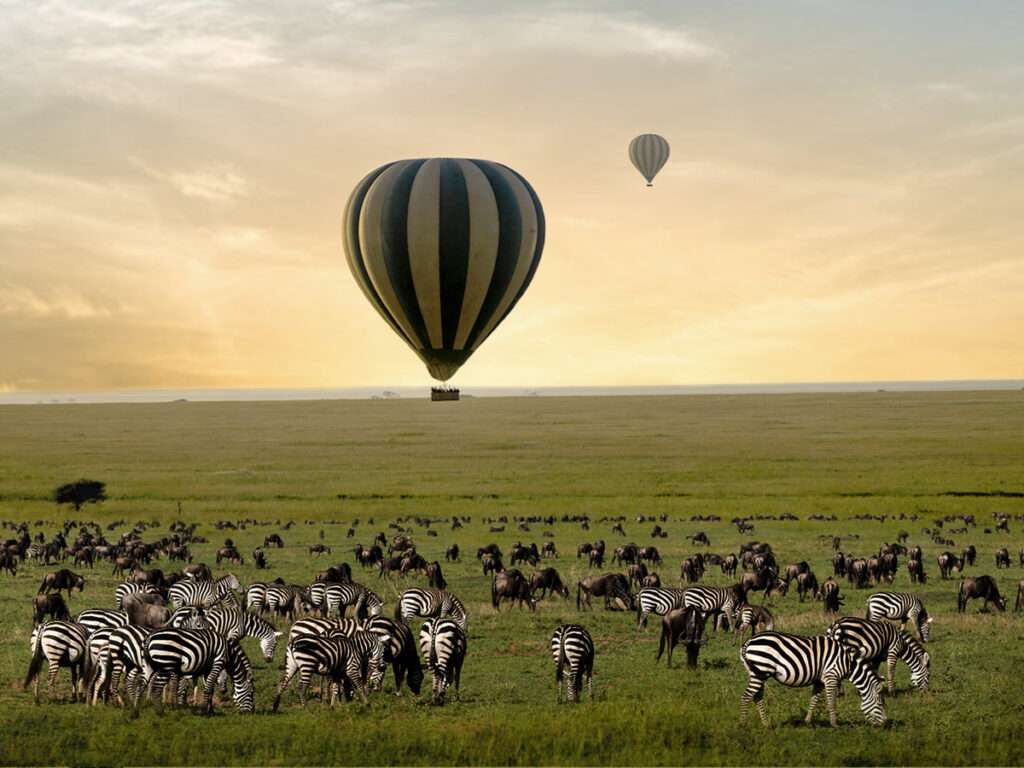
Some safari activities are optional extras. A hot air balloon ride over the Serengeti is, for many travelers, the single moment they describe most vividly ten years later.
Here is what makes it genuinely different from everything else on a Tanzania safari.
The silence is something you do not expect. Game drives are wonderful but they involve an engine, a vehicle, and movement. In the balloon, once the burner quiets between blasts, there is nothing. You hear the plains below you. Wildebeest grunts carry up. Birds call from the treetops directly beneath your basket. The wind takes you wherever it goes and you simply drift.
The scale of the Serengeti only makes sense from the air. From a Land Cruiser, even on the most open section of the plains, your horizon is perhaps 5 to 8 km. From the balloon at altitude, you see 30 or 40 km in every direction. The endlessness of the Serengeti that every travel writer describes finally becomes real from 300 metres above it.
The light at dawn over the Serengeti is extraordinary. The balloon launches at first light, which means you ascend during the exact 20-minute window when the sky moves through its most dramatic colours — deep blue, then orange, then gold — and the plains catch the low directional light that makes every animal, every tree, and every shadow photographically perfect.
You see things from the balloon that you cannot see from a vehicle. Hippos in pools that are inaccessible by road. Lion prides spread across open ground that vehicles have not yet reached. The full scale of a wildebeest herd moving across the grassland, which from the ground looks like a line of animals and from above looks like a living river.
It is a contained, complete experience. Woken before dawn, transferred to the launch site, lifted into the sky, one hour in the air, champagne on landing, breakfast in the bush, back to your lodge. It sits within a morning and leaves the afternoon free for a game drive. It is the most perfectly self-contained great experience available anywhere in East Africa.
Serengeti Hot Air Balloon Safari Price 2026: What Is Included
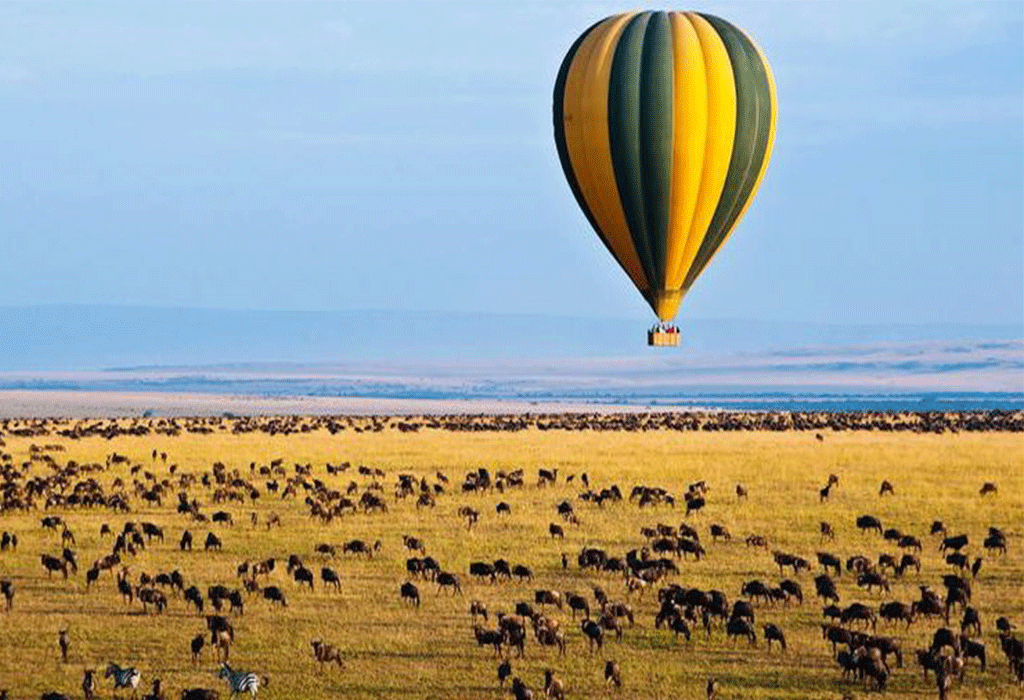
The standard shared balloon safari in the Serengeti costs between $500 and $550 per person for 2025/2026, depending on the operator and launch site. This price includes everything from the moment your transfer vehicle arrives at your lodge to the moment you are dropped back.
What the Price Covers
- Round-trip transfer from your lodge or camp to the launch site and back
- The balloon flight itself (approximately 50 to 70 minutes)
- TANAPA ballooning concession fee ($40 per person, included in the $550 price)
- A sparkling wine or champagne toast on landing
- A full English bush breakfast served in the open at the landing site, with hot food, fresh fruit, coffee, and tea
- Your commemorative flight certificate
What Is Not Included
- Gratuity for the crew and pilot (customary; approximately $10 to $20 per person)
- Optional photography packages offered by some operators
- Any additional game drive activities afterward (your regular safari guide will collect you from the breakfast site)
Private Balloon Charter
For honeymoon couples, anniversary celebrations, or groups who want complete exclusivity in the air, private balloon charters are available at select sites including the Grumeti Reserve in the Western Corridor. Private charter pricing varies significantly depending on season and operator and must be confirmed directly. TourwithPipi arranges private charter bookings for clients who want this experience as part of a bespoke Tanzania itinerary. Contact us for current private charter rates.
Is Hot Air Balloon Ride in Serengeti Worth the Price?
The honest answer is yes, for almost everyone. The balloon operators in the Serengeti face significant operational costs: each balloon is replaced after approximately 850 flight hours (the equivalent of a high-end vehicle in cost), licensed pilots who have completed extensive certification, a crew of up to 20 people per flight including launch teams and recovery crews, TANAPA concession fees for each passenger, and the full bush breakfast setup in a new location every day. The $599 price reflects genuine cost, not margin inflation.
More practically: virtually every traveler who does the balloon safari says it was the highlight of their Tanzania trip. Very few who did not do it say they are glad they saved the money.
The Four Serengeti Hot Air Balloon Safari Launch Sites: Where to Fly
Balloon flights operate from four different launch sites across the Serengeti, each active during specific seasons that align with where the wildlife is concentrated at that time of year. Your launch site is determined by where you are staying and what season you are visiting.
| Launch Site | Season | Wildlife Highlight |
|---|---|---|
| Central Serengeti (Seronera) | Year-round | Resident lions, leopards, cheetahs, and year-round plains game in the Seronera Valley |
| Ndutu Plains (Southern Serengeti) | December 25 to March 15 | Great Migration calving season — up to 8,000 wildebeest calves born daily; intense predator activity |
| Western Corridor (Grumeti) | June to October | Grumeti River crossings; hippo pods; wildebeest migration heading north |
| Northern Serengeti (Kogatende/Mara) | July to October | Mara River crossings; peak migration season; lion and leopard in the Lamai area |
Central Serengeti: The Year-Round Option
The Seronera launch site operates every day throughout the year and is the most accessible option for travelers staying in the central Serengeti at lodges near the Seronera River. The central area is the most consistently productive wildlife zone in the entire park, with resident lion prides, leopards in the fever trees, and cheetahs on the open floodplains. From the balloon above, you see the Seronera River winding through the woodland, the kopje outcrops rising from the grassland, and plains game in all directions.
Ndutu Plains: Calving Season Above the Nursery
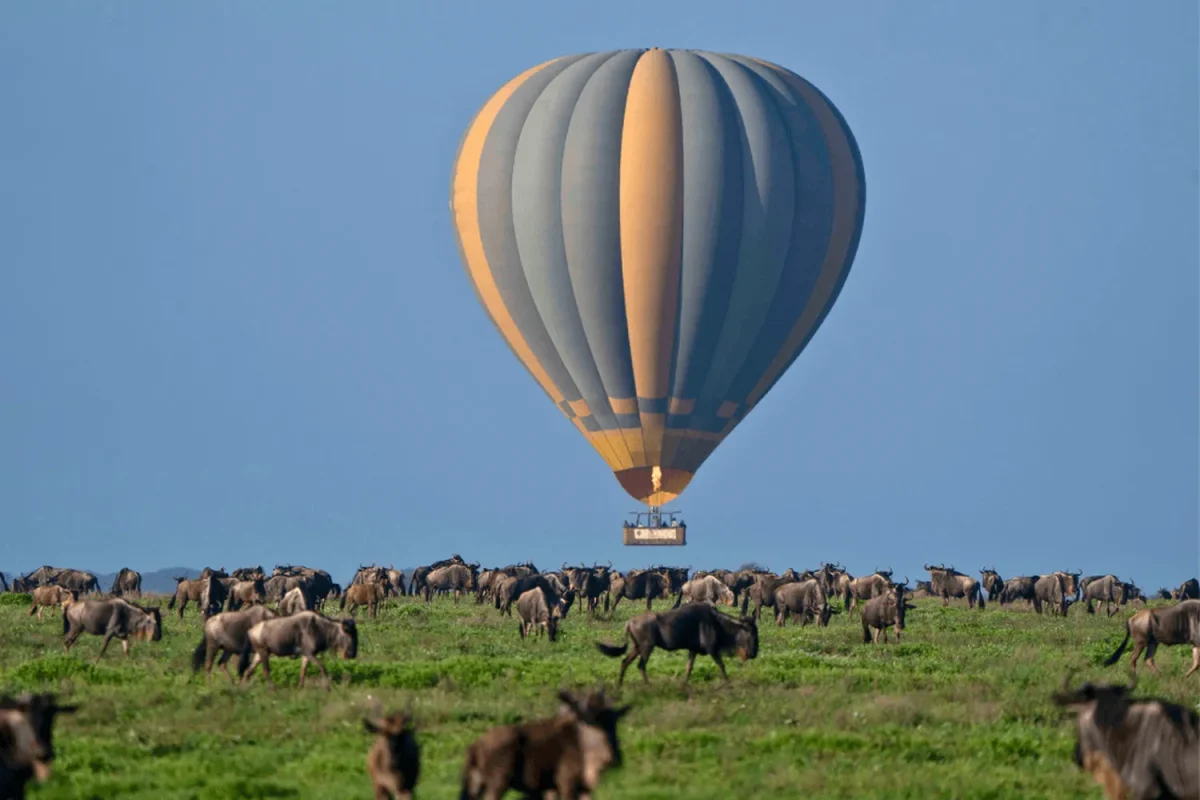
The Ndutu launch site is available from December 25 through March 15 and coincides with the Great Migration calving season. Looking down from a balloon onto the Ndutu Plains in February, when approximately 8,000 wildebeest calves are being born every day, is unlike any other wildlife experience from the air. Predators — lion, cheetah, hyena — are visible moving through the herds below. The low short grass of Ndutu means that even from altitude, individual animals are clearly distinguishable.
Western Corridor: River Crossing Season
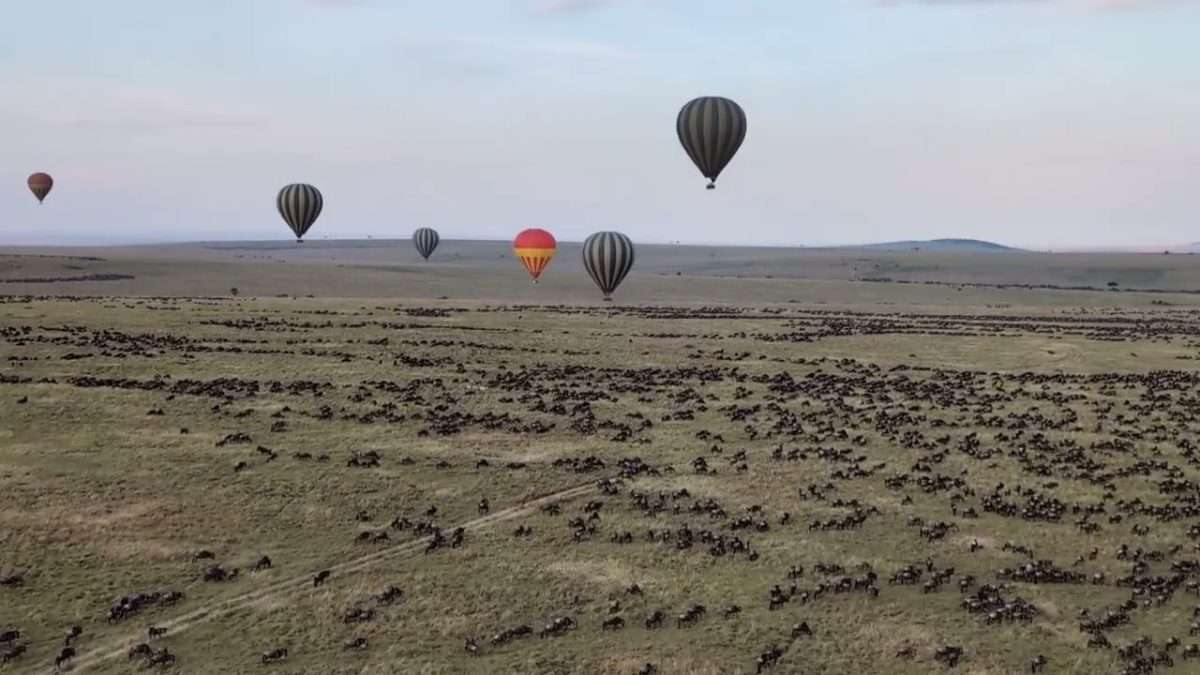
The Grumeti launch site operates from June through October, timed for the migration’s westward movement through the Western Corridor. The Grumeti River, where enormous Nile crocodiles wait for the wildebeest crossings, is visible below. Hippo pods in the river pools are clearly seen from the balloon. The crossing events themselves are unpredictable but your pilot tracks from the air to find herd concentrations wherever the wind direction permits.
Northern Serengeti: Peak Migration Drama
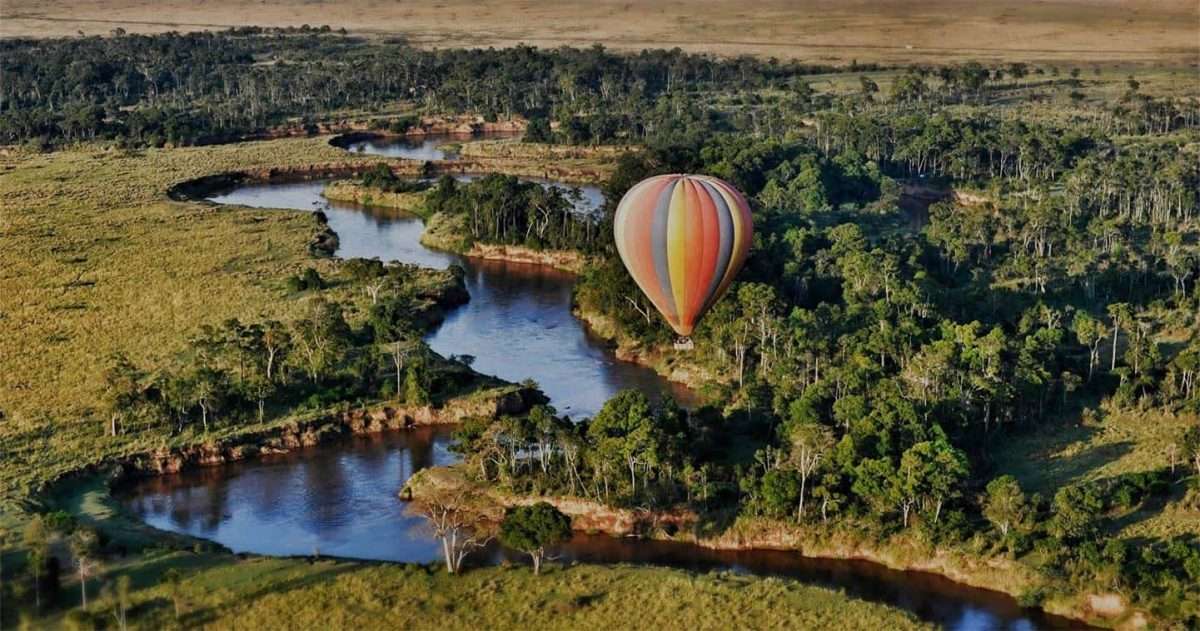
The northern launch site near Kogatende operates from July through October, the peak season for the famous Mara River crossings. From the balloon you can see the Mara River below and the dark mass of wildebeest herds spread across the northern plains on both sides of the water. On mornings when a crossing is happening, you may see it from above — the chaos and movement of thousands of animals entering the water at once.
TIP: If your primary reason for the balloon is seeing the Great Migration from the air, align your launch site with the season. The Ndutu site in January to March for calving, or the northern Serengeti in August to September for Mara River crossings, will give you the highest probability of migration wildlife directly below you.
The Complete Serengeti Balloon Safari Experience: Hour by Hour
Most travelers who have not done a balloon safari in Serengeti before are unsure exactly what to expect from the moment they are woken to the moment they return to the lodge. Here is the full experience in order.
4:30am to 5:00am: The Wakeup
Your guide or lodge staff wakes you well before dawn. The time varies depending on how far your lodge or camp is from the launch site. If you are staying near Seronera, the transfer typically picks you up at 5:30am. Lodges further from the launch site may require a 4:00am or 4:30am departure. Your lodge prepares coffee and tea and light snacks to take with you, because the bush breakfast comes after the flight, not before.
This early start is one of the most memorable parts of the whole experience. You are in a vehicle moving through the dark Serengeti before sunrise. Your headlights catch animals you would not see in daylight — a porcupine crossing the track, a spotted hyena moving toward water, a serval cat in the roadside grass. The journey to the launch site is, in itself, a pre-dawn game drive.
5:30am to 6:00am: Arriving at the Launch Site
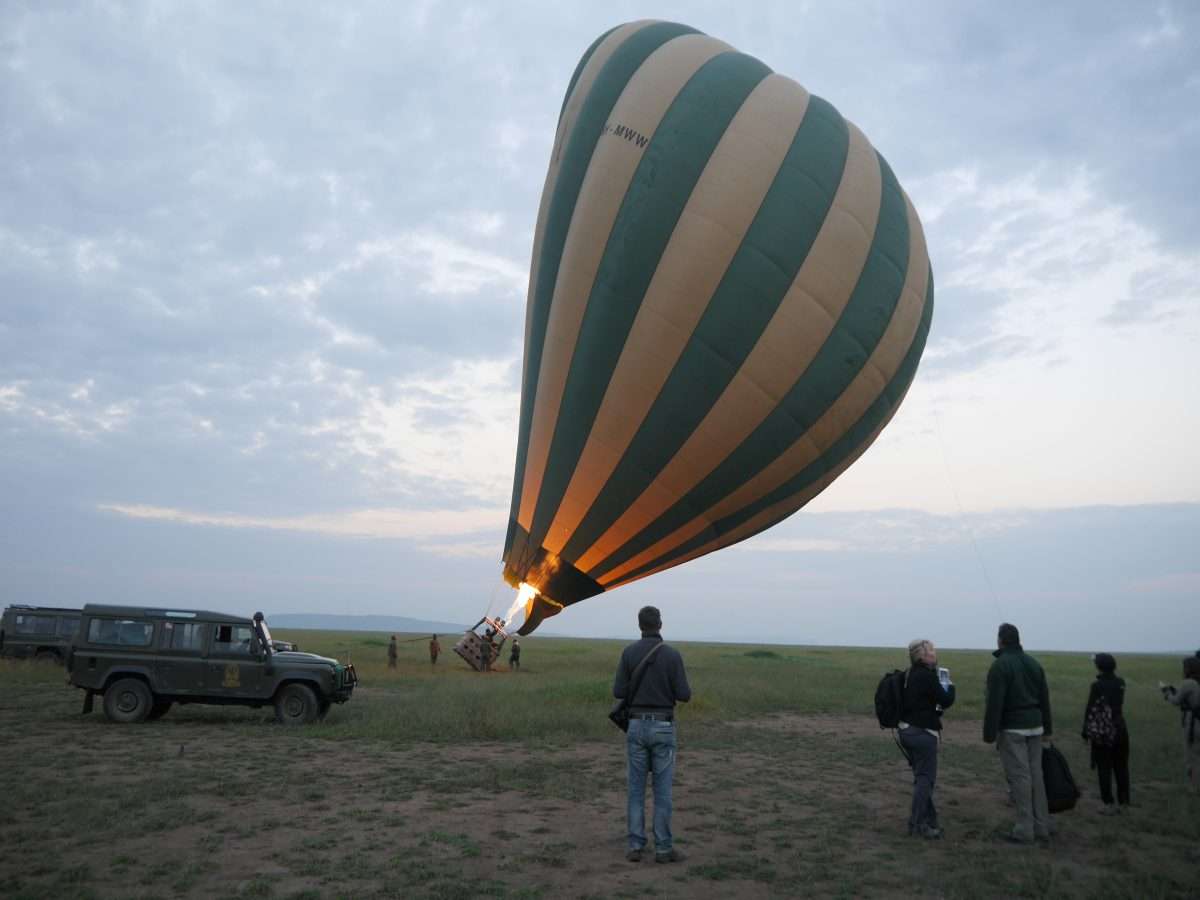
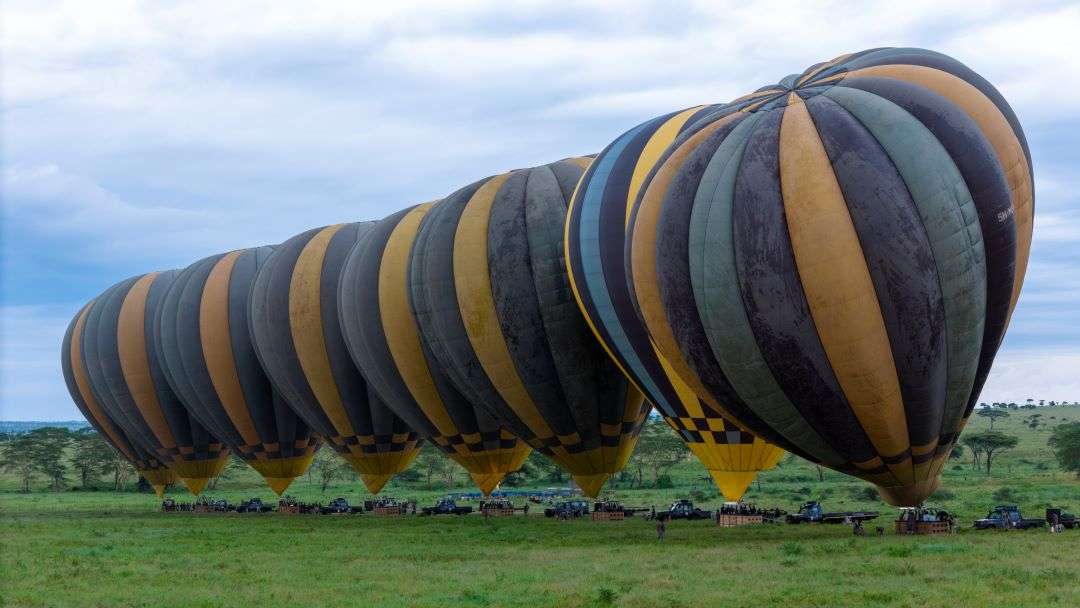
When you arrive at the launch site, the crew is already there. Burners are lit and the balloon is being inflated, spread across the grass and slowly filling with hot air until it lifts from the ground. The sight of a balloon being inflated at dawn, in the dark, with the burner flame illuminating the interior of the fabric from inside, is one of those images that stays with you.
Safety briefing: Before any passenger boards, the pilot delivers a thorough safety briefing. This covers how the balloon moves and how altitude is controlled, the correct boarding position, how to sit during the flight, and most importantly the landing position. For landing, passengers brace in a crouch position against the padded basket wall, holding the overhead ropes. This is the most important thing you hear at the briefing — pay attention to it.
The pilot also explains the basic physics of balloon flight: altitude is controlled by the burner (heat rises the balloon, cooling descends it), and direction is controlled by finding wind currents at different altitudes that are moving in slightly different directions. The pilot cannot steer the balloon the way a plane is steered; the wind goes where it goes, and the skill of piloting is in reading those winds to approximate the intended direction.
Coffee, tea, and biscuits are served at the launch site while the balloon reaches full inflation. This is your window to meet your fellow passengers, watch the inflation process up close, and take photographs of the balloon against the pre-dawn sky.
6:00am: Boarding and Lift-Off
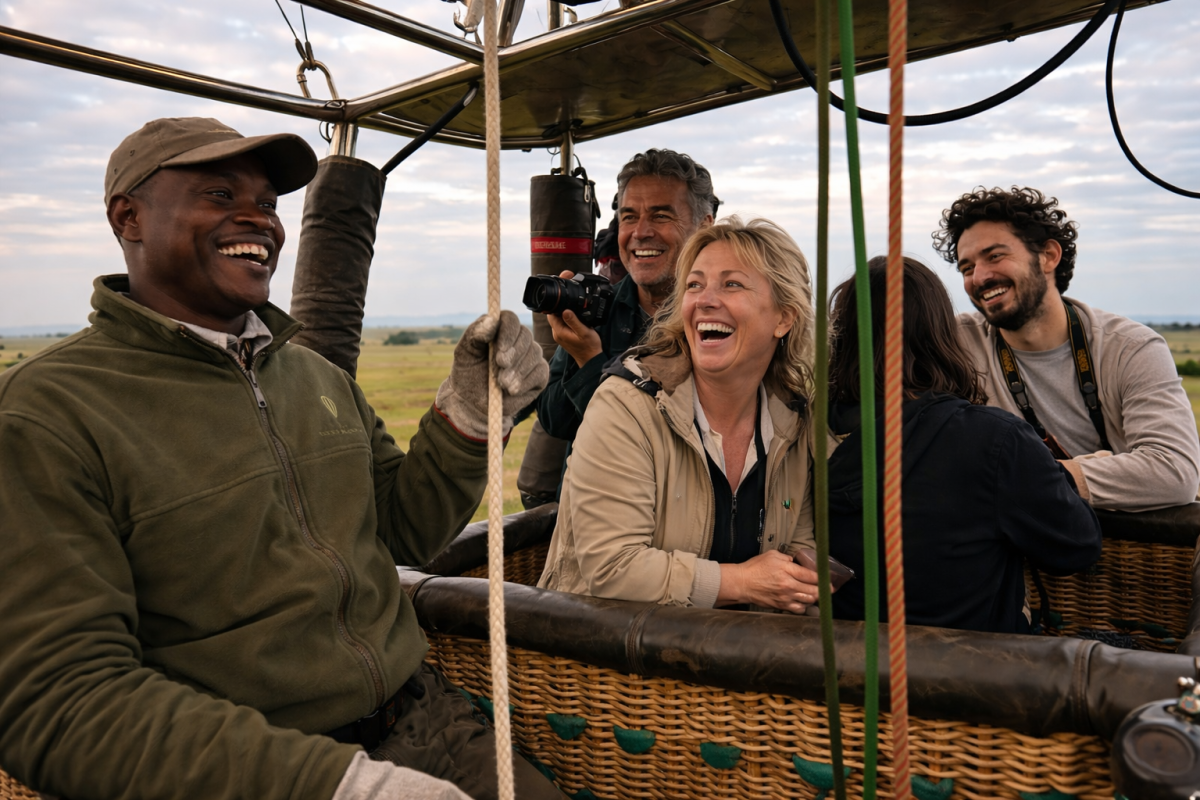
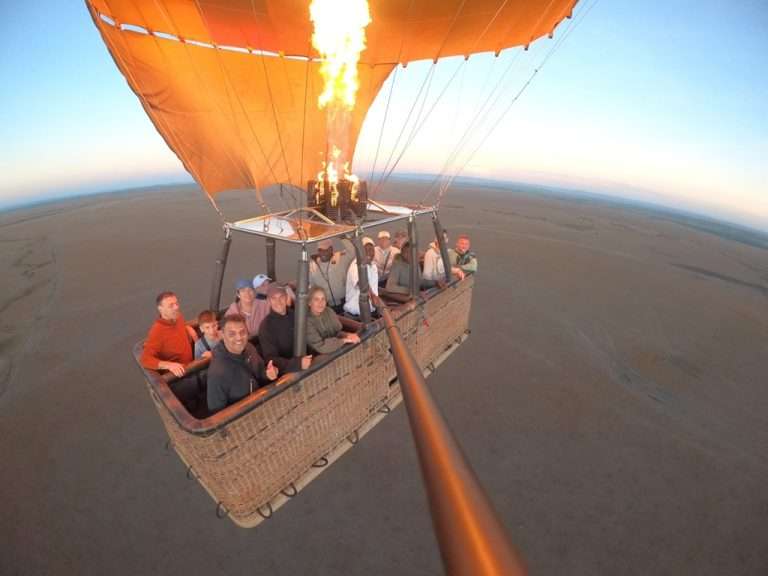
Boarding the basket involves stepping into a designated compartment. Most commercial Serengeti balloons have divided baskets with separate sections, typically holding 4 passengers each, around a central pilot compartment. The basket walls are approximately chest height with rope handholds along the top rail.
At dawn, the pilot chooses the right moment. The burner fires and the balloon lifts. The lift-off is smooth — much smoother than most first-time passengers expect. There is no lurch, no sudden movement, no feeling of falling. You simply rise. The ground moves away beneath you. The camp you can see from above becomes tiny within 30 seconds.
The burner fires in controlled bursts to control altitude. Each burst is loud — the noise of the gas flame is the one jarring element in an otherwise completely silent experience. Between bursts, the silence over the Serengeti is absolute.
6:00am to 7:00am: In the Air
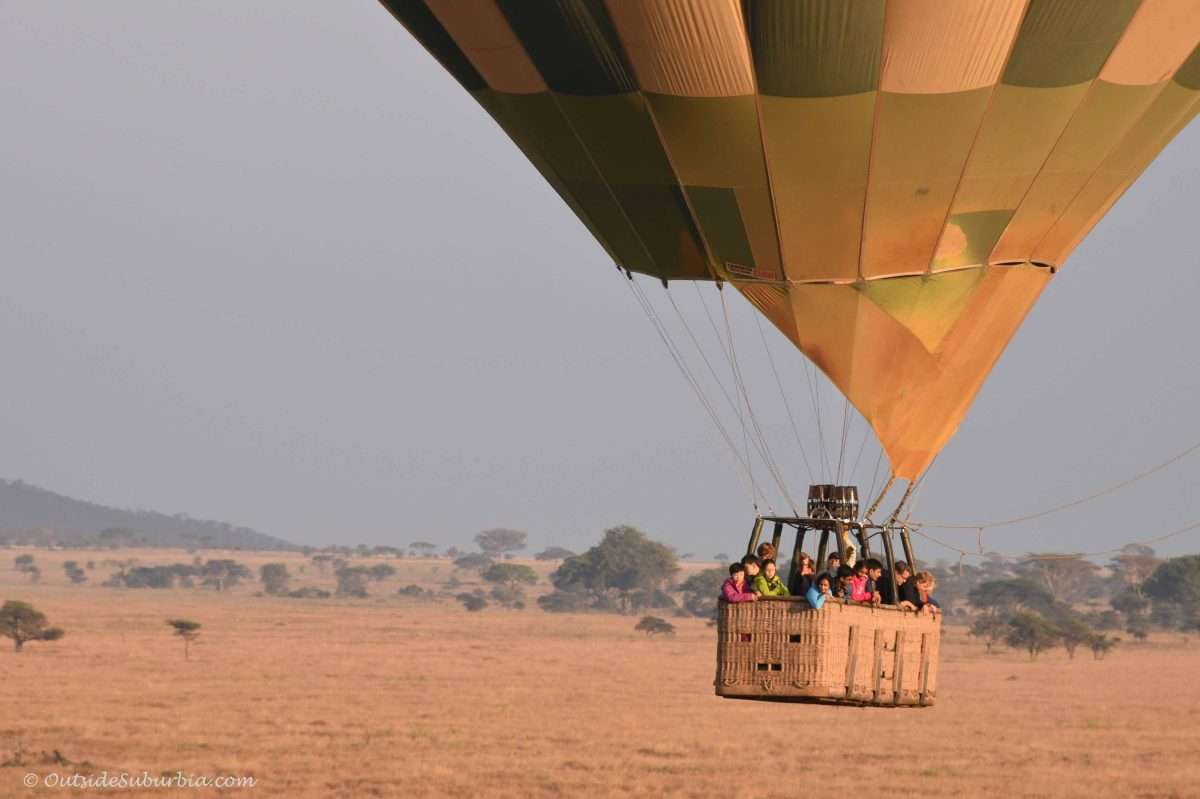
The flight lasts approximately 50 to 70 minutes. In that time, the pilot alternates between high-altitude flight — where you get the sweeping panoramic views that make the scale of the Serengeti comprehensible — and low-level flight, where the balloon skims treetops and the wildlife below reacts to your presence or, more often, ignores you entirely.
What you see depends on your launch site, the season, and where the wind takes you. On a typical flight over the Central Serengeti:
From high altitude you see the Seronera River as a silver thread through dark woodland, with the open plains stretching in every direction to the horizon. Herds of wildebeest appear as dark moving patches. Roads look like thin lines. Your lodge, if visible, is a cluster of rooftops in a green area.
At low level, you may drift over a hippo pool and see every individual hippo below you, hearing them grunt. A family of elephants may look up as the shadow passes. Giraffes often watch the balloon with apparent curiosity, stretching their necks upward. Lions, surprisingly, often ignore the balloon entirely and continue resting or moving below.
Your pilot will narrate key sightings as you fly and can attempt to position the balloon above particularly interesting wildlife using the wind currents at different altitudes. This is the art of the experienced Serengeti pilot — knowing the local wind patterns well enough to consistently find the wildlife from above.
Photography from the balloon is excellent. A wide-angle lens covers the panoramic landscape shots. A telephoto pulls in individual animals below. The light at dawn is directional and warm. The main challenge is keeping the camera steady during burner blasts, which creates a small vibration in the basket.
7:00am: Landing
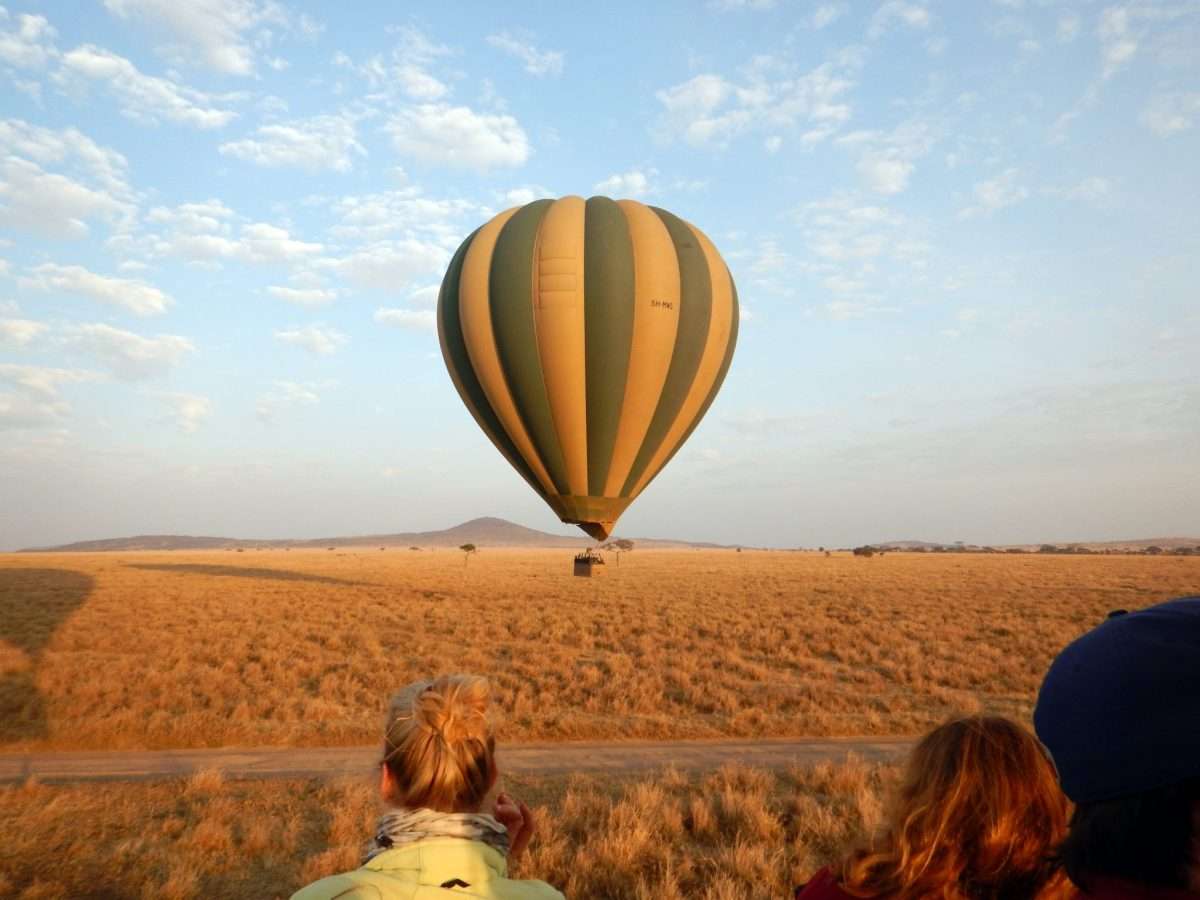
Landing is the most physically active moment of the entire experience. As the pilot begins the descent, they warn passengers to move into the landing position: crouch in your designated corner, hold the overhead ropes firmly, and keep your knees bent. The landing can be smooth — a gentle settling onto the grass — or bumpy, depending on the ground surface and the wind at the moment of touchdown. The basket may tip to one side before settling. This is normal and is why the braced position matters.
The recovery crew on the ground, who have been tracking the balloon in vehicles since launch, are waiting at the landing site. They help anchor the balloon and assist passengers in stepping out of the basket. Within a few minutes of landing, the champagne cork pops.
7:15am to 8:30am: Champagne Toast and Bush Breakfast
The champagne toast on landing follows a tradition that dates back to the very earliest hot air balloon flights in 18th-century France. The story goes that early balloonists, landing in farmers’ fields and alarming the rural population, offered champagne as a peace offering. The tradition has continued in balloon culture ever since. In the Serengeti, the sparkling wine toast happens immediately on landing, while the balloon is being deflated behind you, standing on the open Serengeti plains.
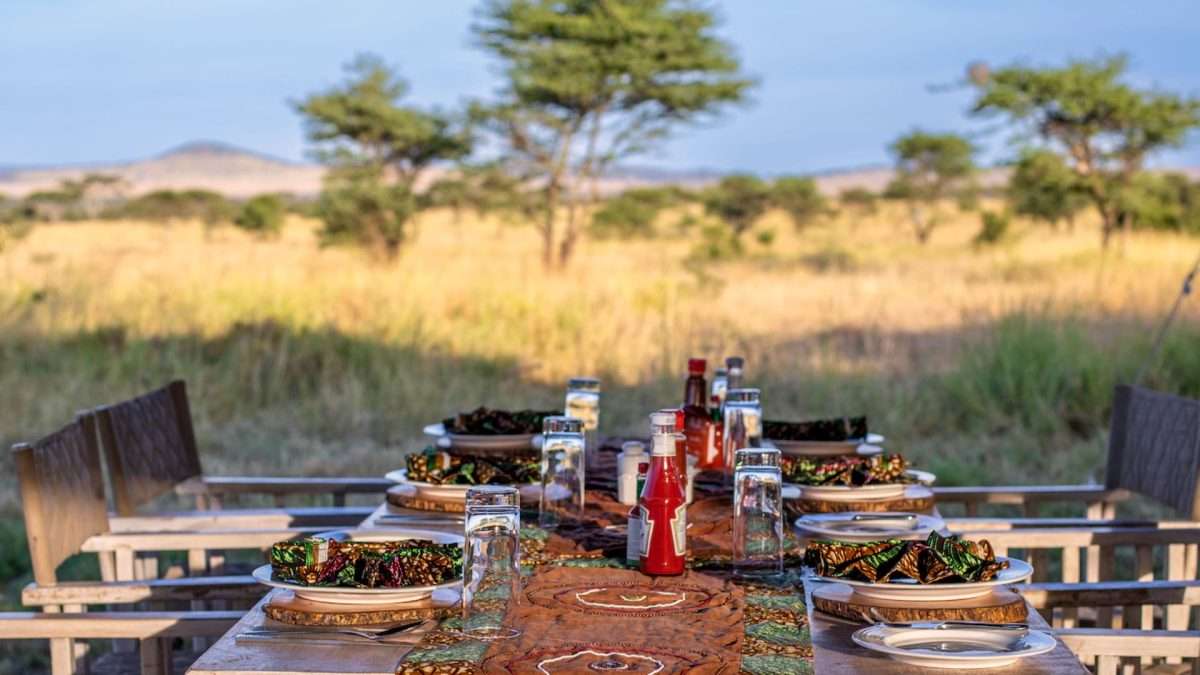
The bush breakfast that follows is one of the most memorable meals most travelers eat in Africa. A long table is set up in the open, under an acacia tree if one is available, with a full hot English breakfast — scrambled eggs, sausages, bacon, grilled tomatoes, fresh bread — along with fresh fruit, yogurt, coffee, and tea. The setting is the open Serengeti. You have just come out of the sky. You are hungry from the 4:30am start. The food tastes extraordinary.
You receive your commemorative flight certificate at the breakfast table.
After breakfast, your regular safari guide and vehicle collect you from the breakfast site for a game drive before returning to the lodge.
Is a Serengeti Balloon Safari Safe?
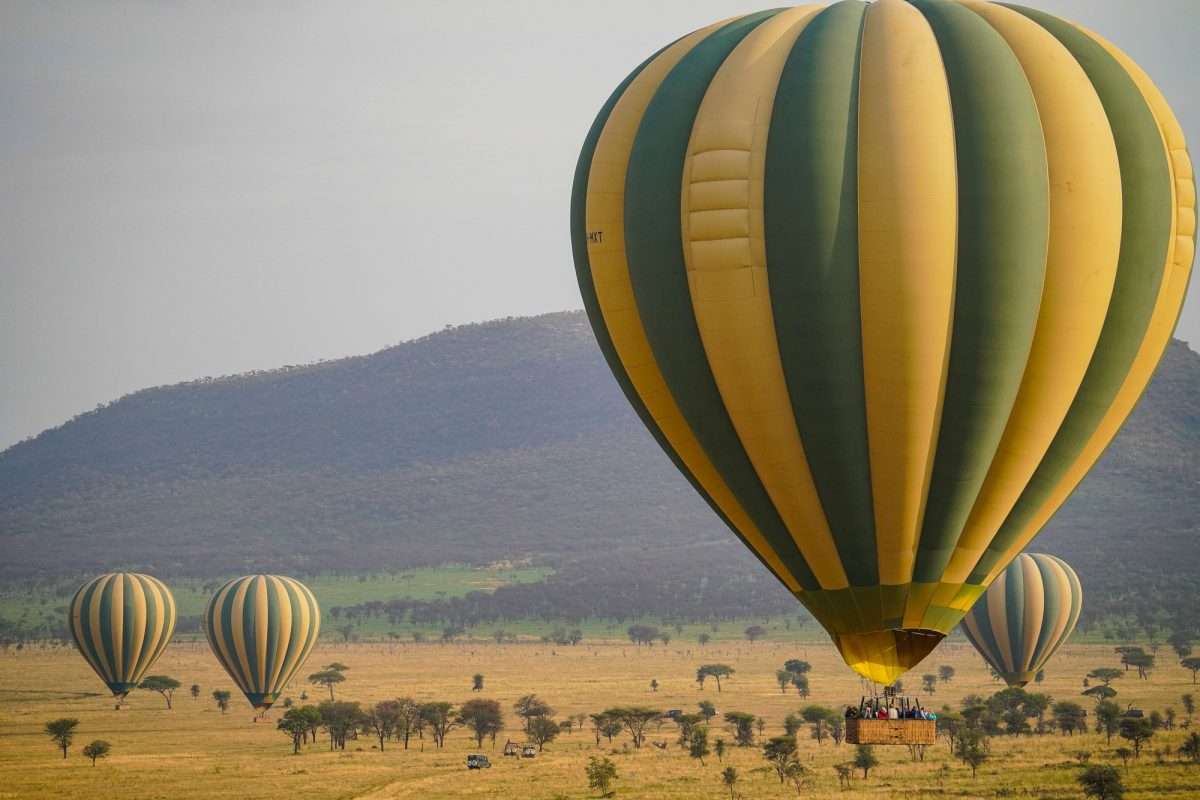
Yes. Hot air balloon operations in the Serengeti National Park are regulated by the Tanzania Civil Aviation Authority (TCAA) and only licensed, certified pilots are permitted to operate commercial flights. Serengeti balloon operators use balloons manufactured by Cameron Balloons, a specialist British manufacturer that is among the most respected balloon makers in the world.
Each balloon is replaced after approximately 850 flight hours as a safety requirement, regardless of condition. This replacement schedule is the primary reason balloon safaris are expensive — a single Cameron balloon costs more than $100,000. The maintenance regime ensures that every balloon operating over the Serengeti is in peak condition.
The ground crew for each flight typically numbers around 20 people, covering launch preparation, recovery vehicle tracking, breakfast setup, and passenger transfer. This is a professional, large-scale operation, not a casual adventure activity.
Who should not fly:
- Children under age 7 (most operators set minimum age at 7; some at 6 — confirm with your operator)
- Pregnant women
- Anyone with severe mobility limitations that prevent assuming the landing position
- Anyone with serious back conditions — landings can be bumpy and the crouching position puts stress on the lower back
- Anyone with serious heart conditions — consult your physician before booking
If you have any medical concerns, consult your doctor before booking. TourwithPipi recommends this as part of pre-trip health planning for any Tanzania safari.
Weather cancellations: Balloon operations are subject to suitable weather conditions. Strong winds, heavy rain, or poor visibility will result in cancellation. In the event of cancellation, passengers are either rebooked on a subsequent flight (if available) or refunded in full. The experienced local pilots make the go/no-go decision each morning based on conditions at the launch site. Cancellations are relatively rare during the dry season from June to October.
What to Wear and What to Pack
Clothing:
The most important thing to know is that the Serengeti at 5am is cold. Even during peak season in July and August when the days are warm, the pre-dawn departure and the first part of the flight at altitude is genuinely chilly. You will want a fleece or warm jacket for the transfer and the early part of the flight. Once the sun is fully up and you are at low altitude, the warmth builds quickly, so layers that you can remove are the practical approach.
- Warm layer (fleece, light down jacket, or similar) — essential
- Long sleeve base layer
- Safari-appropriate trousers or long pants for the morning cold
- Closed-toe shoes or ankle boots (the launch site grass can be wet with dew)
- Sunglasses (once the sun comes up, the light reflected off the plains is bright)
- Wide-brimmed hat for after landing and during breakfast
Do not wear: loose scarves that can catch on equipment, sandals or open shoes, or anything white or brightly colored that will disturb wildlife during low-altitude passes.
Equipment:
- Camera with both a wide-angle and a telephoto lens if you have them. The panoramic shots need the wide-angle; the animals below need the telephoto
- Binoculars — useful for identifying species at altitude
- A small secure bag that can hang from your wrist or neck inside the basket (items dropped from the balloon basket are lost)
- Fully charged camera battery and an empty memory card — you will use both
- A small amount of cash for gratuities for the crew
Do not bring:
- Large bags or backpacks that take up basket space
- Items that could blow away in the wind (loose hats without chin straps, papers)
- Expensive jewelry or anything fragile
Best Time for a Serengeti Balloon Safari
Hot air balloon rides over the Serengeti operate year-round from the Central Serengeti launch site near Seronera, and seasonally from three other sites. The right time to go depends on what you most want to see from the air.
- For the Great Migration from the air: July through September from the Northern Serengeti launch site gives the best chance of seeing active Mara River crossings from above. August is the statistical peak for crossing events.
- For the calving season: December through February from the Ndutu launch site gives you the extraordinary spectacle of the southern Serengeti in full calving mode. From the balloon you see the vast nursery plains below, with predators visible in the herds.
- For clear skies and photography conditions: June through October, the dry season across all sites, delivers the clearest visibility and most stable wind conditions. Photography is easiest in these months.
- For value: The Ndutu calving season window from late December through February is an extraordinary alternative to peak season. Wildlife density is exceptional, the balloon experience is at its most dramatic, and lodge rates are lower than July to October.
TIP: Book your balloon safari in Serengeti at the same time you book your lodge. During July to October peak season, balloon slots at the Northern Serengeti and Central Serengeti sites sell out weeks ahead of travel dates. Do not leave it until you arrive in Tanzania.
Private Balloon Charter: The Most Exclusive Option
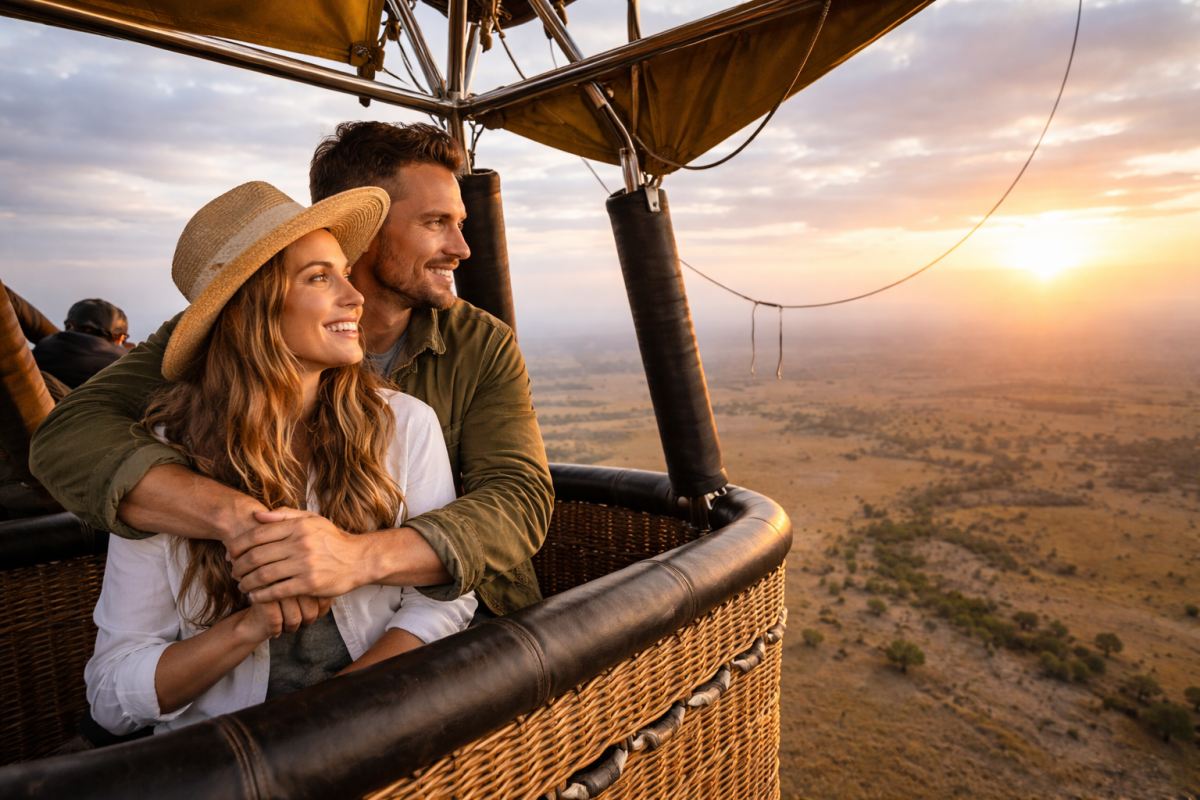
For couples celebrating a honeymoon, anniversary, or proposal, a private balloon charter takes the Serengeti balloon experience from memorable to genuinely extraordinary.
Private charters are available at select sites, most notably in the Grumeti Reserve in the Western Corridor. The private charter means your group — typically just two people, or a small private party — occupies a smaller basket flown by a solo pilot. The intimacy of watching the sun rise over the Serengeti with no other passengers, in total silence, is a completely different experience from the shared balloon with 12 to 16 passengers.
Private charter pricing varies significantly by season and site and is substantially higher than the $599 shared balloon rate. It is best confirmed directly through TourwithPipi as part of a complete Tanzania itinerary rather than booked independently.
How to Add a Balloon Safari to Your TourwithPipi Tanzania Itinerary
A Serengeti balloon safari is available as an add-on to any of TourwithPipi’s Tanzania packages that include time in the Serengeti. The balloon is booked and paid separately from the core safari package at the current operator rate ($500 to $550 per person for 2026/2027), and TourwithPipi handles all logistics including the correct launch site for your dates, lodge transfer coordination, and the game drive that follows the breakfast.
Tanzania Packages That Include Serengeti Nights
All three of the following TourwithPipi Tanzania packages include Serengeti National Park nights and can have the balloon safari added.


