
A sundowner is a safari’s evening pause. Your guide parks the vehicle in a scenic spot just before sunset. You step out, watch the sky change color, and talk about the day.
That’s the whole idea: stillness, a good view, and a moment to reflect before dark. It’s one of the most loved parts of any safari, for couples, for families, and for anyone who has never watched an African sunset from the middle of the bush.
What Actually Happens at a Safari Sundowner
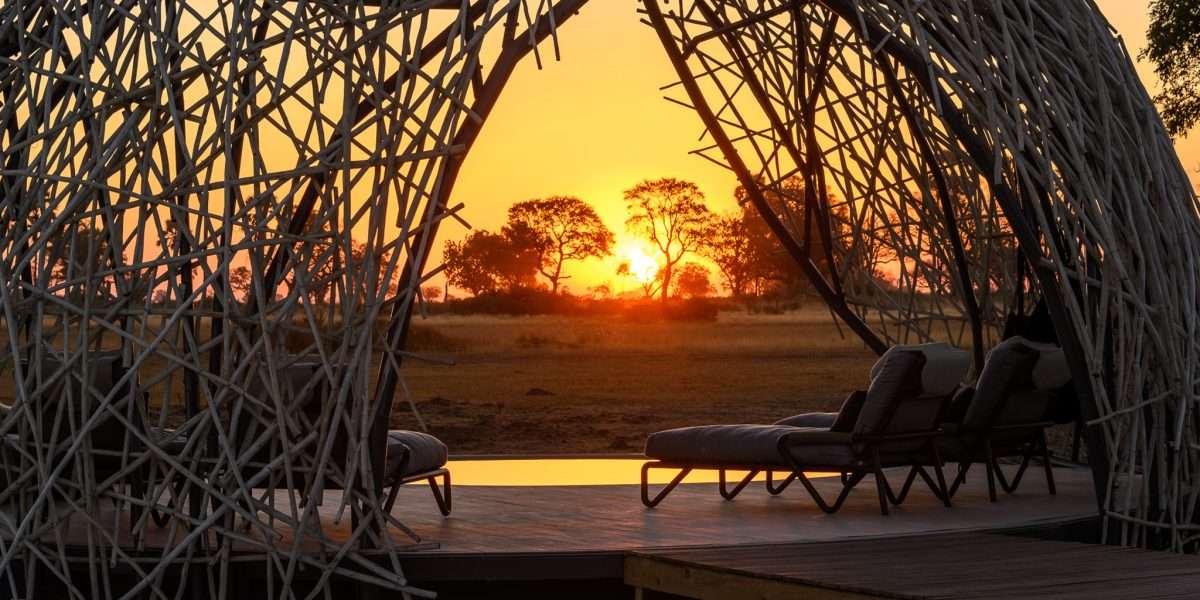
- Your guide picks a spot with a view: a ridge, a riverbank, or open plains.
- The vehicle stops, and everyone steps out to stretch and take it in.
- Light snacks and refreshments are usually offered, alongside plenty of water and juice.
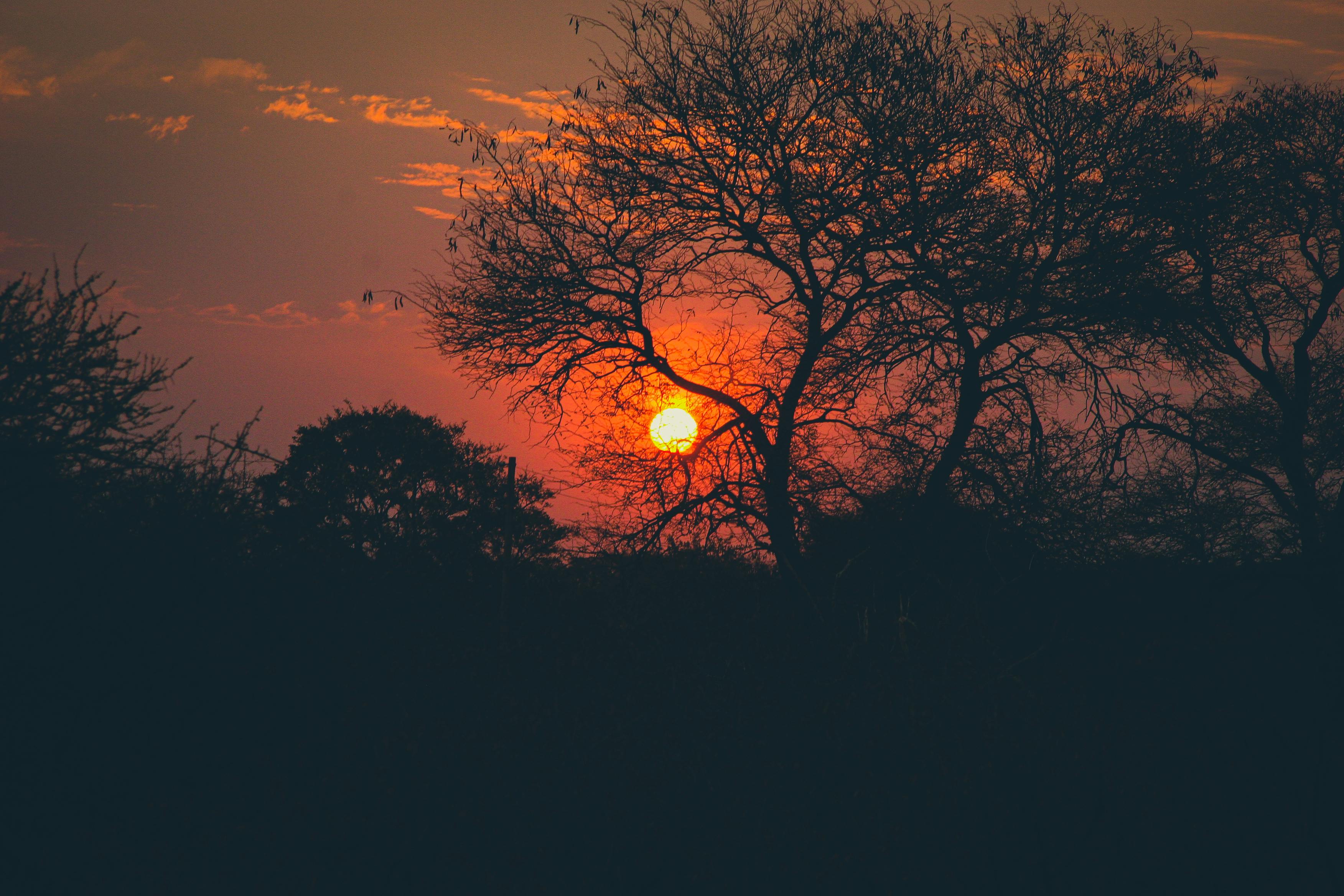
- The sky shifts through pink, orange, and deep purple as the sun drops.
- Conversation turns to the day’s sightings and whatever caught everyone’s eye.
- The bush starts to sound different as nocturnal animals wake up nearby.
Where the Sundowner Tradition Comes From
The ritual dates back to colonial-era Africa, when travelers paused each evening for a drink as the sun went down. Over time, the drink mattered less and the pause itself became the point: a moment to stop, take in the view, and unwind before dark. That’s the version that survives on safaris today.
Stories Are the Real Heart of a Safari Sundowner
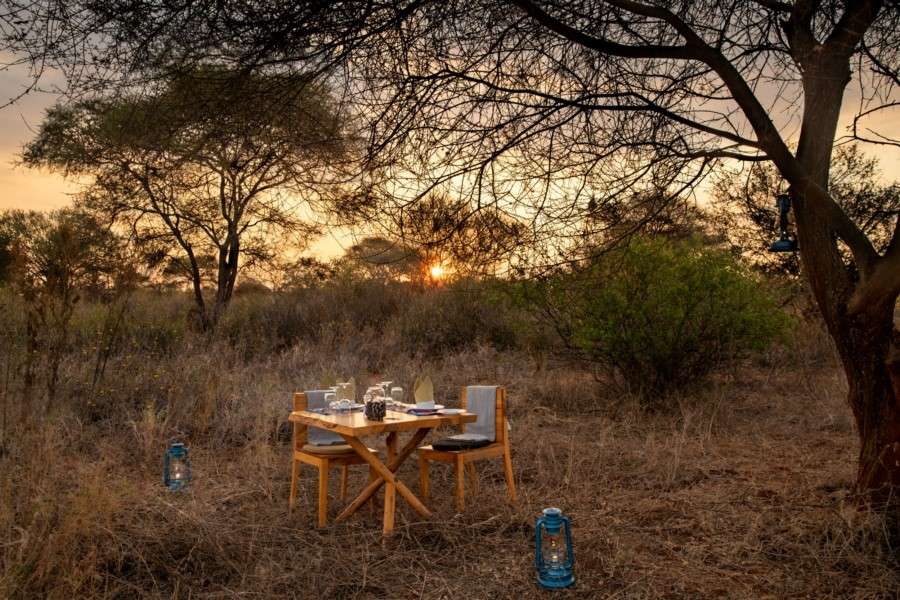
The setting matters, but the stories are what people remember.
- Guides use this quiet moment to share what they know: animal behavior, local legends, and memories from years in the bush.
- Guests swap their own highlights from the day, the near-miss lion sighting, the elephant that walked right past the vehicle.
- Older travelers often share stories from past trips, and kids ask questions nobody else thought to ask.
- It’s unhurried. There’s no schedule pushing the conversation along, which is exactly what makes it feel different from anywhere else on a trip.
From Sundowner to Boma Fire: Bonfires and Evening Games
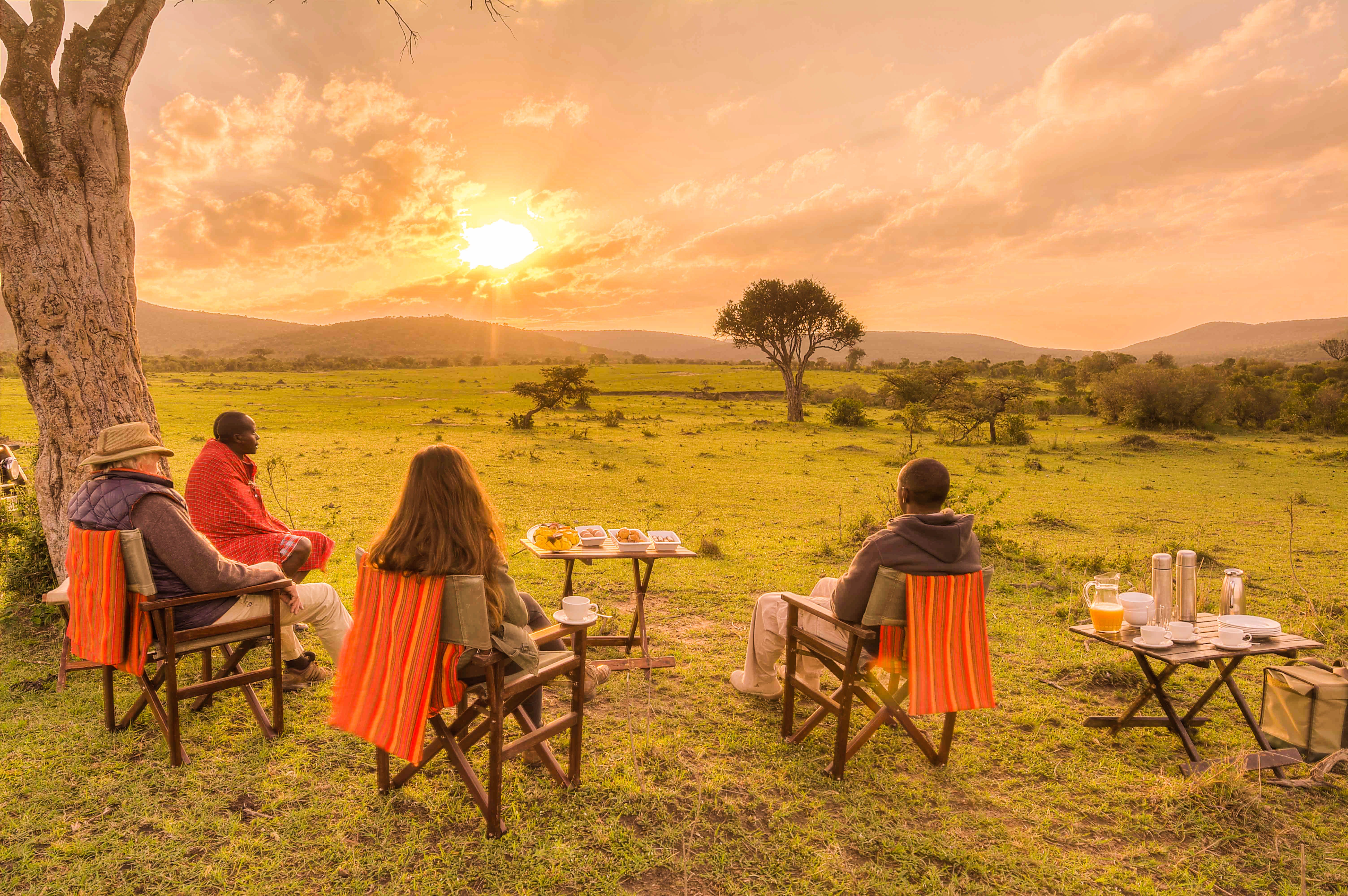
Many camps carry the sundowner mood straight into the evening with a boma fire. A boma is a Swahili word for a fenced gathering space, and here it means a communal bonfire and dinner setup back at camp.
- A fire pit is lit, often ringed with chairs or cushions for the whole group.
- Local staff sometimes perform traditional songs, drumming, or dance around the fire.
- Simple games get played: spot-the-constellation, animal trivia, or guessing games tied to the day’s sightings.
- Kids especially love this part. It turns an early bedtime into a highlight of the trip instead.
- Dinner is often served buffet-style around the fire, keeping the relaxed, unstructured mood going from sundowner straight through to the last course.
A Sundowner for Couples and Honeymooners
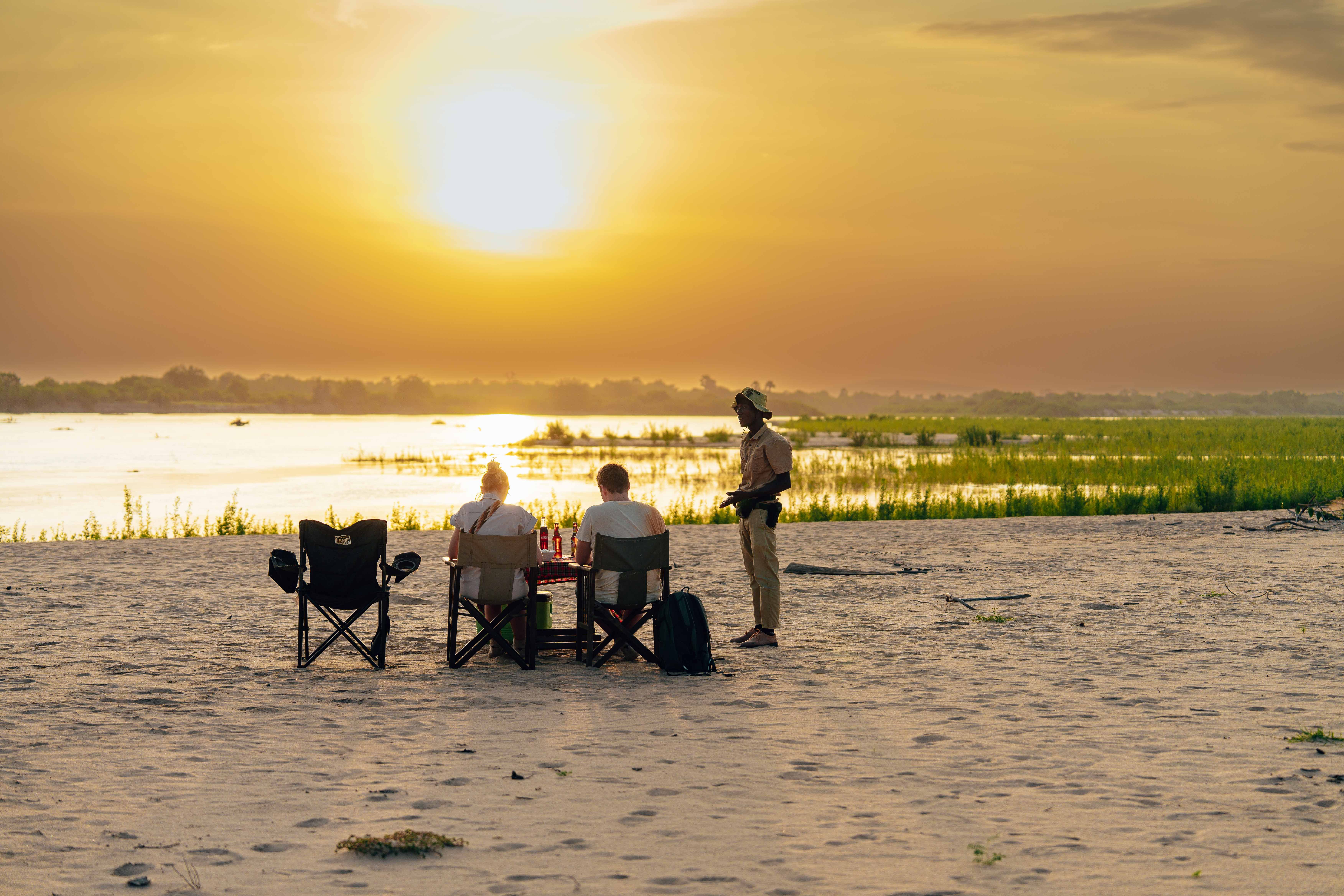
Few moments on safari feel as intimate as this one.
- The vehicle stops, engine off, with nothing around but open bush and the sound of the wind.
- Golden light settles over the plains, and it’s just the two of you, your guide at a respectful distance, and whatever wildlife happens to be nearby.
- Some camps set up a private sundowner spot for honeymooners, away from other vehicles, sometimes with a blanket laid out on the ground.
- It’s one of the easiest ways to turn an ordinary game drive into something you’ll talk about for years.
A Sundowner for Families with Kids
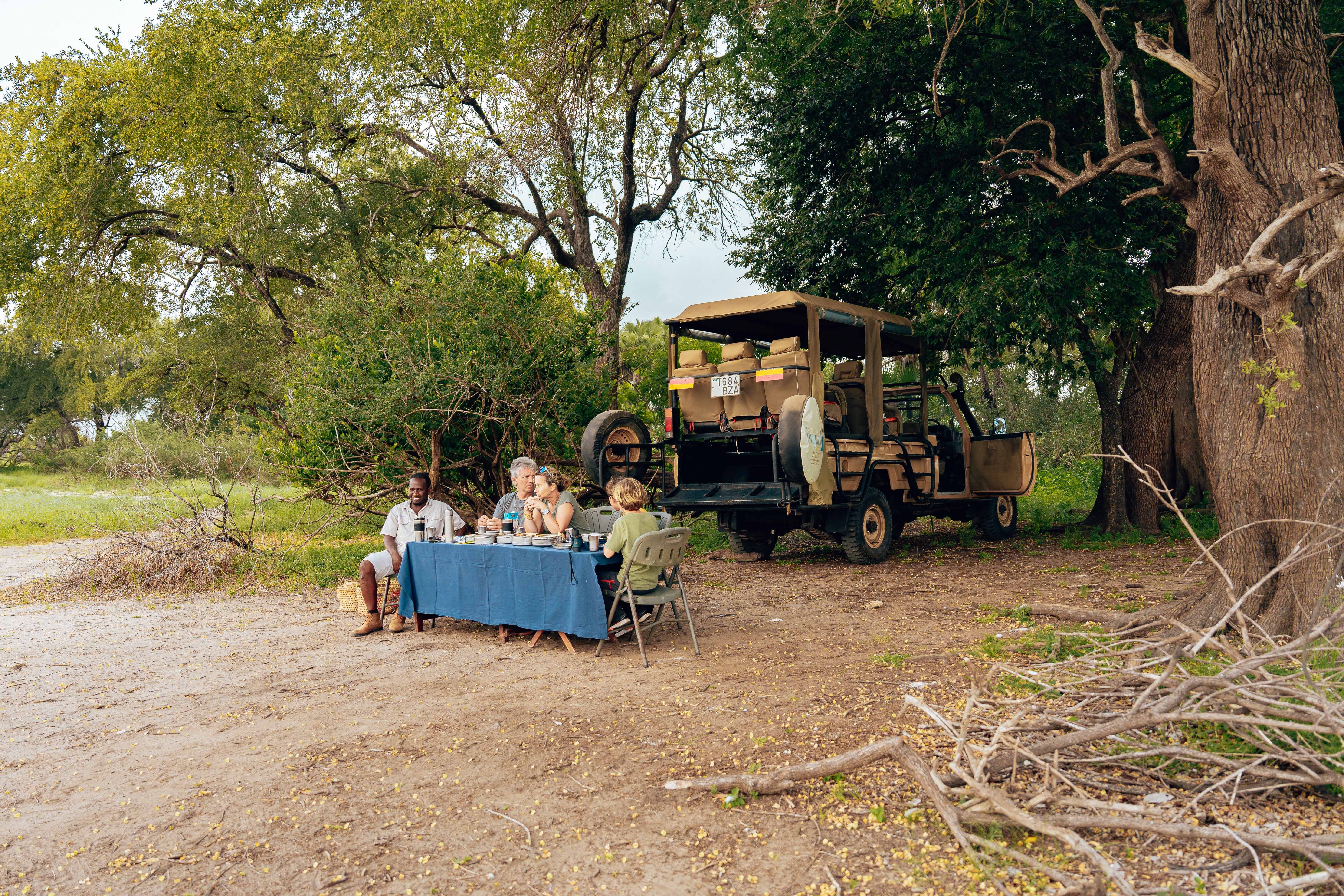
This isn’t just an adults’ ritual. Good camps build it around families too.
- Ask about a kids’ picnic setup at the same spot, so everyone’s included.
- Bring binoculars. Dusk is prime time for spotting nocturnal animals waking up nearby.
- Turn the sunset into a game: who can spot the most colors, or guess how many minutes until it disappears.
- Keep the stop short if young children get restless. Fifteen to twenty minutes is often enough.
- Save the bigger activities, songs, drumming, and campfire games, for the boma fire back at camp, when kids have more room to move around.
What Sets a Great Sundowner Apart
Any vehicle can stop for a view, but the best camps go further:
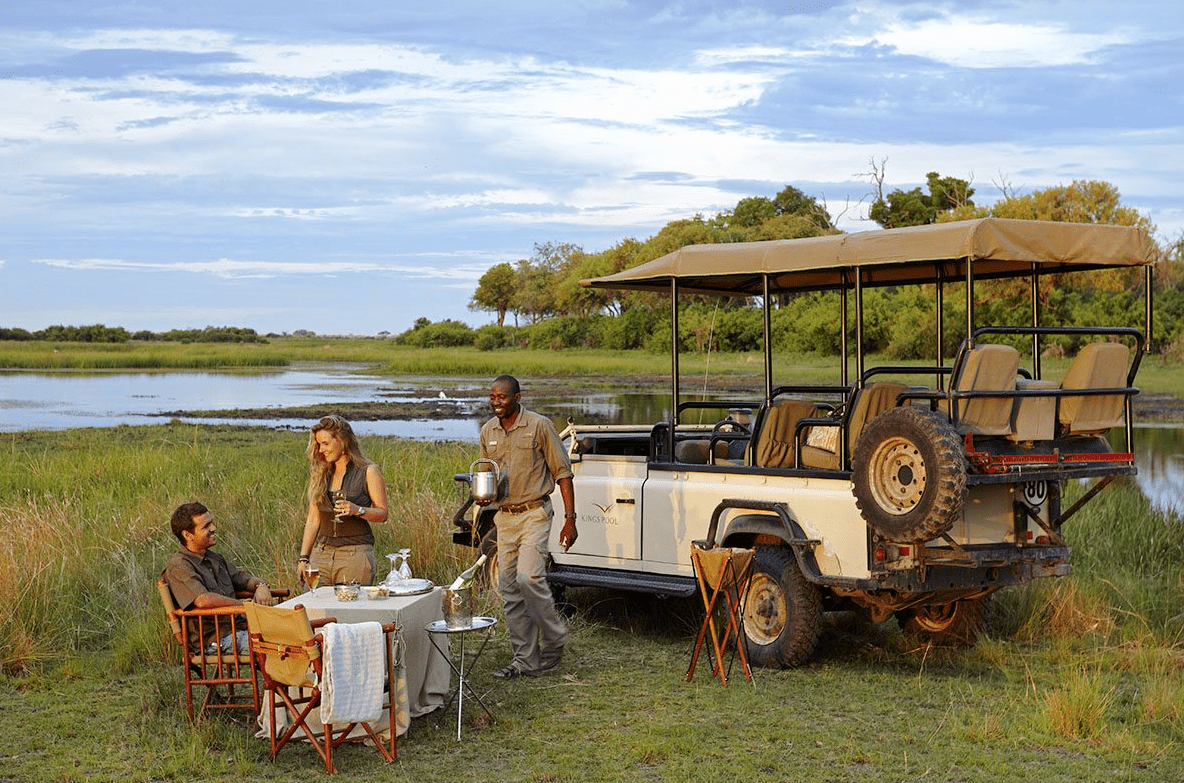
- Some run a dedicated sundowner vehicle, built to reach remote, off-road viewpoints a standard game-drive vehicle can’t get to.
- The best spots are scouted in advance, not chosen on the fly, so you get an actual vantage point instead of whatever patch of bush is closest.

- Staff sometimes set up seating, a small table, or cushions on the ground, rather than just standing around the vehicle.
Best Places in Africa for a Sundowner
Some parks are simply built for this moment. A few of the best:
- Masai Mara, Kenya: open plains and wide horizons, especially from a ridge overlooking the Mara River.
- Serengeti, Tanzania: endless grassland views, with the chance of wildlife silhouettes against the setting sun.
- Okavango Delta, Botswana: sundowners here often happen on the water, aboard a mokoro or small boat.
- Chobe National Park, Botswana: riverside sundowner cruises are a signature experience, often with elephants visible on the banks.
- Kruger National Park, South Africa: rock outcrops and bushveld views make for dramatic sunset backdrops.
Best Time for a Sundowner
- Sundowners typically start around 5:30 pm, adjusted for the season and exact sunset time.
- The dry season, June to October in East Africa, gives the clearest skies and most reliable, vivid sunsets.
- Rainy season sundowners can be just as beautiful, with dramatic clouds, but plans sometimes shift if a storm rolls in.
- Kenya and Tanzania sit close to the equator, so sunset barely shifts across the year, usually falling between 6:30 and 7 pm. South Africa’s sunset swings much more, from around 5 pm in winter to nearly 8 pm in summer, so timing there depends heavily on when you visit.
What to Bring to a Sundowner
- A warm layer. Temperatures drop fast once the sun goes down, even after a hot day.
- Insect repellent, since dusk is peak mosquito activity.
- A camera or phone ready to shoot into the light. Silhouettes of acacia trees or wildlife against the sunset make some of the best photos of an entire trip.
What It Feels Like
If you’ve never done this, here’s the honest picture.
The engine cuts off, and the silence hits first. The heat of the day fades fast, replaced by a cool breeze that catches you off guard if you didn’t bring a layer. Somewhere in the distance, a hyena calls, or an elephant rumbles low enough to feel in your chest. The bush smells different at dusk, drier and dustier, mixed with whatever’s blooming nearby. Nobody’s in a hurry. That’s the whole point.
Contact the team on WhatsApp to plan a Kenya or Tanzania safari with sundowners and boma evenings built into every day.
Frequently Asked Questions
What is a sundowner on safari?
A sundowner is a safari tradition where your guide stops the vehicle at sunset so everyone can enjoy the view, share stories, and unwind before heading back to camp.
What happens at a sundowner besides watching the sunset?
Guides often share stories and local knowledge, guests swap highlights from the day, and light snacks and refreshments are usually available. Many camps follow it with a boma fire back at camp for dinner, music, and games.
Where does the sundowner tradition come from?
It started in colonial-era Africa, when travelers paused each evening for a drink at sunset. The habit outlasted the original reason for it, and today it’s the pause and the view that matter, not what’s in the glass.
What is a boma fire?
A boma fire is a communal bonfire and dinner setup, often featuring traditional music, drumming, or dance, plus simple games. It’s the natural next step after a sundowner, especially for families.
Is a sundowner suitable for kids?
Yes. Many camps offer a kids’ picnic setup during the sundowner itself, and save bigger activities like campfire games and music for the boma fire back at camp.
What is the best time of day for a sundowner?
Sundowners usually start around 5:30 pm, timed to catch the last hour of daylight before the sun fully sets. In Kenya and Tanzania, sunset barely shifts across the year since both sit close to the equator, while South Africa’s sunset time swings much more by season.
What should I bring to a sundowner?
A warm layer for the temperature drop, insect repellent for peak mosquito hours, and a camera ready to shoot silhouettes against the setting sun.
Where are the best places in Africa for a sundowner?
Kenya’s Masai Mara, Tanzania’s Serengeti, Botswana’s Okavango Delta and Chobe, and South Africa’s Kruger National Park are all known for exceptional sundowner spots.
Blog Summary
- The tradition dates back to colonial-era Africa, when travelers paused each evening for a drink at sunset, though today it’s the pause itself that matters most.
- A sundowner is a safari stop at sunset to enjoy the view, unwind, and share stories from the day.
- Storytelling from guides and fellow travelers is the real centerpiece, not the setting alone.
- Many camps follow it with a boma fire back at camp, featuring music, dancing, and games.
- It works well for couples, honeymooners, and families with kids alike.
- The Masai Mara, Serengeti, Okavango Delta, Chobe, and Kruger are among Africa’s best sundowner spots.
- Sundowners typically start around 5:30 pm, with the dry season offering the clearest views, and timing barely shifts near the equator in Kenya and Tanzania.
- A warm layer, insect repellent, and a camera for silhouette shots make the experience better.


