
The Cape buffalo, also called the African buffalo, is one of the most misunderstood animals on safari. People expect a slow, harmless grazer. What they actually meet is one of the most dangerous animals in Africa, and once you understand why, you never look at a buffalo herd the same way again.
Quick answer: The Cape buffalo (Syncerus caffer) is a large, wild bovine native to sub-Saharan Africa. Bulls can weigh up to 900 kg, and the species earned the nickname “Black Death” because it kills more people in Africa each year than lions do. It has never been domesticated, unlike the true water buffalo of Asia, and it remains one of the Big Five.
What Is a Cape Buffalo?
| Fact | Detail |
|---|---|
| Scientific name | Syncerus caffer |
| Weight (bulls) | Up to 900 kg (2,000 lbs) |
| Weight (cows) | Around 600 kg (1,300 lbs) |
| Height at shoulder | 1.3 to 1.7 meters (4 to 5.6 ft) |
| Top speed | Up to 57 km/h (35 mph) |
| Lifespan | 15 to 20 years in the wild |
| Conservation status | Least Concern, though declining in some regions |
| Domesticated? | No, never |
Cape Buffalo Size: How Big Do They Actually Get
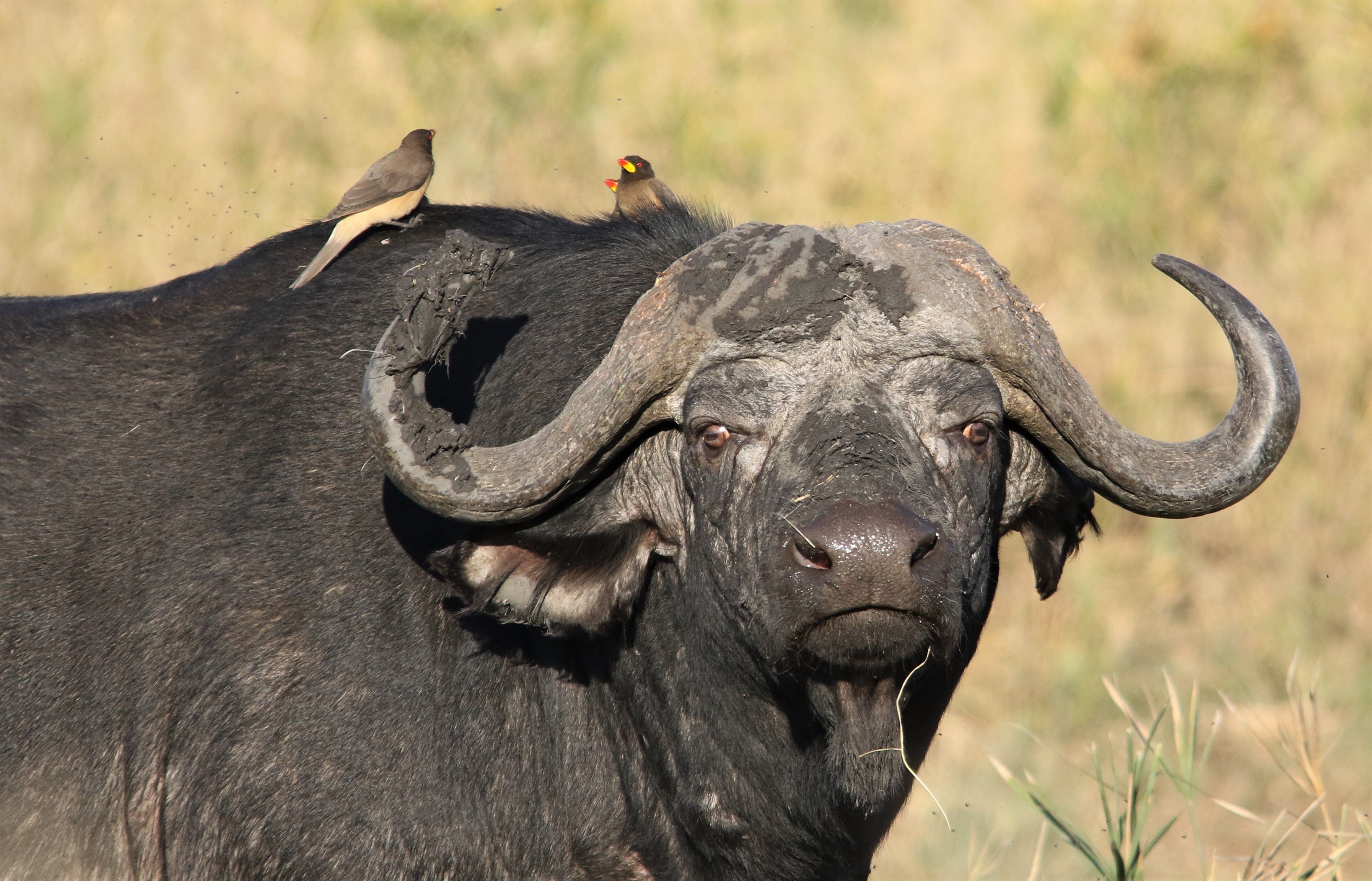
Cape buffalo size varies a lot between bulls and cows, and between subspecies too.
- A large bull can weigh close to a metric tonne, roughly the weight of a compact car
- Cows are noticeably smaller, averaging around 600 kg
- Bulls stand stockier and more muscular than cows, with a rugged, thick-set frame
- The Cape buffalo is the largest subspecies of African buffalo. Forest buffalo, found further west and central, run much smaller
So when people ask about African buffalo size, the honest answer depends on which buffalo and which sex you mean. A Cape buffalo bull in Kenya or Tanzania is a completely different scale from a forest buffalo in Central Africa.
Why Is the Cape Buffalo Called the “Black Death”?
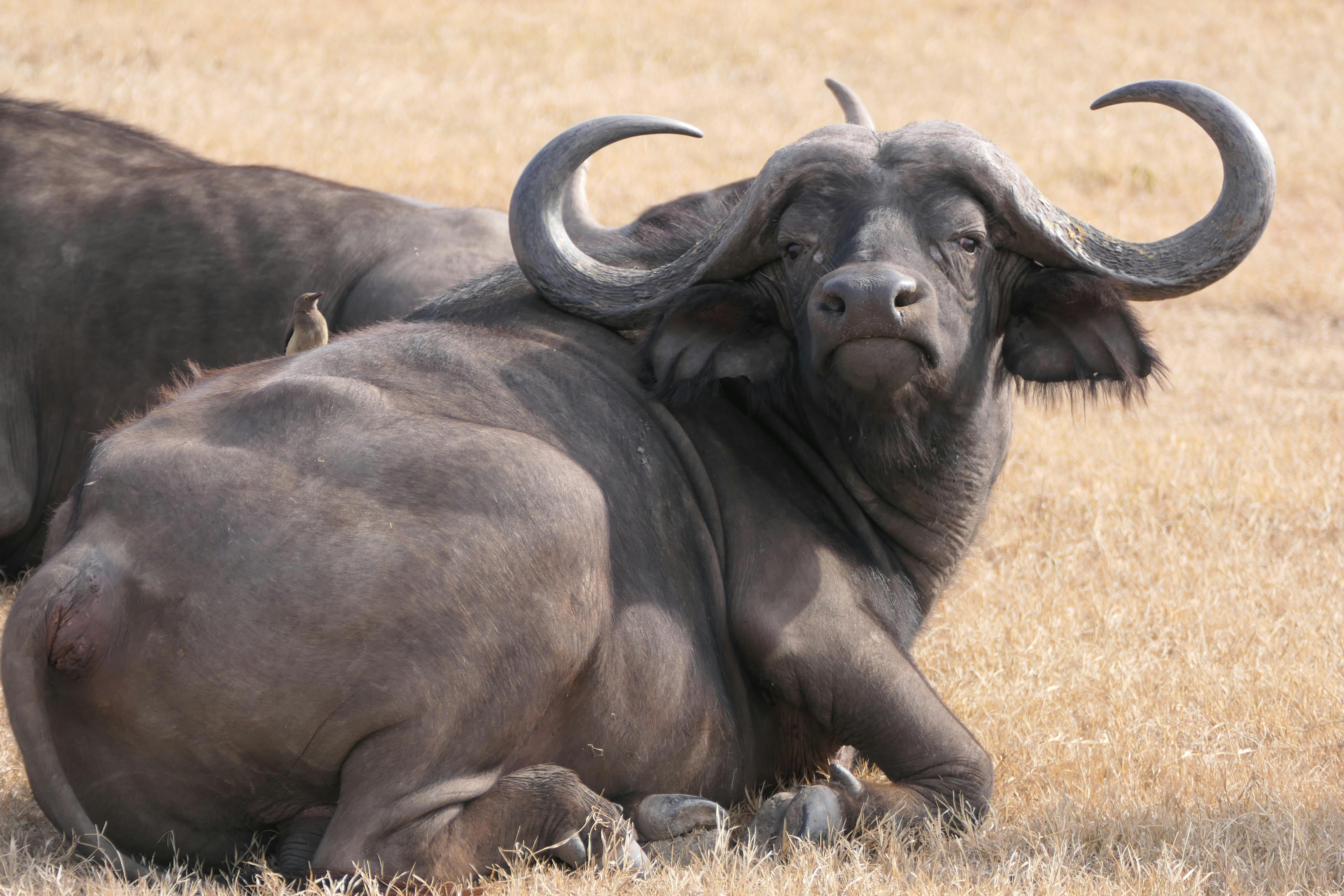
The Black Death nickname comes from how unpredictable and aggressive Cape buffalo become once they feel threatened. A few things earned them that reputation.
- They are responsible for more human deaths in Africa each year than lions
- A charging buffalo can reach 57 km/h, fast enough to close a gap before you can react
- Old hunters once ranked the Cape buffalo among the hardest and most dangerous Big Five animals to track on foot, since a wounded buffalo will often circle back and ambush the hunter instead of running
- Their attacks are not random aggression. Most come from a buffalo defending itself, a calf, or the herd
That last point matters. The Black Death nickname is not about a buffalo hunting people. It is about how fast and how far a buffalo will go once it decides you are a threat.
Cape Buffalo Horns: The Boss Explained
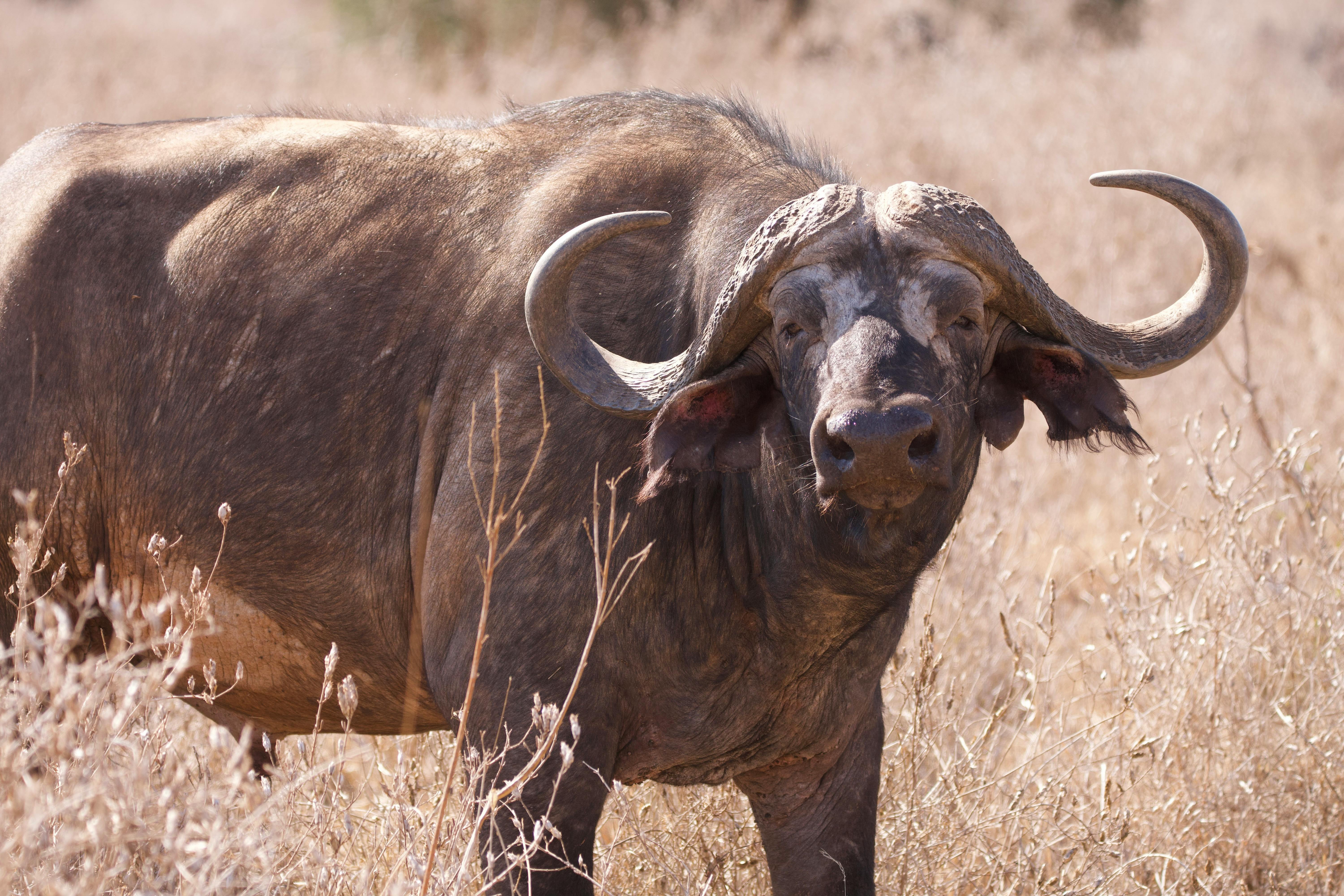
Both male and female Cape buffalo grow curved horns, but only mature bulls develop the full “boss,” a thick, hard shield of fused bone and keratin across the forehead.
- The boss forms as bulls age and fight for dominance within the herd
- It acts as natural armor during head-to-head clashes with other bulls
- It doubles as the buffalo’s main defense against lions
- Horn size and boss thickness are one of the clearest ways to judge a bull’s age from a distance
Where Do African Buffalo Live?

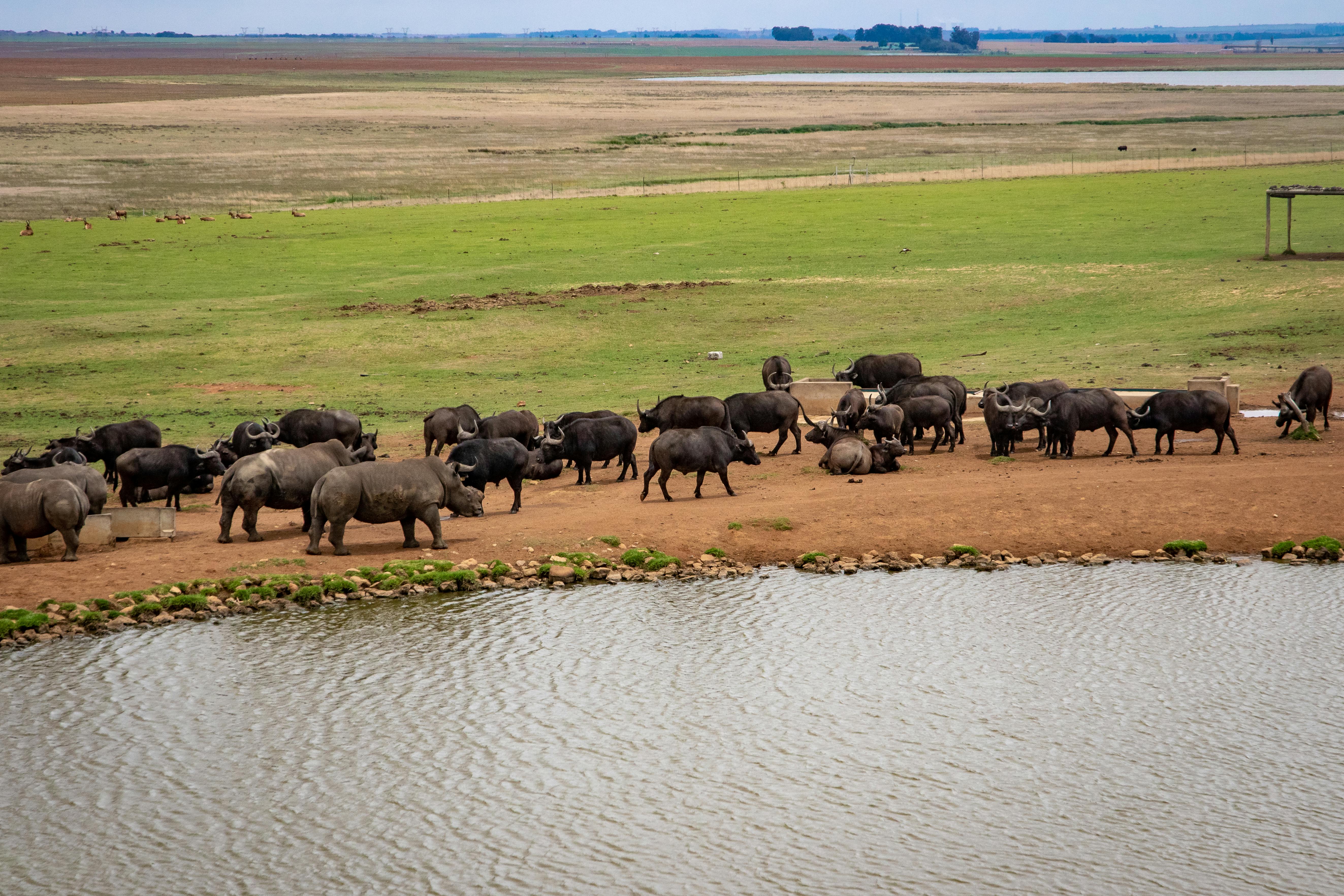
Buffalo in Africa range across most of the sub-Saharan region, though always tied closely to water.
- Countries: South Africa, Kenya, Tanzania, Botswana, Zimbabwe, Uganda, Zambia, and Mozambique
- Habitat: grasslands, floodplains, open woodlands, and dense forest depending on the subspecies
- Water dependence: buffalo need to drink daily, so herds rarely stray more than about 20 kilometers from a permanent water source
This is exactly why guides tell you to watch the riverbanks. Buffalo herds gather near water almost every single day.
Cape Buffalo Subspecies
African buffalo are not all one look or one size. The main recognized subspecies include:
- Cape buffalo, the largest, found across southern and eastern Africa
- Forest buffalo (also called dwarf buffalo), smaller with a reddish coat, found in Central and West Africa
- Sudan buffalo, a mid-sized form found in parts of East and Central Africa
- Nile buffalo, found around parts of the Nile basin
- Virunga buffalo, a smaller regional population near the Virunga area
The Cape buffalo is by far the one you will see on a Kenya or Tanzania safari.
Herd Life and Behavior
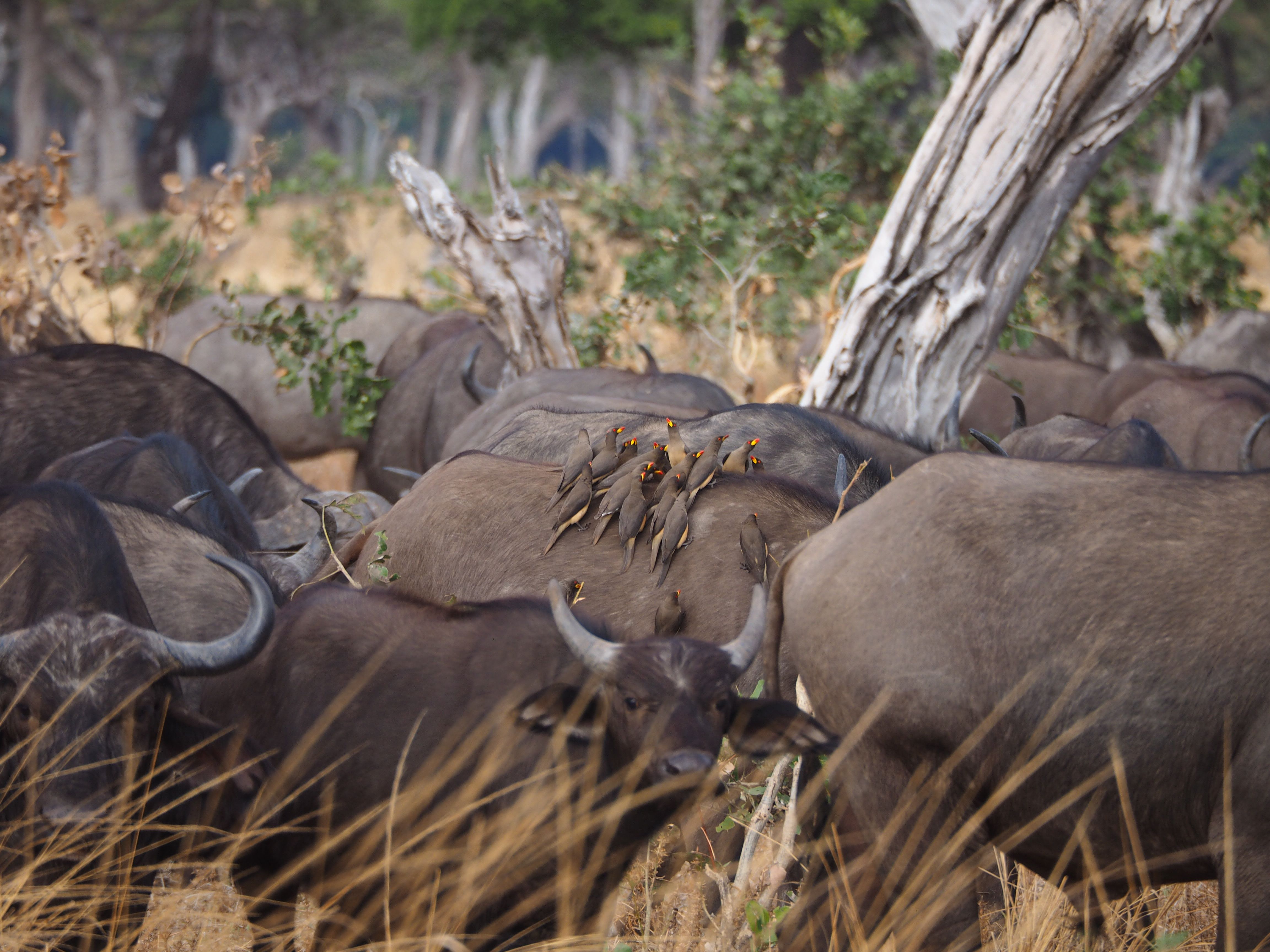
Cape buffalo are deeply social animals, and herd size varies enormously.
- Herds can range from a few dozen to more than a thousand animals, especially across the open plains of the Serengeti
- Females and calves stick together in the main herd, usually led by an experienced female
- Older males often break off into smaller bachelor herds
- Some old bulls go fully solitary, wallowing alone in mud to cool off and stay free of ticks
- Oxpecker birds ride along on their backs, eating parasites and giving an early warning call when danger is near
- When a predator threatens a calf, the herd will often circle together and defend it, sometimes injuring or even killing the attacking lion
Is There Really an “African Water Buffalo”? Clearing Up the Confusion
Guides hear this question constantly. Someone spots a Cape buffalo wallowing in mud or a river and calls it a water buffalo. It is an easy mix-up, but the two are genuinely different animals.
| Cape Buffalo | Water Buffalo | |
|---|---|---|
| Native to | Sub-Saharan Africa | Asia |
| Weight | Up to 900 kg | Can exceed 1,200 kg |
| Horns | Fused “boss” across the forehead | Long, crescent-shaped, no boss |
| Habitat | Savanna, floodplain, forest | Rivers, swamps, rice paddies |
| Domesticated | Never | Yes, for over 5,000 years |
| Temperament | Unpredictable, wild only | Docile, used for farm work |
There is no true water buffalo native to Africa. What people usually mean by “African water buffalo” is simply a Cape buffalo standing in water, which they do often, since staying near water and mud is part of daily life for the species.
African Buffalo Diet
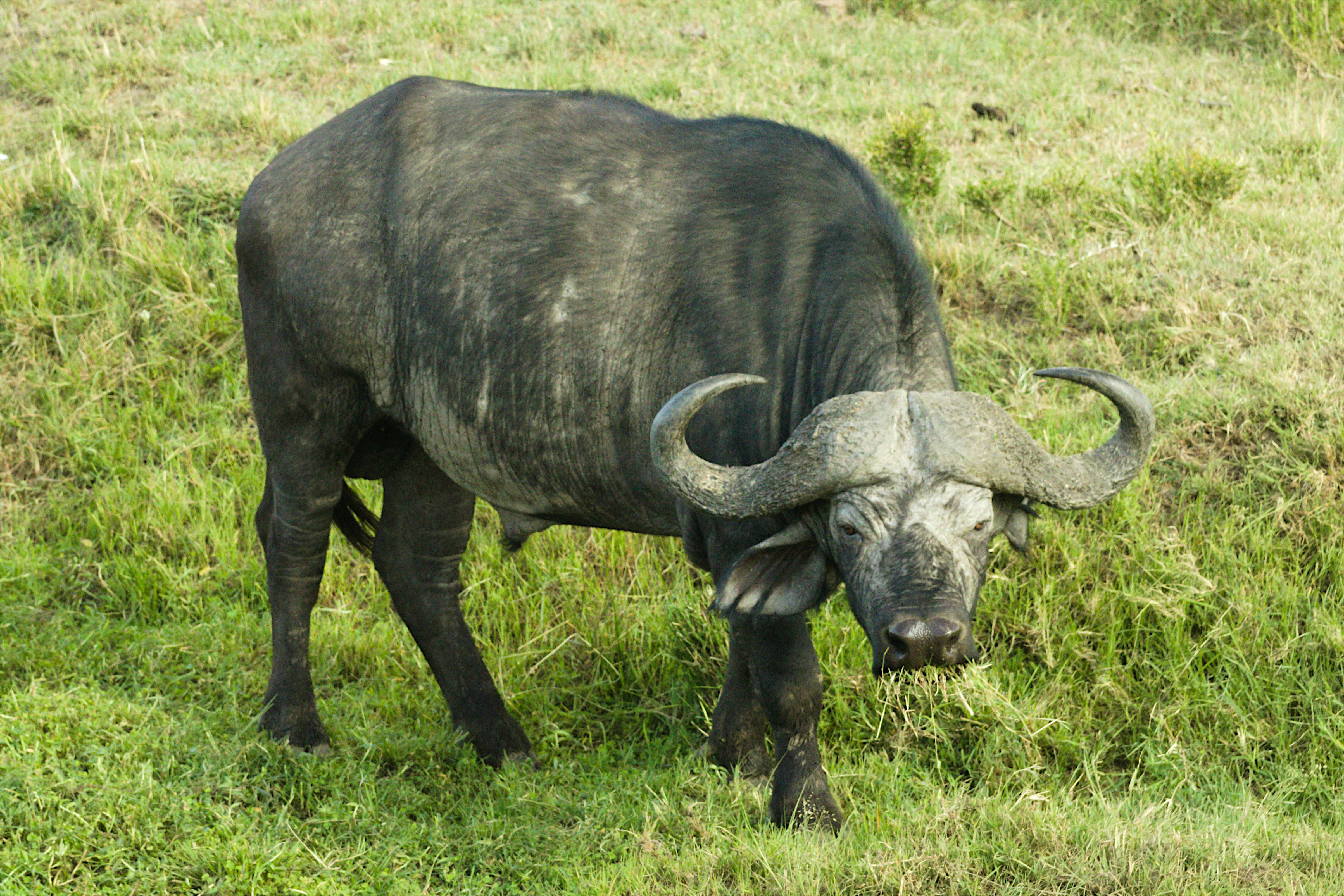
Cape buffalo are strict herbivores and spend hours each day grazing.
- Mostly tall C4 grasses
- Leaves and bark during the dry season, when grass is scarce
- Their constant grazing shapes the height and health of savanna grasslands for other herbivores
Predators and Defense
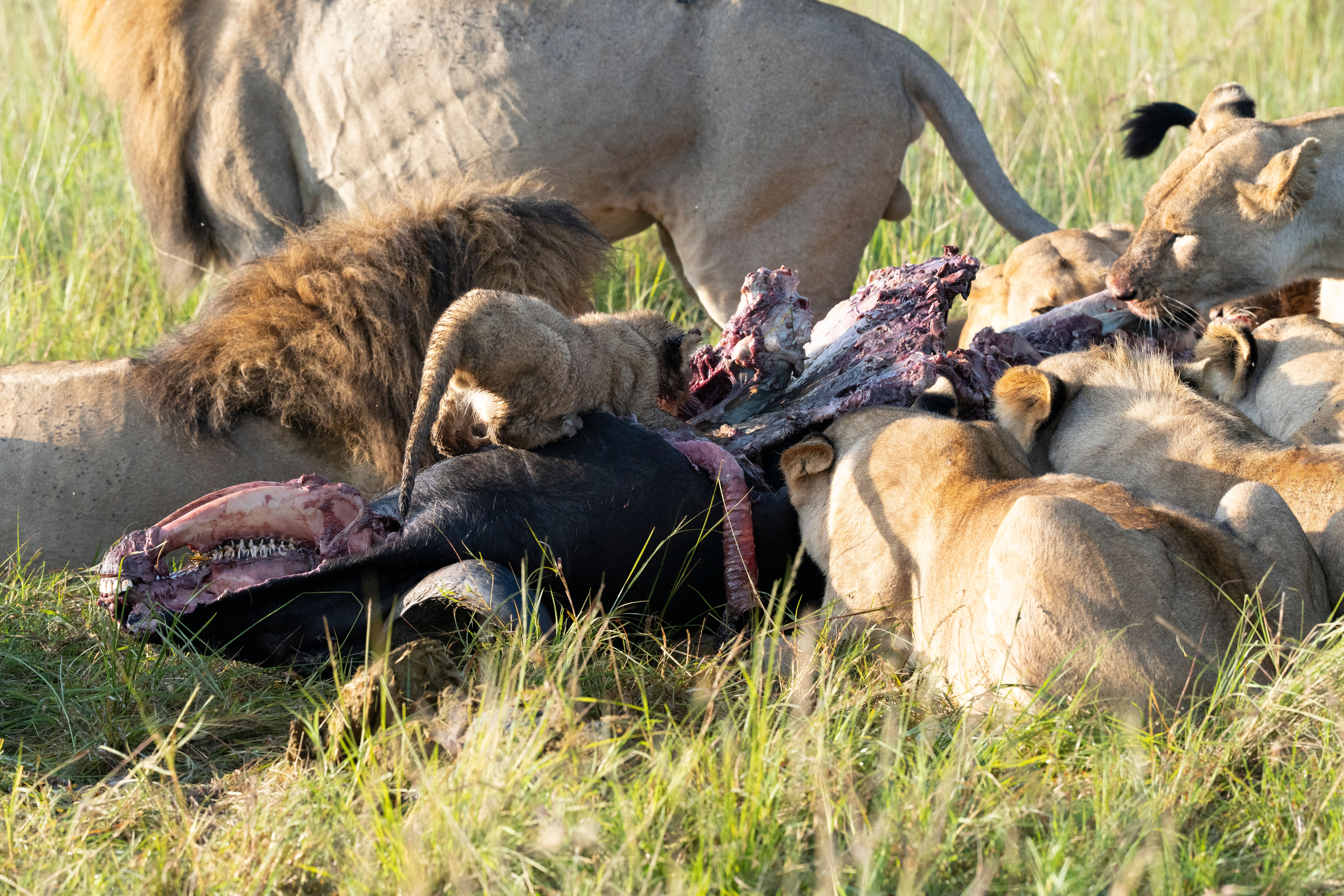
Lions are the main natural predator of Cape buffalo, along with spotted hyenas and Nile crocodiles, which mostly target calves near water. Even lions take a real risk attacking a full-grown buffalo. A single kick or horn strike can seriously injure or kill a lion, which is part of why some of the most dramatic safari sightings involve a tense standoff between a pride and a defending herd.
Conservation Status
Cape buffalo are currently listed as Least Concern by the IUCN, though numbers are declining in some regions. The main threats include:
- Habitat loss from farming and development
- Disease spread from domestic cattle
- Poaching and illegal hunting
Protected national parks, private reserves, and eco-tourism revenue all play a real role in funding buffalo conservation across their range.
Best Places to See African Buffalo on Safari
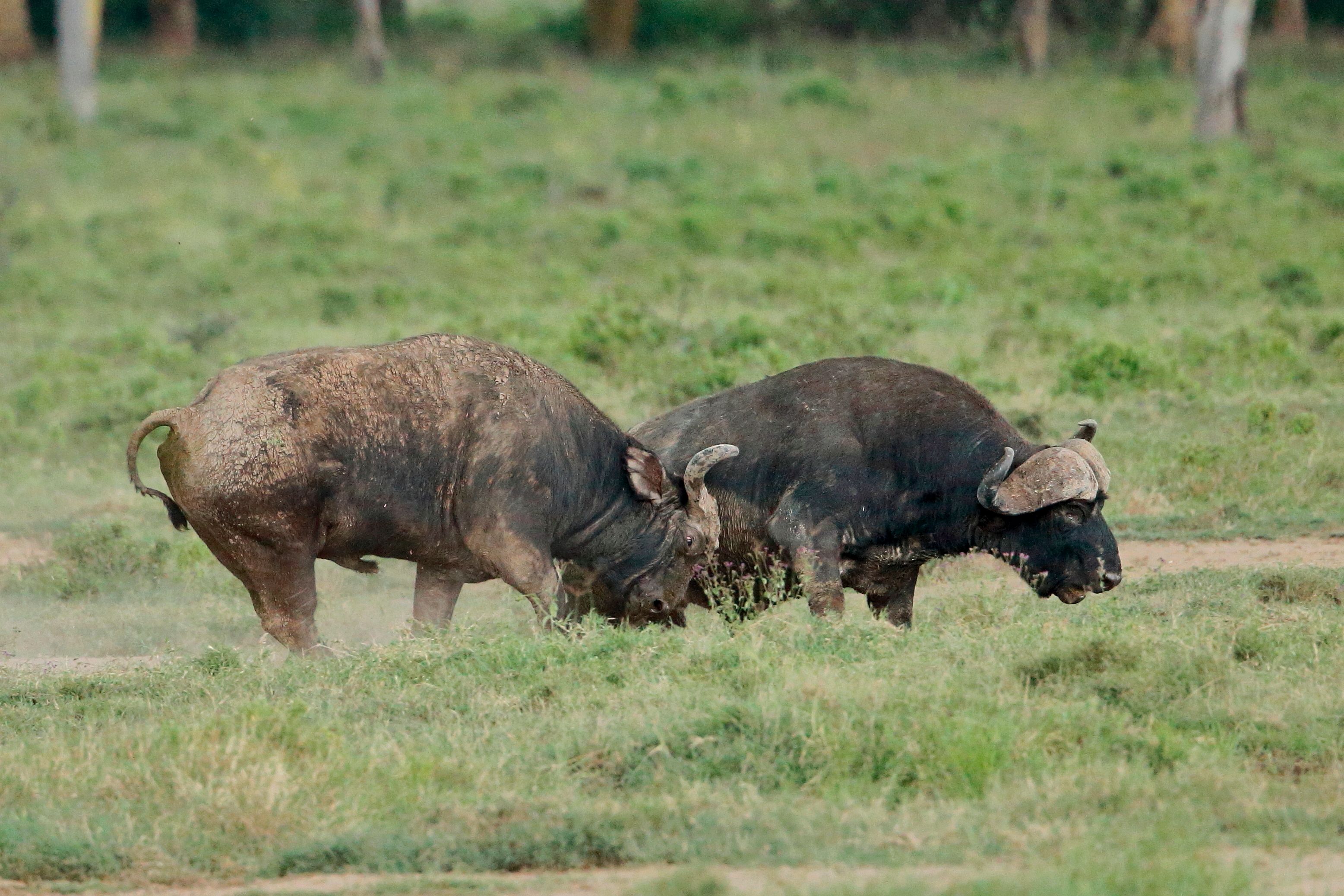
- Masai Mara, Kenya, known for dramatic predator and buffalo standoffs
- Serengeti, Tanzania, home to some of the largest buffalo herds on the continent
- Ngorongoro Crater, Tanzania, where buffalo are seen in large numbers nearly year round
- Kruger National Park, South Africa, with reliable sightings on almost every drive
- Okavango Delta, Botswana, where seasonal floods draw in spectacular herd numbers
Cape buffalo are one of the most reliable Big Five sightings on any Kenya or Tanzania safari. You are almost guaranteed to see them.
Ready to See Cape Buffalo for Yourself?
If you want a Kenya or Tanzania safari built around strong Big Five sightings, message me directly on WhatsApp.
A few trips with strong Cape buffalo sightings:
- 5-Day Big Five Safari: Maasai Mara Road Adventure
- 8-Day Must See Kenya: Luxury Safari Journey
- 9-Day Ultimate Kenya Honeymoon: Savannah to Sea
Frequently Asked Questions
What is the Black Death buffalo?
The Black Death is a nickname for the Cape buffalo, earned because it kills more people in Africa each year than lions do. The name reflects how unpredictable and dangerous a buffalo becomes when it feels threatened.
How big is a Cape buffalo bull?
A large Cape buffalo bull can weigh close to 900 kg, roughly the weight of a compact car, and stand up to 1.7 meters tall at the shoulder.
Is African buffalo the same as water buffalo?
No. The Cape buffalo is native to Africa and has never been domesticated. The true water buffalo is native to Asia and has been domesticated for over 5,000 years. People often confuse them because Cape buffalo also spend time wallowing in water and mud.
Why are Cape buffalo so dangerous?
Cape buffalo are unpredictable and defend themselves fiercely when threatened, cornered, or wounded. They can charge at up to 57 km/h, and old hunters considered them one of the hardest Big Five animals to track safely.
Where can I see Cape buffalo in Africa?
Cape buffalo are common across Kenya, Tanzania, South Africa, Botswana, and several other sub-Saharan countries, with especially reliable sightings in the Masai Mara, Serengeti, and Ngorongoro Crater.
What eats Cape buffalo?
Lions are their main predator, along with spotted hyenas and Nile crocodiles, which mostly target calves near water. Even lions face real risk attacking a full-grown buffalo.
Summary About Cape Buffalo
- Cape buffalo bulls can weigh close to 900 kg, about the weight of a compact car.
- The nickname Black Death comes from how many people they kill in Africa each year, more than lions.
- Only mature bulls grow the full fused horn “boss.”
- Cape buffalo have never been domesticated, unlike the Asian water buffalo.
- Herds can range from a few dozen to over a thousand animals.
- Buffalo rarely stray more than 20 kilometers from a permanent water source.
- There are several African buffalo subspecies, including the much smaller forest buffalo.
- Oxpecker birds ride on buffalo backs, eating parasites and warning of danger.
- A defending herd can injure or even kill a lion that threatens a calf.
- The Masai Mara, Serengeti, and Ngorongoro Crater offer some of the most reliable Cape buffalo sightings in Africa.


