
How Cold Does It Get On Top of Kilimanjaro?
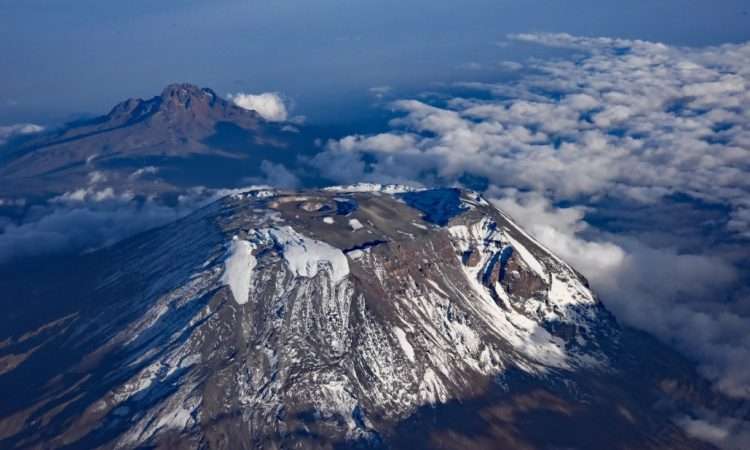
Many people see photos of the snowy summit and wonder just how cold it gets on top of Mount Kilimanjaro. The sight of snow and ice on Uhuru Peak can make any climber pause. It is a valid concern, but with the right preparation, the cold does not have to stop your summit success.
The simple truth is this: the Mount Kilimanjaro summit temperature is always below freezing. At the top, Uhuru Peak, temperatures typically range from a daytime high near -4°C (25°F) to a nighttime low that can plummet to a bitter -27°C (-17°F). This range does not even account for wind chill, which can make it feel significantly colder.
What is the Temperature at Uhuru Peak?
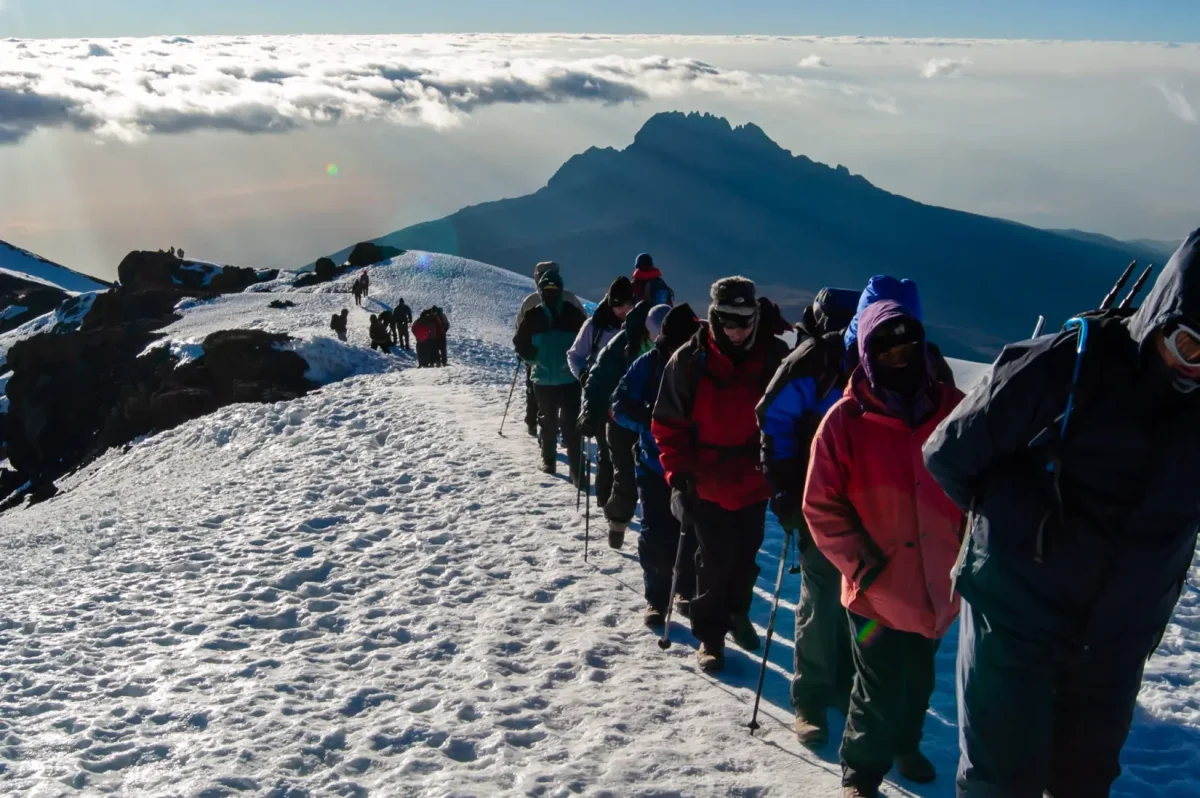
Uhuru Peak is the highest point on Mount Kilimanjaro and the ultimate goal of your climb. The temperatures on Kilimanjaro at this summit are extreme and always below freezing. The Kilimanjaro peak temperature at Uhuru ranges from approximately -4°C (25°F) on a milder day to a severe -27°C (-17°F) during the coldest nights.
This is a very wide range, but the one constant is the cold. This is why we insist that every climber brings every item on our required packing list, regardless of the month you climb. Even a summer ascent requires full preparation for snow and sub-zero cold.
Your summit push will happen in the dark, aiming to reach Uhuru Peak at sunrise. This means you will experience the coldest possible Mount Kilimanjaro summit temperature, as the sun has not yet risen to provide any warmth. Proper preparation for this final night is critical. Our Kilimanjaro Tour guide will help you layer correctly and our team is always there to ensure you stay as warm as possible throughout the journey.
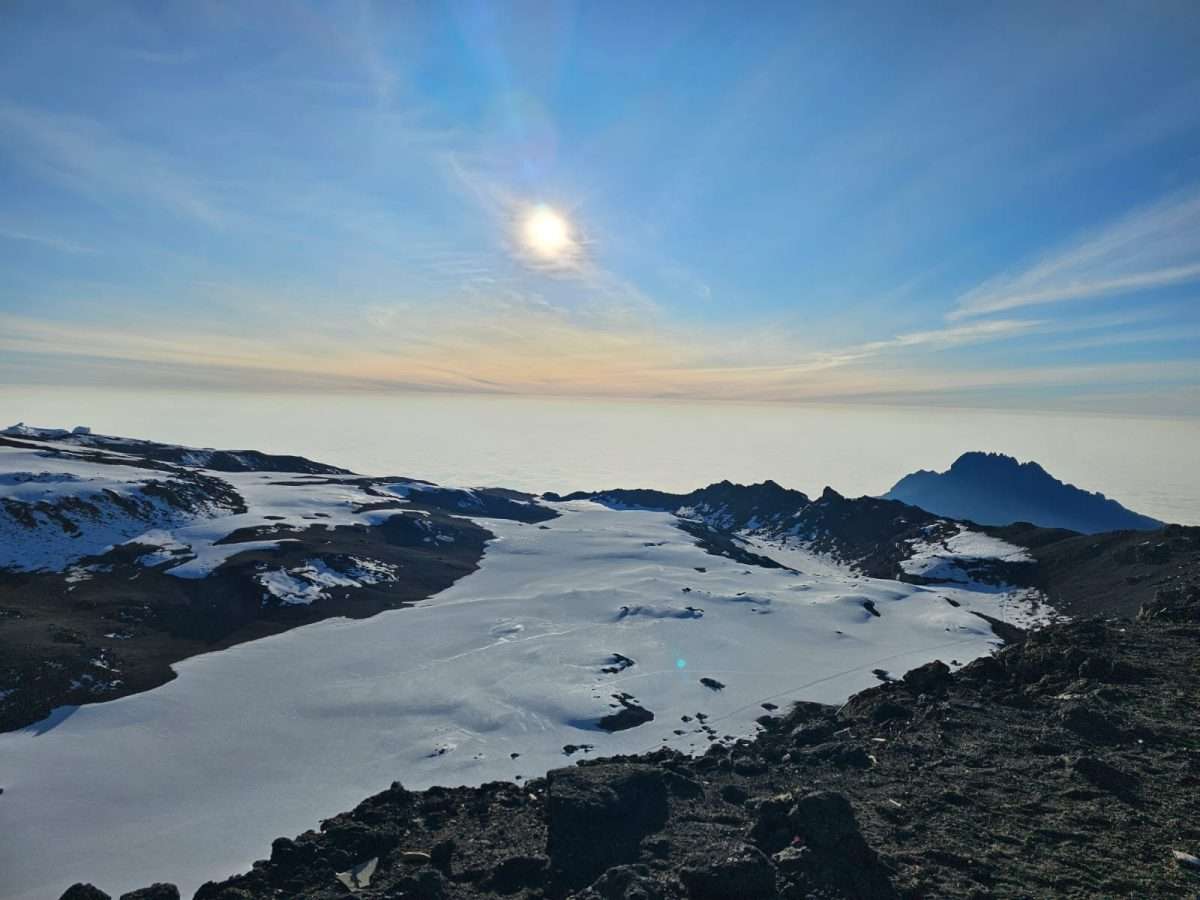
It is important to know that Kilimanjaro creates its own unpredictable weather. While the summit is always cold, it is not always snowing. In fact, the weather on the mountain can change completely in just a few hours. As you climb, you will move through five distinct climate zones. You might start a day in warm, humid rainforest at 21-27°C (70-80°F) and finish it in a freezing, arid alpine desert.
This dramatic shift is why understanding the temperatures on Kilimanjaro is so crucial for your safety and enjoyment. Your success depends on knowing what to expect and packing the correct gear for every condition. The key is not just surviving the cold, but being equipped to handle it comfortably so you can focus on the incredible journey to the top of Africa.
Will You See Snow on the Summit?
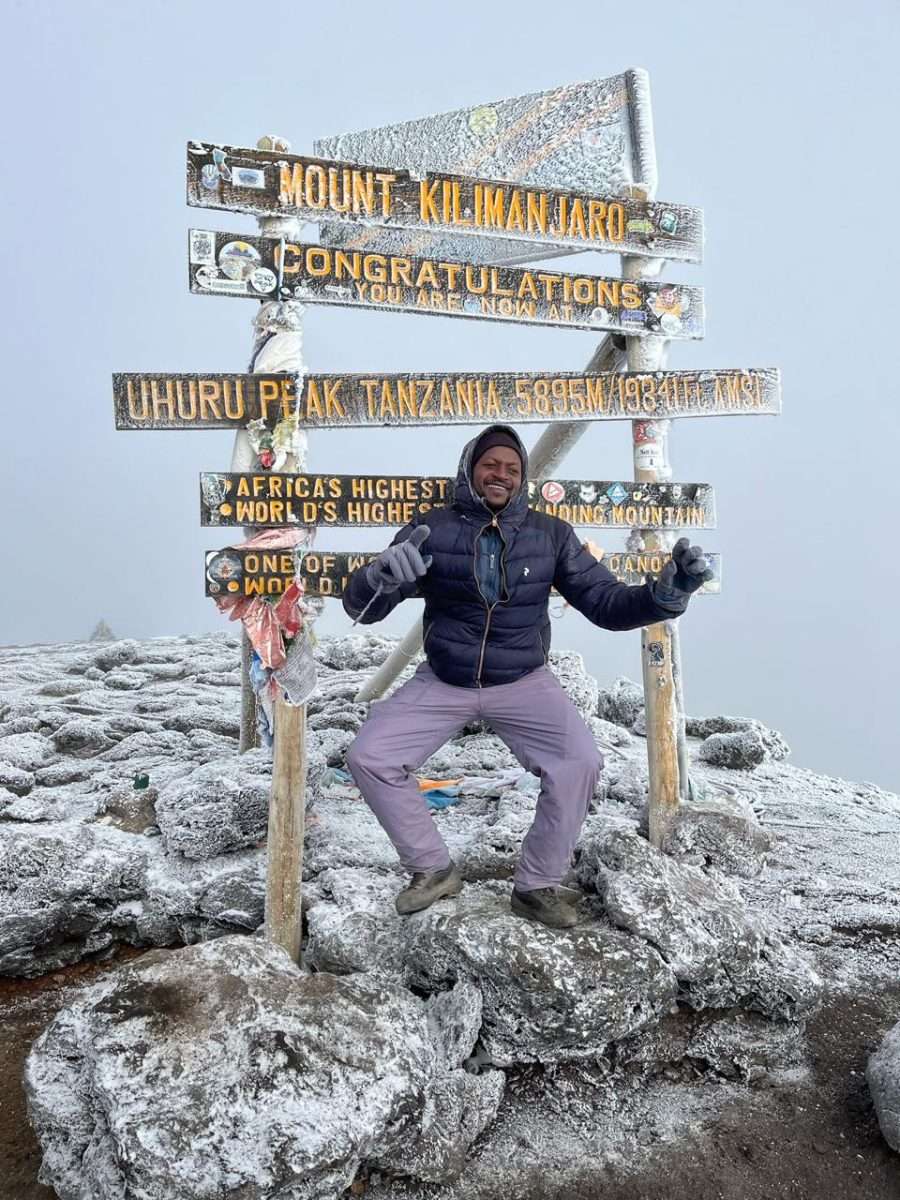
Many climbers dream of a snowy, picture-perfect summit, while others prefer a drier climb. Snow on Kilimanjaro is most common during the rainy seasons, but it can fall during dry months as well.
The months from November through May have the highest chance of snow, as they align with the mountain’s wetter periods. However, the window from December through February often provides a good balance—offering a higher chance of drier trails while still leaving the possibility of a beautiful snow-capped summit.
Hiking through snow is a magical experience, and a white-blanketed mountain is stunning. However, more snow often means more cloud cover and fog. This can obscure the famous panoramic view from the top. Consider what is more important for your climb: the enchanting experience of a winter wonderland or the clear, breathtaking vista from the Roof of Africa.
How Temperature Changes as You Climb Kilimanjaro
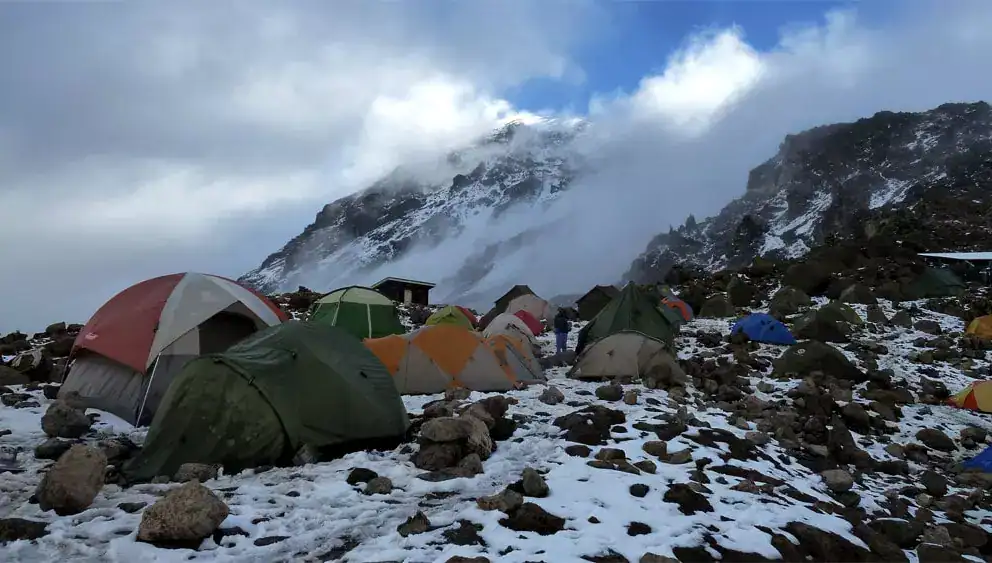
One of the most important things to understand about your climb is how the Mount Kilimanjaro temperature drops as you gain altitude. The weather shifts dramatically because you are moving through five distinct climate zones, each with its own conditions. This change is a core part of the Kilimanjaro experience and is key to your preparation.
At the mountain’s base, the air is warm and thick. You will start your trek in temperatures averaging a pleasant 21 to 27 degrees Celsius (70 to 80°F). However, the temperatures on Kilimanjaro fall steadily as you ascend. With every thousand meters you climb, the air gets thinner, holds less heat, and the environment transforms completely. This is why the Mount Kilimanjaro summit temperature is in such stark contrast to the base.
Different Climate Zones as You Climb
1. Cultivation Zone (800m – 1,800m): Your journey begins here, passing through local farmlands. The conditions are mild and temperate.
2. Rainforest Zone (1,800m – 2,800m): Entering the mountain’s slopes, you walk into a warm, humid tropical rainforest. The air is moist, the trail can be muddy, and a cool mist often hangs beneath the dense canopy.
3. Heath and Moorland Zone (2,800m – 4,000m): Emerging from the forest, the landscape opens into rolling hills with giant heathers. The air becomes drier and noticeably cooler, especially once the sun sets. Nighttime temperatures here often drop near or below freezing.
4. Alpine Desert Zone (4,000m – 5,000m): This is a stark, almost lunar landscape of rock and sand. While the sun can feel intense during the day, the thin air provides no insulation. The moment the sun dips, the Kilimanjaro temperature plummets. Strong winds are common.
5. Arctic Summit Zone (5,000m – 5,895m): This is the final push to Uhuru Peak. You are now in a true Arctic environment with no plant life. The air is dangerously thin, and the cold is constant and severe. Daytime temperatures are below freezing, and nighttime lows can plummet between -7°C and -29°C (19°F to -20°F), often made much worse by punishing winds.
The Best Times to Climb Kilimanjaro
For the most reliable conditions, aim for one of the two dry seasons. These windows offer clearer skies, drier trails, and the safest climbing environment.
January to March: This is an excellent time for a climb. The weather is generally stable, with warmer daytime temperatures and less frequent rain. It’s a fantastic period for beginner hikers to experience the mountain. While the summit will still be very cold, you may encounter less snow than later in the year.
June to October: These are the most popular and busiest months, especially July through September. You can expect consistently good, dry weather. Be aware that the popularity means trails and camps can be more crowded, and some routes manage numbers by limiting daily groups.
What to Expect Month by Month
April & May: This is the long, heavy rainy season. Climbing is challenging due to persistent wet conditions, slippery trails, and frequent cloud cover that can obscure views. Most operators offer discounted rates during this period.
November: A short rainy season occurs, bringing more unpredictable weather. This month is best for experienced hikers comfortable with some rain, as it offers the benefit of lower prices and significantly fewer climbers on the route.
December: The weather transitions back toward drier conditions. However, this month often brings substantial snowfall to the summit. Climbers in December should be prepared for colder temperatures and consider routes where crampons might be advised for the final ascent.
How to Prepare for Kilimanjaro’s Weather
Your success depends on packing for every condition. You will face warm rainforests and a freezing Arctic summit, so your gear must cover it all.
Your Packing Strategy:
For Lower Slopes: Pack lightweight, moisture-wicking clothing to stay cool and dry in the humid heat.
For Higher Altitudes: Insulated, waterproof layers are non-negotiable. You need a high-quality down jacket, thermal leggings, a waterproof shell, insulated gloves, and a warm beanie to handle the Mount Kilimanjaro summit temperature.
Always Bring: Sturdy, broken-in hiking boots, high-SPF sunscreen, quality sunglasses, and a reliable headlamp for summit night.
Training and Acclimatization:
Start your training plan for Kilimanjaro months in advance. Build cardio endurance with long hikes and stair climbing. Crucially, choose a longer route (8-9 days) for your climb. A longer itinerary is the most effective way to acclimatize properly, giving your body the time it needs to adjust to the altitude safely.
Understanding Weather Changes and Safety
While we have reliable seasonal patterns, Kilimanjaro creates its own weather. Conditions can change rapidly, and being prepared is your best safety measure.
A Changing Environment:
It’s important to know that Kilimanjaro’s famous ice fields are shrinking. This long-term change is unlikely to affect your single climb, but it highlights the mountain’s dynamic nature. Always rely on your guide’s real-time assessment of trail and weather conditions.
Essential Safety Measures:
Your safety hinges on two things: your guide and your gear.
Climb with an Experienced Guide: A certified guide is your most important safety tool. They monitor weather, assess your health daily, and make critical decisions to keep the team safe.
Carry the Right Emergency Gear: Ensure your tour operator provides essential safety equipment, including emergency oxygen, a comprehensive first-aid kit, and has a clear evacuation plan.
By choosing the right month, packing meticulously, and trusting a professional team, you set yourself up for a safe and successful journey to the top.
Why Choose TourwithPipi To Climb Kilimanjaro
Choosing who guides you up Kilimanjaro is one of the most important decisions you will make. The right company turns a daunting challenge into an achievable and unforgettable journey. At TourwithPipi, we focus on what truly matters: your safety, your success, and your experience.
We are a team of local Tanzanian experts, not just a booking agency. Our foundation is built on ethical practices, proven safety systems, and a genuine passion for our mountain. We believe every climber deserves a professional team dedicated to their personal summit goal. Here is how we deliver on that promise.
Your Safety is Our First Priority
Our safety record starts with our people. Every lead guide is a certified Wilderness First Responder with advanced training in altitude medicine. They are experts in reading the mountain’s conditions and your body’s signals.
Daily Health Checks: Your guide will monitor your vitals twice daily using pulse oximeters and the Lake Louise Score system, catching any signs of altitude issues early.
Full Emergency Systems: We carry emergency oxygen, comprehensive medical kits, and have immediate satellite communication on every climb. Our emergency evacuation protocols are pre-arranged and funded.
Small Groups, Big Support: We maintain an industry-leading staff-to-client ratio of at least 4:1. This means more eyes on your wellbeing, faster support, and a personalized experience.
We Build Summit Success Through Smart Acclimatization
Success on Kilimanjaro is about time, not just fitness. We only operate on longer, scenic routes like the 8-day Lemosho and 9-day Northern Circuit, which are scientifically proven to provide better acclimatization. Our itineraries are carefully paced to follow “climb high, sleep low” principles, giving your body the best chance to adapt. This strategic approach is why our climbers consistently achieve high summit success rates.
A Fully Supported, Worry-Free Experience
From the moment you land to the day you receive your summit certificate, we handle every detail.
Seamless Logistics: Enjoy included airport transfers, quality hotel stays before and after your trek, and all national park fees covered in one transparent price.
Superior On-Mountain Comfort: Climb with confidence using our high-quality 4-season tents, comfortable sleeping mats, private toilet tents, and a spacious dining tent for meals.
Ethical Operations: We are proud partners of the Kilimanjaro Porters Assistance Project (KPAP). We ensure our entire crew receives fair wages, proper gear, and dignified treatment. A supported team supports you best.
Ready to Climb with Confidence?
Booking your 2026 adventure is simple. Choose your preferred route and date, secure your spot with a deposit, and gain immediate access to our expert training plans and packing lists. Our team supports you every step of the way, from your first training hike to your final step on Uhuru Peak.
When you choose TourwithPipi, you choose more than a tour. You choose a partnership with a local team deeply committed to your success and the preservation of our majestic mountain. Let us guide you to the top.


