
From a distance, Lake Natron glows pink across the flat, dust-bleached floor of northern Tanzania. Get closer and that color deepens into something almost surreal: millions of lesser flamingos moving across a lake so caustic it can blister skin, beneath an active volcano whose name in Maasai translates to “Mountain of God.” It is one of the strangest and most magnificent landscapes in all of Africa.
Lake Natron at a Glance
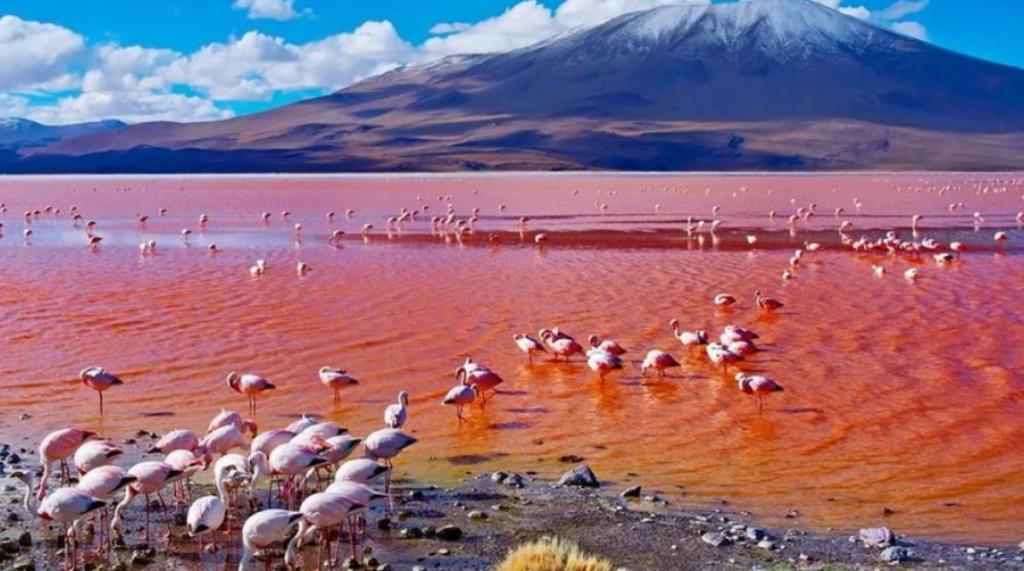
Located in northern Tanzania near the Kenyan border, Lake Natron sits northeast of the Ngorongoro Crater in the shadow of Ol Doinyo Lengai, one of the world’s only active carbonatite volcanoes. The lake stretches 56 kilometres at its longest point and 22 kilometres wide.
Lake Natron is an alkaline lake fed primarily by the Southern Ewaso Ng’iro River and by mineral-rich hot springs that bubble up from volcanic activity beneath the lakebed. Because the lake has no outflow, evaporation rates are extremely high. What remains behind is a concentrated buildup of natron (sodium carbonate decahydrate) and trona (sodium sesquicarbonate dihydrate), the same compounds that ancient Egyptians used in mummification.
The result is a lake that reaches a pH of over 12, close to household bleach, with surface temperatures in shallow areas reaching 60°C. It is one of the most hostile bodies of water on earth and one of the most ecologically extraordinary.
Lake Natron Flamingos: Why They Come Here
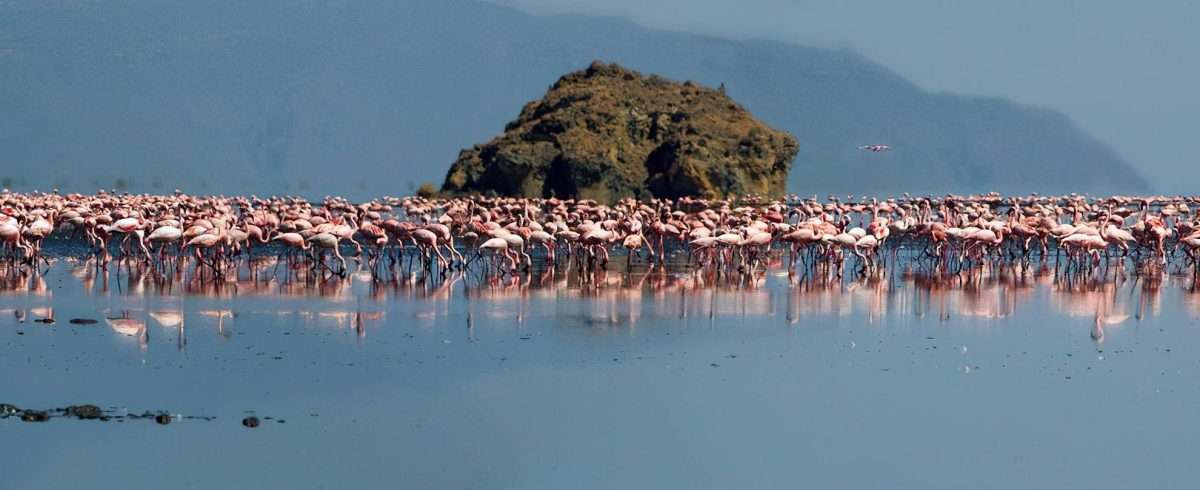
The lesser flamingo has evolved something remarkable. Its thick, leathery skin and specialized bill allow it to filter cyanobacteria from water that would destroy the tissue of virtually any other animal. Lake Natron’s extreme alkalinity and heat create ideal conditions for cyanobacteria growth, which is the flamingo’s primary food source.
This is why 75% of the world’s lesser flamingo population was born at this lake. Around 2.5 million lesser flamingos use Lake Natron as their only regular breeding ground in East Africa. They gather between August and October to lay their eggs on soda islands that form across the lake surface. The eggs hatch during the wet season in November when cooler, fresher water flows in from surrounding rivers.
The International Union for Conservation of Nature (IUCN) classifies the lesser flamingo as Near Threatened, largely because their dependence on a single breeding site makes the entire species vulnerable to any significant change at Lake Natron. Proposed industrial soda ash extraction projects have historically threatened the lake, and conservation organizations continue to monitor its status closely.
In January 2021, Lake Natron featured in the opening episode of David Attenborough’s BBC series A Perfect Planet. Camera operator Matt Aeberhard described the pH as “not far short of household bleach” and noted that at the time of filming, more people had stood on the moon than had walked out across Lake Natron. The crew reached the lake’s interior by hovercraft.
Wildlife at Lake Natron
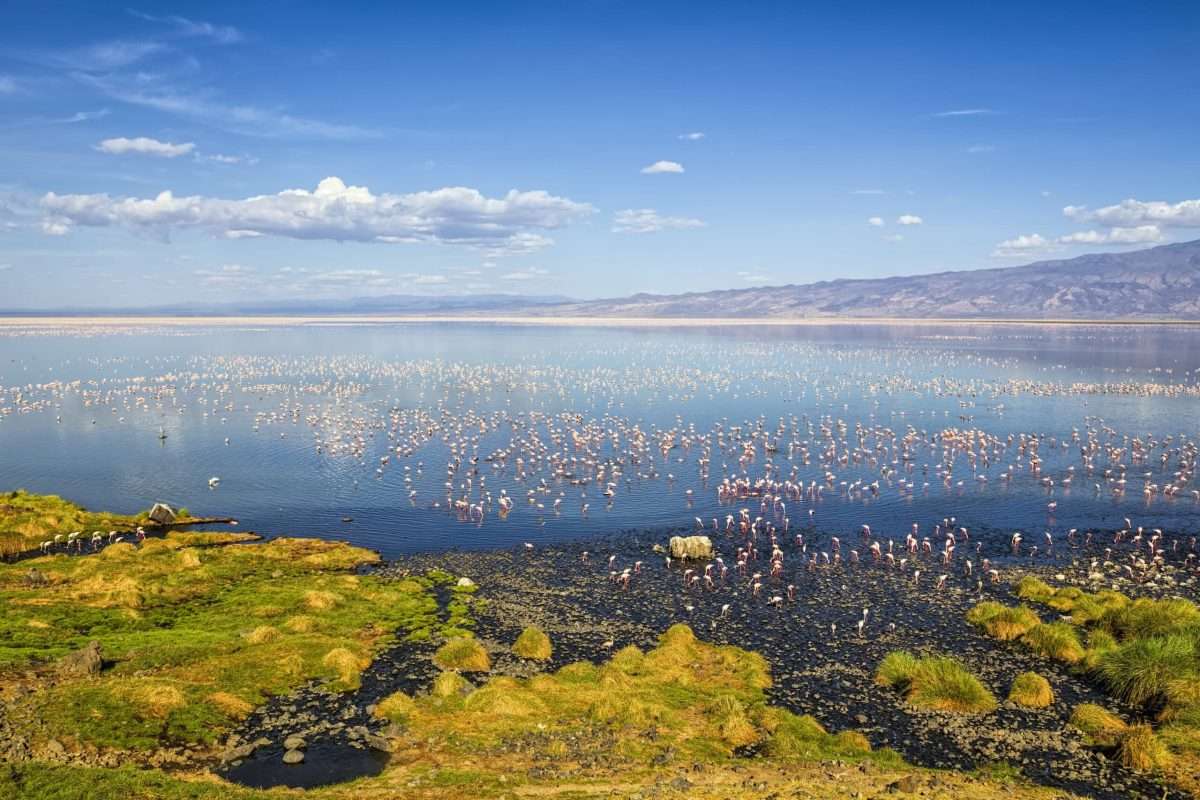
Despite its hostility, a unique ecosystem has developed around the lake’s edges.
The lake contains two fish species found nowhere else on earth: Alcolapia latilabris and Alcolapia ndalalani, both endemic to Lake Natron. A third species, Alcolapia alcalica, also lives here but is shared with nearby alkaline lakes. These tilapia have adapted to survive in near-boiling, highly alkaline conditions along the lake’s margins near freshwater springs.
Salt marshes and freshwater wetland zones have formed along the lake’s edges, supporting wading birds and providing habitat for the flamingos when they are not on the soda flats.
The surrounding landscape away from the lake is dry and rugged but supports species adapted to arid conditions. Kudus, oryxes, gerenuks, zebras, and ostriches move through the thornscrub and acacia terrain around the lake. Patient visitors occasionally spot a golden jackal, one of East Africa’s more elusive canids.
Lake Natron does not offer the same density of game as the Serengeti or Ngorongoro. The draw here is different. It is about witnessing life in an impossible place, flamingos breeding on a lake that would dissolve most animals, fish surviving in near-boiling alkaline water, and a volcano smoking quietly on the southern horizon.
Why Is Lake Natron Red?
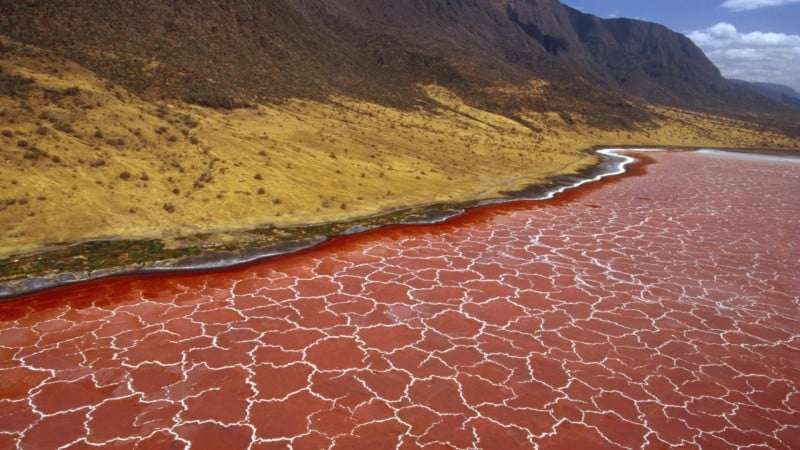
Lake Natron turns deep red or pink because of salt-loving microorganisms, specifically cyanobacteria and haloarchaea, that thrive in its hot, alkaline water. These organisms produce red pigments in response to intense UV radiation and extreme salinity, and in large enough concentrations they color the entire lake surface.
The effect intensifies during the dry season when high evaporation rates concentrate the salt further, pushing the color from pale pink to vivid red in the shallowest zones. The same cyanobacteria are also the primary food source for the lake’s 2.5 million lesser flamingos, which filter them directly from the water using their specialized bills.
Top Things to Do at Lake Natron
Flamingo Watching
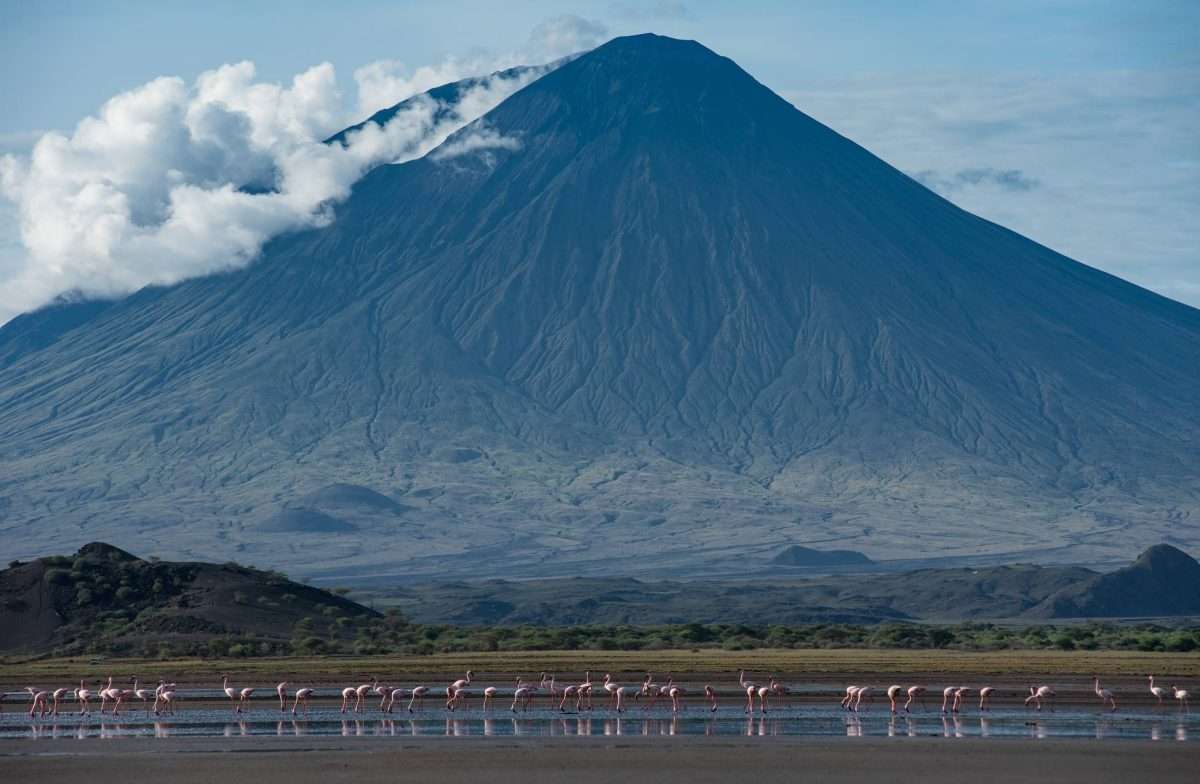
The flamingos are the reason most people make the effort to reach Lake Natron. Between August and October, the lake’s soda flats fill with nesting birds and the concentration of pink across the lake surface is one of the most photographically extraordinary sights in Africa. A telephoto lens is essential since flamingos keep their distance from the shore and any approach on foot across the soda flats requires care and a guide who knows the safe zones.
Bring polarized sunglasses. The combination of bright salt crust, reflective water, and equatorial sun is genuinely intense. Birdwatchers should also bring enough water and wear closed shoes since the ground near the lake’s edge gets extremely hot.
Hiking and Waterfall Trails
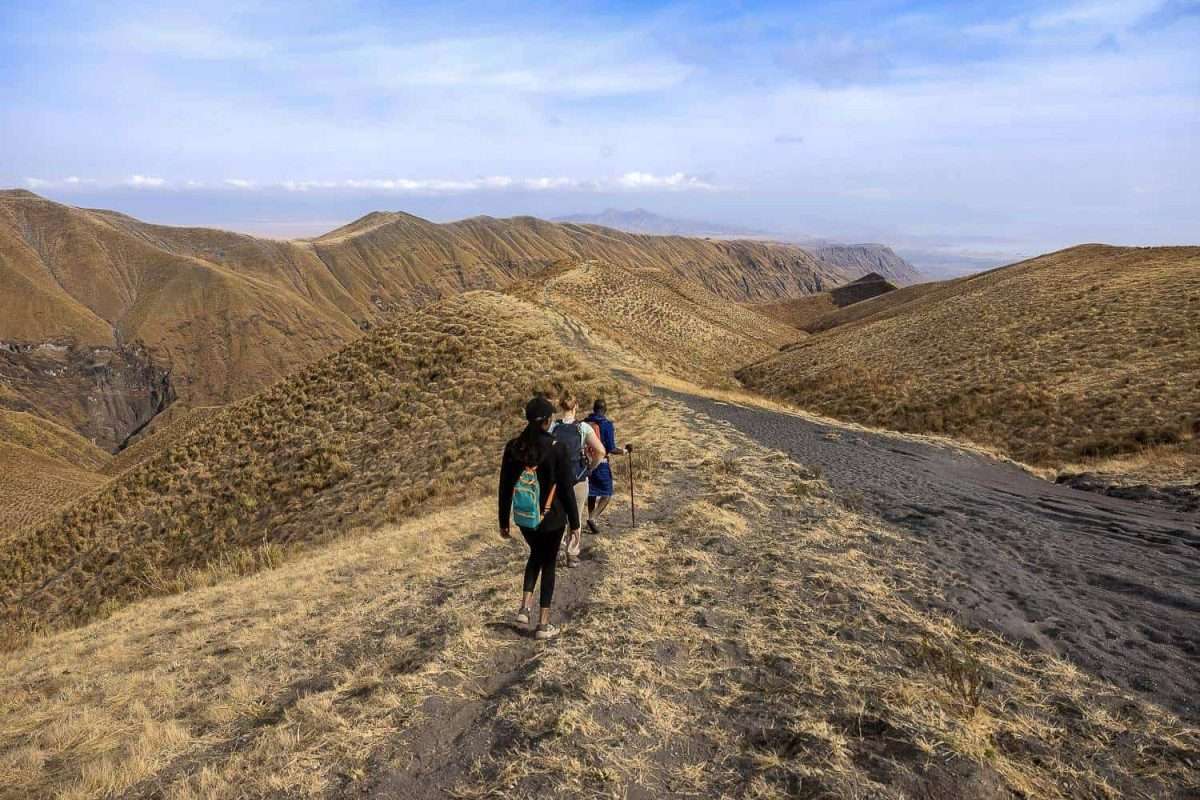
Several waterfalls feed into Lake Natron from the surrounding escarpment. The most accessible are short walks from Engaresero village and are especially rewarding during and just after the wet season when flow is strongest. The hike through the gorge below the escarpment is one of the more underrated walks in northern Tanzania.
Climbing Ol Doinyo Lengai
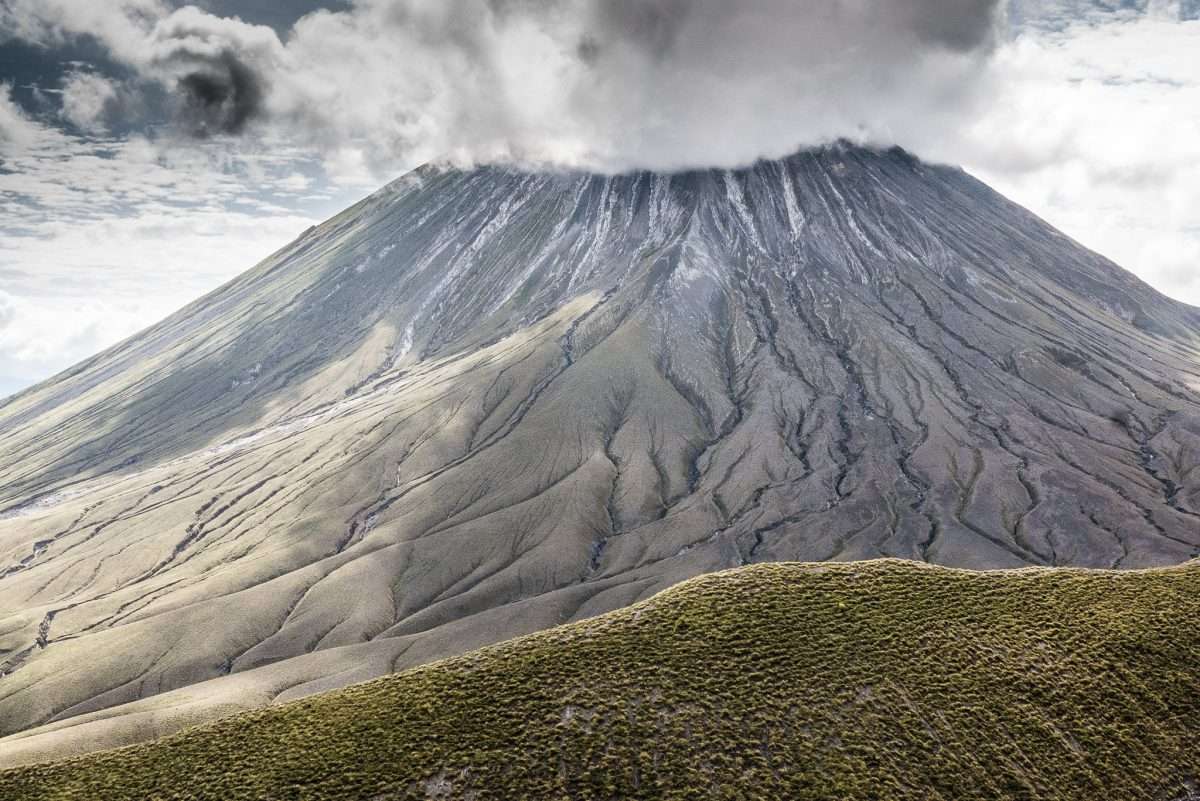
For those with mountaineering experience, the overnight climb of Ol Doinyo Lengai is a serious and deeply memorable undertaking. The ascent begins around midnight, takes five to seven hours to the summit, and rewards you with a sunrise over the Rift Valley that is difficult to describe. The descent is faster but harder on the legs due to the loose volcanic surface. A local guide is required and can be arranged from Engaresero.
Maasai Cultural Visits

The communities around Lake Natron are predominantly Maasai. Village visits to local bomas (homesteads) give a genuine insight into how these communities live in one of Tanzania’s most remote and inhospitable landscapes. Some families offer the option to share an evening meal and sleep inside the boma under a clear sky with almost no light pollution. It is a different kind of Tanzania experience from the safari circuit and one that stays with you.
When to Visit Lake Natron
The best time to visit Lake Natron is during the dry season from late May to early November. These months are cooler, paths are more manageable, and flamingos begin gathering at the lake from August onward.
| Period | Months | Conditions |
|---|---|---|
| Best season | Late May to November | Cooler, flamingos breeding August to October |
| Flamingo peak | August to October | Nesting and chick-rearing in progress |
| Avoid | December to February | Short dry season but extreme heat |
| Wet season | March to May | Heavy rain, difficult roads, some access closed |
During the dry season, higher evaporation rates concentrate the lake’s minerals further, which intensifies the cyanobacteria bloom. This gives the lake a richer, deeper shade of pink and provides better food conditions for the flamingos. It also makes for better photography.
The area sits in a low-lying section of the Rift Valley and temperatures regularly exceed 40°C during the day in all seasons. Early mornings are the most comfortable time to be near the lake.
How to Get to Lake Natron

Lake Natron is remote and the road journey is part of the experience. The most common approach is from the Ngorongoro Conservation Area or the Serengeti.
If coming from the Serengeti, the drive is long. Breaking the journey with an overnight stop at a camp near Kleins Gate on the eastern edge of the park is the standard approach. From there, an eight-hour drive the following day brings you to Engaresero village, the main base for Lake Natron visits.
After Lake Natron, the most practical onward route is a three-hour drive to Arusha, from where connections to Kilimanjaro International Airport or other northern Tanzania destinations are straightforward.
There is no airstrip at Lake Natron. The road from Arusha via Monduli and the Rift Valley floor takes around four to five hours in a 4×4 during dry conditions. The route is not passable in a standard vehicle after rain.
5 Key Takeaways
- Lake Natron is an alkaline lake in northern Tanzania with a pH above 12 and surface temperatures reaching 60°C in shallow areas, making it one of the most hostile bodies of water on earth.
- 75% of the world’s lesser flamingo population was born at this lake. Around 2.5 million birds gather here between August and October, the only regular flamingo breeding ground in East Africa.
- The lake sits in the shadow of Ol Doinyo Lengai, the only active carbonatite volcano on earth, whose name means “Mountain of God” in Maasai. An overnight climb delivers a sunrise over the Rift Valley from 2,962 metres.
- The best time to visit is late May to November during the dry season, with August to October offering the best flamingo concentrations and photography conditions.
- Lake Natron is remote and requires a 4×4 vehicle and a full day of driving from Arusha or the Serengeti. That remoteness is also why it remains one of the least crowded and most memorable destinations in Tanzania.
Frequently Asked Questions About Lake Natron
1. Why is Lake Natron so deadly?
Lake Natron’s water reaches a pH above 12 and temperatures of up to 60°C in shallow areas near geothermal vents. The extreme alkalinity comes from the buildup of natron and trona salts left behind by high evaporation. Most animals cannot survive contact with the water.
2. How can flamingos survive in Lake Natron?
Lesser flamingos have evolved thick, leathery skin on their legs and a specialized bill that filters cyanobacteria from highly alkaline water. Their skin is resistant to the caustic conditions that would damage other animals. The lake’s hostility is actually what makes it safe for flamingo breeding, since predators cannot follow them onto the soda flats.
3. Is it safe to swim in Lake Natron?
No. The water’s pH and temperature are dangerous to human skin. The lake should not be entered. Visitors observe from the shore or from a safe distance across the soda flats with guide supervision.
4. Why is Lake Natron pink?
The pink color comes from cyanobacteria and halophilic microorganisms that thrive in the alkaline water. During the dry season when evaporation concentrates the lake’s minerals, the cyanobacteria bloom intensifies and the color deepens from pale pink to deep red in places.
5. Do animals calcify in Lake Natron?
The calcification images associated with Lake Natron come from animals that have died near the lake and been preserved by the high sodium carbonate content of the water and shoreline sediment. The lake does not actively pull animals in or instantly calcify living creatures on contact, but carcasses preserved in the sodium-rich environment can develop a hardened mineral coating over time.
6. When is the best time to see flamingos at Lake Natron?
August to October is the peak flamingo period when the birds are nesting and chick-rearing on the soda flats. Visiting during this window gives you the best chance of seeing the full breeding spectacle with the largest concentrations of birds.
7. How do you get to Lake Natron from Arusha?
The drive from Arusha takes four to five hours by 4×4 via Monduli and the Rift Valley floor. The road is not passable in a standard vehicle after rain. Most visitors combine Lake Natron with the Serengeti or Ngorongoro, approaching from the north after leaving those parks.
8. Can I climb Ol Doinyo Lengai?
Yes, with an experienced local guide. The climb is done overnight starting around midnight to avoid daytime heat and takes five to seven hours to the summit. Some mountaineering experience is recommended. Guides are arranged through operators based in Engaresero village.
9. What is Ol Doinyo Lengai?
Ol Doinyo Lengai is an active carbonatite volcano south of Lake Natron, the only one of its kind on earth. It erupts a unique lava that appears black at night and turns white in daylight as it oxidizes. Its name means “Mountain of God” in the Maasai language. It rises to 2,962 metres above the Rift Valley floor.
10. Is Lake Natron worth visiting?
Yes, for the right traveler. It is remote, hot, and requires effort to reach. In return it offers flamingo spectacles on a scale found nowhere else in East Africa, an active volcano, endemic fish species, Maasai cultural experiences, and a landscape that looks unlike anywhere else on the planet.


