
The Ngorongoro Crater is the world’s largest intact volcanic caldera and home to the highest wildlife density of any protected area in Africa. Tucked inside a 260 km² enclosed caldera in northern Tanzania, this UNESCO World Heritage Site holds approximately 25,000 large mammals, some of Africa’s densest predator populations, and one of the most reliable Big Five safari experiences on the continent. No photograph and no wildlife documentary quite captures the feeling of standing on the rim and looking down into it for the first time.
This guide covers the most important Ngorongoro Crater facts for 2026, from how the caldera formed to what animals live inside, which species you will not find there, what the habitats look like, and everything a first-time visitor needs to plan their Tanzania safari.
Written by Khadija Tayabali, Kenya-born physician and Virtuoso-certified safari advisor designing private safaris across East and Southern Africa.
1. How Was the Ngorongoro Crater Formed?
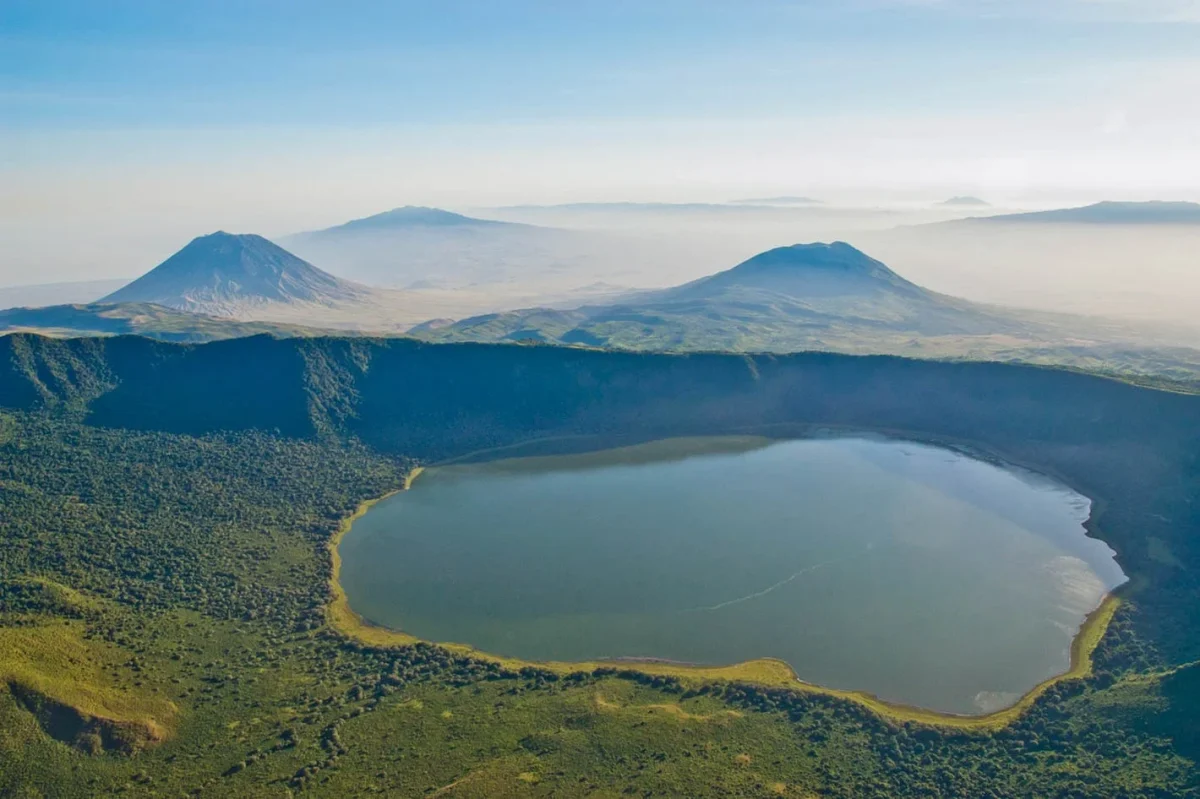
Between 2.5 and 3 million years ago, a massive active volcano stood in what is now northern Tanzania, estimated to have been 4,500 to 5,000 metres tall. After a major eruption emptied the magma chamber below, the summit had nothing left to support it. The cone collapsed inward on itself rather than exploding outward, forming the enormous bowl-shaped caldera we see today.
The process that creates this type of structure is called a caldera collapse. The Spanish word caldera means cauldron, which describes the shape exactly. Smaller eruptions continued after the main collapse, creating minor cones on the crater floor. Over millions of years, rainfall, volcanic soil, and the gradual movement of animals in from the surrounding highlands created the dense, self-sustaining ecosystem inside.
The result is a natural enclosure that wildlife entered but rarely leaves permanently. The fertile volcanic soil grows nutritious short-grass plains year-round, which drew grazers, which in turn drew predators. The enclosed environment concentrated both groups into a spectacularly small area.
TIP: The Ngorongoro Crater is often confused with a crater from an asteroid or meteorite. It is entirely volcanic in origin, formed by the collapse of a volcanic cone, not by an impact from space.
2. The Ngorongoro Crater is the World’s Largest Intact Caldera
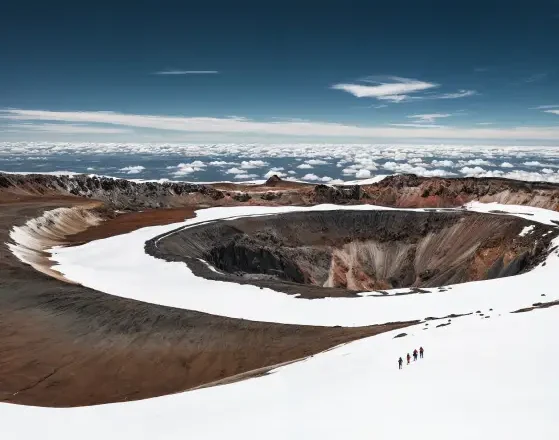
This is the defining geological fact about the Ngorongoro Crater. It measures 16 to 19 kilometres across and its walls rise between 400 and 610 metres above the floor, making them more than one and a half times the height of the Empire State Building. The entire inner structure remains unbroken. There are larger calderas on Earth, but none that are simultaneously intact and unflooded by a lake. That combination is what makes the Ngorongoro Crater genuinely unique in global geology.
The enclosed nature of the caldera effectively created its own micro-climate. The crater floor receives consistent rainfall channelled down the walls. Fog and low cloud often sit on the rim while the floor below is clear and sunny. Mornings on the rim are cold, particularly from June through September, while the floor warms quickly after the sun rises above the crater walls.
3. The Ngorongoro Crater is One of Africa’s Seven Natural Wonders
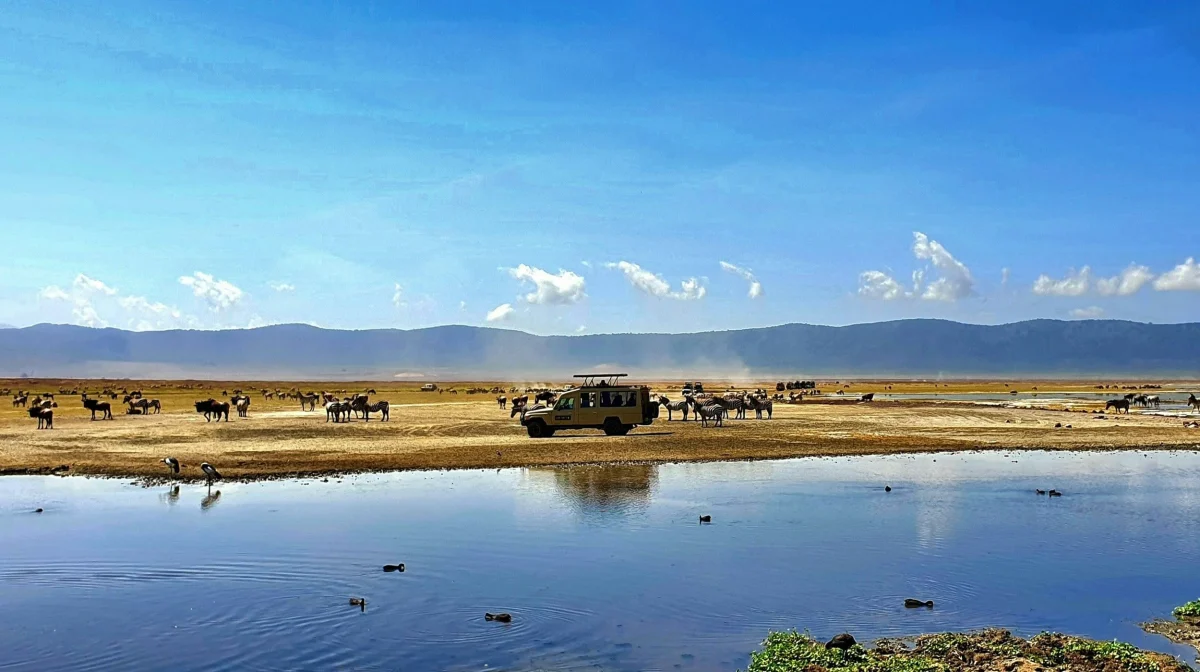
The Ngorongoro Crater is officially listed as one of Africa’s Seven Natural Wonders, alongside the Sahara Desert, the Nile River, the Serengeti Migration, the Okavango Delta, Mount Kilimanjaro, and the Red Sea. It is also a UNESCO World Heritage Site, inscribed in 1979 as a mixed natural and cultural site, recognizing both its extraordinary geology and the presence of the Maasai people who have lived alongside the wildlife here for centuries.
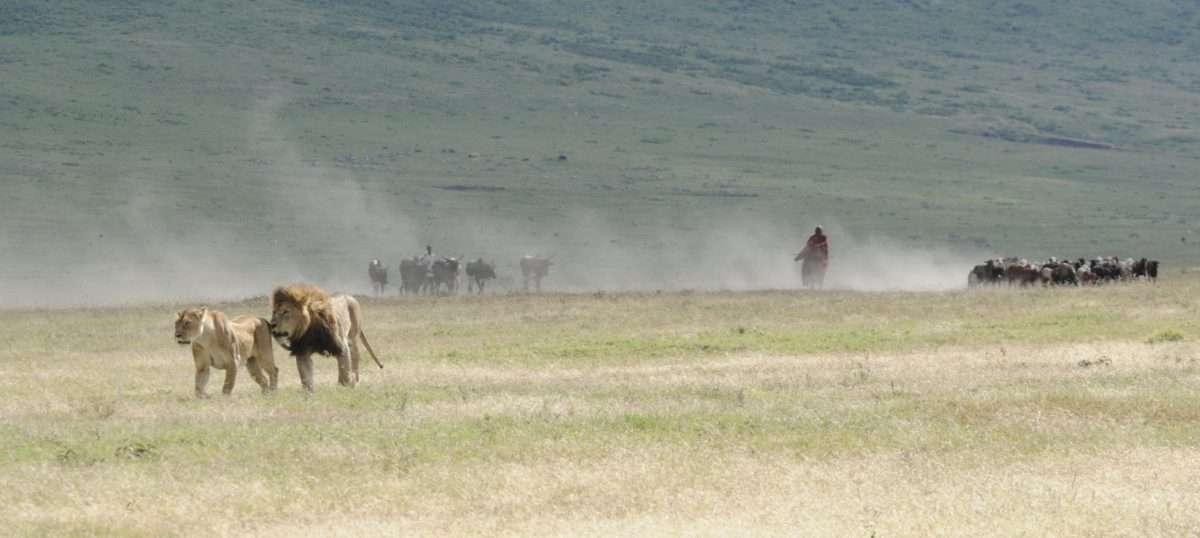
The wider Ngorongoro Conservation Area covers 8,292 km² and is one of the few protected areas in Africa where indigenous people continue to live and graze their cattle within the conservation zone. This coexistence of Maasai pastoralism and wildlife conservation is a defining characteristic of the area.
4. What Does Ngorongoro Mean?
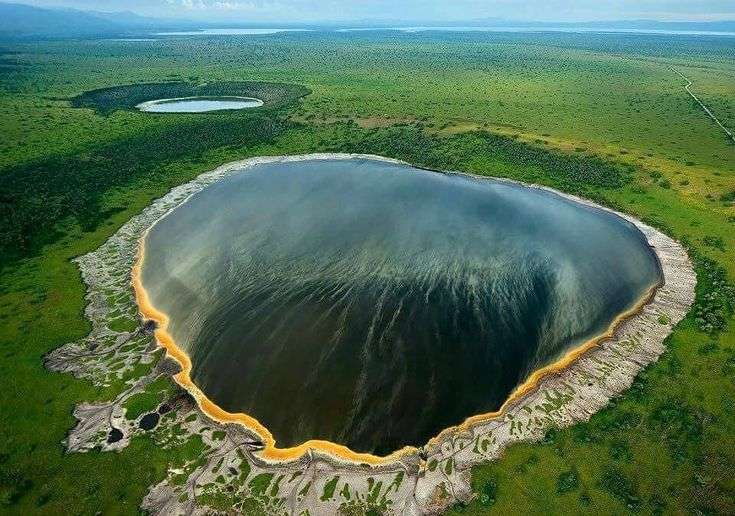
The name Ngorongoro comes from the Maasai language and is believed to be onomatopoeic. Maasai cattle herders traditionally hang a bell around the neck of the lead cow in a herd. The echoing sound that bell made in this highland landscape was described as “ngor ngor.” Over time, the pastoralists named the region after that sound.
The word captures something real about the place. The Ngorongoro Crater has an acoustic quality to it. Sound carries differently inside a caldera, and the resonance of cattle bells, birds, and lion calls across the crater floor has a distinctive character that visitors consistently remember.
5. Almost 25,000 Large Mammals Live Inside the Crater Permanently
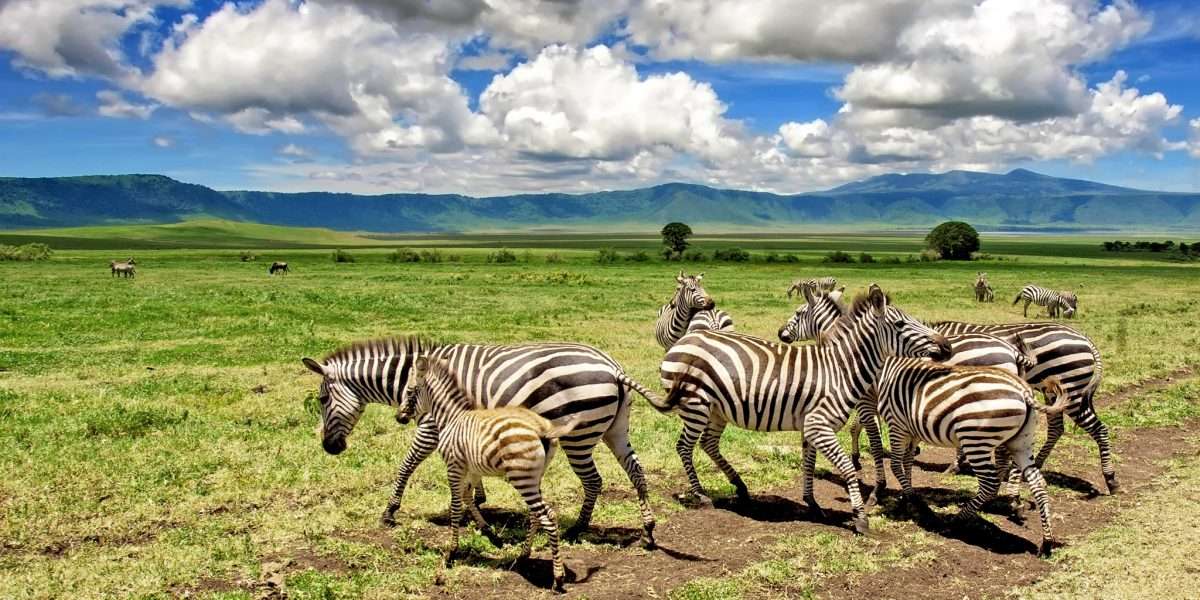
Unlike the Serengeti, where animals follow the grass and rainfall across vast plains, the Ngorongoro Crater has no permanent exits for wildlife. The walls are too steep and too high for most species to cross regularly. As a result, a self-sustaining resident population of approximately 25,000 large mammals lives within the caldera year-round.
This permanent residency creates wildlife density that is extraordinary by any African standard. Here is what shares the crater floor:
| Species | Approximate Number | Notes |
|---|---|---|
| Wildebeest | 7,000 to 8,000 | Non-migratory resident population |
| Zebra | 4,000 to 5,000 | Permanent herds |
| Buffalo | 4,000 to 5,000 | Large herds, reliable sightings |
| Thomson’s Gazelle | 3,000 to 4,000 | Common on open grasslands |
| Grant’s Gazelle | Present year-round | Slightly larger than Thomson’s |
| Lion | Multiple resident prides | Among the densest lion populations in Africa |
| Black Rhino | 20 to 30 individuals | Among the best places in Tanzania to see them |
| Elephant | 50 to 70 individuals | Large-tusked bulls common |
| Spotted Hyena | Large clans | Most numerous large predator |
| Hippo | Resident pods | In Gorigor Swamp and Hippo Pool |
| Leopard | Present, less visible | Prefer forested crater walls |
| Cheetah | Small numbers | Open grassland areas |
| Flamingo | Hundreds to thousands | Seasonal, Lake Magadi, highest Nov to May |
| Bird species | Over 500 recorded | Including ostrich, secretary bird, crowned crane |
6. The Ngorongoro Crater Has the Densest Predator Populations in Africa
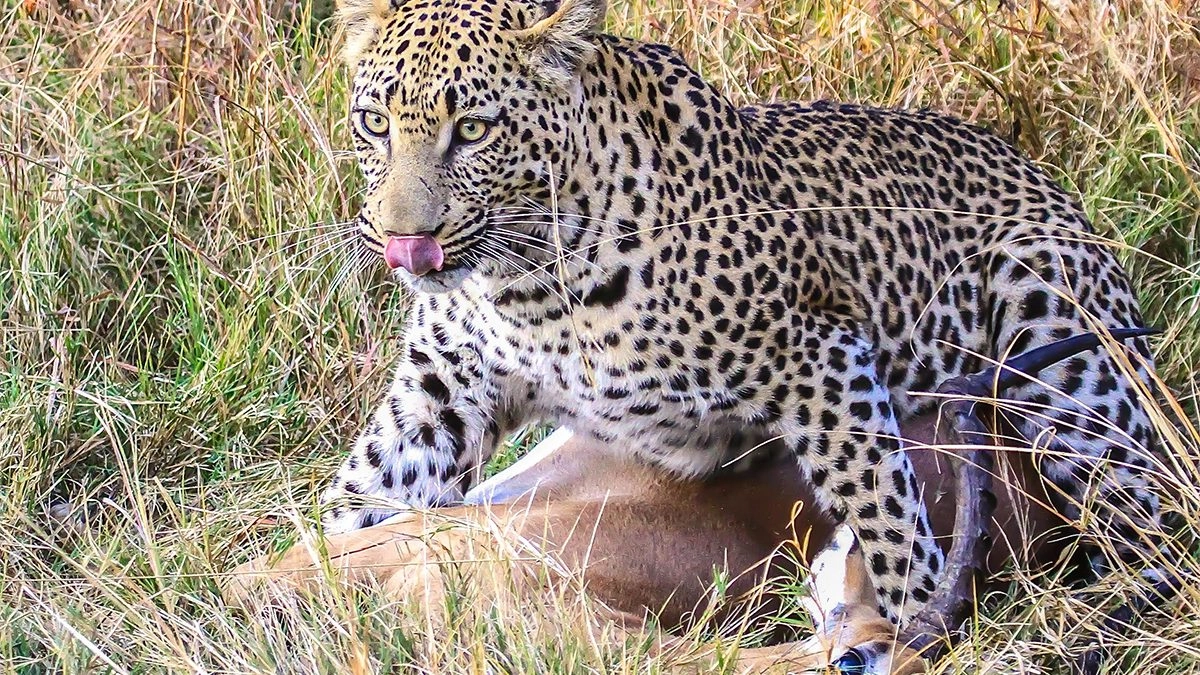
The fertile volcanic soil grows lush short grass that feeds thousands of grazers year-round. Those grazers attract predators. Because the prey never truly leaves, the predators do not need to follow migration herds across vast territories. They stay, breed, and concentrate at a density that is exceptionally rare in the wild.
The resident lion prides in the Ngorongoro Crater are among the most studied in the world. These lions have lived alongside safari vehicles for decades and have developed complete indifference to them. They will hunt within metres of a parked Land Cruiser and sometimes rest against vehicle tyres in the shade. For first-time safari visitors, the proximity is genuinely unexpected.
The full predator roster inside the crater includes:
- Lion (multiple resident prides, high density)
- Spotted hyena (large clan territories, most numerous large predator)
- Leopard (seen in forested areas, especially the Lerai Forest along the southern wall)
- Cheetah (open grassland areas, less common than in Eastern Serengeti)
- Black-backed jackal (common and easily seen throughout the floor)
- Bat-eared fox (nocturnal, seen at dawn and dusk)
- Serval cat (present but rarely seen)
7. The Ngorongoro Crater is East Africa’s Best Place to See Black Rhino
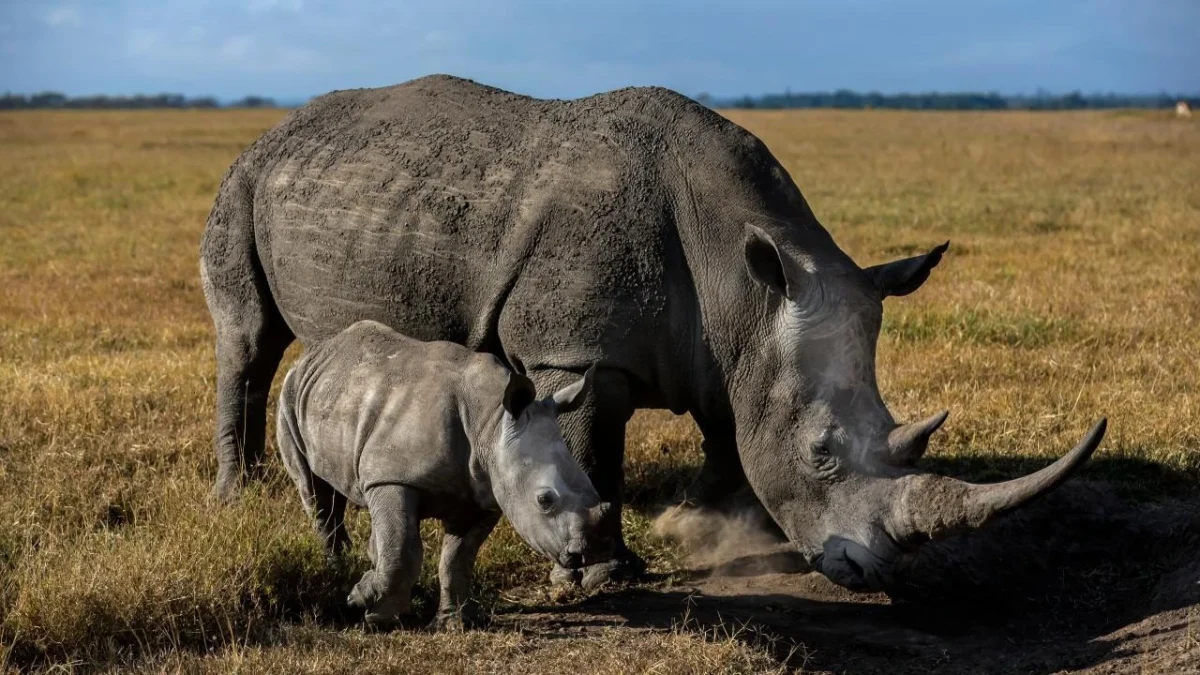
This is arguably the single most significant wildlife fact for visitors planning a Tanzania safari. The critically endangered black rhino is one of the hardest animals to see in the wild anywhere in Africa. Inside the Ngorongoro Crater, an estimated 20 to 30 individual black rhinos live in permanent residence on the crater floor, protected by armed rangers and concentrated in a manageable area.
Black rhinos are more easily observed here than almost anywhere else in East Africa because the open grassland of the crater floor leaves nowhere to hide. They are most active in the early morning and late afternoon. Your guide will know the general territories of individual rhinos and can position the vehicle for the best possible sighting.
TIP: To maximize your chances of a black rhino sighting, arrive at the crater gate when it opens and cover the south-western section of the crater floor first. This is where rhinos are most frequently found in the early morning before the heat builds.
8. Two Animals You Will Not Find in the Ngorongoro Crater: Giraffe and Impala
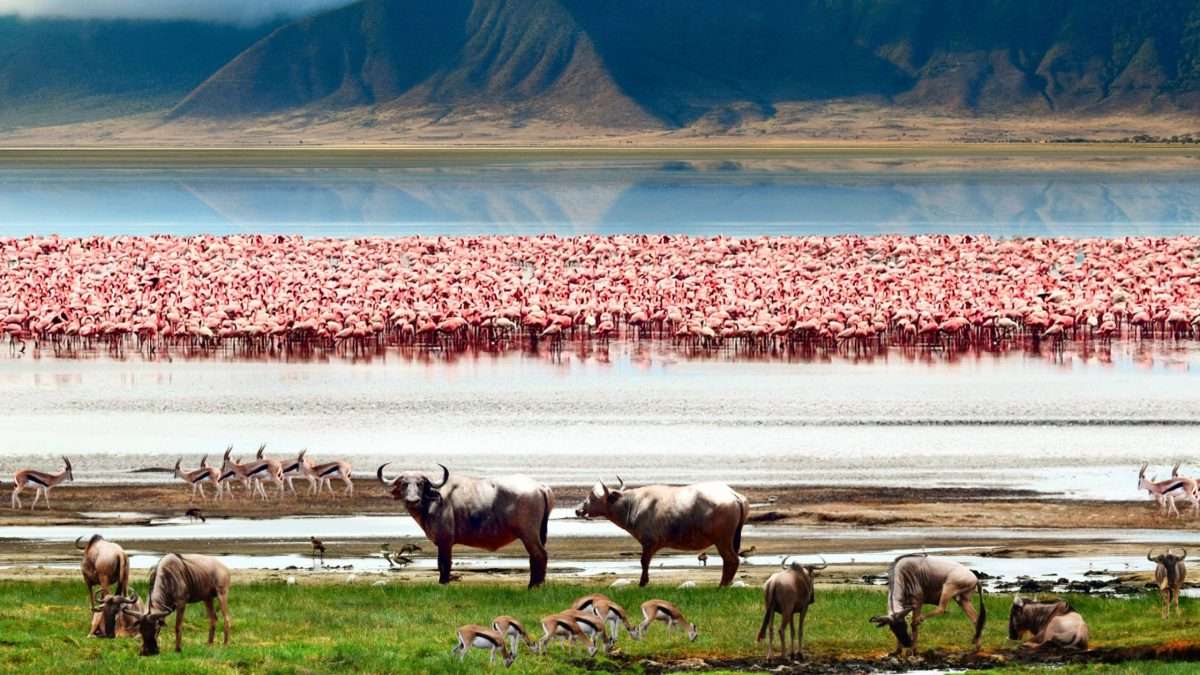
This is one of the most surprising Ngorongoro Crater facts for first-time visitors. Among the 25,000 mammals on the crater floor, you will not find giraffes or impala. No established resident population of either species lives inside the caldera.
The reason is habitat. Giraffes require tall open woodland and specific tree species including acacia and combretum that are not present on the crater floor in sufficient density. The enclosed nature of the caldera limits the growth of the open woodland habitat these animals depend on. Impala similarly require woodland edges and bush that the predominantly open grassland crater floor does not provide.
Both species are common just outside the crater in the wider Ngorongoro Conservation Area and the Serengeti. Tarangire National Park is one of the best places to see giraffe in northern Tanzania.
9. The Crater Floor Contains Six Distinct Habitats
The Ngorongoro Crater is not a uniform landscape. Six different ecosystems exist within the caldera walls, each supporting different species and offering different types of game viewing.
- Open grasslands: The largest habitat type, covering most of the crater floor. Home to wildebeest, zebra, buffalo, gazelle, lion, hyena, and cheetah.
- Lake Magadi: A shallow seasonal alkaline soda lake at the centre of the crater floor. Water levels fluctuate seasonally, and at higher levels from November through May, flamingos gather in large numbers along the shoreline. The white alkaline flats around the lake are distinctive and visible from the crater rim.
- Gorigor and Mandusi Swamps: Freshwater wetlands on the western side of the crater floor. Permanent water year-round attracts hippos, elephants in the wet months, lions, and a wide variety of waterbirds.
- Hippo Pool: A designated stop for safari vehicles where passengers can leave the vehicle briefly. A reliable hippo viewing spot in a compact freshwater pool, popular for picnic lunches.
- Lerai Forest: A small yellowwood fever tree forest along the southern crater wall. Favoured by leopards, baboons, vervet monkeys, Fischer’s lovebirds, and elephants passing through.
- Crater walls: Covered in dense montane forest, rising steeply to the rim. Leopards use the dense cover for resting and movement between the forest and crater floor.
10. Olduvai Gorge: One of the World’s Most Significant Prehistoric Sites
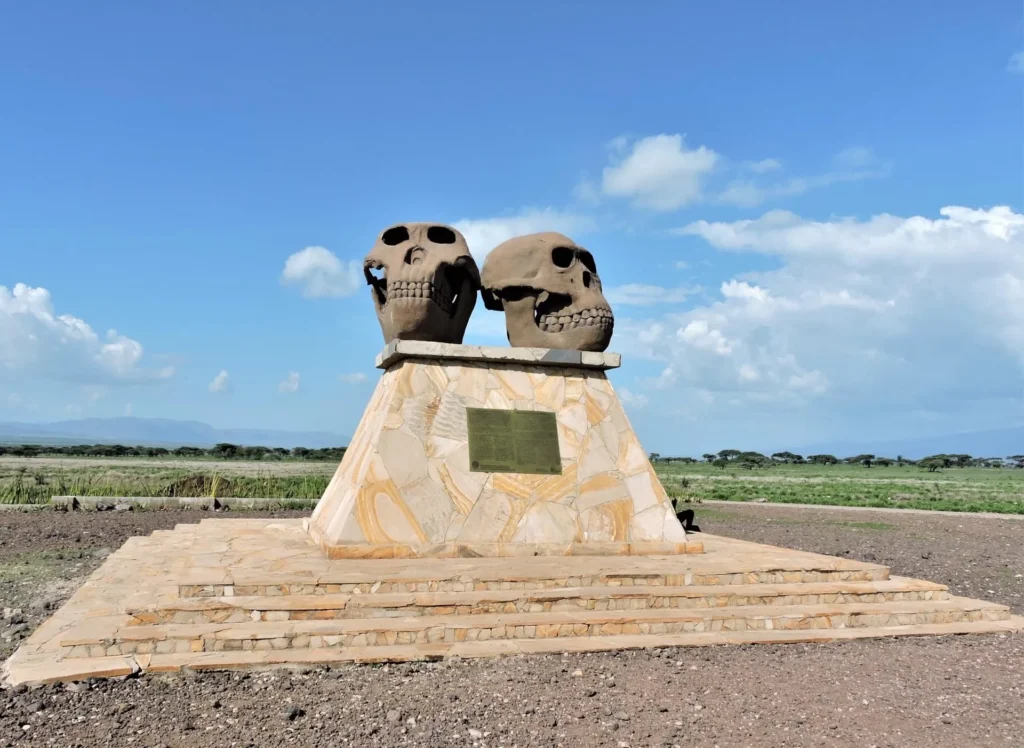
Located within the Ngorongoro Conservation Area, Olduvai Gorge is a 48-kilometre long ravine that has produced some of the most important human ancestor fossils ever discovered. Louis and Mary Leakey worked here for decades from the 1950s onward, uncovering fossils of Homo habilis and Australopithecus boisei that established the East African Rift Valley as a cradle of human evolution.
Fossilized footprints discovered at nearby Laetoli, just 45 km from Olduvai Gorge, date back 3.6 million years and represent the earliest known evidence of upright walking in human ancestors. Replicas of these footprints are displayed at the Olduvai Gorge Museum, which sits at the gorge and offers guided explanations of the fossils and their significance.
TourwithPipi includes an Olduvai Gorge visit as a standard stop on the transfer from the Ngorongoro Crater toward the Serengeti or Ndutu Plains. It takes approximately one hour and adds real historical and anthropological depth to any Tanzania safari.
TIP: The Olduvai Gorge Museum is a genuinely worthwhile stop, not a tourist checkbox. The site context makes the fossils and casts far more meaningful than seeing them in a city museum. Allow at least 45 minutes here.
11. No Accommodation Exists Inside the Crater
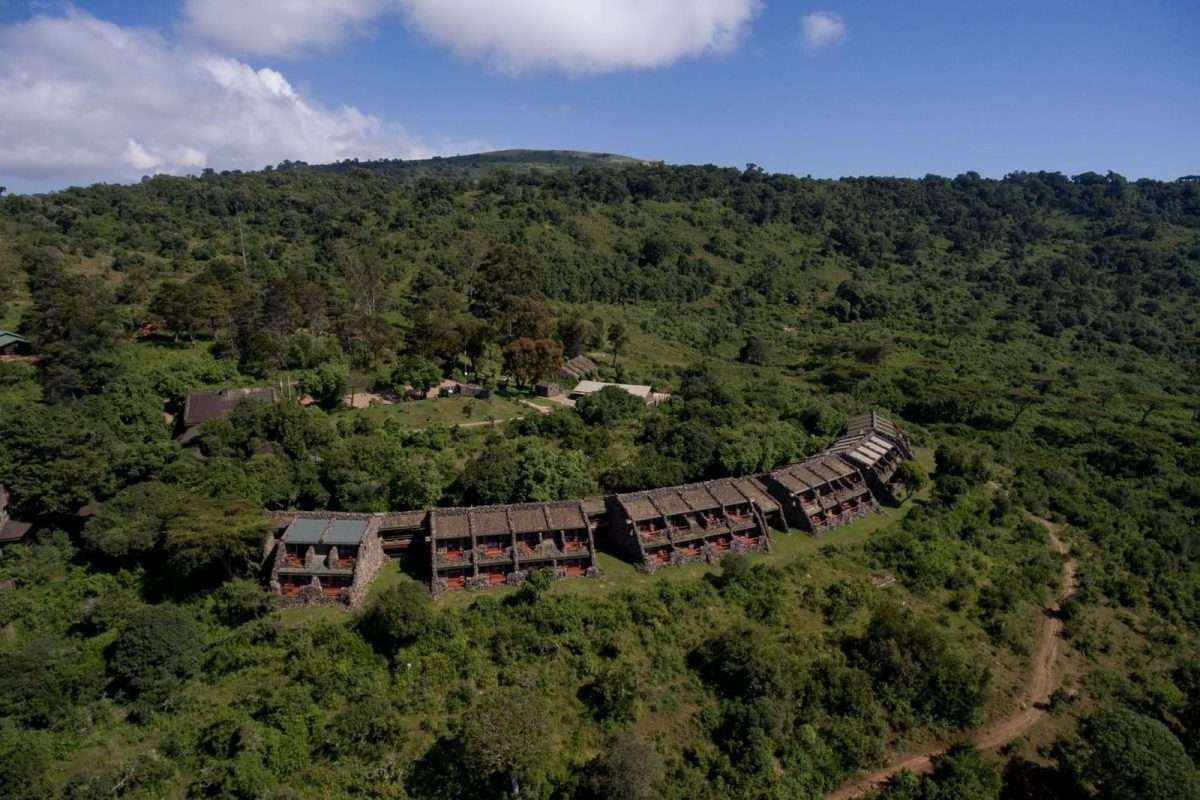
The Ngorongoro Conservation Area Authority issues timed access permits for the crater floor. Vehicles are allowed inside for a maximum of six hours per descent. No lodges or camps exist on the crater floor. All accommodation is either on the rim above or in the surrounding highlands and Karatu town.
Staying on the rim gives you three advantages: dramatic crater views from your veranda, early gate access before other visitors arrive from further away, and the unique experience of watching the caldera from above at sunrise before descending into it. TourwithPipi books rim lodges for all Tanzania itineraries that include a full crater game drive.
Staying in Karatu or the highlands can cost significantly less and the lodges there offer genuine charm and character, particularly properties on working coffee and tea plantations. The trade-off is an additional 45 minutes to one hour of driving each way to reach the crater gate.
12. The Maasai Have Lived Alongside the Crater’s Wildlife for Centuries
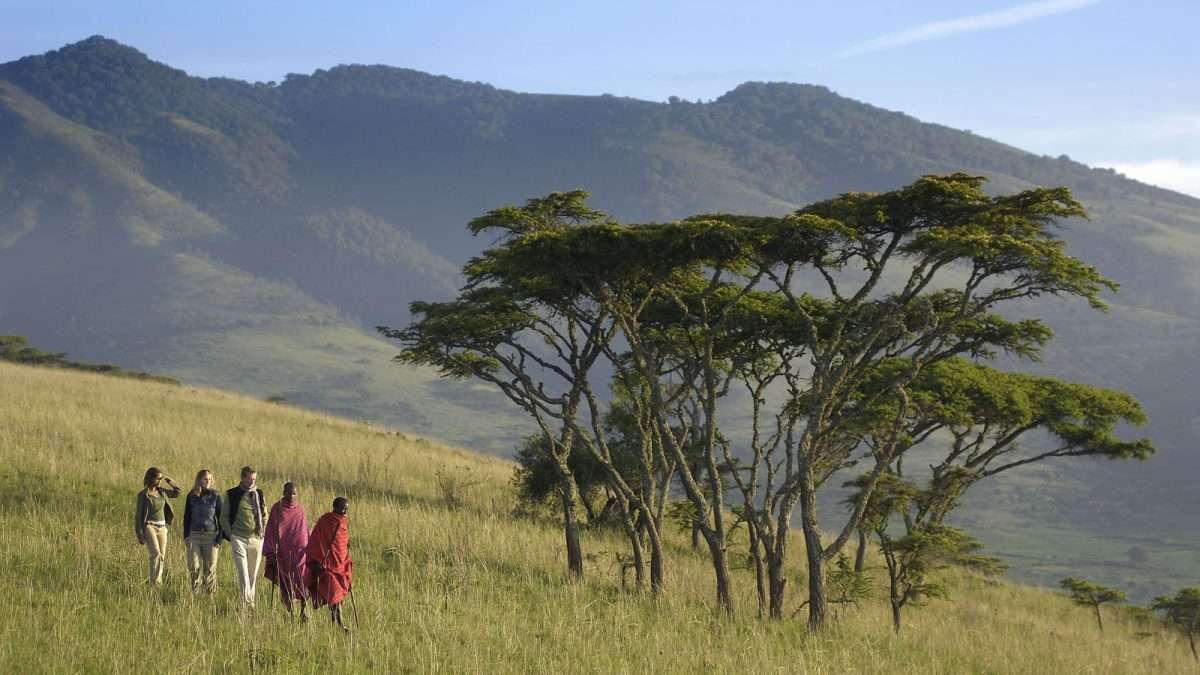
The Ngorongoro Conservation Area is unlike most African protected areas in that it is not a pure national park. The Maasai people retain the right to graze their cattle within the conservation zone, a coexistence that reflects centuries of sustainable pastoralism in this landscape. The Maasai have lived alongside lions, elephants, and buffalo in the highlands surrounding the crater long before the area received formal conservation status.
A well-organized Maasai village visit near the crater rim offers direct insight into cattle culture, beadwork traditions, warrior society, and how the Maasai navigate modern conservation alongside their traditional way of life. TourwithPipi includes a Maasai cultural visit on several Tanzania itineraries as a meaningful part of understanding this landscape rather than a tourist add-on.
13. The Ngorongoro Crater Sits at the Heart of the Northern Safari Circuit
The crater is positioned almost exactly midway along Tanzania’s Northern Safari Circuit between Arusha in the east and the Serengeti National Park in the west. Most well-designed Tanzania itineraries route east to west: Arusha, Lake Manyara or Tarangire, the Ngorongoro Crater, the Serengeti, and back. The crater sits naturally at the geographic and experiential centre of this circuit, serving as a pivot between the accessible eastern parks and the vast western plains.
This positioning means combining the Ngorongoro Crater with the Serengeti requires no backtracking and no extra travel time. You drive through it on the way. TourwithPipi includes the crater on all three of our Tanzania packages for exactly this reason.
Best Time to Visit the Ngorongoro Crater
Because wildlife does not migrate out of the crater, there is genuinely no bad time to visit. The question is less about wildlife and more about crowd levels, weather, and what other events you want to combine.
- For avoiding crowds: January and May are widely recommended for visiting with fewer vehicles on the crater floor while wildlife remains excellent.
- For black rhino: Early morning in the dry season from June through October gives the clearest visibility across the open grassland.
- For flamingos: November through May, when Lake Magadi water levels are higher and flocks reach into the thousands.
TourwithPipi Tanzania Packages That Include the Ngorongoro Crater
Every TourwithPipi Tanzania safari is fully private. Your group travels in a dedicated 4×4 Land Cruiser with your own expert guide throughout. All three Tanzania itineraries below include a full Ngorongoro Crater game drive as a central element.
7 Days Northern Tanzania Luxury Safari
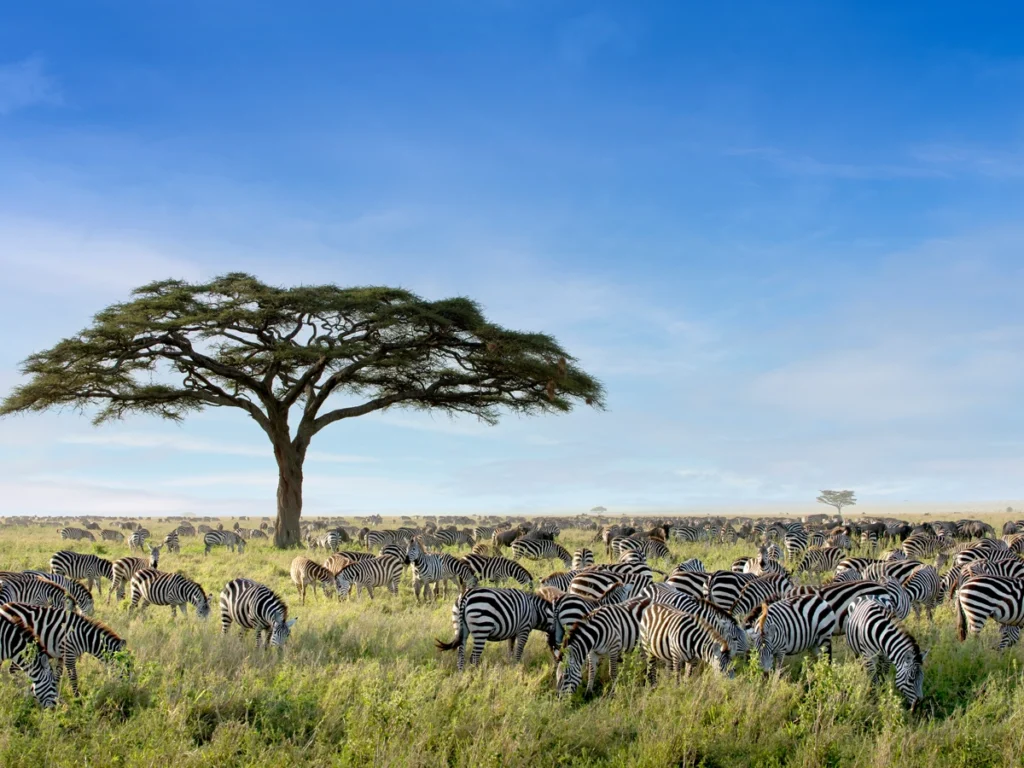
Complete Northern Circuit covering Lake Manyara, Ngorongoro Crater, Serengeti, and Tarangire. One full crater day with rim lodge accommodation and a descent at first light.
| Group Size | Per Person | Total |
|---|---|---|
| 2 People | $3,749 | $7,498 |
| 4 People | $3,299 | $13,196 |
| 6 People | $2,979 | $17,874 |
8-Day Tanzania Calving Season Safari
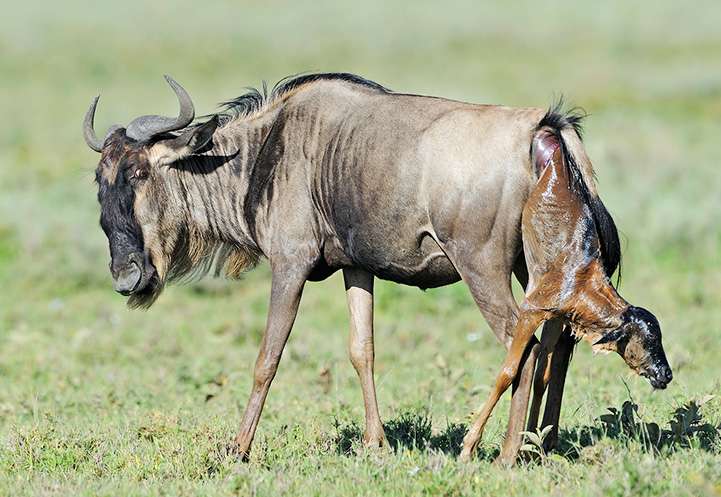
Ngorongoro Crater, Central Serengeti, Ndutu calving plains, and Tarangire. Dawn crater descent and Maasai village visit en route to the calving grounds. Best for January to March travel.
| Group Size | Per Person | Total |
|---|---|---|
| 2 People | $5,429 | $10,858 |
| 4 People | $4,679 | $18,716 |
| 6 People | $4,449 | $26,694 |
10 Days Great Migration Safari in Tanzania

Tarangire, Ngorongoro Highlands, Ngorongoro Crater with Olduvai Gorge, Central Serengeti, and Northern Serengeti with two full days at the Mara River. Best for July to October travel.
| Group Size | Per Person | Total |
|---|---|---|
| 2 People | $6,549 | $13,098 |
| 4 People | $5,749 | $22,996 |
| 6 People | $5,479 | $32,874 |
Frequently Asked Questions About Ngorongoro Crater
How was the Ngorongoro Crater formed?
The crater formed approximately 2.5 to 3 million years ago when a large active volcano erupted and then collapsed inward into its own emptied magma chamber. This type of volcanic structure is called a caldera. The Ngorongoro Crater is the largest intact, unflooded example in the world.
What animals live in the Ngorongoro Crater?
Around 25,000 large mammals live permanently inside the crater including lion, black rhino, elephant, buffalo, leopard, cheetah, hyena, zebra, wildebeest, hippo, Thompson’s and Grant’s gazelle, jackal, and bat-eared fox. Over 500 bird species have been recorded including flamingos on Lake Magadi. Giraffes and impala are the two notable absentees.
Is the Ngorongoro Crater a national park?
No. The Ngorongoro Crater sits within the Ngorongoro Conservation Area, which is a multi-use protected area rather than a national park. The Maasai retain grazing rights within the conservation zone and live alongside the wildlife, which distinguishes it from a standard national park.
Can you see the Big Five in the Ngorongoro Crater?
Yes. All five Big Five species are present including lion, leopard, elephant, buffalo, and critically endangered black rhino. Black rhino sightings are significantly more reliable here than in open savannah parks like the Serengeti, making the Ngorongoro Crater one of the best Big Five destinations in East Africa.
How long should you spend at the Ngorongoro Crater?
One full day inside the crater is the minimum. Two nights in the area is the recommended stay, giving you a dawn descent with unhurried time at each area of the crater floor. Most travelers visit as part of a 7 to 10 day Tanzania Northern Circuit.
Why are there no giraffes in the Ngorongoro Crater?
Giraffes require tall open woodland and specific tree species, particularly acacias and combretum, that are not present in the crater floor in sufficient density. The predominantly short-grass grassland habitat does not support a permanent giraffe population.
Can you stay inside the Ngorongoro Crater?
No. Overnight accommodation inside the crater is not permitted. The Conservation Area Authority issues timed access permits for a maximum of six hours per descent. All lodges and camps are located on the crater rim or in the surrounding highlands and Karatu town.
What is Olduvai Gorge?
Olduvai Gorge is a 48-kilometre ravine within the Ngorongoro Conservation Area where Louis and Mary Leakey discovered human ancestor fossils including Homo habilis, dating the site back approximately 3.6 million years. The Olduvai Gorge Museum displays fossil replicas and the Laetoli footprint casts, the oldest evidence of upright human walking ever found. Most Tanzania Northern Circuit itineraries pass Olduvai en route from the crater to the Serengeti.
What does Ngorongoro mean?
The name is believed to be an onomatopoeic Maasai word describing the echoing “ngor ngor” sound of the bell worn by the lead cow in a Maasai cattle herd. The Maasai pastoralists named the area after this distinctive sound.
What is the difference between the Ngorongoro Crater and the Serengeti?
The Ngorongoro Crater is a compact 260 km² enclosed caldera with permanently resident wildlife at extraordinary density. It is the most reliable Big Five destination in Tanzania including black rhino. The Serengeti covers 14,763 km² of open savannah and hosts the Great Wildebeest Migration. Most Tanzania safaris combine both in a single 7 to 10 day circuit.


