
New York sits roughly 6,900 to 8,000 miles from most of Africa, depending on your destination. A New York to Africa flight runs anywhere from about 7 hours nonstop to Casablanca up to 15 hours nonstop to Cape Town or Johannesburg. Yes, there are direct flights from JFK to Africa, on Kenya Airways, EgyptAir, Royal Air Maroc, Ethiopian Airlines, and Delta, plus nonstop options from Newark on United.
I get asked constantly by New York based guests how the flight actually works, what it costs, and how far in advance to book it. This guide covers every part of planning a trip from New York to Africa: flight times and routes, real costs, visas, insurance, staying connected, what to pack, and how to actually plan the whole thing in order, not just the flight.
How Far Is New York City from Africa?
New York to Africa distance varies enormously depending on where on the continent you’re headed. Casablanca, Morocco sits about 3,600 miles from New York, the shortest hop on this list. Nairobi, Kenya sits roughly 7,400 miles away. Cape Town and Johannesburg in South Africa sit furthest, at close to 7,800 to 8,000 miles.
| Destination | Approximate Distance from New York | Nonstop Flight Time |
|---|---|---|
| Casablanca, Morocco | 3,600 miles | About 7 hours |
| Cairo, Egypt | 5,600 miles | About 10 to 11 hours |
| Accra, Ghana | 5,500 miles | About 10 to 11 hours |
| Addis Ababa, Ethiopia | 6,900 miles | About 13 hours |
| Nairobi, Kenya | 7,400 miles | About 13.5 to 14 hours |
| Johannesburg, South Africa | 7,950 miles | About 15 hours |
| Cape Town, South Africa | 7,800 miles | About 14.5 to 15 hours |
Are There Direct Flights from JFK to Africa?
Yes. Nonstop flights run from both JFK and Newark to several major African hubs, though the exact route options depend on your specific destination.
| Route | Airline | Airport | Frequency |
|---|---|---|---|
| JFK to Nairobi | Kenya Airways | JFK | Daily |
| JFK to Cairo | EgyptAir | JFK | Multiple weekly |
| JFK to Casablanca | Royal Air Maroc | JFK | Multiple weekly |
| JFK to Addis Ababa | Ethiopian Airlines | JFK | Daily |
| JFK to Accra | Delta | JFK | Several weekly |
| Newark to Johannesburg | United | EWR | Daily |
| Newark to Cape Town | United | EWR | Several weekly |
| Newark to Cairo | EgyptAir | EWR | Several weekly |
| Newark to Marrakech | United | EWR | Seasonal, October to March |
For Tanzania, Victoria Falls, and Botswana specifically, no direct JFK or Newark flight exists yet. You’ll connect through Nairobi, Addis Ababa, Johannesburg, Amsterdam, Doha, or Istanbul instead. This isn’t a dealbreaker, since most of these connections add only a few hours and some, like Ethiopian Airlines through Addis Ababa, are genuinely well run.
New York to Africa Flight Time: What to Actually Expect
The flight itself is only part of the total travel time. Add TSA security, boarding, and any connection, and a “13 hour flight” can easily become an 18 to 22 hour door-to-door travel day.
Most nonstop flights to East and Southern Africa depart New York in the evening and land the following afternoon or evening local time, thanks to the time difference and the direction of travel. That overnight structure is actually a genuine advantage: you sleep through a chunk of the flight and arrive with a partial day still ahead of you, rather than landing at 3 am.
How Much Does a Flight from New York to Africa Cost?
A round-trip flight from New York to Africa runs roughly $650 to $900 to North Africa, and $1,100 to $1,800 to Southern Africa, depending on season.
| Destination | Typical Round-Trip Economy Cost | Notes |
|---|---|---|
| Casablanca or Cairo | $650 to $900 | Generally the cheapest entry points to the continent |
| Accra or Dakar | $900 to $1,300 | West Africa runs a bit higher than North Africa |
| Nairobi | $900 to $1,600 | Kenya Airways’ nonstop is often the most convenient, not always the cheapest |
| Johannesburg or Cape Town | $1,100 to $1,800 | Peak season (June to September) pushes toward the top of this range |
Prices swing hard by season. December, and June through August, are the most expensive windows to fly, since they overlap with both safari high season and Northern Hemisphere summer break. Booking 4 to 6 months ahead, and flying midweek rather than over a weekend, are the two moves that consistently save the most.
How Many Days Should Your Trip Be?

Given a 13 to 15 hour flight each way, I don’t recommend anything shorter than 9 to 10 days total for a Kenya or Tanzania safari from New York, and closer to 10 to 12 days is genuinely more comfortable. Spending two full travel days to get 5 or 6 days on the ground isn’t a great trade.
If you’re adding a beach extension or a second country, budget 12 to 16 days. That’s enough time to make the long flight feel worth it without rushing every stop.
How to Plan Your Trip from New York to Africa: Step by Step
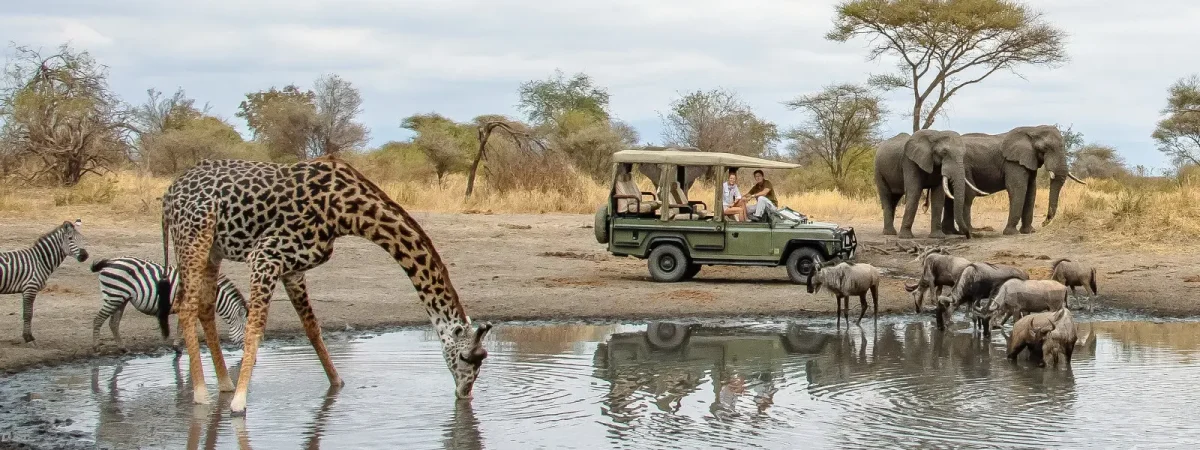
Book your flights first, 4 to 6 months out. Nonstop seats from JFK and Newark sell out earlier than connecting itineraries, especially for June through September travel.
Choose your destination country, then your specific parks. Kenya and Tanzania suit a first Africa trip well. South Africa suits travelers who want a malaria-free option or want to pair the safari with Cape Town.
Confirm your visa requirements early. Some entry requirements need processing time, and it’s one less thing to think about once your flights are booked.
Sort your vaccinations and malaria medication with your doctor. Yellow fever vaccination is required for Kenya and Tanzania, and needs to be documented before you fly.
Buy travel insurance that covers medical evacuation, not just trip cancellation, given how far you’ll be from a US hospital.
Set up an eSIM or local SIM plan so you land already connected.
Pack light, in soft-sided luggage, especially if any leg of your trip uses a small charter aircraft.
Confirm your safari itinerary and lodge bookings well before departure, ideally the same 4 to 6 month window as your flights.
Visas and Entry Requirements from the US
| Destination | Visa Requirement for US Citizens | Approximate Cost |
|---|---|---|
| Kenya | Electronic Travel Authorization (eTA), required in advance | $30 to $50 |
| Tanzania | E-visa or visa on arrival | $50 to $100 |
| South Africa | Visa-free for stays up to 90 days | None |
| Morocco | Visa-free for stays up to 90 days | None |
| Zimbabwe / Zambia (Victoria Falls) | Visa on arrival | $30 to $50 |
| Botswana | Visa-free for stays up to 90 days | None |
Requirements change, so confirm the current policy directly with the destination country’s official immigration site before you travel, not just this table.
Travel Insurance for a Trip This Long

Given the distance from New York to Africa, travel insurance genuinely matters here more than on a shorter domestic trip. Look specifically for a policy that includes medical evacuation coverage, not just trip cancellation and lost luggage, since a serious medical issue far from a major hospital is exactly the scenario evacuation coverage exists for. Expect to pay roughly $150 to $400 per person for a comprehensive policy on a trip this length, depending on your age and trip cost.
eSIM and Staying Connected

An eSIM is the easiest way to land already connected, without hunting for a local SIM card on arrival. Providers like Airalo and Holafly sell data-only eSIM plans for Kenya, Tanzania, and South Africa, typically running $15 to $40 for a week or two of data, installed entirely from your phone before you leave New York.
If you’d rather buy a local SIM on the ground, Safaricom in Kenya and Vodacom in South Africa are the most reliable networks, generally cheaper than an eSIM but requiring a stop at the airport or a local shop and, in some countries, passport registration.
Medications and Medical Kit

Malaria medication is strongly advised for Kenya and Tanzania, since both sit in high-risk malaria zones, and needs to start before departure as your doctor instructs. Beyond that, a basic kit covers most situations: insect repellent with DEET, high SPF sunscreen, adhesive bandages, antiseptic wipes, anti-diarrheal medication, oral rehydration salts, and any prescription medication packed in your carry-on rather than checked luggage.
Confirm your yellow fever vaccination is documented on an official certificate before you fly to Kenya or Tanzania, since it’s checked on arrival.
Is Africa Safe for Travelers from New York?

Yes, for the destinations and travel style this guide covers. The national parks and private reserves where a safari actually happens are generally very safe, and serious incidents on a well-run trip are rare. The same common-sense precautions that apply to travel anywhere, being aware in cities, using a reputable driver, and not flashing valuables, apply here too.
Best Time to Fly from New York to Africa
| Region | Best Months | Why |
|---|---|---|
| Kenya and Tanzania | June to October, January to March | Dry season game viewing, with the Great Migration July through October |
| South Africa | May to September | Dry season pushes wildlife toward water sources |
| Morocco | March to May, September to November | Avoids both summer heat and winter chill |
| Victoria Falls | February to May | Falls at their fullest and most dramatic |
Flights and lodges both cost more during these peak windows, so booking early matters even more if your travel dates land inside them.
Major Layover Hubs on the Way to Africa
If your specific destination doesn’t have a nonstop option from New York, you’ll likely connect through one of these hubs.
| Hub | Airline | Typical Layover |
|---|---|---|
| Amsterdam (AMS) | KLM | 1.5 to 3 hours |
| Doha (DOH) | Qatar Airways | 2 to 4 hours |
| Istanbul (IST) | Turkish Airlines | 2 to 4 hours |
| Addis Ababa (ADD) | Ethiopian Airlines | 1.5 to 3 hours, or an overnight stopover option |
| Dubai (DXB) | Emirates | 2 to 4 hours |
| Johannesburg (JNB) | South African Airways, United | 1.5 to 3 hours |
Ethiopian Airlines and Qatar Airways both consistently rank well for connection reliability and comfort on this route, worth factoring in if your specific destination requires a connection either way.
What to Pack for a Trip from New York

Long flight, long trip, and a real climate swing between dawn game drives and midday heat all factor into the packing list.
- Neutral colored clothing in khaki, olive, or tan, avoiding bright white, black, and dark blue, which can attract tsetse flies in some regions
- A warm layer or light jacket for early morning game drives, since dawn temperatures can be genuinely cold even close to the equator
- Comfortable, closed walking shoes, plus swimwear if your itinerary includes any pool or beach time
- A universal power adapter, since most of East and Southern Africa uses a different plug type than the US
- A portable charger and a downloaded offline playlist or shows for the long flight itself
- A soft-sided duffel bag rather than a hard suitcase, since small charter flights between parks enforce strict weight and shape limits
- Binoculars, a camera with a zoom lens, and extra memory cards or storage
- Insect repellent, high SPF sunscreen, and a basic first aid kit, covered in more detail in the medical kit section above
Top Things to Do and See
Kenya and Tanzania
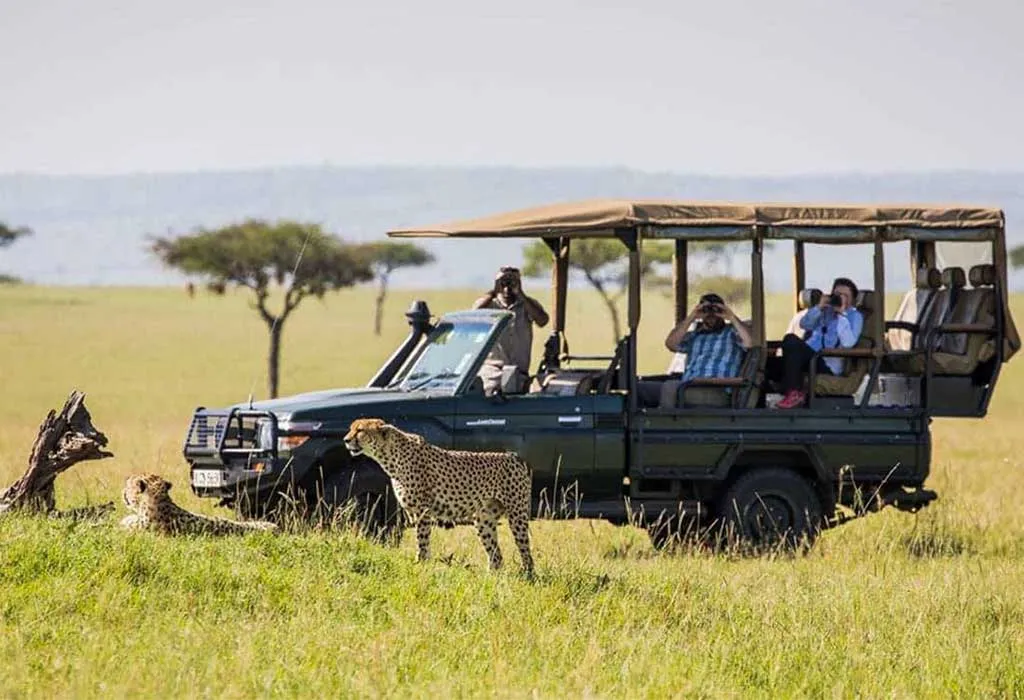
The Masai Mara and Serengeti anchor the Great Migration, with river crossings running roughly July through October. Amboseli delivers elephant herds set against Kilimanjaro as a backdrop, and Ngorongoro Crater packs an entire ecosystem, and consistently strong Big Five sightings, into one enclosed volcanic caldera. A hot air balloon safari over the Mara or Serengeti, and a visit to a Maasai village, are both popular add-ons to a classic game drive circuit.
South Africa
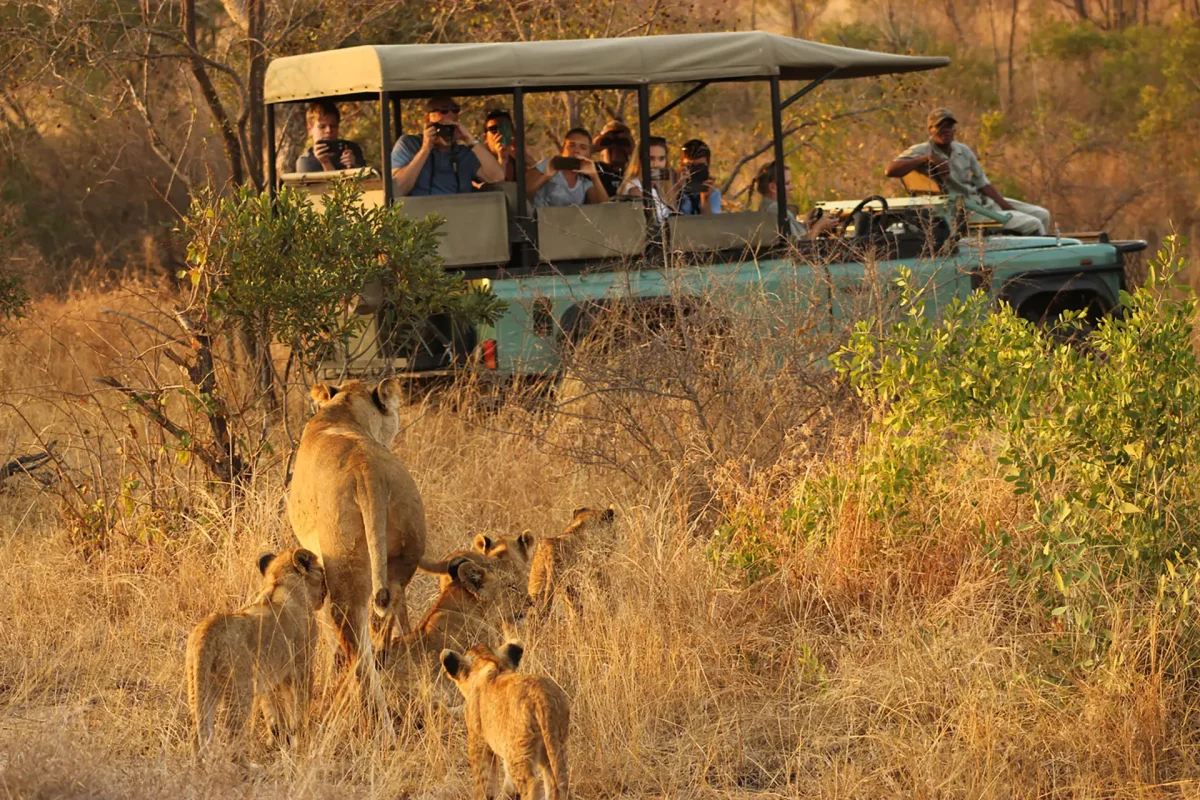
Kruger National Park and the private reserves bordering it, including Sabi Sand, deliver dense Big Five sightings and off-road tracking most national parks don’t allow. Cape Town rounds out the trip with Table Mountain, the penguin colony at Boulders Beach, and the wider Cape Peninsula, giving the trip a genuine city and coastal component alongside the safari.
Victoria Falls
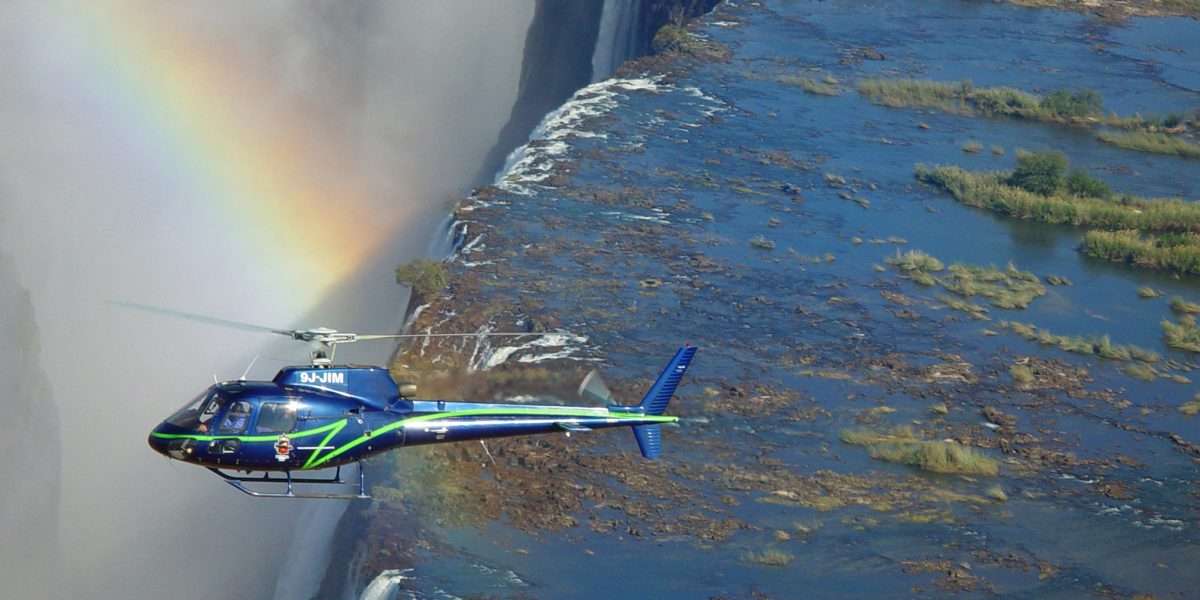
Straddling the Zimbabwe-Zambia border, Victoria Falls is one of the seven natural wonders of the world and a strong two to four night add-on to a Southern Africa itinerary, with a sunset river cruise as a gentler activity alongside the falls themselves.
Food to Try

East African cuisine leans on grilled meats, hearty stews, and staples like ugali and rice, while the coast around Mombasa and Zanzibar adds Swahili coastal dishes built around coconut, seafood, and spice, including dishes like biryani and coconut fish curry. Most lodges also serve fresh tropical fruit and strong East African coffee, grown in the same highland regions you’ll be driving through.
South Africa’s food scene runs more contemporary and international, especially in Cape Town, with strong seafood and produce-driven menus reflecting the region’s genuinely productive farmland and coastline. Braai, South Africa’s version of a barbecue, is a genuine cultural institution worth trying if your itinerary includes a stop where it’s offered.
None of this requires seeking out anything exotic to enjoy. Most lodges serve a genuinely accessible mix of local and international dishes at every meal, and dietary requests, including halal meals, are easy to arrange in advance with most operators.
Combining Multiple Destinations
Given how long the flight from New York is, many guests choose to combine a safari with a beach stay or a second country rather than making the trip just for a few days of game drives. A Kenya safari paired with several nights on the Diani coast, or a South Africa safari paired with Cape Town, are both straightforward to build into a single itinerary without doubling your flight time.
Ready to Plan Your Trip from New York?

Tell me your dates and whether you’re flying from JFK or Newark, and I’ll build the itinerary around your actual flight options, not the other way around. Message me on WhatsApp to start planning.
Common Questions About Flying from New York to Africa
How far is New York City from Africa?
Roughly 3,600 miles to Casablanca on the near end, up to about 8,000 miles to Cape Town or Johannesburg on the far end, depending on your specific destination.
Are there any direct flights from JFK to Africa?
Yes. Kenya Airways flies JFK to Nairobi daily, EgyptAir flies JFK to Cairo, Royal Air Maroc flies JFK to Casablanca, Ethiopian Airlines flies JFK to Addis Ababa, and Delta flies JFK to Accra. Newark adds United’s nonstop routes to Johannesburg and Cape Town.
How long is the flight from New York to Africa?
It depends entirely on the destination, from about 7 hours nonstop to Casablanca up to roughly 15 hours nonstop to Cape Town or Johannesburg.
How far in advance should I book my flight?
4 to 6 months ahead is the sweet spot, especially for June through September travel, when both flights and lodges book up fastest.
Do I need a visa to fly from New York to Kenya or Tanzania?
Yes. Kenya requires an electronic Travel Authorization arranged in advance, and Tanzania requires an e-visa or visa on arrival. South Africa and Morocco are both visa-free for US citizens for stays up to 90 days.
Blog Summary
- New York sits roughly 3,600 to 8,000 miles from Africa depending on the destination, with nonstop flight times running about 7 to 15 hours.
- Direct flights from JFK run to Nairobi, Cairo, Casablanca, Addis Ababa, and Accra, while Newark adds nonstop routes to Johannesburg and Cape Town.
- No direct JFK or Newark flight currently serves Tanzania, Victoria Falls, or Botswana, all of which require a connection.
- Round-trip economy fares typically run $650 to $900 to North Africa and $1,100 to $1,800 to Southern Africa, with December and summer as the most expensive months.
- A trip should run at least 9 to 10 days given the flight length, and 12 to 16 days if you’re adding a beach extension or second country.
- Kenya and Tanzania require a yellow fever vaccination and an eTA or e-visa, while South Africa and Morocco are both visa-free for US citizens.
- Travel insurance with medical evacuation coverage, and an eSIM set up before departure, are both worth arranging ahead of time rather than on arrival.


