
The savanna is one of the world’s major wildlife habitats. These grass-dominated ecosystems have seasonal rainfall, long dry periods and varying amounts of tree cover, creating conditions that support a wide range of mammals, birds, reptiles and insects.
African savannas are especially famous for animals such as elephants, lions, giraffes, zebras, wildebeest, rhinos and cheetahs. But savannas are not limited to Africa. Similar ecosystems occur in parts of South America, Australia and Asia, with different wildlife in each region.
So, what animals live in the savanna, and how do they survive its changing conditions?
This guide covers the major savanna animals, from large herbivores and predators to birds, reptiles and smaller wildlife, along with their diets, adaptations and habitats.
The Big Herbivores of the Savanna
Large herbivores consume enormous amounts of vegetation and form a major part of many savanna food webs.
African Elephant
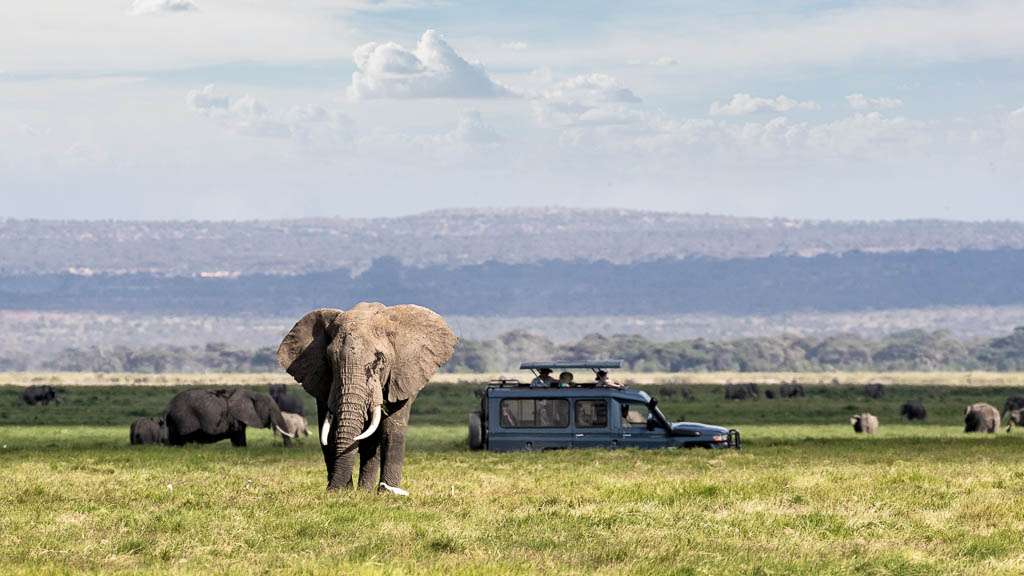
The African elephant is the largest living land animal.
Elephants use their trunks to pull grass, leaves and branches, while their tusks can help with digging, stripping bark and other tasks.
Their feeding can also change vegetation. By knocking down trees, stripping bark and opening pathways, elephants influence the structure of the habitat used by other species.
Giraffe
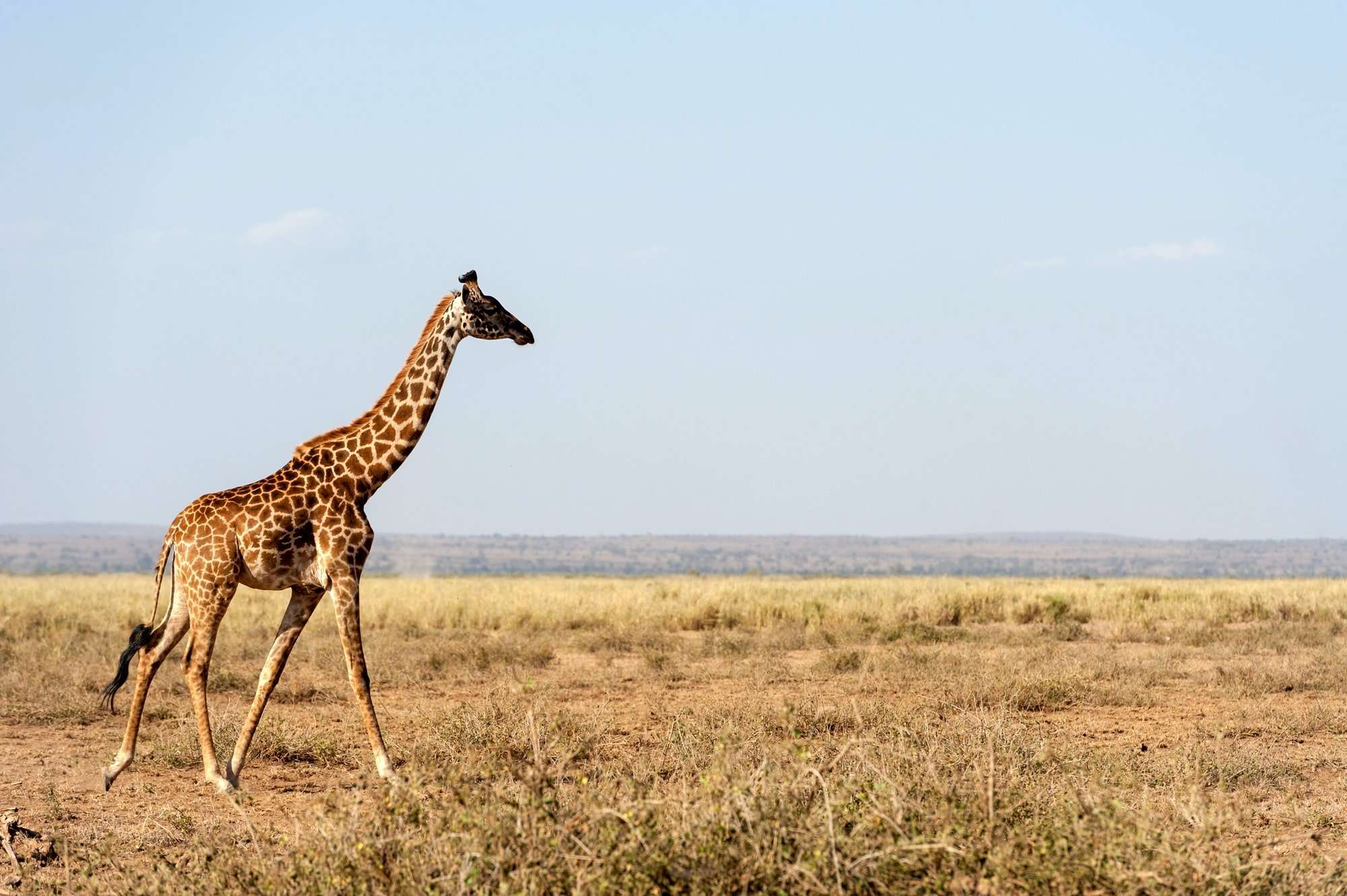
Giraffes are specialised browsers.
Their long necks allow them to feed on leaves and shoots high in trees, including acacias and other woody plants.
Their feeding strategy allows them to use vegetation that is out of reach for many shorter herbivores.
Zebra
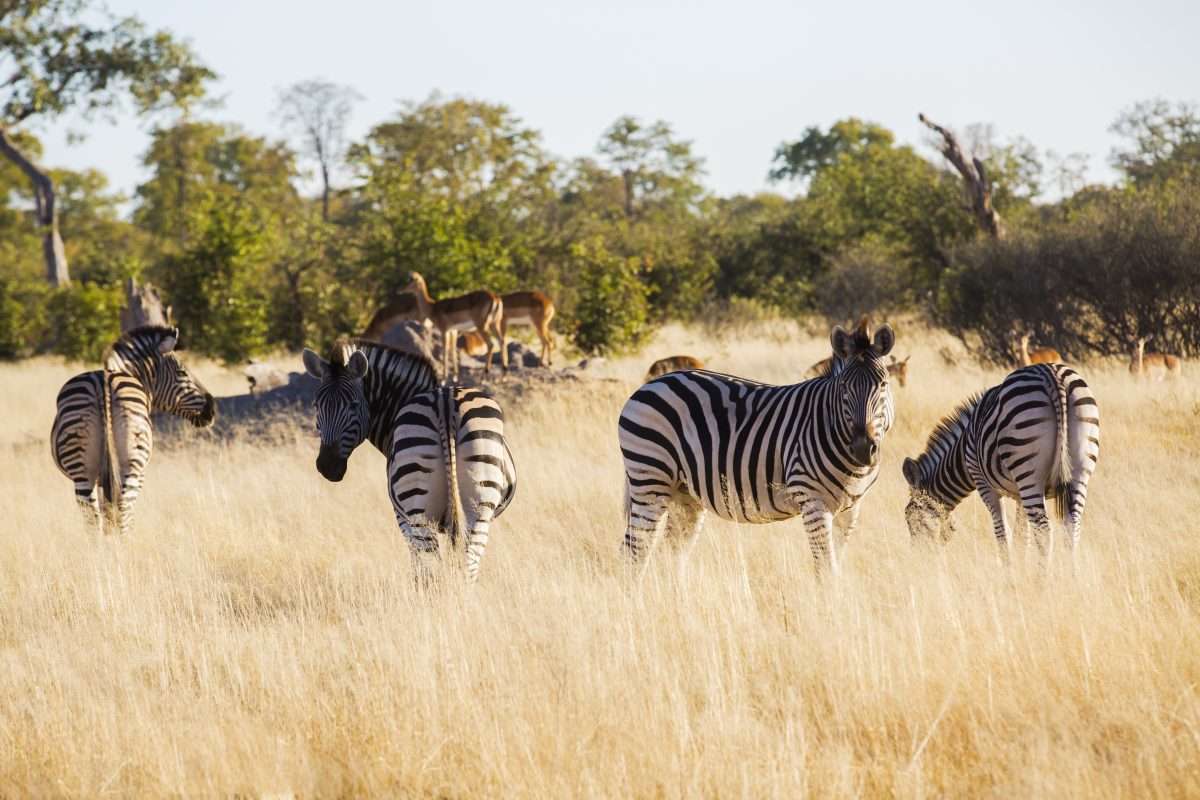
Zebras are primarily grazers and are common across several African grassland ecosystems.
They can form large herds and often travel alongside wildebeest and other herbivores.
Their grazing helps them take advantage of grasses that change in quality and availability through the seasons.
Wildebeest
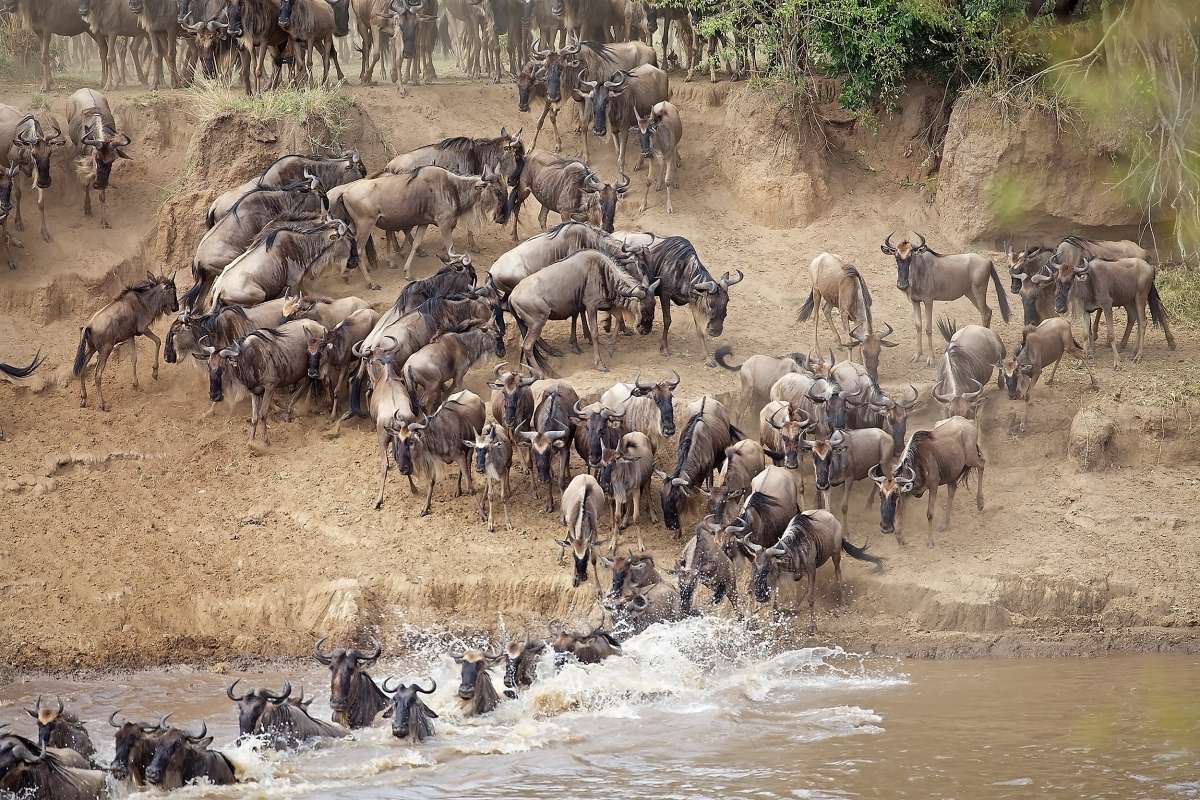
Wildebeest are among the most important grazing animals of the East African savanna.
They are best known for the Great Migration, during which large numbers move through the Serengeti-Mara ecosystem in response to seasonal changes in rainfall and fresh grass.
Their movement also supports predators and scavengers that depend on large concentrations of prey.
African Buffalo
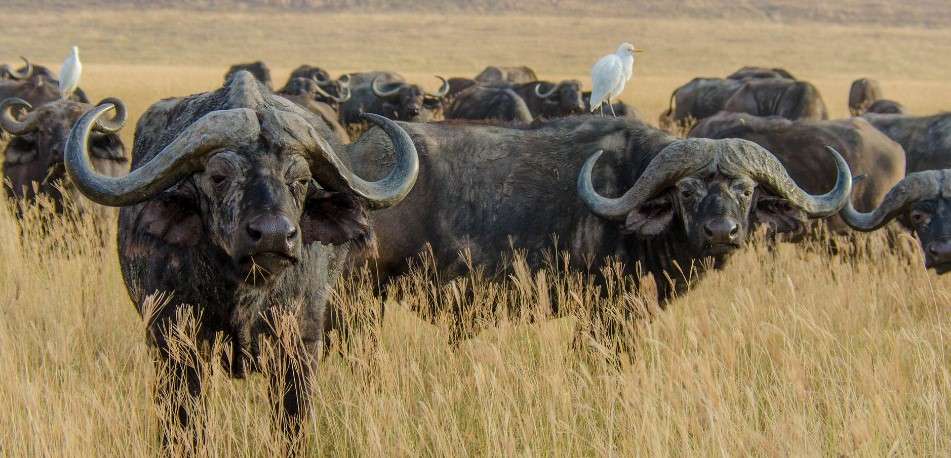
African buffalo feed mainly on grass and other vegetation.
They often live in herds, and group living provides protection against predators.
Buffalo are also an important prey species for lions and can be dangerous when threatened.
Rhinoceros
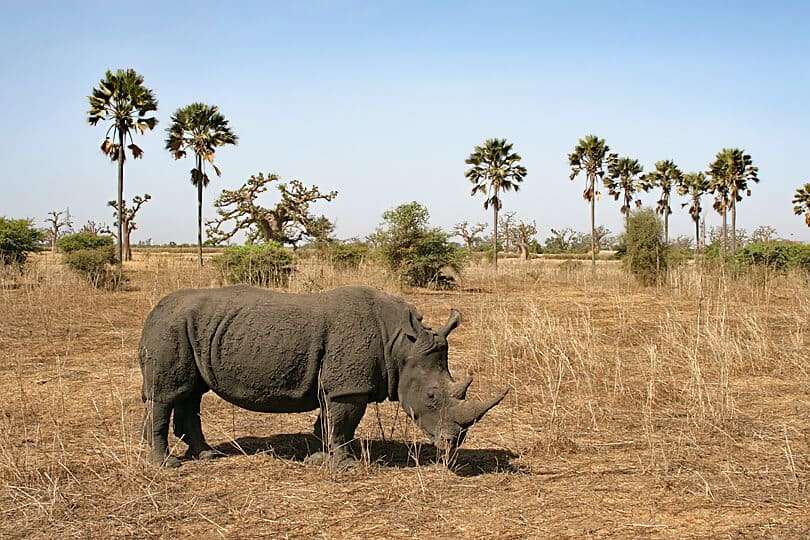
Rhinos are major herbivores of African savanna habitats.
White rhinos are primarily grazers and are well suited to open grassland. Black rhinos browse on leaves, shoots and branches and are more closely associated with areas containing woody vegetation.
Both species face significant conservation pressure.
Related: Read our guide to White Rhino vs Black Rhino.
Hippopotamus
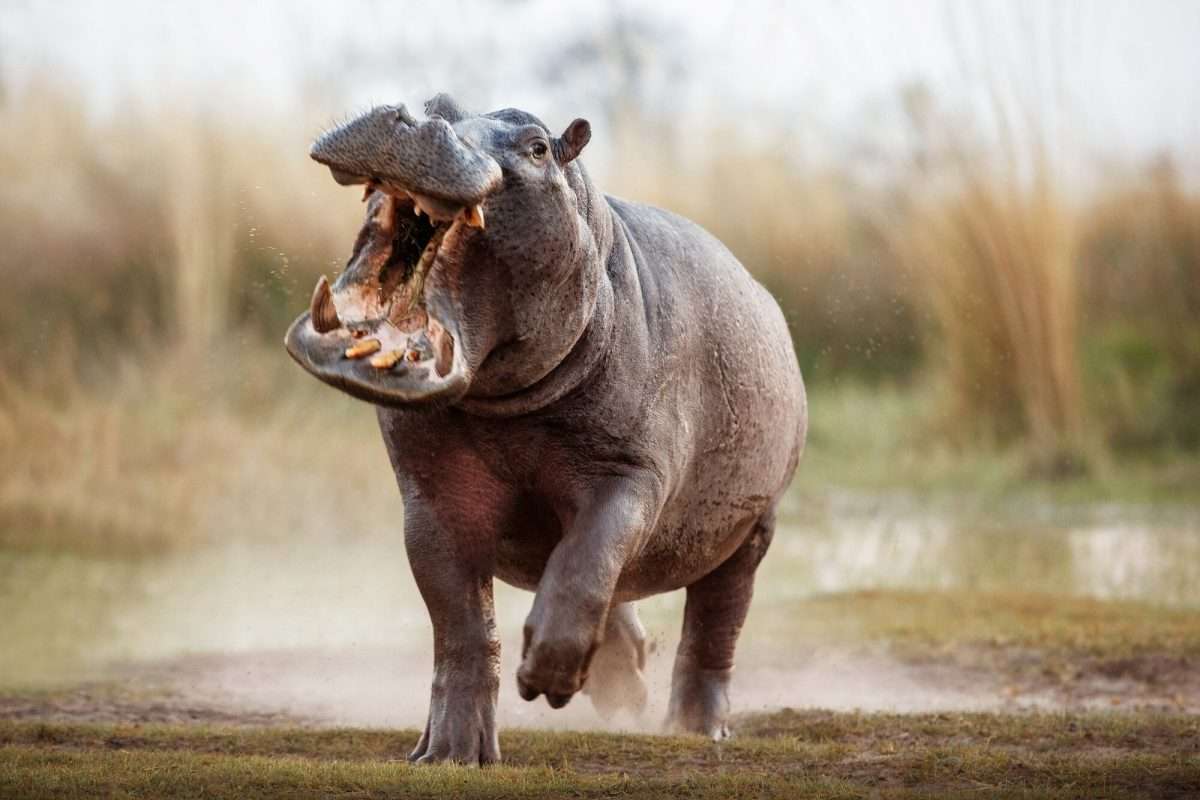
Hippos are closely tied to rivers, lakes and wetlands.
They spend much of the day in water and generally leave at night to feed on grass.
Although they are herbivores, their size and territorial behaviour make them one of the most formidable animals associated with African waterways.
Savanna Predators
Large numbers of herbivores support a range of predators. Each uses a different combination of hunting strategy, body structure and habitat.
Lion
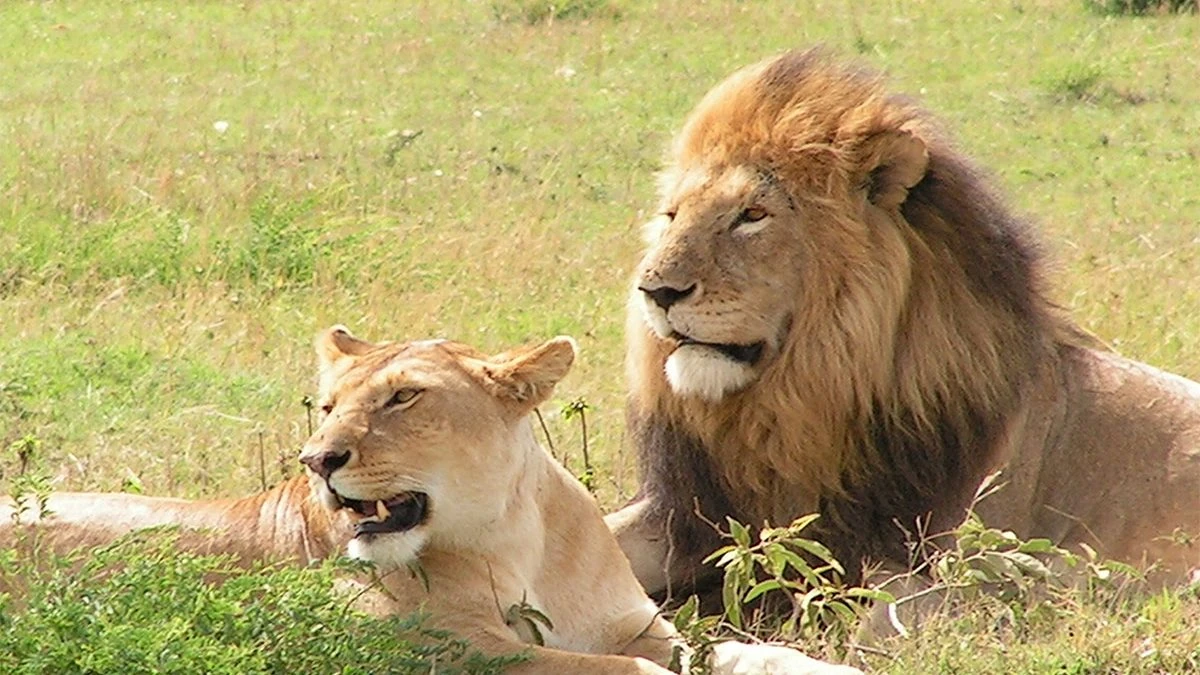
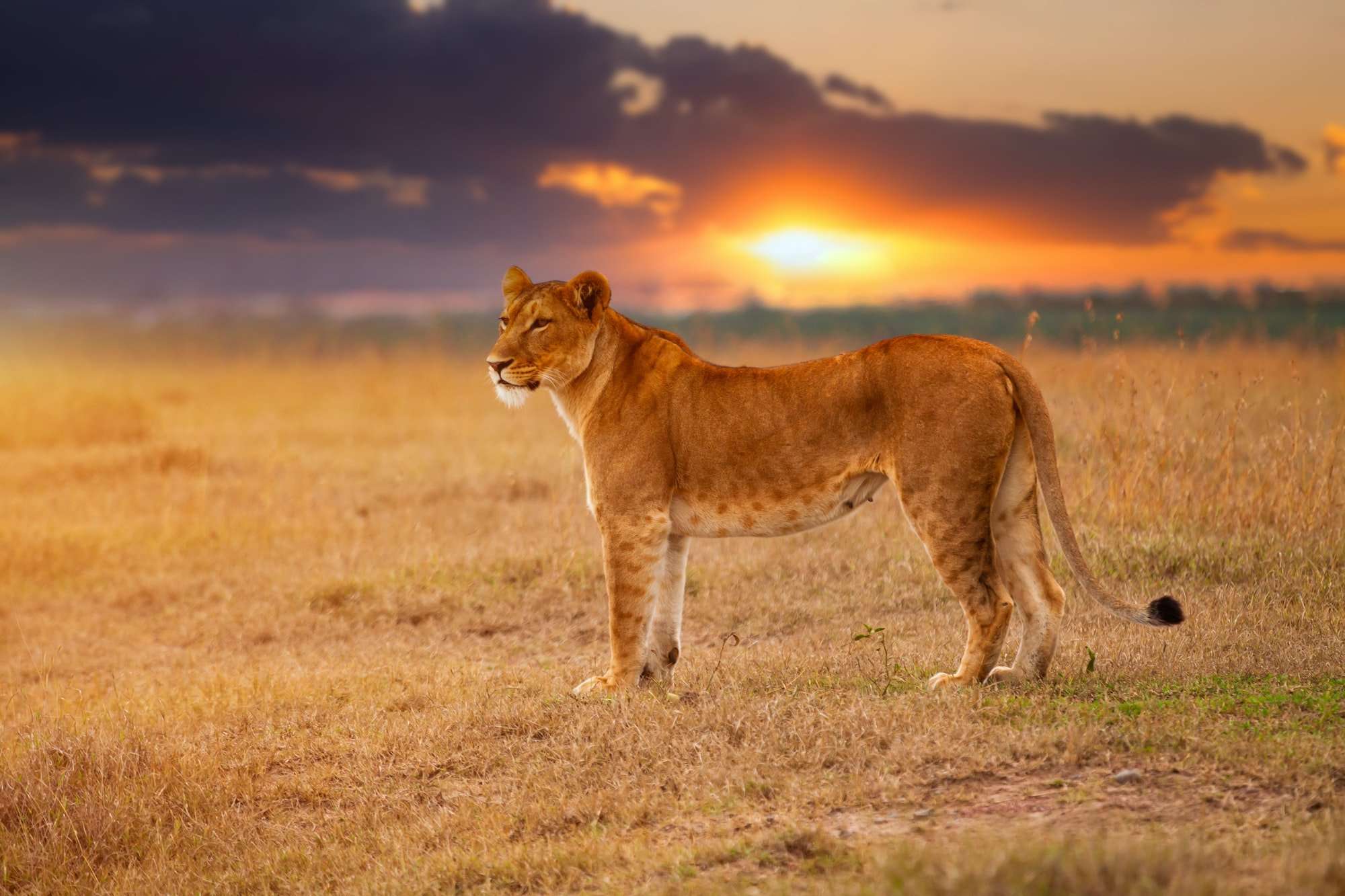
Lions are the largest social cats and are strongly associated with African savannas and grasslands.
They live in prides and hunt a wide range of prey, including antelope and larger animals such as buffalo.
Females often do much of the hunting, while males have an important role in protecting the pride and its territory.
Related: Learn more in our guide to The Big Five Safari Animals.
Cheetah
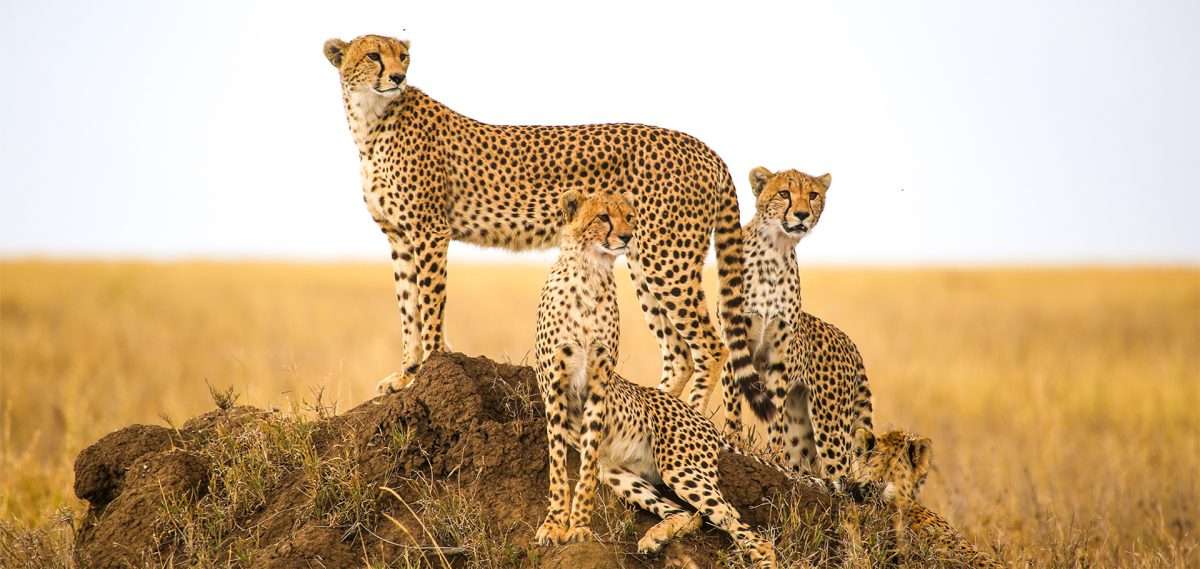
The cheetah is built for short bursts of speed.
Its lightweight body, long legs and flexible spine help it accelerate rapidly when pursuing prey.
Cheetahs generally target smaller and medium-sized animals and rely more heavily on speed than the strength and group tactics used by lions and hyenas.
Leopard
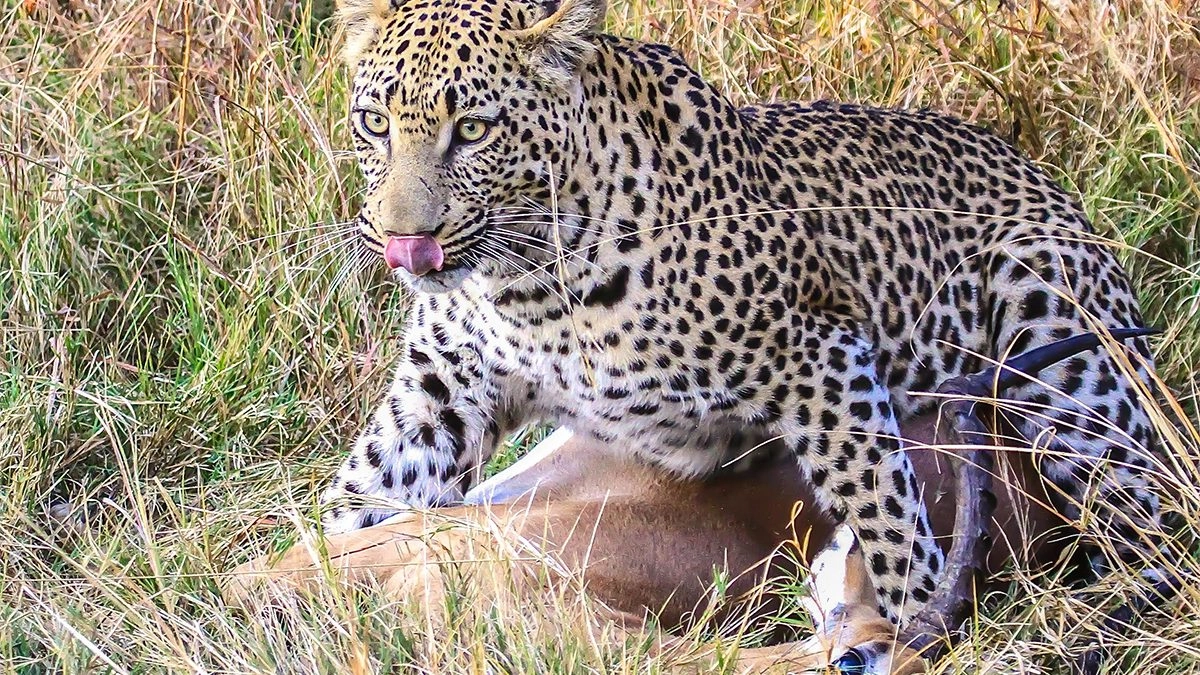
Leopards are adaptable predators that use grassland, woodland and areas with dense vegetation.
They are largely solitary and often hunt alone.
Their ability to climb trees allows them to move or store prey away from competitors.
Spotted Hyena
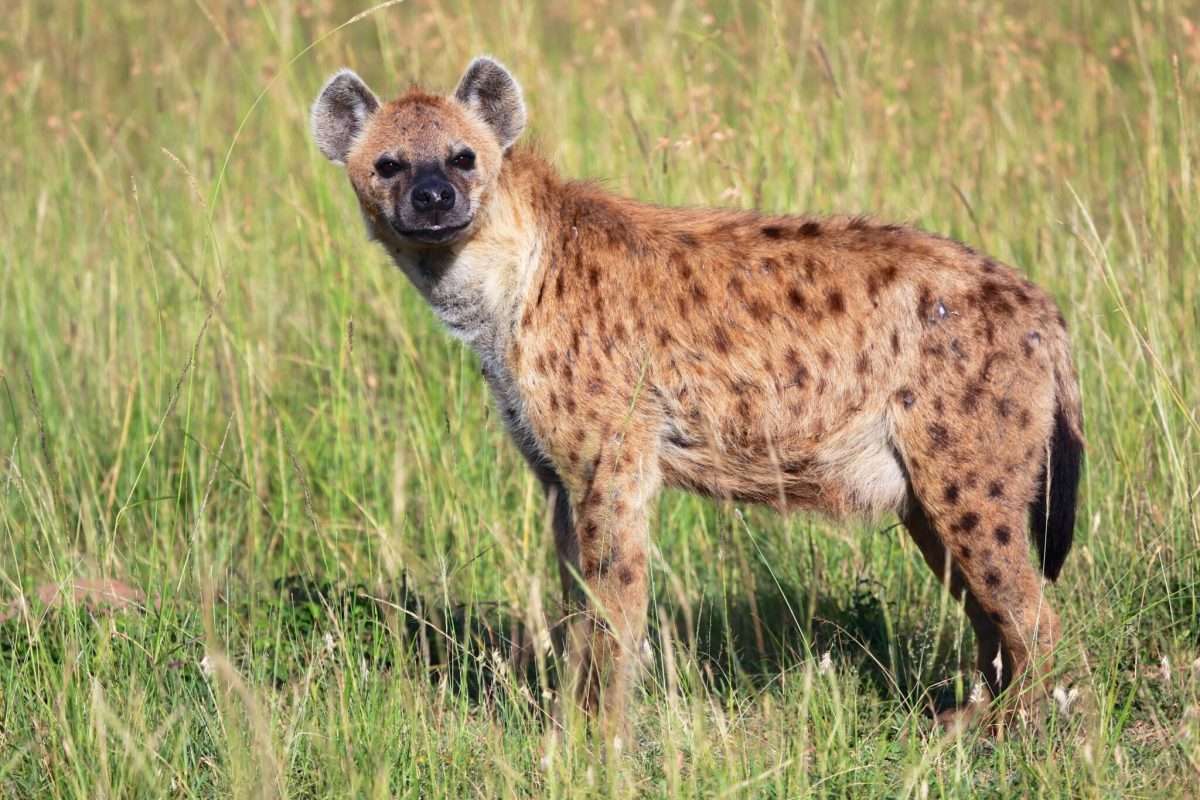
Spotted hyenas live in complex social groups called clans.
They are capable hunters as well as scavengers and can consume parts of carcasses that many other predators leave behind.
Their powerful jaws and social organisation make them important predators in many African ecosystems.
African Wild Dog
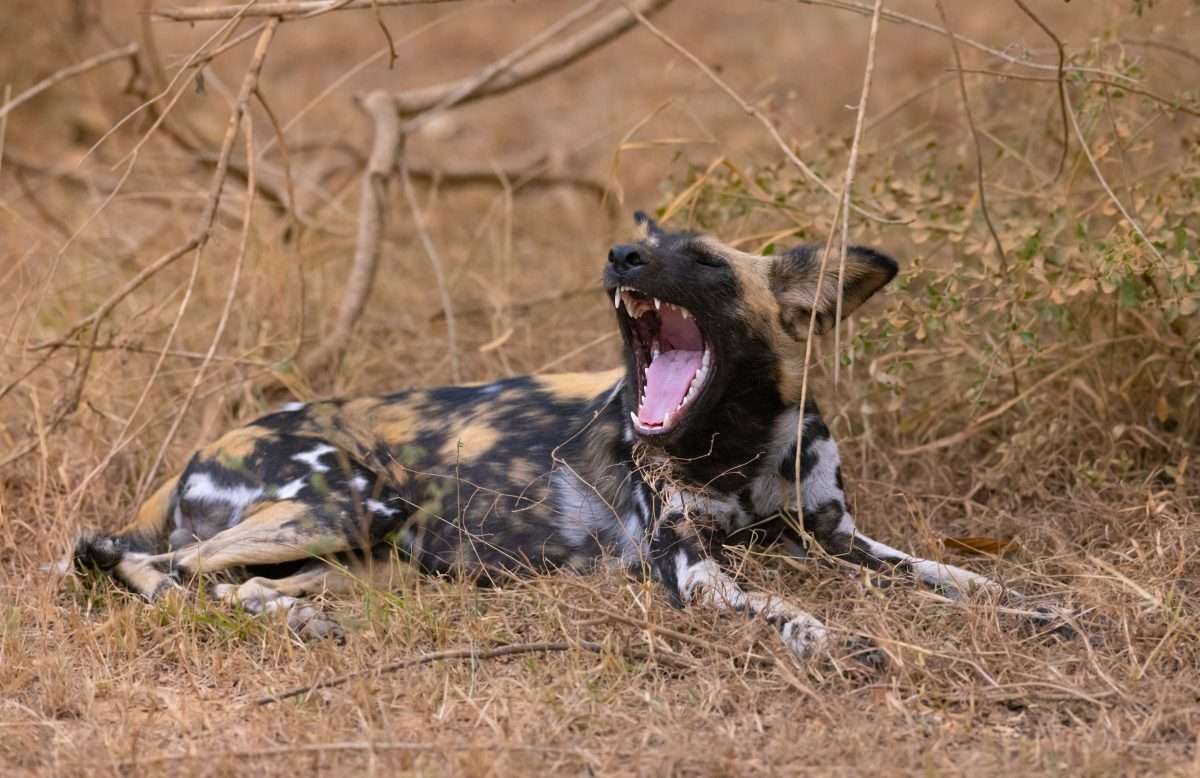
African wild dogs are highly social cooperative hunters.
They hunt in packs and use communication, coordination and endurance to pursue prey.
They commonly target medium-sized antelope and can travel long distances while searching for food.
Habitat loss, disease and conflict with people have contributed to their decline in many areas.
Antelope and Other Grazing Animals
Africa’s savannas support a wide range of antelope species. Their different feeding strategies allow several species to share the same ecosystem.
Impala
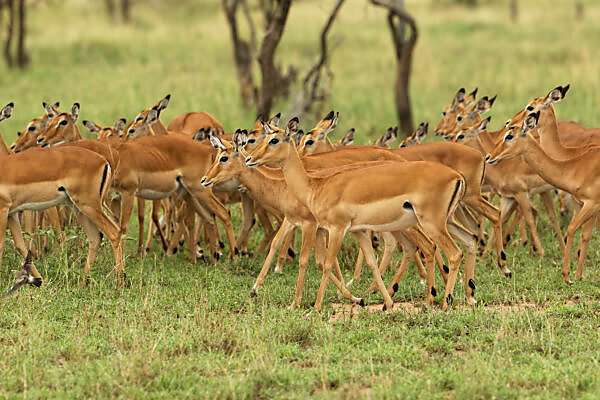
Impala are adaptable antelope found across much of eastern and southern Africa.
They both graze and browse, allowing them to use different types of vegetation.
Their speed and ability to make powerful leaps help them evade predators.
Grant’s Gazelle
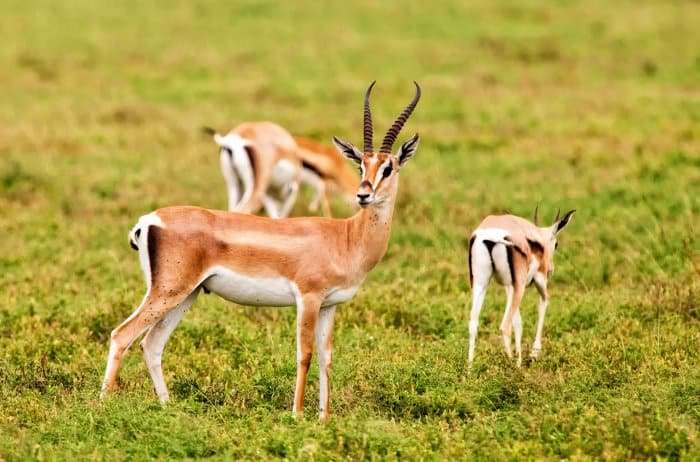
Grant’s gazelles are adapted to relatively dry areas and can obtain much of their water from vegetation.
They are important prey for several African predators.
Thomson’s Gazelle
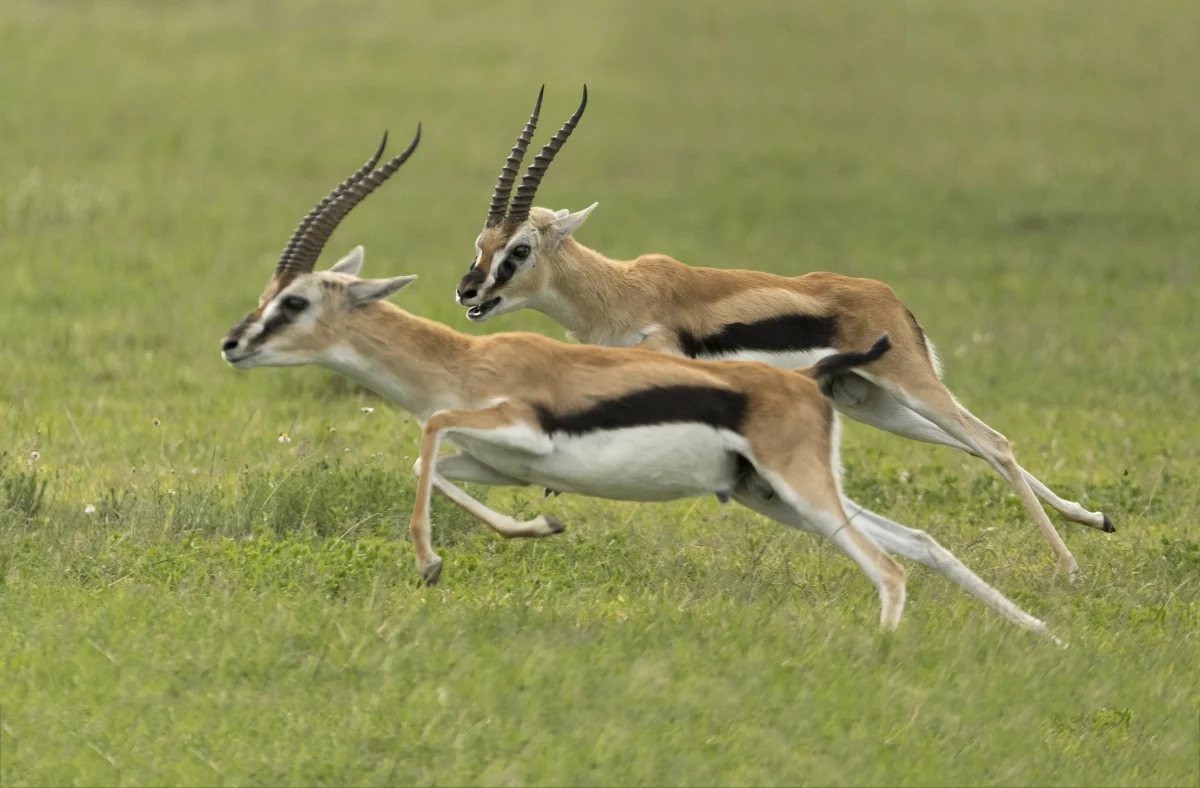
Thomson’s gazelles are smaller than Grant’s gazelles and are strongly associated with the open plains of East Africa.
Their speed and agility help them escape predators, including cheetahs.
Kudu
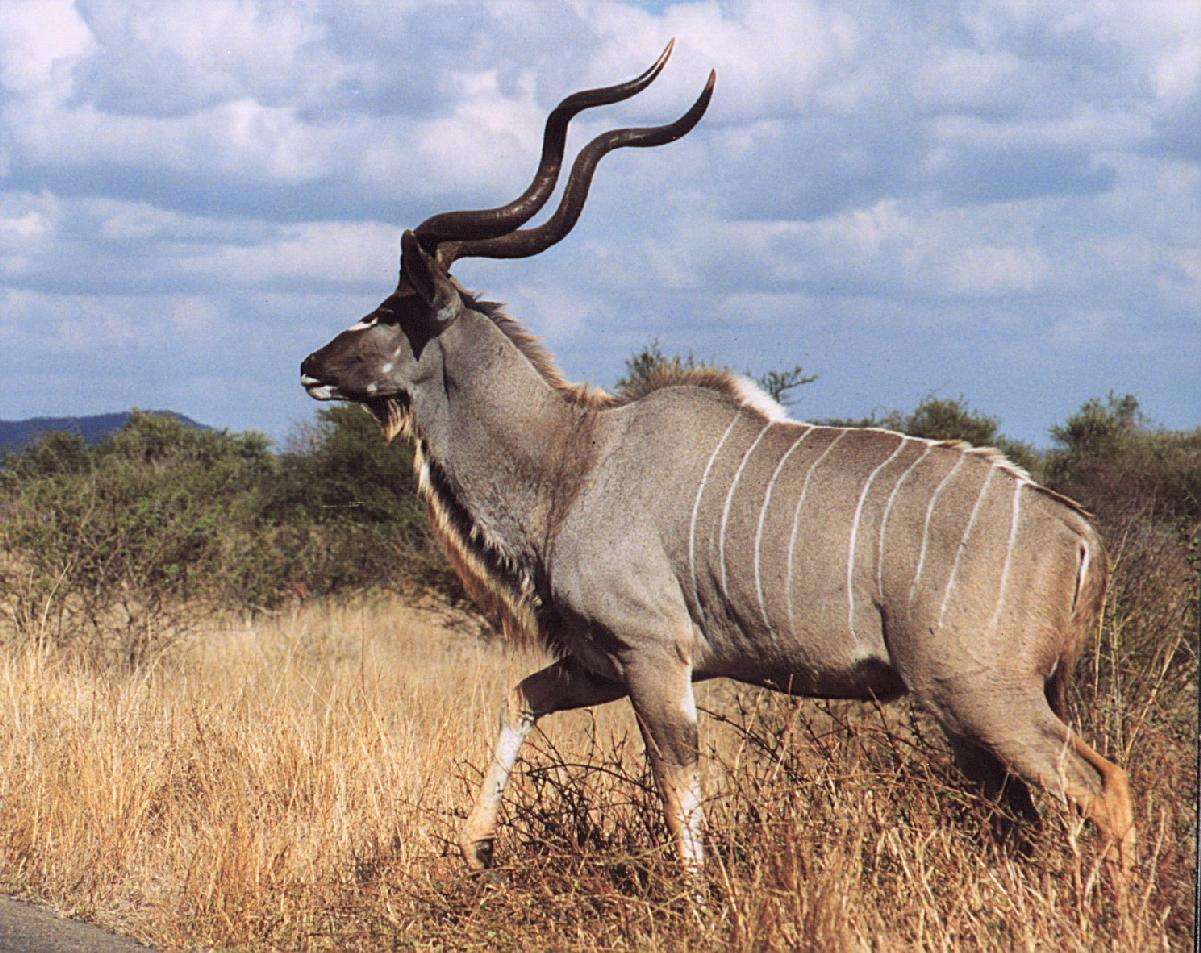
Greater kudus are large browsers. Males have long spiral horns, while females generally do not.
They feed on leaves, shoots and other woody vegetation and are often associated with bushier parts of the savanna.
Eland
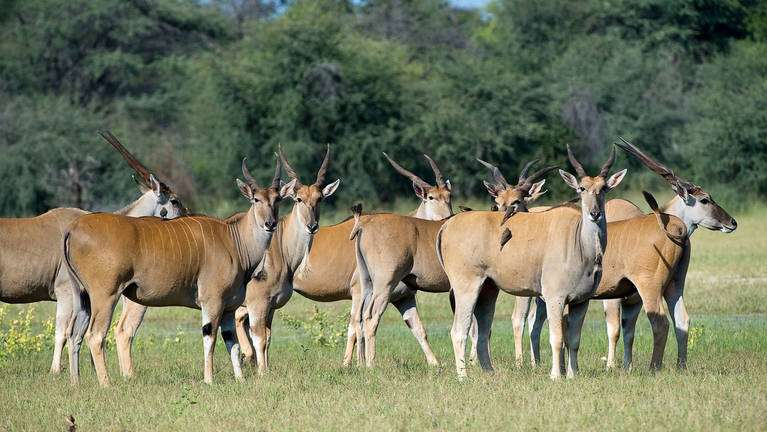
Elands are among Africa’s largest antelope.
They can use grassland and woodland habitats and feed on grasses, leaves and other vegetation.
Smaller Animals of the Savanna
Large mammals attract most safari attention, but smaller species are essential parts of the ecosystem.
Warthog
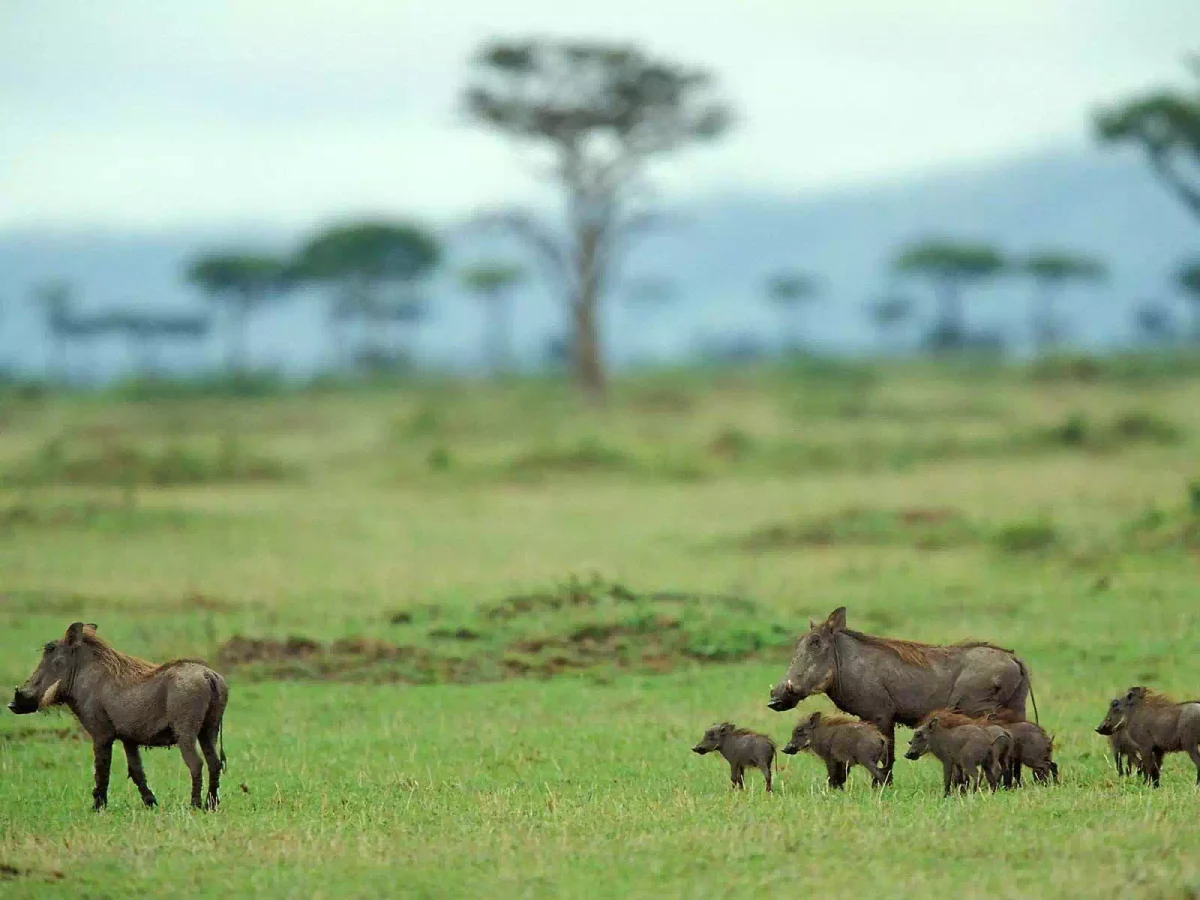
Warthogs feed on grass, roots, bulbs and other food.
They use their strong snouts to dig through soil and can retreat into burrows when threatened.
Meerkat

Meerkats live in social groups and feed largely on insects and other small prey.
They use burrow systems for shelter and spend time scanning their surroundings for predators.
They are particularly associated with drier areas of southern Africa.
Baboons
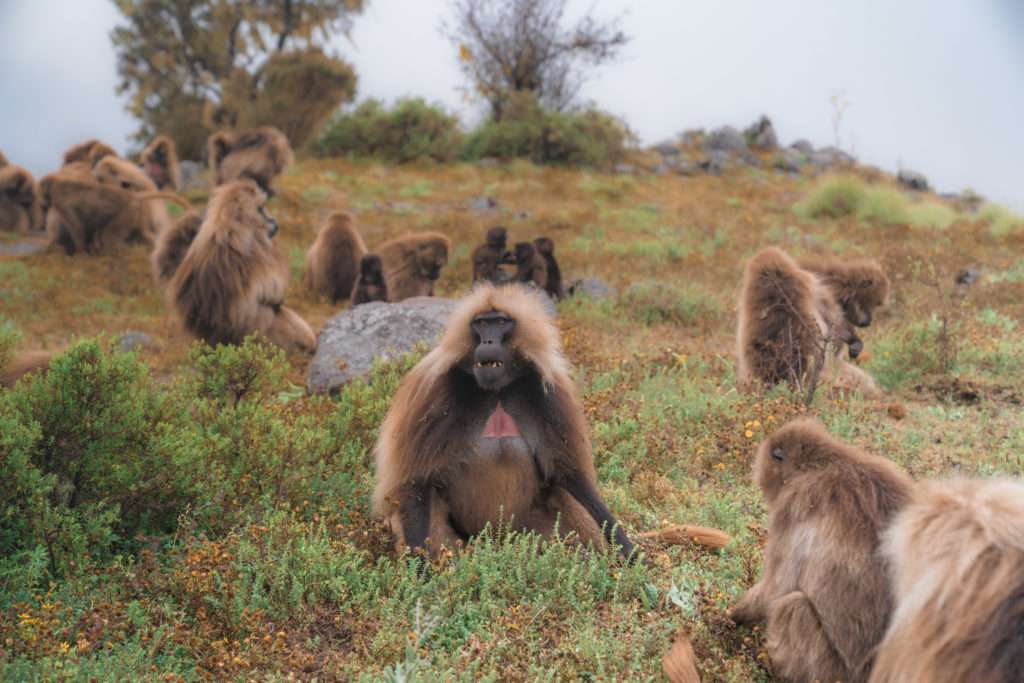
Several baboon species occur in African savanna environments.
They have varied diets that can include fruit, seeds, roots, insects and other available foods.
Their social groups provide protection and allow individuals to cooperate while feeding and responding to threats.
Birds Found in the Savanna
Birds occupy almost every part of the savanna food web, from predators and insect-eaters to scavengers and seed-eaters.
Ostrich
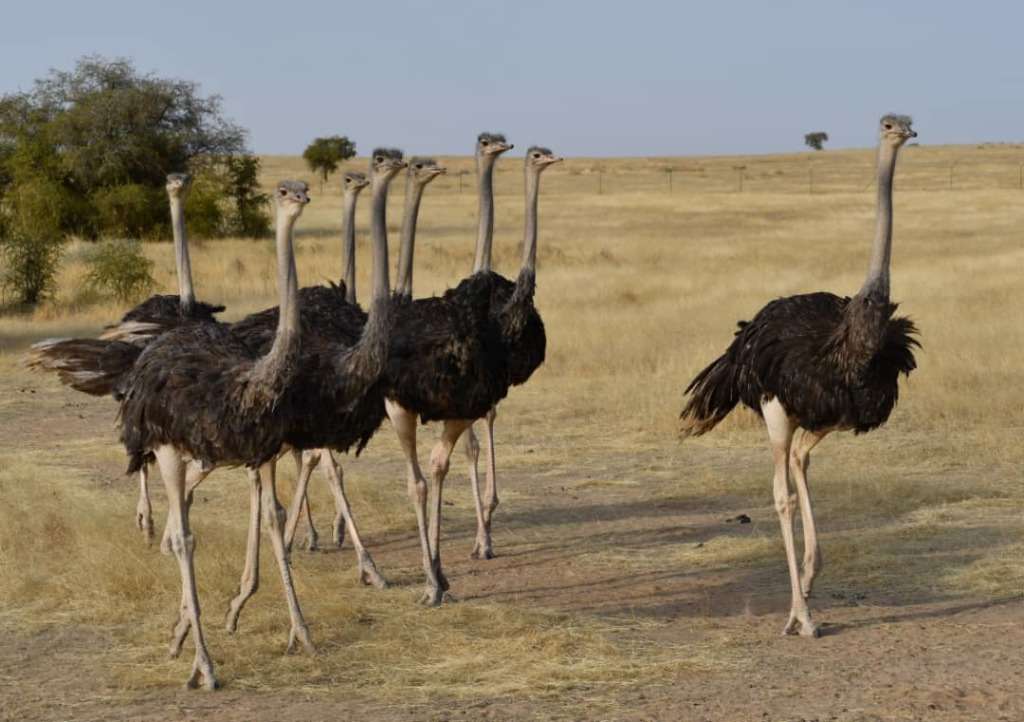
The ostrich is the world’s largest living bird.
It cannot fly, but its long legs allow it to run quickly across open ground.
Its diet consists mainly of plant material, supplemented by insects and other small food.
Secretary Bird
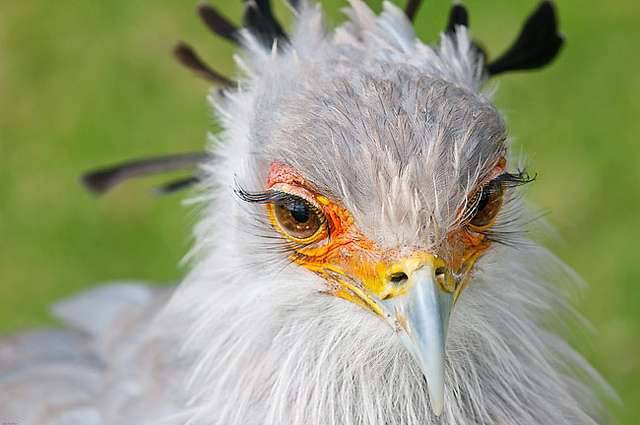
The secretary bird is a ground-dwelling predator that spends much of its time walking through open country.
It searches for insects, reptiles and other small animals and uses its long legs to strike prey.
Kori Bustard
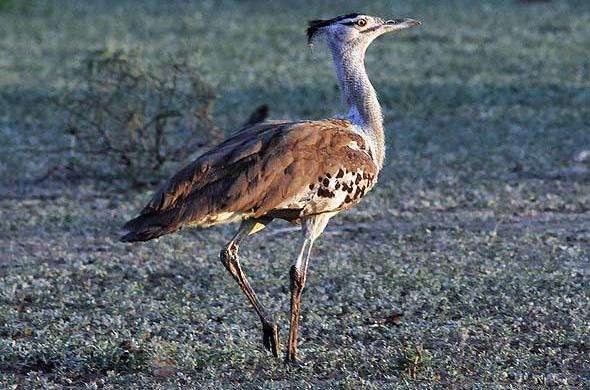
The kori bustard is one of the world’s heaviest flying birds.
It walks across grasslands searching for insects, seeds and small animals.
Vultures
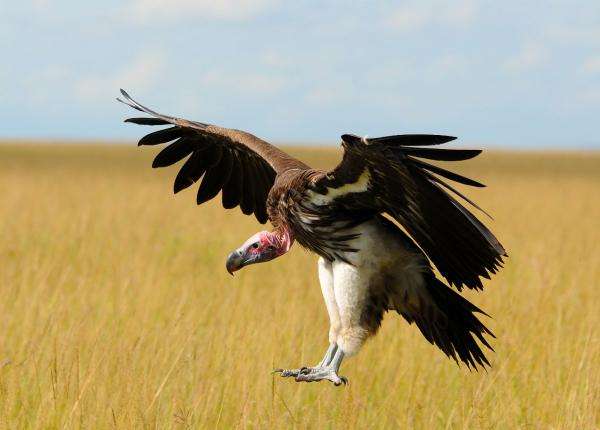
Vultures are specialist scavengers.
They consume carcasses and help remove animal remains from the ecosystem. Several African vulture species face threats including poisoning, habitat loss and reduced food availability.
Lilac-Breasted Roller
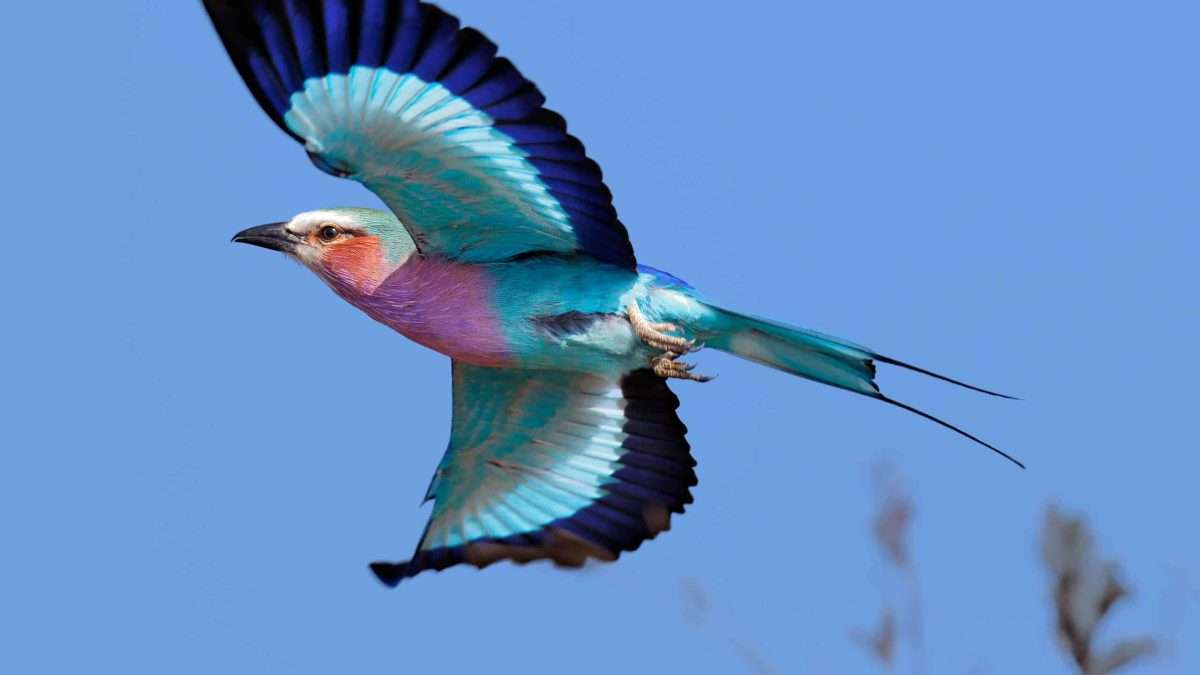
This colourful bird is common in parts of eastern and southern Africa.
It hunts insects, reptiles and other small animals, often from a raised perch.
Reptiles of the Savanna
Reptiles occupy both dry terrestrial habitats and wetlands.
Nile Crocodile
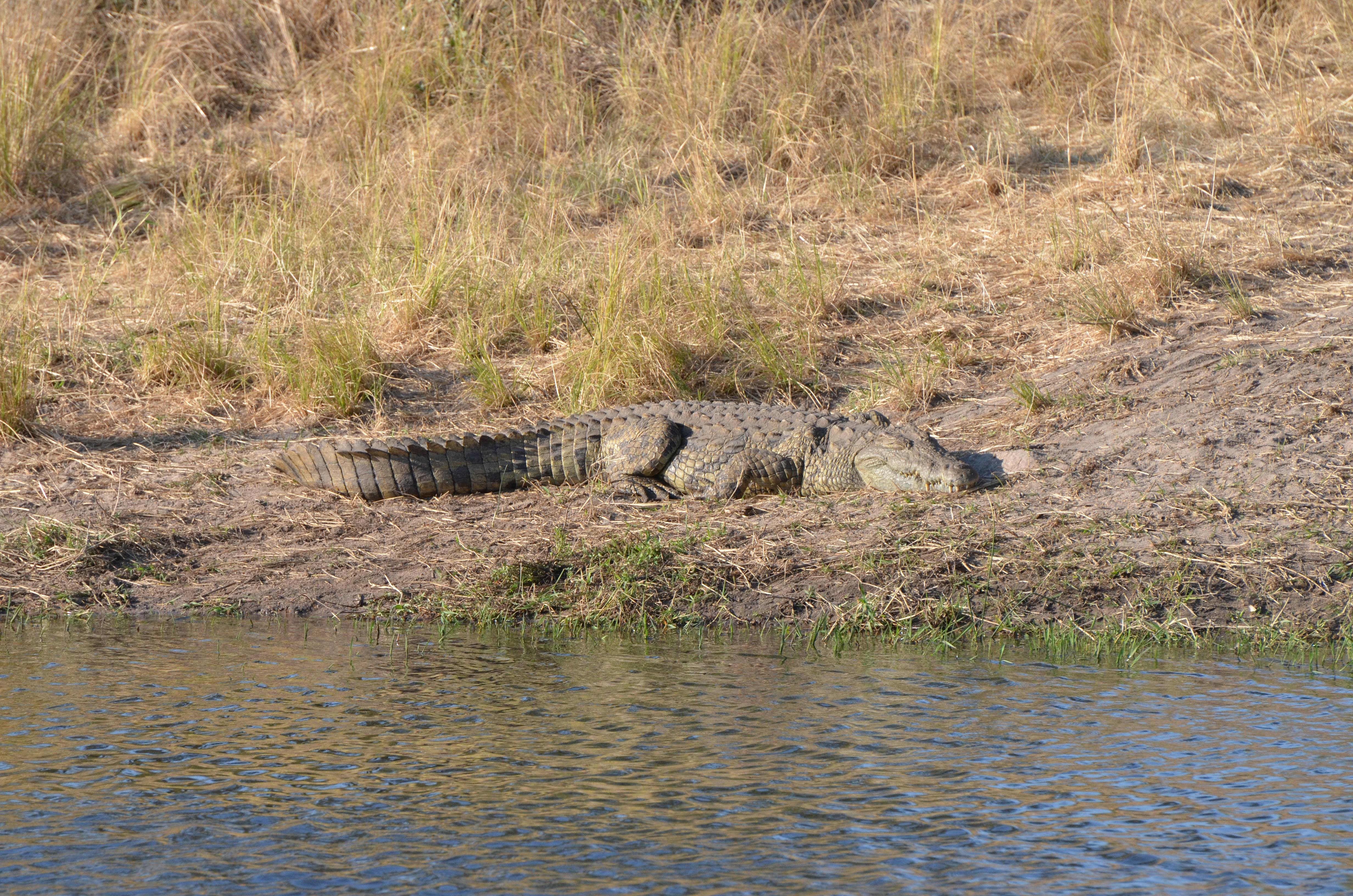
Nile crocodiles are strongly associated with rivers, lakes and wetlands.
They prey on fish, birds, reptiles and mammals, with large individuals capable of taking much larger prey.
African Rock Python
The African rock python is one of Africa’s largest snakes.
It occurs in several habitats, including savanna areas with suitable cover and access to water.
It kills prey by constriction and can take relatively large mammals and birds.
Monitor Lizards
Monitor lizards are active predators and scavengers.
Depending on the species, they eat insects, eggs, small vertebrates, carrion and other available food.
How Are Animals Adapted to the Savanna?
Living in the savanna means dealing with seasonal rainfall, high temperatures, changing food supplies and predators.
Different species have evolved different solutions.
- Elephants travel long distances in search of food and water.
- Giraffes feed on vegetation high above the ground.
- Cheetahs use short bursts of speed to catch prey.
- Zebras and wildebeest can travel long distances when food and water shift seasonally.
- Meerkats use burrows for shelter and protection.
- Aardvarks and other nocturnal animals avoid much of the daytime heat by being active after dark.
- Buffalo and other herd animals gain protection from group living.
- Antelope use speed, agility and vigilance to reduce their risk from predators.
There is no single savanna adaptation. Survival depends on the species and the conditions it faces.
How Do Animals Survive the Dry Season?
The dry season can change where animals find food and water.
Some species travel long distances to reach water or better grazing. Others change their diet, reduce activity during the hottest periods or use food sources that remain available when grasses become scarce.
Water availability also affects predator-prey relationships. When animals concentrate around the remaining water sources, encounters between predators and prey can become more likely.
Why Do Savanna Animals Migrate?

Migration allows animals to follow seasonal changes in food and water.
The best-known example is the Great Migration between Tanzania’s Serengeti and Kenya’s Maasai Mara.
Large numbers of wildebeest, zebras and other herbivores move through the ecosystem as rainfall and fresh grass shift.
Their movement affects the entire food web. Concentrations of herbivores create opportunities for predators, while grazing and movement influence vegetation.
Migration is therefore part of the ecosystem’s seasonal cycle, not simply a long-distance journey.
Which Animals Live Together in the Savanna?
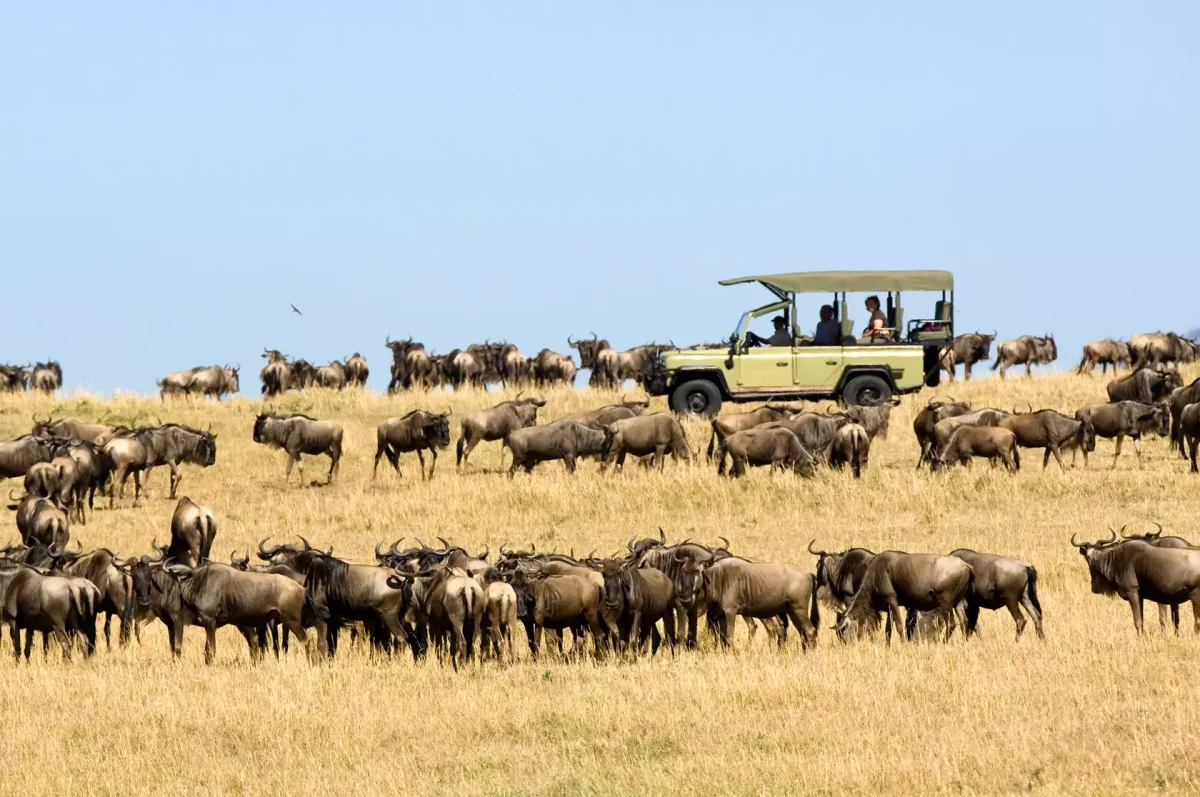
Different species can share the same landscape because they do not always use the same resources.
Zebras and wildebeest may graze in the same area while selecting different vegetation. Giraffes feed high in trees, while many antelope graze or browse closer to the ground.
Predators also divide resources. Cheetahs often pursue smaller and faster prey, lions can take much larger animals, and leopards can hunt and store prey in trees.
This separation of food and habitat use allows many species to coexist within the same savanna ecosystem.
Where Can You See Savanna Animals?
Africa offers some of the world’s best opportunities to see large concentrations of savanna wildlife.
Kenya
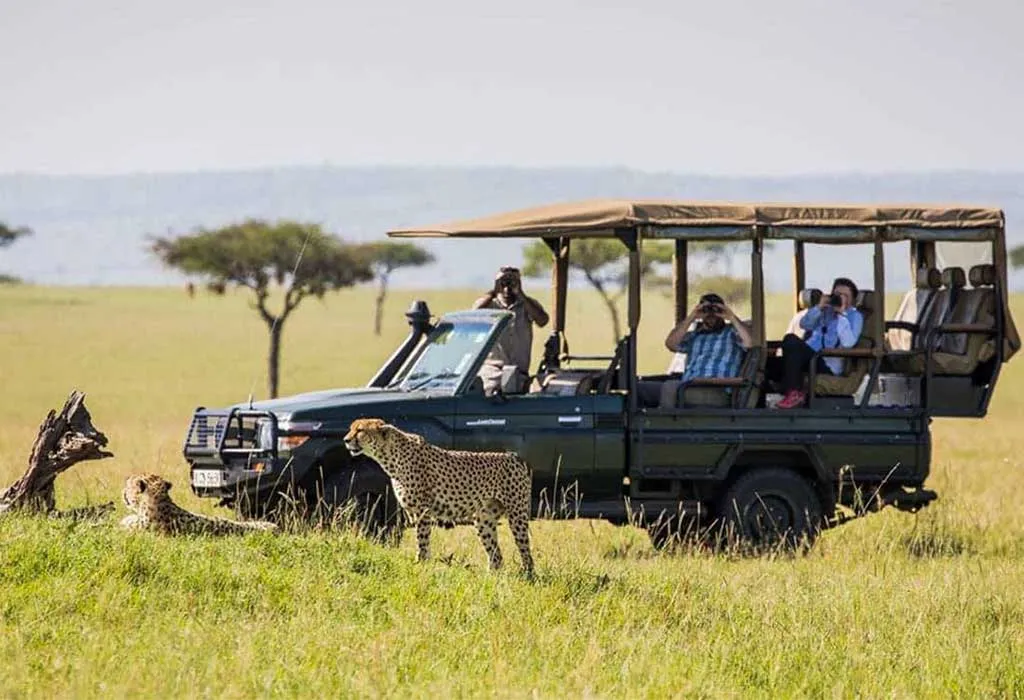
Kenya’s Maasai Mara is famous for lions, cheetahs, leopards, elephants, buffalo, zebras, wildebeest and many species of antelope.
Other Kenyan destinations offer different wildlife experiences, including important rhino conservation areas.
Tanzania
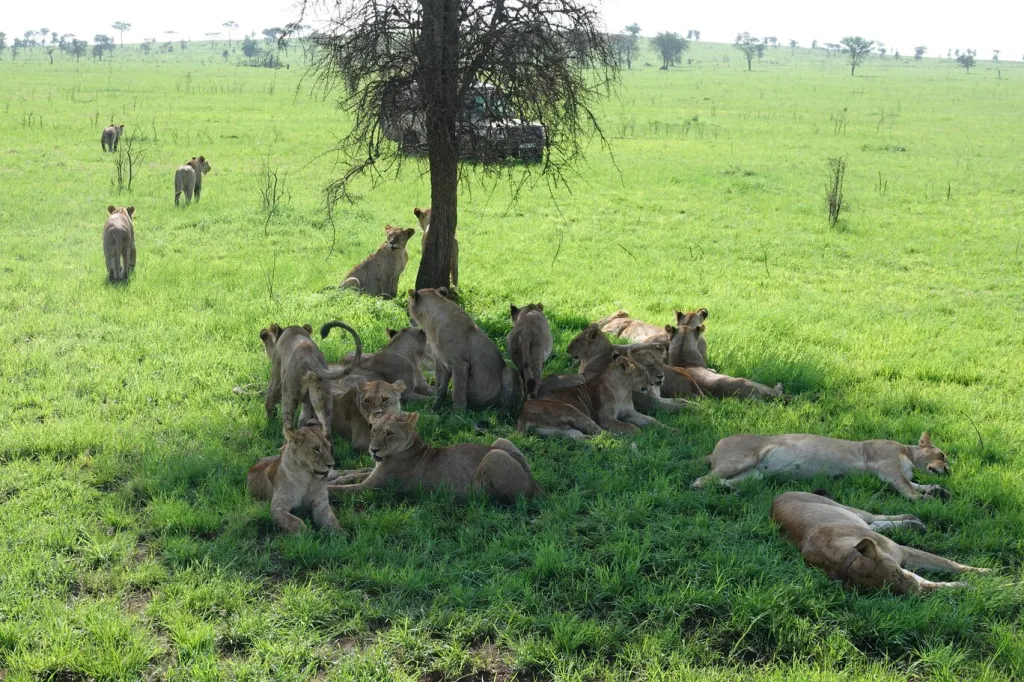
The Serengeti is one of Africa’s most important savanna ecosystems and is particularly famous for the Great Migration.
The Ngorongoro ecosystem also supports a high concentration of large mammals.
South Africa
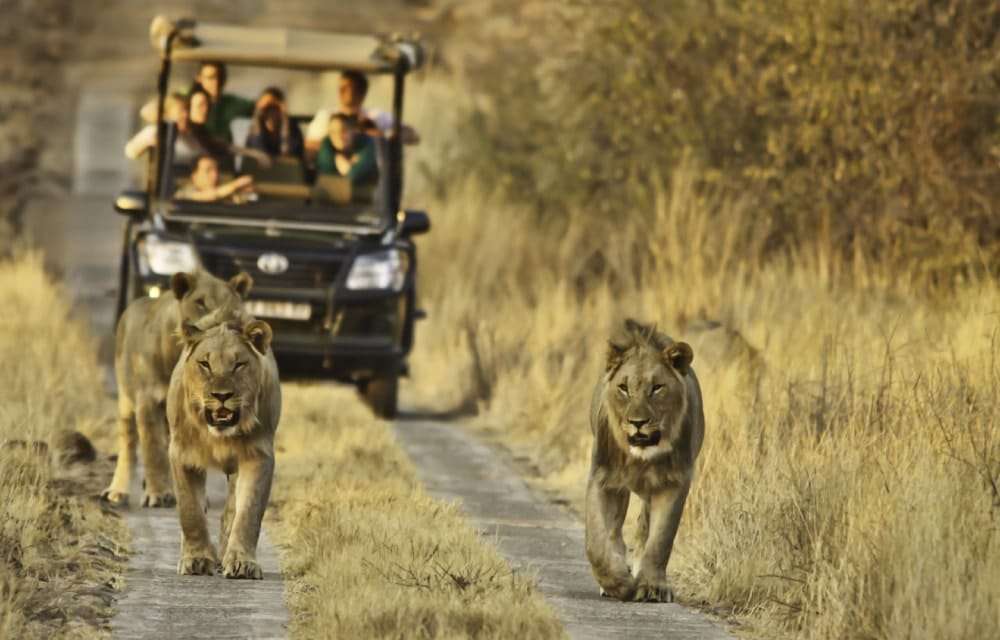
Kruger National Park and surrounding private reserves offer opportunities to see the Big Five along with giraffes, zebras, antelope, wild dogs and many other species.
Botswana
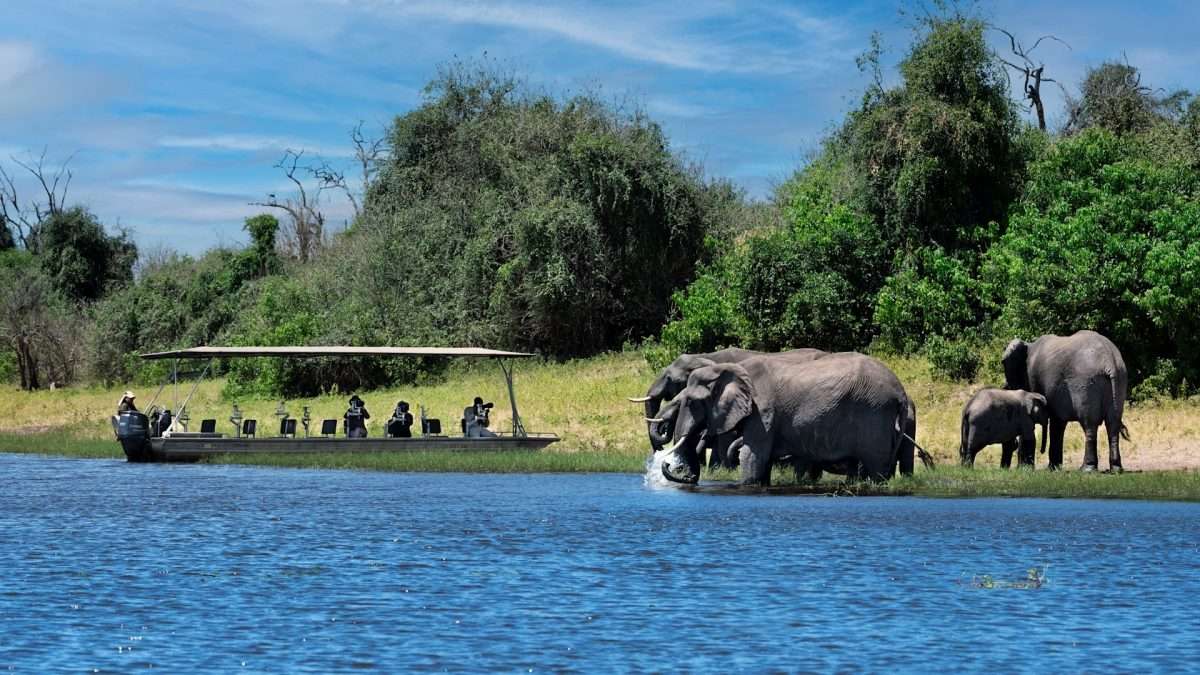
Botswana combines grasslands, woodland and wetland habitats. The Okavango Delta is especially notable because seasonal flooding creates a mix of water-based and terrestrial wildlife habitats.
Namibia
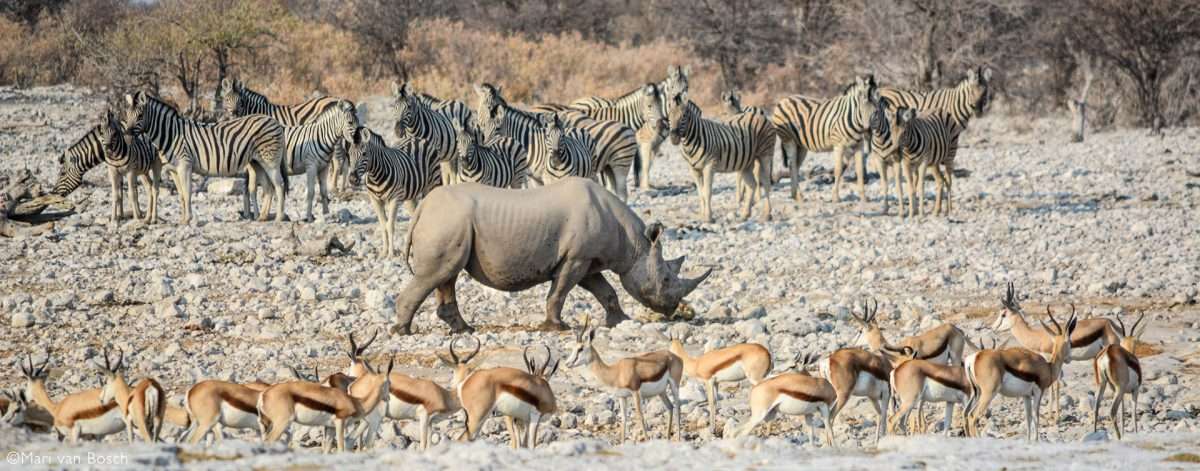
Namibia’s Etosha region is known for its dry landscape, wildlife and waterhole-based viewing. Other parts of the country offer desert and semi-desert environments rather than classic savanna.
What Is the Best Safari for Seeing Savanna Animals?

There is no single best destination for every traveller.
The right safari depends on the animals you want to see, the season, habitat, accommodation style and whether your priority is the Great Migration, the Big Five or a more private wildlife experience.
For the Great Migration, Kenya’s Maasai Mara and Tanzania’s Serengeti are the key destinations.
For a Big Five safari, Kenya, Tanzania and South Africa all offer strong options.
For a mix of wildlife and different landscapes, a multi-country itinerary can provide a broader experience.
TourwithPipi can build an itinerary around the animals and experiences that matter most to you rather than using the same route for every traveller.
If you want help planning a safari around the animals you most want to see, connect with Pipi on WhatsApp to start planning your trip.
Savanna Animals FAQs
What animals live in the savanna?
Savannas support mammals, birds, reptiles, insects and other wildlife. Common African savanna animals include elephants, lions, giraffes, zebras, wildebeest, buffalo, rhinos, hippos, cheetahs, leopards, hyenas, antelope, ostriches and crocodiles.
What are the most common savanna animals?
There is no single list of the most common savanna animals because populations vary by region and habitat. Grazing animals such as zebra, wildebeest and antelope are widespread in many African savannas, while elephants, giraffes and large predators occur in specific areas.
What are the Big Five savanna animals?
The traditional African Big Five are the lion, leopard, elephant, Cape buffalo and rhino.
What do savanna animals eat?
Their diets vary. Herbivores eat grass, leaves, shoots, bark or other vegetation. Carnivores eat other animals, while omnivores and scavengers have more flexible diets.
How do animals survive in the savanna?
They use adaptations such as migration, speed, herding, camouflage, burrowing, changing diets and moving between habitats to cope with seasonal rainfall, heat, limited water and predators.
Why do animals migrate in the savanna?
Many migrate to follow seasonal rainfall, fresh grass and water. The Great Migration of wildebeest and zebras across the Serengeti-Mara ecosystem is the best-known example.
Are there reptiles in the savanna?
Yes. Savannas can support Nile crocodiles, African rock pythons, monitor lizards, tortoises, snakes and many other reptiles.
Are hippos savanna animals?
Yes, although hippos are closely tied to freshwater. They spend much of the day in rivers, lakes and wetlands and travel onto surrounding grassland to feed.
Are giraffes found in the savanna?
Yes. Giraffes are strongly associated with African savanna and open woodland habitats where they browse on trees and shrubs.
Which savanna animal is the fastest?
The cheetah is the fastest land animal and uses short bursts of speed to catch prey.
Are savanna animals only found in Africa?
No. Savannas also occur in South America, Australia and parts of Asia, where they support different wildlife communities.
Final Takeaway
Savannas support far more than Africa’s famous lions and elephants.
They are ecosystems shaped by rainfall, fire, grazing, migration and the relationships between predators, herbivores, scavengers and smaller species.
That is what makes a savanna safari different from simply looking for a list of animals. Each sighting is part of a much larger ecosystem.


