
When you go on an African safari, your safari vehicle is not just transport. It is your viewing platform, your safety zone, and your front-row seat to nature. From watching lions hunt to seeing the world’s largest elephants cross the road, everything you experience on a game drive happens from inside your vehicle.
Across Africa, millions of travelers enter national parks every year, and almost all wildlife encounters happen from specially built African safari vehicles. Depending on where you’re reading about them, you’ll see these called African safari jeeps, safari cars, safari cruisers, or simply safari vehicles, and all four terms describe the same thing. These vehicles are designed to handle rough roads, thick sand, river crossings, and long distances inside protected parks that can cover thousands of square kilometers. For example, Serengeti National Park alone is about 14,750 km², while Kruger National Park spans nearly 19,500 km², so a normal car simply cannot survive these conditions.
Safari vehicles also vary by country and safari style. Some safaris use completely open safari jeeps for photography and close wildlife viewing. Others use closed African safari cars with pop-top roofs for long road journeys between parks. Park rules, animal behavior, and terrain all decide which vehicle is allowed.
Your guide plays a critical role too. A safari guide does more than drive. They track animals, communicate with other guides by radio, read animal behavior, and position the vehicle safely for viewing and photography. Without the right vehicle and a trained guide, a safari would not be possible.
What Vehicle Is Used on an African Safari?
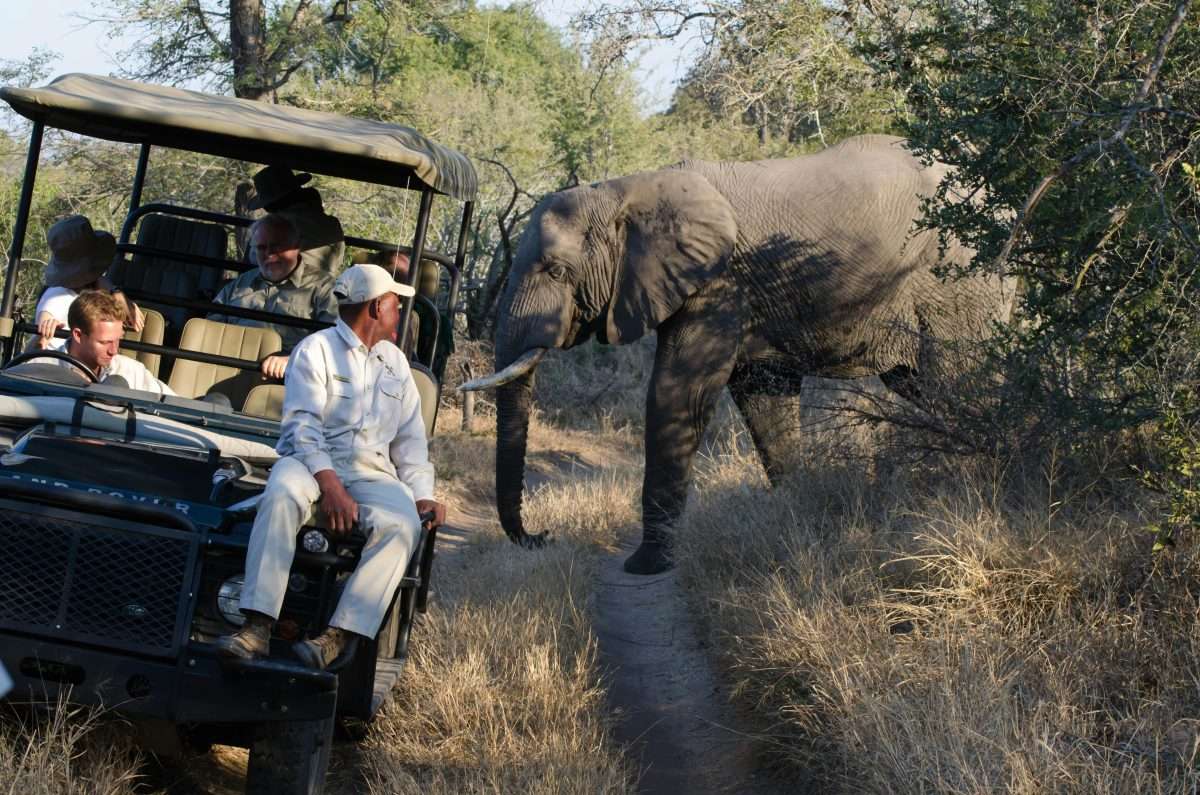
Most African safaris use 4×4 Land Cruisers or Land Rovers, often called safari jeeps or safari cruisers depending on the region. Some parks use open safari vehicles, while others use closed pop-top vehicles depending on terrain, park rules, and travel style.
Safari vehicles are specially built to operate inside national parks and game reserves. They are not normal jeeps or ordinary cars. They are reinforced, raised, and modified to give passengers clear wildlife views while keeping everyone safe.
The three most common safari vehicle types are:
- open safari vehicles (open safari jeeps, the classic choice for an Africa jeep safari)
- closed pop-top safari vehicles (safari cars or safari cruisers)
- light aircraft combined with safari vehicles for fly-in safaris
Why 4×4 is essential
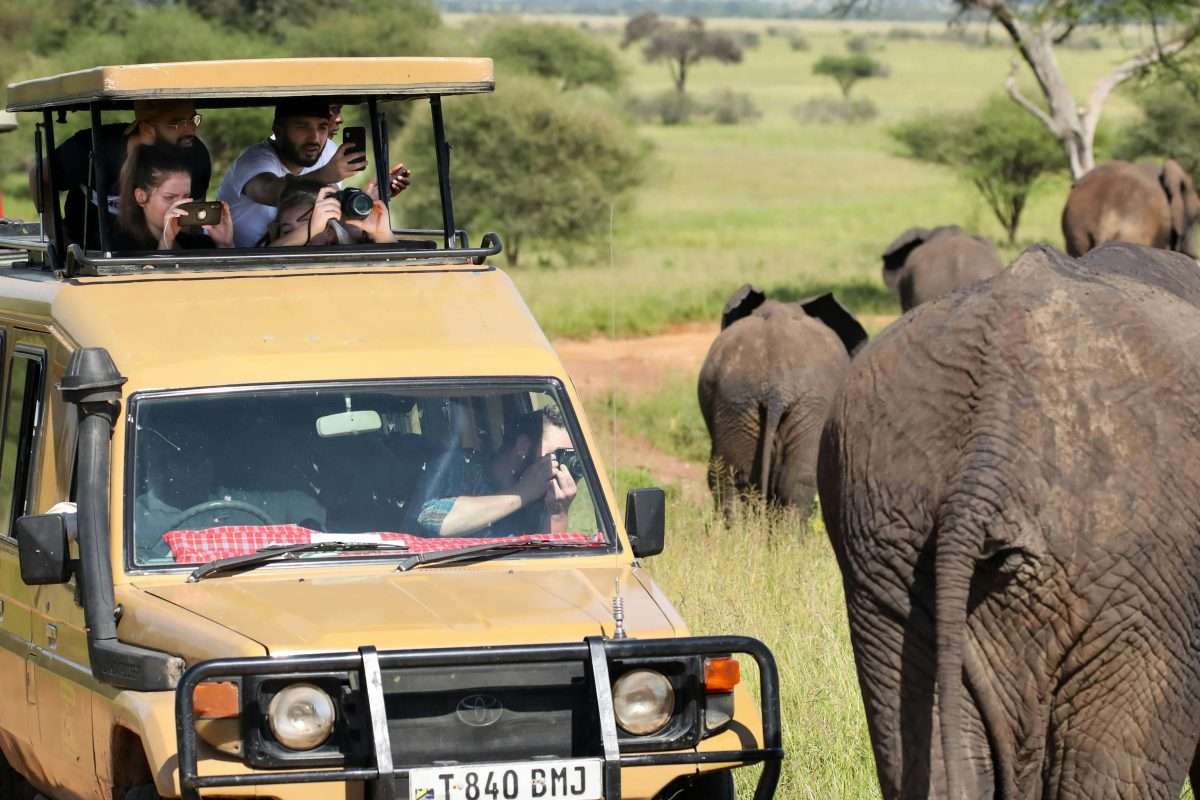
African safari parks have no paved roads in most wildlife areas. You drive on:
- dirt tracks
- sand
- mud
- rocky plains
- dry riverbeds
A 4×4 system allows power to go to all wheels so the vehicle can move through soft sand and steep slopes without getting stuck. In parks like the Masai Mara or Serengeti, vehicles may drive for 8 to 10 hours a day on rough terrain. Without four-wheel drive and high suspension, safaris would not function.
Most safari vehicles seat 6 to 9 guests. Seats are positioned higher than normal so everyone can see over tall grass. Many vehicles have roof hatches or open sides so guests can stand when animals are spotted.
Why open vehicles are banned in some parks
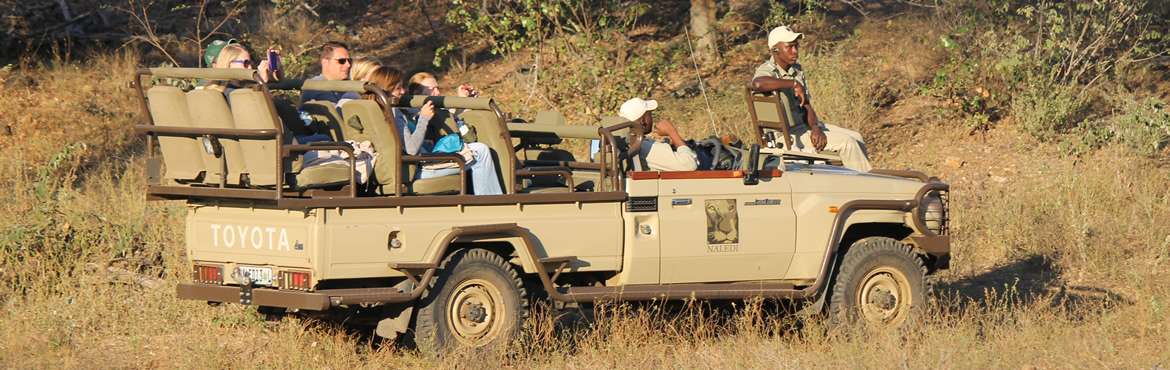
Open safari vehicles are common in private reserves and parts of Southern Africa, but many East African national parks do not allow them. This is because:
- main park roads are shared with public traffic
- animals like cheetahs may jump onto open vehicles
- rain and dust exposure is higher
- safety rules require enclosed transport between zones
In places like Ngorongoro Crater and Serengeti National Park, vehicles must often be closed with pop-top roofs for road safety and weather protection.
Why pop-top roofs exist
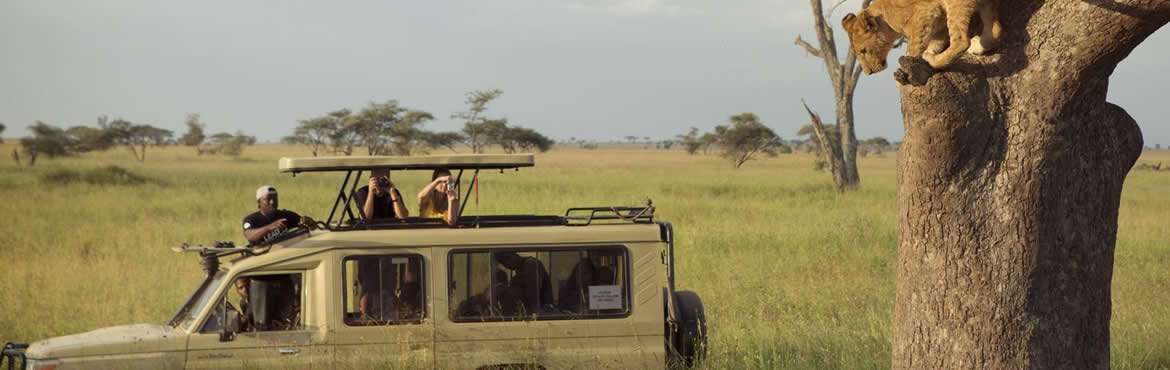
Pop-top roofs allow guests to:
- stand up safely inside the vehicle
- photograph animals without windows blocking views
- stay protected from sun and rain
- travel long distances comfortably
Pop-top vehicles are ideal for:
- road safaris
- national park rules
- families and couples
- long driving days between parks
At TourwithPipi, we use modern 4×4 safari vehicles with pop-top roofs or open designs depending on destination, always following park regulations and wildlife safety standards.
Main Types of African Safari Vehicles
Safari vehicles are not the same everywhere in Africa. The type of African safari vehicle you use depends on three main things: the country you visit, the terrain inside the park, and the style of safari you choose. Some parks allow open vehicles for close wildlife viewing, while others require closed vehicles for safety and long road travel. Below are the main types of safari vehicles in Africa and where each one is used.
Open-Sided 4×4 Safari Vehicles
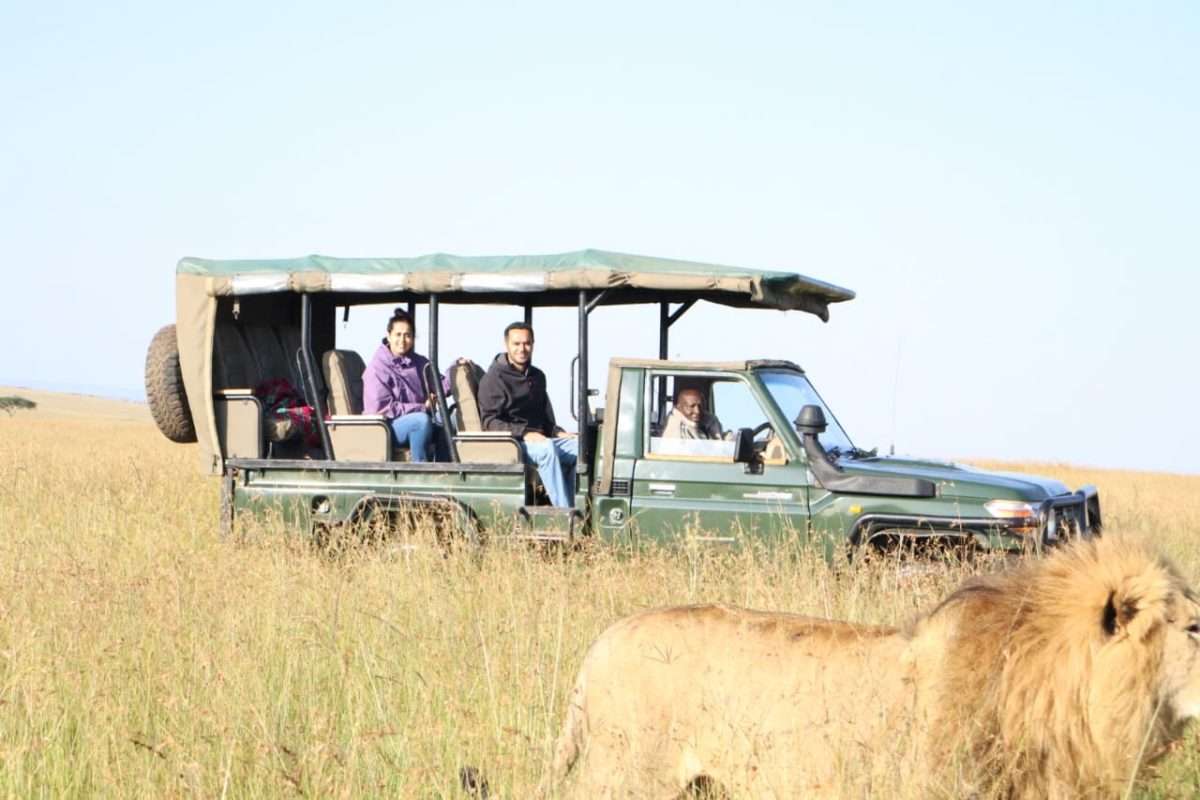
Open-sided 4×4 safari vehicles are the classic image most people think of when they picture a safari. These vehicles are usually Toyota Land Cruisers or Land Rovers that have no glass windows on the sides. Instead, they use open viewing areas with safety rails and tiered seats so everyone can see clearly over the grass.
There are no windows, which means you feel much closer to nature. You hear lions roar, smell the bush, and feel the wind as you drive. Seats are raised in rows so even the back row gets a good view. Because there is nothing blocking your lens, these vehicles are excellent for photography and video.
These vehicles are used mainly in private reserves where off-road driving is allowed and where animal sightings are more flexible and less crowded.
Best for:
- Photography safaris
- Luxury safaris
- Couples and honeymoon safaris
- Private guided game drives
Used in:
- Botswana
- South Africa private reserves (like Sabi Sands)
- Kenya conservancies (Masai Mara conservancies)
- Parts of Tanzania and Zimbabwe
Closed 4×4 Safari Vehicles (Pop-Top Roof)
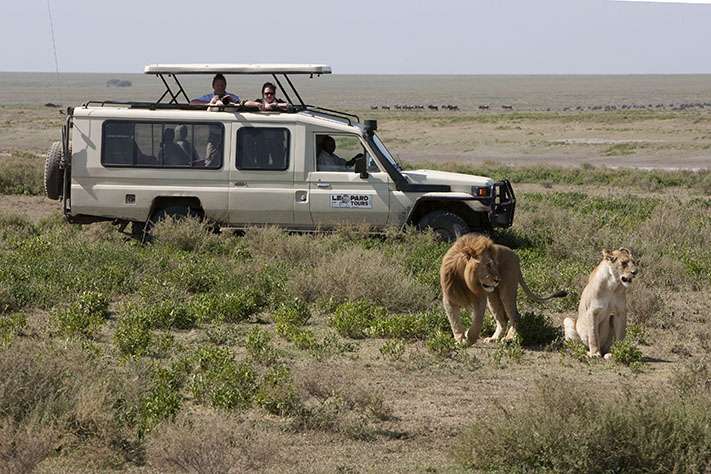
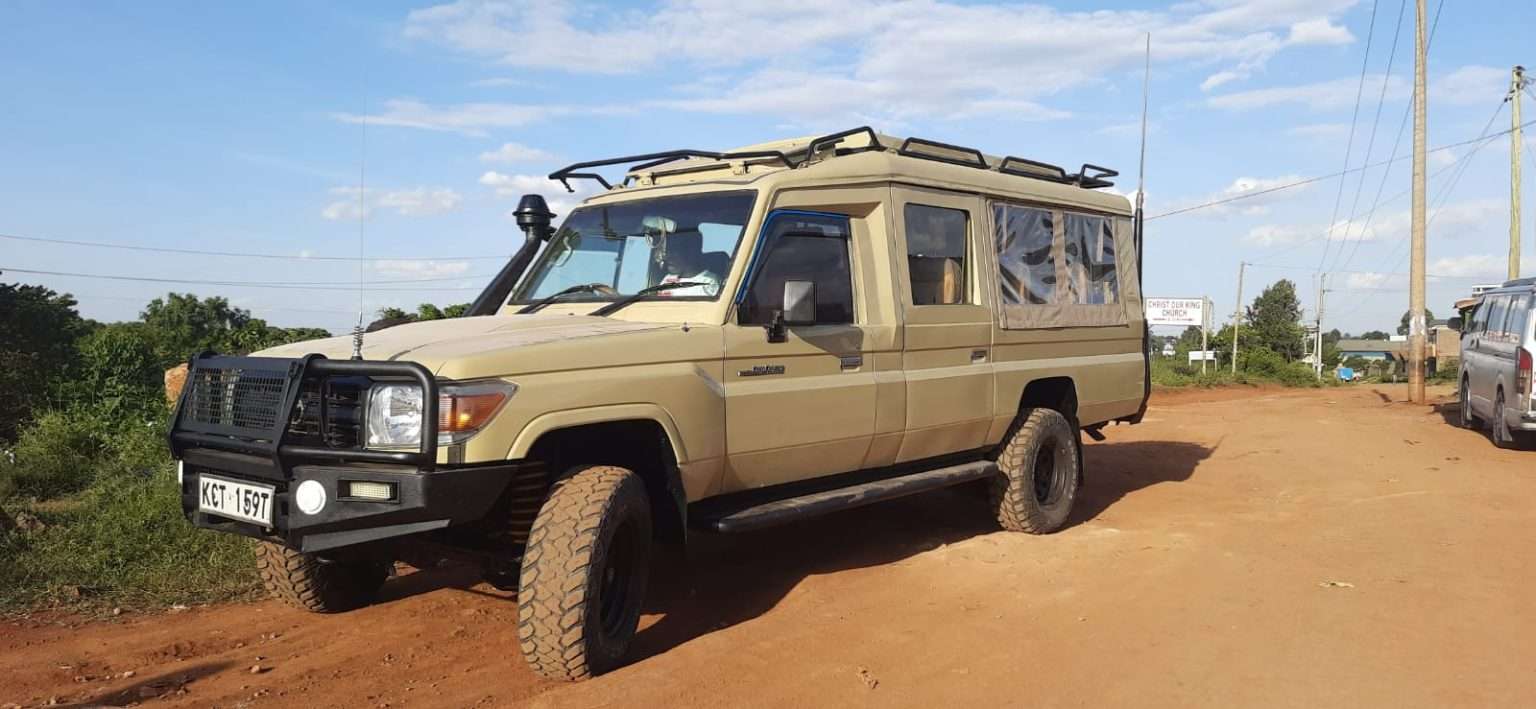
Closed safari vehicles are fully enclosed on the sides and have a lift-up roof hatch. This design allows you to stand up and look out while still being protected from dust, rain, and strong sun. These vehicles are also built on Land Cruiser or Land Rover frames with strong suspension for long drives.
They are best for national parks where you must drive on public roads between wildlife areas. Because distances can be long, comfort and protection matter. These vehicles are also safer when animals are close to the road and when weather conditions change suddenly.
Most pop-top vehicles seat 6 to 9 guests and are designed for both wildlife viewing and road travel.
Best for:
- National parks
- Budget and mid-range safaris
- Long drives between parks
- Families and mixed-age groups
Used in:
- Tanzania national parks (Serengeti, Ngorongoro, Tarangire)
- Kenya national parks
- Uganda
Safari Minibuses (Vans)
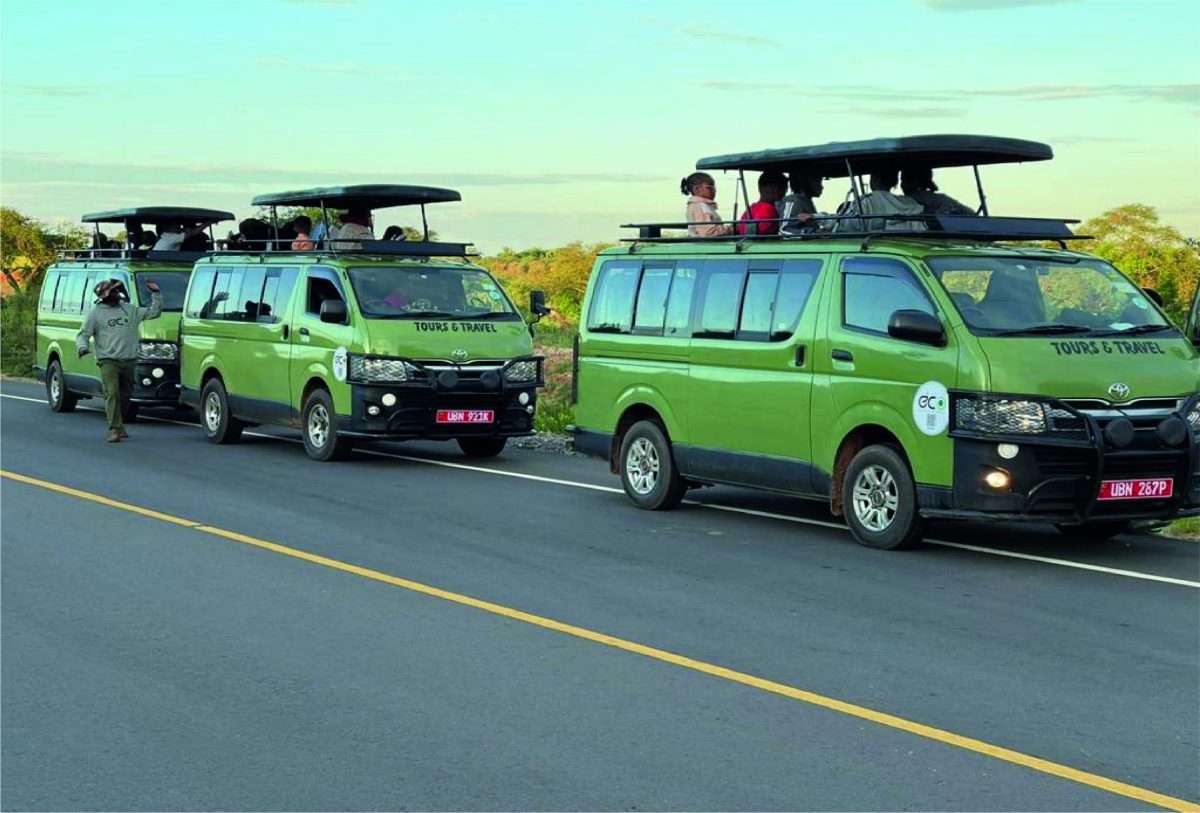
Safari minibuses are modified vans with a pop-up roof for wildlife viewing. They usually seat 7 to 9 people and are more affordable than 4×4 safari vehicles. However, they have lower ground clearance and weaker suspension, so they are limited to parks with good road networks.
These vehicles are common on budget group tours and short-distance safaris where roads are mostly flat and well maintained.
Best for:
- Group safaris
- Short-distance parks
- Road-based itineraries
- Budget travelers
Used in:
- Kenya
- Uganda
Safari Trucks (Overland Vehicles)
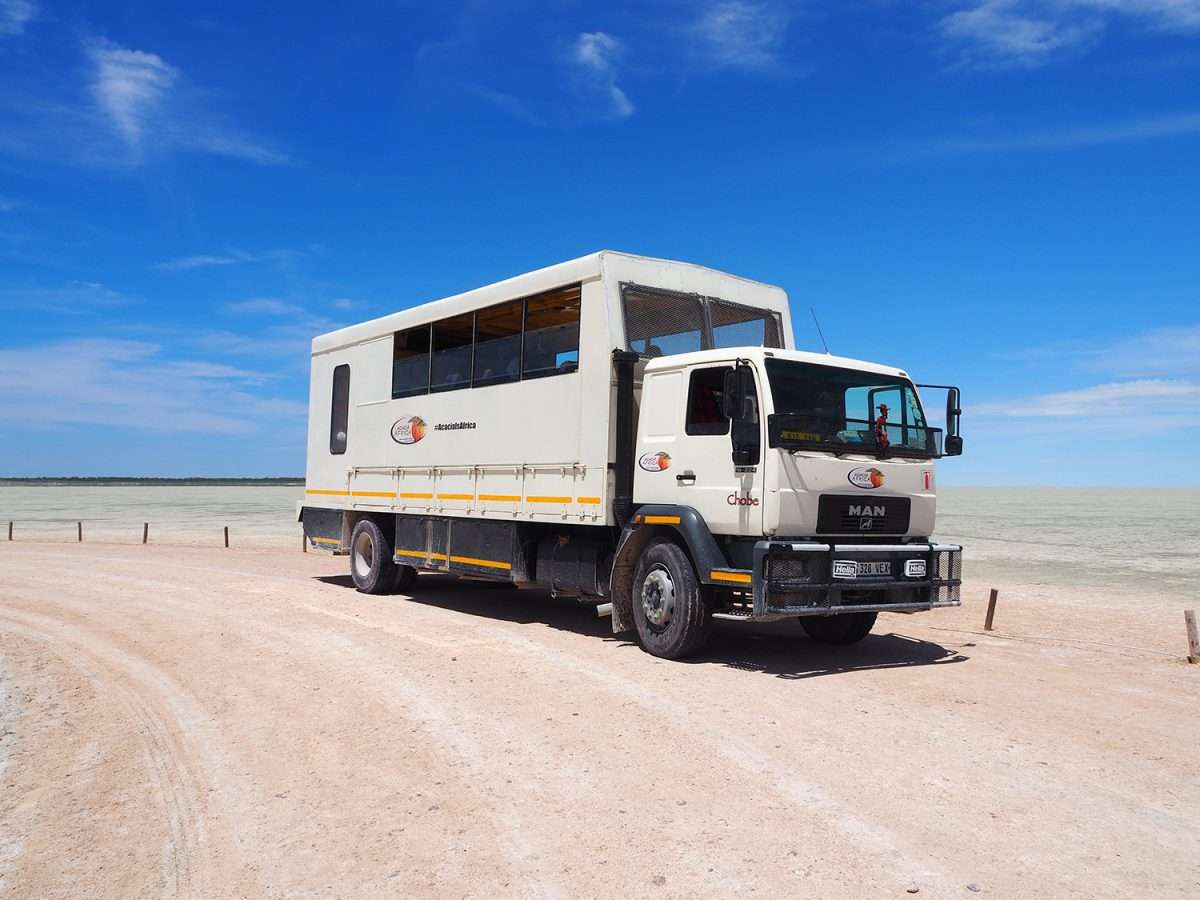
Safari trucks are large overland vehicles designed for camping safaris and long adventure routes. They can carry 12 to 20 people, have very strong suspension, and include roof storage for luggage and camping equipment.
They are built for rough terrain and long journeys across countries. These vehicles are not for luxury travel but are popular with young travelers and adventure groups who want a social safari experience.
Best for:
- Adventure safaris
- Camping safaris
- Young traveler groups
- Multi-country tours
Used in:
- Namibia
- Southern Africa overland tours
Mobile Safari Vehicles
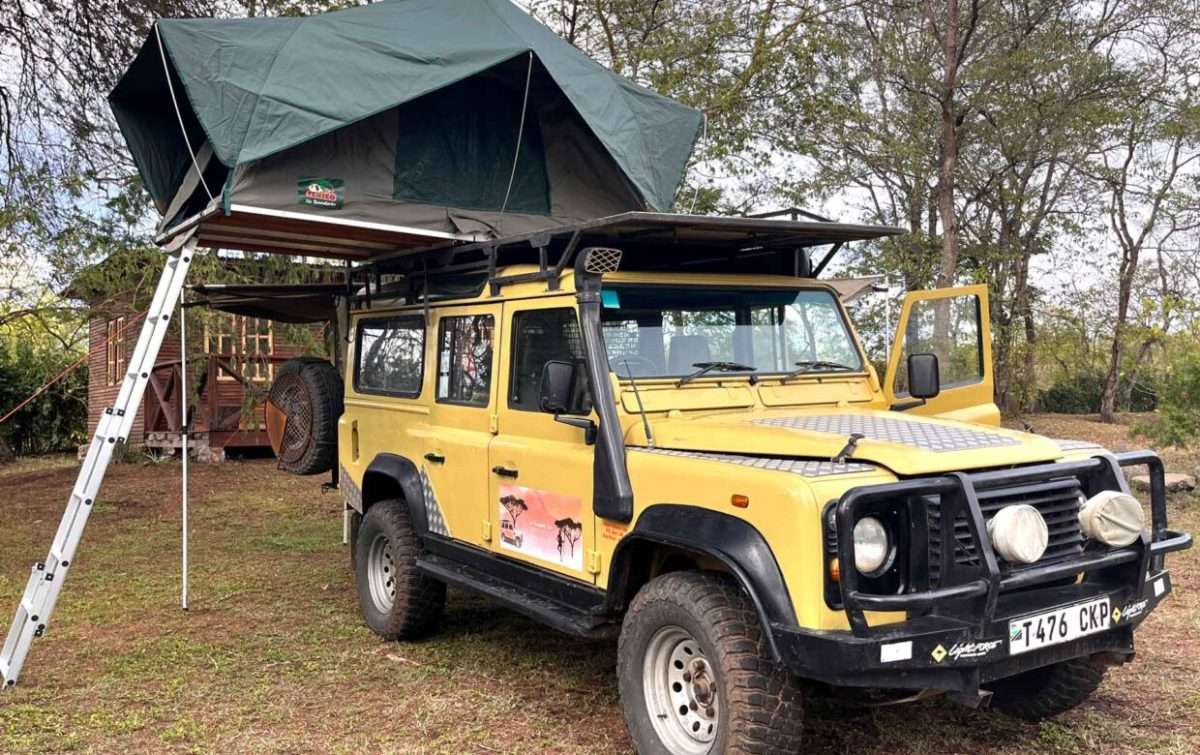
Mobile safari vehicles are specially adapted 4x4s used for moving camp safaris. They carry food, tents, and supplies along with guests. These vehicles follow wildlife migration routes and allow travelers to stay in different locations each night.
They are common in remote areas where permanent lodges do not exist and are often used by professional safari operators running seasonal camps.
Best for:
- Mobile camping safaris
- Migration safaris
- Remote wildlife areas
Used in:
- Tanzania
- Botswana
- Zambia
Light Aircraft for Fly-in Safaris
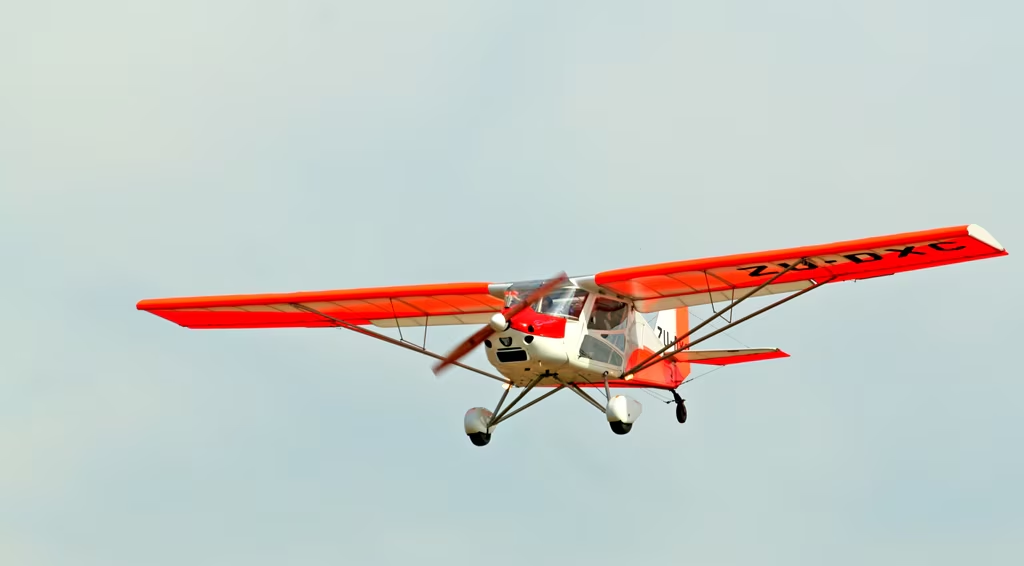
Fly-in safaris use small planes such as Cessna 206 or Grand Caravan aircraft to move guests between parks and remote lodges. These planes land on dirt airstrips inside or near national parks, cutting travel time from days to hours.
Once you land, you switch to a safari vehicle for game drives. This combination allows you to reach places that cannot be accessed by road.
Best for:
- Luxury safaris
- Private safaris
- Remote areas
- Short holiday trips
Used in:
- Botswana
- Tanzania
- Kenya
- Zambia
Safari Vehicles by Country (Why They Differ)
Safari vehicles are not the same across Africa because each country has different park rules, road conditions, and wildlife behavior. In East Africa, vehicles are usually more enclosed for safety and long road travel. In Southern Africa, open vehicles are common because off-road driving is allowed in many reserves.
Safari Vehicles in Tanzania
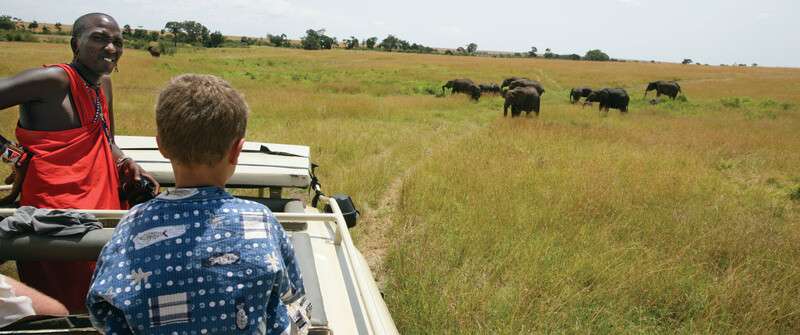
In Tanzania, most safaris use closed 4WD Toyota Land Cruisers with a pop-top roof, the classic safari cruiser setup. This is because game drives often involve long distances on tarmac and dirt roads between parks like Serengeti, Ngorongoro, and Tarangire.
Typical vehicle features:
- 3 rows of seating
- 6 to 7 guests per vehicle
- Pop-top roof hatch for standing and photography
- Enclosed sides for dust and rain protection
- Heavy-duty suspension for rough tracks
Open-sided vehicles are not allowed inside Ngorongoro Crater and many national parks for safety reasons. Cheetahs and other predators are known to jump onto vehicles to look for prey, so closed doors provide protection.
Where open vehicles are used:
- Private wildlife areas
- Fly-in safaris with lodge-based game drives
- Remote camps with off-road permissions
Safari Vehicles in Kenya
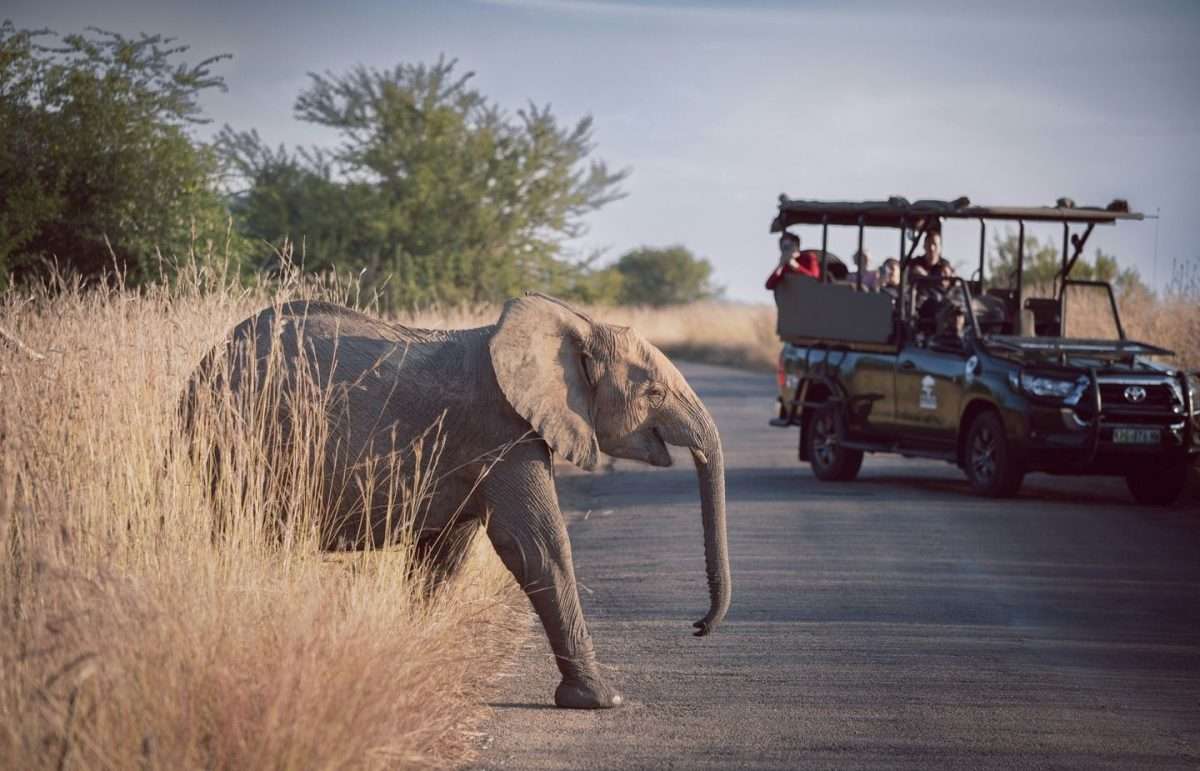
Kenya uses two main types of safari vehicles depending on where you go.
In national parks:
- Closed 4WD Land Cruisers with pop-top roof
- 3 rows of seats
- 6 to 8 passengers
- Large roof hatch for wildlife viewing
- Used for road travel between parks
In private conservancies (Masai Mara conservancies):
- Open-sided 4×4 vehicles, or open safari jeeps
- Tiered seating
- Shade canopy roof
- No glass windows for photography
Important difference:
- National parks require closed vehicles
- Private conservancies allow open vehicles
- TourwithPipi uses only 4WD vehicles, never 2WD vans for game drives
Safari Vehicles in Botswana
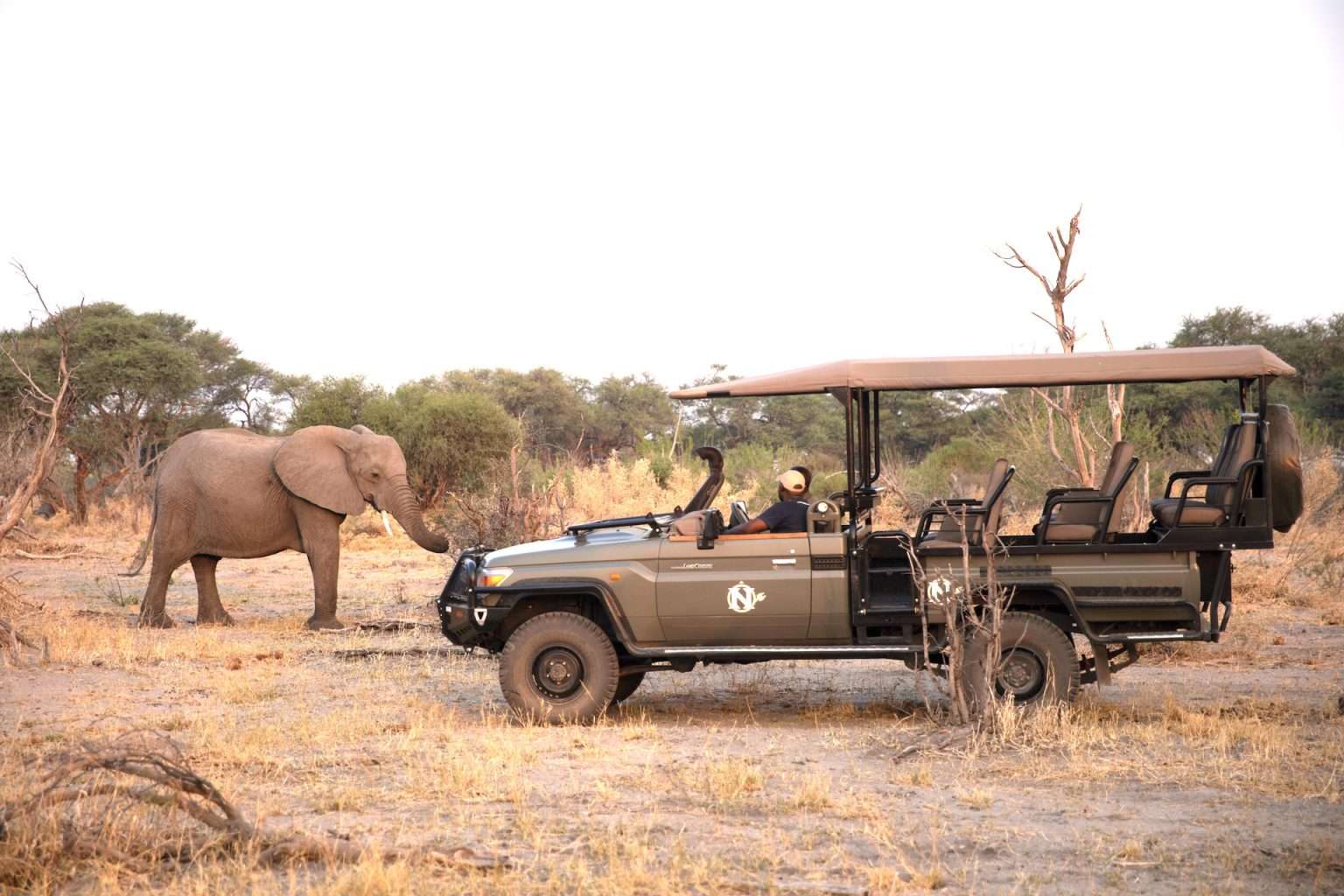
Driver views elephants from electric safari vehicle.
Botswana is famous for open-sided safari vehicles because most safaris happen in private reserves like Okavango Delta, Chobe, and Savuti where off-road driving is allowed.
Main vehicle types:
- Open-sided Land Cruisers or Land Rovers
- Tiered seats for better visibility
- Shade canopy roof
- 6 guests per vehicle
For group tours:
- Toyota Quantum or Mercedes Sprinter
- 9 to 10 seats
- Small safari trucks with 12 to 16 seats
Special safari transport:
- Motorboats in the Okavango Delta
- Mokoro canoes in shallow channels
Why open vehicles dominate:
- No fencing in private reserves
- Off-road tracking allowed
- Best wildlife visibility
- No heavy road travel needed
Safari Vehicles in South Africa
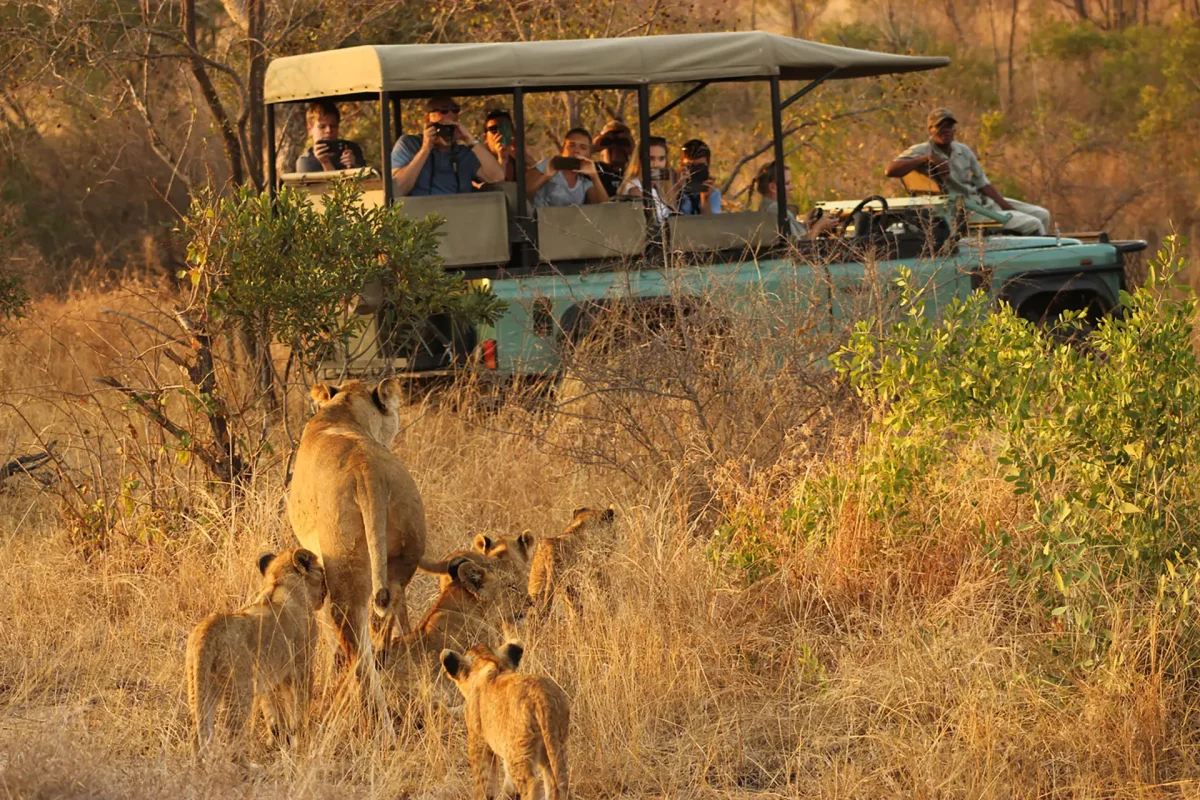
South Africa offers both self-drive and guided safari options.
In Kruger National Park:
- Closed vehicles and normal cars allowed
- Pop-top safari vehicles for guided drives
- Long paved roads between camps
In private reserves (Sabi Sands, Timbavati):
- Open-sided safari vehicles
- 6 guests per vehicle
- Tracker seat in front
- Off-road driving allowed
Key difference:
- Kruger focuses on road-based viewing
- Private reserves focus on close wildlife tracking
Safari Vehicles in Namibia
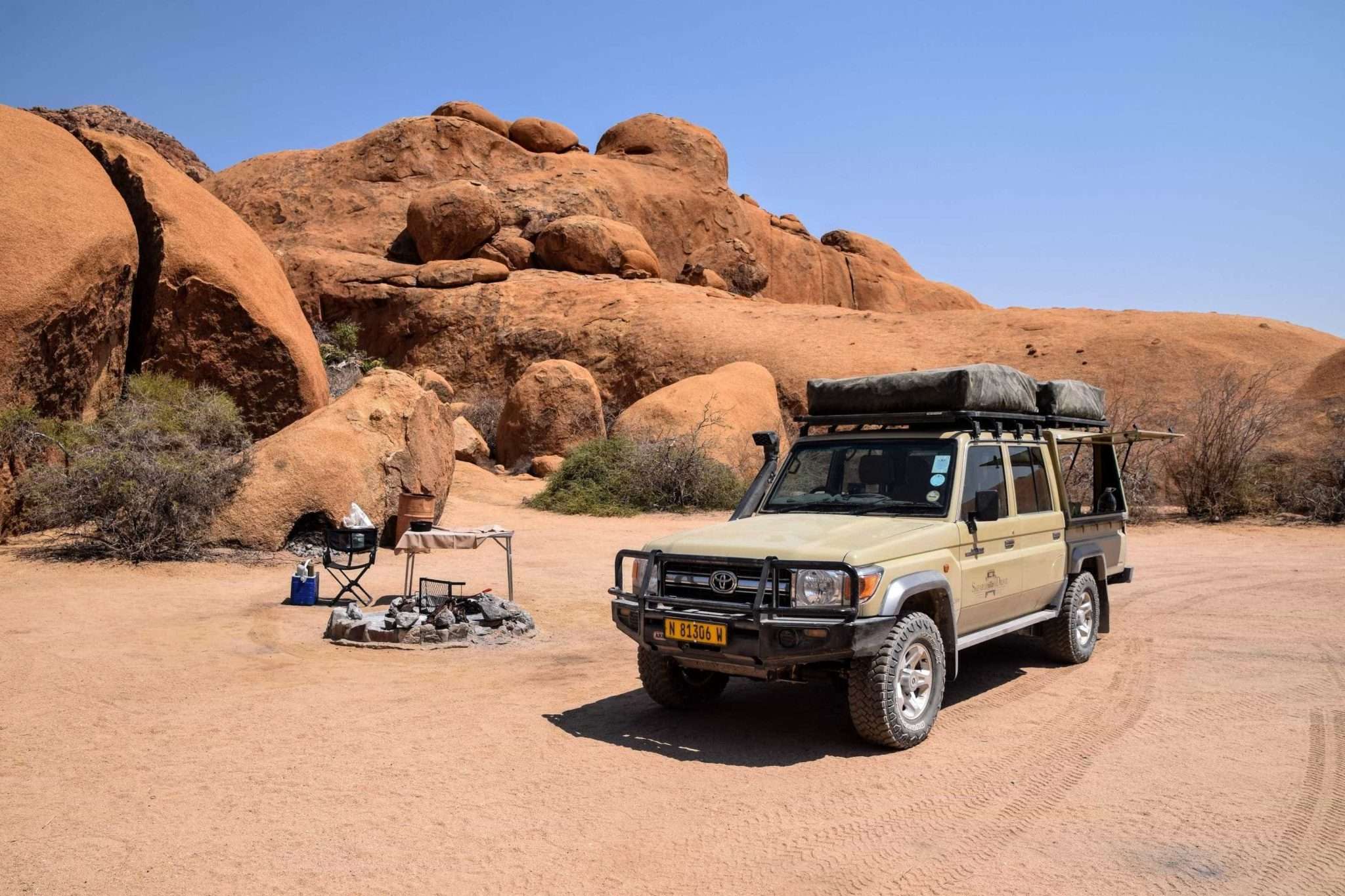
Namibia is huge at roughly 825,000 square kilometers, so vehicles must handle very long driving distances.
Common vehicles:
- Closed 4WD vehicles
- Toyota Quantum or Mercedes Sprinter
- Safari trucks with 12 to 16 seats
- Sliding windows for viewing
- Fly-in safaris use: Light aircraft & Open or closed 4WDs depending on park rules
Why closed vehicles dominate:
- Long highway distances
- Harsh desert conditions
- Self-drive culture
- Wind and sand protection needed
Best Safari Vehicle for Each Safari Style
Choosing the right safari vehicle directly affects comfort, safety, and how close you get to wildlife. Different travelers need different setups, and the right vehicle can completely change the safari experience.
Best Safari Vehicle for Photography
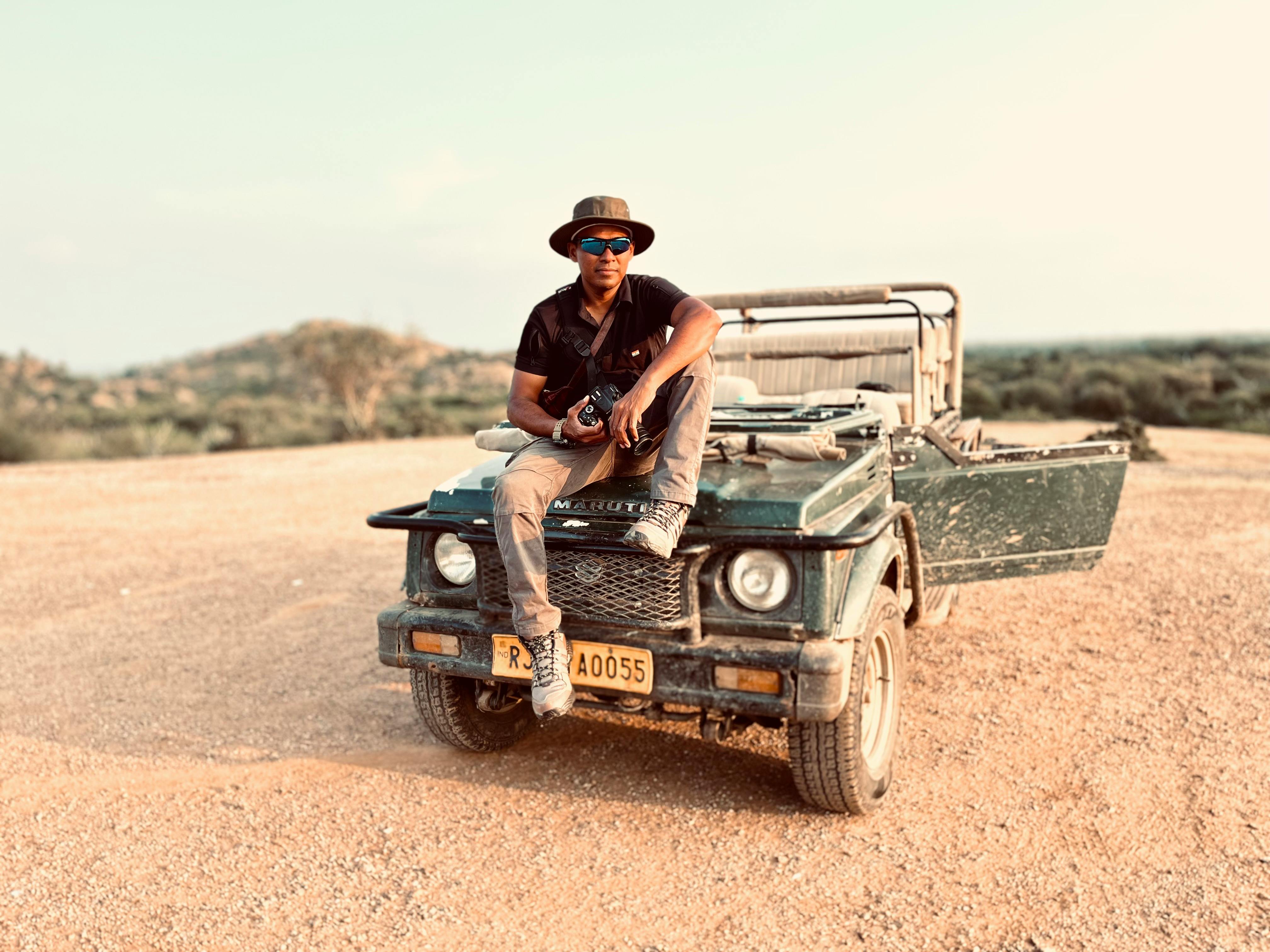
The best option for photography-focused safaris is an open-sided 4×4 safari jeep. With no glass windows, photographers avoid glare and reflections that can ruin shots. Tiered seating allows clear views over other passengers, while open sides provide unobstructed angles for tracking wildlife movement. These vehicles also include roof supports for cameras and allow easy movement inside, which is essential when animals appear suddenly from different directions.
Best Safari Vehicle for Couples & Honeymoon Safaris
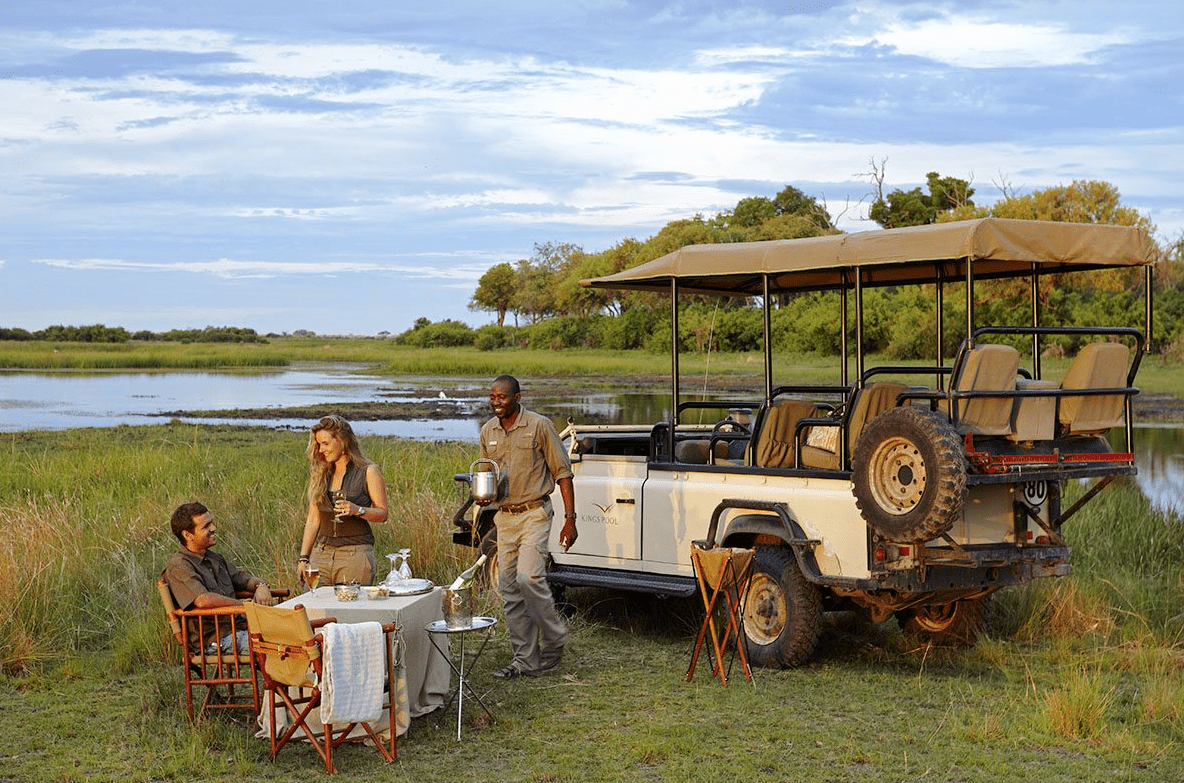
Couples and honeymoon travelers benefit most from a private 4WD safari vehicle. These vehicles ensure both guests get comfortable window seats without sharing space with other groups. Game drives can move at a slower, quieter pace, creating a more intimate experience. Extra room for bags and camera gear adds comfort, and having a personal guide allows the itinerary to adapt to the couple’s interests and timing.
Best Safari Vehicle for Luxury Safaris
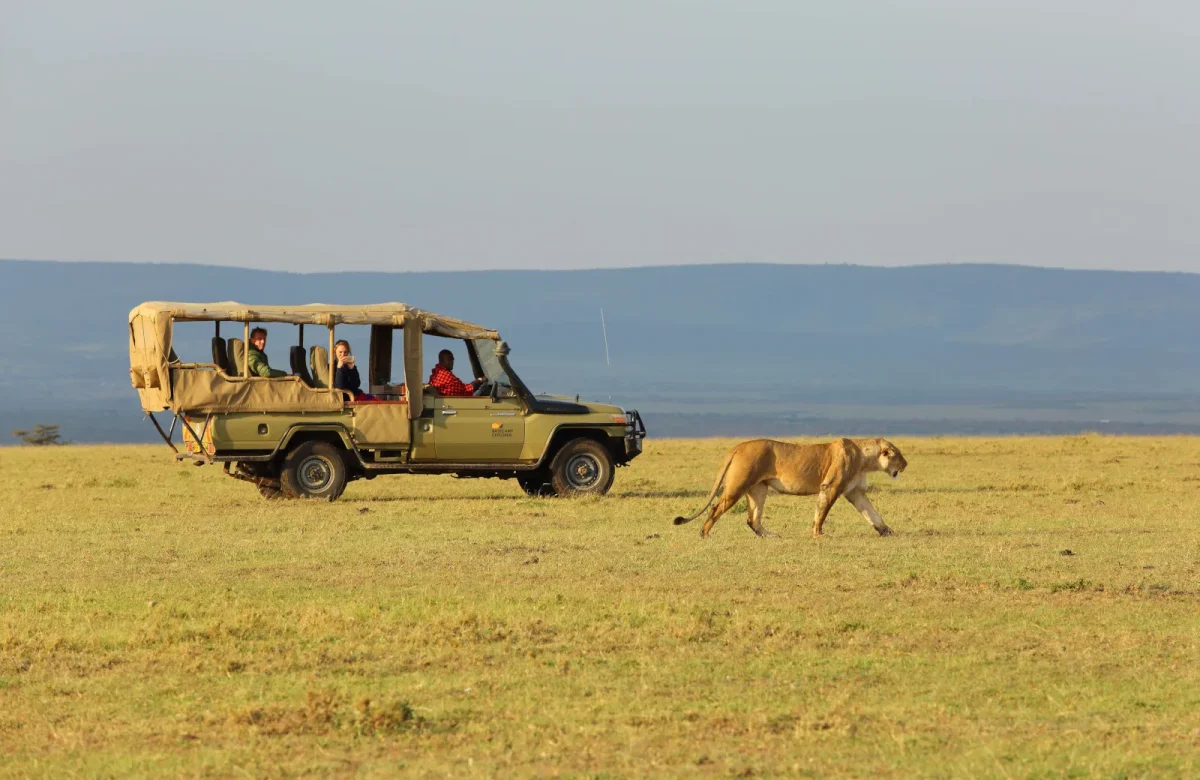
Luxury safaris are best paired with fly-in access combined with open game-viewing vehicles. This setup removes the need for long road journeys and maximizes time spent in wildlife areas. Seating is spacious and designed for comfort, often with shade roofs for extended drives. These vehicles are typically used for high-end lodge transfers and allow access to remote parks that standard road vehicles cannot reach.
Best Safari Vehicle for Families
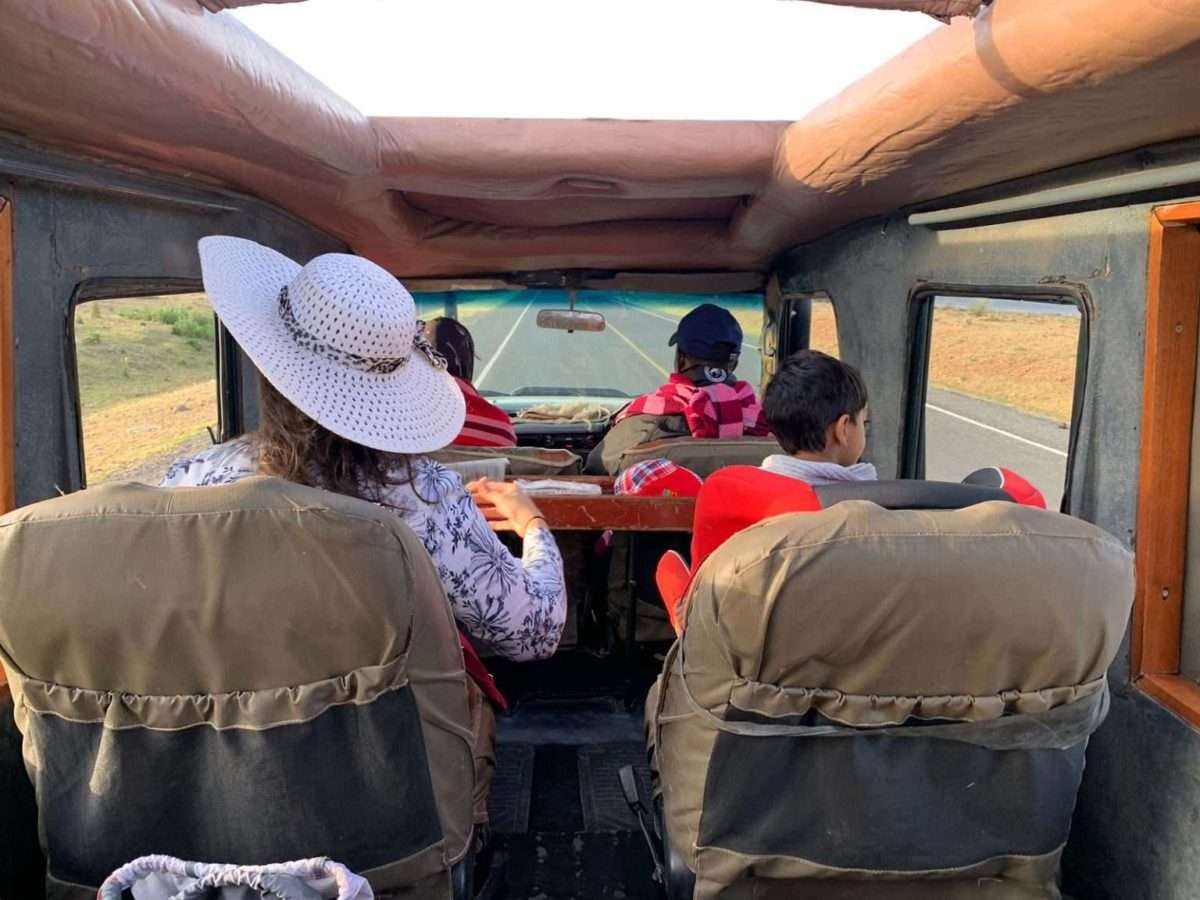
Families traveling on safari are best suited to closed pop-top safari vehicles. These vehicles provide seat belts and better protection from strong sun and dust, making them safer and more comfortable for children. The enclosed design offers stability during drives while still allowing excellent wildlife viewing through the pop-up roof.
Best Safari Vehicle for Great Migration Safaris
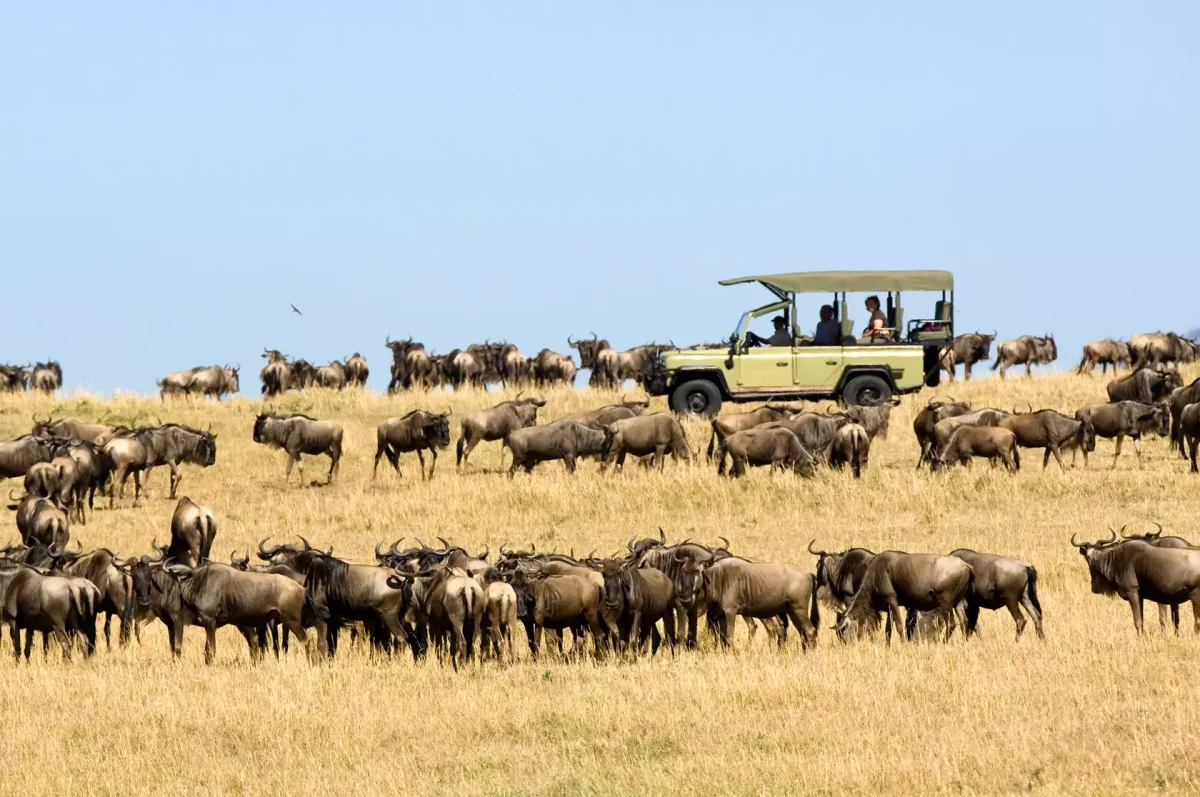
Great Migration safaris require flexibility, which is why pop-top vehicles are ideal in public parks while open vehicles perform better in private areas. Pop-top roofs allow safe roof viewing during dramatic river crossings, while open vehicles offer better angles when tracking moving herds. This combination ensures safety near large animals while maximizing visibility and photography opportunities.
Safety Features of Safari Vehicles
All professional safari vehicles include:
- Raised seating for better visibility
- Radio communication with other guides
- Reinforced suspension for rough terrain
- Trained driver-guides
- Strict park driving rules
Safari vehicles are designed to keep you safe while letting you experience wildlife from lions to elephants at close range without leaving the vehicle.
Are Open Safari Vehicles Safe for Game Drives?
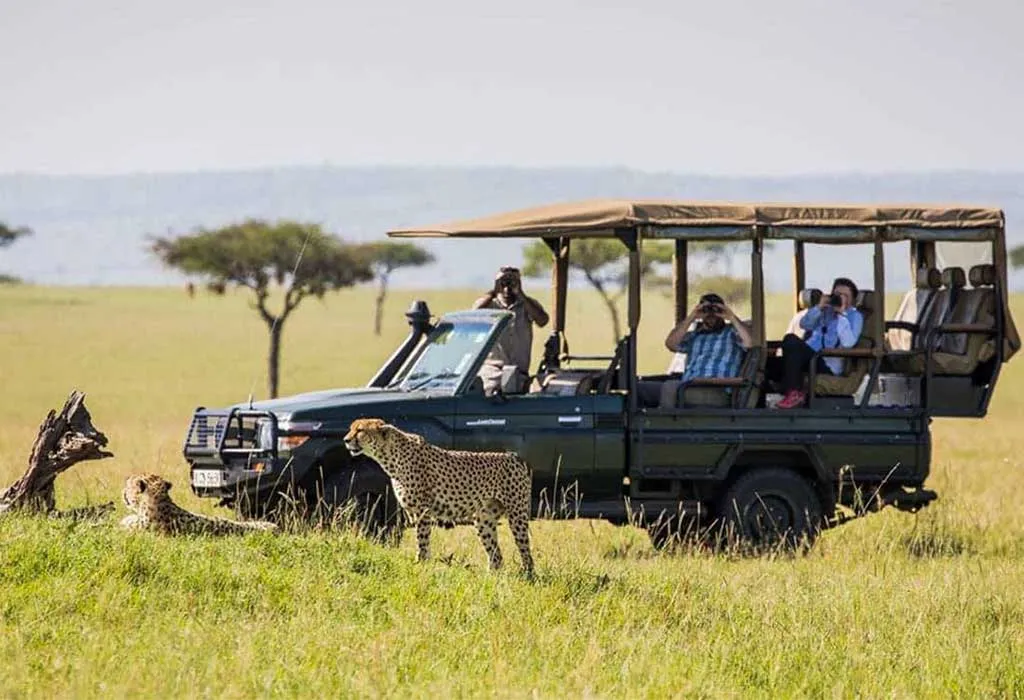
Yes, open safari vehicles are safe for game drives when used with trained guides and proper park rules. These vehicles are designed for wildlife viewing, not for chasing animals. Predators like lions, leopards, and cheetahs see the vehicle as one large object, not as individual people, which is why attacks on safari vehicles are extremely rare.
That said, your behavior matters just as much as the vehicle design.
Why open safari vehicles are considered safe
- Animals are used to seeing safari vehicles and usually ignore them
- Guides are trained to read animal behavior and keep safe distances
- Vehicles are positioned with engines on and clear exit routes
- Most game drives happen in private reserves where rules are strictly enforced
What if an animal comes close?
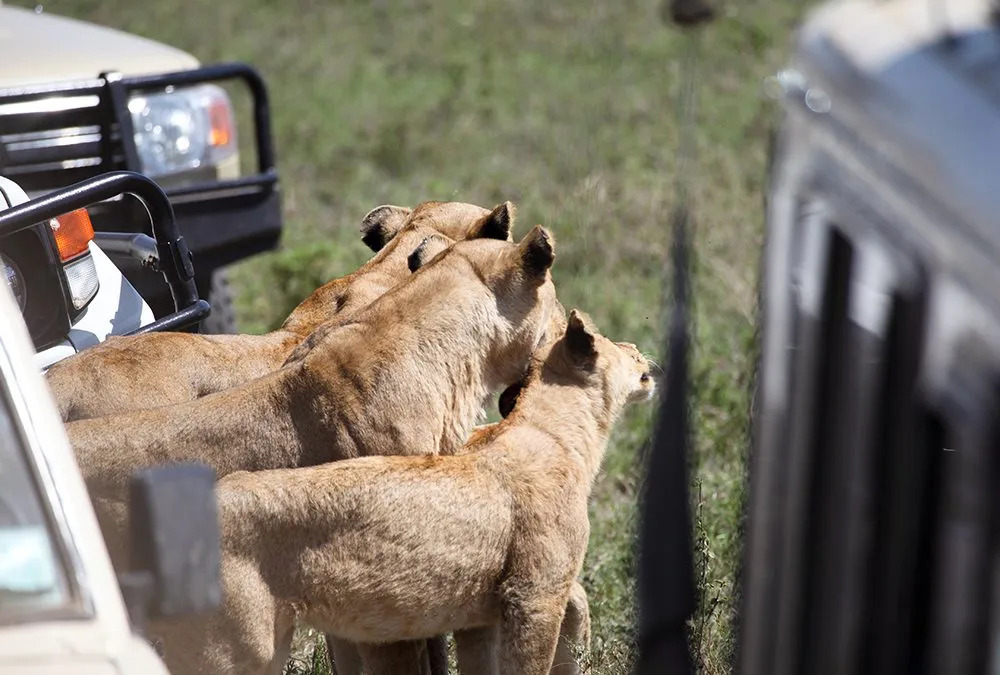
If a lion, elephant, or leopard walks near the vehicle:
- Stay seated
- Stay quiet
- Do not panic
- Let the guide handle the situation
Animals almost always move away on their own.
Common-sense rules you must follow (very important)
To stay safe in an open safari vehicle:
- Do not stand up suddenly unless your guide allows it
- Do not stick your hands or arms outside the vehicle
- Do not point at animals
- Do not stare directly into predators’ eyes
- Do not make loud noises or sudden movements
- Do not try to touch any animal
- Do not feed wildlife
These actions can make animals feel threatened or challenged.
What Safari Vehicles TourwithPipi Uses

At TourwithPipi, we choose our safari vehicles very carefully because your vehicle is not just transport. It is your game drive seat, your photography platform, and your safe space inside the national parks. We use different safari vehicles depending on where you travel and the style of safari you book with us.
For most national parks, we use 4×4 Land Cruisers with pop-top roofs, the same safari cruiser platform used across East Africa. These vehicles are strong enough for rough park roads and long distances between parks. The pop-top roof lets you stand and look out while staying protected from dust, wind, and rain. This is especially important in places like the Serengeti, Ngorongoro Crater, and Masai Mara, where park rules require closed vehicles for road travel.
In private conservancies and private wildlife reserves, we use open-sided game viewer vehicles, also known as open safari jeeps. These have no glass windows and give you clear views in every direction. You can hear the sounds of the bush, feel the fresh air, and take photos without window glare. We use these vehicles for guests who want a more immersive and private safari experience, especially couples and photographers.
For fly-in safaris, we use light aircraft to move between parks and remote lodges. This saves many hours of driving and lets you reach areas that are not accessible by road. When you land, a safari vehicle is waiting for you at the airstrip for your game drives.
We use these vehicles for five main reasons. First is comfort, because long game drives need proper seating and suspension. Second is visibility, because seeing animals clearly makes the safari unforgettable. Third is safety, because our vehicles are designed for wildlife areas and driven by trained guides. Fourth is photography, because pop-top roofs and open sides allow you to shoot without barriers. Fifth is privacy, because we focus on private safari vehicles instead of crowded group vans whenever possible.
When you book with us, your TourwithPipi safari vehicle is matched to your route, your park rules, and your travel style, whether that is luxury, family travel, or photography. Contact us Now


