
Quick Answer:
African lions are obligate carnivores, meaning they eat only meat. Their diet mainly includes wildebeest, zebra, African buffalo, antelope, giraffe, warthog, and other medium to large mammals. Depending on where they live and what prey is available, lions also hunt smaller animals, scavenge from other predators, and occasionally eat reptiles, birds, or young elephants. Most adult lions eat the equivalent of 5–10 kg (11–22 lbs) of meat per day, although they may consume up to 40 kg (88 lbs) in a single meal after a successful hunt.
The 15 Most Common Animals Lions Eat
Although researchers have documented more than forty prey species, these animals make up most of an African lion’s diet.
| Animal | How Often Hunted | Why Lions Hunt It |
|---|---|---|
| Blue Wildebeest | Very Often | Large herds make them predictable and abundant. |
| Plains Zebra | Very Often | Excellent source of meat despite strong defenses. |
| African Buffalo | Very Often | High food value that can feed an entire pride. |
| Impala | Often | Fast but common across many ecosystems. |
| Greater Kudu | Often | Large antelope found in woodland habitats. |
| Waterbuck | Often | Frequently found near rivers and lakes. |
| Warthog | Often | Easier to catch than larger herbivores. |
| Hartebeest | Moderate | Common in open grasslands. |
| Eland | Moderate | Large antelope requiring teamwork. |
| Giraffe | Occasional | Usually calves or weakened adults. |
| Ostrich | Occasional | Opportunistic prey, especially young birds. |
| Porcupine | Rare | Hunted only when opportunities arise. |
| Tortoise | Rare | Consumed mainly during food shortages. |
| Nile Crocodile | Rare | Usually smaller individuals on land. |
| Young Elephant | Very Rare | Requires several experienced lions working together. |
Every prey species presents different challenges.
Some rely on speed.
Others rely on size.
Some defend themselves with powerful horns, while others stay safe by remaining within large herds.
This constant variety forces lions to adapt their hunting strategy every day.
Do Lions Eat the Same Food Across Africa?
No.
One of the most interesting facts about African lions is how dramatically their diet changes from one ecosystem to another.
A lion living in the Serengeti hunts very differently from one living in Namibia’s deserts or South Africa’s bushveld.
Their prey changes according to habitat, climate, rainfall, and seasonal wildlife movements.
For example:
Serengeti & Maasai Mara
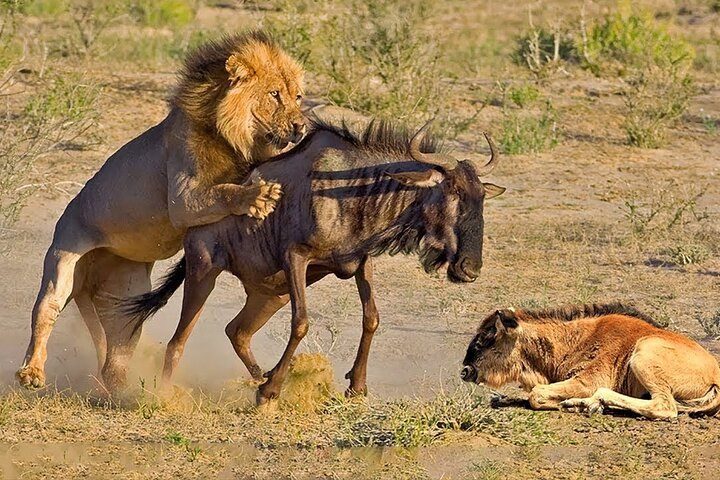
The annual Great Migration provides enormous numbers of wildebeest and zebra, making them the dominant prey species throughout much of the year.
Kruger National Park
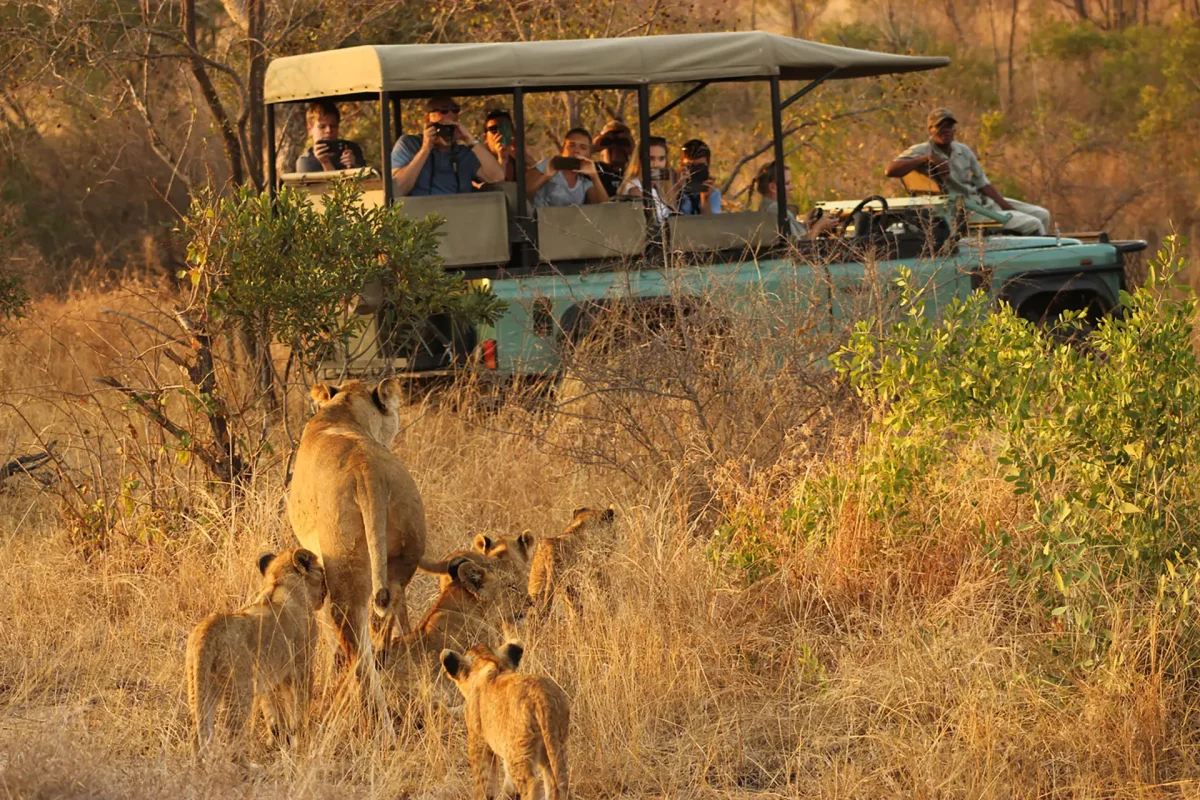
Buffalo, kudu, impala, giraffe, warthog, and waterbuck become much more important because they are abundant throughout the park.
Kalahari Desert
Food is less predictable.
Lions become opportunistic hunters, eating smaller mammals, reptiles, birds, and scavenged carcasses whenever necessary.
This remarkable flexibility is one of the main reasons lions have survived across such a wide range of African environments.
Why Do Male and Female Lions Hunt Different Animals?
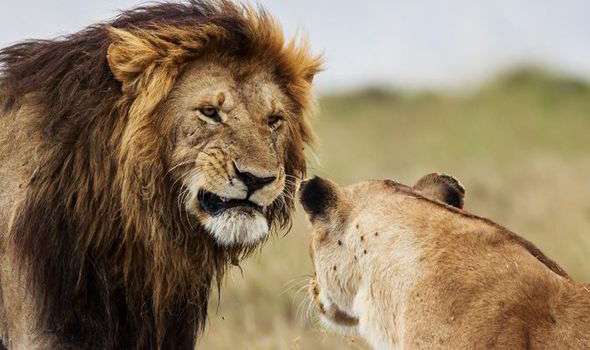
Although lions live and hunt as a pride, males and females often target different prey.
Lionesses Prefer Speed Over Size
Lionesses are responsible for most hunts because they are lighter, faster, and more agile than males.
They usually target animals that offer a good balance between effort and reward, including:
- Wildebeest
- Zebra
- Impala
- Waterbuck
- Warthog
- Greater kudu
Working together, lionesses spread out around a herd before silently moving into position. Once the prey is within range, they launch a short sprint and attempt to separate one vulnerable animal from the group.
Their teamwork is what makes lions one of Africa’s most successful social predators.
Male Lions Often Hunt Larger Prey
Male lions are significantly heavier than females, often weighing more than 190 kg (420 lbs).
Their size allows them to help tackle prey that would be difficult or dangerous for lionesses alone.
Male lions are more commonly involved when hunting:
- African buffalo
- Adult giraffes
- Large eland
- Juvenile elephants
- Hippopotamus calves
These hunts carry a much higher risk because large herbivores fight back.
Buffalo are particularly dangerous. A charging buffalo can seriously injure or even kill a lion using its powerful horns, which is why lions rarely attack healthy adults without several pride members working together.
What Can Lions Eat When Large Prey Is Scarce?
Although lions prefer large herbivores, they are remarkably adaptable.
When food becomes scarce, they expand their diet to include much smaller animals.
Depending on where they live, lions may hunt:
- Hares
- Rodents
- Porcupines
- Ground birds
- Ostriches
- Tortoises
- Monitor lizards
- Small crocodiles
These animals do not provide enough food for an entire pride, but they help lions survive until larger prey becomes available again.
This flexibility is especially important in dry regions where prey numbers change throughout the year.
Are Lions Hunters or Scavengers?
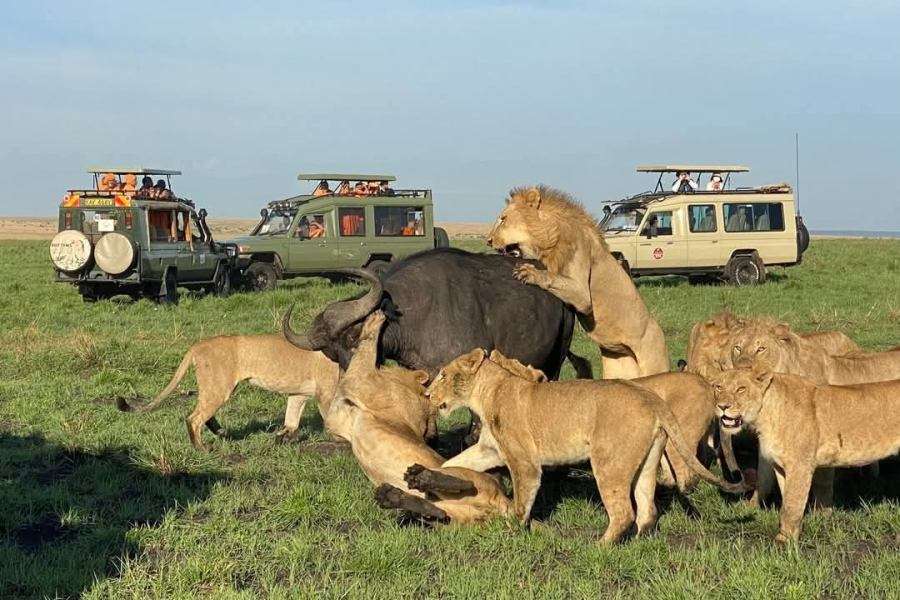
The answer is both.
Although lions are among Africa’s most powerful hunters, they never ignore an easy meal.
If another predator has already made a kill, lions often use their strength to take it instead of spending valuable energy hunting.
Common victims include:
- Cheetahs
- Leopards
- African wild dogs
- Spotted hyenas
In some ecosystems, researchers estimate that up to 50% of a lion’s diet may come from scavenging rather than hunting.
Stealing food is simply another survival strategy.
From an energy perspective, taking over an existing carcass is far less demanding than chasing prey across the savannah.
Do Lions Drink Water Every Day?
Not always.
Although lions drink whenever fresh water is available, they obtain much of their moisture directly from their prey.
Fresh meat contains significant amounts of water, reducing the need for frequent drinking.
In extremely dry environments, lions have even been observed eating moisture-rich plants such as the tsamma melon, which provides additional hydration during prolonged dry periods.
This adaptation allows lions to survive in habitats where permanent water sources are limited.
How Lion Diet Changes With the Seasons
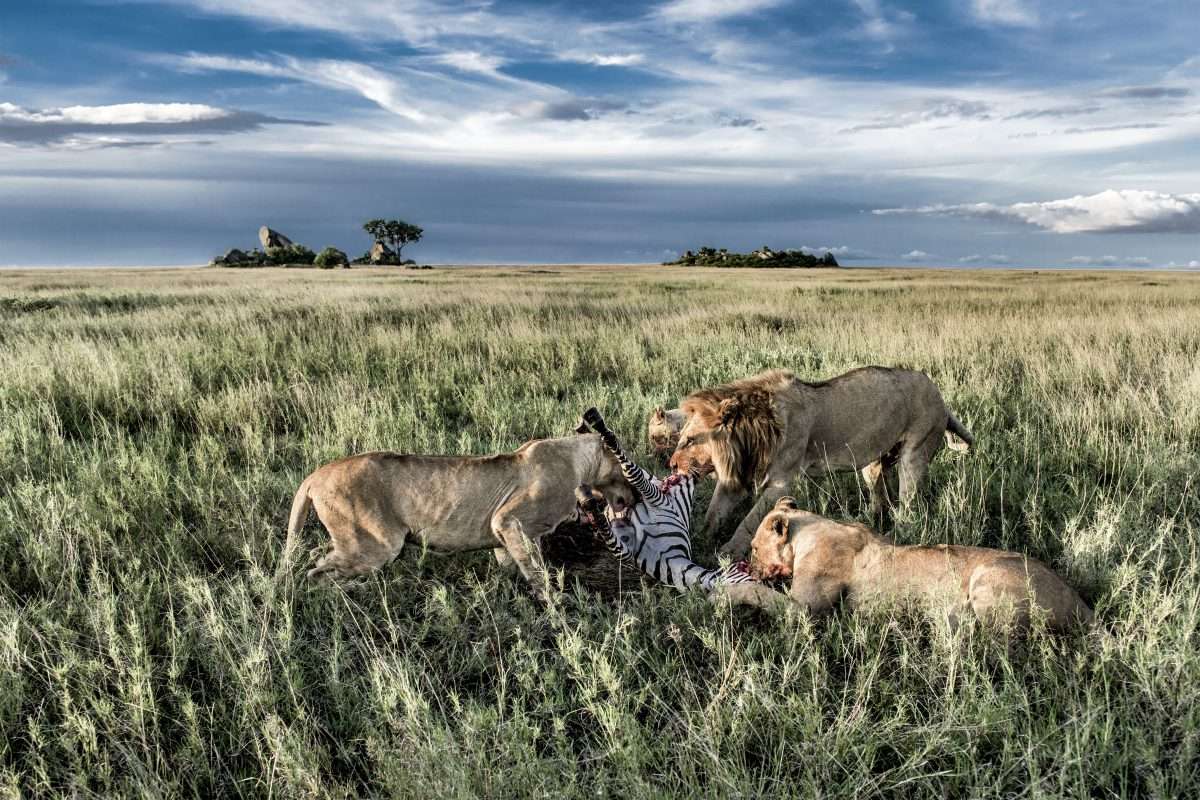
The answer to “What does an African lion eat?” often depends on the time of year.
Wet Season
During the rainy season, grazing animals spread across wide areas where food is plentiful.
Lions usually travel farther between hunts because prey is more dispersed.
Dry Season
As rivers shrink and grass becomes scarce, herbivores gather around permanent water sources.
This concentration of animals creates excellent hunting opportunities.
Many safari guides consider the dry season one of the best times to observe lions because wildlife naturally gathers in predictable locations.
Seasonal migrations, rainfall, and habitat conditions all influence which animals lions hunt throughout the year.
Rather than following a fixed diet, lions constantly adapt to changing conditions across Africa’s diverse ecosystems.
Who Eats First After a Lion Makes a Kill?
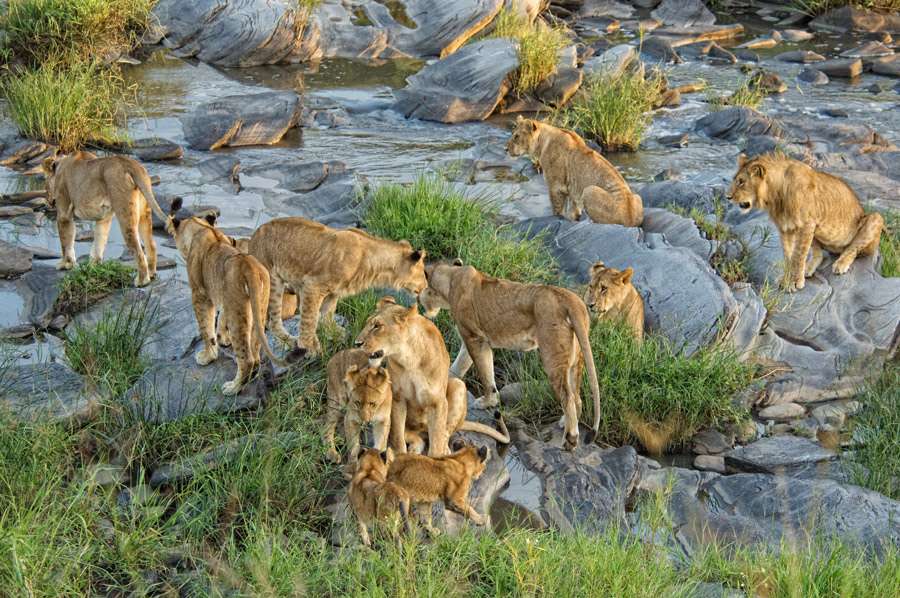
One of the biggest surprises for safari travelers is discovering that the lions doing most of the hunting are not always the first to eat.
A lion pride follows a clear social hierarchy during feeding.
| Feeding Order | Lion Group | Why They Eat in This Order |
|---|---|---|
| 1 | Dominant males | They need to remain strong to defend the pride and territory from rival males. |
| 2 | Adult lionesses | They perform most hunts and feed after the males. |
| 3 | Older cubs | Older cubs can compete more effectively for food. |
| 4 | Young cubs | Young cubs feed last but are protected by the pride. |
Feeding is often noisy, with growling, roaring, and pushing around the carcass. Although it may look aggressive, this behavior helps maintain the pride’s social order.
Once every lion has eaten, the remaining carcass is left for Africa’s scavengers, completing another stage in the ecosystem.
How Much Does a Lion Eat?
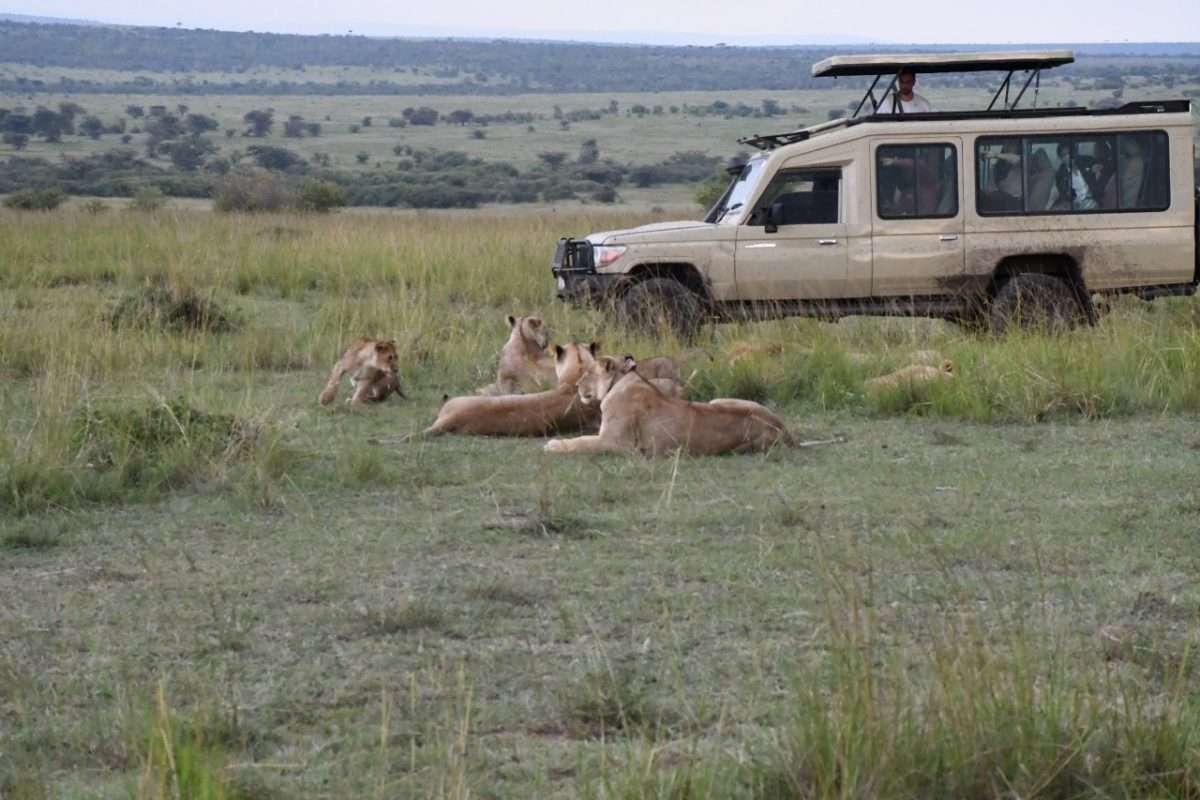
Lions rarely eat small meals every day. Instead, they consume large quantities of meat after a successful hunt and then rest while digesting.
The amount eaten depends on the lion’s age, sex, and food availability.
| Lion | Average Daily Requirement | Maximum in One Meal |
| Adult Male | 7–10 kg (15–22 lbs) | Up to 40 kg (88 lbs) |
| Adult Female | 5–7 kg (11–15 lbs) | Around 20 kg (44 lbs) |
| Cubs | Varies with age | Much smaller portions |
After a large meal, lions may not hunt again for three to four days. This feeding pattern allows them to conserve energy between hunts.
Unusual Prey and Animals Lions Usually Avoid
Although lions are adaptable predators, they do not hunt every animal they encounter. They choose prey based on the energy gained compared to the risk involved.
Animals Lions Usually Avoid
- Adult elephants, rhinoceroses, and hippopotamuses are rarely hunted because they are extremely large and can seriously injure or kill a lion.
- Very small animals, such as rodents, klipspringers, and baboons, are usually ignored because they provide too little food for the effort required.
- Adult crocodiles and porcupines are generally avoided as their powerful defenses can cause severe injuries. Lions usually target them only when other food is unavailable.
How Do Lions Hunt?
Lions rely on teamwork, stealth, and surprise rather than long-distance speed.
Pride Hunting
Lions are the only truly social big cats, living in family groups called prides. This allows them to hunt larger and more dangerous prey than most solitary cats.
- Lionesses carry out most hunts because they are faster, lighter, and more agile.
- Male lions usually defend the pride but often join hunts involving dangerous prey such as buffalo or giraffes.
Hunting Strategy
A typical lion hunt follows four stages:
- Stalk: Lions quietly approach within 20 to 30 metres using grass, bushes, or uneven ground for cover.
- Ambush: Several lionesses spread out to surround or funnel the prey.
- Short Chase: Lions sprint only a short distance, usually less than 50 metres, before making contact.
- Kill: The prey is brought down by body weight and killed with a bite to the throat or muzzle that causes suffocation. Smaller prey may be killed with a bite to the neck.
How Successful Are Lions at Hunting?
Despite their reputation, lions fail more often than they succeed.
| Hunting Type | Average Success Rate |
|---|---|
| Solo hunt | 17–19% |
| Pride hunt | Around 30% |
Several factors improve hunting success, including darkness, low moonlight, tall grass, and windy conditions that help conceal the lions’ approach.
Do Lions Eat Humans?
Lions do not naturally hunt humans, and attacks are extremely rare.
Most incidents occur when a lion is:
- Old or injured.
- Unable to hunt normal prey.
- Living in areas where natural prey has declined.
Lions may also scavenge human remains if they encounter an unprotected body, but this is uncommon.
One of the best-known examples is the Man-Eaters of Tsavo, two male lions that killed dozens of railway workers in Kenya during the late 1800s.
Do Lions Eat Other Lions?
Cannibalism is rare but has been documented.
The most common situation occurs when new males take over a pride. They often kill existing cubs to bring females back into breeding condition, and in some cases the cubs may be eaten.
Adult lions rarely consume other adults. These cases usually occur during severe food shortages or violent territorial conflicts and are not part of normal lion behavior.
Do Lions Eat Grass?
Yes, but not for nutrition.
Lions occasionally eat grass to:
- Help clear their digestive system.
- Trigger vomiting after swallowing fur or bones.
- Remove indigestible material from the stomach.
Like many carnivores, lions gain almost no nutritional value from grass.
Do Lions Eat Fish?
Fish are not a regular part of a lion’s diet.
However, lions have occasionally been observed catching fish in rivers or shallow water when the opportunity arises. This opportunistic behavior is uncommon and usually occurs where fish are easily accessible.
Do Lions Eat Plants?
No. Lions are obligate carnivores, meaning they obtain all essential nutrients from meat.
Although they may accidentally consume plant material inside the stomach of herbivorous prey or occasionally eat grass, plants do not contribute meaningfully to their diet.
What Animals Do Lions Not Eat?
Lions generally avoid prey that offers little reward or carries a high risk of injury.
These include:
- Adult elephants
- Rhinoceroses
- Adult hippopotamuses
- Large crocodiles
- Porcupines
- Baboons
- Very small mammals such as rodents
While extreme hunger or unusual circumstances may lead lions to eat these animals, they are not a regular part of an African lion’s diet.
Frequently Asked Questions
What do lions eat the most?
African lions most commonly eat wildebeest, zebra, and African buffalo because these animals provide large amounts of meat and are widely available across many African ecosystems.
What does an African lion eat every day?
Lions do not usually eat every day. Instead, they feed every three to four days after a successful hunt. On average, an adult male requires the equivalent of 7–10 kg (15–22 lbs) of meat per day, while females average 5–7 kg (11–15 lbs).
What animals do lions avoid hunting?
Lions usually avoid healthy adult elephants, rhinoceroses, and large hippopotamuses because these animals are extremely dangerous and can seriously injure or kill a lion.
Do lions eat giraffes?
Yes. Lions occasionally hunt giraffes, especially calves or weakened adults. Healthy adult giraffes are challenging prey because their powerful kicks can cause fatal injuries.
Do lions eat crocodiles?
Occasionally. Lions have been observed killing and eating Nile crocodiles, particularly smaller individuals encountered on land near rivers or waterholes.
Can lions eat birds and reptiles?
Yes.
Although uncommon, lions may hunt:
- Ostriches
- Ground-nesting birds
- Tortoises
- Monitor lizards
- Small crocodiles
- Other reptiles
These animals become more important when larger prey is unavailable.
Why do lions steal kills from other predators?
Stealing a freshly killed animal requires far less energy than making a new hunt.
Lions frequently displace leopards, cheetahs, hyenas, and African wild dogs from their kills whenever the opportunity arises.
Do lions ever eat humans?
Human attacks are extremely rare.
Wild lions naturally avoid people. Most recorded attacks involve injured, elderly, or desperate lions living in areas where natural prey has become scarce.
See Lions Hunt in the Wild with TourwithPipi
Reading about what lions eat helps explain how Africa’s greatest predator survives, but nothing compares to witnessing lion behavior in its natural environment.
Watching lionesses quietly stalk a herd of zebra, hearing the deep roar of a dominant male at sunrise, or observing cubs patiently waiting beside a fresh kill creates memories that stay with you long after your safari ends.
At TourwithPipi, our tailor-made luxury safaris take you to some of Africa’s most celebrated wildlife destinations, including the Serengeti National Park, Maasai Mara National Reserve, Kruger National Park, and other iconic ecosystems where lions thrive.
With experienced naturalist guides, private safari vehicles, carefully selected luxury lodges, and personalized itineraries, you’ll gain a deeper understanding of lion behavior while enjoying one of the world’s greatest wildlife experiences. Contact us now to book your lion safari!
Key Takeaways
- African lions eat more than 40 different animal species.
- Their favorite prey includes wildebeest, zebra, and African buffalo.
- Lions usually hunt animals weighing 190–550 kg.
- Lionesses perform most hunts, while males often help with dangerous prey like buffalo.
- Lions are opportunistic predators and scavengers.
- A successful hunt can feed a pride for several days.
- Large prey offers the highest energy return while reducing the need for frequent hunting.


