
A group of cheetahs is called a coalition. Coalitions are almost always male, usually two to three brothers from the same litter, and they stay together for life. “Pack” is the term most people reach for, but it’s the wrong one. Packs are a wolf and hyena term, built around a hunting hierarchy that cheetahs don’t have. Female cheetahs don’t form coalitions at all. They live alone except when raising cubs, and there is no widely recognized name for a group of female cheetahs, despite what a few sites claim.
Why Is a Group of Cheetahs Called a Coalition?
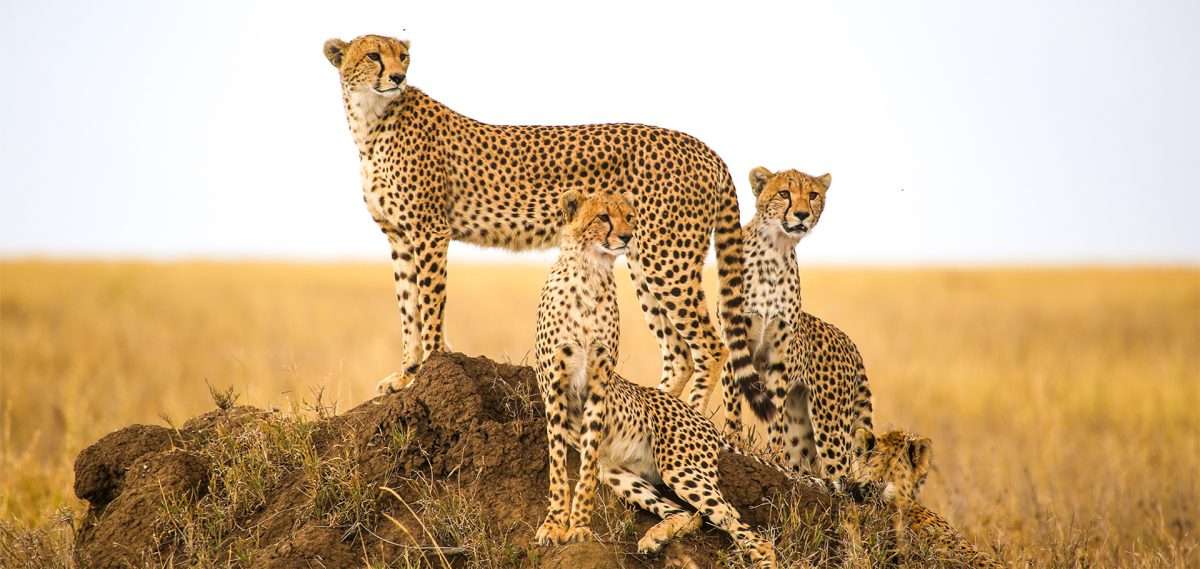
The term comes from how the group actually functions. Male cheetahs that team up aren’t just tolerating each other, they’re running a small, cooperative alliance: sharing kills, defending a shared territory, and grooming each other to maintain the bond. “Coalition” describes an alliance formed for mutual benefit, which is exactly what this is. It’s the same logic behind the word’s use in politics, just applied to a group of cats defending a patch of savannah instead of a parliamentary seat.
Coalitions typically form between 2 and 3 brothers who stayed together after leaving their mother, rather than splitting off to live alone the way most male cheetahs eventually do. Coalitions of 4 or 5 are rare and usually short-lived, since larger groups face more internal competition over food, mates, and rank.
Is “Pack of Cheetahs” Correct? No, Here’s Why
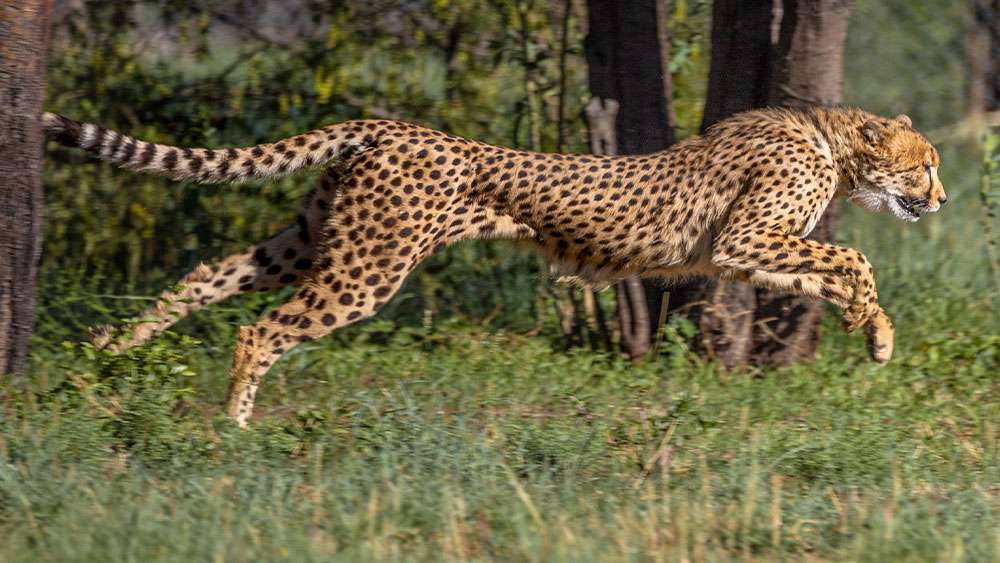
No. “Pack” is a real animal-group term, but it belongs to wolves, wild dogs, and hyenas, species that hunt cooperatively under a clear dominance hierarchy and often bring down prey together as a coordinated unit. Cheetah coalitions don’t work that way. There’s no alpha structure, and while coalition members do sometimes hunt together, cheetahs are built for solo, high-speed pursuit rather than pack-style group takedowns. Calling a cheetah group a “pack” borrows language from a completely different hunting strategy.
If you’re searching for the right collective noun, “coalition” is the one that’s accurate and the one used by wildlife researchers, conservation groups, and field guides.
What Is a Group of Female Cheetahs Called?
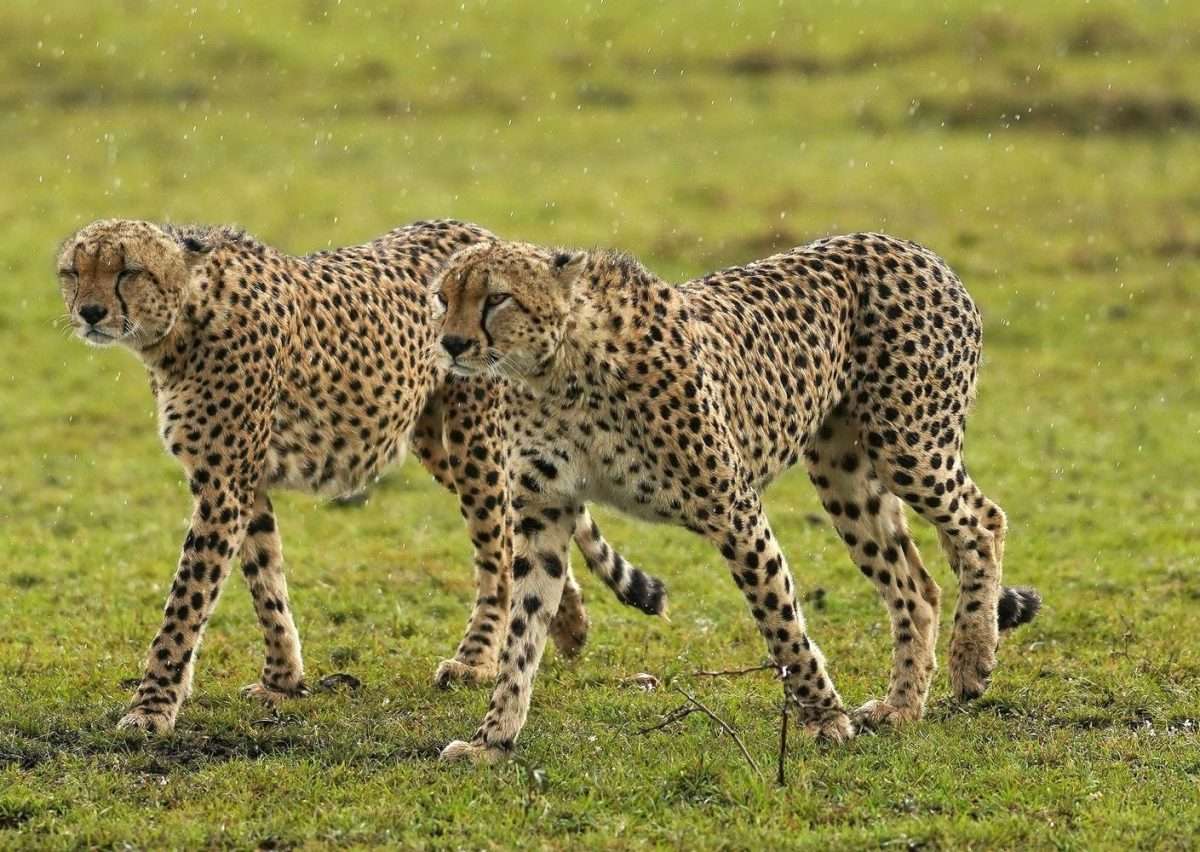
There isn’t a real answer to this one, and that’s worth saying plainly. A few sites online use the word “sisterhood” for a group of female cheetahs, but this isn’t a term used in the peer-reviewed research or by major cheetah conservation organizations. It appears to have been invented to mirror “brotherhood,” which itself is a looser, informal variant of “coalition.”
What’s actually documented: female cheetahs are largely solitary. A female raises her cubs alone, without help from the father or other adults, for 18 months to 2 years. After that, she leaves the cubs, not the other way around. Her daughters sometimes stay loosely associated afterward, living in overlapping home ranges and occasionally resting or socializing together, particularly in some populations studied in Namibia. But this isn’t a permanent, bonded group the way a male coalition is, and it doesn’t have an established name. If someone tells you the answer is “sisterhood,” treat that as an invented term, not a documented one.
Cheetah Coalitions: Key Facts
| Fact | Detail |
|---|---|
| Term | Coalition |
| Typical size | 2 to 3 males |
| Maximum recorded | 5 males (Tano Bora, Maasai Mara) |
| Who forms them | Usually brothers from the same litter; unrelated males occasionally join |
| Duration | Typically lifelong |
| Purpose | Defending shared territory, improving hunting success against larger prey, and gaining access to mates |
| Territory size | Roughly 15 to 30 square miles, defended jointly |
| Female equivalent | None. Females are solitary; no scientifically recognized group term exists |
Where Do Cheetahs Live?
Cheetahs live almost entirely in Africa today, with a nearly extinct population in Iran. The IUCN lists the species as vulnerable, with roughly 6,500 to 7,100 mature individuals left in the wild globally, occupying only about 9 percent of their historical range.
Namibia holds the largest single population, at around 1,500 to 2,500 cheetahs, followed by strongholds in Kenya, Tanzania, Botswana, and South Africa. Eastern and southern Africa together hold the large majority of the world’s cheetahs. Fewer than 50 Asiatic cheetahs survive in the wild, confined to a handful of provinces in Iran, and the subspecies is one of the most endangered cats on Earth.
Cheetahs favor open habitat: savanna, grassland, and semi-desert scrub, where their speed is an advantage. They avoid dense forest, which suits ambush hunters like leopards far better than a cheetah’s sprint-based hunting style.
How Fast Are Cheetahs, and How Do They Hunt?
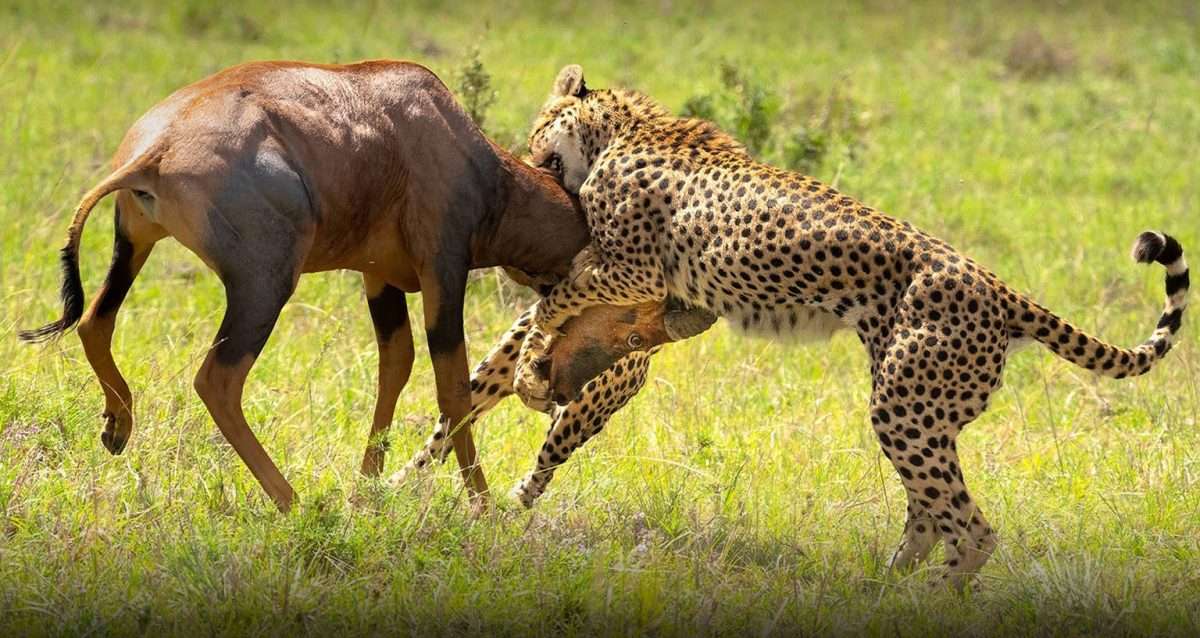
A cheetah can reach roughly 60 to 70 mph (100 to 113 km/h) in short bursts, and can accelerate from a standstill to about 60 mph in under 3 seconds, faster than most sports cars. That speed only holds for 20 to 30 seconds before the cheetah’s body overheats, so every hunt is a short, high-stakes sprint rather than a chase.
The hunt itself follows a set pattern: a slow stalk to close the distance, an explosive sprint once the prey bolts, then a trip using a dewclaw on the front paw to knock the animal off balance, followed by a suffocating bite to the throat. Cheetahs succeed in roughly 40 to 50 percent of hunts, a high rate for a predator, but they lose a significant share of kills to lions and hyenas that steal the carcass while the exhausted cheetah recovers.
Tano Bora: The Mara’s Most Famous Coalition, and What Happened to It
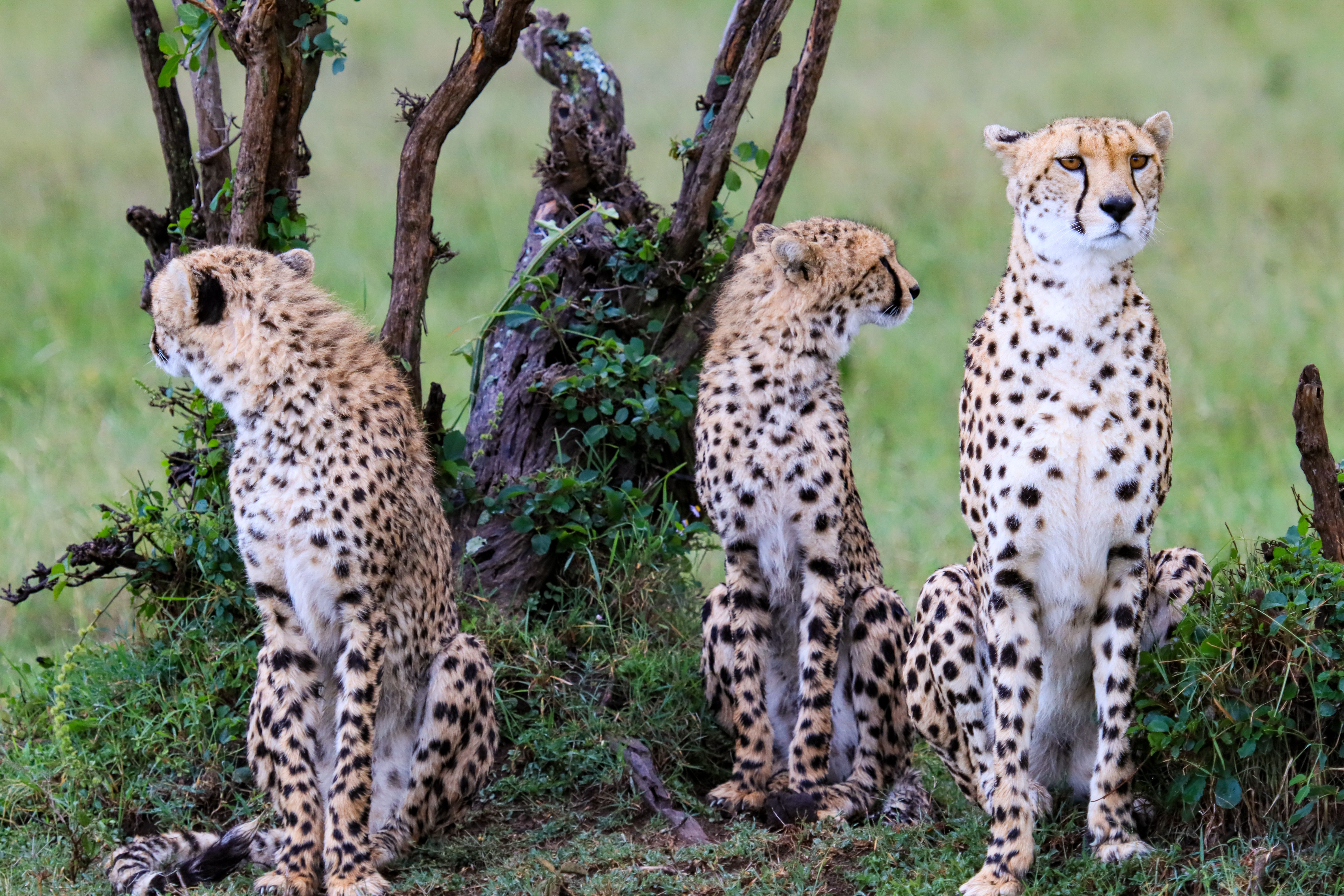
The Tano Bora, Maa for “Magnificent Five,” was the largest recorded cheetah coalition, first seen together in Kenya’s Maasai Mara around 2016 and 2017. Unlike most coalitions, they weren’t all brothers. The five, Olpadan, Olarishani, Olonyok, Winda, and Leboo, were two pairs of brothers from different litters plus one unrelated male who joined the group, which researchers still consider unusual. Their coordinated hunts, including bringing down prey many times their individual weight, made them one of the most photographed and documented cheetah groups in Africa.
The coalition didn’t survive intact. Internal conflict and territorial fights thinned the group over several years: Olpadan died in early 2022, Olarishani shortly after, and Leboo later that year, reducing the five to a trio nicknamed Tatu Bora. Winda died in March 2025 following complications from a broken leg, leaving Olonyok as the coalition’s sole survivor. As of late 2025, Olonyok continues to roam the Mara alone, and researchers monitoring the area now use his former territory as a marker of just how much the Tano Bora once controlled.
It’s a detail that matters if you’re planning a safari around famous cheetah sightings: the Tano Bora as a group no longer exists. What has since moved into parts of their old territory are newer, smaller coalitions, a reminder that cheetah social groups in the wild are dynamic and rarely permanent, no matter how stable they look for a few years.
Where to See Cheetahs on Safari
Kenya’s Masai Mara and Tanzania’s Serengeti are the two most reliable places to see cheetahs, including coalitions, in the wild. Both offer open, short-grass terrain where cheetahs hunt by sight in daylight, unlike lions and leopards, which makes them easier to spot and photograph on a normal game drive schedule.
Masai Mara, Kenya
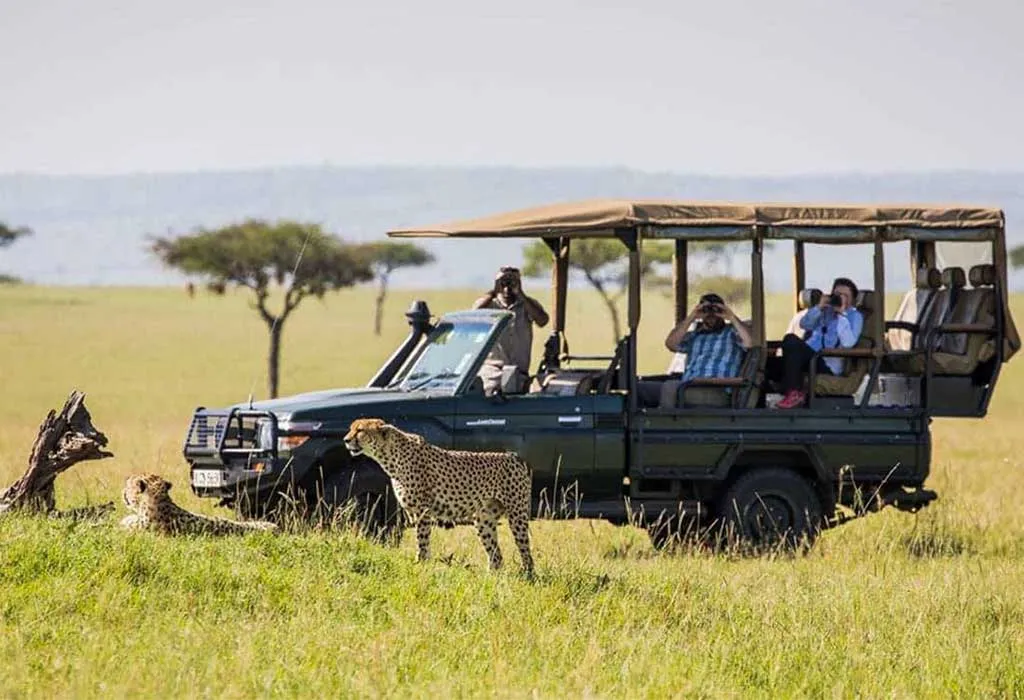
The Mara Triangle and the open plains around the reserve are classic cheetah country, with a healthy, well-studied resident population and a long history of documented coalitions, including the Tano Bora.
Serengeti and Ndutu Plains, Tanzania
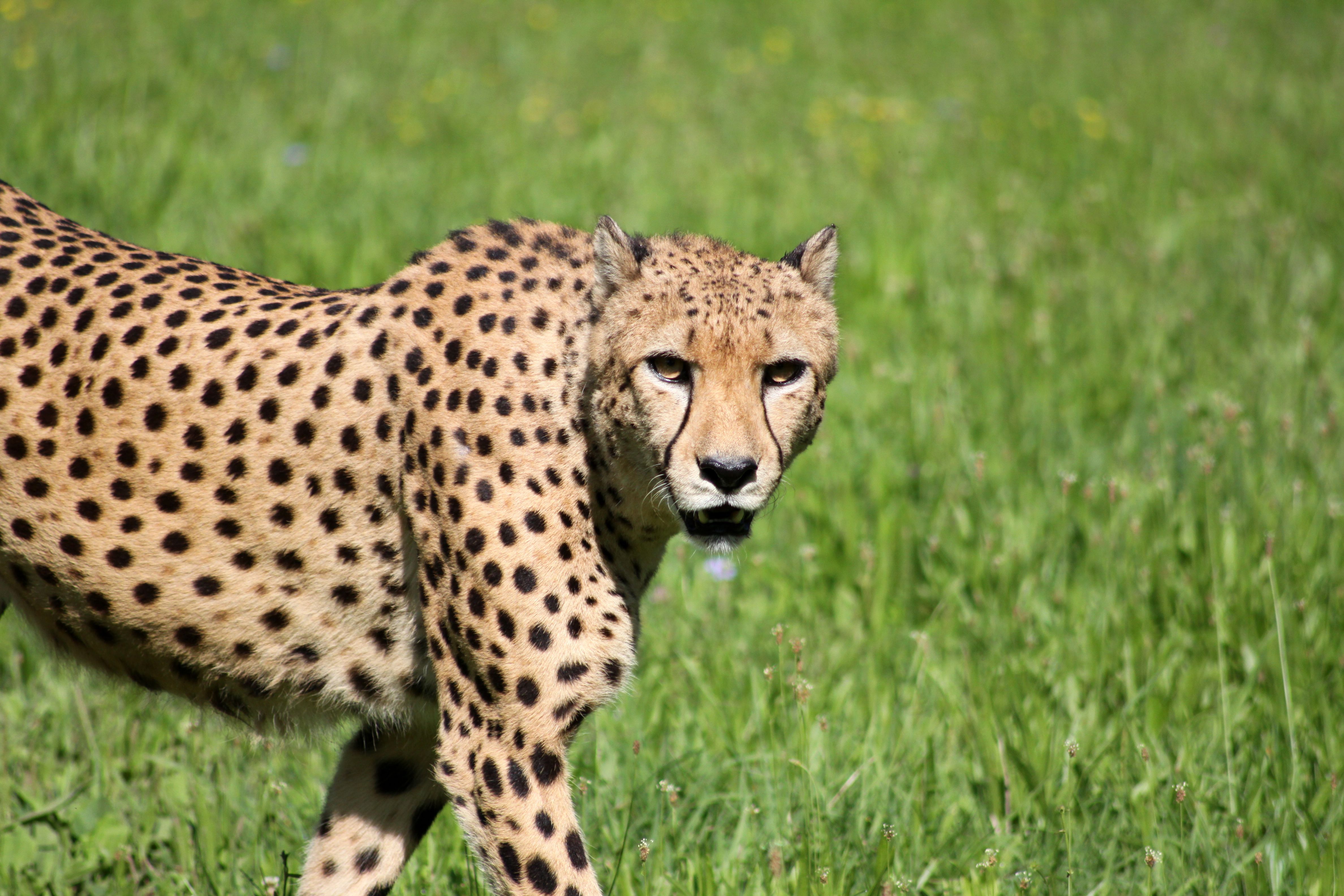
The Ndutu area, at the southern end of the ecosystem, is especially strong for cheetah sightings during and after calving season, when gazelle and wildebeest calves draw hunting cheetahs into the open.
Best Time to Visit for Cheetah Sightings
Cheetahs are visible year-round in both destinations, but sightings tend to be most consistent from June to October, when shorter grass and concentrated prey make hunts easier to witness.
Frequently Asked Questions
What is a group of cheetahs called?
A group of cheetahs is called a coalition. Coalitions are made up of males, typically 2 to 3 brothers, who stay together for life to hunt and defend a shared territory.
What are groups of cheetahs called?
The correct term for any group of cheetahs is a coalition. It applies specifically to male cheetahs living together, since females don’t form permanent groups.
Is a group of cheetahs called a pack?
No. “Pack” describes wolves, wild dogs, and hyenas, species with a hierarchy-based, cooperative hunting structure. Cheetahs don’t hunt that way, and the correct term for their groups is a coalition.
What is a group of female cheetahs called?
There is no scientifically recognized term. Female cheetahs are solitary, raising cubs alone and living independently as adults. Some sites use “sisterhood,” but this isn’t a documented term used by researchers or conservation organizations.
How many cheetahs are usually in a coalition?
Most coalitions have 2 to 3 males. Larger coalitions exist but are rare; the largest ever recorded and documented was the Tano Bora coalition in Kenya’s Maasai Mara, which had 5 members at its peak.
Do female cheetahs ever form groups?
Not permanently. A mother stays with her cubs for 18 months to 2 years, and her daughters may remain loosely associated afterward with overlapping ranges. This isn’t a bonded coalition and has no established name.
Why do male cheetahs form coalitions but females don’t?
Coalitions help males defend territory and take down larger prey than a lone cheetah could manage, which improves access to mates. Females don’t need a territory to defend in the same way and hunt smaller prey suited to solo hunting, so there’s less evolutionary pressure to group up.
Is the Tano Bora coalition still together?
No. The five-member Tano Bora coalition no longer exists as a group. Members died over several years due to territorial conflicts and injuries, with the last confirmed death, Winda, in March 2025. Olonyok is the coalition’s sole survivor.
Where can I see cheetah coalitions on safari?
Kenya’s Masai Mara and Tanzania’s Serengeti, particularly the Ndutu Plains, offer the best odds. See the safari section above for timing and specific areas.
Contact the team on WhatsApp to plan a Kenya or Tanzania safari built around real cheetah sightings in the Masai Mara and Serengeti.


