
The cheetah vs leopard question is one of the most common things people ask before going on safari. Both are spotted. Both are big cats. Both live across Africa. And at first glance, through binoculars from a 4×4 Land Cruiser safari vehicle, they can look remarkably similar.
But once you know what to look for, telling a cheetah and leopard apart takes about three seconds. This guide covers every difference between these two extraordinary predators so you arrive on safari ready to identify them instantly, understand their behavior, and appreciate what makes each one special.
Cheetah vs Leopard: What Is the Difference?
The fastest way to tell them apart is this. Look at the spots and look at the face. Cheetahs have solid round black spots and distinctive black lines running from the inner corner of each eye down to the mouth. Leopards have rosette-shaped spots and no facial lines. Cheetahs are slim and built for speed. Leopards are muscular and built for power. Cheetahs hunt in daylight on open plains. Leopards hunt at night in thick cover.
10 Key Facts — Cheetah vs Leopard
- Cheetahs have solid black spots. Leopards have rosette-shaped spots with a lighter centre.
- Cheetahs have black tear marks running from the eyes to the mouth. Leopards have no facial markings of this kind.
- Cheetahs are the fastest land animals on Earth, reaching 112 km per hour. Leopards top out at around 60 km per hour.
- Leopards are stronger and more muscular. They can drag prey twice their body weight up into a tree.
- Cheetahs hunt during the day. Leopards hunt at night.
- Cheetahs prefer open grasslands. Leopards prefer thick bush, rocky outcrops, and wooded terrain.
- Leopards are excellent climbers. Cheetahs rarely climb trees.
- Cheetahs have non-retractable claws like cleats, built for grip and speed. Leopards have fully retractable claws, built for climbing and gripping prey.
- There are approximately 7,000 cheetahs left in the wild. Leopards number around 125,000 across Africa and Asia.
- In a direct physical confrontation, the leopard wins. In any situation requiring escape, the cheetah wins.
Cheetah vs Leopard — Appearance and How to Tell Them Apart
This is where most people get confused and where the answer is actually very simple once you know the two key things to look for.
Spots vs Rosettes
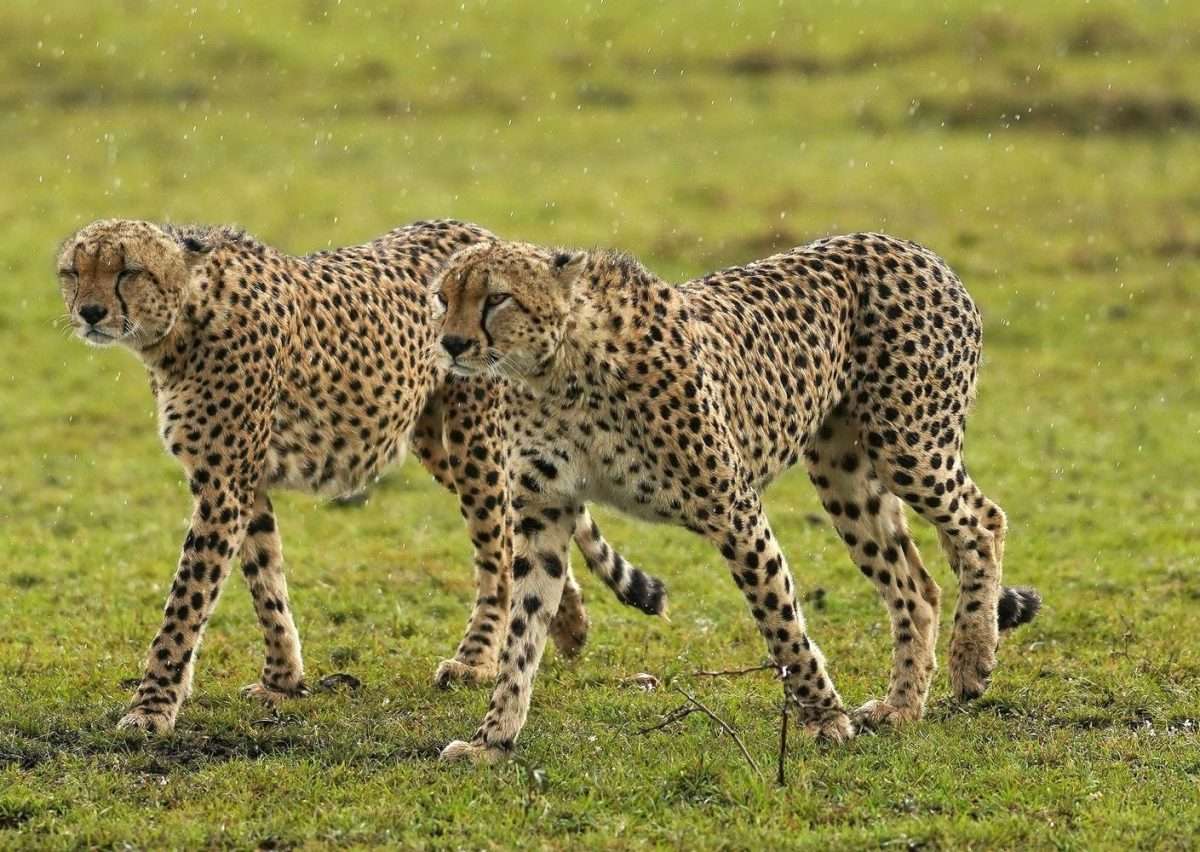
Cheetahs have spots. Simple, solid, round black circles distributed evenly across a tan coat. Clean and consistent, like polka dots.
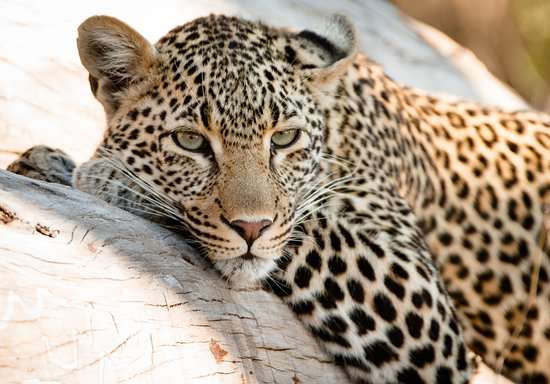
Leopards have rosettes. These are clusters of irregular dark spots grouped together in a roughly circular pattern with a lighter brownish center. They look like open flowers or rings. In East African leopards the rosettes are circular. In Southern African leopards they are more square.
This difference alone is enough to tell them apart in most sightings. Spots mean cheetah. Rosettes mean leopard.
Cheetah vs Leopard: The Tear Marks
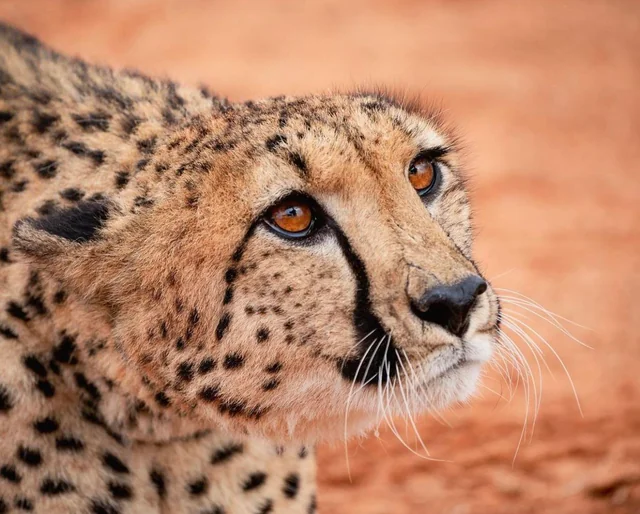
The second thing to look at is the face. Cheetahs have two distinctive black lines running from the inner corner of each eye down along the sides of the nose to the mouth. These are called tear marks. Scientists believe they help reduce sun glare during high-speed daytime chases, similar to the black strips American football players put under their eyes.
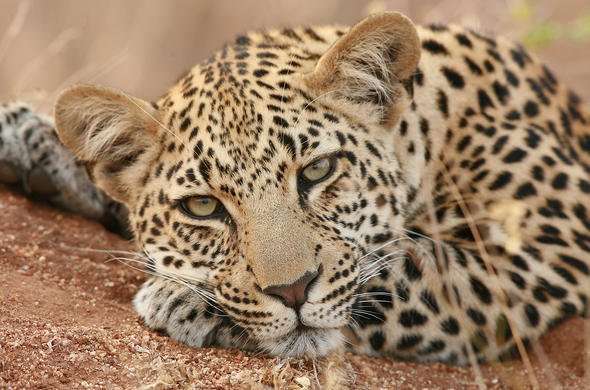
Leopards have no tear marks. Their faces are clean.
If you see a spotted big cat and you can clearly see black lines running down its face, it is a cheetah. No lines means leopard.
Cheetah vs Leopard: Body Shape and Build
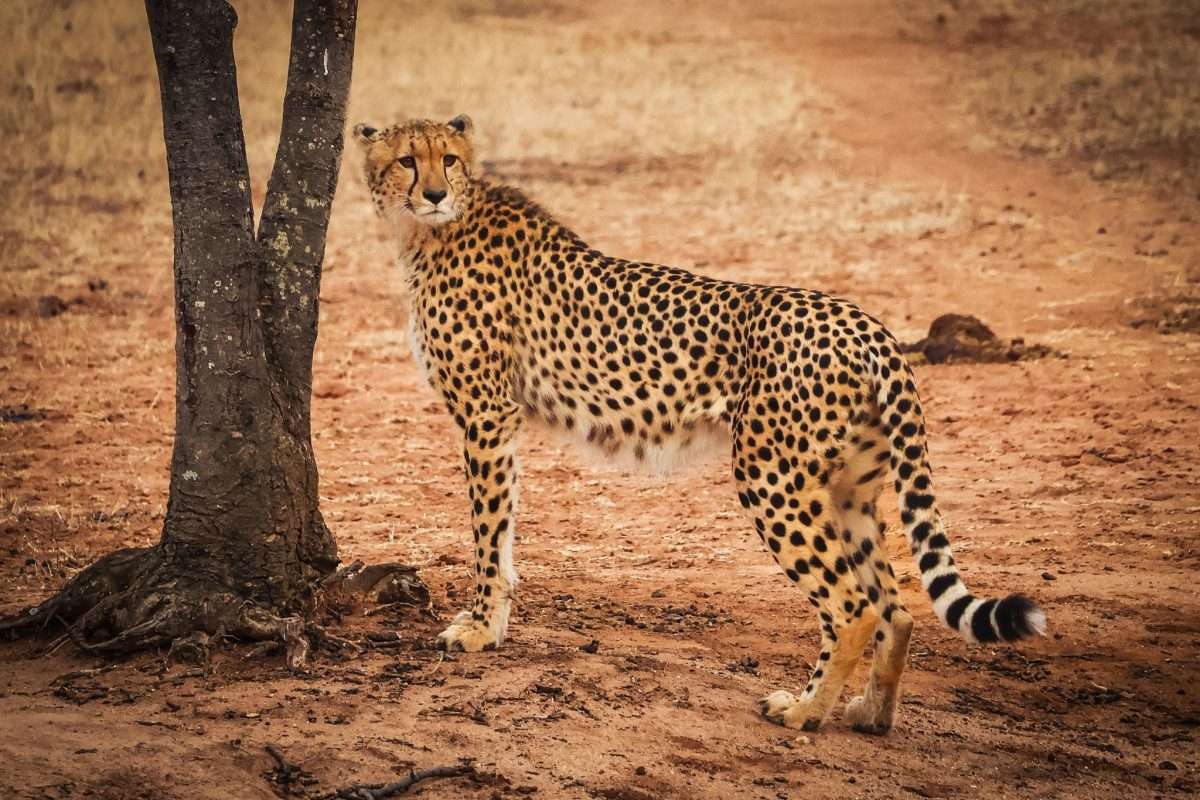
Cheetahs are built like athletes. Tall at the shoulder, slim-waisted, long-legged, with a deep narrow chest. Everything about the cheetah’s body is designed for explosive speed and rapid acceleration.
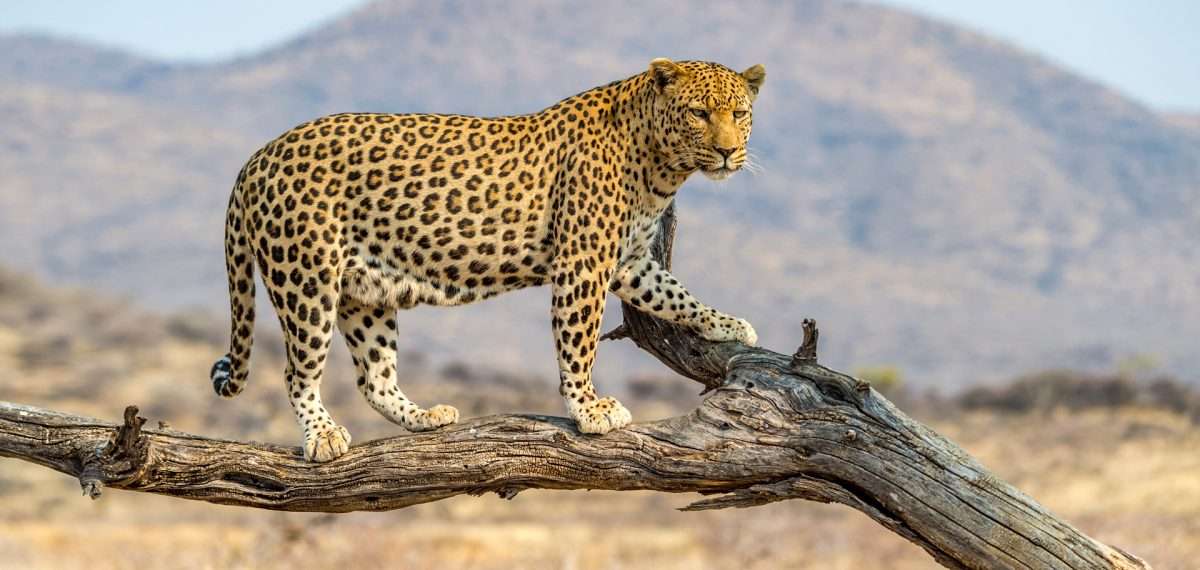
Leopards are built like powerlifters. Stocky, muscular, with a broad head, thick neck, and powerful shoulders. They are compact and heavy relative to their size. A leopard can carry a prey animal heavier than itself up a vertical tree trunk.
The difference in build is clear when you see them side by side. The cheetah looks light and aerodynamic. The leopard looks solid and powerful.
Cheetahs vs Leopard: Eye Color
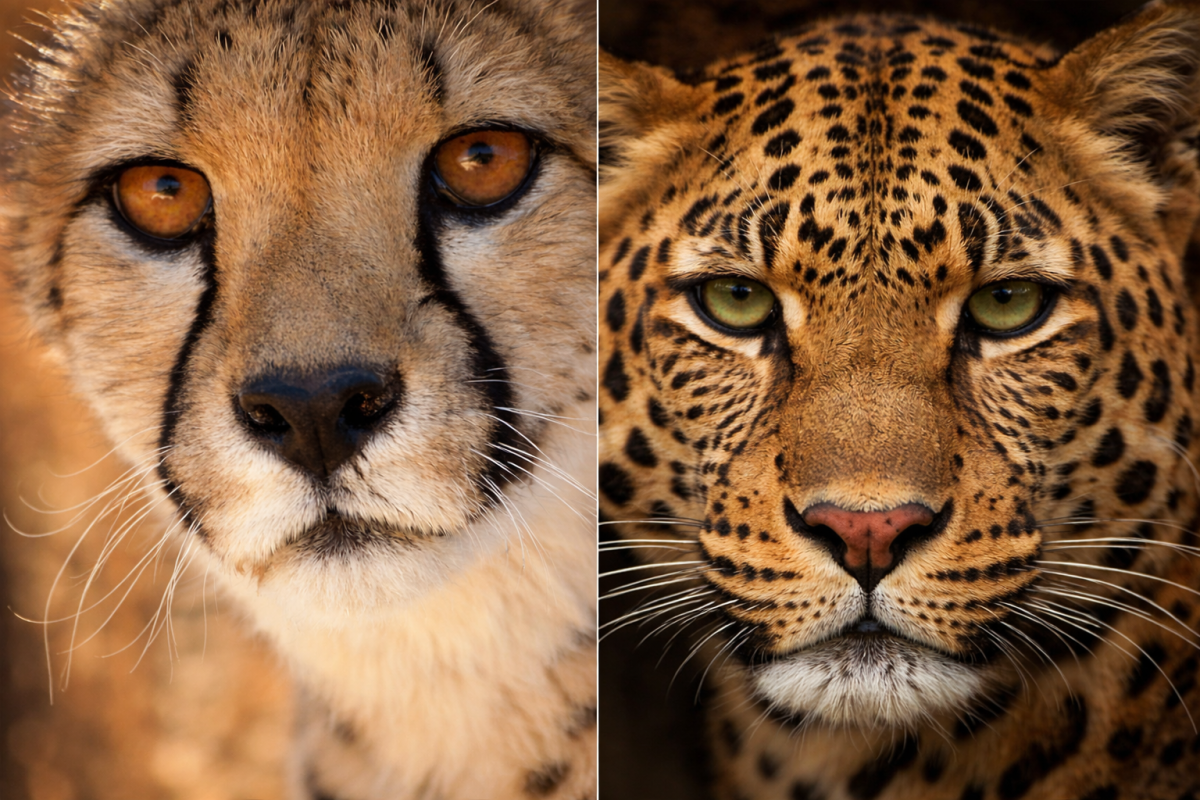
Cheetahs typically have amber or brown eyes. Leopards often have green or blue-green eyes, though this varies. Eye color alone is not a reliable identifier but it adds to the overall picture when you are observing them closely.
Cheetah vs Leopard: Tail Shape
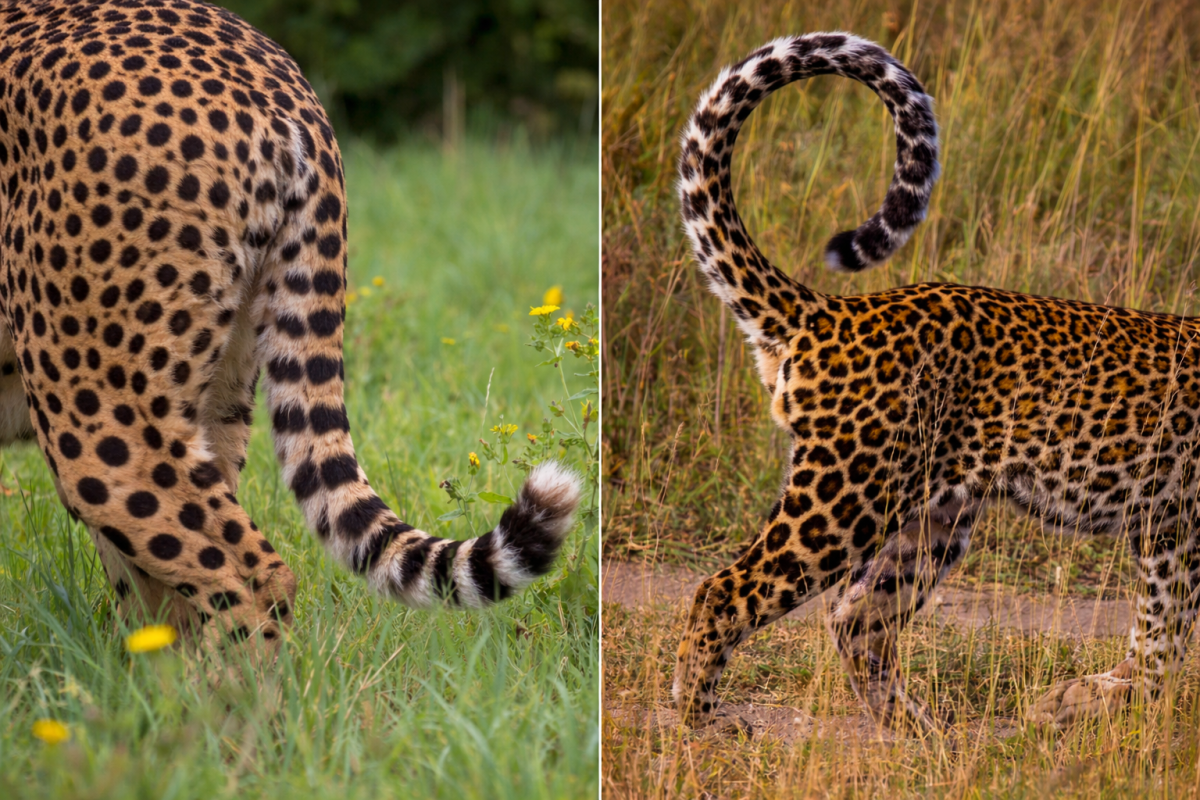
The cheetah’s tail is flatter and acts as a rudder during high-speed chases, helping it steer and maintain balance. The leopard’s tail is more rounded and helps with balance when climbing and moving through trees.
| Feature | Cheetah | Leopard |
|---|---|---|
| Spots | Solid round black spots | Rosette-shaped with lighter centre |
| Facial markings | Distinctive black tear marks | No tear marks |
| Body build | Slim, lightweight, aerodynamic | Stocky, muscular, powerful |
| Eye color | Amber or brown | Green or blue-green |
| Tail shape | Flat, rudder-like | Round, useful for climbing |
| Coat color | Tan | More golden-yellow |
| Head size | Small and rounded | Larger and more elongated |
| Jaw strength | Lighter, smaller teeth | Powerful, bone-crushing jaws |
Differences Between Cheetah and Leopard — Speed and Hunting Style
This is where the differences between cheetah and leopard are most dramatic and most directly connected to their appearance.
How Fast Is a Cheetah vs Leopard?
The cheetah vs leopard speed comparison is not close at all.
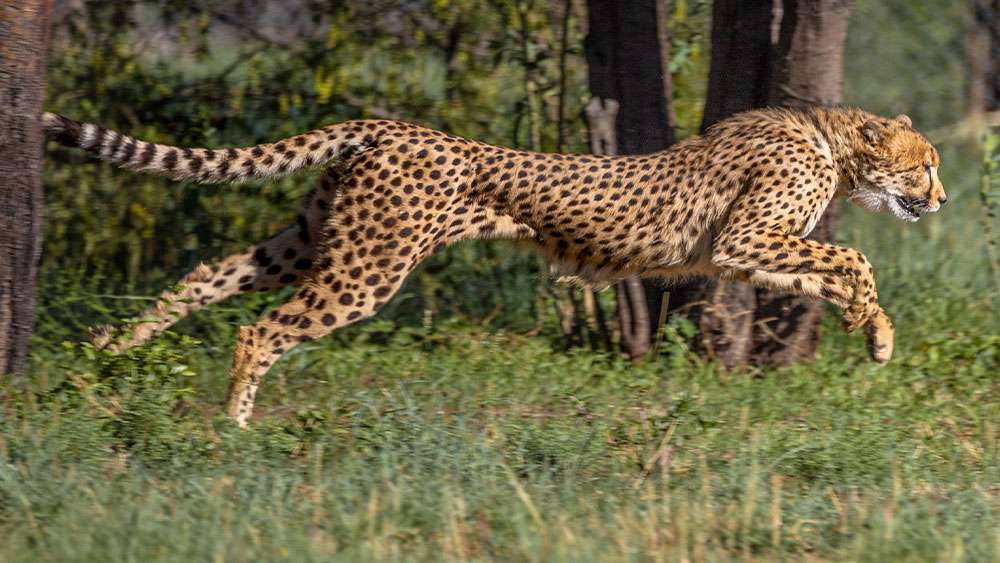
A cheetah can reach 112 km per hour in a sprint and go from 0 to 100 km per hour in approximately 3 seconds. That is faster than most sports cars off the line. However a cheetah can only maintain this speed for 20 to 30 seconds before it overheats and must rest.
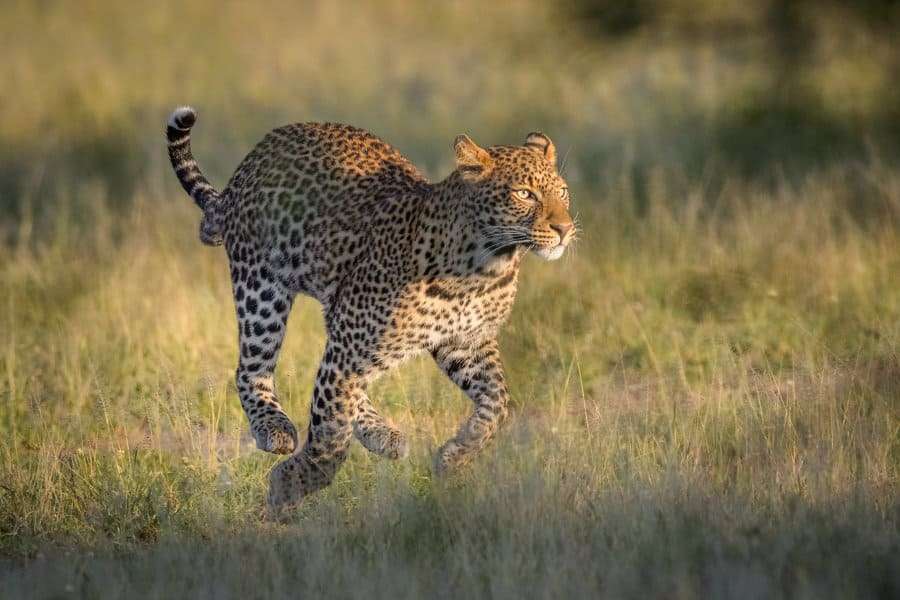
A leopard reaches around 60 km per hour at top speed. It is not a speed hunter. Speed is not its primary tool.
How the Cheetah Hunts
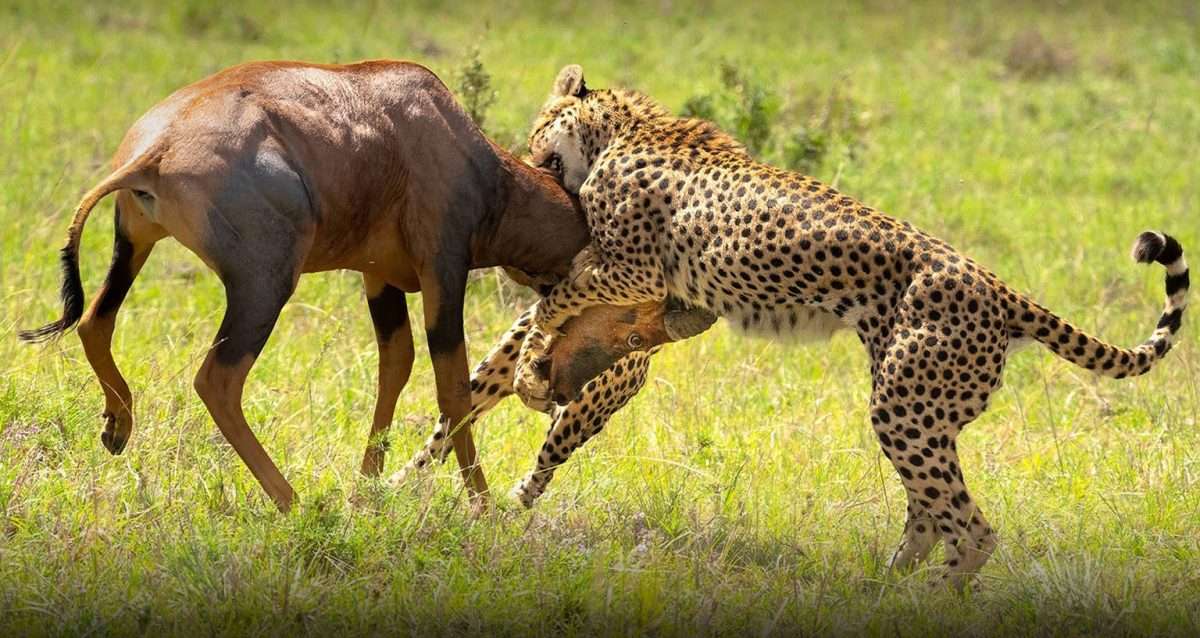
The cheetah hunts by sight and speed in daylight. It scans the open plains from a vantage point or elevated ground, identifies a target animal that is young, old, injured, or separated from the herd, and then makes a silent approach through long grass before exploding into its sprint.
It trips its prey with a forepaw at high speed and then goes for the throat with a suffocating bite. After a successful chase the cheetah is exhausted and must rest for up to 30 minutes before eating. During this time it is vulnerable to losing its kill to lions, hyenas, or leopards.
The cheetah needs open terrain for its strategy to work. Rocks, trees, and thick vegetation slow it down and reduce its advantage.
How the Leopard Hunts
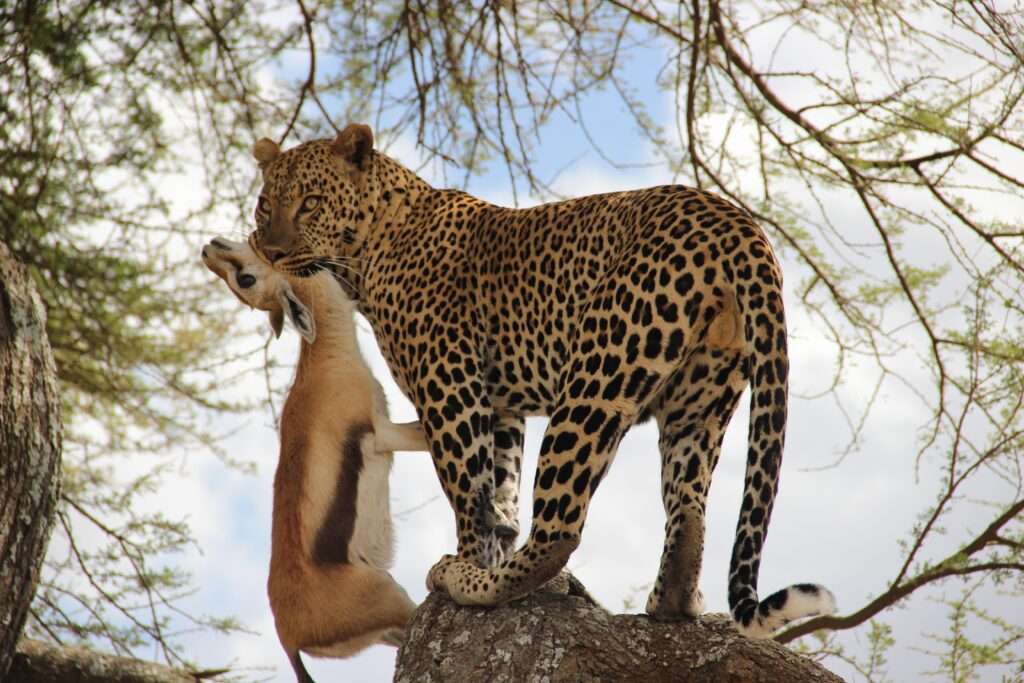
The leopard versus cheetah hunting approach is completely different. The leopard is a master of stealth and ambush. It hunts at night or in low light conditions. It uses thick bush, rocky outcrops, riverine vegetation, and trees as cover to stalk within very close range of its prey. The final charge is over a short distance and relies on power, not speed.
The leopard kills by suffocation with a bite to the throat or the back of the skull. After a successful kill it hauls the carcass up into a tree, often to heights of 5 or 6 meters, to keep it away from lions and hyenas. A leopard can drag a prey animal heavier than itself vertically up a tree trunk using its powerful neck, shoulders, and retractable claws.
| Hunting Feature | Cheetah | Leopard |
|---|---|---|
| Time of activity | Daytime (diurnal) | Nighttime (nocturnal) |
| Hunting method | High-speed chase | Stealth ambush |
| Preferred terrain | Open grasslands and plains | Thick bush, rocky outcrops, wooded areas |
| Kill method | Throat suffocation after sprint | Throat or skull bite after close ambush |
| Prey storage | Does not store prey | Hauls prey into trees |
| Speed required | 112 km per hour at peak | Not speed-dependent |
| Typical prey | Thomson’s gazelle, impala, hares | Impala, warthog, baboon, small antelope, monkeys |
Leopard and Cheetah: Social Structure and Family Life
Cheetah Social Life
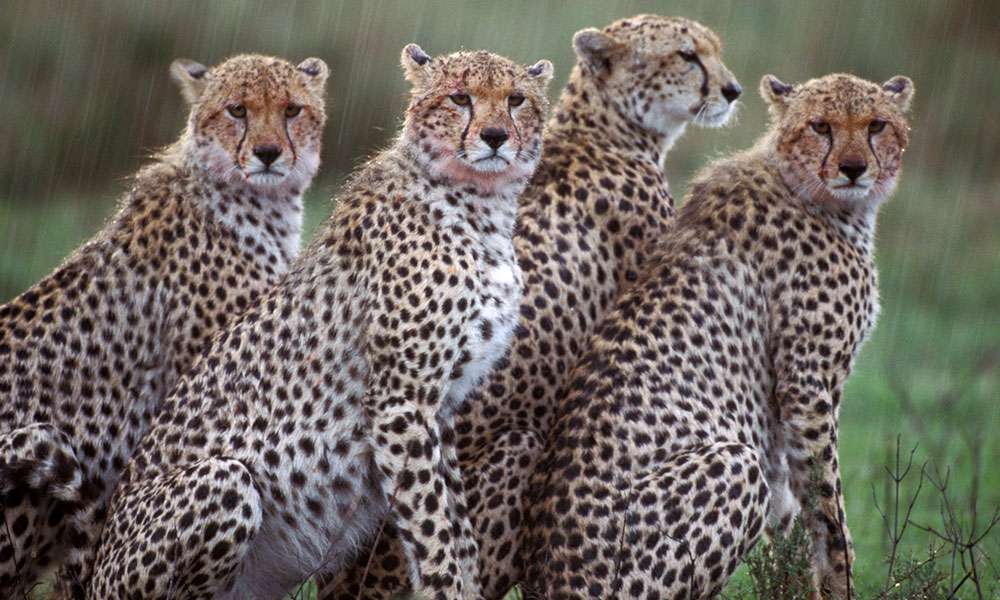
Cheetahs have a more varied social structure than leopards. Female cheetahs are solitary except when raising cubs. They raise their cubs alone with no assistance from the father.
Male cheetahs sometimes form coalitions, usually made up of brothers from the same litter. These coalitions of two or three males hunt together and defend territory as a group. A coalition of male cheetahs can take down larger prey and hold territory more successfully than a lone male.
Female cheetahs give birth to litters of four to six cubs. Cub survival rates are low. Lions, hyenas, leopards, and even eagles prey on cheetah cubs. A mother may lose an entire litter before any cub reaches independence.
Leopard Social Life
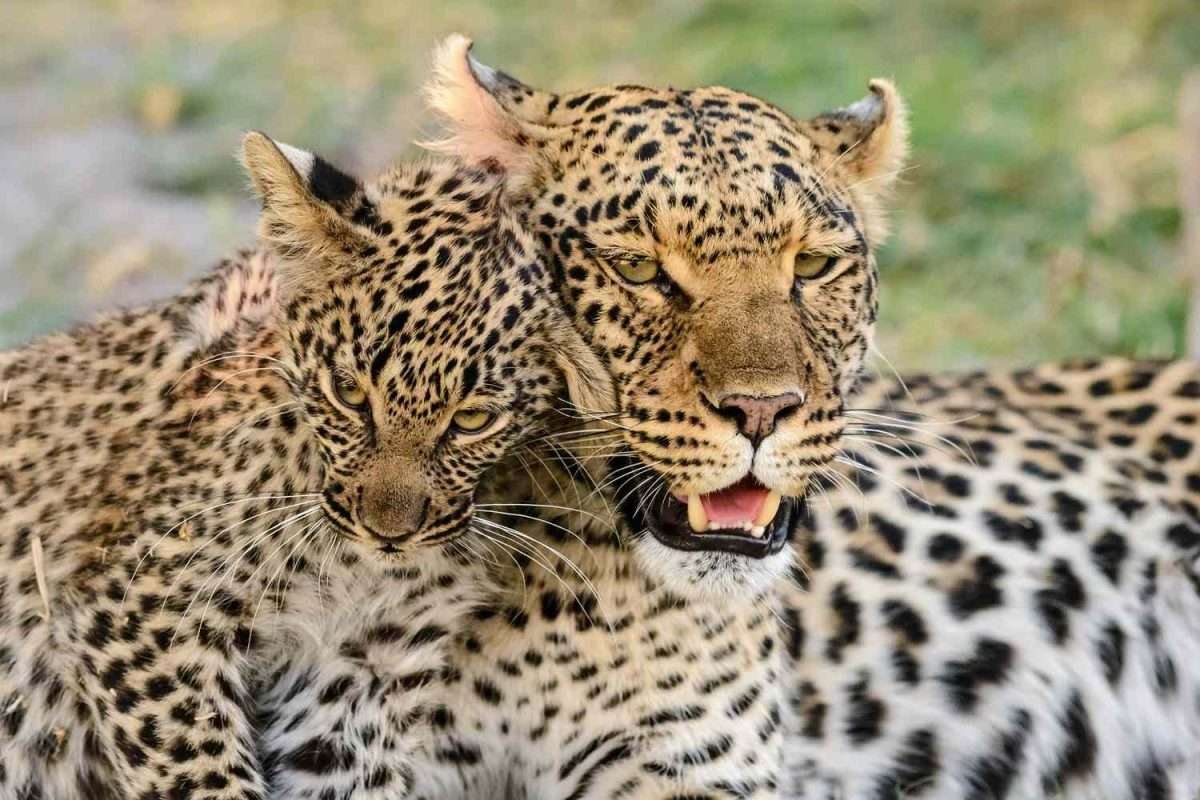
Leopards are strictly solitary. They maintain individual territories and avoid each other except during mating. Males have large territories that overlap with those of several females. When a male and female accidentally meet outside of mating season, the encounter can be aggressive.
Leopards give birth to litters of two to three cubs. The mother raises cubs alone in a den hidden in dense vegetation, rocky outcrops, or a hollow tree. She teaches cubs to hunt and climb before they eventually establish their own territories.
| Social Feature | Cheetah | Leopard |
|---|---|---|
| Social structure | Females solitary, males form coalitions | Strictly solitary |
| Litter size | 4 to 6 cubs | 2 to 3 cubs |
| Cub survival rate | Low — vulnerable to multiple predators | Higher — mother hides cubs carefully |
| Mating system | Promiscuous | Territorial, overlapping ranges |
| Lifespan in wild | 8 to 10 years | 12 to 17 years |
Leopard Versus Cheetah: Habitat and Where to Find Them on a Safari
Where Cheetahs Live
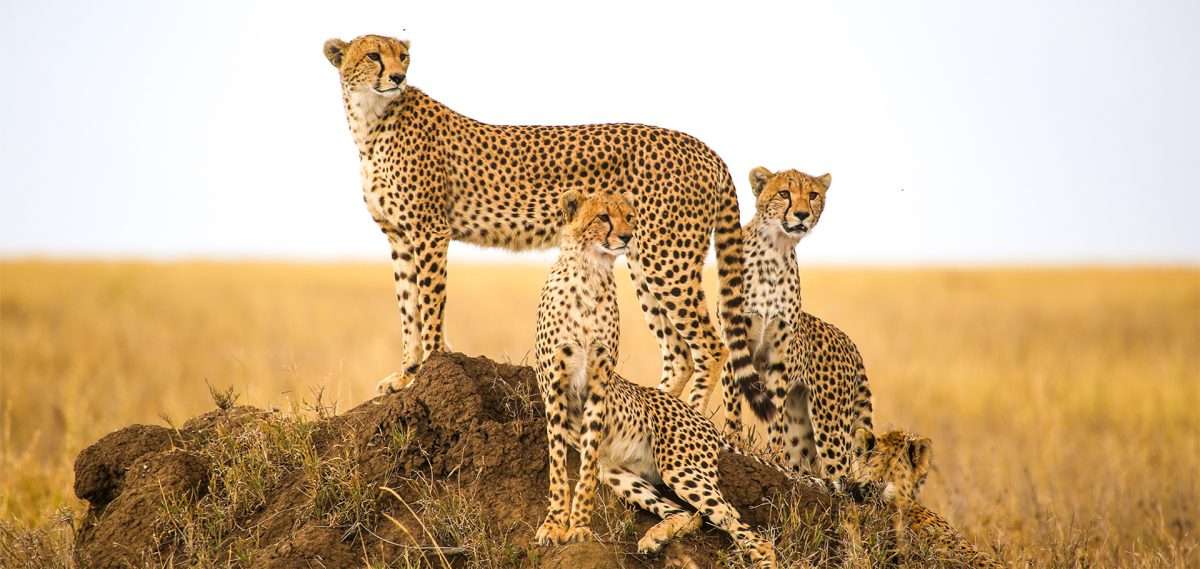
Cheetahs need open grassland and savannah where they have room to reach full speed. Thick forest or dense bush eliminates their primary advantage. They are found across eastern and southern Africa with the strongest populations in Kenya, Tanzania, Namibia, and Botswana.
In Kenya the best places to see cheetahs are the Maasai Mara and Amboseli. The open plains of the Maasai Mara are ideal cheetah country and the reserve supports a good cheetah population year-round. In Tanzania the Serengeti’s open central plains are among the best cheetah habitat in Africa.
Where Leopards Live

Leopards are the most adaptable of all the big cats and occupy the widest range of habitats. They live in savannah, dense forest, mountainous terrain, semi-arid regions, and even on the outskirts of cities. Their ability to climb, swim, and hunt an extraordinary variety of prey makes them successful in almost any environment.
In Kenya leopards are found throughout the Maasai Mara in the riverine forest along the Mara River and in rocky areas. Samburu National Reserve in northern Kenya has excellent leopard sightings in the riverine vegetation along the Ewaso Ng’iro River. In Tanzania the Serengeti, Ngorongoro Crater, and Ruaha National Park all have healthy leopard populations.
As a broad rule: if the terrain is ideal for cheetah it is usually not ideal for leopard and vice versa. A reserve with outstanding cheetah sightings on open plains is not likely to be the best leopard destination. A heavily wooded reserve with great leopard sightings is not typical cheetah country.
| Where to See Them | Cheetah | Leopard |
|---|---|---|
| Kenya | Maasai Mara, Amboseli | Maasai Mara, Samburu, Nakuru |
| Tanzania | Serengeti, Ngorongoro Crater | Serengeti, Ngorongoro, Ruaha |
| Southern Africa | Etosha, Kgalagadi, Kafue | Sabi Sands, South Luangwa, Moremi |
| Terrain | Open plains and grasslands | Wooded, rocky, riverine areas |
| Time of day to spot | Morning and afternoon drives | Night drives and early morning |
Plan a Kenya big cat safari with TourwithPipi →
Would a Cheetah Win Against a Leopard? Who Wins in a Fight?
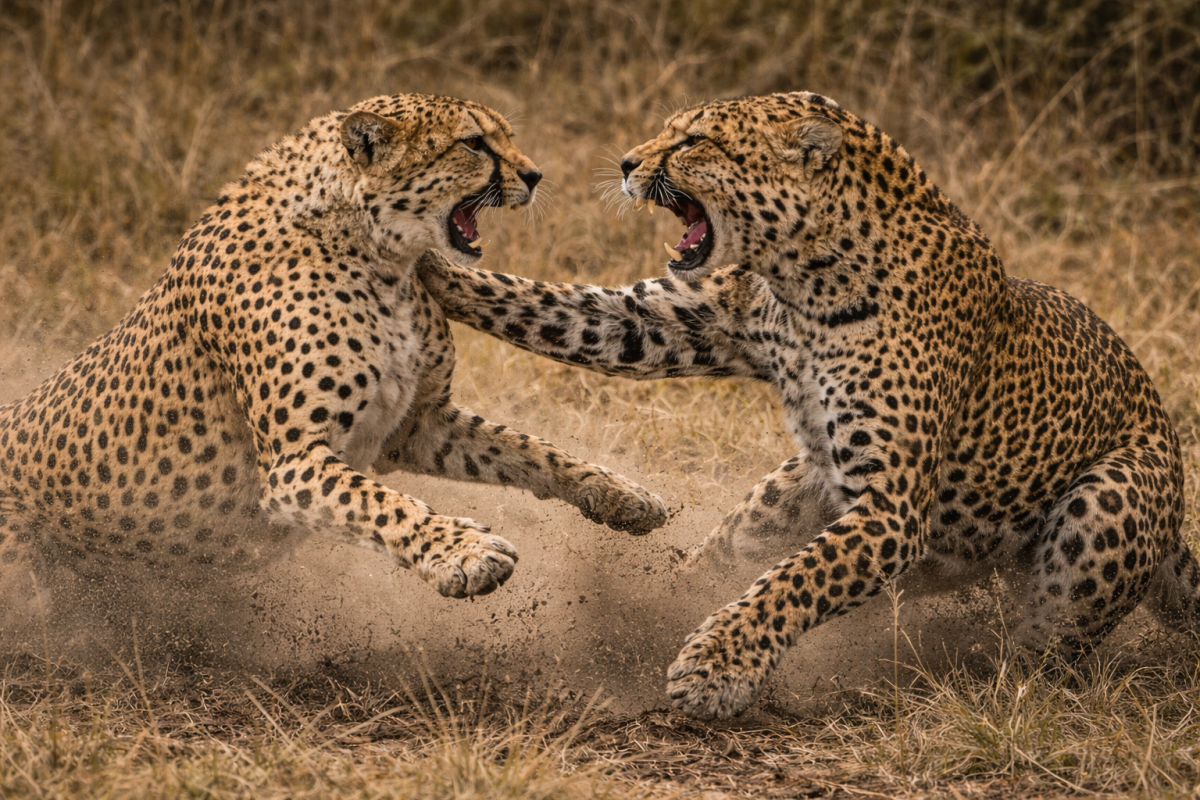
This is one of the most popular questions about the cheetah and leopard difference and the answer is straightforward.
No. In a direct physical confrontation a leopard wins almost every time.
The leopard is significantly stronger. It has greater muscle mass, a more powerful bite, and heavier body weight. Leopards can exert a bite force of around 300 to 310 pounds per square inch, which is strong enough to crush bone. A cheetah has a lighter jaw and smaller teeth designed for gripping and suffocating prey rather than raw crushing power.
The cheetah’s advantage is entirely based on speed. But speed only helps when there is room to run. In a face-to-face confrontation at close range the cheetah cannot accelerate to escape and cannot overpower the leopard physically.
In reality cheetahs actively avoid leopards. When a cheetah detects a leopard nearby it will abandon its kill and retreat. Cheetahs know they cannot win a physical fight and choose survival over the meal every time. Leopards regularly steal cheetah kills for exactly this reason.
Direct confrontations in the wild are extremely rare because they occupy different parts of the landscape and different time zones of activity. Cheetahs are active in daylight on open plains. Leopards are active at night in thick cover. The two rarely meet on equal terms.
Cheetah vs Leopard: Which Is More Dangerous?
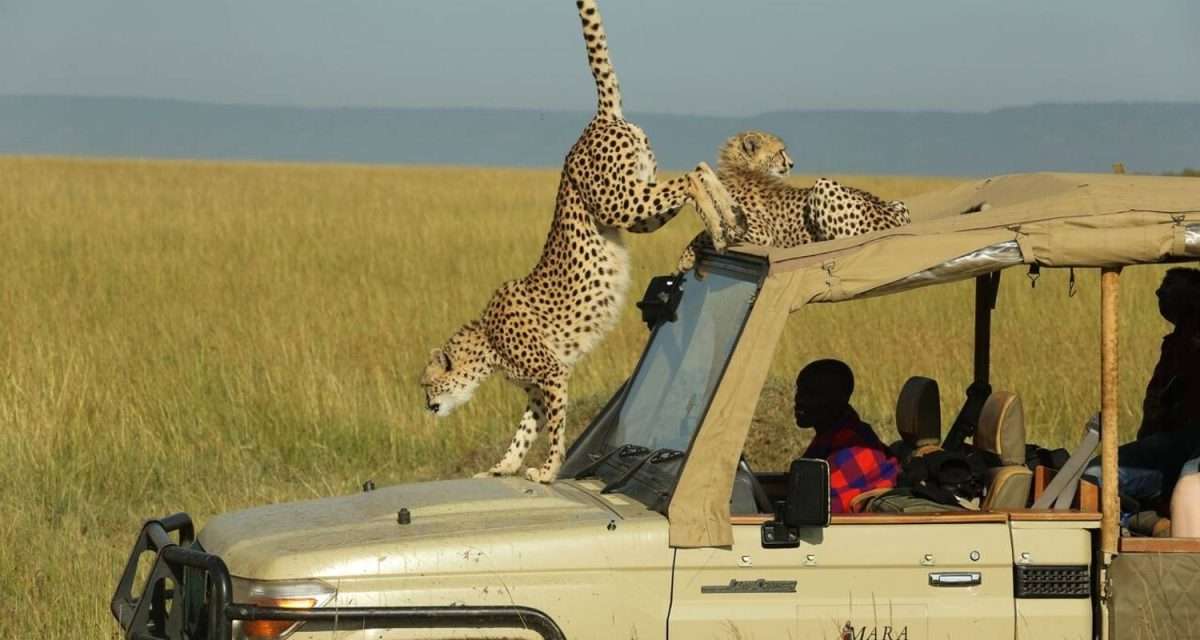
For humans the answer is the leopard, and it is not particularly close.
Leopards are considered one of the most dangerous of all big cats for several reasons. They are powerful enough to kill large prey instantly. They are secretive and almost impossible to detect before they are very close. They are comfortable around human settlements and have been responsible for attacks on people and livestock across Africa for centuries. When wounded or cornered a leopard is extremely dangerous even to armed hunters.
Cheetahs are not considered particularly dangerous to humans. They are naturally nervous animals that tend to retreat from human presence rather than approach it. Cheetahs have a well-documented ability to become semi-habituated to humans at conservation centres and have never been recorded as regular attackers of people in the wild. Their physical capabilities make them dangerous to gazelle-sized prey but their temperament is cautious rather than aggressive toward people.
On safari neither animal poses meaningful danger to tourists in a vehicle. Both species treat vehicles as large unfamiliar objects rather than prey or threats. The risk only rises when people exit vehicles, approach animals on foot without a guide, or behave in ways that trigger a defensive response.
Cheetah vs Leopard: Position in the Predator Pecking Order
Understanding where each cat sits in the predator hierarchy helps explain much of their behavior.
Lions sit at the top. They dominate all other predators and regularly steal kills from both cheetahs and leopards.
Leopards sit second. They are strong enough to hold their own against most competition other than lions and large hyena clans. Their habit of storing kills in trees keeps food away from ground-level competitors. Leopards can and do steal cheetah kills regularly.
Cheetahs sit lower in the hierarchy. They cannot physically defend their kills against lions, leopards, or even large hyena clans. This is one reason cheetahs hunt in daylight when the primary nocturnal competitors are resting. It is also why cheetah coalitions of brothers are more successful at protecting kills than lone individuals.
This pecking order directly affects where each animal lives within a shared ecosystem. In areas with very high lion density, cheetahs find it difficult to survive because they lose too many kills and cannot raise cubs successfully. Leopards cope better with lion competition because of their tree-climbing ability.
Cheetah vs Leopard: Conservation Status and Numbers
| Conservation Feature | Cheetah | Leopard |
|---|---|---|
| Estimated Africa population | Approximately 7,000 | Approximately 125,000 |
| IUCN status | Vulnerable | Vulnerable |
| Primary threats | Habitat loss, human conflict, low genetic diversity | Habitat loss, poaching, human conflict |
| Range | Eastern and southern Africa primarily | Across Africa and parts of Asia |
| Trend | Declining | Declining in some regions |
The cheetah is the more vulnerable of the two. Its smaller population, lower genetic diversity, and dependence on open habitat make it more exposed to the effects of habitat loss and human expansion. Many private game reserves in southern Africa participate in cheetah gene-pool sharing programs where cubs born in one reserve are transferred to another to prevent inbreeding.
Leopards are more resilient due to their wider range and greater adaptability. However they face significant pressure from poaching for skins and body parts, retaliatory killing by livestock farmers, and habitat fragmentation.
Cheetah vs Leopard: Claws, Sounds, and Other Differences
Claws
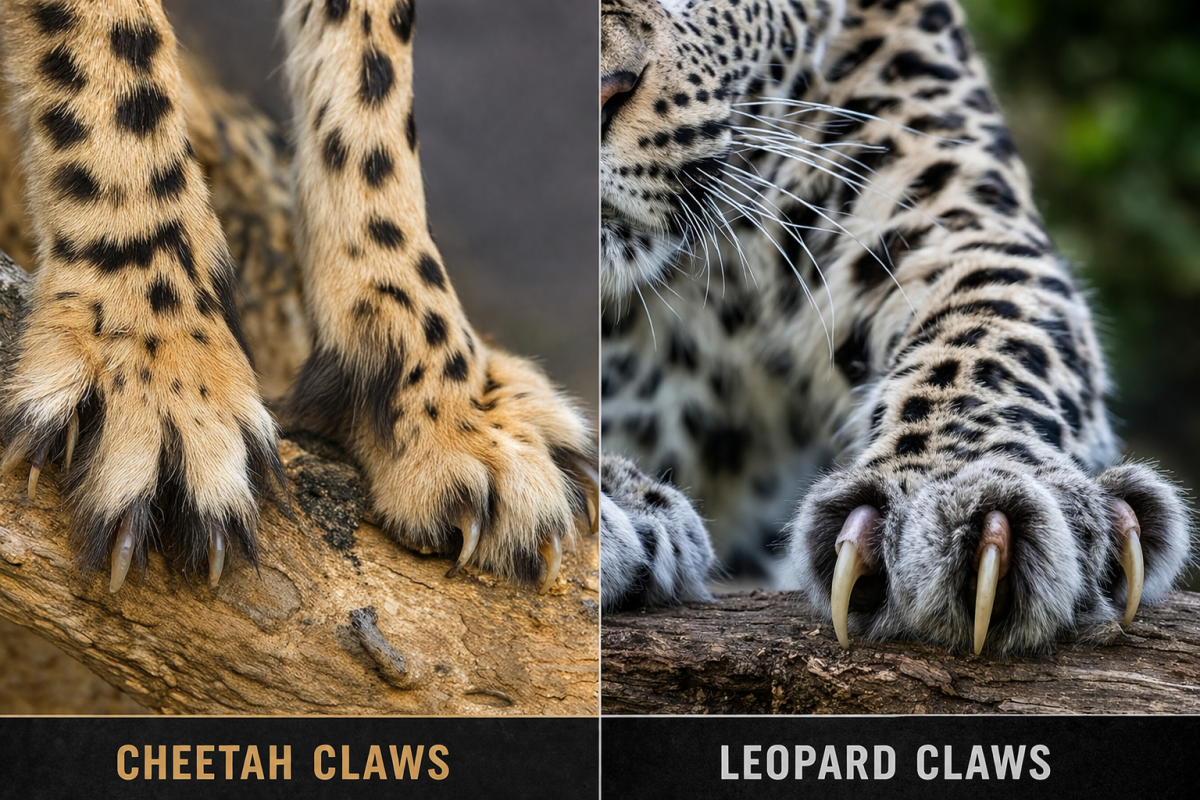
This is one of the most interesting physical differences between cheetah and leopard. Cheetahs have non-retractable claws. They are always exposed, like the cleats on an athlete’s running shoe, giving the cheetah grip during high-speed turns. You can see claw marks in cheetah tracks in the dirt.
Leopards have fully retractable claws that stay sheathed when not in use. This keeps them sharp for climbing and gripping prey. Leopard tracks in the dirt show no claw marks.
Sounds
Leopards can roar. They also produce a distinctive rasping cough-like call used to announce territory, sometimes described as the sound of a saw cutting wood. It carries long distances through the night.
Cheetahs cannot roar. They are the only big cat that can purr continuously like a domestic cat. They also chirp and make birdlike calls to communicate with cubs and other cheetahs. Hearing a cheetah chirp in the field for the first time genuinely surprises most people.
Collars
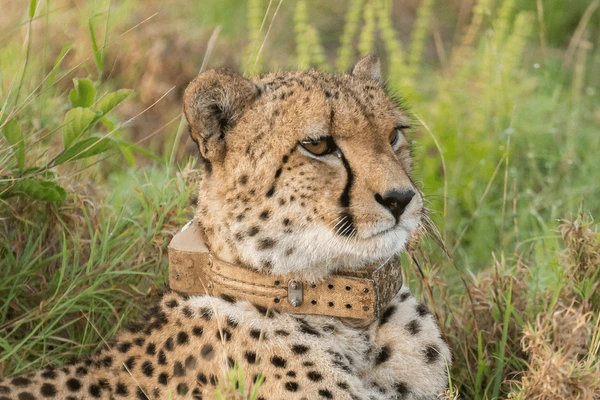
Because cheetah populations need active management and monitoring, many cheetahs in game reserves are radio-collared by researchers and conservationists. This allows their movements to be tracked and helps with translocation programs. Leopards are almost never collared because their populations are more stable and their secretive nature makes collar attachment more difficult.
If you see a spotted cat with a visible collar it is almost certainly a cheetah.
| Feature | Cheetah | Leopard |
|---|---|---|
| Claws | Non-retractable (always exposed) | Fully retractable (sheathed when resting) |
| Tracks | Show claw marks | No claw marks visible |
| Sounds | Purrs, chirps, cannot roar | Roars, rasping cough call |
| Collared | Often, for research and management | Rarely |
| Shyness | Less shy, can become semi-habituated | Very shy and elusive |
| Scarcity | Scarcer — 7,000 in Africa | More common — 125,000 in Africa |
Safari Tips: How to Tell Cheetah from Leopard in the Field
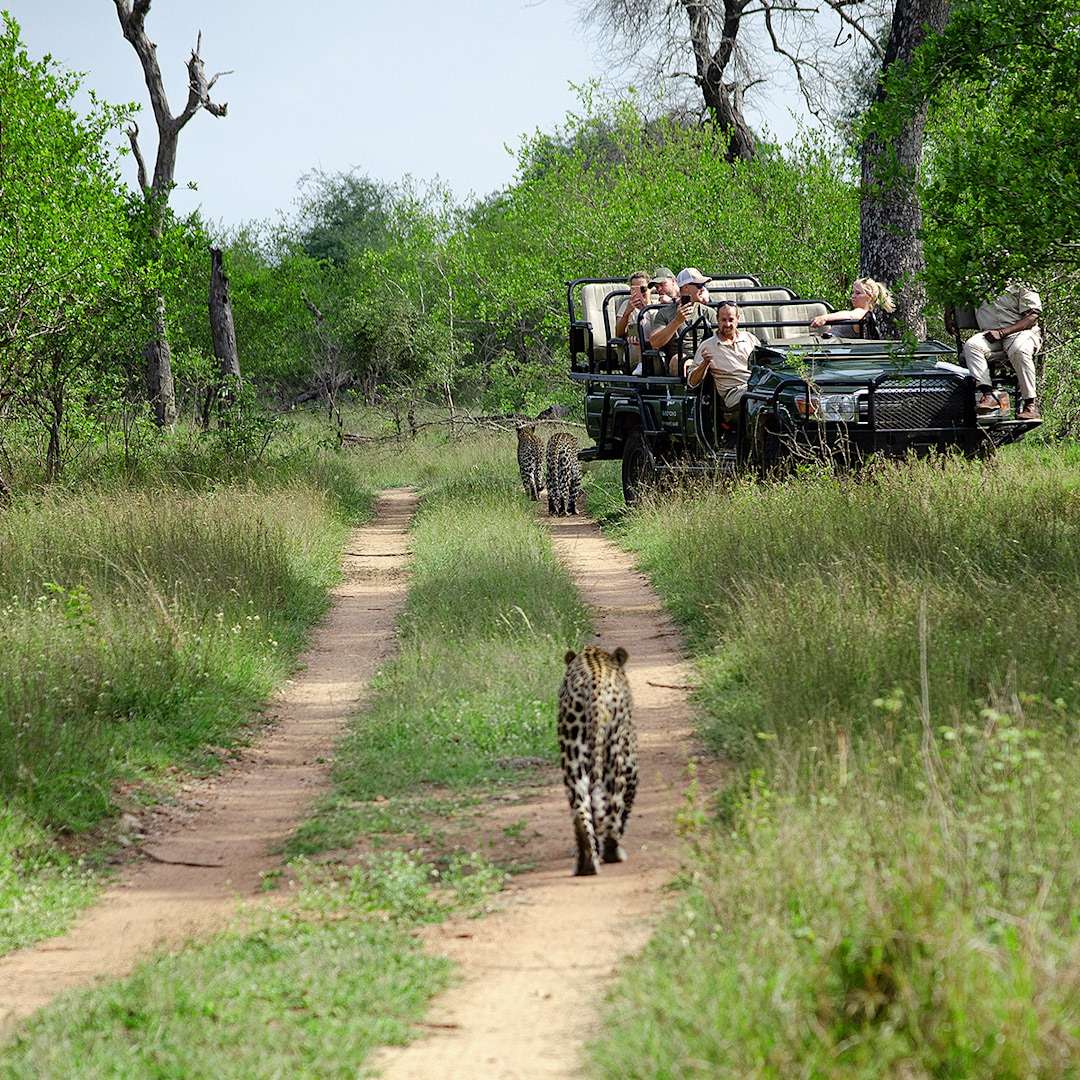
These tips work in real game drive conditions.
Look at the face first. Tear marks mean cheetah. No markings mean leopard. This works from a good distance.
Look at the body shape. If it looks slim and light with long legs it is almost certainly a cheetah. If it looks compact, heavy, and muscular it is a leopard.
Look at where it is. A spotted cat sitting in a tree is almost certainly a leopard. Cheetahs rarely climb trees and almost never sit in branches at height. A spotted cat on an open termite mound scanning the plains is almost certainly a cheetah.
Look at the time. If it is a night drive and you spot a large spotted cat in thick bush it is almost certainly a leopard. Cheetahs are rarely active after dark.
Look at the spots up close. Solid spots mean cheetah. Spots grouped in ring-like clusters with a lighter centre mean leopard.
Listen. If you hear a deep rasping cough in the night from the camp or from the bush it is a leopard announcing its territory. You will not hear this from a cheetah.
Cheetah vs Leopard — Summary Table
| Feature | Cheetah | Leopard |
|---|---|---|
| Spots | Solid black spots | Rosette-shaped spots |
| Facial markings | Black tear marks | No tear marks |
| Body build | Slim, lightweight | Stocky, muscular |
| Top speed | 112 km per hour | 60 km per hour |
| Hunting time | Day | Night |
| Hunting method | High-speed chase | Stealth ambush |
| Climbing ability | Poor | Excellent |
| Claws | Non-retractable | Retractable |
| Social structure | Females solitary, males form coalitions | Strictly solitary |
| Sounds | Purrs and chirps | Roars and rasping cough |
| Prey storage | Does not store | Hauls prey into trees |
| Africa population | Approximately 7,000 | Approximately 125,000 |
| Danger to humans | Low | Moderate to high when provoked |
| Lifespan in wild | 8 to 10 years | 12 to 17 years |
| Best habitat to spot | Open grasslands | Woodland, riverine, rocky areas |
Where to See Cheetah and Leopard on a Kenya Safari
Both species are present across Kenya’s safari destinations but they favor different terrain within the same parks.
Best places to see cheetah in Kenya: The open Maasai Mara grasslands are the top location in Kenya for cheetah sightings. The Mara Triangle and the open plains around Seronera are particularly productive. Amboseli National Park’s open lakebed area is also excellent for cheetah. Samburu National Reserve in northern Kenya has resident cheetahs in its open areas.
Best places to see leopard in Kenya: The riverine forest along the Mara River in the Maasai Mara has some of the best leopard sightings in East Africa. Leopards regularly rest in fig trees along the river and are seen on night drives in the surrounding conservancies. Samburu is renowned for leopard sightings in the doum palms and riverine vegetation along the Ewaso Ng’iro River. Lake Nakuru National Park’s forested areas also provide reliable leopard habitat.
The private conservancies surrounding the Maasai Mara, including Olare Motorogi, Naboisho, and Mara North, permit night drives where leopard sightings are a regular occurrence in thick vegetation after dark.
See cheetah and leopard on a private Kenya safari with TourwithPipi →
Conclusion
The cheetah vs leopard question has a clear answer once you know what to look for. Spots vs rosettes. Tear marks vs no tear marks. Speed vs strength. Daylight vs darkness. Open plains vs thick bush.
These are not just identification tips. They reflect two completely different evolutionary strategies that have allowed both cats to thrive across the same African landscape by occupying different ecological roles. The cheetah is the fastest animal on land, built for explosive daytime pursuit. The leopard is the ultimate stealth predator, built for patient nocturnal ambush.
Both are extraordinary animals. Both are under pressure from habitat loss and human expansion. And both can be seen on a well-planned Kenya or Tanzania safari from the comfort of a private Land Cruiser with an experienced TourwithPipi guide who knows exactly where to find them.
Plan your Kenya big cat safari with TourwithPipi →
Frequently Asked Questions — Cheetah vs Leopard
What is the main difference between a cheetah and a leopard?
The clearest differences between a cheetah and leopard are their spots, facial markings, and body build. Cheetahs have solid round black spots and distinctive black tear marks running from the eyes to the mouth. Leopards have rosette-shaped spots and no facial markings. Cheetahs are slim and built for speed. Leopards are stocky and built for power.
Which is faster, a cheetah or a leopard?
A cheetah is significantly faster. Cheetahs reach up to 112 km per hour and can go from 0 to 100 km per hour in about 3 seconds. Leopards reach around 60 km per hour at top speed. The cheetah is the fastest land animal on Earth.
Would a cheetah win in a fight against a leopard?
No. In a direct physical confrontation the leopard wins. The leopard is stronger, heavier, and has greater bite force. Cheetahs avoid direct confrontation with leopards and will abandon a kill rather than fight. The cheetah’s advantage is speed for escape, not strength for fighting.
Which is more dangerous — a cheetah or a leopard?
The leopard is significantly more dangerous to humans. Leopards are powerful, secretive, unpredictable when threatened, and have a documented history of attacking people. Cheetahs are naturally cautious around humans and are not considered a significant threat to people. On a properly guided safari in a vehicle neither poses meaningful risk.
Do cheetahs and leopards live in the same areas?
They can share the same game reserve but they typically use different parts of it. Cheetahs prefer open grassland where they can use their speed. Leopards prefer thick bush, rocky outcrops, and woodland. In large reserves like the Maasai Mara and Serengeti both species are present but in different habitats within the park.
Can cheetahs climb trees like leopards?
Cheetahs rarely climb trees and are not built for it. They lack the powerful shoulders and retractable claws that make leopards exceptional climbers. Leopards regularly drag prey up into trees and use branches as resting spots during the day. If you see a spotted cat resting high in a tree it is almost certainly a leopard.
Why do cheetahs have tear marks on their face?
The black tear marks running from a cheetah’s eyes to its mouth are thought to reduce sun glare during daytime hunting, similar to the black strips worn by athletes. This helps cheetahs maintain focus and visual clarity during high-speed chases in bright sunlight.
Are cheetahs part of the Big Five?
No. The Big Five are lion, leopard, elephant, Cape buffalo, and rhino. Cheetahs are not part of the Big Five. The Big Five were historically defined as the five most dangerous animals to hunt on foot. The leopard is included because of its unpredictability and aggression when wounded. The cheetah is not included.
How many cheetahs are left in the wild?
There are approximately 7,000 cheetahs remaining in the wild across Africa and a small population in Iran. The cheetah is classified as Vulnerable on the IUCN Red List. Numbers have declined significantly due to habitat loss, human-wildlife conflict, and low genetic diversity from a historical population bottleneck.
What sounds do cheetahs and leopards make?
Cheetahs cannot roar. They purr continuously like a domestic cat and communicate with chirping, birdlike calls. Leopards can roar and produce a distinctive rasping cough-like territorial call that sounds like sawing wood and carries long distances through the night.


