
Guests come to Kenya expecting one version of a lion, then meet the real animal and realize almost everything they thought they knew was wrong. Lions are not lazy. A lioness does most of the actual hunting. And a lion’s roar carries much further than anyone expects. Let’s go through the real facts about lions, one at a time.
Quick Lion Facts
| Fact | Detail |
|---|---|
| Scientific name | Panthera leo |
| Weight (male lion) | 150 to 250 kg |
| Weight (lioness) | 120 to 180 kg |
| Top speed | Up to 80 km/h in short bursts |
| Typical pride size | 10 to 15, super prides up to 40+ |
| Daily rest | Up to 20 hours |
| Lifespan in the wild | 10 to 14 years |
| Roar audible up to | 8 kilometers |
| Gestation period | About 110 days |
| Conservation status | Vulnerable, roughly 20,000 left in the wild |
Facts About Lions: Size and Appearance
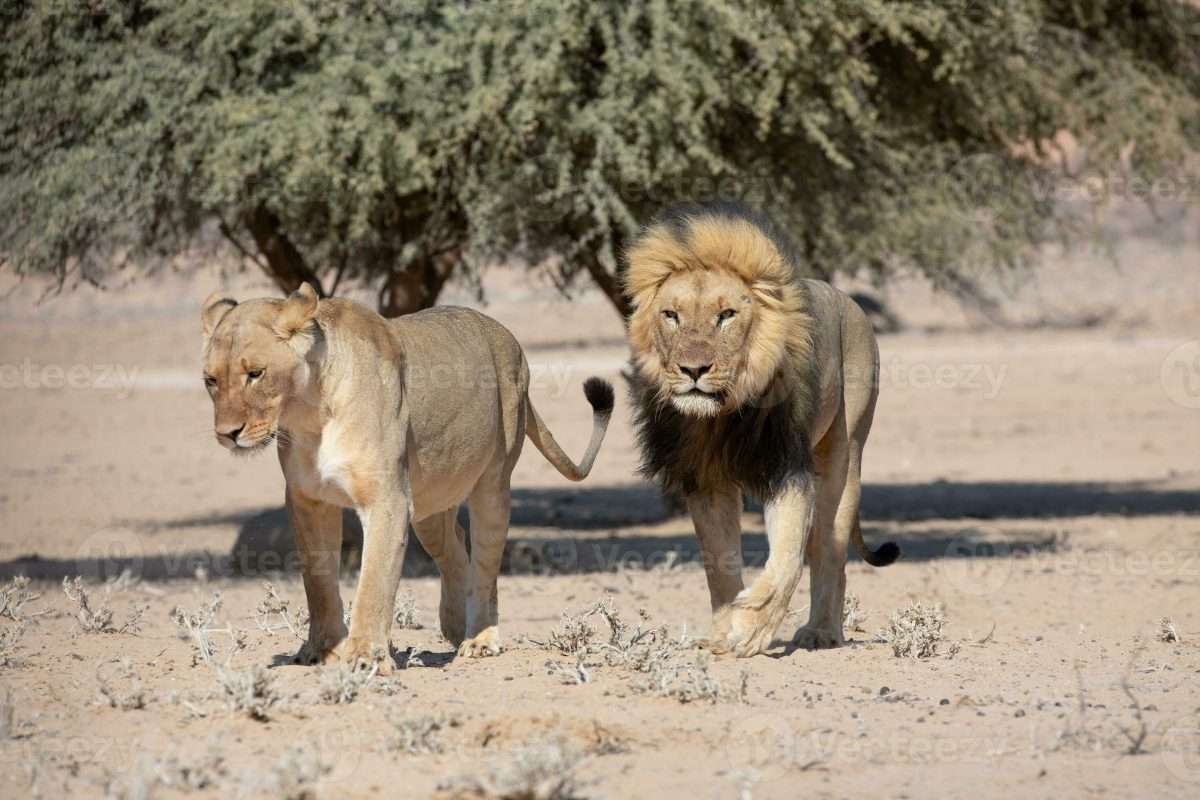
A male lion is one of the largest cats on the planet, weighing 150 to 250 kg and stretching up to 3.3 meters including the tail. A lioness is smaller and leaner, usually 120 to 180 kg, built for speed and stealth rather than raw size. Lions are actually the second largest big cat on Earth, only slightly smaller than the Siberian tiger.
- Only male lions grow a mane, and mane color and thickness usually signal age and health
- A darker, fuller mane often means an older, stronger male, which other lions can read at a glance
- Manes also come with a real cost, trapping heat and making a male lion more visible to prey
- A lioness has no mane at all, which helps her stay lower profile during a hunt
- A lion’s claws can reach up to 1.5 inches long, giving real control during a kill
- A lion can leap as far as 36 feet in a single jump, useful for closing the final gap on a hunt or clearing an obstacle
Facts About a Lioness: Why the Females Run the Hunt
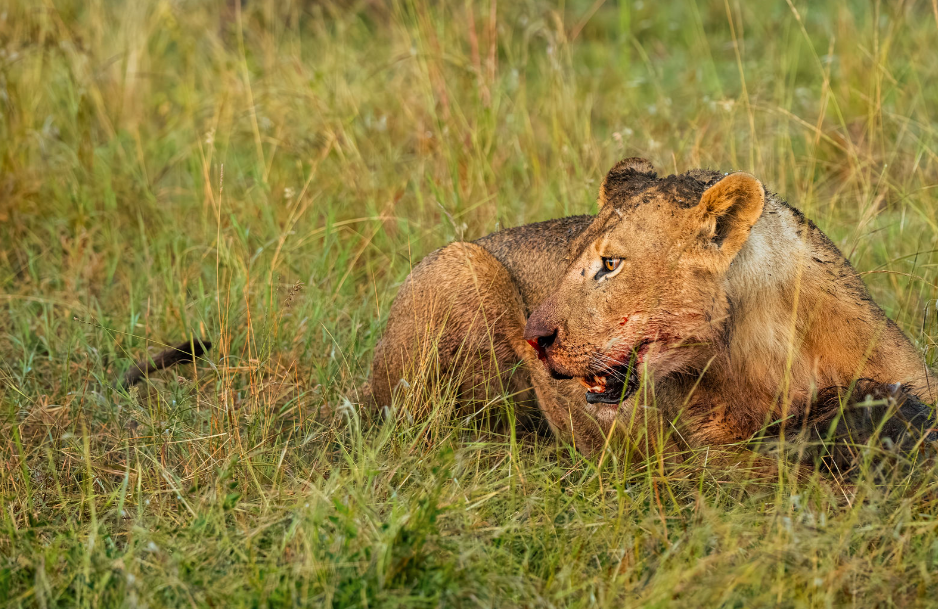
Here is a fact about a lioness that genuinely surprises most guests. Lionesses do roughly 85 to 90 percent of all hunting within a pride. They are faster, lighter, and built for the coordinated stalking that lion hunts actually depend on.
- Lionesses often hunt in small groups, some driving prey toward others waiting in ambush
- A lioness will frequently nurse and care for cubs that are not even her own within the pride
- Female lions typically stay with the pride they were born into for life
- Male lions, by contrast, leave the pride around age two or three and often live alone or in small bachelor groups until they take over a pride of their own
Pride Life: How Lions Actually Live
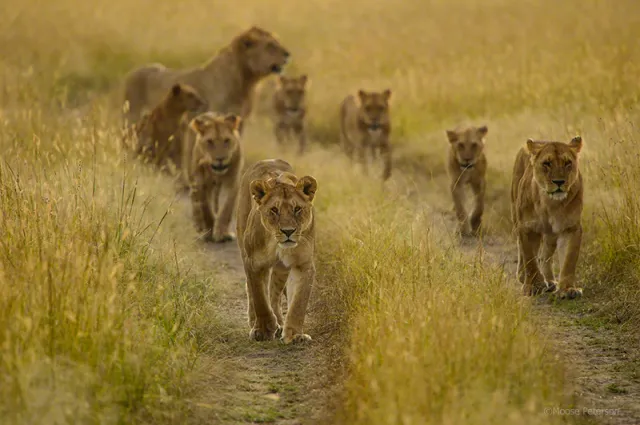
Lions are the only cats in the world that live in a real social group. A typical lion pride includes several related lionesses, their cubs, and one to a handful of adult males.
- Most prides have 10 to 15 members, though some super prides in areas with abundant prey can grow to 40 lions or more
- Males defend the pride’s territory from rival males, often through roaring and scent marking before it ever comes to a fight
- When a new male or coalition of males takes over a pride, cubs from the previous male are sometimes killed, a harsh but well documented part of lion biology
- Cub mortality is high in the wild, with roughly 80 percent not surviving past two years old, mostly from predation, starvation, or pride takeovers
Do Lions Sleep All Day? Yes, Almost

This is one of the more surprising facts about lions for first-time safari guests. Lions rest for up to 20 hours a day. When they are not sleeping, most of their waking hours go toward social bonding rather than activity.
- Grooming each other, head-rubbing, and purring are all common between pride members
- Most real activity, hunting and moving territory, happens in short bursts around dawn, dusk, and through the night
- This is exactly why a lion sighting on a midday game drive often means a pride sprawled out asleep in the shade, not up and active
Lion Cub Facts
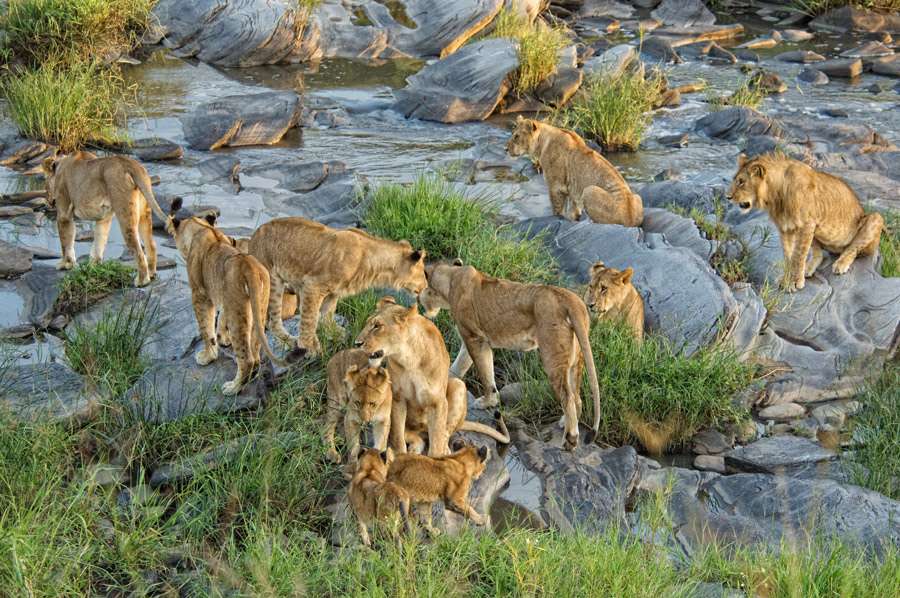
- Lion cubs are born blind and do not open their eyes until about three weeks old
- A lioness typically hides her cubs for the first six weeks of life to keep them safe from predators and rival lions
- Lionesses within the same pride often give birth around the same time, which lets them nurse and raise cubs together as a group
- Cubs spend their early months playing, wrestling, and practicing the same stalking and pouncing moves they will need as adult hunters
What Do Lions Eat?
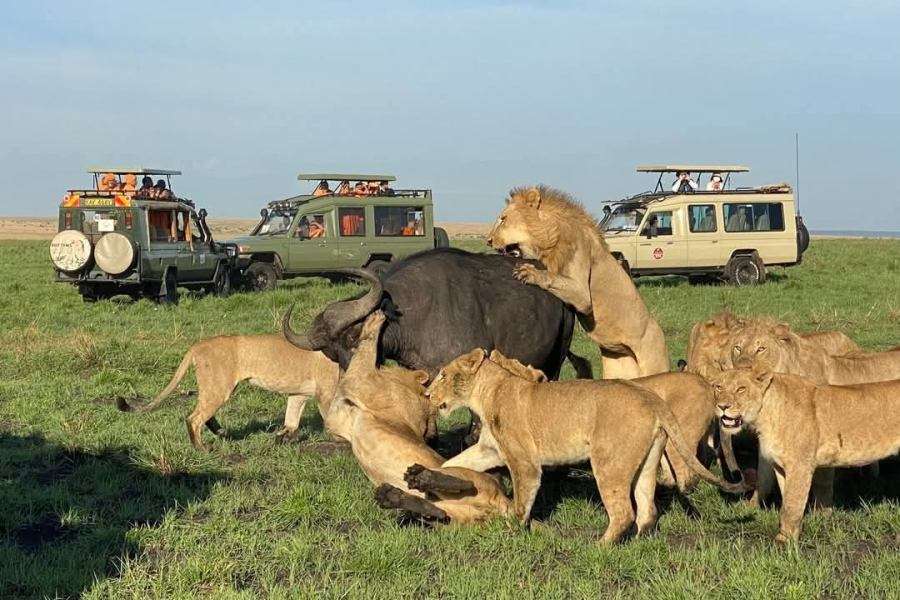
Lions are opportunistic hunters, and diet shifts depending on what is available in their territory.
- Common prey includes zebra, wildebeest, buffalo, and antelope, with smaller snacks like hares, birds, and reptiles when bigger prey is scarce
- A pride will occasionally take down much larger prey like giraffe or young elephants when hunting in a coordinated group
- Lions are also scavengers, and will readily steal a kill from hyenas or cheetahs when the opportunity comes up
- An adult lion can eat up to 30 kg of meat in a single sitting, then go several days without eating again
- On average, a lioness eats around 5 kg (11 lbs) of meat a day, while a male lion needs closer to 7 kg (16 lbs) or more
- At a kill, male lions eat first, followed by the lionesses, and finally the cubs
- Lions can survive up to four days without water, but they cannot skip meals the same way. Eating daily is far more important to survival than drinking daily
How Fast Can a Lion Run?
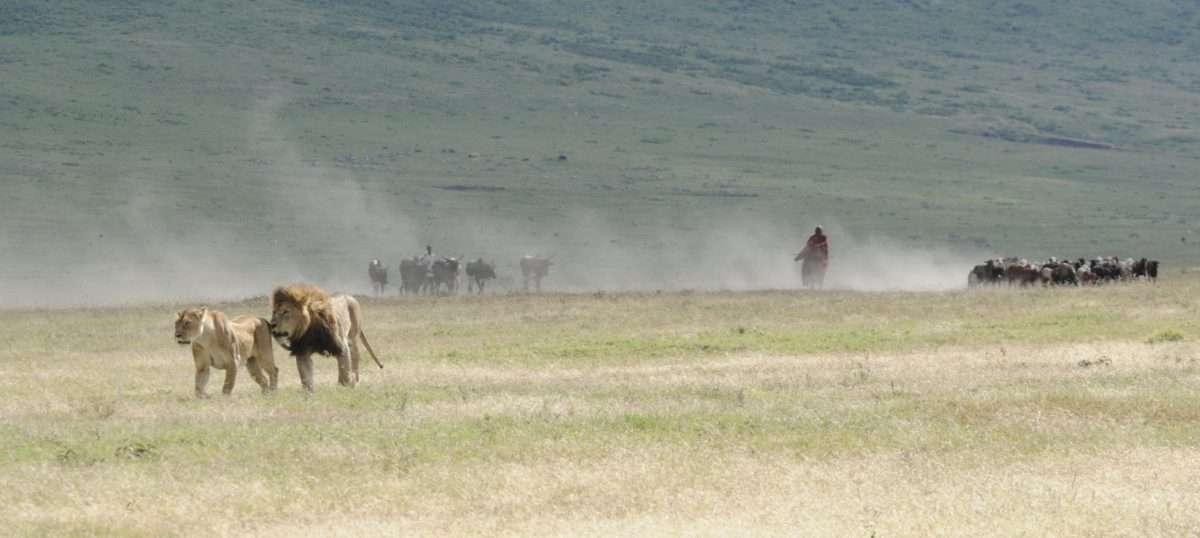
A lion can reach up to 80 km/h (50 mph), but only in short bursts. Lions are ambush predators, not endurance runners.
- Most hunts rely on getting close before the chase even starts, using cover and coordinated positioning
- A common tactic is fanning out in a semicircle, with some lionesses driving prey toward others waiting in ambush
- Lion night vision is roughly six times stronger than a human’s, which gives them a real edge hunting after dark
- A lion’s stamina runs out fast, usually within a few hundred meters
- This is exactly why most hunts fail. Prey animals that outlast the first burst of speed usually get away
Do Lions Live in Jungles?
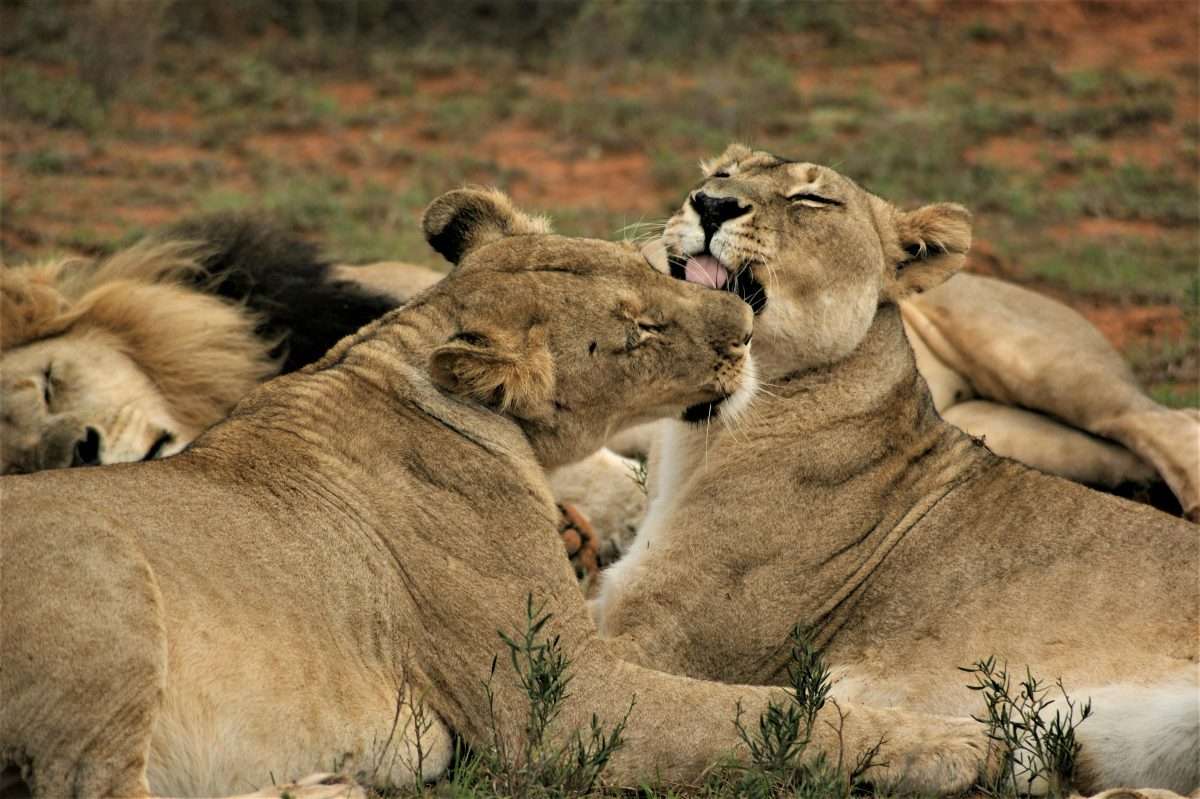
No, despite the “king of the jungle” nickname. African lions live in savannas, open plains, and grasslands, not dense forest. On a Tanzania or Kenya safari, you are far more likely to find a pride lounging under an acacia tree on open grassland than anywhere near true jungle.
How Do Lions Communicate?
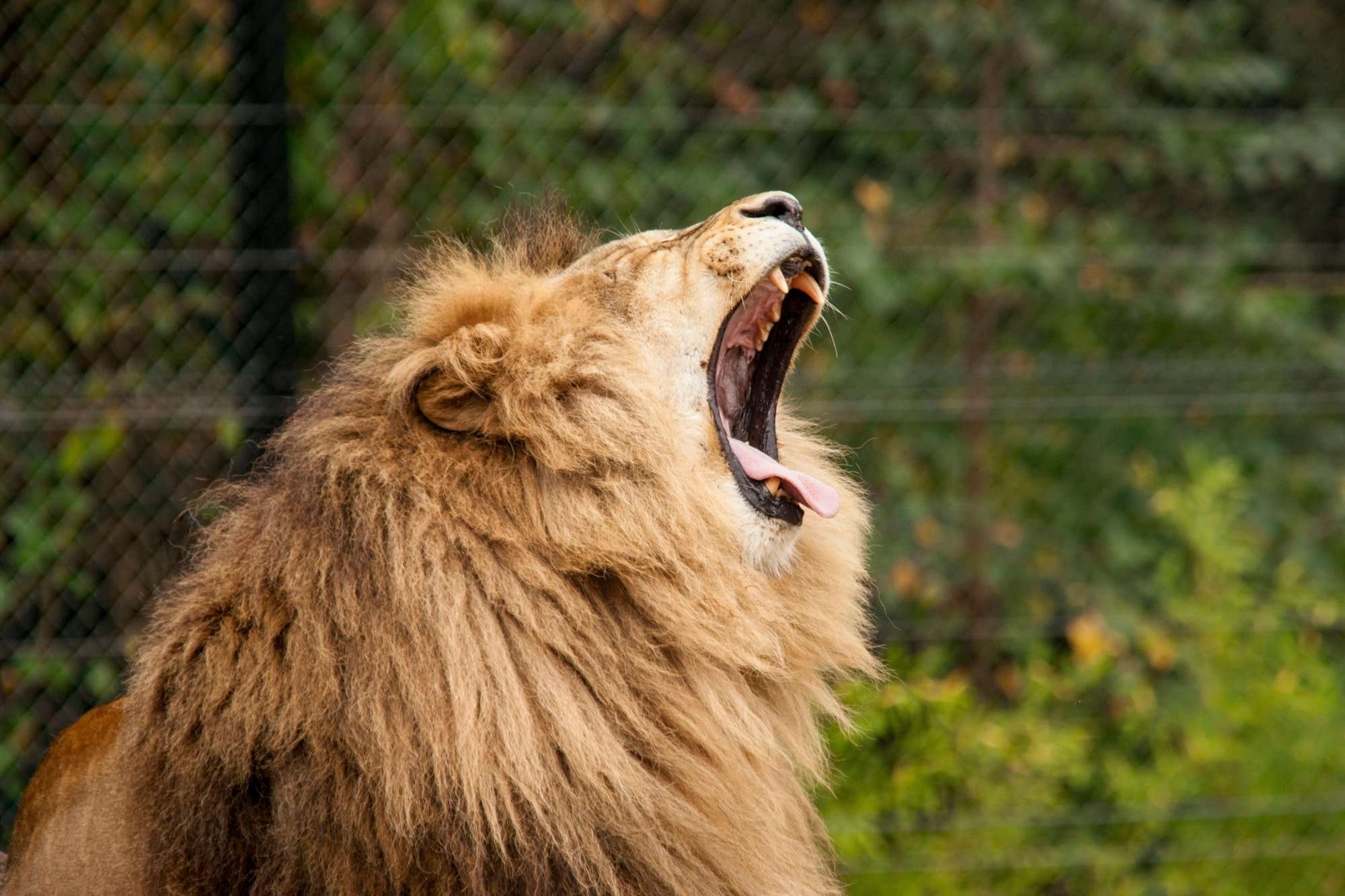
Lions use a real mix of sound and body language to stay connected as a pride and to warn off rivals.
- Roaring, growling, grunting, and purring all serve different purposes within the pride
- A roar can be heard up to 8 kilometers away, warning rival prides and marking territory
- Scent marking helps lions signal territory boundaries to lions they never actually encounter face to face
- Head-rubbing between pride members reinforces social bonds, similar to how a house cat rubs against a person it trusts
- Mane darkness itself acts as a signal, letting other lions judge a male’s age and condition at a glance
Tree-Climbing Lions
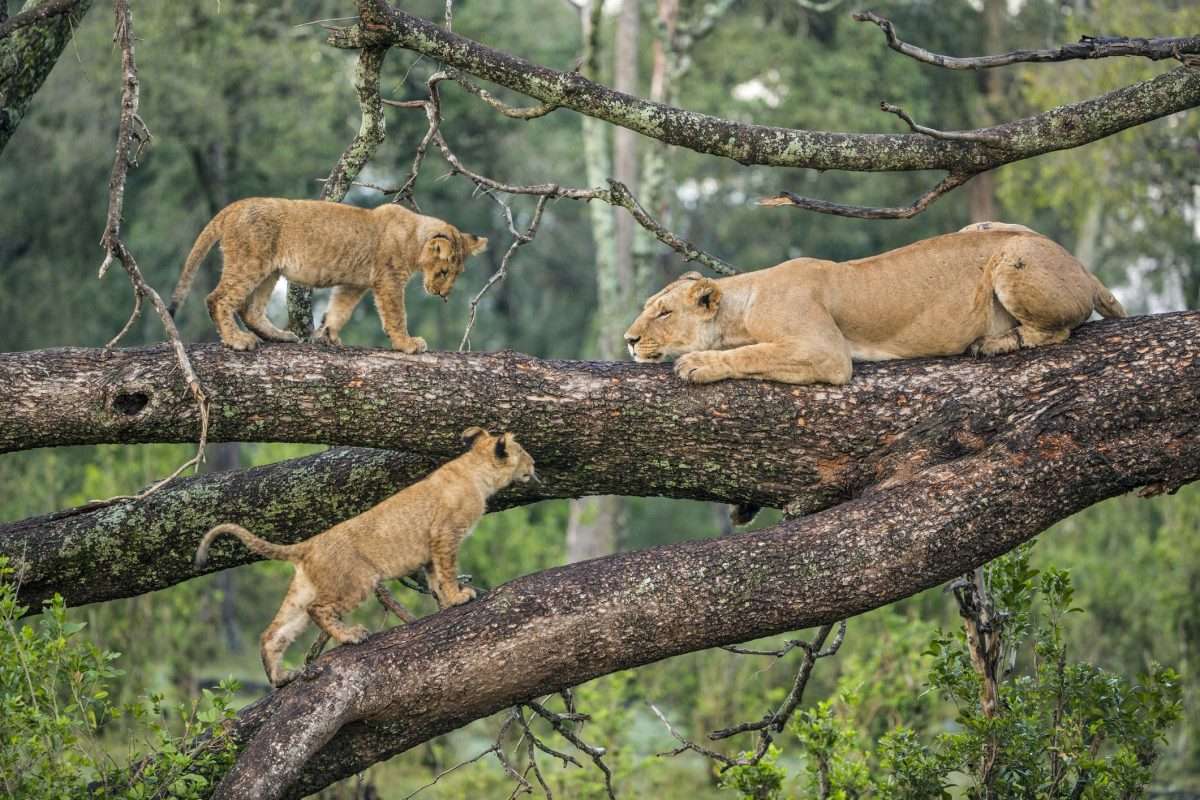
Lions are not generally known as climbers, but a few specific populations genuinely climb trees. Tree-climbing lions are seen most often in Tanzania’s Lake Manyara National Park and Tarangire National Park, and occasionally in parts of the Serengeti. Climbing helps them escape biting insects on the ground, catch a cooling breeze, and get a better vantage point to scan for prey across the plains below.
Lion vs Lioness: Key Differences
| Male Lion | Lioness | |
|---|---|---|
| Weight | 150 to 250 kg | 120 to 180 kg |
| Mane | Yes | No |
| Main role | Territory defense | Hunting, cub care |
| Hunting share | About 10 to 15 percent | About 85 to 90 percent |
| Leaves birth pride | Yes, around age 2 to 3 | Usually stays for life |
How Long Do Lions Live?
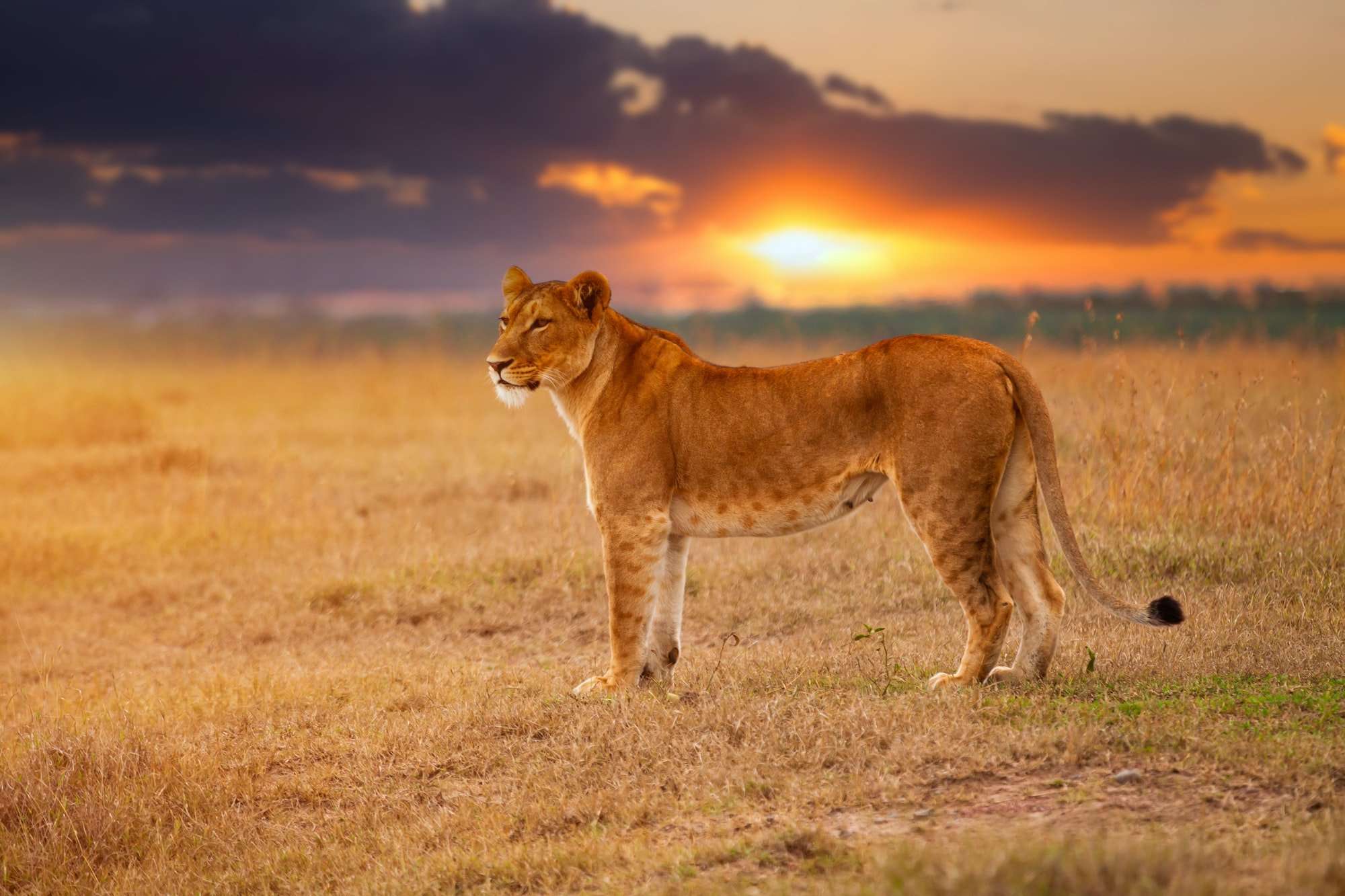
Wild lions typically live 10 to 14 years, though some individuals reach into their late teens in low-competition areas. Lions in protected zoo environments can live up to 20 years, since they face none of the territorial fights, injuries, or food scarcity that shape a wild lion’s lifespan.
Where to See Lions in the Wild
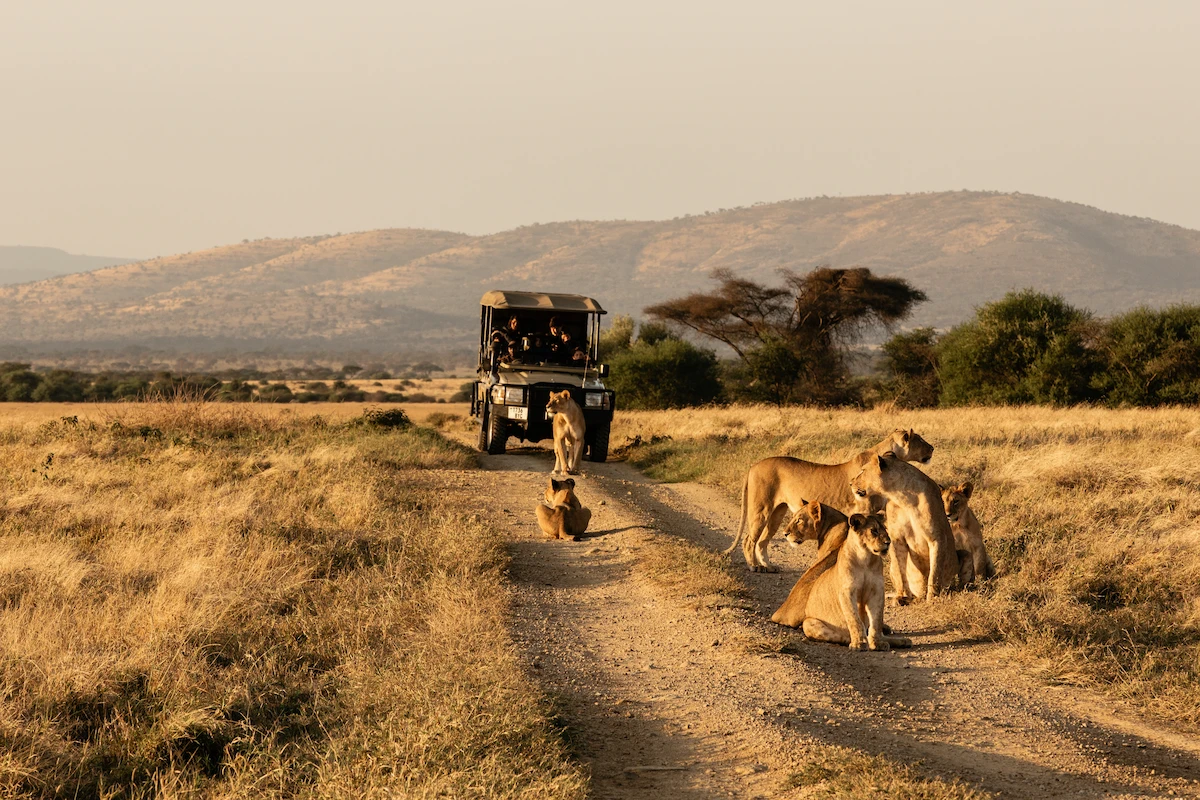
Lions live across sub-Saharan Africa, with the Masai Mara, Serengeti, and Ngorongoro Crater among the most reliable places to see a real pride in action. A tiny, separate population of Asiatic lions survives only in the Gir Forest of India, genetically distinct from the African lion most safari guests come to see.
Ready to See Lions for Yourself?
If you want a Kenya safari built around strong lion and pride sightings, message me directly on WhatsApp.
A few trips with strong lion sightings:
- 5-Day Big Five Safari: Maasai Mara Road Adventure
- 8-Day Must See Kenya: Luxury Safari Journey
- 9-Day Ultimate Kenya Honeymoon: Savannah to Sea
Frequently Asked Questions
What are some real facts about lions?
Lions are the only cats that live in social groups called prides. A lioness does most of the hunting, a lion’s roar can travel up to 8 kilometers, and wild lions typically live 10 to 14 years.
What are the main facts about a lioness?
A lioness handles roughly 85 to 90 percent of hunting within a pride, has no mane, stays with her birth pride for life, and often nurses cubs that are not her own.
How much does a lion weigh?
A male lion typically weighs 150 to 250 kg. A lioness is smaller, usually 120 to 180 kg.
How fast can a lion run?
Up to 80 km/h, but only in short bursts. Lions rely on ambush and coordination rather than long chases.
How long do lions live in the wild?
Wild lions typically live 10 to 14 years, shaped heavily by territorial fights, food availability, and pride takeovers.
Where can I see lions in Africa?
The Masai Mara, Serengeti, and Ngorongoro Crater are among the most reliable places in Africa to see a real lion pride on safari.
How much do lions sleep?
Lions rest up to 20 hours a day. Most of their real activity, hunting and moving territory, happens in short bursts around dawn, dusk, and overnight.
Do lions climb trees?
Most do not, but specific populations in Tanzania’s Lake Manyara National Park, Tarangire National Park, and parts of the Serengeti are known tree-climbing lions, using trees to escape insects, cool off, and get a better view of the plains.
Blog Summary About Lions and a Lioness
- Lions are the only cats that live in true social groups, called prides, typically 10 to 15 members.
- A lioness does about 85 to 90 percent of the hunting in a pride.
- Only male lions grow a mane, which signals age and health.
- A lion’s roar can be heard up to 8 kilometers away.
- Lions rest up to 20 hours a day, and stay active mostly at dawn, dusk, and night.
- A lion can run up to 80 km/h and leap as far as 36 feet, but only in short bursts.
- Male lions eat first at a kill, followed by lionesses, then cubs.
- Lion cubs are born blind and stay hidden by their mother for about six weeks.
- Cub mortality is high in the wild, with about 80 percent not surviving past two years.
- Tree-climbing lions can be seen in Tanzania’s Lake Manyara and Tarangire National Parks.


