
Quick Answer:
Lions typically eat every 3 to 4 days in the wild. They do not hunt successfully every day, so they follow a feast-or-famine feeding pattern. After a successful hunt, an adult male lion can eat up to 40–50 kg (88–110 lbs) of meat in one sitting before resting for several days while digesting. On average, male lions consume the equivalent of 7–10 kg (15–22 lbs) of meat per day, while lionesses average 5–7 kg (11–15 lbs). During periods of food shortage, healthy adult lions can survive for up to two weeks without eating.
How Often Do Lions Feed?
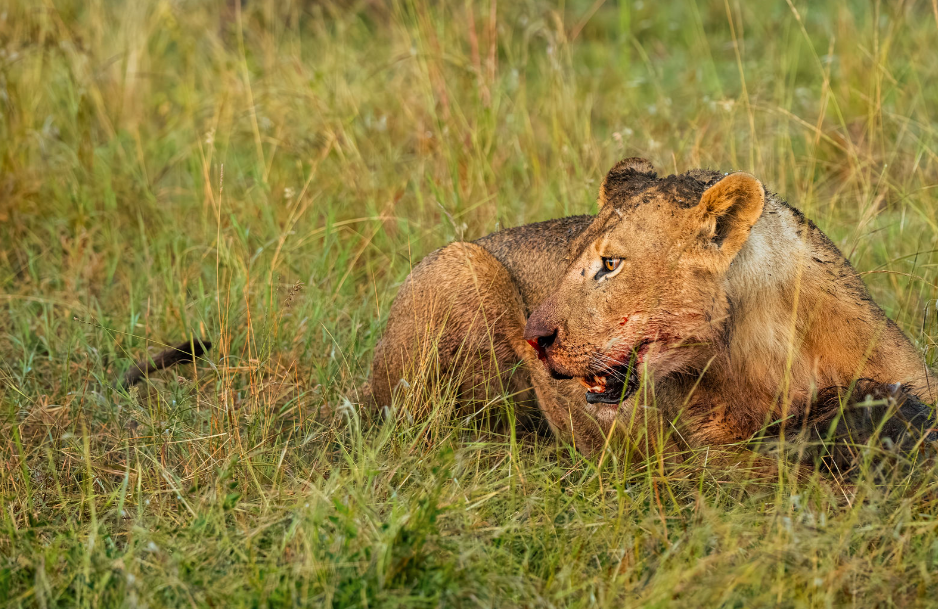
The simple answer is that lions usually feed once every three to four days. Unlike humans or many smaller animals, lions do not require daily meals. Instead, they survive by eating large quantities of meat whenever they make a successful kill.
This feeding pattern has developed because hunting is difficult and unpredictable. Every hunt requires enormous energy, teamwork, and perfect timing. Since many hunts fail, lions take advantage of every successful opportunity by eating as much as possible before resting.
For example, a pride may successfully hunt a buffalo, zebra, or wildebeest. Once the prey is secured, every member of the pride feeds until they are full. Afterward, they may not need another major meal for several days.
This natural feeding cycle allows lions to survive even when prey becomes scarce.
Why Don’t Lions Eat Every Day?
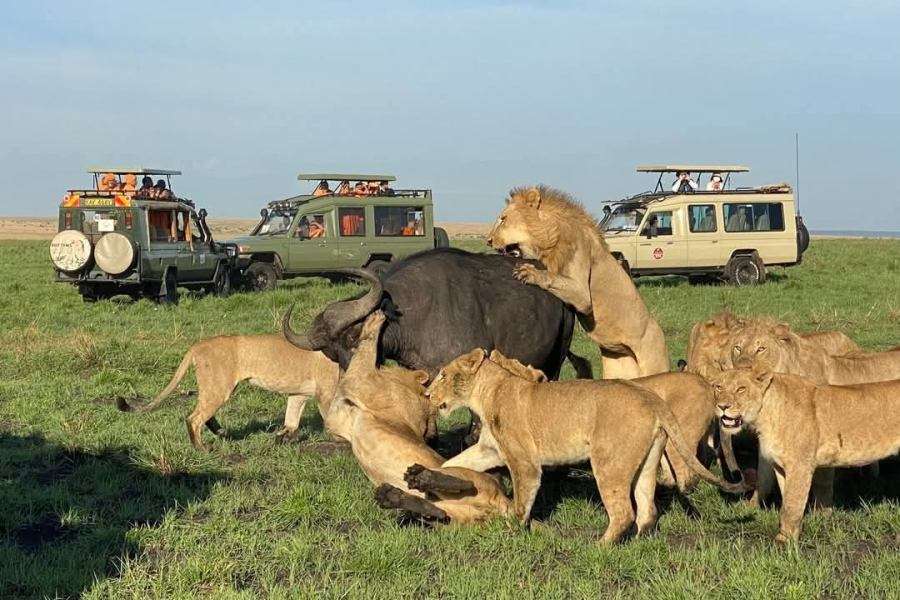
Many people assume lions hunt every day because they are apex predators. In reality, lions spend far more time resting than hunting.
The main reason is simple—hunting is hard work.
Large prey such as buffalo, giraffes, zebras, and wildebeest are powerful animals capable of defending themselves. Chasing them requires tremendous bursts of speed and strength, yet lions can only maintain top speed for a very short distance.
Wildlife researchers estimate that only about one out of every five hunts is successful, giving lions a hunting success rate of approximately 20%.
Because successful hunts are relatively rare, lions have adapted by eating enormous meals whenever food is available.
This survival strategy is often called the feast-or-famine cycle.
During a feast, lions consume huge amounts of meat in a single sitting. During the following days, they rely on that stored energy while digesting their meal and conserving strength for the next hunt.
How Much Does a Lion Eat?
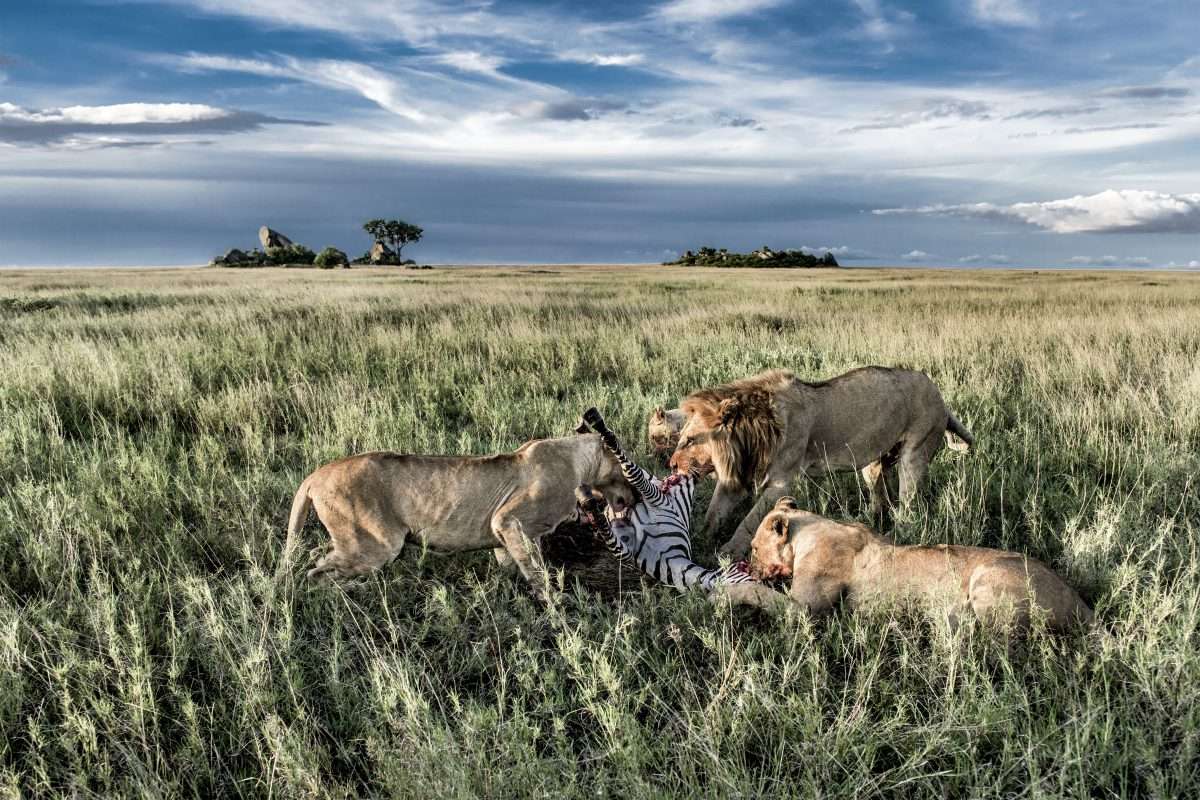
Although lions do not eat every day, they consume impressive amounts of meat when food is available.
An adult male lion can eat 40 to 50 kilograms (88 to 110 pounds) of meat during one feeding session.
Adult lionesses usually eat smaller amounts because they weigh less than males, but they still consume substantial quantities after a successful hunt.
When averaged across several days, researchers estimate that:
- Adult male lions consume around 7–10 kg (15–22 lbs) of meat per day.
- Adult female lions consume around 5–7 kg (11–15 lbs) of meat per day.
These figures represent average daily intake rather than food eaten every single day.
The exact amount depends on several factors, including:
Age
Growing cubs eat less than adults, while young lions require increasing amounts of food as they mature.
Sex
Male lions are significantly larger than females and therefore require more food to maintain their body weight.
Prey Availability
Areas with abundant prey allow lions to feed more regularly, while droughts or declining prey populations may force them to wait much longer between meals.
Pride Size
Larger prides must share every kill among more mouths, meaning individual lions may eat less during each feeding.
When Do Lions Hunt?
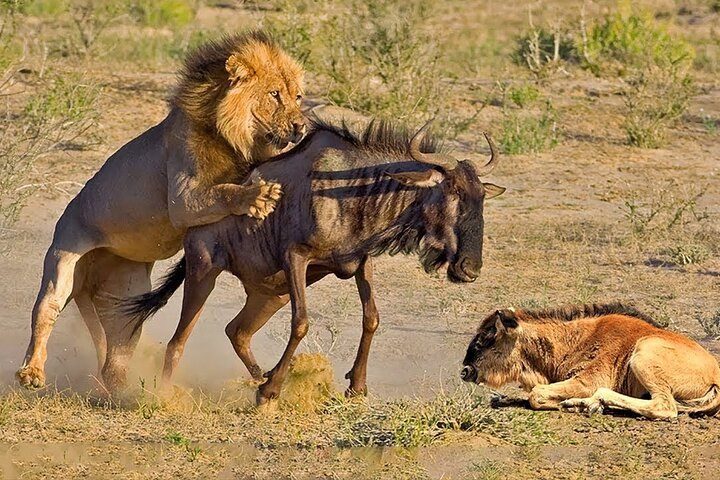
Lions are primarily nocturnal hunters.
Most hunting takes place:
- After sunset
- During the night
- At dawn
- Around dusk
- On cooler or overcast days
Hunting during cooler temperatures helps lions avoid overheating while allowing them to move more quietly toward their prey.
During the hottest hours of the day, lions usually rest beneath trees, rocky outcrops, or thorn bushes, often close to water sources where prey frequently gathers.
This daily routine helps them conserve energy until conditions become more favorable for hunting.
Why Do Lions Sleep So Much?

Lions are among the sleepiest mammals in Africa.
Adult lions commonly sleep or rest for 18 to 20 hours every day.
This behavior is not laziness—it is an essential survival strategy.
Short bursts of explosive speed during hunting require enormous amounts of energy. Resting allows lions to recover while reducing unnecessary calorie loss between meals.
Combined with their feast-or-famine feeding strategy, long periods of rest help lions survive even when they go several days without food.
Energy conservation is one of the main reasons lions remain such effective predators despite hunting successfully only a small percentage of the time.
How Long Can a Lion Go Without Eating?
One of the most fascinating facts about lions is their ability to survive without food for surprisingly long periods.
A healthy adult lion can survive for more than one week, and in extreme situations, up to two weeks without eating. This is possible because lions consume very large meals after successful hunts, allowing them to store enough energy to last several days.
However, surviving without food does not mean lions remain active hunters every day. During long periods without prey, they reduce their activity, rest more frequently, and conserve as much energy as possible.
Food shortages usually occur because of:
- Seasonal migration of prey animals.
- Drought conditions.
- Competition with other predators.
- Failed hunting attempts.
- Territorial conflicts that force prides to move into less productive areas.
While adult lions can tolerate fasting, young cubs are much more vulnerable. Lionesses must hunt regularly while raising cubs to ensure they receive enough nutrition for healthy growth.
What Do Lions Eat?
Lions are carnivores, meaning their diet consists entirely of meat.
They are also opportunistic predators, which means they will hunt many different species depending on what is available within their territory.
Some of the most common prey animals include:
Large Prey
- African buffalo
- Wildebeest
- Zebra
- Giraffe
These animals provide enough meat to feed an entire pride for several days.
Medium-Sized Animals
- Warthogs
- Waterbuck
- Kudu
- Impala
- Hartebeest
These species are commonly hunted across many African ecosystems.
Smaller Animals
Although less common, lions also eat:
- Porcupines
- Tortoises
- Ostriches
- Small crocodiles
- Young antelope
- Birds
When larger prey is unavailable, lions adapt by hunting whatever suitable food they can catch.
Frequently Asked Questions
How often do lions feed?
Lions usually feed every three to four days. After a successful hunt, they consume large amounts of meat before resting and digesting for several days.
How often does a lion eat?
An adult lion does not normally eat every day. Instead, lions follow a feast-or-famine feeding pattern, eating after successful hunts rather than on a daily schedule.
How often does lions eat?
In the wild, lions generally eat once every 3 to 4 days, although the exact timing depends on hunting success and prey availability.
How much meat can a lion eat in one meal?
A fully grown male lion can consume 40–50 kg (88–110 lbs) of meat during a single feeding session. Lionesses usually eat slightly smaller amounts.
How long can lions survive without food?
Healthy adult lions can survive for more than one week, and in some cases up to two weeks, without eating. During this period they conserve energy by resting for long hours.
What time of day do lions hunt?
Lions hunt mostly at night, during dawn, and around dusk when temperatures are cooler and prey is more active.
Do lions hunt every day?
No. Lions hunt only when necessary. Because hunting success averages around 20%, they may go several days between successful kills.
What do lions eat most often?
Lions mainly hunt large herbivores such as buffalo, zebra, wildebeest, giraffe, and antelope. They also eat smaller animals when opportunities arise and may scavenge kills from other predators.
Do male and female lions hunt together?
Lionesses perform most cooperative hunts, while male lions often assist when targeting larger and more dangerous prey such as buffalo or giraffe.
Why do lions sleep so much?
Lions sleep or rest for 18 to 20 hours each day to conserve energy. Hunting requires powerful bursts of speed and strength, making rest an essential part of their survival strategy.
See Lions in Their Natural Habitat
Reading about lion behavior is fascinating, but nothing compares to watching these incredible predators in the wild.
Imagine hearing a lion’s roar echo across the savannah before sunrise, watching a pride emerge from the tall grass, or witnessing lionesses carefully stalk prey as the golden light spreads across the plains. These unforgettable moments reveal why lions are considered one of Africa’s most iconic animals.
At TourwithPipi, our tailor-made luxury safaris take you to some of Africa’s finest wildlife destinations, where experienced guides help you observe lions responsibly while respecting their natural behavior and habitat.
Whether your dream is seeing the Big Five, witnessing the Great Migration, or exploring Africa’s most celebrated national parks, every itinerary is carefully designed to deliver extraordinary wildlife encounters, luxury accommodations, and seamless support from planning to your return home. Contact us Now!
Key Takeaways
- Lions usually feed every 3 to 4 days.
- Hunting success is only about 20%, so lions do not eat every day.
- Adult males can consume up to 50 kg (110 lbs) of meat after a successful hunt.
- Lionesses eat an average of 5–7 kg of meat per day.
- Male lions average 7–10 kg of meat per day.
- Lions hunt mainly during the night, dawn, and dusk.
- Lions may survive up to two weeks without food if prey is unavailable.
- After eating, lions spend much of their time resting to conserve energy.


