
Serengeti animals are the reason so many people dream of a Tanzania safari. If there is one place in Africa where you can see classic wildlife scenes again and again, it is Serengeti National Park. The open plains feel endless, the herds are huge, and predator sightings are part of normal life here, not a lucky surprise.
Serengeti is also famous for the Great Migration, when massive herds move across the ecosystem in search of fresh grass. Add to that close to 90 mammal species and hundreds of bird species, and you get one of the world’s richest wildlife destinations. In this guide, you will learn what to look for in the Big Five, the Big Nine, other key Serengeti wildlife, and the birds that make every game drive more exciting.
Serengeti Wildlife at a Glance
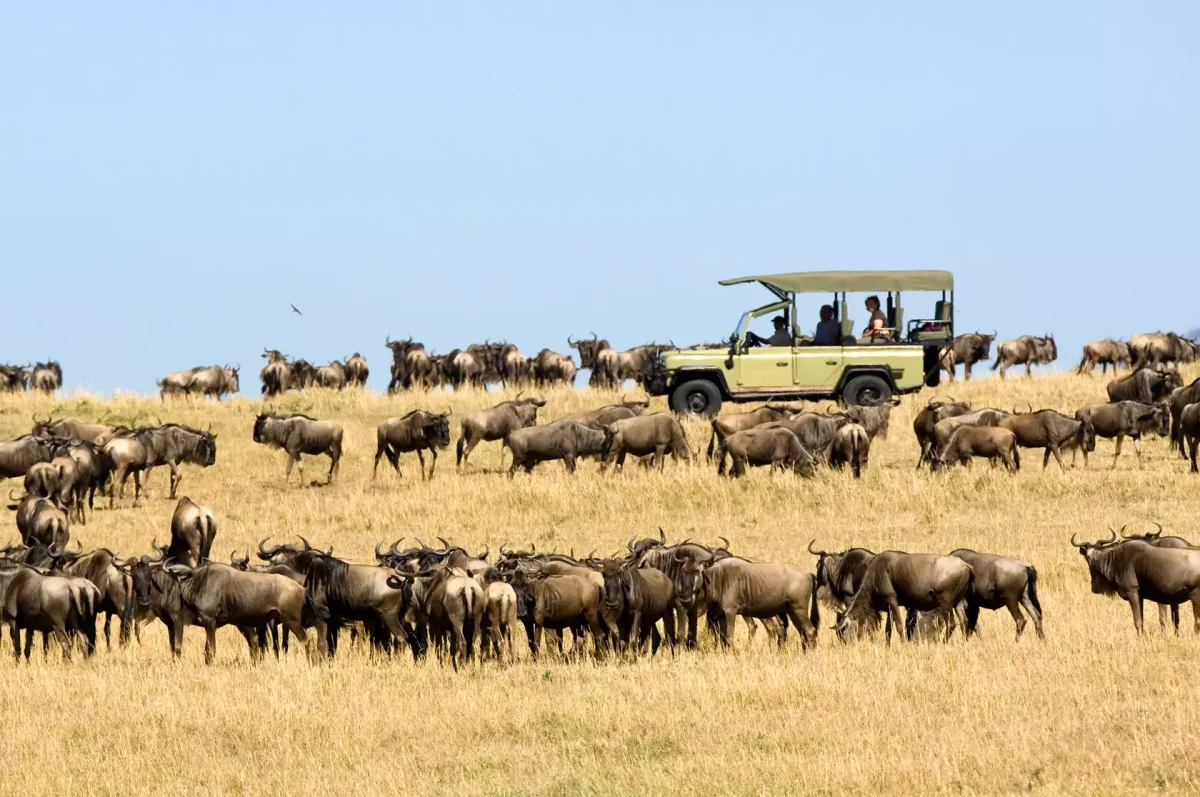
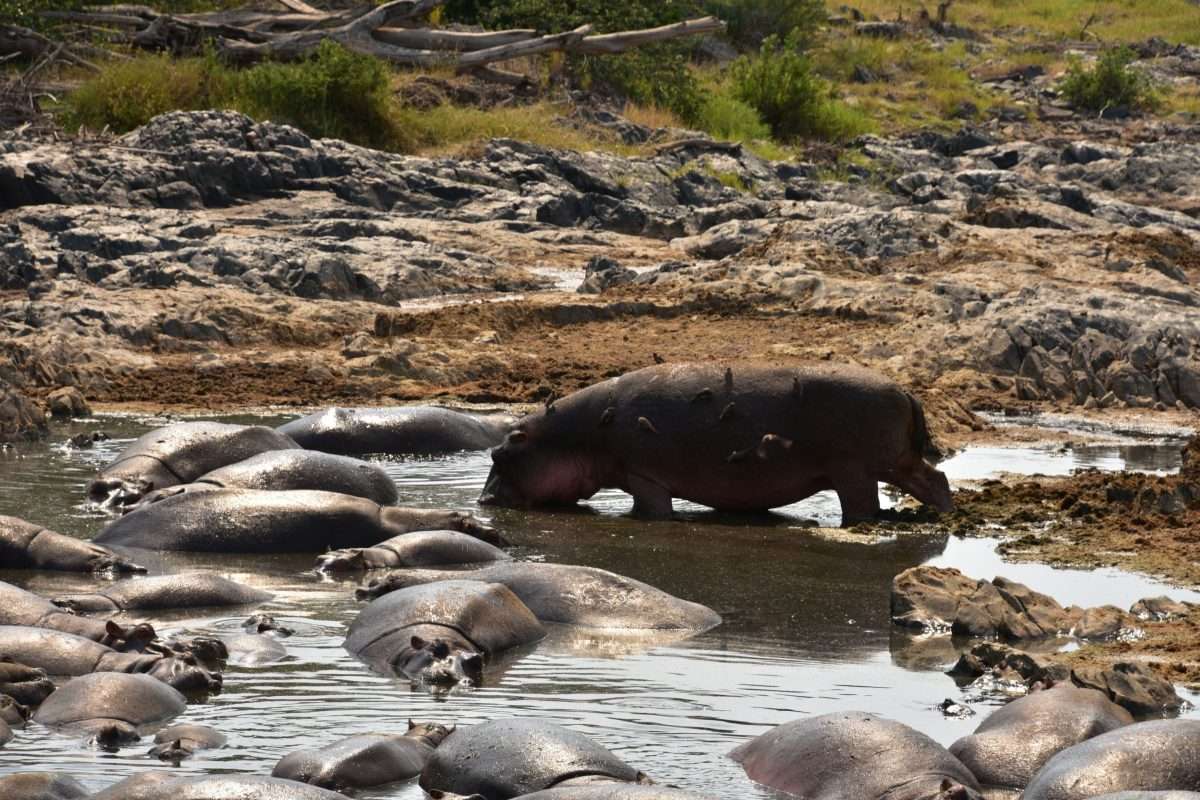
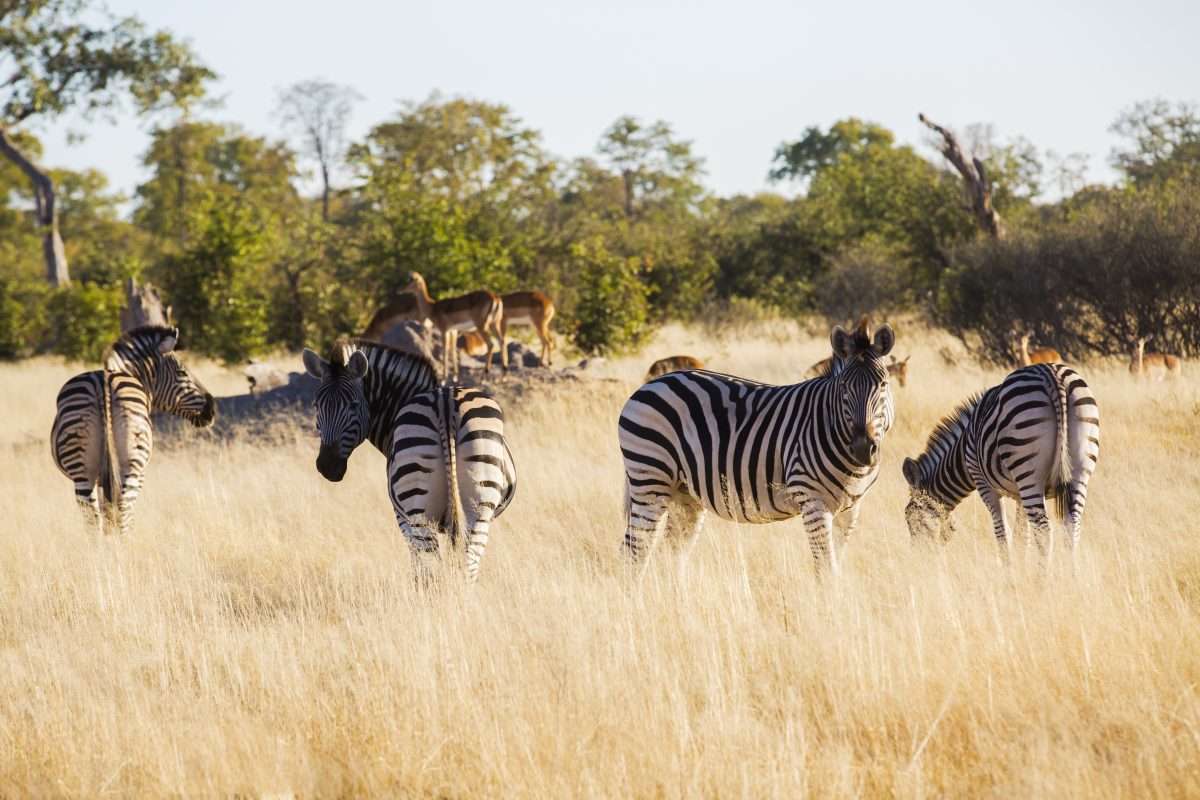
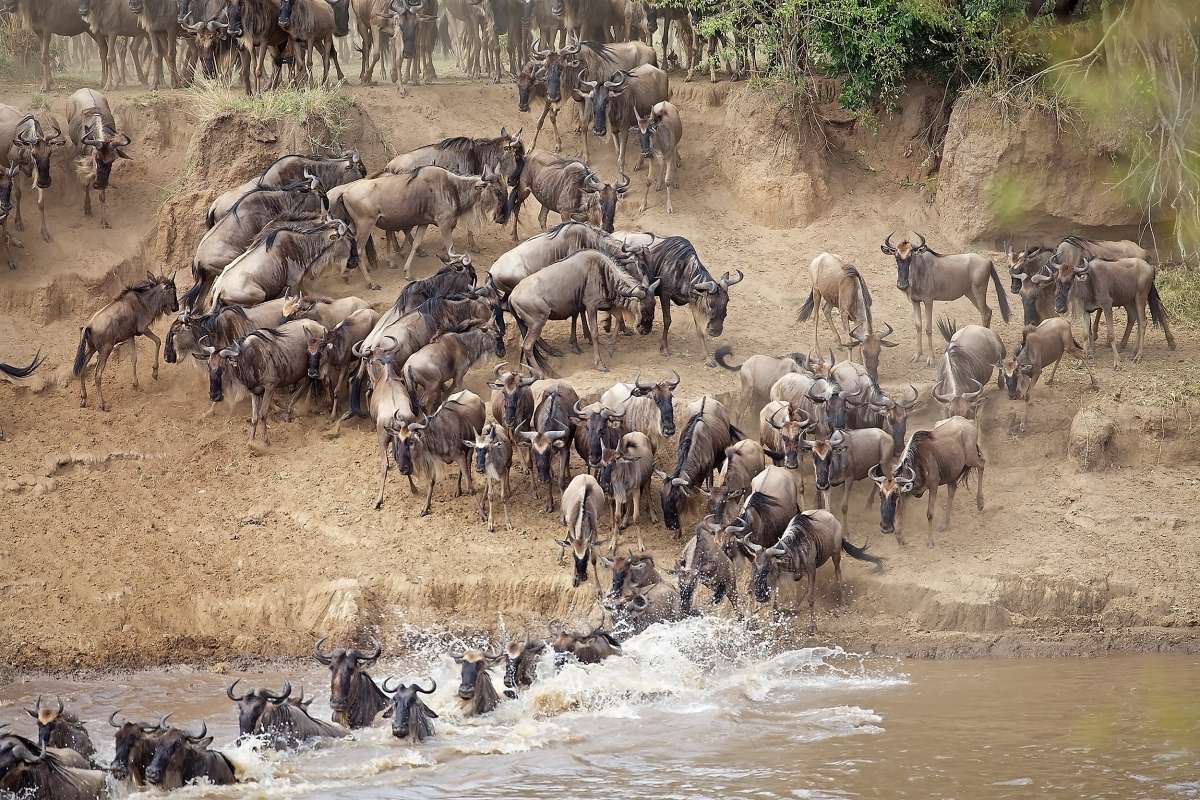
The Serengeti ecosystem is one of the most wildlife-rich areas in Tanzania because it offers wide open plains, rivers, and bush habitats in one connected landscape. This world-famous park is home to over 70 large mammal species and more than 500 bird species, making it one of the best places to see Serengeti animals, including the complete Big Five, on a single safari. Open grasslands attract huge herds of wildebeest and zebras, rivers like the Grumeti and Mara support hippos and birdlife and host dramatic Great Migration crossings, while thicker cover hides leopards and other shy species. As a result, early morning and late afternoon game drives offer the best Serengeti safari wildlife sightings, when animals are most active and natural behavior is easiest to observe.
The Big Five Animals in Serengeti
For many travelers, seeing the Big Five animals in Serengeti National Park is the highlight of a Tanzania safari. What makes the Serengeti special is that it is one of the few places in Africa where spotting lion, leopard, elephant, buffalo, and black rhino within three days is not just possible but fairly likely. The size of the ecosystem, healthy wildlife populations, and varied habitats give each species space to thrive, while skilled guides know exactly where and when to look.
Lion
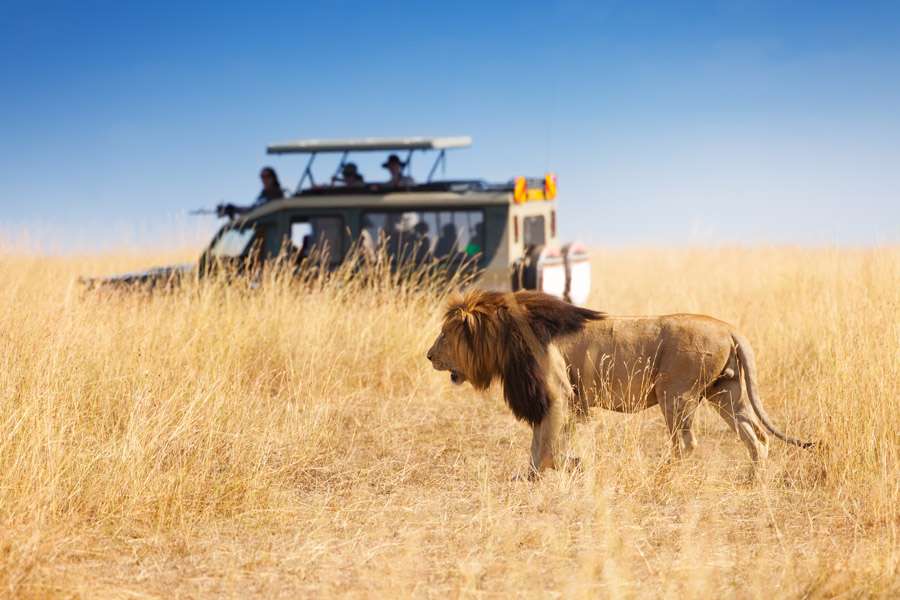
The Serengeti is one of the best places in East Africa to see lions in the wild. The ecosystem supports an estimated 3,000 to 4,000 lions, making it one of the strongest lion populations in Africa. Male lions control large territories that can range from 30 to 400 square kilometers, while lionesses do most of the hunting, often working together to bring down prey. On a game drive, you may see lions resting near wildebeest or zebra herds, nursing cubs, or moving at dawn. The best places to look are open plains, especially early in the morning, when temperatures are cooler and lions are most active.
Leopard
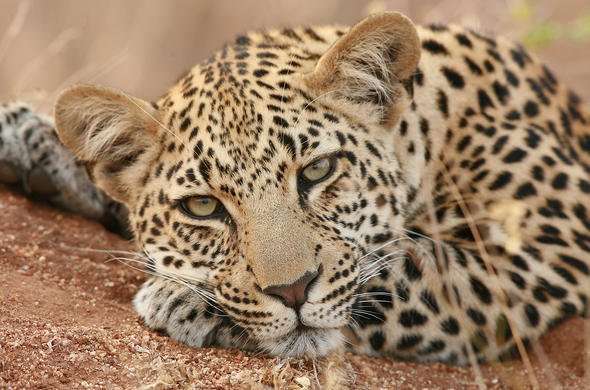
Leopards often feel rare on safari, even in areas where numbers are healthy, simply because they are shy and secretive. The Serengeti ecosystem hosts around 1,000 leopards, making it an important stronghold for the species. They are usually alone and more active at night, which adds to their mystery. During the day, leopards often rest on the large branches of sausage trees, where they store their kills away from lions and hyenas. For the best chance of seeing a leopard, always look up and scan river lines, thicker bush, and wooded areas, especially in places like the Seronera Valley.
African Elephant
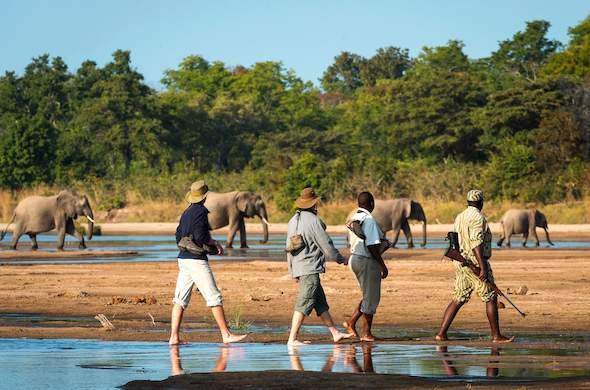
Elephants are one of the most memorable Serengeti safari animals, both for their size and their social behavior. They are the largest land animals on Earth, weighing up to 6.6 tons, and family bonds can last for 50 years. Female elephants live in close-knit family groups, while males leave the herd around the age of 12 and roam alone or in bachelor groups. Thanks to strong conservation efforts, the elephant population in the Serengeti Mara ecosystem has grown from about 2,000 in the late 1980s to over 7,000 by the 2010s, with numbers continuing to rise. You will often see elephants near waterholes, along woodland edges, and during cooler hours of the day.
African Buffalo
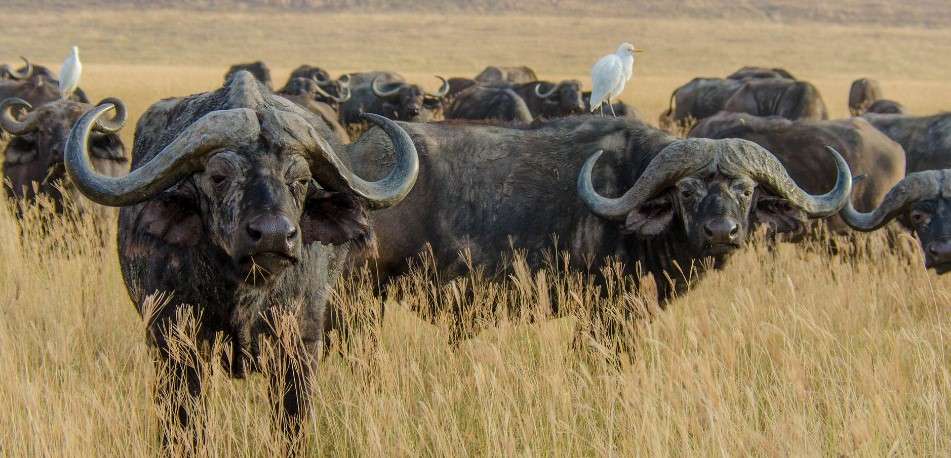
African buffalo are often called one of the most dangerous animals in Africa, and seeing them in Serengeti leaves a strong impression. The park supports very healthy buffalo numbers, and it is common to see large herds of 100 or more, with some gatherings reaching over 1,000 animals. Buffalo stay close to water during the dry season and move through greener grazing areas together. When watching them, notice how females protect their calves and how solitary bulls can behave unpredictably. The best sightings usually happen near rivers, pools, and lush grasslands.
Black Rhino
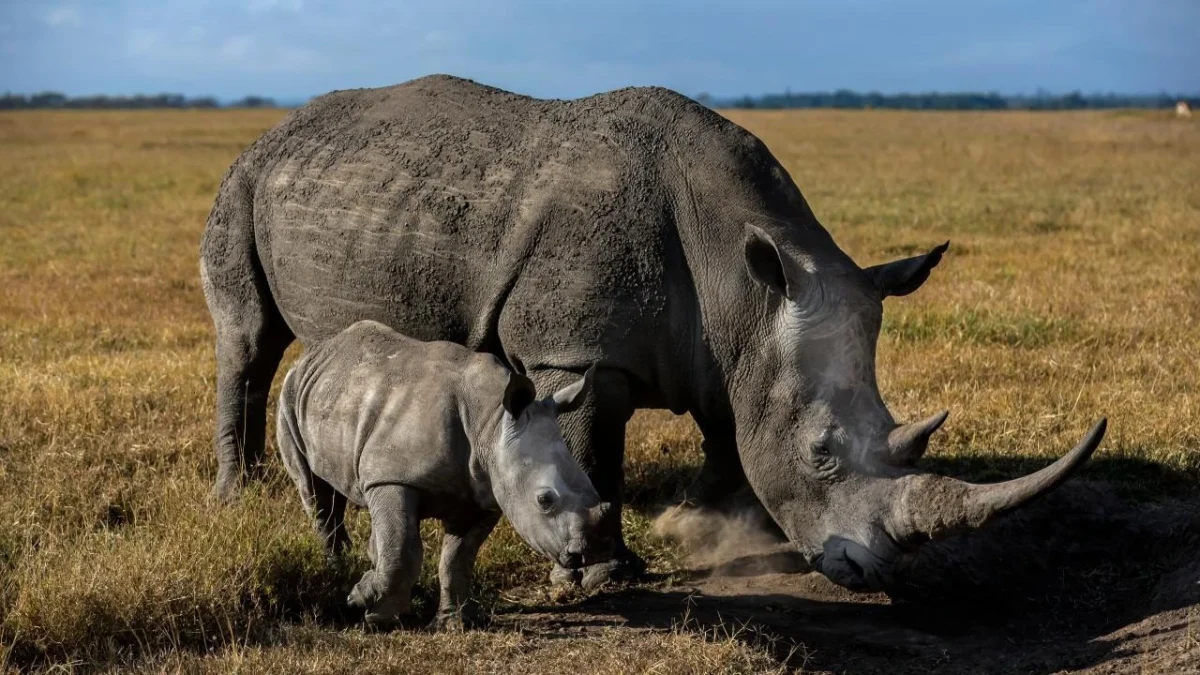
The black rhino in Serengeti represents one of Tanzania’s most important conservation successes. Once reduced to critically low numbers, the population has slowly recovered to over 50 breeding individuals by the 2020s, thanks to strong protection and projects such as the Serengeti Rhino Repatriation Project. Black rhinos are smaller and more aggressive than white rhinos and have a hooked lip designed for browsing shrubs in thicker bush. They can weigh up to 2,500 kilos and prefer dense cover, which is why they are hard to spot on safari. Seeing a rhino requires patience, expert tracking, and early morning drives, especially around areas like the Moru Kopjes, where protection is strongest.
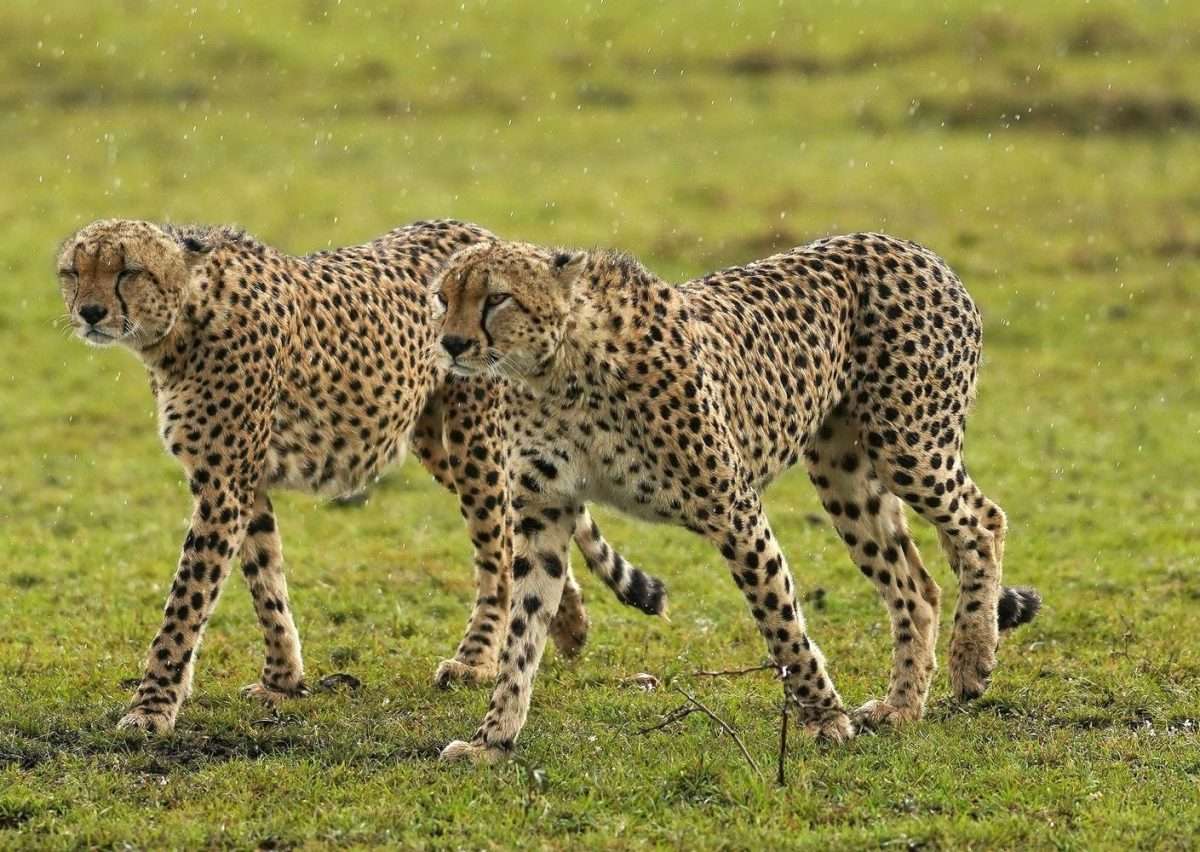
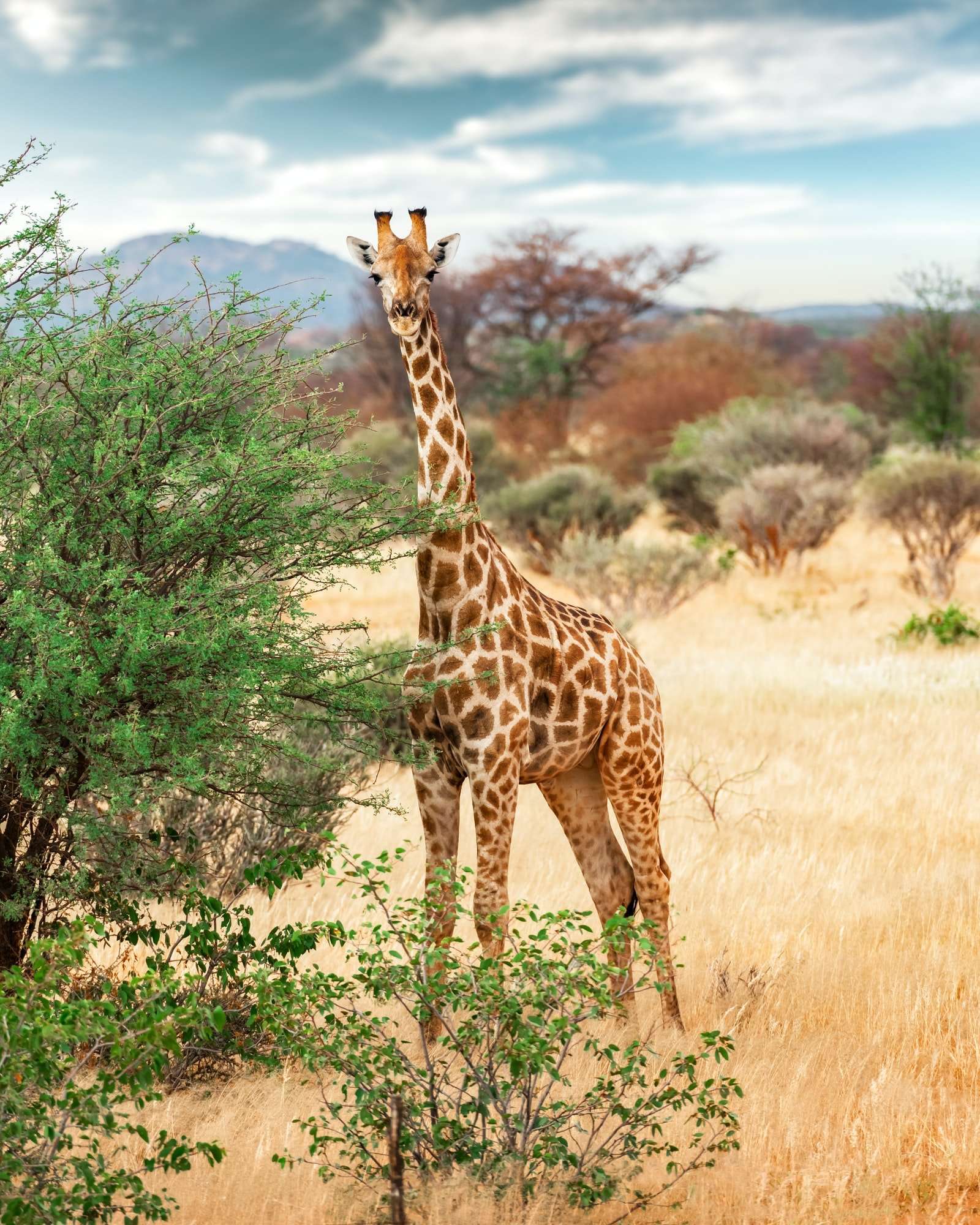
Other Must See Mammals in Serengeti
Beyond the Big Five and Big Nine, Serengeti National Park wildlife becomes even more rewarding when you notice the many other mammals that fill the plains, woodlands, and river edges. These species add depth to every safari and explain why the Serengeti ecosystem supports such strong predator populations and complex animal behavior.
Antelope and Gazelles
Antelope are some of the most common and beautiful Serengeti animals, and they are strongly linked to East Africa’s landscapes. They live in grasslands, scrub, and open bush, coming in many sizes and shapes, each adapted to a specific niche. Although often overlooked, antelope form the backbone of the Serengeti food chain.
Thomson’s Gazelle
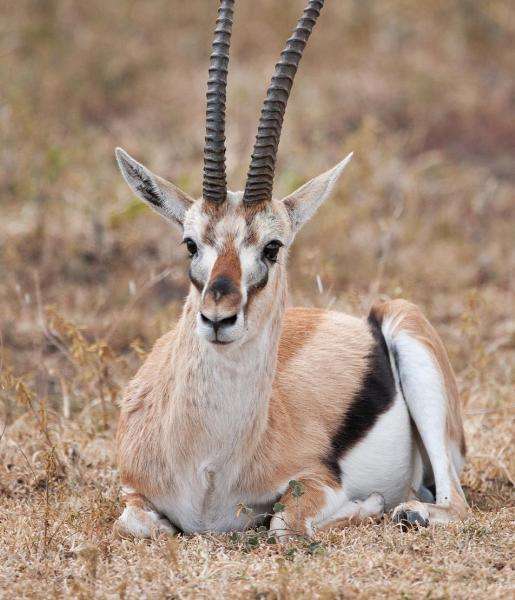
Thomson’s gazelle, often called a “tommie,” is one of the most familiar Serengeti safari animals. Smaller than Grant’s gazelle, it is easy to recognize by its bold black side stripe and thicker black tail. Thomson’s gazelles prefer short grass savannas and open plains, especially in the Serengeti and nearby regions of Kenya. They are fast, alert, and usually seen in mixed groups with zebras and wildebeest.
Grant’s Gazelle
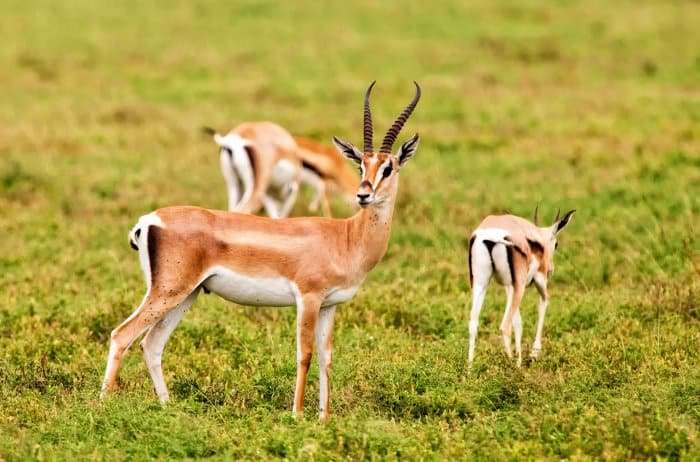
Grant’s gazelle is larger and heavier than Thomson’s gazelle, with long horns on both males and females. These gazelles can gather in large groups of up to 500 individuals in good grazing areas. They often move alongside wildebeest, zebras, and Thomson’s gazelles and are common in Serengeti National Park, Ngorongoro Crater, and Nyerere National Park.
Topi

Topi are striking antelope with a glossy reddish brown coat that can look almost purple in bright sunlight. They prefer flat lowlands and floodplains and are found in large numbers in the Serengeti. Topi can survive long periods without water if green grass is available, but they often rest in shade during the hottest hours. Lions are their main predator.
Impala
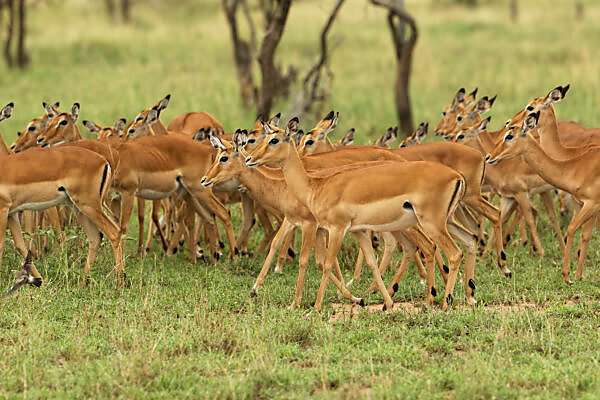
Impala are medium sized antelope found near grassland and woodland edges, usually close to water. They graze fresh grass in the wet season and browse shrubs during drier months. Their reddish brown coats and black markings on the legs make them easy to identify. Impala are common in Serengeti National Park and often seen in alert herds ready to flee predators.
Kirk’s Dik Dik
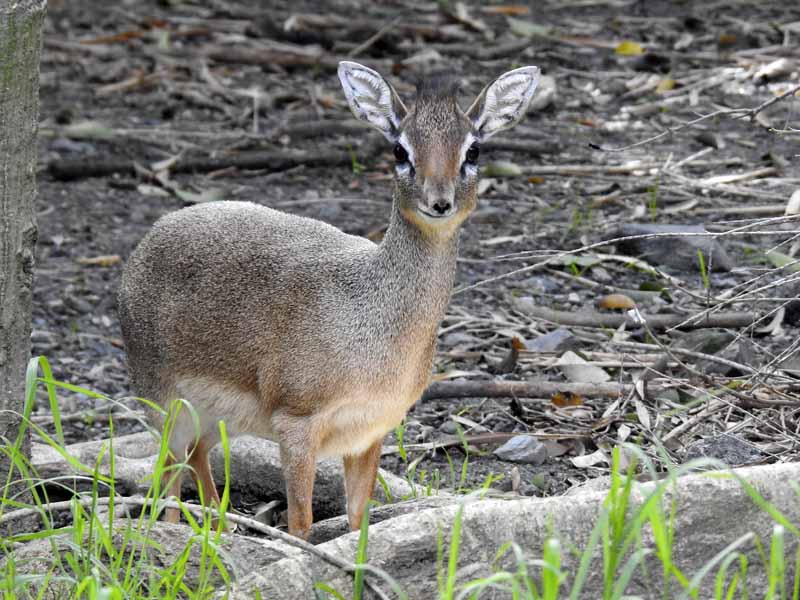
Kirk’s dik dik is a tiny antelope and one of the easiest small mammals to miss on safari. It has a reddish brown back, pale underside, and a distinctive tuft of hair on its forehead. Dik diks are highly nocturnal and rest in shade during the hottest part of the day. They are present in Serengeti, Tarangire, and Ngorongoro.
Coke’s Hartebeest
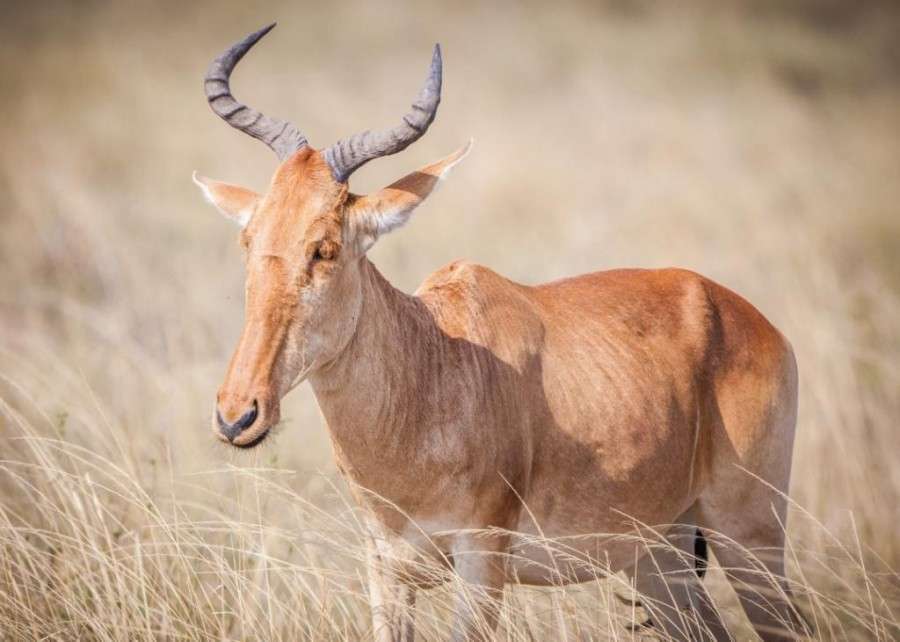
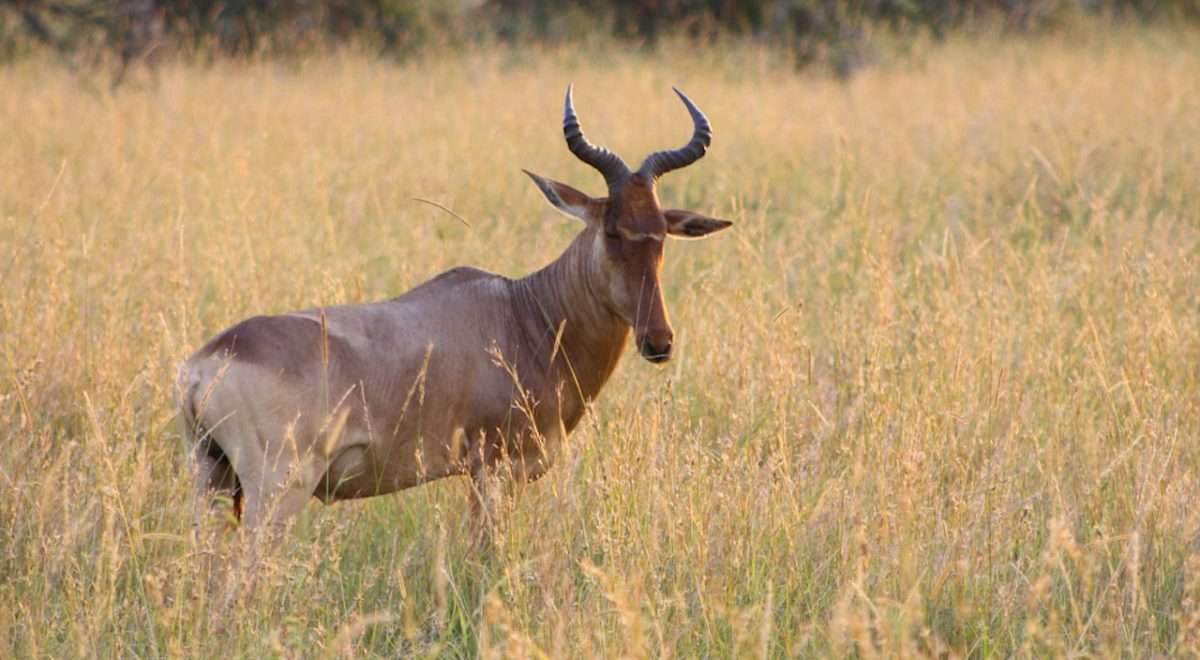
Coke’s hartebeest is a fast and enduring antelope with a long narrow face and sharply angled horns. It lives in medium to tall grasslands and feeds mainly on grass, even when quality is poor. It is commonly seen in Serengeti National Park and surrounding protected areas.
Common Eland
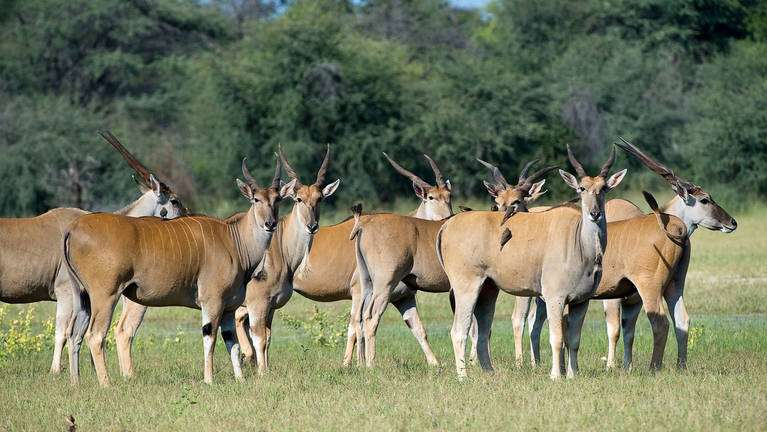
The common eland is the second largest antelope in the world. Despite its size, it moves quietly through savanna scrub and avoids dense forest. Elands feed on grass and foliage and are most active in the early morning and late afternoon. They are regularly seen in Serengeti, Ngorongoro, and Nyerere National Park.
Waterbuck
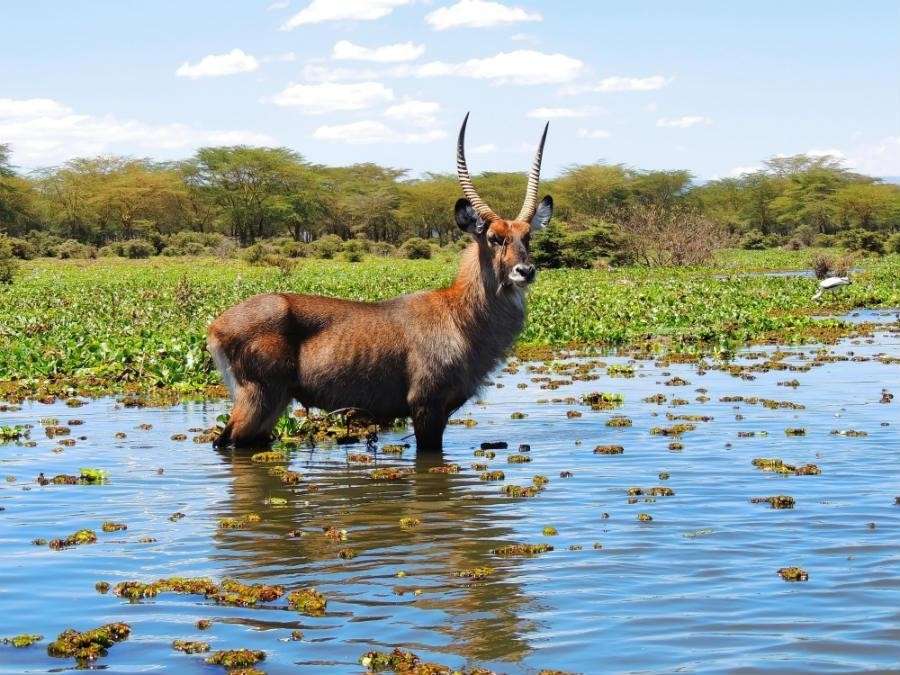
Waterbuck are solid looking antelope with shaggy dark coats and white markings on the thighs. Males have long curved horns used for defense. They stay close to water sources and feed on grasses and reeds. Waterbuck are fairly common in Serengeti and other major Tanzanian parks.
Oribi
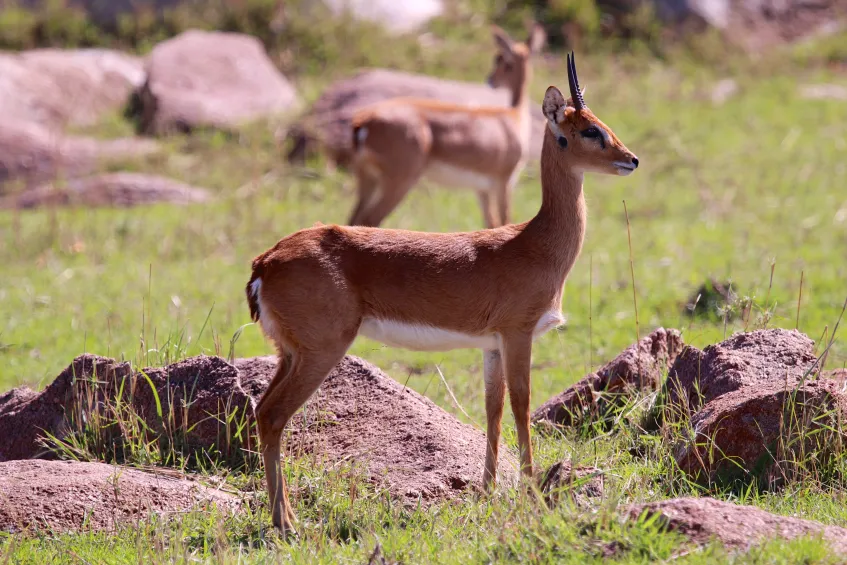
Oribi are slender, medium small antelope that prefer open grasslands kept short by grazing or fire. They favor flat areas and gentle slopes and are relatively uncommon, which makes spotting one in the Serengeti a quiet highlight.
Klipspringer
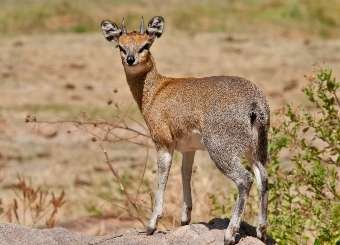
Klipspringers are small, sturdy antelope adapted to rocky terrain. Their stiff, speckled hair and tip toe stance help them balance on stone surfaces. When alarmed, they retreat quickly into rocks. Although more often associated with rocky outcrops, they can also be seen in parts of Serengeti National Park.
Small and Unusual Mammals People Love Spotting
These lesser known Serengeti mammals often become favorites because they add surprise and character to a safari.
African Hare
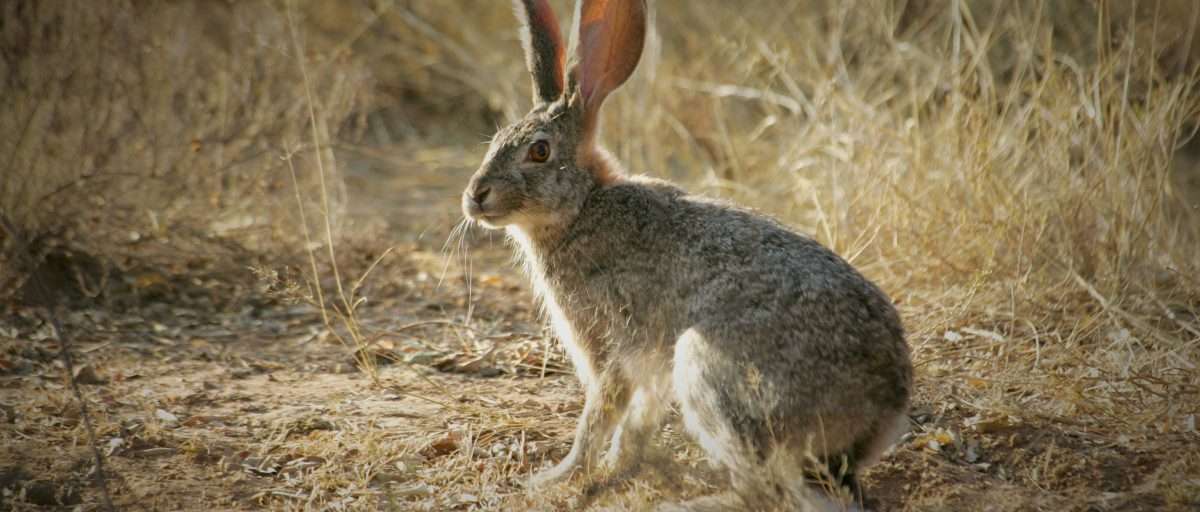
African hares live in grasslands and wooded savannas and are usually solitary. They rely on speed and sharp senses to avoid predators and feed on leaves, roots, bark, and fungi. They are common throughout Serengeti National Park.
Aardwolf
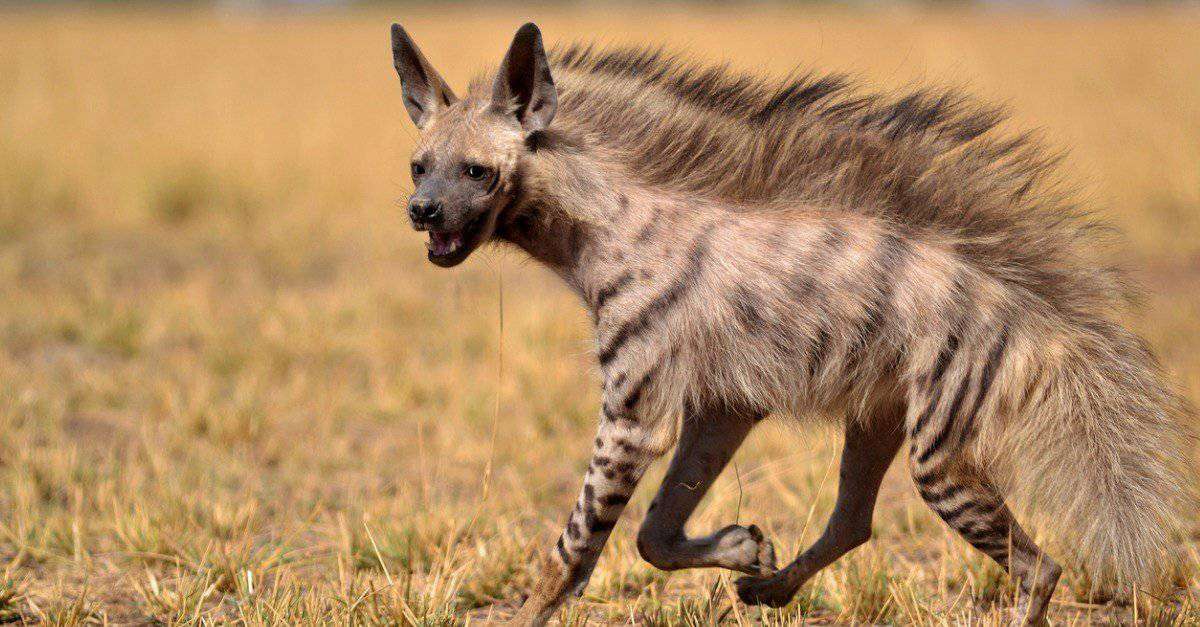
The aardwolf looks like a small striped hyena but feeds mainly on termites. It is nocturnal, solitary, and rests in burrows during the day. Aardwolves are found on open grassy plains and mark territories carefully.
Bat Eared Fox
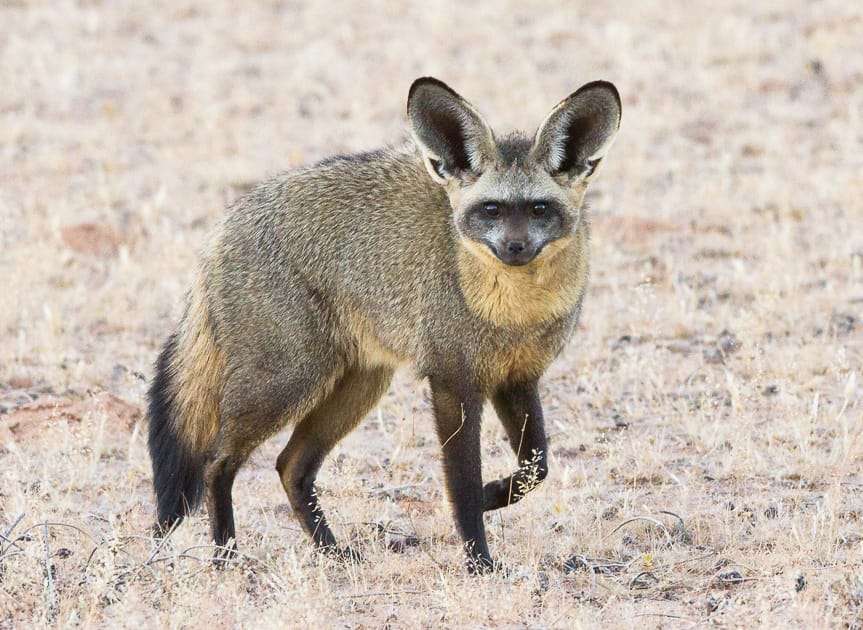
Bat eared foxes live in short grass plains and arid areas and are highly social. Their large ears help them hear insects underground. They feed mostly on ants and termites and are often seen in pairs or family groups.
Banded Mongoose
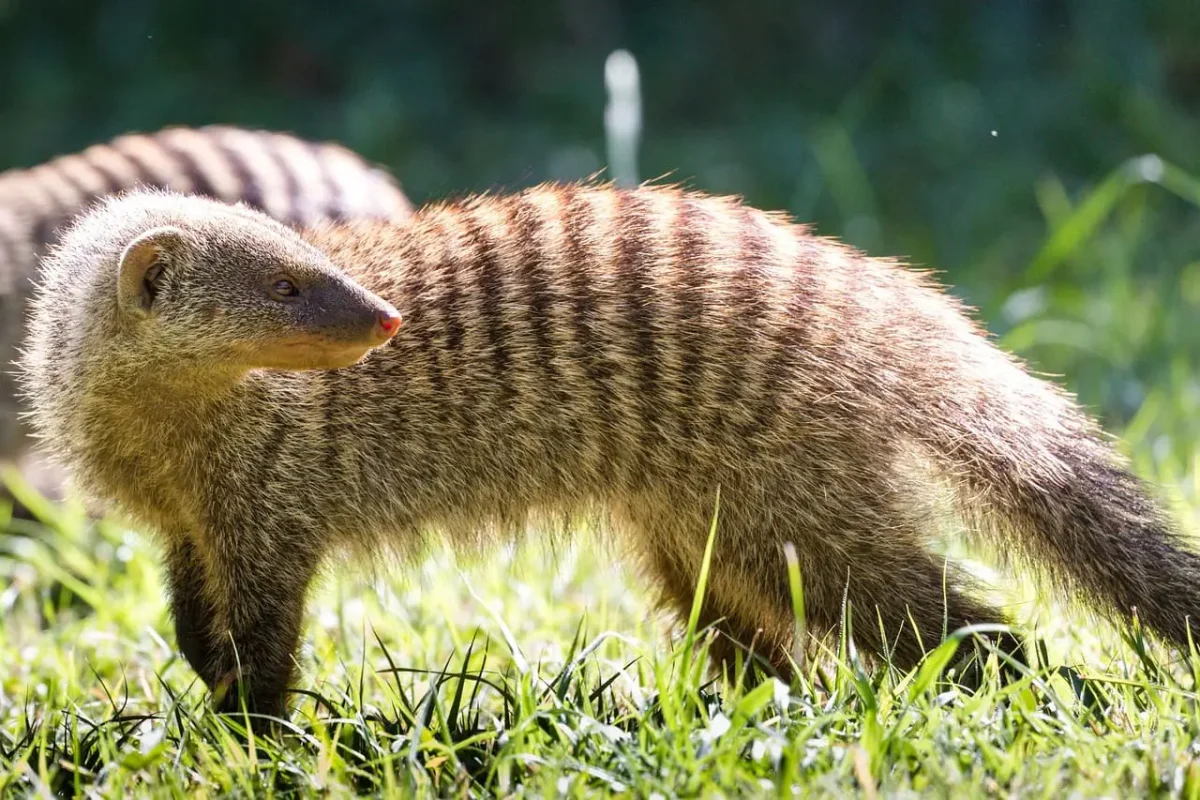
Banded mongooses live in colonies and are often seen moving together across open ground. They use termite mounds for shelter and feed on insects like beetles and millipedes. Their dark bands make them easy to recognize.
Dwarf Mongoose
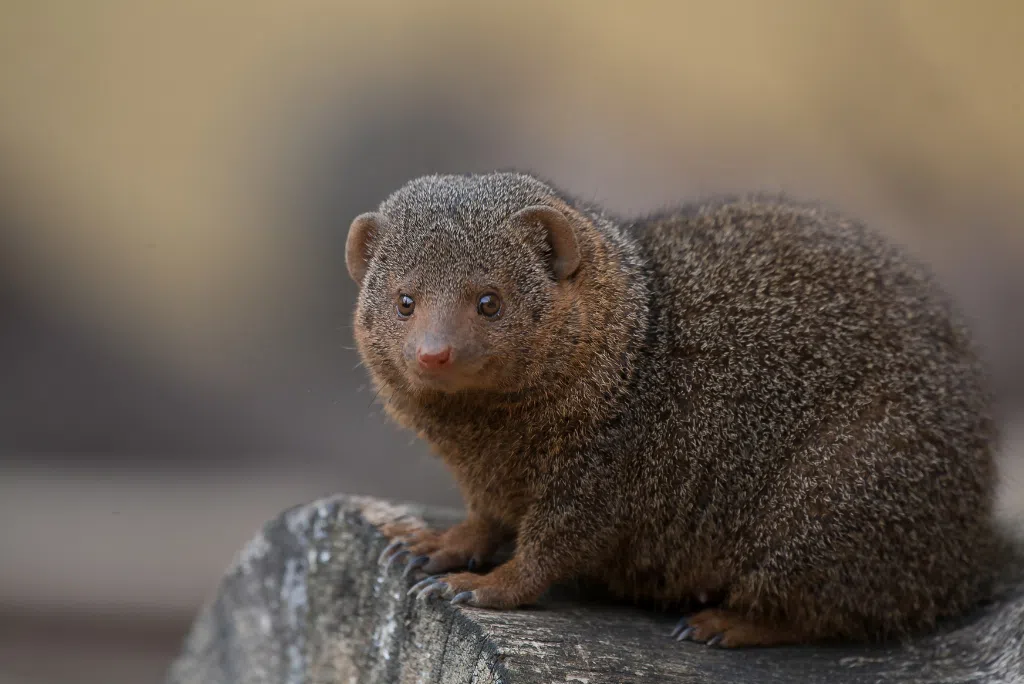
Dwarf mongooses are small, social carnivores that live in family groups near termite mounds. They are active during the day and feed on insects and small animals.
Bushbaby
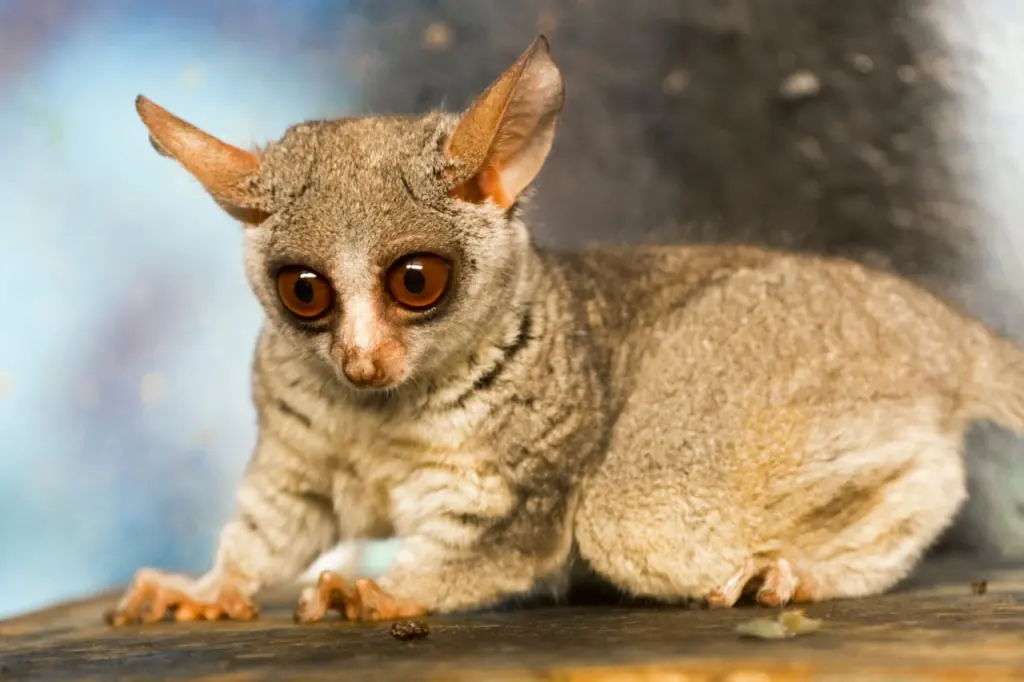
Bushbabies are small nocturnal primates with large eyes and powerful legs. They can leap several feet vertically and feed on fruits, seeds, and insects. They are present in Serengeti but are mostly seen at night.
Crested Porcupine
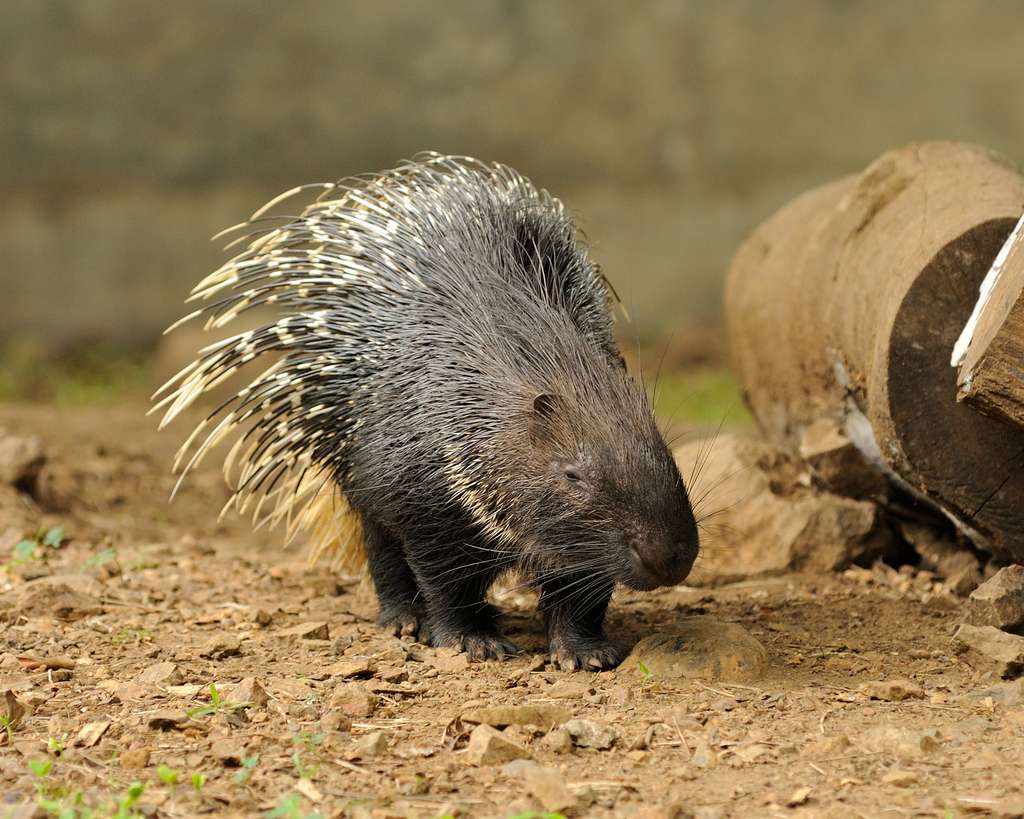
Crested porcupines are large nocturnal rodents covered in black and white spines. They feed on roots, bulbs, bark, and fruit and are usually seen after dark.
Pangolin
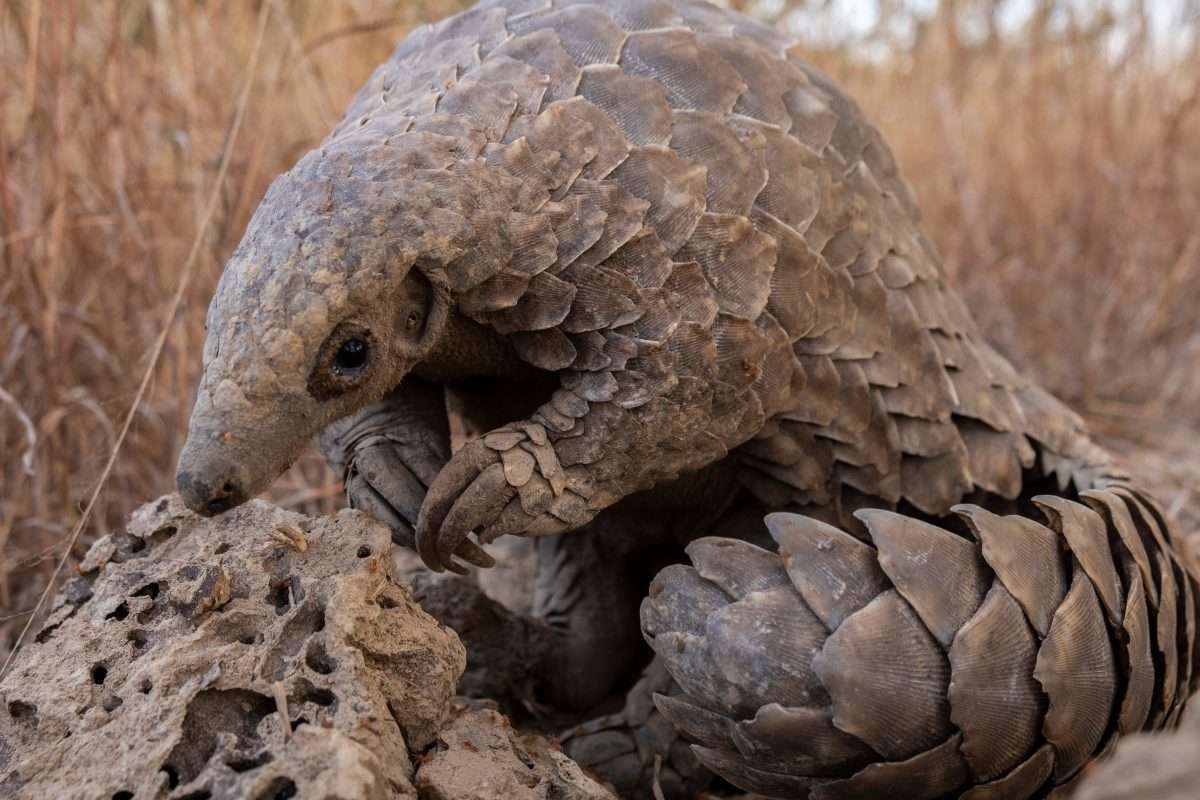
Pangolins are rare and elusive Serengeti animals covered in protective scales. When threatened, they roll into a ball. They feed almost entirely on ants and termites and are one of the hardest mammals to spot on safari.
Honey Badger
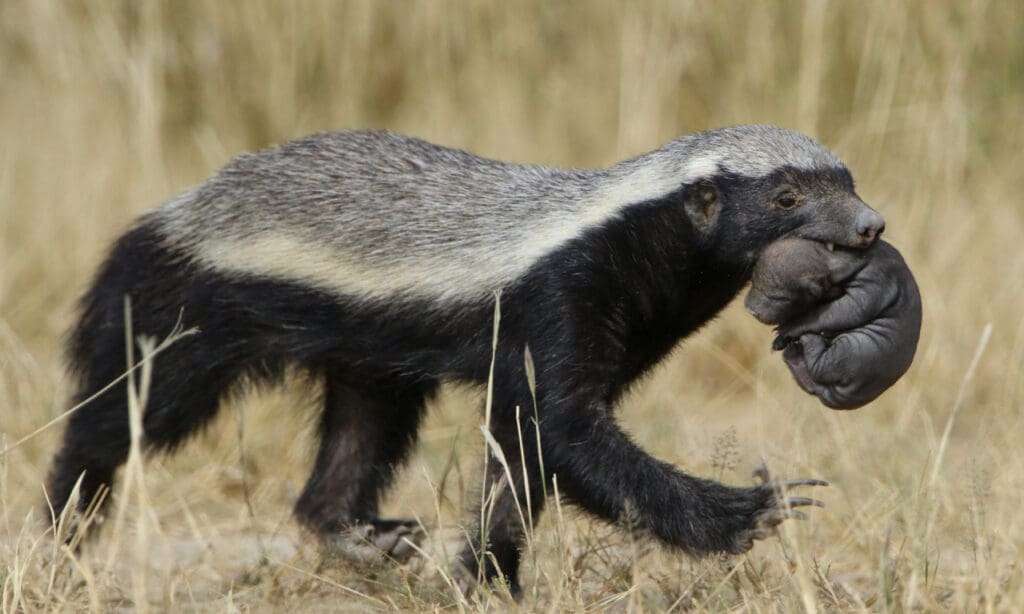
Honey badgers are famous for their fearless behavior. They eat a wide range of food, from insects to small mammals, and dig aggressively with strong claws. They are often seen alone and are active day or night.
Side Striped Jackal
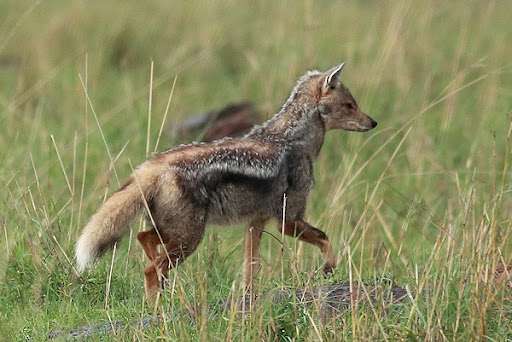
Side striped jackals live in woodland and scrub areas and feed on small animals, insects, fruit, and carrion. They are quieter and less bold than other jackal species.
Slender Mongoose
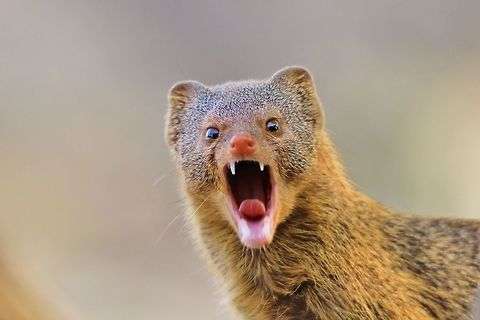
Slender mongooses are agile hunters found in woodland, savanna, and forest edges. They feed on insects, rodents, reptiles, and birds and are often seen darting between cover.
Vervet Monkey and Red Tailed Monkey
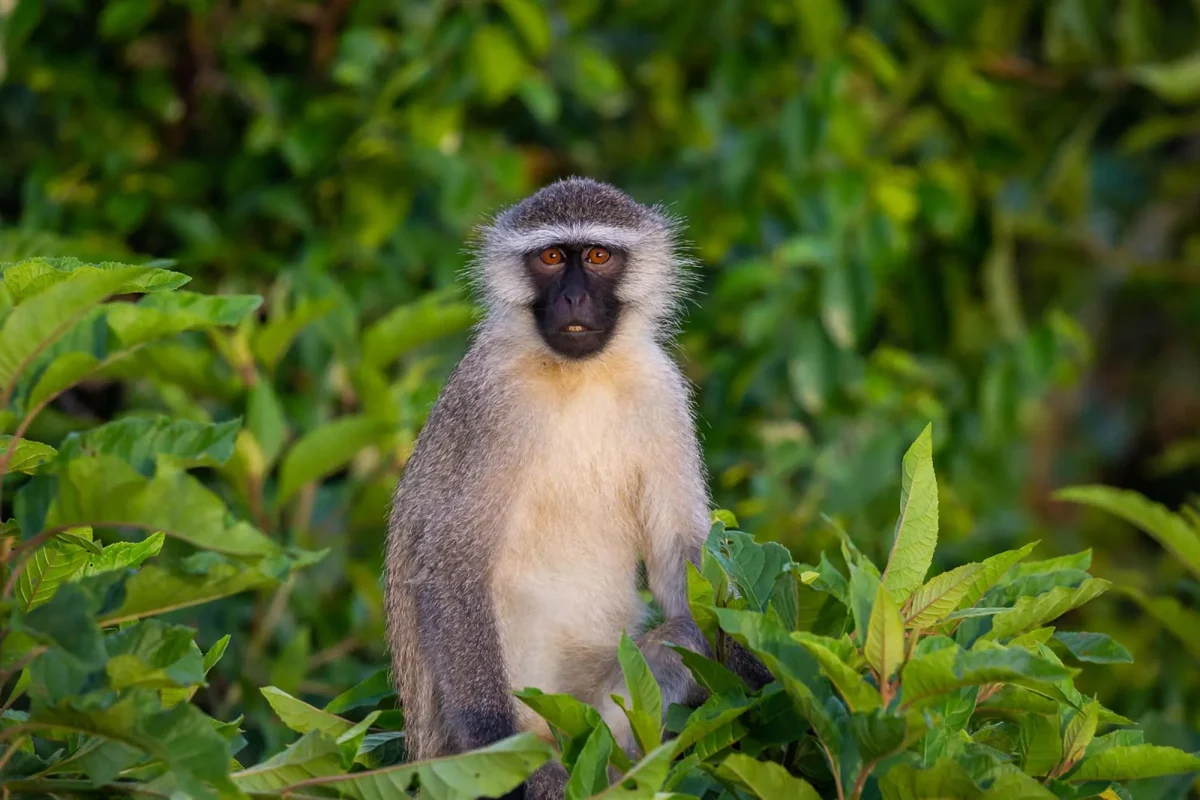
Vervet monkeys live in stable troops of 10 to 50 individuals and feed mainly on plant matter, with insects added when available. Red tailed monkeys are social and vocal and are often active in the early morning and evening.
Olive Baboon
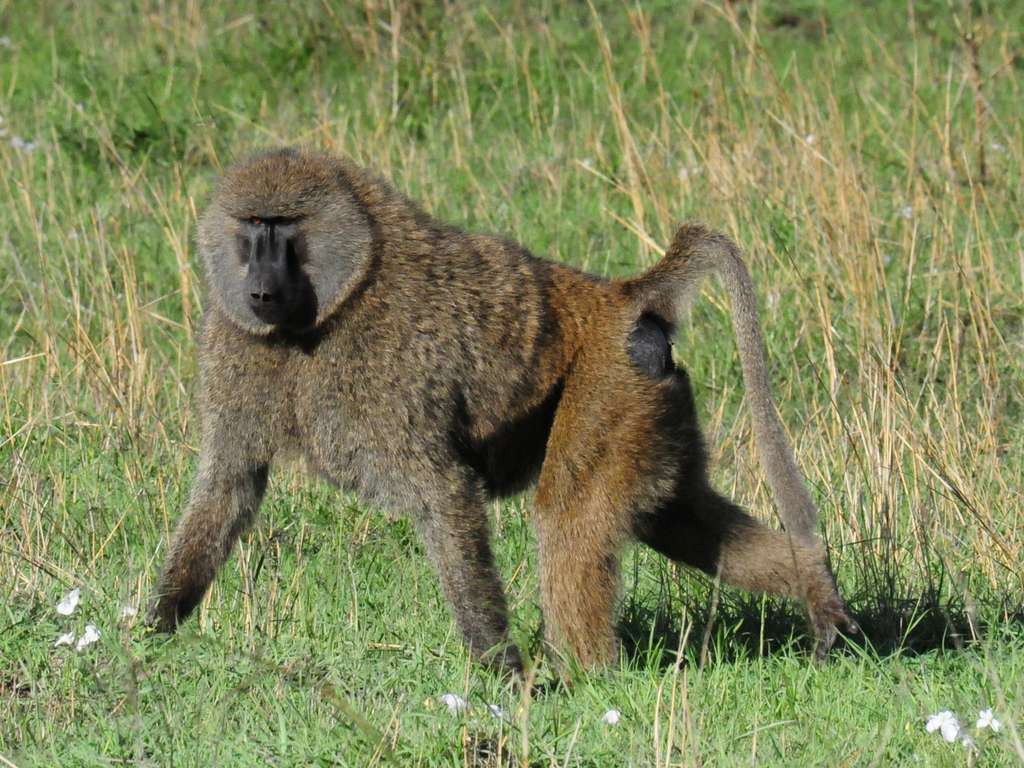
Olive baboons are highly adaptable primates living in large troops that can exceed 100 individuals. They feed on almost anything and are commonly seen across the Serengeti ecosystem.
Hyenas and the Night Soundtrack of Serengeti
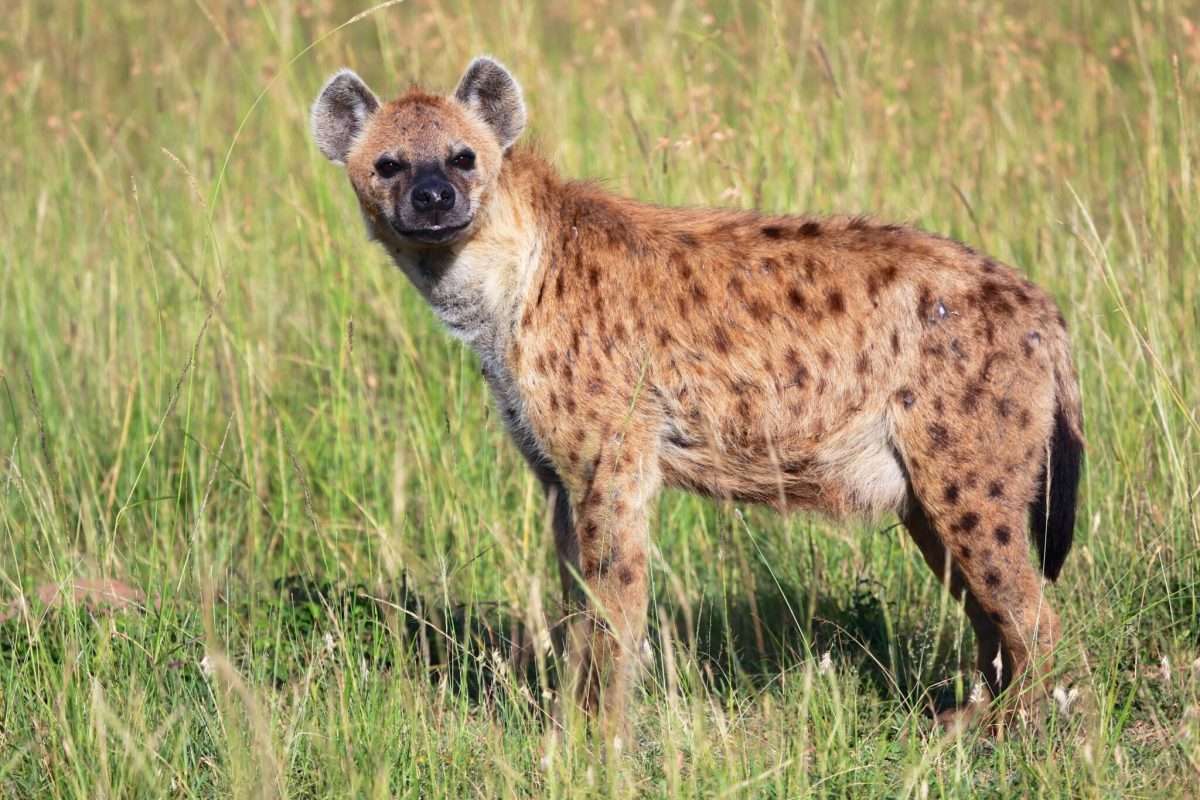
Spotted hyenas are among the most successful predators in Serengeti National Park. They live in complex social groups led by dominant females and are more often heard than seen, especially at night. Their calls can travel for kilometers across the plains. In some areas, territories average around 12 hyenas per 100 square kilometers. The best time to notice hyena activity is during the early hours and around Great Migration movement, when hunting and scavenging opportunities increase.
Birds You Should Look For in Serengeti
The Serengeti birdlife surprises many travelers. With 500 plus recorded bird species, the park is rich in raptors, large savanna birds, and colorful ground species. Even non birders enjoy these sightings because many Serengeti birds are big, bold, and dramatic, easy to spot, and often active during game drives near rivers, open plains, and grazing animals.
African Fish Eagle
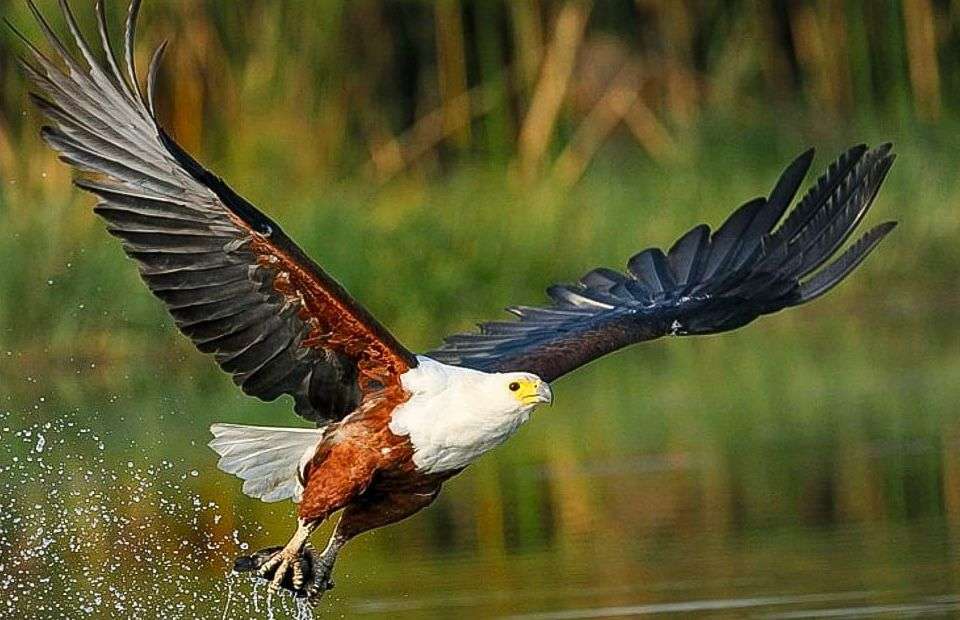
Often seen near rivers and pools, the African fish eagle is easy to recognize by its white head, brown body, and powerful black wings. Its loud call is one of the most familiar sounds in the Serengeti. Watch for it perched near water, scanning for fish before swooping down.
Martial Eagle
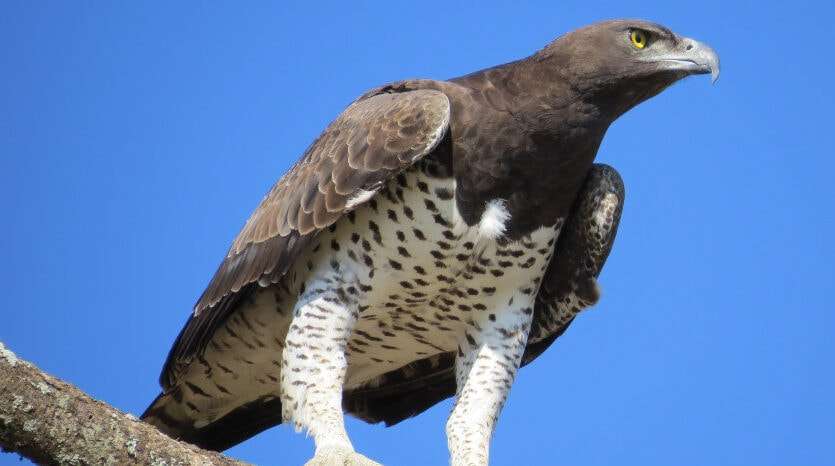
The largest eagle in Africa, with a wingspan reaching 2.75 meters. Martial eagles hunt medium sized mammals and birds and are usually seen soaring high above open plains or perched on tall trees.
Bateleur
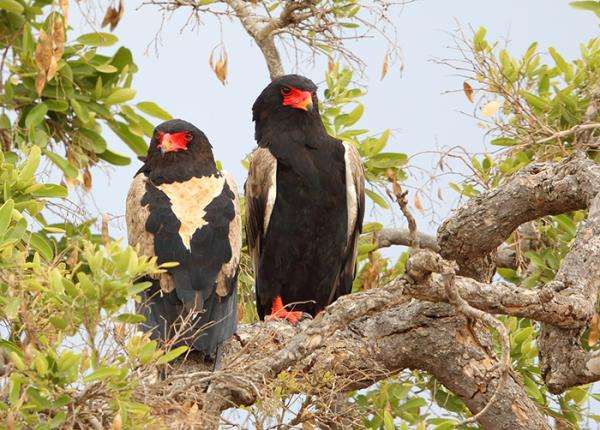
Bateleurs are striking eagles with bright colors and short tails. They fly low over the plains with a rocking motion, often scanning for carrion or small prey. Seeing one in flight is a highlight of any Serengeti safari.
Secretary Bird
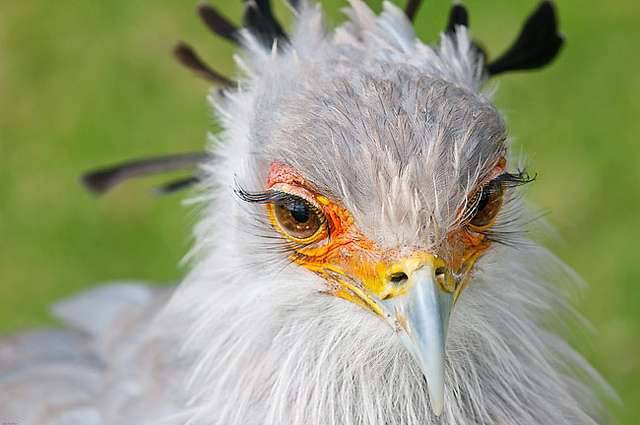
This tall, ground walking bird hunts snakes and small animals on foot. It is best spotted in open grasslands, striding confidently across the plains with its long legs.
Black Chested Snake Eagle
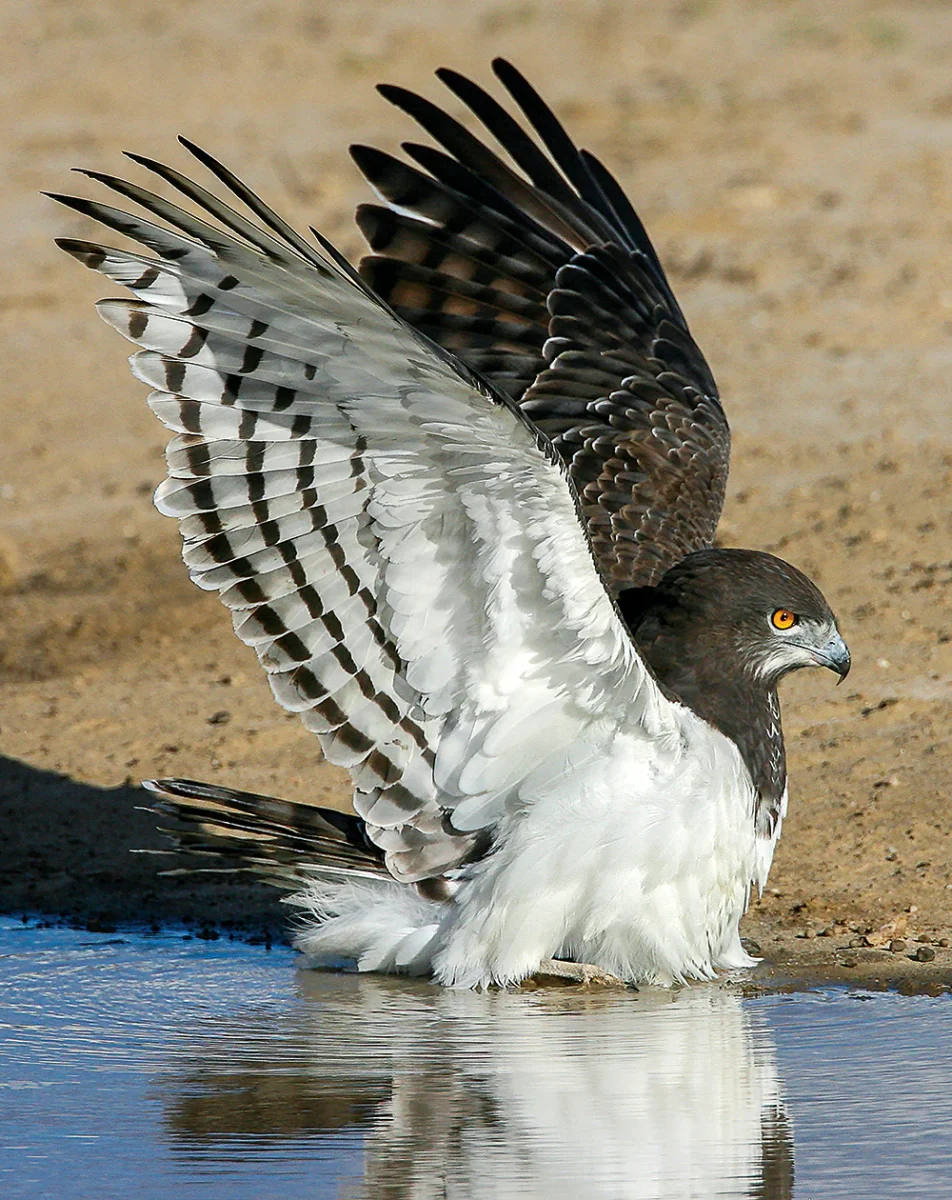
A specialist hunter of snakes, this eagle is often seen perched quietly on trees or soaring over open areas. Its dark chest and pale underside make it easy to identify.
African Harrier Hawk
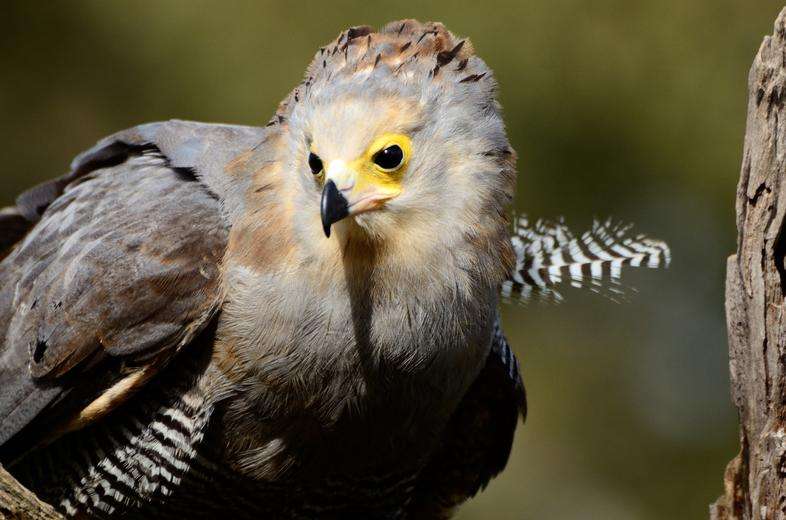
Common near woodland and riverine areas, this adaptable raptor is known for reaching into nests and crevices to grab prey. Its slow, searching flight is easy to follow.
Rüppell’s Vulture
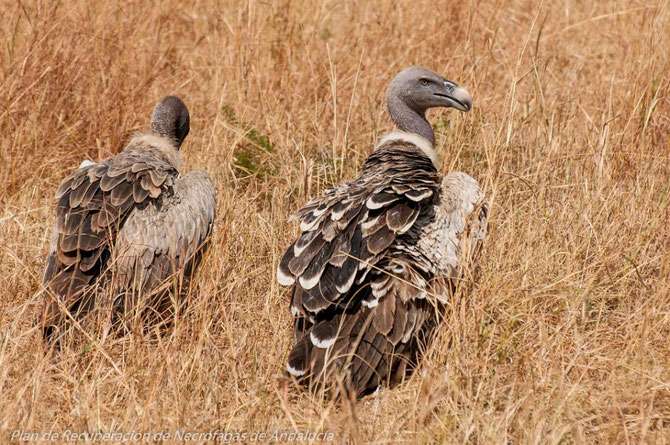
Famous for holding the record as the highest flying bird in the world, Rüppell’s vulture is often seen circling above carcasses. It plays a key role in keeping the ecosystem clean.
White Backed Vulture
One of the most common vultures in the Serengeti. These social birds gather quickly at kills and are often the first sign that predators are nearby.
Lappet Faced Vulture
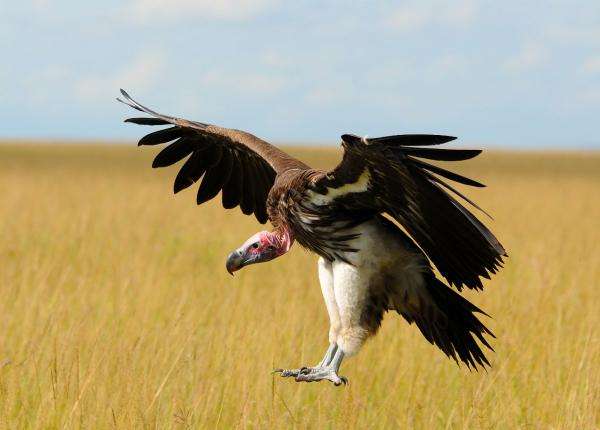
The largest and most powerful vulture in the region. It usually arrives early at carcasses and can tear through thick hides that other vultures cannot.
Marabou Stork
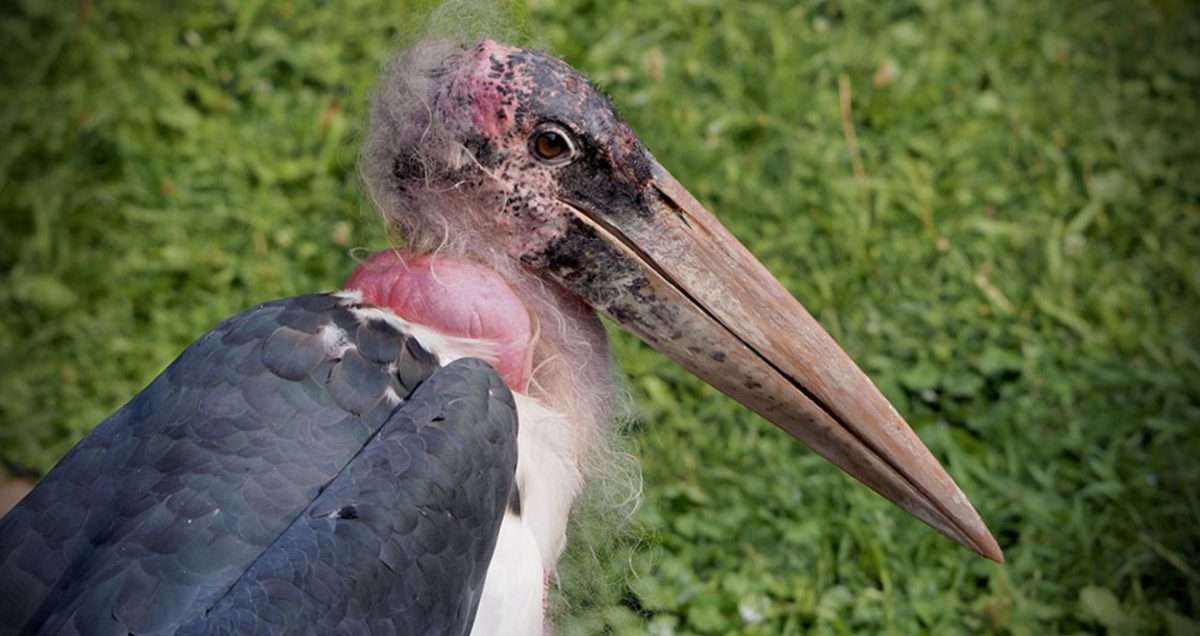
Tall, bald headed, and often misunderstood, marabou storks are efficient scavengers. They are usually found near water, kills, or human camps.
Kori Bustard
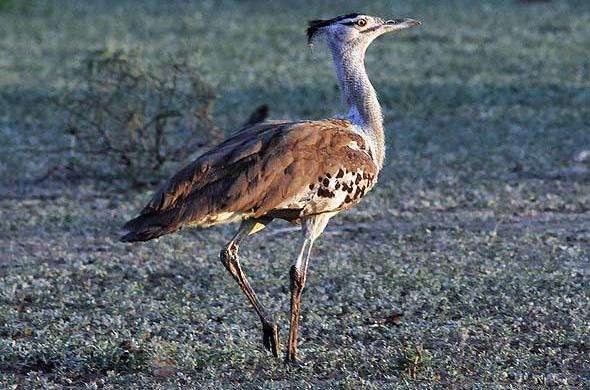
The heaviest flying bird in Africa, kori bustards are ground dwelling and often seen walking slowly through open savanna. Males perform impressive displays during breeding season.
Ostrich
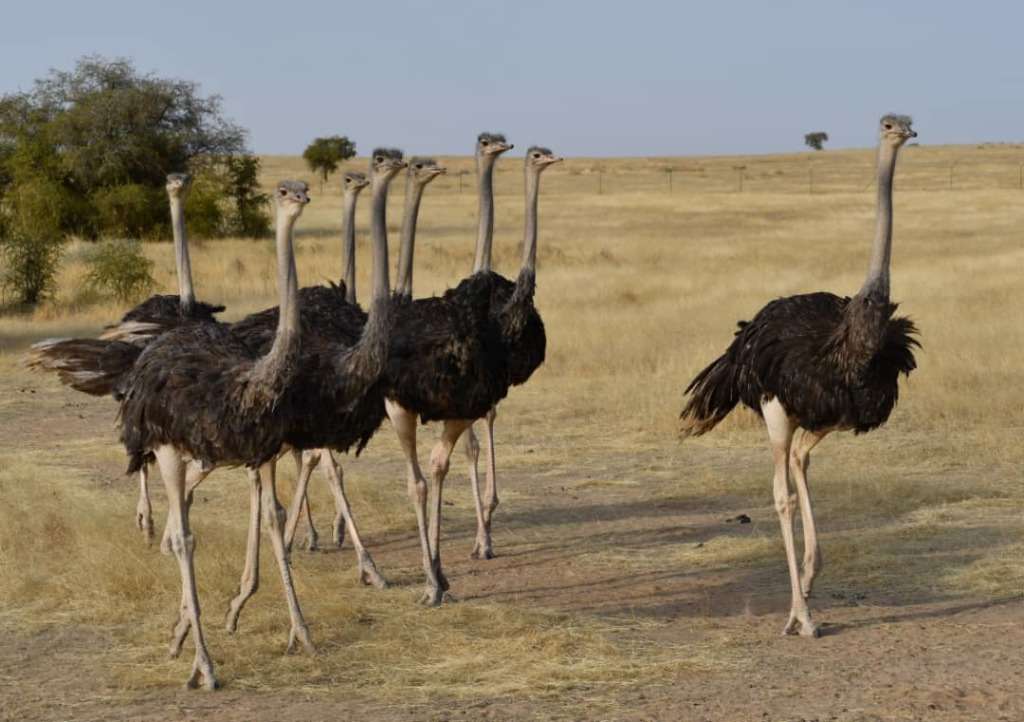
The largest living bird, ostriches are common on Serengeti plains. They can run up to 70 km per hour, share communal nests with dozens of eggs, and rely on speed and sharp eyesight to avoid predators.
Lilac Breasted Roller
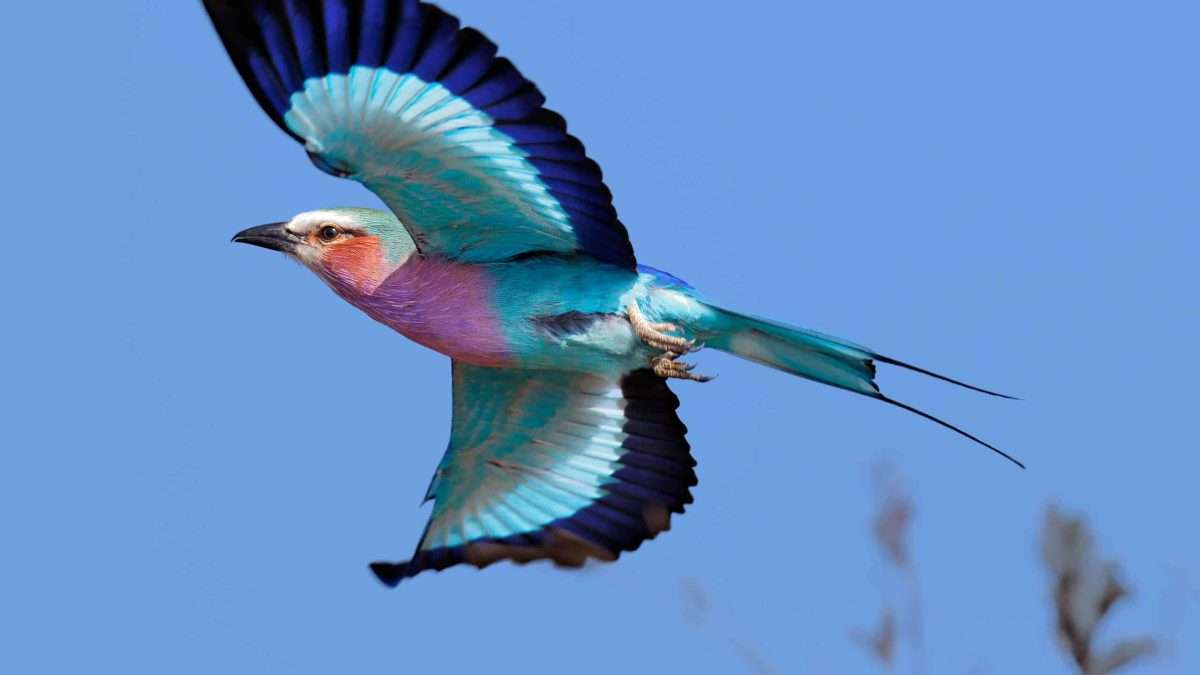
Often called Africa’s most colorful bird, this roller is commonly seen perched on trees along roads. It flashes bright blues and purples in flight.
Superb Starling
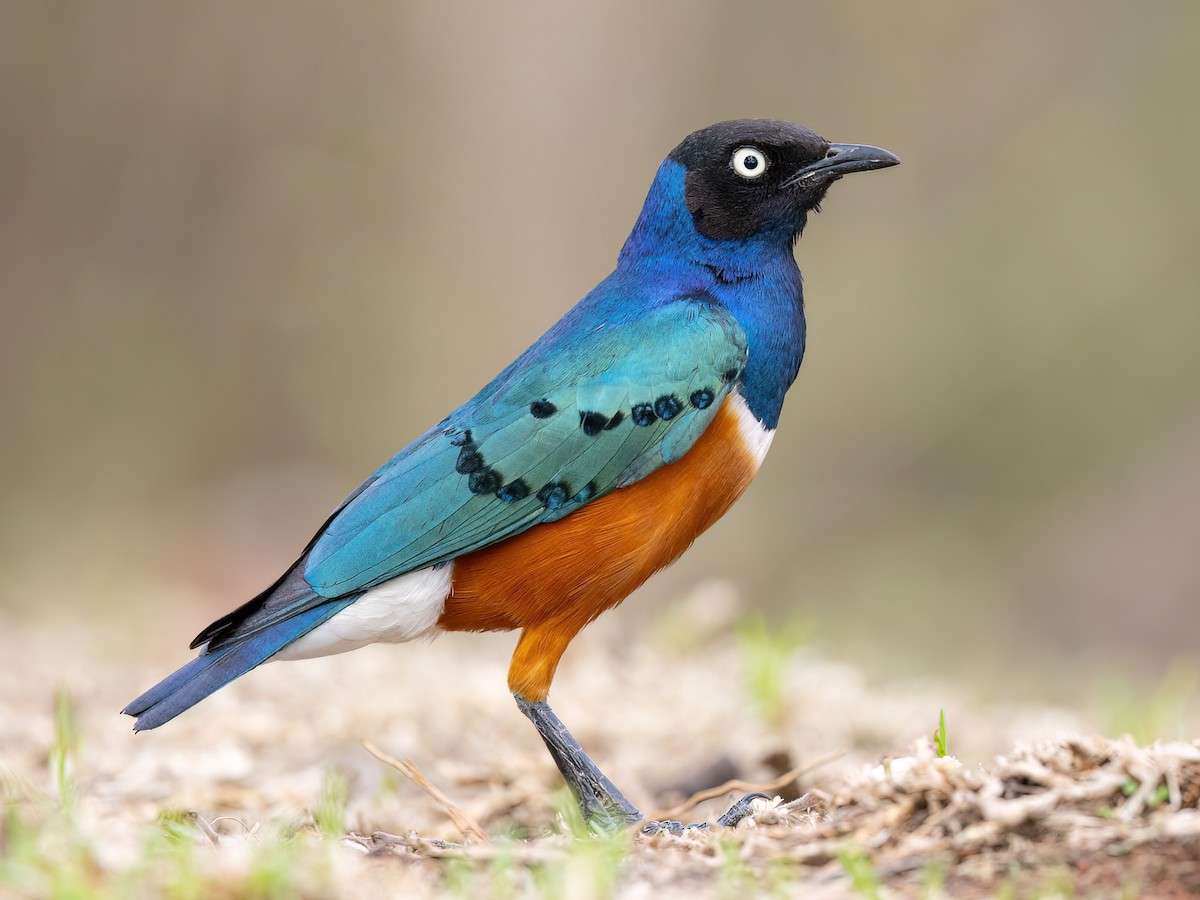
A frequent camp visitor, superb starlings have shiny blue and green feathers with a white chest band. They are bold, curious, and easy to spot.
Vulturine Guineafowl
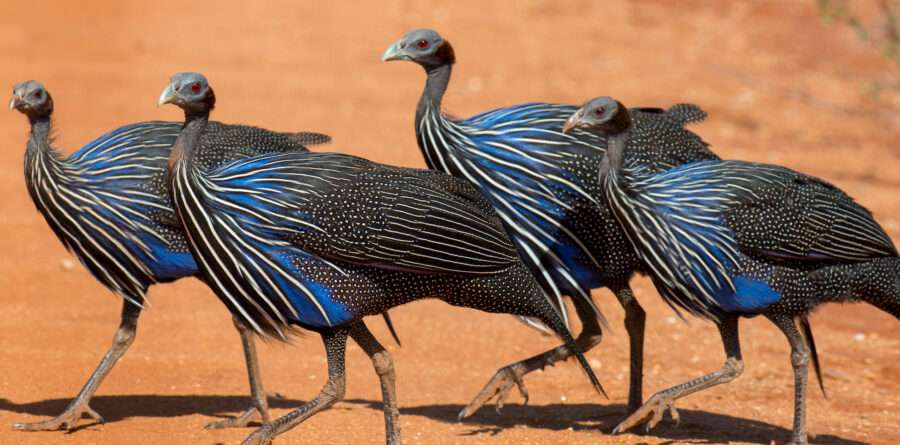
Large and striking with blue and black plumage, these birds move in tight groups across open ground, often near grazing mammals.
Southern Ground Hornbill
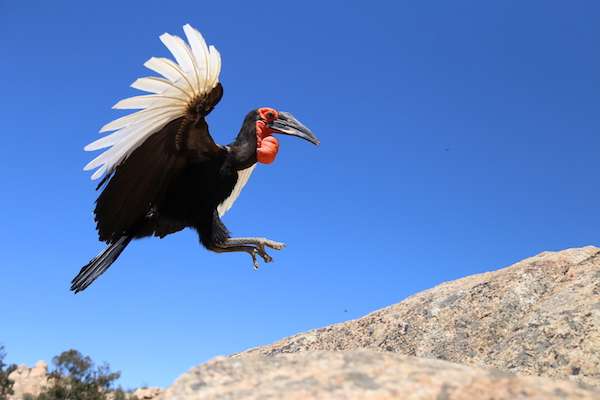
A large ground dwelling bird with a deep booming call. It moves in family groups and feeds on insects, reptiles, and small animals.
African Grey Hornbill
Smaller and more active, grey hornbills are often seen hopping through trees, feeding on insects, fruit, and reptiles.
Green Wood Hoopoe
Noisy and social, these birds move in groups along tree trunks and termite mounds, flashing green and purple feathers.
Usambiro Barbet
A localized and colorful barbet found in open woodland and savanna areas of the Serengeti. Often heard before it is seen.
African Darter
Often seen swimming with only its long neck above water, darters spear fish with sharp bills in rivers and pools.
African Spoonbill
Easy to spot by its spoon shaped bill, this bird sweeps shallow water for fish and insects.
African Openbill Stork
Recognized by the gap in its bill, it feeds mainly on aquatic snails and is common around wetlands.
Abdim’s Stork
The smallest stork species, often seen walking through grasslands during migration periods.
Black Headed Heron
A tall grey heron commonly seen near water or standing motionless in open areas waiting for prey.
Egyptian Goose
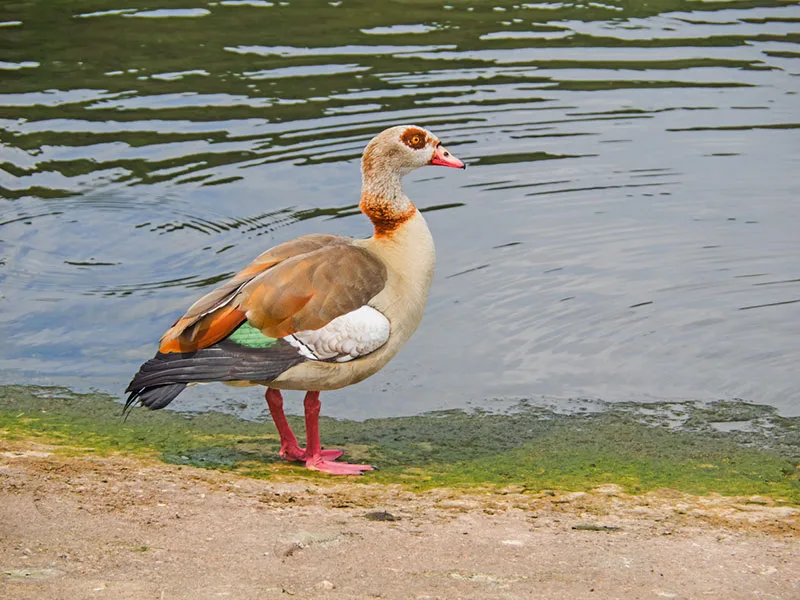
Very common in the Serengeti, these birds are often seen grazing on grass near water and nesting on riverbanks.
Hamerkop
A strange looking bird with a hammer shaped head, usually found near wetlands and known for building huge nests.
adeda Ibis
Recognized by its loud call and curved bill, hadedas are often active in early morning and evening.
Kingfishers
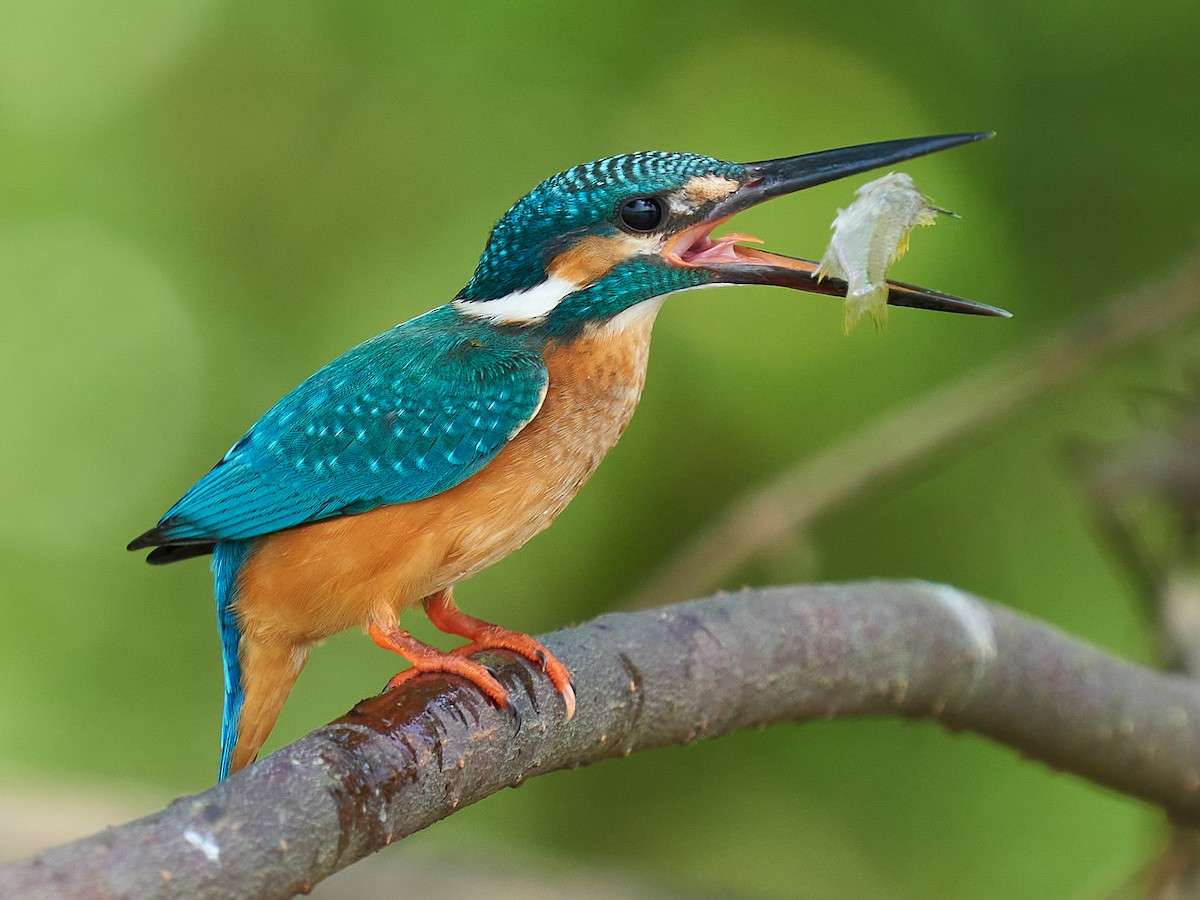
Kingfishers are fun to watch because of their quick dives and bright colors. In the Serengeti, they are often seen perched near water, scanning for insects, lizards, or small fish before striking.
Book Serengeti Safari in Tanzania with TourwithPipi
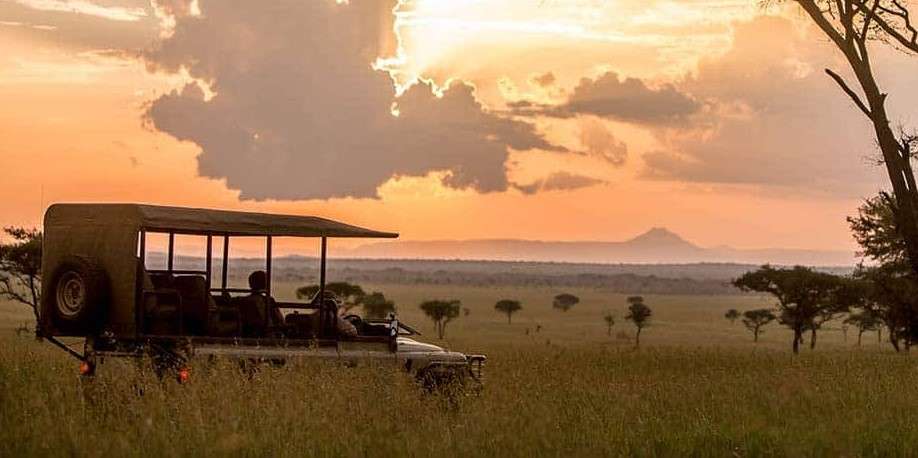
Seeing Serengeti animals in their natural setting is best done on a well-planned safari that follows wildlife movement and seasonal patterns. TourwithPipi designs private, luxury safaris in Tanzania that focus on real sightings, not rushed schedules, so you have time to experience the Serengeti ecosystem properly.
Great Migration Safari Tanzania – 10 Days
$6,549 per person
A 10 day luxury Tanzania safari built around peak Great Migration action, including dramatic Mara River crossings. This itinerary follows the herds and predators across Northern Serengeti for high-impact wildlife viewing. View Itinerary.
Calving Season Safari February – 11 Days
$5,889 per person
An 11 day safari focused on Ndutu and Southern Serengeti, timed for the wildebeest calving season. Expect newborn calves, active predators, and wide open plains filled with life. View Itinerary.
8 Days Tanzania Calving Safari
$5,429 per person
A shorter February safari designed for travelers who want intense wildlife action during calving season without a longer itinerary. Ideal for photography and fast-paced Serengeti sightings. View Itinerary
7 Days Northern Tanzania Safari
$3,749 per person
7 day is a best-value private safari covering Northern Tanzania’s top parks, including Serengeti. Perfect for first-time visitors looking to see the Big Five, Big Nine, and classic savanna wildlife in one week. View Itinerary
Best Time to See Serengeti Animals
The Serengeti offers wildlife viewing year-round, but seasons shape what you see and how you see it.
Dry season advantages
During the dry months, animals gather near rivers and waterholes, making Serengeti safari wildlife easier to spot. Visibility is higher and predator sightings increase.
Green season advantages
The green season brings fresh landscapes, fewer crowds, and newborn animals. Calving season in early months delivers intense predator action and dramatic behavior.
Daily movement patterns
Wildlife follows food, shade, and water throughout the day.
Sunrise is best for predators and hunting activity.
Midday shows resting and social behavior.
Sunset brings movement toward water and grazing areas.
Safari Tips to Spot More Serengeti Wildlife
Early morning drives give the best chance to see predators before the heat sets in. Move slowly and scan wide open plains for cheetahs and lions, and always look up in trees and along river lines for leopards. Watch circling vultures, as they often lead guides to kills. Stay quiet and listen for alarm calls from birds and antelope. Bring binoculars, sun protection, and plan your camera lenses ahead of time. Most importantly, respect distance rules and follow guide instructions to keep both guests and Serengeti animals safe.
Final Thoughts
Serengeti animals are not just a checklist to complete but part of a living, moving ecosystem that changes every hour. While the Big Five and Big Nine are realistic goals here, the smaller mammals, birds, and daily interactions are what make the Serengeti truly unforgettable. Plan with patience, trust the rhythms of nature, and allow the park to surprise you, because that is where the real magic of a Serengeti safari lives.
Blog Summary: Must See Animals in Serengeti National Park
Serengeti National Park is Tanzania’s most famous wildlife destination and one of the best places in Africa to see animals on safari.
The Serengeti ecosystem supports over 70 large mammal species and more than 500 bird species, making it rich in year-round wildlife sightings.
Seeing the Big Five animals in Serengeti (lion, leopard, elephant, buffalo, and black rhino) is realistic, even on a short safari.
The Big Nine in Serengeti adds cheetah, giraffe, hippo, and zebra, all commonly seen across open plains, rivers, and woodland edges.
The Great Migration animals are a major highlight, with over 1.5 million wildebeest, large zebra herds, and gazelles moving through the Serengeti Mara ecosystem.
Predators such as lions, cheetahs, hyenas, and leopards closely follow the migration, creating dramatic wildlife moments.
Beyond famous species, Serengeti is home to diverse antelope, small mammals, and rare animals that add depth to every game drive.
Serengeti birds include large raptors, colorful savanna species, and wetland birds that even non-birders enjoy spotting.
The best times to see Serengeti wildlife are early morning and late afternoon when animals are most active.
Both dry and green seasons offer excellent Serengeti safari experiences, with different landscapes and animal behavior.
Booking a well-paced Serengeti safari in Tanzania increases your chances of seeing animals behaving naturally.
Serengeti animals are best experienced by slowing down, following experienced guides, and letting the ecosystem reveal itself naturally.


