
When you picture African savanna wildlife, you probably think of lions, elephants, giraffes and other large animals. But the grass-eating animals of the savanna are just as important. They form the base of much of the food web and support many of Africa’s best-known predators.
Savanna grazers are herbivores that feed mainly on grasses and other low-growing vegetation. Buffalo, zebra and wildebeest are some of the best-known examples, but Africa has many other grazing species, including several antelope and smaller mammals.
Not every herbivore is a strict grazer. Some species switch between grazing and browsing depending on the season, food availability and local conditions.
What Are Savanna Grazers?
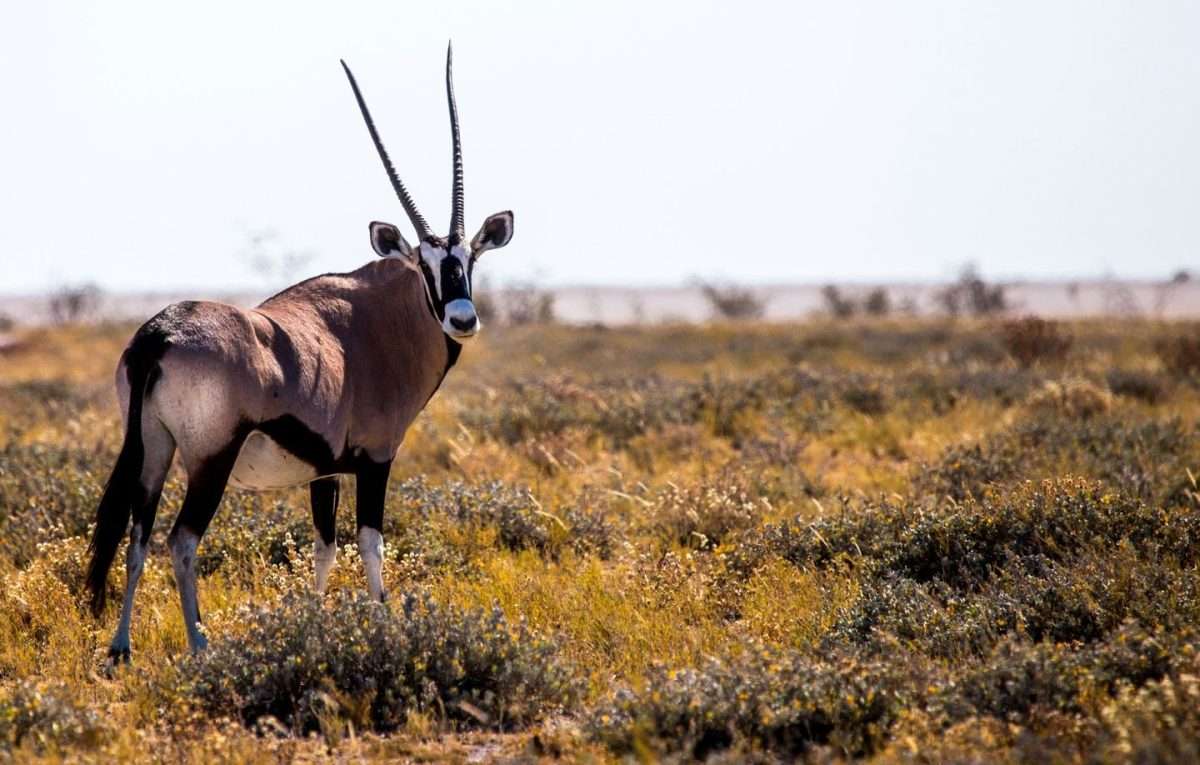
A grazer is an herbivorous animal that gets most of its food from grass and other low-growing plants.
Grazing animals have adaptations that help them process fibrous vegetation. Their teeth, jaws and digestive systems allow them to make use of grasses that many other animals cannot digest efficiently.
Grazer vs Browser: What Is the Difference?
The simplest distinction is what part of the vegetation an animal eats.
| Grazers | Browsers |
|---|---|
| Mainly eat grass | Mainly eat leaves, shoots and twigs |
| Feed close to the ground | Feed from shrubs and trees |
| Examples: zebra, buffalo, wildebeest | Examples: giraffe, kudu, black rhino |
| Often associated with open grassland | Often associated with woodland and bush |
| Usually more dependent on available surface water | Some can obtain more moisture from leaves |
The distinction is not absolute. During drought or when preferred food becomes scarce, some animals change their feeding behaviour. Elephants and impala, for example, can both graze and browse.
This matters on safari because the animals you see in one area can change with rainfall, grass quality and the availability of water.
The Main Grazers Animals in Africa
1. African Buffalo
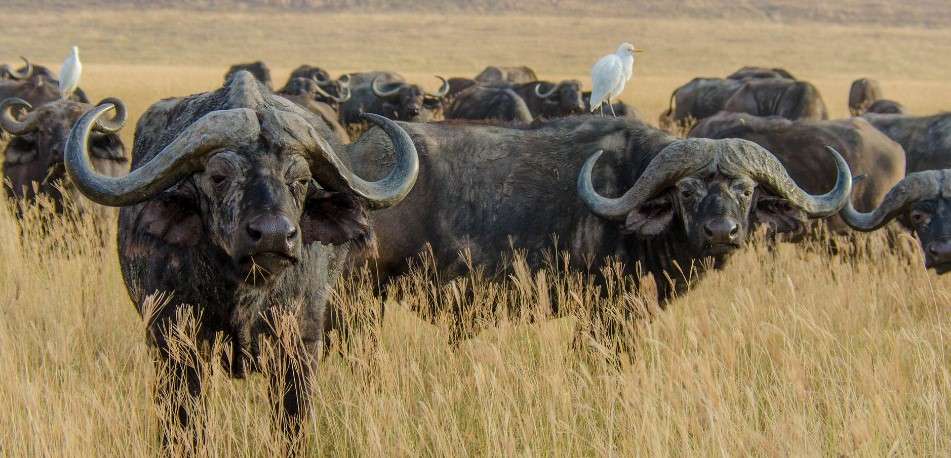
The African buffalo is one of the most important large grazers in the savanna.
It feeds primarily on grass and can make use of relatively coarse vegetation. Buffalo usually live in herds, sometimes forming very large groups, which gives them protection against predators.
They are commonly found around open grasslands, river valleys and areas close to permanent water.
- Diet: Mainly grass
- Typical habitat: Grassland, woodland edges and areas near water
- Safari highlight: Large buffalo herds
2. Plains Zebra
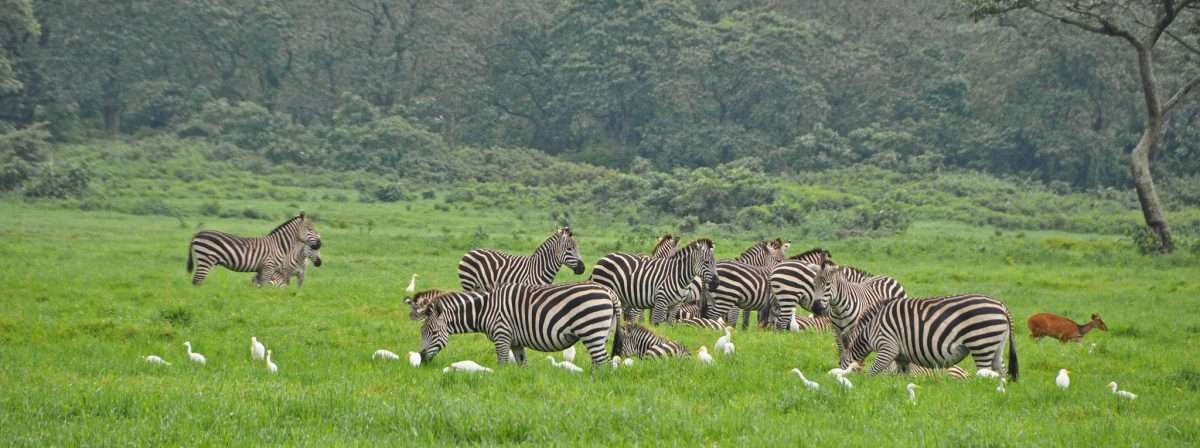
Plains zebra are among the most recognisable grazer animals in Africa.
They feed predominantly on grass and often move through open plains in herds. Zebra can also be seen alongside wildebeest and other herbivores.
Their ability to live on relatively low-quality grass allows them to use areas that are not ideal for animals with more selective diets.
- Diet: Mainly grass
- Typical habitat: Open plains and lightly wooded savanna
- Safari highlight: Mixed herds with wildebeest
3. Blue Wildebeest

Blue wildebeest are specialised grazers that favour short grass.
They are closely associated with large seasonal movements in East Africa, where millions of grazing animals follow changing rainfall and fresh vegetation.
Wildebeest also form mixed groups with zebra. Different species can feed in the same landscape without necessarily competing for exactly the same food.
- Diet: Short grass
- Typical habitat: Open grassland and savanna
- Safari highlight: Great Migration herds
4. White Rhino
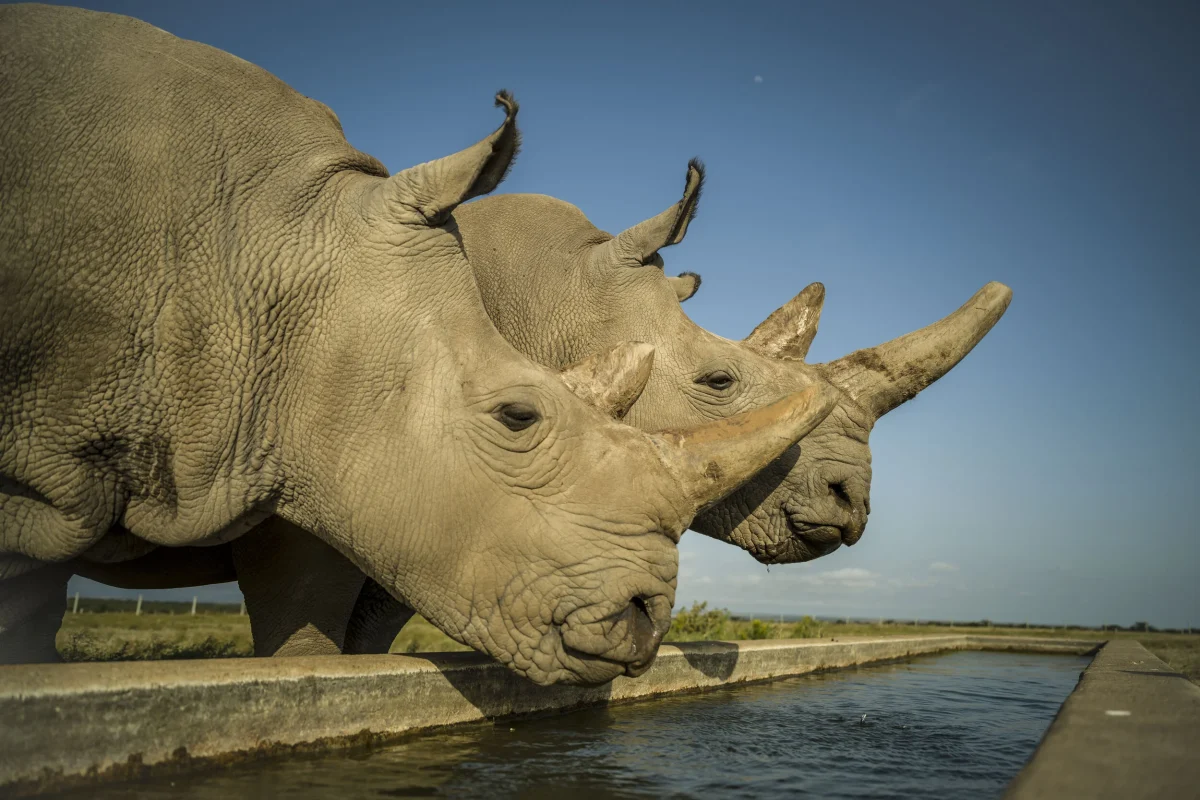
White rhinos are large grazing herbivores that spend much of their time feeding on grass.
Their broad, square-shaped mouths are well suited to cropping grass close to the ground. This feeding style makes them different from black rhinos, which are primarily browsers.
White rhinos can therefore be an excellent species to look for when exploring open grassland.
- Diet: Mainly grass
- Typical habitat: Open and semi-open grassland
- Safari highlight: White rhino feeding in open areas
5. Warthog
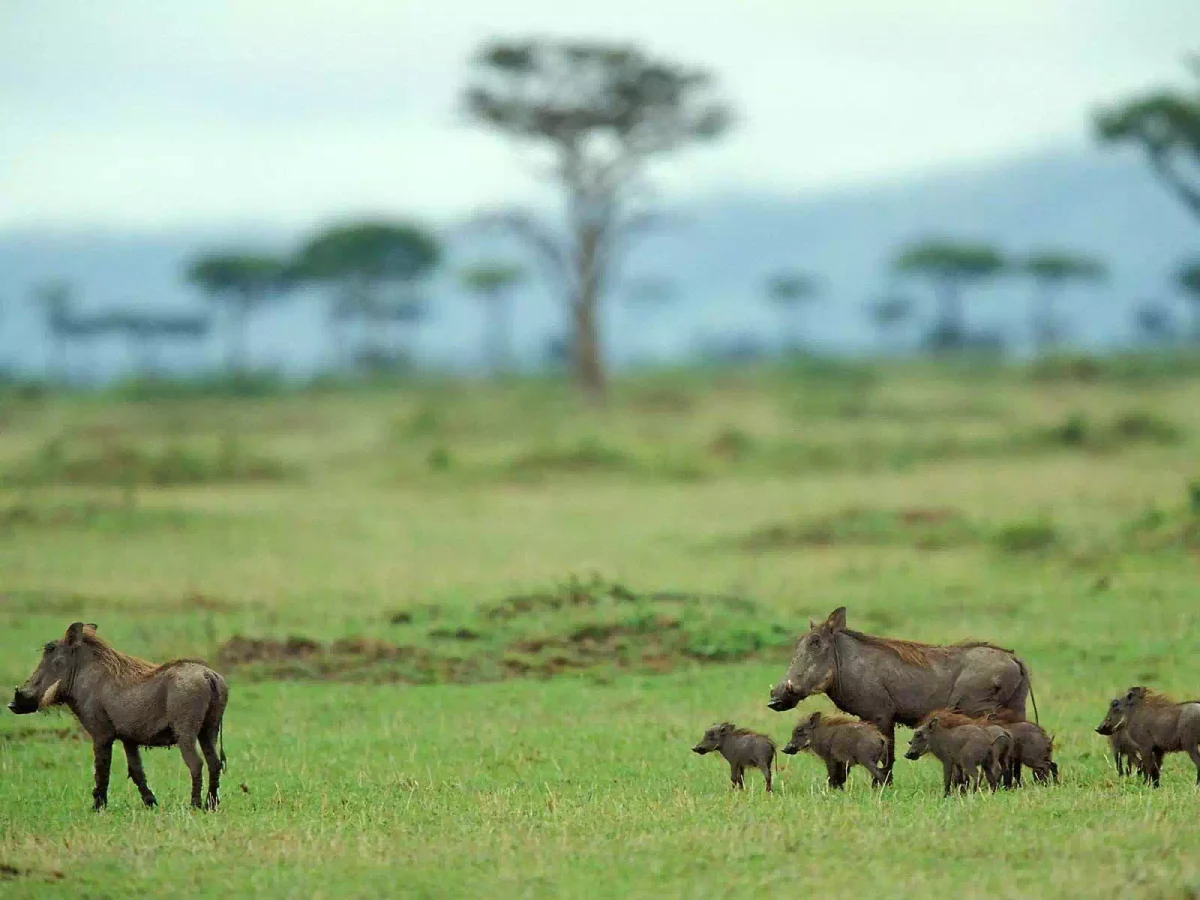
Warthogs are less specialised than some of Africa’s larger grazers, but grass forms an important part of their diet.
They often feed with their heads close to the ground and can also dig for roots, bulbs and other underground food using their snouts and tusks.
Their feeding behaviour can disturb the soil and create small patches of exposed ground.
- Diet: Grass, roots, bulbs and other plant material
- Typical habitat: Open savanna and grassland
- Safari highlight: Warthogs feeding or moving between wallows
6. Hippopotamus
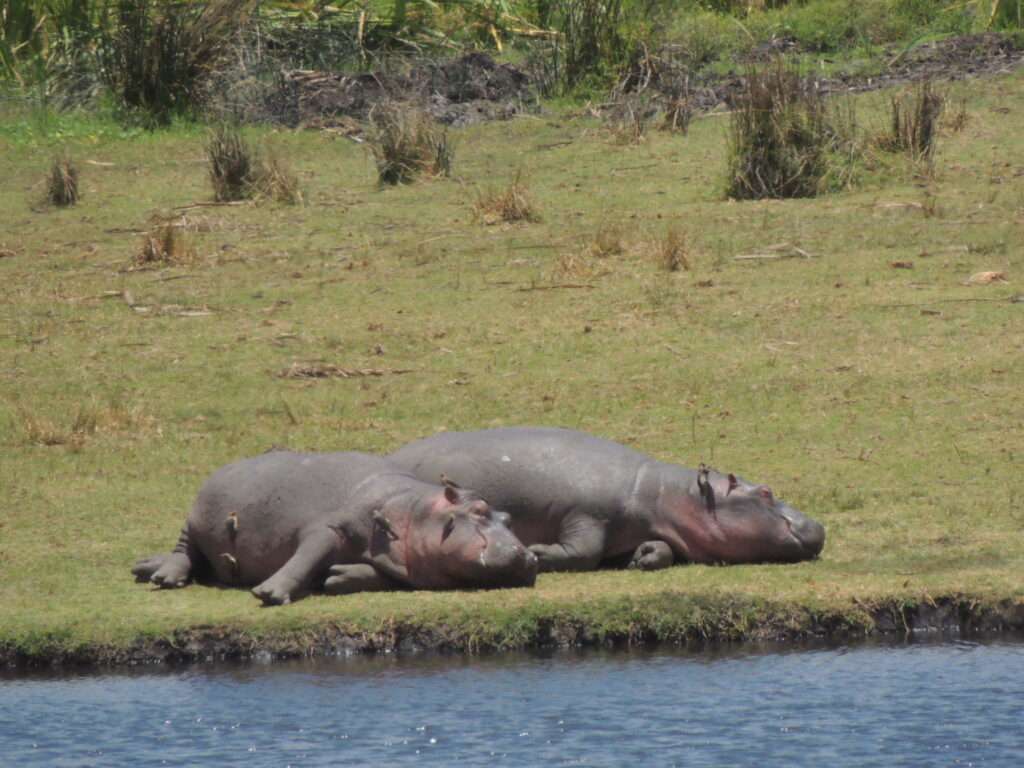
Hippos spend much of the day in or near water but usually leave the water to feed on land, particularly at night.
Grass makes up most of their diet. Their connection with rivers, lakes and floodplains makes them different from typical open-country grazers such as zebra and wildebeest.
- Diet: Mainly grass
- Typical habitat: Rivers, lakes, floodplains and nearby grassland
- Safari highlight: Hippos gathered in water and grazing nearby
Grazers vs Browsers: Examples From Africa
If you are trying to identify an animal on safari, looking at its feeding height can be useful.
| Animal | Main feeding strategy | Main food |
|---|---|---|
| African buffalo | Grazer | Grass |
| Plains zebra | Grazer | Grass |
| Blue wildebeest | Grazer | Short grass |
| White rhino | Grazer | Grass |
| Warthog | Grazer / mixed feeder | Grass and underground plant parts |
| Hippo | Grazer | Grass |
| Giraffe | Browser | Leaves and shoots |
| Kudu | Browser | Leaves and shoots |
| Black rhino | Browser | Leaves, shoots and shrubs |
| Impala | Mixed feeder | Grass and browse |
| Elephant | Mixed feeder | Grass, leaves, bark and other vegetation |
The boundary can become less clear when food availability changes. The Kruger reference specifically describes elephants and impala as animals adapted to both grazing and browsing conditions.
Are All Grazers Strictly Grass-Eaters?
No.
This is one of the most important points when talking about grazer animals.
Some herbivores are highly specialised, while others are flexible feeders. An animal may normally graze but start eating other vegetation when its preferred grass becomes scarce.
Drought is a good example. When grass becomes dry or limited, some normally grazing animals may browse leaves or consume other available plant material.
So rather than putting every herbivore into a rigid category, it is more accurate to think of grazing and browsing as feeding strategies.
Are Elephants Grazers?
Sometimes.
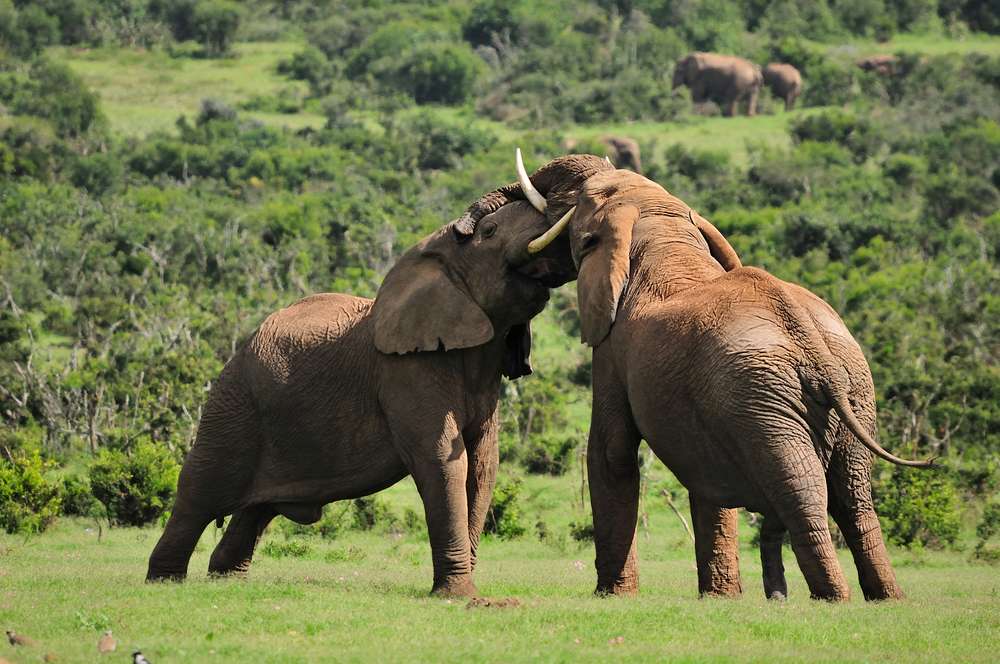
Elephants are not purely grazers or browsers. They are mixed feeders.
They eat grass as well as leaves, branches, bark and other plant material. Their feeding behaviour can therefore have a much wider effect on vegetation than that of a specialised grazer.
An elephant may graze in open grassland and then switch to browsing trees and shrubs nearby.
This flexibility helps elephants use a wide range of habitats.
Are Antelope Grazers or Browsers?
Both.
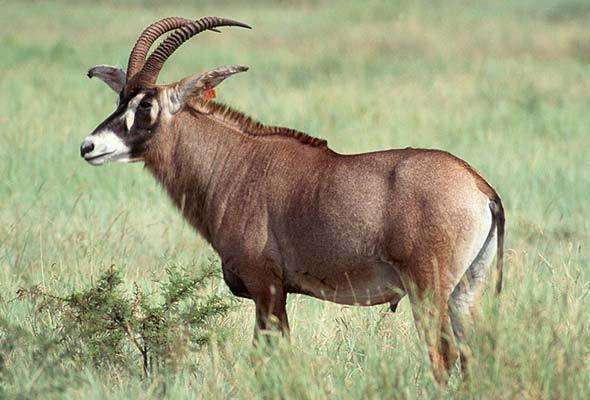
Africa’s antelope family contains species with very different feeding strategies.
Some are primarily grazers, some are browsers and others switch between the two.
Examples include:
Primarily grazing species
- Wildebeest
- Some hartebeest
- Many gazelle species
Primarily browsing species
- Kudu
- Bushbuck
- Duiker species
Mixed feeders
- Impala
- Some other antelope species depending on habitat and season
This variety is one reason Africa can support so many herbivores within the same savanna ecosystem.
Which African Safari Has the Best Grazers?
There is no single best destination because different regions offer different grazing experiences.
Kenya
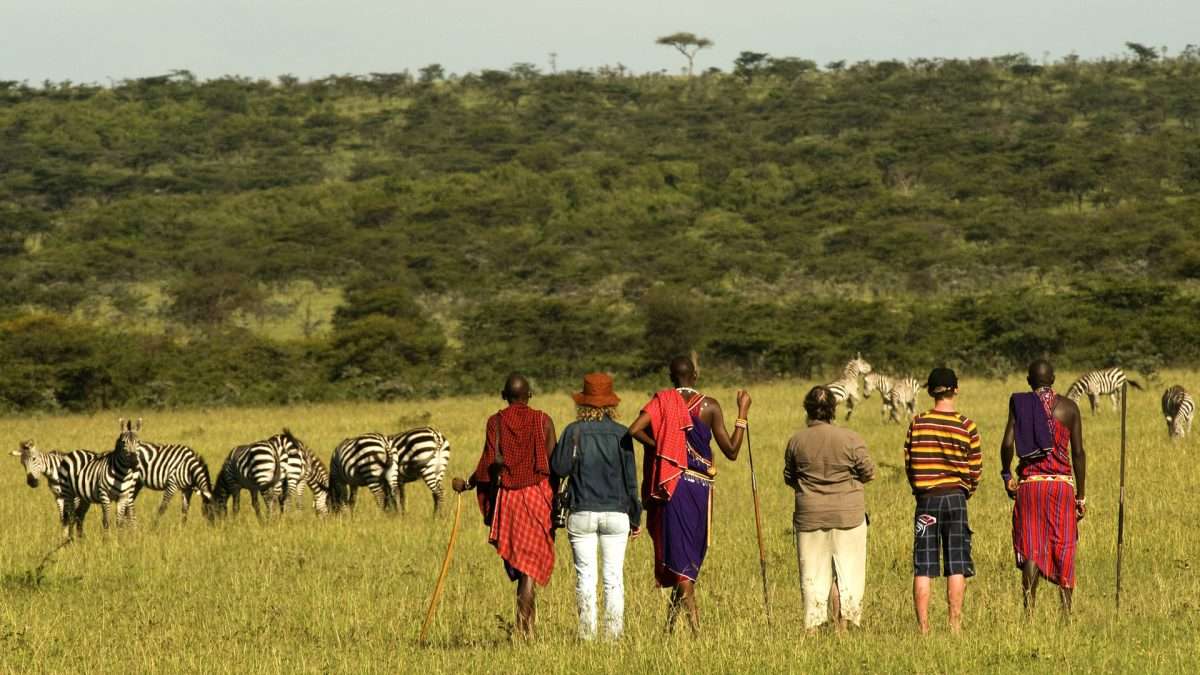
Kenya is particularly strong for seeing large concentrations of grazing animals during the Great Migration.
The Maasai Mara is one of the best-known places to see wildebeest and zebra, particularly during the migration season.
Tanzania
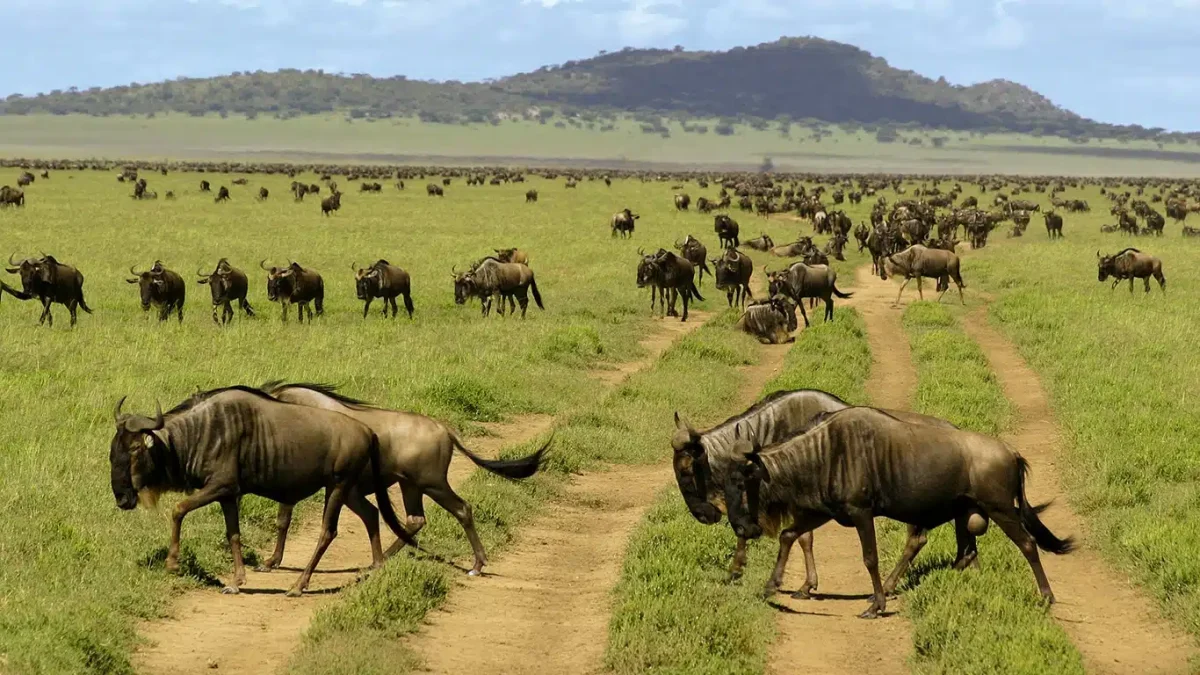
Tanzania‘s Serengeti is one of Africa’s most important landscapes for grazing wildlife.
Large wildebeest and zebra herds move through the ecosystem as rainfall changes the availability of fresh grass.
South Africa
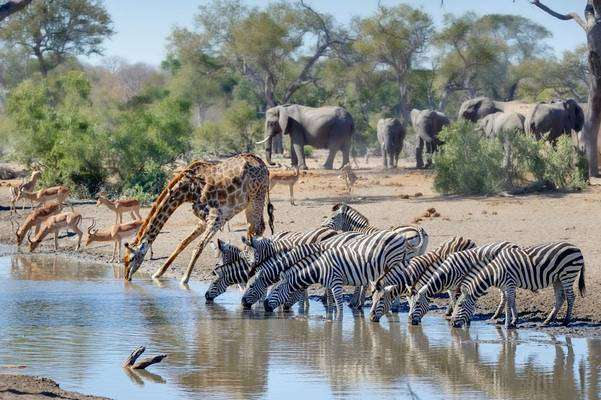
South Africa offers excellent opportunities to see buffalo, zebra, white rhino, wildebeest and several antelope species.
Kruger National Park is particularly useful for understanding how grazing changes across different habitats and seasons. Grazing conditions, rainfall and water availability influence where animals concentrate.
Botswana
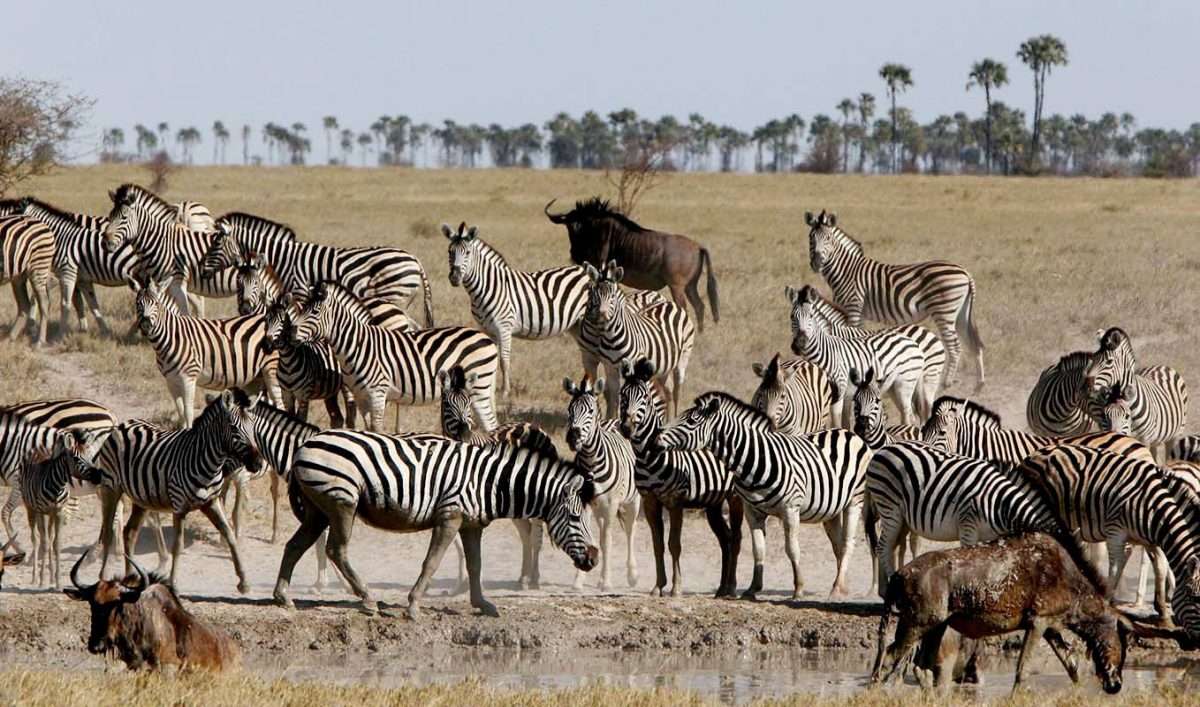
Botswana is especially good for combining grazing wildlife with varied landscapes, including floodplains, grasslands and woodland.
The seasonal movement of water has a major influence on wildlife distribution.
Namibia
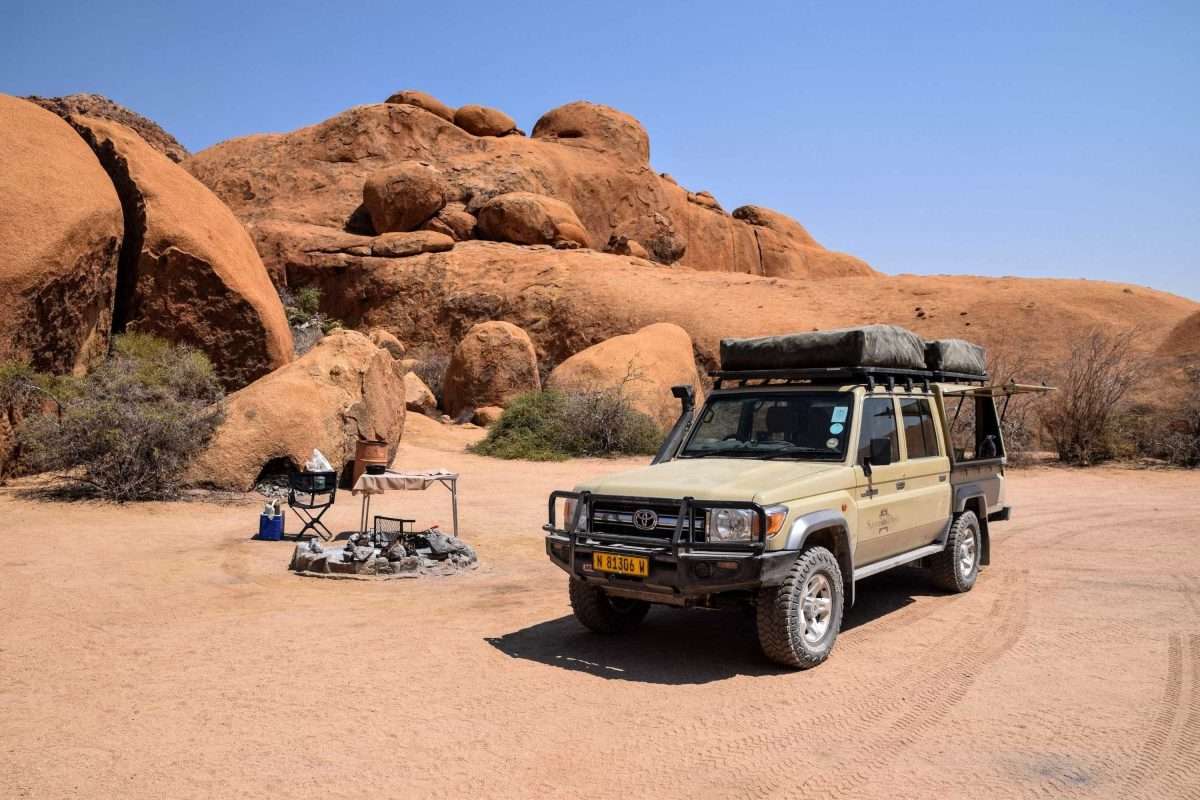
Namibia offers a different safari experience, with grazing animals adapted to drier environments.
Etosha National Park is particularly well known for wildlife gathering around waterholes during the dry season.
Plan an African Safari Around Grazing Wildlife
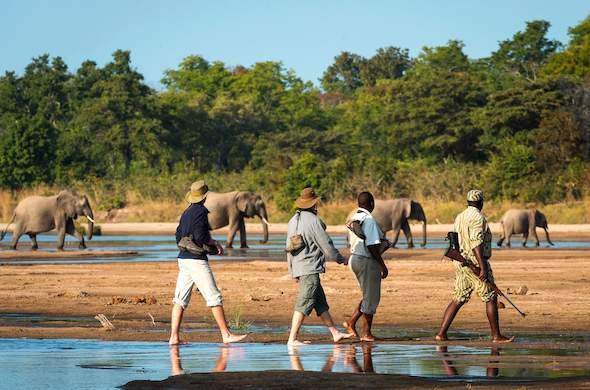
If your main interest is seeing savanna grazers and large herbivore herds, the right destination and season can make a big difference.
TourwithPipi can help plan a safari around the species you want to see, whether that means wildebeest and zebra in East Africa, buffalo and rhino in South Africa, or a broader mix of African wildlife.
Want to plan an African safari focused on wildlife and large herbivore herds? Contact TourwithPipi on WhatsApp to start planning your trip.
How Do Savanna Grazers Survive on Grass?
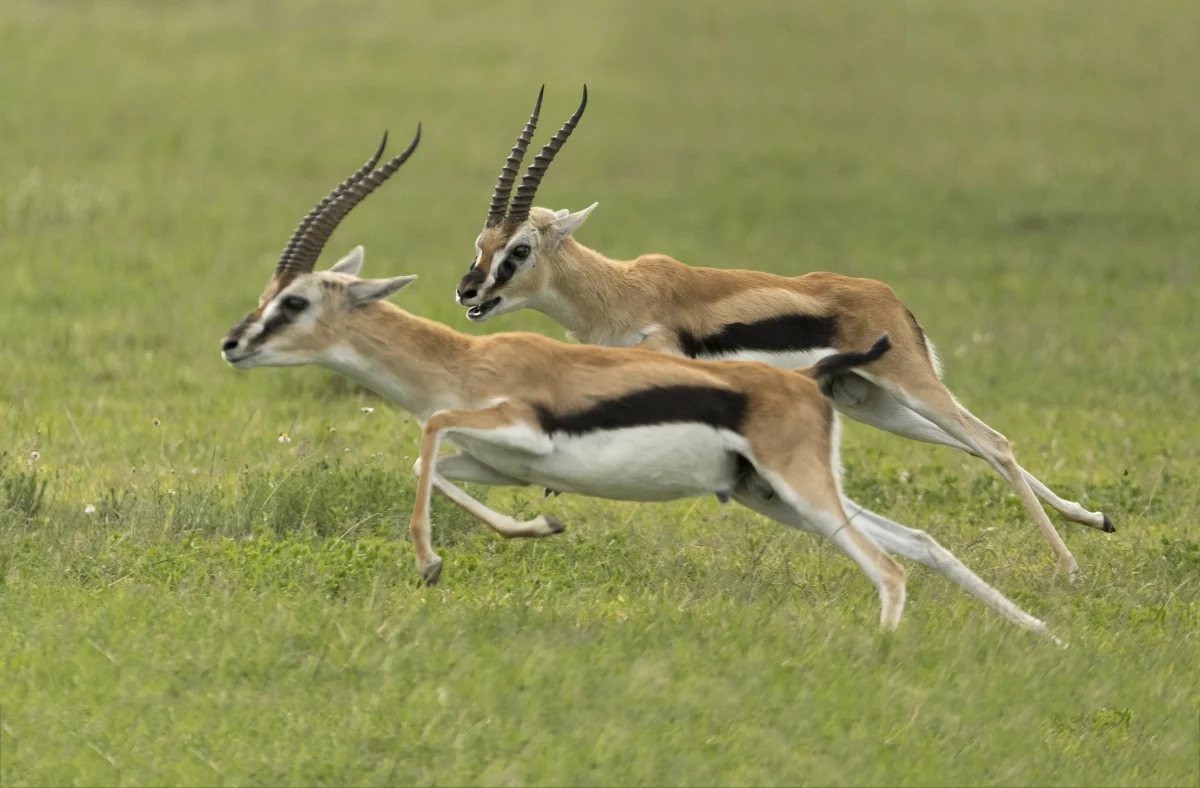
Grass can be difficult food to process because it contains a high proportion of fibre.
Different grazing animals have evolved different ways of dealing with this.
Different species prefer different grass
Not all grazers eat the same plants or the same parts of a plant.
One species may prefer short, fresh grass, while another can feed on longer or tougher vegetation. This reduces competition between species living in the same area.
Digestive systems help process fibre
Many African grazers are ruminants. They ferment plant material in specialised parts of their digestive systems before it passes through the rest of the digestive tract.
Other grazers, such as zebras, use a different digestive strategy.
This difference allows several species to exploit the same grassland while using food in different ways.
Herds provide protection
Large groups can make it harder for predators to isolate an individual.
Zebra and wildebeest are often seen together, and different species bring different strengths to a mixed group. Good eyesight, hearing and a strong response to danger can all improve the chances of detecting predators.
The reference material from Kruger also notes that grazing species can feed on different parts of the grassland, allowing them to share the same area with less direct competition.
Why Do Grazers Move Around the Savanna?

Food and water are constantly changing across seasonal landscapes.
During the rainy season, grass grows quickly and fresh grazing becomes available. As the dry season progresses, vegetation becomes less nutritious and water sources become increasingly important.
Grazing animals therefore move according to:
- Rainfall
- Grass growth
- Water availability
- Temperature
- Predator pressure
- Seasonal breeding patterns
In some ecosystems, this movement is relatively local. In others, it can involve huge migrations.
The Great Migration of East Africa is the most famous example, with wildebeest, zebra and other herbivores moving through the Serengeti-Mara ecosystem in response to changing grazing conditions.
Why Are Grazers So Important to the Savanna?
Grazers do much more than simply eat grass.
They influence the structure of the ecosystem by removing vegetation, moving nutrients and providing food for predators and scavengers.
A simplified savanna food chain can look like this:
Grass → Zebra / Wildebeest / Buffalo → Lions / Hyenas → Scavengers and decomposers
The real system is much more complicated because individual species have multiple food sources and predators.
Grazers also affect vegetation by selectively feeding on certain types of grass. Their movement and grazing pressure can influence how plant communities develop over time.
Their dung returns nutrients to the soil and can also provide food for insects and other organisms.
Grazers and Predators
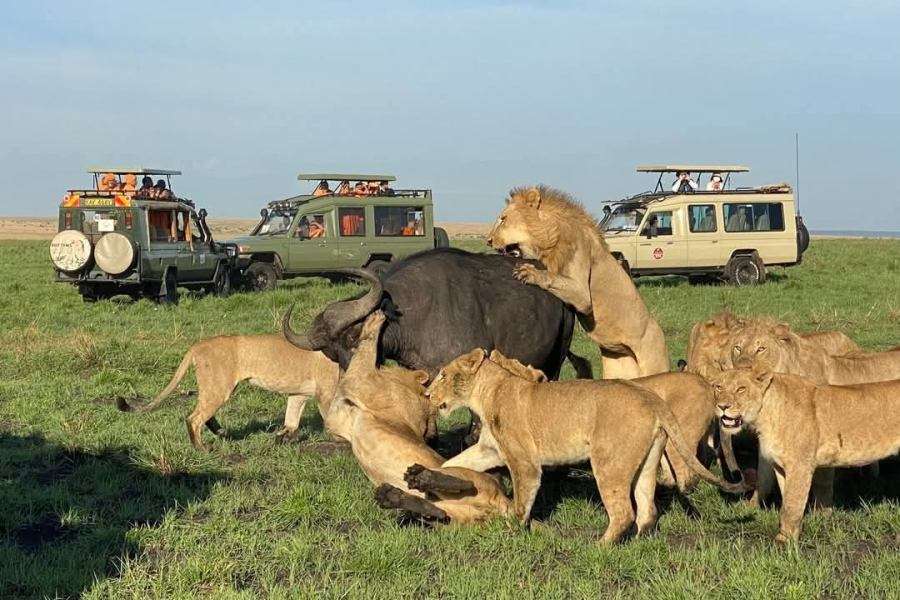
Grazers are a major source of prey for African carnivores.
Lions can hunt buffalo, zebra and wildebeest. Hyenas take advantage of a wide range of herbivore prey and carcasses. African wild dogs can target medium-sized grazing animals such as antelope.
Predators influence how grazers behave.
They may become more alert in open areas, stay in groups, move toward water or change their feeding patterns depending on the presence of predators.
At the same time, predators usually target particular individuals rather than simply chasing the largest herd they can find. Young, injured, old or isolated animals can be more vulnerable.
When Is the Best Time to See Grazers on Safari?
The answer depends on the destination.
In areas with strong seasonal rainfall, the wet season can bring fresh grass and widespread animal movement. During the dry season, water becomes more important and animals may concentrate around reliable water sources.
For the Great Migration, timing is more specific because wildebeest and zebra movements follow rainfall and changing grazing conditions rather than a fixed annual schedule.
If your priority is large herds of grazing animals, your safari should be planned around the specific ecosystem rather than simply choosing the traditional “best safari season.”
Why Do Zebra and Wildebeest Often Stay Together?
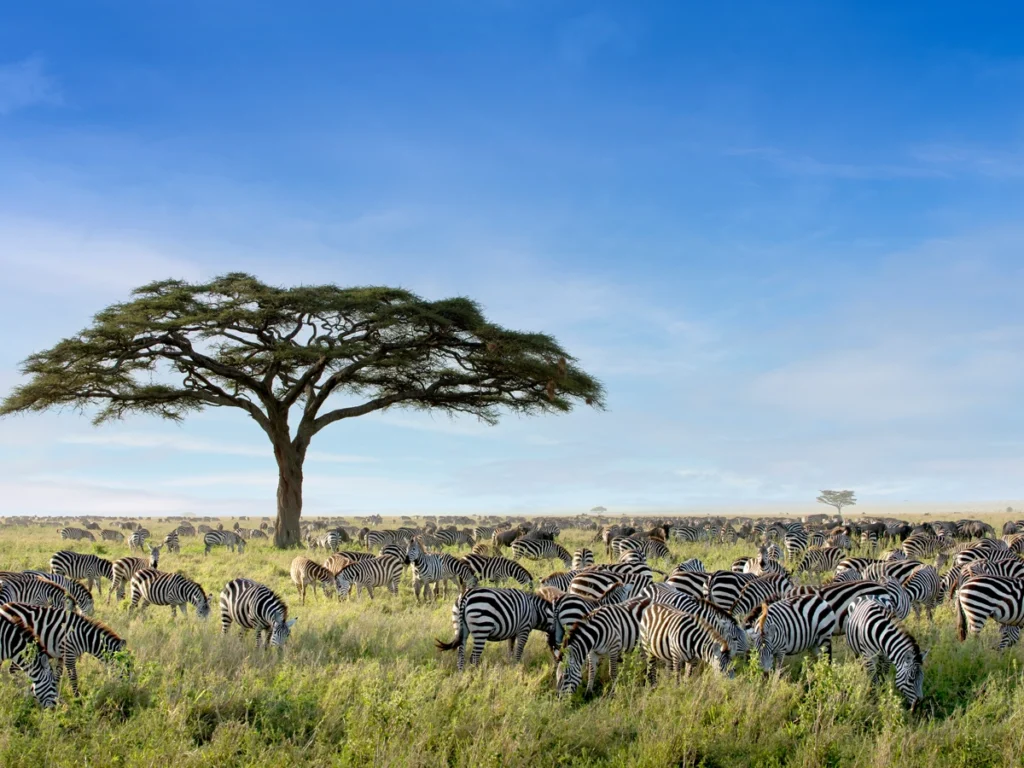
Zebra and wildebeest are frequently seen together because their feeding preferences complement one another.
Zebra can consume taller and tougher grasses, while wildebeest prefer shorter grass. Their different feeding strategies allow them to use the same landscape without competing for exactly the same food.
There is also a safety benefit. Animals living in groups have more individuals watching for danger, and different species can contribute different sensory strengths.
This is one reason mixed herbivore groups are such a common sight on African savannas.
Frequently Asked Questions About Savanna Grazers
What are savanna grazers?
Savanna grazers are herbivorous animals that feed mainly on grass and other low-growing vegetation. African buffalo, zebra, wildebeest and white rhinos are common examples.
What is the most common grazer animal in Africa?
There is no single species that can be called the most common grazer across all of Africa. Abundance varies by ecosystem, rainfall, habitat and season. Wildebeest, zebra, buffalo and numerous antelope species can occur in large numbers in suitable habitats.
What animals are grazers in Africa?
Important African grazing animals include buffalo, zebra, wildebeest, white rhino, hippos, warthogs and several antelope species.
What is the difference between a grazer and a browser?
Grazers mainly eat grass and other low vegetation, while browsers mainly feed on leaves, shoots and other vegetation from trees and shrubs.
Are zebras grazers?
Yes. Plains zebras are predominantly grazing animals and feed mainly on grass.
Are wildebeest grazers?
Yes. Blue wildebeest are primarily grazers and generally prefer short grass.
Are buffalo grazers?
Yes. African buffalo are primarily grazers and consume a wide range of grasses. They may browse when grass is unavailable.
Are rhinos grazers?
White rhinos are primarily grazers, while black rhinos are primarily browsers. This difference is useful when identifying their feeding behaviour on safari.
Are elephants grazers?
Elephants are both grazers and browsers. They eat grass as well as leaves, branches, bark and other vegetation.
Where can I see large herds of grazers in Africa?
The Serengeti and Maasai Mara are famous for large wildebeest and zebra herds, particularly during the Great Migration. South Africa’s Kruger National Park and other southern African reserves also offer excellent opportunities to see buffalo, zebra, wildebeest, rhinos and antelope.
Final Takeaway
Savanna grazers are much more than background animals on an African safari.
Buffalo, zebra, wildebeest, rhinos, hippos and other grazing species shape the grasslands they live in, support predators and move through the landscape according to food and water availability.
Understanding the difference between grazing and browsing also makes wildlife viewing more interesting. Instead of simply recognising an animal, you can look at what it is eating, where it is feeding and why it is using that particular part of the savanna.


