
If you wonder why the final push to the top of Kilimanjaro happens at night, the reasons are both practical and profoundly rewarding. A Kilimanjaro summit night climb provides firmer trail conditions, supports better acclimatization, and culminates in a breathtaking sunrise from Stella Point before the final walk to Uhuru Peak. This approach rewards trekkers with an unforgettable and safe experience.
Mount Kilimanjaro in Tanzania is the highest mountain in Africa. Thousands of trekkers attempt to reach its summit, Uhuru Peak, each year. While the multi day journey to high camp is essential for acclimatization, the final summit night Kilimanjaro ascent is strategically undertaken in the dark.
Let’s explore the key reasons for a night climb, the crucial role of Stella Point, the unmatched reward of an African sunrise from the roof of the continent, and the important logistics of the descent that begins right after you summit.
Why Do We Climb Kilimanjaro at Night?
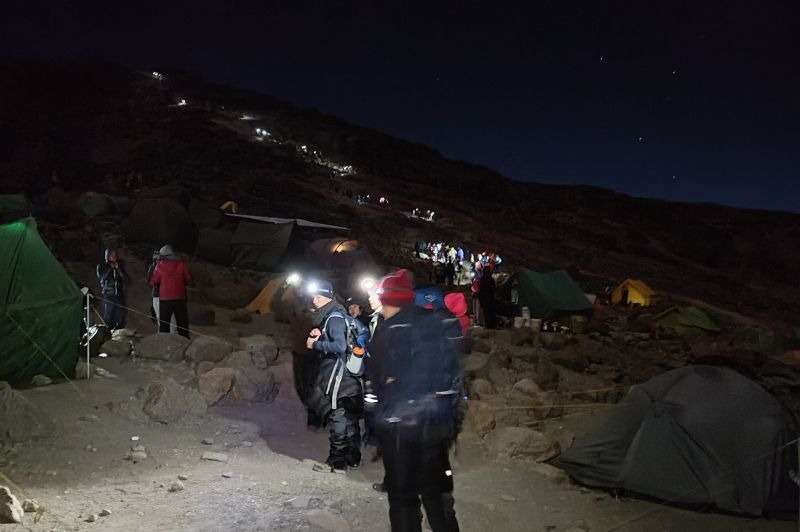
Choosing to start the Kilimanjaro summit night ascent in the dark is a deliberate and strategic decision. This approach offers several practical advantages that significantly increase your safety and improve your overall experience. Cooler nighttime temperatures help stabilize the trail underfoot, and the slow, steady pace required for a night climb supports better gradual acclimatization to the extreme altitude. Furthermore, the trails are quieter and less crowded, allowing you to focus completely on your rhythm and each deliberate step. There is a clear and smart logic behind planning your summit night Kilimanjaro push for the evening hours.
1. Firmer Trail Conditions for a Safer Climb
One of the most important reasons for a night ascent is the stability of the terrain. Lower nighttime temperatures help solidify the loose volcanic scree and rocky surfaces that define the upper slopes of Kilimanjaro. This creates firmer, more predictable footing and reduces the risk of slips.
This practice is standard in mountaineering on alpine peaks worldwide. A colder atmosphere helps bind the ground, snow, and ice. On Kilimanjaro, this means the path is less loose and shifting than it can become under the daytime sun, which can melt ice and make surfaces slippery. Starting your climb at night gives you the most stable conditions possible for the toughest part of your journey.
2. Improved Acclimatization for Your Body
A Kilimanjaro summit night climb supports your body’s natural adjustment to altitude in a crucial way. The slow, deliberate pace required for hiking in the dark forces you to move gradually as you ascend into thinner air. This measured pacing gives your system more time to acclimatize during the climb itself, which helps reduce the overall risk of altitude illness. Your body works hard to adapt, and the night ascent provides the steady rhythm it needs.
3. Better Time Management for a Safe, Complete Day
The timeline for summit day is exceptionally long. Reaching the summit from high camp takes 6 to 8 hours. After summiting, you then face a 4 to 6 hour descent to the final campsite. This adds up to a total of 10 to 14 hours of trekking, not including the essential break you will take back at high camp.
There simply are not enough daylight hours to start this journey in the morning and finish safely before dark. Beginning your summit night Kilimanjaro push at midnight ensures you have ample time to reach Uhuru Peak and, most importantly, complete the long and demanding descent to camp with plenty of daylight remaining.
This schedule is a core part of our safety philosophy. If an emergency occurs, we want maximum daylight hours to manage the situation and get you to safety. Furthermore, descending the steep, loose trails in the dark significantly increases the risk of slips and falls, something we actively plan to avoid for your wellbeing.
4. To Witness the Kilimanjaro Sunrise from the Crater Rim
Our guides carefully time the pace of your Kilimanjaro summit night climb with a beautiful goal in mind: to have your group reach the crater rim at Stella Point just as the sun begins to rise. This moment transforms the entire effort into a pure reward.
Watching the sunrise from one of the highest points on the continent is a truly magical experience. As the first golden rays spill across the icy glaciers, illuminate the crater, and light up the vast African plains below, the world feels both incredibly vast and intimately yours. This breathtaking panorama is a highlight that climbers cherish for years, and it is often the moment people describe first when sharing their summit story.
This timing is also practical. Visibility on Mount Kilimanjaro is usually excellent in the calm, clear early morning. By reaching the rim at dawn, you maximize your chance for unobstructed, expansive views in every direction before making the final walk to Uhuru Peak. This stunning sunrise is the unforgettable climax of your summit night Kilimanjaro journey.
5. Avoiding the Harsh Midday Sun
Starting your Kilimanjaro summit night climb in the dark provides a crucial environmental advantage: you avoid the intense, high-altitude sun of the late morning and afternoon. This direct sunlight at over 5,000 meters is incredibly strong and can rapidly dehydrate you, sap your energy, and make the ascent feel far more exhausting. By completing the most physically demanding part of your climb in the cooler night and early morning hours, you conserve vital energy and body fluids, making the entire summit day more manageable and safe.
6. Enhanced Mental Focus and Solitude
The darkness of a summit night Kilimanjaro ascent creates a unique mental environment. It strips away visual distractions, allowing you to focus entirely on the rhythm of your breathing and the next step in front of you. Many climbers describe this night push as a meditative and deeply personal experience. With fewer people on the trail, you gain a sense of solitude that can be both comforting and empowering, helping you turn inward, find your strength, and maintain a steady focus all the way to the top.
Why Don’t You Stay at Base Camp? The Reason for a Long Descent After Summiting
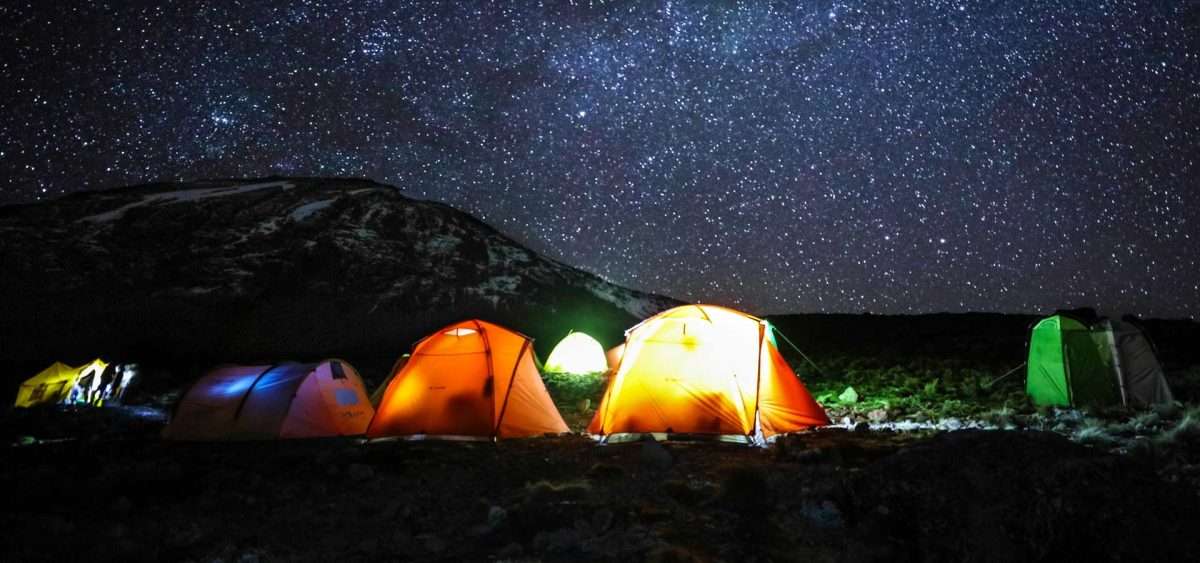
After the incredible high of reaching Uhuru Peak, many climbers wonder why the day isn’t over. Instead of returning to the nearby high camp to rest, your guide will lead you on a significant descent to a much lower camp. This is a deliberate and critical strategy for your health and safety, not just a matter of logistics.
Descending so far immediately after your Kilimanjaro summit night is rooted in three essential principles of high-altitude mountaineering.
1. Better Recovery at Lower Altitudes
High camps like Barafu are located around 4,600 meters (15,100 feet). At this elevation, the air is still very thin, making proper rest and recovery difficult or even impossible. Staying there after the immense exertion of summit day can actually cause your condition to worsen due to sleep deprivation, severe fatigue, and ongoing altitude stress.
This is where the proven “climb high, sleep low” principle comes into play. By descending to a camp around 3,100 meters (10,000 feet) at Mweka, you place your body in a much more oxygen-rich environment. This rapid drop in altitude is the fastest and most effective treatment for any lingering altitude sickness symptoms and is crucial for helping every climber, regardless of how well they acclimatized, recover strength and hydration effectively.
2. No Natural Water Sources on the Upper Slopes
There is a practical challenge on the upper mountain: there are no natural water sources. All the water used for drinking, cooking, and washing at high camps must be carried up from streams and springs on the lower slopes by porters. If every group that summited stayed an extra night at high camp, it would place an enormous additional burden on the crew to haul thousands of extra liters of water up the mountain. The long descent helps manage this vital resource responsibly.
3. Limited Space at High-Altitude Campsites
Kilimanjaro’s several main routes all converge at a limited number of high camps. These sites have fixed space for tents. If groups that had already summited remained, they would occupy space needed by the next wave of climbers preparing for their own summit night Kilimanjaro attempt. By descending, your group vacates the site, allowing the seamless operation of the mountain’s careful logistical flow and giving other climbers their fair chance at the summit.
In summary, the long descent after your Kilimanjaro summit night is a non-negotiable part of a safe, ethical, and successful climb. It prioritizes your physical recovery, respects the hard work of the support team, and ensures the mountain’s shared resources and spaces are available for everyone.
Challenges of the Kilimanjaro Summit at Night
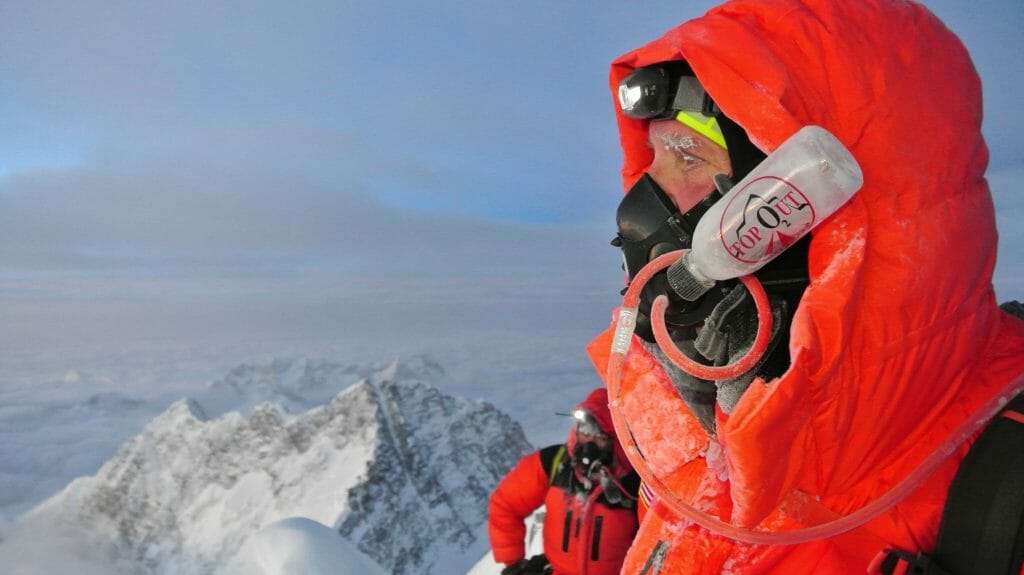
A Kilimanjaro summit night climb provides clear strategic benefits, but it also presents specific conditions that will test your preparation and resolve. The cold intensifies, the altitude feels more demanding in the dark, and the long hours require unwavering mental focus. Understanding these challenges is the first step to overcoming them.
Here are the main challenges you will face and how you can prepare with TourwithPipi.
1. The Severe Cold
Temperatures during the summit night Kilimanjaro ascent can plummet to -10°C (14°F) or far lower, especially near the crater rim and at the summit. This bitter cold is the most immediate physical challenge.
How to Prepare: This is why your gear is non-negotiable. You must have high quality thermal base layers, a heavy duty down jacket, insulated waterproof gloves, a warm beanie, and a sleeping bag rated to at least -10°C. We provide gear checklist to ensure you have what you need to stay safe and as comfortable as possible.
2. The Risk of Altitude Sickness
The rapid final ascent increases the risk of Acute Mountain Sickness (AMS) and its more severe forms, HAPE and HACE. The thinning air is the mountain’s greatest objective danger.
How to Prepare: This risk is managed by the climb’s very design. Our longer routes provide essential acclimatization days. On summit night, your guide will enforce the critical slow “pole pole” pace. You must prioritize constant hydration, eat regularly, and report any symptoms to your guide immediately. Their decision to descend is always for your safety.
3. Physical and Mental Fatigue
Starting a grueling 6-8 hour climb at midnight, after days of trekking, is both physically and mentally exhausting. Fatigue can challenge your willpower as much as your stamina.
How to Prepare: Your pre-climb training is vital. Building cardiovascular endurance and leg strength through long hikes with a pack is essential. Mentally, understanding the timeline and trusting your guide’s pace will help you break the night into manageable segments, focusing only on the next step.
4. Limited Light and Visibility
Navigating steep, rocky terrain with only a headlamp can feel disorienting. Depth perception changes, and the world shrinks to the circle of light at your feet.
How to Prepare: A reliable headlamp with extra batteries is mandatory. Stick close to your guide and the group, maintaining a steady pace. Trust in their experience, they know every turn and will safely lead you through the darkness to the dawn waiting above.
Our Summit Night Schedule with TourwithPipi
A successful Kilimanjaro summit night relies on a precise and well-practiced schedule. Our timeline is designed to maximize safety, ensure proper pacing, and position you for the unforgettable sunrise from the crater rim. Here is exactly how your summit night Kilimanjaro with TourwithPipi will unfold.
Late Afternoon (Day Before Summit):
Arrival at High Camp (Barafu): You arrive at camp by mid-afternoon after a short hike.
Summit Briefing: Your lead guide holds a mandatory meeting to review the exact plan, weather forecast, pacing, and gear check.
Early Dinner: A hearty, high-carbohydrate meal is served around 5:30 PM to fuel your body.
Final Packing: You prepare your daypack with your guide, ensuring you have all essentials: headlamp, water, snacks, and extra layers.
Rest Period: You retire to your tent to attempt to sleep or rest until the wake-up call.
Night (Summit Night Ascend):
11:00 PM – Wake Up & Final Prep: Your guide wakes you. You dress in all your cold-weather layers.
11:30 PM – Hot Drink & Briefing: You have a hot drink and a light snack in the mess tent. Your guide gives final instructions.
12:00 AM (Midnight) – Start the Climb: You begin the ascent from Barafu Camp (4,673m / 15,331ft) under headlamp light.
Early Morning (Summit Push):
12:00 AM – 5:00 AM – Steady Night Climb: You hike slowly and steadily (“pole pole”) up the steep scree slope for approximately 5 hours.
5:00 AM – 6:00 AM – Reach Crater Rim (Stella Point): You arrive at Stella Point (5,739m / 18,829ft) on the crater rim at dawn.
Sunrise: You witness the spectacular sunrise over Africa from the crater rim—a key reward of the night climb.
6:00 AM – 7:00 AM – Final Summit Stretch: You trek along the crater rim from Stella Point to Uhuru Peak.
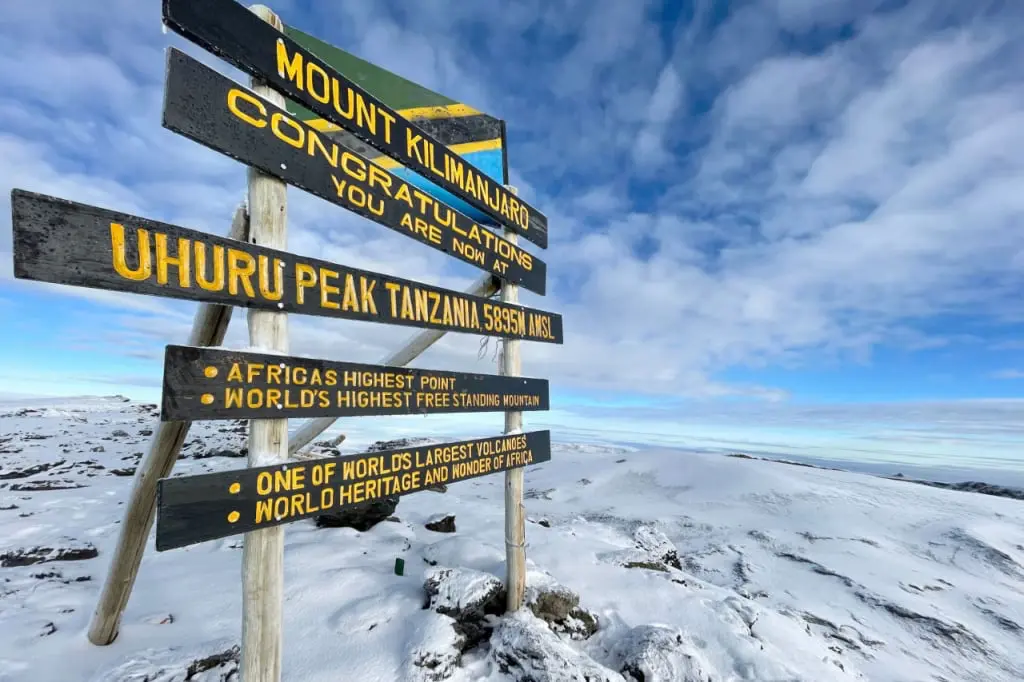
~7:00 AM – Summit!: You reach Uhuru Peak (5,895m / 19,341ft), celebrate, and take photos.
Morning & Afternoon (Descent):
7:30 AM – Begin Descent: You start the descent from the summit back towards Barafu Camp.
~10:00 AM – Return to Barafu Camp: You arrive back at Barafu Camp for a extended rest, hot lunch, and to collect your main duffel.
11:30 AM – Resume Descent: You pack up and continue descending towards a lower camp.
3:00 PM – 4:00 PM – Arrive at Mweka Camp: You reach Mweka Camp (~3,100m / 10,170ft) for dinner and a deep, well-earned sleep.
This schedule is a proven framework, but your guide may adjust timings based on the group’s pace and conditions to always prioritize safety. Following this rhythm is your path to a triumphant and safe Kilimanjaro summit night.
Climb Kilimanjaro with TourwithPipi
Choosing to climb Kilimanjaro with TourwithPipi means choosing a partnership built on safety, success, and a genuine Tanzanian experience. We are not a distant booking agency; we are a local team that guides you personally from arrival to summit.
Here’s what makes your climb with us different:
Safety as Our Foundation: Your lead guide is a certified Wilderness First Responder. We carry emergency oxygen and maintain a 4:1 staff ratio for constant support and health monitoring.
Smart Routes for Success: We specialize in longer 7 and 8-day itineraries on the Lemosho and Machame routes, proven to offer the best acclimatization and highest summit success rates.
Full Support, Zero Worry: We manage every detail—permits, transfers, nutritious meals, and high-quality equipment—so you can focus entirely on your climb.
Ethical Climbing, Always: We are proud KPAP partners, ensuring our guides, cooks, and porters receive fair wages, proper gear, and the respect they deserve.
Ready to start your journey with a team you can trust? Contact TourwithPipi today to discuss your 2026/2027 climb, get your questions answered, and take the first step towards the Roof of Africa.
Final Thought
Your Kilimanjaro summit night is the culmination of preparation, perseverance, and partnership. It is a challenging journey through extreme cold and altitude, but one that rewards you with a sunrise from the crater rim and the lifetime achievement of standing on Uhuru Peak. With the right training, the right gear, and the right team, this iconic climb is not just a possibility—it is your next great adventure. Let TourwithPipi help you make it a safe, successful, and unforgettable story.
Kilimanjaro Summit Night FAQs
1. Why do you climb Kilimanjaro at night?
Climbing at night provides firmer trail conditions, better supports your body’s acclimatization to the altitude, allows you to avoid the harsh midday sun, and culminates in a breathtaking sunrise from the crater rim before you reach the summit.
2. What time does summit night start?
The ascent typically begins around midnight from Barafu Camp (around 4,673 meters). You will be woken up at about 11:00 PM for a final hot drink and briefing before starting the climb.
3. How cold does it get on summit night?
Temperatures can plummet to between -7°C and -20°C (19°F to -4°F) at the summit and crater rim. With wind chill, it can feel even colder, which is why a high-quality down jacket and thermal layers are mandatory.
4. How long does it take to reach the summit from Barafu Camp?
The ascent from Barafu Camp to Uhuru Peak takes between 6 to 8 hours. You will aim to reach the crater rim at Stella Point at sunrise, then take about another hour to walk along the rim to the summit.
5. What is the hardest part of summit night?
Many climbers find the combination of extreme cold, high altitude, and mental fatigue from hiking in the dark to be the greatest challenge. The slow, steady pace and your pre-climb training are key to overcoming this.
6. Do I need a special sleeping bag for summit night?
Yes. You need a 4-season sleeping bag rated to at least -10°C (14°F). We recommend a -15°C to -20°C (5°F to -4°F) rated bag for maximum comfort and safety. We offer certified rental bags that meet this requirement.
7. Why do we descend so far after summiting instead of staying at high camp?
Descending to a much lower altitude (like Mweka Camp at 3,100m) is critical for recovery. It gives your body more oxygen to heal from exhaustion and altitude stress, respects limited campsite space and water resources, and is a core safety practice.
8. What if I get altitude sickness on summit night?
Your guides are trained to recognize symptoms. They will monitor you closely, and their decision on whether to descend is final and for your safety. This is why choosing a longer route for proper acclimatization is so important.
9. What should I have in my daypack for summit night?
Your daypack must contain: your headlamp with extra batteries, 3-4 liters of water, high-energy snacks, an extra warm layer, your down jacket, gloves, sunglasses, and your camera.
10. Can I climb Kilimanjaro if I’m afraid of the dark or heights?
The darkness during the climb is mitigated by your headlamp and the line of lights from other climbers. If you have a severe fear, discuss it with your guide. They are experts at providing reassurance and maintaining a focused, calm environment for the group.


