
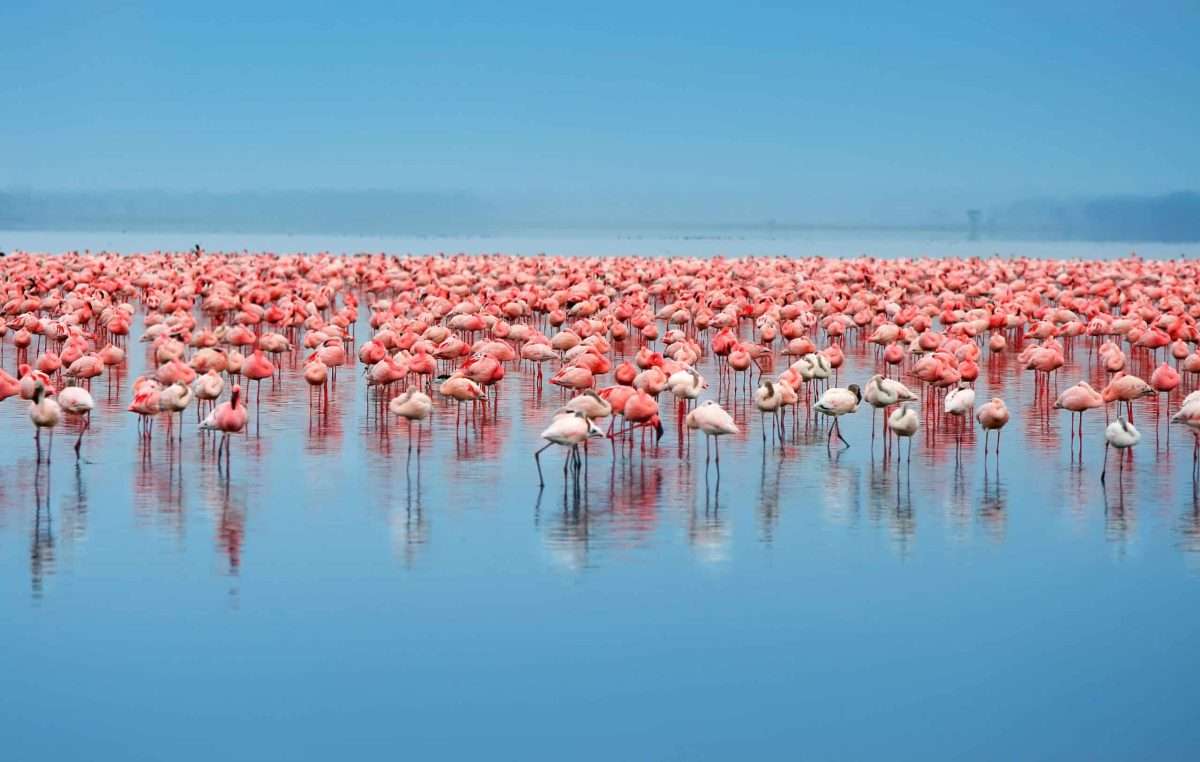
From the shores of Lake Natron to the floor of Ngorongoro Crater, flamingos in Tanzania are one of East Africa’s most striking wildlife spectacles. Tanzania is home to both flamingo species found in Africa and hosts the largest lesser flamingo breeding ground on the planet. Wherever you are on the northern safari circuit, a flamingo sighting is never far away.
Flamingos in Tanzania at a Glance
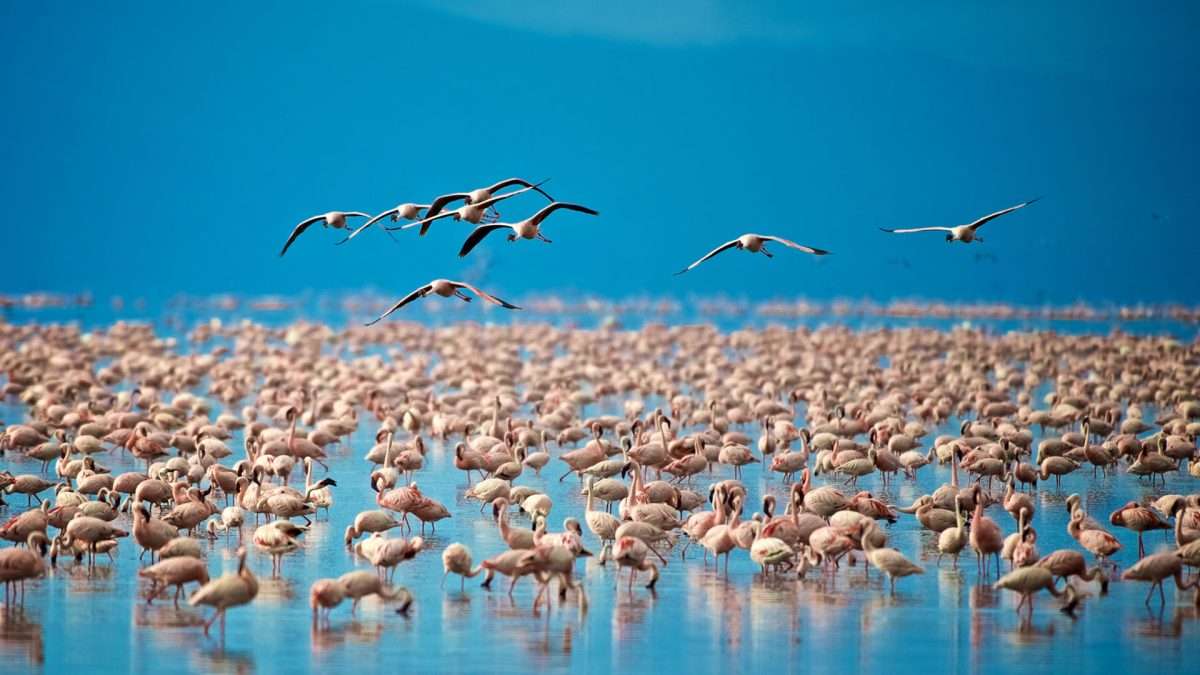
Tanzania has two flamingo species: the greater flamingo and the lesser flamingo. Both are present across the country’s soda lakes, crater lakes, and shallow alkaline wetlands. Lesser flamingos make up the larger share of Tanzania’s flamingo population.
Best Time to See Flamingos in Tanzania
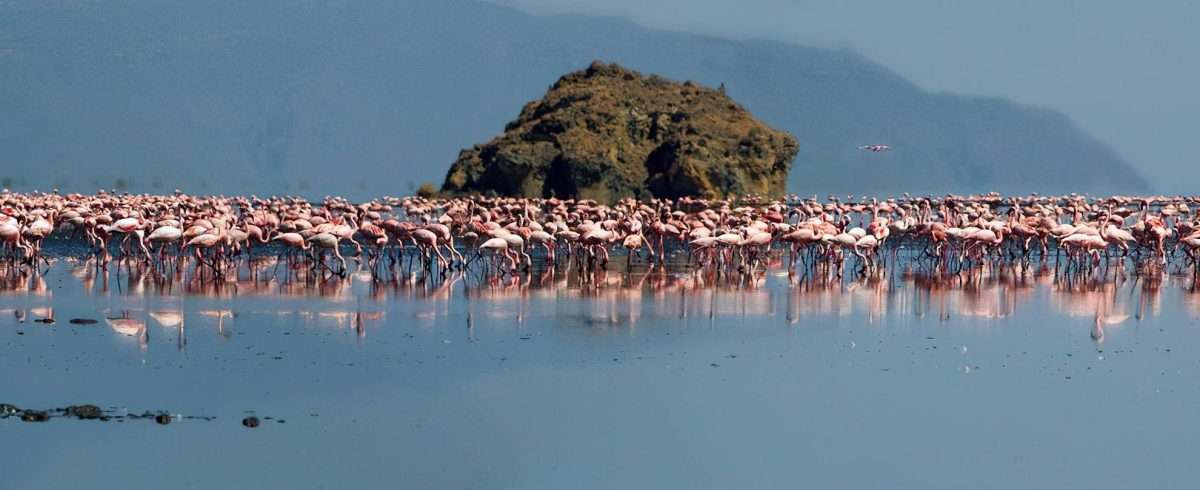
Flamingos are present in Tanzania year-round, but the peak season runs from November to May. During this period, enormous flocks gather across the soda lakes and crater floors. Outside peak season, flamingos are fewer and tend to move toward the center of the lake, making sightings less productive from the shore.
Three factors drive flamingo movement between lakes:
Food availability. Flamingos depend on algae and brine shrimp in mineral-rich alkaline water. When lake salinity drops, algae disappear and the birds move on.
Water levels. Rising water dilutes salinity and kills off algae. Falling water makes lakes too acidic. Both extremes push flamingos elsewhere.
Breeding season. Most lesser flamingos breed at Lake Natron from September to December, then migrate to Lake Manyara and Lake Bogoria in Kenya once chicks are raised.
Best Places to See Flamingos in Tanzania
1. Lake Natron
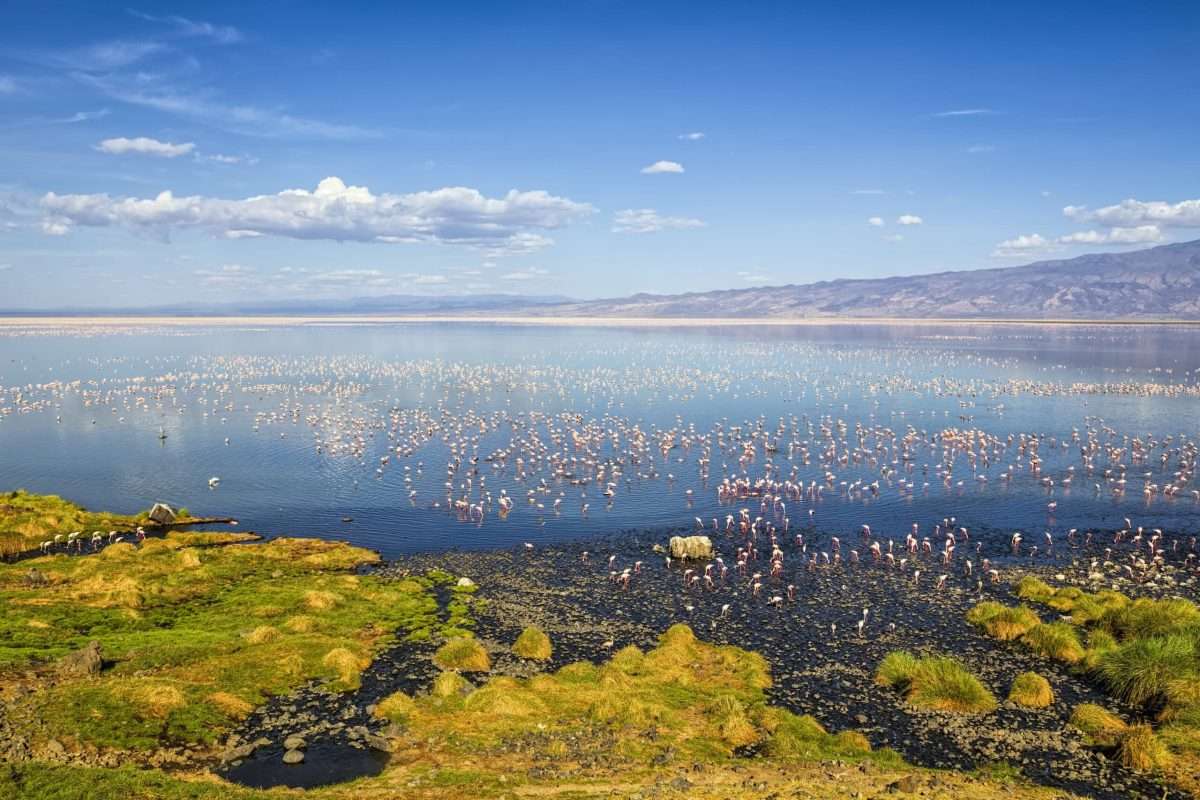
Lake Natron is the single most important flamingo site in Africa. Close to three million lesser flamingos breed here, making it the largest lesser flamingo breeding ground on the planet. The lake’s extreme alkalinity, reaching a pH of up to 10, and temperatures as high as 60°C create conditions that keep predators away from nesting sites while providing abundant spirulina for feeding.
The best time to visit is September to December. Flamingos begin nest-building in September, lay eggs through October, and chicks hatch from November into December. December is considered the peak time when the largest number of chicks are present on the soda flats.
Lake Natron measures 56 kilometres long and 21 kilometres wide, with a maximum depth of just three metres. Its color shifts from pale pink to deep red depending on the season and the concentration of cyanobacteria in the water.
Best for: Breeding spectacle, largest concentrations, September to December.
2. Lake Manyara
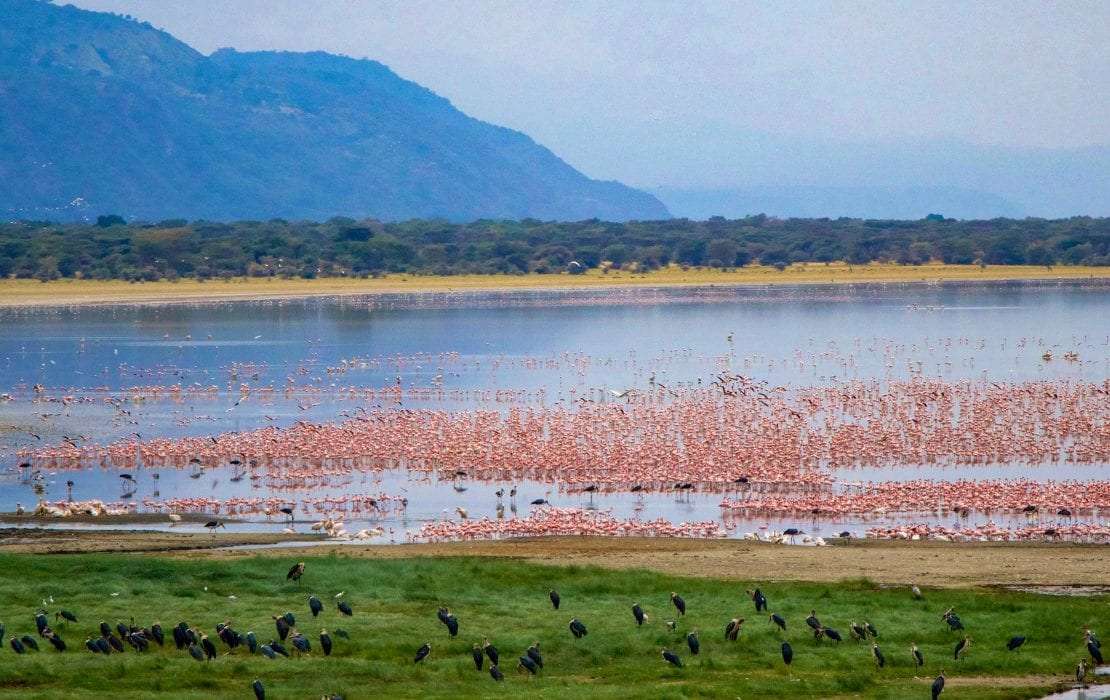
Lake Manyara in northern Tanzania welcomes hundreds of thousands of flamingos between May and July as birds migrate north after the breeding season at Lake Natron. The 230 km² saline lake sits inside Lake Manyara National Park, one of Tanzania’s most compact and productive parks.
The lake is also famous for tree-climbing lions and large flocks of pelicans. It measures 40 kilometres in length and reaches a maximum depth of 3.6 metres. It is a UNESCO Biosphere Reserve.
Best for: Post-breeding flamingo migration, combined wildlife game drive, May to July.
3. Lake Magadi, Ngorongoro Crater
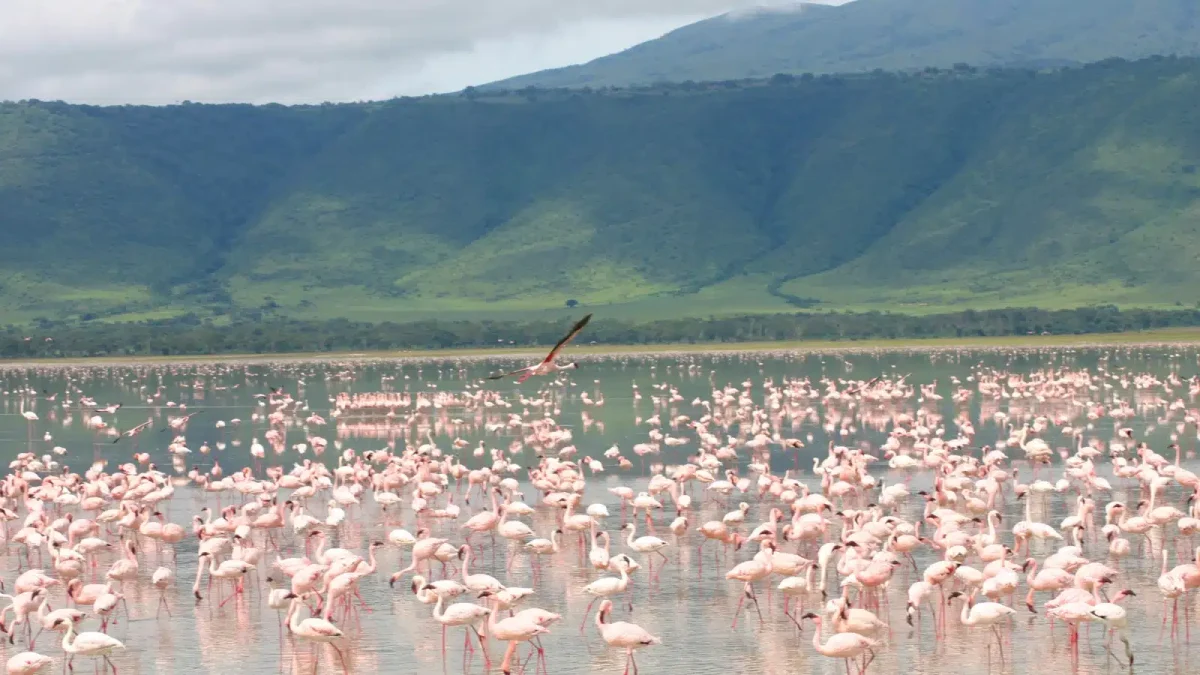
Lake Magadi, locally called Lake Makat, sits at the base of Ngorongoro Crater, 610 metres below the crater rim. This small caldera lake is seasonal and salty. When the wet season brings rain from November to May, the lake fills and blue-green algae bloom, drawing flamingos down to the crater floor.
Seeing flamingos inside the world’s largest intact volcanic caldera, surrounded by the Ngorongoro’s resident Big Five, is one of the more unusual wildlife experiences in East Africa.
Best for: Unique crater setting, November to May wet season, combined Big Five game drive.
4. Empakaai Crater
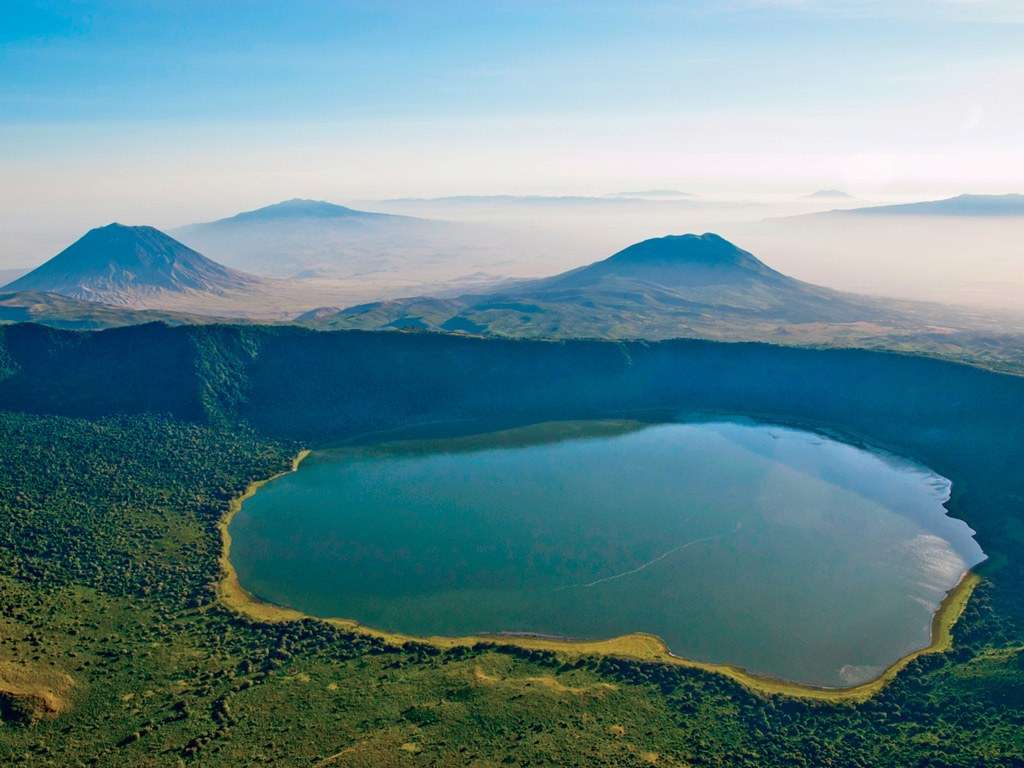
Empakaai Crater is part of the Ngorongoro Conservation Area and sits about 300 metres below its rim. The soda lake at the crater floor attracts flamingos that migrate here after Lake Magadi begins to dry up. To reach the lake you hike down the volcanic caldera wall, a walk that takes around two hours each way and rewards you with a flamingo sighting in one of the most atmospheric crater lakes in Tanzania.
Best for: Off-the-beaten-track flamingo hiking experience, dry season visits.
5. Momella Lakes, Arusha National Park
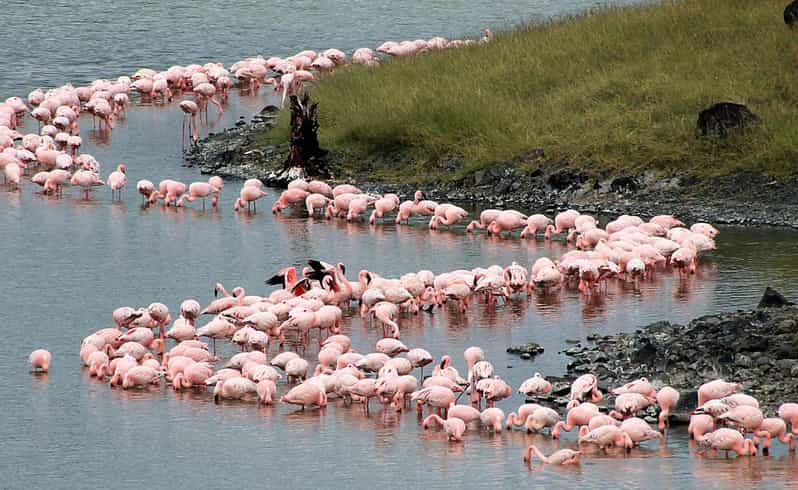
The Momella Lakes are seven small shallow alkaline lakes inside Arusha National Park at the base of Mount Meru. The lakes include Big Momella, Small Momella, El Kekhotoito, Rishateni, Lekandiro, Tulusia, and Kusare. During the wet season, both lesser and greater flamingos gather on their shores. Small Momella Lake, the shallowest of the seven, consistently holds the highest flamingo concentrations.
Arusha National Park is also one of the few places in Tanzania where you can do a walking safari, which makes a flamingo sighting here feel particularly personal.
Best for: Wet season flamingo sightings, walking safari combination, Mount Meru backdrop.
6. Lake Ndutu, Serengeti
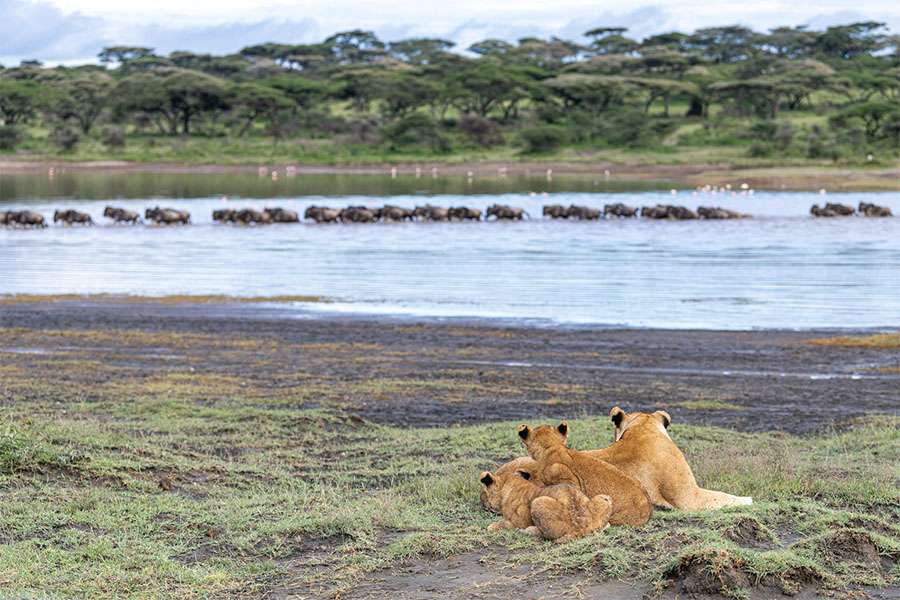
Lake Ndutu sits on the eastern edge of the Serengeti, on the border with the Ngorongoro Conservation Area. It is small, shallow, and rich in algae and crustaceans, which draws both lesser and greater flamingos. The best time to see them here is June to November.
Most visitors pass through Ndutu during the calving season for the Great Migration between January and March, but the flamingo sightings between June and November are an underreported highlight of the area.
Best for: Flamingo and Great Migration combination, June to November.
7. Lake Eyasi
Lake Eyasi sits near the Ngorongoro Conservation Area and is one of Tanzania’s least visited lakes. Covering 1,020 km² but reaching a maximum depth of just one metre, it dries out for most of the year. When the wet season brings water back to the lake, flamingos return to feed along its shores. Lake Eyasi is also known for the Hadzabe Bushmen, one of Africa’s last remaining hunter-gatherer communities, whose territory surrounds the lake.
Best for: Wet season only, off-the-beaten-track, cultural combination with Hadzabe village visit.
What Drives Flamingo Migration in Tanzania?
Tanzania’s flamingos do not follow a simple north-south migration. They move between lakes based on three things: food, water levels, and breeding.
Most lesser flamingos breed at Lake Natron from September to December. After the chicks are raised, the birds disperse across East Africa’s soda lakes, including Lake Manyara in Tanzania and Lake Bogoria in Kenya. They stay at these feeding lakes for several months before the cycle begins again at Natron.
This means the best flamingo lake in Tanzania on any given week depends on current conditions. A guide with current knowledge of lake levels and flamingo movements is the most reliable way to maximize your sightings.
5 Key Takeaways
- Tanzania hosts both lesser and greater flamingos across its northern soda lakes, crater floors, and alkaline wetlands. The peak season is November to May.
- Lake Natron is the single most important flamingo breeding site in Africa, with close to three million lesser flamingos nesting here between September and December.
- Lake Manyara receives large post-breeding flamingo migrations between May and July, making it the most reliable northern circuit flamingo destination outside of Lake Natron.
- Flamingo movement between lakes is driven by algae availability and water salinity, not a fixed calendar. Current conditions on the ground determine which lake holds the best sightings.
- Most major flamingo sites in Tanzania sit on the northern safari circuit and can be combined with the Serengeti, Ngorongoro, and Tarangire on a standard 7 to 10 day Tanzania itinerary.
Frequently Asked Questions About Flamingos in Tanzania
1. Are there flamingos in Tanzania?
Yes. Tanzania is home to millions of flamingos across its northern soda lakes, crater lakes, and alkaline wetlands. Both lesser and greater flamingo species are present year-round.
2. Where is the best place to see flamingos in Tanzania?
Lake Natron is the most spectacular site, hosting close to three million breeding lesser flamingos from September to December. Lake Manyara is the most consistent northern circuit flamingo destination outside of Natron, with peak numbers from May to July.
3. When is the best time to see flamingos in Tanzania?
The peak flamingo season in Tanzania is November to May. For breeding spectacles at Lake Natron, September to December is the best window. Lake Ndutu in the Serengeti is best from June to November.
4. Why do flamingos go to Lake Natron?
Lake Natron’s extreme alkalinity and high temperatures create conditions ideal for spirulina and cyanobacteria growth. The lake’s caustic water also keeps predators away from nesting sites, making it the safest breeding environment in East Africa for lesser flamingos.
5. How many flamingos are in Tanzania?
Close to three million lesser flamingos breed at Lake Natron alone. Tanzania also hosts large concentrations at Lake Manyara, Ngorongoro Crater, Momella Lakes, and Lake Ndutu throughout the year.
6. What do flamingos eat in Tanzania?
Lesser flamingos feed on blue-green algae and spirulina filtered from alkaline lake water. Greater flamingos feed on crustaceans and small invertebrates in the mud. Their specialized downward-curved bills are designed for filtering food from the water surface or substrate.
7. Can I see flamingos and other wildlife on the same Tanzania safari?
Yes. Lake Manyara National Park combines flamingo sightings with tree-climbing lions and elephant herds. Ngorongoro Crater combines crater flamingos with Big Five game viewing. Lake Ndutu in the Serengeti combines flamingos with Great Migration game drives.
8. How do I get to Lake Natron?
Lake Natron is a four to five hour drive from Arusha by 4×4 via the Rift Valley floor. Most visitors combine it with the Serengeti or Ngorongoro on a longer northern Tanzania itinerary. There is no airstrip at the lake.
9. Are flamingos endangered in Tanzania?
The lesser flamingo is classified as Near Threatened by the IUCN. Its near-total dependence on Lake Natron as a breeding ground makes the entire species vulnerable to any significant change at that single location. Past proposals for industrial soda ash extraction at Lake Natron have been opposed by conservation organizations.
10. Can I combine a flamingo trip with a Tanzania safari?
Yes. All major flamingo sites in Tanzania are on or near the northern circuit. A 7 to 10 day Tanzania itinerary covering the Serengeti, Ngorongoro, and Tarangire can include Lake Manyara and a Lake Natron extension. TourwithPipi builds flamingo viewing into Tanzania itineraries on request.


