
The most important thing about what to wear on safari is color. Get that right and everything else falls into place. The wrong color can disturb animals, attract insects, or leave you covered in dust by 8 AM. The right color means you blend in, stay comfortable, and do not spend the game drive swatting flies.
Quick Answer: Safari Clothes Colors
| Wear | Avoid |
|---|---|
| Khaki | Bright red, orange, pink, neon |
| Beige and tan | Blue and dark blue |
| Olive and soft green | Black |
| Dusty grey | White |
| Muted brown | Military camouflage |
What Colors to Wear on Safari
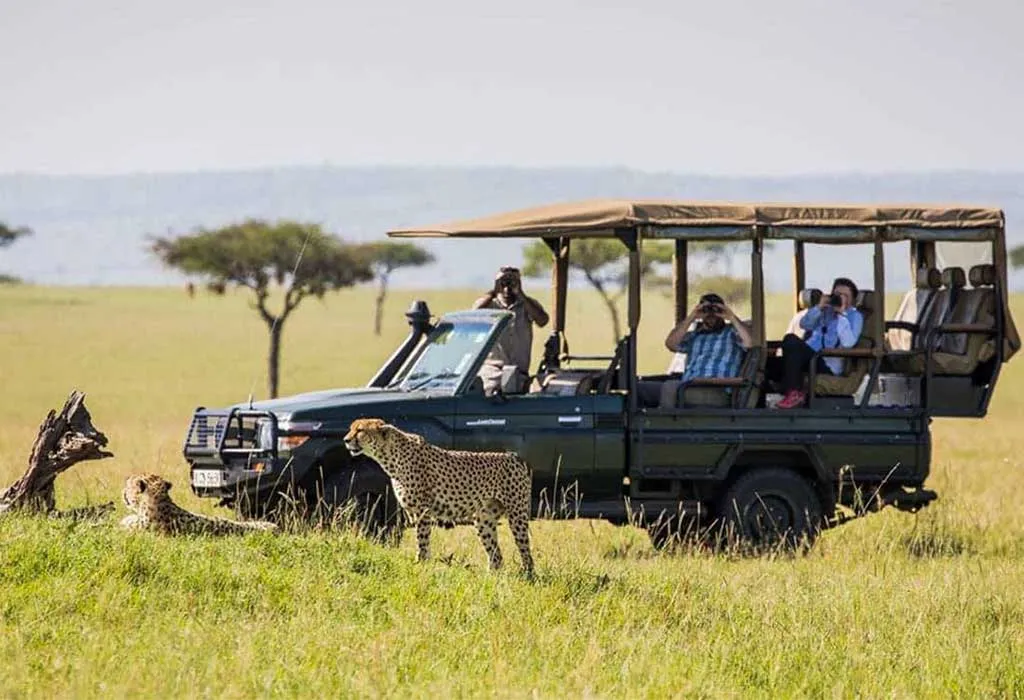
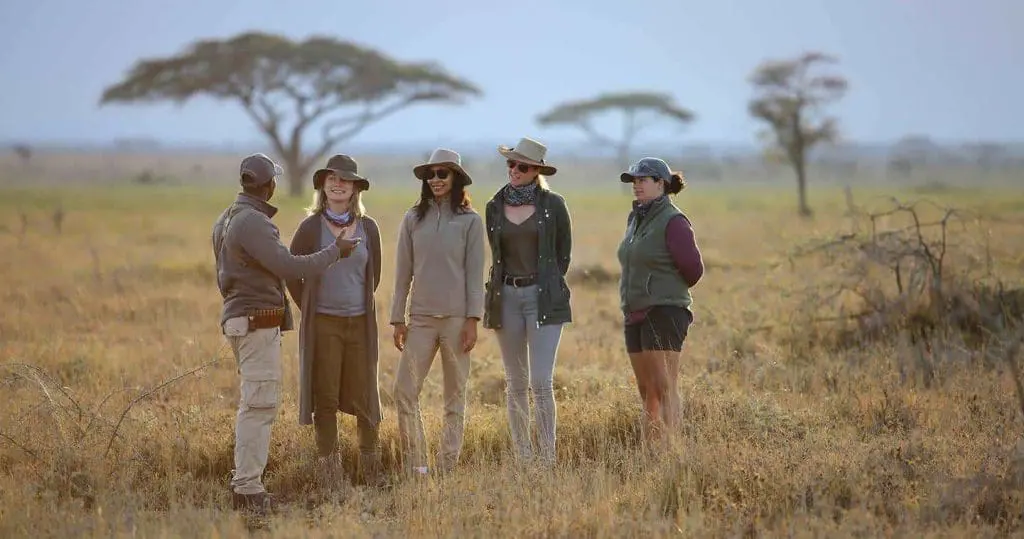
Khaki, beige, and tan are the classic safari khaki clothes colors for good reason. They match the dry grass, dust, and soil of the African bush. Animals do not react to them. Dust does not show on them. They work in heat and cool mornings. This is why every guide, ranger, and experienced safari traveler wears some version of khaki.
Olive and soft green work well too, especially in greener, wetter landscapes like the Serengeti in the long rains or the forests of Uganda and Rwanda. Green blends naturally with the vegetation.
Dusty grey is a good alternative if you do not own khaki. It is neutral, does not stand out, and pairs well with most other safari colors.
The rule is simple. If the color could blend into a dry savannah or woodland, it works. If it stands out against that background, leave it at home.
What Colors NOT to Wear on Safari
Blue and Dark Blue
Blue is one of the worst colors to wear on a safari. Tsetse flies are strongly attracted to blue. In parts of East Africa, blue fabric traps coated with insecticide are placed in the bush specifically because the flies cannot resist landing on it. Wearing blue makes you that trap. Tsetse bites are painful and can cause swelling. Avoid blue entirely if you are traveling to areas where these flies are present, which includes large parts of Kenya and Tanzania.
Black
Black attracts tsetse flies almost as much as blue. It also absorbs heat, so you will be hotter than everyone else in the vehicle. Neither is a good outcome on a morning game drive.
White
Can you wear white on safari? Not for daytime activities. White stands out in the bush more than any other color. It reflects light, makes you very visible to animals, and turns brown from the dust within minutes of leaving camp. A white shirt at dinner is fine. On a game drive, it is not practical.
Bright Colors: Red, Orange, Pink, Neon
Bright colors like red, orange, and anything neon make you the most visible thing in the landscape. While lions are dichromats and cannot distinguish red from green, movement and contrast still register. Bright colors also stand out to other guests and are simply not suited to the environment you are in.
Camouflage
Do not wear military camouflage on safari in Africa. In several African countries, including Kenya, Tanzania, Zimbabwe, and South Africa, wearing camouflage patterns is illegal for civilians. It is reserved for military and law enforcement. Leave it at home entirely.
Can I Wear Blue on a Safari?
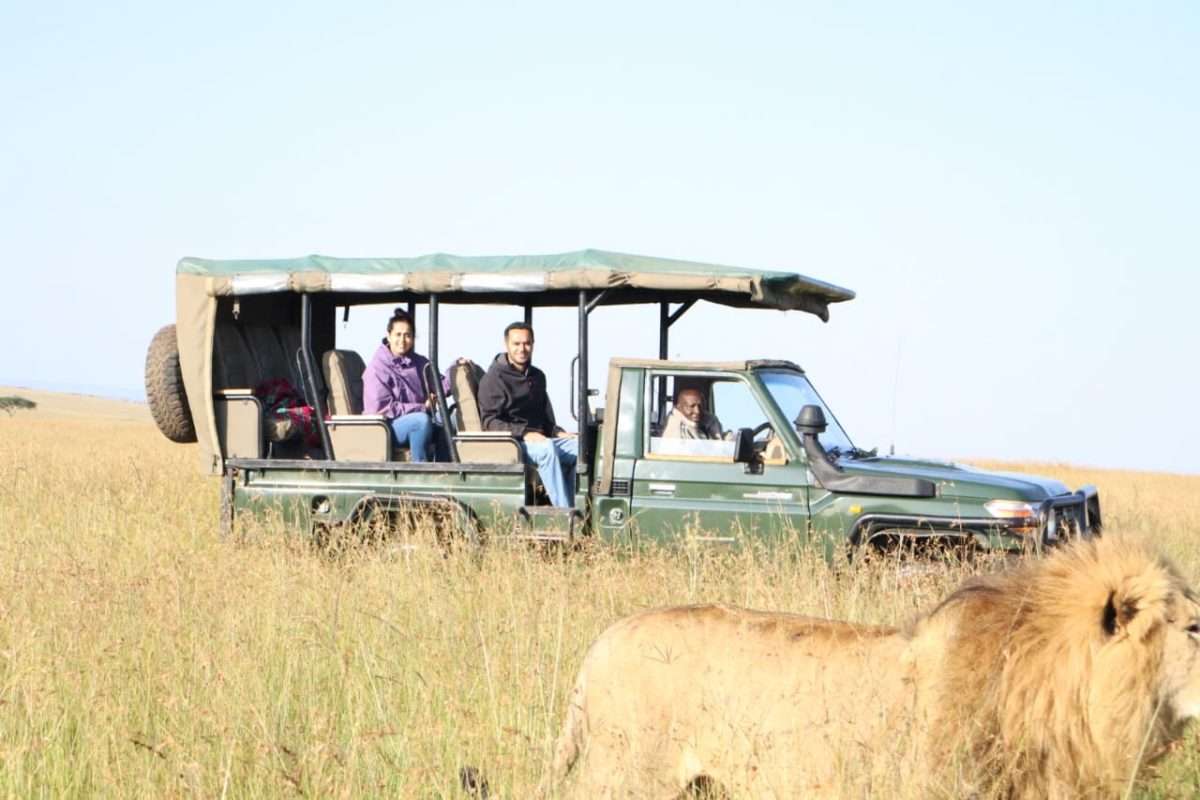
No. Blue is one of the colors to avoid on safari because it attracts tsetse flies. Dark blue is worse than light blue, but both are better avoided in the bush. Stick to the neutrals listed above and you will not have a problem.
Africa Safari Outfits: What Actually Works
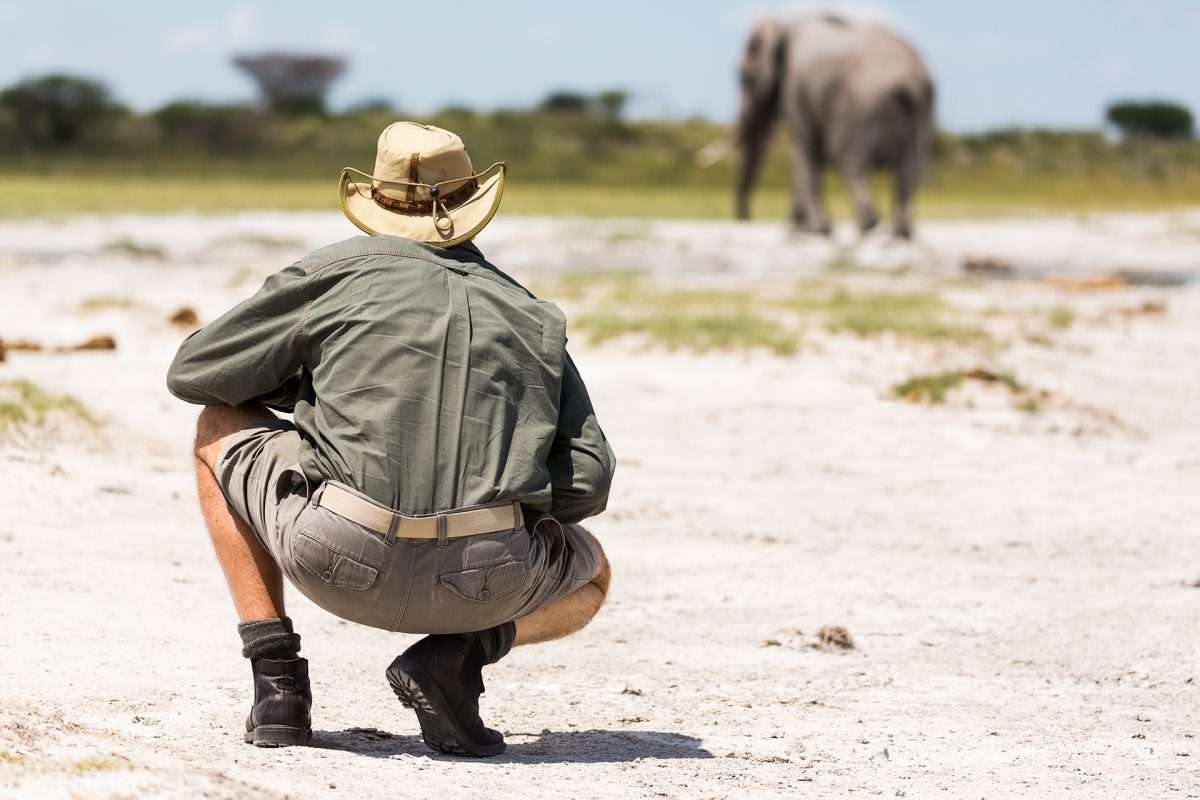
You do not need to buy a whole new wardrobe. Most people already own what they need. Here is what a practical africa safari outfit looks like:
Morning game drive: Khaki or olive trousers, a long-sleeve lightweight shirt in a neutral color, a fleece or soft-shell jacket for the cold start, comfortable walking shoes.
Afternoon game drive: Same trousers, short-sleeve neutral top, sunglasses, wide-brim hat.
Evening sundowner: A light layer in any neutral color. Sandals are fine around camp but wear closed shoes if you step outside the vehicle.
General packing rule: Bring three or four neutral tops, two pairs of lightweight trousers, one warm layer for early mornings, a hat, and good walking shoes. That covers most safari itineraries without overpacking.
Safari Wear Fabric Tips
Color matters most but fabric matters too.
Lightweight cotton and linen are comfortable in heat and easy to wash. Good for base layers and shirts.
Moisture-wicking synthetics dry fast after washing or sweating. Long-sleeve safari shirts made from treated synthetic fabric are popular for good reason: they are light, UV-protective, and dry overnight.
Avoid denim. Jeans are heavy, slow to dry, uncomfortable in heat, and take up too much luggage space.
Layer up for mornings. Even in Kenya and Tanzania, early morning game drives can be very cold, especially in open vehicles at speed. A fleece or jacket that you can remove by 9 AM is essential.
Key Takeaways
- The best colors to wear on safari are khaki, beige, olive, tan, and dusty grey.
- Blue and black attract tsetse flies. Avoid both.
- White turns dusty immediately and makes you too visible in the bush.
- Bright colors like red, orange, and neon disturb wildlife and stand out unnecessarily.
- Military camouflage is illegal for civilians in several African countries.
- You do not need to buy safari-specific clothes. Neutral colors you already own work perfectly.
- Bring one warm layer for cold mornings, even in East Africa.
Ready to Go on Safari in Kenya or Tanzania?
TourwithPipi runs fully private safaris across Kenya and Tanzania, with a local team on the ground who knows the parks, the seasons, and exactly where the animals are. Every safari includes a private 4×4 Land Cruiser, a certified guide, full board meals, all park fees, and airport transfers.
Kenya Packages 6-Day Luxury Kenya Safari — From $3,799 7-Day Masai Mara and Watamu Beach — From $3,699 8-Day Kenya Flying Safari — From $5,519
Tanzania Packages 7-Day Classic Tanzania Safari — From $3,109 10-Day Great Migration Safari — From $5,479 9-Day Tanzania Safari with Zanzibar — From $4,869
Talk to our team on WhatsApp to start planning.
Frequently Asked Questions
What colors should I wear on safari?
Khaki, beige, tan, olive, soft green, and dusty grey. These blend with the bush, do not attract insects, and handle dust well.
What colors should I avoid on safari?
Blue, black, white, bright red, orange, pink, neon, and military camouflage. Blue and black attract tsetse flies. White shows dust instantly. Bright colors disturb wildlife and stand out in the landscape.
Can you wear white on safari?
Not for game drives. White stands out against the bush and turns brown from dust very quickly. It is fine for evening dinners in camp but not practical during daytime activities.
Can I wear blue on a safari?
No. Blue strongly attracts tsetse flies, which have a painful bite. Fly traps in East Africa are made from blue fabric for exactly this reason. Avoid blue entirely during safari activities.
What is the best color to wear on an African safari?
Khaki is the gold standard. It matches the savannah grass and dry soil, does not show dust easily, and works in both heat and cool conditions. Olive and beige are equally good.
Do I need to buy safari clothes before I go?
No. Most people already own neutral clothes that work perfectly on safari. A few lightweight tops and trousers in muted tones, a warm layer for mornings, a hat, and comfortable shoes is all you need.
Can I wear camouflage on safari?
No. Military camouflage patterns are illegal for civilians to wear in several African countries including Kenya, Tanzania, Zimbabwe, and South Africa. Leave it at home.
What should I wear on a morning game drive?
Neutral trousers (khaki or olive), a long-sleeve lightweight shirt, a fleece or jacket for the cold start, and comfortable closed shoes. Add a hat and sunglasses as the sun rises.


